Feb 28, 2026
After reviewing dozens of telehealth weight loss platforms, one pattern keeps showing up. The programs that work are not always the cheapest. They are not always the most well-known. They are the ones that get the fundamentals right, the ones that combine proper medical oversight with reasonable pricing and a medication that actually delivers results. Affordable tirzepatide access through telehealth has changed the landscape for people who could not previously afford compounded tirzepatide, and Elevate Health is one of the platforms trying to fill that gap.
Elevate Health positions itself as a direct-to-consumer telehealth service offering compounded tirzepatide for weight loss. But what does that actually mean in practice? Is the program worth your money? Does it deliver what it promises? And how does it compare to the growing number of competitors fighting for the same market?
This guide breaks down everything you need to know about the Elevate Health tirzepatide program. Pricing. Eligibility. What arrives in your shipment box. How the dosing works. What real customers are saying. And the things nobody else tells you about choosing a telehealth GLP-1 provider. If you have been searching for a tirzepatide program that fits your budget without cutting corners on medical oversight, the next several thousand words will help you make that decision with confidence.
SeekPeptides has tracked the telehealth tirzepatide market closely, and Elevate Health is one of the platforms that keeps coming up in user conversations. Here is what we found.
What is Elevate Health?
Elevate Health, operating through joinelevate.com, is a telehealth platform that provides access to compounded GLP-1 medications for weight loss. The company is not a pharmacy. It is not a medical practice. It is a technology platform that connects patients with licensed independent medical providers who evaluate eligibility, write prescriptions, and oversee treatment. Those prescriptions are then filled by licensed 503A compounding pharmacies that ship medication directly to your door.
This distinction matters.
When you sign up with Elevate Health, you are not buying tirzepatide from the company itself. You are paying for access to a telehealth consultation, a provider evaluation, and the infrastructure that connects you to a compounding pharmacy. The medical decisions, including whether you qualify for tirzepatide and what dose you receive, are made by independent licensed providers contracted through MDIntegrations and TelegraMD. The medications come from licensed compounding pharmacies selected based on your state of residence.
Elevate Health offers both semaglutide and tirzepatide programs, but this guide focuses specifically on their tirzepatide offering, which has become their primary program for patients seeking the dual-action benefits of tirzepatide for weight loss.
How the Elevate Health tirzepatide program works
The enrollment process follows a straightforward three-step model that most telehealth weight loss platforms use. But Elevate Health has some specific details worth understanding before you commit.
Step one: online health questionnaire
You start by completing a health assessment that takes roughly three to five minutes. The questionnaire covers your medical history, current medications, weight loss goals, and any conditions that might affect your eligibility for tirzepatide treatment. This is not a diagnostic tool. It is a screening form that gives the medical provider enough context to determine whether a telehealth consultation is appropriate for your situation.
The questionnaire asks about conditions like medullary thyroid carcinoma, Multiple Endocrine Neoplasia syndrome type 2 (MEN2), severe gastrointestinal diseases, and history of pancreatitis. These are absolute contraindications for tirzepatide use, and if you report any of them, you will not be approved for the program regardless of your BMI or weight loss goals.
Step two: provider consultation
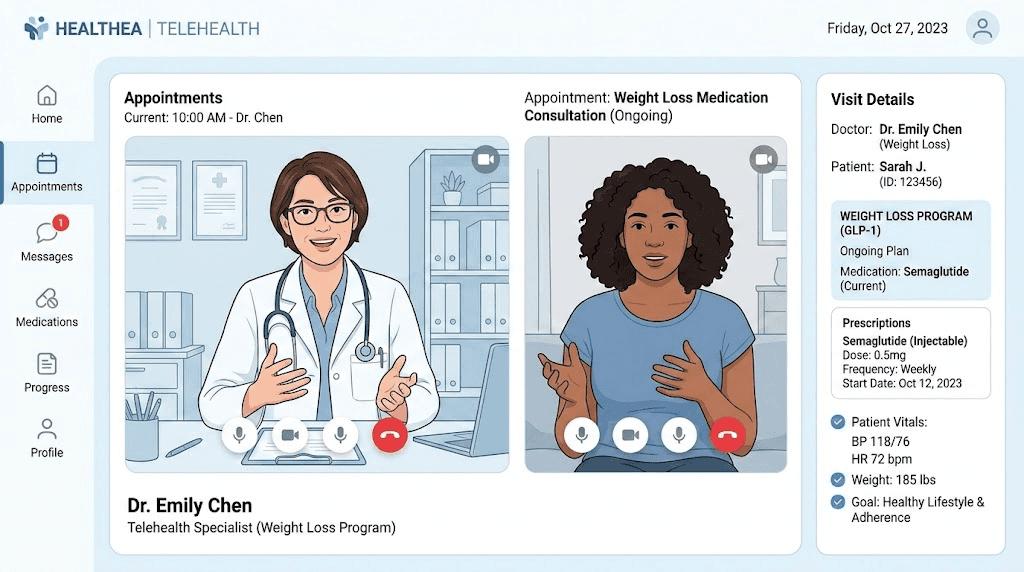
After submitting your questionnaire and completing payment (more on this timing issue later), a licensed medical provider reviews your information and conducts a telehealth consultation. This can happen by phone or video call, depending on provider availability and state requirements. The provider determines whether you meet clinical criteria for tirzepatide, discusses your weight loss goals, and creates a treatment plan.
If you are already taking semaglutide or another GLP-1 medication and want to switch, the provider can review your current protocol. You will need to provide a photo of your current prescription label so they can continue you at the appropriate dose rather than starting over from the beginning. This matters because switching between GLP-1 medications requires careful dose adjustment.
Step three: prescription and fulfillment
Once approved, your prescription is sent to a partner compounding pharmacy based on your state of residence. The pharmacy prepares your compounded tirzepatide and ships it to your address. Elevate Health advertises that medication typically ships within seven to ten business days after approval. That is roughly two weeks from when you complete enrollment to when you actually receive your medication.
The shipment includes a multi-dose vial of compounded tirzepatide, syringes, alcohol wipes, and anti-nausea medication. The anti-nausea medication is a notable inclusion because gastrointestinal side effects are the most commonly reported issue with tirzepatide, and having anti-nausea medication on hand from day one can make a significant difference in the early weeks of treatment.
After your initial shipment, the program operates on automatic monthly refills. You can cancel anytime, but there is a $150 early cancellation fee if you cancel after the medical assessment but before your medication ships. Once an order has been sent to the fulfillment pharmacy, no refunds are issued.
Pricing breakdown
Cost is the primary reason most people consider telehealth tirzepatide programs in the first place. Brand-name Zepbound runs approximately $1,060 per month without insurance. Brand-name Mounjaro, which uses the same active ingredient, carries a similar price tag. For most people paying out of pocket, these numbers are simply not realistic for long-term use.
Elevate Health offers two main pricing structures for compounded tirzepatide.
The 12-week program
The 12-week compounded tirzepatide program costs $789, which works out to approximately $263 per month. This is the more economical option on a per-month basis. It covers your initial medical consultation, three months of compounded tirzepatide, syringes, alcohol wipes, anti-nausea medication, and unlimited phone and SMS support throughout the program.
For people who want to test whether tirzepatide works for them without committing to an ongoing subscription, the 12-week program offers a defined start and end point. It also provides enough time to complete the initial dose titration and see meaningful weight loss results, since most people begin noticing significant changes around weeks eight through sixteen of tirzepatide treatment.
The monthly program
The monthly compounded tirzepatide program costs $449 per month. This is the ongoing subscription model with automatic refills and the flexibility to cancel anytime (minus the early cancellation fee if applicable). It includes the same items as the 12-week program, shipped on a monthly basis.
At $449 per month, the monthly program is approximately $50 more per month than the industry average for compounded tirzepatide from telehealth platforms, which sits around $399 monthly. However, pricing in this market changes frequently, and Elevate regularly offers promotional discounts including $200 off tirzepatide, free shipping, and free blood work as limited-time offers.
One thing to note about the pricing: costs may change for patients starting at higher doses. If you are switching from another GLP-1 provider and need to continue at a higher tirzepatide dose, the monthly cost could be different from what is advertised for new patients starting at the standard titration dose.
Payment options
Elevate Health does not accept insurance. This is a direct-pay, cash-only model. However, they do offer installment payment options through Afterpay and Klarna, which can break the cost into smaller payments. HSA and FSA reimbursement may also be possible depending on your specific plan, though Elevate does not submit insurance billing on your behalf.
The optional GLP-1 support pack
Elevate offers an add-on called the GLP-1 Support Pack for $69.99, which includes a fiber supplement, ginger root, magnesium glycinate, a probiotic, and vitamin B complex. These supplements are commonly recommended alongside tirzepatide to help manage gastrointestinal side effects and support overall nutrition during weight loss. Whether this pack represents good value depends on what you already take, since many of these supplements are available at lower cost from standard retailers.
Eligibility requirements
Not everyone qualifies for tirzepatide through Elevate Health. The program follows standard clinical guidelines for GLP-1 medication eligibility, which require meeting specific BMI thresholds.
You must be at least 18 years old with a BMI of 30 or higher (classified as obesity) to qualify. If your BMI falls between 27 and 29.9 (classified as overweight), you can still qualify if you have at least one weight-related comorbidity such as hypertension, type 2 diabetes, dyslipidemia, or other qualifying conditions.
You will be disqualified if you have a personal or family history of medullary thyroid carcinoma, Multiple Endocrine Neoplasia syndrome type 2, active or recent pancreatitis, severe gastrointestinal disease, or if you are pregnant or breastfeeding. For women considering tirzepatide who are of childbearing age, understanding the reproductive safety considerations is essential before starting any program.
If you do not meet clinical criteria after your evaluation, Elevate Health promises a 100% refund. This is an important guarantee because of one somewhat controversial aspect of their enrollment process.
The pay-before-approval issue
Here is something that has drawn criticism from reviewers and potential customers alike. Elevate Health requires you to complete checkout and pay before you receive medical pre-approval for the medication. This means you are putting down $449 or $789 before a doctor has confirmed you actually qualify.
While the refund guarantee for ineligible patients mitigates the financial risk, this payment structure differs from some competitors who allow you to complete the medical screening first and only charge after you are approved. For some people, this feels like a barrier. For others, it is simply the cost of entry to a telehealth system that needs to confirm commitment before allocating provider resources. Either way, it is worth knowing about before you start the process.
What compounded tirzepatide actually means
A critical distinction that many people miss when evaluating Elevate Health is the difference between brand-name tirzepatide and compounded tirzepatide. This is not the same medication you would get with a Zepbound or Mounjaro prescription from a traditional doctor.
Compounded tirzepatide is prepared by licensed 503A compounding pharmacies using the active pharmaceutical ingredient (tirzepatide) but is not an FDA-approved finished product. This means it has not gone through the full FDA review process that brand-name medications complete. The compounding pharmacy prepares the medication according to a physician prescription, but the finished vial does not carry FDA approval.
This does not necessarily mean compounded tirzepatide is unsafe or ineffective. Licensed compounding pharmacies are regulated by state boards of pharmacy and must follow specific quality standards. However, quality can vary between compounding pharmacies, and there have been concerns about medication consistency and potency with compounded formulations.
The FDA has specifically warned about dosing errors with compounded tirzepatide injectables, particularly when patients measure doses from multi-dose vials using insulin syringes. If you are new to injecting tirzepatide with a syringe, requesting written dosing instructions from your provider and confirming syringe size compatibility is essential for safety.
Elevate Health does not offer brand-name Zepbound or Mounjaro and is not affiliated with Eli Lilly, the manufacturer of these medications. The tirzepatide you receive through Elevate Health is independently compounded based on your provider prescription.
How tirzepatide works for weight loss
Understanding the mechanism behind tirzepatide helps explain why it has become the most sought-after weight loss medication in the telehealth market. Tirzepatide is a dual-action medication that mimics two naturally occurring hormones in the body: GLP-1 (glucagon-like peptide-1) and GIP (glucose-dependent insulinotropic polypeptide). This dual mechanism is what separates tirzepatide from semaglutide, which only targets GLP-1 receptors.
The GLP-1 component slows gastric emptying, which means food stays in your stomach longer. This creates a sustained feeling of fullness after eating. It also reduces appetite signaling in the brain, making you genuinely less interested in food rather than relying on willpower alone. The effect on appetite suppression is typically noticeable within the first few weeks of treatment, though the timeline varies significantly between individuals.
The GIP component adds a second layer of metabolic benefit. GIP receptors influence insulin sensitivity, fat metabolism, and energy expenditure in ways that complement the GLP-1 pathway. This dual-receptor activation is thought to explain why tirzepatide has shown greater weight loss in clinical studies compared to GLP-1-only medications.
In the pivotal clinical trials submitted to the FDA, participants using tirzepatide lost approximately 18% of their body weight on average. That is a remarkable number. For a 250-pound person, 18% represents 45 pounds of weight loss, a transformation that is genuinely life-changing for cardiovascular health, metabolic markers, joint stress, and quality of life.
Tirzepatide is administered as a once-weekly injection, typically in the abdomen, thigh, or upper arm. The dose starts low and gradually increases over several weeks to minimize side effects and allow the body to adjust. This titration process is a key part of why telehealth programs like Elevate Health include ongoing provider access, because dose adjustments often need medical guidance based on how your body responds.
Dosage and titration with Elevate Health
Dose titration is where many telehealth tirzepatide programs succeed or fail. Starting too high causes severe nausea, vomiting, and dropout. Starting too low wastes time and money without meaningful appetite suppression. The sweet spot requires individualized medical judgment, which is why the provider relationship matters.
Elevate Health follows standard tirzepatide titration protocols. If you are starting for the first time, your provider will likely begin you at a low dose with instructions to gradually increase based on tolerability and response. The specific starting dose depends on your medical evaluation and individual factors.
For patients already on semaglutide who want to switch to tirzepatide, the conversion between medications requires careful calculation. Elevate Health asks for your current prescription label to ensure continuity at the appropriate dose level. This is important because abruptly changing doses during a switch can cause a resurgence of side effects that you may have already moved past on your previous medication.
The dosage in units depends on the concentration of your compounded tirzepatide vial and the syringe you are using. This is an area where errors can happen, particularly with multi-dose vials where you are measuring doses yourself. The syringe dosage calculation requires understanding the relationship between milligrams, milliliters, and units, which is not intuitive for everyone.
Using a compounded tirzepatide dosage calculator can help verify your measurements before each injection. Getting this right is not optional. Dosing errors with tirzepatide can result in either subtherapeutic doses that waste medication and produce no results, or excessive doses that cause severe gastrointestinal distress.
Understanding the dosing charts
The tirzepatide dose chart your provider sends should specify the concentration of your vial (for example, 10mg/mL or 20mg/mL), the starting dose in milligrams, the titration schedule showing when and how to increase, and the injection volume in units or milliliters for each dose level. If your paperwork does not include all four of these elements, contact your provider before injecting.
Some patients find the dosing chart in units easier to follow than milligram-based charts, while others prefer the dosage chart in milliliters. Your provider should accommodate whichever format makes the most sense for you and the equipment included in your shipment.
Expected results and weight loss timeline
Setting realistic expectations is crucial before starting any tirzepatide program. The clinical trial numbers are impressive, but individual results vary dramatically based on starting weight, metabolic health, diet, physical activity, and adherence to the protocol.
The first four to eight weeks
During this early phase, most people experience initial appetite reduction. Weight loss is often modest, typically five to ten pounds, and some of this is water weight rather than fat loss. The primary goal during this period is tolerability, not dramatic weight loss. Your dose is being titrated upward, and your body is adjusting to the medication. If you are wondering what to expect after the first dose, reduced hunger and possible mild nausea are the most common experiences.
Weeks eight through sixteen
This is where most people see consistent, meaningful weight loss. As the dose reaches therapeutic levels and eating habits adjust, weekly weight loss of one to two pounds becomes typical. Some people lose more. Some lose less. But consistent downward movement on the scale is what most people report during this phase.
The before-and-after results that generate excitement online often come from this period and beyond, when cumulative weight loss becomes visually noticeable and measurably significant.
Beyond sixteen weeks
Long-term trends emerge. Plateaus are normal and expected, even with optimal adherence. If you hit a plateau, it does not mean the medication has stopped working. It often means your body has adjusted to the current dose and your metabolic rate has shifted in response to weight loss. Your provider may adjust the dose, modify the protocol, or recommend dietary changes to break through.
If you feel like tirzepatide is not working anymore after initial success, this plateau effect is the most likely explanation. It is not a reason to stop treatment. It is a reason to communicate with your provider and adjust the approach.
For those who feel like they are not losing weight on tirzepatide at all, even in the early weeks, the issue is usually one of three things: the dose is too low, dietary intake is higher than estimated, or there is an underlying metabolic condition that needs attention.
Side effects and safety considerations
Elevate Health states that side effects are "extremely rare" and that most individuals who take a GLP-1 do not experience any. This is a somewhat optimistic characterization. The reality, based on clinical trial data and real-world reports, is more nuanced.
Common side effects
Nausea is the most frequently reported side effect, particularly during the early weeks and after each dose increase. This is why Elevate Health includes anti-nausea medication in every shipment. Other common gastrointestinal effects include diarrhea, constipation, reduced appetite (which is technically the desired effect), and fatigue.
Injection site reactions including redness, itching, and mild swelling are also reported. These are usually mild and resolve on their own within a few days. If the reaction is persistent or severe, understanding proper injection site reaction treatment and rotating injection sites can help.
Other reported side effects include headaches, body aches, dry mouth, insomnia, and anxiety. The muscle pain that some users report may be related to the metabolic changes that occur during rapid weight loss rather than a direct effect of the medication itself.
Serious safety warnings
Like all GLP-1 receptor agonists, tirzepatide carries serious safety warnings that you need to understand regardless of which provider you use.
Thyroid tumors, including medullary thyroid carcinoma, have been observed in animal studies with GLP-1 receptor agonists. While the relevance to humans is uncertain, this is why a personal or family history of these conditions is an absolute contraindication.
Pancreatitis is a known risk. If you experience severe, persistent abdominal pain, especially radiating to the back, stop the medication and seek immediate medical attention.
Gallbladder disease risk increases with rapid weight loss of any kind, and tirzepatide-related weight loss is no exception.
Hypoglycemia can occur if tirzepatide is used alongside diabetes medications like insulin or sulfonylureas.
Dehydration from gastrointestinal side effects (vomiting, diarrhea) can affect kidney function, particularly in people with pre-existing kidney conditions.
The medication is contraindicated in pregnancy and breastfeeding. If you are considering starting tirzepatide and there is any possibility of pregnancy, discuss this with your provider. The risks to fetal development are significant, and unexpected pregnancy while on tirzepatide requires immediate medical guidance.
What comes in your Elevate Health shipment
When your medication arrives, the package includes several items beyond just the tirzepatide vial itself. Understanding what you receive and how to use each component properly is essential for safe and effective treatment.
The shipment contains a multi-dose vial of compounded tirzepatide, insulin syringes for drawing and injecting the medication, alcohol wipes for sterilizing the injection site and vial top, and anti-nausea medication to help manage early side effects.
The multi-dose vial means you will be drawing multiple doses from the same container over the course of the month. This requires understanding proper vial handling techniques, including keeping the vial refrigerated between uses and using a new sterile syringe for each dose. The refrigeration requirements for compounded tirzepatide are strict. Letting the medication sit at room temperature for extended periods can degrade the peptide and reduce effectiveness.
If you are wondering how long tirzepatide lasts in the fridge, compounded formulations typically have a beyond-use date (BUD) of 30 to 90 days depending on the compounding pharmacy stability testing. Check your vial label for the specific BUD. And if you are concerned about what happens if your tirzepatide gets warm during shipping or storage, potency degradation is the primary risk.
One customer review on Trustpilot specifically complained about receiving a shipment where the ice pack had melted during transit, raising concerns about temperature excursions and peptide degradation. This is a valid concern with any shipped medication that requires cold chain storage. If your shipment arrives warm, contact Elevate Health support immediately rather than using potentially compromised medication.
Injection technique
If you have never injected medication subcutaneously before, the learning curve is real but manageable. Injecting tirzepatide in the stomach is the most common approach, though the thigh and upper arm are also acceptable sites. Rotating injection sites helps prevent redness, itching, and tissue irritation that can develop from repeated injections in the same area.
The best injection site for weight loss is debated, but the abdomen and thigh both provide reliable subcutaneous absorption. What matters more than site selection is technique: clean the area, pinch the skin, insert the needle at a 45-degree angle, inject slowly, and hold for a few seconds before removing.
Elevate Health customer reviews and real experiences
Customer reviews paint a mostly positive picture, but the details matter more than the star rating.
The positive feedback
Elevate Health has a 4.7-star rating on Trustpilot based on approximately 300 reviews. Common themes in positive reviews include fast and responsive customer service, ease of the enrollment process, significant weight loss results, and appreciation for the included anti-nausea medication.
Multiple customers report losing 50 or more pounds on the program. Others describe the staff as kind, knowledgeable, and genuinely caring about patient outcomes. The phone appointment process receives praise for convenience, and several reviewers specifically mention losing about two pounds per week with stable energy levels.
The affordability compared to brand-name medications is a recurring positive theme. For people who previously paid $1,000 or more monthly for tirzepatide through other channels, the Elevate Health pricing represents a meaningful cost reduction.
The negative feedback
The criticism that does appear in reviews is worth taking seriously.
One detailed negative review described receiving a shipment with a melted ice pack after a four-to-five-day shipping delay, followed by eight weeks of no appetite suppression or satiety changes. The customer suspected temperature excursions during shipping had degraded the medication, essentially rendering it inactive. The customer paid $1,000 and requested a refund, reporting that the company ignored their requests and showed a lack of accountability.
Another complaint described the program as a "cattle approach" with no individualized protocols, where requests for personalized adjustments received "lip service" without actual assistance.
These complaints, while not representative of the majority experience, highlight real risks with any telehealth medication program: shipping delays that compromise medication quality, one-size-fits-all protocols that do not adapt to individual needs, and customer service that may not resolve complex problems effectively.
Elevate Health compared to competitors
The telehealth tirzepatide market has exploded, with dozens of platforms now competing for customers. How does Elevate Health stack up?
The competitive landscape includes platforms like Shed, Empower, IVIM, Strive, MedVi, and others. Each has slightly different pricing, provider networks, pharmacy partnerships, and support structures.
Pricing comparison
At $449 monthly, Elevate Health sits slightly above the industry average for monthly compounded tirzepatide programs. Some competitors offer programs starting as low as $166 per month, while others charge $499 or more. The 12-week program at $263 per month equivalent is more competitive and positions Elevate closer to the lower end of the market on a per-month basis.
Keep in mind that the cheapest option is not always the best option. Pricing differences often reflect pharmacy quality, provider availability, medication concentration, and support services. A $166 per month program that uses a lower-quality compounding pharmacy or provides minimal medical oversight may end up costing more in wasted medication and poor results.
Program features comparison
Elevate Health differentiates itself with the included anti-nausea medication (not all competitors include this), unlimited phone and SMS support (some competitors limit consultations), and the option for both semaglutide and tirzepatide (some platforms only offer one or the other).
The free blood work offer, while currently listed as a limited-time promotion, is a notable addition. Blood work before and during GLP-1 treatment helps monitor metabolic markers, kidney function, and other health indicators that inform treatment decisions. Not all telehealth platforms include this.
For a broader comparison of available options, the comprehensive guide to affordable compounded tirzepatide provides pricing and feature breakdowns across multiple platforms.
Provider network comparison
Elevate Health contracts providers through MDIntegrations and TelegraMD. This is a different model from platforms that employ their own physicians directly. The contracted provider model means your care is technically provided by an independent clinician rather than an Elevate Health employee. Response times are advertised as 24 to 48 hours, with direct phone support available during business hours (9 AM to 9 PM EST).
Some competitors offer 24/7 provider access, which can be valuable if you experience concerning side effects outside of business hours. Others provide only email-based communication with multi-day response times. Elevate Health falls in the middle of this range.
Pros and cons of Elevate Health tirzepatide
Advantages
The 12-week program offers better per-month value than the monthly subscription and provides enough time for meaningful results. The included anti-nausea medication is a practical benefit that reduces the burden on new patients who are most likely to experience GI side effects. The 100% refund guarantee for ineligible patients reduces financial risk for people unsure whether they qualify. Both semaglutide and tirzepatide options give patients flexibility to choose or switch between medications based on their response and provider guidance. And the phone-based support during extended business hours provides a direct communication channel that email-only platforms do not match.
Disadvantages
The pay-before-approval enrollment structure may deter some potential patients. The $449 monthly price is above the industry average for monthly compounded tirzepatide programs. The seven-to-ten business day shipping timeline means nearly two weeks between enrollment and receiving medication, which feels slow compared to competitors advertising faster turnaround. The $150 early cancellation fee adds a financial penalty for people who change their minds between assessment and shipment. And the contracted provider model, while professionally managed, means your medical care comes from clinicians who may be managing patients across multiple telehealth platforms simultaneously.
Diet and lifestyle on the Elevate Health program
Tirzepatide is not a standalone solution. Every responsible telehealth provider, including Elevate Health, emphasizes that the medication works in combination with diet and exercise. But what does that actually look like in practice?
The appetite suppression from tirzepatide changes your relationship with food fundamentally. You will eat less. You will feel full faster. And you will likely lose interest in foods you previously craved. The challenge is ensuring that the reduced food intake still provides adequate nutrition. This is where a tirzepatide diet plan becomes essential.
Focus on protein-dense foods to preserve muscle mass during weight loss. The risk of muscle wasting increases when caloric intake drops significantly, and adequate protein, typically 0.8 to 1 gram per pound of body weight daily, helps counteract this. Our guide on what to eat on tirzepatide covers specific food recommendations in detail.
Equally important is knowing which foods to avoid on tirzepatide. High-fat, greasy foods tend to worsen nausea. Sugary drinks provide empty calories that work against the medication benefits. Large meals overwhelm a stomach that is emptying more slowly than usual. Smaller, more frequent meals of nutrient-dense foods produce the best outcomes both for comfort and weight loss.
The tirzepatide meal plan approach works well for people who prefer structured guidance rather than general principles. Having pre-planned meals takes the decision fatigue out of eating, which matters when reduced appetite already makes food feel like less of a priority.
For supplementation during the program, the supplements to take alongside tirzepatide typically include a quality multivitamin, magnesium (for constipation and muscle function), B vitamins (for energy), and possibly fiber supplements to support digestive regularity. Elevate Health offers their own supplement pack, but you can source these independently if preferred.
Storage and handling of your medication
Proper storage is not optional with compounded tirzepatide. The peptide degrades when exposed to heat, light, or repeated temperature fluctuations. Every degree matters.
Store your vial in the refrigerator between 36 and 46 degrees Fahrenheit (2 to 8 degrees Celsius). Do not freeze it. Do not leave it on the counter while you prepare your injection. Remove it from the refrigerator, draw your dose, and return it immediately. The cumulative time your vial spends at room temperature adds up, and each minute outside of refrigeration reduces the remaining shelf life.
If you travel frequently, understanding how to travel with tirzepatide is essential. You need an insulated travel case with ice packs, and you should never store the medication in a checked bag where temperature cannot be controlled. Some patients carry a medical letter from their provider to avoid issues at airport security.
The compounded tirzepatide expiration date on your vial label is the beyond-use date (BUD) established by the compounding pharmacy. Once reconstituted or opened, the clock starts. Most compounded tirzepatide vials have a BUD of 30 to 90 days when properly refrigerated. Using medication past this date is not recommended because potency and sterility cannot be guaranteed.
If your medication changes color, develops particles, or looks cloudy when it should be clear, do not use it. Changes in tirzepatide appearance can indicate degradation or contamination. Contact your provider for a replacement.
When to consider alternatives to Elevate Health
Elevate Health is not the right fit for everyone. Here are situations where exploring other options makes more sense.
If budget is your primary concern and you need the absolute lowest price, other platforms offer compounded tirzepatide starting under $200 per month. The cheapest compounded tirzepatide options guide breaks down what is available at each price point and what trade-offs you might encounter.
If you prefer non-injectable options, explore oral tirzepatide alternatives including tirzepatide drops, orally disintegrating tablets, and tablet vs injection comparisons. Not all platforms offer non-injectable formulations, but the market is expanding rapidly.
If you want a program with more intensive medical oversight, including in-person visits, regular lab monitoring, and dietitian access, a local weight loss clinic may provide a more comprehensive experience than any telehealth platform. The trade-off is significantly higher cost and less convenience.
If you have tried tirzepatide and experienced different side effects compared to semaglutide, or if tirzepatide is making you tired or causing other intolerable effects, switching medications might be more beneficial than switching providers.
Microdosing and alternative protocols
Some patients, either independently or with provider guidance, explore microdosing tirzepatide as an alternative to standard dose escalation. The idea is to maintain a very low dose that provides moderate appetite suppression with minimal side effects, rather than pushing to higher doses for maximum weight loss.
The microdosing tirzepatide chart provides frameworks for this approach, and the microdose schedule outlines specific protocols that some researchers and clinicians have explored. Whether Elevate Health providers support microdosing protocols is a question to ask during your consultation, as some telehealth providers stick strictly to standard titration schedules while others are open to individualized approaches.
Another variation that some patients explore is splitting the tirzepatide dose into twice-weekly injections. The theory is that smaller, more frequent doses maintain more stable blood levels and reduce the peak-trough cycle that may contribute to side effects. This is an off-label approach that should only be considered with provider guidance.
For patients interested in enhanced formulations, some compounding pharmacies offer tirzepatide blended with additional ingredients like vitamin B12, glycine, niacinamide, or levocarnitine. Whether Elevate Health provides access to these enhanced formulations depends on their pharmacy partnerships and what your provider prescribes.
Maintaining weight loss after the program
One of the most important questions people do not ask before starting a tirzepatide program is what happens when they stop. This is not a question that Elevate Health prominently addresses, and it is not unique to their platform, it is a gap across the entire telehealth weight loss industry.
Research consistently shows that weight regain after stopping GLP-1 medications is significant. Without the appetite-suppressing effects of tirzepatide, hunger returns to baseline levels. The metabolic adaptations that the body made during weight loss (lower metabolic rate, increased hunger hormones) persist. And the behavioral changes that felt easy with pharmacological support suddenly require sustained willpower.
The guide to maintaining weight loss after tirzepatide covers strategies for successful transition off the medication, including gradual dose tapering rather than abrupt cessation. Weaning off tirzepatide properly gives your body time to adjust rather than experiencing a sudden rebound in appetite and weight.
For people who find that long-term medication is necessary to maintain their weight loss, understanding the long-term timeline for GLP-1 medications helps set realistic expectations about duration of treatment.
Combining tirzepatide with other approaches
Patients sometimes ask about combining tirzepatide with other medications or supplements to enhance results. Some of these combinations have research support. Others are speculative or potentially dangerous.
Combining phentermine and tirzepatide is a question that comes up frequently. Both are appetite suppressants that work through different mechanisms, and some providers do prescribe them together. However, this combination increases the risk of cardiovascular side effects and should only be considered under close medical supervision.
Pairing tirzepatide with other peptides like AOD-9604 or BPC-157 is another approach some patients explore through separate providers. These combinations are not typically available through standard telehealth platforms like Elevate Health and require individual research and provider consultation.
For alcohol use during treatment, understanding whether you can drink on tirzepatide and the best alcohol choices while on tirzepatide matters because alcohol metabolism changes when gastric emptying is delayed, and the effects of alcohol can be intensified.
Understanding the legal and regulatory landscape
The availability of compounded tirzepatide through platforms like Elevate Health exists in a specific regulatory window that could change. Compounding pharmacies are permitted to create tirzepatide preparations because the branded versions (Zepbound, Mounjaro) have experienced supply shortages. If Eli Lilly resolves these shortages and the FDA determines that the branded medication is adequately available, the regulatory basis for compounding tirzepatide could narrow.
This does not mean the programs will disappear overnight. But it does mean the long-term availability of affordable compounded tirzepatide is not guaranteed. For people considering Elevate Health or any compounded tirzepatide provider, this regulatory uncertainty is worth factoring into long-term treatment planning.
The distinction between legitimate compounding and grey market tirzepatide is important. Legitimate programs like Elevate Health operate through licensed 503A compounding pharmacies, require a physician prescription, and follow regulatory guidelines. Grey market sources may offer lower prices but carry significantly higher risks for contamination, incorrect dosing, and legal consequences.
How Elevate Health compares for specific patient groups
For men
Men often experience somewhat different weight loss patterns on tirzepatide compared to women, typically losing weight faster in the early weeks due to higher baseline metabolic rates and different fat distribution patterns. The men before and after tirzepatide results show that male patients often see pronounced changes in abdominal fat, which is the most metabolically dangerous fat distribution. Elevate Health does not offer gender-specific protocols, but the provider consultation should account for these differences in setting expectations and dosing.
For people switching from semaglutide
If you are currently on semaglutide through another provider and considering switching to Elevate Health for tirzepatide, the transition between GLP-1 medications requires careful planning. The dose conversion chart is essential because semaglutide and tirzepatide doses do not translate directly. A provider familiar with both medications should guide this transition to avoid either under-dosing (losing appetite suppression) or over-dosing (triggering severe side effects).
For people with diabetes
Tirzepatide was originally developed for type 2 diabetes management before demonstrating remarkable weight loss benefits. If you have type 2 diabetes, a telehealth tirzepatide program can serve dual purposes. However, the interaction between tirzepatide and existing diabetes medications, particularly insulin and sulfonylureas, requires careful management to avoid hypoglycemia. Elevate Health providers should be equipped to manage these interactions, but if you are on a complex diabetes medication regimen, coordination with your primary care physician or endocrinologist is strongly recommended.
Red flags to watch for with any telehealth tirzepatide provider
Not all telehealth tirzepatide programs are created equal. Here are warning signs that should prompt caution with any provider, including Elevate Health or its competitors.
If a provider does not verify your identity or conduct a meaningful medical assessment before prescribing, that is a red flag. Legitimate providers need to confirm who you are and evaluate your medical history before writing a prescription for a medication with significant side effects and contraindications.
If the provider or platform does not disclose which compounding pharmacy fills your prescription, that is concerning. You have a right to know which pharmacy prepares your medication so you can verify its licensing and inspection history.
If cold-chain shipping is not standard, meaning your medication arrives warm or without evidence of temperature-controlled packaging, medication potency may be compromised. The complaint about melted ice packs in Elevate Health shipments highlights why this matters.
If the program sells tirzepatide without a prescription, it is not legitimate. No legal pathway exists for purchasing tirzepatide without a physician prescription. Any website offering to sell you tirzepatide directly without a medical evaluation is operating outside the law and potentially selling unsafe products.
And if the pricing seems too good to be true, it might be. Programs offering compounded tirzepatide for $50 or $100 per month should be scrutinized carefully. The cost of the active pharmaceutical ingredient, compounding, quality testing, cold-chain shipping, and medical oversight sets a floor below which corners must be cut.
Getting the most out of any tirzepatide program
Regardless of whether you choose Elevate Health or another provider, these principles maximize your chances of success.
Track everything. Weight, measurements, food intake, side effects, injection timing, dose changes. The data you collect becomes invaluable for your provider when making dose adjustments and troubleshooting plateaus. The GLP-1 plotter tool can help visualize your progress over time.
Prioritize protein. When your appetite drops and total food intake decreases, protein becomes the most important macronutrient to protect. Muscle loss during rapid weight loss is a real problem, and protein shakes designed for GLP-1 patients can help bridge the gap when solid food feels unappealing.
Communicate with your provider. Do not wait for scheduled check-ins. If something feels wrong, if you are not seeing results, if side effects are unmanageable, reach out immediately. The value of a telehealth program is only as good as the communication between you and your provider.
Be patient with the process. The first month is about adjustment, not results. Real, sustainable weight loss builds over weeks and months, not days. If you are still feeling hungry on tirzepatide in the first few weeks, that is often a sign that the dose has not yet reached therapeutic levels rather than an indication that the medication does not work for you.
Plan for the long term. Whether you use Elevate Health or another provider, think beyond the first 12 weeks. What is your maintenance strategy? Will you continue the medication indefinitely? Will you transition to a lower dose? Will you use the medication as a bridge while building sustainable habits? These questions matter more than which specific platform ships your vial.
For researchers serious about navigating the tirzepatide landscape with reliable guidance, SeekPeptides provides comprehensive dosing guides, provider comparisons, and the tools needed to make informed decisions about GLP-1 treatment.
Frequently asked questions
Is Elevate Health tirzepatide the same as Zepbound or Mounjaro?
No. Elevate Health provides compounded tirzepatide prepared by licensed 503A compounding pharmacies. While it contains the same active ingredient as brand-name tirzepatide, compounded versions are not FDA-approved finished products and are manufactured independently of Eli Lilly.
How long does it take to receive medication from Elevate Health?
After medical approval, medication typically ships within seven to ten business days. From initial enrollment to receiving your first shipment, expect approximately two weeks. Delays can occur depending on pharmacy volume and shipping logistics. Once you begin, refills are sent automatically on a monthly schedule.
Can I switch from semaglutide to tirzepatide through Elevate Health?
Yes. Elevate Health allows patients currently on semaglutide to transition to tirzepatide. You will need to provide your current prescription label so your provider can determine the appropriate dose conversion rather than restarting from the beginning dose.
What if I do not qualify for tirzepatide after paying?
Elevate Health offers a 100% refund if you are deemed ineligible for tirzepatide after the medical evaluation. This applies specifically to clinical ineligibility based on BMI requirements and medical contraindications.
Does Elevate Health offer oral tirzepatide?
Based on available information, Elevate Health primarily offers injectable compounded tirzepatide. For oral versus injection options, contact Elevate Health support directly to ask about current formulation availability, as the market is expanding to include more non-injectable options.
Can I use my HSA or FSA to pay for Elevate Health?
HSA and FSA reimbursement may be possible, but it depends on your specific plan. Elevate Health does not submit insurance billing. You would need to submit receipts to your HSA or FSA administrator for potential reimbursement as an out-of-pocket medical expense.
How do I cancel Elevate Health?
Cancellation is available anytime by contacting Elevate Health support. There is a $150 early cancellation fee if you cancel after your medical assessment but before medication shipment. Once an order has been sent to the fulfillment pharmacy, no refunds are issued for that shipment.
Is the tirzepatide from Elevate Health safe?
Compounded tirzepatide from licensed 503A pharmacies meets state regulatory standards, but it is not identical to FDA-approved branded medications. The safety of any compounded medication depends on the quality of the compounding pharmacy, proper cold-chain shipping, correct storage at home, and accurate dosing. Reviewing the compounding pharmacy licensing and inspection history adds an extra layer of due diligence.
External resources
For those looking to make informed decisions about their tirzepatide options, SeekPeptides offers the most comprehensive resource available, with evidence-based guides, dosage calculators, provider comparisons, and a community of thousands who have navigated these exact questions.
In case I do not see you, good afternoon, good evening, and good night. May your provider stay responsive, your medication stay potent, and your progress stay consistent.