Feb 28, 2026
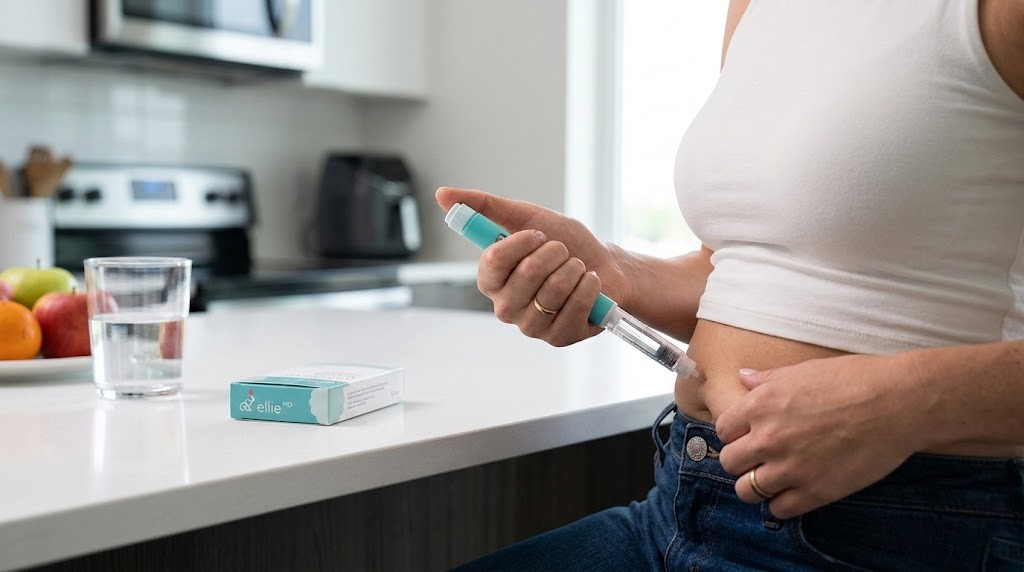
A 2.8 out of 5 on Trustpilot. That is the number staring back at you when you search for EllieMD reviews. Not terrible. Not reassuring either. And when you consider that research into MLM-structured companies shows 99% of participants lose money, according to the FTC, the picture gets more complicated fast.
EllieMD sits at the intersection of telehealth convenience and compounded GLP-1 medications, promising affordable weight loss through personalized protocols, microdosing options, and 24/7 provider access. The company has grown rapidly, attracting people searching for cheaper alternatives to brand-name semaglutide and tirzepatide. But the reality behind the marketing is something every potential customer needs to understand before handing over credit card information.
This guide breaks down everything about EllieMD. The products they offer. The pricing they charge. The MLM structure they operate. The FDA warnings that apply to their medications. The customer experiences, both good and bad. And the alternatives that might serve you better. Whether you are seriously considering EllieMD or just trying to understand what "Ellie GLP-1" actually means, this is the only resource you will need. SeekPeptides has analyzed every angle so you can make a decision based on evidence, not marketing.
What is EllieMD?
EllieMD is a nationwide telehealth clinic that prescribes compounded GLP-1 receptor agonist medications for weight loss. The company operates entirely online, connecting patients with board-certified physicians who evaluate eligibility and write prescriptions that get filled by 503A compounding pharmacies.
The platform covers more than weight loss. EllieMD also offers longevity treatments, sexual health services, and skincare solutions. But weight management is the core business, and it is the reason most people encounter the brand.
Here is what makes EllieMD different from many telehealth competitors. They specialize in microdosing GLP-1 medications, focusing on finding the smallest effective dose rather than automatically escalating. They offer both injectable and oral formulations. And they bundle extras like nausea medication and provider messaging into every plan.
But there is also something unusual about EllieMD that separates it from purely clinical telehealth providers. The company operates a Brand Partner program that allows customers to earn commissions by referring others. This MLM-adjacent structure has drawn scrutiny from consumer advocates, and it is a factor that deserves serious examination before signing up.
EllieMD is available in all 50 states, though compounded medication availability can vary by state regulations. The service requires patients to be at least 18 years old with a BMI of 25 or higher, or 22 if transferring from another program. Pregnant or nursing individuals, and those with pancreatitis, gallbladder disease, or thyroid cancer history, are excluded.
EllieMD products and medications
EllieMD offers several GLP-1 medication options, each with different formulations and delivery methods. Understanding what they actually sell matters because the details affect everything from effectiveness to convenience to safety.
Injectable GLP-1 medications
The injectable options represent the most established delivery method for GLP-1 receptor agonists. EllieMD offers two primary injectable formulations.
GLP-1 + B12 is their semaglutide with vitamin B12 product. The B12 addition aims to support energy metabolism, which matters because fatigue is a common side effect of GLP-1 medications. This is administered as a weekly subcutaneous injection following a standard titration schedule that starts at 0.25 mg per week and increases over 12 weeks.
GLP-1/GIP + B12 is their tirzepatide with vitamin B12 product. Tirzepatide works as a dual agonist, targeting both GLP-1 and GIP receptors, which is why clinical trials have shown it produces greater weight loss than semaglutide alone. The dual mechanism means more appetite suppression pathways are activated simultaneously.
Both injectable options come with a choice of additives beyond B12. Patients can select L-carnitine for additional fat metabolism support or glycine for muscle preservation. These additives are compounded directly into the medication vial.
Oral GLP-1 drops
EllieMD also offers sublingual (under the tongue) drops for both semaglutide and tirzepatide formulations. These represent a newer and more controversial delivery method.
The oral semaglutide drops are marketed as a needle-free alternative. EllieMD claims sublingual delivery bypasses much of the digestive system, with bioavailability potentially reaching 40%. That figure sounds impressive compared to oral tablet bioavailability of just 0.4% to 1%. But here is the critical caveat. No large-scale clinical trials have studied sublingual semaglutide drops for weight loss specifically.
The tirzepatide drops follow the same sublingual delivery concept. For people who have a genuine needle phobia or simply prefer oral administration, these options exist. But the evidence supporting their effectiveness compared to injectable formulations remains limited.
Both oral options can include NAD+ as an additive, which EllieMD positions as a longevity-supporting compound.
Microdose options
EllieMD differentiates itself through its microdosing approach. Rather than following standard titration protocols that push toward maximum doses, EllieMD providers may prescribe lower maintenance doses aimed at finding the minimum effective amount.
The microdose philosophy has some scientific basis. Not everyone needs high doses of semaglutide or tirzepatide to achieve appetite suppression and weight loss. Some patients respond well to doses below standard titration targets. Lower doses also typically mean fewer and milder side effects like bloating, constipation, and dry mouth.
That said, microdosing is not supported by the same level of clinical evidence as standard dosing protocols. The major weight loss trials used specific titration schedules for a reason.
GLP-1 Support+ supplement
Beyond prescription medications, EllieMD sells a nutritional supplement called GLP-1 Support+. This is an over-the-counter product containing plant-based proteins, collagen peptides, fiber, prebiotics, probiotics, digestive enzymes, and essential nutrients.
This supplement is not a GLP-1 medication. It does not contain semaglutide or tirzepatide. It is marketed as a complementary product to support gut health and nutrition while on GLP-1 therapy. Think of it as a protein-and-fiber shake, not a weight loss drug. The distinction matters because some customers may not immediately understand the difference between the prescription medications and the supplement.
EllieMD pricing breakdown
Money. This is where most people start when evaluating EllieMD, and for good reason. GLP-1 medications are expensive no matter where you get them, but the price differences between providers can be significant.
EllieMD operates on a 3-month payment cycle rather than monthly subscriptions. One payment covers 12 weeks of medication, provider access, and supplies. No hidden consultation fees. No separate shipping charges. No membership add-ons.
Current pricing structure
Here is what EllieMD charges as of early 2026, broken down by product type.
Compounded semaglutide (standard dosing): approximately $299 per month, or $897 for the full 12-week supply. This includes the medication, injection supplies, nausea medication, and provider access.
Compounded tirzepatide (standard dosing): approximately $379 per month, or $1,137 for 12 weeks. The higher price reflects tirzepatide being a newer and more complex dual-agonist compound.
Microdose semaglutide: approximately $229 per month, or $687 for 12 weeks. The lower dose means less medication per vial, which translates to lower cost.
Microdose tirzepatide: approximately $239 to $279 per month, or $717 to $837 for 12 weeks.
GLP-1/GIP + B12 (premium tirzepatide): up to $449 per month for the highest-tier formulation with additional compounds.
How this compares to alternatives
Context matters with pricing. Here is how EllieMD stacks up against other affordable GLP-1 providers.
Provider | Semaglutide monthly | Tirzepatide monthly | Payment structure |
|---|---|---|---|
EllieMD | $229-$299 | $239-$449 | 3-month upfront |
Henry Meds | $147+ | $197+ | Monthly or multi-month |
Hers | $199+ | N/A (brand-name only) | 6-month upfront |
$149+ | $249+ | Monthly | |
$179+ | $279+ | Monthly |
EllieMD is not the cheapest option. Henry Meds and ShedRx both offer lower starting prices for compounded semaglutide. But EllieMD includes extras like nausea medication and the B12 additive that some competitors charge separately for. The real question is whether those extras justify the premium.
One important note about the 3-month payment structure. Committing $687 to $1,137 upfront is a significant financial decision. If you experience side effects and want to stop after a few weeks, getting a refund may be complicated. Some competitors with monthly billing give you more flexibility to pause or cancel.
Payment options
EllieMD offers payment plans through Klarna and PayPal to break the 3-month cost into installments. This can make the upfront burden more manageable, but remember that installment plans still represent a commitment to the full amount.
Insurance is not accepted. This is standard for compounded medication telehealth providers since insurance coverage for GLP-1 medications is complex and typically limited to FDA-approved versions only.
How EllieMD works: the sign-up process
Understanding exactly what happens when you sign up for EllieMD helps set realistic expectations. The process is straightforward but has some gaps worth noting.
Step 1: choose your medication
You start by selecting your preferred medication type and formulation on the EllieMD website. Injectable or oral. Semaglutide or tirzepatide. Standard dose or microdose. This choice happens before any medical evaluation, which means you are essentially shopping from a menu rather than receiving a clinical recommendation first.
For context, when choosing between semaglutide and tirzepatide, the decision should ideally involve your medical history, current medications, and specific health goals. A provider who evaluates you first and then recommends a medication based on clinical judgment is generally preferable to a model where you pick your drug and then get approval.
Step 2: complete the medical intake
Next comes a secure online questionnaire covering your medical history, current medications, allergies, and health goals. This is standard for telehealth platforms.
Here is where things get noteworthy. Lab work is optional at EllieMD. They will provide lab order sheets if you request them, and you pay the lab fees separately. But they do not require baseline bloodwork before prescribing GLP-1 medications.
This is a significant gap. GLP-1 medications can affect kidney function, liver enzymes, thyroid markers, and blood sugar levels. Most clinical guidelines recommend baseline labs and periodic monitoring. Providers like MEDVi include labs in their standard protocol. EllieMD making them optional is a cost-saving measure that puts more responsibility on the patient.
Step 3: provider review
A board-certified MD or DO reviews your intake within 48 hours. If approved, they create a personalized treatment plan. If your medical history raises concerns, they may request additional information or deny the prescription.
The 48-hour turnaround is competitive. Some providers approve same-day, while others take up to a week.
Step 4: pharmacy fulfillment
Once approved, the prescription goes to a licensed 503A compounding pharmacy. The medication is prepared and shipped directly to your door within 2 to 10 business days. Injection supplies are included for injectable orders.
The 2 to 10 day shipping window is wide. Customer reviews suggest actual delivery times vary considerably, with some orders arriving within days and others taking the full window or longer.
Step 5: ongoing care
EllieMD provides 24/7 messaging access to providers during your treatment. This is genuinely useful for managing early side effects, asking dosing questions, or discussing concerns between scheduled check-ins.
Monthly medical check-ins are included. After each 3-month cycle, you go through a reassessment to determine whether to continue, adjust doses, or change medications.
What is missing is structured coaching. EllieMD does not offer one-on-one nutrition counseling, exercise guidance, or behavior change support. Research consistently shows that GLP-1 medications work best when combined with lifestyle modifications. Providers like Hers include app-based coaching tools. EllieMD relies on community events and self-directed resources instead.
The MLM question: EllieMD Brand Partner program
This is the elephant in the room. And it deserves an honest, thorough examination.
EllieMD operates a Brand Partner program that allows customers and non-customers alike to earn money by referring others to the platform. This is not a hidden program. It is prominently featured on their website under a "Join Us" section that promises "real earnings" and "competitive commissions."
How the Brand Partner program works
Becoming a Brand Partner requires an enrollment fee of $79 plus a recurring $5 per month technology fee. Once enrolled, you earn commissions on products purchased by people you refer. The commission structure includes performance bonuses and what EllieMD describes as "significant income growth" potential.
This structure is, by definition, multi-level marketing. You pay to join. You earn from personal sales and referrals. And the marketing materials emphasize income opportunity alongside the health products.
Why this matters for consumers
When a healthcare company uses MLM distribution, it creates inherent conflicts of interest. Brand Partners have financial motivation to promote EllieMD regardless of whether it is the best option for a particular person. Reviews from Brand Partners may emphasize positives while downplaying concerns. Social media recommendations may be commercially motivated rather than purely experiential.
This does not mean EllieMD medications do not work. Compounded semaglutide and tirzepatide are well-established GLP-1 receptor agonists with substantial clinical evidence supporting weight loss. The active ingredients are the same regardless of who sells them.
But it does mean you should be skeptical of glowing reviews that come through affiliate or Brand Partner channels. The FTC notes that in studies of 350 MLM companies, at least 99% of participants lose money. The business model incentivizes recruitment and sales volume, not necessarily clinical outcomes.
Impact on pricing
One common question is whether the MLM structure inflates medication prices. EllieMD states that Brand Partner commissions come from company revenue, not customer markups. But basic economics suggests that commission payouts are factored into the pricing model somewhere. When Henry Meds offers semaglutide at $147 per month without an MLM structure, and EllieMD charges $229 to $299, the gap invites questions about where that extra cost goes.
How to navigate the MLM element
If you are considering EllieMD, here is practical guidance for dealing with the MLM component.
First, evaluate the medical service independently of any referral source. Did a friend recommend it? Great. But verify their recommendation is not financially motivated. Ask directly whether they are a Brand Partner.
Second, compare EllieMD to providers without MLM structures. If the medication, pricing, and clinical support are comparable or better elsewhere, the MLM element becomes an unnecessary complication.
Third, do not sign up as a Brand Partner unless you genuinely understand and accept the financial risks. The enrollment fee and monthly charges add up, and statistically, most MLM participants do not profit.
Sublingual GLP-1 drops: what the science actually says
EllieMD promotes its sublingual drops as a convenient, needle-free alternative to weekly injections. The marketing sounds compelling. But the scientific reality is more nuanced than the product pages suggest.
The bioavailability question
Sublingual delivery works by absorbing medication through the blood-vessel-rich tissue under the tongue, bypassing the digestive system. In theory, this could deliver semaglutide more efficiently than traditional oral tablets, which have notoriously low bioavailability of just 0.4% to 1%.
EllieMD suggests sublingual bioavailability could reach 40%. That would be dramatically better than oral tablets. But here is the problem. That figure comes from preclinical (animal) studies examining whether semaglutide can be absorbed sublingually at all. It does not come from large-scale human weight loss trials comparing sublingual drops to injectable semaglutide for appetite suppression and weight loss.
No randomized controlled trial has compared sublingual semaglutide drops to subcutaneous injections for weight loss outcomes. None. The dosing, absorption rates, and clinical effectiveness of this specific formulation remain unvalidated by the kind of evidence that supports injectable semaglutide.
The citation problem
Truth in Advertising, a consumer watchdog organization, investigated EllieMD sublingual drops and found a troubling pattern. EllieMD cites five scientific sources on their product page. Four of those five reference studies examining semaglutide injections, not sublingual drops. The fifth reviewed GLP-1 treatments for type 2 diabetes, and none of the treatments studied were sublingual.
In other words, EllieMD appears to be borrowing clinical evidence from injectable formulations and applying it to a fundamentally different delivery method. This is not the same as lying. Semaglutide is semaglutide. But the way it enters your body profoundly affects how much reaches your bloodstream and how consistently it works.
What this means for you
If you genuinely cannot tolerate injections, sublingual drops represent a theoretical alternative worth discussing with a physician. But go in with realistic expectations. The drops may work for some people. They may work less effectively than injections for others. And without clinical trial data specific to sublingual formulations, nobody can tell you with confidence what outcomes to expect.
For most people seeking effective GLP-1 therapy, weekly injections remain the gold standard. They are the form studied in every major clinical trial. They are the form that produced the weight loss numbers you see in headlines. The injection technique is simpler than most people expect, and resources on optimal injection sites and proper injection technique can help ease the transition.
FDA warnings and compounding concerns
Every potential EllieMD customer needs to understand the regulatory landscape around compounded GLP-1 medications. This is not about fear-mongering. It is about informed consent.
Compounded medications are not FDA-approved
EllieMD medications come from 503A compounding pharmacies. These pharmacies create customized medications by combining individual ingredients according to a prescription. The resulting products are not FDA-approved. That distinction carries real meaning.
FDA-approved medications like Wegovy (brand-name semaglutide) and Zepbound (brand-name tirzepatide) go through rigorous clinical trials testing their safety, efficacy, purity, and consistency. Compounded versions skip this process. They are not independently tested for bioequivalence, meaning there is no guarantee that the compounded product delivers the same amount of active ingredient as the FDA-approved version.
This does not mean compounded medications are inherently dangerous. Compounding pharmacies serve an important role when FDA-approved medications are unavailable or unsuitable for a patient. But it does mean you are accepting additional uncertainty about product quality.
The salt form problem
In September 2025, the FDA sent warning letters to more than 50 GLP-1 drug compounders and manufacturers. One of the key issues involved salt forms of semaglutide.
Here is what that means. Some compounders use semaglutide sodium or semaglutide acetate instead of the exact semaglutide molecule used in FDA-approved drugs. The FDA has stated explicitly that these salt forms are "different active ingredients" and that the agency "is not aware of any lawful basis for their use in compounding."
The practical concern is that salt forms may have different chemical and pharmacological properties. Dosing that works for one form may not translate accurately to another. This can lead to underdosing (reduced effectiveness) or overdosing (increased side effects).
As of mid-2025, the FDA had received 605 adverse event reports linked to compounded semaglutide products. While not all of these are necessarily tied to salt form issues, the number is significant enough to warrant attention.
Dosing errors with compounded products
The FDA has also issued specific alerts about dosing errors associated with compounded injectable semaglutide. Different compounders use different concentrations, and confusion between milligrams and units has led to patients receiving incorrect doses.
This is particularly relevant when converting between units and milligrams of semaglutide. A semaglutide dosage calculator can help verify that your prescribed dose matches what you are actually drawing up. Understanding your specific concentration and dosage chart is essential for safe administration.
What to ask your provider
If you choose EllieMD or any compounded GLP-1 provider, ask these questions directly.
What form of semaglutide does your pharmacy use? If the answer involves sodium or acetate salt forms, understand that the FDA has raised concerns about these.
What is the concentration of the medication, and how does my dose translate to units on a syringe? This prevents the dosing errors the FDA has flagged.
What quality testing does the compounding pharmacy perform? Reputable pharmacies conduct potency and sterility testing on their products.
Will you order baseline labs and monitor my levels during treatment? If the provider says labs are optional, consider whether that level of medical oversight meets your comfort threshold.
Customer reviews: what real users say about EllieMD
Raw numbers first. EllieMD holds a 2.8 out of 5 rating on Trustpilot based on customer reviews. That score sits in uncomfortable territory, not low enough to scream "avoid," but not high enough to inspire confidence.
Positive experiences
Users who had good experiences with EllieMD consistently highlight several themes.
Fast shipping stands out in positive reviews. Some customers report receiving their medication within days of approval, which is competitive with other telehealth providers.
The 24/7 provider messaging earns genuine praise. When starting GLP-1 therapy for the first time, having access to a provider at odd hours can ease anxiety about side effects or dosing questions.
Weight loss results feature prominently in positive reviews. Some users report losing 40 to 65 pounds over several months. These outcomes are consistent with what clinical trials show for semaglutide and tirzepatide generally, so they are plausible regardless of the specific provider.
The microdosing approach resonates with users who experienced intolerable side effects at standard doses with other providers. Finding a lower dose that still suppresses appetite effectively while minimizing nausea is genuinely valuable for some patients.
Negative experiences
The complaints paint a different picture, and they cluster around several recurring issues.
Customer service problems dominate negative reviews. Users describe unreachable support staff, delayed responses, and dismissive interactions when raising concerns. For a service that charges hundreds of dollars upfront, poor customer service is a serious issue.
Medication effectiveness concerns appear in some reviews, with users reporting that their compounded medication seemed weaker or less effective than what they received from other providers. While individual variation exists with any medication, this pattern warrants attention given the FDA concerns about compounded product consistency.
Shipping reliability frustrates some customers. The 2 to 10 business day window is wide, and some users report delays beyond even that range. For a medication that requires proper refrigeration and consistent weekly dosing, shipping delays can disrupt treatment protocols.
Adverse reactions appear in some reviews, including reports of severe nausea, vomiting, fever, and chills. While GLP-1 side effects are well-documented and expected to some degree, the severity described in certain reviews exceeds typical reactions.
Evaluating review credibility
This is where the MLM structure becomes directly relevant to review analysis. When a company has thousands of Brand Partners who earn commissions on referrals, positive reviews may come from financially motivated sources. That does not mean every positive review is fake. It means the signal-to-noise ratio is harder to interpret.
Look for reviews that mention specific details about the medical experience, medication effects, and provider interactions. Generic praise ("Life-changing! Best decision ever!") may come from genuine users, but it may also come from Brand Partners building their referral funnel.
Negative reviews, by contrast, are less likely to be commercially motivated. When someone takes time to write about poor customer service or ineffective medication, they typically have nothing to gain from the complaint.
EllieMD alternatives: a honest comparison
If you are considering EllieMD, you owe it to yourself to understand the alternatives. The compounded GLP-1 telehealth market has grown rapidly, and several providers offer comparable or superior services at competitive prices.
Henry Meds
Henry Meds takes a purely clinical approach without any MLM component. Compounded semaglutide injections start at approximately $147 per month, making it one of the more affordable options available.
What Henry Meds does well includes flexible payment plans ranging from monthly to multi-month bundles, no required upfront commitment beyond one month, and a straightforward clinical model. What it lacks compared to EllieMD includes a mobile app (they use a web-based portal), bundled nausea medication, and microdosing specialization.
For someone primarily motivated by cost and simplicity, Henry Meds represents strong value. The lower price point and monthly billing give you more flexibility to adjust or cancel if the medication does not work as expected.
Hers
Hers offers both brand-name (FDA-approved) and compounded GLP-1 options. Compounded semaglutide starts at approximately $199 per month on a 6-month plan paid upfront.
The standout feature at Hers is the comprehensive support structure. Their app includes dynamic protocols, nutrition tracking, movement guides, sleep habit tools, and unlimited provider messaging. For people who need the lifestyle coaching component that research shows improves long-term outcomes, Hers delivers what EllieMD does not.
Hers is particularly strong for people who want access to brand-name medications. If you qualify and want FDA-approved Wegovy or Zepbound rather than compounded versions, Hers can prescribe those, though at significantly higher cost.
ShedRx
ShedRx offers compounded semaglutide from around $149 per month and compounded tirzepatide from around $249 per month. Monthly billing is available, giving more flexibility than EllieMD three-month commitment.
ShedRx operates without an MLM structure. Their focus is clinical weight management with provider oversight, medication management, and ongoing monitoring. The pricing is competitive, and the monthly billing model reduces financial risk for new patients.
MEDVi
MEDVi differentiates through fast approval times and included laboratory work. For patients who value comprehensive medical monitoring, a process that includes baseline labs without extra charge addresses one of EllieMD biggest gaps.
MEDVi pricing starts around $179 per month for semaglutide. The inclusion of labs at no additional cost represents genuine value given that monitoring cardiovascular markers, kidney function, and metabolic panels during GLP-1 therapy is clinically recommended.
Other notable providers
Several other platforms serve the compounded GLP-1 market. Empower Pharmacy is one of the largest and most established compounding pharmacies supplying semaglutide and tirzepatide. WeightCare offers its own pricing models. Strive and Trava each bring unique approaches to dosing and patient support.
The market changes rapidly. New providers launch regularly, and pricing shifts as competition increases. What matters most is not finding the absolute cheapest option but finding a provider whose medical oversight, communication, and business practices align with your standards.
Who should consider EllieMD (and who should not)
No provider is right for everyone. Here is an honest assessment of where EllieMD makes sense and where it does not.
EllieMD may be a good fit if you
You are specifically interested in GLP-1 microdosing and want a provider that specializes in this approach. Most competitors follow standard titration protocols by default.
You value oral medication options over injections and are willing to accept the limited evidence behind sublingual delivery. If needle phobia is a genuine barrier to treatment, EllieMD oral drops may be your best option among current telehealth providers.
You want a provider that bundles nausea medication with every shipment. Managing GLP-1 side effects proactively, rather than reactively, can make the early weeks more tolerable.
You have already researched the MLM component and are comfortable with it. Some people are genuinely unbothered by this business model and focus purely on the medical service.
EllieMD may not be a good fit if you
You want the lowest possible price for compounded GLP-1 medications. Henry Meds and ShedRx offer lower starting prices without requiring 3-month upfront payments.
You want comprehensive medical monitoring including required lab work. EllieMD optional lab approach falls below the standard of care that many clinicians would recommend for GLP-1 therapy.
You need structured lifestyle coaching alongside medication. If you are not losing weight on GLP-1 medication or struggling with nutrition while on semaglutide, Hers or WeightWatchers offer more robust behavioral support.
You are uncomfortable with the MLM business model or find it difficult to trust reviews from a company with this structure. There are plenty of alternatives without this complication.
You prefer FDA-approved medications rather than compounded versions. If brand-name Wegovy or Zepbound is what you want, EllieMD cannot provide that.
Making an informed decision about GLP-1 providers
Choosing a GLP-1 telehealth provider is a medical decision with financial, safety, and practical dimensions. Here is a framework for evaluating any provider, not just EllieMD.
The five questions that matter
What is the total cost, including all fees, for 6 months of treatment? Looking beyond monthly prices reveals the true financial commitment. Factor in enrollment fees, lab costs, and shipping charges that some providers tack on.
What medical oversight is included? Required baseline labs, regular monitoring, and accessible providers represent better clinical care than optional-everything models. When you are taking a medication that affects multiple body systems over months or years, monitoring matters.
What happens if the medication does not work or causes problems? Can you pause, switch formulations, or cancel without financial penalty? Providers with monthly billing offer more flexibility. Those requiring 3 or 6-month commitments lock you in.
What is the pharmacy sourcing? Ask whether the compounding pharmacy uses the base semaglutide molecule or a salt form. Ask about quality testing. Ask about shelf life and proper storage requirements for the specific product you will receive.
Is the business model aligned with patient outcomes? Providers that profit when you stay on medication indefinitely have different incentives than those that help you taper off successfully. MLM structures add another layer of misaligned incentives.
Using resources to verify and compare
SeekPeptides maintains comprehensive guides for evaluating GLP-1 medications and providers. Before committing to any telehealth service, familiarize yourself with proper dosing protocols, reconstitution procedures, and compounded medication specifics. The more you understand about your medication, the better equipped you are to evaluate whether a provider is delivering quality care.
Use tools like the peptide calculator and semaglutide dosage calculator to verify that your prescribed dose makes sense for your body weight and titration stage. Cross-reference your dosing in units with established protocols to ensure accuracy.
Storage, handling, and practical considerations
If you do choose EllieMD, understanding how to handle your medication properly is just as important as choosing the right provider.
Injectable medication storage
Compounded semaglutide and tirzepatide from EllieMD require refrigeration at 36 to 46 degrees Fahrenheit. The medication should never be frozen, as freezing can denature the peptide and destroy its effectiveness. If you accidentally leave semaglutide out overnight, the medication may still be usable depending on the duration and temperature, but consulting with your provider is recommended.
Understanding how long your medication lasts in the fridge prevents waste and ensures potency. Compounded products typically have shorter shelf lives than FDA-approved versions. Check the expiration date on your vial and track it carefully.
For travelers, knowing how to travel with tirzepatide or semaglutide ensures your medication stays effective during trips. A quality insulated travel case with cold packs is essential.
Injection technique
If you choose the injectable route, proper technique matters for consistent absorption. EllieMD provides injection supplies, but mastering the basics of how to inject with a syringe will improve your experience.
Common injection sites include the abdomen, thigh, and upper arm. Rotating sites prevents tissue irritation and injection site reactions. If you experience redness or itching, our guide on managing injection site reactions covers evidence-based treatments.
Side effect management
GLP-1 medications come with a predictable set of side effects that most users experience to some degree. EllieMD includes anti-nausea medication (Zofran) with every shipment, which helps with the most common complaint.
Beyond nausea, expect the possibility of constipation, bloating, fatigue, and headaches. Most side effects peak during dose increases and improve as your body adjusts. The microdosing approach EllieMD promotes may reduce side effect severity by keeping doses lower, though individual responses vary.
Diet modifications play a significant role in managing side effects. Eating the right foods while on semaglutide or following a tirzepatide diet plan can minimize gastrointestinal distress. Smaller, more frequent meals with adequate protein and fiber tend to work best.
Certain supplements can support GLP-1 therapy. B12, which EllieMD already includes in their formulations, helps with energy. Glycine may support muscle preservation during weight loss. Combined glycine and B12 formulations address both concerns simultaneously.
Understanding your options beyond EllieMD
The GLP-1 medication landscape extends well beyond any single provider. Understanding the broader picture helps you make decisions that account for both immediate needs and long-term health goals.
Injectable versus oral: the evidence gap
The choice between injectable and oral formulations is one of the most important decisions in GLP-1 therapy. All major clinical trials demonstrating significant weight loss used injectable formulations. The GLP-1 patch technology and oral delivery methods represent newer approaches with less clinical validation.
If you are choosing between EllieMD injectable and oral options, the injectable route offers more predictable absorption and outcomes based on current evidence. The oral drops are a convenience play that may sacrifice some efficacy for needle-free delivery.
Compounded versus brand-name
Brand-name medications like Wegovy and Zepbound are FDA-approved with proven manufacturing consistency. Compounded alternatives cost significantly less but come with the quality and consistency uncertainties discussed earlier.
For some patients, the cost savings of compounded medications make treatment accessible when brand-name options would be unaffordable. For others, the peace of mind that comes with FDA oversight is worth the premium. Neither choice is universally right or wrong.
Semaglutide versus tirzepatide
EllieMD offers both, so understanding the difference matters. Semaglutide targets the GLP-1 receptor alone, while tirzepatide targets both GLP-1 and GIP receptors. Clinical trials show tirzepatide produces greater average weight loss, but it also costs more and is a newer compound with a shorter safety track record.
The dosage differences between the two are significant. They are not interchangeable, and switching from one to the other requires careful dose adjustment under medical supervision.
For most first-time GLP-1 users, semaglutide is the standard starting point. It has a longer track record, more published research, and lower cost. Tirzepatide is typically reserved for people who have plateaued on semaglutide or who need more aggressive appetite suppression. The additional benefits of tirzepatide beyond weight loss may also factor into the decision.
The role of lifestyle alongside medication
No GLP-1 medication works optimally without lifestyle modification. This is not a moral judgment. It is pharmacological reality. The clinical trials showing impressive weight loss results all included lifestyle intervention components.
Exercise helps preserve muscle mass during weight loss, which is critical given that up to 40% of GLP-1-related weight loss can come from lean tissue without proper intervention. Muscle preservation strategies become increasingly important the longer you stay on medication.
Nutrition directly affects both weight loss outcomes and side effect severity. Following a structured meal plan while on GLP-1 therapy improves results and reduces gastrointestinal complaints. Knowing what to eat on tirzepatide is as important as getting the dose right.
Whether you choose EllieMD or another provider, the medication is a tool. A powerful one. But it works best as part of a comprehensive approach to health that includes strategies for maintaining results after treatment ends.
Long-term considerations and exit planning
One topic that telehealth providers, including EllieMD, rarely emphasize is what happens after treatment. GLP-1 medications are effective while you take them. The challenge is maintaining results when you stop.
Weight regain reality
Research shows that most people regain a significant portion of lost weight within a year of stopping GLP-1 medications. This is not a failure of willpower. It is the body biological response to weight loss, with hunger hormones rebounding and metabolic rate adjusting downward.
Understanding this reality is important when evaluating EllieMD 3-month cycles. Three months is enough to start a GLP-1 medication and begin losing weight. But it may not be enough to establish the metabolic and behavioral changes needed for lasting results. Many patients need 6 to 12 months or longer.
Tapering protocols
Stopping GLP-1 medications abruptly can trigger withdrawal-like symptoms including rebound hunger, nausea reversal, and blood sugar fluctuations. A gradual tapering protocol reduces these effects.
Ask your EllieMD provider specifically about their tapering approach. Do they have a standard protocol for reducing doses before discontinuation? Or does the 3-month cycle simply end, leaving you to figure out the transition independently? The answer matters for your long-term outcomes.
Maintenance strategies
Some patients transition to microdose maintenance after their initial weight loss phase. EllieMD microdosing philosophy aligns with this approach, potentially keeping you on a lower, less expensive dose long-term rather than cycling on and off full doses.
Others find that the appetite regulation benefits of GLP-1 therapy, combined with habits built during treatment, allow them to maintain results after stopping. This outcome is more likely when medication is paired with consistent exercise, nutritional changes, and behavioral support, the elements EllieMD lacks in its basic offering.
The bottom line on EllieMD
EllieMD is a legitimate telehealth provider offering real GLP-1 medications prescribed by licensed physicians. The medications themselves, compounded semaglutide and tirzepatide, have substantial evidence supporting their effectiveness for weight loss. People do lose weight using EllieMD products. That part is not in question.
What is in question is whether EllieMD represents the best choice among growing competition.
The MLM business model creates trust issues that purely clinical providers avoid entirely. The optional lab monitoring falls below clinical best practices. The sublingual drops are marketed with borrowed evidence from injectable studies. The pricing, while not outrageous, exceeds what some competitors charge for equivalent or superior clinical services. And the 3-month upfront payment structure limits your flexibility compared to monthly billing alternatives.
On the positive side, the microdosing specialization fills a genuine niche. The bundled nausea medication is a thoughtful inclusion. The oral drop option, despite limited evidence, serves people who truly cannot tolerate injections. And the 24/7 provider messaging provides valuable support during treatment.
For researchers and individuals serious about evidence-based guidance, SeekPeptides offers comprehensive resources for understanding GLP-1 medications independent of any single provider. From detailed dosing guides to cost comparison calculators, having access to unbiased information helps you make decisions based on evidence rather than marketing.
The weight loss journey with GLP-1 medications is personal. Your choice of provider should reflect your priorities, whether those are cost, convenience, clinical oversight, or trust in the business model. EllieMD may be the right choice for some people. But only after careful evaluation of what they offer, what they charge, and what they leave out.
Frequently asked questions
Is EllieMD legitimate?
Yes, EllieMD is a licensed telehealth platform that works with board-certified physicians and 503A compounding pharmacies. The compounded medications they prescribe are legal, though not FDA-approved. The MLM business model raises questions about marketing practices, but the medical services themselves are real.
Does EllieMD accept insurance?
No. EllieMD does not accept insurance, which is standard for compounded GLP-1 telehealth providers. Insurance coverage for GLP-1 medications typically applies only to FDA-approved versions like Wegovy and Zepbound.
How does EllieMD compare to getting semaglutide from a regular doctor?
A regular doctor can prescribe FDA-approved semaglutide (Wegovy, Ozempic) with insurance coverage, includes comprehensive medical monitoring, and provides in-person evaluations. EllieMD offers lower out-of-pocket cost through compounded medications but with less medical oversight. The trade-off is cost versus clinical rigor.
Are EllieMD sublingual drops as effective as injections?
There is no clinical trial evidence comparing EllieMD sublingual drops to injectable semaglutide for weight loss. Theoretical bioavailability may be higher than oral tablets, but real-world effectiveness data for sublingual GLP-1 delivery remains limited.
Can I cancel EllieMD after one month?
EllieMD operates on 3-month payment cycles. Cancellation mid-cycle may not result in a refund for unused months. Check their refund policy carefully before enrolling. Providers with monthly billing like Henry Meds or ShedRx offer more flexibility.
Is EllieMD an MLM?
EllieMD operates a Brand Partner program with paid enrollment ($79 plus $5 per month), commission-based earnings, and recruitment incentives. This meets the structural definition of multi-level marketing. Whether that affects the quality of medical care is debatable, but it affects the credibility of user reviews and marketing claims.
What should I do if my EllieMD medication seems ineffective?
First, verify proper storage and handling. Then confirm your dosing is accurate for your concentration. Use the semaglutide dosage calculator to double-check. If everything checks out and you are still not losing weight after 4 weeks, discuss a dose adjustment or medication switch with your provider.
How do I know if my compounded semaglutide is the right salt form?
Ask your provider directly what form of semaglutide the compounding pharmacy uses. The FDA has specifically warned against semaglutide sodium and semaglutide acetate salt forms. If the answer involves these salt forms, consider whether the quality and formulation meets your comfort level.
External resources
In case I do not see you, good afternoon, good evening, and good night. May your provider choices stay informed, your medications stay potent, and your results stay lasting.