Feb 26, 2026
Some telehealth weight loss providers deliver medication in days. Others take weeks, double their prices without warning, and vanish when something goes wrong. The difference between a good experience and a terrible one often comes down to details that no marketing page will tell you. MEDVi, a Delaware-based telehealth clinic specializing in GLP-1 medications, has positioned itself as one of the more affordable options in a crowded market. But affordable does not always mean good. And good does not always mean right for you.
That is the problem with most reviews of telehealth weight loss programs. They either read like advertisements or they focus on one bad experience and call the whole platform a scam. Neither approach helps you make an actual decision. What you need are specifics. Real pricing breakdowns. Honest patient feedback. A clear picture of what the program includes, what it does not, and where it falls short compared to alternatives. That is exactly what this guide provides.
We analyzed customer reviews across Trustpilot, ConsumerAffairs, and independent review sites. We examined the medications MEDVi offers, including compounded semaglutide and compounded tirzepatide in both injectable and oral forms. We compared their pricing, support structure, and clinical model against other popular platforms. And we dug into the safety considerations that every potential patient should understand before signing up, especially given recent FDA scrutiny of compounded GLP-1 medications.
Whether you are seriously considering MEDVi or just beginning to explore your options, this review will give you the information you need to decide with confidence. No hype. No scare tactics. Just the facts.
What is MEDVi?
MEDVi is a telehealth clinic headquartered in Newark, Delaware. The company focuses exclusively on GLP-1 receptor agonist medications for weight loss. Unlike broader telehealth platforms that offer everything from mental health services to dermatology, MEDVi has built its entire business around one thing: helping patients access semaglutide and tirzepatide quickly and affordably.
That narrow focus is intentional.
The GLP-1 telehealth space has exploded over the past two years, with dozens of companies competing for patients. Many of them are generalist platforms that added weight loss medications as an afterthought. MEDVi took the opposite approach, building partnerships with specific compounding pharmacies and designing a clinical workflow optimized specifically for GLP-1 prescribing, dosing, and follow-up.
The company partners with Belmar Pharma Solutions and Beluga Health for its compounded medications. These are licensed compounding pharmacies that produce semaglutide and tirzepatide using the same active pharmaceutical ingredients found in brand-name medications like Ozempic, Wegovy, Mounjaro, and Zepbound. The critical distinction here, and one that many patients overlook, is that compounded versions are not FDA-approved products. They are pharmacy-prepared formulations using the same active molecules but potentially different inactive ingredients, concentrations, and manufacturing processes.
MEDVi operates on a cash-pay model. No insurance accepted. No membership fees. No long-term contracts. You pay month to month for your consultation, medication, and shipping, all bundled into a single price. This simplicity is one of the platform main selling points, especially for patients frustrated by the complexity of insurance-based programs where the consultation fee, medication cost, and lab work all come as separate charges.
The platform claims a 4.9 out of 5 rating based on over 29,000 customer reviews. That number deserves context. Many of those reviews appear on the company own website and affiliated platforms. Independent review sites like Trustpilot paint a more nuanced picture, which we will examine in detail later in this guide. Understanding where reviews come from matters just as much as the ratings themselves, especially in an industry where paid testimonials and review manipulation are common.
For anyone researching GLP-1 treatment options, MEDVi represents one end of the telehealth spectrum. It is streamlined, affordable at the entry level, and focused entirely on medication access. What it is not is a comprehensive weight loss program with structured coaching, behavioral therapy, or detailed nutritional guidance. Knowing that distinction upfront will help you decide whether it fits what you actually need.
How MEDVi works: the complete process
The MEDVi enrollment process follows a straightforward path from signup to medication delivery. Understanding each step helps set realistic expectations about timelines, provider interaction, and what happens after you start treatment.
Step one: online health assessment
Everything begins with an online questionnaire. MEDVi asks about your medical history, current medications, weight loss goals, and any existing health conditions. The questionnaire is detailed enough to give providers the information they need for prescribing decisions, covering areas like cardiovascular health, thyroid function, diabetes status, and family history of medullary thyroid carcinoma or multiple endocrine neoplasia syndrome, both of which are contraindications for GLP-1 medications.
This is not a two-question form. Expect it to take 10 to 15 minutes. The thoroughness actually works in your favor, since a provider who knows your full medical picture can make better prescribing decisions and catch potential contraindications before you start treatment. Some competing platforms use abbreviated questionnaires that miss important safety considerations, which can lead to problems down the line when patients experience unexpected side effects or drug interactions.
Step two: provider review and approval
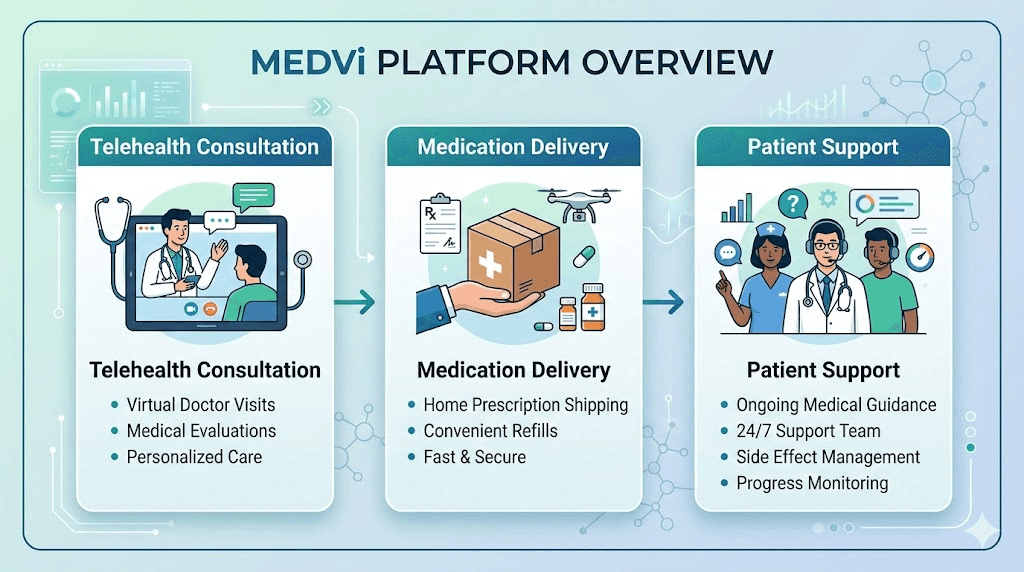
A licensed medical provider reviews your questionnaire, typically within 24 hours. MEDVi uses nurse practitioners and physicians who specialize in weight management, not general practitioners handling weight loss as a side service.
If approved, you receive a personalized treatment plan. This includes your starting medication, dosage, and a basic escalation schedule. If the provider determines that semaglutide is a better fit than tirzepatide based on your medical profile, they will recommend accordingly. This is one area where MEDVi provider involvement adds genuine value, since the choice between these two medications depends on factors like individual side effect profiles, metabolic status, and treatment goals.
Not everyone gets approved. MEDVi does decline patients who present clear contraindications. If you have a history of pancreatitis, medullary thyroid carcinoma, or certain other conditions, you will receive a denial with an explanation. This is actually a positive sign, since platforms that approve everyone regardless of medical history are cutting corners on safety.
Step three: medication delivery
Once approved, your medication ships from one of the partner compounding pharmacies. MEDVi uses temperature-controlled packaging, which matters significantly for peptide medications that require refrigeration. Most patients receive their medication within 3 to 7 business days, though some reviews report faster delivery.
The package includes your medication, injection supplies if applicable, and basic instructions. For patients using oral formulations, the process is even simpler since no injection supplies are needed.
Step four: treatment and ongoing support
After starting treatment, MEDVi provides 24/7 messaging support with your care team. This means you can reach a provider or support staff at any time with questions about side effect management, dosing timing, or concerns about your treatment progress.
Monthly refills ship automatically. Dosage adjustments happen through messaging with your provider. If you need to increase your dose, switch medications, or pause treatment, you communicate through the platform messaging system. There are no scheduled video calls or in-person visits unless specifically needed.
This is where MEDVi model diverges from more comprehensive programs. The support is reactive, not proactive. Your care team responds when you reach out, but they do not initiate check-ins, provide structured coaching sessions, or create detailed nutrition and exercise plans. For self-directed patients who primarily need medication access and occasional medical guidance, this works well. For patients who need accountability, behavioral support, and lifestyle coaching, the lack of proactive outreach can be a significant gap.
Step five: lab testing when needed
MEDVi does not require labs for every patient. Testing is ordered based on medical necessity, which typically includes patients with diabetes, thyroid conditions, or liver and kidney concerns. When labs are needed, MEDVi uses Quest Diagnostics and covers the cost as part of the program.
Standard lab panels include hemoglobin A1c, fasting glucose, lipid panels, liver enzymes, kidney function markers, thyroid function, and complete blood count. Follow-up testing is recommended every 3 to 6 months for patients on long-term treatment. This approach is medically reasonable, though some patients prefer the reassurance of baseline labs before starting any injectable medication.
Medications MEDVi offers: a complete breakdown
MEDVi provides three categories of GLP-1 medication. Understanding the differences between them is essential for making an informed choice, since the medication you select directly affects your cost, results timeline, and side effect experience.
Compounded semaglutide
Semaglutide is the active ingredient in Ozempic and Wegovy. It works by mimicking the GLP-1 hormone, which suppresses appetite, slows gastric emptying, and regulates blood sugar. Clinical trials of brand-name semaglutide demonstrated average weight loss of 15 to 17 percent of body weight over 68 weeks in the STEP trials.
MEDVi offers compounded semaglutide in two delivery methods.
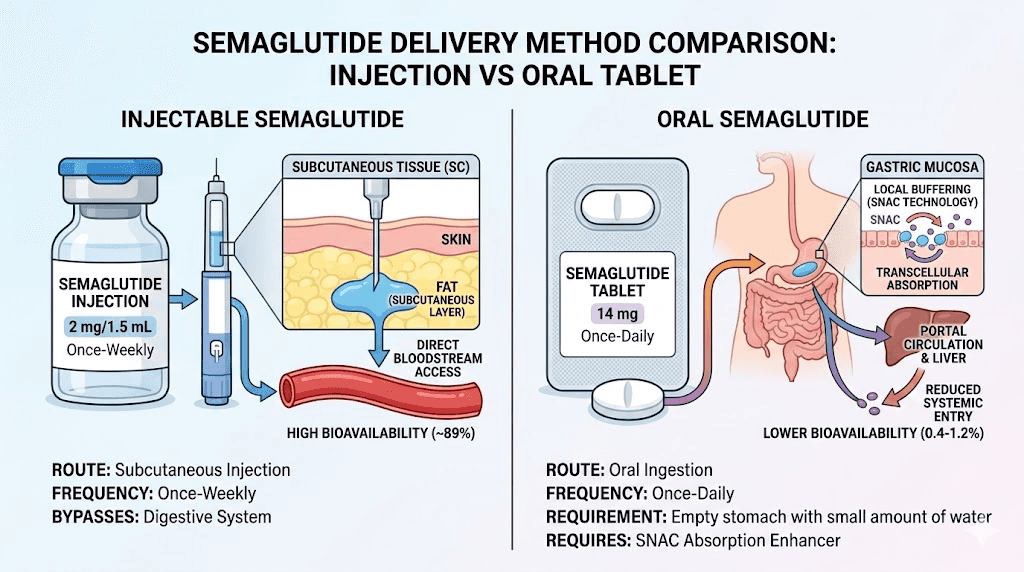
Injectable semaglutide is the more established option. Patients administer a weekly subcutaneous injection, typically in the abdomen, thigh, or upper arm. The process is similar to what patients using brand-name Ozempic experience, though the dosage concentrations may differ since compounded formulations do not follow identical specifications. Starting doses typically begin low and gradually increase over several weeks to minimize gastrointestinal side effects like nausea, which are the most common complaint during the first few weeks of treatment.
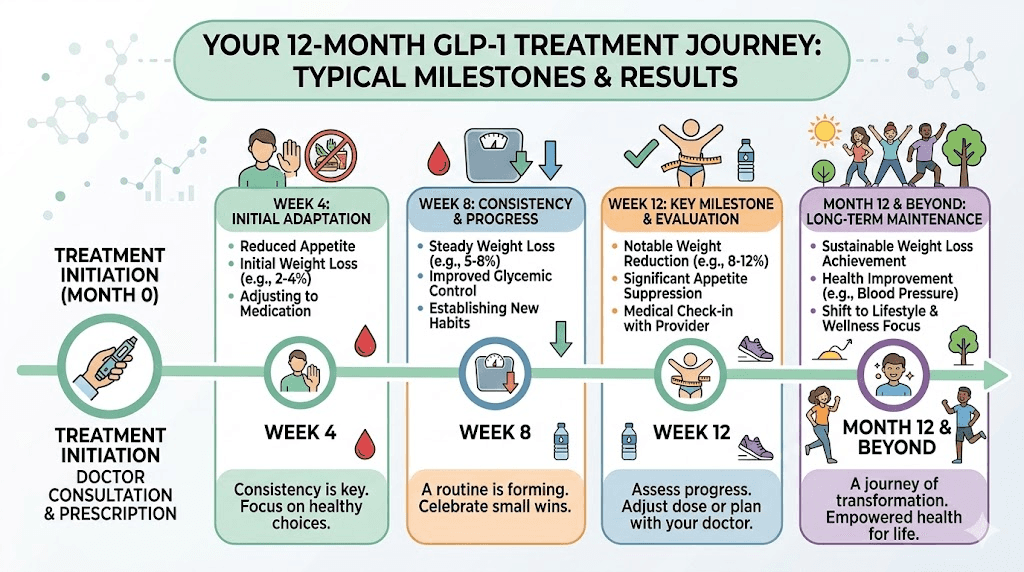
Most patients wonder how quickly semaglutide starts working. The appetite suppression effect often begins within the first week or two, though significant weight loss typically becomes noticeable around weeks 4 to 8. Full effects build over months, which is why treatment courses generally run 6 to 12 months minimum.
Oral semaglutide tablets are a newer option that some patients prefer because they eliminate the need for injections entirely. MEDVi offers dissolvable tablets that absorb sublingually. The convenience is obvious, but absorption rates can vary more than with injections, and some patients report that the oral formulation produces different side effect profiles compared to injectables. Some users on review platforms reported minimal appetite suppression from the tablet form, which could relate to absorption variability.
If you are using compounded semaglutide, understanding proper reconstitution procedures and storage requirements is critical for maintaining medication potency. Compounded injectables require refrigeration and have specific shelf life limitations that differ from brand-name products.
Compounded tirzepatide
Tirzepatide is the active ingredient in Mounjaro and Zepbound. It represents the next generation of weight loss medications because it activates both GLP-1 and GIP receptors, a dual mechanism that clinical trials showed produces even greater weight loss than semaglutide alone. The SURMOUNT trials demonstrated average weight loss of 20 to 25 percent of body weight, making tirzepatide the more potent option for many patients.
MEDVi offers compounded tirzepatide in the same two formats as semaglutide.
Injectable tirzepatide follows a weekly injection schedule similar to semaglutide. The dosing protocols differ significantly between the two medications, with tirzepatide starting at 2.5 mg weekly and potentially escalating to 15 mg based on tolerance and response. Patients transitioning from semaglutide should understand the conversion considerations involved, as the two medications are not directly interchangeable at the same milligram doses.
The side effect profile shares similarities with semaglutide but has some differences. Fatigue and constipation are commonly reported, along with nausea during dose escalation. Some patients also experience headaches and muscle pain. These side effects typically diminish as the body adjusts, but understanding what to expect helps patients prepare rather than panic.
Oral tirzepatide tablets are also available through MEDVi. Like the semaglutide tablets, these offer injection-free convenience with the trade-off of potentially variable absorption. The choice between tablets and injections depends on personal preference, tolerance, and how well the oral formulation works for each individual patient.
For patients trying to decide between semaglutide and tirzepatide, the detailed comparison of mechanisms, side effects, and expected outcomes becomes essential reading. Tirzepatide generally produces faster and greater weight loss, but it also costs more through MEDVi and may produce stronger initial side effects during the titration phase.
Brand-name Ozempic
MEDVi also offers brand-name Ozempic for patients who specifically want the FDA-approved product. At approximately $1,999 per month through MEDVi, this option is significantly more expensive and primarily appeals to patients whose insurance does not cover weight loss medications but who still want the assurance of a brand-name, FDA-approved product.
The vast majority of MEDVi patients choose compounded options. Brand-name availability exists primarily as an alternative for patients concerned about the safety and quality differences between compounded and FDA-approved medications. It is worth understanding that brand-name semaglutide is manufactured under strict FDA oversight with standardized concentrations, while compounded versions are produced by pharmacies operating under different regulatory frameworks.
Which medication should you choose?
The right choice depends on several factors, and this is one area where working with a qualified provider genuinely matters.
Semaglutide vs tirzepatide is not a simple better-or-worse comparison. Consider your starting point. Patients with higher starting weights often respond well to tirzepatide dual mechanism. Those with diabetes or significant insulin resistance may benefit from tirzepatide stronger glucose-lowering effects. Patients who prioritize affordability and have moderate weight loss goals may find semaglutide sufficient.
Injectable vs oral is another decision point. If needle phobia is a barrier to starting treatment, oral options remove that obstacle. But if maximizing medication effectiveness is your priority, injectables provide more consistent absorption and more predictable results.
A good provider will help you navigate these choices based on your specific medical profile. This is where MEDVi provider consultation adds real value, assuming you engage actively with your care team rather than simply accepting the default recommendation.
MEDVi pricing: complete cost breakdown
Understanding the full cost of a MEDVi program requires looking beyond the introductory price. The first-month discount is attractive, but the ongoing cost is what determines actual affordability over a treatment course that typically runs 6 to 12 months or longer.
Compounded semaglutide pricing
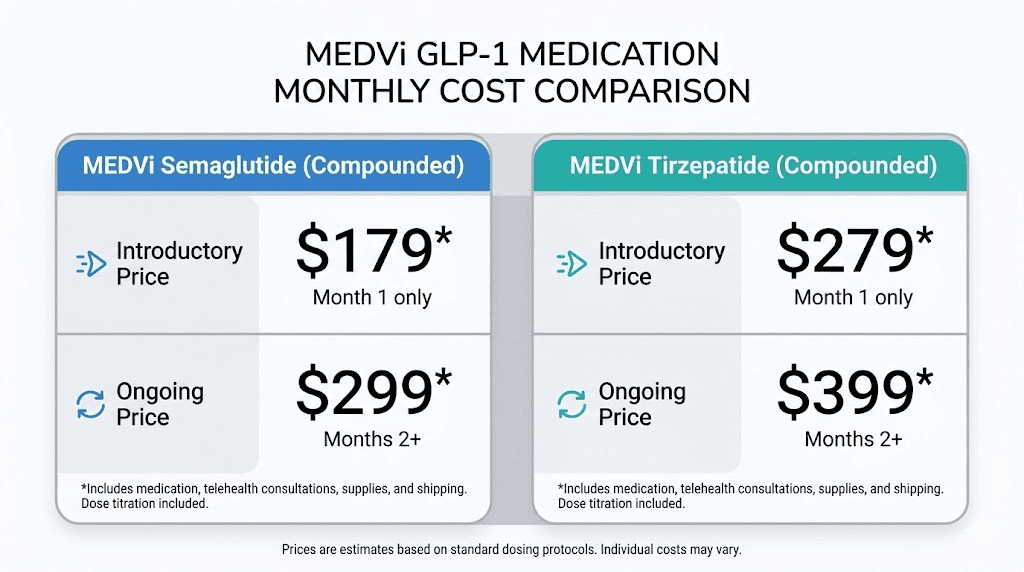
Injections: $179 for the first month, then $299 per month. This includes physician evaluation, personalized treatment plan, one-on-one guidance, metabolic reporting, prescription medication, and free shipping.
Dissolvable tablets: $249 for the first month, then $349 per month. Same inclusions as the injectable program but with the oral delivery method.
Compounded tirzepatide pricing
Injections: $279 for the first month, then $399 per month. All the same inclusions as the semaglutide program.
Dissolvable tablets: $279 for the first month, then $399 per month. Tirzepatide oral and injectable pricing is identical at MEDVi.
Brand-name Ozempic pricing
Approximately $1,999 per month. This represents the cash-pay price for the FDA-approved, brand-name product. For most patients, this option only makes sense if they have specific medical reasons for requiring the brand-name formulation.
What the pricing includes
MEDVi bundles everything into a single monthly payment. There are no hidden consultation fees, no separate charges for shipping, and no membership dues on top of the medication cost. Lab testing through Quest Diagnostics is included when medically necessary. The 24/7 messaging support and provider access are also covered.
This bundled approach compares favorably to platforms like Ro, where the monthly membership fee covers provider access but the medication cost is separate and often runs over $1,000 per month without insurance. It also differs from programs that charge initial consultation fees ranging from $50 to $200 on top of monthly medication costs.
What the pricing does not include
MEDVi does not offer insurance billing. If you have insurance that covers GLP-1 medications for weight loss, you may find better value through an insurance-based provider. The cash-pay model works best for patients without coverage or those who prefer simplicity over navigating prior authorizations and insurance denials.
Structured coaching and nutrition programs are also not included. If you want a comprehensive weight management program with regular coaching calls, meal planning, and behavioral therapy, you will need to source those services separately.
True cost over a treatment course
Here is what a typical treatment course actually costs, since most patients stay on GLP-1 medications for at least 6 months.
Six months of compounded semaglutide injections: $179 + (5 x $299) = $1,674
Twelve months of compounded semaglutide injections: $179 + (11 x $299) = $3,468
Six months of compounded tirzepatide injections: $279 + (5 x $399) = $2,274
Twelve months of compounded tirzepatide injections: $279 + (11 x $399) = $4,668
These figures make MEDVi one of the more affordable options for compounded GLP-1 medications, particularly compared to brand-name pricing. However, the jump from the first-month introductory price to the ongoing rate represents a 67 percent increase for semaglutide and a 43 percent increase for tirzepatide, something patients should budget for from the start.
For patients trying to find the most cost-effective approach, our peptide cost calculator can help compare expenses across different treatment options and timeframes.
What MEDVi includes vs what it does not
Knowing exactly what you get, and what you do not get, prevents the kind of disappointment that fuels negative reviews. Many patient complaints stem not from poor service but from mismatched expectations.
What is included
MEDVi program pricing covers the following:
Telehealth consultation with a licensed medical provider who reviews your health assessment and creates a personalized treatment plan
Prescription medication shipped in temperature-controlled packaging directly to your door
Free shipping on all medication deliveries
24/7 messaging support with your assigned care team for questions about dosing, side effects, or treatment adjustments
Lab testing through Quest Diagnostics when medically indicated, at no additional cost
Dosage adjustments coordinated through provider messaging as your treatment progresses
Metabolic reporting that tracks relevant health markers over time
The 24/7 messaging support is a genuine differentiator. Many competing platforms limit provider access to business hours or charge extra for after-hours communication. Being able to message your care team at midnight when you are experiencing unexpected anxiety or severe nausea after eating provides meaningful peace of mind.
What is not included
Understanding the gaps is equally important:
Structured coaching is not part of the MEDVi program. You will not receive regular coaching calls, behavioral therapy sessions, or accountability check-ins
Detailed nutrition planning is not provided. MEDVi offers basic guidance but does not create personalized meal plans or detailed dietary protocols
Exercise programming is not included. Physical activity recommendations are general rather than personalized
Insurance billing is not available. All payments are cash-pay with no insurance coordination
In-person visits are not offered. Everything operates through the digital platform and messaging
A mobile app does not currently exist. All interaction happens through the web-based patient portal, which multiple reviewers have criticized for usability issues
The absence of structured coaching deserves emphasis. Research consistently shows that patients who combine GLP-1 medications with behavioral interventions, dietary changes, and exercise achieve better outcomes and maintain their weight loss longer. Knowing what to eat while on these medications, understanding which supplements support treatment, and building sustainable habits all contribute to long-term success. MEDVi provides the medication but largely leaves the lifestyle component to you.
This does not make MEDVi a bad program. It makes it a medication access program rather than a comprehensive weight management program. If that is what you need, it delivers well. If you need more, you should either supplement with your own resources or consider a platform that includes coaching.
Real MEDVi patient reviews: what people actually say
Evaluating any telehealth platform requires looking at reviews from multiple sources. Company websites naturally feature their best testimonials. Independent review platforms capture a wider range of experiences. Here is what we found across Trustpilot, ConsumerAffairs, and other independent sources.
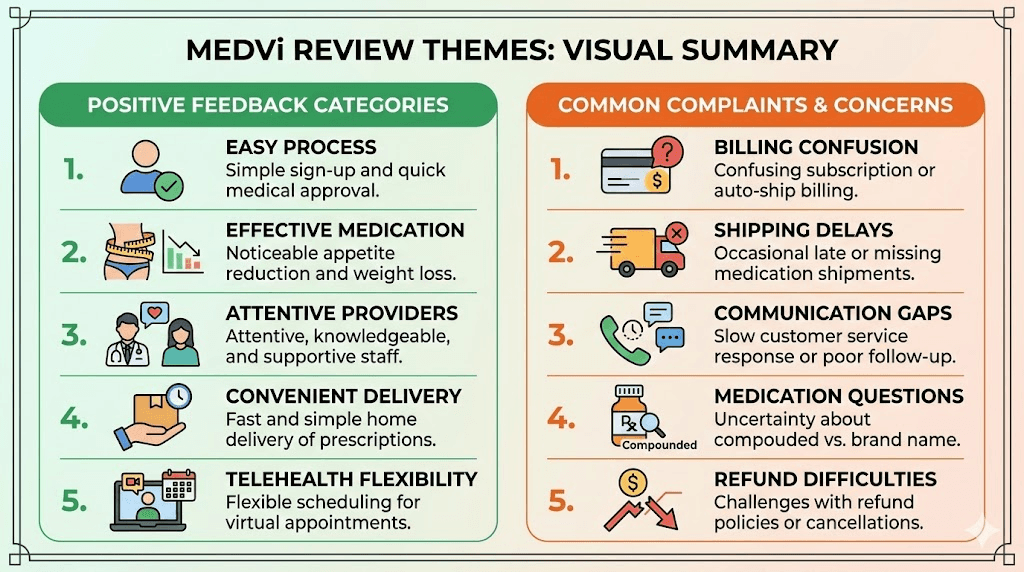
The positive feedback patterns
Patients consistently praise several aspects of the MEDVi experience.
Fast approvals appear in the majority of positive reviews. Many patients describe completing their health assessment and receiving approval within 24 hours, sometimes faster. For people who have spent weeks waiting at other providers, this speed is refreshing. One reviewer described going from signup to medication delivery in under five days, which is among the fastest timelines in the telehealth GLP-1 space.
Provider quality receives consistent praise. Reviewers describe nurse practitioners and physicians who are knowledgeable, patient, and responsive. Multiple reviews specifically mention feeling heard during the consultation process, which contrasts with experiences at other platforms where patients feel like they are being processed through a prescription mill.
Clear pricing is frequently cited as a positive. Patients appreciate knowing exactly what they will pay without surprise charges. The all-inclusive pricing model eliminates the confusion that plagues platforms where medication, consultation, and shipping come as separate bills.
Results vary, as expected. Some patients report steady weight loss of 5 to 6 pounds per month. Others report more dramatic results, particularly patients using tirzepatide or those starting at higher body weights. The average reported weight loss aligns with what clinical trials predict: 10 to 15 percent of starting body weight over approximately 6 to 12 months.
The negative feedback patterns
No platform is without complaints, and MEDVi negative reviews reveal several recurring themes.
Shipping problems top the complaint list. Multiple reviewers describe medications that never arrived, were delivered late, or arrived damaged. One frequently cited situation involves FedEx losing packages, with MEDVi allegedly refusing to send replacements and still charging the patient. Shipping delays disrupt dosing schedules, which can affect treatment continuity and appetite suppression consistency.
Refund difficulties appear in multiple negative reviews. One patient reported receiving empty syringes and being denied a refund because too much time had passed before they contacted support. Another reported being promised a refund when the medication did not work, only to have the refund later denied. These experiences, while not universal, suggest that the refund process could be more patient-friendly.
Patient portal issues come up repeatedly. Reviewers describe a clunky web interface, persistent video call failures, inconsistent scheduling, and the absence of a dedicated mobile app. For a telehealth company where all interaction happens digitally, portal usability directly affects the patient experience. Multiple users describe the portal as their primary frustration with the platform.
Billing problems appear occasionally. Double charges, unexpected fees, and difficulty canceling subscriptions are mentioned in some reviews. While these issues seem to affect a minority of patients, the financial impact makes them especially frustrating when they occur.
Medication effectiveness concerns surface in some reviews. A few patients report receiving oral tablets that produced no noticeable appetite suppression or weight loss. Whether this reflects individual variation, absorption issues with the oral formulation, or quality concerns with specific batches is difficult to determine from reviews alone. But patients who experience no results on semaglutide or tirzepatide should communicate with their provider to assess whether a dosage adjustment, medication switch, or different delivery method might help.
Putting the reviews in perspective
Every telehealth platform in the GLP-1 space has negative reviews. Shipping problems, billing disputes, and medication effectiveness concerns exist across the industry. The question is not whether complaints exist but whether the overall pattern suggests systematic issues or isolated incidents.
Based on our analysis, MEDVi core service, the medical consultation, prescribing, and provider quality, appears solid. The operational side, shipping logistics, portal functionality, and billing systems, is where problems concentrate. This is a pattern common among fast-growing telehealth companies that scale their medical operations faster than their operational infrastructure.
MEDVi money-back guarantee after 5 months provides some safety net. If you have been compliant with the program and have not lost weight after 5 months, the company offers a refund. The specific terms and conditions of this guarantee should be reviewed carefully before relying on it, since several reviewers suggest that the process is not as straightforward as the marketing implies.
Common complaints and problems: what to watch for
Beyond the general review patterns, several specific issues deserve detailed attention. Understanding these before signing up helps you prepare, set expectations, and know when to escalate concerns.
The pharmacy switching problem
Some patients report that MEDVi switches compounding pharmacies between orders. This can result in medications that look different, feel different, or seem to work differently between refills. When your medication comes from Belmar one month and a different pharmacy the next, consistency concerns are legitimate.
This matters because compounded medications, unlike brand-name products, can vary between pharmacies in terms of inactive ingredients, concentrations, and formulation methods. While the active ingredient remains the same, these variations can affect how the medication feels and potentially how it works. If you experience a sudden change in effectiveness after receiving a refill, the pharmacy switch could be a factor worth discussing with your provider.
The price increase reality
The introductory pricing creates a perception of affordability that shifts after month one. Going from $179 to $299 for semaglutide, or $279 to $399 for tirzepatide, is a significant monthly increase. While this information is available before signup, several reviewers felt that the marketing emphasized the introductory price while making the ongoing cost less prominent.
Budget accordingly. If $299 or $399 per month is not sustainable for your financial situation, starting at the introductory rate and then struggling to continue is worse than choosing a different option from the beginning. Our guide to affordable compounded tirzepatide covers alternatives at various price points.
The coaching gap
Multiple negative reviews mention disappointing weight loss results. When you dig deeper, many of these patients describe relying solely on the medication without making dietary or exercise changes. GLP-1 medications are tools, not magic. They suppress appetite and alter metabolic signaling, but patients who do not also address their eating patterns and activity levels consistently achieve less impressive results.
MEDVi does not proactively coach patients on these aspects. This gap means patients who need guidance on what foods to eat while on GLP-1 medications, how to structure their meals, or how to build an exercise routine are largely left to figure it out on their own.
The solution is straightforward. Supplement your MEDVi treatment with your own research, nutritional planning, and physical activity. Use resources like comprehensive diet plans and meal planning guides to fill the gap that MEDVi leaves open.
The cancellation process
A few reviewers describe difficulty canceling their subscription. While MEDVi does not require long-term contracts, the cancellation process reportedly involves messaging the care team or contacting support rather than a simple one-click cancellation. Some patients report continuing to be charged after requesting cancellation. Document your cancellation request with dates and screenshots to protect yourself.
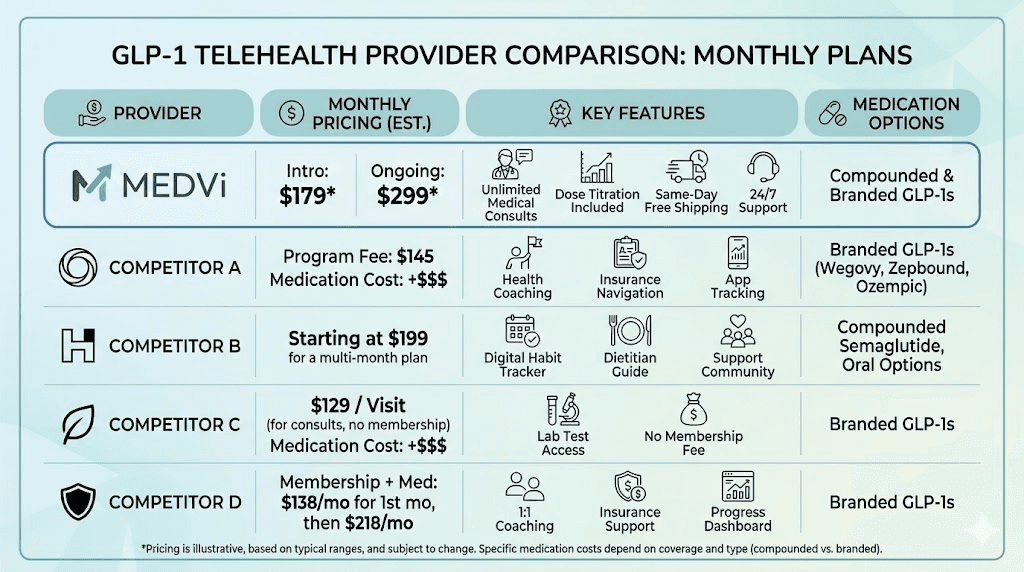
How MEDVi compares to alternatives
MEDVi does not exist in a vacuum. Understanding how it stacks up against other popular telehealth GLP-1 providers helps you determine whether it is genuinely the best option for your specific situation.
MEDVi vs Remedy Meds
Remedy Meds charges $299 per month for compounded semaglutide and $399 per month for tirzepatide, both in injectable and oral forms. No introductory discount exists. The flat pricing means no sticker shock after month one, which some patients prefer for budgeting purposes. Remedy Meds differentiates itself by emphasizing its oral GLP-1 options, though MEDVi now offers comparable oral formulations.
MEDVi wins on introductory pricing and 24/7 support availability. Remedy Meds wins on pricing consistency and transparency.
MEDVi vs Eden
Eden uses a flat-rate pricing model at every dose level, which means your cost does not increase as your dose escalates. This is significant because many patients on tirzepatide dose escalation schedules end up at higher doses that cost more on other platforms. Eden simplicity appeals to patients who value predictable costs above all else.
MEDVi wins on introductory affordability. Eden wins on long-term price predictability.
MEDVi vs Ro
Ro operates on a fundamentally different model. The monthly membership fee covers the platform and provider access, but medication cost is separate. Ro big advantage is insurance coordination. If your insurance covers weight loss medications, Ro can help you navigate the prior authorization process and potentially access brand-name medications at your insurance copay rate.
MEDVi wins for cash-pay simplicity and lower out-of-pocket cost for compounded medications. Ro wins for patients with insurance coverage who want brand-name medications.
MEDVi vs Found
Found emphasizes behavioral coaching alongside medication. Their program includes structured coaching sessions, nutritional guidance, and accountability check-ins. This comprehensive approach typically costs more but addresses the lifestyle component that MEDVi largely ignores.
MEDVi wins on affordability. Found wins on comprehensive support and long-term outcome sustainability.
MEDVi vs Henry Meds
Henry Meds offers a similar telehealth model to MEDVi with compounded GLP-1 medications. Pricing is comparable, though Henry Meds may differ on specific medication options and pharmacy partnerships. MEDVi 24/7 support and money-back guarantee give it slight edges in the comparison.
Both platforms serve similar patient profiles. The choice often comes down to individual experience with provider quality and operational reliability.
Complete comparison table
Provider | Semaglutide monthly cost | Tirzepatide monthly cost | Insurance | Coaching | 24/7 support | Best for |
|---|---|---|---|---|---|---|
MEDVi | $179-$299 | $279-$399 | No | No | Yes | Affordable entry, self-directed patients |
Remedy Meds | $299 | $399 | No | No | Limited | Flat pricing, oral options |
Eden | Flat rate | Flat rate | No | No | Limited | Predictable costs at every dose |
Ro | $145+ membership | $145+ membership | Yes | Limited | No | Insurance coordination |
Found | Higher | Higher | Some | Yes | No | Comprehensive coaching |
Henry Meds | Comparable | Comparable | No | No | Limited | Similar to MEDVi |
The right provider depends entirely on your priorities. If affordable medication access with minimal friction is your primary goal, MEDVi delivers. If coaching, insurance coverage, or comprehensive support matters more, alternatives may serve you better.
For patients interested in understanding the broader landscape of GLP-1 providers, SeekPeptides maintains detailed reviews of platforms including Empower Pharmacy, Olympia Pharmacy, Direct Meds, and many others.
Safety considerations: what you need to know about compounded GLP-1 medications
Safety is the most important factor in choosing any medical treatment, and compounded GLP-1 medications carry specific considerations that every patient should understand before starting treatment.
Compounded vs FDA-approved: the critical difference
Brand-name medications like Ozempic and Wegovy undergo rigorous FDA approval processes that include large-scale clinical trials, manufacturing inspections, and ongoing quality monitoring. Compounded versions use the same active pharmaceutical ingredients but are prepared by compounding pharmacies under different regulatory frameworks.
This distinction matters for several reasons. Compounded medications may use different inactive ingredients. They may have different concentrations. The manufacturing processes are not standardized across pharmacies. And the quality control requirements, while regulated, are not identical to what FDA-approved manufacturers must meet.
None of this means compounded medications are inherently dangerous. Millions of patients have used compounded GLP-1 medications safely and effectively. But understanding the difference helps you make an informed risk assessment rather than assuming compounded and brand-name are interchangeable.
FDA warnings and enforcement actions
The FDA has significantly increased scrutiny of compounded GLP-1 medications. In September of the prior year, the agency sent more than 50 warning letters to companies compounding or manufacturing semaglutide and tirzepatide. These letters addressed concerns including misleading advertising, quality control issues, and compliance failures.
The FDA also reported receiving 520 adverse event reports related to compounded semaglutide and 480 reports concerning compounded tirzepatide as of late spring of the prior year. Many of these involved dosing errors, where patients measured and self-administered incorrect doses, or healthcare professionals miscalculated prescriptions. Some required hospitalization.
Additionally, the FDA has identified cases of fraudulent compounded products with false labeling, including labels listing pharmacy names of facilities that did not actually compound the products. While this does not necessarily implicate MEDVi or its pharmacy partners specifically, it underscores the importance of verifying that your medication comes from a legitimate, licensed compounding pharmacy.
The shortage question
Compounded versions of semaglutide and tirzepatide were widely available during the national drug shortage period. As that shortage has resolved, the regulatory landscape for compounding these medications has tightened. The FDA enforcement discretion period ended in early spring of the prior year for state-licensed pharmacies, meaning compounding pharmacies now operate under stricter standard rules.
This regulatory shift has implications for availability and pricing. Some compounding operations may face restrictions, which could affect supply chains and potentially lead to pharmacy switches for patients on ongoing treatment programs. Staying informed about these changes helps you anticipate and manage potential disruptions.
What to verify before starting
Before beginning any compounded GLP-1 program, verify the following:
Pharmacy licensing: Confirm that the compounding pharmacy is state-licensed and registered with the FDA. MEDVi partners Belmar Pharma Solutions and Beluga Health are established pharmacies, but verifying independently is always wise
Temperature handling: Ensure your medication arrives in proper temperature-controlled packaging. GLP-1 medications require refrigeration, and temperature excursions during shipping can compromise potency
Dosing accuracy: If you are self-injecting, understand exactly how many units correspond to your prescribed dose. Dosing errors are a leading cause of adverse events with compounded products
Provider credentials: Verify that your prescribing provider is appropriately licensed in your state
Adverse event reporting: Know how to report problems. The FDA MedWatch system accepts reports from patients and healthcare providers
For patients using injectable formulations, understanding proper injection technique and storage protocols reduces risk significantly. Using the semaglutide dosage calculator can also help verify that your prescribed dose aligns with standard protocols.
Managing side effects safely
Common side effects of GLP-1 medications include nausea, vomiting, diarrhea, constipation, and fatigue. These typically improve over time, especially with gradual dose escalation. However, knowing how to manage them safely makes the difference between a tolerable adjustment period and an unnecessarily miserable one.
Constipation management often involves increasing fiber and water intake, along with gentle exercise. Fatigue typically resolves as the body adjusts to appetite changes and reduced caloric intake. Patients should also be aware of potential hair loss, which affects some GLP-1 users due to rapid weight loss and caloric restriction rather than the medication itself.
If you experience severe abdominal pain, persistent vomiting, signs of pancreatitis, or an allergic reaction, seek emergency medical attention immediately. These rare but serious side effects require prompt evaluation regardless of which provider prescribed your medication.
Who MEDVi is best for
Not every platform is right for every patient. MEDVi strengths align well with certain patient profiles while being less ideal for others.
MEDVi is a good fit if you:
Want affordable GLP-1 access without insurance complications. The $179 entry point and $299 ongoing rate for semaglutide are among the lowest in the market
Are self-directed and comfortable managing your own nutrition, exercise, and lifestyle changes without structured coaching
Value speed and want to start treatment quickly. The 24-hour approval and fast shipping appeal to patients tired of waiting
Prefer simplicity in your healthcare experience. One monthly payment covers everything with no insurance paperwork to navigate
Want 24/7 access to medical support for questions about dosing, alcohol interactions, side effects, and treatment adjustments
Are open to compounded medications and understand the differences from FDA-approved products
MEDVi may not be the right fit if you:
Have insurance that covers GLP-1 medications and want to maximize your benefits. An insurance-based provider will likely save you significant money
Need structured coaching and accountability to stay on track with diet and exercise changes
Strongly prefer brand-name medications and are uncomfortable with compounded alternatives
Require a mobile app for managing your treatment. MEDVi web-based portal has been a consistent pain point in patient reviews
Have complex medical conditions that require in-person evaluation, frequent lab monitoring, or coordination with other specialists
Are on a tight budget where the jump from introductory to ongoing pricing would cause financial strain
The honest assessment is that MEDVi does medication access very well but does not try to be a comprehensive weight management solution. If medication access is your primary need, it delivers. If you need the full package, look elsewhere or plan to supplement MEDVi with your own resources.
Getting the most out of a MEDVi program
If you decide that MEDVi is the right fit, these strategies will help you maximize your results and minimize frustration.
Optimize your diet alongside medication
GLP-1 medications reduce appetite, but what you eat during those reduced-calorie periods matters enormously. Prioritize protein to preserve muscle mass during weight loss. The general recommendation is 0.7 to 1 gram of protein per pound of target body weight daily, which becomes even more important when your overall caloric intake drops.
Focus on nutrient-dense foods that support your body during the weight loss process. Understanding which foods work best with semaglutide or following a structured tirzepatide-specific diet plan can make a significant difference in both how you feel and how much weight you lose.
Avoid foods that exacerbate GLP-1 side effects. High-fat and greasy foods tend to worsen nausea. Carbonated beverages can increase bloating. And eating too quickly or in too-large portions overwhelms a digestive system that is already operating at a slower pace due to the medication delayed gastric emptying effect.
Consider supplementation
Rapid weight loss and reduced food intake can create nutrient deficiencies. Many patients benefit from supplementing with a high-quality multivitamin, vitamin D, B12, and fiber. Some semaglutide programs include B12 in the compounded formulation specifically because of the increased risk of deficiency.
Consider supplements that specifically support GLP-1 treatment, including electrolytes for hydration, magnesium for constipation management, and probiotics for gut health during the adjustment period.
Track your progress methodically
Weight alone does not tell the full story. Track body measurements, energy levels, sleep quality, appetite changes, and how your clothes fit. Some patients experience significant body composition changes, losing fat while maintaining or even gaining muscle, that the scale does not capture.
Take progress photos monthly. Document side effects and their severity so you can discuss trends with your provider. Note what you eat and how different foods affect your side effects. This data becomes invaluable during dose adjustment conversations with your MEDVi care team.
Engage actively with your provider
The 24/7 messaging access only helps if you use it. Do not wait until problems become severe to reach out. If your appetite suppression is weakening, your side effects are worsening, or you are not losing weight at the expected rate, message your provider. Proactive communication leads to timely dosage adjustments that keep your treatment on track.
Ask specific questions. Rather than messaging "the medication is not working," describe exactly what you are experiencing. "I am on week 6 of semaglutide at X dose. My appetite suppression decreased around week 4. I am still losing about 1 pound per week but expected more based on my starting weight." This level of detail helps your provider make better recommendations.
Plan for the long term
GLP-1 treatment is not a quick fix. Research suggests that patients who stop medication often regain weight unless they have established sustainable lifestyle habits during treatment. Think of the medication as a tool that creates a window of opportunity for building better eating patterns, consistent exercise habits, and a healthier relationship with food.
Budget for at least 6 months of treatment, ideally 12 months. Understand the typical treatment timelines and plan your finances accordingly. The patients who achieve lasting results are overwhelmingly those who view GLP-1 medications as part of a broader health transformation rather than a standalone solution.
Understanding how GLP-1 medications actually work
Many patients start GLP-1 treatment without fully understanding the mechanism. This knowledge gap leads to unrealistic expectations, poor compliance, and unnecessary anxiety when early results do not match what they imagined. A basic understanding of the science makes you a better patient.
The GLP-1 receptor system
GLP-1 stands for glucagon-like peptide-1. Your body naturally produces this hormone in the intestines after eating. It signals the brain to reduce hunger, tells the pancreas to release insulin, and slows the movement of food through your stomach. These three effects work together to regulate appetite, blood sugar, and energy balance.
Medications like semaglutide mimic this natural hormone but in a much more potent and long-lasting form. Where your natural GLP-1 works for minutes, therapeutic semaglutide remains active for days, providing continuous appetite suppression and metabolic regulation throughout the week.
Tirzepatide goes further. It activates both GLP-1 and GIP (glucose-dependent insulinotropic polypeptide) receptors. This dual activation produces stronger appetite suppression, greater weight loss, and improved metabolic markers compared to GLP-1-only medications in head-to-head clinical trials. The detailed comparison between semaglutide and tirzepatide explains these mechanistic differences and their practical implications.
Why dose escalation matters
Every GLP-1 treatment program starts with a low dose and gradually increases over weeks or months. This is not arbitrary. Your body needs time to adjust to the medication. Starting at a high dose produces severe nausea, vomiting, and other gastrointestinal side effects that can make treatment intolerable.
Typical semaglutide escalation follows a pattern: 0.25 mg for weeks 1 through 4, then 0.5 mg for weeks 5 through 8, then gradual increases toward the target dose of 1.0 to 2.4 mg depending on response and tolerance. Dosage charts help visualize this progression and ensure you understand exactly how much medication you should be taking at each stage.
Tirzepatide follows a similar but distinct escalation schedule, starting at 2.5 mg weekly and potentially reaching 15 mg. The compounded tirzepatide dosage chart maps out these stages clearly.
Patience during escalation is essential. Many patients get discouraged during the first month because the starting dose may not produce dramatic appetite suppression or weight loss. This is normal. The therapeutic effect builds as the dose increases. Patients who stick with the gradual escalation consistently achieve better results than those who push for faster increases.
What happens when you stop
Research consistently shows that most patients regain some or all of their lost weight after stopping GLP-1 medications unless they have built sustainable lifestyle habits during treatment. This is not a medication failure. It reflects the biological reality that obesity involves neurological and hormonal mechanisms that do not reset simply because you lost weight.
Understanding this upfront helps you plan your treatment with a clear exit strategy. Use the treatment period to establish eating patterns, exercise routines, and health habits that can sustain your weight loss after the medication stops. Some patients choose to continue long-term maintenance doses, which is another conversation to have with your provider based on your individual situation.
Compounded semaglutide and tirzepatide: understanding what you are getting
Since MEDVi primarily offers compounded medications, understanding exactly what "compounded" means in practical terms helps you make an informed decision about your treatment.
What compounding pharmacies do
Compounding pharmacies create customized medications from raw pharmaceutical ingredients. In the case of GLP-1 medications, they obtain semaglutide or tirzepatide active pharmaceutical ingredients (APIs) and formulate them into injectable solutions or oral tablets. This process allows them to create doses, concentrations, and formulations that may differ from the standardized brand-name products.
The APIs used in compounding are typically the same molecules found in brand-name medications. However, the source, purity testing, formulation process, and quality controls can vary between compounding pharmacies. This is why the choice of compounding pharmacy matters, and why MEDVi partnership with established pharmacies like Belmar is relevant to the quality discussion.
Storage and handling considerations
Compounded GLP-1 medications have specific storage requirements that patients must follow carefully. Compounded semaglutide requires refrigeration and has a limited shelf life once reconstituted or opened. Similarly, tirzepatide storage requirements involve maintaining proper temperature to preserve potency.
If your medication arrives warm, if the cold pack in the package is fully melted, or if your medication sat on a hot porch for hours before you retrieved it, the potency may be compromised. Contact MEDVi support immediately in these situations. Understanding expiration and stability helps you avoid using medication that may have degraded.
Self-injection considerations
Patients using injectable formulations need to be comfortable with self-injection. Compounded injectables may come in vials that require drawing the correct volume with a syringe, which differs from the pre-filled pen format used by brand-name products. This introduces an additional source of potential dosing error.
Learning proper injection technique is essential. Understanding where to inject, how to rotate injection sites, and how to accurately measure your dose reduces both discomfort and the risk of dosing errors. Using a dosage calculator to verify your measurements adds an extra layer of safety.
For patients who find injection daunting, MEDVi oral formulations provide an alternative. However, the trade-off between injection consistency and oral convenience is a legitimate consideration that your provider can help you weigh based on your treatment goals and personal preferences.
MEDVi for different patient profiles
Different patients have different needs. Here is how MEDVi performs for specific situations.
First-time GLP-1 patients
MEDVi works reasonably well for patients new to GLP-1 treatment. The low introductory pricing lowers the barrier to trying the medication, and the provider consultation helps guide medication and dosing decisions. However, first-time patients often benefit from more handholding than MEDVi provides, especially regarding what to expect in the early weeks and how to manage initial side effects.
If you are new to GLP-1 medications, invest time in educating yourself before starting. Understand the side effects, the expected timeline, and the dietary adjustments that optimize results. Resources like our comprehensive guides on how quickly semaglutide works and tirzepatide timelines help set realistic expectations.
Patients switching from another provider
If you are switching medications or providers, MEDVi can often continue your treatment without restarting the dose escalation process. Communicate your current medication, dosage, and treatment history clearly during the intake process so your MEDVi provider can create an appropriate continuation plan.
Patients switching between semaglutide and tirzepatide should understand the conversion protocols involved. These are not milligram-for-milligram equivalents, and starting tirzepatide at too high a dose because you were on a high semaglutide dose can produce severe side effects.
Patients combining GLP-1 with other treatments
Some patients explore combining GLP-1 medications with other supplements or treatments. Combining phentermine with semaglutide, for example, is a question that comes up frequently. These decisions should always involve your prescribing provider, as drug interactions and compounded side effects require professional evaluation.
Similarly, patients interested in semaglutide with glycine, tirzepatide with glycine and B12, or semaglutide with methylcobalamin should discuss these options with their provider rather than self-prescribing combinations.
Patients concerned about specific side effects
If you are particularly worried about certain side effects, understanding the specifics can help. Alcohol interactions are a common concern, since many patients want to know whether they need to completely abstain while on treatment. Anxiety and mood changes affect some patients. Hair loss occurs in a subset of patients, typically related to rapid weight loss rather than the medication directly.
Having resources available for managing these specific concerns helps you stay on track rather than abandoning treatment at the first sign of an unwanted effect.
The verdict: is MEDVi worth it?
After examining the platform from every angle, here is the balanced assessment.
MEDVi is a solid option for patients who want affordable, straightforward access to compounded GLP-1 medications. The introductory pricing is genuinely competitive. The provider quality is generally praised. The 24/7 support and money-back guarantee add meaningful value. And the simplicity of the all-inclusive pricing model eliminates billing confusion.
The weaknesses are real but manageable. Shipping problems, portal issues, and the lack of structured coaching are legitimate concerns. The price increase after month one, while disclosed, catches some patients off guard. And the operational challenges that show up in negative reviews suggest a company that is still maturing its logistics and technology infrastructure.
The safety considerations around compounded medications apply to MEDVi just as they apply to every other telehealth platform offering compounded GLP-1 products. These are not specific to MEDVi but are inherent to the compounded medication model. Patients should understand these considerations and make an informed decision about their comfort level with compounded versus FDA-approved products.
For researchers and health-conscious individuals who want to understand their treatment deeply, SeekPeptides provides comprehensive educational resources, including detailed guides on every aspect of GLP-1 therapy, peptide calculators for accurate dosing, and evidence-based protocols that help patients optimize their treatment outcomes.
For patients serious about their weight loss journey, SeekPeptides offers the most comprehensive peptide education resource available, with evidence-based guides, detailed protocol breakdowns, and a growing community of researchers who have navigated these exact decisions.
Frequently asked questions
Is MEDVi legitimate?
Yes, MEDVi is a legitimate telehealth clinic registered in Delaware that employs licensed medical providers. The company partners with established compounding pharmacies including Belmar Pharma Solutions and Beluga Health. However, as with any telehealth provider, patients should verify credentials and understand that compounded medications are not FDA-approved products.
How much does MEDVi cost per month?
Compounded semaglutide injections cost $179 for the first month and $299 per month thereafter. Compounded tirzepatide injections cost $279 for the first month and $399 per month thereafter. Oral tablet options are also available at slightly higher or equal price points. All prices include consultation, medication, and shipping.
Does MEDVi accept insurance?
No. MEDVi operates on a cash-pay model only. No insurance is accepted or billed. If your insurance covers GLP-1 medications for weight loss, an insurance-based provider like Ro may offer better value for your situation.
How quickly does MEDVi approve patients?
Most patients receive provider review and approval within 24 hours of completing the online health assessment. Medication typically ships within a few days of approval, with most patients receiving their first delivery within 3 to 7 business days.
Can I cancel MEDVi at any time?
MEDVi does not require long-term contracts, and patients can cancel at any time. However, some reviewers report that the cancellation process involves messaging support rather than a simple online cancellation button. Document your cancellation request to avoid continued charges.
What is MEDVi money-back guarantee?
MEDVi offers a money-back guarantee if patients do not lose weight after 5 months of compliant treatment. The specific terms and conditions should be reviewed carefully before relying on this guarantee, as the definition of "compliant treatment" and the refund process are not universally straightforward based on patient reviews.
Does MEDVi offer tirzepatide?
Yes. MEDVi offers compounded tirzepatide in both injectable and oral tablet forms. Pricing starts at $279 for the first month and $399 per month for ongoing treatment. Patients interested in understanding typical tirzepatide results should review clinical data and real patient experiences to set appropriate expectations.
Is compounded semaglutide the same as Ozempic?
Compounded semaglutide contains the same active pharmaceutical ingredient as Ozempic but is not an identical product. The formulation, inactive ingredients, manufacturing process, and quality control standards may differ. Understanding these differences is important for making an informed treatment decision.
External resources
In case I do not see you, good afternoon, good evening, and good night. May your treatment choices stay informed, your weight loss stay consistent, and your health outcomes stay exactly where you want them.