Feb 11, 2026
You have been staring at vials, syringes, and conflicting charts for hours. The numbers blur together. One source says 25 units. Another says 50. A third throws around milliliters like everyone should just know what that means. And all you want is a clear, reliable tirzepatide injection dosage chart that actually tells you what to draw up, when to inject, and how to do it without second-guessing every step.
You are not alone in that frustration.
Tirzepatide has become one of the most talked-about weight management peptides in recent history, and for good reason. The SURMOUNT clinical trial program demonstrated weight loss results that shocked even the researchers running the studies, with participants on the highest dose losing an average of 22.5% of their body weight over 72 weeks. That is not a typo. Nearly one in four pounds, gone. But those results did not happen by accident. They happened because participants followed a precise, structured dosing schedule that gradually increased their injection amounts over months, giving the body time to adapt while maximizing the therapeutic effect. The tirzepatide dose chart used in those trials has become the gold standard that healthcare providers reference today.
This guide breaks down everything about tirzepatide injection dosing. Every concentration. Every conversion. Every injection technique detail. Whether you are using brand-name Mounjaro, Zepbound, or compounded tirzepatide from a pharmacy, the dosage principles remain the same. The difference is understanding how your specific vial concentration translates into the units you draw into your syringe. That is exactly what we are going to cover, step by step, chart by chart, with nothing left to guess.
The complete tirzepatide injection dosage chart
Every tirzepatide dosing protocol follows the same fundamental structure. Six dose levels. Four weeks minimum at each level. A gradual climb from the starting dose to the maximum therapeutic dose. This is not optional creativity from your provider. This is the FDA-approved titration schedule that emerged from years of clinical research, and following it correctly matters more than most people realize.
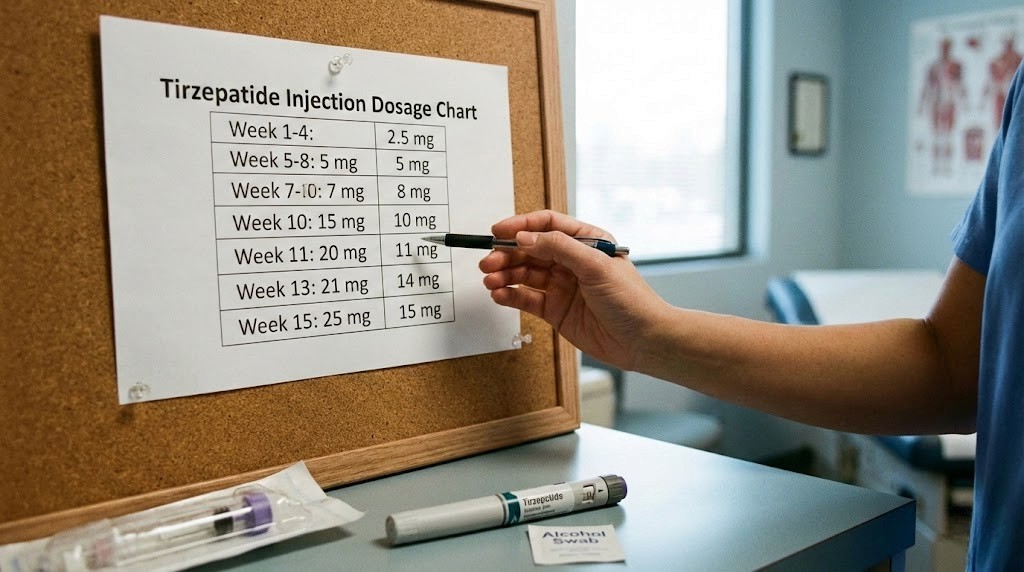
Here is the standard tirzepatide injection dosage chart:
Dose level | Weekly dose | Duration | Purpose |
|---|---|---|---|
Step 1 (starting dose) | 2.5 mg | Weeks 1-4 | Initiation and GI adjustment |
Step 2 | 5 mg | Weeks 5-8 | First therapeutic dose |
Step 3 | 7.5 mg | Weeks 9-12 | Intermediate dose escalation |
Step 4 | 10 mg | Weeks 13-16 | Mid-range therapeutic dose |
Step 5 | 12.5 mg | Weeks 17-20 | High therapeutic dose |
Step 6 (maximum) | 15 mg | Week 21 onward | Maximum approved dose |
A few things to notice. The 2.5 mg starting dose is not actually a therapeutic dose. It exists solely to let your gastrointestinal system adapt to the medication. Most people experience minimal weight loss during those first four weeks, and that is completely expected. The real results begin at 5 mg and above.
Each dose increase should happen only after you have spent at least four weeks at the current level. Some providers keep patients at a given dose for eight weeks or even longer if side effects are still present. There is no race to reach 15 mg. In fact, many people achieve excellent results at 10 mg and never need to go higher. The SURMOUNT-1 trial showed 21.4% body weight reduction at the 10 mg dose, which is remarkable on its own. The jump from 10 mg to 15 mg added only about one additional percentage point of weight loss on average, which means the 10 mg dosage chart is where many patients find their sweet spot.
Why the titration schedule exists
Tirzepatide is a dual GIP/GLP-1 receptor agonist. That dual mechanism is what makes it so effective, but it also means the body needs time to adjust. Skip the titration and jump straight to a higher dose, and you are almost guaranteed to experience nausea, vomiting, or diarrhea that could have been avoided entirely.
The gradual increase serves three purposes. First, it allows the GI tract to adapt to delayed gastric emptying. Second, it lets your provider assess how you respond at each dose level. Third, it builds tolerance so that when you reach therapeutic doses, the side effects are manageable rather than overwhelming. People who follow the tirzepatide dosage chart in units precisely tend to have dramatically fewer side effects than those who try to accelerate the schedule.
Clinical trial results by dose
The numbers from the SURMOUNT-1 trial tell a compelling story. At the 5 mg weekly dose, participants lost an average of 16.0% of their body weight over 72 weeks. At 10 mg, that number climbed to 21.4%. And at the maximum 15 mg dose, participants achieved a mean weight loss of 22.5%. The placebo group lost just 2.4% over the same period.
But the headline numbers only tell part of the story. Between 85% and 91% of participants across all tirzepatide dose groups lost at least 5% of their body weight. Among those on the 10 mg and 15 mg doses, 50% to 57% lost 20% or more. For perspective, that level of weight loss was previously achievable only through bariatric surgery. The SURMOUNT-5 trial later confirmed that tirzepatide produced 47% greater weight loss than semaglutide in a head-to-head comparison, solidifying its position as a leading option for weight management. You can explore the differences in detail through our tirzepatide versus semaglutide dosage chart comparison.
Understanding tirzepatide injection concentrations
This is where confusion lives.
Brand-name tirzepatide products like Mounjaro and Zepbound come in pre-filled injection pens. Each pen delivers a specific dose. You click, inject, and you are done. There is no measuring, no math, no room for error. But compounded tirzepatide works differently. It arrives as a vial of liquid at a specific concentration, and you need to calculate how much to draw into your syringe to get the correct dose.
Concentration is expressed as milligrams per milliliter (mg/mL). Common concentrations for compounded tirzepatide include:
5 mg/mL - Lower concentration, requires larger injection volumes
10 mg/mL - Standard concentration, most commonly dispensed
20 mg/mL - Higher concentration, smaller injection volumes
30 mg/mL - High concentration, very small volumes per dose
60 mg/mL - Ultra-concentrated, available from select pharmacies
The concentration determines how much liquid you need to draw up. A 5 mg dose from a 10 mg/mL vial requires 0.5 mL. That same 5 mg dose from a 20 mg/mL vial requires only 0.25 mL. Same drug. Same dose. Different volume. This distinction trips up more people than any other aspect of tirzepatide dosing, which is why having a reliable dosage chart measured in units matters so much.
What are units on an insulin syringe?
Most people use insulin syringes to inject compounded tirzepatide. These syringes are calibrated in units, not milliliters. One hundred units equals one milliliter. Always. Regardless of what medication is in the syringe, regardless of the concentration, 100 units on an insulin syringe is exactly 1 mL of liquid.
This is a volume measurement, not a dose measurement. When someone says they inject 50 units of tirzepatide, they are describing volume. The actual milligram dose depends entirely on the concentration of the solution. Fifty units (0.5 mL) of a 10 mg/mL solution delivers 5 mg. Fifty units of a 20 mg/mL solution delivers 10 mg. Double the concentration, double the dose at the same volume. Understanding this relationship is essential, and SeekPeptides provides calculator tools that make these conversions simple.
How to convert tirzepatide mg to injection units
The conversion formula is straightforward once you understand it:
(Desired dose in mg / Concentration in mg/mL) x 100 = Units to draw
Let us walk through specific examples. If your vial is 10 mg/mL and you need 2.5 mg, the math looks like this: 2.5 divided by 10 equals 0.25, multiplied by 100 equals 25 units. If you need 7.5 mg from that same vial: 7.5 divided by 10 equals 0.75, multiplied by 100 equals 75 units. The tirzepatide dosing chart in units lays out every combination so you do not have to do math each time.
Conversion chart for 10 mg/mL concentration
Desired dose | Volume (mL) | Insulin syringe units |
|---|---|---|
2.5 mg | 0.25 mL | 25 units |
5 mg | 0.50 mL | 50 units |
7.5 mg | 0.75 mL | 75 units |
10 mg | 1.00 mL | 100 units |
12.5 mg | 1.25 mL | 125 units (requires larger syringe) |
15 mg | 1.50 mL | 150 units (requires larger syringe) |
Notice that doses above 10 mg at this concentration exceed the capacity of a standard 1 mL insulin syringe. If you are on a 12.5 mg or 15 mg dose with a 10 mg/mL concentration, you will need either a larger syringe or two separate injections. Many patients at higher doses switch to a 30 mg/mL concentration specifically to avoid this issue.
Conversion chart for 20 mg/mL concentration
Desired dose | Volume (mL) | Insulin syringe units |
|---|---|---|
2.5 mg | 0.125 mL | 12.5 units |
5 mg | 0.25 mL | 25 units |
7.5 mg | 0.375 mL | 37.5 units |
10 mg | 0.50 mL | 50 units |
12.5 mg | 0.625 mL | 62.5 units |
15 mg | 0.75 mL | 75 units |
The 20 mg/mL concentration is popular precisely because every dose from 2.5 mg through 15 mg fits comfortably within a standard 1 mL insulin syringe. No splitting injections. No fumbling with oversized syringes. If you are unsure which concentration your pharmacy provided, check the label carefully or call them to confirm. Our guide to calculating peptide dosages walks through additional concentration scenarios.
The 25-unit question
One of the most common questions people ask is what does 25 units of tirzepatide equal in milligrams. The answer depends entirely on concentration. At 10 mg/mL, 25 units equals 2.5 mg. At 20 mg/mL, 25 units equals 5 mg. At 5 mg/mL, 25 units equals only 1.25 mg. This is why knowing your concentration is not just helpful. It is essential for safety.
Similarly, people frequently ask how many units is 5 mg of tirzepatide. At 10 mg/mL, the answer is 50 units. At 20 mg/mL, the answer is 25 units. And at 5 mg/mL, you would need 100 units for a 5 mg dose. Three different volumes for the exact same milligram dose, all because of concentration differences. You can also reference our guides on how many units equal 2.5 mg, how many mg is 40 units, and how many mg is 20 units for additional conversion scenarios.
Compounded tirzepatide injection dosage charts
Compounded tirzepatide has become increasingly common as patients seek more affordable alternatives to brand-name products. Several major compounding pharmacies produce tirzepatide at various concentrations, and each requires its own dosage chart. The medication is the same molecule, but the concentration differences mean the injection volumes change significantly.
Empower Pharmacy dosage chart
Empower Pharmacy is one of the largest compounding pharmacies dispensing tirzepatide. Their formulations typically come in concentrations of 10 mg/mL, 20 mg/mL, or higher. The Empower tirzepatide dosage chart follows the same six-step titration protocol, but the unit measurements correspond to their specific concentration. Our Empower tirzepatide dosing chart guide provides the exact measurements for every dose at every concentration Empower dispenses.
Olympia Pharmacy dosage chart
Olympia Pharmacy is another major supplier. Their tirzepatide formulations may differ slightly in concentration from Empower, which is why you should never assume the injection volume from one pharmacy applies to another. The Olympia tirzepatide dosage chart details the specific volumes and units for each dose level based on their concentration ranges.
Southend Pharmacy dosage chart
Southend Pharmacy offers their own tirzepatide formulations. As with all compounding pharmacies, the critical step is confirming the exact concentration on your vial label before calculating your injection volume. Our Southend Pharmacy tirzepatide dosage chart covers their typical concentrations with complete unit breakdowns.
Mochi Health dosage chart
Mochi Health has gained attention as a telehealth platform prescribing compounded tirzepatide. Their formulations come through partner pharmacies with varying concentrations. If you are using tirzepatide through Mochi, our Mochi tirzepatide dosage chart explains the typical concentrations and corresponding injection volumes you should expect.
Generic compound tirzepatide charts
Not all compounding pharmacies are nationally recognized names. Many local pharmacies also compound tirzepatide. Regardless of the source, the math remains the same. Divide your dose by the concentration, multiply by 100, and you have your units. Our tirzepatide compound dosage chart and compound dosing chart cover the most common concentrations across all pharmacies, so you can find your specific numbers no matter where your tirzepatide comes from.
If you have a concentration that does not appear in any standard chart, the SeekPeptides peptide calculator can generate your exact measurements instantly. Just enter your vial concentration and desired dose.
Step-by-step tirzepatide injection technique
Knowing what dose to take is only half the equation. How you inject matters too. Poor injection technique can lead to inconsistent absorption, more bruising, increased pain at the injection site, and in rare cases, medication waste from improper syringe handling. This section walks through the complete injection process from start to finish.
Gathering your supplies
Before you begin, make sure you have everything within reach. You will need your tirzepatide vial, an alcohol swab (or two), an insulin syringe of the appropriate size, a sharps container for disposal, and a clean flat surface to work on. Some people also keep a small gauze pad or cotton ball nearby for after the injection, though it is rarely necessary.
If your tirzepatide has been stored in the refrigerator, take it out 15 to 20 minutes before injecting. Cold medication causes more discomfort at the injection site and may absorb slightly differently than room-temperature solution. This simple step can make a noticeable difference in how the injection feels. Our peptide injections guide covers supply preparation in detail for all peptide injections.
Preparing the vial
Clean the rubber stopper on top of the vial with an alcohol swab. Let it air dry for a few seconds. Do not blow on it. Draw air into your syringe equal to the volume you plan to withdraw, about 25 units of air for a 25-unit draw, for example. Insert the needle through the rubber stopper and push the air into the vial. This creates positive pressure inside the vial and makes it easier to draw the medication out.
If your tirzepatide came as a lyophilized (freeze-dried) powder rather than a pre-mixed liquid, you will need to reconstitute it first. Our guide on how to reconstitute tirzepatide explains the process step by step. You will need bacteriostatic water, and the amount you add determines your final concentration. The tirzepatide reconstitution chart maps out the exact water volumes for each target concentration, and you can also download our reconstitution chart PDF for easy reference. If you need general instructions on the reconstitution process, our how to reconstitute peptides guide and bacteriostatic water mixing guide provide comprehensive walkthroughs. You can also use the reconstitution calculator to determine exactly how much bacteriostatic water to add.
Drawing the medication
With the needle inside the vial and the vial inverted (upside down), slowly pull back on the plunger to your target unit marking. Watch for air bubbles. They are common and harmless in the syringe, but they take up space that should be occupied by medication, which means you could end up with a slightly lower dose than intended.
If you see bubbles, gently tap the side of the syringe with your fingernail. The bubbles will float to the top near the needle. Push the plunger slightly to expel the air back into the vial, then draw back to your target volume again. Repeat until the syringe reads the correct number of units with no visible air bubbles. This is one of the most important steps in the entire process, and it is one that people rush through far too often.
Performing the injection
Clean the injection site with a fresh alcohol swab. Let it dry completely. Pinch the skin firmly between your thumb and forefinger to create a fold of subcutaneous tissue. Insert the needle at a 45 to 90 degree angle, depending on how much subcutaneous fat is present at the site. Most insulin needles are short enough that a 90 degree angle works well for the majority of people.
Push the plunger slowly and steadily. Rushing the injection can increase pain and may cause the medication to pool under the skin rather than dispersing evenly. Once the plunger is fully depressed, hold the needle in place for 5 to 10 seconds. This allows the medication to disperse and reduces the chance of solution leaking back out through the needle track. Then withdraw the needle in one smooth motion. Do not rub the injection site. Gentle pressure with a gauze pad is fine if you see a small drop of blood, but rubbing can cause bruising and may push medication toward the skin surface.
Dispose of the used syringe immediately in a sharps container. Never recap a used needle. Never reuse syringes. These are not suggestions. They are safety requirements that protect you from needlestick injuries and infections. For those considering an alternative to syringes, our peptide injection pen guide covers automated delivery devices that simplify the process.
Injection site selection and rotation
Where you inject tirzepatide affects comfort, absorption, and the likelihood of developing injection site reactions. Three areas are recommended for subcutaneous tirzepatide injections, and rotating between them is not just advice. It is a requirement for safe long-term use.
The abdomen
The abdomen is the most commonly used injection site, and for good reason. It typically has the most consistent subcutaneous fat layer, which means absorption is reliable and predictable. Inject at least two inches from the navel in any direction. Avoid the area directly around the belly button where the tissue composition changes. Most people prefer injecting into the fatty area to the left or right of the navel, or slightly below it.
The abdomen also tends to be the least painful injection site for many people, though this varies by individual. If you are getting started with peptides for the first time, the abdomen is usually the best place to begin because it is easy to see, easy to reach, and easy to pinch. Our peptide dosing guide covers injection site selection across all peptide types.
The thigh
The front and outer portions of the upper thigh provide a large injection area. Avoid the inner thigh where blood vessels and nerves are closer to the surface. The ideal zone is the middle third of the thigh, measured from the knee to the hip, on the front or outer side. This area works well for people who have less abdominal subcutaneous fat or who find abdominal injections uncomfortable.
One thing to know about thigh injections: they tend to absorb slightly slower than abdominal injections in some people. This is generally not clinically significant for a once-weekly medication like tirzepatide, but it is worth noting if you notice any differences in how you feel after injecting in different locations.
The upper arm
The back of the upper arm, specifically the triceps area, is the third approved injection site. It works well but has a practical limitation. Most people cannot comfortably pinch the skin and inject themselves in this area without help. If you have a partner or family member who can assist, the upper arm is an excellent rotation site. Otherwise, stick with the abdomen and thigh for your rotation cycle.
The rotation protocol
Proper rotation means never injecting in the same spot twice in a row. A simple system works best. Week one, inject in the left abdomen. Week two, the right abdomen. Week three, the left thigh. Week four, the right thigh. Then start the cycle over. If you include the upper arm, you have six rotation points, which means each site gets a full five weeks of rest between injections.
Rotation serves two purposes. It prevents lipodystrophy, a condition where fat tissue at the injection site hardens, shrinks, or thickens due to repeated use. It also reduces the cumulative irritation that can lead to chronic injection site reactions. People who inject in the same small area repeatedly are far more likely to develop persistent lumps, redness, and discomfort. A comprehensive peptide dosage chart should always include rotation guidance for this reason.
Injection site reactions and how to prevent them
Injection site reactions are among the most common side effects of tirzepatide. Clinical trial data shows they occur in roughly 2% to 8% of patients, depending on the dose level. The good news is that they are almost always mild, self-limiting, and preventable with proper technique.
What injection site reactions look like
Typical reactions include redness around the injection site, mild swelling, itching, and a small firm lump under the skin. These usually appear within a few hours of the injection and resolve on their own within 3 to 5 days. Occasionally, a bruise will form, especially if a small blood vessel was nicked during injection. Bruising looks worse than it is and does not affect medication absorption.
Less commonly, some people develop a more widespread area of redness or a warm sensation around the site that can last a full week. If this happens consistently, it may indicate a sensitivity to a component of the solution rather than the tirzepatide itself. Compounded formulations sometimes contain preservatives or excipients that can cause localized reactions in sensitive individuals. Understanding peptide safety and risks can help you distinguish between normal reactions and ones that warrant medical attention.
Treatment for injection site reactions
Cold compresses applied for 10 to 15 minutes immediately after injection can reduce inflammation and discomfort. Over-the-counter topical hydrocortisone cream (1%) applied to the area can help with itching and redness. If the itching is particularly bothersome, an oral antihistamine like cetirizine or diphenhydramine can provide relief.
Do not apply heat to an injection site reaction. Heat increases blood flow and can make swelling worse. Do not scratch or pick at the area. And do not apply any topical medications directly before injecting, as they can interfere with the sterility of the injection site.
Prevention strategies
Prevention is always better than treatment. These strategies significantly reduce the likelihood of injection site reactions:
Allow medication to reach room temperature before injecting (15-20 minutes out of the refrigerator)
Rotate injection sites religiously, never repeating the same spot in consecutive weeks
Inject slowly and steadily rather than pushing the plunger quickly
Do not rub or massage the injection site after removing the needle
Use a new, sharp needle every time, as dull needles cause more tissue trauma
Clean the injection site with alcohol and let it dry completely before inserting the needle
Ensure you are injecting into subcutaneous fat, not muscle
If you consistently experience reactions despite following these precautions, talk to your prescribing provider. They may recommend a different injection technique, a switch in compounding pharmacy, or in some cases, a different formulation entirely. Our guide on whether tirzepatide causes fatigue and whether tirzepatide causes anxiety cover other side effects you may want to discuss with your provider.
Tirzepatide injection dosage by weight
One of the most frequent questions about tirzepatide dosing is whether the dose should change based on body weight. The short answer is no. The standard titration schedule from 2.5 mg to 15 mg is the same regardless of whether someone weighs 180 pounds or 350 pounds. This is not an oversight. It is by design.
Tirzepatide was studied across a wide range of body weights in the SURMOUNT trials, and the titration schedule proved effective across all weight categories. The dose escalation is based on tolerability, not body mass. A person weighing 200 pounds follows the same starting dose and titration timeline as a person weighing 300 pounds. The difference shows up in where on the titration schedule each person finds their effective maintenance dose.
How body weight affects the maintenance dose
People with higher starting weights may need to reach the higher doses (12.5 mg or 15 mg) to see maximum results. People with lower starting weights often achieve their goals at 7.5 mg or 10 mg. This is a general pattern, not a rule. Individual metabolic factors, insulin resistance levels, and GLP-1 receptor sensitivity all play roles that body weight alone cannot predict.
The SURMOUNT-4 trial, which tested the maximum tolerated dose approach, showed a mean weight loss of 26% to 26.6% at the highest doses participants could tolerate. Not everyone reached 15 mg. Some achieved that level of weight loss at 10 mg because their bodies were particularly responsive to the medication. The data from tirzepatide before and after weight loss results shows this variation clearly, as does our collection of men before and after tirzepatide results and general tirzepatide before and after documentation.
When to stay at a lower dose
If you are losing weight steadily at your current dose and tolerating it well, there is no medical reason to increase. The goal of the titration schedule is to find the lowest effective dose, not to race to the maximum. Some providers describe this as the "minimum effective dose" philosophy, and it has real advantages. Lower doses mean fewer side effects, lower medication costs, and potentially a longer period of effectiveness before any tolerance develops.
If you are not losing weight on tirzepatide at your current dose despite good adherence, that is the signal to discuss a dose increase with your provider. Stalled weight loss after a period of consistent loss is normal and does not always mean you need more medication. Plateaus happen. But if the plateau extends beyond 4 to 6 weeks with no movement, a dose adjustment is typically warranted. The tirzepatide dosing for weight loss in units guide and the peptide calculator for weight loss can help you understand your options.
Injection timing and scheduling best practices
Tirzepatide is a once-weekly injection. You choose one day per week, and that becomes your injection day. Consistency matters. Taking your injection on the same day each week keeps blood levels stable and maximizes the medication therapeutic effect.
Choosing your injection day
Pick a day that you will remember and that works with your schedule. Many people choose the beginning of the week so that any GI side effects, which are most likely in the first day or two after injection, occur during the workweek when they can manage their diet more carefully. Others prefer Friday or Saturday so they can rest if needed. There is no pharmacologically "best" day. The best day is the one you will not forget.
Some practical advice that experienced users consistently share: avoid choosing a day before a major social event or travel day, especially in the first few months when side effects are most unpredictable. If your schedule changes week to week, set a recurring alarm on your phone. Consistency in timing is important for maintaining steady drug levels in your body.
Time of day considerations
No clinical evidence suggests that injecting in the morning versus the evening makes a meaningful difference in efficacy. However, many people develop a preference based on their side effect experience. If tirzepatide makes you slightly nauseous, injecting before bed allows you to sleep through the initial GI adjustment period. If it causes mild fatigue, morning injection means the peak effect happens during the day when you are active.
Whatever time you choose, try to keep it within a two to three hour window each week. You do not need to inject at the exact same minute, but injecting at roughly the same time helps maintain consistent pharmacokinetics. How fast tirzepatide works depends partly on this consistency, and our guide on how long it takes for tirzepatide to work explains the timeline in detail. Many people also wonder how long before tirzepatide suppresses appetite, and the answer is usually within the first week of injection, though full effect builds over time.
What to do if you miss a tirzepatide injection
Life happens. Trips get extended. Medication gets left at home. You simply forget. Missing a dose is not ideal, but it is not a crisis either. The protocol for a missed dose depends on how many days have passed.
Missed by 1 to 3 days
If your injection day has passed but it has been 3 days or fewer, take your injection as soon as you remember. Then resume your normal weekly schedule from that point. For example, if you normally inject on Monday but forgot until Thursday, inject on Thursday. Then inject the following Monday as usual. This brings the two injections closer together than usual, which is safe and preferred over skipping entirely.
Missed by 4 or more days
If more than 4 days have passed since your scheduled injection, skip that dose entirely and wait until your next scheduled injection day. Do not double up. Do not take a larger dose to compensate. Just resume your normal schedule. Tirzepatide has a relatively long half-life (approximately 5 days), which means one missed dose does not instantly eliminate the drug from your system. You will still have some therapeutic levels circulating.
Repeated missed doses
If you have missed two or more consecutive weeks, contact your prescribing provider before resuming. They may recommend restarting at a lower dose and re-titrating to avoid a surge of GI side effects. Your body loses some of its adaptation to the medication during extended breaks, and jumping back to a full dose can cause significant nausea and vomiting that would not have occurred if you had maintained the schedule.
Adjusting injection dosage for side effects
Side effects are the primary reason people deviate from the standard titration schedule. The most common side effects of tirzepatide are gastrointestinal: nausea, vomiting, diarrhea, constipation, and decreased appetite. These are most pronounced during dose escalation, the weeks immediately following a dose increase, and they typically diminish over time as the body adjusts.
When to pause dose escalation
If you are experiencing significant GI side effects at your current dose, do not increase to the next dose on schedule. Stay at the current dose for an additional 4 weeks (or longer) until symptoms subside. The 4-week minimum at each dose level is exactly that: a minimum. There is no maximum time you can stay at any dose. Some people spend 8 to 12 weeks at a single dose level before moving up, and that is perfectly appropriate.
Signs that you should pause escalation include persistent nausea lasting more than 3 days after injection, vomiting more than once per week, diarrhea that interferes with daily activities, or significant appetite loss that makes it difficult to consume adequate protein and nutrients. These are signals that your body needs more time to adapt.
When to consider dose reduction
In some cases, stepping back down to a previous dose is the right move. If side effects at a new dose level are severe and do not improve after 4 weeks, your provider may recommend reducing back to the previous dose. This is not failure. It is smart medicine. A dose you can tolerate and sustain long-term is far more effective than a higher dose you cannot maintain.
The concept of microdosing tirzepatide has gained attention as an alternative approach. Some providers prescribe doses between the standard steps, like 3.75 mg (between 2.5 and 5 mg) or 6.25 mg (between 5 and 7.5 mg). The tirzepatide microdose chart covers these intermediate doses in detail. This approach can help sensitive individuals titrate more gradually, reducing the shock of jumping from one full dose level to the next.
Dietary strategies to reduce side effects during escalation
What you eat in the 24 hours following an injection can significantly impact how you feel. During dose escalation, prioritize these dietary adjustments:
Eat smaller meals more frequently (5-6 small meals instead of 2-3 large ones)
Avoid high-fat and greasy foods on injection day and the day after
Stay hydrated, aiming for at least 64 ounces of water daily
Eat slowly and stop at the first sign of fullness
Prioritize lean protein sources that are easier to digest
Avoid carbonated beverages on injection days
Ginger tea or ginger supplements can help manage nausea naturally
These are not just generic wellness tips. They come directly from the practical experience of thousands of tirzepatide users and align with guidance from prescribing clinicians. The delayed gastric emptying caused by tirzepatide means food sits in the stomach longer, which is why smaller, lighter meals make such a difference. SeekPeptides members access detailed dietary protocols specifically designed around GLP-1 medication timing, helping maximize results while minimizing discomfort.
Tirzepatide injection versus other GLP-1 injections
Tirzepatide is not the only injectable peptide used for weight management. Semaglutide (sold as Ozempic and Wegovy) is the most direct comparison, and understanding how their dosing schedules differ helps contextualize where tirzepatide fits in the broader landscape of GLP-1 receptor agonist therapy.
Tirzepatide versus semaglutide dosing
Semaglutide follows a four-step titration schedule: 0.25 mg for 4 weeks, 0.5 mg for 4 weeks, 1 mg for 4 weeks, and then 1.7 mg or 2.4 mg as the maintenance dose. Tirzepatide follows a six-step schedule reaching up to 15 mg. The longer titration period for tirzepatide reflects its dual mechanism of action and the need for more gradual adaptation.
Our semaglutide versus tirzepatide dosage chart provides a side-by-side comparison of both titration schedules. If you are considering switching between the two medications, the tirzepatide to semaglutide conversion chart and semaglutide to tirzepatide conversion chart show the equivalent dose levels. For a deeper dive into the conversion process, our dose conversion chart is the most comprehensive reference available.
People switching between the two medications should review our guide to switching from semaglutide to tirzepatide or switching from tirzepatide to semaglutide, depending on direction. The general tirzepatide conversion chart and the conversion chart for weight loss dosing provide additional context for making the transition safely.
Head-to-head results
The SURMOUNT-5 trial provided the definitive head-to-head comparison. Tirzepatide produced 47% greater weight loss than semaglutide at maximum doses over the study period. This was not a minor difference. It confirmed that the dual GIP/GLP-1 mechanism of tirzepatide offers a meaningful clinical advantage over GLP-1-only medications for weight loss. However, semaglutide has its own advantages, including a longer track record of safety data, wider availability, and lower cost in many cases.
For a full comparison, the SeekPeptides semaglutide versus tirzepatide comparison page breaks down efficacy, side effects, dosing schedules, and cost considerations. If you are currently on semaglutide and want to understand how the dosing compares, our semaglutide 5 mg/mL dosage chart, semaglutide dosing chart in units, semaglutide mixing chart, and semaglutide B12 dosage chart are all available as reference. Our guide on how fast semaglutide works provides a timeline comparison that many readers find helpful.
Newer alternatives
Retatrutide is an emerging triple-agonist peptide (GIP/GLP-1/glucagon) that has shown promising early clinical results. Our retatrutide versus tirzepatide dosage chart compares the two for readers who want to understand the next generation of weight management peptides. Mazdutide is another newer option, and the mazdutide versus tirzepatide comparison covers the differences in mechanism and early efficacy data.
Storing tirzepatide injections properly
Storage directly affects potency. Improperly stored tirzepatide can degrade, reducing its effectiveness and potentially creating safety concerns. The rules are straightforward, but they matter.
Before reconstitution or first use
Unopened tirzepatide vials and pre-filled pens should be stored in the refrigerator at 36 to 46 degrees Fahrenheit (2 to 8 degrees Celsius). Do not freeze them. Freezing can damage the peptide structure and render the medication ineffective. Keep vials in their original packaging to protect them from light, which can also cause degradation over time.
After reconstitution or first use
Once a vial has been reconstituted or a pen has been used for the first time, storage rules become more specific. Compounded tirzepatide in vials should generally be refrigerated and used within the timeframe specified by the compounding pharmacy, typically 28 to 60 days depending on the formulation. Our guide on how long tirzepatide lasts in the fridge provides detailed timelines for different formulations.
Brand-name pens (Mounjaro, Zepbound) can be stored at room temperature for up to 21 days, or refrigerated. Do not go back and forth between refrigerated and room temperature storage more than necessary. Each temperature transition accelerates degradation slightly.
Travel and temperature excursions
If you need to travel with tirzepatide, use an insulated cooling pouch with ice packs. Do not place vials directly against ice, as this can cause localized freezing. A buffer layer (towel or foam) between the ice pack and the vial is essential. For air travel, keep tirzepatide in your carry-on bag. Checked luggage is exposed to extreme temperature fluctuations in the cargo hold.
Many people wonder how long compounded tirzepatide can be out of the fridge and whether tirzepatide needs to be refrigerated at all times. The answer depends on the specific formulation, but most compounded tirzepatide should not be at room temperature for more than a few hours at a time. Extended exposure to temperatures above 77 degrees Fahrenheit can cause measurable degradation. Our broader peptide storage guide covers best practices, and our articles on how to store peptides after reconstitution, how long peptides last in the fridge, and whether peptides expire provide comprehensive storage information.
Common injection mistakes and how to avoid them
Even experienced users make mistakes. Some are minor inconveniences. Others can affect the efficacy of your medication or cause unnecessary discomfort. Here are the most common injection errors and how to prevent them.
Mistake 1: Using the wrong concentration in your calculations
This is the single most dangerous mistake. If your pharmacy switches you from a 10 mg/mL vial to a 20 mg/mL vial and you draw the same number of units, you just doubled your dose. Always, always check the concentration on the vial label before drawing up your injection. If you receive a new vial from your pharmacy, verify that the concentration matches what you have been using. If it has changed, recalculate your units using the tirzepatide dosage chart in units or the SeekPeptides peptide calculator.
Mistake 2: Injecting into muscle instead of fat
Tirzepatide is a subcutaneous injection. It belongs in the fat layer under the skin, not in the muscle beneath that fat layer. Injecting into muscle changes the absorption rate and can cause more pain and bruising. The solution is simple: pinch the skin before injecting, use the appropriate needle length (most insulin syringes have short needles designed for subcutaneous injection), and inject at the correct angle. If you are very lean with minimal subcutaneous fat at your injection sites, use a shallower angle (closer to 45 degrees rather than 90).
Mistake 3: Not allowing air bubbles to clear
Small air bubbles in a subcutaneous injection are not dangerous. They will not cause an air embolism. That said, air bubbles do take up space in the syringe that should be occupied by medication. A few tiny bubbles might reduce your dose by a negligible amount, but a large air bubble could mean you are getting noticeably less medication than intended. Take the extra 30 seconds to tap the bubbles out. It matters.
Mistake 4: Rushing the injection
Pushing the plunger too fast creates a high-pressure stream of fluid that can irritate subcutaneous tissue and increase the likelihood of a welt or lump at the injection site. Slow, steady pressure over 5 to 10 seconds is ideal. Think of it as a gentle push, not a forceful jab. This is especially important at higher doses where you are injecting larger volumes.
Mistake 5: Rubbing the injection site afterward
The instinct to rub the injection site after removing the needle is strong. Resist it. Rubbing pushes medication toward the skin surface, can increase bruising by spreading blood from nicked capillaries, and may cause the injection to create a visible welt. Light pressure is fine. Rubbing is not.
Mistake 6: Not rotating injection sites
We covered this in the rotation section, but it bears repeating. Injecting in the same spot every week will cause problems. Lipodystrophy, scar tissue buildup, and chronic injection site reactions are all consequences of poor rotation. Keep a simple log if you need to. Write down which site you used each week. Some people use a phone reminder that includes the site for that week. Whatever system works for you, use it consistently.
Mistake 7: Storing medication improperly
Leaving a vial on the bathroom counter where it gets warm and humid, storing pens in a car where temperatures fluctuate wildly, or accidentally freezing medication by placing it too close to the back of the refrigerator, these are mistakes that silently reduce the medication potency. You may not notice the difference immediately, but degraded medication produces inferior results. Follow the storage guidelines strictly.
Sublingual and oral tirzepatide alternatives
Not everyone is comfortable with injections. That is understandable. Needles are a barrier for many people, and the pharmaceutical industry has taken notice. Sublingual tirzepatide, which dissolves under the tongue, and oral tirzepatide formulations are emerging as alternatives to traditional injections.
The tirzepatide sublingual dosage chart covers the specific dosing for under-the-tongue formulations, which typically require different milligram amounts than injections due to differences in bioavailability. Our comprehensive oral tirzepatide guide explores the science behind non-injectable delivery and what the research says about efficacy compared to injections. For a broader comparison of delivery methods, our injectable versus oral peptides comparison breaks down the pros and cons of each approach.
It is worth noting that injectable tirzepatide currently has the strongest evidence base. The SURMOUNT trials all used injectable formulations, and the weight loss results we referenced earlier came specifically from subcutaneous injections. Oral and sublingual formulations are promising but are still establishing their efficacy profiles through ongoing research.
Tirzepatide injection combinations and enhanced formulations
Some compounding pharmacies offer tirzepatide combined with other ingredients designed to enhance its effects or reduce side effects. Two of the most common additions are vitamin B12 and niacinamide.
Tirzepatide with B12 is popular because GLP-1 medications can sometimes reduce absorption of certain vitamins, and B12 deficiency is associated with fatigue, a side effect some tirzepatide users report. Our tirzepatide with B12 complete guide explains the rationale and dosing considerations. Similarly, our tirzepatide niacinamide guide covers why some formulations include this B vitamin and what benefits it may offer. For another combination option, our cagrilintide dosage with tirzepatide guide explores dual-peptide protocols that some providers are beginning to prescribe.
These enhanced formulations follow the same basic injection technique described above. The tirzepatide dose remains the same; the added ingredients are simply included in the same solution. However, injection volumes may differ slightly from standard tirzepatide-only formulations, so always confirm your specific concentration and calculate units accordingly.
Finding affordable tirzepatide injections
Cost is a real consideration for many people. Brand-name tirzepatide (Mounjaro and Zepbound) carries a significant price tag without insurance coverage. Compounded tirzepatide has become a popular alternative, offering the same active molecule at a fraction of the cost. However, quality varies between pharmacies, and not all compounders follow the same standards.
When evaluating compounding pharmacies, look for 503B-registered facilities. These pharmacies operate under stricter FDA oversight than traditional 503A pharmacies and must follow current Good Manufacturing Practices (cGMP). Ask about third-party testing. Reputable pharmacies test every batch for potency, sterility, and endotoxins. If a pharmacy cannot provide certificates of analysis for their tirzepatide, consider that a red flag.
Resources like Peptide Sciences tirzepatide reviews and our Lavender Sky tirzepatide guide evaluate specific suppliers. The SeekPeptides peptide cost calculator can help you compare costs across different pharmacies and concentrations.
Advanced dosing considerations
Once you have mastered the basics of the tirzepatide injection dosage chart, there are several advanced considerations worth understanding.
Dose splitting
Some providers recommend splitting the weekly dose into two smaller injections given 3 to 4 days apart. For example, instead of one 10 mg injection per week, you would take 5 mg on Monday and 5 mg on Thursday. The rationale is that smaller individual doses may reduce GI side effects while maintaining the same total weekly exposure. This approach is not part of the FDA-approved protocol, but it has a logical pharmacological basis and is gaining traction in clinical practice.
If your provider recommends dose splitting, the calculation is simple. Take your normal weekly unit measurement and divide it in half. If your 10 mg dose at 20 mg/mL equals 50 units, each split dose would be 25 units. Make sure you are still following proper reconstitution protocols and storage guidelines, as the vial will be accessed twice per week instead of once.
Extended titration for sensitive individuals
The standard protocol calls for 4-week minimum steps. But some individuals are exceptionally sensitive to GLP-1 receptor activation. For these people, an extended titration over 8 to 12 weeks per step may be appropriate. This is particularly common in people who have never used any GLP-1 medication before, those with a history of gastroparesis or other GI conditions, and those who are simultaneously taking other medications that affect gastric motility.
An extended titration does not mean reduced effectiveness. It simply means a longer ramp-up period before reaching therapeutic doses. The endpoint is the same. The journey just takes a bit longer, and that is perfectly fine.
Long-term maintenance dosing
A question many people ask eventually: do you stay on tirzepatide forever? The current evidence suggests that tirzepatide, like other GLP-1 medications, works best as a long-term or indefinite treatment. The SURMOUNT-4 study showed that participants who discontinued tirzepatide after achieving significant weight loss regained approximately two-thirds of the lost weight within a year. This does not mean weight loss medications are "addictive" or "a crutch." It means they are treating an ongoing physiological condition, much like blood pressure medication treats hypertension.
For long-term use, some providers reduce patients to a lower maintenance dose after reaching their weight goal. This might mean stepping back from 15 mg to 10 mg, or from 10 mg to 7.5 mg. The tirzepatide dosage in units guide can help you understand the measurements for any adjusted dose. The goal is to find the lowest dose that maintains results while minimizing medication exposure and cost.
The role of peptide education in safe injection practices
Understanding the science behind your medication transforms you from a passive participant into an informed partner in your own healthcare. Knowing what peptides are and how they work gives you the context to understand why titration matters, why injection technique affects absorption, and why storage conditions impact potency.
SeekPeptides exists to make that education accessible. The complete list of injectable peptides, the guide to the best peptides for weight loss, and resources on peptides for weight loss provide the foundational knowledge that makes everything else click into place. Whether you are exploring peptides for fat loss, investigating options targeting belly fat, researching the best peptide for visceral fat loss, or looking into peptide stacks for weight loss, having a trusted educational resource makes all the difference.
For women navigating weight management, our guides on peptides for weight loss in women and peptides for menopause weight loss address the specific physiological considerations that affect female dosing and response. And for those interested in the broader peptide landscape beyond GLP-1 medications, our best fat burning peptide guide, bioactive precision peptides guide, and semaglutide reconstitution chart are available as additional references.
Putting it all together: your tirzepatide injection checklist
Here is a practical weekly checklist that consolidates everything we have covered into a simple, repeatable process:
Before injection day: Confirm your current dose level on the titration schedule. Check that you have adequate supplies (syringe, alcohol swabs, sharps container). Remove your vial from the refrigerator 15-20 minutes before injection time.
Calculate your units: Verify the concentration on your vial label. Use the appropriate conversion chart or calculator. Double-check your math. If using a new vial, verify the concentration matches your previous one.
Prepare: Wash your hands thoroughly. Clean the vial stopper with alcohol. Draw air equal to your injection volume and inject it into the vial. Draw medication to the correct unit marking. Clear air bubbles.
Select your site: Consult your rotation log. Choose the next site in your rotation cycle. Clean the area with alcohol and let it dry.
Inject: Pinch the skin. Insert the needle at 45-90 degrees. Push the plunger slowly and steadily. Hold for 5-10 seconds. Withdraw smoothly. Do not rub.
After: Dispose of the syringe in your sharps container. Log the date, dose, and injection site in your tracking method of choice. Return the vial to the refrigerator.
That is it. Six steps. Repeat weekly. The process takes less than five minutes once you have done it a few times. What feels complicated now will feel routine within a month.
Frequently asked questions
How many units of tirzepatide should I inject per week?
The number of units depends on both your dose and your vial concentration. At 10 mg/mL, a 2.5 mg dose equals 25 units and a 10 mg dose equals 100 units. At 20 mg/mL, the same doses require 12.5 units and 50 units respectively. Always calculate based on your specific concentration. Our tirzepatide dosage chart in units lists every combination.
Can I inject tirzepatide in the same spot every week?
No. Injecting in the same location repeatedly leads to lipodystrophy (hardened or damaged fat tissue), scar tissue buildup, and increased injection site reactions. Rotate between at least 4 injection sites: left abdomen, right abdomen, left thigh, right thigh. Add the upper arms if you have assistance.
What happens if I accidentally inject too much tirzepatide?
Contact your healthcare provider immediately. Overdose symptoms primarily involve severe GI effects, including intense nausea, vomiting, and diarrhea. There is no antidote for tirzepatide overdose, and treatment is supportive. This is why double-checking your concentration and unit calculations before every injection is so important.
Is tirzepatide injection painful?
Most people describe tirzepatide subcutaneous injections as minimally painful, comparable to a small pinch. Insulin syringe needles are very thin (typically 30 or 31 gauge) and short (6mm to 8mm), which minimizes discomfort. Cold medication tends to sting more, so allowing it to reach room temperature helps. The abdomen is generally the least painful site for most people.
How long after starting tirzepatide injections will I see weight loss results?
Most people begin noticing appetite suppression within the first week of injections. Measurable weight loss typically begins within the first 2 to 4 weeks, though significant results accumulate over months. The 2.5 mg starting dose produces minimal weight loss; more substantial results begin at the 5 mg dose level and increase with each subsequent tier. Our guide on how fast tirzepatide works covers the detailed timeline.
Can I switch between brand-name and compounded tirzepatide injections?
Yes, but be careful with the transition. Brand-name pens deliver a pre-measured dose, while compounded vials require you to calculate and draw the correct amount. When switching from a pen to a vial, verify your concentration and unit calculations with your provider before the first injection. The active ingredient is the same, but the delivery method is different, and errors during the transition are common.
Do I need to use the exact same injection time every week?
The exact same minute is not necessary, but consistency within a 2-3 hour window is recommended. Tirzepatide has a half-life of approximately 5 days, so moderate timing variations do not significantly impact blood levels. What matters most is maintaining a consistent 7-day interval between injections.
What is the difference between tirzepatide injection units and milligrams?
Milligrams (mg) measure the amount of active drug. Units on an insulin syringe measure the volume of liquid being injected (100 units always equals 1 mL). The relationship between units and milligrams depends on the concentration of the solution. A higher concentration means fewer units are needed for the same milligram dose. The dosage calculator can handle these conversions automatically.
External resources
FDA Drug Safety Information on GLP-1 Medications - Official safety communications and drug labeling updates
SURMOUNT-1 Trial Results (New England Journal of Medicine) - The landmark clinical trial showing tirzepatide efficacy for weight management
CDC Guidelines on Injectable Medication Best Practices - Federal guidelines covering safe injection practices
American Diabetes Association: Tirzepatide Information - Clinical overview and prescribing considerations
World Health Organization: Obesity Facts - Global context for weight management pharmacotherapy
The tirzepatide injection dosage chart is more than a reference table. It is a roadmap for a process that unfolds over months, adapting to your body, your tolerance, and your goals. The numbers on the chart matter, but so does the technique behind every injection, the rotation of every site, the precision of every unit measurement. Get these details right, and the medication has every opportunity to work as intended.
SeekPeptides members access complete dosing protocols, interactive calculators, and step-by-step injection guides designed to take the guesswork out of tirzepatide dosing. From your very first 2.5 mg injection to long-term maintenance dosing, having a trusted resource that puts accuracy and safety first makes the entire journey smoother. If you are serious about getting your dosing right, SeekPeptides was built for exactly that purpose.
In case I do not see you, good afternoon, good evening, and good night. May your injections stay precise, your dosages stay accurate, and your results stay consistent.