Feb 11, 2026
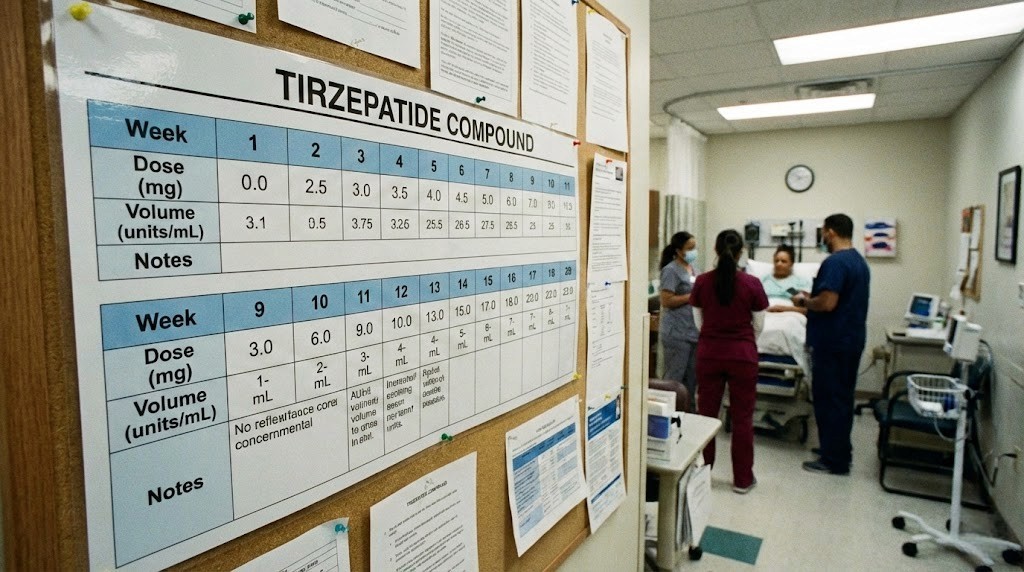
Some researchers see results in two weeks. Others wait months and wonder what went wrong. The difference almost never comes down to the compound itself. It comes down to dosing. Specifically, it comes down to understanding how compounded tirzepatide dosing works, why concentrations from different pharmacies are not interchangeable without recalculating, and why a generic chart pulled from the internet could leave you either underdosed and frustrated or overdosed and nauseated for days.
Compounded tirzepatide arrives in vials. Not pre-filled pens. That means you are responsible for drawing the correct amount using an insulin syringe measured in units, and the number of units you draw depends entirely on the concentration printed on your vial label. A 2.5 mg dose from a 5 mg/mL vial requires 50 units. That same 2.5 mg dose from a 10 mg/mL vial requires only 25 units. Draw 50 units from the 10 mg/mL vial and you have just injected 5 mg, double your intended dose. This kind of mistake happens more often than anyone wants to admit, and it is the single most dangerous aspect of working with compounded formulations.
This guide breaks down every concentration you will encounter, walks through the standard titration schedules used in clinical settings, and provides the exact unit calculations for each dose at each concentration. It covers what to do when side effects stall your progress, how to time your injections for maximum tolerability, and when it makes sense to hold at a dose rather than push higher. SeekPeptides created this resource because accurate dosing information should not be buried behind paywalls or scattered across conflicting forum posts. Whether you are starting your first week at 2.5 mg or deciding whether 12.5 mg or 15 mg is your ceiling, everything you need is right here.
How compounded tirzepatide differs from brand-name formulations
Brand-name tirzepatide ships as Mounjaro or Zepbound in pre-filled, single-dose pens. You click the pen, inject, and discard it. The dose is fixed. There is no measuring, no calculating, and no room for error. Compounded tirzepatide is a completely different experience.
Compounded formulations arrive in multi-dose vials. Each vial contains a specific concentration of tirzepatide dissolved in a sterile solution, and you draw individual doses using a syringe. The concentration varies by pharmacy. Some compound at 5 mg/mL. Others use 10 mg/mL. Some go as high as 20 mg/mL. The active molecule is the same 39-amino acid peptide in both cases, a dual GIP and GLP-1 receptor agonist that targets appetite regulation, insulin secretion, and gastric motility. But the delivery method changes everything about how you interact with your medication.
Understanding this distinction matters because every dosing chart is concentration-dependent. A chart designed for 10 mg/mL vials will give you the wrong dose if your vial is 5 mg/mL. The mathematics are not complicated once you understand them, but skipping this step is where serious dosing errors begin.
Why pharmacies use different concentrations
Injection volume drives the decision. At 5 mg/mL, a 15 mg dose requires 3 mL of fluid, a large and uncomfortable injection. At 10 mg/mL, that same dose drops to 1.5 mL. At 20 mg/mL, it shrinks further to 0.75 mL. Higher concentrations mean smaller injection volumes, less discomfort at the injection site, and more doses per vial. The tradeoff is that each unit on your syringe now delivers more medication, which means measurement precision becomes even more critical.
Some pharmacies add ingredients to their compounded formulations. Niacinamide (vitamin B3) is sometimes included to address fatigue. Vitamin B6 may appear in formulations aimed at reducing nausea. B12 is another common additive. These additions do not change the tirzepatide concentration, but they are worth noting because they may affect your experience and are part of what makes each compounding pharmacy slightly different from the next.
Regulatory context
The FDA approved tirzepatide as Mounjaro for type 2 diabetes in May 2022 and as Zepbound for chronic weight management in November 2023. During periods of drug shortage, the FDA exercised enforcement discretion that allowed 503A and 503B compounding pharmacies to produce tirzepatide. The regulatory landscape around compounded GLP-1 medications continues to evolve, and researchers should stay informed about current availability through their healthcare providers. Regardless of the regulatory status at any given time, the dosing principles and calculations remain identical.
The unit conversion formula every user must know
This is the most important section of this entire guide. If you remember nothing else, remember this formula.
Units to draw = (desired dose in mg / concentration in mg per mL) x 100
That is it. Three numbers. One division. One multiplication. And it gives you the exact number of units to draw on an insulin syringe for any dose at any concentration.
Here is why the formula works. An insulin syringe measures in units, and 100 units equals 1 mL. So when you divide your desired dose by the concentration, you get the volume in milliliters. Multiply by 100 and you convert milliliters to units. Simple.
Conversion chart for 5 mg/mL concentration
If your vial reads 5 mg/mL, here are your unit calculations for each standard dose:
Dose (mg) | Volume (mL) | Units on insulin syringe |
|---|---|---|
1.0 mg | 0.20 mL | 20 units |
1.5 mg | 0.30 mL | 30 units |
2.0 mg | 0.40 mL | 40 units |
2.5 mg | 0.50 mL | 50 units |
5.0 mg | 1.00 mL | 100 units |
7.5 mg | 1.50 mL | 150 units* |
10.0 mg | 2.00 mL | 200 units* |
*Doses above 5.0 mg at this concentration require more than 1 mL, which exceeds the capacity of a standard 1 mL insulin syringe. You would need a larger syringe or split the injection into two separate draws. This is one reason many pharmacies prefer higher concentrations for patients who will titrate above 5 mg.
Conversion chart for 10 mg/mL concentration
The 10 mg/mL concentration is the most commonly compounded strength. It keeps injection volumes manageable across the entire dosing range.
Dose (mg) | Volume (mL) | Units on insulin syringe |
|---|---|---|
1.0 mg | 0.10 mL | 10 units |
1.5 mg | 0.15 mL | 15 units |
2.0 mg | 0.20 mL | 20 units |
2.5 mg | 0.25 mL | 25 units |
5.0 mg | 0.50 mL | 50 units |
7.5 mg | 0.75 mL | 75 units |
10.0 mg | 1.00 mL | 100 units |
12.5 mg | 1.25 mL | 125 units* |
15.0 mg | 1.50 mL | 150 units* |
*Doses above 10.0 mg at this concentration will exceed the 1 mL insulin syringe. Some practitioners split these into two injections or use a 3 mL syringe with a different unit marking system.
Conversion chart for 20 mg/mL concentration
The 20 mg/mL concentration is ideal for higher doses because it keeps every injection under 1 mL. If you previously used a 10 mg/mL vial and switch to 20 mg/mL, your unit count for the same dose drops by exactly half. Double-check your label before every injection.
Dose (mg) | Volume (mL) | Units on insulin syringe |
|---|---|---|
2.5 mg | 0.125 mL | 12.5 units |
5.0 mg | 0.25 mL | 25 units |
7.5 mg | 0.375 mL | 37.5 units |
10.0 mg | 0.50 mL | 50 units |
12.5 mg | 0.625 mL | 62.5 units |
15.0 mg | 0.75 mL | 75 units |
Notice the half-unit measurements at 2.5 mg, 7.5 mg, and 12.5 mg. Standard insulin syringes mark in whole units, so hitting 12.5 or 37.5 exactly requires careful technique. Some users round to the nearest whole unit (acceptable at these small volumes) or use syringes with half-unit markings if available. For the most precise measurements, use a peptide dosage calculator to verify your draw volume against your specific vial concentration.
Standard tirzepatide titration schedule
The FDA-approved titration protocol for tirzepatide follows a gradual escalation pattern. Start low. Increase slowly. Give your body time to adapt. This approach reduces gastrointestinal side effects and helps you find the minimum effective dose, which is the lowest dose that produces meaningful results.
The standard 24-week escalation
Weeks | Dose | Purpose | 10 mg/mL units |
|---|---|---|---|
1-4 | 2.5 mg | Initiation/acclimation | 25 units |
5-8 | 5.0 mg | First therapeutic dose | 50 units |
9-12 | 7.5 mg | Escalation | 75 units |
13-16 | 10.0 mg | Escalation | 100 units |
17-20 | 12.5 mg | Escalation | 125 units |
21-24 | 15.0 mg | Maximum dose | 150 units |
Not everyone reaches 15 mg. The SURMOUNT-1 trial published in the New England Journal of Medicine demonstrated significant weight loss at every dose level. Participants on 5 mg lost an average of 16% of their body weight. Those on 10 mg lost 21.4%. And the 15 mg group lost 22.5%. The jump from 10 mg to 15 mg produced only about one additional percentage point of weight loss for some participants, which means many people find their optimal balance between results and tolerability somewhere in the 7.5 to 12.5 mg range.
The key insight is that tirzepatide is not a medication where more always means better. Finding the dose where side effects are manageable and results are consistent matters far more than reaching the maximum.
Conservative titration for sensitive users
Some providers prescribe an even slower ramp for patients who are GLP-1 naive or have a history of gastrointestinal sensitivity. This approach uses lower starting doses and extends the time at each level.
Weeks | Dose | Purpose | 10 mg/mL units |
|---|---|---|---|
1-2 | 1.0 mg | Ultra-low initiation | 10 units |
3-4 | 1.5 mg | Gentle acclimation | 15 units |
5-8 | 2.5 mg | Standard starting dose | 25 units |
9-12 | 5.0 mg | First therapeutic dose | 50 units |
13-16 | 7.5 mg | Moderate escalation | 75 units |
17+ | 10.0 mg | Target maintenance | 100 units |
This conservative approach takes longer to reach therapeutic doses, but the tradeoff is fewer side effects and better long-term adherence. Researchers who have never used a GLP-1 or GIP agonist before often benefit from this slower introduction. The body needs time to adjust to delayed gastric emptying and altered appetite signaling, and rushing through that adjustment period is the primary cause of severe nausea, vomiting, and early discontinuation.
Microdosing protocols for compounded tirzepatide
Microdosing tirzepatide has gained significant attention as an alternative to the standard titration. Instead of starting at the full 2.5 mg weekly dose, microdosing protocols use sub-therapeutic amounts, typically between 0.5 mg and 1.5 mg, administered weekly or even split into multiple smaller injections per week.
The logic is straightforward. GLP-1 receptor agonists cause the most side effects during initiation and dose increases. By starting at a fraction of the standard dose, you give your GLP-1 and GIP receptors time to upregulate their response gradually. Think of it as the difference between jumping into cold water and wading in slowly. The destination is the same. The experience is dramatically different.
Sample microdosing schedule
Week | Dose | 10 mg/mL units | Notes |
|---|---|---|---|
1 | 0.5 mg | 5 units | Minimal GI effects expected |
2 | 0.5 mg | 5 units | Assess tolerance |
3 | 1.0 mg | 10 units | Slight appetite reduction may begin |
4 | 1.0 mg | 10 units | Continue assessment |
5-6 | 1.5 mg | 15 units | Approaching standard starting range |
7-10 | 2.5 mg | 25 units | Standard initiation dose reached |
11+ | Follow standard titration | Varies | Continue 2.5 mg increases every 4 weeks |
Compounded formulations make microdosing practical because you control the exact amount drawn into the syringe. With pre-filled pens, your lowest available dose is 2.5 mg. With a vial and syringe, you can dose as low as your syringe markings allow.
Not everyone needs to microdose. If you have previous experience with semaglutide or another GLP-1 agonist and tolerated it well, starting at the standard 2.5 mg is usually fine. Microdosing is most valuable for first-time users, those with sensitive digestive systems, or anyone who has previously discontinued a GLP-1 medication due to side effects. For more detail on switching from semaglutide to tirzepatide, see our dedicated conversion guide.
How to read your compounded vial label
Your vial label contains every piece of information you need to dose correctly. But only if you know what to look for.
Critical label elements
Concentration. This is the most important number. It tells you how many milligrams of tirzepatide are dissolved in each milliliter of solution. Written as mg/mL. Common values include 5 mg/mL, 10 mg/mL, 15 mg/mL, and 20 mg/mL.
Total volume. This tells you how much liquid is in the vial. A 3 mL vial at 10 mg/mL contains 30 mg total of tirzepatide. A 5 mL vial at the same concentration contains 50 mg.
Beyond-use date (BUD). Compounding pharmacies assign a BUD based on USP guidelines. This is not the same as an expiration date on commercially manufactured drugs. The BUD typically ranges from 28 to 90 days after compounding, depending on the pharmacy and their stability testing data. Once you puncture the vial, the BUD may shorten further. Proper refrigeration is essential to maintaining potency through the BUD.
Lot number. This identifies the specific batch your vial came from. If you experience unexpected side effects or suspect a quality issue, you will need this number to report it.
Additional ingredients. Some labels list additives like B12, niacinamide, or L-carnitine. These do not change your tirzepatide dose calculation, but knowing what is in your vial helps you and your provider make informed decisions.
Calculating doses per vial
Knowing how many doses your vial contains helps you plan refills and avoid running out mid-titration.
Vial | Concentration | Total tirzepatide | Doses at 2.5 mg | Doses at 5 mg | Doses at 10 mg |
|---|---|---|---|---|---|
2 mL | 10 mg/mL | 20 mg | 8 doses | 4 doses | 2 doses |
3 mL | 10 mg/mL | 30 mg | 12 doses | 6 doses | 3 doses |
5 mL | 10 mg/mL | 50 mg | 20 doses | 10 doses | 5 doses |
2 mL | 20 mg/mL | 40 mg | 16 doses | 8 doses | 4 doses |
5 mL | 20 mg/mL | 100 mg | 40 doses | 20 doses | 10 doses |
At the initiation dose of 2.5 mg weekly, a single 5 mL vial at 10 mg/mL provides 20 weeks of supply. As you titrate up, you will go through vials faster. At 10 mg weekly, that same vial lasts only 5 weeks. Plan your refill schedule accordingly, especially if your pharmacy has lead times for compounding.
Week-by-week dosing expectations
Knowing what to expect each week reduces anxiety and helps you distinguish normal adaptation from genuine problems. Here is a realistic timeline of what most people experience during their titration.
Weeks 1-4: the initiation phase (2.5 mg)
The first four weeks at 2.5 mg are about acclimation, not results. This dose is sub-therapeutic for most people. Its purpose is to introduce the medication to your system and allow your GLP-1 and GIP receptors to begin adapting.
What you might feel:
Mild appetite reduction, sometimes barely noticeable
Slight nausea in the first 24-48 hours after injection, typically resolving quickly
Occasional changes in bowel habits
Some people feel nothing at all, and that is completely normal at this dose
What you should not feel:
Severe nausea or vomiting (may indicate a dosing error, double-check your unit calculation)
Complete loss of appetite (unusual at 2.5 mg)
Significant weight loss (possible but not typical at the initiation dose)
Do not increase your dose before completing four full weeks at 2.5 mg. Patience here pays dividends later.
Weeks 5-8: the first therapeutic dose (5.0 mg)
This is where most people start noticing real changes. The 5.0 mg dose was the lowest dose studied in the SURMOUNT-1 trial and produced an average of 16% body weight loss over 72 weeks. That is not nothing. That is transformative for many people.
Appetite suppression becomes noticeable. You might find yourself forgetting to eat, or feeling satisfied after portions that would have seemed small before. Some people describe it as the "volume dial" on hunger turning down. Food is still enjoyable. You simply want less of it.
Nausea may return briefly after the dose increase. This is the most common time for GI side effects to appear. Eating smaller, more frequent meals helps. Avoiding high-fat and greasy foods during the first week at each new dose makes a measurable difference. Staying hydrated is not optional, it is essential. Many successful users report that ginger tea or ginger candies provide natural anti-nausea support during transitions.
Weeks 9-12: finding your stride (7.5 mg)
By week 9, your body has adapted to tirzepatide at a fundamental level. The GIP and GLP-1 receptors are responding to the medication consistently. Gastric emptying has slowed to a new baseline. Appetite signaling has shifted.
The 7.5 mg dose represents a middle ground that many people find ideal. Side effects from the 5 mg dose have typically resolved. The additional appetite suppression from 7.5 mg is noticeable but not overwhelming. For some users, this becomes their long-term maintenance dose.
Weight loss momentum typically builds during this period. You may notice changes in body composition that go beyond the scale, looser clothing, reduced bloating, and improved energy levels. The combination of GIP and GLP-1 agonism is what sets tirzepatide apart from pure GLP-1 agonists like semaglutide. GIP receptor activation appears to enhance fat metabolism and improve insulin sensitivity through pathways that GLP-1 alone does not fully engage.
Weeks 13-16: the middle escalation (10.0 mg)
The jump to 10 mg is where the clinical data gets really compelling. In the SURMOUNT-1 trial, the 10 mg group lost an average of 21.4% of their body weight, an additional 5 percentage points compared to the 5 mg group. For someone weighing 220 pounds at baseline, that is the difference between losing 35 pounds and losing 47 pounds.
At this dose, appetite suppression is typically strong and consistent. The concept of being genuinely hungry becomes unfamiliar to many users. This is where mindful eating becomes important, not because you need to restrict, but because your body may not reliably signal when it needs fuel. Setting meal reminders and tracking protein intake ensures you maintain adequate nutrition even as your overall calorie intake drops.
Side effects at 10 mg vary widely between individuals. Some people experience the same mild nausea they had at 5 mg. Others notice new symptoms like constipation or acid reflux. Both are manageable and typically improve within 2-3 weeks of staying at the same dose.
Weeks 17-24: upper range doses (12.5-15.0 mg)
Not everyone needs or benefits from doses above 10 mg. The decision to continue escalating should involve a conversation with your healthcare provider and an honest assessment of your results and tolerability at 10 mg.
The 12.5 mg dose is not part of the standard brand-name escalation (Mounjaro and Zepbound jump directly from 10 mg to 15 mg in 2.5 mg single-dose pens). But compounded formulations allow this intermediate step, which is one of the practical advantages of working with vials and syringes. Many providers find that 12.5 mg provides additional benefit over 10 mg with fewer side effects than the full 15 mg dose.
At 15 mg, you are at the FDA-approved maximum. The SURMOUNT-1 data showed 22.5% average weight loss at this dose, about one percentage point more than 10 mg. For some people, that extra one percent is meaningful. For others, the side effect profile at 15 mg is not worth the marginal gain. Individual response varies enormously, and there is no universal "best" dose.
When to hold your dose instead of increasing
The titration schedule is a guideline, not a mandate. Several situations call for staying at your current dose longer than the standard four weeks.
Hold if you are still experiencing side effects. Dose increases should only happen when you have reached a steady state at your current dose. If you are still feeling nauseous, experiencing frequent acid reflux, or having significant digestive disturbances, adding more medication will make things worse. Wait until side effects resolve before moving up.
Hold if you are losing weight consistently. If 5 mg is producing steady, meaningful weight loss, there is no reason to escalate to 7.5 mg. The goal is to find the minimum effective dose. Higher is not inherently better. Lower doses that produce results also carry fewer side effects and lower cost over time.
Hold if you recently changed something else. Starting a new exercise routine, changing your diet significantly, or adding another medication can all affect how you respond to tirzepatide. Make one change at a time so you can accurately assess what is working.
Some providers recommend holding at each dose for 6-8 weeks instead of the standard 4, especially for patients who are responding well but slowly. The extended hold approach gives the medication more time to reach full effectiveness at each level before assuming a higher dose is needed.
Managing side effects during titration
Gastrointestinal side effects are the most common barrier to successful tirzepatide use. They are also the most preventable with proper dosing and preparation. The SURMOUNT-1 trial reported that most GI events were mild to moderate, occurred primarily during dose escalation, and decreased in frequency over time.
Nausea
Nausea is the most frequently reported side effect. It affects roughly 10-20% of users at higher doses and typically peaks in the first 48 hours after a dose increase. Here is what actually works to manage it:
Eat smaller meals. Four to five small meals instead of two to three large ones. Your stomach is emptying more slowly now, and large meals sitting in a slow-moving stomach cause nausea.
Avoid high-fat foods during the first week at each new dose. Fat slows gastric emptying further, compounding the effect.
Stay hydrated. Dehydration amplifies nausea. Aim for at least 64 ounces of water daily, more if you are active.
Ginger. Ginger tea, ginger chews, or ginger capsules provide genuine anti-nausea benefit. This is not folk medicine. Ginger has demonstrated antiemetic properties in clinical research.
Injection timing. Some people tolerate injections better after dinner, so any nausea occurs during sleep. Others prefer morning injections to get through the peak during their active hours. Experiment to find your pattern.
If nausea is severe or persistent, your provider may prescribe ondansetron (Zofran) as needed. Some compounding pharmacies include vitamin B6 in their tirzepatide formulations specifically to address nausea, a strategy borrowed from pregnancy nausea management where B6 has established efficacy.
Constipation
Slower gastric motility means slower bowel transit. Constipation typically appears at moderate doses (5-10 mg) and can become persistent at higher doses if not addressed.
Fiber intake matters. Both soluble and insoluble fiber help maintain bowel regularity. Magnesium citrate or magnesium oxide supplements (300-400 mg daily) provide gentle, non-stimulant relief. Adequate water intake (already important for nausea management) also prevents constipation. If dietary adjustments are insufficient, a gentle osmotic laxative like polyethylene glycol (MiraLAX) can be used short-term.
Fatigue
Tiredness during titration is common and usually has two causes: reduced calorie intake and metabolic adjustment. As your body adapts to running on fewer calories, energy dips are expected. Ensure you are eating enough protein (aim for 0.8-1.0 grams per pound of lean body mass daily), getting adequate sleep, and not combining aggressive caloric restriction with the appetite-suppressing effects of tirzepatide. Your body needs fuel even when it stops asking for it.
Injection site reactions
Redness, swelling, or itching at the injection site occurs in a small percentage of users. Rotating injection sites between the abdomen, thigh, and upper arm minimizes this risk. Inject into the fatty tissue below the skin using a 90-degree angle. Allow the alcohol to dry completely before inserting the needle. If a site becomes consistently irritated, avoid it for 2-3 weeks before returning.
Storage and handling for compounded vials
Compounded tirzepatide requires proper storage to maintain potency through its beyond-use date. Mishandling your vials can reduce the effectiveness of your medication without any visible change to the solution.
Refrigeration requirements
Store compounded tirzepatide in the refrigerator at 36-46 degrees Fahrenheit (2-8 degrees Celsius). Place the vial in the back of the refrigerator where temperature remains most consistent, not in the door where it fluctuates with every opening. Leaving your vial out of the fridge for brief periods during injection preparation is fine. Extended room temperature exposure (up to 86 degrees Fahrenheit or 30 degrees Celsius) is tolerated for a maximum of 21 days, but this is a last resort, not standard practice.
Never freeze your vial. Freezing damages the peptide structure irreversibly. A frozen and thawed vial should be discarded even if the solution looks normal. The molecular damage is invisible but real.
Handling best practices
Allow the vial to warm slightly before injection (5-10 minutes at room temperature) to reduce discomfort
Do not shake the vial. Gentle swirling is acceptable if you see any settling
Inspect the solution before each use. It should be clear and colorless. Discard if cloudy, discolored, or containing particles
Clean the vial stopper with an alcohol swab before each draw
Use a new, sterile syringe and needle for every injection
Record the date you first punctured the vial and follow your pharmacy specific BUD from that date
For comprehensive guidance on peptide storage, including how temperature excursions affect stability over time, see our complete peptide storage guide. The principles that apply to tirzepatide also apply to other reconstituted peptides like BPC-157, TB-500, and other research compounds.
Switching from semaglutide to compounded tirzepatide
Many people arrive at tirzepatide after a course of semaglutide (Ozempic, Wegovy, or compounded versions). The switch requires careful dose mapping because the two medications, while both GLP-1 agonists, are not equivalent milligram-for-milligram.
Tirzepatide activates both GIP and GLP-1 receptors. Semaglutide activates only GLP-1 receptors. This dual mechanism means tirzepatide often produces greater appetite suppression and weight loss at comparable dose levels. It also means you should not simply match your semaglutide dose to the same number in tirzepatide milligrams.
General conversion guidance
Semaglutide dose | Suggested tirzepatide starting dose | Notes |
|---|---|---|
0.25-0.5 mg | 2.5 mg | Start at standard initiation |
1.0 mg | 2.5-5.0 mg | May skip initiation if well-tolerated |
1.7 mg | 5.0 mg | Match at first therapeutic dose |
2.4 mg | 5.0-7.5 mg | Start moderate, titrate based on response |
These are general guidelines, not absolute rules. Your provider should individualize the conversion based on your tolerance history, current side effects, and treatment goals. The most conservative approach is always to start at 2.5 mg regardless of your previous semaglutide dose, giving your GIP receptors time to adapt to activation they have never experienced before. For detailed conversion protocols, see our semaglutide to tirzepatide conversion chart.
Timing the switch matters too. Most providers recommend waiting at least one week after your last semaglutide injection before starting tirzepatide. Semaglutide has a long half-life (approximately 7 days), and starting tirzepatide while semaglutide is still active in your system can amplify side effects significantly. Some providers wait two weeks for patients on higher semaglutide doses. For a full walkthrough, see our guide on switching from semaglutide to tirzepatide.
Dosing by body weight considerations
Unlike many medications, tirzepatide dosing is not strictly weight-based. The FDA-approved protocol uses the same starting dose and titration schedule for everyone regardless of body weight. However, body weight does influence the practical experience of dosing in meaningful ways.
Heavier individuals often require higher doses to achieve the same degree of appetite suppression and metabolic effect. This makes physiological sense. A 300-pound person has more tissue, more receptors, and a larger volume of distribution than a 180-pound person. The same 5 mg dose distributes differently in each body.
The SURMOUNT-1 trial enrolled participants with a mean body weight of approximately 231 pounds (104.8 kg). Results were reported as percentage of body weight lost, not absolute pounds, which means the percentage-based outcomes apply relatively consistently across weight ranges. But the absolute amount of weight lost and the dose required to achieve it may differ.
Practically speaking, if you weigh significantly more than the trial average, you may find that:
The 2.5 mg initiation dose produces minimal noticeable effect
You need to reach higher doses (10-15 mg) before seeing consistent results
Your optimal maintenance dose trends toward the upper end of the range
Conversely, if you weigh less than the trial average, lower doses may produce significant effects, and the maximum dose may not be necessary or desirable. Some lighter individuals find their sweet spot at 5-7.5 mg. Using a weight-based peptide calculator can help you and your provider estimate starting parameters, though clinical response always takes precedence over calculated predictions.
Injection technique for accurate dosing
Drawing the correct dose from a compounded vial requires technique that pre-filled pen users never have to learn. Accuracy matters. Every unit counts.
Step-by-step injection process
Step 1: Prepare your supplies. Gather your vial, a new insulin syringe (typically 0.5 mL or 1 mL), alcohol swabs, and a sharps container. Wash your hands thoroughly.
Step 2: Verify your dose. Check the vial concentration. Calculate your required units using the formula: units = (dose mg / concentration mg per mL) x 100. Double-check the math. Then check it again. A dosing error at this step cannot be corrected after injection.
Step 3: Clean the vial stopper. Wipe the rubber stopper with an alcohol swab and allow it to dry completely. Introducing bacteria into a multi-dose vial contaminates every remaining dose.
Step 4: Draw the dose. Pull the syringe plunger back to your target unit marking, filling the syringe with air. Insert the needle through the stopper and inject the air into the vial (this equalizes pressure and makes drawing easier). Invert the vial and slowly pull the plunger to your target line. Check for air bubbles. Tap the syringe gently and push small bubbles out before withdrawing the needle.
Step 5: Select and clean the injection site. Choose from the abdomen (at least two inches from the navel), the front of the thigh (middle third), or the back of the upper arm (if someone else is administering). Clean with an alcohol swab and let it dry.
Step 6: Inject. Pinch the skin to create a fold of fatty tissue. Insert the needle at a 90-degree angle in one smooth motion. Push the plunger slowly and steadily. Hold the needle in place for 5-10 seconds after the plunger is fully depressed. Withdraw and apply gentle pressure with a clean swab if needed.
Step 7: Dispose and record. Place the used syringe directly into a sharps container. Never recap a used needle. Record the date, dose, injection site, and any notes about how you felt in a dosing log.
For those new to peptide injections, the process feels intimidating the first time and routine by the third. The key is consistency in your preparation ritual. Same steps, same order, every time.
Common dosing mistakes and how to avoid them
Dosing errors with compounded tirzepatide are more common than most people realize. The consequences range from wasted medication (underdosing) to days of severe nausea and vomiting (overdosing). Here are the most frequent mistakes and how to prevent them.
Mistake 1: ignoring concentration changes
You have been drawing 25 units from your 10 mg/mL vial for a 2.5 mg dose. Your pharmacy sends a new vial at 20 mg/mL. You draw 25 units out of habit. You have just injected 5 mg, double your intended dose.
Prevention: Check the concentration on every new vial before your first draw. Recalculate your units using the formula. Write the new unit count on the vial with a permanent marker if it helps. Some researchers create a dedicated reference card that sits next to their supplies with their current dose and units clearly written out.
Mistake 2: confusing syringe types
Insulin syringes measure in units (100 units = 1 mL). Tuberculin syringes and other medical syringes measure in milliliters directly. Using a non-insulin syringe with a dosing chart written in units will give you the wrong dose.
Prevention: Use only U-100 insulin syringes for compounded tirzepatide. The packaging will clearly state "insulin syringe" and show the unit scale. If you are using a syringe that measures in milliliters only, convert your dose to milliliters first: mL = dose mg / concentration mg per mL.
Mistake 3: escalating too quickly
Impatience is the enemy of successful titration. Increasing your dose every two weeks instead of every four, or jumping two dose levels at once, dramatically increases side effects without proportionally increasing results.
Prevention: Follow the minimum four-week hold at each dose level. Your provider may extend this to six or eight weeks based on your response. Faster is not better. Slower is more sustainable.
Mistake 4: inconsistent injection timing
Tirzepatide is dosed once weekly. The half-life is approximately 5 days, which means blood levels build and decline on a predictable curve. Injecting on Monday one week, Thursday the next, and Sunday the following week creates erratic blood levels and inconsistent appetite suppression.
Prevention: Pick a day and stick with it. Most people choose a day that aligns with their routine. Some prefer the beginning of the week for motivation. Others choose Friday so any initial nausea occurs over the weekend. The specific day matters less than consistency.
Mistake 5: not accounting for dead space
Every syringe has "dead space" in the hub where a small amount of medication remains after the plunger is fully depressed. Over multiple draws from a multi-dose vial, this adds up. A vial that should contain 10 doses may only yield 9 or even 8 usable doses.
Prevention: Low dead-space syringes are available and recover more of each dose. Alternatively, simply account for the loss when planning your refill schedule. It is better to order your next vial slightly early than to run short.
Comparing compounded tirzepatide concentrations side by side
Choosing between concentrations is partly a practical decision and partly a preference discussion with your provider. Here is how the common concentrations compare across key factors.
Factor | 5 mg/mL | 10 mg/mL | 20 mg/mL |
|---|---|---|---|
Injection volume at 2.5 mg | 0.50 mL (50 units) | 0.25 mL (25 units) | 0.125 mL (12.5 units) |
Injection volume at 10 mg | 2.00 mL (needs larger syringe) | 1.00 mL (full syringe) | 0.50 mL (50 units) |
Injection volume at 15 mg | 3.00 mL (impractical) | 1.50 mL (needs larger syringe) | 0.75 mL (75 units) |
Best for low doses (2.5-5 mg) | Good (easy to measure) | Good | Harder (small volumes) |
Best for high doses (10-15 mg) | Poor (large volumes) | Moderate | Excellent (small volumes) |
Measurement precision | Highest (more units per mg) | Moderate | Lowest (fewer units per mg) |
Doses per 5 mL vial at 10 mg | 2.5 doses | 5 doses | 10 doses |
The 10 mg/mL concentration hits the sweet spot for most users who plan to titrate through the full range. It provides manageable injection volumes at lower doses and reasonable volumes even at higher doses. The 20 mg/mL concentration is ideal if you know you will maintain at 10 mg or above, where it keeps every injection comfortably under 1 mL. The 5 mg/mL concentration works best for those using microdosing protocols or staying at lower doses, where the larger volume per unit provides greater measurement accuracy.
Using peptide calculators for verification
Manual calculations should always be verified with a secondary tool, especially when concentrations change or you are new to compounded dosing. SeekPeptides offers free calculators that eliminate guesswork from the dosing equation.
The general peptide calculator handles concentration-to-unit conversions for any peptide, including tirzepatide. Enter your vial concentration, desired dose in milligrams, and syringe type. The calculator returns the exact number of units to draw. Use it every time you receive a new vial, especially if the concentration has changed.
For reconstitution calculations, the dedicated reconstitution calculator helps if you are working with lyophilized (powder) tirzepatide that requires mixing with bacteriostatic water. While most compounded tirzepatide arrives pre-mixed, some providers work with lyophilized forms for stability or shipping advantages. The calculator determines the exact volume of bacteriostatic water to add to achieve your target concentration.
The peptide cost calculator also proves useful for budgeting. Input your dose, frequency, and vial details, and it projects your monthly and quarterly medication costs. As you titrate up, costs increase because you go through vials faster. Knowing this in advance helps you plan financially and avoid interruptions in treatment.
Tirzepatide dosing for specific goals
While the titration schedule remains the same regardless of your goal, the target maintenance dose and supporting strategies differ based on what you are trying to achieve.
Weight loss focused protocol
For primary weight loss, most clinical evidence supports titrating to the highest tolerable dose within the 5-15 mg range. The SURMOUNT-1 trial showed a dose-dependent response, meaning higher doses generally produced more weight loss (16% at 5 mg, 21.4% at 10 mg, 22.5% at 15 mg).
However, the relationship between dose and weight loss is not linear. The biggest jump in efficacy occurs between 5 mg and 10 mg. The incremental benefit from 10 mg to 15 mg is smaller. For many weight loss focused users, 10 mg represents the optimal balance of efficacy and tolerability.
Supporting strategies that amplify tirzepatide effectiveness for weight loss include:
Protein-forward nutrition (1 gram per pound of ideal body weight daily)
Resistance training to preserve lean mass during weight loss
Adequate hydration (minimum 64 ounces daily)
Sleep optimization (7-9 hours, consistent schedule)
Tracking body composition, not just scale weight
Metabolic health and blood sugar management
For users whose primary goal is metabolic improvement rather than maximal weight loss, lower maintenance doses often suffice. Tirzepatide improves insulin sensitivity through its dual GIP/GLP-1 mechanism even at doses that produce modest weight changes. The SURPASS trial program demonstrated significant HbA1c reductions at all dose levels, including 5 mg.
If metabolic markers (fasting glucose, HbA1c, insulin resistance) are improving at 5 or 7.5 mg, there may be no need to push higher. The body composition changes associated with even moderate weight loss, particularly reduction in visceral fat, drive metabolic improvements that persist as long as the new weight is maintained. For those interested in how peptides support metabolic function, our guide on visceral fat reduction peptides provides additional context.
Body recomposition
Tirzepatide combined with resistance training and adequate protein intake can produce significant body recomposition, simultaneous fat loss and muscle preservation. The key is maintaining caloric intake high enough to support muscle protein synthesis while letting tirzepatide moderate total energy intake.
This approach typically works best at moderate doses (5-10 mg) where appetite is reduced but not eliminated. At higher doses (12.5-15 mg), some users find it difficult to consume enough protein and calories to support training, which can lead to excessive lean mass loss. If body composition is your priority, discuss a conservative titration ceiling with your provider. Combining tirzepatide with muscle-supporting peptides or targeted peptide stacking strategies may provide additional benefits for those focused on recomposition.
Dose adjustment strategies when results plateau
Weight loss plateaus on tirzepatide are normal and expected. They do not necessarily mean you need a higher dose. Before escalating, consider these strategies.
Reassess your caloric intake. As you lose weight, your basal metabolic rate decreases. The same caloric intake that produced a deficit at 250 pounds may represent maintenance at 210 pounds. Recalculating your energy needs at regular intervals keeps expectations realistic.
Evaluate your activity level. Increasing physical activity, particularly resistance training, can restart progress without a dose change. Muscle tissue is metabolically active and increases your daily energy expenditure even at rest.
Check your protein intake. Insufficient protein accelerates lean mass loss, which reduces your metabolic rate and makes plateaus more likely. If you are eating less than 0.7 grams of protein per pound of body weight, increasing protein alone may break the plateau.
Consider the timeline. Weight loss is not linear. Periods of rapid loss alternating with periods of stability are physiologically normal. A two-week plateau is not a plateau. It is normal fluctuation. A six-week plateau at consistent intake and activity deserves investigation.
If genuine plateaus persist after addressing these factors, then a dose increase is reasonable. But the increase should follow the standard 2.5 mg increment with at least four weeks at the new dose before evaluating. Jumping multiple levels to "break through" a plateau usually just produces side effects without proportionally better results.
Tracking your progress on compounded tirzepatide
Effective tracking provides the data you and your provider need to make informed dosing decisions. Here is what to track and how often.
Weekly tracking
Weight: Same scale, same time of day, same conditions (before eating, after using the bathroom). Weekly averages matter more than any single measurement.
Injection details: Date, time, site, dose, units drawn, how you felt during and after.
Side effects: Type, severity (1-10), duration. This data is invaluable for dosing decisions.
Appetite: Rate on a 1-10 scale. Helps identify dose-response patterns over time.
Monthly tracking
Body measurements: Waist, hips, chest, arms, thighs. These capture changes that the scale misses, especially if you are exercising.
Progress photos: Same lighting, same angles, same clothing (or lack thereof). Photos reveal gradual changes that you cannot see in the mirror day to day.
Energy levels: Rate overall energy and exercise performance. Declining energy may indicate insufficient caloric intake.
Quarterly tracking
Blood work: Comprehensive metabolic panel, lipid panel, HbA1c (if applicable), thyroid function, vitamin levels (B12, D, iron). These markers tell a deeper story than body weight alone.
Body composition analysis: DEXA scan or bioimpedance testing. Knowing your lean mass vs. fat mass ratio helps guide nutrition and exercise decisions.
SeekPeptides members access dedicated tracking tools designed specifically for peptide protocols, including dosing logs, progress visualization, and protocol optimization features that help you make data-driven decisions about your compound tirzepatide dosing.
Combining tirzepatide with other peptides
Some researchers use tirzepatide alongside other peptides targeting different goals. While comprehensive interaction data is limited, certain combinations have established usage patterns.
BPC-157 is sometimes combined with tirzepatide by users seeking both weight management and tissue healing benefits. BPC-157 works through entirely different mechanisms (angiogenesis, growth factor modulation, anti-inflammatory pathways) and does not interact with GLP-1 or GIP receptors. However, any combination should be discussed with a healthcare provider. For details on BPC-157 protocols, see our BPC-157 dosing guide.
Cagrilintide is an amylin receptor agonist that some providers combine with tirzepatide for enhanced appetite suppression. The CagriSema combination (cagrilintide plus semaglutide) has been studied in clinical trials, and some providers extend this logic to tirzepatide. For more on cagrilintide dosing with tirzepatide, see our dedicated guide.
If you are considering any peptide combination, always disclose your full protocol to your healthcare provider. Interactions between GLP-1 agonists and other medications (including delayed absorption due to slowed gastric emptying) can affect the efficacy and safety of your entire regimen. Our peptide stacking calculator can help you plan multi-peptide protocols, though it does not replace medical guidance.
What happens when you stop tirzepatide
Understanding discontinuation outcomes helps you set realistic expectations and plan for long-term success, whether you intend to use tirzepatide indefinitely or as a time-limited intervention.
The SURMOUNT-4 trial specifically studied what happens when tirzepatide is withdrawn. Participants who discontinued after 36 weeks of treatment regained approximately two-thirds of the weight they had lost within the following year. This is consistent with data from other GLP-1 agonists, including semaglutide, and reflects the reality that these medications treat an ongoing metabolic condition rather than providing a permanent cure.
Appetite returns to baseline levels within 2-4 weeks of the last injection as tirzepatide clears from the body. The dual GIP/GLP-1 receptor stimulation stops, and hunger signaling reverts to its pre-treatment pattern. Without conscious dietary and exercise strategies in place before discontinuation, weight regain is likely.
Strategies for successful discontinuation include:
Gradual dose tapering rather than abrupt cessation (e.g., reduce by 2.5 mg every 4-6 weeks)
Establishing sustainable eating habits while on medication, before you stop
Building consistent exercise routines that persist independently of medication
Working with a dietitian or nutritionist during the transition period
Monitoring weight weekly and having a clear plan for intervention if regain exceeds a defined threshold
Some providers recommend transitioning from tirzepatide to a lower-dose GLP-1 maintenance protocol, or cycling on and off at intervals. These approaches lack robust clinical trial data but reflect practical strategies used in clinical settings. Understanding withdrawal patterns from GLP-1 agonists helps you plan your exit strategy proactively.
Frequently asked questions
How many units of compounded tirzepatide is 2.5 mg?
It depends entirely on your vial concentration. At 10 mg/mL, 2.5 mg equals 25 units. At 5 mg/mL, it equals 50 units. At 20 mg/mL, it equals 12.5 units. Always check your vial label and use the formula: units = (dose mg / concentration mg per mL) x 100. Our unit conversion guide provides additional detail.
Can I increase my tirzepatide dose faster than every 4 weeks?
The standard protocol recommends a minimum of 4 weeks at each dose. Increasing faster raises the risk of severe gastrointestinal side effects without improving outcomes. Some providers extend this to 6-8 weeks per dose level. Never increase without your provider approval, and never increase if you are still experiencing side effects at your current dose.
What is the difference between compounded tirzepatide and Mounjaro?
Both contain the same active molecule. Mounjaro (and Zepbound) are FDA-approved, commercially manufactured products delivered in pre-filled pens with fixed doses. Compounded tirzepatide is prepared by specialized pharmacies in multi-dose vials, allowing more flexible dosing but requiring manual measurement. Our detailed comparison of GLP-1 formulations covers additional differences.
How should I store my compounded tirzepatide vial?
Refrigerate at 36-46 degrees F (2-8 degrees C). Store in the back of the fridge, not the door. Never freeze. The vial can be at room temperature (up to 86 degrees F) for a maximum of 21 days in emergencies. See our full tirzepatide storage guide for comprehensive instructions.
Is 10 mg or 15 mg of tirzepatide better for weight loss?
Clinical data shows 21.4% average weight loss at 10 mg versus 22.5% at 15 mg, a difference of about one percentage point. For many people, 10 mg provides the best balance of results and tolerability. The decision to go higher should be based on individual response, side effect tolerance, and your provider guidance. Read our guide on optimizing tirzepatide results if your progress has stalled.
Can I split my weekly tirzepatide dose into multiple injections?
Some providers allow splitting the weekly dose into two or three smaller injections to reduce GI side effects. For example, instead of 10 mg once weekly, you might inject 5 mg twice weekly (separated by 3-4 days). This approach can reduce peak drug levels and may improve tolerability. However, it is not part of the FDA-approved protocol and should only be done under medical supervision.
What should I do if I miss a weekly injection?
If you miss a dose and fewer than 4 days have passed since your scheduled injection day, take the missed dose as soon as possible. If more than 4 days have passed, skip the missed dose and resume your regular schedule the following week. Do not double up to compensate for missed doses.
How do I know if my compounded tirzepatide has gone bad?
Visually inspect the solution before every injection. It should be clear and colorless. Discard the vial if you notice cloudiness, particles, discoloration, or an unusual odor. Also discard if the vial has been frozen, exposed to temperatures above 86 degrees F for extended periods, or exceeded its beyond-use date. When in doubt, discard and use a new vial.
External resources
For researchers serious about optimizing their tirzepatide protocols, SeekPeptides offers the most comprehensive resource available, with evidence-based guides, dosing calculators, proven protocols, and a community of thousands who have navigated these exact questions. Members access personalized protocol builders, expert-reviewed dosing guides, and tracking tools designed to take the guesswork out of compound tirzepatide dosing.
In case I do not see you, good afternoon, good evening, and good night. May your concentrations stay accurate, your titrations stay gradual, and your results stay consistent.