Feb 10, 2026
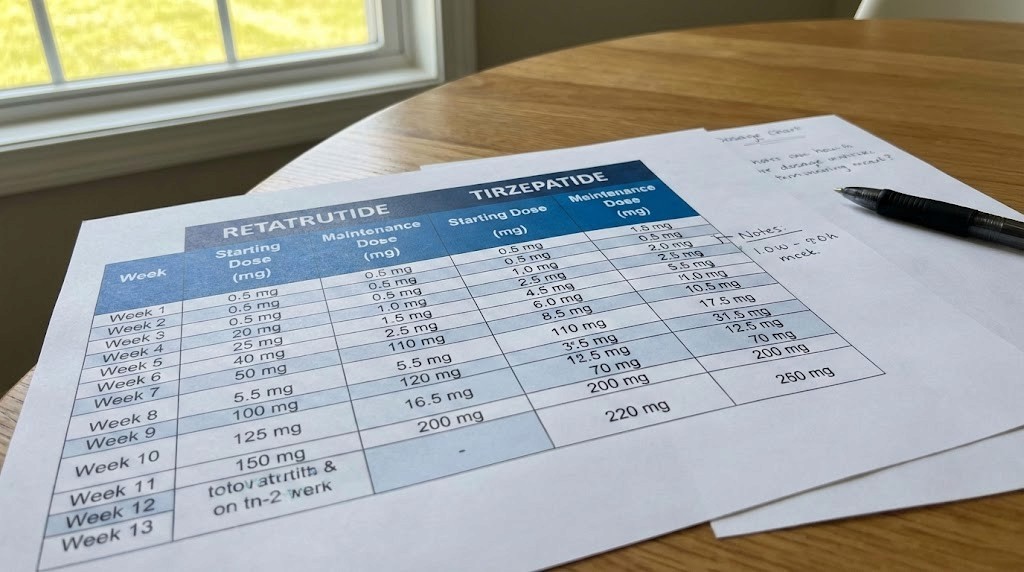
Two peptides sit on opposite sides of the same table. One is FDA-approved and available right now. The other just delivered 28.7% body weight reduction in Phase 3 trials, numbers that rewrote what researchers thought was possible. Both target weight loss through incretin pathways, but the dosage charts could not look more different. The escalation schedules diverge. The receptor targets split. And the clinical outcomes at matching timepoints reveal a gap that keeps widening with every new dataset published.
This is not a simple "which one is better" situation.
Tirzepatide operates through dual GLP-1 and GIP receptor agonism, a mechanism that already outperforms standalone GLP-1 drugs like semaglutide in head-to-head trials. Retatrutide adds a third receptor, glucagon, creating what researchers call a triple agonist. That third receptor changes everything about how the body processes fat, regulates appetite, and manages liver health. But it also changes the dosing math. The titration schedule is different. The maintenance doses are different. The side effect profiles at equivalent escalation points are different. And the weight loss curves at 24, 48, and 68 weeks tell fundamentally different stories about what each compound can achieve.
Understanding these dosage charts is not optional for anyone researching either compound. Get the escalation wrong and you either lose efficacy or gain side effects you did not need. Get the comparison wrong and you choose the wrong compound for your specific goals.
This guide breaks down every dose of both compounds, maps them against each other week by week, and shows you exactly what the clinical trial data says about outcomes at each level. Whether you are currently on tirzepatide and wondering about retatrutide, or starting fresh and comparing options, the charts ahead give you the numbers nobody summarizes clearly.
How retatrutide and tirzepatide work differently
Before comparing dosages, you need to understand why these two compounds require different dosing strategies in the first place. The answer lives in their receptor profiles. How peptides work at the molecular level determines everything about their dosing, their side effects, and their results.
Tirzepatide is a dual agonist. It activates two receptors simultaneously: GLP-1 (glucagon-like peptide-1) and GIP (glucose-dependent insulinotropic polypeptide). These two pathways work together synergistically. GLP-1 slows gastric emptying, reduces appetite through brain signaling, and boosts insulin secretion when blood sugar rises. GIP enhances that insulin response further and appears to improve how the body processes and stores fat. Together, they create a more powerful metabolic effect than either receptor alone, which explains why tirzepatide outperforms semaglutide in clinical comparisons.
Retatrutide goes further.
It is a triple agonist. Same GLP-1. Same GIP. But it adds glucagon receptor activation. That third pathway is what separates retatrutide from everything else in the weight loss pipeline. Glucagon increases energy expenditure by promoting thermogenesis in brown fat tissue. It reduces lipogenesis, the process of creating new fat. It induces lipolysis, actively breaking down stored fat into usable energy. And it has profound effects on liver fat, reducing hepatic steatosis by up to 86% in clinical trials.
Three receptors means three overlapping mechanisms. More appetite suppression. More energy expenditure. More fat mobilization. But it also means three sources of potential side effects, and a titration schedule that needs to account for all three receptor activations ramping up simultaneously.
This is why you cannot simply convert a tirzepatide dose to a retatrutide equivalent. The compounds operate on different axes of metabolic regulation, and their dosage charts reflect that fundamental difference.
Receptor comparison at a glance
Feature | Tirzepatide | Retatrutide |
|---|---|---|
Receptor targets | GLP-1, GIP (dual) | GLP-1, GIP, Glucagon (triple) |
Primary appetite mechanism | GLP-1 brain signaling + gastric slowing | GLP-1 brain signaling + gastric slowing |
Insulin enhancement | GLP-1 + GIP synergy | GLP-1 + GIP synergy |
Energy expenditure boost | Minimal | Glucagon-driven thermogenesis |
Fat mobilization | Moderate (indirect) | High (direct lipolysis via glucagon) |
Liver fat reduction | Moderate | Up to 86% reduction |
FDA status | Approved (Mounjaro/Zepbound) | Phase 3 trials (expected approval late 2026-2027) |
Peptide backbone | GIP-based | GIP-based (39 amino acids) |
That table tells you everything about why the dosage approaches differ. Tirzepatide can escalate through two receptor pathways. Retatrutide must navigate three. More pathways means more variables. More variables means more careful titration. And the clinical data shows that the retatrutide dosage schedule reflects this added complexity at every escalation step.
Complete tirzepatide dosage chart
Tirzepatide has the advantage of extensive clinical trial data and FDA-approved prescribing information. The dosage chart is well-established, tested across thousands of patients in the SURMOUNT trial series, and refined to minimize side effects while maximizing weight loss outcomes.
The compound is available under two brand names: Mounjaro (for type 2 diabetes) and Zepbound (for obesity/weight management). Both use identical dosage escalation schedules. Compounded tirzepatide follows the same titration logic, though concentrations and preparation may vary.
Standard tirzepatide dosage escalation
Week | Dose | Purpose | Notes |
|---|---|---|---|
Weeks 1-4 | 2.5 mg | Initiation dose | Not therapeutic, GI adjustment period |
Weeks 5-8 | 5 mg | First therapeutic dose | Minimum effective dose for weight loss |
Weeks 9-12 | 7.5 mg | Intermediate escalation | Optional, can stay at 5 mg if responding |
Weeks 13-16 | 10 mg | Mid-range therapeutic | Most common maintenance dose |
Weeks 17-20 | 12.5 mg | High-range therapeutic | For those needing additional effect |
Weeks 21+ | 15 mg | Maximum dose | Highest approved dose |
The escalation happens in consistent 2.5 mg increments every four weeks. No exceptions. This uniformity makes the tirzepatide titration predictable. You know exactly where you will be at any given week. You know exactly how much each step increases the dose. And you know the ceiling: 15 mg is the maximum.
That said, not everyone needs to reach 15 mg. Many researchers find their optimal dose between 7.5 mg and 10 mg. The tirzepatide dosage in milliliters depends on the concentration of your specific formulation, which varies between brand-name and compounded versions.
Weight loss by tirzepatide dose (SURMOUNT-1 data)
Dose | Weight loss at 72 weeks | Average weight lost | Achieving 5%+ loss | Achieving 20%+ loss |
|---|---|---|---|---|
5 mg | 16.0% | 35 lbs (16 kg) | 89.4% | 32.6% |
10 mg | 21.4% | 49 lbs (22 kg) | 96.2% | 56.7% |
15 mg | 22.5% | 52 lbs (24 kg) | 96.3% | 62.9% |
Placebo | 2.4% | 5 lbs (2 kg) | 34.5% | 1.3% |
Notice something important in those numbers. The jump from 5 mg to 10 mg is massive: 16.0% to 21.4% body weight reduction. But the jump from 10 mg to 15 mg is much smaller: 21.4% to 22.5%. That final 5 mg escalation delivers only about 1 additional percentage point of weight loss while significantly increasing side effect exposure.
This is why many clinicians keep patients at 10 mg. The risk-benefit calculus shifts at higher doses. If you are researching tirzepatide dosing in units for compounded formulations, the same principle applies. Higher is not always better. The clinical sweet spot for most people sits around 10 mg, with 15 mg reserved for those who plateau.
For anyone exploring the difference between microdosing tirzepatide and standard dosing, the SURMOUNT data makes it clear that sub-therapeutic doses below 5 mg produce minimal weight loss. The 2.5 mg starting dose exists purely for gastrointestinal tolerance, not for metabolic effect.
Complete retatrutide dosage chart
Retatrutide does not have FDA-approved prescribing information yet. Everything we know about its dosage comes from the Phase 2 trial published in the New England Journal of Medicine and the Phase 3 TRIUMPH-4 results released in late December of the previous year. The retatrutide dose schedule tested in clinical settings follows a different escalation pattern than tirzepatide, with wider dose ranges and more complex titration options.
Retatrutide dosage escalation (Phase 2 trial protocol)
Week | Dose (low start) | Dose (high start) | Purpose |
|---|---|---|---|
Weeks 1-4 | 2 mg | 4 mg | Initiation |
Weeks 5-8 | 4 mg | 8 mg | First escalation |
Weeks 9-12 | 8 mg | 8 mg | Convergence point |
Weeks 13+ | Up to 12 mg | Up to 12 mg | Maintenance |
The Phase 2 trial tested multiple starting dose strategies. Some participants began at 2 mg and escalated slowly. Others started directly at 4 mg. This split was deliberate. Researchers wanted to see whether a lower starting dose would reduce gastrointestinal side effects during the critical early weeks.
The answer was yes. Starting at 2 mg instead of 4 mg significantly reduced early GI symptoms. Nausea rates during the escalation phase nearly doubled when participants jumped straight to higher doses without the 2 mg initiation period. This finding shaped the expected commercial dosing strategy: start low, go slow.
Expected commercial retatrutide dosage schedule
Based on Phase 2 and Phase 3 data, the anticipated commercial titration looks like this:
Week | Dose | Notes |
|---|---|---|
Weeks 1-4 | 2 mg | Initiation, GI adjustment |
Weeks 5-8 | 4 mg | First therapeutic dose |
Weeks 9-12 | 8 mg | Primary therapeutic dose |
Weeks 13-16 | 9 mg | Phase 3 tested dose |
Weeks 17+ | 12 mg | Maximum tested dose |
Notice the escalation pattern differs fundamentally from tirzepatide. Where tirzepatide steps up in uniform 2.5 mg increments, retatrutide uses irregular jumps: 2 to 4, 4 to 8, then 8 to 9, then 9 to 12. The bigger early jumps (2 to 4, 4 to 8) are offset by the lower starting point. The later jumps get smaller as you approach the therapeutic ceiling.
Also worth noting: the total dose range is different. Tirzepatide spans 2.5 mg to 15 mg (a 6x range). Retatrutide spans 2 mg to 12 mg (a 6x range as well, but with different absolute numbers). The doses are not interchangeable, and a milligram of retatrutide is not equivalent to a milligram of tirzepatide, because the receptor activation profiles are completely different.
Weight loss by retatrutide dose (Phase 2 data at 48 weeks)
Dose | Weight loss at 24 weeks | Weight loss at 48 weeks | Still losing at week 48? |
|---|---|---|---|
1 mg | 7.2% | 8.7% | Minimal ongoing loss |
4 mg | 12.9% | 17.1% | Yes, continuing to lose |
8 mg | 17.3% | 22.8% | Yes, no plateau reached |
12 mg | 17.5% | 24.2% | Yes, trajectory still declining |
Placebo | 1.6% | 2.1% | N/A |
The most remarkable finding in this data is the last column. At 48 weeks, participants on retatrutide 8 mg and 12 mg had not reached a weight loss plateau. The curves were still declining. This is unprecedented. Every previous GLP-1 medication, including semaglutide and tirzepatide, shows weight loss plateaus by 60 to 72 weeks. Retatrutide at 48 weeks was still accelerating.
The Phase 3 TRIUMPH-4 data confirmed this trajectory. At 68 weeks, the 12 mg dose delivered 28.7% average body weight reduction, approximately 71.2 pounds from a starting weight of about 248 pounds. That number exceeds anything achieved by any peptide-based weight loss treatment in clinical history.
Side-by-side dosage comparison chart
Here is what you actually came for. Both dosage charts, mapped against each other week by week, so you can see exactly how the two compounds compare at every stage of escalation.
Week-by-week dosage comparison
Timepoint | Tirzepatide dose | Retatrutide dose | Key difference |
|---|---|---|---|
Week 1-4 | 2.5 mg | 2 mg | Similar starting points, different mechanisms |
Week 5-8 | 5 mg | 4 mg | Tirzepatide reaches therapeutic dose first |
Week 9-12 | 7.5 mg | 8 mg | Retatrutide catches up with bigger jump |
Week 13-16 | 10 mg | 9 mg | Similar mid-range dosing |
Week 17-20 | 12.5 mg | 12 mg | Approaching respective ceilings |
Week 21+ | 15 mg (max) | 12 mg (max tested) | Tirzepatide has higher absolute max |
Weight loss comparison at matched timepoints
Timepoint | Tirzepatide (best dose) | Retatrutide (best dose) | Difference |
|---|---|---|---|
24 weeks | ~12-13%* | 17.5% (12 mg) | Retatrutide +4-5% |
48 weeks | ~18-19%* | 24.2% (12 mg) | Retatrutide +5-6% |
68-72 weeks | 22.5% (15 mg, 72 wk) | 28.7% (12 mg, 68 wk) | Retatrutide +6.2% |
*Tirzepatide 24 and 48-week figures estimated from SURMOUNT-1 trajectory data, as primary endpoint was 72 weeks.
The pattern is consistent. Retatrutide produces greater weight loss at every comparable timepoint, despite using a lower maximum dose (12 mg versus 15 mg). That gap widens over time, from roughly 4-5 percentage points at 24 weeks to over 6 percentage points by 68-72 weeks. The glucagon receptor component appears to create a compounding effect that becomes more significant the longer treatment continues.
But raw weight loss percentages do not tell the complete story. You need to look at what happens inside the body at these doses. The fat loss mechanisms differ substantially between the two compounds, and those differences matter for anyone choosing between them.
Side effect profiles by dose level
Every escalation step brings more efficacy and more side effects. That tradeoff is unavoidable with incretin-based therapies. But the specific side effect profiles, and their severity at different doses, differ meaningfully between these two compounds.
Gastrointestinal side effects comparison
Side effect | Tirzepatide 15 mg | Retatrutide 12 mg | Placebo (typical) |
|---|---|---|---|
Nausea | 31% | 43% | ~10% |
Diarrhea | 23% | 33% | ~8-13% |
Vomiting | 12% | 21% | 0-5% |
Constipation | ~11% | 25% | ~6-9% |
Discontinuation rate | ~6-7% | 12-18% | ~4% |
Retatrutide has a notably higher GI side effect burden at maximum doses. Nausea runs about 12 percentage points higher. Vomiting nearly doubles. Constipation more than doubles. And the discontinuation rate due to adverse events runs roughly 2-3 times higher than tirzepatide at equivalent trial timepoints.
This matters for dosing decisions.
If you are sensitive to GI effects, the tirzepatide dosing pathway offers a gentler escalation with lower absolute side effect rates at each level. If you can tolerate the GI burden and want maximum weight loss, the retatrutide dosing chart delivers substantially more results per milligram of discomfort.
A new signal: dysesthesia with retatrutide
The TRIUMPH-4 Phase 3 trial revealed a side effect not previously highlighted in earlier data. Approximately 20.9% of patients on the 12 mg dose reported dysesthesia, a condition involving skin sensitivity, tingling, or tenderness to touch. This is not typical of incretin-based therapies and appears to be unique to retatrutide, possibly related to the glucagon receptor component.
This finding warrants monitoring as additional Phase 3 data becomes available. It was not a major reason for discontinuation in the trial, but it represents a side effect category that tirzepatide users do not encounter. Anyone researching retatrutide should factor this into their risk assessment alongside the standard peptide safety considerations.
GI side effects during escalation vs maintenance
Both compounds share an important characteristic: most gastrointestinal side effects occur during dose escalation, not during maintenance. Once your body adjusts to a given dose, nausea and vomiting typically subside within 1-2 weeks. The next escalation step triggers a fresh wave of symptoms that again fades.
This is why the titration schedule exists. Jumping straight to high tirzepatide doses or high retatrutide doses without proper escalation dramatically increases both the severity and duration of GI side effects. In retatrutide trials specifically, starting at 4 mg instead of 2 mg nearly doubled early GI symptom rates. Patience during titration is not optional. It is a clinical requirement.
Dosage conversion: switching between compounds
There is no established dose conversion between retatrutide and tirzepatide. This is not a gap in the research. It is a feature of how these compounds work. Converting between them the way you might convert between tirzepatide and semaglutide is not pharmacologically valid because the receptor profiles are too different.
Think of it this way. Tirzepatide activates two pathways. Retatrutide activates three. Going from two pathways to three means your body encounters a completely new type of receptor activation (glucagon) that it has never experienced before, regardless of how long you have been on tirzepatide. That new pathway needs its own adjustment period.
Switching from tirzepatide to retatrutide
The safest approach based on current clinical understanding:
Stop tirzepatide and allow a washout period of 1-2 weeks (tirzepatide half-life is approximately 5 days)
Start retatrutide at 2 mg regardless of your previous tirzepatide dose
Titrate up on the standard schedule, every 4 weeks
Do not skip steps because you were on high-dose tirzepatide, the glucagon receptor is new territory for your body
The rationale is straightforward. Your GLP-1 and GIP receptors may have some tolerance built up from tirzepatide use, but your glucagon receptors have zero exposure history. Retatrutide activates all three simultaneously, so the glucagon component will feel entirely new. Starting at the bottom of the retatrutide dose schedule protects you from overwhelming a receptor system your body has never trained on.
Switching from retatrutide to tirzepatide
This direction is simpler because you are removing a receptor pathway rather than adding one:
Stop retatrutide and allow 1-2 weeks washout
Start tirzepatide at 2.5 mg per standard protocol
Escalate normally every 4 weeks
Expect potentially faster tolerance since your GLP-1 and GIP receptors already have exposure history
Some researchers report smoother GI tolerance when switching from a triple to a dual agonist, which makes pharmacological sense. You are going from three active pathways to two, which your body already recognizes from the retatrutide experience. But the standard tirzepatide dosing protocol should still be followed for safety.
Why conversion charts do not exist
Factor | Why direct conversion fails |
|---|---|
Different receptor count | 2 receptors vs 3 receptors, no linear equivalence |
Different potency ratios | Retatrutide is more potent at GIP, less at GLP-1 than tirzepatide |
Glucagon component | Entirely absent in tirzepatide, no cross-tolerance possible |
Different peptide structures | Different amino acid sequences, different pharmacokinetics |
No head-to-head trials | Compounds never directly compared at matching doses |
Anyone who sells you a simple retatrutide-to-tirzepatide conversion chart is guessing. The pharmacology does not support it. Until head-to-head trials establish dose equivalencies (if they ever do), the safest approach is to start each compound from its baseline titration schedule.
Liver fat reduction: the retatrutide advantage
One area where the dosage comparison reveals a dramatic difference is liver fat reduction. This is where retatrutide pulls ahead in a way that tirzepatide simply cannot match at any dose, and the data is striking enough to change how researchers think about these compounds.
In a Phase 2a trial focused on metabolic dysfunction-associated steatotic liver disease (MASLD, formerly called NAFLD), retatrutide delivered the following liver fat reductions:
Retatrutide dose | Liver fat reduction at 24 weeks | Achieved normal liver fat (<5%) | Liver fat reduction at 48 weeks |
|---|---|---|---|
1 mg | 42.9% | 27% | ~45-50% |
4 mg | 57.0% | 52% | ~60-65% |
8 mg | 81.4% | 79% | 81.7% |
12 mg | 82.4% | 86% | 86.0% |
Placebo | +0.3% | 0% | +4.6% |
Read those numbers again. At the 12 mg dose, 86% of participants achieved normal liver fat levels. That means their fatty liver disease essentially resolved. At 48 weeks, 93% of the 12 mg group had liver fat below 5%. These are resolution rates that no other medication has achieved.
Tirzepatide does reduce liver fat, but not to this degree. The glucagon receptor component in retatrutide appears to be the critical differentiator. Glucagon directly affects hepatic lipid metabolism, reducing fat production in the liver and increasing fat export. This mechanism is absent in tirzepatide entirely.
For anyone whose primary concern is metabolic health beyond just weight loss, this liver data should heavily influence the dosage comparison decision. If you have known fatty liver disease or elevated liver enzymes, the retatrutide dosage chart offers a pathway to liver fat resolution that tirzepatide cannot match.
Cost comparison by dosage level
Dosage charts mean nothing if the cost makes one compound inaccessible. The financial picture between these two compounds is vastly different right now, and that difference will persist even after retatrutide gains approval.
Current tirzepatide pricing
Brand-name tirzepatide (Mounjaro or Zepbound) carries significant monthly costs that vary by dose level. Compounded tirzepatide offers a substantially lower price point, though availability fluctuates based on regulatory status.
The relationship between dose and cost is roughly linear for brand-name products: higher doses cost proportionally more due to the amount of active compound per injection pen. For compounded versions, the cost difference between dose levels is smaller because the primary cost is in the compounding process rather than the raw material.
Current retatrutide pricing
Retatrutide is not yet FDA-approved, which means it is only available through research supply channels. Retatrutide pricing through these channels varies dramatically, from approximately $150 to $400+ per month depending on the source, dose, and vendor reliability. When you buy retatrutide through research channels, quality verification becomes critical.
Once commercially available (expected late 2026-2027), brand-name retatrutide pricing will likely mirror or exceed tirzepatide pricing, given Eli Lilly manufactures both compounds and the market dynamics of premium obesity medications.
Cost per percentage of weight loss
When you calculate cost-effectiveness not just by monthly price but by the amount of weight lost per dollar spent, the equation shifts. Retatrutide delivers approximately 28% more weight loss than tirzepatide at maximum doses (28.7% versus 22.5%). If the monthly cost is similar, retatrutide delivers more weight loss per dollar. If retatrutide costs more, the breakeven calculation depends on how much additional weight loss is worth to the individual researcher.
This financial analysis becomes even more relevant when you factor in total protocol costs including reconstitution supplies, bacteriostatic water, and storage requirements.
Who should consider each compound
Choosing between these dosage charts is not just about which produces more weight loss. It depends on your specific situation, your risk tolerance, your timeline, and what you are optimizing for.
Tirzepatide may be better if you:
Need a medication available right now: Tirzepatide is FDA-approved and available today through clinics and pharmacies
Are sensitive to GI side effects: Lower overall side effect rates at every dose level
Want established safety data: Years of post-marketing surveillance data available
Have insurance coverage: Mounjaro/Zepbound may be partially covered
Prefer a simpler titration: Uniform 2.5 mg steps are predictable and easy to follow
Are a first-time incretin user: Extensive prescriber experience means better clinical support
Retatrutide may be better if you:
Have significant fatty liver disease: Liver fat reduction of up to 86% is unmatched
Need maximum weight loss: 28.7% at 68 weeks exceeds all other compounds
Have plateaued on tirzepatide: The glucagon component offers a new mechanism
Are focused on metabolic health beyond weight: Triple agonism impacts more metabolic pathways
Can tolerate higher GI burden: More side effects but more results
Can wait for FDA approval: Expected late 2026-2027 for regulated access
Neither compound is appropriate if you:
Have a personal or family history of medullary thyroid carcinoma
Have multiple endocrine neoplasia syndrome type 2
Are pregnant or planning pregnancy
Have a history of severe psychiatric reactions to incretin therapies
Have pancreatitis history (use with extreme caution)
For researchers still undecided, the semaglutide vs tirzepatide comparison page provides additional context on how dual agonists compare to single agonists. Understanding that hierarchy helps frame where retatrutide fits in the broader landscape.
Dosing protocols for different goals
Not everyone takes these compounds for the same reason. Your goal should influence which dosage level you target and how aggressively you escalate. Here are specific protocol frameworks based on the clinical trial data.
Protocol 1: moderate weight loss (10-15% body weight)
Goal: Steady, sustainable weight loss with minimal side effects
Tirzepatide approach:
Standard escalation to 5-7.5 mg
Hold at the dose where you achieve consistent weekly loss of 0.5-1% body weight
Expected timeline: 24-36 weeks to target
Likely maintenance dose: 5-7.5 mg
Retatrutide approach:
Standard escalation to 4 mg
4 mg delivered 12.9% weight loss at 24 weeks in trials
Hold at 4 mg if achieving target rate
Expected timeline: 20-30 weeks to target
For moderate goals, both compounds work well at their lower dose ranges. The side effect burden is manageable, and the weight loss is clinically meaningful. Use our peptide calculator to determine exact injection volumes based on your specific formulation concentration.
Protocol 2: significant weight loss (20-25% body weight)
Goal: Substantial weight reduction for health improvement
Tirzepatide approach:
Full escalation to 10-15 mg
Expect to reach target dose by week 17-21
Weight loss at 15 mg: approximately 22.5% at 72 weeks
Plateau typically occurs around weeks 60-72
Retatrutide approach:
Full escalation to 8-12 mg
Expect to reach target dose by week 13-17
Weight loss at 12 mg: 24.2% at 48 weeks, 28.7% at 68 weeks
No plateau observed in trial data at 48 or 68 weeks
For significant weight loss goals, retatrutide reaches 20%+ body weight reduction faster and ultimately achieves a higher ceiling. However, the GI side effect burden at 8-12 mg retatrutide is substantially higher than tirzepatide at 10-15 mg. The dosing protocol you choose should account for your individual tolerance.
Protocol 3: metabolic health optimization
Goal: Reduce liver fat, improve insulin sensitivity, address metabolic syndrome
Tirzepatide approach:
Standard escalation to 10 mg
Produces moderate liver fat reduction
Significant HbA1c improvements (if diabetic)
Meaningful but not maximal metabolic improvements
Retatrutide approach:
Escalation to 8-12 mg
86% of patients achieved normal liver fat at 12 mg
Superior metabolic marker improvements across all measures
Glucagon component directly targets hepatic lipid metabolism
If metabolic health is your primary goal rather than the number on the scale, the retatrutide dosage chart offers something tirzepatide fundamentally cannot: direct glucagon-mediated liver fat reduction. This distinction becomes clinically relevant for anyone with MASLD, elevated liver enzymes, or metabolic syndrome components beyond obesity.
Reconstitution and administration differences
The dosage chart is only useful if you can accurately prepare and administer each dose. The practical aspects of using these compounds differ in ways that affect your day-to-day experience.
Tirzepatide administration
Brand-name tirzepatide comes in pre-filled injection pens. No reconstitution required. You select your dose, attach a needle, inject subcutaneously, and dispose of the pen. Each pen delivers one dose. This is the simplest possible administration method.
Compounded tirzepatide typically comes as a lyophilized powder or pre-mixed solution in a vial. If lyophilized, you need to reconstitute tirzepatide with bacteriostatic water before use. The tirzepatide reconstitution chart depends on your vial concentration and desired dose volume.
Key administration details for compounded tirzepatide:
Subcutaneous injection, once weekly
Rotate injection sites: abdomen, thigh, upper arm
Store reconstituted solution in refrigerator
Refrigeration is required after reconstitution
Shelf life in fridge: typically 28-30 days after reconstitution
Room temperature stability is limited, see tirzepatide room temperature guidelines
Retatrutide administration
Retatrutide is currently available only as a research compound in lyophilized powder form. There are no pre-filled pens. All doses require reconstitution from powder using bacteriostatic water, following proper peptide reconstitution protocols.
Key administration details:
Subcutaneous injection, once weekly
Reconstitute with bacteriostatic water following concentration calculations
Use our peptide reconstitution calculator for exact water volumes
Store reconstituted solution in refrigerator, see peptide refrigeration guidelines
Typical vial sizes: 5 mg or 10 mg (varies by supplier)
Use insulin syringes for accurate dosing
The reconstitution step adds complexity that brand-name tirzepatide pens avoid entirely. This is a practical consideration for the dosage comparison. If accurate dosing and simplicity matter to you, brand-name tirzepatide is significantly easier to use day to day. If you are comfortable with reconstitution and precise peptide dosage calculations, both compounds are manageable.
For detailed reconstitution volumes based on vial size, our free reconstitution calculator handles the math for any concentration and target dose.
Timeline comparison: when results appear
The dosage chart dictates your schedule. But what you really want to know is when you will see results at each dose level. The clinical trial data provides clear timelines for both compounds.
Tirzepatide results timeline
Timepoint | Expected progress (15 mg target) |
|---|---|
Weeks 1-4 (2.5 mg) | Minimal weight loss, appetite reduction beginning |
Weeks 5-8 (5 mg) | 2-4% body weight loss, noticeable appetite suppression |
Weeks 9-12 (7.5 mg) | 5-8% body weight loss, consistent weekly losses |
Weeks 13-20 (10-12.5 mg) | 10-15% body weight loss, significant visual changes |
Weeks 21-52 (15 mg) | 18-22% body weight loss, approaching plateau |
Weeks 52-72 (15 mg) | 22-22.5% body weight loss, plateau reached |
Most tirzepatide users report noticeable appetite changes within the first 1-2 weeks, even at the sub-therapeutic 2.5 mg starting dose. Visible weight changes typically become apparent around weeks 8-12, when therapeutic doses kick in. The appetite suppression timeline varies individually but follows a generally predictable pattern.
Retatrutide results timeline
Timepoint | Expected progress (12 mg target) |
|---|---|
Weeks 1-4 (2 mg) | 1-2% body weight loss, appetite and energy changes beginning |
Weeks 5-8 (4 mg) | 4-6% body weight loss, notable appetite suppression and increased energy expenditure |
Weeks 9-12 (8 mg) | 8-12% body weight loss, significant metabolic changes |
Weeks 13-24 (9-12 mg) | 15-18% body weight loss, liver fat dramatically reducing |
Weeks 24-48 (12 mg) | 20-24% body weight loss, still accelerating |
Weeks 48-68 (12 mg) | 24-28.7% body weight loss, no plateau observed |
The retatrutide timeline reveals something unusual: the weight loss curve does not flatten. In the Phase 2 trial, participants at 48 weeks had not reached a plateau. The Phase 3 data at 68 weeks showed continued weight loss at a rate that suggested the plateau, if it exists, lies beyond 68 weeks. No other weight loss peptide has demonstrated this characteristic.
This means the dosage chart for retatrutide does not just determine how much weight you lose. It determines how long you continue losing weight. At 12 mg, the trajectory suggests sustained loss well beyond the point where tirzepatide users at 15 mg have already plateaued.
Stacking and combination considerations
Some researchers explore combining incretin-based therapies with other compounds. The dosage charts above assume monotherapy, using either retatrutide or tirzepatide alone. Combining them with other peptides adds variables that the standard dosage charts do not account for.
Common combination approaches
Researchers sometimes combine incretin therapies with BPC-157 for gut healing (especially if experiencing GI side effects), TB-500 for tissue repair, or peptide stacks targeting different therapeutic goals. The peptides commonly combined with GLP-1 agonists tend to target repair and recovery rather than additional weight loss.
Neither tirzepatide nor retatrutide should be combined with other GLP-1 agonists like semaglutide. The overlapping receptor activation creates unpredictable effects and dramatically increases GI side effect risk. If you are switching from one incretin to another, allow a proper washout period first.
Cagrilintide combinations
The emerging cagrilintide and tirzepatide combination represents a different approach to multi-receptor targeting. Cagrilintide is an amylin receptor agonist that works through yet another pathway. Combining it with tirzepatide adds a receptor target (amylin) without the glucagon component that retatrutide provides. The cagrisema dosing protocol (cagrilintide + semaglutide) has shown impressive results, and similar combinations with tirzepatide are being explored.
These combination approaches are relevant to the retatrutide vs tirzepatide comparison because they represent alternative paths to multi-receptor weight loss therapy. Tirzepatide + cagrilintide targets three receptor types (GLP-1, GIP, amylin). Retatrutide alone targets three receptor types (GLP-1, GIP, glucagon). Different three-receptor combinations, different metabolic effects, different dosage considerations.
Frequently asked questions
Can I directly convert my tirzepatide dose to a retatrutide dose?
No. There is no valid dose conversion between these compounds. They target different receptors (two versus three), have different pharmacokinetics, and produce different metabolic effects per milligram. If switching from tirzepatide to retatrutide, start retatrutide at 2 mg regardless of your previous tirzepatide dose and titrate up on the standard schedule.
Which compound produces faster weight loss?
Retatrutide produces faster weight loss at every comparable timepoint. At 24 weeks, retatrutide 12 mg delivers 17.5% body weight loss versus an estimated 12-13% for tirzepatide 15 mg. By 48 weeks, the gap widens to 24.2% versus approximately 18-19%. However, retatrutide also carries higher GI side effect rates at these doses.
What is the maximum dose for each compound?
Tirzepatide is approved at up to 15 mg weekly (Mounjaro/Zepbound). Retatrutide has been tested at up to 12 mg weekly in Phase 2 and Phase 3 trials. The 12 mg dose produced 28.7% weight loss at 68 weeks in the TRIUMPH-4 trial. Both use the same once-weekly injection schedule.
Is retatrutide available now?
Retatrutide is not yet FDA-approved. It is currently in Phase 3 clinical trials, with seven additional trials expected to complete during the current year. FDA approval is anticipated for late this year or early next year. Until then, it is available only through research supply channels. See our retatrutide buying guide for current research availability.
Does retatrutide have worse side effects than tirzepatide?
At maximum doses, retatrutide has higher rates of nausea (43% vs 31%), vomiting (21% vs 12%), diarrhea (33% vs 23%), and constipation (25% vs 11%) compared to tirzepatide. Additionally, approximately 20.9% of retatrutide users at 12 mg experienced dysesthesia (skin sensitivity/tingling), a side effect not seen with tirzepatide. Proper dose titration reduces the severity of these effects.
Can I use both compounds at the same time?
No. Combining two incretin-based therapies creates dangerous overlapping receptor activation. Use one compound at a time. If switching between them, allow a 1-2 week washout period between stopping one and starting the other. Consult a qualified peptide therapy provider for personalized guidance.
Which is better for someone who has never used GLP-1 medications?
For first-time incretin users, tirzepatide offers several advantages: FDA approval, established safety data, pre-filled injection pens (no reconstitution needed), extensive prescriber experience, and lower side effect rates. Start with the established compound and consider retatrutide if you plateau or if it gains FDA approval during your treatment.
How do these dosage charts compare to semaglutide dosing?
Semaglutide (Ozempic/Wegovy) uses a different escalation: 0.25 mg to 2.4 mg maximum. It targets only one receptor (GLP-1) compared to tirzepatide dual and retatrutide triple. The tirzepatide vs semaglutide dosage comparison shows tirzepatide outperforms semaglutide by 5-7 percentage points in weight loss. Retatrutide outperforms both. For a broader perspective, see our semaglutide vs tirzepatide comparison and the retatrutide vs semaglutide guide.
The regulatory landscape and what it means for dosing
The availability and dosage charts of these compounds are tied to their regulatory status, and that status affects everything from access to quality to clinical support.
Tirzepatide: fully established
Tirzepatide is approved under two brand names. Mounjaro targets type 2 diabetes. Zepbound targets chronic weight management. Both are manufactured by Eli Lilly with rigorous quality controls, standardized dosing pens, and comprehensive prescribing information. The dosage chart is not a suggestion or a protocol derived from trial data. It is FDA-approved prescribing information.
This matters for dosing accuracy. When you use a Mounjaro or Zepbound pen, you are getting exactly 2.5, 5, 7.5, 10, 12.5, or 15 mg of tirzepatide. No reconstitution errors. No concentration calculations. No guessing.
Compounded tirzepatide introduces more variability, as the quality depends on the compounding pharmacy. But the dosage chart itself remains the same, regardless of the source.
Retatrutide: investigational
Retatrutide has no FDA approval. The dosage charts in this guide are derived from Phase 2 and Phase 3 clinical trial protocols, not from approved prescribing information. The commercial dosing may differ when the drug eventually launches. Eli Lilly is running seven Phase 3 trials (the TRIUMPH program) that may refine the optimal dose range and escalation schedule.
Current research-grade retatrutide comes from peptide suppliers without pharmaceutical-grade manufacturing controls. Purity, potency, and stability vary between vendors. This means the dosage chart is only as accurate as your supply allows. Using a verified vendor, see our vendor review guide, and testing your product through a peptide testing lab becomes essential for accurate dosing.
Phase 3 trials currently underway
Seven TRIUMPH trials are testing retatrutide across multiple indications:
TRIUMPH-1: Obesity without diabetes
TRIUMPH-2: Type 2 diabetes
TRIUMPH-3: Obesity with type 2 diabetes
TRIUMPH-4: Obesity with knee osteoarthritis (COMPLETED, 28.7% weight loss)
TRIUMPH-5: Obstructive sleep apnea
TRIUMPH-6 and 7: Additional indications
These trials will provide the definitive data for the commercial dosage chart. The 9 mg and 12 mg doses tested in TRIUMPH-4 are expected to form the therapeutic range, with 2 mg as the starting dose. But until all trials report, the exact FDA-approved dosing schedule remains uncertain.
Long-term dosing considerations
Both compounds are intended for long-term use. This raises questions about dosage adjustments over time that the standard escalation charts do not address.
Weight regain after stopping
Clinical data for tirzepatide shows significant weight regain after discontinuation. The withdrawal effects seen with semaglutide, including appetite rebound and metabolic adjustment, apply to tirzepatide as well. Retatrutide likely follows the same pattern, though long-term discontinuation data is not yet available.
This means the dosage chart is not a temporary treatment plan. For most users, these compounds require ongoing maintenance dosing at either the target dose or a reduced maintenance level. The long-term dosing strategy should be planned from the beginning, not decided after reaching a weight loss goal.
Dose reduction for maintenance
Some researchers step down their dose after reaching target weight. For tirzepatide, this might mean escalating to 10-15 mg for active weight loss, then reducing to 5-7.5 mg for maintenance. The theory is that lower doses maintain results with fewer side effects.
For retatrutide, maintenance dosing data is still limited. The Phase 2 trial ran for 48 weeks with continuous dosing. The Phase 3 TRIUMPH-4 ran for 68 weeks. Neither tested dose reduction protocols. Future trials or post-marketing data will need to establish whether retatrutide allows dose reduction for maintenance without significant weight regain.
Tolerance and dose creep
Some users report diminishing effects over time at a given dose, requiring escalation to maintain the same level of appetite suppression and weight loss. This phenomenon, sometimes called tolerance or dose creep, is reported anecdotally with tirzepatide, though the clinical trial data does not show significant tolerance development at fixed doses over 72 weeks.
Retatrutide, with its additional glucagon pathway, may theoretically have different tolerance characteristics. The glucagon receptor response and the thermogenic effects it produces may be less susceptible to the receptor desensitization that affects GLP-1 pathways. But this is speculative. Controlled long-term data comparing tolerance development between the two compounds does not yet exist.
Making your decision: the practical framework
After reviewing all the dosage data, side effects, timelines, and mechanisms, the decision between retatrutide and tirzepatide comes down to a handful of practical questions.
Do you need something available right now?
If yes, tirzepatide is your only FDA-approved option. The dosage chart is established. The supply chain is reliable. The clinical support is robust. Start with the standard tirzepatide dosing schedule and follow it as prescribed.
Are you willing to tolerate more side effects for more results?
If yes, retatrutide delivers approximately 6 more percentage points of weight loss at maximum doses while carrying roughly 40-75% higher rates of GI side effects. That is a real tradeoff, not a theoretical one.
Is liver health a primary concern?
If yes, retatrutide offers liver fat resolution rates (86% at 12 mg) that no other compound matches. Tirzepatide helps with liver fat, but the glucagon-mediated effect in retatrutide is in a different category entirely.
How important is dosing simplicity?
If very important, brand-name tirzepatide pens require zero reconstitution and zero calculation. Retatrutide requires reconstitution from powder, precise concentration math, and insulin syringe measurement for every dose. The peptide mixing process is not difficult, but it is an extra step that brand-name tirzepatide eliminates.
What is your budget?
Brand-name tirzepatide is expensive. Compounded tirzepatide is more affordable. Research-grade retatrutide is variable in price. When retatrutide launches commercially, it will likely carry premium pricing. Use the peptide cost calculator to compare total protocol costs including supplies.
For researchers serious about optimizing their weight loss protocols, SeekPeptides offers the most comprehensive resource available, with evidence-based guides, proven protocols, and a community of thousands who have navigated these exact dosing decisions. SeekPeptides members access detailed dosage calculators, cycle planning tools, and expert-reviewed protocols that account for the nuances these charts cannot capture on their own.
External resources
Triple-Hormone-Receptor Agonist Retatrutide for Obesity, Phase 2 Trial (NEJM)
Tirzepatide Once Weekly for the Treatment of Obesity, SURMOUNT-1 (NEJM)
Retatrutide for Metabolic Dysfunction-Associated Steatotic Liver Disease (Nature Medicine)
In case I do not see you, good afternoon, good evening, and good night. May your titration schedules stay smooth, your side effects stay mild, and your weight loss curves stay on target.