Feb 11, 2026
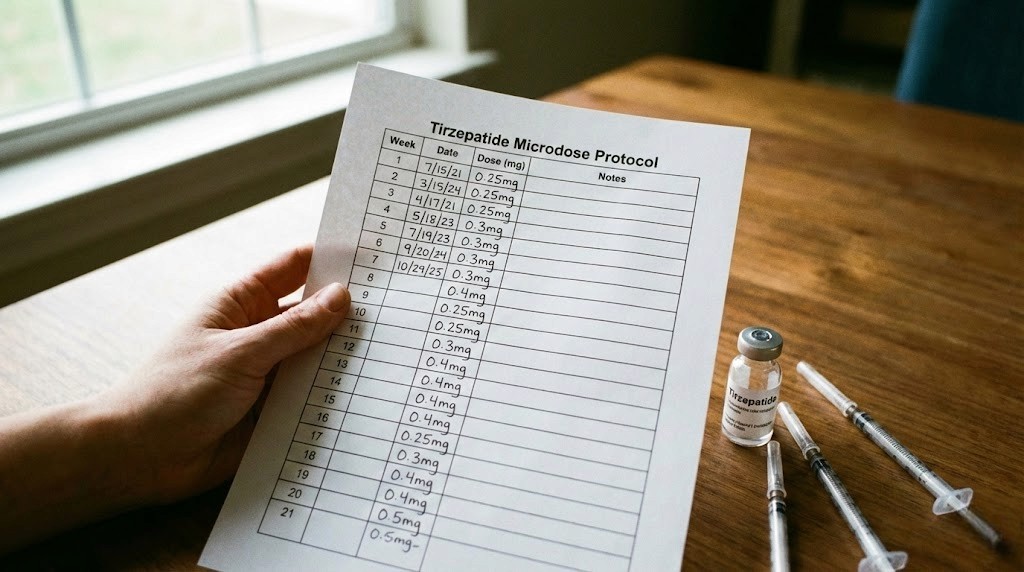
Half of the tirzepatide in that vial never reaches your body the way you intended. Not because the peptide degraded. Not because your injection technique failed. Because you measured wrong. Microdosing tirzepatide demands a level of precision that standard dosing simply does not require, and without the right chart, the right concentration, and the right syringe, you are guessing. Guessing with a peptide this potent is not just wasteful. It is reckless.
The gap between 0.25 mg and 0.5 mg might seem trivial on paper, but in a 30-unit insulin syringe, that difference amounts to just 2.5 units of liquid at standard concentration. Miss by one tick mark, and you have doubled your dose. Or halved it. Neither outcome is what you planned, and both undermine the entire point of starting low and going slow with a tirzepatide dose chart.
This guide exists because precision matters. It provides the actual charts, the reconstitution math at multiple concentrations, the unit-to-milligram conversion tables, and the week-by-week protocols that transform microdosing from guesswork into science. Whether you are working from a compound tirzepatide dosage chart or building your own titration schedule, these reference tables give you the numbers you need. Every calculation has been verified. Every protocol has been mapped against available research. And every chart accounts for the practical reality of drawing tiny volumes from a reconstituted vial using real syringes that real people actually own.
SeekPeptides built this resource because no single reference existed that combined microdose protocols with reconstitution math in a format researchers could actually use at the bench. The charts here cover conservative slow-start protocols, ultra-low entry schedules, gender-adjusted approaches, and maintenance microdose frameworks, all with corresponding unit measurements at the three most practical concentrations for low-dose work. If you have ever stared at a syringe wondering whether you drew 2.5 units or 5, this is the guide that eliminates that uncertainty for good.
What tirzepatide microdosing actually means
Microdosing tirzepatide refers to administering doses below the FDA-approved starting dose of 2.5 mg per week. That is the clinical floor, the lowest amount studied in major trials like SURMOUNT-1 and SURMOUNT-2. Anything below it enters territory that has not been formally evaluated in large randomized controlled studies, which is exactly why precision becomes so critical when you operate there.
The concept is straightforward. Start lower than the standard starting dose. Give your GIP and GLP-1 receptors time to acclimate. Reduce the gastrointestinal side effects that drive many people away from the medication in its first weeks. Then titrate up to therapeutic levels with your body already partially adapted to dual incretin receptor activation.
But straightforward does not mean simple.
Tirzepatide is a 39-amino-acid peptide that acts as a dual GIP and GLP-1 receptor agonist. Unlike semaglutide, which targets only GLP-1 receptors (as explained in our semaglutide vs tirzepatide comparison), tirzepatide activates both incretin pathways simultaneously. Its binding profile is deliberately imbalanced, showing strong affinity for the GIP receptor with an EC50 of 22.4 pM while demonstrating roughly five times weaker GLP-1 receptor activation compared to native GLP-1, with an EC50 of 934 pM versus 70.5 pM for the endogenous hormone. This dual mechanism produces synergistic insulin secretion and appetite suppression that neither pathway achieves alone, which is part of why the tirzepatide dosage chart in units matters so much when you are working at the lower end of the dose spectrum.
When you microdose, you are not just "taking less." You are fundamentally changing the pharmacodynamic equation. At ultra-low doses, you may not fully engage both receptor systems. The GLP-1 component, already weaker by design, might not reach the activation threshold needed for meaningful appetite suppression. The GIP component might partially activate without producing the synergistic effects seen at therapeutic doses. This does not mean microdosing is worthless. It means you need to understand what you are doing and why, and you need charts that reflect the real math behind each dose level.
The standard tirzepatide dosage chart in mL starts at 2.5 mg and climbs through 5, 7.5, 10, 12.5, and 15 mg over a period of months. Microdosing inserts additional steps below that 2.5 mg floor, creating a gentler on-ramp that the clinical trials never tested. The protocols in this guide use doses ranging from 0.25 mg to 2.0 mg, and each one requires different reconstitution strategies to ensure you can actually measure the intended amount with available syringes. Understanding how to calculate peptide dosages is not optional here. It is the foundation everything else rests on.
The complete tirzepatide microdose chart
What follows are four distinct microdose protocols, each designed for a different situation and a different type of user. None of these are FDA-approved regimens. All of them represent approaches that have emerged from clinical observation, practitioner experience, and the practical reality that many people cannot tolerate the standard 2.5 mg starting dose without significant gastrointestinal distress. Review the microdosing tirzepatide chart overview for broader context on the philosophy behind these approaches before diving into the specific numbers here.
Conservative slow-start protocol
This is the most widely referenced microdose approach. It extends the initial titration period from four weeks to thirteen weeks, using three intermediate dose levels before reaching the standard 2.5 mg starting dose. The goal is not to avoid 2.5 mg forever. It is to arrive there with your receptors already partially adapted and your GI tract prepared for what therapeutic dosing demands.
Weeks | Weekly dose (mg) | Units at 10 mg/mL | Units at 5 mg/mL | Units at 2.5 mg/mL | Notes |
|---|---|---|---|---|---|
1-4 | 1.0 | 10 | 20 | 40 | Initial acclimation phase |
5-8 | 1.5 | 15 | 30 | 60 | Mild receptor engagement |
9-12 | 2.0 | 20 | 40 | 80 | Near-therapeutic ramp |
13+ | 2.5 | 25 | 50 | 100 (1 mL) | Standard starting dose |
Notice what happens at 10 mg/mL concentration. Your 1.0 mg dose requires drawing just 10 units. That is measurable on a standard insulin syringe, but barely. A single tick mark of error on a 100-unit syringe equals 0.1 mg of tirzepatide, which represents a 10% dosing error at the 1.0 mg level. This is why concentration choice and syringe selection matter enormously for microdosing, and why you should review the tirzepatide reconstitution chart before you begin any low-dose protocol.
At 5 mg/mL concentration, that same 1.0 mg dose becomes 20 units. More forgiving. At 2.5 mg/mL, it becomes 40 units. Much more forgiving. The trade-off is volume. Lower concentrations mean larger injection volumes, which some people find uncomfortable, and they mean your vial runs out faster. For a comprehensive look at tirzepatide dosing for weight loss in units, those volume calculations become especially important when you are tracking weekly usage against vial size.
The conservative protocol works well for people who have tried tirzepatide before and experienced significant nausea at 2.5 mg, people with a history of GI sensitivity, or anyone who simply wants the most cautious possible introduction to a dual-agonist peptide.
Ultra-low entry protocol
Some practitioners advocate starting even lower. This protocol begins at 0.25 mg per week, which is one-tenth of the approved starting dose, and builds through weekly increments that double every seven days until reaching 2.5 mg. It is aggressive in its conservatism, meaning it starts absurdly low but escalates relatively quickly.
Week | Weekly dose (mg) | Units at 10 mg/mL | Units at 5 mg/mL | Units at 2.5 mg/mL | Notes |
|---|---|---|---|---|---|
1 | 0.25 | 2.5 | 5 | 10 | Receptor priming only |
2 | 0.5 | 5 | 10 | 20 | Minimal activation |
3 | 1.0 | 10 | 20 | 40 | Partial receptor engagement |
4 | 2.5 | 25 | 50 | 100 | Standard starting dose reached |
5-8 | 5.0 | 50 | 100 (1 mL) | N/A (too large) | First therapeutic dose |
Look at week one. At 10 mg/mL concentration, a 0.25 mg dose is just 2.5 units. You cannot reliably draw 2.5 units on a 100-unit syringe. You can barely see it. This is where the math forces your hand. If you want to run an ultra-low protocol at 10 mg/mL, you need a 30-unit insulin syringe where each tick mark represents 0.5 units, giving you five tick marks for your 2.5-unit dose. Or you dilute further, as the tirzepatide conversion chart explains, to a concentration where 0.25 mg translates to a more measurable volume.
At 2.5 mg/mL, that 0.25 mg dose becomes 10 units. Now you can work with it. Ten units on any insulin syringe is clear, unambiguous, and repeatable. This is the core argument for lower concentrations when microdosing: the math has to work with the tools you actually have.
The ultra-low protocol trades speed for gentleness. You reach 2.5 mg in four weeks instead of starting there on day one, and by the time you hit 5 mg at week five, your body has experienced a month of gradually increasing receptor activation. Whether this produces meaningfully better tolerance than simply starting at 2.5 mg remains an open question without clinical trial data to answer it. But anecdotally, people who have failed standard titration report better experiences with this approach, which is why it has gained traction in compounding pharmacy circles that track compound tirzepatide dosing outcomes.
Gender-adjusted protocol
Dr. Craig Koniver and other practitioners have proposed gender-specific microdosing approaches that account for differences in body composition, metabolic rate, and hormone profiles between men and women. The rationale is that men typically carry more lean mass and have higher basal metabolic rates, potentially requiring slightly higher doses to achieve equivalent receptor activation per kilogram of body weight. Whether this theory holds under rigorous clinical scrutiny remains to be seen, but the protocol itself offers a structured alternative to one-size-fits-all approaches.
Month | Women (mg/week) | Women units at 5 mg/mL | Men (mg/week) | Men units at 5 mg/mL |
|---|---|---|---|---|
1 | 1.5 | 30 | 1.8 | 36 |
2 | 3.0 | 60 | 3.6 | 72 |
3 | 4.5 | 90 | 5.4 | 108 (1.08 mL) |
Several things stand out. First, month one doses (1.5 mg for women, 1.8 mg for men) both fall below the standard 2.5 mg starting dose, making this a legitimate microdose protocol. Second, the monthly doubling means month two already reaches or exceeds standard starting levels (3.0 mg for women, 3.6 mg for men), which places month two in what might be considered standard or slightly above-standard territory. Third, month three arrives at 4.5 mg for women and 5.4 mg for men, which bridges the gap between the 5.0 mg and 7.5 mg tiers in the tirzepatide dosage in units reference.
The gender-adjusted protocol assumes a three-month titration window. It moves faster than the conservative slow-start and starts higher than the ultra-low entry, positioning itself as a middle-ground approach for people who want some dose customization without an extremely extended ramp-up period. For those exploring the differences in how men and women respond to GLP-1 agonists, our guide on men before and after tirzepatide provides real-world context, and the broader peptides for weight loss in women resource covers female-specific considerations.
Note the syringe implications at 5 mg/mL. The men month-three dose of 5.4 mg requires 108 units, which exceeds a standard 100-unit syringe capacity. You would need to either split the injection or use a 1 mL syringe marked in milliliters rather than units, drawing 1.08 mL. Alternatively, reconstituting at 10 mg/mL would bring that dose down to 54 units, well within a 100-unit syringe capacity. These are the practical details that a tirzepatide dosage chart in units must account for when it extends beyond standard protocols.
Maintenance microdose protocol
This protocol addresses a different question entirely. What happens after you have reached your target weight or metabolic outcome and want to maintain results with the lowest effective dose? The SURMOUNT-4 trial showed that stopping tirzepatide after 36 weeks of maximum-dose treatment led to approximately 14% weight regain, while continuing the medication produced an additional 5.5% loss. The data is clear: abrupt cessation almost always triggers regain.
A maintenance microdose attempts to find the minimum effective dose for weight maintenance rather than continued loss. This is not a standardized protocol. It is a framework that practitioners adjust based on individual response, metabolic markers, and the specific metrics each person is trying to maintain.
Phase | Duration | Dose (mg/week) | Units at 5 mg/mL | Goal |
|---|---|---|---|---|
Step-down 1 | 4 weeks | Current dose minus 2.5 mg | Varies | Initial reduction |
Step-down 2 | 4 weeks | Previous minus 2.5 mg | Varies | Further reduction |
Maintenance trial | 4-8 weeks | 2.5 | 50 | Minimum therapeutic dose |
Sub-maintenance trial | 4-8 weeks | 1.0-1.5 | 20-30 | Below-floor maintenance |
Assessment | Ongoing | Lowest effective | Varies | Long-term sustainability |
The step-down approach reduces dose gradually rather than stopping cold. If you were on 10 mg per week, step-down one brings you to 7.5 mg, step-down two to 5 mg, the maintenance trial holds at 2.5 mg, and then the sub-maintenance trial explores whether 1.0-1.5 mg weekly can hold your results. At each phase, you monitor weight, appetite, fasting glucose, and whatever other metrics matter to your specific situation.
This framework connects directly to the conversion chart for tirzepatide dosing for weight loss because maintenance dosing requires the same precision as initial microdosing. Drawing 1.0 mg from a reconstituted vial demands exact concentration knowledge and proper syringe technique, just as the initial protocols do. The chart above uses 5 mg/mL as its reference concentration because it balances measurement accuracy with reasonable injection volumes for the maintenance dose range.
For those considering transitioning to a different GLP-1 agonist during maintenance, the tirzepatide to semaglutide conversion chart and the guide on switching from tirzepatide to semaglutide provide the equivalent dose calculations that make transitions possible without losing ground.
Reconstitution math for microdose accuracy
Every chart above depends on one thing: knowing your concentration. Get that wrong, and every measurement that follows is wrong too. The reconstitution process for tirzepatide is the same regardless of your target dose, but the amount of bacteriostatic water you add determines whether your microdoses are measurable or microscopic.
Here is the fundamental equation. Concentration equals the peptide mass in the vial divided by the volume of water you add. A 30 mg vial plus 3 mL of bacteriostatic water gives you 10 mg/mL. Add 6 mL and you get 5 mg/mL. Add 12 mL and you get 2.5 mg/mL. The math is simple. The implications for microdosing are profound.
Concentration options for micro-dosing precision
Three concentrations dominate practical microdosing. Each serves a different dose range, and choosing between them depends on what protocol you are following, what syringes you have, and how much you value measurement precision versus injection volume.
10 mg/mL (30 mg vial + 3 mL BAC water)
This is the standard reconstitution that most tirzepatide reconstitution chart PDFs reference. It works well for doses of 2.5 mg and above, where 25 units or more are being drawn. For microdoses, it creates a problem. A 0.5 mg dose at this concentration is just 5 units of liquid. Five units. On a 100-unit syringe, that is nearly invisible. On a 30-unit syringe, it is manageable but tight. Accuracy at this concentration for doses below 1.0 mg requires exceptional technique and ideally a 30-unit syringe.
5 mg/mL (30 mg vial + 6 mL BAC water)
This is the sweet spot for most microdosing protocols. At 5 mg/mL, a 0.5 mg dose becomes 10 units, and a 1.0 mg dose becomes 20 units. Both are easily measurable on any insulin syringe. The trade-off is that your 30 mg vial now contains 6 mL total volume instead of 3 mL, meaning you get the same total milligrams of tirzepatide but in twice the liquid. For microdosing, where weekly doses are small, the vial lasts many weeks regardless of concentration. The peptide reconstitution calculator can help you verify these numbers for your specific vial size.
2.5 mg/mL (30 mg vial + 12 mL BAC water)
The most dilute practical option. At this concentration, even ultra-low doses become easy to measure. A 0.25 mg dose requires 10 units. A 0.5 mg dose requires 20 units. A 1.0 mg dose requires 40 units. All of these are straightforward draws on a standard syringe. The downside is volume. Your 30 mg vial now holds 12 mL, which means you might need to reconstitute in a larger vessel or use multiple draws from a standard vial that typically holds 3-5 mL. For practical guidance on how much bacteriostatic water to add to peptides, especially when working with higher dilutions, that guide covers the full range of considerations.
There is also the question of stability. More dilute solutions may degrade faster because the peptide concentration relative to preservative concentration changes. The benzyl alcohol in bacteriostatic water provides antimicrobial protection at standard dilutions, but at 12 mL per vial, you are pushing into territory where storage becomes even more important. Review the tirzepatide fridge storage timeline and the broader tirzepatide refrigeration guide to understand how dilution affects shelf life.
Unit-to-mg conversion at each concentration
This is the chart people actually need. It translates milligrams into syringe units at the three concentrations discussed above. Print this. Save it. Refer to it every time you draw a dose.
Target dose (mg) | Units at 10 mg/mL | Units at 5 mg/mL | Units at 2.5 mg/mL |
|---|---|---|---|
0.25 | 2.5 | 5 | 10 |
0.5 | 5 | 10 | 20 |
0.75 | 7.5 | 15 | 30 |
1.0 | 10 | 20 | 40 |
1.25 | 12.5 | 25 | 50 |
1.5 | 15 | 30 | 60 |
1.8 | 18 | 36 | 72 |
2.0 | 20 | 40 | 80 |
2.5 | 25 | 50 | 100 |
3.0 | 30 | 60 | N/A (120) |
5.0 | 50 | 100 | N/A (200) |
The formula behind every number in that table is the same. Units equal the target dose in milligrams divided by the concentration in milligrams per unit, then multiplied by 100. Or more simply: units equal (dose in mg / concentration in mg per mL) multiplied by 100. So 1.0 mg at 5 mg/mL equals (1.0 / 5.0) times 100, which equals 20 units. The peptide calculator automates this math, but understanding the formula means you can verify any number on any chart.
Pay attention to the cells marked "N/A" at 2.5 mg/mL for higher doses. When your calculated units exceed 100, you have surpassed the capacity of a standard insulin syringe. At that point, you either need to switch to a higher concentration, use a different syringe type, or split the dose into two injections. For standard-dose protocols, the 5 mg tirzepatide unit calculation and the 2.5 mg tirzepatide unit calculation guides provide additional reference points beyond the microdose range.
One more detail that catches people off guard. The 1.8 mg dose from the gender-adjusted protocol translates to 36 units at 5 mg/mL. That is between the 35 and 37 tick marks on a 100-unit syringe. Can you hit 36 exactly? Probably not. You will land at 35 or 37, which means you are delivering either 1.75 mg or 1.85 mg. At these precision levels, the difference is clinically irrelevant, but it illustrates why some practitioners round their microdose protocols to numbers that align cleanly with syringe markings.
Choosing the right syringe
Syringe selection is not an afterthought for microdosing. It is a fundamental variable that determines whether your carefully calculated dose actually reaches your body as intended.
100-unit (1 mL) insulin syringes are the most common. Each small tick mark represents 1 unit. At 10 mg/mL, each unit equals 0.1 mg. At 5 mg/mL, each unit equals 0.05 mg. At 2.5 mg/mL, each unit equals 0.025 mg. For doses above 20 units, these syringes work fine. Below 10 units, accuracy suffers because the barrel is wide relative to the volume being drawn.
50-unit (0.5 mL) insulin syringes offer better granularity. The barrel is narrower, making each unit line more visually distinct. Each tick mark still represents 1 unit, but the spacing between marks is larger, which means you can more reliably distinguish between 5 and 6 units. For microdose protocols where your draw volumes fall between 5 and 50 units, these are often the better choice.
30-unit (0.3 mL) insulin syringes provide the best precision for ultra-low doses. Each tick mark represents 0.5 units on many models, giving you half-unit granularity. At 10 mg/mL, where a 0.25 mg dose is 2.5 units, a 30-unit syringe lets you draw to the fifth tick mark with confidence. This is the syringe of choice for the ultra-low entry protocol at higher concentrations. Understanding proper peptide injection technique becomes especially important when you are working at these small volumes, because air bubbles that are negligible in larger draws can represent a meaningful percentage of a 5-unit dose.
Here is a quick reference for syringe selection based on your protocol and concentration:
Draw volume (units) | Best syringe | Accuracy concern |
|---|---|---|
2.5-10 | 30-unit | High, use lowest concentration possible |
10-30 | 30-unit or 50-unit | Moderate, either works well |
30-50 | 50-unit or 100-unit | Low, standard technique sufficient |
50-100 | 100-unit | Minimal, standard approach |
The relationship between concentration, dose, syringe, and accuracy is what makes microdosing tirzepatide fundamentally different from standard dosing. At 5 mg or 10 mg per week, a 5% measurement error is 0.25 mg or 0.5 mg, barely noticeable clinically. At 0.5 mg per week, a 5% error is 0.025 mg, still clinically insignificant, but a 50% error (which is easy to make at very low volumes) means you are taking 0.25 mg or 0.75 mg instead of 0.5 mg. Precision tools prevent precision problems, and the common peptide mistakes beginners make guide covers the most frequent measurement pitfalls in detail.
How dual GIP and GLP-1 activation works at low doses
Understanding why microdosing tirzepatide is different from microdosing semaglutide requires understanding the dual-agonist mechanism and how it behaves at sub-therapeutic concentrations. Semaglutide activates one receptor. Tirzepatide activates two. And those two receptors do not respond identically to dose reductions.
Tirzepatide was engineered as an imbalanced agonist. It hits the GIP receptor almost as hard as native GIP does, with an EC50 of 22.4 pM compared to native GIP at 33.4 pM. But it hits the GLP-1 receptor roughly five times less potently than native GLP-1, with an EC50 of 934 pM versus 70.5 pM. This imbalance is deliberate. The designers wanted robust GIP activation combined with moderate GLP-1 activation, producing synergistic effects that exceed what either pathway delivers alone.
At therapeutic doses (2.5 mg and above), this dual activation works as intended. Both receptor systems engage. Insulin secretion improves through both pathways. Appetite suppression occurs through central and peripheral mechanisms. Gastric emptying slows. Energy expenditure subtly shifts. The speed at which tirzepatide works at standard doses reflects this full dual activation.
At microdoses, the picture changes.
When you cut the dose to 1.0 mg or below, plasma concentrations drop proportionally. The GIP receptor, with its lower EC50, continues to see meaningful activation even at reduced concentrations. The GLP-1 receptor, already operating at a structural disadvantage (higher EC50), may fall below the threshold for clinically significant activation. You end up with a predominantly GIP-mediated effect rather than a balanced dual-agonist effect.
What does this mean practically? GIP receptor activation alone still influences glucose-dependent insulin secretion, lipid metabolism, and potentially adipose tissue remodeling. But the appetite suppression that most people associate with GLP-1 agonist therapy may be diminished or absent at very low doses. This is why some microdosers report that their hunger does not change noticeably until they reach the 2.0-2.5 mg range, even though metabolic improvements might begin earlier. The timeline for tirzepatide appetite suppression reflects this threshold effect, where meaningful hunger reduction typically requires reaching adequate GLP-1 receptor engagement.
None of this means microdosing is pointless. It means the benefits at ultra-low doses may be qualitatively different from the benefits at standard doses. Partial receptor activation still primes the system. Gradual upward titration still allows adaptation. And the GI side effects that plague early dosing correlate primarily with GLP-1 receptor activation, which means microdosing at levels that predominantly engage GIP might genuinely produce fewer side effects. The comparison between semaglutide and tirzepatide mechanisms matters here because semaglutide, as a pure GLP-1 agonist, does not have this dual-receptor complexity. Microdosing semaglutide simply reduces GLP-1 activation proportionally, while microdosing tirzepatide disproportionately reduces the GLP-1 component while relatively preserving the GIP component.
For researchers exploring how these mechanisms translate to body composition changes, the best peptides for weight loss overview and the best peptide for fat loss guide place tirzepatide in the broader context of available options. The fat loss peptides landing page provides a quick-reference comparison across categories.
What the clinical data actually shows
The honest truth about tirzepatide microdosing is that we have robust data for standard doses and essentially no controlled data for microdoses. This section separates what we know from what we are extrapolating, so you can make informed decisions about protocols that exist in a data gap.
SURMOUNT trial numbers at standard doses
The SURMOUNT-1 trial provides the foundation for everything we think we know about tirzepatide weight loss outcomes. The numbers speak clearly. Participants receiving 5 mg weekly lost an average of 16.0% body weight. The 10 mg group lost 21.4%. The 15 mg group lost 22.5%. These are substantial results that exceeded what any previous GLP-1 agonist trial had demonstrated.
Between 85% and 91% of participants across all dose groups lost at least 5% of their body weight. Even more striking, among "late responders" who had not achieved 5% loss by week 12, a full 90% still reached that threshold by week 72. This tells us that slow initial response does not predict failure, a particularly relevant finding for microdosers who may not see dramatic changes in their early weeks at sub-therapeutic doses. The why not losing weight on tirzepatide guide addresses this patience factor in depth, and the tirzepatide timeline expectations provide week-by-week benchmarks.
Body composition data adds another dimension. Tirzepatide produced a 33.9% reduction in fat mass alongside a 10.9% reduction in lean mass. That roughly 3:1 ratio of fat loss to lean loss is better than what most pharmacological interventions achieve, though the lean mass reduction remains a concern that some practitioners hope to mitigate through peptide strategies combining weight loss and muscle preservation.
The tirzepatide before and after results and the detailed before and after tirzepatide weight loss results provide visual and numerical context for what standard dosing achieves. These serve as the benchmark against which microdose outcomes must eventually be measured.
The evidence gap below 2.5 mg
Here is what does not exist: a randomized, controlled trial comparing microdose tirzepatide protocols against placebo, against each other, or against standard 2.5 mg starting doses. The FDA has not approved microdosing. Eli Lilly did not study it. No pharmaceutical company has filed an IND to investigate it.
This gap matters because the assumptions underlying microdosing, that lower starting doses reduce side effects while preserving the gradual receptor adaptation that makes titration effective, remain assumptions. They are reasonable assumptions based on pharmacological principles. They are widely believed by practitioners who prescribe compounded tirzepatide. But they have not been tested in the way that standard doses have been tested.
What we can say is that the built-in titration schedule (2.5 mg for four weeks, then 5 mg for four weeks, then optional increases every four weeks) was itself designed to minimize side effects through gradual dose escalation. The question microdosing raises is whether that designed-in gentleness is gentle enough for everyone, or whether some people need an even slower ramp to tolerate the medication. Clinical experience suggests the answer is yes for a subset of patients, which is why compounding pharmacies have developed protocols that the Empower tirzepatide dosage chart and the Olympia tirzepatide dosage chart reflect.
We also know, from pharmacokinetic modeling, that tirzepatide has a half-life of approximately five days. This means that at steady state, microdoses produce consistent but low plasma concentrations. Whether those concentrations are high enough to reliably activate receptors at the ultra-low end (0.25-0.5 mg) is genuinely uncertain. Pharmacologically, there is a dose below which a drug simply does not produce measurable effects. Whether that floor falls above or below 0.25 mg for tirzepatide has not been established.
The practical takeaway is not that microdosing is invalid. It is that microdosing operates in a space where individual experimentation replaces clinical evidence, and that means meticulous tracking of outcomes becomes even more important than usual. If your microdose protocol is not producing changes in appetite, weight, glucose levels, or whatever metric you are monitoring, the dose may simply be too low to do anything meaningful. The charts in this guide give you the tools to measure precisely. They cannot guarantee that the dose you measure precisely will produce the effect you want.
Side effect comparison by dose level
One of the primary motivations for microdosing is side effect reduction. The logic is intuitive: lower dose equals fewer side effects. But the relationship between dose and side effects is not always linear, and the specific side effect profile at sub-therapeutic doses has not been formally characterized.
At standard doses in the SURMOUNT-1 trial, the most common adverse events were gastrointestinal. Nausea affected 12-18% of participants at 5 mg, rising to 17-22% at higher doses. Diarrhea occurred in 12-17% across dose groups. Vomiting was reported in 5-9%. Constipation, somewhat counterintuitively for a GLP-1 agonist, occurred in 5-7%. Most of these events were mild to moderate and concentrated in the first four weeks of each dose escalation, meaning they tended to appear (and resolve) each time the dose increased.
Microdosing below 2.5 mg can reasonably be expected to produce lower rates of these GI symptoms, since they correlate primarily with GLP-1 receptor activation and the resulting slowing of gastric motility. At doses where the GLP-1 component is minimally active (discussed in the mechanism section above), the appetite-suppressing and motility-slowing effects may be minimal, and so might the nausea. This is the hope. It has not been quantified.
Dose range | Expected GI symptoms | Expected appetite effect | Expected metabolic effect | Evidence level |
|---|---|---|---|---|
0.25-0.5 mg | Minimal to none | Minimal to none | Unknown, possibly partial GIP | No clinical data |
0.5-1.0 mg | Rare, mild | Subtle, variable | Partial GIP, early GLP-1 | Anecdotal only |
1.0-2.0 mg | Mild, occasional | Noticeable in some | Moderate dual activation | Limited clinical observation |
2.5 mg (standard start) | Common, usually mild | Present, growing | Full dual activation begins | Strong clinical trial data |
5.0 mg | Common, mild-moderate | Significant | Robust dual activation | Strong clinical trial data |
Serious adverse events deserve separate mention. Pancreatitis, gallbladder disease, and acute kidney injury are rare but documented risks at therapeutic doses. Whether microdosing eliminates these risks is unknown. The mechanisms behind gallstone formation with GLP-1 agonists involve rapid weight loss and altered bile composition, both of which may be less pronounced at microdoses where weight loss is slower. But "may be less pronounced" is not the same as "eliminated," and anyone undertaking any tirzepatide protocol should understand these risks. The peptide safety and risks resource covers the full spectrum of adverse event possibilities.
For people who experience tirzepatide-related fatigue or anxiety with tirzepatide use, microdosing may help by allowing the body to adapt more gradually to the hormonal shifts that dual-agonist therapy induces. These non-GI side effects are less well-characterized but commonly reported in community discussions, and a slower titration gives more time to determine whether they are transient adaptation effects or genuine intolerances. Hair-related concerns are addressed in the GLP-1 hair loss complete guide, as rapid weight loss from any cause can trigger telogen effluvium.
Who might benefit from a microdose approach
Not everyone needs to microdose. The standard 2.5 mg starting dose was chosen precisely because it balances tolerability with efficacy for most people. But "most" is not "all," and several specific populations may find genuine value in a sub-2.5 mg entry point.
People with a history of severe GI reactions to GLP-1 agonists are the most obvious candidates. If you tried semaglutide at its lowest dose and spent a week unable to eat, or if you previously attempted tirzepatide at 2.5 mg and the nausea was debilitating, a microdose protocol gives your body more time to adapt. The switching from tirzepatide to semaglutide dosage chart is relevant here for people who have already tried one agonist and are approaching the other with justified caution.
Individuals with very low body weight (relative to typical GLP-1 trial populations) may also benefit. Clinical trials enrolled predominantly overweight and obese participants. A person at the lower end of the overweight range may be more sensitive to doses calibrated for someone fifty or a hundred pounds heavier. Weight-based dosing is not standard for tirzepatide, but the gender-adjusted protocol above represents an attempt to account for body size differences.
Older adults, particularly those over 65, sometimes exhibit altered drug metabolism and increased sensitivity to peptide hormones. The conservative slow-start protocol was designed in part with this population in mind, offering three months of sub-therapeutic dosing before reaching the standard starting level.
People managing anxiety about medication side effects can also benefit psychologically from microdosing. Starting at a dose that is unlikely to produce any noticeable effects allows you to confirm that the injection process itself is tolerable, that you are not allergic to any component of the formulation, and that the compounding pharmacy provided what they claimed. This psychological on-ramp has practical value even if the pharmacological benefits at ultra-low doses are minimal.
Finally, maintenance patients transitioning to lower doses after reaching their goals may find microdose-level protocols useful for finding the minimum effective dose. Rather than cycling between full therapeutic doses and complete cessation (which the SURMOUNT-4 data warns against), a graduated step-down to microdose levels allows exploration of the lowest dose that maintains results. SeekPeptides members access detailed step-down protocols and community data on maintenance dosing strategies that inform this type of individualized approach.
When microdosing is not the right choice
Microdosing has genuine limitations. Ignoring them does not make a protocol safer. It makes it less effective and potentially harmful through delay.
People with type 2 diabetes who need glycemic control urgently should not spend three months ramping through sub-therapeutic doses when a proven starting dose is available. The tirzepatide 10 mg dosage chart and the 30 mg dosage chart exist because some patients need aggressive dosing, and delaying therapeutic levels can have serious metabolic consequences.
Anyone with a personal or family history of medullary thyroid carcinoma or Multiple Endocrine Neoplasia syndrome type 2 should not use tirzepatide at any dose. This is not a microdose consideration. It is an absolute contraindication. Pregnancy and breastfeeding similarly fall outside the scope of any dosing discussion.
People who tolerated the standard 2.5 mg starting dose without significant issues on a previous attempt do not need to microdose. If your body handled 2.5 mg fine, starting lower just delays the point where you begin receiving therapeutic benefit. The data from SURMOUNT-1 shows that late responders, people who had not lost 5% body weight by week 12, overwhelmingly caught up by week 72. But they caught up because they were on therapeutic doses, not because they spent additional months at sub-therapeutic levels.
Individuals using oral tirzepatide formulations or sublingual tirzepatide face additional bioavailability considerations that make microdose calculations even more complex. Oral and sublingual routes have lower absorption rates than subcutaneous injection, meaning the effective dose may be a fraction of the nominal dose. Microdosing an already-reduced-bioavailability formulation could result in plasma concentrations that are genuinely sub-pharmacological, below the threshold where any receptor activation occurs at all.
And people who are microdosing simply to save money, stretching a single vial across many weeks by using tiny doses, should understand that they may be spending the same total amount over a longer period while receiving less total benefit. Cost optimization is better achieved through proper concentration calculations and vial management, as the peptide cost calculator demonstrates, rather than through arbitrarily reducing doses below effective levels.
Practical tips for accurate microdose measurement
Theory without execution is just academic exercise. Here is how to actually draw a microdose accurately, consistently, every single time.
Always use the smallest syringe that accommodates your dose. If you are drawing 10 units, use a 30-unit syringe, not a 100-unit syringe. The smaller barrel width means each unit line occupies more physical space on the syringe, making it easier to align the plunger precisely. This single tip eliminates more measurement error than any other technique.
Remove all air bubbles before measuring. At standard doses, a small air bubble is irrelevant. At microdoses, a single bubble can occupy 1-2 units of space, which at 10 mg/mL translates to 0.1-0.2 mg of missing peptide. That is a 20-40% dosing error at the 0.5 mg level. Pull your dose, tap the syringe firmly to move bubbles to the top, push them out gently, then verify your measurement. The mixing peptides with bacteriostatic water guide covers bubble prevention during the reconstitution process itself.
Hold the syringe at eye level when reading the meniscus. The meniscus is the curved surface of the liquid inside the syringe. Read it at the bottom of the curve, not the top. Looking up at the syringe makes the liquid appear to be at a higher mark than it actually is. Looking down makes it appear lower. Eye level gives you the true reading.
Draw slightly past your target, then push back. This pull-and-push technique is more accurate than trying to stop the plunger at exactly the right mark during the initial draw. Pull to 1-2 units beyond your target, then slowly push the plunger forward until the meniscus aligns perfectly with your intended mark. The slow push gives you fine control that the initial pull lacks.
Use the same vial position every time. If you store your reconstituted tirzepatide in the fridge (and you should, per the compounded tirzepatide storage guidelines), let it warm to room temperature for 10-15 minutes before drawing. Cold solutions are more viscous, which can create measurement differences compared to room-temperature draws. Consistency in temperature means consistency in measurement.
Record every draw. Keep a log of the date, time, concentration, units drawn, and calculated milligrams for every injection. This record serves two purposes. It lets you track your cumulative usage against the vial contents (catching any running math errors before the vial runs out early or has too much left over), and it creates a precise dosing history for evaluating your response over time. The peptide cycle planning guide offers a framework for organizing this type of tracking data.
Verify your concentration math before the first draw from any new vial. Reconstitution errors happen. If you intended to add 6 mL and actually added 3 mL, your concentration is 10 mg/mL instead of 5 mg/mL, and every dose from that vial will be double what you think. A simple verification: if you added X mL to a Y mg vial, your concentration is Y/X mg/mL. Check it. Then check it again. The reconstituting tirzepatide chart provides a visual cross-reference for the most common vial sizes and water volumes.
Transitioning from microdose to standard dose
The microdose phase is a bridge, not a destination. Unless you are using a maintenance protocol specifically designed for long-term sub-therapeutic dosing, the goal is to reach effective therapeutic levels with your body adapted and ready. How you make that transition matters.
The simplest approach is arithmetic. If you have been on 2.0 mg for four weeks and tolerating it well, step up to 2.5 mg. If that goes smoothly after four weeks, move to 5.0 mg. You are now on the standard escalation schedule, just arriving there from a lower starting point. The standard tirzepatide dosage chart in units takes over from here, and the math becomes progressively easier as your doses grow larger relative to syringe precision.
But some people stall. They reach 2.0 mg and the side effects that were absent at 1.0 mg suddenly appear. This is normal. It likely reflects the threshold at which GLP-1 receptor activation becomes clinically significant, with the associated gastric motility changes that cause nausea. If this happens, you have two options.
Option one: hold the dose. Stay at 2.0 mg (or whatever level triggered symptoms) for an additional two to four weeks. Many people find that the side effects diminish with continued exposure at the same dose, as the body adapts to the new level of receptor activation. Then try the increase again.
Option two: split the increase. Instead of jumping from 2.0 mg to 2.5 mg, go to 2.25 mg for two weeks, then 2.5 mg. This is technically possible at 5 mg/mL concentration (2.25 mg equals 45 units) and adds one more intermediate step. At 10 mg/mL, 2.25 mg equals 22.5 units, which is feasible on a 50-unit or 30-unit syringe where half-unit marks exist.
The transition period is also when you might consider concentration changes. If you reconstituted at 2.5 mg/mL for ultra-low dosing, you will want to switch to 5 mg/mL or 10 mg/mL as your doses increase. At 5.0 mg weekly and 2.5 mg/mL concentration, you would need to draw 200 units per injection, which is physically impossible with a standard insulin syringe. The tirzepatide 20 mg/mL dosing chart covers higher concentrations used for larger doses, and understanding when to shift concentrations prevents the frustrating scenario of running out of syringe capacity mid-protocol.
Documenting your microdose-to-standard transition is valuable for two reasons. First, if you ever need to restart tirzepatide after a break, you have a record of what worked. Second, if you are considering switching peptides, the semaglutide to tirzepatide conversion chart or the switching from semaglutide to tirzepatide dosage chart can use your tirzepatide dose history to estimate equivalent starting doses for the alternative medication. Conversion between GLP-1 agonists is not exact, but knowing your effective tirzepatide dose range makes the calculation substantially more reliable.
A word about compounded tirzepatide specifically. Many microdosers obtain their peptide from compounding pharmacies rather than as branded Mounjaro or Zepbound. The compound tirzepatide dosage chart accounts for this, but compounded formulations may vary in potency between batches. If you switch vials mid-protocol, especially between different pharmacies or different lots, be aware that your effective dose may shift slightly even if your unit measurements remain constant. The compounded tirzepatide guide discusses quality considerations that affect dosing consistency.
For those who reach standard doses and want to explore tirzepatide with complementary compounds, the tirzepatide with B12 guide, the tirzepatide niacinamide guide, and the cagrilintide dosage with tirzepatide resource explore combination approaches that build on a stable base dose. The best peptide stack for weight loss overview provides a broader framework for thinking about multi-peptide strategies.
Comparing tirzepatide microdose approaches side by side
Having reviewed four separate protocols, a side-by-side comparison helps clarify which approach suits which situation. This is the chart that pulls everything together.
Feature | Conservative slow-start | Ultra-low entry | Gender-adjusted | Maintenance step-down |
|---|---|---|---|---|
Starting dose | 1.0 mg | 0.25 mg | 1.5 mg (W) / 1.8 mg (M) | Current dose minus 2.5 mg |
Time to 2.5 mg | 13 weeks | 4 weeks | 8+ weeks | N/A (stepping down) |
Total ramp duration | 13 weeks | 4 weeks | 12 weeks | 16-24 weeks |
Number of dose steps | 4 | 5 | 3 | 4-5 |
Best syringe | 50-unit | 30-unit | 50-unit or 100-unit | Varies by phase |
Ideal concentration | 5 mg/mL | 2.5 mg/mL | 5 mg/mL | 5 mg/mL |
Best for | GI-sensitive individuals | Maximum caution | Body-size customization | Post-goal maintenance |
Evidence base | Practitioner experience | Theoretical/anecdotal | Practitioner proposed | SURMOUNT-4 informed |
This comparison reveals important trade-offs. The ultra-low protocol reaches standard dose fastest (four weeks) but starts lowest and requires the most dilute concentration for accurate measurement. The conservative protocol takes longest (thirteen weeks) but uses moderate doses throughout that are easier to measure. The gender-adjusted protocol falls in between and adds a personalization element that the other protocols lack. The maintenance protocol operates in reverse, using the same precision tools for a different purpose.
No protocol is universally "best." The right choice depends on your history with GLP-1 agonists, your GI sensitivity, your access to appropriate syringes, your willingness to manage reconstitution at lower concentrations, and your goals. SeekPeptides provides detailed protocol comparison tools and community discussions that can help you evaluate these trade-offs in the context of your specific situation.
Vial management and dose planning
A microdose protocol changes how quickly you go through a vial, and miscounting can leave you short at the worst possible time, mid-protocol with no peptide available and momentum broken.
Here is the math for a standard 30 mg vial on the conservative slow-start protocol at 5 mg/mL concentration (6 mL total volume). Weeks 1-4 at 1.0 mg per week uses 4.0 mg total. Weeks 5-8 at 1.5 mg per week uses 6.0 mg. Weeks 9-12 at 2.0 mg per week uses 8.0 mg. Week 13+ at 2.5 mg per week uses 2.5 mg per week until the vial runs out. Total through week 12: 18 mg. That leaves 12 mg in the vial, enough for 4.8 more weeks at 2.5 mg. Your single 30 mg vial lasts nearly 17 weeks on this protocol.
Compare that to standard dosing. At 2.5 mg per week, a 30 mg vial lasts 12 weeks. At 5 mg per week, six weeks. At 10 mg per week, three weeks. Microdosing stretches your supply dramatically during the ramp phase, which affects cost calculations and reorder timing. The peptide therapy cost guide explores how dosing schedules translate to monthly and annual expenses.
For the ultra-low protocol using a 30 mg vial at 2.5 mg/mL (12 mL total), the math shifts. Week 1 at 0.25 mg uses 10 units (0.1 mL). Week 2 at 0.5 mg uses 20 units (0.2 mL). Week 3 at 1.0 mg uses 40 units (0.4 mL). Week 4 at 2.5 mg uses 100 units (1.0 mL). Weeks 5-8 at 5.0 mg would use 200 units each, but that exceeds syringe capacity at this concentration, so you would need to reconcentrate or use a different measurement approach. Most people reconstitute a new vial at higher concentration once they move beyond the microdose phase.
Storage during extended use deserves attention. A vial that lasts 17 weeks has been punctured repeatedly and held at refrigerator temperature for over four months. The bacteriostatic water preservative (benzyl alcohol) maintains sterility, but peptide degradation occurs gradually regardless. Consult the peptide storage guide for detailed stability data, and consider whether splitting your 30 mg supply into smaller aliquots might preserve potency better than drawing from a single vial over four months.
Integration with broader peptide protocols
Tirzepatide microdosing does not exist in isolation. Many people using low-dose tirzepatide are also interested in, or actively using, other peptides for complementary purposes. Understanding how microdose tirzepatide fits into a broader peptide framework helps you make informed decisions about timing, stacking, and goal alignment.
The master peptide dosage chart and the peptide dosing guide provide the overarching framework for multi-peptide protocols. Within the weight management category specifically, the best fat burning peptide and best peptide for visceral fat loss guides cover options that some people combine with GLP-1 agonist therapy. The AOD-9604 dosage guide details one such complementary peptide.
Newer compounds like retatrutide, which acts on three receptors instead of tirzepatide two, are already being compared head-to-head in the retatrutide vs tirzepatide dosage chart. Other emerging options like mazdutide and cagrilintide are expanding the landscape of available approaches. Even the experimental GLP-3 peptide class represents future directions that may eventually offer alternatives to current microdosing strategies.
For people considering Ozempic alternatives, tirzepatide microdosing represents one of many options. The bioactive precision peptides for weight loss overview maps the full category. And specialty formulations like Lavender Sky tirzepatide or products from specific suppliers like Peptide Sciences tirzepatide each have their own dosing considerations that interact with microdose protocol decisions.
The online peptide therapy guide covers how to access these compounds through legitimate channels, and the water selection guide for peptides along with the general peptide reconstitution guide ensure your preparation technique is solid regardless of which compound you are working with.
Working with compounding pharmacy charts
Many microdosers obtain tirzepatide from compounding pharmacies, each of which provides its own dosing charts and reconstitution instructions. These charts do not always agree with each other, and understanding why helps you navigate the differences.
The Empower pharmacy tirzepatide dosing chart reflects that pharmacy specific formulations, concentrations, and recommended protocols. The Olympia pharmacy tirzepatide dosage chart similarly provides Olympia-specific guidance. The Mochi tirzepatide dosage chart addresses that platform unique approach. And generalized references like the 25 units of tirzepatide dosage chart attempt to bridge the gap between specific pharmacy instructions and universal calculations.
The differences between pharmacy charts usually come down to concentration. Empower might supply tirzepatide at 60 mg per vial with instructions to reconstitute at a specific concentration. Olympia might supply 30 mg vials with different reconstitution recommendations. The underlying math is the same. Dose equals concentration times volume. But the starting numbers differ because the products differ.
When your pharmacy chart does not include microdose protocols (most do not, since they provide standard FDA-aligned titration schedules), you need to apply the conversion math yourself. Take the concentration their chart specifies. Divide your target microdose by that concentration. Multiply by 100 to get units. Cross-reference with the charts in this guide to verify your calculation. The free peptide reconstitution calculator and the peptide calculator for weight loss both automate this cross-reference step.
Some pharmacy charts reference concentrations like 20 mg/mL, which is used for pre-mixed formulations where the pharmacy handles reconstitution. At 20 mg/mL, microdoses become extremely small volumes. A 1.0 mg dose is just 5 units. A 0.5 mg dose is 2.5 units. You are back to the precision challenges discussed earlier, and 30-unit syringes become mandatory for any degree of accuracy. The 20 mg/mL tirzepatide dosing chart covers this specific concentration in detail.
The semaglutide comparison is instructive here. If you have used semaglutide before, the semaglutide 10 mg reconstitution chart, the semaglutide mixing chart, and the semaglutide 5 mg dosage chart all follow the same mathematical principles. The semaglutide dosage chart in mL and the semaglutide B12 dosage chart offer parallel references. Concentration times volume equals dose. The peptide changes. The math does not. If you are comfortable with semaglutide calculations from using the semaglutide dosage calculator, the same skills transfer directly to tirzepatide microdose work.
Charts from specific pharmacy platforms like Strive pharmacy semaglutide dosage charts and the semaglutide syringe dosage conversion chart demonstrate how universal math applies to different branded products, and the principle carries across to tirzepatide from any source. The calculation for 50 units of semaglutide uses the exact same formula you use for tirzepatide. Only the concentration and the peptide identity change.
Tracking your microdose response
Because microdose protocols operate in a data void, your personal data becomes your most valuable guide. Tracking is not optional. It is how you determine whether your protocol is working, stalling, or failing.
At minimum, track weekly weight. Weigh yourself at the same time, same conditions, same scale. Morning, after bathroom, before eating, wearing minimal clothing. Week-to-week fluctuations are normal and meaningless. Four-week trends tell the real story. During the microdose phase (sub-2.5 mg doses), do not expect significant weight change. The purpose of the microdose phase is adaptation, not results. Weight loss typically begins in earnest once you reach and maintain therapeutic doses, as the tirzepatide results timeline reflects.
Beyond weight, subjective appetite tracking provides the most useful signal at microdose levels. Rate your daily hunger on a 1-10 scale. Note when hunger first appears after meals. Note how much food satisfies you. These metrics are more sensitive than weight at low doses because appetite changes often precede measurable weight changes by weeks. When you notice your hunger scores dropping or your meal sizes decreasing, the GLP-1 component is likely reaching meaningful activation levels.
GI symptoms deserve systematic tracking too. Record any nausea, its severity (1-10), its timing relative to injection, and its duration. Same for diarrhea, constipation, and bloating. This data tells you how your body is adapting and helps you decide whether to increase, hold, or reduce dose at each step of your protocol. If you experience persistent symptoms, the general principles in the peptide safety guide apply.
If you have access to metabolic labs (fasting glucose, HbA1c, insulin, lipid panels), baseline and periodic measurements add objective data to your subjective tracking. These markers may change before weight does, particularly if your microdose protocol is engaging GIP-mediated metabolic improvements without yet activating enough GLP-1 for appetite suppression or weight loss.
The alternative frequency approach
Not every microdose protocol reduces milligrams per injection. Some maintain or even increase the per-injection dose while reducing injection frequency. Strategy B from the research data uses 0.5 mg every three days, totaling approximately 1.0 mg per week. The per-injection dose (0.5 mg) is the same, but you inject less often.
This approach has a different pharmacokinetic profile than the same total weekly dose given as a single injection. Tirzepatide has a long half-life of about five days, which means even once-weekly dosing produces relatively stable plasma concentrations at steady state. Dosing every three days further smooths the curve, creating even more consistent plasma levels with smaller peaks and shallower troughs.
Whether more stable plasma concentrations translate to better tolerability or efficacy at microdose levels is unknown. The theoretical argument is that it might reduce the acute receptor burden that triggers GI side effects, since each injection delivers less peptide. The practical argument is that more frequent injections mean more opportunities for measurement error, more punctured vial entries, and more inconvenience.
The frequency approach also complicates the microdose charts because you need to track both per-injection dose and weekly cumulative dose. Here is how Strategy B maps across concentrations:
Injection frequency | Dose per injection (mg) | Weekly total (mg) | Units per injection at 5 mg/mL |
|---|---|---|---|
Every 3 days | 0.5 | ~1.17 | 10 |
Every 3 days | 0.75 | ~1.75 | 15 |
Every 3 days | 1.0 | ~2.33 | 20 |
Every 3 days | 1.25 | ~2.92 | 25 |
At 0.5 mg every three days using 5 mg/mL concentration, each injection is 10 units. That is perfectly measurable and comfortable on a 30-unit or 50-unit syringe. The weekly total of approximately 1.17 mg (0.5 mg times 7 days divided by 3 days) falls within the microdose range while delivering each individual shot at a dose large enough to measure with confidence.
This may be the most practical approach for people using 10 mg/mL concentration who want to avoid the extremely small volumes that once-weekly microdosing requires. Instead of drawing 5 units once a week (0.5 mg at 10 mg/mL), you draw 5 units every three days and get roughly double the weekly exposure with more manageable injection volumes. The unit-based tirzepatide dosing reference and the 40 units tirzepatide mg calculation provide additional conversion references for these types of scenarios. Similarly, the 20 units tirzepatide calculation guide helps verify your math at common draw volumes.
Frequently asked questions
What is the lowest effective microdose of tirzepatide?
No clinical trial has established a minimum effective dose below 2.5 mg. Practitioners report that most patients begin noticing effects (reduced appetite, mild GI symptoms) somewhere between 1.0 and 2.0 mg per week, but this varies dramatically between individuals. Doses below 0.5 mg may not reliably activate either the GIP or GLP-1 receptor systems at clinically meaningful levels. The full tirzepatide dose chart begins at the FDA-approved 2.5 mg minimum for this reason.
Can I microdose tirzepatide to avoid nausea entirely?
You can significantly reduce nausea by starting below 2.5 mg, but complete elimination is not guaranteed. Some people experience mild nausea even at 1.0 mg, while others tolerate 2.5 mg without any GI symptoms. The microdose approach reduces the probability and severity of nausea during the adaptation period. It does not eliminate the possibility entirely. The compound tirzepatide dosing chart includes nausea management recommendations alongside dose escalation schedules.
How do I calculate my microdose if my vial is a different size than 30 mg?
The formula is universal. Divide the total milligrams in your vial by the milliliters of bacteriostatic water you add. That gives you the concentration in mg/mL. Then divide your target dose by the concentration and multiply by 100 to get units. For a 10 mg vial with 2 mL of water: concentration is 5 mg/mL, and 0.5 mg equals 10 units. The peptide reconstitution calculator handles any vial size and water volume combination.
Is microdosing tirzepatide FDA-approved?
No. The FDA approved tirzepatide (as Mounjaro for diabetes and Zepbound for obesity) with a starting dose of 2.5 mg weekly. Doses below 2.5 mg are off-label and have not been evaluated in the large randomized controlled trials that support the approved regimen. Microdosing exists as a practitioner-directed modification based on clinical judgment, not regulatory endorsement.
Should I use a 30-unit syringe or a 100-unit syringe for microdosing?
For any dose requiring fewer than 20 units, a 30-unit syringe provides substantially better accuracy due to its narrower barrel and finer graduation marks. For doses between 20 and 50 units, either a 30-unit or 50-unit syringe works well. Above 50 units, use a 100-unit syringe. The key principle is to choose the smallest syringe that accommodates your full draw volume. Consult the peptide injection guide for detailed syringe selection advice.
How long should I stay on a microdose before increasing?
Most protocols hold each microdose level for four weeks before escalating. This allows approximately five half-lives of tirzepatide to pass, reaching near-steady-state plasma concentrations at each dose level. Shorter holds (two weeks) may not allow full adaptation. Longer holds (six to eight weeks) are appropriate if you are experiencing side effects that have not resolved or if your practitioner recommends extended observation. The unit-based tirzepatide dosage chart maps these standard four-week intervals across all approved dose levels.
Can I split a microdose into multiple weekly injections?
Yes. Some practitioners recommend splitting the weekly dose into two or three smaller injections. A 1.5 mg weekly dose, for example, could be administered as 0.5 mg every two to three days. This approach may smooth plasma concentrations and reduce per-injection GI impact. The trade-off is more frequent injections and more opportunities for measurement error. The mL-based tirzepatide dosage chart can help you calculate sub-dose volumes for split protocols.
What happens if I accidentally take double my microdose?
A single accidental doubling of a microdose (for example, 2.0 mg instead of 1.0 mg) is unlikely to cause serious harm but may trigger the GI side effects you were trying to avoid. Do not take a compensatory reduced dose at the next injection. Simply return to your scheduled dose at the next regular interval. If the doubled dose was still below 2.5 mg, you have not exceeded the standard starting dose. If you experience severe or prolonged symptoms, contact your healthcare provider. The peptide safety resource covers adverse event management in detail.
External resources
For researchers committed to optimizing their tirzepatide protocols with precision, SeekPeptides offers the most comprehensive resource available. Members access detailed dosing calculators, evidence-based protocol guides, reconstitution tools, and a community of thousands who have navigated these exact microdosing questions. When the margin of error is measured in fractions of a milligram, having a trusted resource is not a luxury. It is a necessity.
In case I do not see you, good afternoon, good evening, and good night.
May your concentrations stay accurate, your measurements stay precise, and your titration stay smooth.