Feb 10, 2026
Some people lose 20% of their body weight on compound tirzepatide. Others barely move the scale after months. Same peptide. Same weekly injection. Completely different outcomes. The difference is almost never genetics, willpower, or metabolism. It is the dosing schedule.
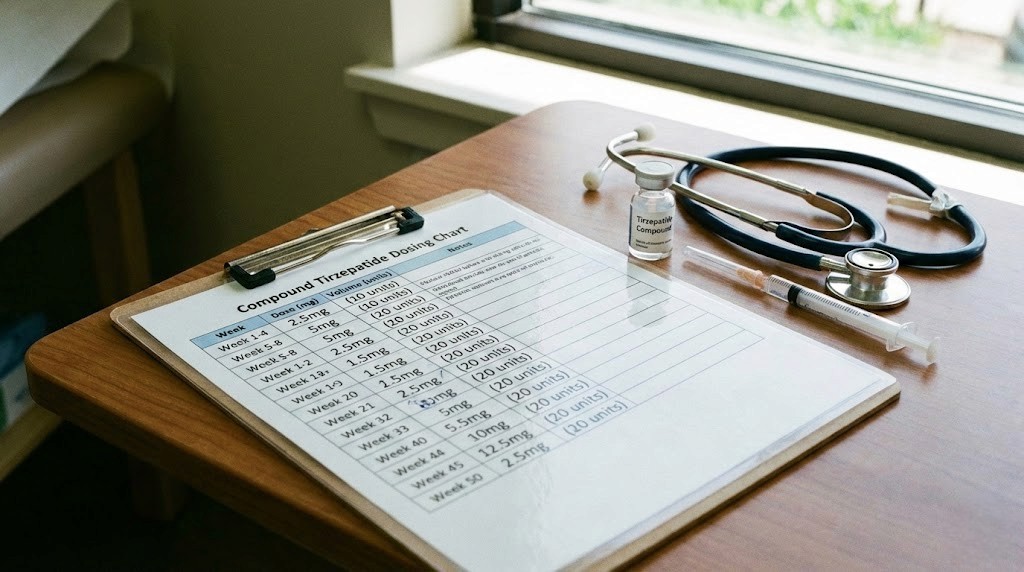
A compound tirzepatide dosing chart is not just a table you glance at before filling a syringe. It is a week-by-week roadmap that tells you when to increase, when to hold, when to back off, and when you have reached the dose that will carry you to your goal. Get the schedule wrong and you either stall out at a dose too low to produce meaningful results, or you escalate too fast and spend weeks battling nausea that makes the whole process miserable.
The clinical trials behind tirzepatide, specifically the SURMOUNT program, showed that 91% of participants on the highest dose achieved at least 5% body weight loss. But those numbers came from a precise, methodical titration schedule. Not from guessing. Not from copying someone on a forum. From a protocol designed around pharmacokinetics, receptor occupancy, and gastrointestinal tolerance windows. That is exactly what this guide lays out. Every week. Every dose level. Every decision point from your first 2.5 mg injection through long-term maintenance, including what to do when things stall, when side effects flare, and when it is time to hold steady instead of pushing higher. Whether you are using a 5 mg/mL vial, a 20 mg/mL formulation, or anything in between, the schedule principles remain the same. The concentration changes the volume you draw. The dosing chart changes your results.
Why the dosing schedule matters more than the dose itself
Here is something most dosing guides get wrong. They focus on the number. "Take 5 mg." "Take 10 mg." As if the milligram amount is the whole story.
It is not.
The schedule, meaning when you start, how long you stay at each level, and when you move up, determines almost everything about your experience with tirzepatide dosing. Two people can both reach 10 mg and have wildly different results depending on how they got there. One followed a slow, steady titration with four-week holds at each level. The other jumped from 2.5 mg to 10 mg in six weeks because they were impatient. The first person lost weight consistently with minimal side effects. The second spent three weeks nauseated, lost muscle along with fat, and quit before reaching a therapeutic window.
Tirzepatide has a half-life of approximately 5 days, which means it takes roughly four weeks of consistent weekly dosing to reach steady state at any given dose. That is not a suggestion. That is pharmacokinetics. The drug accumulates about 1.6-fold at steady state, so the actual circulating concentration after four weeks on 5 mg is significantly higher than what you experience after your first 5 mg injection. If you escalate before reaching steady state, you are making decisions based on incomplete information. You do not yet know what that dose can do for you.
This is why the tirzepatide dosing guide matters so much. Not the milligrams on the label. The schedule you follow.
The standard compound tirzepatide dosing chart: week by week
The standard titration protocol mirrors what was used in the SURMOUNT clinical trials. It is the most widely recommended schedule by telehealth providers, compounding pharmacies, and weight management clinicians. If you are starting compound tirzepatide for the first time and have no specific medical reason to deviate, this is likely where your provider will begin.
Weeks 1 through 4: the 2.5 mg initiation phase
You start at 2.5 mg once weekly. This is not a therapeutic dose for most people. It will not produce dramatic weight loss. That is the point. This phase exists to let your GI system adapt to GLP-1 and GIP receptor activation. Your body needs time to adjust to delayed gastric emptying, altered hunger signaling, and changes in insulin dynamics.
During these first four weeks, expect mild appetite reduction, possibly some nausea (about 39% of people in clinical trials experienced GI events at this level), and the beginning of a shift in how food feels. Some people notice reduced cravings within the first week. Others feel almost nothing until week three. Both responses are normal. The speed at which tirzepatide works varies significantly from person to person, and the 2.5 mg phase is about establishing tolerance, not chasing results.
Weight loss during this phase typically ranges from 1 to 4 pounds. Do not panic if the number is low. You are building a foundation.
Weeks 5 through 8: the 5 mg therapeutic entry
At week 5, you move to 5 mg once weekly. This is where things start to happen for most people. The SURMOUNT-1 trial showed that participants on 5 mg achieved an average of 15 to 16% total body weight reduction over the full study period. That is significant. And it starts becoming noticeable in this phase.
Appetite suppression deepens. You might find yourself forgetting to eat, leaving food on your plate without thinking about it, or losing interest in snacking entirely. If you want to understand more about how long it takes tirzepatide to suppress appetite, this second month is typically when the mechanism really kicks in.
GI side effects may increase temporarily as you adjust to the higher dose. Nausea affects roughly 20% of users in this range, with diarrhea at about 16%. These symptoms usually peak during the first one to two weeks at the new dose and then taper off as your body reaches steady state. If side effects are tolerable, stay the course. If they are severe, we will cover adjustment strategies below.
Weeks 9 through 12: the 7.5 mg escalation
The jump to 7.5 mg is where compounded tirzepatide protocols begin to diverge from branded Mounjaro. The branded product only comes in 2.5, 5, 7.5, 10, 12.5, and 15 mg doses. Compounded formulations can hit virtually any number between those, which creates both opportunity and confusion. If you are using a compound tirzepatide dosage chart from a 503B pharmacy, 7.5 mg is a standard step. If you are working with a provider who compounds in-house, they might jump straight from 5 mg to 10 mg. Both approaches can work. The question is how your body responds.
By week 9, you should be seeing consistent weight loss, improved metabolic markers, and well-established appetite suppression. If all of that is true and side effects are manageable, 7.5 mg continues the trajectory. If you are already losing weight well at 5 mg and feel stable, some providers will keep you there longer. There is no rule that says you must escalate every four weeks. Hold when things are working.
Weeks 13 through 16: the 10 mg mid-range sweet spot
Ten milligrams is where a large percentage of compound tirzepatide users find their optimal dose. The SURMOUNT-1 data showed 19.5% average body weight reduction on 10 mg, with 89% of participants achieving at least 5% loss. For many people, this is the dose that balances efficacy with tolerability. Strong enough to produce serious results. Manageable enough to sustain long-term.
Calculating the right volume to draw from your vial depends on the concentration. If you are using a 10 mg/mL formulation, the math is straightforward, but higher concentrations like 20 mg/mL require careful measurement. Use the dosage calculator to double-check your numbers, and refer to the tirzepatide dosage chart in mL or the dosage chart in units for precise volume conversions at your specific concentration.
Many people stay at 10 mg for the remainder of their weight loss phase. If you are losing 1 to 2 pounds per week consistently at this level, there is often no reason to go higher. More is not always better. More is just more side effects without proportionally more results.
Weeks 17 through 20: the 12.5 mg escalation (if needed)
Not everyone needs to go above 10 mg. But for people who have plateaued, whose weight loss has slowed to less than half a pound per week for three or more consecutive weeks, 12.5 mg may restart progress. The jump from 10 to 12.5 is a 25% increase, which is significant, and side effects may temporarily return.
The key question at this stage is whether the plateau is truly dose-related or lifestyle-related. If you have gradually increased caloric intake, decreased activity, or experienced stress-related cortisol spikes, those factors might be driving the stall, and a dose increase will not fix them. If you are genuinely doing everything right and the scale has stopped moving, a dosing adjustment makes sense. We cover plateau-breaking strategies in detail in our guide on why you might not be losing weight on tirzepatide.
Weeks 21 through 24: the 15 mg maximum clinical dose
The 15 mg dose represents the highest level studied in clinical trials. Participants on 15 mg in SURMOUNT-1 achieved an average of 20.9 to 22.5% body weight reduction, with 91% reaching the 5% threshold. These are the headline numbers that made tirzepatide famous.
But there is a trade-off. GI adverse events at 15 mg affect roughly 49% of users. Nearly half. That is a real consideration. If you are tolerating 12.5 mg well and still losing weight, many providers will extend the hold at that dose rather than pushing to 15 mg. The incremental benefit from 12.5 to 15 is smaller than the jump from 5 to 10, and the side effect increase is disproportionately larger.
For those who do reach 15 mg, this is typically the ceiling. Going beyond 15 mg enters territory without clinical trial backing, and the risk-to-benefit ratio shifts unfavorably.
The slow titration protocol: when patience beats speed
Not everyone should follow the standard four-week titration. Some people are better served by a slower approach. If you have a history of GI sensitivity, previous bad reactions to GLP-1 medications like semaglutide, or you simply want to minimize side effects at the expense of slightly slower results, the slow titration protocol is worth considering.
Who benefits from slow titration
People switching from semaglutide who experienced significant nausea. People with a BMI under 30 who are using tirzepatide for metabolic health rather than dramatic weight loss. People over 65 or with compromised kidney function. People who tried the standard protocol once, could not tolerate the escalation, and are restarting. If any of those descriptions fit, slow titration may be the right move.
The slow titration schedule
Weeks 1 through 6: Start at 1 to 1.5 mg once weekly. Yes, this is below the standard starting dose. Some compounding pharmacies can formulate vials that allow precise sub-2.5 mg dosing. If yours cannot, you can use a peptide reconstitution calculator to determine the right volume for a lower dose from a standard vial.
Weeks 7 through 10: Increase to 2.5 mg once weekly. This is where the standard protocol begins, but you arrive here with a GI system already adapted to receptor activation.
Weeks 11 through 16: Increase to 5 mg once weekly. Six weeks at this level instead of four. This longer hold allows full steady-state adaptation and gives you more data about how your body responds before escalating further.
Weeks 17 through 24: Increase to 7.5 mg once weekly. Again, an extended hold. By week 24, you are at a dose that produces meaningful results for many people, and you have arrived there with minimal GI disruption.
Weeks 25 through 32: Increase to 10 mg if needed. The slow protocol typically reaches 10 mg around the 6 to 8 month mark, compared to 3 to 4 months on the standard schedule. The trade-off is significantly fewer side effects, better muscle preservation, and for many people, equivalent total weight loss at the 12-month mark because they never had to pause or reduce due to intolerance.
The slow protocol takes 20 to 24 weeks to reach 10 mg versus the standard 16 weeks. But research on how long tirzepatide takes to work consistently shows that the endpoint matters more than the speed of arrival. Patients who reach 10 mg slowly tend to stay there longer and maintain more consistent weight loss than those who rush.
The extended plateau protocol: maximizing each dose level
This protocol is becoming increasingly popular among providers who prioritize finding the minimum effective dose. The philosophy is simple. Stay at each dose level until weight loss genuinely stalls, not for a predetermined number of weeks.
How the extended plateau protocol works
Weeks 1 through 4: Start at 2.5 mg. Standard initiation.
Weeks 5 onward at 5 mg: Stay here for 6 to 8 weeks minimum. If you are still losing at least 0.5 to 1 pound per week at week 12, there is no reason to increase. Many people on this protocol stay at 5 mg for 3 to 4 months. The tirzepatide dosing for weight loss in units guide breaks down exactly how to measure this dose at various concentrations.
Escalation trigger: Only increase when weight loss drops below 0.5 pounds per week for three consecutive weeks, assuming diet and exercise have not changed. This is a true pharmacological plateau, not a momentary stall.
Next dose: Move to 7.5 mg. Hold again for 6 to 8 weeks minimum. Repeat the same escalation criteria.
This protocol means some people never go above 7.5 mg. Others stay at 10 mg indefinitely. The advantage is fewer side effects, lower cost per month (you use less peptide), and a clearer understanding of your actual minimum effective dose. The disadvantage is slower initial weight loss compared to the standard protocol. For people who care about sustainability over speed, it is often the best choice.
Microdosing tirzepatide: the ultra-conservative approach
Microdosing sits at the far end of the conservative spectrum. It involves starting at doses well below the standard 2.5 mg starting point, sometimes as low as 0.25 mg, and escalating in very small increments. Our complete microdosing tirzepatide chart covers this approach in full detail, but here is an overview of how it fits into the broader dosing landscape.
Who microdoses and why
People who are extremely GI-sensitive. People who want to test their response before committing to a full protocol. People who have tried other GLP-1 medications and could not tolerate even the lowest dose. And increasingly, people who want appetite modulation without dramatic weight loss, such as those working on metabolic health, blood sugar regulation, or body recomposition rather than pure fat loss.
A sample microdosing schedule
Weeks 1 through 2: 0.25 to 0.5 mg once weekly.
Weeks 3 through 4: 0.5 to 1 mg once weekly.
Weeks 5 through 8: 1 to 1.5 mg once weekly.
Weeks 9 through 12: 1.5 to 2.5 mg once weekly.
Week 13 onward: Transition to the standard or slow titration protocol starting at 2.5 mg, with your GI system already primed.
Microdosing requires a compounded formulation, because the branded product does not allow for doses this small. You will need to work with your provider and pharmacy to determine the right concentration and injection volume. The peptide calculator is essential for these small-volume measurements, where a fraction of a unit can mean the difference between 0.25 mg and 0.5 mg.
Weight-based dosing considerations
The standard tirzepatide dosing chart does not adjust for body weight. A 150-pound person and a 350-pound person start at the same 2.5 mg. They follow the same escalation schedule. And yet their pharmacokinetic profiles are meaningfully different.
Tirzepatide is 99% bound to plasma albumin. Its distribution depends on body composition, total body water, and adipose tissue volume. A person with a BMI of 45 has significantly more distribution volume than someone at BMI 28. That means the same milligram dose produces a lower effective concentration in the larger person.
What this means for your dosing schedule
Higher BMI individuals may need to reach higher absolute doses to achieve the same receptor occupancy that produces results in lower BMI individuals. In the SURMOUNT trials, the median time to weight plateau ranged from 24 to 36 weeks depending on baseline BMI class. Participants with higher starting BMIs tended to need longer titration periods and higher final doses to reach their maximum weight loss.
This does not mean someone at BMI 45 should start at a higher dose. The 2.5 mg initiation exists for GI tolerance, and that applies regardless of weight. But it does mean that a person at BMI 45 may not see significant weight loss until reaching 10 or 15 mg, while someone at BMI 28 might plateau happily at 5 or 7.5 mg.
If you are tracking your progress and feel like you are not responding at a given dose level, consider whether weight-based factors might explain it. Use the peptide cost calculator to project costs at higher dose levels, because knowing the financial trajectory helps you plan realistically.
BMI-stratified dosing expectations
BMI 27 to 30: Many people in this range find their effective dose between 5 and 10 mg. Weight loss tends to start earlier and plateau at lower doses. The standard titration may reach a maintenance dose by weeks 12 to 16.
BMI 30 to 35: The most common effective range is 7.5 to 12.5 mg. Most people in this category follow the standard protocol comfortably and reach their target dose by weeks 16 to 20.
BMI 35 to 40: Expect to reach 10 to 15 mg before seeing the kind of consistent, sustained weight loss that adds up over months. Longer holds at each dose level (5 to 6 weeks) often produce better outcomes than rapid escalation.
BMI 40+: The full 15 mg dose is frequently needed, and some providers extend holds to 6 to 8 weeks at each level. Total time to target dose can be 24 to 32 weeks. Patience at this level is not optional. It is the strategy.
Switching from semaglutide to compound tirzepatide
If you are currently on semaglutide, whether branded Ozempic or Wegovy or a compounded semaglutide formulation, and want to transition to compound tirzepatide, the dosing schedule is not as simple as swapping one for the other. Our dedicated switching from semaglutide to tirzepatide dosage chart covers this in depth, but here are the key scheduling principles.
Why the switch is not one-to-one
Semaglutide activates only GLP-1 receptors. Tirzepatide activates both GLP-1 and GIP receptors. They are different molecules with different pharmacokinetic profiles, different receptor binding affinities, and different side effect patterns. The semaglutide to tirzepatide dose conversion chart provides rough equivalencies, but they are approximations, not exact translations.
General switching guidelines
From semaglutide 0.25 to 0.5 mg: Start tirzepatide at 2.5 mg. You are moving from a low GLP-1 dose, and starting at the standard tirzepatide initiation is appropriate.
From semaglutide 1 mg: Start tirzepatide at 2.5 to 5 mg. Some providers start at 5 mg since you already have GLP-1 tolerance, but the added GIP activation means GI effects can still surprise you. A one-to-two-week hold at 2.5 mg before jumping to 5 mg is a safer approach.
From semaglutide 1.7 to 2.4 mg: Start tirzepatide at 5 mg. Your GLP-1 tolerance is well established. The semaglutide to tirzepatide conversion chart suggests that 2.4 mg semaglutide corresponds roughly to 5 to 7.5 mg tirzepatide in terms of GLP-1 receptor activity. But GIP activation is entirely new to your system, so starting at 5 mg rather than 7.5 mg gives your body time to adapt to the dual-agonist mechanism.
Timing: Most providers recommend starting tirzepatide one week after your last semaglutide dose. Since semaglutide has a half-life of about one week, there will still be some residual GLP-1 activity when you take your first tirzepatide injection. This overlap is generally well tolerated but can increase nausea in sensitive individuals. Our comparison of semaglutide vs tirzepatide breaks down the pharmacological differences in detail, and the tirzepatide vs semaglutide dosage chart provides a side-by-side schedule comparison.
What to expect after switching
Most people who switch from semaglutide to tirzepatide report stronger appetite suppression within the first two to three weeks. The dual GLP-1/GIP mechanism tends to produce deeper satiety signals. However, some people experience a brief honeymoon period of intense appetite reduction followed by a normalization period where hunger partially returns before settling at a new baseline. This is normal and not a sign that the medication is failing.
If you experienced semaglutide withdrawal symptoms before, the transition window is when they are most likely to appear. The overlap period between medications helps minimize this, but be prepared for a few days of increased hunger if the transition is not seamless.
When to hold your dose instead of escalating
The instinct to increase is strong. If some is good, more must be better. Right?
Wrong. Often spectacularly wrong.
Holding your dose, meaning staying at the same milligram level for additional weeks beyond the standard four-week titration period, is one of the most underrated strategies in compound tirzepatide protocols. Here is when holding is the smarter move.
You are still losing weight
If you are losing 0.5 pounds or more per week, your current dose is working. Increasing will not make you lose faster. It will just give you more side effects. The tirzepatide dosing guide principles are clear on this. Escalation should be driven by plateaus, not impatience.
You are managing side effects
Mild nausea that comes and goes. Occasional constipation. Slight fatigue after injection day. These are signs that your body is still adapting to the current dose. Going higher while you are still adapting is asking for trouble. Give yourself at least four full weeks at a dose, ideally six, before considering whether the side effects are truly manageable. If you are wondering whether tirzepatide makes you tired, that fatigue often improves with an extended hold rather than an upward dose change.
You recently changed something else
Started a new exercise program? Changed your diet? Began a new medication? Any of these variables can confound your assessment of whether your current dose is working. Change one thing at a time. If you just started strength training and your weight stalls for two weeks, that is probably water retention and muscle adaptation, not a dosing problem.
You are within the first four weeks at a new dose
Remember the pharmacokinetics. Steady state takes about four weeks. Your body accumulates tirzepatide 1.6-fold over that period. The injection you took in week 1 at a new dose is producing a very different circulating concentration than the injection in week 4. Escalating before week 4 is escalating blind.
When to escalate: recognizing a true plateau
A genuine dosing plateau looks specific. It is not one bad week on the scale. It is not a three-day stall after a high-sodium meal. A true plateau has clear characteristics that separate it from normal weight loss fluctuations.
Three-week rule
Your weight has not decreased by at least 0.5 pounds per week for three consecutive weeks. Not one week. Not two. Three. Weight loss is nonlinear, and short-term stalls happen constantly due to water retention, hormonal cycles, stress, sleep quality, and dozens of other variables. Three weeks eliminates most of the noise.
Lifestyle audit passed
Before escalating, confirm these are stable: caloric intake has not increased. Physical activity has not decreased. Sleep quality has not degraded. Stress levels have not spiked. Hydration is adequate. Fiber intake supports GI function. If any of these have changed, address them first. The answer is not always more medication. Our resource on why you are not losing weight on tirzepatide walks through this audit in detail.
Side effects have stabilized
If you are still experiencing significant GI side effects at your current dose after four weeks, escalating will almost certainly make them worse. Wait until side effects are minimal before moving up. If side effects are persistent and problematic, this might actually be your maximum tolerated dose, regardless of what the chart says you could take.
Metabolic markers support escalation
For people working with providers who monitor labs, improvements in HbA1c, fasting glucose, triglycerides, or inflammatory markers at the current dose suggest the medication is working even if weight is not dropping. In these cases, holding the dose and letting the metabolic improvements continue may be preferable to chasing a lower number on the scale.
Dose adjustment strategies for common problems
No dosing chart survives contact with a real human body unchanged. Here are the most common situations that require adjusting the standard protocol, and exactly how to handle each one.
Problem: severe nausea after dose increase
What is happening: Your GI tract cannot handle the new dose level. GLP-1 receptor activation is slowing gastric emptying beyond what your system can comfortably tolerate.
Solution: Drop back to the previous dose for two weeks. Then, instead of jumping to the full next dose, try splitting the difference. If you went from 5 mg to 7.5 mg and got hammered, go back to 5 mg for two weeks, then try 6 to 6.5 mg for four weeks before attempting 7.5 mg again. Compounded formulations make this kind of fine-tuning possible in a way branded products do not.
Problem: weight loss stalls but you cannot tolerate a higher dose
What is happening: You have reached your maximum tolerated dose, but it is not producing enough weight loss. This is a genuine challenge.
Solution: Focus on the lifestyle levers. Increase protein intake to 1 gram per pound of lean body mass. Add resistance training if you have not already. Ensure sleep quality is optimized (7 to 9 hours). Consider splitting your dose (covered in the next section). Some providers add niacinamide to tirzepatide formulations or B12 to tirzepatide to help with energy levels and metabolic support at the current dose without increasing the tirzepatide itself.
Problem: appetite returns mid-week
What is happening: Tirzepatide reaches peak plasma levels 8 to 72 hours after injection. For some people, the appetite-suppressing effect wanes by day 5 or 6, leaving 1 to 2 days of increased hunger before the next injection.
Solution: This is one of the strongest arguments for split dosing, which we cover in detail below. Alternatively, some people find that shifting their injection day helps. If you inject on Monday and hunger returns on Saturday, try injecting on Thursday instead so that the hunger window falls on Tuesday, a day when routine and structure make it easier to manage. The half-life of approximately 5 days means that injection day timing can meaningfully affect your hunger pattern throughout the week.
Problem: rapid initial weight loss followed by early plateau
What is happening: Often, the first 4 to 8 weeks produce dramatic results (partly water weight, partly fat), followed by a slowdown that feels like failure but is actually normal. The body adjusts metabolic rate downward in response to weight loss. This is adaptation, not medication failure.
Solution: Do not escalate in panic. Check whether your caloric needs have decreased with your lower body weight. A person who has lost 20 pounds needs fewer calories to maintain their new weight, which means the deficit that produced initial loss has shrunk. Recalculate your nutritional targets, potentially add a structured refeed day to reset leptin, and give the current dose at least six weeks before escalating. The peptides for weight loss research consistently shows that metabolic adaptation is temporary when managed properly.
Split dosing protocols: dividing your weekly dose
Split dosing means taking your total weekly tirzepatide dose across two injections instead of one. If your weekly dose is 10 mg, you would inject 5 mg twice per week instead of 10 mg once. This approach has gained significant traction among compound tirzepatide users, and for good reason.
Why split dosing works
The pharmacokinetic profile of tirzepatide shows a peak-to-trough pattern with weekly dosing. You get a high concentration within the first 8 to 72 hours, then levels gradually decline over the remaining days. Split dosing flattens this curve. Instead of one big peak and one low trough, you get two moderate peaks with shallower troughs. The result is more consistent drug levels throughout the week.
This has three practical benefits. First, appetite suppression becomes more uniform. No more mid-week hunger spikes. Second, side effects often decrease because the peak concentration is lower (you never hit the same high point as a single large dose). Third, some people report better energy levels and mood stability without the "roller coaster" that single weekly dosing can produce.
Split dosing schedule example
Total weekly dose: 10 mg
Monday: inject 5 mg.
Thursday: inject 5 mg.
The three-day and four-day split provides the most even coverage across the week. Some people prefer a Monday/Friday or Tuesday/Saturday schedule based on their routine. The key is maintaining roughly equal spacing between injections.
Total weekly dose: 7.5 mg
Monday: inject 4 mg.
Thursday: inject 3.5 mg.
The slight asymmetry does not matter clinically. What matters is that neither injection exceeds the amount that causes significant side effects.
Measuring these split doses accurately requires careful calculation, especially with higher-concentration formulations. The tirzepatide dosage in units guide and the unit conversion reference for 2.5 mg are helpful resources. For any concentration, the SeekPeptides peptide calculator can give you the exact volume for any split dose amount.
When to consider split dosing
You experience significant appetite return on days 5 through 7. You have notable side effects in the first 1 to 2 days after injection that then resolve. You feel a "roller coaster" effect with energy or mood throughout the week. You are at or near your maximum tolerated dose and want to stay there more comfortably. Any of these situations makes split dosing worth trying.
When NOT to split dose
You are in the initiation phase (first four weeks at 2.5 mg). The doses are too small to split meaningfully. You are tolerating single weekly dosing well with no mid-week hunger or side effect peaks. There is no fix needed if nothing is broken. Your provider specifically advises against it based on your individual circumstances.
Provider-specific dosing charts: what to expect from different pharmacies
Compounded tirzepatide comes from 503B compounding pharmacies, and not all of them formulate identically. The active ingredient is the same, but the concentration, the excipients (like niacinamide or B12), and the recommended dosing schedules can vary.
Common compounding pharmacy formulations
5 mg/mL concentration: The most common entry-level formulation. Good for standard dosing up to about 7.5 mg before injection volumes become uncomfortably large. At 10 mg, you are injecting 2 mL per shot, which is more volume than most people want subcutaneously.
10 mg/mL concentration: The versatile middle ground. Covers the full standard dosing range from 2.5 to 15 mg with reasonable injection volumes (0.25 mL to 1.5 mL). The tirzepatide 10 mg dosing guide covers this formulation in detail.
15 mg/mL concentration: Designed for higher-dose users. Keeps injection volume compact even at 12.5 and 15 mg.
17 mg/mL concentration: Less common but offered by some pharmacies for patients who have stabilized at 15 mg and want maximum convenience.
20 mg/mL concentration: The highest common concentration. Ideal for patients on 10+ mg doses who prefer the smallest possible injection volume. Requires careful measurement because small volume errors translate to significant dose errors at this concentration. Refer to the 20 mg/mL dosing chart for precise measurements.
Each concentration requires different volume calculations for every dose tier. The tirzepatide reconstitution chart and the compound tirzepatide dosage chart with unit conversions provide these calculations for all common formulations. SeekPeptides maintains updated calculators for every major concentration to take the guesswork out of this math.
Excipient considerations and your dosing schedule
Some pharmacies add niacinamide (vitamin B3) to their tirzepatide formulations. Others add cyanocobalamin (B12). Some add glycine as a stabilizer. These additions can slightly affect how you feel at each dose tier.
Niacinamide at therapeutic doses can cause flushing (warmth and redness) in some people, particularly in the first few weeks. If you experience this, it is the niacinamide, not the tirzepatide, and it typically resolves with continued use. The niacinamide combination guide covers this in detail.
B12 addition can affect energy levels and may slightly alter how you feel during the adaptation phase at each new dose. Some people report less fatigue with B12-containing formulations, which could influence your decision to hold or escalate. Check our tirzepatide with B12 guide for specifics.
Monthly cost at each dose tier
Dosing schedules have financial implications that most charts ignore. Here is the reality of what compound tirzepatide costs at each dose level, based on typical 503B pharmacy pricing. These numbers help you plan your protocol financially and understand why finding your minimum effective dose matters for your wallet as much as your waistline.
Approximate monthly costs by dose
2.5 mg weekly (10 mg/month): $150 to $250 per month at most compounding pharmacies. This is the least expensive phase, and it only lasts four weeks on the standard protocol.
5 mg weekly (20 mg/month): $200 to $350 per month. Still relatively affordable and, for some people, the dose where they stay long-term.
7.5 mg weekly (30 mg/month): $275 to $450 per month. The cost increase is roughly proportional to the dose increase.
10 mg weekly (40 mg/month): $350 to $550 per month. This is where most people land for their maintenance dose, and it is also where cost becomes a genuine planning consideration.
12.5 mg weekly (50 mg/month): $425 to $650 per month.
15 mg weekly (60 mg/month): $500 to $750 per month. The highest standard dose is also the most expensive month-to-month commitment.
Compare these numbers across sources using the peptide cost calculator. If cost is a significant factor, the extended plateau protocol, where you maximize each dose level before escalating, can save hundreds or thousands of dollars over the course of treatment by keeping you at a lower dose longer. Some people also explore more affordable compounded tirzepatide options to stretch their budget.
The financial side also matters when deciding between semaglutide vs tirzepatide for weight loss. Both have different cost curves at different dose levels, and the right choice depends on your budget, your response, and your long-term plan.
Companion lifestyle protocol at each dose level
A dosing chart without a lifestyle protocol is a car without wheels. The medication creates the metabolic environment for weight loss. But what you eat, how you move, and how you recover determine how much of that potential you actually capture. Here is what to pair with each dose level for maximum results.
At 2.5 mg: building the foundation
Nutrition: Focus on protein. Aim for 0.8 to 1 gram per pound of lean body mass. At this dose, appetite reduction is mild, so use it as an opportunity to establish healthy eating patterns rather than relying on the medication to override hunger. Prioritize whole foods, adequate fiber (25 to 30 grams daily), and hydration (half your body weight in ounces of water).
Exercise: Begin or maintain a moderate exercise routine. Three to four days of activity per week. A mix of walking (150 minutes weekly minimum) and basic resistance training. Do not start an aggressive program simultaneously with starting tirzepatide. One new variable at a time.
Recovery: Prioritize sleep. Seven to nine hours. This is not optional. Poor sleep increases ghrelin, decreases leptin, and can completely negate the appetite-suppressing effects of tirzepatide at any dose.
At 5 to 7.5 mg: leveraging appetite suppression
Nutrition: Appetite is noticeably reduced. The challenge shifts from overeating to undereating. Many people on tirzepatide inadvertently drop below 1,000 calories daily, which causes muscle loss, metabolic slowdown, and eventual rebound. Track protein intake carefully. Hit your protein target even if you have to force it. Consider protein shakes or high-protein snacks on days when solid food feels unappealing.
Exercise: Increase resistance training to three or four days per week if tolerated. Muscle preservation during rapid weight loss requires mechanical loading, meaning lifting weights, not just walking. Every pound of muscle you preserve keeps your metabolic rate higher, which means better long-term results and easier maintenance.
Recovery: Monitor for signs of overtraining. The caloric deficit created by tirzepatide plus exercise can be substantial. If recovery feels impaired (excessive soreness, persistent fatigue, declining strength), reduce exercise volume before reducing the dose.
At 10 to 15 mg: maintenance-ready habits
Nutrition: By this phase, you should have well-established eating patterns. A structured meal plan with adequate protein, strategic carbohydrate timing around workouts, and consistent meal frequency. This is not a diet. It is the way you eat now, permanently. The medication makes it easy. The habits make it sustainable.
Exercise: A well-rounded program including resistance training (3 to 4 days), cardiovascular conditioning (2 to 3 days), and flexibility work. Intensity can increase as fitness improves and body weight decreases. Joint stress decreases with weight loss, opening up activities that may have been uncomfortable before.
Recovery: Full recovery protocol. Sleep, hydration, stress management, and potentially supplementation for micronutrients that become harder to get at lower caloric intake (magnesium, vitamin D, B vitamins, omega-3 fatty acids).
Researchers working with peptides beyond tirzepatide often explore stacking options for body composition goals. While tirzepatide handles the fat loss side, peptides like those covered in our peptides for muscle growth guide or peptides for anti-aging resource can support complementary goals. The peptide stack calculator helps you evaluate combinations if your provider recommends a multi-peptide approach.
Finding your maintenance dose
Every tirzepatide journey has a destination. That destination is not the highest dose. It is not the fastest loss. It is the maintenance dose, the amount of medication that allows you to maintain your achieved weight loss without ongoing restriction, without constant hunger, and without significant side effects.
How to identify your maintenance dose
You have reached a weight you are comfortable maintaining (not necessarily your "goal weight" but a weight you can sustain). Your weight has been stable (plus or minus 2 to 3 pounds) for 4 to 6 weeks without active effort to restrict. Your appetite feels balanced. You eat when hungry, stop when satisfied, and do not think about food constantly. Side effects are minimal or absent.
When all of those conditions are met, you are at or near your maintenance dose. For most people, this dose is lower than their peak weight-loss dose. If you needed 12.5 mg to lose the last stubborn pounds, you might maintain at 7.5 or 10 mg. If your peak was 10 mg, maintenance might be 5 or 7.5 mg.
The step-down approach
Once you decide to transition from weight loss to maintenance, the typical approach is a gradual step-down.
Week 1 through 4: Reduce by one dose tier (for example, from 10 mg to 7.5 mg). Monitor weight and appetite closely.
Week 5 through 8: If weight is stable and appetite is manageable, hold at the reduced dose. If weight begins creeping up, return to the previous dose for four more weeks before trying again.
Week 9 through 12: Consider another reduction (from 7.5 mg to 5 mg) if the first reduction was successful. Same monitoring criteria apply.
Some people find they can reduce all the way to 2.5 mg for maintenance. Others need to stay at 7.5 or 10 mg indefinitely. Both outcomes are normal. The goal is finding the lowest dose that preserves your results.
Can you stop completely?
The honest answer is that most people regain significant weight after discontinuing tirzepatide entirely. Clinical trial data shows that participants who stopped medication regained approximately two-thirds of their lost weight within one year. This is not a moral failing. It is biology. The hormonal and neurological drivers of weight regain are powerful, and tirzepatide addresses them at a mechanistic level that lifestyle changes alone often cannot replicate.
For this reason, many providers frame tirzepatide as a long-term or indefinite medication, similar to blood pressure or cholesterol medications. Finding a sustainable maintenance dose is the practical alternative to the cycle of starting, stopping, regaining, and restarting.
Long-term maintenance strategy
Reaching your maintenance dose is not the end. It is the beginning of the longest phase of your tirzepatide journey. Here is how to manage it.
Quarterly check-ins
Every three months, assess the key indicators. Is your weight stable within a 3 to 5 pound range? Are side effects still minimal? Has your appetite pattern changed? Are metabolic markers (if tracked) still within target ranges? Have lifestyle factors remained consistent?
If everything is stable, continue the current protocol unchanged. If weight has crept up, determine whether it is dose-related or lifestyle-related before adjusting medication. Often a brief period of tighter nutritional adherence resolves a small regain without needing a dose increase.
Seasonal considerations
Weight fluctuates seasonally for most people. Holiday periods, vacation seasons, and changes in activity patterns can all affect your maintenance. Some people proactively increase their dose by one tier during historically challenging periods (such as November through January) and reduce again afterward. Discuss this approach with your provider if it interests you.
Tolerance and long-term efficacy
A common concern is whether tirzepatide "stops working" over time. The clinical trial data, which runs up to 72 weeks in the SURMOUNT program, does not show true pharmacological tolerance. What happens instead is that weight loss naturally slows as you approach a new equilibrium, which feels like the medication is losing effectiveness. It is not. It is maintaining the weight loss you have already achieved, which is the actual job of a maintenance dose.
If you are concerned about long-term efficacy, tracking your appetite patterns and metabolic markers is more informative than watching the scale alone. Stable appetite, stable blood sugar, stable energy, and stable weight are all signs that the medication is working exactly as it should at the maintenance level.
Missed dose protocol: what to do when you forget
It happens. You travel, you get busy, you simply forget. Knowing the missed dose rules prevents compounding the problem with a bad decision.
If fewer than 4 days (96 hours) have passed since your scheduled dose
Take it as soon as you remember. Then resume your regular schedule. For example, if you normally inject on Monday and remember on Wednesday (48 hours late), inject on Wednesday and then go back to Monday the following week.
If 4 or more days have passed
Skip the missed dose entirely. Resume your regular schedule with your next planned injection. Do NOT double up. Do NOT take two doses less than 72 hours apart. The pharmacokinetics do not support "catching up," and double-dosing significantly increases the risk of severe nausea, vomiting, and other GI adverse events.
Repeated missed doses
If you have missed two or more consecutive weekly doses, do not simply resume at your previous dose level. Your body has partially lost its adaptation. Restart at one dose tier lower than where you left off and titrate back up over two to four weeks. Missing three or more consecutive doses should prompt a conversation with your provider about whether to restart the full titration from the beginning.
Proper storage matters here too. If you missed doses because your vial was compromised, not because you forgot, you need to verify your peptide is still viable. Our guides on whether tirzepatide needs refrigeration, how long tirzepatide lasts in the fridge, and how long compounded tirzepatide can be out of the fridge cover storage requirements for every situation. For general best practices, the peptide storage guide is a comprehensive reference.
Aggressive titration: the fast-track approach (and why most providers avoid it)
Some online protocols recommend an aggressive schedule that reaches 10 or 15 mg within 8 to 12 weeks. We include this for completeness, but with a strong caveat. Most experienced providers advise against it.
The aggressive schedule
Weeks 1 through 2: 2.5 mg. Only two weeks at the initiation dose instead of four.
Weeks 3 through 4: 5 mg.
Weeks 5 through 6: 7.5 mg.
Weeks 7 through 8: 10 mg.
Weeks 9 through 10: 12.5 mg.
Weeks 11 through 12: 15 mg.
Why this approach is risky
Two-week intervals do not allow for steady state. You are escalating before the previous dose has fully accumulated, creating a stacking effect that amplifies side effects unpredictably. The GI adverse event rate on aggressive protocols is substantially higher than the already-significant 49% seen at 15 mg in the standard titration.
More importantly, you bypass the opportunity to discover that a lower dose might work for you. If 7.5 mg would have been your sweet spot, you will never know because you blew through it in two weeks before it had a chance to reach steady state.
The only scenario where aggressive titration might be justified is for patients with severe obesity (BMI 50+) under direct medical supervision, where the health risks of remaining at current weight outweigh the risks of rapid titration. This is a clinical decision, not a self-directed one.
Sublingual tirzepatide: a different dosing framework
Not all compound tirzepatide is injectable. Sublingual (under-the-tongue) formulations exist and follow a different dosing paradigm entirely. The tirzepatide sublingual dosing guide covers this in depth, but the key difference relevant to a dosing chart is bioavailability.
Sublingual tirzepatide has lower bioavailability than injectable. This means a higher milligram dose is needed sublingually to achieve the same circulating drug levels as a lower injectable dose. Some sources estimate sublingual bioavailability at 20 to 40% of injectable, though this varies by formulation and individual absorption.
If your provider prescribes sublingual tirzepatide, the dosing chart will look different. Starting doses may be 5 to 10 mg (equivalent to roughly 1 to 4 mg injectable). Titration increments are larger. And the schedule may involve daily or twice-daily dosing rather than weekly.
The injectable vs oral peptides comparison provides broader context on route-of-administration considerations. For most people pursuing significant weight loss, injectable remains the gold standard for consistent dosing and predictable results.
How compound tirzepatide compares to other GLP-1 dosing schedules
Understanding where compound tirzepatide sits in the broader GLP-1 landscape helps contextualize your dosing chart. The GLP-1 agonist peptides overview covers the full category, but here is how the dosing schedules specifically compare.
Tirzepatide vs semaglutide dosing timeline
Semaglutide (whether branded or compounded) follows a different titration schedule. It starts at 0.25 mg, increases monthly, and maxes out at 2.4 mg for weight loss. The timeline from initiation to therapeutic dose is roughly similar (16 to 20 weeks), but the absolute doses are much lower because semaglutide is more potent on a per-milligram basis at the GLP-1 receptor. The semaglutide dosage chart for weight loss, the semaglutide mixing chart, and the semaglutide 5 mg/mL dosage chart provide the equivalent level of detail for that medication.
If you are comparing the two, the tirzepatide vs semaglutide dosage chart comparison puts both schedules side by side. And the broader semaglutide vs tirzepatide comparison covers efficacy, side effects, and cost beyond just the dosing schedule.
Tirzepatide vs retatrutide dosing timeline
Retatrutide, a newer triple-agonist (GLP-1, GIP, and glucagon receptors), follows yet another titration pattern. The retatrutide dosage chart and retatrutide vs tirzepatide dosage chart show how the triple-agonist schedule compares. In general, retatrutide titration is slower and more conservative due to the additional receptor activation, but early trial data suggests potentially greater weight loss at equivalent timepoints.
Understanding the broader peptide dosing landscape
Tirzepatide is one tool in a growing toolkit. The general peptide dosage chart provides context for how different peptides are dosed relative to each other. Whether you are looking at GLP-1 agonists, growth hormone secretagogues, or healing peptides like BPC-157, each has its own titration logic based on its unique pharmacokinetics. Understanding what peptides are and how they work at a fundamental level helps you make better decisions about any dosing protocol.
Injection technique and its effect on dosing consistency
The best dosing chart in the world means nothing if your injection technique introduces variability. Two injections of "10 mg" can deliver different actual doses if one leaks, is injected too shallowly, or ends up intramuscular instead of subcutaneous.
Key technique points for consistent dosing
Inject subcutaneously into the abdomen, thigh, or upper arm. Rotate sites to prevent lipodystrophy (tissue changes from repeated injections in the same spot). Pinch a fold of skin and inject at a 45 to 90 degree angle depending on your body fat percentage. Hold for 10 seconds after injection before withdrawing the needle. This prevents backflow and ensures the full dose is delivered.
For detailed guidance, the peptide injections guide covers technique for all subcutaneous peptide injections. The bacteriostatic water for peptides guide covers reconstitution for formulations that require it, and the syringe dosage conversion chart helps with accurate volume measurement regardless of the syringe size you are using.
Consistency matters more than perfection
Same day each week. Same time of day if possible. Same injection site rotation pattern. Same preparation routine. Consistency in technique translates to consistency in drug delivery, which translates to consistency in results. When you keep the variables stable, the dosing chart can do its job.
What the clinical data actually shows at each dose level
Numbers tell a story that anecdotes cannot. Here is what the SURMOUNT-1 trial data reveals about outcomes at each dose tier, giving you evidence-based expectations for your own journey.
At 5 mg over 72 weeks
Average body weight reduction: 15 to 16%. Percentage achieving 5%+ loss: 85%. Percentage achieving 10%+ loss: approximately 69%. Percentage achieving 20%+ loss: approximately 35%. GI adverse events: 39%. Discontinuation due to adverse events: approximately 4%.
These numbers tell you that even the lowest therapeutic dose produces clinically meaningful results for the vast majority of people. Five milligrams is not a "weak" dose. For some people, it is the only dose they ever need.
At 10 mg over 72 weeks
Average body weight reduction: 19.5%. Percentage achieving 5%+ loss: 89%. Percentage achieving 10%+ loss: approximately 78%. Percentage achieving 20%+ loss: approximately 50%. GI adverse events: 46%. Discontinuation due to adverse events: approximately 7%.
The jump from 5 to 10 mg adds roughly 3.5 percentage points of average weight loss. That is meaningful, but it is not double. And adverse events increase from 39% to 46%. The law of diminishing returns is real.
At 15 mg over 72 weeks
Average body weight reduction: 20.9 to 22.5%. Percentage achieving 5%+ loss: 91%. Percentage achieving 10%+ loss: approximately 83%. Percentage achieving 20%+ loss: approximately 57%. GI adverse events: 49%. Discontinuation due to adverse events: approximately 8%.
The incremental gain from 10 to 15 mg is about 1.5 to 3 percentage points. The side effect increase is modest in percentage terms but meaningful in lived experience. The difference between 46% and 49% GI events is small on paper. But if you are in the extra 3%, it is your whole experience of the medication.
Early vs late responders
Perhaps the most encouraging data point: 82% of trial participants were "early responders," achieving 5% or more weight loss by week 12. But of those who had not reached 5% by week 12 (the "late responders"), 90% still achieved 5% by week 72. This means that if you are not seeing dramatic results in the first three months, you are not necessarily a non-responder. You may just need more time at your current or next dose level. Patience is data-backed, not just wishful thinking.
Building your personalized compound tirzepatide dosing chart
Every generic chart is a starting point. Your actual chart is personalized. Here is how to build one that accounts for your specific circumstances.
Step 1: choose your base protocol
Standard titration (4-week intervals) for most people. Slow titration (6-8 week intervals) for GI-sensitive individuals. Microdosing (sub-2.5 mg start) for the ultra-conservative. Extended plateau (escalate only when stalled) for minimum effective dose seekers. Aggressive (2-week intervals) only under direct medical supervision for severe obesity.
Step 2: factor in your starting point
First-time GLP-1 user? Start at the bottom of your chosen protocol. Switching from semaglutide? Adjust your starting dose based on the semaglutide to tirzepatide switching chart. Restarting after a break? Start one tier lower than where you stopped, unless you have been off for 8+ weeks, in which case restart from the beginning.
Step 3: set escalation criteria before you start
Define what "plateau" means for you before it happens. Decide now: "I will only escalate if I have lost less than 0.5 pounds per week for three consecutive weeks AND my diet and exercise have been consistent." Write it down. Tape it to your bathroom mirror. When the temptation to increase hits at week 6 because the scale did not move for five days, your pre-committed criteria will save you from a premature escalation.
Step 4: track everything
Weekly weight (same day, same time, same conditions). Weekly measurements (waist, hips, chest, thigh). Side effects and their severity (1 to 10 scale). Appetite level (1 to 10 scale). Energy level (1 to 10 scale). Sleep quality. Injection site and any local reactions.
This data is what transforms a generic chart into a personalized protocol. Without tracking, you are making dosing decisions based on feelings. With tracking, you are making them based on evidence.
Step 5: plan for maintenance from the beginning
Do not wait until you have reached your goal weight to think about maintenance. From day one, be building the habits (nutrition, exercise, sleep) that will support you when you eventually step down to a maintenance dose. The medication creates the window of opportunity. The habits are what keep the results. SeekPeptides members access detailed protocol builders and tracking tools that make this process systematic rather than guesswork.
The role of GLP-1 and GIP dual agonism in your dosing response
Understanding why tirzepatide works differently from pure GLP-1 agonists helps explain certain patterns in your dosing chart experience.
Tirzepatide is a dual GIP and GLP-1 receptor agonist. The GLP-1 component slows gastric emptying, reduces appetite, and improves insulin secretion. The GIP component adds additional insulin-sensitizing effects, may improve beta-cell function, and appears to enhance fat oxidation through mechanisms still being researched. This dual action is why tirzepatide consistently outperforms semaglutide in head-to-head trials.
From a dosing perspective, this matters because the two receptor systems may adapt at different rates. Some people notice that GI effects (primarily GLP-1 mediated) resolve within the first few weeks at a new dose, but metabolic improvements (partially GIP mediated) continue developing for longer. This means that even when the appetite suppression at a given dose feels "maxed out," metabolic benefits may still be accumulating. It is another argument for holding longer at each dose rather than escalating based solely on hunger patterns.
The GLP-1 agonist peptides guide covers the receptor biology in more detail, and the peptides for fat loss resource contextualizes tirzepatide within the broader landscape of weight management peptides.
Quality and testing: ensuring your dosing chart starts with the right product
No dosing schedule can compensate for a subpotent or contaminated product. Compound tirzepatide quality varies between pharmacies, and underdosed product is one of the most common hidden causes of poor results at expected dose levels.
Before starting any protocol, verify your pharmacy. Are they a licensed 503B facility? Do they provide certificates of analysis (COAs) with each batch? Do independent tests confirm the stated potency? The peptide testing labs guide explains how to read COAs and what to look for.
If you are following your dosing chart correctly and not seeing expected results, the product itself should be one of the first things you investigate. Switching pharmacies and seeing immediate improvement is more common than most people realize.
Newer approaches on the horizon
The dosing landscape continues to evolve. Products like Evolv GLP-1 and next-generation peptides like retatrutide are pushing the boundaries of what is possible in the GLP-1 space. While compound tirzepatide remains the workhorse for most people pursuing significant weight loss, staying informed about emerging options helps you make better long-term decisions about your protocol.
The best peptides for weight loss guide is regularly updated with new options as they become available. And the peptides for weight loss overview provides the scientific context for evaluating any new entrant against the established options.
Frequently asked questions
How long should I stay at each dose before increasing?
A minimum of four weeks, which is the time required to reach pharmacological steady state. Many providers recommend six to eight weeks to fully assess both efficacy and tolerability. The tirzepatide dosing guide breaks this down by protocol type. If you are still losing weight and tolerating the dose well, there is no upper limit on how long you should stay before escalating.
What happens if I increase my dose too quickly?
Escalating before reaching steady state leads to higher peak concentrations than expected, because the previous dose has not fully accumulated when the new dose starts building. This stacking effect significantly increases GI side effects, particularly nausea, vomiting, and diarrhea. If you have already escalated too fast and are experiencing severe side effects, drop back to the previous dose for at least two weeks before trying a more gradual increase.
Can I skip dose levels on a compound tirzepatide dosing chart?
Some providers do skip levels, for example going from 5 mg directly to 10 mg. This is more common when switching from semaglutide, where GLP-1 tolerance is already established. For first-time users, skipping levels increases side effect risk substantially and is generally not recommended. The switching protocols and conversion charts provide guidance for transition scenarios where level-skipping might be appropriate.
Is it normal for weight loss to slow after the first month?
Yes, completely. The first four to eight weeks often include significant water weight loss alongside fat loss, creating an outsized initial drop that is not sustainable at the same rate. After this phase, expect 1 to 2 pounds per week of actual fat loss, which is both healthy and more likely to be maintained long-term. If you want more detail on what to expect, the guide on how fast tirzepatide works covers the typical timeline phase by phase.
Should I take compound tirzepatide on the same day every week?
Consistency helps. The five-day half-life means that shifting your injection day by a day or two occasionally will not dramatically affect drug levels. But repeated inconsistency creates an unpredictable pharmacokinetic profile. Pick a day that works for your schedule and stick with it as closely as possible.
How do I know when I have found my maintenance dose?
Your weight has been stable for at least four to six weeks. Your appetite feels naturally regulated, meaning you eat when hungry and stop when full without conscious effort. Side effects are minimal. And your metabolic markers (if tracked) remain within target ranges. The maintenance dose is not about a number on the dosing chart. It is about how your body responds at that number. SeekPeptides members use structured tracking tools to identify this point objectively rather than guessing.
What if my provider prescribes a different schedule than what I see online?
Follow your provider. Online charts, including this one, provide general guidance. Your provider has access to your medical history, lab work, medication list, and individual risk factors that no generic chart can account for. If you have questions about why your schedule differs from what you have read, ask your provider to explain their reasoning. Understanding the "why" helps you adhere to the protocol with confidence.
Can I use compound tirzepatide if I have never used a GLP-1 medication before?
Yes, and in many cases, compound tirzepatide is a reasonable first GLP-1 medication. The dual GLP-1/GIP mechanism may actually produce fewer GI side effects than pure GLP-1 agonists at equivalent levels of appetite suppression. Start at 2.5 mg with the standard titration and follow the dosing chart as outlined above. Our guide on how long tirzepatide takes to work sets realistic expectations for first-time users.
External resources
For researchers serious about optimizing their compound tirzepatide protocol, SeekPeptides provides the most comprehensive dosing resources available, with evidence-based guides, protocol builders, calculators for every concentration, and a community of thousands who have navigated these exact dosing decisions.
In case I do not see you, good afternoon, good evening, and good night. May your titration stay patient, your doses stay precise, and your results stay lasting.