Feb 11, 2026
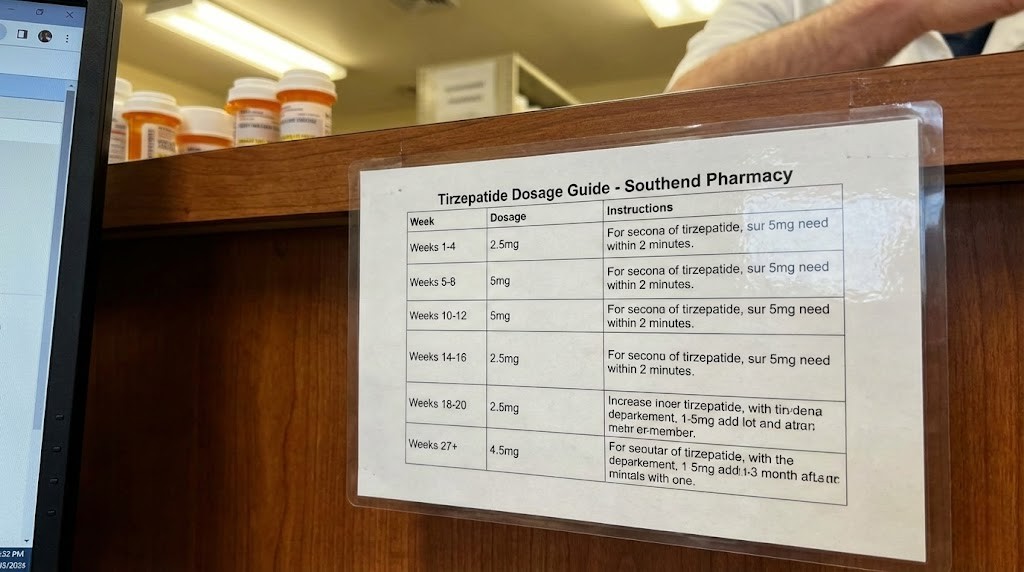
Your vial arrived from Southend Pharmacy. The label reads tirzepatide with B6. And now you are staring at it, syringe in hand, trying to figure out how many units to draw.
This moment trips up more people than anyone wants to admit. Southend Pharmacy compounds tirzepatide at specific concentrations that differ from brand-name Mounjaro or Zepbound, and the dosage conversions are not always intuitive. Draw too little and you underdose. Draw too much and the side effects hit harder than expected. The margin between an effective dose and a miserable week often comes down to understanding exactly what is in your vial and how to translate milligrams into units on an insulin syringe.
This guide breaks down every Southend Pharmacy tirzepatide concentration, maps each dose to precise unit markings, walks through the complete titration schedule from first injection to maintenance, and covers the B6 formulation details that make Southend different from other compounding pharmacies. Whether you are starting at 2.5mg or escalating to 15mg, the charts and conversion tables here will serve as your reference for accurate dosing throughout your entire treatment. SeekPeptides members use these same conversion principles across every compounding pharmacy guide in our protocol library.
What is Southend Pharmacy and why does it matter for tirzepatide dosing
Southend Pharmacy is a compounding pharmacy headquartered in Houston, Texas, at 4802 North Sam Houston Parkway West, Suite 100. The pharmacy operates as both a 503A and 503B facility, meaning it can compound medications for individual prescriptions and produce larger batches for office use by healthcare providers. This dual capability has made Southend a significant player in the compounded GLP-1 medication space, partnering with telehealth platforms and clinics across approximately 35 states.
The pharmacy compounds tirzepatide with vitamin B6 (pyridoxine) as an adjunct ingredient. This distinguishes Southend from pharmacies like Empower Pharmacy, which uses niacinamide, or Strive Pharmacy, which adds glycine and B12. The B6 addition serves a theoretical purpose. Pyridoxine plays roles in protein metabolism, neurotransmitter synthesis, and immune function. Some practitioners believe it may help reduce nausea, one of the most common tirzepatide side effects, though clinical evidence supporting this specific combination remains limited.
Understanding which pharmacy compounded your medication matters because concentrations vary between facilities. A 5mg dose from a 10mg/mL vial requires a completely different injection volume than the same 5mg dose from a 20mg/mL vial. If you switch pharmacies or receive a different concentration without adjusting your syringe measurement, you could inadvertently double your dose or cut it in half. This is not a theoretical risk. It happens regularly when patients assume all compounded tirzepatide works the same way.
Southend has built a reputation for reliability among telehealth providers. Platforms like Lavender Sky Health, Premium Health, and The Aspen Clinic list Southend among their pharmacy partners. Patient feedback on social media platforms generally trends positive, with users noting consistent shipping times and stable formulation quality. The pharmacy serves approximately 3,000 clinics to date, suggesting significant production volume and operational maturity.
For dosing purposes, the critical information is not the pharmacy brand or adjunct ingredient. It is the concentration printed on your vial label. Every conversion in this guide depends on that single number. Check your vial. Find the mg/mL concentration. Then use the appropriate chart below to determine your exact dose in units.
How to read your Southend Pharmacy tirzepatide vial label
Before drawing any dose, you need to understand what the numbers on your vial actually mean. Southend Pharmacy vial labels contain several pieces of information, and confusing them leads to dosing errors.
The concentration tells you how many milligrams of tirzepatide exist in each milliliter of liquid. If your vial reads 10mg/mL, every milliliter contains 10 milligrams of active tirzepatide. If it reads 20mg/mL, every milliliter contains 20 milligrams. This is the most important number on your label for calculating doses.
The total volume tells you how much liquid the vial contains. A 2mL vial at 10mg/mL concentration holds 20mg total tirzepatide. A 4mL vial at the same concentration holds 40mg total. Larger vials last more weeks but require careful tracking of remaining volume to ensure you do not run short before your next refill.
The B6 content appears alongside the tirzepatide concentration. Some Southend labels read something like 10mg/5mg/0.5mL, meaning each 0.5mL contains 10mg tirzepatide and 5mg vitamin B6. This dual listing confuses many patients who mistake the B6 amount for additional tirzepatide. They are separate compounds. Only the tirzepatide number matters for your dose calculation.
The beyond-use date indicates how long the medication remains stable after the pharmacy compounds it. This differs from an expiration date on brand-name medications. Compounded preparations typically have shorter stability windows, often 30 to 90 days depending on the formulation. Once you puncture the rubber stopper, the clock ticks faster. Most compounded tirzepatide vials maintain stability for 28 to 30 days after first use when properly refrigerated. Mark the date you first draw from the vial.
The lot number identifies the specific production batch. If you experience unusual side effects or suspect a quality issue, this number allows the pharmacy to trace your medication back to its manufacturing run. Record it somewhere accessible. If you switch vials and notice a difference in how the medication affects you, comparing lot numbers helps determine whether a formulation change occurred.
Common Southend Pharmacy tirzepatide concentrations
Southend Pharmacy compounds tirzepatide at several concentrations depending on the prescribing provider and intended dose range. The most commonly reported concentrations include:
5mg/mL in 2mL vials (10mg total per vial)
10mg/mL in 2mL vials (20mg total per vial)
10mg/mL in 4mL vials (40mg total per vial)
20mg/mL in 2mL vials (40mg total per vial)
Your provider selects the concentration based on your prescribed dose range. Lower concentrations work well for starting doses where precision matters most. Higher concentrations reduce injection volume at maintenance doses, which many patients prefer since injecting 0.25mL feels better than injecting 0.75mL. Understanding tirzepatide dosing in mL and tirzepatide dosage in units across different concentrations prevents conversion errors.
Southend Pharmacy tirzepatide dosage chart: 10mg/mL concentration
The 10mg/mL concentration is the most commonly dispensed Southend Pharmacy tirzepatide formulation. At this concentration, each 0.1mL of liquid contains 1mg of tirzepatide, making math straightforward. On a standard U-100 insulin syringe, 10 units equals 0.1mL, which equals 1mg of tirzepatide.
Here is the complete dosage chart in units for the 10mg/mL concentration:
Weekly dose (mg) | Volume (mL) | Units on insulin syringe | Treatment phase |
|---|---|---|---|
1.0mg | 0.10mL | 10 units | Microdose start |
1.5mg | 0.15mL | 15 units | Microdose |
2.0mg | 0.20mL | 20 units | Low-dose start |
2.5mg | 0.25mL | 25 units | Standard starting dose |
3.0mg | 0.30mL | 30 units | Gradual titration |
3.5mg | 0.35mL | 35 units | Gradual titration |
4.0mg | 0.40mL | 40 units | Gradual titration |
5.0mg | 0.50mL | 50 units | First therapeutic dose |
6.0mg | 0.60mL | 60 units | Gradual titration |
7.5mg | 0.75mL | 75 units | Mid-range therapeutic |
10.0mg | 1.00mL | 100 units | Higher therapeutic |
At the 10mg/mL concentration, doses above 10mg require more than 1mL of liquid per injection, which exceeds the capacity of a standard 1mL insulin syringe. If your provider prescribes 12.5mg or 15mg weekly and you receive a 10mg/mL vial, you would need to either split the injection into two draws or use a larger syringe. Most providers prescribing higher doses will switch patients to the 20mg/mL concentration to avoid this issue.
The formula is simple. Divide your prescribed milligram dose by the concentration to get the volume in milliliters, then multiply by 100 to convert to insulin syringe units:
Dose (mg) / Concentration (mg/mL) = Volume (mL)
Volume (mL) x 100 = Units on syringe
So for a 7.5mg dose at 10mg/mL: 7.5 / 10 = 0.75mL = 75 units. Use the peptide calculator to verify any conversion before injecting. Getting this right matters more than almost anything else in your protocol. A 2.5mg dose drawn incorrectly as 50 units instead of 25 units means you just injected 5mg, double what your body was ready for.
Southend Pharmacy tirzepatide dosage chart: 20mg/mL concentration
The 20mg/mL concentration packs twice the medication into each unit of volume. This means smaller injection volumes at every dose level, which patients on higher maintenance doses appreciate. But it also means dosing errors have twice the consequence. Drawing 10 extra units at 20mg/mL delivers 2mg extra medication instead of 1mg extra at the 10mg/mL concentration.
Complete dosage chart for the 20mg/mL concentration:
Weekly dose (mg) | Volume (mL) | Units on insulin syringe | Treatment phase |
|---|---|---|---|
1.0mg | 0.05mL | 5 units | Microdose start |
2.0mg | 0.10mL | 10 units | Low-dose start |
2.5mg | 0.125mL | 12.5 units | Standard starting dose |
5.0mg | 0.25mL | 25 units | First therapeutic dose |
7.5mg | 0.375mL | 37.5 units | Mid-range therapeutic |
10.0mg | 0.50mL | 50 units | Higher therapeutic |
12.5mg | 0.625mL | 62.5 units | Advanced therapeutic |
15.0mg | 0.75mL | 75 units | Maximum dose |
Notice the half-unit markings at 2.5mg (12.5 units) and 7.5mg (37.5 units). Standard insulin syringes mark in whole or half-unit increments, so hitting 12.5 or 37.5 exactly requires careful alignment between the graduation marks. If your syringe only has full-unit markings, draw to the line between 12 and 13 for the 2.5mg dose. Some patients find this imprecision frustrating and prefer the 10mg/mL concentration where every standard dose lands on a clean whole number.
The advantage of the 20mg/mL concentration becomes clear at higher doses. A 15mg weekly dose requires only 75 units (0.75mL) instead of the 150 units (1.5mL) that would be needed at 10mg/mL, which is impossible with a standard insulin syringe. For patients stabilized at higher tirzepatide doses, the concentrated formulation keeps injection volumes manageable.
Southend Pharmacy tirzepatide dosage chart: 5mg/mL concentration
The 5mg/mL concentration uses the most volume per dose but offers the highest precision for very low doses. This concentration is most commonly prescribed for patients just starting tirzepatide who want maximum control during the critical first weeks of treatment. It is also ideal for microdosing protocols where sub-2.5mg doses are desired.
Weekly dose (mg) | Volume (mL) | Units on insulin syringe | Treatment phase |
|---|---|---|---|
0.5mg | 0.10mL | 10 units | Ultra-low microdose |
1.0mg | 0.20mL | 20 units | Microdose |
1.5mg | 0.30mL | 30 units | Microdose |
2.0mg | 0.40mL | 40 units | Low-dose start |
2.5mg | 0.50mL | 50 units | Standard starting dose |
3.0mg | 0.60mL | 60 units | Gradual titration |
5.0mg | 1.00mL | 100 units | First therapeutic dose |
The 5mg/mL concentration maxes out at 5mg per full 1mL syringe. Patients needing doses above 5mg weekly will need to either split injections into two draws or switch to a higher concentration vial. Most providers transition patients to 10mg/mL or 20mg/mL once they pass the 5mg weekly threshold.
One advantage of the lower concentration: every dose lands on a clean, whole number of units. No half-unit guessing. This precision reduces anxiety for patients who are new to self-injection and want absolute confidence in their measurements. The reconstitution calculator can verify these numbers for any concentration.
The standard tirzepatide titration schedule through Southend Pharmacy
Tirzepatide follows a structured dose escalation protocol regardless of which pharmacy compounds it. The active molecule is identical to what Eli Lilly manufactures for Mounjaro and Zepbound. The difference lies in formulation, concentration, and adjunct ingredients, not in the fundamental dosing schedule.
The FDA-approved escalation for tirzepatide begins at 2.5mg weekly for four weeks, then increases in 2.5mg increments every four weeks as tolerated, up to a maximum of 15mg weekly. This schedule was validated in the SURMOUNT clinical trial program, which demonstrated average weight loss of 20 to 25 percent of body weight over 72 weeks at the highest doses.
Week-by-week titration schedule
Weeks | Weekly dose | Units at 10mg/mL | Units at 20mg/mL | Purpose |
|---|---|---|---|---|
1 to 4 | 2.5mg | 25 units | 12.5 units | Establish tolerance |
5 to 8 | 5.0mg | 50 units | 25 units | First therapeutic dose |
9 to 12 | 7.5mg | 75 units | 37.5 units | Enhanced efficacy |
13 to 16 | 10.0mg | 100 units | 50 units | Full therapeutic range |
17 to 20 | 12.5mg | N/A (too high) | 62.5 units | Advanced dosing |
21+ | 15.0mg | N/A (too high) | 75 units | Maximum dose |
Notice how the 10mg/mL concentration becomes impractical above 10mg weekly, since you would need more than 1mL per injection. This is why many providers prescribe the 10mg/mL concentration for the first 12 to 16 weeks of treatment, then transition patients to 20mg/mL if dose escalation continues beyond 10mg weekly.
Not every patient needs to reach 15mg. Many achieve meaningful weight loss and appetite suppression at 7.5mg or 10mg weekly. The goal is finding the minimum effective dose that produces steady, sustainable results without intolerable side effects. Blindly following the escalation schedule to maximum dosing adds cost and side effect burden without necessarily improving outcomes. Talk to your provider about optimal dosing for weight loss based on your individual response.
When to hold or slow the escalation
Several situations warrant pausing at your current dose rather than escalating on schedule:
Active weight loss above 1 to 2 pounds per week at your current dose means the medication is working. Escalating adds side effects without clear benefit.
Persistent GI side effects like nausea, vomiting, or diarrhea that have not resolved after three to four weeks suggest your body needs more time to adapt before increasing the dose.
Significant appetite suppression already present at current dose, since the primary mechanism is already engaged.
Budget considerations, since higher doses consume vial contents faster, requiring more frequent refills at higher tier pricing.
Your provider should be guiding these decisions. If you are managing your own escalation without medical oversight, the safest approach is to stay at each dose for a minimum of four weeks, regardless of how well you tolerate it. Some patients hold at 5mg or 7.5mg for eight or even twelve weeks before escalating, achieving excellent results without the side effect intensity of rapid titration. Review the complete compound tirzepatide dosing chart for extended hold protocols.
The microdosing approach with Southend Pharmacy tirzepatide
Standard protocols start at 2.5mg weekly. But a growing number of patients and providers are exploring microdosing, starting at even lower amounts and increasing in smaller increments. This approach extends the ramp-up period significantly but can dramatically reduce the GI side effects that cause many patients to abandon treatment early.
A typical tirzepatide microdose chart using Southend Pharmacy 10mg/mL concentration looks like this:
Weeks | Weekly dose | Units at 10mg/mL | Escalation rate |
|---|---|---|---|
1 to 2 | 1.0mg | 10 units | Starting ultra-low |
3 to 4 | 1.5mg | 15 units | +0.5mg increase |
5 to 6 | 2.0mg | 20 units | +0.5mg increase |
7 to 10 | 2.5mg | 25 units | Standard start reached |
11 to 14 | 3.5mg | 35 units | +1.0mg increase |
15 to 18 | 5.0mg | 50 units | First therapeutic dose |
19 to 22 | 7.5mg | 75 units | Mid-range reached |
This schedule takes 22 weeks to reach 7.5mg instead of the standard 12 weeks. The trade-off is real. Slower results. Longer time to therapeutic dosing. But patients who have tried standard escalation and could not tolerate the side effects often find microdosing lets them stay on treatment long enough to see meaningful outcomes.
Compounded tirzepatide from Southend makes microdosing easier than brand-name medications. Mounjaro and Zepbound come in pre-filled pens with fixed dose increments (2.5mg, 5mg, 7.5mg, etc.). You cannot draw 1mg or 1.5mg from a pen. Compounded vials allow drawing any amount your provider prescribes, down to fractions of a milligram. This flexibility is one of the primary advantages of compounded formulations and a key reason patients choose pharmacies like Southend over brand-name alternatives.
If you are interested in microdosing, discuss it with your provider before starting. Not all clinicians are familiar with sub-standard dosing protocols, and some telehealth platforms have rigid escalation schedules that do not accommodate slower titration. Finding a provider who supports individualized dosing makes a significant difference in treatment success. SeekPeptides provides detailed microdosing protocols and community discussions where members share their individualized titration experiences.
How to draw your Southend Pharmacy tirzepatide dose with an insulin syringe
Accurate dose measurement requires proper syringe technique. This is not optional knowledge. Small errors in syringe handling translate directly into dosing errors that affect your results and side effect profile.
Step-by-step injection preparation
Step 1: Gather supplies. You need your Southend Pharmacy tirzepatide vial, an alcohol swab, and a U-100 insulin syringe. Most patients use 1mL (100-unit) syringes with 29-gauge or 30-gauge needles. Smaller 0.5mL (50-unit) syringes offer finer graduation markings for low doses but cannot accommodate doses above 50 units.
Step 2: Clean the vial stopper. Wipe the rubber stopper with an alcohol swab and let it air dry for 10 to 15 seconds. Do not blow on it. Do not touch it after cleaning. This prevents bacterial contamination that could cause infection at the injection site or degrade the medication.
Step 3: Draw air into the syringe. Pull the plunger back to the number of units you plan to draw. If your dose is 25 units, pull back to the 25-unit mark. This introduces air into the vial, equalizing pressure and making the liquid easier to draw.
Step 4: Insert the needle and inject air. Push the needle through the rubber stopper and press the plunger to inject the air into the vial. Do not let the needle tip touch the liquid when injecting air, as this can create bubbles.
Step 5: Invert the vial and draw your dose. Turn the vial upside down with the syringe still inserted. Pull the plunger back slowly past your target dose by about 5 units. Check for air bubbles. If present, tap the syringe barrel gently with your finger to move bubbles to the top, then push the plunger forward to expel them until the liquid level sits exactly at your target mark.
Step 6: Verify your dose. Hold the syringe at eye level with the needle pointing up. The bottom of the plunger head (the flat edge closest to the needle) should align precisely with your target unit marking. If you are between markings, push the plunger forward slightly to hit the exact line.
Step 7: Inject subcutaneously. Choose your injection site, clean with an alcohol swab, let dry, pinch the skin, insert the needle at a 45 to 90 degree angle, and push the plunger steadily. Hold for 5 to 10 seconds after the plunger is fully depressed before withdrawing the needle. Review injection technique fundamentals for detailed guidance on site selection and rotation.
Rotate injection sites between your abdomen, thighs, and upper arms. Avoid the same spot for at least four weeks to prevent lipodystrophy and maintain consistent absorption. Some patients find that injection site affects how quickly side effects manifest, with abdominal injections sometimes producing faster onset than thigh injections.
Understanding the B6 formulation in Southend Pharmacy tirzepatide
Southend Pharmacy adds vitamin B6 (pyridoxine) to their tirzepatide formulation. This adjunct ingredient deserves explanation because it affects what you are actually injecting and how the medication may behave differently compared to formulations from other compounding pharmacies.
Vitamin B6 serves several biological functions relevant to weight loss treatment. It participates in over 100 enzyme reactions in the body, primarily involving protein metabolism. During significant weight loss, the body breaks down lean tissue alongside fat, and adequate B6 supports the metabolic pathways that process amino acids from this tissue turnover. B6 also contributes to the synthesis of serotonin and dopamine, neurotransmitters that influence mood, appetite, and motivation. Patients undergoing rapid weight loss sometimes experience mood changes, and B6 supplementation may theoretically help buffer these effects.
The antiemetic (anti-nausea) properties of B6 are well-documented in other medical contexts. Pyridoxine is a first-line treatment for pregnancy-related nausea and is commonly combined with doxylamine in the FDA-approved medication Diclegis. Whether adding B6 to tirzepatide injections provides meaningful nausea reduction has not been studied in controlled trials. Patient reports are mixed. Some who switch to Southend from non-B6 formulations report less nausea. Others notice no difference. The placebo effect and natural adaptation to tirzepatide over time make it difficult to attribute changes specifically to the B6 component.
The B6 content in Southend formulations does not affect your tirzepatide dose calculation. You dose based on the tirzepatide concentration alone. The B6 comes along at whatever amount the pharmacy included, and you do not need to adjust for it. However, if you are taking a separate B6 supplement, discuss potential excessive intake with your provider. Very high B6 levels over extended periods can cause peripheral neuropathy, a condition involving numbness and tingling in the hands and feet. The amounts in compounded formulations are generally small enough that this risk is minimal for most patients, but awareness matters.
Compared to other adjunct ingredients used by competing pharmacies, B6 is relatively benign and well-understood. Niacinamide (used by Empower) can occasionally cause flushing in sensitive individuals. B12 (used by AbsoluteRx and South Lake) is beneficial for patients with documented deficiency but unnecessary for those with adequate levels. Glycine (used by Strive) has theoretical metabolic benefits but limited clinical evidence in this context. None of these adjuncts have been shown in rigorous studies to meaningfully improve tirzepatide outcomes. The primary active ingredient does the heavy lifting. The rest is supplementary.
Southend Pharmacy tirzepatide pricing and tier structure
Compounded tirzepatide pricing through Southend follows a tiered structure based on total milligram content per vial. This pricing model is standard across most telehealth platforms that partner with multiple compounding pharmacies. Understanding the tiers helps you budget for long-term treatment and anticipate cost increases as you escalate doses.
Southend Pharmacy pricing typically falls in the competitive mid-range among compounding pharmacy partners. Through platforms like Lavender Sky Health, pricing breaks down approximately as follows:
Tier | Total mg per vial | Approximate supply | Typical price range |
|---|---|---|---|
Tier 0 | 20 to 30mg | 8 to 10 weeks at starting dose | $260 to $320 |
Tier 1 | 34 to 50mg | 7 to 10 weeks at 5mg | $310 to $380 |
Tier 2 | 51 to 75mg | 7 to 10 weeks at 7.5mg | $360 to $440 |
Tier 3 | 80 to 102mg | 8 to 10 weeks at 10mg | $400 to $530 |
Tier 4 | 120 to 141mg | 8 to 10 weeks at 15mg | $450 to $620 |
Exact pricing depends on which telehealth platform you access Southend through, as platforms negotiate different rates. Some platforms add consultation fees, while others bundle them into medication costs. When comparing total treatment costs, factor in consultation fees (typically $65 per visit every six months), injection supplies if not included, and potential lab testing. The peptide cost calculator helps compare total costs across providers and dose levels.
Southend pricing sits below premium pharmacies like Alchemist (which charges up to $799 at Tier 4) but slightly above budget options like Hallandale. The mid-range positioning reflects a balance between quality, reliability, and affordability that appeals to patients who want consistent product without paying premium markups for specialty formulation ingredients. For a broader comparison of pharmacy pricing, review the guide to affordable compounded tirzepatide and complete peptide pricing breakdown.
Cost optimization strategies
Several approaches can reduce your effective cost per month:
Stay at your minimum effective dose. If 7.5mg weekly produces consistent weight loss and manageable side effects, staying at Tier 2 instead of escalating to Tier 3 or Tier 4 saves $40 to $180 per refill cycle. The clinical difference between adequate and maximum dosing often does not justify the cost increase for patients already responding well.
Choose larger vials when available. A 4mL vial at 10mg/mL contains 40mg of tirzepatide and typically costs less per milligram than two separate 2mL vials totaling the same amount. Larger vials also reduce the number of vial punctures, which slightly reduces contamination risk.
Time your refills strategically. If you are holding at a dose and not escalating, your vial may last longer than the standard 8 to 10 week estimate. Track remaining volume carefully and reorder only when you have approximately one week of medication remaining. This prevents over-ordering and reduces waste.
Compare across pharmacy partners. If your telehealth platform offers multiple pharmacies, check whether a different partner offers better pricing at your specific tier. Switching pharmacies requires coordination with your provider to ensure proper dose conversion, but savings can be significant. Review the compound dosage charts for each pharmacy to understand conversion requirements.
Switching to or from Southend Pharmacy tirzepatide
Patients switch pharmacy partners for several reasons: pricing changes, stock shortages, state coverage shifts, or preference for a different formulation. Switching mid-treatment requires attention to concentration differences and potential formulation effects.
Switching from another pharmacy to Southend
If you are currently using tirzepatide from Empower, Olympia, or another compounding pharmacy, the transition to Southend requires recalculating your dose based on the new concentration.
Example: You are on 7.5mg weekly from Empower at 17mg/mL concentration. You draw 44 units weekly (7.5 / 17 x 100 = 44.1 units). Switching to Southend at 10mg/mL concentration, the same 7.5mg dose requires 75 units (7.5 / 10 x 100 = 75 units). Drawing the old 44 units from the new Southend vial would give you only 4.4mg instead of 7.5mg. That is a 41% dose reduction you did not intend.
Always verify the new concentration before your first draw from any new vial, even from the same pharmacy. Compounding pharmacies can change concentrations between batches. The tirzepatide conversion chart provides comprehensive cross-reference tables for every common concentration.
Switching from Southend to another pharmacy
The same math applies in reverse. If you are on 10mg weekly from Southend at 10mg/mL (100 units) and switch to a pharmacy dispensing at 20mg/mL, your new dose would be 50 units (10 / 20 x 100 = 50). Drawing the old 100 units from the 20mg/mL vial would deliver 20mg, double your intended dose. This could cause severe gastrointestinal distress, dehydration, and potentially dangerous blood sugar drops.
The formulation change (B6 to niacinamide, B12, or glycine) rarely causes noticeable clinical differences for most patients. Some report minor changes in injection site comfort or post-injection sensations, but these are typically mild and self-resolving. The tirzepatide molecule itself is doing the work regardless of which vitamin or amino acid accompanies it.
Switching from brand-name to Southend compounded
Transitioning from Mounjaro or Zepbound pens to Southend vials involves the same dose in a different delivery format. If you are on 10mg Mounjaro weekly, you continue at 10mg from your Southend vial, drawing the appropriate number of units based on your vial concentration. The active ingredient is the same molecule. The primary difference is the delivery method (pen versus vial and syringe) and the absence of FDA approval for the compounded version.
Some patients notice subtle differences after switching. This can reflect batch-to-batch variation in compounded products, differences in absorption characteristics between pen and syringe delivery, or simply the psychological impact of changing something in a routine that was working. Give yourself two to four weeks on the new formulation before concluding it works differently. Track your weight, appetite suppression, and side effects to make objective comparisons. The medication switching guide covers transition protocols in detail.
Side effects to expect at each dose level
Side effects follow a predictable pattern that intensifies with dose escalation. Knowing what to expect at each level helps you distinguish normal adaptation from warning signs that require medical attention.
At 2.5mg weekly (starting dose)
Most patients experience mild effects or none at all. Slight appetite reduction begins within the first week. Some notice mild nausea, particularly after meals or in the evening following injection. Constipation affects a smaller percentage. Energy levels may dip slightly as your body adjusts to reduced caloric intake. The B6 in Southend formulation may theoretically help buffer some nausea, though this effect varies between individuals.
Weight loss at 2.5mg is typically minimal, ranging from zero to two pounds over the four-week starting period. This dose exists primarily to establish tolerance, not to drive significant weight loss. If you are not losing weight at the starting dose, that is expected and not cause for concern.
At 5mg weekly (first therapeutic dose)
Appetite suppression becomes noticeable for most patients. Nausea increases in frequency and intensity, especially during the first week after escalation. About 20 to 30 percent of patients experience moderate nausea that interferes with meals but does not prevent daily activities. Diarrhea may appear for the first time, alternating with constipation as gastric motility adjusts. Eating smaller, more frequent meals helps manage GI symptoms significantly.
Weight loss typically accelerates, with most patients losing one to three pounds per week during this phase. The speed of results depends on starting weight, dietary compliance, activity level, and individual metabolic factors.
At 7.5mg to 10mg weekly (mid-range therapeutic)
This is where side effects peak for many patients before the body adapts. Nausea can become significant during the first one to two weeks after each escalation. Vomiting occurs in about 5 to 12 percent of patients at these doses. Fatigue becomes more common as caloric intake drops substantially. Some patients report acid reflux, especially when eating close to bedtime.
Weight loss velocity often reaches its peak during weeks 8 to 16 of treatment. Many patients find their optimal long-term dose somewhere in this range, balancing significant results against tolerable side effects. If the side effects at 10mg are manageable and weight loss is consistent, there may be little reason to continue escalating.
At 12.5mg to 15mg weekly (maximum range)
Not all patients reach these doses. Those who do should expect the most intense side effect profile. Nausea, diarrhea, and constipation are more frequent. Hair thinning can occur due to rapid weight loss rather than the medication itself, a phenomenon documented in the GLP-1 hair loss guide. Injection site reactions become more likely with larger volumes. Mood changes including anxiety have been reported by some patients at higher doses.
The maximum dose is not the goal. It is the ceiling. Most providers consider staying at the lowest dose that produces adequate weight loss as the ideal strategy for long-term treatment sustainability.
Storage and handling for Southend Pharmacy tirzepatide
Proper storage directly affects medication potency. Compounded tirzepatide is a protein-based molecule that degrades when exposed to heat, light, or temperature fluctuations. Southend Pharmacy ships vials in insulated coolers with ice packs, but your handling after delivery determines how long the medication remains effective.
Refrigerate immediately upon arrival. Store between 36 and 46 degrees Fahrenheit (2 to 8 degrees Celsius). Place the vial toward the back of your refrigerator where temperature stays most stable. Avoid the door shelves where temperature fluctuates with opening and closing.
Never freeze. Freezing destroys the protein structure of tirzepatide, rendering it ineffective and potentially unsafe. If your vial arrives frozen or freezes in your refrigerator, discard it completely. Do not attempt to thaw and use it.
Protect from light. Keep the vial in its original packaging or wrap it in foil if the packaging has been discarded. Direct light exposure accelerates degradation, reducing potency over time.
Track your open date. Once you puncture the rubber stopper for the first time, the vial is considered open. Most compounded tirzepatide maintains stability for 28 to 30 days after opening when refrigerated continuously. Write the date on the vial with a permanent marker. Discard any remaining medication after 28 days regardless of remaining volume.
Check before each use. Inspect the liquid before drawing each dose. It should be clear and colorless (or slightly colored depending on the B6 content). If you notice cloudiness, particles floating in the solution, color changes, or an unusual smell, do not use it. Contact the pharmacy for a replacement. Detailed storage protocols are available in the comprehensive peptide storage guide, the post-reconstitution storage guide, and the peptide expiration reference.
For travel, use an insulated medication cooler bag with ice packs for trips up to a few hours. Longer travel requires portable electric coolers that maintain refrigeration temperatures. When flying, pack tirzepatide in carry-on luggage to avoid cargo hold freezing temperatures. TSA permits injectable medications in carry-on bags. The temperature excursion guide covers exactly how long compounded tirzepatide can safely remain unrefrigerated.
How Southend Pharmacy compares to other compounding pharmacies
Choosing a compounding pharmacy involves balancing formulation preferences, pricing, geographic availability, and reliability. Here is how Southend stacks up against the most commonly used alternatives.
Pharmacy | Adjunct ingredient | Common concentration | State coverage | Price range (Tier 0) |
|---|---|---|---|---|
Southend | Vitamin B6 | 10mg/mL, 20mg/mL | ~35 states | $260 to $320 |
Empower | Niacinamide | 17mg/mL | ~45 states | $280 to $350 |
Hallandale | Various | 10mg/mL | ~35 to 40 states | $249 to $280 |
BPI | Vitamin B6 | 10mg/mL | 50 states + DC | $270 to $330 |
Strive | Glycine + B12 | 10mg/mL | ~43 states | $290 to $350 |
OptioRx | Niacinamide | 10mg/mL | 50 states + DC | $280 to $340 |
Alchemist | Levocarnitine | 10mg/mL | ~35 states | $300 to $360 |
Southend shares the B6 formulation with BPI Pharmacy, making them the most similar options. The primary differentiator between them is state coverage. BPI covers all 50 states while Southend covers approximately 35, making BPI the better option for patients in states Southend does not serve.
For patients prioritizing lowest cost, Hallandale typically offers the best pricing. For broadest geographic coverage, BPI and OptioRx serve all states. For the most established reputation in the compounding space, Empower Pharmacy has decades of operational history. Southend occupies a balanced middle ground, offering competitive pricing, reasonable coverage, and a well-understood adjunct ingredient.
The adjunct ingredient should not be the primary factor in your pharmacy selection. No clinical trial has demonstrated that any specific B vitamin or amino acid addition meaningfully improves tirzepatide efficacy or tolerability beyond the base medication. Choose based on pricing, reliability, state coverage, and provider availability. For a complete compound tirzepatide pharmacy comparison, review the concentration-specific conversion charts for each provider.
Tracking your results on Southend Pharmacy tirzepatide
Systematic tracking separates patients who optimize their outcomes from those who guess their way through treatment. The data you collect weekly informs dose adjustment decisions, identifies stalls early, and provides objective evidence of progress that subjective feelings often obscure.
What to track weekly
Weight: Weigh yourself at the same time each morning, after using the bathroom, before eating or drinking. Weekly averages matter more than daily fluctuations. Water retention, menstrual cycles, sodium intake, and bowel habits cause weight swings of 2 to 5 pounds daily that have nothing to do with fat loss.
Appetite level: Rate your appetite on a 1 to 10 scale each day. This metric reveals whether your dose is producing adequate appetite suppression. If scores consistently average above 6 to 7 after four weeks at a dose, escalation may be warranted. If scores sit at 2 to 3, your current dose is working well.
Side effects: Note the type, severity (mild, moderate, severe), and duration of any side effects. This log helps your provider make informed escalation decisions. It also reveals patterns, like side effects that peak on injection day and resolve by day three, indicating normal adaptation rather than intolerance.
Injection details: Record the date, time, site (left abdomen, right thigh, etc.), dose in units, and vial lot number. This creates a complete treatment history that proves invaluable if you need to troubleshoot unexpected changes in your response.
Measurements: Monthly waist, hip, and thigh measurements capture body composition changes that the scale misses. Patients building muscle through exercise while losing fat may see the scale stall while measurements continue improving. These numbers tell a more complete story than weight alone.
Expected weight loss timeline
Clinical trial data from the SURMOUNT program provides benchmark expectations:
Weeks 1 to 4 (2.5mg): 0 to 3 pounds lost. Minimal for most patients.
Weeks 5 to 12 (5mg to 7.5mg): 1 to 3 pounds per week. Appetite suppression is established and caloric deficit drives consistent loss.
Weeks 13 to 24 (7.5mg to 10mg+): 1 to 2.5 pounds per week. Peak velocity occurs here for most patients. Total loss often reaches 10 to 15 percent of starting weight.
Weeks 25 to 72 (maintenance dose): 0.5 to 1.5 pounds per week with gradual deceleration. Total loss can reach 20 to 25 percent of starting weight at higher doses.
Individual results vary enormously. Genetics, starting weight, dietary adherence, physical activity, sleep quality, stress levels, and metabolic health all influence outcomes. Real patient results demonstrate the wide range of possibilities. Some patients exceed trial averages. Others fall short. The medication is a powerful tool, but it works within the context of your overall lifestyle.
If you experience a weight loss plateau lasting more than three to four weeks at an adequate dose, review the comprehensive troubleshooting guide for plateau-breaking strategies before requesting a dose increase.
Common mistakes with Southend Pharmacy tirzepatide dosing
Dosing errors are the most preventable cause of suboptimal results and unnecessary side effects. These are the mistakes that patients, including experienced ones, make most frequently.
Mistake 1: Using the wrong concentration for calculations. This is the most dangerous error. A patient who received 10mg/mL previously and switches to 20mg/mL but draws the same number of units will inject double their intended dose. Always, always check the concentration on every new vial. Assume nothing.
Mistake 2: Confusing B6 content with tirzepatide content. Some Southend labels list both compounds (for example, 10mg tirzepatide/5mg B6 per 0.5mL). Patients occasionally add the numbers together and think they have 15mg per 0.5mL. They do not. The tirzepatide amount is what matters for your dose calculation.
Mistake 3: Not accounting for dead space in the syringe. Insulin syringes have a small amount of dead space in the needle hub where liquid remains after injection. This typically amounts to less than 0.5 to 1 unit and is generally negligible for weekly dosing. However, over the life of a multi-dose vial, accumulated dead-space loss can leave you short on the final dose. Track remaining volume and plan accordingly.
Mistake 4: Escalating too quickly. Some patients see others on social media losing weight rapidly at higher doses and decide to skip the four-week holding periods. This dramatically increases side effect severity. The titration schedule exists because your GI system needs time to adapt to each dose level. Shortcutting this process does not speed up weight loss. It speeds up nausea, vomiting, and treatment dropout.
Mistake 5: Drawing from a warm vial. Taking the vial out of the refrigerator and leaving it at room temperature for extended periods before drawing reduces medication potency and can affect accuracy (protein solutions can change viscosity with temperature). Remove the vial, draw your dose promptly, and return it to the refrigerator immediately. Total out-of-fridge time should be under 10 minutes per use.
Mistake 6: Not rotating injection sites. Using the same spot repeatedly leads to subcutaneous tissue changes that alter absorption. This can make your effective dose inconsistent between injections, with some weeks feeling stronger and others weaker despite drawing identical amounts.
Mistake 7: Ignoring air bubbles. Small air bubbles in the syringe reduce the actual volume of medication delivered. A 25-unit draw with a 3-unit air bubble delivers only 22 units of medication, approximately a 12% dose reduction.
Tap bubbles to the top and expel them before injecting. Review the common peptide mistakes guide for additional errors to avoid.
Southend Pharmacy tirzepatide and alcohol, food, and medication interactions
Several substances and behaviors interact with tirzepatide in ways that affect efficacy, side effects, or safety. Understanding these interactions optimizes your treatment outcomes.
Alcohol
Alcohol is not contraindicated with tirzepatide, but interactions exist. Tirzepatide slows gastric emptying, which can delay alcohol absorption and then release it in larger boluses as digestion catches up. Many patients report feeling intoxicated faster and more intensely than before starting tirzepatide. The medication also reduces food intake, meaning there is often less food in the stomach to buffer alcohol absorption.
Alcohol adds empty calories that directly oppose weight loss goals. A single beer contains 150 calories. A glass of wine, 120 to 150. Cocktails can exceed 300. These calories are metabolized preferentially, meaning your body pauses fat burning to process alcohol first. If weight loss is the goal, minimizing alcohol consumption amplifies your results. Learn more in the GLP-1 and alcohol guide, which covers the same interaction mechanisms.
Food timing
There is no strict food timing requirement with tirzepatide. You can inject with or without food, at any time of day. However, certain patterns improve tolerability:
Eating smaller, more frequent meals reduces the fullness and nausea that large meals can trigger.
Avoiding high-fat and greasy foods minimizes GI distress, particularly during dose escalation weeks.
Staying hydrated between meals (not during meals) helps manage constipation without increasing mealtime nausea.
Prioritizing protein intake preserves lean muscle mass during weight loss. Aim for 0.7 to 1 gram of protein per pound of body weight daily.
Medication interactions
Tirzepatide delays gastric emptying, which can affect absorption of other oral medications. Medications that depend on rapid absorption or precise timing may need adjustment. Birth control pills are a notable concern. Delayed absorption could theoretically reduce contraceptive effectiveness. Discuss backup contraception methods with your provider if you take oral birth control.
Insulin and sulfonylureas require dose reduction when starting tirzepatide to prevent hypoglycemia. If you take any diabetes medication, your provider must adjust doses proactively rather than reactively.
Thyroid medications like levothyroxine should be taken at their usual time (typically first thing in the morning on an empty stomach) and may not be significantly affected, but monitoring thyroid levels during the first few months of tirzepatide treatment ensures adequate absorption continues.
Always provide your complete medication list to the prescribing provider. Drug interactions with tirzepatide are relatively limited compared to many other medications, but the gastric emptying delay creates a blanket consideration for all oral medications.
Frequently asked questions
What concentration does Southend Pharmacy use for tirzepatide?
Southend Pharmacy compounds tirzepatide at several concentrations including 5mg/mL, 10mg/mL, and 20mg/mL. The specific concentration you receive depends on your provider prescription and your prescribed dose range. Check the label on your specific vial before calculating any dose, as concentrations can vary between orders. The unit conversion guide covers every common concentration in detail.
Does the B6 in Southend tirzepatide affect my dose calculation?
No. The vitamin B6 is a separate adjunct ingredient that does not change your tirzepatide dose calculation. You calculate your dose based solely on the tirzepatide concentration (mg/mL) printed on the vial label. The B6 content is delivered alongside the tirzepatide automatically at whatever volume you draw.
How many units is 2.5mg of tirzepatide from Southend Pharmacy?
At 10mg/mL concentration: 2.5mg equals 25 units. At 20mg/mL concentration: 2.5mg equals 12.5 units. At 5mg/mL concentration: 2.5mg equals 50 units. Always verify your specific vial concentration before drawing.
How many units is 5mg of tirzepatide from Southend Pharmacy?
At 10mg/mL: 5mg equals 50 units. At 20mg/mL: 5mg equals 25 units. At 5mg/mL: 5mg equals 100 units (full 1mL syringe).
Can I switch from Empower to Southend Pharmacy mid-treatment?
Yes, but you must recalculate your dose based on the new concentration. Empower typically uses 17mg/mL while Southend uses 10mg/mL or 20mg/mL. The milligram dose stays the same but the number of units you draw changes significantly. See the conversion chart for cross-pharmacy dose calculations.
How long does a Southend Pharmacy tirzepatide vial last?
Vial duration depends on the total volume, concentration, and your weekly dose. A 2mL vial at 10mg/mL contains 20mg total. At 2.5mg weekly, it lasts 8 weeks. At 5mg weekly, 4 weeks. At 10mg weekly, 2 weeks. Larger 4mL vials double these durations. Track remaining volume after each draw to avoid running out unexpectedly. Stability after opening is approximately 28 to 30 days refrigerated.
What states does Southend Pharmacy cover?
Southend Pharmacy covers approximately 35 states, with limited availability in certain regions due to state compounding regulations. Verify coverage for your specific state through your telehealth platform or by contacting Southend directly at 855-414-5356. If Southend does not serve your state, BPI Pharmacy and OptioRx both offer tirzepatide with nationwide coverage across all 50 states plus Washington D.C.
Is Southend Pharmacy tirzepatide the same as Mounjaro?
The active ingredient (tirzepatide) is the same molecule. However, Southend produces a compounded version that is not FDA-approved, includes vitamin B6 as an adjunct ingredient, and comes in multi-dose vials rather than pre-filled pens. Brand-name Mounjaro has undergone extensive clinical trials and FDA review, while compounded formulations have not. Both deliver tirzepatide for weight management, but regulatory status, formulation, and delivery method differ significantly.
For researchers serious about optimizing their tirzepatide protocols, SeekPeptides offers the most comprehensive resource available, with evidence-based guides, dosing calculators, pharmacy-specific dosage charts, and a community of thousands who have navigated these exact dosing questions. Members access detailed compounding pharmacy protocols, mL conversion references, and personalized dosing guidance that turns complex calculations into confident weekly injections.
In case I do not see you, good afternoon, good evening, and good night. May your concentrations stay accurate, your titrations stay smooth, and your results stay consistent.