Feb 11, 2026
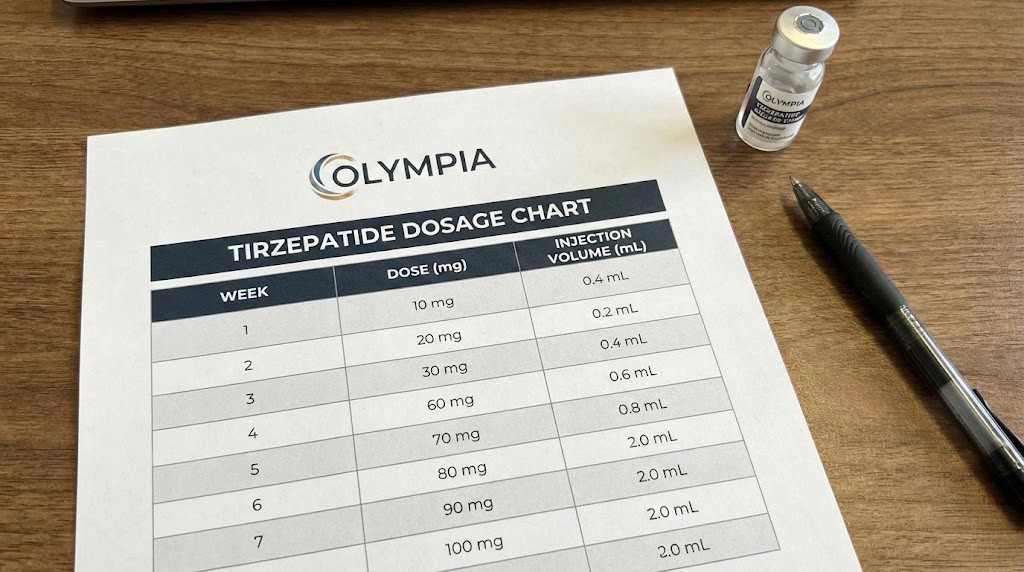
You have got the vial sitting in front of you. Olympia Pharmaceuticals. Tirzepatide. And now you are staring at an insulin syringe trying to figure out how many units to draw.
The label says 10mg/mL. Or maybe it says 20mg/mL. Your provider said 2.5mg this week. But how does 2.5mg translate to units on this tiny syringe? Get it wrong, and you are either underdosing yourself or, worse, taking double what you should.
This is the exact problem thousands of people face when they receive compounded tirzepatide from Olympia Pharmaceuticals. The branded versions, Mounjaro and Zepbound, come in pre-filled pens with the dose already measured. No math required. Compounded tirzepatide from Olympia is different. It arrives in multi-dose vials with concentrations that vary, and it is up to you, and your provider, to calculate the correct number of units for each injection.
That is why a clear, reliable dosage chart matters more than almost anything else in this process. One wrong calculation can mean weeks of side effects from an accidental overdose, or weeks of zero progress from an underdose. Neither outcome is acceptable when you are investing time, money, and hope into this protocol.
This guide covers everything you need to know about Olympia tirzepatide dosing. You will find complete dose escalation schedules, unit conversion charts for both 10mg/mL and 20mg/mL concentrations, side effect management strategies, and the practical details that most guides leave out entirely. Whether you are just starting your first vial or transitioning between dose levels, every number you need is right here. SeekPeptides built this guide because accurate dosing is the foundation of safe, effective weight management with compounded tirzepatide.
What is Olympia Pharmaceuticals and why does it matter for tirzepatide dosing
Olympia Pharmaceuticals is a large-scale compounding pharmacy based in Orlando, Florida. The company operates as both a 503A and 503B outsourcing facility, which means it produces compounded medications at a scale that most traditional compounding pharmacies cannot match. At its peak, Olympia was preparing tirzepatide for more than 100,000 patients per month.
That scale matters. It means the vials arriving at clinics and patients across the country were coming from industrial-grade production lines rather than individual pharmacist preparations. The quality control processes, the reconstitution standards, and the concentration consistency all reflected that larger operational footprint.
But here is what most people do not realize about compounded tirzepatide, whether from Olympia or any other compounding pharmacy. These formulations are not identical to the branded versions. They are not FDA-approved in the same way Mounjaro and Zepbound are. They have not gone through the same clinical trials. The SURMOUNT and SURPASS studies that demonstrated 15% to 21% body weight reduction over 72 weeks were conducted exclusively with Eli Lilly manufactured tirzepatide, not compounded versions.
That does not mean compounded tirzepatide does not work. Many patients and their healthcare providers report excellent results. But it does mean the dosing requires more attention, more precision, and more understanding than simply clicking a pre-filled pen.
How Olympia tirzepatide differs from branded Mounjaro and Zepbound
The differences between Olympia compounded tirzepatide and branded versions fall into several categories that directly affect how you dose and use the medication.
Delivery format. Mounjaro and Zepbound come as single-use, pre-filled injection pens. Each pen contains one dose. You click, inject, and dispose. Olympia tirzepatide comes in multi-dose vials. You draw from the vial using an insulin syringe, calculating the correct number of units based on your prescribed dose and the vial concentration. This is a fundamentally different experience, and it is where most dosing errors happen.
Understanding the tirzepatide dosage chart in milliliters is essential when working with vials rather than pens. The unit-based dosage chart becomes your daily reference tool.
Concentration variability. Branded pens deliver a fixed concentration. Olympia vials may come in different concentrations, most commonly 10mg/mL or 20mg/mL. The concentration determines how many units you draw for a given milligram dose. Drawing 25 units from a 10mg/mL vial gives you 2.5mg. Drawing 25 units from a 20mg/mL vial gives you 5mg. Same number of units, double the dose. This is where dangerous mistakes happen if you are not paying attention.
If you are working with the compound tirzepatide dosage chart for the first time, always verify your vial concentration before drawing any medication.
Additional ingredients. Olympia and other compounding pharmacies sometimes add ingredients like niacinamide (vitamin B3), cyanocobalamin (vitamin B12), or glycine to their tirzepatide formulations. These additions may offer supplementary benefits, but they also mean the formulation you are injecting is not identical to what was tested in clinical trials. The tirzepatide niacinamide formulation and the tirzepatide with B12 combination each have their own considerations.
Shelf life and storage. Branded Mounjaro pens can be stored at room temperature for up to 21 days, with a longer shelf life when refrigerated. Compounded vials from Olympia typically carry a Beyond-Use Date (BUD) of 28 to 90 days from preparation, depending on the specific formulation and preservatives used. Understanding tirzepatide refrigeration requirements and how long tirzepatide lasts in the fridge prevents waste and ensures potency.
The complete Olympia tirzepatide dose escalation chart
Dose escalation is the heart of tirzepatide therapy. You do not start at your target dose. You build up to it gradually, giving your body time to adapt to the medication and minimizing gastrointestinal side effects.
The standard FDA-approved escalation for branded tirzepatide follows a clear pattern. Start at 2.5mg weekly for four weeks. Increase by 2.5mg every four weeks as tolerated. The maximum approved dose is 15mg weekly.
Compounded tirzepatide from Olympia may follow this same general pattern, but your healthcare provider has more flexibility with a compounded formulation. Some providers start even lower, at 1.5mg per week, particularly for patients who are sensitive to GLP-1 medications or who have experienced significant nausea with similar drugs.
Standard dose escalation schedule
Here is the standard escalation that most providers follow with Olympia tirzepatide:
Month 1 (Weeks 1 through 4): 2.5mg weekly
This is the adaptation phase. The 2.5mg dose is not considered a therapeutic dose for weight loss. Its purpose is to let your gastrointestinal system adjust to the dual GIP/GLP-1 receptor activation that tirzepatide produces. You may notice some appetite suppression during this phase, and some patients begin losing weight even at this starting dose. But the primary goal here is tolerance, not results.
Month 2 (Weeks 5 through 8): 5mg weekly
The first true therapeutic dose. At 5mg, most patients experience noticeable appetite reduction, early satiety during meals, and the beginning of measurable weight loss. In the SURMOUNT-1 clinical trial, participants taking 5mg of tirzepatide achieved an average weight reduction of 15% over 72 weeks. That is significant, even at the lowest therapeutic dose.
Month 3 (Weeks 9 through 12): 7.5mg weekly
The intermediate dose. Many patients find their optimal balance at 7.5mg, experiencing strong appetite suppression with manageable side effects. If you are tolerating 5mg well and want more aggressive weight loss, this is the natural next step. For a detailed look at how tirzepatide dosing correlates with weight loss outcomes, understanding this middle range is essential.
Month 4 (Weeks 13 through 16): 10mg weekly
The high-dose range begins here. At 10mg, the SURMOUNT-1 trial showed average weight reductions of 19.5%. Appetite suppression is typically very strong, and some patients need to actively ensure they are eating enough to maintain adequate nutrition. The 10mg dosage chart provides specific unit calculations for this dose level.
Month 5 (Weeks 17 through 20): 12.5mg weekly
Few patients need to go this high, but for those with higher body weights or slower metabolic responses, 12.5mg can provide additional benefit. The side effect profile becomes more significant at this level, and careful monitoring is important.
Month 6 and beyond (Weeks 21+): 15mg weekly
The maximum dose. The SURMOUNT-1 trial showed 20.9% average weight loss at this level. Not everyone reaches 15mg, and not everyone should. The decision to escalate to maximum dose should be made carefully between you and your provider, weighing results achieved at lower doses against the increased side effect burden. The higher concentration dosing guide covers protocols for patients at these elevated dose levels.
Conservative escalation for sensitive patients
Some providers using Olympia compounded tirzepatide follow a more conservative escalation, especially for patients who have had trouble tolerating GLP-1 medications in the past. This approach might look like:
Weeks 1 through 3: 1.5mg weekly. Weeks 4 through 6: 3mg weekly. Weeks 7 through 9: 6mg weekly. Weeks 10 through 12: 9mg weekly. Weeks 13 and beyond: up to 13.5mg weekly as tolerated.
This slower approach does not follow the standard 2.5mg increment pattern. It is a deliberate choice by some providers to reduce the incidence of nausea, vomiting, and other gastrointestinal side effects that cause many patients to abandon treatment entirely. If you have previously tried switching from semaglutide to tirzepatide and experienced significant GI issues, a conservative escalation may be appropriate.
Unit conversion charts for Olympia tirzepatide vials
This is where most confusion happens. And this is where mistakes can be dangerous.
Olympia tirzepatide vials come in different concentrations. The two most common are 10mg/mL and 20mg/mL. Your vial label will clearly state the concentration. Check it every single time before drawing your dose. Never assume.
The conversion formula itself is straightforward. Divide your prescribed dose in milligrams by the concentration in mg/mL. Multiply the result by 100 to get syringe units. That is it. But doing mental math with medication is not ideal, which is why having a reference chart matters.
10mg/mL concentration chart
If your Olympia vial reads 10mg/mL, here are your unit calculations for each standard dose:
2.5mg dose: 25 units on an insulin syringe (0.25 mL)
5mg dose: 50 units on an insulin syringe (0.50 mL)
7.5mg dose: 75 units on an insulin syringe (0.75 mL)
10mg dose: 100 units on an insulin syringe (1.00 mL)
12.5mg dose: 125 units, which exceeds a standard 100-unit insulin syringe. You would need to either use a larger syringe or split the injection into two draws (75 units plus 50 units, for example).
15mg dose: 150 units, which definitely requires splitting into two injections or using a 20mg/mL concentration instead.
Notice the practical limitation here. Once your dose exceeds 10mg on a 10mg/mL vial, you cannot fit the entire dose into a standard insulin syringe. This is why many providers, and many patients, transition to the 20mg/mL concentration as doses increase. The 20mg/mL dosing chart provides the complete reference for higher concentration vials.
20mg/mL concentration chart
The 20mg/mL concentration is twice as strong. Same active ingredient, half the volume required. This means smaller injections and the ability to fit higher doses into a single syringe draw.
2.5mg dose: 12.5 units on an insulin syringe (0.125 mL)
5mg dose: 25 units on an insulin syringe (0.25 mL)
7.5mg dose: 37.5 units on an insulin syringe (0.375 mL)
10mg dose: 50 units on an insulin syringe (0.50 mL)
12.5mg dose: 62.5 units on an insulin syringe (0.625 mL)
15mg dose: 75 units on an insulin syringe (0.75 mL)
Every dose fits comfortably within a standard 100-unit insulin syringe. This is the practical advantage of the higher concentration. No splitting injections, no oversized syringes, no complicated math.
But there is a critical safety note. If you transition from a 10mg/mL vial to a 20mg/mL vial, you must adjust the number of units you draw. Drawing the same number of units from a 20mg/mL vial that you drew from a 10mg/mL vial gives you double the dose. This is one of the most common, and most dangerous, mistakes people make.
For additional conversion references, the tirzepatide conversion chart and the dosage in units guide provide cross-referenced calculations you can verify against.
The math behind the conversions
Understanding the formula prevents errors even when you do not have a chart handy.
Step 1: Identify your prescribed dose in milligrams (mg). Let us say 5mg.
Step 2: Check your vial concentration. Let us say 10mg/mL.
Step 3: Divide dose by concentration. 5mg divided by 10mg/mL equals 0.5 mL.
Step 4: Convert mL to syringe units. 0.5 mL times 100 equals 50 units.
Draw 50 units on your insulin syringe. Done.
Now the same dose with a 20mg/mL vial. 5mg divided by 20mg/mL equals 0.25 mL. 0.25 mL times 100 equals 25 units. Same dose, half the units, because the concentration is double.
If this math feels uncomfortable, you are not alone. Thousands of people struggle with these calculations every week. That is exactly why tools like the SeekPeptides peptide calculator exist, to remove the guesswork and give you verified numbers you can trust. The reconstitution calculator is another essential tool when working with compounded vials.
How tirzepatide actually works for weight loss
Understanding the mechanism helps you understand why dosing matters so much. Tirzepatide is not just another GLP-1 drug. It is a dual agonist, activating both the GIP (glucose-dependent insulinotropic polypeptide) receptor and the GLP-1 (glucagon-like peptide-1) receptor simultaneously. This dual action is what separates it from semaglutide and other single-receptor medications.
GLP-1 receptor activation slows gastric emptying, reduces appetite, and promotes satiety. You feel full faster. You stay full longer. Your brain receives stronger signals that you have eaten enough. These effects are well established and form the basis of semaglutide (Ozempic, Wegovy) therapy as well.
GIP receptor activation adds something extra. It appears to work synergistically with GLP-1 to produce greater weight reduction than either receptor agonist alone. Studies in animal models showed that dual GIP/GLP-1 activation achieved more weight loss than GLP-1 activation by itself. The exact mechanisms are still being studied, but GIP appears to enhance fat metabolism and improve insulin sensitivity in ways that complement the appetite-suppressing effects of GLP-1.
In the landmark SURMOUNT-1 trial, published in the New England Journal of Medicine, participants taking 15mg of tirzepatide lost an average of 20.9% of their body weight over 72 weeks. The 10mg dose produced 19.5% average weight loss. Even the lowest therapeutic dose of 5mg delivered 15% average weight loss. These numbers surpassed every other weight loss medication on the market at the time of publication.
The semaglutide versus tirzepatide comparison breaks down exactly how these two medications differ in terms of mechanism, efficacy, and side effect profiles. For patients comparing their options, the tirzepatide versus semaglutide dosage chart provides a direct dose-level comparison.
Each dose level activates these receptors to a different degree. Lower doses produce moderate receptor activation and moderate effects. Higher doses produce stronger activation, more appetite suppression, and more weight loss, but also stronger side effects. This is why dose escalation exists. Your body needs time to adapt to increasing levels of receptor stimulation.
Why the dose you take matters more than you think
Here is something most dosage guides will not tell you. The relationship between dose and results is not linear. Going from 2.5mg to 5mg (doubling the dose) does not double the weight loss. The SURMOUNT-1 data shows diminishing returns at higher doses: 5mg produced 15% weight loss, 10mg produced 19.5%, and 15mg produced 20.9%. The jump from 5mg to 10mg added 4.5 percentage points. The jump from 10mg to 15mg added only 1.4 percentage points.
Meanwhile, the side effects do not follow the same curve. Nausea, vomiting, diarrhea, and constipation all increase more steeply at higher doses. This means the benefit-to-side-effect ratio actually worsens as you go higher.
So the optimal dose is not necessarily the maximum dose. It is the dose where you are losing weight at an acceptable rate with side effects you can manage. For many people, that sweet spot is somewhere between 5mg and 10mg. Going higher only makes sense if your weight loss has stalled at a lower dose and you are willing to accept more intense side effects for a relatively modest additional benefit.
This is exactly why personalized dosing guidance matters. SeekPeptides members access detailed protocol guidance that helps identify the optimal dose for their specific situation rather than defaulting to the maximum dose because it sounds more effective.
Managing side effects during Olympia tirzepatide dose escalation
Side effects are not a sign that something is wrong. They are a sign that the medication is working. But that does not mean you have to suffer through them without a strategy.
The most common side effects of tirzepatide are gastrointestinal. Nausea affects 12% to 29% of patients in clinical trials, depending on the dose. Diarrhea, constipation, and decreased appetite are also common. Most of these side effects peak during the dose escalation phase, particularly in the first one to two weeks after each dose increase, and then gradually improve as your body adapts.
Understanding how fast tirzepatide works and how long it takes to see results helps set realistic expectations during the adjustment period.
Nausea management strategies
Nausea is the number one complaint. Here is what actually helps.
Eat smaller meals. Your stomach is emptying more slowly now. A meal that felt normal before tirzepatide will feel overwhelming on it. Cut your portion sizes by 30% to 50%, especially during the first two weeks after a dose increase.
Avoid fatty and greasy foods. Fat slows digestion. Tirzepatide already slows digestion. The combination can leave food sitting in your stomach far longer than comfortable, creating that heavy, nauseated feeling. Lean proteins, vegetables, and lighter foods are your friends during escalation.
Separate food and drinks. Do not drink large amounts of liquid with meals. Space your fluids 30 to 60 minutes before or after eating. This reduces the total volume in your stomach at any given time.
Do not lie down after eating. Stay upright for at least 30 minutes after meals. Gravity helps your slowed digestion do its job.
Move. Light physical activity after meals, even a gentle 10-minute walk, can help move food through your digestive system and reduce nausea.
Medications. Over-the-counter options like bismuth subsalicylate (Pepto-Bismol) or dimenhydrinate (Dramamine) can help. For more severe nausea, your provider may prescribe ondansetron (Zofran), which is highly effective.
If nausea is so severe that you cannot eat or drink for 24 hours or more, contact your healthcare provider immediately. You may need to delay your next dose increase or temporarily reduce your dose.
When to delay dose escalation
Not everyone should increase their dose every four weeks. The four-week timeline is a minimum, not a mandate. You can stay at any dose level for as long as needed.
Consider delaying your next dose increase if:
You are still experiencing significant nausea at your current dose. You are losing weight at a satisfactory rate on your current dose. You are having trouble eating enough to maintain adequate nutrition. You experienced vomiting more than twice in the past week.
Many patients achieve their weight loss goals without ever reaching 10mg, 12.5mg, or 15mg. There is no prize for reaching the maximum dose. The troubleshooting guide for tirzepatide weight loss plateaus covers strategies for when progress stalls that do not involve simply increasing the dose.
For patients wondering about fatigue during dose changes, the tirzepatide and fatigue guide explains what to expect and how to manage energy levels.
How to properly inject Olympia compounded tirzepatide
The injection process for compounded tirzepatide from a vial is different from using a pre-filled pen. It requires more steps, more attention, and a basic understanding of sterile technique.
Required supplies
You need an insulin syringe (typically a 0.5mL or 1mL syringe), alcohol swabs, your Olympia tirzepatide vial, and a sharps disposal container. Some providers include syringes with the medication. Others require you to obtain them separately.
The syringe size matters. A 0.5mL syringe (50 units) has finer markings and is more precise for smaller doses. A 1mL syringe (100 units) can hold larger volumes but may be less precise for very small draws. If your dose requires fewer than 25 units, a 0.5mL syringe will give you better accuracy.
Step-by-step injection process
Step 1: Wash your hands thoroughly with soap and water. This is non-negotiable.
Step 2: Remove the Olympia vial from the refrigerator and let it warm to room temperature for 10 to 15 minutes. Cold medication can cause more injection site discomfort.
Step 3: Check the vial. Look at the liquid. It should be clear and colorless. If it appears cloudy, contains particles, or has changed color, do not use it.
Step 4: Clean the vial rubber stopper with an alcohol swab. Let it air dry for 10 seconds.
Step 5: Draw air into the syringe equal to your dose volume. If you need 25 units of medication, draw 25 units of air. Insert the needle through the rubber stopper and push the air into the vial. This equalizes pressure and makes drawing medication easier.
Step 6: Invert the vial with the needle still inserted. Draw the medication slowly, pulling the plunger until you reach your prescribed number of units. Check for air bubbles. If you see bubbles, tap the syringe gently and push them back into the vial, then redraw to the correct amount.
Step 7: Choose your injection site. The three approved areas for subcutaneous injection are the abdomen (at least 2 inches from the belly button), the front of the thigh (middle third), or the back of the upper arm. Rotate between these sites each week to prevent tissue damage.
Step 8: Clean the injection site with a fresh alcohol swab. Let it dry completely.
Step 9: Pinch a fold of skin. Insert the needle at a 90-degree angle for most body types, or a 45-degree angle if you have very little subcutaneous fat. Push the plunger slowly and steadily.
Step 10: Hold the needle in place for 5 to 10 seconds after the plunger is fully depressed. This ensures the full dose is delivered. Withdraw the needle and dispose of it in your sharps container.
For a complete guide on injection technique, the bacteriostatic water and injection preparation guide covers sterile technique fundamentals that apply to all subcutaneous injections. The injection pen guide is worth reading if you are considering switching devices.
Injection site rotation
Do not inject in the same spot every week. Create a rotation pattern. Week 1, left side of abdomen. Week 2, right thigh. Week 3, left thigh. Week 4, right side of abdomen. Repeat.
Consistently injecting in one area can cause lipohypertrophy, a thickening of fat tissue at the injection site. This thickened tissue can interfere with medication absorption, leading to inconsistent blood levels and unpredictable results. It can also create visible lumps under the skin.
Keep a simple log. A note on your phone, a mark on a calendar, even a simple body diagram. Track where you inject each week so you never have to guess.
Olympia tirzepatide storage and handling
Proper storage protects your investment. A vial of compounded tirzepatide is not cheap, and improper storage can degrade the active ingredient, reducing or eliminating its effectiveness.
Refrigeration requirements
Store your Olympia tirzepatide vial in the refrigerator at 2 to 8 degrees Celsius (36 to 46 degrees Fahrenheit). This is the standard medication section of most household refrigerators. Do not freeze it. Freezing destroys the peptide structure and renders the medication useless.
The vial should be stored upright, away from the refrigerator walls where temperatures can fluctuate, and away from the freezer compartment. The middle shelf of the main refrigerator compartment is typically the most stable temperature zone.
For detailed storage protocols, the tirzepatide refrigeration guide covers exactly what happens if your vial gets too warm and how long compounded tirzepatide can stay out of the fridge before it becomes a problem. General peptide storage principles apply here as well.
Room temperature guidelines
Compounded tirzepatide can generally be at room temperature for limited periods. Branded Mounjaro allows up to 21 days at room temperature. Compounded formulations may have different tolerances, so always check your pharmacy label for specific guidance.
Never expose the vial to temperatures above 30 degrees Celsius (86 degrees Fahrenheit). Heat degrades tirzepatide rapidly. Do not leave it in a car, near a window, or anywhere that gets warm. Do not store it in a bathroom where shower steam raises temperatures.
Once a vial has been at room temperature for its allowed duration, it should not be returned to the refrigerator. The temperature cycling can cause condensation and potential contamination. If your vial has been out for longer than allowed, discard it and use a fresh one.
How to know if your tirzepatide has gone bad
Visual inspection is your first defense. Good tirzepatide is clear and colorless. If you see cloudiness, floating particles, color change, or any other visual abnormality, do not use it.
Beyond visual inspection, degraded tirzepatide often shows reduced effectiveness. If you have been consistently losing weight at a certain dose and suddenly stop, and nothing else has changed in your diet or activity, there is a chance your medication has degraded. Contact your pharmacy for a replacement.
Comparing Olympia tirzepatide to other compounding pharmacies
Olympia is not the only compounding pharmacy that has produced tirzepatide. Understanding how different pharmacies compare helps you evaluate what you are receiving and ask the right questions.
Olympia versus Empower Pharmacy
Empower Pharmacy is another major compounding pharmacy that has offered tirzepatide formulations. Empower is known for its tirzepatide/niacinamide combination product. The Empower tirzepatide dosing chart follows a similar escalation pattern but may use different concentrations.
Key differences include formulation additives (Empower frequently includes niacinamide), vial sizes, and labeling conventions. The dosing math remains the same regardless of pharmacy. If you know your concentration and your prescribed dose, the unit calculation is identical.
Olympia versus Strive Pharmacy
Strive is a smaller compounding pharmacy that has also offered weight management formulations. The Strive Pharmacy semaglutide dosage chart and their tirzepatide offerings may use different concentration standards. Always verify the specific concentration printed on your vial label regardless of which pharmacy supplies your medication.
What to look for in any compounding pharmacy
Regardless of whether you receive tirzepatide from Olympia, Empower, Strive, or another pharmacy, several factors indicate quality and reliability.
Certificates of Analysis (COAs). Reputable pharmacies provide documentation of purity, potency, and sterility testing for each batch. Ask for these if they are not provided automatically.
Proper licensing. The pharmacy should hold appropriate state pharmacy licenses and, if operating as a 503B outsourcing facility, FDA registration.
Clear labeling. Your vial should clearly state the concentration (mg/mL), the total volume, the Beyond-Use Date, and storage instructions. If any of this information is missing or unclear, contact the pharmacy before using the medication.
Provider relationship. Legitimate compounded tirzepatide requires a valid prescription from a licensed healthcare provider. Any pharmacy selling tirzepatide without a prescription is operating illegally.
The guide to compounded tirzepatide options covers pricing, quality indicators, and what to expect from different pharmacy sources.
The regulatory landscape for compounded tirzepatide
This is important context that affects whether you can even obtain compounded tirzepatide going forward.
Compounding pharmacies were able to produce tirzepatide because the FDA maintained the drug on its shortage list. When a branded medication is in shortage, compounding pharmacies gain legal authority to produce copies to fill the gap. Olympia Pharmaceuticals, Empower, and dozens of other compounding pharmacies operated under this shortage designation.
In March 2025, the FDA determined that the tirzepatide shortage was resolved. This decision removed the legal basis for most compounding pharmacies to continue producing tirzepatide. Production stopped, though pharmacies could continue dispensing existing inventory until it expired.
This regulatory shift means the compounded tirzepatide landscape has changed significantly. If you currently have an Olympia tirzepatide prescription, talk to your provider about your options going forward. They may recommend transitioning to branded Mounjaro or Zepbound, or exploring other weight management medications that remain available through compounding pharmacies.
For patients evaluating alternatives, the semaglutide to tirzepatide dose conversion chart and the switching guide provide the transition protocols you need. Some patients are also exploring oral tirzepatide options and alternative tirzepatide sources.
Microdosing tirzepatide with Olympia vials
Microdosing, the practice of using doses lower than the standard starting dose, has gained significant attention in the tirzepatide community. And compounded vials from Olympia actually make microdosing easier than branded pens, because vials allow you to draw any amount you want.
The standard starting dose is 2.5mg per week. Microdosing protocols typically start at 0.5mg to 1.5mg per week, sometimes even lower. The microdosing tirzepatide chart provides detailed protocols for sub-therapeutic starting doses.
Why some people microdose
Reducing initial side effects is the primary motivation. By starting at a fraction of the standard dose, your body can adapt to the medication more gradually. Patients who are particularly sensitive to GI side effects, who have a history of severe nausea with other medications, or who simply prefer a cautious approach may benefit from starting lower.
Some patients report that microdosing allows them to begin experiencing appetite suppression and mild weight loss without the gastrointestinal disruption that often accompanies the standard 2.5mg start. It essentially adds extra adaptation time before reaching therapeutic doses.
Microdosing unit calculations
With a 10mg/mL vial: 0.5mg equals 5 units. 1.0mg equals 10 units. 1.5mg equals 15 units.
With a 20mg/mL vial: 0.5mg equals 2.5 units. 1.0mg equals 5 units. 1.5mg equals 7.5 units.
Notice that microdosing with a 20mg/mL vial requires drawing very small amounts, which can be difficult to measure accurately on a standard insulin syringe. If you plan to microdose, a 10mg/mL vial provides better precision at these small volumes. Some practitioners even recommend a 0.3mL (30-unit) insulin syringe for maximum accuracy with micro-doses.
The 2.5mg to units conversion guide and the 20 units to mg conversion guide provide quick reference calculations for common dose questions. For those looking at five-milligram conversions specifically, the 5mg unit calculation guide has what you need.
Transitioning from or to Olympia tirzepatide
Transitions happen. You might be switching from branded Mounjaro to compounded Olympia (or vice versa). You might be transitioning from semaglutide to tirzepatide. Or you might be switching between compounding pharmacies. Each scenario requires specific dose translation.
Branded to compounded (same drug)
If you are moving from Mounjaro or Zepbound to compounded Olympia tirzepatide at the same dose, the transition is relatively straightforward. Your milligram dose stays the same. What changes is the delivery method, from pen to vial, and the need to calculate syringe units yourself.
For example, if you were taking 7.5mg Mounjaro weekly, you would draw 75 units from a 10mg/mL Olympia vial, or 37.5 units from a 20mg/mL vial. Same active ingredient, same dose, different delivery system.
Semaglutide to tirzepatide
This is a more complex transition because they are different medications with different receptor profiles. The semaglutide to tirzepatide conversion chart provides approximate equivalencies, but these are guidelines, not exact conversions.
Common conversion approximations: semaglutide 0.25mg roughly corresponds to tirzepatide 2.5mg. Semaglutide 0.5mg roughly corresponds to tirzepatide 5mg. Semaglutide 1.0mg roughly maps to tirzepatide 7.5mg to 10mg. And semaglutide 2.4mg (maximum dose) roughly maps to tirzepatide 12.5mg to 15mg.
However, your provider may recommend starting at a lower tirzepatide dose even if you are coming from a high semaglutide dose. The dual GIP/GLP-1 mechanism can produce different side effects than semaglutide alone, and a brief adaptation period is often wise. The retatrutide versus tirzepatide comparison and the mazdutide versus tirzepatide analysis cover how newer triple-agonists compare for patients exploring all available options.
Tirzepatide to semaglutide
If you need to move from tirzepatide to semaglutide for any reason, the tirzepatide to semaglutide conversion chart provides the reverse calculations. Reasons for this switch might include insurance coverage changes, regulatory restrictions on compounded tirzepatide, or a preference for a different side effect profile. The complete switching guide covers the clinical considerations in detail.
Weight loss expectations by dose level
Setting realistic expectations prevents frustration and helps you evaluate whether your current dose is working. Here is what the clinical data shows, along with real-world context that clinical trials do not always capture.
At 2.5mg (month 1)
Expect minimal to modest weight loss. This is the adaptation phase. Some patients lose 2 to 4 pounds from reduced appetite alone. Others see no change on the scale but notice they are less hungry. Both responses are normal. Do not judge the medication by this first month.
At 5mg (months 2 through 3)
Weight loss typically becomes noticeable. Clinical trial data shows 15% average body weight reduction over 72 weeks at this dose. In the first few weeks at 5mg, many patients report losing 1 to 2 pounds per week. Appetite suppression is usually pronounced. Early satiety during meals is common.
At 7.5mg to 10mg (months 3 through 5)
This is where many patients find their sweet spot. Weight loss accelerates, often to 2 to 3 pounds per week during the initial weeks at each new dose. The 10mg dose showed 19.5% average weight loss in SURMOUNT-1. Many patients plateau here, and that plateau is perfectly acceptable. The tirzepatide before and after results and male-specific results show real outcomes across different body types and starting weights.
At 12.5mg to 15mg (months 5 and beyond)
Maximum receptor activation. Average weight loss of 20.9% at 15mg in clinical trials. But diminishing returns are real. You may only see an additional 1% to 2% weight loss over what you achieved at 10mg, with noticeably stronger side effects. The decision to escalate this high should be deliberate and based on specific goals, not an assumption that more is always better.
For patients not seeing expected results, the tirzepatide weight loss troubleshooting guide covers the most common reasons and solutions. Understanding when appetite suppression kicks in also helps manage expectations during each dose transition.
Common mistakes with Olympia tirzepatide dosing
Years of patient experiences and provider feedback have revealed consistent patterns of dosing errors. Knowing these in advance can save you weeks of frustration or risk.
Mistake 1: not verifying the vial concentration
This cannot be overstated. Every single time you draw from a vial, check the concentration printed on the label. If you are switching between vials, do not assume the new one has the same concentration as the old one. Providers sometimes change concentrations without prominent notification. Pharmacies sometimes change default concentrations. A moment of verification prevents a potentially serious dosing error.
Mistake 2: escalating too quickly
Impatience is the enemy of successful tirzepatide therapy. Four weeks at each dose is the minimum, not the target. Some patients escalate every two weeks, eager to reach higher doses faster. This usually backfires with severe nausea, vomiting, and often discontinuation of the medication entirely. The slower approach works better for long-term success.
Mistake 3: not eating enough
Tirzepatide suppresses appetite powerfully. Some patients take this as permission to barely eat. While a calorie deficit is necessary for weight loss, extreme undereating causes muscle loss, nutrient deficiencies, fatigue, hair loss, and metabolic adaptation that makes further weight loss harder. Aim for at least 1,200 calories daily for women and 1,500 for men, prioritizing protein (0.7 to 1.0 grams per pound of body weight).
Mistake 4: ignoring injection site rotation
Injecting in the same spot every week leads to lipohypertrophy and inconsistent absorption. The medication may not work as well if injected into damaged tissue. Rotate systematically between abdomen, left thigh, right thigh, and upper arms.
Mistake 5: storing the vial improperly
Leaving the vial on a countertop, in a car, near a heat source, or anywhere unrefrigerated for extended periods degrades the medication. You might be injecting partially degraded tirzepatide and wondering why your results have slowed. Proper cold chain management is essential.
Mistake 6: comparing your results to others
Weight loss rates vary enormously between individuals. Genetics, starting weight, metabolic rate, activity level, diet quality, sleep, stress, and dozens of other factors all influence your response. Someone else losing 4 pounds per week on 5mg does not mean your 1.5 pounds per week on the same dose is a failure.
For peptide dosing in general, proper mixing technique and correct bacteriostatic water ratios are foundational skills that apply to all injectable medications including compounded tirzepatide.
When to contact your healthcare provider
Most side effects are manageable at home. But some situations require professional attention.
Contact your provider immediately if:
You experience persistent vomiting that prevents you from keeping food or liquids down for more than 24 hours. You develop severe abdominal pain that does not resolve. You notice signs of an allergic reaction, including rash, swelling, difficulty breathing, or rapid heartbeat. You experience symptoms of pancreatitis, which includes severe upper abdominal pain radiating to the back, often accompanied by nausea and vomiting. You notice changes in vision. You develop symptoms of gallbladder problems, including sudden right-sided abdominal pain, especially after eating fatty foods.
Contact your provider at your next opportunity if:
You are consistently unable to eat enough calories (below 800 per day). Your weight loss has completely stalled for more than 4 weeks despite compliance. You are experiencing depression, mood changes, or significant anxiety since starting or increasing your dose. For anxiety-specific concerns, the tirzepatide and anxiety guide covers this topic comprehensively. You are experiencing persistent constipation that does not respond to increased fluid and fiber intake.
Combining Olympia tirzepatide with other protocols
Some patients use tirzepatide as part of a broader health optimization strategy. Understanding how it interacts with other supplements and protocols matters.
Tirzepatide and B12
Some Olympia formulations include vitamin B12 (cyanocobalamin). Even if your formulation does not, many providers recommend B12 supplementation alongside GLP-1 medications. Tirzepatide can reduce food intake significantly, which may decrease B12 absorption from dietary sources. The tirzepatide with B12 combination guide explains the rationale and dosing considerations. For semaglutide users considering this combination, the semaglutide with B12 guide provides a parallel reference.
Tirzepatide and exercise
Exercise is not required for tirzepatide to work. The medication produces weight loss even without changes to activity level. But combining tirzepatide with resistance training helps preserve lean muscle mass during weight loss, which improves body composition and maintains metabolic rate.
Start exercise programs cautiously during the early dose escalation phase. Your energy levels and caloric intake are both reduced, and intense workouts can exacerbate nausea and fatigue. As your body adapts to the medication, you can gradually increase exercise intensity.
Tirzepatide and other peptides
Some patients combine tirzepatide with other peptides for complementary benefits. Fat-burning peptide protocols sometimes include tirzepatide alongside compounds that target different aspects of metabolism. The peptides for belly fat guide covers which combinations have evidence behind them and which are purely speculative.
For women navigating hormonal changes, peptides for menopause weight loss provides protocols that account for the unique metabolic challenges of perimenopause and menopause.
SeekPeptides provides comprehensive protocol guidance for combining weight management medications with other therapeutic peptides, helping members navigate complex stacking decisions with evidence-based recommendations.
Cost considerations for Olympia tirzepatide
Cost is a real factor in treatment decisions. Branded Mounjaro and Zepbound carry list prices around $1,059 per month without insurance coverage. Compounded tirzepatide from Olympia and similar pharmacies was typically available for $200 to $500 per month, depending on the dose and formulation.
This price difference drove much of the demand for compounded versions. For patients without insurance coverage for weight management medications, or with high deductibles, compounded tirzepatide offered a pathway to treatment that branded versions priced out of reach.
The peptide cost calculator helps estimate ongoing treatment costs across different medications and dosing schedules.
With the regulatory changes affecting compounded tirzepatide availability, cost conversations with your provider should include exploring manufacturer savings programs, insurance appeals, and alternative medications that remain available through compounding channels.
Frequently asked questions
How many units is 2.5mg of Olympia tirzepatide?
It depends on the vial concentration. With a 10mg/mL vial, 2.5mg equals 25 units. With a 20mg/mL vial, 2.5mg equals 12.5 units. Always check your vial label before drawing. The complete 2.5mg conversion guide has additional reference calculations.
Can I switch between Olympia 10mg/mL and 20mg/mL vials?
Yes, but you must recalculate your units. The milligram dose stays the same. The number of units changes. A 5mg dose requires 50 units from a 10mg/mL vial but only 25 units from a 20mg/mL vial. Write down your new unit amount and double-check it before each injection during the transition.
How long does an Olympia tirzepatide vial last?
That depends on the total volume, your dose, and the concentration. A 5mL vial at 10mg/mL contains 50mg total. At a 5mg weekly dose, it lasts 10 weeks. At a 10mg weekly dose, it lasts 5 weeks. Always track your usage and plan refills before running out. Check the refrigerated shelf life guide to ensure your vial has not expired.
Is Olympia compounded tirzepatide as effective as Mounjaro?
The active ingredient is the same, tirzepatide. However, compounded versions have not undergone the same clinical trials as branded Mounjaro. Anecdotal evidence from patients and providers suggests comparable results when dosing and quality are appropriate. The formulation additives and quality control processes differ, which may affect individual experiences.
What happens if I miss a dose of Olympia tirzepatide?
If you miss your scheduled injection, take it as soon as you remember as long as your next scheduled dose is at least 3 days away. If your next dose is within 3 days, skip the missed dose and resume your regular schedule. Do not double up on doses to make up for a missed one. Missing a single dose will not significantly impact your overall progress.
Can I travel with Olympia tirzepatide?
Yes, but you need a plan for keeping it cold. Use an insulated medication travel case with cold packs. Do not put the vial in checked luggage where temperature extremes are common. Keep it in your carry-on in a clearly labeled medication bag. Bring a copy of your prescription in case security questions arise. The out-of-fridge duration guide helps you plan how long your vial can be at room temperature during travel.
Should I take tirzepatide at a specific time of day?
No. Tirzepatide can be taken at any time of day, with or without food. The important thing is consistency. Choose a day each week (many people pick Sunday or Monday) and stick with it. Taking your injection at the same time each week maintains steady blood levels.
How do I know if my Olympia tirzepatide dose is too high?
Signs that your dose may be too high include persistent severe nausea that does not improve after two weeks at the current dose, inability to eat more than a few bites at each meal, significant fatigue or weakness, and rapid weight loss exceeding 2% of body weight per week consistently. If you experience these symptoms, discuss a dose reduction with your provider rather than simply pushing through.
External resources
For researchers serious about optimizing their weight management protocols, SeekPeptides offers the most comprehensive resource available, with evidence-based dosing guides, precision calculators, and a community of thousands who have navigated these exact dosing questions with compounded tirzepatide and other peptide protocols.
In case I do not see you, good afternoon, good evening, and good night. May your doses stay accurate, your side effects stay manageable, and your progress stay consistent.