Feb 11, 2026
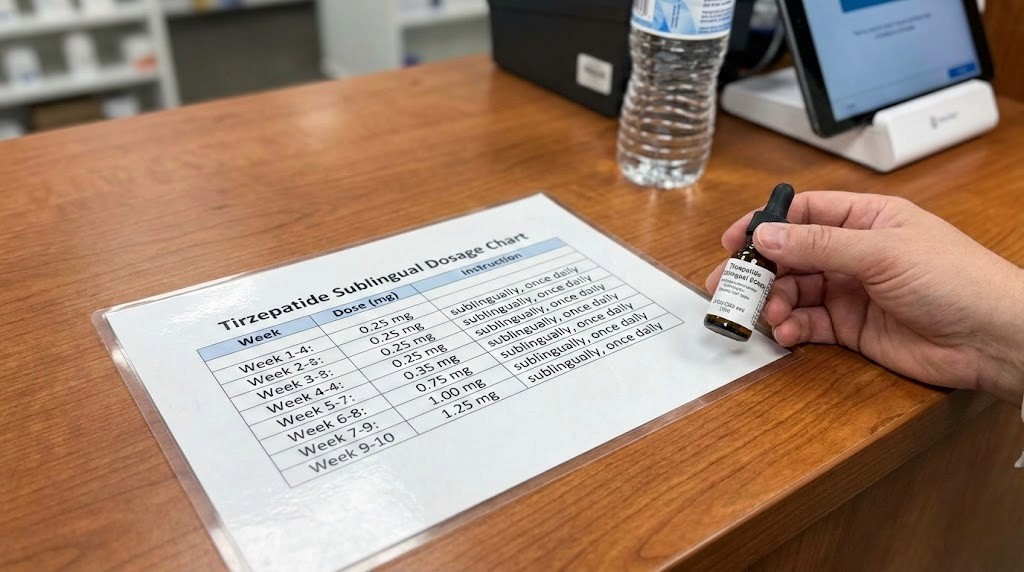
Three milligrams under your tongue every morning. That is all it takes. No needles, no alcohol swabs, no pinching a fold of skin and bracing yourself. Just a few drops held beneath your tongue for a couple of minutes while you check your phone or brew your coffee.
Sublingual tirzepatide has changed the conversation around GLP-1 weight loss medications. For people who dread injections, who travel constantly, or who simply want a more discreet daily routine, the sublingual route offers something the needle cannot. Convenience. But convenience means nothing if the dosing is wrong. And sublingual tirzepatide dosing is not the same as injectable dosing. Not even close.
The bioavailability is different. The frequency is different. The titration schedule, the milligram amounts, the way your body absorbs and processes the medication, all of it changes when you move from a weekly subcutaneous injection to a daily sublingual formulation. Copy an injectable tirzepatide dose chart and apply it sublingually, and you will either underdose yourself into zero results or overwhelm your system with more active compound than your GI tract can handle.
This guide builds a complete sublingual tirzepatide dosage chart from the ground up. Every dose tier. Every titration step. Absorption optimization techniques that separate mediocre results from exceptional ones. Equivalent doses compared to injectable protocols. And the practical, day-to-day details that most dosing guides skip entirely, like what happens when you accidentally swallow too early, whether food timing matters, and how to know when your current dose has stopped working. SeekPeptides has compiled data from compounding pharmacy protocols, provider prescribing patterns, and user-reported outcomes to create the most thorough sublingual dosing reference available.
Whether you are starting sublingual tirzepatide for the first time or switching from injections and need to translate your current dose, every number you need is here.
How sublingual tirzepatide works differently from injections
Before touching a single number on the dosage chart, you need to understand why sublingual dosing exists as its own category. This is not injectable tirzepatide in liquid form. The pharmacokinetics are fundamentally different, and those differences drive every dosing decision you will make.
The absorption pathway
When you inject tirzepatide subcutaneously, the medication enters the tissue beneath your skin and absorbs slowly into your bloodstream through capillary networks. This produces a gradual rise in plasma concentration, peaking somewhere between 8 and 72 hours after injection, followed by a slow decline over the next several days. The half-life sits around 5 days, which is why weekly dosing works. Injectable bioavailability is approximately 80%, meaning roughly 80% of the injected dose reaches systemic circulation.
Sublingual administration takes a completely different route. The medication is placed under the tongue, where it absorbs through the thin mucosal membrane directly into the bloodstream via the sublingual vein. This bypasses both the gastrointestinal tract and first-pass liver metabolism, two barriers that destroy most peptides when swallowed orally. The result is faster absorption, a quicker peak, and a shorter duration of action compared to injection.
That shorter duration is the key reason sublingual tirzepatide is dosed daily rather than weekly. A single sublingual dose does not produce the sustained 5-day drug levels that a subcutaneous injection does. Instead, you get a sharper peak followed by a more rapid decline. Daily dosing maintains therapeutic levels by replenishing the medication before it clears your system entirely.
Bioavailability: the number that changes everything
Here is where most people get confused. Sublingual bioavailability for tirzepatide is estimated at 20 to 40% of the injectable route. Some formulations and some individuals achieve higher absorption. Others land lower. But as a working range for dosing calculations, 20 to 40% is the number compounding pharmacies and prescribers use.
What does this mean practically? If injectable tirzepatide has 80% bioavailability and sublingual has roughly 25 to 35%, you need approximately 2 to 3 times the milligram amount sublingually to achieve the same circulating drug levels as a given injectable dose. But because sublingual is dosed daily and injectable is dosed weekly, the math gets more nuanced than a simple multiplication. We will break down exact equivalencies in the conversion section below.
The variability in sublingual absorption also matters. With injections, 80% bioavailability is remarkably consistent from dose to dose and person to person. Sublingual absorption depends on mucosal health, saliva production, technique (how long you hold it, whether you swallow prematurely), and even hydration status. This variability is manageable with proper technique, but it means sublingual dosing requires more attention to administration details than injection ever does. Understanding the broader differences between injectable vs oral peptides provides useful context for why these route-specific considerations matter so much.
The daily dosing advantage
Weekly injectable tirzepatide creates a peak-and-trough pattern. High drug levels for the first few days, declining levels toward the end of the week. Many people on injectable tirzepatide report that appetite suppression is strongest on days 1 through 4 after injection, then fades noticeably by days 5 through 7. This is the reason some injectable users switch to split-dose injection protocols.
Sublingual daily dosing largely eliminates this problem. Because you take the medication every day, drug levels remain more consistent throughout the week. There is no end-of-week hunger spike. No "injection day" where you feel the full force of GI side effects followed by gradual improvement. The experience is smoother, more predictable, and for some people, significantly easier to live with.
This steadier drug level also means that GI side effects, when they occur, tend to be milder with sublingual dosing. Instead of one large weekly bolus that hits your GLP-1 receptors all at once, you get smaller daily activations that your system adapts to more gradually. It is one of the main reasons providers prescribe sublingual formulations for patients who could not tolerate injectable tirzepatide due to nausea.
The complete sublingual tirzepatide dosage chart
This chart represents the most commonly prescribed sublingual tirzepatide titration protocol based on compounding pharmacy guidelines and provider prescribing patterns. Your individual provider may adjust these numbers based on your response, tolerance, and goals. Always follow your prescriber over any generic chart.
Phase 1: initiation (weeks 1 through 4)
Daily dose: 2 to 3 mg sublingual
This is the starting point for virtually every sublingual tirzepatide protocol. The dose is low enough to let your body adapt to GLP-1 and GIP receptor activation without overwhelming your gastrointestinal system.
Most compounding pharmacies formulate sublingual tirzepatide as drops or troches. Drops are measured using an oral syringe, with the pharmacy labeling the concentration (for example, 30 mg/mL) and your provider specifying the volume to draw. Troches are pre-dosed tablets that dissolve under the tongue. Either form works. The key difference is measurement precision, which we cover in the administration section below.
During the initiation phase, expect mild appetite reduction. Maybe slightly less interest in snacking. Possibly some mild nausea, though sublingual formulations tend to produce less GI disturbance at initiation than injections because the daily dose is smaller and the peak concentration is lower. Weight loss during this phase is typically 1 to 3 pounds. Do not chase bigger numbers yet. This phase is about tolerance, not transformation.
For context on how this compares to injectable initiation, the standard compound tirzepatide dosage chart starts at 2.5 mg weekly via injection. Your 2 to 3 mg daily sublingual dose, adjusted for bioavailability, delivers roughly similar weekly drug exposure. The mechanisms are identical. The delivery is different.
Phase 2: early titration (weeks 5 through 8)
Daily dose: 3 to 5 mg sublingual
At week 5, your provider will likely increase the daily dose. This is where appetite suppression becomes noticeable for most people. Food interest decreases. Portions shrink naturally. The constant background noise of hunger starts quieting down.
The jump from 3 mg to 4 or 5 mg daily is the sublingual equivalent of moving from 2.5 mg to 5 mg on the injectable tirzepatide dosage chart. Clinical data on injectable tirzepatide at 5 mg weekly shows average weight loss of 15 to 16% over 72 weeks. While direct clinical trial data for sublingual formulations is limited, providers report similar trajectories when equivalent drug exposure is achieved.
Side effects may temporarily increase as you adjust to the higher dose. Mild nausea is the most common. It typically peaks during the first week at the new dose and resolves within 7 to 10 days as your body reaches a new equilibrium. If nausea is significant, holding at the lower dose for an additional two weeks before retrying the increase is standard practice.
If you want to understand appetite suppression timelines in more detail, our guide on how long it takes tirzepatide to suppress appetite covers the mechanism regardless of administration route.
Phase 3: therapeutic escalation (weeks 9 through 16)
Daily dose: 5 to 8 mg sublingual
This phase is where results accelerate. The 5 to 8 mg daily range delivers drug exposure roughly equivalent to the 7.5 to 10 mg weekly injectable dose, which is where a large percentage of tirzepatide users find their optimal response. The SURMOUNT-1 trial showed 19.5% average body weight reduction on 10 mg injectable, and sublingual protocols targeting equivalent exposure aim for the same outcome.
Titration within this range should follow the same four-week minimum holds that injectable protocols use. Stay at 5 mg daily for at least four weeks. If weight loss is progressing at 0.5 to 2 pounds per week and side effects are manageable, hold. Only escalate to 6 or 7 mg if weight loss has genuinely stalled for three or more consecutive weeks.
Some providers increase in 1 mg increments during this phase. Others jump by 2 mg. The smaller increments produce smoother transitions with fewer side effect spikes, which is one of the advantages of sublingual dosing over injectable. With injections, you are locked into fixed dose tiers (2.5, 5, 7.5, 10, 12.5, 15). With sublingual drops, your provider can dial in virtually any milligram amount, allowing for more precise dose optimization.
This granular control is particularly valuable for people who found their sweet spot between two standard injectable tiers. If 7.5 mg injectable was too low but 10 mg caused intolerable nausea, the sublingual equivalent of 8 or 9 mg injectable might be exactly right. Use the peptide calculator to determine the exact volume for any custom dose based on your formulation concentration.
Phase 4: high-dose optimization (weeks 17 through 24)
Daily dose: 8 to 12 mg sublingual
Not everyone reaches this phase. Many people achieve their goals at lower daily doses. But for those who need it, the 8 to 12 mg daily range corresponds to injectable doses of approximately 10 to 15 mg weekly when adjusted for sublingual bioavailability.
At these doses, appetite suppression is typically profound. Most people at this level report eating 40 to 60% less than their pre-medication baseline without conscious effort. The challenge shifts from managing hunger to ensuring adequate nutrition. Protein intake becomes critical. Our resource on peptides for fat loss emphasizes that muscle preservation during rapid weight loss requires deliberate protein targeting of 0.8 to 1 gram per pound of lean body mass.
GI side effects at higher sublingual doses are still generally milder than at equivalent injectable doses because the daily peak concentration is lower. But they are not absent. Nausea, mild constipation, and occasional fatigue are common. If side effects become problematic, dropping back by 1 to 2 mg daily for two weeks before re-attempting the increase is the standard approach.
The tirzepatide dosage chart in units and unit conversion reference can help if your provider or pharmacy communicates doses in syringe units rather than milligrams.
Phase 5: maintenance
Daily dose: individualized (typically 4 to 10 mg sublingual)
Maintenance is the dose at which your weight has stabilized, your appetite feels naturally regulated, and side effects are minimal. For most sublingual users, this lands somewhere between 4 and 10 mg daily, though individual variation is significant.
Finding maintenance is not about hitting a specific number on the chart. It is about observing your body at each dose level and recognizing when the medication has done its job for weight loss, and you need only enough to maintain what you have achieved. We cover maintenance strategies in detail later in this guide.
Sublingual to injectable dose equivalency table
This is the section most people come here for. If you are switching from injectable tirzepatide to sublingual, or vice versa, you need to know the approximate equivalencies. These are estimates based on bioavailability ranges and prescribing patterns, not exact pharmacokinetic studies on sublingual formulations specifically.
The conversion math
Injectable tirzepatide bioavailability: approximately 80%. Sublingual tirzepatide bioavailability: approximately 25 to 35% (varies by formulation and technique). Injectable dosing frequency: once weekly. Sublingual dosing frequency: once daily.
To achieve equivalent weekly drug exposure sublingually, you need to account for both the lower bioavailability and the different dosing frequency. The formula is:
Daily sublingual dose = (Weekly injectable dose x Injectable bioavailability) / (7 days x Sublingual bioavailability)
Using 80% injectable and 30% sublingual bioavailability as the midpoint estimate:
Daily sublingual = (Weekly injectable x 0.80) / (7 x 0.30) = Weekly injectable x 0.38
This means a 10 mg weekly injectable dose translates to approximately 3.8 mg daily sublingual. Some providers round to 4 mg daily. Others use 3.5 mg. The range reflects the uncertainty in sublingual bioavailability.
Practical equivalency chart
The following table shows approximate sublingual daily equivalents for each standard injectable weekly dose. The range accounts for the 25 to 35% sublingual bioavailability variation.
Injectable weekly dose | Sublingual daily equivalent (low estimate) | Sublingual daily equivalent (mid estimate) | Sublingual daily equivalent (high estimate) |
|---|---|---|---|
2.5 mg/week | 1.5 mg/day | 1 mg/day | 0.8 mg/day |
5 mg/week | 3 mg/day | 2 mg/day | 1.6 mg/day |
7.5 mg/week | 4.5 mg/day | 3 mg/day | 2.4 mg/day |
10 mg/week | 6 mg/day | 3.8 mg/day | 3.2 mg/day |
12.5 mg/week | 7.5 mg/day | 4.8 mg/day | 4 mg/day |
15 mg/week | 9 mg/day | 5.7 mg/day | 4.8 mg/day |
The low estimate assumes 25% sublingual bioavailability. Mid estimate assumes 30%. High estimate assumes 35%. Your actual equivalency depends on your individual absorption, your technique, and your specific formulation. Start with the mid estimate and adjust based on your response.
For injectable dose conversion context, the tirzepatide vs semaglutide dosage chart provides cross-medication comparisons, and the semaglutide to tirzepatide dose conversion chart covers switching between the two most popular GLP-1 medications. If you are coming from semaglutide and going directly to sublingual tirzepatide, consult both conversion references to map your path.
Why exact equivalency is impossible
No conversion chart can be perfectly precise for sublingual dosing. Three factors prevent it.
First, sublingual bioavailability varies between individuals. Mucosal thickness, blood flow, saliva pH, and even genetic factors in transmucosal transport all influence how much medication reaches your bloodstream from a given sublingual dose.
Second, sublingual bioavailability varies between doses for the same individual. Your absorption on a day when you are well-hydrated, used perfect technique, and held the dose for the full recommended time will differ from a day when you were rushed, swallowed early, or had a dry mouth from morning dehydration.
Third, the pharmacokinetic profile is different even at equivalent total drug exposure. Daily sublingual dosing produces a flatter concentration curve than weekly injection. Your body may respond differently to the same total weekly drug exposure depending on whether it arrives as one large weekly peak or seven smaller daily peaks. This is not necessarily worse. For many people, the smoother curve produces better outcomes. But it means that a "perfectly equivalent" conversion is a useful starting point, not a guarantee of identical results.
The practical implication is that any switch from injectable to sublingual (or vice versa) requires a monitoring period where you track your response and adjust accordingly. Do not set it and forget it.
Sublingual tirzepatide formulation types
Not all sublingual tirzepatide is the same. Compounding pharmacies produce several formulation types, each with different administration protocols and dosing considerations.
Sublingual drops (liquid suspension)
The most common sublingual formulation. The medication is suspended in a liquid base and dispensed from a bottle using an oral syringe or dropper. You draw the prescribed volume, place it under your tongue, and hold it there for the recommended absorption period.
Advantages: Precise dose adjustment (you can change the volume by fractions of a milliliter), easy to titrate in small increments, relatively fast absorption.
Disadvantages: Requires an oral syringe for accurate measurement, technique-dependent (holding position, timing), taste can be unpleasant for some people, requires proper storage.
Typical concentrations: Compounding pharmacies commonly produce sublingual tirzepatide drops at concentrations of 30 mg/mL, 60 mg/mL, or higher. The concentration determines how much liquid you need for each dose. A higher concentration means a smaller volume, which is easier to hold under the tongue without swallowing prematurely. The peptide reconstitution calculator can help you determine exact volumes for any concentration.
Sublingual troches
Troches are small, flavored tablets designed to dissolve slowly under the tongue. They are pre-dosed, meaning each troche contains a fixed milligram amount. You place one under your tongue and let it dissolve completely.
Advantages: No measuring required, consistent dose every time, more convenient for travel, generally better taste than liquid formulations.
Disadvantages: Less flexible for dose adjustments (you cannot take half a troche accurately), typically more expensive per dose than drops, limited dose options per troche size.
Common troche strengths: 2.5 mg, 5 mg, 7.5 mg, and 10 mg per troche. Some pharmacies offer custom strengths.
Oral disintegrating tablets (ODTs)
ODTs are a newer formulation that dissolves rapidly on the tongue, typically within 30 to 60 seconds. Unlike troches that dissolve slowly under the tongue, ODTs disintegrate quickly and allow for both buccal (cheek) and sublingual absorption. Empower Pharmacy, one of the largest compounding pharmacies, has offered tirzepatide ODTs in strengths of 3 mg, 4 mg, and 5 mg per tablet.
Advantages: Fastest dissolution time, no water needed, extremely portable, discreet.
Disadvantages: Must be handled with dry hands, cannot be split or crushed, must remain in original packaging until use, limited dose flexibility.
Regardless of formulation type, the dosage chart principles remain the same. The milligram amount determines your drug exposure. The formulation determines how you get that milligram amount into your body.
Which formulation is best?
For maximum dose flexibility and cost efficiency, drops are typically the best choice. You can adjust doses in 0.5 mg increments, which makes titration smoother and allows your provider to find your exact optimal dose without being locked into fixed tablet sizes.
For convenience and consistency, troches or ODTs win. No measuring, no syringes, no worrying about holding a liquid under your tongue long enough.
For travel and on-the-go use, ODTs are the clear winner. They dissolve in under a minute, require no refrigeration, and fit in a pocket.
Most providers recommend starting with drops for the titration phase (when you need dose flexibility) and potentially switching to troches or ODTs for long-term maintenance (when your dose is stable and convenience matters more than adjustability).
How to take sublingual tirzepatide for maximum absorption
Technique matters more with sublingual dosing than with injections. A perfect injection technique versus a mediocre one might affect drug delivery by 5 to 10%. A perfect sublingual technique versus a poor one can affect absorption by 30 to 50%. That is a massive difference that can mean the gap between your dose working and not working.
Step-by-step administration protocol
Step 1: Prepare your dose. For drops, draw the prescribed volume using the oral syringe provided by your pharmacy. For troches, remove from packaging with dry hands. For ODTs, remove from packaging immediately before use with dry hands.
Step 2: Do not eat or drink for at least 15 minutes before dosing. Food particles, beverages, and even residual toothpaste can create a barrier on the sublingual mucosa that reduces absorption. A clean, relatively dry mouth optimizes drug contact with the tissue.
Step 3: Place the medication under your tongue. Lift your tongue and deposit the drops or place the troche/ODT in the sublingual space, the small pocket directly under the tongue between the base of the tongue and the floor of the mouth. This area has the thinnest mucosal tissue and the richest blood supply, which is why it is the absorption sweet spot.
Step 4: Hold without swallowing. This is the most critical step, and the one most people rush. For drops, hold the liquid under your tongue for a minimum of 2 minutes. Some providers recommend 4 to 5 minutes for maximum absorption. During this time, avoid swallowing as much as possible. Saliva will accumulate. Resist the urge to swallow it. Every swallow washes some medication out of the sublingual space and into your stomach, where it will be largely destroyed by digestive enzymes.
For troches, let the tablet dissolve completely without chewing, biting, or moving it around. This can take 5 to 15 minutes depending on the formulation. Keep it in the sublingual space the entire time.
For ODTs, dissolution is faster (30 to 60 seconds), but you should still avoid swallowing excess saliva during the dissolution period to maximize sublingual and buccal absorption.
Step 5: After the hold period, swallow any remaining liquid/residue. Whatever has not been absorbed sublingually will be swallowed. Some of this will be absorbed through the GI tract, though at much lower bioavailability. This is fine. It just means the sublingual absorption is the primary pathway, and the swallowed portion is a minor supplement.
Step 6: Do not eat or drink for at least 10 to 15 minutes after dosing. This gives any residual medication on the oral mucosa additional time to absorb without being washed away by food or liquid.
Timing your daily dose
Most providers recommend taking sublingual tirzepatide in the morning, before breakfast. This aligns the peak drug concentration with the first half of the day, when appetite suppression is most needed. It also ensures the fasting period before dosing (from sleep) provides an optimal absorption environment.
That said, the specific time matters less than consistency. If evening dosing works better for your schedule, that is fine. The key is taking it at roughly the same time every day to maintain steady drug levels. A 2-hour variation is not a problem. A 12-hour variation day to day will create inconsistent drug levels that make it harder to assess whether your current dose is working.
Some people who experience mild nausea find that evening dosing lets them sleep through the brief nausea window that occurs 1 to 2 hours after absorption. If morning dosing makes your first few hours unpleasant, try switching to bedtime dosing for a week and see if the experience improves.
Common absorption mistakes that reduce effectiveness
Swallowing too early. The single biggest mistake. If you hold the dose for only 30 seconds instead of the recommended 2 to 5 minutes, you may absorb as little as 10 to 15% of the dose sublingually. The rest gets swallowed and largely destroyed. This is the most common reason sublingual tirzepatide "does not work" for some people. The medication works fine. The absorption failed.
Eating or drinking immediately after. Food and liquid wash residual medication off the oral mucosa before it can absorb. The 10 to 15 minute post-dose fast is not optional.
Taking it with a dry mouth. Some saliva is actually helpful, as it keeps the medication in liquid contact with the mucosa. But excessive dryness (from dehydration, medications, or mouth breathing during sleep) can reduce absorption. If you wake up with severe dry mouth, take a small sip of water 5 minutes before dosing to moisten the sublingual tissue, then wait for the moisture to settle before placing your dose.
Moving the drops around. Keep the medication in the sublingual space. Moving your tongue, talking, or otherwise distributing the liquid across your entire mouth reduces contact with the high-absorption sublingual area and spreads it across lower-absorption tissue.
Brushing teeth immediately before. Toothpaste contains surfactants that can create a film on the oral mucosa, reducing drug penetration. If you brush before dosing, rinse thoroughly and wait at least 5 minutes.
Titration strategies for sublingual tirzepatide
The sublingual dosage chart provides the framework. Your titration strategy determines how you move through it. Just as with injectable tirzepatide dosing, there is no single correct pace. The right strategy depends on your goals, your tolerance, and your body.
Standard titration (4-week holds)
This mirrors the FDA-approved injectable protocol adapted for daily sublingual dosing. Four weeks at each dose tier before escalating. It is the most widely recommended approach and the one most providers default to.
Weeks 1-4: 2 to 3 mg daily. Weeks 5-8: 3 to 5 mg daily. Weeks 9-12: 5 to 7 mg daily. Weeks 13-16: 7 to 10 mg daily. Weeks 17-20: 10 to 12 mg daily (if needed).
Four weeks is the minimum hold at each level. It takes approximately this long for daily dosing to reach a pharmacokinetic equilibrium, where the rate of drug accumulation from daily dosing matches the rate of elimination. Escalating before this point means you do not yet know what the current dose can do for you.
Conservative titration (6 to 8 week holds)
For people who are GI-sensitive, have a history of poor tolerance to GLP-1 medications, or simply prefer to minimize side effects at the cost of slower initial results. The same dose tiers, just with longer holds.
This approach is particularly relevant for people switching from semaglutide who experienced significant nausea. The semaglutide to tirzepatide switching chart often recommends conservative titration when transitioning between these two medications, regardless of administration route.
The advantage of longer holds is not just fewer side effects. It is also cost savings (you use less medication over time) and more data per dose level (you get 6 to 8 weeks of weight loss data instead of 4, making it easier to determine whether a dose is truly working or has plateaued).
Response-based titration
This is the approach favored by providers who prioritize finding the minimum effective dose. Instead of escalating on a fixed schedule, you only increase when weight loss has genuinely stalled.
The criteria for escalation are identical to injectable protocols. Weight loss below 0.5 pounds per week for three consecutive weeks, with no changes in diet, exercise, or other lifestyle factors. If you are still losing at your current dose, stay there. It does not matter if the chart says you "should" be higher by now. The chart is a ceiling, not a target. Understanding how fast tirzepatide works at each level helps calibrate your expectations and prevents premature escalation.
Response-based titration means some people never go above 4 or 5 mg daily sublingual. Others need 10 or 12 mg. The right dose is the one that produces results for you, not the one the chart labels as "therapeutic."
Microdosing approach
For the ultra-conservative, sublingual microdosing starts below the standard initiation dose. The sublingual route makes this particularly easy because drops can be measured in very small increments.
Weeks 1-2: 0.5 to 1 mg daily. Weeks 3-4: 1 to 1.5 mg daily. Weeks 5-8: 1.5 to 2.5 mg daily. Week 9 onward: Transition to the standard titration starting at 2.5 to 3 mg daily.
Our comprehensive microdosing tirzepatide chart covers this approach in detail for both injectable and sublingual formulations. For people who have tried GLP-1 medications before and could not tolerate even the lowest dose, sublingual microdosing offers the gentlest possible entry point.
Switching from injectable to sublingual tirzepatide
This is one of the most common transitions people make, and getting the switch right prevents weeks of frustration from over or underdosing.
When switching makes sense
You dread injection day and it affects your compliance. You travel frequently and carrying syringes, vials, and sharps containers is impractical. You experience significant injection-site reactions. You want the smoother daily dosing profile instead of weekly peaks and troughs. You want to try a needle-free option for any reason whatsoever. Any of these is a valid reason to explore sublingual dosing.
The switch protocol
Step 1: Identify your current injectable dose (for example, 10 mg weekly). Check the equivalency table above to find the corresponding sublingual daily range (for 10 mg injectable, that is approximately 3 to 6 mg daily sublingual depending on bioavailability assumptions).
Step 2: Start your sublingual dosing 7 days after your last injection. Tirzepatide has a roughly 5-day half-life, so there will still be residual drug in your system when you begin sublingual dosing. Starting at the lower end of the equivalency range accounts for this overlap.
Step 3: Use the mid-range estimate for your first two weeks. If you were on 10 mg injectable, start at approximately 4 mg daily sublingual. Monitor your appetite, energy, and any side effects. If appetite suppression feels adequate and side effects are manageable, hold at this dose.
Step 4: After two weeks, assess. If appetite suppression has decreased compared to your injectable experience, increase by 0.5 to 1 mg daily. If it feels equivalent, hold. If side effects are stronger than expected (which can happen if your sublingual bioavailability is on the higher end), decrease by 0.5 to 1 mg daily.
Step 5: Fine-tune over the next 4 to 6 weeks until you find the sublingual dose that matches your previous injectable experience in terms of appetite control, weight loss rate, and side effect profile.
The tirzepatide conversion chart provides additional context for dose translations between different formulations and concentrations. And if you are coming from semaglutide rather than injectable tirzepatide, the semaglutide to tirzepatide conversion chart is the starting reference before applying the sublingual bioavailability adjustment.
What to expect during the transition
The first 1 to 2 weeks after switching may feel different from your injectable experience even at equivalent doses. The pharmacokinetic profile is different. Instead of one large weekly peak, you have daily smaller peaks. Some people find this feels "weaker" initially because the peak concentration is lower, even though the total weekly drug exposure is similar. Others find it feels "stronger" because the steady daily levels eliminate the end-of-week trough they had grown accustomed to.
Give the transition a full four weeks before concluding that sublingual dosing does or does not work for you. Many people who initially feel the switch is "not as strong" find that the consistent daily levels actually produce equal or better weight loss over a month compared to their injectable experience. The tirzepatide before and after results that people report come from both administration routes.
Side effects at each sublingual dose tier
Side effects from sublingual tirzepatide mirror those from injectable tirzepatide because the active compound and receptor activation are identical. But the daily dosing pattern changes the side effect experience in meaningful ways.
At 2 to 3 mg daily
The initiation phase produces the fewest side effects. Roughly 15 to 25% of users experience some GI discomfort, primarily mild nausea. This is lower than the approximately 39% GI event rate seen in clinical trials at the equivalent injectable initiation dose, likely because the daily peak concentration is lower than the weekly injection peak.
Other possible effects: decreased appetite (this is the intended effect, not a side effect), mild constipation, and occasional fatigue in the first few days. Most of these resolve within 1 to 2 weeks. If you are wondering whether tirzepatide makes you tired, the fatigue effect is typically transient and more pronounced at higher doses.
At 4 to 6 mg daily
Nausea becomes more common, affecting roughly 20 to 30% of users at these levels. The nausea pattern with sublingual dosing tends to be milder but more frequent than with injections. Instead of strong nausea for 1 to 2 days after injection followed by several nausea-free days, you might experience mild nausea for an hour or two each morning after dosing. Many people find this pattern easier to manage because the intensity never spikes as high.
Constipation may increase. Adequate hydration (at least half your body weight in ounces of water daily) and sufficient fiber intake (25 to 30 grams) help manage this. If constipation becomes problematic, a magnesium supplement can be helpful.
At 7 to 10 mg daily
At higher therapeutic doses, GI effects affect 30 to 40% of users. Nausea is the most common, followed by diarrhea (which may alternate with constipation), decreased appetite to the point of occasionally skipping meals, and mild acid reflux in some people.
The key management strategy at these doses is ensuring you eat enough. The appetite suppression can be so effective that people inadvertently drop below 800 to 1,000 calories daily, which triggers muscle loss, metabolic adaptation, and fatigue. Protein shakes, high-protein snacks, and structured meal times help prevent undereating.
At 10 to 12 mg daily
The highest sublingual doses carry side effect profiles comparable to the 12.5 to 15 mg injectable range. Roughly 35 to 45% of users experience some GI effects. However, the sublingual daily dosing pattern continues to provide some buffer against the most severe symptoms. The absolute peak concentration is lower than a single large weekly injection, which means episodes of severe nausea requiring medication are less common.
People at these doses should be working closely with their provider and monitoring nutritional intake, hydration, electrolytes, and basic metabolic panels regularly. Our guide on why you might not be losing weight on tirzepatide covers troubleshooting at every dose level, including identifying when side effects are undermining rather than supporting weight loss.
Weight-based considerations for sublingual dosing
Body weight affects sublingual tirzepatide dosing just as it affects injectable dosing, possibly more so. The same 4 mg daily sublingual dose will produce different circulating drug concentrations in a 150-pound person versus a 300-pound person due to differences in volume of distribution.
BMI-stratified sublingual dosing expectations
BMI 25 to 30: Effective sublingual doses typically fall between 3 and 6 mg daily. People in this range often find their maintenance dose earlier and at lower milligram amounts than higher-BMI individuals. Weight loss tends to begin within the first 2 to 3 weeks and progresses steadily at lower dose levels.
BMI 30 to 35: The most common effective range is 4 to 8 mg daily. Standard titration reaches optimal dosing for most people in this category within 12 to 16 weeks.
BMI 35 to 40: Expect to reach 6 to 10 mg daily before seeing the consistent, sustained weight loss that compounds into significant results over months. Longer holds at each dose tier (6 weeks instead of 4) often produce better outcomes because the higher volume of distribution needs more time to reach steady state at each level.
BMI 40+: Higher sublingual doses (8 to 12 mg daily) are frequently needed. The full titration to optimal dosing may take 20 to 28 weeks. Patience is not just recommended at this level. It is the strategy. Use the peptide cost calculator to project the financial trajectory at higher dose levels, because cost planning prevents unpleasant surprises.
Sublingual tirzepatide with additives: B12, niacinamide, and more
Some compounding pharmacies add complementary ingredients to their sublingual tirzepatide formulations. These additives can affect your experience at each dose level.
Tirzepatide with B12
Cyanocobalamin (vitamin B12) is the most common additive. Many users on GLP-1 medications experience fatigue, particularly during the initiation and early titration phases. B12 supplementation can help maintain energy levels and support the metabolic processes involved in weight loss. Our complete tirzepatide with B12 guide covers the research behind this combination.
From a dosing chart perspective, B12 addition does not change the tirzepatide dose itself. The milligram amounts on the chart remain the same. But some people on B12-containing formulations report better tolerance at each dose tier, possibly because the B12 reduces the fatigue component that sometimes drives premature dose reductions.
Tirzepatide with niacinamide
Niacinamide (vitamin B3) is added by some pharmacies for its potential insulin-sensitizing effects and as a stabilizer. Our tirzepatide niacinamide guide covers this combination thoroughly.
One sublingual-specific consideration: niacinamide can cause flushing (warmth and redness in the face and upper body) in some people, and sublingual absorption may increase the likelihood of flushing compared to injectable because the niacinamide enters the bloodstream more rapidly. If you experience flushing with a niacinamide-containing sublingual formulation, it is the niacinamide, not the tirzepatide. It typically resolves within 2 to 3 weeks of continued use.
Glycine and other stabilizers
Some pharmacies include glycine or other amino acids as stabilizers. These generally have no noticeable effect on your dosing experience and do not change the tirzepatide dose amounts on the chart.
When sublingual tirzepatide is not working: troubleshooting your dose
You have followed the chart. You have been consistent. And yet, the scale is not moving. Before concluding that sublingual tirzepatide does not work for you, systematically eliminate the most common culprits.
Absorption technique problems
This is the number one reason sublingual tirzepatide underperforms. Review the administration protocol above. Are you holding for the full recommended time? Are you avoiding food and drink before and after dosing? Is your mouth clean and appropriately moist when you dose? A simple technique correction can feel like a dose increase.
Formulation quality concerns
Compounded sublingual tirzepatide varies in quality between pharmacies. Underpotent product, degraded medication from improper storage, or formulations with poor sublingual absorption characteristics can all produce disappointing results at doses that should be effective. The peptide testing labs guide explains how to verify product quality, and the peptide storage guide covers proper handling.
If you suspect formulation quality is the issue, ask your provider about switching pharmacies or request a certificate of analysis for your current batch. Quality problems are more common than most people realize with compounded medications.
Dose is genuinely too low
If your technique is correct, your product quality is verified, and you have been at your current dose for at least four weeks with no weight loss, the dose may simply be insufficient for your body. This is normal. Not everyone responds at the same milligram amount. Follow the titration protocol and escalate to the next tier.
The problem is not the dose
Sometimes the medication is working exactly as it should, but lifestyle factors are preventing weight loss. Caloric intake has crept up without you noticing. Activity has decreased. Sleep has deteriorated. Stress has increased cortisol, promoting fat storage. A thorough lifestyle audit before increasing medication often reveals the real issue.
Our comprehensive troubleshooting guide on why you are not losing weight on tirzepatide walks through every potential cause systematically, covering both medication-related and lifestyle-related factors.
Missed dose protocol for sublingual tirzepatide
Daily dosing means more opportunities to forget. Here is how to handle missed doses without disrupting your protocol.
If you remember the same day
Take your dose as soon as you remember, regardless of time. If your normal time is 7 AM and you remember at 2 PM, take it at 2 PM. Resume your normal time the next day. Do not double up. Do not take two doses within 8 hours.
If you miss an entire day
Skip it. Take your normal dose at your normal time the next day. One missed day out of seven will slightly reduce your weekly drug exposure but will not meaningfully impact your results.
If you miss 2 to 3 consecutive days
Resume your normal dose on the next day. Some people experience a brief return of appetite or mild GI effects when resuming after a gap, similar to what happens when restarting after a break with any GLP-1 medication.
If you miss 4 or more consecutive days
Resume at your normal dose but monitor for increased side effects. If you have been off for a full week, consider dropping back by 1 to 2 mg daily for the first few days, then returning to your regular dose. Your body partially loses its adaptation during extended gaps, and jumping back to a full dose can cause a spike in nausea.
If you miss more than 2 weeks
Consult your provider before resuming. You may need to restart the titration from a lower dose, depending on how long you have been off. The longer the gap, the more adaptation your body has lost, and the more likely it is that your previous dose will cause intolerance if resumed abruptly.
Sublingual tirzepatide versus other administration routes
Sublingual is one of several non-injectable routes people explore. Understanding how it compares helps you determine whether it is the best option for your situation.
Sublingual vs injectable
Injection remains the gold standard for bioavailability, consistency, and clinical evidence. If you tolerate injections well and have no needle-related barriers, injectable tirzepatide will produce the most predictable results. But sublingual is not a distant second. For people who optimize their technique, sublingual can achieve equivalent outcomes with the added benefits of daily dosing convenience and no needles.
The injectable vs oral peptides comparison provides broader context on this decision beyond just tirzepatide. Many of the general principles about bioavailability, convenience, and compliance apply across peptide types.
Sublingual vs oral (swallowed)
Oral tirzepatide that is swallowed rather than held sublingually faces the same challenge all peptides face in the GI tract: enzymatic degradation and poor absorption through the intestinal wall. Sublingual absorption bypasses these barriers by absorbing directly through the oral mucosa. If given the choice between a sublingual formulation and one designed to be swallowed, sublingual is almost always superior for peptides.
Sublingual vs nasal
Nasal tirzepatide formulations are experimental and not widely available. Nasal absorption can be rapid and relatively consistent, but the nasal mucosa has less surface area than the sublingual space, and nasal formulations often cause local irritation. Sublingual is the more established non-injectable route at this time.
Cost considerations for sublingual tirzepatide
Sublingual formulations often cost differently than injectable, and understanding the cost structure helps you plan your protocol financially.
Typical monthly costs by dose tier
2 to 3 mg daily (initiation): $150 to $300 per month depending on the pharmacy and formulation type (drops vs troches vs ODTs).
4 to 6 mg daily (early therapeutic): $250 to $450 per month. Costs scale roughly proportionally with dose.
7 to 10 mg daily (full therapeutic): $400 to $650 per month. This is where most maintenance doses fall, making it the long-term cost to plan for.
10 to 12 mg daily (high dose): $550 to $800 per month. Fewer people need doses this high, but those who do should budget accordingly.
Compare these numbers to injectable tirzepatide costs using the peptide cost calculator. In some cases, sublingual formulations cost more per equivalent dose than injectable because you need more milligrams to achieve the same drug exposure. In other cases, the pricing is comparable because compounding pharmacies set prices based on formulation complexity rather than pure milligram content.
If cost is a primary concern, the affordable compounded tirzepatide options guide covers strategies for reducing costs across both injectable and sublingual formulations.
The regulatory landscape for sublingual tirzepatide
Sublingual tirzepatide exists entirely within the compounded medication space. Understanding the regulatory context helps you make informed decisions about sourcing and quality.
FDA approval status
Tirzepatide is FDA-approved only as an injectable medication under the brand names Mounjaro (for type 2 diabetes) and Zepbound (for weight loss). No sublingual, oral, troche, or ODT formulation of tirzepatide has FDA approval. All sublingual tirzepatide products are compounded by pharmacies, typically 503A or 503B facilities.
Compounding pharmacy oversight
503A pharmacies compound medications based on individual prescriptions. 503B pharmacies can compound in larger batches without individual prescriptions but must follow current Good Manufacturing Practices (cGMP). Both are regulated, but 503B facilities generally undergo more rigorous oversight and testing requirements.
When choosing a pharmacy for sublingual tirzepatide, verify their licensing status, ask about quality testing (potency assays, sterility testing, stability data), and confirm they use pharmaceutical-grade tirzepatide as their starting material. Not all compounding pharmacies are equal, and the quality of your sublingual product directly affects the accuracy of any dosage chart you follow.
Availability changes
The compounding landscape for tirzepatide has been subject to regulatory changes. Availability of compounded formulations depends on FDA shortage designations and ongoing legal proceedings. Always verify current availability with your provider and pharmacy. What is available today may change, and staying informed prevents disruptions to your protocol.
Building your personalized sublingual dosage chart
Generic charts provide the framework. Your personalized chart accounts for your specific circumstances. Here is how to build one.
Step 1: determine your starting point
New to GLP-1 medications? Start at 2 to 3 mg daily sublingual per the standard chart. Switching from injectable tirzepatide? Use the equivalency table and start at the low end of the range. Switching from semaglutide? Use the semaglutide to tirzepatide conversion first, then apply the sublingual bioavailability adjustment. Restarting after a break? Start one tier lower than where you stopped.
Step 2: choose your titration strategy
Standard (4-week holds) for most people. Conservative (6 to 8 week holds) for GI-sensitive individuals. Response-based (hold until plateau) for minimum effective dose seekers. Microdosing (sub-2 mg start) for the ultra-conservative.
Step 3: define your escalation criteria in advance
Write down your rules before you start. "I will only increase if weight loss is below 0.5 pounds per week for three consecutive weeks AND my technique is optimized AND my lifestyle factors are stable." Pre-committing prevents emotion-driven escalation decisions.
Step 4: track religiously
Daily weight (same conditions each morning). Weekly average weight (smooths out daily fluctuations). Appetite score (1 to 10 before each meal). Side effects (type, severity, duration). Administration technique (hold time, any issues). Formulation details (pharmacy, batch, concentration).
This data transforms dosing from guesswork into science. Without it, every dose change is a shot in the dark. With it, you and your provider can make precise, evidence-based adjustments.
Step 5: plan for the long game
Sublingual tirzepatide, like injectable, is typically a long-term or indefinite medication. Build the nutritional habits, exercise routine, and sleep hygiene that will support you at maintenance from the very beginning. The medication creates the metabolic window. Your habits determine what you do with it.
SeekPeptides members access protocol builders, tracking tools, and community support that make the process of building a personalized sublingual dosage chart systematic rather than trial-and-error. The difference between optimized and unoptimized sublingual dosing can be months of wasted time and hundreds of dollars in ineffective medication.
How sublingual tirzepatide fits into the broader GLP-1 landscape
Sublingual tirzepatide does not exist in isolation. Understanding where it sits relative to other GLP-1 options helps you make a fully informed decision about your protocol.
Compared to semaglutide options
Semaglutide (branded as Ozempic and Wegovy for injection, Rybelsus for oral) is tirzepatide primary competitor. The semaglutide vs tirzepatide comparison shows tirzepatide consistently outperforming semaglutide in head-to-head trials for weight loss, regardless of administration route. If you are considering sublingual semaglutide instead, the semaglutide dosage charts and semaglutide mixing charts provide equivalent detail for that medication.
The tirzepatide vs semaglutide dosage chart puts both medications side by side for easy comparison. And the switching from semaglutide to tirzepatide chart covers the transition if you decide to make the move.
Compared to newer options
Retatrutide, the triple-agonist (GLP-1, GIP, and glucagon receptors), represents the next generation of incretin-based therapies. The retatrutide dosage chart and retatrutide vs tirzepatide comparison show how this newer peptide differs in dosing and expected outcomes. While retatrutide is not yet widely available in sublingual form, the compounding landscape continues to evolve.
Other GLP-1 adjacent options, including cagrilintide dosing and emerging combinations like CagriSema, expand the toolkit further. The best peptides for weight loss guide provides a comprehensive overview of all current options.
Beyond weight loss
Tirzepatide addresses weight loss, but many people pursuing peptide-based protocols have broader goals. Muscle preservation during fat loss often leads people to explore options covered in our peptides for muscle growth guide. Recovery optimization connects to peptides for athletic performance. And the metabolic improvements from tirzepatide overlap with the broader anti-aging peptide protocols that address metabolic health holistically.
The peptide stack calculator can help evaluate whether combining sublingual tirzepatide with other peptides makes sense for your specific goals, always under provider guidance.
Long-term maintenance on sublingual tirzepatide
Finding your effective dose is only half the journey. Maintaining your results over months and years requires a deliberate maintenance strategy.
Identifying your maintenance dose
Your maintenance dose is the sublingual amount that keeps your weight stable (plus or minus 2 to 3 pounds over 4 to 6 weeks), your appetite naturally regulated, and your side effects minimal. For most people, maintenance is lower than their peak weight-loss dose. If you needed 8 mg daily to reach your goal, you might maintain at 5 or 6 mg daily.
The step-down process
Once your weight has been stable for at least 4 weeks at your current dose, consider a gradual reduction. Drop by 1 to 2 mg daily for 4 weeks. If weight remains stable and appetite stays controlled, hold or continue reducing. If weight begins creeping up or hunger returns significantly, go back to the previous dose.
Some people step down to 3 or 4 mg daily for indefinite maintenance. Others need 6 to 8 mg. A few can eventually reduce to very low doses (1 to 2 mg daily) that provide just enough GLP-1/GIP activation to prevent the hormonal rebound that drives weight regain.
Can you stop entirely?
Clinical data from injectable tirzepatide trials shows that most people regain approximately two-thirds of lost weight within a year of discontinuation. This biological reality applies regardless of administration route. Sublingual tirzepatide manages the same hormonal and neurological drivers of weight regain that return when the medication is removed.
For this reason, most providers frame tirzepatide, whether injectable or sublingual, as a long-term medication. Finding a sustainable maintenance dose that fits your budget, tolerance, and lifestyle is the practical goal, not eventual discontinuation.
Quarterly monitoring
Every three months, assess: weight stability, appetite patterns, side effects, metabolic markers (if tracked), and lifestyle adherence. If everything is stable, continue unchanged. If minor weight regain has occurred, determine whether it is dose-related or lifestyle-related before adjusting medication. Often, a brief period of tighter nutritional adherence resolves small regain without needing a dose increase.
Frequently asked questions
Is sublingual tirzepatide as effective as injectable?
When dosed to achieve equivalent drug exposure and administered with proper technique, sublingual tirzepatide can produce comparable results. The key variables are bioavailability (sublingual absorbs less per milligram than injectable), technique (how long you hold the dose sublingually), and consistency (daily dosing versus weekly). No head-to-head clinical trials comparing the two routes exist, but provider-reported outcomes and user experiences suggest similar weight loss trajectories when dosing is properly calibrated. The oral tirzepatide guide covers the evidence base in detail.
How long should I hold tirzepatide under my tongue?
Minimum 2 minutes for drops. Ideally 4 to 5 minutes for maximum absorption. For troches, let the tablet dissolve completely without chewing, which may take 5 to 15 minutes. For ODTs, 30 to 60 seconds for dissolution, then hold residual liquid for an additional 1 to 2 minutes before swallowing. The longer you hold, the more medication absorbs sublingually and the more consistent your dosing becomes.
Can I switch back to injections if sublingual does not work for me?
Yes. Use the equivalency table in reverse. If you are on 5 mg daily sublingual, the approximate injectable equivalent is 7.5 to 10 mg weekly depending on your assumed bioavailability. Your provider can guide the transition. Most people start the injectable dose one week after their last sublingual dose.
Why is my sublingual dose higher in milligrams than my old injectable dose?
Lower bioavailability. Sublingual absorption delivers approximately 25 to 35% of the dose to your bloodstream, compared to approximately 80% for injection. You need more milligrams sublingually to achieve the same circulating drug levels. This is normal and expected, not a sign that you are taking "too much." The tirzepatide dosage chart in units provides injectable reference points for comparison.
Do I need to take sublingual tirzepatide every single day?
For optimal results, yes. The shorter duration of action compared to injectable means that skipping days creates gaps in drug coverage that can trigger hunger spikes and inconsistent weight loss. Missing one day occasionally is fine. Making it a regular habit undermines the steady-state drug levels that daily dosing is designed to maintain.
Can I eat immediately after taking sublingual tirzepatide?
Wait at least 10 to 15 minutes after dosing before eating or drinking. This allows any residual medication on the oral mucosa to absorb without being washed away. If you eat immediately after swallowing the held dose, you may reduce overall absorption and get less benefit from each milligram.
What if I accidentally swallow the drops immediately?
Some medication will still absorb through the GI tract, but at much lower bioavailability than sublingual absorption. Effectively, that dose will be significantly underdosed. Do not take a second dose to compensate. Resume normal dosing the next day. If this happens frequently, set a timer when you dose to ensure you hold for the full recommended duration.
Is sublingual tirzepatide safe long-term?
The active ingredient is the same FDA-approved tirzepatide used in Mounjaro and Zepbound. The long-term safety profile of tirzepatide has been studied in clinical trials lasting up to 72 weeks. The sublingual route has not been studied in clinical trials of the same duration, but the medication itself is the same compound. Long-term safety considerations are about the tirzepatide molecule, not the administration route. Always work with your provider for ongoing monitoring. SeekPeptides provides comprehensive safety resources and community support for people on long-term peptide protocols.
External resources
For researchers serious about optimizing their sublingual tirzepatide protocol, SeekPeptides offers the most comprehensive dosing resources available, with evidence-based guides, protocol calculators for every formulation type, and a community of thousands who have navigated these exact dosing decisions across both injectable and sublingual routes.
In case I do not see you, good afternoon, good evening, and good night. May your absorption stay complete, your doses stay consistent, and your results stay lasting.