Feb 10, 2026
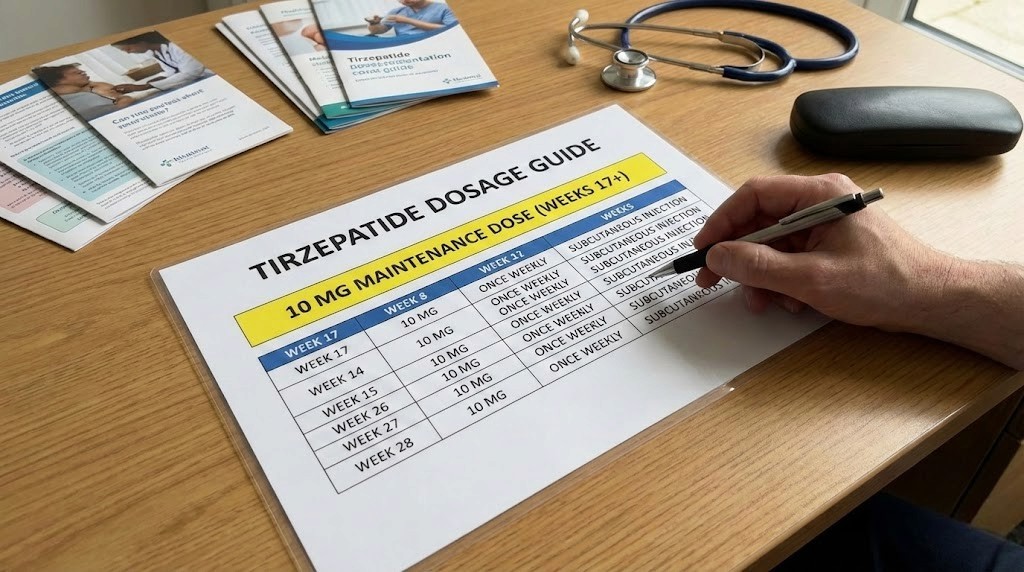
Half of all tirzepatide users who reach the 10mg dose lose 20% or more of their body weight. That number comes straight from the SURMOUNT-1 trial, the largest clinical study ever conducted on this peptide. And yet most people searching for a 10mg dosage chart find generic tables that cover every dose from 2.5mg to 15mg without ever explaining what makes the 10mg tier unique.
That stops here.
The 10mg dose sits in a critical position within the tirzepatide dose escalation schedule. It is not the starting dose. It is not the maximum. It is the dose where most researchers find their balance between aggressive fat loss and manageable side effects. Clinical data supports this. In the SURMOUNT-1 trial, participants on 10mg achieved an average weight reduction of 21.4%, losing roughly 49 pounds over 72 weeks. The 15mg group lost slightly more at 22.5%, but the difference between those two numbers is smaller than most people expect. The jump from 5mg to 10mg, on the other hand, is enormous, a leap from 16% to 21.4% average body weight reduction.
This guide focuses exclusively on the 10mg dose. You will find reconstitution math for 10mg vials, unit conversion charts for insulin syringes, escalation protocols leading to and through the 10mg tier, side effect management strategies, and plateau-breaking approaches grounded in published research. Whether you are using compounded tirzepatide at 10mg/mL concentration or working with lyophilized 10mg vials requiring reconstitution, every calculation you need lives in the charts below.
SeekPeptides built this resource because the 10mg dose deserves its own dedicated reference. Not a footnote in a broader chart. A complete, standalone guide.
Why 10mg is the critical tirzepatide dose tier
Every tirzepatide protocol starts at 2.5mg. That is not negotiable. The escalation schedule exists for a reason, and skipping doses creates unnecessary gastrointestinal distress without improving outcomes. But the 10mg dose represents something specific within this framework, something most dosage guides gloss over entirely.
Tirzepatide is a dual GIP/GLP-1 receptor agonist. It activates two separate hormonal pathways simultaneously, unlike semaglutide, which only targets the GLP-1 receptor. The GIP component amplifies insulin response, enhances nutrient signaling, and may contribute independently to fat reduction through mechanisms researchers are still mapping. At the 10mg dose, tirzepatide achieves plasma concentrations that exceed the activation threshold for both receptors by substantial margins, roughly 10,000-fold above the EC50 for the GIP receptor and 250-fold above the EC50 for the GLP-1 receptor.
What does that mean practically? It means 10mg delivers near-maximum receptor activation.
The weight loss data reflects this. In SURMOUNT-1, the 5mg group averaged 16% body weight reduction. The 10mg group averaged 21.4%. The 15mg group averaged 22.5%. That pattern tells a clear story. The biggest jump in efficacy happens between 5mg and 10mg, a 5.4 percentage point increase. Going from 10mg to 15mg adds only 1.1 percentage points. For many researchers, the additional gastrointestinal burden of 15mg does not justify that marginal gain.
The 10mg dose also sits at a pharmacokinetic sweet spot. Tirzepatide has a half-life of approximately 5 days, which supports once-weekly dosing. At 10mg, steady-state concentrations build predictably over the first 4 to 5 weeks of that dose tier. Blood levels remain therapeutic throughout the full seven-day dosing interval without the pronounced peaks and troughs that can worsen side effects at higher doses.
Who benefits most from the 10mg maintenance dose
Not everyone needs to push to 15mg. Research from SURMOUNT-4 demonstrated that participants who continued tirzepatide at their achieved dose experienced an additional 5.5% weight reduction over 52 weeks, while those switched to placebo regained 14% of lost weight. The message is clear. Staying on your effective dose matters more than constantly escalating.
The 10mg dose works especially well for researchers who have already lost significant weight on 5mg or 7.5mg and want to accelerate results without maximizing side effects. It also suits those who experienced manageable gastrointestinal symptoms during earlier dose tiers but found 12.5mg or 15mg intolerable in previous attempts. And it benefits anyone whose weight loss timeline shows continued progress at 10mg, even if that progress has slowed slightly.
Researchers using compounded tirzepatide have additional flexibility. Because compounded formulations often come in 10mg/mL or 20mg/mL concentrations, the 10mg dose translates to clean, simple injection volumes. No awkward fractions. No unit calculations that require a math degree.
The complete 10mg reconstitution chart
If you are working with lyophilized tirzepatide in a 10mg vial, reconstitution is your first step. The amount of bacteriostatic water you add determines the concentration, and the concentration determines how many units you draw for each dose.
There are two common reconstitution approaches for a 10mg vial. Each creates a different concentration.
Option 1: 2.0 mL bacteriostatic water (recommended)
Adding 2.0 mL of bacteriostatic water to a 10mg vial creates a concentration of 5.0 mg/mL. This is the most popular choice for several reasons. The injection volumes stay within comfortable ranges for subcutaneous administration. The math is clean. And you get enough total volume to run a meaningful portion of a protocol from a single vial.
At 5.0 mg/mL concentration, here is your complete dosage chart in milliliters:
Target dose (mg) | Volume to inject (mL) | Insulin syringe units (U-100) |
|---|---|---|
2.5 mg | 0.50 mL | 50 units |
5.0 mg | 1.00 mL | 100 units |
7.5 mg | 1.50 mL | 150 units (two injections) |
10.0 mg | 2.00 mL | 200 units (two injections) |
Notice the problem. At 5.0 mg/mL, a 10mg dose requires 2.00 mL, which exceeds the capacity of a standard 1 mL insulin syringe. You would need two separate injections of 100 units each. This is manageable but not ideal for weekly dosing.
Option 2: 1.0 mL bacteriostatic water (higher concentration)
Adding 1.0 mL of bacteriostatic water to a 10mg vial creates a concentration of 10.0 mg/mL. This higher concentration reduces injection volumes dramatically.
Target dose (mg) | Volume to inject (mL) | Insulin syringe units (U-100) |
|---|---|---|
2.5 mg | 0.25 mL | 25 units |
5.0 mg | 0.50 mL | 50 units |
7.5 mg | 0.75 mL | 75 units |
10.0 mg | 1.00 mL | 100 units |
At 10.0 mg/mL, the full 10mg dose fits in a single 1 mL insulin syringe at exactly 100 units. Clean. Simple. One injection per week. The trade-off is that the entire vial is consumed in a single 10mg dose, meaning you cannot use it for dose escalation across multiple weeks.
How to choose your reconstitution volume
Your choice depends on where you are in the dosing protocol.
If you are still escalating through lower doses (2.5mg, 5mg, 7.5mg) on your way to 10mg, the 2.0 mL reconstitution makes more sense. It gives you enough volume to draw multiple smaller doses from a single vial. One 10mg vial reconstituted with 2.0 mL provides four doses of 2.5mg, or two doses of 5mg, or various combinations as you titrate upward.
If you are already established at 10mg and simply need your weekly dose, the 1.0 mL reconstitution is cleaner. One vial, one dose, one injection. No leftover volume. No waste.
Both approaches require proper reconstitution technique. Inject the bacteriostatic water slowly down the inside wall of the vial. Never aim the stream directly at the lyophilized powder. Gently swirl or roll the vial until the powder dissolves completely. Do not shake. Shaking creates bubbles and can damage the peptide structure. The solution should be clear and colorless when ready.
Compounded tirzepatide 10mg/mL dosage chart
Most researchers using compounded tirzepatide receive it in pre-mixed liquid form, typically at either 10mg/mL or 20mg/mL concentration. The 10mg/mL concentration is the most common and the most relevant to this guide. No reconstitution needed. Just draw and inject.
If your vial reads 10mg/mL on the label, here is the exact chart for every standard tirzepatide dose:
Target dose (mg) | Volume (mL) | Insulin syringe (U-100 units) |
|---|---|---|
2.5 mg | 0.25 mL | 25 units |
5.0 mg | 0.50 mL | 50 units |
7.5 mg | 0.75 mL | 75 units |
10.0 mg | 1.00 mL | 100 units |
12.5 mg | 1.25 mL | 125 units (two injections) |
15.0 mg | 1.50 mL | 150 units (two injections) |
The math formula is straightforward. Divide your target dose in milligrams by the concentration in mg/mL to get the volume in milliliters. Then multiply by 100 to convert to insulin syringe units.
Formula: Dose (mg) / Concentration (mg/mL) = Volume (mL). Then Volume (mL) x 100 = Syringe Units.
For the 10mg dose specifically: 10 mg / 10 mg/mL = 1.0 mL = 100 units. You fill the entire 1 mL insulin syringe.
What about 20mg/mL concentration
Some compounding pharmacies supply tirzepatide at 20mg/mL concentration. At this higher concentration, all injection volumes are cut in half.
Target dose (mg) | Volume at 20mg/mL (mL) | Insulin syringe units |
|---|---|---|
2.5 mg | 0.125 mL | 12.5 units |
5.0 mg | 0.25 mL | 25 units |
7.5 mg | 0.375 mL | 37.5 units |
10.0 mg | 0.50 mL | 50 units |
12.5 mg | 0.625 mL | 62.5 units |
15.0 mg | 0.75 mL | 75 units |
The 20mg/mL concentration offers a significant advantage for the 10mg dose. At just 50 units (half a syringe), the injection volume is small and comfortable. Half-unit markings on some insulin syringes make the 12.5 and 37.5 unit measurements achievable, though not as precise as whole-unit draws.
Regardless of concentration, always verify what your specific vial label says. Compounded products can vary between pharmacies. A peptide calculator helps confirm your math before every injection.
The standard dose escalation path to 10mg
You do not start at 10mg. Nobody does. The FDA-approved escalation schedule exists to minimize gastrointestinal side effects and allow your body to adapt to the peptide gradually. Skipping directly to 10mg would trigger severe nausea, vomiting, and diarrhea in most people.
Here is the standard path:
Week | Dose | Purpose |
|---|---|---|
Weeks 1 to 4 | 2.5 mg | Initial tolerance building |
Weeks 5 to 8 | 5.0 mg | First therapeutic dose |
Weeks 9 to 12 | 7.5 mg | Intermediate escalation |
Weeks 13 to 16 | 10.0 mg | Target dose achieved |
It takes a minimum of 12 weeks to reach the 10mg dose following the standard 4-week escalation intervals. Some protocols extend each tier to 6 or even 8 weeks if side effects are significant, which could push the timeline to 18 to 24 weeks before reaching 10mg.
The 2.5mg starting dose is considered sub-therapeutic for weight loss. Its sole purpose is GI adaptation. Most researchers do not see meaningful weight changes during the first four weeks. That is normal and expected.
Real results typically begin at 5mg. The appetite suppression becomes noticeable. Food noise, that constant mental preoccupation with eating, quiets down. Portion sizes shrink naturally. By 7.5mg, most researchers report consistent weekly weight loss, and by 10mg, the dual receptor activation is driving meaningful metabolic changes.
Alternative escalation schedules
Not everyone follows the exact 4-week protocol. Some clinicians recommend slower escalation for people prone to GI issues:
Week | Dose | Notes |
|---|---|---|
Weeks 1 to 6 | 2.5 mg | Extended tolerance building |
Weeks 7 to 12 | 5.0 mg | Longer at first therapeutic dose |
Weeks 13 to 16 | 7.5 mg | Standard interval |
Weeks 17 to 20 | 10.0 mg | Target dose reached at week 17 |
Others use a more aggressive approach with intermediate doses for those tolerating the medication well:
Week | Dose | Notes |
|---|---|---|
Weeks 1 to 4 | 2.5 mg | Standard starting dose |
Weeks 5 to 6 | 5.0 mg | Shortened tier if well tolerated |
Weeks 7 to 8 | 7.5 mg | Shortened tier if well tolerated |
Weeks 9 onward | 10.0 mg | Target dose reached at week 9 |
The aggressive schedule can reach 10mg by week 9 instead of week 13. However, this approach carries higher risk of side effects and should only be considered under clinical guidance when tolerance at each dose has been clearly established.
Understanding insulin syringe units for the 10mg dose
This is where confusion runs rampant. The word "units" on an insulin syringe does not refer to medication units. It refers to volume. One hundred units on a U-100 insulin syringe equals 1.0 mL of liquid, regardless of what that liquid contains. The syringe does not know or care about the concentration of your tirzepatide.
This distinction matters enormously. When someone says "I take 50 units of tirzepatide," that statement is meaningless without knowing the concentration. Fifty units from a 10mg/mL vial delivers 5mg. Fifty units from a 20mg/mL vial delivers 10mg. Same syringe reading, completely different doses.
Here is the complete unit reference chart for the 10mg dose across all common concentrations:
Concentration | Units for 10mg dose | Volume (mL) | Single injection possible? |
|---|---|---|---|
5.0 mg/mL | 200 units | 2.00 mL | No (need two injections) |
10.0 mg/mL | 100 units | 1.00 mL | Yes (full syringe) |
20.0 mg/mL | 50 units | 0.50 mL | Yes (half syringe) |
40.0 mg/mL | 25 units | 0.25 mL | Yes (quarter syringe) |
Most compounded tirzepatide arrives at 10mg/mL or 20mg/mL. At 10mg/mL, you draw to the 100-unit line, which fills the syringe completely. At 20mg/mL, you draw to the 50-unit line, exactly halfway. Both are easy to measure accurately.
The 5mg/mL concentration (typical of reconstituted lyophilized vials with 2mL BAC water) requires 200 units for a 10mg dose. Since standard insulin syringes hold only 100 units (1.0 mL), you must split this into two separate 100-unit injections. Inject at two different sites, separated by at least two inches, to ensure proper subcutaneous absorption.
Reading your insulin syringe correctly
Standard U-100 insulin syringes come in three sizes:
0.3 mL (30 units) with markings every 0.5 units. Best for small doses during early escalation.
0.5 mL (50 units) with markings every 1 unit. Works well for 10mg doses at 20mg/mL concentration.
1.0 mL (100 units) with markings every 2 units. Required for 10mg doses at 10mg/mL concentration.
For the 10mg dose at 10mg/mL, you need the full-size 1.0 mL syringe. Draw to the 100-unit line. For the 10mg dose at 20mg/mL, the 0.5 mL syringe provides the most accurate measurement at the 50-unit mark. Using the correct syringe size for your dose improves accuracy and reduces the chance of dosing errors.
Always pull the plunger back slightly past your target line, then push forward to remove air bubbles and settle at exactly the right mark. Hold the syringe at eye level when reading. The bottom of the fluid meniscus should align with your target unit line.
10mg dose compared to other tirzepatide tiers
Numbers tell the story better than opinions. Here is how the 10mg dose compares to every other tier based on SURMOUNT-1 clinical trial data at 72 weeks.
Dose | Avg weight loss (%) | Avg weight loss (lbs) | Achieved 5%+ loss | Achieved 20%+ loss | Discontinuation rate |
|---|---|---|---|---|---|
Placebo | 2.4% | 5 lbs | 34.5% | 1.3% | 2.6% |
5.0 mg | 16.0% | 35 lbs | 89.4% | 32.0% | 4.3% |
10.0 mg | 21.4% | 49 lbs | 96.2% | 55.0% | 7.1% |
15.0 mg | 22.5% | 52 lbs | 96.3% | 63.0% | 6.2% |
The data reveals several important patterns.
First, the jump from 5mg to 10mg is massive. An additional 5.4 percentage points of body weight loss, translating to roughly 14 more pounds on average. That represents a 34% improvement in efficacy just from doubling the dose.
Second, the jump from 10mg to 15mg is modest. Just 1.1 additional percentage points, or about 3 more pounds. That is a 5% improvement in efficacy for a 50% dose increase.
Third, the proportion of researchers achieving 20% or greater weight loss increases substantially from 5mg (32%) to 10mg (55%) but then shows diminishing returns at 15mg (63%). The 10mg dose is where the majority cross that clinically significant threshold.
Fourth, discontinuation rates at 10mg (7.1%) are actually slightly higher than at 15mg (6.2%), which may reflect the transition challenge as gastrointestinal systems adapt to the higher dose tier rather than indicating worse tolerability overall.
How 10mg compares to semaglutide
The tirzepatide versus semaglutide comparison becomes especially interesting at the 10mg level. The SURPASS head-to-head trial (SURMOUNT-5) showed tirzepatide 10mg and 15mg produced significantly greater weight loss than semaglutide 2.4mg, which is the maximum approved semaglutide dose.
In that study, tirzepatide at its combined higher doses achieved approximately 20.2% weight loss versus 13.7% for semaglutide 2.4mg over 72 weeks. The dual GIP/GLP-1 mechanism of tirzepatide appears to provide a meaningful advantage over GLP-1-only stimulation from semaglutide.
For researchers considering a switch from semaglutide to tirzepatide, the 10mg dose is often the target maintenance level after completing the escalation schedule. The conversion chart provides specific guidance for this transition.
Managing side effects at the 10mg dose
The 10mg dose tier introduces or intensifies side effects that may have been mild at lower doses. Understanding what to expect and how to manage it determines whether 10mg becomes your sustainable maintenance dose or a temporary stop on the way somewhere else.
Gastrointestinal side effects
Nausea is the most commonly reported side effect. Up to 29% of participants in clinical trials experienced nausea at higher tirzepatide doses, though the percentage is lower when the dose escalation schedule is followed properly. Nausea typically peaks during the first two to three weeks at a new dose tier and then gradually subsides as the body adapts.
The mechanism is straightforward. Tirzepatide slows gastric emptying, meaning food stays in the stomach longer than usual. This prolonged gastric residence creates feelings of fullness, which is part of the appetite suppression mechanism, but can also trigger nausea in some individuals.
Practical management strategies:
Eat smaller meals more frequently. Five small meals beat three large ones. Large portions overwhelm a stomach that is processing food more slowly.
Avoid high-fat foods during the adjustment period. Fat takes the longest to digest. Combined with slowed gastric emptying, fatty meals become a recipe for prolonged nausea.
Do not eat close to bedtime. Give your stomach at least three hours between your last meal and lying down. Horizontal positioning worsens nausea from slow gastric emptying.
Stay hydrated but separate fluids from meals. Drinking large amounts of water with food increases stomach volume and pressure. Sip water between meals instead.
Ginger supplements or ginger tea. Clinical evidence supports ginger as an antiemetic. Keep ginger chews or tea available during the first weeks at 10mg.
Diarrhea and constipation can both occur, sometimes alternating. The gut health implications of GLP-1 receptor agonists are complex. Increased fiber intake, adequate hydration, and regular physical activity help regulate bowel function. Severe or persistent GI symptoms that do not improve after three to four weeks at 10mg warrant clinical evaluation.
Injection site reactions
At 10mg, especially when using higher-concentration formulations that require larger injection volumes, minor injection site reactions become more common. Redness, mild swelling, or itching at the injection site typically resolves within 24 to 48 hours.
Rotate injection sites systematically. The three approved areas for subcutaneous injection are the abdomen (avoiding a two-inch radius around the navel), the front of the thigh, and the back of the upper arm. Rotate between these areas weekly. Within each area, vary the exact injection point by at least one inch from the previous location.
Fatigue and energy changes
Some researchers report feeling tired on tirzepatide, particularly during the first weeks at a new dose. This is partly related to reduced caloric intake. When your appetite drops significantly and you consume fewer calories than your body is accustomed to, fatigue is a natural response.
The solution is not to force-feed yourself back to previous caloric levels. Instead, prioritize protein intake (minimum 0.7 grams per pound of body weight daily), maintain consistent sleep schedules, and adjust exercise intensity temporarily if needed. Energy levels typically normalize within two to three weeks as metabolic adaptation occurs.
When to consider stepping back to 7.5mg
Not every side effect resolves with time and management strategies. If any of the following persist beyond four weeks at 10mg, a temporary or permanent step back to 7.5mg may be appropriate:
Daily nausea that interferes with normal activities
Vomiting more than twice per week
Inability to consume adequate protein (less than 60 grams daily)
Persistent diarrhea causing dehydration concerns
Weight loss exceeding 2% of body weight per week (too rapid)
Stepping back is not failure. The dose chart exists as a guide, not a mandate. Some researchers find their optimal long-term dose at 7.5mg or even 5mg, and the clinical data shows meaningful weight loss at every dose tier above 2.5mg.
Storage and stability for 10mg tirzepatide
Proper storage directly affects potency. A 10mg dose of degraded tirzepatide could deliver significantly less active compound than intended, undermining your entire protocol.
Lyophilized (powder) form
Unreconstituted tirzepatide powder should be stored frozen or refrigerated, depending on manufacturer guidance. Most lyophilized peptides maintain stability for months when refrigerated at 2 to 8 degrees Celsius (35.6 to 46.4 degrees Fahrenheit) and for extended periods when frozen at minus 20 degrees Celsius. Proper peptide storage begins the moment you receive your shipment.
Reconstituted solution
Once you add bacteriostatic water to a 10mg vial, the clock starts ticking. Reconstituted tirzepatide should be refrigerated and used within 28 days. Do not freeze reconstituted solution, as the freeze-thaw cycle can damage the peptide structure. Keep the vial upright in the refrigerator, away from the door where temperature fluctuations are greatest.
Refrigerator storage is non-negotiable for reconstituted tirzepatide. Room temperature exposure degrades the peptide rapidly, and time out of the fridge should be minimized to the few minutes needed for drawing your dose.
Compounded liquid form
Compounded tirzepatide must be refrigerated upon receipt and throughout its use. Follow the beyond-use date provided by your compounding pharmacy, which is typically 30 to 90 days depending on the formulation. Do not use tirzepatide past its assigned expiration date, as degradation products could be inactive or potentially harmful.
Injection technique for the 10mg dose
The 10mg dose often requires larger injection volumes than earlier tiers, making technique especially important for comfort and proper absorption.
Step-by-step injection protocol
Gather your supplies first. You need your tirzepatide vial (at room temperature for 15 to 30 minutes to reduce injection discomfort), an alcohol swab, your insulin syringe, and a sharps container.
Clean the injection site with an alcohol swab and allow it to dry completely. Draw your 10mg dose according to your concentration chart. For 10mg/mL, that is 100 units. For 20mg/mL, that is 50 units. Pinch a fold of skin at your chosen injection site. Insert the needle at a 45 to 90 degree angle (90 degrees for most people with adequate subcutaneous tissue). Push the plunger slowly and steadily, taking at least 5 to 10 seconds for the full injection. Release the skin fold. Remove the needle. Apply gentle pressure if any bleeding occurs.
Do not massage the injection site afterward. Massaging can alter absorption rates and potentially push the medication out of the subcutaneous layer.
Injection site rotation schedule
A systematic rotation prevents lipodystrophy, localized tissue changes from repeated injections in the same spot. Here is a simple weekly rotation:
Week | Injection site |
|---|---|
Week 1 | Left abdomen |
Week 2 | Right abdomen |
Week 3 | Left thigh |
Week 4 | Right thigh |
Week 5 | Left upper arm (if accessible) |
Week 6 | Right upper arm (if accessible) |
Week 7 | Restart cycle |
The abdomen typically provides the most consistent absorption and is the easiest site for self-injection. The thigh is a reliable alternative. The upper arm works well if someone else can administer the injection, but self-injection in the upper arm is awkward and can lead to intramuscular injection if the needle angle is wrong.
Proper injection technique ensures you receive the full 10mg dose subcutaneously, where absorption is slow and sustained over hours rather than minutes.
Timing your 10mg dose for best results
Tirzepatide has a half-life of approximately five days. This long half-life means the exact time of day you inject matters less than consistency. What matters most is injecting on the same day each week, at roughly the same time.
That said, some timing strategies can improve your experience at 10mg.
Morning versus evening injections
Morning injections allow any acute side effects (nausea, fullness) to occur during waking hours when you can manage them actively. You can adjust food intake, stay upright, and stay hydrated throughout the day. Evening injections may cause nausea that disrupts sleep, particularly during the first weeks at 10mg when GI side effects peak.
However, some researchers prefer evening injections specifically because they sleep through the initial peak side effects and wake feeling fine. This is a personal preference that depends on your individual response.
Relationship to meals
Tirzepatide can be taken with or without food. The official guidance does not restrict meal timing around injections. However, practical experience suggests avoiding a large meal immediately before or after injection. The appetite-suppressing effects begin within hours, and eating a heavy meal right before injection can amplify nausea as the slowed gastric emptying takes effect.
A light protein-rich meal two to three hours before injection works well for most researchers. This provides adequate nutrition without overloading the stomach as tirzepatide begins its effects.
What if you miss your weekly dose
If you miss your 10mg dose by a day or two, inject as soon as you remember. If more than four days have passed since your missed dose, skip it entirely and resume on your next regularly scheduled day. Do not double up. Two doses of 10mg in close succession would deliver 20mg to your system, well above the maximum approved dose of 15mg, and would significantly increase side effect risk.
Consistency matters more than perfection. Occasional missed doses do not derail long-term results. The long half-life of tirzepatide means therapeutic levels persist for days after each injection, providing a buffer against single missed doses.
Breaking through a 10mg weight loss plateau
Plateaus happen. They happen to everyone, at every dose, with every weight loss intervention. A plateau does not mean tirzepatide stopped working. It means your body has reached a temporary equilibrium between energy intake and expenditure at your current weight.
The data from SURMOUNT-4 offers important context. Researchers who continued tirzepatide at their current dose after reaching a plateau lost an additional 5.5% body weight over the following 52 weeks. Those switched to placebo regained 14%. This means the peptide is still actively working during a plateau, it is preventing regain and creating conditions for further loss, even when the scale does not move weekly.
Before increasing to 12.5mg, try these approaches
The reflexive response to a plateau is dose escalation. But increasing from 10mg to 12.5mg or 15mg introduces new side effects while providing only marginal additional weight loss based on clinical data. Before escalating, optimize everything else.
Audit your protein intake. At 10mg, appetite suppression is significant. Many researchers inadvertently underconsume protein, leading to muscle loss that slows metabolism. Target a minimum of 0.7 grams of protein per pound of goal body weight daily. If you weigh 200 pounds and target 160, aim for 112 grams of protein daily.
Assess your caloric floor. Extreme caloric restriction below 1,200 calories daily for women or 1,500 for men triggers metabolic adaptation that fights further weight loss. The appetite suppression from 10mg tirzepatide can make it easy to undereat. Counterintuitively, increasing calories slightly, particularly from protein, sometimes breaks plateaus by restoring metabolic rate.
Evaluate your activity level. Weight loss creates a smaller body that burns fewer calories at rest. Adding or intensifying resistance training preserves and builds muscle mass, keeping metabolic rate higher. Even two to three sessions of resistance training per week makes a measurable difference.
Check your sleep and stress. Cortisol from chronic stress and sleep deprivation directly oppose weight loss through water retention, insulin resistance, and increased appetite. Address these foundational factors before assuming a pharmacological solution is needed.
Review your timeline. If you have been at 10mg for fewer than eight weeks, you may not have reached steady-state plateau yet. Weight loss on tirzepatide is not linear. Weeks of no change followed by sudden drops of two to three pounds are common. Patience through these stalls often reveals continued progress.
When dose escalation to 12.5mg or 15mg is appropriate
If you have been at 10mg for 12 or more weeks, have optimized nutrition and activity, and have confirmed a genuine plateau (no weight change for 8 or more consecutive weeks despite adherence), then escalation to 12.5mg may be warranted. The compound dosage chart provides the unit calculations for these higher doses.
The 12.5mg dose is often overlooked. It provides a gentler increase than jumping straight to 15mg, and for some researchers, it is enough to restart progress without the full side effect burden of the maximum dose.
10mg tirzepatide and special considerations
Combining with B12
Many compounding pharmacies offer tirzepatide combined with vitamin B12 (cyanocobalamin). The tirzepatide with B12 combination addresses a practical concern: reduced food intake on tirzepatide can lead to B12 deficiency over time, particularly in researchers who already had borderline B12 levels or who consume limited animal products.
B12 supplementation through the injection itself provides reliable absorption that bypasses any GI absorption issues caused by the medication. The B12 component does not meaningfully alter the dosing math for tirzepatide. Your 10mg dose remains 10mg of tirzepatide, with B12 added as a supplementary component.
Combining with niacinamide
The tirzepatide and niacinamide combination represents a newer compounding approach. Niacinamide (vitamin B3) may support metabolic function and help mitigate some of the GI side effects associated with GLP-1 receptor agonists. Some researchers report smoother dose escalations when niacinamide is included in the formulation.
The transition from semaglutide
If you are switching from semaglutide to tirzepatide, your target dose at tirzepatide often ends up being 10mg. The conversion chart generally maps semaglutide 2.4mg (the maximum weight loss dose) to tirzepatide 10mg or higher, though individual responses vary.
The key difference is mechanism. Semaglutide activates only the GLP-1 receptor. Tirzepatide activates both GLP-1 and GIP receptors. This dual activation means the drugs are not simply interchangeable at equivalent doses. Some researchers find that tirzepatide 10mg produces stronger appetite suppression than semaglutide 2.4mg, while others notice different side effect profiles, with tirzepatide sometimes causing less nausea but more constipation, or vice versa.
When transitioning, most protocols recommend starting tirzepatide at a lower dose (2.5mg or 5mg) regardless of your semaglutide dose, then escalating normally. Starting at 10mg immediately after stopping semaglutide 2.4mg can be done under clinical guidance, but carries higher GI risk.
Microdosing considerations
Some researchers explore microdosing approaches after reaching their goal weight, stepping down from 10mg to lower maintenance doses like 5mg or even 2.5mg. The idea is to maintain the metabolic benefits of tirzepatide while minimizing long-term exposure and side effects.
The evidence for microdosing as a maintenance strategy is still emerging. SURMOUNT-4 demonstrated that continued treatment at higher doses prevents regain more effectively than discontinuation, but it did not specifically compare high-dose maintenance to low-dose maintenance. Individual experimentation with clinical oversight is the current best approach.
10mg vial economics and practical planning
A single 10mg vial, whether lyophilized or pre-mixed compounded, contains enough tirzepatide for exactly one 10mg dose. If you are in the escalation phase, a single 10mg vial reconstituted with 2.0 mL of bacteriostatic water (5mg/mL concentration) provides:
Four doses of 2.5 mg (weeks 1 through 4 of a new protocol)
Two doses of 5.0 mg (weeks 5 through 6)
One dose of 7.5 mg plus one dose of 2.5 mg
One dose of 10.0 mg
For established 10mg dosing, you need one 10mg vial per week. That translates to approximately 4.3 vials per month, or 52 vials per year. Factor this into your planning when sourcing from compounding pharmacies.
Some researchers purchase 30mg vials instead, which reconstituted with 3.0 mL of bacteriostatic water also creates a 10mg/mL concentration but provides three weekly 10mg doses from a single vial. This approach reduces per-dose cost, minimizes waste, and requires fewer reconstitutions. However, the reconstituted solution must be used within 28 days, and three weekly doses spans 21 days, well within that window.
Cost calculators help compare the economics of different vial sizes and compounding pharmacy options.
Tracking your progress on 10mg
Monitoring results at the 10mg dose requires more than stepping on a scale once a week. Weight fluctuates daily based on hydration, sodium intake, hormonal cycles, bowel habits, and glycogen storage. A single weekly weigh-in can be misleading.
Metrics that matter
Body weight is one data point. Supplement it with:
Waist circumference. Measure at the same point (typically the navel or the narrowest point of the natural waist) weekly, at the same time of day, using the same tension on the tape measure.
Progress photos. Monthly photos in consistent lighting and poses reveal changes that numbers miss. The mirror lies daily, but comparison photos tell the truth over months.
Body composition. If accessible, DEXA scans or bioelectrical impedance measurements every 8 to 12 weeks track fat loss versus muscle preservation. This is particularly important at 10mg, where significant caloric restriction can risk muscle loss.
Energy levels and mood. Track daily subjective energy on a 1 to 10 scale. Declining energy over weeks may indicate insufficient caloric or protein intake.
GI symptom diary. Note nausea severity, bowel changes, and any food intolerances. This data helps identify triggers and track improvement over time at the 10mg dose.
Expected timeline on 10mg
Based on clinical trial averages and community reports, here is a rough expectation for the 10mg dose tier:
Timeframe on 10mg | Expected weight loss | What to expect |
|---|---|---|
Weeks 1 to 2 | 2 to 4 lbs | GI adjustment, strong appetite suppression |
Weeks 3 to 4 | 2 to 3 lbs | Side effects improving, steady loss |
Weeks 5 to 8 | 1 to 2 lbs/week | Consistent progress, adapted to dose |
Weeks 9 to 12 | 1 to 2 lbs/week | Continued loss, may slow slightly |
Weeks 13 to 20 | 0.5 to 1.5 lbs/week | Rate slows as body approaches new equilibrium |
Weeks 20+ | Variable | Potential plateau or continued slow loss |
These are averages. Individual results vary enormously based on starting weight, metabolic health, activity level, dietary adherence, and genetic factors. The before and after results from the community show the wide range of outcomes possible at the 10mg tier.
Common mistakes at the 10mg dose
Reaching 10mg is an achievement. Twelve or more weeks of dose escalation, managing side effects, adapting to reduced appetite. But this is also where researchers make mistakes that undermine their progress.
Mistake 1: Not eating enough protein
This is the single most common and most damaging error. At 10mg, appetite suppression is strong. Many researchers eat 800 to 1,000 calories daily without realizing it, and most of those calories come from easy, accessible foods like crackers, toast, and simple carbohydrates. Protein gets neglected because it requires more preparation and can feel harder to eat in smaller quantities.
The consequence is muscle loss. And muscle loss slows metabolism, making future weight loss harder and increasing the likelihood of weight regain if tirzepatide is discontinued. Prioritize protein at every meal. Protein shakes, Greek yogurt, eggs, lean meats, and cottage cheese are efficient protein sources when appetite is limited.
Mistake 2: Skipping resistance training
Tirzepatide promotes weight loss. It does not distinguish between fat and muscle. Without resistance training signals telling your body to preserve lean mass, a meaningful portion of your weight loss will come from muscle tissue. Studies suggest that up to 25 to 40% of weight loss from pharmacotherapy alone can be lean mass rather than fat.
Even two 30-minute resistance training sessions per week significantly shifts this ratio toward fat loss and muscle preservation. You do not need a gym membership or complex programming. Bodyweight exercises, resistance bands, or basic dumbbells are sufficient. The performance optimization guides offer practical approaches.
Mistake 3: Escalating too quickly after a plateau
A two-week plateau at 10mg is not a reason to escalate to 12.5mg. Weight loss is non-linear. Stalls of two to four weeks are normal and expected as the body adjusts to its new, smaller size. True plateaus, where no weight or measurement changes occur for eight or more consecutive weeks despite consistent adherence, are relatively uncommon during the first six months at 10mg.
Mistake 4: Ignoring hydration
Tirzepatide-induced diarrhea, reduced food intake (which naturally reduces water intake from food), and general inattention to fluid consumption create a dehydration risk at 10mg that many researchers underestimate. Aim for a minimum of 64 ounces of water daily, and more if you are physically active or experiencing GI side effects. Dehydration worsens nausea, fatigue, and constipation, creating a negative cycle that is entirely preventable.
Mistake 5: Using the wrong syringe for your concentration
Drawing 100 units from a 10mg/mL vial and 100 units from a 20mg/mL vial delivers completely different doses (10mg versus 20mg). Always verify your vial concentration before drawing your dose. Write the concentration on the vial with a marker if needed. Use a dosage calculator to double-check your math every time.
Frequently asked questions
How many units is 10mg of tirzepatide?
The number of units depends entirely on the concentration of your solution. At 10mg/mL, 10mg equals 100 units on a U-100 insulin syringe. At 20mg/mL, 10mg equals 50 units. At 5mg/mL, 10mg equals 200 units (requiring two separate injections). Always check your vial label before drawing. The complete unit conversion guide covers every common concentration.
How long does it take to reach the 10mg dose?
Following the standard 4-week escalation at each dose tier (2.5mg, 5mg, 7.5mg), you reach 10mg at week 13. Slower escalation schedules may take 17 to 24 weeks. Faster schedules can reach 10mg by week 9, though this increases side effect risk. The dosing guide details all escalation options.
Can I stay at 10mg as my maintenance dose?
Yes. The FDA-approved maintenance dose range is 5mg to 15mg. Many researchers achieve excellent long-term results at 10mg without ever escalating to 12.5mg or 15mg. Clinical data shows the difference in weight loss between 10mg and 15mg is approximately 1.1 percentage points, a modest gain that may not justify the increased side effects for many individuals.
How much weight can I expect to lose on 10mg?
In the SURMOUNT-1 trial, participants on 10mg lost an average of 21.4% of their body weight over 72 weeks, approximately 49 pounds. Individual results vary based on starting weight, dietary adherence, activity level, and metabolic factors. The community results show a wide range.
What should I do if 10mg causes severe nausea?
First, confirm you are following the proper dose escalation schedule and did not skip directly to 10mg. If you escalated properly and still experience severe nausea after two weeks at 10mg, consider: reducing meal sizes further, avoiding fatty and spicy foods, trying morning injections instead of evening, and using ginger supplements. If nausea persists beyond three to four weeks, stepping back to 7.5mg and re-attempting 10mg after several weeks is a reasonable strategy.
Is 10mg tirzepatide better than semaglutide 2.4mg?
Head-to-head clinical data from the SURPASS/SURMOUNT trials shows tirzepatide at higher doses (10mg and 15mg) produced significantly greater weight loss than semaglutide 2.4mg, approximately 20.2% versus 13.7% over 72 weeks. The dual GIP/GLP-1 mechanism of tirzepatide appears to provide superior efficacy. However, individual responses vary, and some researchers tolerate semaglutide better than tirzepatide.
How much bacteriostatic water do I add to a 10mg tirzepatide vial?
For reconstitution, adding 1.0 mL creates a 10mg/mL concentration (100 units for a 10mg dose in a single injection). Adding 2.0 mL creates a 5mg/mL concentration (200 units for a 10mg dose, requiring two injections). The reconstitution chart covers all options with step-by-step instructions.
Can I split my 10mg dose into two 5mg injections per week?
Some clinicians recommend twice-weekly dosing with half the weekly dose at each injection. This approach may reduce peak-related side effects by creating more stable blood levels. However, this is off-label, and the clinical trials were all conducted with once-weekly dosing. Discuss split dosing with your healthcare provider before deviating from the standard schedule.
What happens if I accidentally inject more than 10mg?
A single accidental overdose of tirzepatide would likely cause intensified GI side effects, primarily severe nausea, vomiting, and diarrhea. There is no specific antidote. Management is supportive: stay hydrated, eat bland foods as tolerated, and monitor symptoms. If you suspect a significant overdose (such as accidentally injecting a full syringe of 20mg/mL concentration, delivering 20mg), contact your healthcare provider immediately.
Is compounded tirzepatide at 10mg the same as brand-name Mounjaro or Zepbound 10mg?
Compounded tirzepatide contains the same active molecule as brand-name products, but there are differences. Brand-name Mounjaro and Zepbound come in pre-filled auto-injectors at exact concentrations with extensive quality control. Compounded versions are prepared by compounding pharmacies and may vary in concentration, inactive ingredients, and delivery devices. The active ingredient, the tirzepatide peptide itself, should be identical, but the overall formulation differs.
External resources
For researchers serious about optimizing their tirzepatide protocols, SeekPeptides offers the most comprehensive resource available, with evidence-based guides, personalized protocol builders, and a community of thousands who have navigated these exact dosing decisions.
In case I do not see you, good afternoon, good evening, and good night. May your calculations stay accurate, your doses stay consistent, and your results stay on track.