Feb 10, 2026
You have been on semaglutide for months. The scale moved. Your appetite dropped. Things worked. But now the progress has stalled, and you are staring at a plateau that will not budge no matter how consistent your injections remain. Or maybe the side effects never quite settled. Maybe your provider mentioned tirzepatide and you started researching, only to find conflicting information about how to actually make the switch safely.
Here is what most guides will not tell you. Switching from semaglutide to tirzepatide is not a simple milligram-for-milligram swap. These two medications work through fundamentally different mechanisms, and treating the transition like a direct conversion is one of the most common mistakes people make. Semaglutide activates one receptor. Tirzepatide activates two. That distinction changes everything about how you dose, when you start, and what to expect during those critical first weeks.
This guide breaks down the complete switching process with actual dosage charts, week-by-week protocols, dose equivalency tables, side effect management strategies, and the specific timing details that determine whether your transition goes smoothly or becomes unnecessarily difficult. Whether you are switching from brand-name medications like Ozempic to Mounjaro or moving between compounded versions, the principles remain the same. SeekPeptides has compiled the most current clinical data, provider protocols, and real-world transition experiences into one comprehensive reference so you can navigate this switch with confidence.
Why people switch from semaglutide to tirzepatide
The decision to switch rarely comes from a single reason. Most people who transition from semaglutide to tirzepatide have hit a wall of some kind, whether that wall involves stalled weight loss, persistent side effects, or simply wanting better results based on the clinical data now available.
Weight loss plateaus represent the most common trigger. Semaglutide works well for many people during the first several months, but metabolic adaptation eventually kicks in. The body adjusts to the medication, appetite suppression weakens, and the scale stops moving. This happens even at maximum doses. For some people, the plateau arrives at 10% body weight loss. For others, at 15%. But it arrives.
Tirzepatide offers a potential way through that plateau because it targets a second hormone receptor that semaglutide does not touch.
The SURMOUNT-5 trial, published in the New England Journal of Medicine, compared tirzepatide directly against semaglutide in people with obesity. The results were not close. Tirzepatide produced an average weight loss of 20.2% compared to 13.7% with semaglutide over 72 weeks. Nearly a third of tirzepatide users lost 25% or more of their body weight, while only 16% of semaglutide users reached that threshold. Those numbers matter. They represent the difference between reaching your goal weight and staying stuck 20 or 30 pounds away from it.
Side effects drive switches too. Some people tolerate semaglutide poorly even after months of use. Persistent nausea that never fully resolves. Constipation that requires daily management. Fatigue that drags through every afternoon. Tirzepatide has a different side effect profile, and many people who struggled with semaglutide find tirzepatide more tolerable, though the reverse can also be true.
Cost and access play a role as well. Compounding pharmacy regulations, insurance coverage changes, and medication availability all influence which GLP-1 medication people can actually obtain. When compounded tirzepatide becomes more accessible or affordable than compounded semaglutide, the practical decision becomes obvious.
The dual mechanism advantage
Understanding why tirzepatide produces superior results requires a quick look at how these medications actually work. Semaglutide is a GLP-1 receptor agonist. It mimics one gut hormone, glucagon-like peptide-1, which reduces appetite, slows gastric emptying, and improves insulin sensitivity. That single mechanism produces meaningful weight loss for most people.
Tirzepatide is different. It activates both the GLP-1 receptor and the GIP receptor, making it a dual agonist. GIP, glucose-dependent insulinotropic polypeptide, adds several effects that GLP-1 alone cannot produce. Enhanced fat metabolism. Improved energy balance. Greater insulin sensitization. The combination creates a synergistic effect where the whole is genuinely greater than the sum of its parts.
Think of it this way. Semaglutide turns one dial. Tirzepatide turns two. Both dials reduce appetite, but the second dial also directly influences how your body processes and stores fat. That second dial is why tirzepatide results consistently outperform semaglutide results in clinical trials and real-world data alike.
In one real-world study, patients on tirzepatide lost 15.3% of their body weight at 12 months, compared to 8.3% for those on semaglutide. At six months, the gap was already clear: 10.1% versus 5.8%. These differences compound over time, and for someone who has plateaued on semaglutide, switching to tirzepatide can restart the weight loss process entirely.
The semaglutide to tirzepatide dosage conversion chart
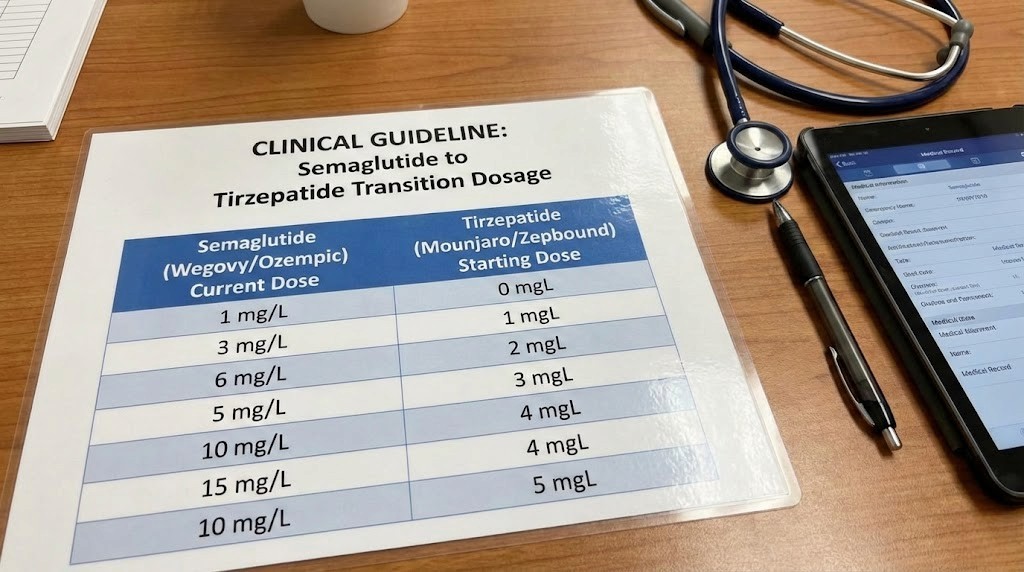
This is the section most people are looking for, and it is important to understand a critical point before examining the numbers. There is no official, FDA-approved dose conversion chart between semaglutide and tirzepatide. The medications work differently enough that a direct milligram-to-milligram conversion does not exist. What we have instead are approximate clinical equivalencies based on trial data, prescribing patterns, and provider experience.
The following chart represents the most commonly referenced dose equivalencies used in clinical practice. Your provider may adjust these based on your individual response, tolerance, and goals.
Semaglutide (Wegovy/Ozempic) to tirzepatide (Zepbound/Mounjaro) approximate equivalencies
Semaglutide dose (weekly) | Approximate tirzepatide equivalent | Recommended starting tirzepatide dose |
|---|---|---|
0.25 mg | 2.5 mg | 2.5 mg |
0.5 mg | 2.5 to 5 mg | 2.5 mg |
1.0 mg | 5 to 7.5 mg | 2.5 to 5 mg |
1.7 mg | 7.5 to 10 mg | 2.5 to 5 mg |
2.0 mg | 7.5 to 10 mg | 2.5 to 5 mg |
2.4 mg | 10 to 15 mg | 2.5 to 5 mg |
Notice something important in that chart. The recommended starting dose for tirzepatide is 2.5 mg regardless of where you were with semaglutide. Even if you were on the maximum 2.4 mg of semaglutide (Wegovy), most providers will start you at 2.5 mg of tirzepatide. Some may start at 5 mg for patients who tolerated semaglutide well, but this is the exception rather than the rule.
This might seem counterintuitive. If 2.4 mg of semaglutide is roughly equivalent to 10 to 15 mg of tirzepatide, why start at the lowest dose? The answer comes back to that dual mechanism. Your body has adapted to GLP-1 activation from semaglutide, but it has never experienced GIP activation. Starting low allows your body to adjust to this entirely new pathway without overwhelming your gastrointestinal system.
Compounded semaglutide to compounded tirzepatide conversion
If you are using compounded semaglutide rather than brand-name products, the conversion follows the same principles but requires additional attention to concentration differences. Compounded semaglutide typically comes in vials at concentrations like 5mg/mL or 10mg/mL, while compounded tirzepatide uses different concentration standards.
Compounded semaglutide dose (weekly) | Approximate compounded tirzepatide equivalent | Starting dose recommendation |
|---|---|---|
0.25 mg | 2.5 mg | 2.5 mg |
0.5 mg | 2.5 to 5 mg | 2.5 mg |
1.0 mg | 5 to 7.5 mg | 2.5 to 5 mg |
1.25 mg | 7.5 mg | 2.5 to 5 mg |
1.5 mg | 7.5 to 10 mg | 2.5 to 5 mg |
2.0 mg | 10 mg | 2.5 to 5 mg |
2.5 mg | 10 to 12.5 mg | 5 mg |
Compounded medications sometimes use dosing increments that differ from brand-name products. Your compounding pharmacy and provider will work together to determine your exact tirzepatide dosage in milliliters based on the vial concentration. Always confirm your specific concentration before calculating injection volumes.
Use our semaglutide dosage calculator and peptide calculator to verify your current dose before starting any transition. Getting the baseline right matters more than most people realize.
The complete week-by-week switching protocol
Timing is everything when transitioning between these medications. Get it wrong and you either experience unnecessary side effects from overlapping medications or lose momentum from too long a gap. The following protocol represents the standard clinical approach used by most weight management providers.
Week 0: Your final semaglutide injection
Take your last semaglutide injection on your regular injection day. Note the date. This date determines everything that follows. Semaglutide has a half-life of approximately one week, which means it remains active in your system for several days after your final injection. You do not need to taper semaglutide before switching. Simply take your last dose at your normal amount and stop.
Days 1 through 7: The washout period
Wait a full seven days from your last semaglutide injection before starting tirzepatide. This washout period serves a specific purpose. It allows semaglutide levels to decrease enough that you are not getting double GLP-1 activation when tirzepatide begins. Taking both medications too close together increases gastrointestinal side effects without providing additional benefit.
During this week, you may notice:
Slight return of appetite around days 4 to 5
Mild hunger increase as semaglutide levels decline
Possible digestive changes as GLP-1 activation decreases
These changes are temporary. Do not panic. They do not mean the medication has fully left your system, and they do not mean you will regain weight in a single week. Maintain your normal eating patterns and stay hydrated.
The transition timing chart
Days since last semaglutide dose | Action |
|---|---|
Day 1 | Wait. Semaglutide still highly active. |
Day 2 | Wait. Semaglutide still active. |
Day 3 | Wait. Levels declining but still significant. |
Day 4 | Wait. May notice slight appetite increase. |
Day 5 | Wait. Levels approaching half of peak. |
Day 6 | Wait. Nearly ready for transition. |
Day 7 | Start tirzepatide at 2.5 mg. |
Some providers will allow patients to start tirzepatide at day 7 on the same day of the week they would have taken their next semaglutide dose. This makes scheduling simple. If your semaglutide injection day was Monday, your first tirzepatide injection would also be Monday, exactly one week later.
Weeks 1 through 4: tirzepatide 2.5 mg
Your first four weeks on tirzepatide serve as an initiation phase. The 2.5 mg dose is deliberately lower than therapeutic levels. It allows your body to adjust to tirzepatide GIP activation while maintaining the GLP-1 stimulation your body is already familiar with from semaglutide.
What to expect during this phase:
Appetite: May feel similar to or slightly less than what you experienced on semaglutide. Some people notice stronger appetite suppression right away because of the GIP component. Others feel less appetite control initially because 2.5 mg provides less GLP-1 activation than their previous semaglutide dose.
Side effects: Nausea is possible but often milder than when you first started semaglutide, since your body is already conditioned to GLP-1 activation. New side effects like burping or sulfur-tasting reflux can occur from GIP activation.
Weight: Do not expect dramatic changes during this phase. Stabilization is success. If you maintain your current weight during the initiation period, you are on track.
Weeks 5 through 8: tirzepatide 5 mg
At week 5, your provider will typically increase your dose to 5 mg. This is where most people start noticing real differences from their semaglutide experience. The 5 mg dose of tirzepatide has been shown in studies to produce weight loss comparable to maximum-dose semaglutide, with the added benefit of GIP receptor activation.
You should notice:
Stronger appetite suppression returning
Food noise decreasing significantly
Possible return of GI side effects for 3 to 5 days after the dose increase
Weight loss resuming if it had stalled
This is the dose where many people who switched from semaglutide start seeing results that exceed what semaglutide ever produced. If 5 mg works well and side effects are manageable, some providers will keep patients at this dose for an additional 4 weeks before increasing.
Weeks 9 through 12: tirzepatide 7.5 mg
The 7.5 mg dose represents a meaningful step up in both efficacy and appetite suppression. For people coming from maximum semaglutide doses, this is typically the first dose that feels noticeably stronger than what they were previously experiencing.
Expected changes:
Significant appetite reduction, often described as forgetting to eat
Accelerated weight loss compared to semaglutide baseline
Potential for constipation as gastric emptying slows further
Increased satiety lasting longer between meals
Weeks 13 through 16: tirzepatide 10 mg
At 10 mg, you are firmly in the therapeutic range that surpasses maximum semaglutide dosing. The SURMOUNT trials demonstrated significant weight loss advantages at this dose level. Most people stabilize here or continue to the next tier depending on their response and tolerance.
Weeks 17 through 20: tirzepatide 12.5 mg
This dose is available for patients who need additional weight loss support and have tolerated lower doses well. Not everyone needs to reach this level. If 10 mg is producing consistent weight loss with manageable side effects, staying at 10 mg is perfectly reasonable.
Weeks 21 and beyond: tirzepatide 15 mg (maximum)
The maximum approved dose of tirzepatide. Reserved for patients who have titrated through all lower doses and still benefit from additional medication. At 15 mg, tirzepatide produces the most dramatic weight loss results seen in any GLP-1 medication trial to date, with some patients losing over 25% of their body weight.
Complete tirzepatide titration schedule after switching
Weeks | Tirzepatide dose | Injection volume (at 10mg/mL) | What to expect |
|---|---|---|---|
1 to 4 | 2.5 mg | 0.25 mL (25 units) | Adjustment phase, mild effects |
5 to 8 | 5 mg | 0.5 mL (50 units) | Noticeable appetite suppression |
9 to 12 | 7.5 mg | 0.75 mL (75 units) | Strong appetite control, accelerated loss |
13 to 16 | 10 mg | 1.0 mL (100 units) | Surpasses semaglutide max effects |
17 to 20 | 12.5 mg | 1.25 mL (125 units) | Enhanced results for responders |
21+ | 15 mg | 1.5 mL (150 units) | Maximum therapeutic dose |
Note that injection volumes will vary based on your specific vial concentration. The volumes above assume a 10mg/mL compounded concentration. Calculate your exact units based on your specific concentration, or use the SeekPeptides peptide calculator to get precise measurements.
Understanding injection volumes and unit conversions
One of the most confusing aspects of switching from semaglutide to tirzepatide involves translating milligram doses into actual injection volumes. This is especially true for compounded medications, where concentrations vary between pharmacies. Getting this conversion wrong means getting your dose wrong, which means either inadequate effects or unnecessary side effects.
Tirzepatide concentration and volume chart
Compounded tirzepatide comes in several concentrations. The most common are 5mg/mL, 10mg/mL, and 20mg/mL. Your pharmacy label will specify the concentration. Here is what each dose looks like across different concentrations:
Tirzepatide dose | Volume at 5mg/mL | Volume at 10mg/mL | Volume at 20mg/mL |
|---|---|---|---|
2.5 mg | 0.5 mL (50 units) | 0.25 mL (25 units) | 0.125 mL (12.5 units) |
5 mg | 1.0 mL (100 units) | 0.5 mL (50 units) | 0.25 mL (25 units) |
7.5 mg | 1.5 mL (150 units) | 0.75 mL (75 units) | 0.375 mL (37.5 units) |
10 mg | 2.0 mL (200 units) | 1.0 mL (100 units) | 0.5 mL (50 units) |
12.5 mg | 2.5 mL (250 units) | 1.25 mL (125 units) | 0.625 mL (62.5 units) |
15 mg | 3.0 mL (300 units) | 1.5 mL (150 units) | 0.75 mL (75 units) |
If you were using semaglutide at a 5mg/mL concentration, your injection volumes for tirzepatide will be different even at supposedly equivalent doses. Always check your vial label. Always confirm with your pharmacy. A miscalculation here is not a minor error.
Converting between insulin syringe units and milliliters
Standard insulin syringes measure in units, where 100 units equals 1 mL. This conversion is universal across all insulin syringes and applies to compounded peptide medications as well. The syringe dosage conversion process works identically for tirzepatide.
Quick reference: if your tirzepatide concentration is 10mg/mL and your target dose is 5 mg, you need 0.5 mL, which is 50 units on an insulin syringe. If you are drawing up 2.5 mg from a 10mg/mL vial, you need 25 units. Simple math, but critical math.
For those who prefer a more intuitive approach, the tirzepatide dosing guide in units breaks this down further with visual syringe diagrams.
What the clinical data actually shows about switching
Anecdotes are helpful. Data is better. Several studies have examined what happens when patients switch from GLP-1 receptor agonists like semaglutide to tirzepatide, and the results are encouraging.
The 12-week switching study
A study published in Endocrine Practice examined patients who switched from GLP-1 receptor agonists to tirzepatide 5 mg. Of 152 participants, the average additional weight loss after switching was 2.1 kg over 12 weeks. That might sound modest until you consider that these patients had already plateaued on their previous medication. Any weight loss after a plateau represents a genuine breakthrough.
The study also found that only 13.2% of participants experienced gastrointestinal side effects after switching, and just 2% discontinued tirzepatide due to adverse events. Those numbers suggest that the transition is well-tolerated for the vast majority of patients.
SURMOUNT-5 head-to-head data
The SURMOUNT-5 trial, published in the New England Journal of Medicine, was the first large-scale head-to-head comparison of tirzepatide and semaglutide. The numbers tell a clear story:
Outcome | Tirzepatide (max dose) | Semaglutide 2.4 mg |
|---|---|---|
Average weight loss at 72 weeks | 20.2% | 13.7% |
Average weight lost (kg) | 22.8 kg | 15.0 kg |
Patients losing 25%+ body weight | 32% | 16% |
Waist circumference reduction | 18.4 cm | 13.0 cm |
GI discontinuation rate | 2.7% | 5.6% |
Two things stand out. First, tirzepatide produced roughly 50% more weight loss than semaglutide. Second, and this surprises most people, the discontinuation rate due to gastrointestinal side effects was actually lower with tirzepatide than with semaglutide. The medication that produces more weight loss also caused fewer people to stop treatment because of side effects. That combination is rare in medicine.
Real-world weight loss data
Clinical trials use carefully selected patients. Real-world data tells you what happens with everyone else. The SHAPE study, analyzing real-world prescribing data, found:
At 3 months: tirzepatide users lost 5.9% of body weight versus 3.6% for semaglutide
At 6 months: 10.1% versus 5.8%
At 12 months: 15.3% versus 8.3%
These are averages from actual patients, not trial participants. The consistency between trial data and real-world outcomes reinforces that tirzepatide superiority holds up outside of controlled research settings. For someone currently on semaglutide for weight loss and considering a switch, these numbers provide a realistic picture of what to expect.
Managing side effects during the transition
Side effects during the switch follow a predictable pattern. Understanding that pattern removes most of the anxiety people feel about transitioning.
The side effect timeline
Here is what most people experience, week by week, after switching from semaglutide to tirzepatide:
Timeframe | Common side effects | Severity | Management |
|---|---|---|---|
Days 1 to 3 | Mild nausea, possible injection site reaction | Mild | Eat small meals, stay hydrated |
Days 4 to 7 | Nausea may increase, decreased appetite returns | Mild to moderate | Bland foods, ginger tea, smaller portions |
Weeks 2 to 3 | GI symptoms stabilizing, possible constipation | Mild | Fiber supplement, adequate water intake |
Week 4 | Most initial side effects resolving | Minimal | Continue hydration |
Week 5 (dose increase) | Brief return of nausea for 2 to 4 days | Mild to moderate | Eat before injection, stay hydrated |
The critical insight: if you tolerated semaglutide well, you will likely tolerate tirzepatide well too. The GLP-1 component of tirzepatide triggers the same types of side effects you already experienced and adapted to with semaglutide. The GIP component adds some new possibilities, like sulfur-tasting burps or different patterns of fatigue, but these are generally milder than the GLP-1 side effects you already know how to manage.
Nausea management strategies
Nausea is the most common complaint during any GLP-1 medication transition. Here are specific strategies that work:
Before your injection: Eat a small, bland meal 30 to 60 minutes before injecting. Having food in your stomach buffers the initial GLP-1 response and reduces nausea intensity. Crackers, toast, or a small portion of rice works well.
Injection timing: Many people find that injecting in the evening, around 7 to 8 PM, minimizes daytime nausea. You sleep through the peak GLP-1 activation and wake up feeling relatively normal. Others prefer morning injections. Experiment during your first few weeks to find your optimal timing.
Hydration protocol: Dehydration makes nausea worse. Aim for 64 to 80 ounces of water daily, sipped throughout the day rather than consumed in large amounts. Adding electrolytes can help, especially if you experience any vomiting or diarrhea.
Dietary adjustments: For the first 3 to 5 days after each dose increase, prioritize bland, easily digestible foods. Avoid high-fat, greasy, or heavily spiced meals. Small, frequent meals of 200 to 300 calories work better than large meals during this adjustment window.
Constipation during the switch
Constipation affects roughly 10 to 15% of people during the semaglutide-to-tirzepatide transition. Both medications slow gastric emptying, and tirzepatide can slow it further. Combined with reduced food intake, this creates conditions for constipation.
Prevention strategies include:
Psyllium husk fiber supplement daily (start with 1 teaspoon, increase to 2 if needed)
Magnesium citrate 200 to 400 mg at bedtime
Minimum 64 ounces of water daily
Maintaining some physical activity, even 20 minutes of walking
Including vegetables and fruits in your reduced-calorie meals
If constipation persists beyond two weeks, contact your provider. Do not reduce your tirzepatide dose on your own to manage constipation. There are better solutions.
Hair loss considerations
Some people experience hair thinning or shedding during rapid weight loss, whether on semaglutide, tirzepatide, or any other weight loss intervention. This condition, called telogen effluvium, is triggered by the weight loss itself, not the specific medication. GLP-1 related hair loss is almost always temporary and resolves once weight stabilizes.
If you experienced hair thinning on semaglutide, switching to tirzepatide will not necessarily make it worse. However, if tirzepatide produces faster weight loss than your body experienced with semaglutide, the temporary shedding could be more noticeable. Protein intake of at least 0.8 to 1.0 grams per pound of target body weight helps minimize this effect.
Brand-name versus compounded medication switching
The switch looks different depending on whether you are using brand-name products (Ozempic, Wegovy, Mounjaro, Zepbound) or compounded versions. Both paths are valid, but they involve different practical considerations.
Ozempic or Wegovy to Mounjaro or Zepbound
Switching between brand-name products is the most straightforward path. Your provider writes a new prescription, you pick it up from the pharmacy, and you follow the standard titration schedule starting at 2.5 mg. The auto-injector pen makes dosing simple since each pen delivers a fixed, pre-measured dose.
Brand-name tirzepatide pens are available in six doses: 2.5 mg, 5 mg, 7.5 mg, 10 mg, 12.5 mg, and 15 mg. Each pen contains four weekly doses. You will get a new pen strength every four weeks as you titrate up.
The primary challenges with brand-name switching are cost and availability. Without insurance coverage, Mounjaro and Zepbound can cost $1,000 or more per month. Insurance authorization for the switch may require documentation that semaglutide is no longer effective, which means your provider needs to note the plateau or inadequate response in your medical records.
Compounded semaglutide to compounded tirzepatide
Compounded medication switching requires more attention to detail because you are managing your own injections from multi-dose vials. You need to understand your vial concentration, calculate correct injection volumes, and practice proper reconstitution techniques if working with lyophilized powder.
Key differences when using compounded tirzepatide:
Concentration matters: Unlike pre-filled pens with fixed doses, compounded vials require you to calculate the correct volume for each dose
Storage requirements: Compounded tirzepatide must be refrigerated and has a limited shelf life once reconstituted
Injection technique: You will use insulin syringes rather than auto-injector pens, which means drawing up the medication yourself
Dose flexibility: Compounded versions allow for smaller dose adjustments (for example, microdosing tirzepatide at increments like 1.25 mg or 3.75 mg) that brand-name pens cannot provide
If your compounded tirzepatide comes as lyophilized powder, you will need to reconstitute it before use. Follow the tirzepatide reconstitution chart carefully, and use bacteriostatic water for reconstitution. The amount of bacteriostatic water you add determines your final concentration, which determines your injection volume for each dose.
Reasons your provider might skip the standard titration
The standard protocol starts everyone at 2.5 mg. But medicine is not one-size-fits-all. Some providers modify the titration schedule based on specific patient factors.
Starting at 5 mg instead of 2.5 mg
Some providers start patients at 5 mg when:
The patient was on maximum-dose semaglutide (2.0 to 2.4 mg) for 6 or more months with good tolerance
The patient experienced no significant GI side effects on semaglutide
Weight loss has been stalled for 8 or more weeks despite medication compliance
The patient has a BMI above 40 and more aggressive weight loss is clinically appropriate
A study examining GLP-1 to tirzepatide transitions found that patients who started at 5 mg had manageable side effects and comparable outcomes to those who started at 2.5 mg, provided they had prior GLP-1 experience. The key qualifier is prior GLP-1 experience. Someone who has never taken a GLP-1 medication should never start tirzepatide at 5 mg.
Faster titration schedules
Instead of increasing every four weeks, some providers use a three-week titration schedule:
Weeks | Dose | Requirement for faster titration |
|---|---|---|
1 to 3 | 2.5 mg | No GI side effects by week 2 |
4 to 6 | 5 mg | Good tolerance, appetite returning |
7 to 9 | 7.5 mg | Weight loss resumed |
10 to 12 | 10 mg | Continued weight loss needed |
Faster titration is only appropriate under direct medical supervision. Do not attempt to accelerate your own titration schedule without provider approval. The four-week intervals exist for safety, and shortening them increases side effect risk.
Slower titration for sensitive patients
If you experienced significant GI side effects on semaglutide, your provider may recommend a slower approach:
Staying at 2.5 mg for 6 to 8 weeks instead of 4
Moving to 3.75 mg (compounded only) before 5 mg
Extending each dose level by 2 weeks based on side effect severity
This conservative approach takes longer to reach therapeutic doses but results in better long-term adherence. A patient who tolerates the medication and stays on it for a year will lose more weight than a patient who escalates quickly and quits at month three because of intolerable side effects.
Common mistakes when switching from semaglutide to tirzepatide
After reviewing thousands of transition protocols, certain mistakes appear repeatedly. Avoid these and your switch will go significantly smoother.
Mistake 1: Trying to match your semaglutide dose equivalence immediately
The most common error. Someone on 2.4 mg semaglutide reads that the equivalent tirzepatide dose is approximately 10 to 15 mg and wants to start there. This approach almost always results in severe nausea, vomiting, and an overall terrible experience that makes the person question whether switching was a good idea at all.
Start low. Always. Your body needs time to adapt to GIP receptor activation regardless of your GLP-1 tolerance.
Mistake 2: No washout period
Taking tirzepatide the day after your last semaglutide injection doubles the GLP-1 activation in your system. Semaglutide has a long half-life and remains active for days. Overlapping the two medications does not produce better results. It produces worse side effects.
Wait the full seven days. No exceptions.
Mistake 3: Expecting immediate results
Because tirzepatide produces better overall results than semaglutide, some people expect dramatic weight loss from day one. The initiation phase at 2.5 mg is below therapeutic levels for most people. Real results begin emerging at 5 mg and become significant at 7.5 to 10 mg. Patience during weeks 1 through 8 pays dividends in weeks 9 through 52.
Mistake 4: Changing diet and exercise simultaneously
Switching medications is a controlled variable. If you simultaneously start a new diet plan, begin a new exercise program, and add supplements, you will not know what is working and what is causing problems. Make the medication switch first. Let your body adjust over the first 4 to 8 weeks. Then optimize your nutrition and activity.
Mistake 5: Not tracking injection volumes accurately
This applies specifically to compounded tirzepatide users. Semaglutide and tirzepatide have different concentrations and different dose-to-volume ratios. Carrying over your semaglutide mental math to tirzepatide without recalculating leads to dosing errors. Check your unit-to-milligram conversions every time you prepare an injection, especially when starting a new vial or adjusting your dose.
Mistake 6: Stopping semaglutide too early
Some people stop semaglutide a week or two before starting tirzepatide, creating an unnecessarily long gap. There is no need to taper off semaglutide. Take your last dose as normal, wait seven days, start tirzepatide. A gap longer than seven days means you lose the benefits of GLP-1 activation entirely, which can lead to appetite rebound and potential weight regain before tirzepatide kicks in.
Special considerations for specific populations
Switching with type 2 diabetes
If you are using semaglutide for both diabetes management and weight loss, the switch to tirzepatide requires extra monitoring. Tirzepatide affects blood sugar through both GLP-1 and GIP pathways, which can produce different glycemic patterns than semaglutide alone.
During the transition:
Monitor blood glucose more frequently for the first 4 to 6 weeks
Expect potential hypoglycemia risk if also taking insulin or sulfonylureas
Your provider may need to adjust other diabetes medications
A1C improvements may be more pronounced with tirzepatide
The SURPASS clinical trials demonstrated that tirzepatide 15 mg reduced A1C by up to 2.58%, compared to semaglutide 1 mg which reduced A1C by 1.86%. If blood sugar management is a priority alongside weight loss, tirzepatide offers advantages on both fronts.
Switching after bariatric surgery
Patients with a history of bariatric surgery face unique considerations when switching between GLP-1 medications. Altered gut anatomy affects absorption rates and can change side effect profiles. If you have had gastric bypass, sleeve gastrectomy, or another bariatric procedure, work closely with your bariatric surgeon and prescribing provider during the transition.
Switching for women of reproductive age
Both semaglutide and tirzepatide can affect contraceptive efficacy by altering oral medication absorption. If you are using oral contraceptives, discuss backup contraceptive methods with your provider during the switching period. Neither medication should be used during pregnancy. If pregnancy is possible, ensure you have a plan to discontinue tirzepatide promptly if needed.
Switching at higher body weights
Patients with a BMI above 40 or body weight above 300 pounds may respond differently to the standard titration protocol. Higher body weight means more tissue distribution for the medication, which can blunt the effects of lower doses. Your provider may recommend:
Shorter time at the 2.5 mg initiation dose (3 weeks instead of 4)
More aggressive titration to reach therapeutic levels sooner
Targeting higher maintenance doses (12.5 to 15 mg) from the outset
Closer monitoring of side effects to balance speed with tolerance
The microdosing alternative for sensitive switchers
Not everyone needs or wants to follow the standard titration. Microdosing tirzepatide has gained attention as an approach for people who are especially sensitive to GLP-1 medications or who want to minimize side effects while still transitioning.
What microdosing looks like
Rather than starting at 2.5 mg, a microdosing approach might begin at 1.0 to 1.5 mg and increase in smaller increments:
Week | Microdose | Standard dose comparison |
|---|---|---|
1 to 2 | 1.0 mg | Standard starts at 2.5 mg |
3 to 4 | 1.5 mg | Still below standard starting dose |
5 to 6 | 2.0 mg | Approaching standard starting dose |
7 to 10 | 2.5 mg | Matches standard week 1 dose |
11 to 14 | 5.0 mg | Matches standard week 5 dose |
This approach requires compounded tirzepatide since brand-name pens do not allow sub-2.5 mg dosing. It takes longer to reach therapeutic levels but can be the difference between someone who tolerates the medication long-term and someone who quits after two miserable weeks.
For a detailed microdosing tirzepatide protocol, including concentration calculations and injection volumes, check our dedicated guide.
How to know if the switch is working
Evaluating the success of your transition requires looking at multiple markers, not just the scale.
Week-by-week progress markers
Weeks 1 to 4 (2.5 mg): Success at this stage means tolerable side effects and appetite control that is at least similar to what you had on semaglutide. Weight stability is a win. Do not judge the medication by this phase.
Weeks 5 to 8 (5 mg): You should notice stronger appetite suppression than semaglutide provided. Weight loss should resume if it had stalled. Food noise should decrease. Energy levels should stabilize or improve.
Weeks 9 to 12 (7.5 mg): This is the assessment window. By week 12, you should see measurable weight loss beyond what semaglutide was producing. Most people lose 2 to 4% of body weight in this period alone. If you are not seeing results by week 12, your provider will reassess the approach.
Weeks 13 to 24 (10 to 15 mg): Full therapeutic benefit. Weight loss should be consistent and exceed your semaglutide trajectory. Appetite suppression at its peak. This is where the SURMOUNT-5 data, showing 20.2% weight loss with tirzepatide versus 13.7% with semaglutide, becomes relevant to your personal experience.
Markers beyond the scale
Weight is not the only metric that matters. Track these alongside your weight to get a complete picture:
Waist circumference: Tirzepatide reduces waist circumference more than semaglutide (18.4 cm versus 13.0 cm in SURMOUNT-5). Measure weekly.
Appetite score: Rate your daily appetite on a 1 to 10 scale. You should see a downward trend after dose increases.
Energy levels: Many people report more stable energy on tirzepatide compared to semaglutide.
Blood sugar (if diabetic): Check fasting glucose and post-meal readings more frequently during the transition.
Sleep quality: Weight loss and metabolic changes can improve sleep. Track it.
Clothing fit: Sometimes the most meaningful progress shows up in how your clothes fit before it shows up on the scale.
When switching might not be the right move
The switch from semaglutide to tirzepatide is not automatically the right decision for everyone. Here are situations where staying on semaglutide, or exploring other options, may be more appropriate.
You have not maximized your semaglutide dose
If you are still on 0.5 or 1.0 mg of semaglutide and feel like it is not working, increasing your semaglutide dose is the first step. Switching to tirzepatide before reaching at least 1.7 to 2.0 mg of semaglutide means you have not given semaglutide a full chance. Stay on semaglutide long enough to reach an adequate dose before switching.
You have been on maximum semaglutide for less than 12 weeks
Maximum-dose semaglutide takes time to show full effects. If you reached 2.4 mg only recently, give it at least 12 weeks before deciding the medication is insufficient. Premature switching means you may abandon a medication that would have worked with more time.
Your plateau is lifestyle-related
No medication, not semaglutide, not tirzepatide, can overcome consistently poor nutrition or extreme sedentary behavior. If your plateau coincides with increased calorie intake, decreased activity, increased stress, or poor sleep, addressing those factors may be more effective than switching medications. Even tirzepatide users hit plateaus when lifestyle factors work against the medication.
Cost is the only factor
Switching to tirzepatide solely because it is cheaper at a particular moment (due to compounding pharmacy pricing or insurance changes) without a clinical reason may not be advisable. The transition period involves weeks of subtherapeutic dosing as you titrate up, during which weight loss may slow or stall. If semaglutide is working and cost is the only issue, explore patient assistance programs or alternative semaglutide suppliers before switching.
Combination strategies and what to add to your switch
Some providers recommend additional support during the semaglutide-to-tirzepatide transition. These are not required, but they can optimize results.
B12 supplementation
Both semaglutide and tirzepatide can reduce B12 absorption due to decreased gastric acid production and slowed gastric emptying. Some compounded formulations include B12 directly in the injection. If yours does not, supplementing with 1000 mcg of sublingual B12 daily is a reasonable precaution. Tirzepatide with B12 is available from some compounding pharmacies as a combination product, and semaglutide with B12 functions similarly.
Protein intake optimization
Both medications reduce overall calorie intake significantly. Protecting lean muscle mass during weight loss requires adequate protein. Aim for 0.8 to 1.2 grams of protein per pound of target body weight daily. This becomes especially important during the transition period when your body is adapting to a new medication while continuing to lose weight.
Niacinamide combination
Tirzepatide with niacinamide is an emerging combination offered by some compounding pharmacies. Niacinamide (vitamin B3) may provide additional metabolic support, though the evidence base for this specific combination is still developing.
Exercise during the transition
Maintain your current exercise routine during the switch. Do not introduce intense new training programs during weeks 1 through 4 when your body is adjusting to tirzepatide. After week 4, gradually increase intensity if desired. Resistance training is particularly important during GLP-1 medication use to preserve lean muscle mass as weight decreases. Muscle preservation strategies become more important as weight loss accelerates on tirzepatide.
Storage and handling differences between the medications
If you are transitioning from compounded semaglutide to compounded tirzepatide, storage requirements differ slightly and are worth reviewing.
Tirzepatide storage requirements
Tirzepatide must be refrigerated at 36 to 46 degrees Fahrenheit (2 to 8 degrees Celsius). Once reconstituted, compounded tirzepatide typically lasts 28 to 30 days in the refrigerator. Shelf life varies by pharmacy and formulation, so check your specific product labeling.
Key storage differences from semaglutide:
Room temperature tolerance is limited. Tirzepatide left out of the refrigerator for extended periods loses potency.
Compounded semaglutide has similar refrigeration requirements but may have a longer room-temperature stability window depending on the formulation.
Both medications should be protected from light and never frozen.
Handling your transition supply
When you switch, you may have leftover semaglutide. Do not discard it immediately. Keep it refrigerated until you are confident the tirzepatide transition is going well (usually 4 to 8 weeks). In rare cases where patients cannot tolerate tirzepatide, having semaglutide available allows a quick return to the previous medication without waiting for a new prescription.
Do not use expired semaglutide if you decide to switch back. Check expiration dates on your remaining supply.
Frequently asked questions
Can I take semaglutide and tirzepatide at the same time?
No. You should never use semaglutide and tirzepatide simultaneously. Both activate GLP-1 receptors, and combining them increases side effect risk, particularly nausea and vomiting, without providing additional benefit. Wait at least 7 days after your last semaglutide dose before starting tirzepatide. Semaglutide and tirzepatide are meant to be used as alternatives, not together.
How long until I see results after switching to tirzepatide?
Most people notice appetite changes within 1 to 2 weeks of starting tirzepatide. Meaningful weight loss typically begins at the 5 mg dose (weeks 5 to 8) and becomes significant at 7.5 to 10 mg. By week 12, you should have a clear picture of whether the switch is working. Tirzepatide onset varies by individual, but the dual mechanism often produces noticeable effects slightly faster than semaglutide did initially.
Will I gain weight during the washout period?
A seven-day gap between medications is unlikely to cause meaningful weight gain. Semaglutide remains partially active during the first few days of the washout period. You may experience a slight increase in appetite around days 4 to 5, but this is temporary. Maintaining your normal eating habits during the washout week prevents any significant weight change.
What if tirzepatide does not work as well as semaglutide for me?
While tirzepatide produces better average results than semaglutide across clinical trials, individual responses vary. Some people respond better to pure GLP-1 activation than to dual GLP-1/GIP activation. If tirzepatide is not working after 12 to 16 weeks at adequate doses (7.5 to 10 mg or higher), discuss returning to semaglutide with your provider. Switching back to semaglutide follows a similar protocol in reverse.
Do I need a new prescription to switch?
Yes. Semaglutide and tirzepatide are different medications with separate prescriptions. Your provider needs to write a new prescription for tirzepatide and may need to provide clinical justification if your insurance requires prior authorization. Start this process before your semaglutide supply runs out to avoid an unintended gap in treatment.
Can I switch from oral semaglutide to injectable tirzepatide?
Yes, though the transition from oral to injectable requires additional consideration. Oral and injectable tirzepatide formulations have different bioavailability profiles. Your provider will determine the appropriate starting dose based on your current oral semaglutide dose and how well you have tolerated it.
Is compounded tirzepatide as effective as brand-name?
Compounded tirzepatide contains the same active ingredient as brand-name Mounjaro and Zepbound but is not FDA-approved. Quality depends on the compounding pharmacy. Look for pharmacies that are 503B-registered and provide third-party testing certificates. Compounded tirzepatide dosing follows the same escalation schedule as brand-name products.
What happens if I miss a dose during the transition?
If you miss a dose and fewer than 4 days (96 hours) have passed since your scheduled injection, take it as soon as you remember. If more than 4 days have passed, skip that dose and resume your regular schedule the following week. Do not double up doses to compensate for a missed injection.
Should I adjust my diet when switching medications?
Maintain your current diet during the first 4 weeks of tirzepatide. Once you have adjusted to the new medication, you can optimize your nutrition. The most important dietary factor is protein intake. Weight loss peptide protocols work best when combined with adequate protein to preserve lean muscle mass.
How does the cost compare between semaglutide and tirzepatide?
Brand-name costs are similar, with both Wegovy/Ozempic and Mounjaro/Zepbound running $800 to $1,300 per month without insurance. Compounded versions vary widely by pharmacy, typically ranging from $100 to $500 per month. Affordable compounded tirzepatide options exist but require research to find reputable pharmacies.
Building your complete switching timeline
Here is the full timeline from decision to results, consolidated into one reference:
Phase | Timeframe | Action |
|---|---|---|
Pre-switch | 2 to 4 weeks before | Get tirzepatide prescription, secure supply, confirm insurance |
Final semaglutide dose | Day 0 | Take last semaglutide injection at normal dose |
Washout | Days 1 to 7 | No GLP-1 medication, maintain diet and activity |
Tirzepatide initiation | Day 7 (Week 1) | Start tirzepatide 2.5 mg |
First titration | Week 5 | Increase to 5 mg if tolerated |
Second titration | Week 9 | Increase to 7.5 mg |
Assessment point | Week 12 | Evaluate results, decide on further titration |
Optimization | Weeks 13 to 24 | Continue titrating to 10, 12.5, or 15 mg as needed |
Maintenance | Week 24+ | Stable dose, ongoing monitoring |
From your last semaglutide injection to reaching a therapeutic tirzepatide dose (7.5 to 10 mg) typically takes 9 to 13 weeks. This is the timeline to plan around. Real, measurable results that surpass your semaglutide experience should be apparent within this window.
For researchers serious about optimizing their weight management protocols, SeekPeptides offers the most comprehensive resource available, with evidence-based guides, proven protocols, detailed tirzepatide dosing guides, and a community of thousands who have navigated these exact questions. Whether you are calculating unit-to-milligram conversions, reviewing side-by-side dosage comparisons, or exploring dose conversion details, every resource is built on current clinical data and real-world outcomes.
SeekPeptides members access personalized protocol builders, weight-based calculators, expert-reviewed transition guides, and direct support from experienced researchers who have guided thousands of successful medication switches.
External resources
New England Journal of Medicine: Tirzepatide Once Weekly for Treatment of Obesity
PubMed Central: Efficacy of Tirzepatide vs Semaglutide in Type 2 Diabetes
Endocrine Practice: Switching to Tirzepatide From GLP-1 Receptor Agonists
In case I do not see you, good afternoon, good evening, and good night. May your transitions stay smooth, your doses stay accurate, and your results stay consistent.