Feb 10, 2026
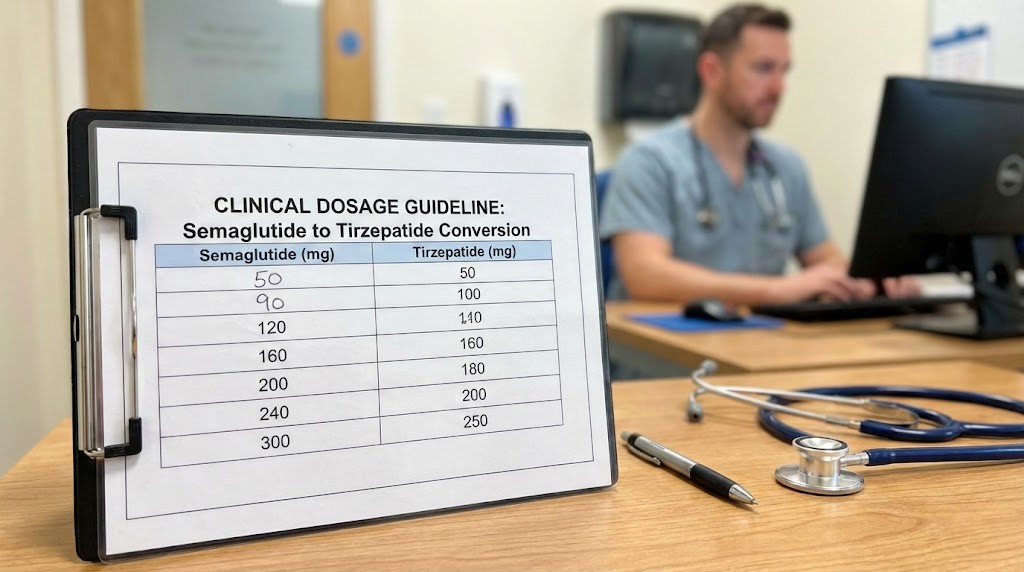
You have been on semaglutide for months. The weight came off at first. Then it slowed. Then it stopped. You are staring at the same number on the scale week after week, wondering if this is all the medication can do. It is not. Thousands of researchers and patients have made the switch from semaglutide to tirzepatide and broken through plateaus that seemed permanent, but the transition is not as simple as swapping one injection for another. The dose conversion between these two medications trips up even experienced clinicians, because there is no official milligram-to-milligram formula published by the FDA or any major medical society.
That gap in guidance creates real confusion. Too high a starting dose of tirzepatide and the gastrointestinal side effects become unbearable. Too low and you lose momentum, potentially regaining weight during the transition period. The conversion requires understanding how semaglutide and tirzepatide differ at the receptor level, how their dosage schedules compare, and what clinical trial data actually tells us about equivalent doses. This guide provides the complete conversion chart, the science behind the numbers, week-by-week transition protocols, and troubleshooting strategies for every side effect you might encounter along the way. Whether you are switching because of a weight loss plateau on semaglutide, insurance changes, or simply seeking better results, every dose conversion scenario is covered here.
Why switch from semaglutide to tirzepatide
The question comes up constantly in clinics, forums, and research communities. Why leave a medication that works?
Sometimes it stops working. The body adapts to GLP-1 receptor agonists over time, and the appetite suppression that felt dramatic at week four becomes barely noticeable by month eight. This is not failure. It is pharmacological tolerance, and it happens to a significant percentage of semaglutide users. Switching to tirzepatide introduces a second receptor pathway, the glucose-dependent insulinotropic polypeptide (GIP) receptor, that can restart weight loss through mechanisms semaglutide simply cannot access.
The clinical data tells the story clearly. In the SURPASS-2 trial published in the New England Journal of Medicine, tirzepatide at 15mg produced 12.4 kg of weight loss over 40 weeks, nearly double the reduction seen with semaglutide at 1mg. The SURMOUNT-5 trial showed an even starker contrast in patients with obesity but without diabetes: 20.2% body weight reduction with tirzepatide versus 13.7% with semaglutide over 72 weeks. That is not a marginal improvement. That is a fundamentally different level of effectiveness.
But clinical superiority is only one reason people switch. Some patients experience semaglutide side effects that never fully resolve, particularly persistent nausea or gastrointestinal distress that limits dose escalation. Others hit the maximum dose of 2.4mg semaglutide and still need more weight loss. Tirzepatide offers a higher ceiling, with doses up to 15mg providing continued benefit where semaglutide has nothing left to give.
Insurance and availability also drive switches. The landscape of peptide and medication regulations shifts constantly. Compounded semaglutide availability fluctuates, and some patients find themselves needing to transition for purely practical reasons. Whatever the motivation, the conversion process follows the same principles.
How semaglutide and tirzepatide work differently
Understanding the conversion chart requires understanding why these medications are not interchangeable at a milligram level. They target different receptor profiles, and that changes everything about how doses translate.
Semaglutide: single receptor agonist
Semaglutide is a GLP-1 receptor agonist. It mimics the glucagon-like peptide-1 hormone that your body produces naturally after eating. When GLP-1 receptors activate, several things happen simultaneously. Insulin secretion increases in response to glucose. Glucagon production decreases. Gastric emptying slows dramatically, which is why you feel full longer after eating. And appetite signals in the brain get suppressed through hypothalamic pathways.
The medication has a half-life of approximately 7 days, which enables weekly dosing. It reaches steady state after about 4 to 5 weeks of consistent administration. Once you stop taking semaglutide, it takes roughly 5 weeks for the drug to clear from your system, because elimination requires approximately five half-lives. This long clearance time matters enormously for dose conversion timing.
Semaglutide comes in several branded formulations. Ozempic provides doses of 0.25mg, 0.5mg, 1mg, and 2mg for type 2 diabetes management. Wegovy offers the same compound at doses up to 2.4mg for weight management. Compounded semaglutide formulations provide more flexible dosing but follow the same pharmacological principles. The semaglutide dosage calculator can help determine precise doses for any concentration.
Tirzepatide: dual receptor agonist
Tirzepatide does everything semaglutide does at the GLP-1 receptor, plus it activates GIP receptors. This dual agonism is not just additive. Research published in the Journal of Clinical Investigation found that the co-activation of GIP and GLP-1 receptors produces synergistic effects on insulin secretion and glucagon regulation that exceed what either hormone achieves alone.
Here is what makes the conversion tricky. Tirzepatide is what researchers call an "imbalanced and biased" dual agonist. It has relatively higher activity at the GIP receptor than the GLP-1 receptor. This means tirzepatide requires lower GLP-1 receptor engagement than semaglutide to deliver equivalent glucose control and weight loss. The GIP component essentially amplifies the GLP-1 effect, making each milligram of tirzepatide more potent per unit of GLP-1 activity than semaglutide.
Tirzepatide also improves insulin sensitivity and insulin secretory responses to a greater extent than semaglutide, associated with lower prandial insulin and glucagon concentrations. For patients who have hit a plateau, this additional mechanism can be the difference between stalled progress and resumed weight loss. The tirzepatide dose chart covers the full range of available doses from 2.5mg through 15mg.
Branded tirzepatide includes Mounjaro for type 2 diabetes and Zepbound for weight management. Compounded tirzepatide formulations also exist and follow the same dosing principles, though concentrations vary by pharmacy.
The complete semaglutide to tirzepatide dose conversion chart
No universally accepted formula exists for converting semaglutide doses to tirzepatide. The FDA has not published official conversion tables, and major medical societies have not issued standardized guidelines. What we have are approximate equivalencies derived from clinical trial data, pharmacological analysis, and clinical experience from thousands of successful transitions.
These are guidelines, not exact conversions. Individual response varies based on metabolic factors, body composition, gastrointestinal tolerance, kidney function, and how long you have been on semaglutide.
Ozempic (semaglutide) to Mounjaro (tirzepatide) conversion
Ozempic dose (semaglutide) | Suggested Mounjaro starting dose (tirzepatide) | Equivalent maintenance range | Notes |
|---|---|---|---|
0.25mg | 2.5mg | 2.5mg | Both are starting/titration doses |
0.5mg | 2.5mg | 2.5mg to 5mg | Start at 2.5mg, titrate to 5mg after 4 weeks |
1mg | 5mg | 5mg to 7.5mg | Can start at 5mg if tolerating GLP-1 well |
2mg | 7.5mg | 7.5mg to 10mg | Higher starting dose appropriate for adapted patients |
Wegovy (semaglutide) to Zepbound (tirzepatide) conversion
Wegovy dose (semaglutide) | Suggested Zepbound starting dose (tirzepatide) | Equivalent maintenance range | Notes |
|---|---|---|---|
0.25mg | 2.5mg | 2.5mg | Titration phase equivalent |
0.5mg | 2.5mg | 2.5mg to 5mg | Most patients start at 2.5mg |
1mg | 5mg | 5mg to 7.5mg | Clinicians may approve 5mg start |
1.7mg | 5mg | 5mg to 10mg | Start conservatively, titrate based on response |
2.4mg | 7.5mg to 10mg | 7.5mg to 15mg | Some providers start at 5mg regardless |
Compounded semaglutide to compounded tirzepatide conversion
Compounded formulations add another layer of complexity because concentrations vary between pharmacies. A semaglutide 5mg/ml formulation requires different unit calculations than a 2.5mg/ml formulation. Similarly, compounded tirzepatide concentrations range from 5mg/ml to 60mg/ml depending on the pharmacy.
The conversion principles remain the same regardless of concentration. What changes is the volume you inject. Use the peptide calculator to convert between milligrams and units for your specific vial concentration. The semaglutide syringe dosage conversion chart and tirzepatide dosage chart in ml provide detailed volume calculations for different concentrations.
Compounded semaglutide dose | Suggested compounded tirzepatide start | Target maintenance range |
|---|---|---|
0.25mg to 0.5mg weekly | 2.5mg weekly | 2.5mg to 5mg |
0.5mg to 1mg weekly | 2.5mg to 5mg weekly | 5mg to 7.5mg |
1mg to 1.5mg weekly | 5mg weekly | 5mg to 10mg |
1.5mg to 2mg weekly | 5mg to 7.5mg weekly | 7.5mg to 12.5mg |
2mg to 2.4mg weekly | 7.5mg to 10mg weekly | 10mg to 15mg |
The conservative approach versus the aggressive approach
Two schools of thought dominate the conversion discussion.
The conservative approach says start every patient at 2.5mg tirzepatide regardless of their semaglutide dose. The logic is sound. Tirzepatide activates GIP receptors that semaglutide never touched. Your body has zero tolerance to GIP agonism. Starting low lets the GIP pathway activate gradually while your GLP-1 tolerance from semaglutide provides a foundation.
The aggressive approach says patients already adapted to high-dose semaglutide can safely start tirzepatide at 5mg or even 7.5mg. Clinical experience supports this for many patients, particularly those who tolerated maximum semaglutide doses without significant gastrointestinal side effects. Studies have shown that 5mg tirzepatide is safe and well-tolerated by people switching from semaglutide.
Neither approach is wrong. The right choice depends on your individual tolerance, how long you have been on semaglutide, and whether gastrointestinal side effects were ever an issue. When in doubt, start lower. You can always titrate up. You cannot untake a dose that made you sick.
Week-by-week switching protocols
The conversion chart tells you where to start. These protocols tell you exactly how to get there, week by week, with monitoring checkpoints at every stage.
Protocol 1: conservative switch (recommended for most patients)
This protocol is appropriate for patients currently on any dose of semaglutide who want to minimize side effects during the transition. It is the safest approach and the one most clinicians recommend.
Week 0: Take your final dose of semaglutide. Note the date and time. Begin preparing for the switch by reviewing your current semaglutide treatment history and documenting your baseline weight, blood glucose if applicable, and current side effect profile.
Week 1: No injection. This is the washout period. Semaglutide remains active in your system with a 7-day half-life, so you are not going without medication. Your appetite suppression will continue, though it may decrease slightly toward the end of the week. Continue monitoring weight and food intake.
Week 2: First tirzepatide injection at 2.5mg. Administer on the same day of the week you previously used for semaglutide to maintain a consistent schedule. Inject subcutaneously in the abdomen, thigh, or upper arm. Expect some overlap of effects since semaglutide has not fully cleared.
Weeks 3 to 5: Continue tirzepatide 2.5mg weekly. Monitor for gastrointestinal side effects. Most patients experience milder side effects than they did when first starting semaglutide, because GLP-1 receptor tolerance carries over. The new GIP activation may cause some initial digestive adjustment, but it is typically manageable.
Week 6: Increase to tirzepatide 5mg if tolerated well. This is the first real therapeutic dose for most patients switching from semaglutide. Track weight changes carefully. Many patients notice renewed weight loss within the first two weeks at 5mg.
Weeks 7 to 9: Continue tirzepatide 5mg weekly. Assess whether appetite suppression, weight loss, and blood glucose control (if relevant) are adequate. If results are satisfactory, you may stay at this dose long-term.
Week 10: Increase to 7.5mg if needed. Patients who were on 1.7mg or 2.4mg semaglutide often need this step to achieve equivalent or better results. The tirzepatide response timeline varies, but most patients see clear results by this point.
Week 14 and beyond: Continue titrating every 4 weeks as needed. The maximum dose of tirzepatide is 15mg weekly. Doses above 10mg are reserved for patients who need additional weight loss or glycemic control beyond what lower doses provide.
Protocol 2: accelerated switch (for patients on high-dose semaglutide)
This protocol is appropriate for patients on 1.7mg or 2.4mg semaglutide (Wegovy) or 2mg semaglutide (Ozempic) who tolerated those doses without significant gastrointestinal issues. Discuss this approach with your healthcare provider before starting.
Week 0: Final semaglutide dose.
Week 1: First tirzepatide injection at 5mg. Because your GLP-1 receptors are already adapted to high-dose agonism, skipping the 2.5mg titration step is often well tolerated. Monitor closely for nausea, which typically peaks 24 to 48 hours after injection.
Weeks 2 to 4: Continue tirzepatide 5mg weekly. Assess GI tolerance and weight trajectory.
Week 5: Increase to 7.5mg if tolerated and additional effect is desired.
Week 9: Increase to 10mg if needed. Many patients who were on maximum semaglutide find their optimal tirzepatide dose in the 10mg to 12.5mg range.
Week 13: Consider 12.5mg if weight loss has not resumed or blood glucose targets are not met.
Week 17: Maximum dose of 15mg if clinically appropriate. Not every patient needs this, but it is available for those who do.
Protocol 3: direct switch (minimal washout)
Some clinicians allow patients to start tirzepatide as soon as their next semaglutide dose would have been due, with no washout period. This approach works because the medications operate on overlapping but distinct receptor pathways. The risk is higher initial side effects from overlapping GLP-1 activity.
Day 1: Instead of your scheduled semaglutide dose, take tirzepatide 2.5mg (or 5mg if on high-dose semaglutide and provider approves).
Day 2 to 7: Monitor for heightened GI effects. The overlap of residual semaglutide and new tirzepatide may amplify nausea, though this typically resolves within the first week.
Week 2 onward: Follow standard tirzepatide titration schedule. The overlap diminishes naturally as semaglutide clears over the following 4 to 5 weeks.
Understanding the titration schedule
Tirzepatide uses a structured titration schedule that differs significantly from semaglutide. Understanding these differences is essential for a smooth conversion.
Semaglutide titration (for reference)
The standard semaglutide titration for weight management follows this pattern:
Weeks 1 to 4: 0.25mg weekly
Weeks 5 to 8: 0.5mg weekly
Weeks 9 to 12: 1mg weekly
Weeks 13 to 16: 1.7mg weekly
Week 17 onward: 2.4mg weekly (maintenance)
The semaglutide results timeline shows that most patients see meaningful weight loss during the titration phase itself, with effects becoming most pronounced at maintenance doses. The full titration from starting dose to maximum takes approximately 16 to 20 weeks.
Tirzepatide titration schedule
Tirzepatide titrates in larger steps:
Weeks 1 to 4: 2.5mg weekly
Weeks 5 to 8: 5mg weekly
Weeks 9 to 12: 7.5mg weekly
Weeks 13 to 16: 10mg weekly
Weeks 17 to 20: 12.5mg weekly
Week 21 onward: 15mg weekly (maximum)
Each 4-week step allows your body to adjust before the next increase. The tirzepatide dosage in units varies by concentration. For compounded formulations, the 2.5mg unit conversion and 5mg unit conversion guides provide exact calculations.
Why switching patients do not always start at the bottom
When you start semaglutide from scratch, you have zero GLP-1 receptor tolerance. Every dose hits receptors that have never seen a synthetic agonist. That is why the starting dose is tiny (0.25mg) and the titration is slow.
When you switch from semaglutide to tirzepatide, your GLP-1 receptors are already adapted. They have been stimulated weekly for months. This tolerance means your body can handle more GLP-1 activity from day one. What your body has not experienced is GIP receptor activation, which is why even aggressive switching protocols respect the need for some titration period.
The tirzepatide weight loss dosing guide covers optimal dose ranges for different body weights and goals. Most patients who switch from high-dose semaglutide find their ideal tirzepatide dose between 7.5mg and 12.5mg, though individual variation is significant.
Timing the switch: washout periods and overlap
One of the most common questions about conversion is exactly when to stop one medication and start the other. The answer depends on your specific situation, but the pharmacokinetics provide clear guidance.
Semaglutide clearance timeline
Semaglutide has a half-life of approximately 165 hours (roughly 7 days). After your last injection:
Day 7: 50% of the dose remains active
Day 14: 25% remains
Day 21: 12.5% remains
Day 28: 6.25% remains
Day 35: Less than 3% remains (essentially cleared)
This means when you take your first tirzepatide dose one week after your last semaglutide dose, approximately half of the semaglutide is still circulating. This is not necessarily a problem. The overlap provides continued GLP-1 coverage during the transition, preventing a gap in appetite suppression and blood glucose control.
Recommended timing options
Option 1: One-week gap (most common). Take your last semaglutide dose, wait 7 days, then take your first tirzepatide dose on what would have been your next semaglutide injection day. This maintains your weekly injection schedule without interruption. Most clinicians prefer this approach because it minimizes the risk of a therapeutic gap while limiting overlap effects.
Option 2: Two-week gap (most conservative). Wait 14 days after your last semaglutide dose. By this point, only 25% of semaglutide remains. This reduces the risk of amplified side effects from overlapping medications but may allow some return of appetite and weight gain during the gap. This approach is recommended for patients who had significant GI side effects on semaglutide.
Option 3: Same-day switch (most aggressive). Replace your semaglutide dose with tirzepatide on your regular injection day with no gap. Full semaglutide levels overlap with the new tirzepatide dose. This works for some patients but carries the highest risk of GI side effects in the first week.
The reverse switch guide covers the same timing principles for patients going in the opposite direction. And for anyone concerned about how quickly tirzepatide suppresses appetite, most patients notice effects within the first week.
Side effects during the transition
Switching medications always carries some risk of side effects. The good news is that most patients switching from semaglutide to tirzepatide report fewer and milder side effects than they experienced when first starting semaglutide. The GLP-1 receptor tolerance you built on semaglutide protects you during the transition.
Common side effects and management
Nausea. The most frequently reported side effect during any GLP-1 medication change. When switching from semaglutide to tirzepatide, nausea tends to be milder because your receptors are already accustomed to GLP-1 stimulation. The GIP component may actually buffer some of the nausea, as GIP receptor activation has been associated with reduced GI distress in some preclinical models. If nausea occurs, eat smaller meals, avoid fatty or greasy foods, stay hydrated, and consider ginger or peppermint. It typically resolves within the first 1 to 2 weeks at each new dose level.
Diarrhea. Less common than nausea but can occur during the first 2 to 4 weeks of tirzepatide. The dual receptor mechanism changes gut motility patterns, and your digestive system needs time to adjust. Stay hydrated, maintain electrolyte intake, and reduce high-fiber foods temporarily if symptoms are significant.
Constipation. Paradoxically, some patients experience constipation rather than diarrhea, particularly at higher tirzepatide doses. This happens because GLP-1 agonists slow gastric emptying. Increase water intake, add fiber gradually, and consider a stool softener if needed.
Decreased appetite beyond expectations. Tirzepatide suppresses appetite more aggressively than semaglutide in most patients. This can lead to eating too little, particularly in the first few weeks after switching. Monitor caloric intake and ensure you are consuming adequate protein (0.7 to 1 gram per pound of body weight) to prevent muscle loss. Peptide protocols that support both weight loss and muscle preservation can complement the transition.
Injection site reactions. Mild redness, itching, or swelling at the injection site occurs in roughly 3 to 5% of tirzepatide users. Rotate injection sites between abdomen, thigh, and upper arm. The peptide injection guide covers proper technique to minimize reactions.
Fatigue. Some patients report temporary fatigue during the first 1 to 2 weeks of a new dose. This may relate to caloric deficit, blood sugar changes, or the body adjusting to dual receptor activation. Tirzepatide and fatigue is a well-documented but typically transient side effect. Ensure adequate sleep, hydration, and nutrition.
Hair loss. Rapid weight loss from any cause, including GLP-1 medications, can trigger telogen effluvium. This is not unique to tirzepatide, but the increased weight loss efficacy means it occurs more frequently. GLP-1 hair loss typically resolves 6 to 12 months after weight stabilizes. Adequate protein intake and biotin supplementation may help.
Side effects comparison chart
Side effect | Frequency on semaglutide | Frequency on tirzepatide | During switch |
|---|---|---|---|
Nausea | 20-44% | 12-33% | Usually milder |
Diarrhea | 8-30% | 12-21% | Similar |
Vomiting | 6-24% | 5-12% | Usually milder |
Constipation | 10-24% | 6-12% | May increase |
Injection site reaction | 1-3% | 3-5% | Slightly higher |
Fatigue | 5-11% | 3-9% | Temporary increase |
When to contact your healthcare provider
Most side effects are manageable at home. But some warrant medical attention. Contact your provider if you experience severe or persistent vomiting lasting more than 48 hours, signs of pancreatitis (severe abdominal pain radiating to the back), signs of allergic reaction (difficulty breathing, swelling of face or throat), severe hypoglycemia if you are on diabetes medications, or gallbladder symptoms (sudden intense pain in the right upper abdomen). These are rare but serious, and prompt medical evaluation is essential.
Weight loss expectations after switching
What actually happens to your weight when you make the switch? The answer depends on where you are in your semaglutide journey and which tirzepatide dose you titrate to.
The transition dip
Many patients experience a brief plateau or even slight weight regain during the first 2 to 4 weeks of switching. This is normal and expected. You are starting tirzepatide at a lower equivalent dose than your semaglutide dose, and the medication needs time to reach full effectiveness. The re-titration process means you are temporarily on a less potent regimen.
Do not panic. Do not abandon the transition. This temporary pause is the cost of introducing a more powerful medication safely. Patients who push through the transition period almost universally see resumed and often accelerated weight loss once they reach their target tirzepatide dose.
What the clinical data shows
The SURPASS-2 trial demonstrated that tirzepatide at all three doses (5mg, 10mg, 15mg) produced greater weight loss than semaglutide 1mg. The treatment differences were:
Tirzepatide 5mg: 1.9 kg more weight loss than semaglutide 1mg
Tirzepatide 10mg: 3.6 kg more weight loss than semaglutide 1mg
Tirzepatide 15mg: 5.5 kg more weight loss than semaglutide 1mg
The lowest dose of tirzepatide (5mg) achieved similar or better weight reduction compared to the highest studied dose of semaglutide (1mg in SURPASS-2). Higher tirzepatide doses showed statistically significant additional benefits.
Real-world data confirms these findings. A study of over 18,000 patients found those taking tirzepatide lost approximately 15.3% of their body weight in one year compared to 8.3% with semaglutide. That is nearly double the percentage of weight loss.
Expected weight loss by tirzepatide dose
Tirzepatide dose | Average weight loss (clinical trials) | Real-world range | Timeline to peak effect |
|---|---|---|---|
2.5mg | 3-5% body weight | 2-6% | 4 weeks |
5mg | 5-8% body weight | 4-10% | 8 weeks |
7.5mg | 8-12% body weight | 6-14% | 12 weeks |
10mg | 12-16% body weight | 10-18% | 16 weeks |
12.5mg | 15-19% body weight | 12-22% | 20 weeks |
15mg | 17-22% body weight | 15-25% | 24+ weeks |
For patients who have already lost weight on semaglutide, additional losses after switching depend on how much semaglutide had already accomplished. Someone who lost 10% on maximum semaglutide might lose an additional 5 to 12% on tirzepatide. The tirzepatide before and after results show a wide range of outcomes depending on starting point, dose, diet, and exercise.
Factors that influence weight loss after switching
Not everyone gets the same results. Several factors determine how much additional weight you will lose on tirzepatide.
Previous semaglutide dose. Patients switching from low-dose semaglutide (0.25 to 0.5mg) tend to see the most dramatic improvements after conversion. They were getting modest GLP-1 stimulation, and tirzepatide provides both stronger GLP-1 effects and entirely new GIP effects. Patients on maximum semaglutide (2.4mg) still benefit but the incremental improvement is smaller because they were already receiving substantial GLP-1 activity.
Duration on semaglutide. Longer semaglutide use may be associated with greater GLP-1 receptor tolerance. Switching to tirzepatide can effectively reset some of this tolerance through the additional GIP pathway, but patients on semaglutide for over a year sometimes respond more slowly initially.
Diet and exercise. Medication is not magic. Patients who maintain a caloric deficit, consume adequate protein, and exercise regularly see significantly better results. The peptide approach to belly fat and fat loss peptide strategies emphasize that medication works best as part of a comprehensive protocol.
Body composition. Patients with more weight to lose typically see larger percentage losses. Male patients switching to tirzepatide sometimes respond differently than female patients due to differences in fat distribution and metabolic rate. Female-specific weight loss protocols account for these differences.
Genetics and metabolic factors. Response to GLP-1 and GIP agonists varies genetically. Some patients are robust responders to GIP, making tirzepatide dramatically more effective for them. Others have a muted GIP response and see more modest improvements over semaglutide alone.
Handling the financial side of switching
Dose conversion is a medical question. But the switch often has financial implications too.
Branded Mounjaro (tirzepatide) and Zepbound (tirzepatide) carry different insurance coverage than Ozempic and Wegovy. Some insurance plans cover one but not the other. Prior authorizations, step therapy requirements, and copay amounts vary dramatically.
Compounded formulations offer more flexibility. Compounded tirzepatide pricing is generally lower than branded options, but availability fluctuates. The peptide cost calculator can help estimate monthly expenses for different dose levels and sources.
Some patients find that switching from branded semaglutide to compounded tirzepatide, or vice versa, provides cost savings. The Lavender Sky pharmacy guide and other pharmacy reviews provide real-world pricing data. Always verify that compounded medications come from licensed pharmacies following proper manufacturing standards.
Special considerations for patients with type 2 diabetes
The conversion chart applies to both weight management and diabetes patients, but those with type 2 diabetes need additional monitoring during the transition.
Blood glucose management during the switch
Both semaglutide and tirzepatide lower blood glucose through insulin secretion enhancement and glucagon suppression. During the transition, glucose control may temporarily fluctuate as medication levels overlap and then stabilize.
Week 1 (washout period): Blood glucose may begin rising slightly as semaglutide levels decline. Monitor more frequently than usual, at least twice daily for the first week.
Weeks 2 to 4 (initial tirzepatide): Blood glucose should begin responding to tirzepatide. The dual GIP/GLP-1 mechanism may produce tighter glucose control than semaglutide did at equivalent doses. Watch for hypoglycemia, especially if you are also on sulfonylureas or insulin.
Weeks 5 to 8 (dose escalation): Each dose increase may further lower blood glucose. The SURPASS trials showed tirzepatide achieved superior A1C reductions at all doses, with up to 2.4% decreases from baseline. This means your glucose-lowering medications may need adjustment.
If you take insulin or sulfonylureas alongside your GLP-1 medication, work closely with your provider. Tirzepatide may improve insulin sensitivity enough to require dose reductions in other diabetes medications.
A1C improvements after switching
Clinical data consistently shows tirzepatide produces greater A1C reductions than semaglutide. In the SURPASS-2 trial, 32% of patients on tirzepatide 5mg, 51% on 10mg, and 60% on 15mg achieved the composite endpoint of A1C at or below 6.5% with weight loss of 10% or more, compared to 22% on semaglutide 1mg.
For patients switching specifically because their A1C is not adequately controlled on semaglutide, tirzepatide offers a meaningful step up in glycemic efficacy without switching to insulin.
Reconstitution and injection considerations
Patients switching between branded pens and compounded vials face different preparation requirements.
Branded to branded
Switching from an Ozempic or Wegovy pen to a Mounjaro or Zepbound pen is straightforward. Both use prefilled injection pens with preset doses. No reconstitution is needed. Simply follow the pen instructions for your new tirzepatide device.
Compounded to compounded
If you are switching from compounded semaglutide to compounded tirzepatide, you will likely be working with vials that require reconstitution or are pre-mixed at specific concentrations. The tirzepatide reconstitution chart provides exact water-to-powder ratios for common vial sizes.
Key considerations for compounded formulations:
Verify the concentration of your new tirzepatide vial. Common concentrations include 5mg/ml, 10mg/ml, 20mg/ml, and 60mg/ml.
Calculate the correct injection volume using the tirzepatide unit conversion guide or 20-unit conversion reference.
Use insulin syringes marked in units for precise measurement.
Store reconstituted tirzepatide properly. Tirzepatide storage requirements and refrigerator shelf life differ from semaglutide. Room temperature stability is also important to understand.
The bacteriostatic water mixing guide and reconstitution water guide cover proper mixing technique for any peptide or compounded medication.
Branded to compounded (or vice versa)
Switching between branded pens and compounded vials adds a learning curve. If you have been using a branded pen, you will need to learn syringe drawing technique. If you have been using vials, switching to a pen simplifies the process but removes dose flexibility.
The peptide injection pen guide covers both pen and syringe techniques. Proper injection technique matters for consistent absorption and results.
Combining the switch with other peptides
Some researchers use additional peptides alongside GLP-1 medications. The switch from semaglutide to tirzepatide can be an opportunity to evaluate your entire protocol.
Peptides that complement the transition
BPC-157 is commonly used for gut health support during GLP-1 therapy. Some researchers report that BPC-157 helps manage the gastrointestinal side effects of dose transitions. The BPC-157 administration guide and 5mg dosing protocol cover typical research approaches.
Peptides taken alongside GLP-1 medications for healing and recovery purposes may include TB-500 for tissue repair, BPC-157 and TB-500 stacking protocols, or MOTS-c for metabolic support.
Cagrilintide is another peptide sometimes discussed in the context of GLP-1 therapy. The cagrilintide and tirzepatide combination represents a different approach to metabolic management, though it requires careful dosing coordination.
For patients concerned about muscle loss during rapid weight loss, muscle-preserving peptide strategies and growth-promoting peptides are commonly researched alongside GLP-1 medications. The ipamorelin and sermorelin protocols focus on growth hormone secretion, which may support lean mass preservation.
Peptides to discuss with your provider
The peptide stacking guide and best weight loss stacks provide frameworks for combining multiple compounds safely. Always discuss combination protocols with a healthcare provider, as interactions between peptides and GLP-1 medications are not fully characterized in clinical literature.
SeekPeptides members access detailed stacking protocols, interaction databases, and expert guidance for optimizing multi-compound research. The platform provides peptide stacking calculators that account for timing, dosing, and potential interactions.
Troubleshooting common conversion problems
Even with the best planning, some patients encounter challenges during the switch. Here are the most common problems and how to solve them.
Problem: weight loss stalled after switching
You switched, titrated up, and the scale is not moving. Before concluding that tirzepatide does not work for you, consider these factors.
Are you at a high enough dose? Many patients need to reach 7.5mg or 10mg before seeing the weight loss acceleration that tirzepatide is known for. The 2.5mg and 5mg doses are primarily titration doses, not full therapeutic doses for patients who were already on semaglutide.
Have you given the dose enough time? Each tirzepatide dose takes approximately 4 to 5 weeks to reach steady state. Judging a dose before 4 weeks at that level is premature. The tirzepatide timeline guide provides realistic expectations for each dose level.
Is your diet tracking accurate? GLP-1 medications reduce appetite, but some patients compensate by eating calorie-dense foods in smaller volumes. Track calories for at least one week to verify your actual intake.
Are you retaining water? Hormonal changes, sodium intake, and exercise can cause water retention that masks fat loss. Use body measurements and clothing fit alongside scale weight to track progress.
The complete troubleshooting guide for tirzepatide non-response covers every possible cause and solution in detail.
Problem: severe nausea after first tirzepatide dose
If your first tirzepatide dose causes severe nausea despite your GLP-1 tolerance from semaglutide, the issue is likely the GIP component. Your body has never experienced GIP receptor agonism, and some patients are particularly sensitive.
Solutions: eat bland, small meals every 2 to 3 hours. Avoid lying down immediately after eating. Take the injection in the evening so peak nausea occurs during sleep. If nausea persists beyond 7 days at the starting dose, talk to your provider about anti-nausea medication or an even lower starting dose.
Problem: increased appetite between doses
If you notice appetite suppression fading before your next weekly injection, the medication level may be dropping below the therapeutic threshold before your next dose is due. This is more common at lower tirzepatide doses during the titration phase.
Solutions: maintain consistent injection timing (same day, same time each week). Consider whether you have reached a dose that provides adequate 7-day coverage. Some patients find that splitting weekly doses into two smaller injections provides more consistent coverage, though this is an off-label approach that should be discussed with a provider. The microdosing tirzepatide approach covers alternative dosing schedules.
Problem: anxiety or mood changes
Some patients report anxiety during medication transitions. Tirzepatide and anxiety is a documented concern, though research suggests it is more related to rapid metabolic changes and caloric restriction than direct pharmacological effects. Adequate nutrition, sleep, and stress management usually resolve these symptoms within 2 to 4 weeks.
Monitoring your progress during conversion
Tracking the right metrics during your switch helps you and your provider make informed dose adjustment decisions.
What to track weekly
Body weight. Weigh yourself at the same time each day (morning, after bathroom, before eating). Use the weekly average rather than any single daily reading. Weight fluctuates 1 to 3 pounds daily from water and food, so averages give a clearer picture.
Appetite score. Rate your appetite on a 1-10 scale each day. This subjective measure helps identify whether the tirzepatide dose is providing adequate appetite suppression. A score of 3 to 4 is typical for effective dosing. If you are consistently above 6, the dose may need increasing.
Side effects log. Document any nausea, diarrhea, constipation, fatigue, or other symptoms. Note severity (mild, moderate, severe) and duration. This log is invaluable for dose adjustment discussions with your provider.
Blood glucose (if diabetic). Monitor fasting and post-meal glucose levels. Document any episodes of hypoglycemia. The transition from semaglutide to tirzepatide may require adjustments to other diabetes medications.
Injection site rotation. Track which sites you use each week. Rotate between abdomen, thigh, and upper arm to prevent lipodystrophy. The injection site guide covers proper rotation patterns.
What to track monthly
Body measurements. Waist, hips, chest, and limb circumferences. These often change when scale weight does not, particularly if you are exercising and building muscle while losing fat.
Progress photos. Consistent lighting, angles, and clothing (or lack thereof). Monthly comparison photos reveal changes that daily mirror checks miss. The tirzepatide before and after documentation guide provides a standardized photo protocol.
Blood work (if applicable). A1C, fasting glucose, lipid panel, liver enzymes, and kidney function. These should be checked at baseline, at 3 months after switching, and every 3 to 6 months thereafter. The improvements in metabolic markers with tirzepatide often exceed those seen with semaglutide.
Long-term dose optimization after conversion
Once you have successfully switched and titrated to an effective dose, the question becomes: how do you optimize long-term?
Finding your maintenance dose
Not everyone needs the maximum dose. The goal is to find the lowest dose that provides adequate appetite suppression, continued weight loss (or weight maintenance once target is reached), and acceptable side effects. Many patients who switched from maximum semaglutide find their maintenance tirzepatide dose between 7.5mg and 12.5mg.
SeekPeptides provides personalized protocol builders that account for individual factors like body weight, metabolic markers, and treatment history. Members access weight-based dosing calculators and expert-reviewed protocols that go beyond the generic charts available elsewhere.
Dose reduction strategies
Once you reach your target weight, your provider may suggest gradually reducing the tirzepatide dose. This is distinct from stopping entirely. Research suggests that completely discontinuing GLP-1 medications leads to significant weight regain in most patients, but maintaining a lower dose preserves much of the benefit with fewer side effects and lower cost.
Typical reduction pattern: if you reached target weight on 10mg, try 7.5mg for 4 weeks and monitor. If weight is stable, try 5mg. Find the lowest dose that maintains your results. Some patients can maintain on 2.5mg or 5mg long-term after achieving their goals at higher doses.
When to consider switching back or to another option
Rarely, patients do not respond well to tirzepatide despite adequate titration. If you have reached 10mg or higher without meaningful improvement over your semaglutide results, discuss alternatives with your provider. These might include retatrutide, a triple-agonist medication targeting GLP-1, GIP, and glucagon receptors. The retatrutide dosage chart and complete dosing guide cover this newer option.
For patients considering other alternatives, the mazdutide comparison, cagrisema protocols, and Ozempic alternatives provide comprehensive reviews of the evolving medication landscape. The full semaglutide versus tirzepatide comparison helps contextualize where each medication fits in a treatment plan.
Conversion chart for B12 combination formulations
Many compounded semaglutide and tirzepatide formulations include vitamin B12 (cyanocobalamin or methylcobalamin). These combination products are popular because B12 may help with energy levels during weight loss and because compounding pharmacies commonly offer them as value-added formulations.
Semaglutide with B12 to tirzepatide with B12
If you are switching from semaglutide with B12 to tirzepatide with B12, the dose conversion chart still applies to the active medication component. The B12 is supplementary and does not change the GLP-1 or GIP pharmacology.
However, B12 concentrations vary between formulations. Your semaglutide/B12 combination might contain 1mg of B12 per injection while your tirzepatide/B12 formulation contains 0.5mg. Verify B12 content with your pharmacy and supplement separately if needed.
The semaglutide B12 dosage chart details common combination concentrations and how to calculate both components accurately.
Niacinamide formulations
Some compounded tirzepatide formulations include niacinamide (vitamin B3). The tirzepatide niacinamide combination guide covers the rationale behind this addition and how it might affect your transition protocol. The niacinamide does not change the dose conversion, but it adds metabolic benefits that some patients value.
How the conversion compares to other medication switches
The semaglutide to tirzepatide conversion is the most common GLP-1 medication switch, but it is not the only one. Understanding how other switches compare provides useful context.
Tirzepatide to semaglutide (reverse switch)
Some patients switch from tirzepatide back to semaglutide, usually for insurance or availability reasons. The reverse switch guide covers this scenario in detail. The approximate reverse conversion:
Tirzepatide dose | Approximate semaglutide equivalent |
|---|---|
2.5mg | 0.25mg to 0.5mg |
5mg | 0.5mg to 1mg |
7.5mg | 1mg |
10mg | 1mg to 1.7mg |
12.5mg to 15mg | 1.7mg to 2.4mg |
Semaglutide to retatrutide
Retatrutide is a triple-receptor agonist (GLP-1, GIP, and glucagon) that represents the next generation of weight management medications. For patients who have used both semaglutide and tirzepatide, the retatrutide versus tirzepatide dosage comparison provides conversion guidance. The retatrutide dose schedule and peptide dosage chart cover titration protocols.
Other GLP-1 transitions
The Washington Academy of Family Physicians published a GLP-1 receptor agonist dose comparisons chart that includes liraglutide, dulaglutide, exenatide, and other GLP-1 medications alongside semaglutide and tirzepatide. For patients switching from these older medications, the principles remain the same: start low, titrate up, and monitor closely. The general peptide dosage chart and dosing principles guide provide framework-level guidance applicable to any transition.
Alcohol, diet, and lifestyle during the switch
The transition period requires some lifestyle adjustments beyond simply changing injection vials.
Alcohol considerations
Alcohol and GLP-1 medications interact in ways that matter during a medication switch. Both semaglutide and tirzepatide slow gastric emptying, which changes how alcohol is absorbed. During the transition, when both medications may be partially active, alcohol tolerance may be unpredictably lower than usual. Limiting alcohol during the first 4 to 6 weeks of the switch is the safest approach.
Diet during transition
Focus on high-protein, moderate-fat, lower-carbohydrate meals during the switch. Protein intake of 0.7 to 1 gram per pound of body weight helps prevent muscle loss during rapid weight reduction. Small, frequent meals (4 to 6 per day) are typically better tolerated than 2 to 3 large meals, especially during the first few weeks on tirzepatide.
The menopause weight loss guide and precision weight loss protocols include detailed dietary frameworks that complement GLP-1 therapy.
Exercise timing
Some patients experience exercise intolerance during the first 1 to 2 weeks of a new tirzepatide dose, particularly nausea with vigorous activity. Time your injection for the day after your hardest training session, giving you 6 days before the next dose-related side effect peak. As your body adjusts, this timing becomes less critical.
Maintaining resistance training during the switch is essential for preserving lean mass. The simultaneous weight loss and muscle gain protocols emphasize strength training as the single most important factor in body composition during GLP-1 therapy.
The role of compounding pharmacies in dose conversion
Compounding pharmacies play a significant role in the semaglutide-to-tirzepatide conversion because they offer formulations and concentrations that branded medications do not.
Advantages of compounded formulations for switching
Branded tirzepatide pens come in fixed doses: 2.5mg, 5mg, 7.5mg, 10mg, 12.5mg, and 15mg. Compounded tirzepatide allows for any dose, which can be particularly useful during titration. Instead of jumping from 5mg to 7.5mg, you could try 6mg or 6.5mg, fine-tuning the dose to your exact needs.
This flexibility matters for patients who tolerate one dose well but find the next step up too aggressive. The ability to move in smaller increments can mean the difference between a smooth transition and weeks of miserable side effects.
The tirzepatide dosing guide covers both branded and compounded approaches. For specific concentration calculations, the ml dosage chart and unit conversion guide handle the math for any vial concentration.
Choosing a compounding pharmacy
Not all compounding pharmacies are equal. Look for pharmacies that follow current Good Manufacturing Practices (cGMP), provide certificates of analysis for each batch, use proper sterility testing, and have a track record with peptide and GLP-1 formulations. The peptide solutions guide and testing lab guide provide frameworks for evaluating quality.
Storage matters too. Compounded semaglutide shelf life and compounded tirzepatide shelf life vary by formulation. Understand how long your medication remains potent to avoid using degraded product. The comprehensive storage guide and post-reconstitution storage guide cover best practices.
For researchers serious about optimizing their peptide protocols, SeekPeptides offers the most comprehensive resource available. Members get evidence-based guides, proven protocols, detailed conversion charts, and a community of thousands who have navigated these exact transitions.
Frequently asked questions
Can I switch from semaglutide to tirzepatide the same day?
Some clinicians allow a same-day switch where you take tirzepatide instead of your scheduled semaglutide dose. This is the most aggressive approach and carries higher risk of GI side effects due to overlapping medication levels. Most providers recommend at least a one-week gap. Discuss your specific situation with your healthcare provider before attempting a same-day switch.
Will I regain weight during the transition?
A small amount of weight regain (1 to 3 pounds) is possible during the first 2 to 4 weeks of switching, especially if you start tirzepatide at a lower equivalent dose than your semaglutide dose. This is usually temporary and reverses once tirzepatide reaches therapeutic levels. Most patients resume weight loss within 4 to 6 weeks of starting tirzepatide, with many losing more than they would have on semaglutide. The detailed results guide provides realistic timelines.
Is 5mg of tirzepatide equivalent to 1mg of semaglutide?
Approximately, yes. Clinical trial data suggests that tirzepatide 5mg provides similar or slightly better weight loss and glycemic control compared to semaglutide 1mg. However, the mechanisms differ because tirzepatide also activates GIP receptors, so the effects are not identical even at equivalent efficacy levels. The full dosage comparison chart provides detailed equivalencies across all dose levels.
How long does semaglutide stay in my system after my last dose?
Semaglutide has a half-life of approximately 7 days. It takes about 5 half-lives (roughly 5 weeks) for the drug to be essentially eliminated from your system. One week after your last dose, about 50% remains. Two weeks later, about 25% remains. This gradual clearance means you have continued GLP-1 coverage even during the washout period before starting tirzepatide.
Do I need to start tirzepatide at 2.5mg even if I was on 2.4mg semaglutide?
Conservative guidelines recommend starting at 2.5mg regardless of previous semaglutide dose. However, many clinicians start patients who tolerated high-dose semaglutide at 5mg, and clinical evidence supports the safety of this approach. Starting at 2.5mg is the safest option, but 5mg is reasonable for patients with established GLP-1 tolerance and no history of significant GI side effects. Your provider should make this decision based on your individual history.
Can I use the same injection sites for tirzepatide that I used for semaglutide?
Yes. Both medications are administered subcutaneously and use the same injection sites: abdomen, front of thigh, and upper arm. Continue rotating between sites to prevent lipodystrophy. The injection technique guide covers proper site rotation and technique for both medications.
What if I cannot tolerate tirzepatide at all?
Rare but possible. If you experience intolerable side effects even at 2.5mg tirzepatide, discuss alternatives with your provider. Options include returning to semaglutide, trying liraglutide (a shorter-acting GLP-1 agonist), or exploring oral tirzepatide formulations that are in development. For research contexts, sublingual peptide delivery offers another administration route worth discussing.
Does switching medications affect my insurance coverage?
Potentially. Insurance formularies differ, and switching from a covered medication to one that requires prior authorization can create gaps. Contact your insurance provider before switching to verify coverage for tirzepatide at your projected dose. Some plans require step therapy, meaning you must try and fail on less expensive options before tirzepatide is covered.
External resources
In case I do not see you, good afternoon, good evening, and good night. May your conversions stay accurate, your titrations stay smooth, and your results stay better than you expected.