Mar 10, 2026
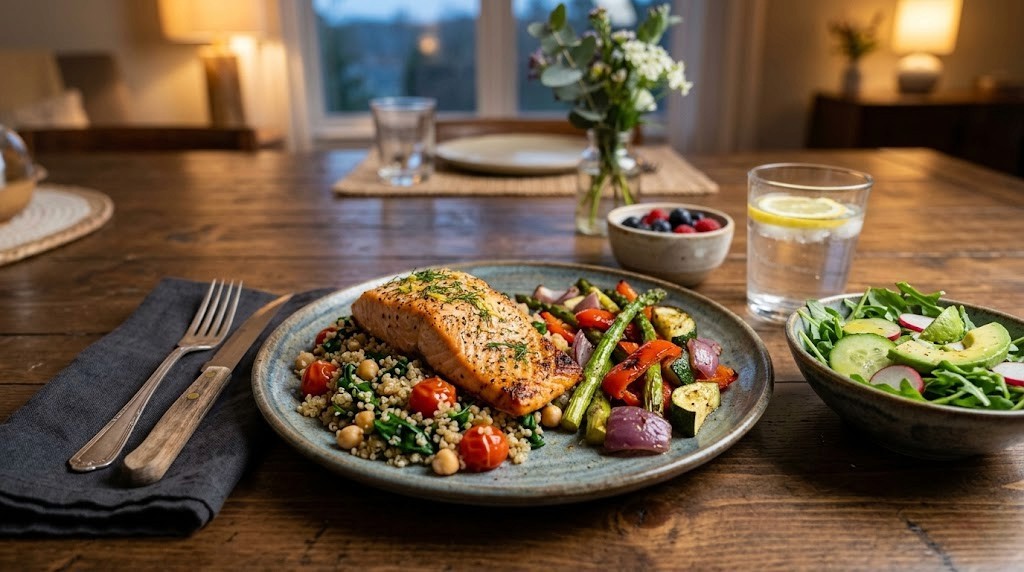
Your appetite vanished. That part worked. But somewhere between skipping meals and surviving on protein shakes, dinner became a problem. Not because you are hungry. Because you know you should eat, and you have no idea what to make that will not leave you nauseated at 2 AM or cost you muscle mass you cannot afford to lose.
This is the reality nobody warns you about with GLP-1 medications. The appetite suppression works beautifully. Almost too well. And when your body only wants 800 to 1,200 calories a day, every single one of those calories needs to earn its place on your plate. Especially at dinner.
Here is the uncomfortable truth. Research published in the American Journal of Clinical Nutrition shows that up to 40% of total weight loss on GLP-1 receptor agonists can come from lean mass, not fat. That means without strategic nutrition, you could lose the very muscle tissue that keeps your metabolism running, your joints stable, and your body functional. The solution is not eating more. It is eating smarter. And dinner is where most people either win or lose this battle.
What follows is everything you need to build GLP-1 friendly dinners that protect muscle, minimize side effects, and actually taste like something you want to eat. Thirty recipes. Detailed protein counts. Meal prep strategies. And the science behind why dinner composition matters more than most semaglutide and tirzepatide users realize. SeekPeptides created this guide because we kept seeing the same question in our community: what do I actually cook for dinner on these medications?
Why dinner matters more on GLP-1 medications
Dinner is not just another meal when you are on GLP-1 therapy. It is often the meal that determines whether you wake up feeling good or spend the night fighting nausea. Research from the journal Nutrients found that adverse effects like nausea and vomiting tend to peak in the evening hours, making dinner composition critical for managing bloating, sulfur burps, and general GI discomfort.
But there is another reason dinner demands your attention.
Most people on semaglutide or tirzepatide eat their smallest meals early in the day. By dinner, they have consumed maybe 400 to 600 calories total. That leaves dinner as the primary opportunity to hit protein targets that prevent muscle loss. Skip it or fill it with empty calories, and you are actively sabotaging your results.
The Endocrine Society presented data at ENDO 2025 showing that women and older adults on semaglutide face the highest risk of muscle loss, but that higher protein intake significantly reduced this risk. The takeaway is clear. Dinner is not optional. And what you put on that plate is not negotiable.
The protein math you need to understand
Current research recommends 1.2 to 1.6 grams of protein per kilogram of body weight daily for GLP-1 users. For a 180-pound person, that translates to roughly 98 to 131 grams of protein per day. Some studies push this even higher, suggesting 1.6 to 2.3 grams per kilogram of fat-free mass for optimal lean tissue preservation.
Let us do the math on a typical day. You manage 15 grams of protein at breakfast. Maybe 25 at lunch. A protein shake gives you another 25 to 30. That leaves dinner responsible for 30 to 60 grams of protein minimum. Often more.
This is why the recipes in this guide prioritize protein above everything else. Every dinner idea below delivers at least 30 grams of protein per serving. Most deliver 40 or more. Use our peptide calculator to dial in exact amounts based on your body weight and goals.
The dinner timing window
Research on GLP-1 medications and gastric emptying shows that eating dinner at least two to three hours before bed significantly reduces nighttime nausea. This is because semaglutide and tirzepatide slow gastric emptying. Food sits in your stomach longer. Lying down with a full stomach amplifies every GI side effect these medications can produce.
Aim for dinner between 5:30 and 7:00 PM if you go to bed around 10:00. Earlier is better. And keep portions moderate. A 400 to 600 calorie dinner with 35 to 50 grams of protein is the sweet spot for most people on GLP-1 therapy.
Building the perfect GLP-1 dinner plate
Before diving into specific recipes, you need a framework. Every successful GLP-1 dinner follows the same basic structure. Master this, and you can improvise endlessly without a recipe.
The plate formula
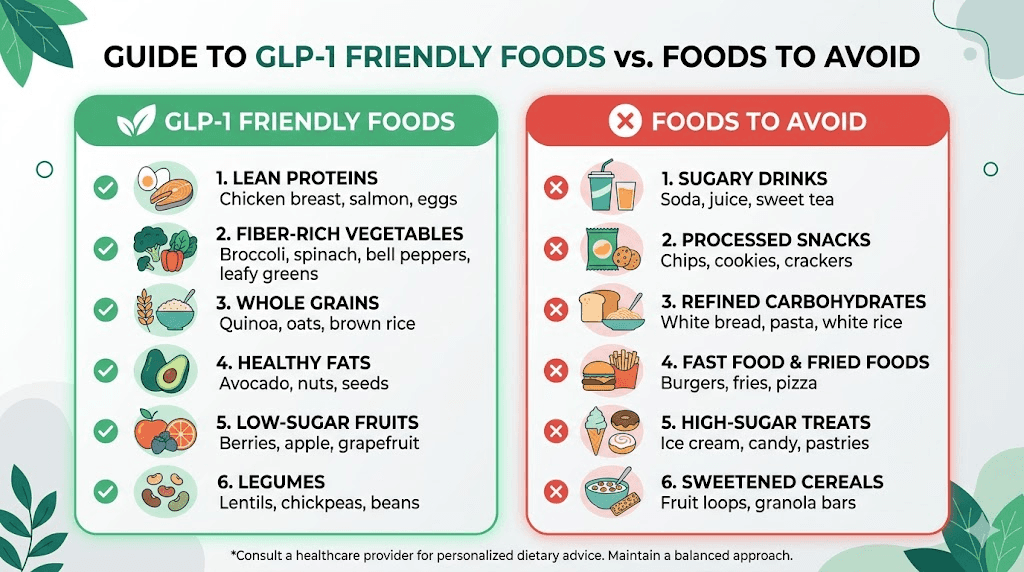
Half your plate: lean protein. This is non-negotiable. Chicken breast, turkey, white fish, salmon, shrimp, tofu, or eggs. The protein goes on first, gets eaten first, and takes priority over everything else. Research shows that fatigue on GLP-1 medications often correlates with inadequate protein intake, so prioritizing this macronutrient can also improve your energy levels.
Quarter of your plate: non-starchy vegetables. Zucchini, broccoli, spinach, asparagus, cauliflower, bell peppers, green beans. These provide fiber for constipation management, micronutrients, and volume without excessive calories.
Quarter of your plate: complex carbohydrates. Quinoa, brown rice, sweet potato, farro, or barley. Small portion. These are not the star. They provide sustained energy and additional fiber.
One tablespoon of healthy fat ties it together. Olive oil, avocado, or a sprinkle of nuts. Fat helps with nutrient absorption and satiety, but too much triggers nausea in many GLP-1 users.
Foods to prioritize at dinner
Not all proteins are equal when your stomach is already working overtime. The best dinner proteins for GLP-1 users are low in fat and easy to digest. White fish like cod, tilapia, and halibut top the list. Chicken breast and turkey breast follow close behind. Salmon makes the cut because its omega-3 fatty acids actively reduce the inflammation that GLP-1 medications can sometimes trigger.
Eggs deserve special mention. They are the most bioavailable protein source available, digesting easily even when your GI system is sluggish from medication side effects. A three-egg dinner with vegetables and a small portion of whole grain delivers 21 grams of protein with minimal digestive burden.
Foods to avoid at dinner
Some foods that are perfectly healthy in normal circumstances become problematic at dinner on GLP-1 medications. Greasy or fried foods top the list. They slow digestion further and dramatically increase nausea risk. Heavy cream sauces, large portions of red meat, and highly processed foods should also stay off the dinner plate. If you are wondering about alcohol with dinner, check our guides on drinking on semaglutide and drinking on tirzepatide, and explore the best alcohol choices if you do choose to have a drink.
Carbonated beverages with dinner are another common mistake. They add gas to an already slow-moving digestive system, worsening bloating and discomfort. Stick to still water, and drink it 30 minutes before or after your meal rather than during.
30+ GLP-1 dinner recipes organized by protein source
Every recipe below is designed for people on semaglutide, tirzepatide, or retatrutide. Small portions. High protein. Low fat. Easy on digestion. Most take 30 minutes or less.
Chicken dinner recipes
Chicken breast is the workhorse protein for GLP-1 users. It is lean, versatile, affordable, and easy to batch cook. The key is keeping preparations simple and avoiding heavy sauces that trigger GI symptoms.
1. Lemon herb chicken with roasted asparagus
Protein: 42g per serving
Season one chicken breast with lemon juice, garlic powder, dried oregano, salt, and pepper. Bake at 400 degrees for 20 minutes. Toss asparagus spears with a teaspoon of olive oil, salt, and pepper. Roast alongside the chicken for the last 12 minutes. Serve with a quarter cup of quinoa.
This is the dinner you make when you have zero energy for cooking but know you need protein. It takes five minutes of actual work. The oven does the rest. The lemon keeps the chicken moist without adding fat, which matters when you are trying to avoid the digestive heaviness that fatty meals create.
2. Greek chicken and vegetable sheet pan
Protein: 45g per serving
Cube one large chicken breast. Toss with diced zucchini, red onion, cherry tomatoes, and a tablespoon of Greek seasoning. Spread on a sheet pan. Bake at 425 degrees for 18 minutes. Finish with crumbled feta and fresh dill. Serve over a small bed of brown rice or eat as is.
The Mediterranean approach works exceptionally well for GLP-1 diets. The vegetables add fiber and volume, the chicken provides protein, and the feta gives just enough fat for satisfaction without overdoing it. This recipe also holds up beautifully for meal prep, which matters when your appetite is unpredictable from week to week.
3. Chicken stir-fry with ginger and snap peas
Protein: 39g per serving
Slice one chicken breast thin. Stir-fry in a teaspoon of sesame oil over high heat for 3 minutes. Add snap peas, sliced bell pepper, and shredded carrots. Cook 3 more minutes. Finish with a sauce of low-sodium soy sauce, fresh ginger, garlic, and a splash of rice vinegar. Serve over a quarter cup of brown rice.
Ginger is your best friend on GLP-1 medications. It is one of the most studied natural anti-nausea compounds available, and cooking with it regularly can help manage the evening symptoms that many users report. This stir-fry puts ginger front and center while delivering nearly 40 grams of protein.
4. Slow cooker chicken and white bean stew
Protein: 44g per serving
Add two chicken breasts, one can of white beans (drained), diced tomatoes, chicken broth, minced garlic, Italian seasoning, and a handful of spinach to your slow cooker. Cook on low for 6 hours or high for 3. Shred the chicken before serving. This makes 4 servings.
Slow cooker meals are ideal for GLP-1 users because the long cooking time breaks down proteins and fibers, making everything easier to digest. The white beans add 15 grams of protein per serving on top of the chicken, plus fiber that helps with the constipation many users experience. Set it in the morning and dinner is ready when you get home.
5. Chicken meatballs with zucchini noodles
Protein: 38g per serving
Mix one pound of ground chicken with an egg, almond flour, garlic, Italian herbs, salt, and pepper. Form into small meatballs, roughly one inch each. Bake at 400 degrees for 15 minutes. Serve over spiralized zucchini tossed in marinara sauce. Makes 3 servings.
Small meatballs are easier to eat in small amounts than a full chicken breast. On days when your appetite is particularly suppressed from your medication, you can eat four or five meatballs and save the rest. The zucchini noodles keep the carbohydrate load low while adding fiber and hydration.
Fish and seafood dinner recipes
Fish is arguably the best protein source for GLP-1 dinners. It is light, easy to digest, cooks fast, and delivers omega-3 fatty acids that support energy levels and reduce inflammation. White fish in particular sits well even when nausea is lurking.
6. Baked cod with roasted broccoli and sweet potato
Protein: 35g per serving
Place one cod fillet on a baking sheet. Season with paprika, garlic powder, salt, and a squeeze of lemon. Add broccoli florets and cubed sweet potato to the pan. Drizzle vegetables with a teaspoon of olive oil. Bake at 400 degrees for 20 minutes.
Cod is one of the leanest proteins available, with virtually zero fat and 20 grams of protein per fillet. It digests easily and rarely triggers the nausea or bloating that fattier proteins can cause. The sweet potato provides complex carbohydrates and beta-carotene. Simple. Clean. Effective.
7. Garlic butter shrimp with spinach
Protein: 32g per serving
Saute eight ounces of shrimp in a teaspoon of butter with four cloves of minced garlic for 3 minutes per side. Add two generous handfuls of baby spinach. Cook until wilted. Finish with lemon juice, salt, and red pepper flakes. Serve with a small portion of farro.
Shrimp cooks in under 10 minutes and provides 24 grams of protein per six-ounce serving with almost no fat. This is the dinner for nights when you are exhausted, fatigued from your medication, and need something fast. The garlic and lemon make it taste like a restaurant meal despite the minimal effort.
8. Salmon with herb salsa verde and roasted vegetables
Protein: 40g per serving
Season a salmon fillet with salt and pepper. Bake at 400 degrees for 12 minutes. While it cooks, blend fresh parsley, basil, capers, lemon juice, garlic, and a tablespoon of olive oil into a salsa verde. Spoon over the cooked salmon. Serve with roasted zucchini and cherry tomatoes.
Salmon delivers something most GLP-1 dinner proteins cannot: a significant dose of omega-3 fatty acids. These fats actively reduce inflammation, support brain health, and may even enhance the fat-burning effects of your medication. Aim for salmon at dinner two to three times per week.
9. Tuna poke bowl
Protein: 36g per serving
Cube six ounces of sushi-grade tuna. Toss with low-sodium soy sauce, sesame oil, rice vinegar, and sliced green onion. Serve over a quarter cup of brown rice with sliced cucumber, edamame, shredded carrot, and a sprinkle of sesame seeds.
Poke bowls are brilliant for GLP-1 users because you control every component and portion. On low-appetite days, skip the rice and just eat the fish and vegetables. On days when you are feeling more adventurous with your food choices, add avocado and extra toppings.
10. White fish tacos with cabbage slaw
Protein: 34g per serving
Season tilapia or mahi-mahi with cumin, chili powder, garlic powder, and lime juice. Pan-sear for 3 minutes per side. Serve in small corn tortillas with shredded purple cabbage, diced avocado, and a squeeze of lime. Use two small tortillas for portion control.
The cabbage slaw provides crunch, fiber, and probiotics that support the gut health changes happening on GLP-1 medications. Corn tortillas are lower in calories than flour, and two small ones keep the carbohydrate portion reasonable while giving you something satisfying to hold.
Turkey and lean ground meat dinner recipes
Ground turkey and extra-lean ground beef offer variety when chicken fatigue sets in. And it will set in. When your medication limits how much you can eat, monotony kills compliance faster than anything else.
11. Turkey lettuce wraps with Asian flavors
Protein: 36g per serving
Brown eight ounces of ground turkey in a pan with garlic, ginger, and a splash of sesame oil. Add diced water chestnuts, shredded carrots, and sliced green onion. Season with soy sauce, rice vinegar, and a pinch of red pepper flakes. Spoon into butter lettuce cups.
Lettuce wraps eliminate the bread entirely, which is a win for people experiencing bloating on GLP-1 medications. Refined carbohydrates often exacerbate GI symptoms, and skipping them at dinner can make a noticeable difference in how you feel overnight. The ginger in this recipe doubles as a natural nausea remedy.
12. Spicy turkey chili
Protein: 42g per serving
Brown one pound of ground turkey. Add diced onion, bell pepper, minced garlic, one can each of black beans, kidney beans, and diced tomatoes. Season with chili powder, cumin, paprika, and a pinch of cayenne. Simmer 30 minutes. Makes 4 servings.
Chili is the ultimate batch-cooking dinner for GLP-1 weight loss. Make it on Sunday and eat it throughout the week. The combination of turkey and beans delivers both complete protein and substantial fiber. Each serving gives you 42 grams of protein and roughly 12 grams of fiber, addressing two of the biggest nutritional challenges on these medications: muscle preservation and constipation prevention.
13. Turkey meatloaf muffins
Protein: 30g per serving (2 muffins)
Mix one pound of ground turkey with an egg, oat flour, diced onion, garlic, Worcestershire sauce, and Italian seasoning. Divide into a muffin tin. Top each with a small spoonful of marinara. Bake at 375 degrees for 22 minutes. Makes 8 muffins.
The muffin-tin format is genius for portion control on GLP-1 therapy. You can eat one or two depending on your appetite. They reheat perfectly. And because they are individual portions, there is zero waste when your appetite decides to disappear halfway through dinner.
14. Stuffed bell peppers with turkey and quinoa
Protein: 38g per serving
Cut bell peppers in half and remove seeds. Mix cooked ground turkey with cooked quinoa, diced tomatoes, black beans, cumin, and a sprinkle of cheese. Fill the pepper halves. Bake at 375 degrees for 25 minutes.
Stuffed peppers are a complete meal in a single vessel. Protein from the turkey, fiber from the beans and quinoa, vitamins from the pepper itself. They freeze beautifully too, making them ideal for long-term meal planning on GLP-1 medications.
Egg-based dinner recipes
Do not underestimate eggs at dinner. They are the most bioavailable protein source available, they cook in minutes, and they are gentle on a digestive system that is already working overtime from your GLP-1 medication. When nausea is at its worst, eggs are often the one protein people can still tolerate.
15. Veggie-loaded frittata
Protein: 28g per serving
Whisk four eggs with a splash of milk, salt, and pepper. Pour into an oven-safe skillet over sauteed spinach, mushrooms, diced bell pepper, and onion. Cook on the stove for 3 minutes, then transfer to the oven at 375 degrees for 10 minutes. Makes 2 servings.
A frittata is an egg dinner disguised as something fancier. It works hot or cold, stores in the fridge for three days, and handles whatever vegetables you need to use up. For GLP-1 users dealing with fatigue, this is the five-minute dinner that still delivers real nutrition.
16. Shakshuka with added protein
Protein: 32g per serving
Saute diced onion and bell pepper in a skillet. Add canned crushed tomatoes, cumin, paprika, and a pinch of cayenne. Simmer 10 minutes. Create wells and crack three eggs into the sauce. Cover and cook 5 minutes until eggs are set. Top with crumbled feta and fresh herbs.
Shakshuka is a North African classic that works perfectly for GLP-1 meal planning. The tomato base provides lycopene and vitamin C. The eggs give you easily digestible protein. And the warm spices, cumin and paprika, are gentler on the stomach than the black pepper and garlic that dominate most Western cooking.
17. Egg fried cauliflower rice
Protein: 26g per serving
Scramble three eggs in a large skillet, break them into pieces, and set aside. In the same pan, stir-fry riced cauliflower with diced carrots, peas, and green onion. Add back the eggs. Season with soy sauce and sesame oil. Top with sliced avocado.
Using cauliflower rice instead of regular rice cuts the carbohydrate content by 85% while adding fiber. This matters for metabolic health on GLP-1 medications, where blood sugar management is already a priority. The dish comes together in under 15 minutes and tastes surprisingly close to traditional fried rice.
Vegetarian and plant-based dinner recipes
Even if you are not vegetarian, adding plant-based dinners two to three times per week improves fiber intake and gut health. Both matter enormously when you are on GLP-1 therapy. The key is combining protein sources to hit adequate totals without animal products.
18. Lentil and vegetable curry
Protein: 24g per serving
Saute diced onion, garlic, and ginger in a teaspoon of coconut oil. Add curry powder, turmeric, and cumin. Stir in one cup of red lentils, one can of diced tomatoes, and two cups of vegetable broth. Simmer 20 minutes until lentils are tender. Add a handful of spinach. Serve over a quarter cup of brown rice.
Lentils deliver 18 grams of protein per cooked cup alongside 15 grams of fiber. For constipation management, they are one of the best foods available. The turmeric and ginger in this curry also have anti-inflammatory and anti-nausea properties. This recipe makes excellent leftovers and actually tastes better the next day.
19. Chickpea and spinach Mediterranean bowl
Protein: 22g per serving
Toss one can of chickpeas (drained) with olive oil, cumin, paprika, and salt. Roast at 400 degrees for 20 minutes until crispy. Serve over baby spinach with diced cucumber, cherry tomatoes, red onion, feta cheese, and a lemon-tahini dressing.
Add a quarter cup of quinoa to bump the protein to 30 grams. The roasted chickpeas provide a satisfying crunch that many GLP-1 dinners lack. Texture variety is underrated in GLP-1 meal planning, but it makes a real difference in whether you actually enjoy eating.
20. Black bean and sweet potato Buddha bowl
Protein: 26g per serving
Roast cubed sweet potato at 400 degrees for 25 minutes. Warm black beans with cumin and garlic. Assemble a bowl with the sweet potato, beans, sliced avocado, shredded red cabbage, corn, and a drizzle of lime-cilantro dressing. Top with pepitas for extra protein and crunch.
This bowl hits the fiber target hard with 16 grams per serving from the beans, sweet potato, and cabbage combined. For people dealing with the digestive changes that come with GLP-1 medications, this level of fiber helps normalize bowel function over time.
21. Tofu and vegetable stir-fry
Protein: 28g per serving
Press and cube one block of extra-firm tofu. Pan-fry in a teaspoon of sesame oil until golden on all sides, about 8 minutes. Remove. In the same pan, stir-fry broccoli, snap peas, mushrooms, and red bell pepper. Add back the tofu. Toss with a sauce of soy sauce, ginger, garlic, and a teaspoon of cornstarch mixed with water. Serve over cauliflower rice.
Tofu is a sleeper hit for GLP-1 dinners. It absorbs whatever flavor you give it, provides 20 grams of protein per block serving, and sits lighter in the stomach than most animal proteins. People who experience burping or sulfur burps on GLP-1 medications often find that plant-based dinners reduce these symptoms.
Soup and stew dinner recipes
Soups and stews are the secret weapon for GLP-1 dinners. Liquid-based meals are easier to digest, more hydrating, and less likely to trigger nausea than solid foods. On rough days with your medication, a warm bowl of soup might be all your stomach can handle. Make it count.
22. Chicken and vegetable bone broth soup
Protein: 35g per serving
Simmer shredded chicken breast in bone broth with diced carrots, celery, onion, and garlic. Add a handful of chopped kale in the last 5 minutes. Season with thyme, salt, and pepper. The bone broth itself adds collagen protein, making this a double protein hit. See our guide on bone broth versus collagen peptides for more on this.
Bone broth soup is the dinner to make on injection day. If you take your GLP-1 injection and know that the next 24 hours bring stronger side effects, having this soup ready in the fridge means you still get protein even when solid food feels impossible.
23. Turkey and white bean soup with greens
Protein: 38g per serving
Brown ground turkey with onion and garlic. Add chicken broth, cannellini beans, diced tomatoes, and Italian seasoning. Simmer 20 minutes. Stir in chopped Swiss chard or spinach. Cook 3 more minutes. Finish with a squeeze of lemon.
This soup is a complete meal. Protein from the turkey and beans. Fiber from the beans and greens. Micronutrients from the tomatoes and leafy greens. It addresses the vitamin and mineral concerns that come with reduced food intake on GLP-1 therapy while being gentle enough for even the most sensitive stomachs.
24. Miso soup with tofu and vegetables
Protein: 20g per serving
Bring four cups of water to a simmer. Dissolve two tablespoons of miso paste. Add cubed silken tofu, sliced mushrooms, chopped bok choy, and green onion. Simmer 5 minutes. Do not boil after adding miso.
Miso contains probiotics that support the gut microbiome changes happening on GLP-1 medications. This is the lightest dinner on the list, best for days when appetite is nearly zero but you still need nutrients. Add an extra block of tofu or a soft-boiled egg to push the protein higher.
One-pan and sheet pan dinner recipes
When you are tired, and GLP-1 fatigue is real, the last thing you want is a complicated dinner with multiple pots. These one-pan recipes minimize both effort and cleanup.
25. Sheet pan chicken sausage with roasted vegetables
Protein: 34g per serving
Slice two chicken sausage links. Toss on a sheet pan with cubed butternut squash, brussels sprouts, and red onion. Drizzle with olive oil, salt, pepper, and garlic powder. Roast at 400 degrees for 25 minutes.
Chicken sausage gives you the flavor of regular sausage with a fraction of the fat. The butternut squash adds natural sweetness and complex carbohydrates. This is comfort food that will not wreck your stomach or your weight loss progress.
26. One-pan salmon and green beans
Protein: 38g per serving
Place a salmon fillet and trimmed green beans on a parchment-lined sheet pan. Season the salmon with Dijon mustard, lemon juice, and dill. Season the green beans with olive oil, garlic, salt, and pepper. Bake at 400 degrees for 15 minutes.
This is a 20-minute dinner from start to finish with only one pan to wash. The Dijon mustard creates a crust on the salmon that adds flavor without fat. Green beans are one of the most easily digested vegetables, making this perfect for the first few weeks on a new dose when side effects tend to peak.
27. Chicken and broccoli bake
Protein: 43g per serving
Layer sliced chicken breast and broccoli florets in a baking dish. Mix Greek yogurt with garlic, lemon juice, Parmesan cheese, and Italian seasoning. Spread over the chicken and broccoli. Bake at 375 degrees for 25 minutes until chicken is cooked through and topping is golden.
Greek yogurt replaces the heavy cream sauce that traditional chicken bakes rely on. You still get that creamy, comforting quality, but with added protein (Greek yogurt has 15g per cup) and far less fat. This swap is a game-changer for people who miss comfort food on their GLP-1 diet plan.
Quick 15-minute emergency dinners
Some nights, all you have is 15 minutes and zero motivation. These are the dinners for those nights. They are not glamorous. But they deliver protein, and that is what matters when you are on GLP-1 medications and your body needs fuel.
28. Scrambled eggs with smoked salmon and avocado
Protein: 33g per serving
Scramble three eggs. Top with two ounces of smoked salmon, a quarter of a sliced avocado, and everything bagel seasoning. That is it. Five minutes.
29. Canned tuna power bowl
Protein: 35g per serving
Drain one can of tuna. Mix with diced cucumber, cherry tomatoes, red onion, olive oil, and lemon juice. Serve over mixed greens with a quarter cup of pre-cooked quinoa (keep a batch in the fridge). Add a hard-boiled egg if you need more protein.
30. Turkey deli roll-ups with hummus
Protein: 28g per serving
Spread hummus on slices of quality deli turkey. Roll up with cucumber sticks and roasted red pepper strips inside. Serve with a small handful of mixed nuts and cherry tomatoes on the side. No cooking required.
These emergency dinners exist because the worst thing you can do on GLP-1 therapy is skip dinner entirely. Even a simple 300-calorie meal with 25 grams of protein is infinitely better than nothing. Your muscles need amino acids for repair and maintenance, and they do not care whether those amino acids came from a gourmet meal or a can of tuna.
31. Greek yogurt protein bowl
Protein: 30g per serving
Scoop one cup of plain Greek yogurt into a bowl. Top with a tablespoon of nut butter, a handful of walnuts, a drizzle of honey, and a sprinkle of chia seeds. Add fresh berries if available.
This is not a traditional dinner. But on days when solid food is not happening, a Greek yogurt bowl gives you 30 grams of highly bioavailable protein in a format your stomach can usually handle even when the side effects are rough.
32. Cottage cheese and vegetable plate
Protein: 28g per serving
Scoop one cup of cottage cheese onto a plate. Surround with sliced cucumber, cherry tomatoes, bell pepper strips, and a few whole grain crackers. Season the cottage cheese with everything bagel seasoning or fresh herbs.
Cottage cheese has made a massive comeback, and for good reason. One cup delivers 28 grams of protein with minimal fat (if you choose low-fat). It is cold, requires zero cooking, and digests smoothly. Keep it stocked as your emergency backup for nights when appetite management is unpredictable.
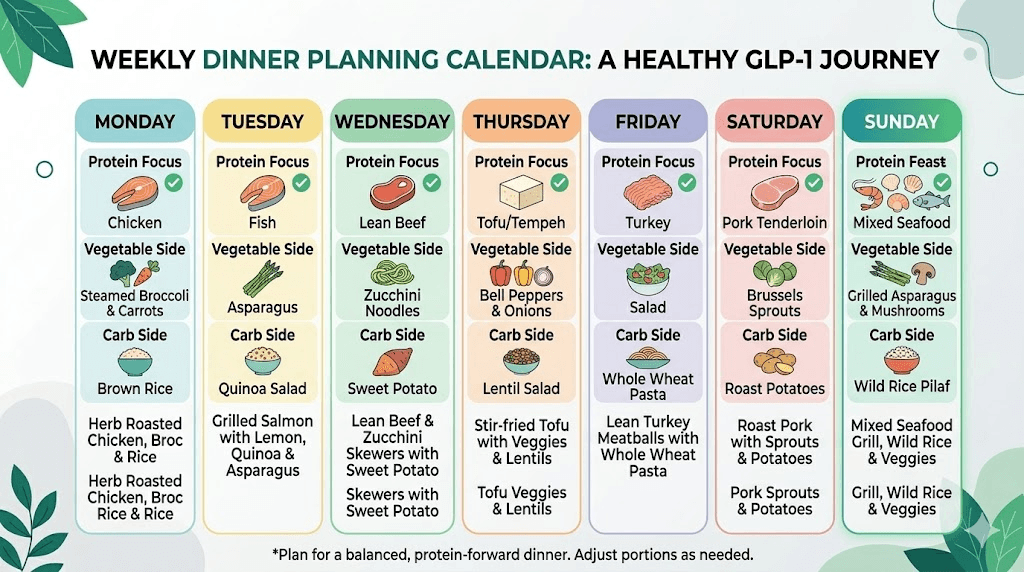
The 7-day GLP-1 dinner plan
Variety prevents burnout. Here is a complete week of GLP-1 dinners using the recipes above, designed to rotate protein sources and keep things interesting while maintaining consistent nutrition targets.
Monday: Lemon herb chicken with roasted asparagus (Recipe 1). Start the week with something simple and reliable. Protein: 42g.
Tuesday: Baked cod with roasted broccoli and sweet potato (Recipe 6). Switch to fish for lighter digestion. Protein: 35g.
Wednesday: Spicy turkey chili, made in a batch on Sunday (Recipe 12). Zero cooking tonight. Just reheat. Protein: 42g.
Thursday: Lentil and vegetable curry (Recipe 18). Plant-based night for fiber and gut health. Protein: 24g. Add a side of Greek yogurt to boost protein.
Friday: One-pan salmon and green beans (Recipe 26). Quick, elegant, omega-3 rich. Protein: 38g.
Saturday: Greek chicken and vegetable sheet pan (Recipe 2). A more relaxed cooking night. Protein: 45g.
Sunday: Slow cooker chicken and white bean stew (Recipe 4). Set it and forget it. Make extra for Monday lunch. Protein: 44g.
This plan delivers an average of 38 grams of protein per dinner across the week. Combined with a high-protein breakfast and a protein shake during the day, most people will hit their 100 to 130 gram daily target. Use the semaglutide dosage calculator or check our tirzepatide dosage calculator guide to ensure your medication dosing is optimized alongside your nutrition.
Meal prep strategies for GLP-1 dinners
Meal prep is not optional when you are on GLP-1 therapy. It is survival. Your appetite is unpredictable. Some days you feel fine. Other days, the thought of cooking makes the nausea worse. Having pre-made dinners in the fridge removes the decision entirely.
The Sunday batch cook
Spend 90 minutes on Sunday preparing these three components:
Protein base (pick two): Bake four chicken breasts. Brown two pounds of ground turkey. Bake four salmon fillets. Hard-boil a dozen eggs. Any combination works. Store in individual portions.
Vegetable base (pick two): Roast a full sheet pan of mixed vegetables (broccoli, zucchini, bell peppers). Steam a large batch of green beans. Make a big salad base with hearty greens. Prep raw vegetables for quick additions.
Carbohydrate base (pick one): Cook two cups of quinoa. Make a batch of brown rice. Bake four sweet potatoes. Any of these stores well for five days and can be portioned as needed.
With these components ready, assembling dinner takes under five minutes any night of the week. Combine your pre-cooked protein with a vegetable and a small portion of your carbohydrate base. Add a quick sauce or seasoning. Done.
Freezer-friendly options
Several recipes from this guide freeze exceptionally well:
The spicy turkey chili (Recipe 12) freezes for up to three months. The slow cooker chicken stew (Recipe 4) freezes perfectly in individual portions. Turkey meatloaf muffins (Recipe 13) can go straight from freezer to microwave. The stuffed bell peppers (Recipe 14) freeze assembled and reheat in the oven.
Having a freezer stash means you always have a GLP-1 friendly dinner available, even on the worst side effect days when grocery shopping and cooking are both off the table. This is particularly important during dose escalation periods when side effects tend to spike.
Protein prep shortcuts
If even batch cooking feels like too much, these shortcuts keep protein accessible:
Rotisserie chicken from the grocery store gives you pre-cooked protein for three to four dinners. Canned tuna, salmon, and chicken are shelf-stable proteins that require zero preparation. Pre-cooked shrimp from the freezer section thaws in 10 minutes under cold water. Hard-boiled eggs from the deli counter save you the cooking step entirely.
The goal is removing every barrier between you and adequate protein intake. On GLP-1 medications, the people who lose the most fat while preserving the most muscle are the ones who never miss their protein targets. Convenience proteins make that possible.
Managing dinner-specific side effects
Dinner is when GLP-1 side effects hit hardest for many people. Understanding why, and knowing how to manage each symptom, makes a significant difference in your ability to eat well in the evening.
Nausea at dinner time
Evening nausea is the most commonly reported dinner-time complaint. It tends to worsen as doses increase and often peaks in the 24 to 48 hours after injection. Strategies that help:
Eat smaller. A 300-calorie dinner with 30 grams of protein beats a 600-calorie dinner you cannot finish. Start with the protein portion and eat vegetables only if you have room. Cook with ginger liberally. Fresh ginger in stir-fries, soups, and marinades acts as a natural antiemetic. Avoid reheating foods in the microwave when possible, as the smell can trigger nausea. Cold or room-temperature dinners (like the tuna bowl or cottage cheese plate) bypass this entirely.
If nausea is severe, talk to your prescriber about adjusting your injection timing or injection schedule. Some people find that injecting in the morning instead of the evening reduces dinner-time nausea significantly.
Bloating and fullness
That feeling of being full after three bites is normal on GLP-1 medications. It is the medication working exactly as intended. The problem is that three bites of the wrong food means you miss your protein target entirely.
Eat protein first. Always. Before any vegetable, carbohydrate, or garnish. If you can only eat five bites, make those five bites chicken, fish, or eggs. The bloating and fullness will come regardless. What changes is whether you got your protein before they arrived.
Chew thoroughly. This sounds basic but it matters enormously when gastric emptying is slowed. Smaller, better-chewed food particles cause less bloating and discomfort. Avoid carbonated drinks and straws, which introduce air into an already sluggish system.
Constipation strategies at dinner
Constipation affects a significant percentage of GLP-1 users. Dinner can either help or make it worse. The recipes in this guide prioritize fiber alongside protein for exactly this reason.
Aim for 8 to 12 grams of fiber at dinner. Lentils, beans, roasted vegetables, and quinoa are your best sources. Drink water with dinner, but 30 minutes before the meal rather than during. Check our detailed guides on semaglutide constipation treatment and tirzepatide constipation treatment for additional strategies beyond diet.
Supplements that support GLP-1 dinner nutrition
Even with perfect dinners, reduced food intake on GLP-1 medications can create nutritional gaps. Several supplements complement your dinner nutrition and support overall health on these medications.
B12 and methylcobalamin. GLP-1 medications can affect B12 absorption over time. Many compounded formulations now include B12 for this reason. See our guides on semaglutide with methylcobalamin and tirzepatide with methylcobalamin for details.
Glycine. This amino acid supports sleep quality and gut health, both of which are affected by GLP-1 therapy. Semaglutide with glycine and tirzepatide with glycine are increasingly popular combination protocols.
Probiotics. Gut microbiome changes on GLP-1 medications make probiotic supplementation worth considering. The best probiotics for semaglutide users and GLP-1 specific probiotics are formulated for the unique digestive environment these medications create.
Collagen peptides. Adding a scoop of collagen peptides to an evening soup or smoothie adds 10 to 15 grams of protein with minimal volume. This is an easy way to boost dinner protein without adding more food to your plate.
Review our complete guide to supplements to take with tirzepatide for a comprehensive list of what to consider alongside your GLP-1 medication.
Cooking techniques that work best for GLP-1 users
How you cook matters almost as much as what you cook. Certain techniques produce lighter, more digestible meals that sit better in a stomach slowed by GLP-1 receptor agonists.
Best cooking methods
Baking and roasting. High-heat roasting caramelizes vegetables and creates flavorful proteins without added fat. Most of the recipes in this guide use the oven for good reason. It is hands-off, consistent, and produces results that are easy on digestion.
Poaching. Poached chicken and fish are the gentlest protein preparations available. No added fat. No charred bits that can irritate a sensitive stomach. Poached chicken breast in broth with herbs is hospital-bland but incredibly easy to digest on difficult days.
Slow cooking. Extended cooking times break down proteins and fibers, making everything easier to digest. The slow cooker recipes in this guide (Recipes 4, 22, 23) are designed for maximum digestibility.
Steaming. Steamed vegetables retain more nutrients than boiled and sit lighter than roasted. When bloating is an issue, steamed broccoli and green beans are safer choices than their roasted counterparts.
Techniques to minimize
Deep frying. Avoid entirely. The fat content triggers nausea in most GLP-1 users.
Heavy sautes with lots of oil. A teaspoon of oil is fine for flavor. Two tablespoons is asking for digestive trouble.
Char-grilling. Some charred bits are fine, but heavily charred food can irritate the stomach lining when it is already sensitive from medication effects.
Adapting dinners for different GLP-1 medications
Not all GLP-1 medications affect dinner the same way. Understanding the differences helps you choose the right recipes for your specific protocol.
Semaglutide dinners
Semaglutide produces strong appetite suppression that tends to be fairly consistent throughout the day. Dinner portions are usually small but manageable. Focus on calorie-dense protein sources (salmon over cod, eggs over chicken breast) to maximize nutrition in smaller volumes. If you are on oral semaglutide drops, take them at least 30 minutes before dinner with a small sip of water.
Tirzepatide dinners
Tirzepatide acts on both GLP-1 and GIP receptors, which can produce even stronger appetite suppression. Many tirzepatide users report that dinner is the hardest meal to eat. Start with the emergency dinners (Recipes 28 to 32) during dose escalation and gradually transition to full recipes as your body adjusts. Keep trigger foods off the plate.
Retatrutide dinners
Retatrutide adds a third receptor (glucagon) and can produce the strongest appetite reduction of any GLP-1 class medication. Dinner on retatrutide often needs to be the lightest meal of the day. The soup recipes (Recipes 22 to 24) and Greek yogurt bowl (Recipe 31) are particularly useful during the adjustment period. Track your intake carefully and consider our retatrutide dosage guide to find the dose that balances weight loss with adequate nutrition.
Dinner strategies for common challenges
When you are not losing weight despite eating less
Sometimes the scale stalls even with reduced appetite and smaller dinners. This frustrating plateau affects many GLP-1 users. The dinner fix involves checking your protein-to-calorie ratio. If you are getting only 20% of dinner calories from protein, you are likely losing muscle alongside fat, which slows metabolism. Aim for 40 to 50% of dinner calories from protein. See our guides on why you are not losing weight on semaglutide and why you are not losing weight on tirzepatide for additional plateau-breaking strategies.
When you are gaining weight on GLP-1 medications
It sounds impossible, but some people gain weight. Often it is because reduced appetite at dinner leads them to graze on high-calorie snacks throughout the evening instead. A structured dinner, even a small one, prevents the mindless eating that can sabotage results. If this resonates, read our deep dive on gaining weight on tirzepatide.
When fatigue makes cooking impossible
GLP-1 fatigue is a real phenomenon, not laziness. On those days, go straight to the emergency dinners (Recipes 28 to 32). Or pull a freezer meal from your stash. The worst outcome is skipping dinner entirely. Even 200 calories of protein-rich food is better than nothing.
When switching between GLP-1 medications
Transitioning from tirzepatide to semaglutide or vice versa often means a temporary increase in side effects. During transitions, simplify dinner to the most basic recipes: baked chicken breast, steamed fish, eggs. Once your body adjusts to the new medication, gradually reintroduce more complex recipes. Our semaglutide versus tirzepatide side effects comparison helps you anticipate what to expect.
Grocery list for a week of GLP-1 dinners
Having the right ingredients on hand makes GLP-1 dinners happen consistently. Here is a shopping list based on the 7-day dinner plan above.
Proteins: Two pounds of chicken breast. One pound of ground turkey. Two salmon fillets. One cod fillet. One dozen eggs. One container of Greek yogurt. One block of extra-firm tofu.
Vegetables: One bunch of asparagus. Two heads of broccoli. One bag of green beans. Two zucchini. One bag of baby spinach. One container of cherry tomatoes. Bell peppers (assorted colors). One sweet potato. One butternut squash.
Grains and legumes: Quinoa (dry, one cup). Brown rice (dry, one cup). One can of white beans. One can of black beans. One cup of red lentils.
Pantry staples: Olive oil. Lemons (three). Garlic (one bulb). Fresh ginger. Low-sodium soy sauce. Bone broth (two cartons). Canned diced tomatoes. Dijon mustard. An assortment of dried herbs and spices.
This list supports seven dinners plus leftovers for lunches. Total cost runs between 40 and 60 dollars depending on your region. That is roughly the same as two takeout meals, but it feeds you all week with proper GLP-1 nutrition.
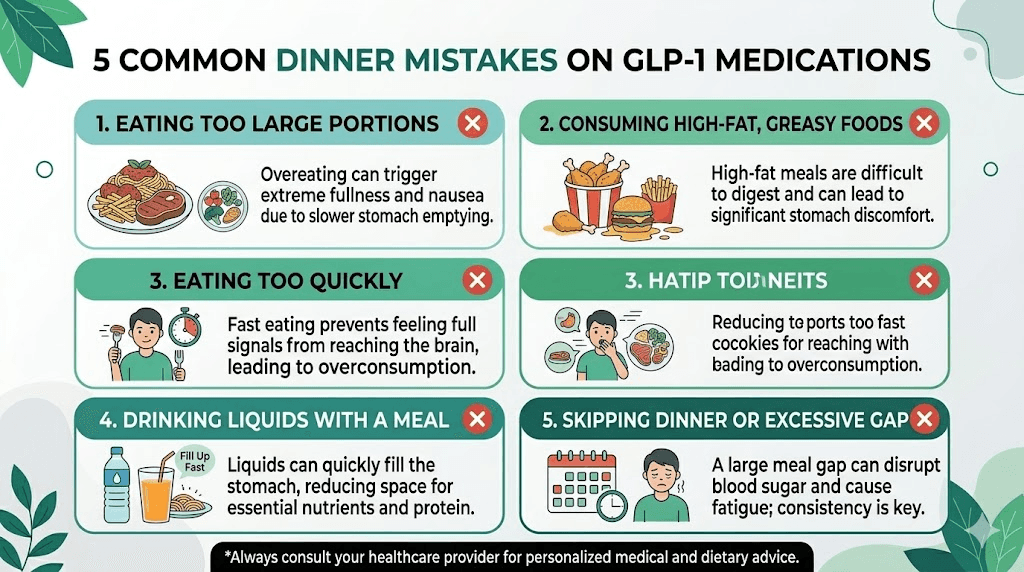
Dinner mistakes that sabotage GLP-1 results
After reviewing thousands of SeekPeptides community discussions, these are the most common dinner mistakes we see among GLP-1 users.
Mistake 1: skipping dinner entirely
The appetite suppression feels like permission to skip meals. But skipping dinner means missing 30 to 50 grams of protein your muscles desperately need. Over weeks and months, this adds up to significant muscle loss that is extremely difficult to reverse. Force yourself to eat something, even if it is just a protein shake and a handful of nuts.
Mistake 2: filling up on carbs instead of protein
When your stomach can only handle a small amount of food, choosing pasta or bread over chicken or fish is a costly mistake. Three bites of pasta give you maybe 3 grams of protein. Three bites of chicken give you 12. When every bite counts, choose protein every time.
Mistake 3: eating too late
Eating dinner at 9 PM and going to bed at 10:30 PM is a recipe for nighttime nausea, acid reflux, and poor sleep quality. All three undermine metabolic health and weight loss. Move dinner earlier.
Mistake 4: drinking calories at dinner
A glass of wine, a soda, a juice. These add 100 to 200 calories with zero protein. When your total dinner intake is only 400 to 600 calories, spending a third of that budget on drinks means protein falls short. Stick to water and save liquid calories for a protein shake if needed.
Mistake 5: not tracking protein
You do not need to track every calorie. But tracking protein for the first two to three weeks on GLP-1 therapy reveals patterns you would otherwise miss. Many people are shocked to discover they are only hitting 50 to 60 grams of protein daily when they need 100 or more. A simple note on your phone after each meal is enough.
Advanced dinner strategies for experienced GLP-1 users
Once you have the basics down, these advanced strategies optimize dinner for maximum results on your GLP-1 protocol.
Protein cycling
Rotate between animal and plant proteins throughout the week. Monday through Friday, alternate chicken, fish, eggs, legumes, and turkey. This provides a broader amino acid profile than eating chicken every night and introduces different fiber types that support gut microbiome diversity.
Injection day dinner protocol
If you inject your GLP-1 medication weekly, plan your lightest dinner for injection day and the day after. Soups, yogurt bowls, and eggs work best during the peak side effect window. Save the heartier recipes for mid-week when your body has adjusted.
The protein-first eating order
Always eat dinner in this order: protein first, vegetables second, fats and carbohydrates last. Research shows this eating sequence improves post-meal blood sugar response and ensures you get the most critical macronutrient even if fullness hits early. This simple change can transform your results on semaglutide or tirzepatide.
Combining dinner with other GLP-1 strategies
For researchers exploring combination approaches, dinner nutrition becomes even more critical. Protocols involving AOD-9604 with tirzepatide, NAD+ with tirzepatide, or cagrilintide with semaglutide may alter appetite patterns differently. Adjust dinner timing and composition based on how these combinations affect your individual hunger signals.
Special dietary considerations
GLP-1 dinners for women
Women on GLP-1 medications face unique challenges. Research presented at ENDO 2025 showed women are at higher risk for muscle loss on semaglutide, making protein intake even more critical. Additionally, GLP-1 medications can affect menstrual cycles and hormonal patterns, which may influence appetite and food preferences throughout the month. Plan lighter dinners during the first half of your cycle when side effects may be more pronounced, and slightly heartier meals during the second half when appetite often returns. Check our guides on peptides for women and peptides for women over 40 for additional considerations.
GLP-1 dinners for older adults
Adults over 65 need even more protein, roughly 1.2 to 1.5 grams per kilogram daily, to prevent sarcopenia. Dinner should aim for 40 to 50 grams of protein minimum. Focus on easily digestible sources: fish, eggs, and slow-cooked meats. Calcium-rich additions like Greek yogurt and leafy greens become more important for bone health during the rapid weight loss that GLP-1 medications produce.
GLP-1 dinners for people who exercise
If you are combining GLP-1 therapy with resistance training (which you should be), dinner timing relative to your workout matters. Post-workout dinners should include faster-digesting proteins and some carbohydrates. Pre-workout dinners (if you exercise in the evening) should be lighter and eaten at least 90 minutes before training. The muscle growth protocols page has additional guidance on timing nutrition around exercise.
Frequently asked questions
How much protein do I need at dinner on GLP-1 medications?
Aim for 30 to 50 grams of protein at dinner. The exact amount depends on your body weight and what you consumed earlier in the day. Total daily protein should reach 1.2 to 1.6 grams per kilogram of body weight to preserve muscle mass during GLP-1 driven weight loss.
What should I eat for dinner if I feel nauseated on semaglutide?
Start with the lightest options: bone broth soup, scrambled eggs, or a Greek yogurt bowl. These provide protein without overwhelming a sensitive stomach. Ginger tea before dinner can help reduce nausea. Avoid fatty, fried, or heavily spiced foods. Our guide on managing semaglutide bloating has additional strategies.
Can I skip dinner on GLP-1 medications?
Skipping dinner occasionally will not cause immediate harm, but making it a habit leads to protein deficiency and accelerated muscle loss. Even a small dinner of 200 to 300 calories with 25 grams of protein is better than nothing. The emergency dinner recipes in this guide take under 5 minutes.
What time should I eat dinner on tirzepatide?
Eat dinner at least two to three hours before bed to allow for the slowed gastric emptying that tirzepatide causes. Most people do best with dinner between 5:30 and 7:00 PM.
Are carbs okay at dinner on GLP-1 medications?
Small portions of complex carbohydrates like quinoa, sweet potato, or brown rice are fine and actually beneficial. They provide fiber for digestive regularity and sustained energy. Limit carbohydrates to a quarter of your plate and choose whole grain options over refined ones.
Should I drink water with dinner on semaglutide?
Drink water 30 minutes before dinner rather than during the meal. Drinking while eating fills the stomach faster and can worsen the fullness and bloating that GLP-1 users already experience. Stay hydrated throughout the day instead.
Can I have alcohol with dinner on GLP-1 medications?
Alcohol tolerance typically decreases on GLP-1 therapy. If you choose to drink, keep it minimal, one glass maximum with dinner. See our guides on drinking on semaglutide and best alcohol choices on tirzepatide for detailed recommendations.
How do I get enough fiber at dinner without feeling too full?
Choose high-fiber vegetables that are low in volume: spinach, green beans, and roasted broccoli pack significant fiber without the bulk of raw salads. Adding half a cup of beans or lentils to soups and stews is another efficient way to boost fiber without adding excessive volume to your meal.
External resources
Dietary Recommendations for GLP-1 Receptor Agonist Patients (PMC)
Dietary Intake by Patients Taking GLP-1 and GIP/GLP-1 Receptor Agonists (PMC)
Nutritional Priorities to Support GLP-1 Therapy for Obesity (American Journal of Clinical Nutrition)
Nutrition is Vital When Taking GLP-1 Weight Loss Drugs (UCHealth)
For researchers serious about optimizing their GLP-1 protocols and nutrition strategies, SeekPeptides offers the most comprehensive resource available. Members access evidence-based guides, proven meal planning frameworks, personalized protocol builders, and a community of thousands who have navigated these exact dietary challenges on semaglutide, tirzepatide, and retatrutide.
In case I do not see you, good afternoon, good evening, and good night. May your protein targets stay consistent, your dinners stay delicious, and your muscle mass stay protected.