Feb 18, 2026
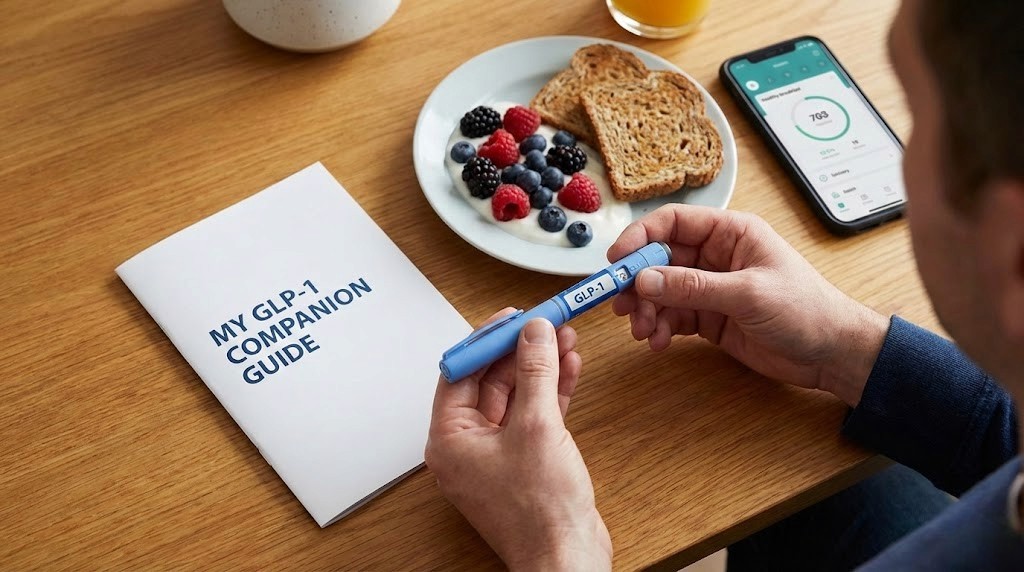
You are losing nutrients every single day on your GLP-1 medication. Not a little. Not a trivial amount. Research published in the journal Obesity Research and Clinical Practice found that 22.4% of patients developed nutritional deficiencies within 12 months of starting a GLP-1 receptor agonist. That is nearly one in four people. Vitamin D, iron, B12, magnesium, calcium. These are not obscure minerals nobody cares about. They are the foundation of your energy, your bone density, your muscle function, and your mental clarity. And because semaglutide suppresses appetite so effectively, because tirzepatide curbs hunger so dramatically, you eat less. Much less. And when you eat less, you absorb less of everything your body needs to function properly.
That is where GLP-1 companion products come in.
This category barely existed two years ago. Now brands like Nature Made, DaVinci Labs, Herbalife, Codeage, and DietWorks are racing to fill the gap between what your body needs and what your reduced appetite actually provides. Some of these products are excellent. Some are marketing dressed up as science. This guide breaks down exactly what GLP-1 companion supplements are, what they should contain, which brands deliver real value, and how to build a companion stack that actually protects your health while you lose weight. Whether you are on compounded semaglutide, tirzepatide, or retatrutide, the nutritional challenge is the same. Your body still requires the same nutrients. You are simply consuming far fewer of them. And the consequences of ignoring that reality compound faster than most people realize.
What is a GLP-1 companion product?
A GLP-1 companion is any supplement, nutritional product, or formulated bundle designed specifically to support people taking GLP-1 receptor agonist medications for weight loss. These medications, which include semaglutide and tirzepatide, work by mimicking the natural GLP-1 hormone that regulates appetite, slows gastric emptying, and improves insulin sensitivity. They are extraordinarily effective at producing weight loss. Clinical trials show tirzepatide can produce up to 22.5% body weight reduction. Semaglutide consistently delivers 15% or more.
But that effectiveness creates a problem.
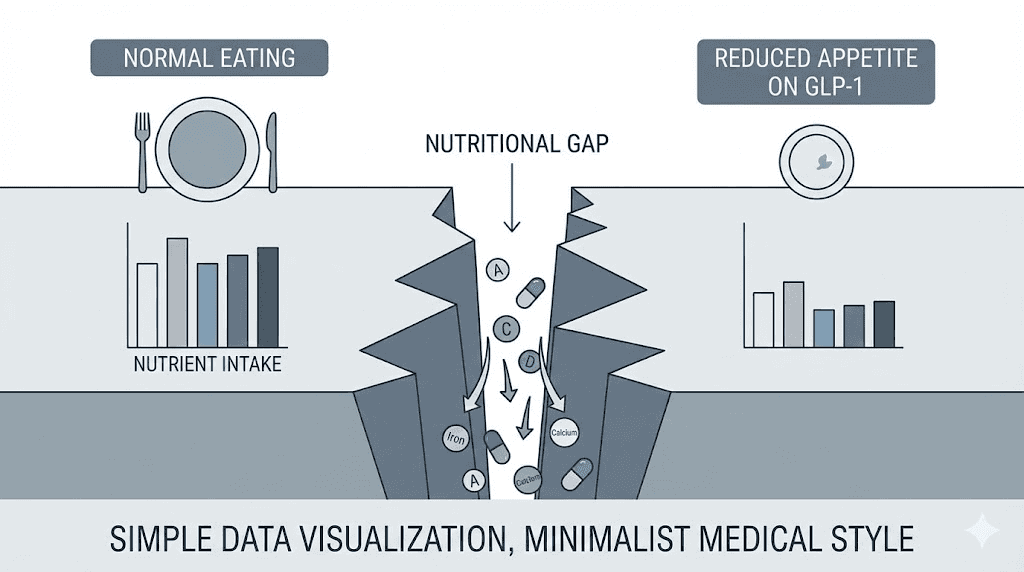
When you eat 40-60% fewer calories than you did before starting medication, you also consume 40-60% fewer vitamins, minerals, amino acids, and other essential nutrients. Your body does not care that you are trying to lose weight. It still needs the same amount of vitamin D for bone health, the same magnesium for muscle function, the same B12 for neurological performance. The math simply does not work out. Less food equals less nutrition, and the gap widens every week you stay on the medication.
GLP-1 companion products attempt to bridge that gap. They come in several forms. Daily vitamin packs. Protein powders formulated for reduced appetites. Digestive support blends. Collagen and amino acid supplements. Some brands package everything together. Others target specific deficiency risks. The best ones combine multiple approaches into a comprehensive support system.
Why you need nutritional support on GLP-1 medications
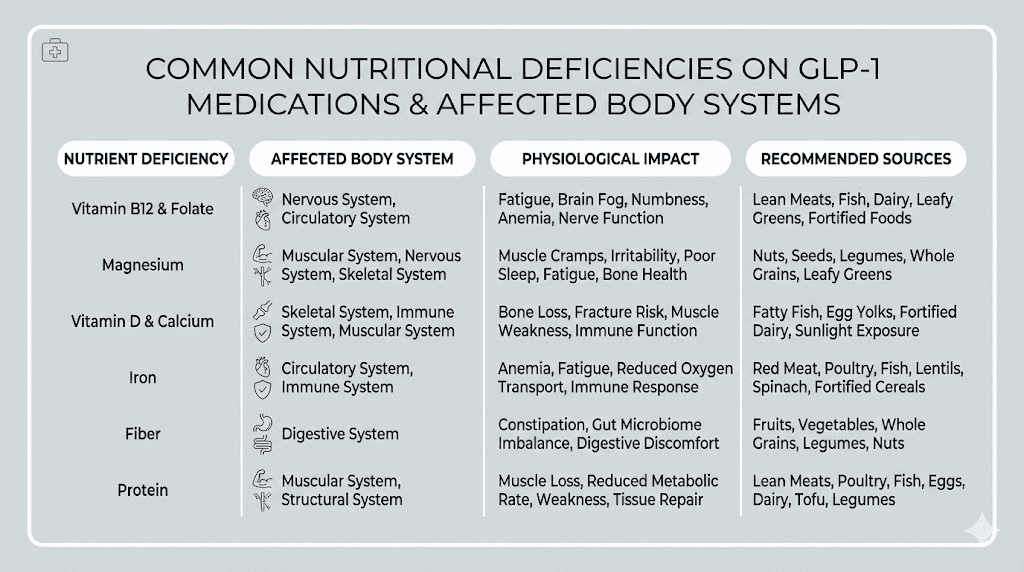
The science here is not subtle. A joint advisory published by the American College of Lifestyle Medicine, the American Society for Nutrition, the Obesity Medicine Association, and the Obesity Society laid out the nutritional priorities for people on GLP-1 therapy. Their findings are clear. The rapid reduction in calorie intake leads to insufficient intakes of essential vitamins and minerals. The nutrients of greatest concern include iron, calcium, magnesium, zinc, and vitamins A, D, E, K, B1, B12, and C.
That is a long list. And it covers nearly every major system in your body.
The muscle loss problem
Here is the number that should concern every single person on a GLP-1 medication. Research shows that GLP-1-induced weight loss may reduce lean body mass by 20-50% in some individuals without concurrent lifestyle interventions. Read that again. Of the total weight you lose, up to half could be muscle. Not fat. Muscle. The tissue that keeps your metabolism running, supports your joints, maintains your independence as you age, and gives your body its shape and functional capacity.
A retrospective observational study in patients with type 2 diabetes using GLP-1 receptor agonists confirmed this pattern. Nutritional deficiencies were diagnosed in 12.7% of patients within just 6 months of starting treatment. Within a year, that number nearly doubled to 22.4%. Vitamin D deficiency was the most common, with 7.5% incidence at 6 months climbing to 13.6% at 12 months.
The Endocrine Society presented data showing that being older, female, or eating less protein was linked to greater muscle loss on semaglutide. These are not hypothetical risks. They are documented outcomes in real patients. The companion supplement category exists because these problems are real, measurable, and increasingly well understood.
Digestive complications
GLP-1 medications slow down your entire digestive system. That is part of how they work. But the consequence is a host of gastrointestinal side effects that affect the majority of users. Clinical trials consistently report that nausea affects up to 50% of patients on GLP-1 receptor agonists. Constipation on semaglutide is common. Tirzepatide causes similar digestive issues. Diarrhea, bloating, acid reflux, and vomiting round out the list of frequent complaints.
Good news. These side effects are usually worst during the first few weeks and the dose escalation periods. They tend to improve over time. But while your gut is adjusting, nutrient absorption takes an additional hit. Food moves through more slowly, which can change how effectively your intestines extract vitamins and minerals from whatever reduced amount you are eating. Companion products that include digestive enzymes, probiotics, and gut-supportive ingredients address this compounding problem directly.
Hair loss and skin changes
An estimated 25-33% of people on GLP-1 medications experience some degree of hair loss. The medical term is telogen effluvium. It happens not because the drug attacks hair follicles, but because rapid weight loss stresses the body into shifting hair from its growth phase into its shedding phase. Combine that with protein deficiency, iron deficiency, zinc deficiency, and biotin deficiency from reduced food intake, and you have a perfect storm for thinning hair.
Then there is what the internet calls "Ozempic face." Rapid fat loss from the face creates a gaunt, sunken appearance, especially around the cheeks and jawline. The underlying cause is the loss of both subcutaneous fat and, critically, muscle tissue. Muscles provide structural support for facial skin. When they atrophy, the skin sags and hollows appear. Collagen breakdown accelerates without adequate protein and vitamin C intake. The complete guide to GLP-1 hair loss covers this in depth, but the connection to companion supplementation is direct. Adequate protein, collagen, biotin, zinc, iron, and vitamin D can all mitigate these cosmetic side effects.
The essential nutrients every GLP-1 user needs
Not all GLP-1 companion products are created equal. The best ones target the specific nutrients that research has identified as most vulnerable during GLP-1 therapy. Here is what the evidence says you need, why you need it, and how much.
Protein
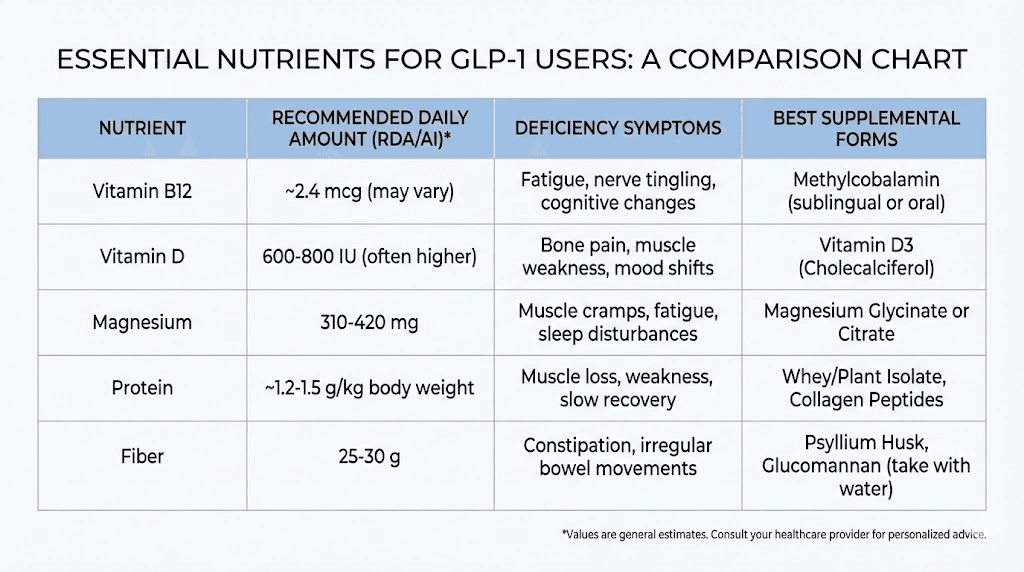
This is the big one. The single most important nutrient for anyone on a GLP-1 medication. The joint advisory from four major medical organizations recommends 1.2 to 2.0 grams of protein per kilogram of body weight per day during GLP-1 therapy. For a 180-pound person, that translates to roughly 98 to 164 grams of protein daily. When your appetite is suppressed and you are eating half of what you used to, hitting that target through food alone becomes extremely difficult.
Here is the critical finding. Increased protein intake alone is likely inadequate to preserve muscle mass in the absence of structured resistance training. You need both. Protein provides the building blocks. Resistance exercise provides the stimulus that tells your body to keep the muscle. One without the other is insufficient. A protein-rich semaglutide diet plan combined with strength training is the foundation that no companion supplement can replace.
Whey protein, collagen peptides, and plant-based protein powders all serve this purpose. Whey is the gold standard for muscle preservation due to its high leucine content. Collagen supports skin, hair, joints, and connective tissue. Most GLP-1 companion bundles include one or both.
Vitamin D
The most commonly deficient nutrient on GLP-1 therapy. Period. With 13.6% of patients developing a measurable deficiency within 12 months, vitamin D is the nutrient most likely to fall below optimal levels. Your body needs it for calcium absorption, bone health, immune function, mood regulation, and muscle performance. People who are already overweight often start with lower vitamin D levels because the vitamin gets sequestered in fat tissue. As you lose fat, some of that stored vitamin D gets released, but the overall trajectory during reduced calorie intake is still downward.
The recommended companion dose is typically 2,000-5,000 IU of vitamin D3 daily, often paired with vitamin K2 for optimal calcium metabolism. Every reputable GLP-1 companion product includes vitamin D. If yours does not, it is missing the most fundamental component.
Vitamin B12
B12 deficiency causes fatigue, brain fog, numbness in extremities, and anemia. These symptoms overlap significantly with the side effects people attribute to their GLP-1 medication. Some people blame the drug for semaglutide fatigue or GLP-1 fatigue when the real culprit is B12 depletion from reduced food intake. The preferred supplemental form is methylcobalamin, which your body can use directly without conversion. This is the same form found in semaglutide with methylcobalamin compound formulations that some pharmacies offer specifically because the combination addresses the deficiency at the source.
Magnesium
Muscle cramps. Poor sleep. Irritability. Heart palpitations. These are all signs of magnesium deficiency, and they are all common complaints on GLP-1 medications. Magnesium supports over 300 enzymatic reactions in the body, including muscle contraction, nerve signaling, blood sugar regulation, and energy production. Reduced food intake limits magnesium intake directly. If you also take metformin alongside your GLP-1 medication, the depletion risk doubles because metformin independently reduces magnesium levels.
Magnesium glycinate is the preferred form for supplementation because it absorbs well and is gentle on the stomach. Magnesium oxide, found in cheaper supplements, has poor bioavailability and can worsen the digestive issues GLP-1 users already experience.
Calcium
Bone health becomes a serious concern during rapid weight loss. The body needs calcium constantly, and when dietary intake drops, it pulls calcium from bones. Combine reduced calcium intake with potential vitamin D deficiency and you have a recipe for accelerated bone loss. However, there is an important caution here. Some studies have reported elevated calcium levels in patients on GLP-1 medications. Check with your healthcare provider before adding a calcium supplement, because taking extra calcium when levels are already high creates its own risks.
Iron
There is evidence suggesting GLP-1 medications may reduce iron absorption directly, beyond just the reduced intake from eating less. Iron deficiency causes fatigue, weakness, shortness of breath, and impaired cognitive function. Women of reproductive age are at particular risk. Iron should ideally be taken separately from calcium and other minerals, as they compete for absorption. Many companion products account for this by separating iron into its own capsule or recommending specific timing.
Zinc
Zinc plays a role in immune function, wound healing, protein synthesis, and hair growth. Deficiency contributes directly to the hair loss that affects so many GLP-1 users. Adequate zinc intake also supports taste perception, which some GLP-1 users report changes in. The recommended supplemental amount is typically 15-30mg daily.
Omega-3 fatty acids
When you eat less food, you eat less fat. When you eat less fat, you get fewer essential fatty acids. Omega-3s support cardiovascular health, brain function, joint mobility, and inflammation management. They also support skin elasticity and hair health. A quality fish oil or algae-based omega-3 supplement fills a gap that virtually every GLP-1 user develops over time.
Fiber
Eating less food means eating less fiber. Less fiber means worse constipation, which is already a primary side effect of GLP-1 medications. Supplemental fiber, particularly soluble forms like psyllium or inulin, helps maintain regularity and feeds beneficial gut bacteria. It also supports healthy blood sugar responses, complementing the metabolic effects of the medication itself.
Probiotics
GLP-1 medications fundamentally alter the gut environment. Slowed gastric emptying changes the bacterial landscape of your intestines. Probiotics, particularly strains like Lactobacillus, Bifidobacterium, and the increasingly popular Akkermansia muciniphila, help maintain a healthy gut microbiome during this transition. They support digestion, reduce bloating, and may even enhance the metabolic benefits of the medication.
GLP-1 companion products compared: brand by brand breakdown
The market for GLP-1 companion supplements has exploded. Major supplement brands, compounding pharmacies, and direct-to-consumer startups are all racing to capture this growing segment. Here is an honest assessment of the major players, what they offer, and where they fall short. If you are already managing your own nutritional protocol alongside your semaglutide schedule or tirzepatide dosing protocol, understanding these products helps you decide whether a bundled approach or a custom stack makes more sense for your situation.
Nature Made GLP-1 Companion Health Pack
Nature Made is one of the most recognized supplement brands in the United States, and their GLP-1 Companion Health Pack reflects that mainstream positioning. Each daily packet contains four separate supplements: a multivitamin for men and women, magnesium, calcium with vitamin D3, and vitamin B12. The product delivers 22 key nutrients per packet, targeting metabolism, mood, muscle, bone, skin, hair, cellular energy production, and immune health.
Strengths. Brand recognition and trust. Available at every major retailer. Gluten free with no synthetic dyes or artificial flavors. Covers the fundamental vitamin and mineral bases that research identifies as most at risk during GLP-1 therapy. The inclusion of separate magnesium and B12 supplements alongside the multivitamin shows they understand that a basic multivitamin alone cannot provide therapeutic doses of these commonly depleted nutrients.
Weaknesses. No protein component. No digestive support. No collagen. No probiotics. No omega-3s. This is a vitamin and mineral pack, not a comprehensive companion solution. If you are relying solely on this product, you still have significant nutritional gaps to fill, especially around protein intake, gut health, and the cosmetic side effects like hair thinning and skin changes.
Best for: People who want a simple, trusted daily vitamin pack and plan to address protein, fiber, and digestive support separately.
DaVinci Labs GLP-1 Companion Bundle
DaVinci Labs positions itself in the practitioner-grade supplement space. Their GLP-1 Companion Bundle combines three doctor-formulated supplements designed to support healthy weight, muscle preservation, and metabolic function. The brand emphasizes clinical formulation and professional-grade ingredients.
Strengths. Higher quality formulation than mass-market alternatives. Practitioner-recommended brand with a reputation for bioavailable ingredient forms. The three-product bundle approach allows for more targeted dosing than a single multivitamin can provide.
Weaknesses. Higher price point. Less widely available than mass-market brands. The specific ingredient details are less transparent on their marketing materials compared to competitors, requiring customers to dig deeper for the complete picture.
Best for: People who work with healthcare practitioners and prefer clinical-grade supplements over consumer brands.
DietWorks GLP-1 Companion
DietWorks takes a broader approach than pure vitamin supplementation. Their GLP-1 Companion includes GlucoVantage (a bioactive form of berberine), BCAAs for gut health and muscle support, a herbal digestion blend with probiotics, colostrum for immune and gut healing, and essential vitamins and minerals. Available at CVS, Target, Amazon, and other major retailers for around $20-25 for 60 tablets.
Strengths. The most comprehensive single-product approach among the major brands. Berberine supports healthy blood sugar levels independently of the GLP-1 medication. Colostrum provides immune factors and gut healing compounds. BCAAs support muscle protein synthesis. Probiotics address the digestive disruption that GLP-1 medications cause. Affordable price point. Widely available.
Weaknesses. Single-product formulations always involve compromises on dosing. You cannot fit therapeutic doses of protein, BCAAs, probiotics, berberine, colostrum, AND a full vitamin and mineral profile into two daily tablets. The convenience comes at the cost of potency. If you have specific deficiencies, a targeted approach will outperform this all-in-one solution.
Best for: People who want a simple daily companion supplement that covers the broadest range of needs in a single affordable product.
Codeage GLP-Harmony Companion+
Codeage takes the most innovative approach in the category. Their GLP-Harmony Companion+ combines lion's mane mushroom, PEA (palmitoylethanolamide), colostrum, shilajit, akkermansia, elder fruit, citrus bioflavonoids, broccoli extract, and resveratrol. This is not a typical vitamin pack. It is a bioactive compound formula targeting gut health, inflammation, and metabolic optimization at a cellular level.
Strengths. Unique ingredient profile that no competitor matches. Akkermansia muciniphila is one of the most researched probiotics for metabolic health and has specific relevance to GLP-1 therapy. Lion's mane supports cognitive function, addressing the brain fog many users report. Resveratrol provides antioxidant support. Colostrum offers immune and gut healing benefits. Manufactured in a cGMP-certified facility. Non-GMO, gluten-free, soy-free.
Weaknesses. Does not address basic vitamin and mineral deficiencies. No protein. No vitamin D, B12, magnesium, or calcium in therapeutic doses. This product is a complement to basic nutritional supplementation, not a replacement for it. Higher price point than mass-market alternatives. The ingredient list is impressive but could overwhelm someone who just wants simple nutritional coverage.
Best for: People who already have their basic nutritional needs covered and want advanced metabolic and gut health support.
Herbalife GLP-1 Nutrition Companion
Herbalife launched their GLP-1 Nutrition Companion product combos specifically to address the nutritional needs of people on weight loss medications. The centerpiece is their protein shake, which they describe as the number one protein shake in the world. The product combos deliver protein and fiber alongside other nutrients designed to fill the gaps that reduced eating creates.
Strengths. Protein-forward approach, which aligns with the most critical nutritional need on GLP-1 therapy. Available in Classic and Vegan options. Multiple flavors. Established distribution network through Herbalife distributors.
Weaknesses. MLM distribution model adds cost and complexity. Ingredient quality debates surrounding the brand. Some formulations contain artificial ingredients that health-conscious consumers prefer to avoid. The product combos may include more Herbalife products than strictly necessary for GLP-1 support, raising the overall cost.
Best for: People who already use Herbalife products and want to integrate GLP-1 support into their existing routine.
WelleCo Super Elixir for GLP-1 support
WelleCo positions their Super Elixir as an ideal daily foundation during GLP-1 use. The product is a comprehensive greens and nutritional supplement in liquid form, designed to support multiple body systems simultaneously. The liquid format is specifically advantageous for GLP-1 users because it does not place additional physical load on an already slowed digestive system.
Strengths. Liquid format for easier absorption when digestion is compromised. Broad-spectrum nutritional support. Premium brand with quality ingredients. Does not contribute to the nausea and bloating that pills and capsules can cause in GLP-1 users.
Weaknesses. Premium pricing. Insufficient protein for the 1.2-2.0 g/kg daily target. Not specifically formulated for GLP-1 therapy, despite marketing positioning.
Best for: People who struggle with pill fatigue and want a liquid-based nutritional foundation.
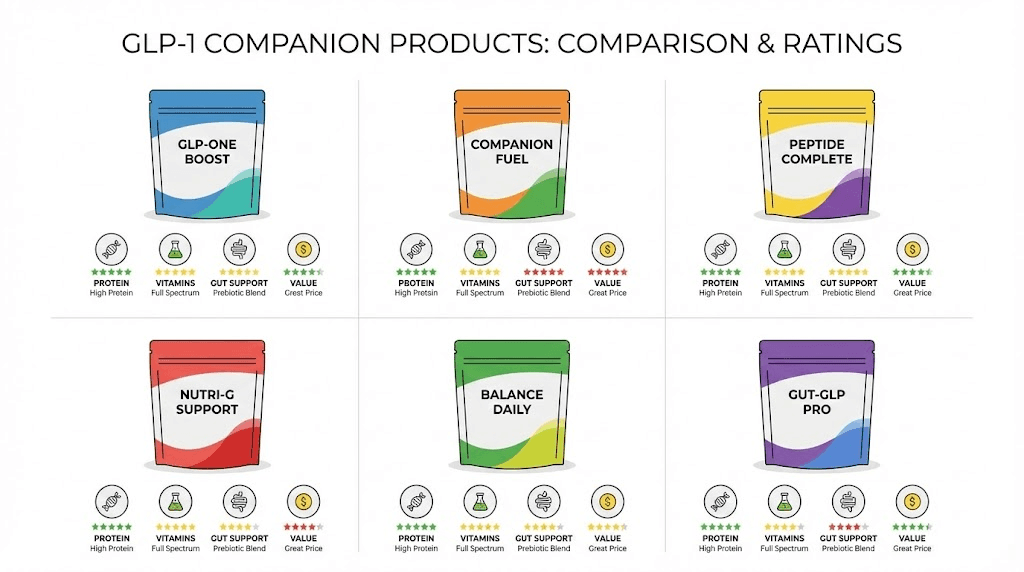
Brand | Protein | Vitamins/Minerals | Gut Support | Price Range | Best For |
|---|---|---|---|---|---|
Nature Made | No | Yes (22 nutrients) | No | $25-35/month | Basic vitamin coverage |
DaVinci Labs | No | Yes (clinical grade) | Partial | $50-70/month | Practitioner-guided protocols |
DietWorks | Partial (BCAAs) | Yes | Yes (probiotics, colostrum) | $20-25/month | All-in-one affordable option |
Codeage | No | Minimal | Yes (akkermansia, colostrum) | $35-50/month | Advanced gut and metabolic support |
Herbalife | Yes (shakes) | Partial | Partial | $60-100/month | Protein-focused approach |
WelleCo | No | Yes (greens blend) | Partial | $75-100/month | Premium liquid format |
How to build your own GLP-1 companion stack
Here is the truth that no single product manufacturer wants you to hear. No single GLP-1 companion product covers everything. Not one. The brands that come closest still leave significant gaps. If you are serious about protecting your health during GLP-1 therapy, you need a strategic approach that combines targeted supplementation with dietary optimization and exercise. [SeekPeptides] members often build custom stacks because the one-size-fits-all approach rarely fits anyone perfectly.
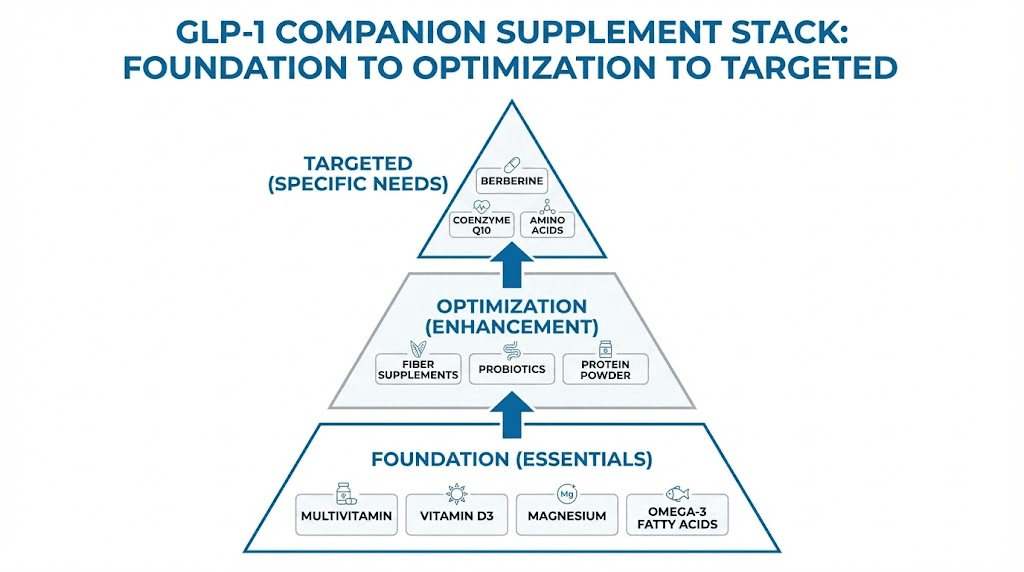
The foundation tier (non-negotiable)
These supplements address the most documented deficiency risks and should form the base of any GLP-1 companion protocol.
Protein supplement. Whey protein isolate or a plant-based alternative. Target 30-50 grams per serving. Use once or twice daily to close the gap between your reduced food intake and the 1.2-2.0 g/kg protein target. Collagen peptides can supplement this but should not replace whey or complete plant proteins because collagen lacks several essential amino acids. A protein-rich approach is essential whether you follow a tirzepatide diet plan or a semaglutide-friendly food plan.
High-quality multivitamin. Choose one specifically formulated for adults on calorie-restricted diets. Look for methylated B vitamins (methylcobalamin for B12, methylfolate for folate), chelated minerals for better absorption, and adequate vitamin D3 (at least 2,000 IU). Avoid cheap multivitamins with oxide forms of minerals. They are poorly absorbed and can worsen GI symptoms.
Additional vitamin D3. Most multivitamins do not contain enough. Add a separate 2,000-5,000 IU vitamin D3 supplement, ideally with K2 for optimal calcium metabolism. Test your levels every 6 months to adjust dosing.
Magnesium glycinate. 200-400mg daily, taken in the evening. Supports sleep, muscle function, and over 300 enzymatic reactions. The glycinate form is gentle on the stomach and highly bioavailable, unlike the magnesium oxide found in most cheap supplements.
The optimization tier (highly recommended)
These supplements address common but slightly less universal needs. Most GLP-1 users will benefit from all of them, but the priority depends on individual symptoms and bloodwork.
Omega-3 fatty acids. 2-3 grams of combined EPA and DHA daily. Supports cardiovascular health, brain function, inflammation management, and skin elasticity. Choose a product that has been third-party tested for purity and potency. Liquid fish oil may be easier to tolerate than capsules if you are experiencing nausea.
Fiber supplement. Psyllium husk or a prebiotic fiber blend. Start with small doses and increase gradually to avoid worsening bloating. Understanding which foods to avoid on tirzepatide includes knowing that high-fiber foods can sometimes increase gas and bloating during the adjustment period, so supplemental fiber gives you more control over the amount and timing.
Probiotic. A multi-strain formula with at least 10 billion CFU. Look for strains with clinical evidence for digestive health, particularly Lactobacillus rhamnosus, Bifidobacterium lactis, and if available, Akkermansia muciniphila. Take at a consistent time daily, ideally with food.
Collagen peptides. 10-15 grams daily. Supports skin elasticity (combating "Ozempic face"), hair growth, joint health, and gut lining integrity. Hydrolyzed collagen is easily absorbed and can be mixed into coffee, smoothies, or taken on its own. Types I and III are most relevant for skin and hair.
The targeted tier (based on symptoms and labs)
Add these based on your specific situation, symptoms, and blood test results.
Iron. Only if labs show deficiency or low ferritin. Take with vitamin C for absorption and separate from calcium by at least 2 hours. Do not supplement iron without testing first, as excess iron is harmful.
Biotin. 2,500-5,000 mcg daily if experiencing hair loss. Combined with zinc and iron (if deficient), biotin supports the hair growth cycle that telogen effluvium disrupts. Relevant for anyone dealing with GLP-1 related hair loss.
Creatine monohydrate. 3-5 grams daily. Research supports creatine for preserving and building lean mass during weight loss, particularly when combined with resistance training. It is one of the most studied and safest supplements available. It hydrates muscle cells, supports ATP production, and may provide modest cognitive benefits.
BCAAs or EAAs. If you struggle to hit protein targets even with a protein supplement, adding branched-chain amino acids (leucine, isoleucine, valine) or essential amino acids between meals can provide additional muscle protein synthesis stimulation. Leucine is the key player here, with research showing it is the primary trigger for the mTOR pathway that drives muscle building.
Digestive enzymes. If you experience persistent bloating, gas, or incomplete digestion despite dietary modifications. A broad-spectrum enzyme blend with lipase, protease, and amylase can help your body process the food you do eat more effectively.
Timing your GLP-1 companion supplements
When you take your supplements matters almost as much as what you take. GLP-1 medications slow gastric emptying, which means everything stays in your stomach longer. This changes absorption dynamics for supplements too. Here is a timing framework that accounts for these pharmacological realities.
Morning (with breakfast or first meal)
Multivitamin with food for best absorption. Fat-soluble vitamins (A, D, E, K) need dietary fat to absorb properly, so take these with whatever meal includes even a small amount of fat. Omega-3 fatty acids with the same meal. Iron, if supplementing, should be taken in the morning with vitamin C and at least 2 hours before calcium.
Midday (with lunch or protein shake)
Protein shake or collagen if you did not hit your protein target at breakfast. BCAAs or EAAs if eating a light lunch. This is a good time for fiber supplementation as well, spacing it away from morning vitamins so it does not interfere with absorption. Probiotics can work well at this time too, though consistency matters more than specific timing for probiotics.
Evening (with dinner or before bed)
Magnesium glycinate before bed. It supports sleep quality and does not compete with other minerals for absorption when taken separately. Second protein shake if daily target is not met. Calcium and vitamin D3 (if taking separately from morning multivitamin) can be taken with dinner. Keep calcium and iron doses at least 2 hours apart.
On injection day
If you inject your GLP-1 medication weekly (as with most GLP-1 injection protocols), be aware that nausea and appetite suppression tend to peak 24-48 hours after injection. On these days, liquid supplements and protein shakes may be easier to consume than solid food or large capsules. Plan your heaviest supplementation for days when you feel best, and keep the injection day protocol simple: liquid multivitamin or powder-based options that do not require swallowing multiple large pills.
What the research actually says about GLP-1 companion supplements
Let us separate the science from the marketing. Because there is a lot of marketing in this space right now.
What is well-supported by evidence
The nutritional advisory from four major medical organizations is the strongest evidence base. It clearly establishes that people on GLP-1 therapy face measurable risks of nutritional deficiency and muscle loss. The recommendation for high protein intake (1.2-2.0 g/kg/day) combined with resistance exercise is supported by multiple studies. Specific nutrient supplementation for documented deficiencies (vitamin D, B12, iron, magnesium) is standard medical practice, not supplement industry invention.
The evidence for probiotics supporting gut health during GLP-1 therapy is growing but still early. Akkermansia muciniphila has the most compelling data for metabolic health, but large-scale clinical trials specific to GLP-1 users are still underway.
What is reasonable but not proven
Collagen peptides for skin elasticity during weight loss makes mechanistic sense but lacks large-scale clinical trials specific to GLP-1 users. Creatine for muscle preservation during caloric restriction is well-supported in the general population but not specifically studied in GLP-1 patients. Digestive enzymes for improved nutrient absorption during slowed gastric emptying is logical but not rigorously tested in this specific context.
What is mostly marketing
Any product claiming to "boost natural GLP-1 levels" should be viewed with extreme skepticism. As NBC News reported, so-called GLP-1 supplements named to echo the drug class are likely to be ineffective for weight loss. Harvard researchers echoed this warning. The supplements that claim to activate GLP-1 receptors or increase natural GLP-1 production do not have anywhere near the same evidence base as the pharmaceutical medications. Berberine, for example, does have some evidence for blood sugar management, but calling a berberine supplement a "GLP-1 activator" stretches the science beyond what it supports.
The important distinction is this: GLP-1 companion products (nutritional support for people ON GLP-1 drugs) are a legitimate and necessary category. GLP-1 supplement alternatives (products claiming to replicate what GLP-1 drugs do) are largely unproven marketing vehicles.
Special considerations for different GLP-1 medications
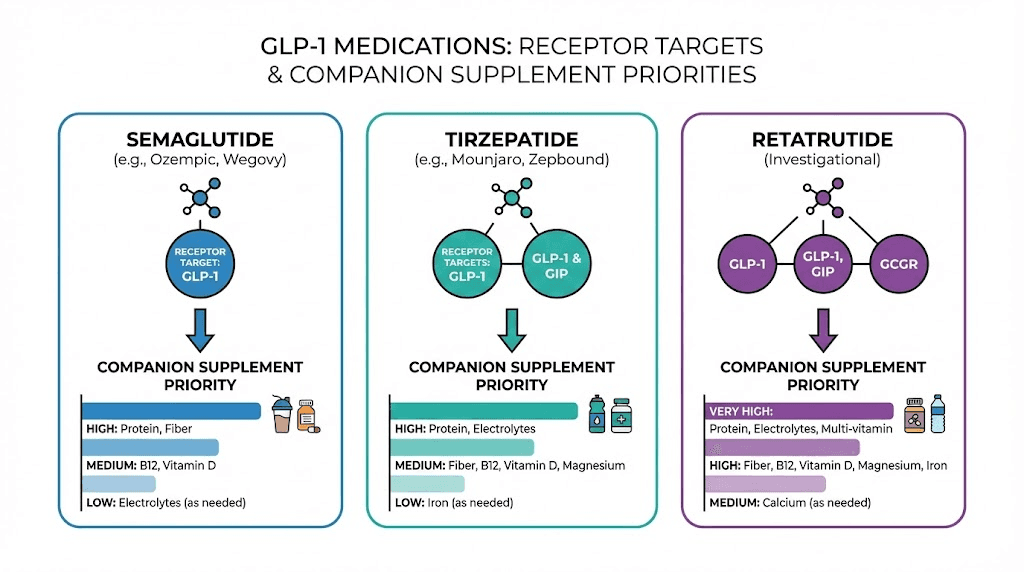
Not all GLP-1 medications create identical nutritional challenges. The specific drug you take, its mechanism, and its side effect profile influence which companion supplements matter most for you.
Semaglutide (Ozempic, Wegovy, compounded)
Semaglutide is a pure GLP-1 receptor agonist. It produces approximately 15% body weight loss in clinical trials. The side effect profile is predominantly gastrointestinal: nausea, vomiting, diarrhea, constipation. People on semaglutide report significant appetite suppression that often makes eating feel like a chore rather than a pleasure.
Companion priorities for semaglutide users include protein (the most critical factor for preserving lean mass), B12 (some pharmacies now compound semaglutide with B12 specifically because of this concern), digestive support for the GI side effects, and vitamin D. If you are on a semaglutide dosing protocol, tracking your nutritional intake becomes more important as doses increase and appetite suppression intensifies.
Fatigue is one of the most common complaints. Before attributing it solely to the medication, check B12, iron, and vitamin D levels. Many cases of energy changes on semaglutide are actually nutrient depletion in disguise.
Tirzepatide (Mounjaro, Zepbound, compounded)
Tirzepatide is a dual GIP/GLP-1 receptor agonist, which means it activates two incretin pathways instead of one. This produces more dramatic weight loss (up to 22.5% in trials) but also more pronounced appetite suppression. The nutritional gap is potentially larger with tirzepatide simply because the caloric reduction tends to be more severe.
Companion priorities for tirzepatide users emphasize protein even more aggressively than semaglutide. The greater weight loss means greater risk of muscle and bone density loss. People who feel tired on tirzepatide should check their full nutrient panel. The dual mechanism also means that supplements to take with tirzepatide should account for the more aggressive metabolic changes.
Some compound pharmacies add glycine, niacinamide, or B12 directly to the tirzepatide formulation. These tirzepatide compound combinations address nutritional support at the injection level, though they typically do not replace the need for oral supplementation of protein, fiber, and other nutrients.
Retatrutide (research phase)
Retatrutide is a triple agonist targeting GLP-1, GIP, and glucagon receptors. Early trial data shows even more dramatic weight loss than tirzepatide. If you are using retatrutide in a research context, the nutritional support needs are potentially the most intensive of any GLP-1 medication because the caloric reduction and metabolic changes are the most pronounced. The retatrutide dosing guide and dose schedule should be paired with the most comprehensive companion stack available.
Cagrilintide (research phase)
Cagrilintide is a long-acting amylin analog being studied both alone and in combination with semaglutide (CagriSema). Its mechanism complements GLP-1 therapy by targeting a different satiety pathway. Users combining cagrilintide with semaglutide may experience even more dramatic appetite suppression than either drug alone. Understanding cagrilintide and semaglutide combinations and cagrilintide dosing should include planning for nutritional support from day one.
Common mistakes with GLP-1 companion supplements
The supplement industry thrives on confusion. The GLP-1 companion space is no exception. Here are the mistakes that waste money, compromise results, or create unnecessary risk.
Mistake 1: relying on supplements without fixing the diet
No supplement replaces food. Period. Even the most comprehensive companion stack cannot replicate the complex nutrient matrix of a balanced diet. Supplements fill gaps. They do not create foundations. If you are eating 800 calories a day of nutritionally empty food, no pill will fix that. Prioritize nutrient-dense foods first, then supplement what diet alone cannot provide. A solid tirzepatide food guide or tirzepatide meal plan should be your starting point, with supplements layered on top.
Mistake 2: ignoring protein in favor of vitamins
Most people who start a GLP-1 companion supplement grab a multivitamin first. Understandable. Intuitive. And wrong in terms of priority. Protein is the single most important nutritional intervention during GLP-1 therapy. Without adequate protein, you lose muscle. Without muscle, your metabolism slows. Without metabolic rate, you plateau or regain weight. Vitamins matter. But if you had to choose one thing to supplement, it should be protein. Every time.
Mistake 3: taking everything at once
Calcium blocks iron absorption. Fiber interferes with mineral uptake. Fat-soluble vitamins need dietary fat. Magnesium competes with calcium for the same transport channels. Dumping every supplement into your body at the same time means some of them are not getting absorbed properly. Space them out. Follow the timing framework outlined above. Your body can only process so much at once, especially when your GI system is already running at reduced capacity from the medication.
Mistake 4: buying based on marketing instead of ingredients
A product that says "GLP-1 companion" on the label is not automatically superior to a well-chosen combination of standard supplements. Many branded GLP-1 companion products charge a premium for packaging and marketing while containing the same ingredients you could buy separately for less. Before purchasing any branded companion product, compare the ingredient list and doses against what you could assemble independently. Sometimes the bundle is worth the convenience. Sometimes it is a 50% markup on ingredients you could source for half the price.
Mistake 5: skipping resistance training
This is not strictly a supplement mistake, but it is the most important companion intervention that no pill can replace. The research is unequivocal. Increased protein intake alone is likely inadequate to preserve muscle mass in the absence of structured resistance training. You need the stimulus. The protein provides the raw material. The training provides the signal that tells your body to keep the muscle. Without both, you are fighting a losing battle against weight loss plateaus and body composition problems.
Mistake 6: not testing bloodwork
Guessing at deficiencies wastes money and potentially creates imbalances. Get a comprehensive metabolic panel and nutrient panel before starting GLP-1 therapy and again at 3, 6, and 12 months. Test vitamin D, B12, iron and ferritin, magnesium (RBC magnesium, not just serum), zinc, calcium, and a complete blood count. Targeted supplementation based on actual lab results outperforms blanket supplementation every time.
GLP-1 companion supplements vs. compound formulations
There is another approach to GLP-1 companion nutrition that bypasses supplements entirely: compounded formulations that add nutrients directly to the medication itself. Compounding pharmacies can combine semaglutide or tirzepatide with additional ingredients like B12, glycine, niacinamide, or L-carnitine in a single injection.
The appeal is obvious. One injection covers both the medication and key nutrients. No extra pills. No timing considerations. No absorption concerns from a slowed GI tract because the nutrients enter the body parenterally.
Semaglutide with B12 is the most common combination. Tirzepatide with glycine is another popular option. Tirzepatide with B12 addresses the same deficiency risk. Semaglutide with glycine adds an amino acid that supports collagen synthesis, gut health, and sleep quality. Tirzepatide with niacinamide combines the GIP/GLP-1 agonist with a form of vitamin B3.
But these compound formulations have limitations. They can only include nutrients that are stable in solution with the peptide and safe for injection. That leaves out protein, fiber, most minerals, omega-3 fatty acids, and the majority of what a comprehensive companion protocol requires. Compound formulations are a valuable component of a companion strategy, not a complete replacement.
The role of diet alongside companion supplements
Supplements are called supplements for a reason. They supplement a diet. They do not replace one. Even the most comprehensive GLP-1 companion stack cannot compensate for a diet that consists entirely of processed convenience foods. Here is how to maximize your nutritional intake through food, so your supplements can do their job of filling genuine gaps rather than trying to build an entire nutritional foundation from scratch.
Protein-first eating
When your appetite is severely suppressed, you need to prioritize. Protein goes first. Every meal, every snack, protein first. Eggs. Greek yogurt. Lean meats. Fish. Cottage cheese. Protein shakes. If you only eat 1,000 calories in a day, as many as possible should come from protein sources. This approach is more effective than trying to eat "balanced" meals that include starchy carbs you do not have room for when your stomach capacity is functionally reduced.
Target 30 grams of protein per meal minimum. For many GLP-1 users, this means three smaller protein-heavy meals plus one or two protein shakes. The tirzepatide diet plan and semaglutide diet plan articles outline specific meal structures optimized for reduced appetites.
Nutrient-dense choices
Every calorie matters more when you are eating fewer of them. Choose foods that deliver maximum nutrition per bite.
Leafy greens provide iron, folate, magnesium, and calcium. Fatty fish delivers omega-3s, vitamin D, and high-quality protein. Eggs offer B12, choline, protein, and vitamin D. Nuts and seeds provide magnesium, zinc, omega-3s, and healthy fats. Berries deliver vitamin C, antioxidants, and fiber. Bone broth offers collagen, glycine, and minerals in a liquid form that is easy to consume when appetite is low.
Foods that help with GLP-1 side effects
Ginger helps with nausea. Peppermint tea settles the stomach. High-fiber foods (introduced gradually) combat constipation. Fermented foods like yogurt, kefir, and sauerkraut support gut bacteria. Adequate hydration is critical because GLP-1 medications increase dehydration risk, and most GLP-1 users do not drink enough water when their eating patterns change.
How SeekPeptides helps you navigate GLP-1 companion nutrition
The GLP-1 companion supplement market is growing faster than the evidence base that supports it. That gap between marketing claims and scientific reality is exactly where SeekPeptides provides the most value. Rather than selling supplements or promoting specific brands, SeekPeptides provides evidence-based guidance that helps members make informed decisions about their protocols.
Members access comprehensive dosing guides, calculators for precise measurements, and a community of experienced researchers who have navigated these exact questions. Whether you are trying to figure out the right reconstitution protocol, choosing between switching medications, or building a companion stack from scratch, the platform offers the research-backed framework that the supplement industry marketing rarely provides.
Frequently asked questions
What is a GLP-1 companion supplement?
A GLP-1 companion supplement is any nutritional product designed to support people taking GLP-1 receptor agonist medications like semaglutide or tirzepatide. These products typically provide vitamins, minerals, protein, probiotics, or other nutrients that become depleted when appetite suppression reduces overall food intake.
Do I really need supplements while on a GLP-1 medication?
Research strongly suggests yes. A joint advisory from four major medical organizations confirmed that GLP-1 therapy creates significant nutritional risks. Within 12 months, 22.4% of patients develop measurable deficiencies. At minimum, a high-quality multivitamin, extra vitamin D, magnesium, and a protein supplement are recommended for most users.
Which GLP-1 companion product is the best?
No single product covers everything. Nature Made offers the best basic vitamin and mineral coverage. DietWorks provides the most comprehensive single-product approach. Codeage delivers the most innovative gut health formula. The best strategy is usually a combination: a quality multivitamin plus separate protein, omega-3, magnesium, and probiotic supplements tailored to your specific needs and lab results.
Can GLP-1 companion supplements replace actual food?
No. Supplements fill nutritional gaps but cannot replace the complex nutrient matrix of whole foods. Prioritize nutrient-dense eating first, with a focus on protein at every meal, and use supplements to address what diet alone cannot provide. Following a structured eating plan for GLP-1 use is just as important as any supplement.
How much protein do I need while on GLP-1 therapy?
The medical consensus recommends 1.2 to 2.0 grams per kilogram of body weight daily. For a 180-pound (82 kg) person, that means 98 to 164 grams of protein per day. Most people need a protein supplement to reach this target when appetite is significantly reduced. Use a calculator to determine your specific target based on body weight and activity level.
Will a GLP-1 companion supplement prevent hair loss?
It can help reduce the severity. Hair loss on GLP-1 medications is primarily caused by telogen effluvium triggered by rapid weight loss and nutritional deficiencies. Adequate protein, iron, zinc, biotin, and vitamin D all support the hair growth cycle. A comprehensive companion stack that addresses these nutrients reduces the risk, though it may not prevent hair loss entirely during periods of rapid weight change. The GLP-1 hair loss guide covers this in detail.
Are GLP-1 companion supplements safe to take with my medication?
Standard nutritional supplements (vitamins, minerals, protein, probiotics) are generally safe alongside GLP-1 medications. However, some supplements can interact with specific medications or conditions. Calcium timing matters (separate from iron by 2 hours). Some herbal supplements can affect blood sugar levels. Always discuss your supplement plan with the healthcare provider who prescribed your GLP-1 medication.
Should I take supplements on an empty stomach or with food?
Most supplements absorb better with food, especially fat-soluble vitamins (A, D, E, K) and omega-3 fatty acids. Magnesium glycinate works well on an empty stomach or with food. Iron absorbs best on an empty stomach with vitamin C but can cause nausea, so taking it with a small amount of food is a reasonable compromise. Probiotics work well with food. Protein supplements can be taken any time.
External resources
Nutritional Priorities to Support GLP-1 Therapy for Obesity (Joint Advisory, PMC)
Dietary Supplement Considerations During GLP-1 Receptor Agonist Treatment (ScienceDirect)
Nutritional Deficiencies and Muscle Loss in Adults Using GLP-1 Receptor Agonists (PMC)
Clinical Recommendations to Manage GI Adverse Events in GLP-1 Patients (PMC)
For researchers serious about optimizing their peptide and GLP-1 protocols, SeekPeptides offers the most comprehensive resource available, with evidence-based guides, proven protocols, and a community of thousands who have navigated these exact questions.
In case I do not see you, good afternoon, good evening, and good night. May your nutrients stay balanced, your muscle stay preserved, and your GLP-1 journey stay healthy.