Jan 23, 2026

You want peptide therapy, but the nearest clinic is two hours away. Your schedule is packed. And honestly, sitting in a waiting room discussing hormone levels with strangers around feels uncomfortable.
There is a better way. Online peptide therapy has transformed how people access these treatments, bringing personalized protocols directly to your doorstep through secure telehealth consultations.
The shift happened fast. What once required multiple in-person visits, blood draws at specific labs, and repeated trips to specialty clinics now happens through your laptop. A video call. An assessment. Medications shipped to your door. Follow-ups from your couch.
But navigating this new landscape comes with questions. Which platforms are legitimate? How do prescriptions work when your doctor is hundreds of miles away? What peptides can you actually get through telehealth versus what requires in-person care? And perhaps most importantly, how do you avoid the sketchy corners of this rapidly growing industry?
This guide covers everything. The consultation process from first click to first injection. Cost breakdowns that actually reflect what you will pay. Safety considerations unique to virtual care. Red flags that signal a platform to avoid. And the specific peptides available through legitimate telehealth providers, including sermorelin, semaglutide, and the growing list of compounds that telehealth has made accessible. SeekPeptides members have been navigating this space for years, and the patterns of what works, what does not, and what to watch for have become remarkably clear.
What is online peptide therapy
Online peptide therapy combines two things that separately existed for years: peptide treatments and telemedicine. The result is something genuinely new. You get medical oversight for peptide protocols without the geographical limitations that traditionally restricted access to specialty care.
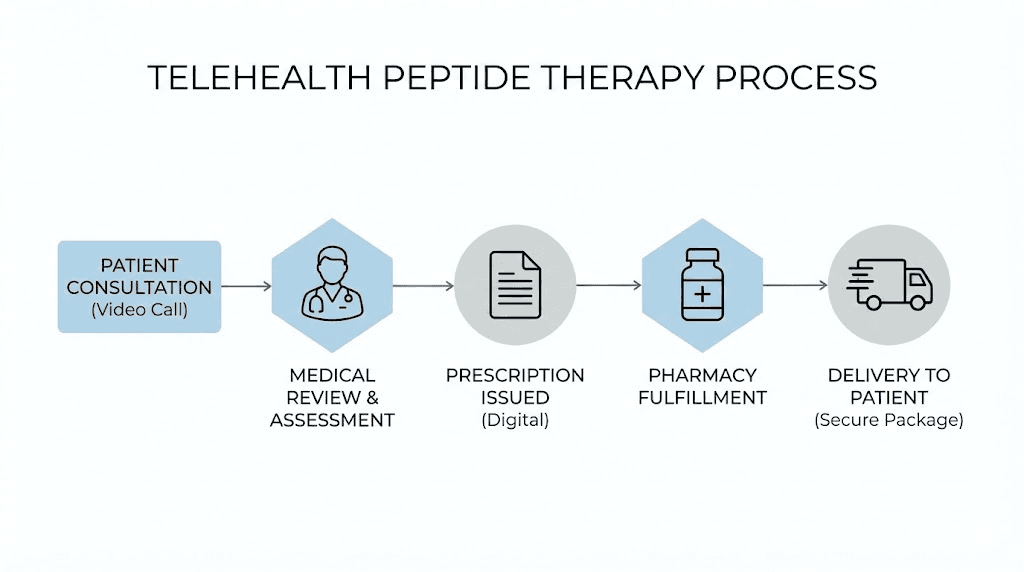
The core concept is straightforward. A licensed healthcare provider evaluates your health through virtual means, determines whether peptide therapy is appropriate, creates a personalized treatment plan, and prescribes the necessary compounds. Those compounds ship from a regulated pharmacy to your address. You administer them at home, typically through subcutaneous injections, and check in with your provider through follow-up video consultations.
Simple in theory. More nuanced in practice.
The providers range from large telehealth platforms with thousands of patients to boutique practices with specialized focus areas. Some offer only weight loss peptides like semaglutide and tirzepatide. Others provide comprehensive hormone optimization including testosterone-supporting peptides, anti-aging compounds, and healing peptides. The scope varies enormously depending on where you go.
What makes telehealth peptide therapy work is the same technology enabling any virtual medical care. Secure video platforms meet HIPAA requirements for privacy. Electronic health records track your history and progress. Digital lab orders let you visit any major lab chain for blood work. Electronic prescriptions transmit directly to pharmacies authorized to compound and ship peptides. None of this requires you to physically enter a specialty clinic.
How telehealth peptide services evolved
Telehealth peptide therapy did not emerge overnight. It evolved through several phases that explain why the current landscape looks the way it does.
The first phase happened before most people paid attention. Hormone optimization clinics, particularly those focused on testosterone replacement therapy, began offering video consultations to patients who lived far from their physical locations. These early adopters discovered that most of the ongoing management, the dose adjustments, symptom tracking, and periodic lab reviews, did not actually require hands-on examination. The model worked.
Then came broader telehealth normalization. The pandemic accelerated acceptance of virtual medical care by years. Patients who never would have considered a video doctor visit suddenly had no choice. Providers who resisted digital transformation adapted or closed. Regulatory bodies that had restricted telehealth loosened requirements. By the time things normalized, the genie was out of the bottle. Patients expected virtual options.
The third phase brought peptide-specific platforms. Entrepreneurs saw an opportunity. Weight loss peptides like tirzepatide and semaglutide were generating massive demand, but traditional healthcare was not set up to meet it. Specialty telehealth companies emerged to fill that gap, offering streamlined access to these compounds with minimal friction. Some focused exclusively on weight management. Others expanded to cover broader peptide categories.
We are now in a fourth phase. The market has matured enough that differentiation matters. Early platforms competed primarily on convenience and access. Current platforms compete on quality of care, comprehensiveness of monitoring, range of peptide options, and pricing transparency. The competition benefits patients who know how to evaluate their options.
Legal and regulatory framework
Understanding the legal landscape helps you evaluate which services are legitimate and which might be operating in gray areas.
Telehealth medical care is legal in all fifty states, but regulations vary significantly. Some states require an initial in-person visit before ongoing telehealth care. Others restrict which medications can be prescribed virtually. A few have specific rules about controlled substances that do not directly impact most peptides but create compliance complexity for providers.
The prescribing itself follows standard medical practice. A licensed provider must evaluate you, determine that treatment is appropriate, document their reasoning, and prescribe only what is medically justified. The virtual nature of the evaluation does not change these requirements. It just changes how the evaluation happens.
Pharmacy regulations add another layer. Peptides prescribed through telehealth typically come from compounding pharmacies rather than retail pharmacies like CVS or Walgreens. Compounding pharmacies operate under different rules. 503A pharmacies can compound medications for individual patients based on valid prescriptions. 503B pharmacies can produce larger quantities for distribution to healthcare facilities. The distinction matters because it affects which peptides are available and what quality controls apply.
The FDA is the wild card. Certain peptides that were previously compounded are now restricted. BPC-157 faced restrictions in recent years, pushing patients toward alternatives like PDA (Pentadecapeptide Arginate). TB-500 similarly landed on restricted lists. These regulatory changes happen periodically, and legitimate telehealth providers adjust their offerings accordingly. If a platform is offering compounds that are currently restricted for compounding, that is a red flag.
How online peptide consultations work
The consultation process follows a predictable pattern across most legitimate platforms. Understanding what to expect helps you prepare and evaluate whether a specific service is thorough enough to trust with your health.
Initial intake and assessment
Everything starts with forms. Lots of forms. A comprehensive medical history questionnaire covers your current health status, past medical conditions, medications you take, allergies, family history, and lifestyle factors. Good platforms ask detailed questions about your goals, previous experience with peptides if any, and what outcomes you hope to achieve.
This is not busywork. The information guides the provider in determining whether peptide therapy is appropriate for you and which specific protocols might help. Skipping this step or completing it carelessly sets up problems later.
Some platforms require lab work before the first consultation. This typically includes a comprehensive metabolic panel, hormone levels, and sometimes more specialized tests depending on what peptides you are seeking. The lab order goes to a major chain like Quest or Labcorp. You schedule a draw, get your blood taken, and results go directly to the telehealth platform.
Other platforms start with the consultation and order labs based on what the provider determines is necessary. Both approaches work. The lab-first approach is more thorough. The consultation-first approach is faster. Your preference and health complexity should guide which type of platform you choose.
The video consultation
The actual consultation varies dramatically in quality and depth across different platforms.
At the shallow end, some services conduct what are essentially checkbox exercises. A provider confirms your identity, reviews that you completed the forms, asks if you have questions, and moves to prescribing. These consultations might last ten minutes or less. They meet the legal requirement for a medical evaluation but barely provide meaningful medical guidance.
At the thorough end, consultations run thirty minutes to an hour. The provider reviews your health history in detail, asks clarifying questions, discusses your goals and expectations, explains how different peptide options might address your needs, covers potential side effects and monitoring requirements, and ensures you understand the commitment involved in peptide therapy. This level of care takes time.
What should you expect from a quality consultation? The provider should ask about your specific goals. Not just fat loss or muscle gain, but why you want those outcomes and what you have tried previously. They should review your lab work if available and explain what the numbers mean. They should discuss which peptides might help and why, including alternatives you might not have considered. They should explain administration, common side effects, and when to contact them with concerns. And they should outline the follow-up schedule.
If the consultation feels rushed, generic, or like a sales pitch, reconsider whether this is the right provider.
Treatment planning and prescription
Assuming the provider determines you are a good candidate for peptide therapy, the next step is developing your actual protocol.
This should not be one-size-fits-all. Your dosing should account for your body weight, health status, goals, and previous experience with similar compounds. Starting doses are typically conservative, with plans to adjust based on your response. The protocol should specify not just what to take but how much, how often, when to take it, and what monitoring happens along the way.
Good providers explain their reasoning. Why this peptide over alternatives? Why this dose rather than higher or lower? What results should you expect and by when? What would indicate the protocol needs adjustment? If you cannot get clear answers to these questions, the provider may not have given your case adequate thought.
The prescription itself transmits electronically to a partnered compounding pharmacy. Most telehealth peptide platforms work with specific pharmacies rather than letting you choose. This arrangement has pros and cons. It ensures quality control since the platform has vetted the pharmacy. It also limits your options and creates potential for markup since you cannot shop around.
Medication delivery and support
Peptides ship to your address, typically with cold packs to maintain stability. Shipping times vary from a few days to a couple weeks depending on the pharmacy and your location. Most platforms provide tracking so you know when to expect delivery.
What arrives depends on what you ordered. Lyophilized peptides come as powder in vials that require reconstitution. Pre-mixed peptides come ready to inject. Oral peptides come as capsules or tablets. Nasal sprays come ready to use. The format affects convenience, storage requirements, and in some cases effectiveness.
Most orders include the peptides themselves plus necessary supplies: bacteriostatic water for reconstitution, syringes, alcohol swabs, and sometimes sharps containers for disposal. If supplies are not included, factor that cost into your comparison shopping.
Support between consultations varies by platform. Some offer 24/7 access to medical staff through chat or phone. Others provide email support with responses within a business day or two. A few leave you largely on your own until your next scheduled appointment. For your first time using peptides, having accessible support is valuable. You will have questions.
Types of peptides available through telehealth
Not all peptides are available through telehealth platforms. Understanding which compounds you can access online, and which require other routes, helps set realistic expectations.
Weight loss peptides
This is the largest category by far. The demand for weight loss peptides drives most of the telehealth peptide industry.
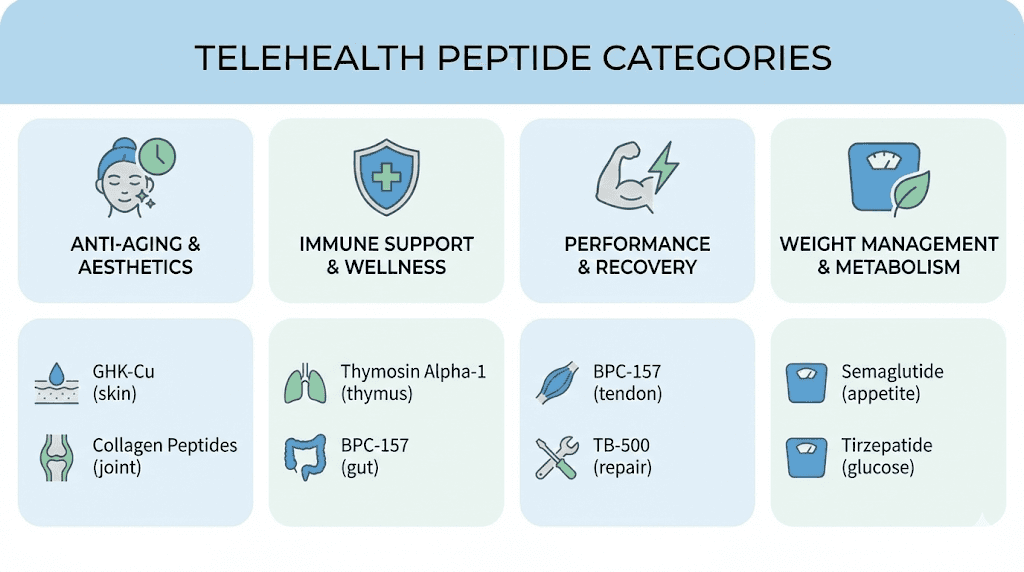
Semaglutide leads the pack. Originally developed for diabetes, it became a weight loss phenomenon when research showed consistent results. Semaglutide works as a GLP-1 receptor agonist, reducing appetite and slowing gastric emptying. Most patients experience significant weight loss over several months of use. The FDA-approved versions (Ozempic, Wegovy) are expensive, but compounded semaglutide is available through many telehealth platforms at lower cost.
Tirzepatide is the newer option getting considerable attention. It works on both GLP-1 and GIP receptors, potentially offering greater weight loss than semaglutide alone. Studies show impressive results, though it is newer to market and less widely available through telehealth. The brand name Zepbound carries high retail prices, making compounded versions attractive.
Cagrilintide represents the next wave. Combined with semaglutide (a combination called CagriSema), it shows even more impressive weight loss in trials. Availability through telehealth is still emerging.
AOD-9604 offers a different approach. Rather than appetite suppression, it works on fat metabolism directly. Results are more modest than GLP-1 agonists, but some prefer it for that reason. The gentler approach appeals to people who find appetite suppression too aggressive or who have contraindications to GLP-1 medications.
Tesofensine enters weight loss from the neurological angle, affecting dopamine, norepinephrine, and serotonin reuptake. Originally developed for Parkinson's disease, it showed significant weight loss effects in trials. Some telehealth platforms offer it, though availability varies.
Growth hormone secretagogues
These peptides stimulate your body to produce more growth hormone rather than providing growth hormone directly. The indirect approach offers potential benefits with potentially fewer risks than direct HGH administration.
Sermorelin is the classic in this category. It mimics growth hormone releasing hormone (GHRH), signaling your pituitary gland to produce and release more HGH. Benefits include improved sleep, body composition changes, recovery support, and energy enhancement. Results typically build over months of consistent use.
CJC-1295 works similarly but with longer duration of action. Often combined with Ipamorelin (a ghrelin mimetic that triggers GH release through a different pathway), this combination is one of the most popular GH secretagogue stacks available through telehealth. The CJC-1295/Ipamorelin combination provides sustained elevation of growth hormone with good tolerability.
Sermorelin with Ipamorelin is another common combination. Different platforms favor different blends, and the optimal choice may depend on your specific goals and response.
Tesamorelin focuses specifically on visceral fat reduction. FDA-approved for HIV-associated lipodystrophy, it has gained interest for its targeted effects on abdominal fat. Some telehealth platforms include it in their offerings.
Healing and recovery peptides
This category has faced the most regulatory challenges, limiting what is currently available through legitimate telehealth.
PDA (Pentadecapeptide Arginate) emerged as an alternative when BPC-157 faced compounding restrictions. It shares structural similarities and is being used for similar healing purposes. Availability through telehealth varies, and research is less extensive than its predecessor.
TB-500 faced similar restrictions to BPC-157. Some platforms still offer it, but the regulatory status creates uncertainty. If you find a platform offering TB-500, verify their compliance approach carefully.
The BPC-157/TB-500 stack was extremely popular for injury recovery before restrictions hit. Patients seeking similar benefits now explore alternatives or work with providers navigating the regulatory landscape.
Tendon and ligament repair remains an area of high interest. The peptide options have shifted, but the need has not. Discuss current options with telehealth providers who specialize in injury healing protocols.
Cognitive and neurological peptides
Semax is available through some telehealth platforms for cognitive enhancement. Originally developed in Russia for stroke recovery, it has gained popularity for focus, memory, and neuroprotection. Administration is typically via nasal spray.
Selank offers similar cognitive benefits with additional anxiolytic effects. Some users prefer it to Semax for the calming qualities.
Nootropic peptide stacks combine multiple cognitive-enhancing compounds. Availability varies significantly by platform.
Anti-aging and longevity peptides
Epitalon targets telomere length, a marker associated with cellular aging. Research suggests potential longevity benefits, though human data remains limited. Some telehealth platforms include it in anti-aging protocols.
GHK-Cu (copper peptide) supports tissue repair, collagen production, and skin health. Available through telehealth for injection or included in topical formulations.
SS-31 (Elamipretide) targets mitochondrial function. Interest in mitochondrial support for longevity has made this peptide increasingly popular despite limited availability.
MOTS-c is another mitochondrial peptide with metabolic benefits. Some telehealth platforms include it in longevity-focused protocols.
Evaluating online peptide therapy providers
The rapid growth of telehealth peptide services has created quality variance. Some platforms deliver excellent care. Others prioritize volume over thoroughness. A few operate in ethical gray zones. Knowing how to evaluate providers protects your health and investment.
Credentials and licensing
Start with the basics. Is the platform legally operating? Are the prescribers actually licensed to practice medicine?
Legitimate telehealth peptide services have licensed physicians or nurse practitioners evaluating patients and writing prescriptions. These licenses should be verifiable through state medical board websites. The prescriber should be licensed in your state since medical licensing is state-specific. Multi-state platforms employ providers licensed in each state they serve or utilize telehealth compacts that allow cross-state practice.
Be wary of platforms that are vague about who provides medical oversight. If you cannot easily determine who the prescribers are and verify their licenses, reconsider using that service.
The pharmacy partner matters too. Compounding pharmacies should be licensed and ideally accredited by the Pharmacy Compounding Accreditation Board (PCAB). This accreditation indicates quality standards beyond minimum legal requirements.
Ask which pharmacy will fill your prescription and verify its credentials.
Medical thoroughness
A legitimate medical service should feel like medical care, not like ordering supplements online.
Thorough providers require comprehensive health histories. They ask about conditions that might contraindicate certain peptides. They review medications for potential interactions. They order appropriate lab work before prescribing. They follow up to monitor your response.
The consultation should involve actual medical judgment. The provider should explain why certain peptides are appropriate for you and why others might not be. They should discuss risks specific to your situation. They should have clear criteria for when they would not prescribe and should demonstrate that they apply those criteria rather than approving everyone who applies.
If approval feels automatic, that is a problem. Legitimate peptide therapy is not appropriate for everyone. Providers who seem to approve all patients are not exercising adequate medical judgment.
Transparency on pricing
Hidden costs are endemic in telehealth peptide services. Understanding total cost requires asking the right questions upfront.
What does the consultation fee cover? Is it one-time or recurring? What happens if you need additional consultations between scheduled appointments?
What do the peptides themselves cost? Is this the pharmacy cost plus a markup or a bundled price? How does dosing affect cost, since you may need dose adjustments over time?
What about labs? Are they included or extra? How often will labs be required? Do you pay the platform or the lab directly?
What about supplies? Are syringes, bacteriostatic water, and other supplies included or separate charges?
What about shipping? Standard shipping? Overnight with cold packs? Who pays?
The total monthly cost often differs significantly from the headline price platforms advertise. Get clarity before committing.
Customer service and support
Things will come up. You will have questions. Something might go wrong with an order. How does the platform handle these situations?
Test customer service before you need it. Send an email with a pre-sales question and note the response time and quality. Call if there is a phone number. How long do you wait? Is the person knowledgeable?
Look for reviews specifically mentioning customer service experiences. Positive clinical outcomes matter, but so does support when you encounter problems.
For medical questions specifically, understand what access you have between scheduled consultations. Can you message your provider? Will they respond promptly? Is there a nurse line for urgent concerns? What happens if you experience a side effect that concerns you?
Red flags to watch for
Certain patterns suggest a platform to avoid.
Aggressive marketing with unrealistic claims should raise concern. Peptide therapy offers genuine benefits, but promises of dramatic transformation with no downsides are overselling.
Difficulty identifying who provides medical oversight is a serious red flag. Legitimate medical services are transparent about their clinical team.
Offering restricted peptides without acknowledgment of regulatory status suggests either ignorance or willful non-compliance. Neither inspires confidence.
Pressure to decide quickly, limited-time discounts, or refusal to let you think before committing are sales tactics, not medical care practices.
No requirement for labs or health assessment before prescribing indicates inadequate medical oversight. These requirements exist to protect you.
Extremely low prices often reflect quality compromises. Compounding quality peptides and providing legitimate medical oversight costs money. Prices dramatically below market rate should prompt questions about what corners are being cut.
Costs of online peptide therapy
Understanding what you will actually pay helps you budget appropriately and evaluate whether specific pricing is reasonable.
Consultation fees
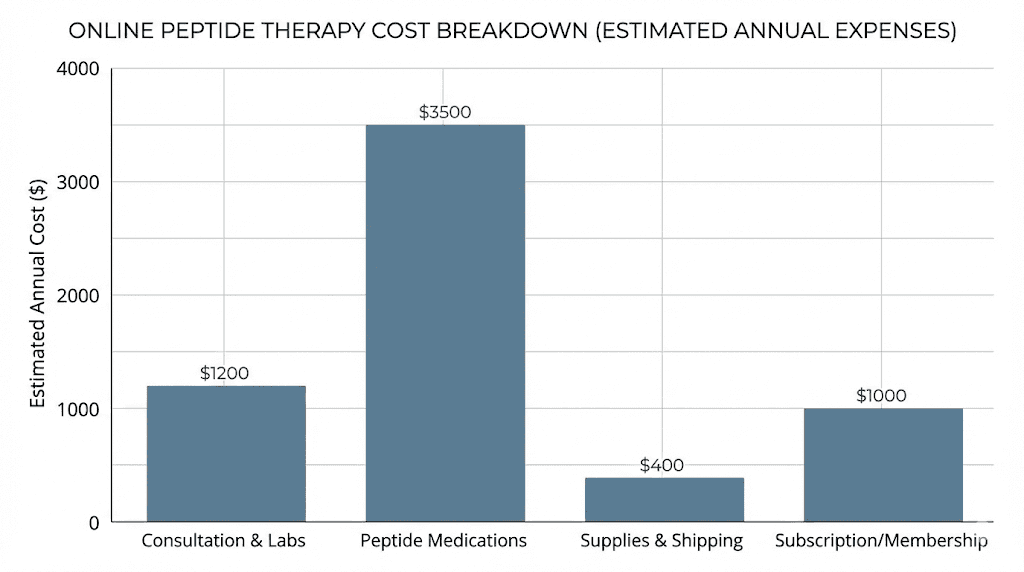
Initial consultations typically range from free (for platforms that bundle the cost into medication pricing) to around $300 for comprehensive evaluations with extended provider time.
The middle of the market sits around $100 to $150 for initial consultations. This covers a thorough evaluation without being excessive. Be cautious of both extremes. Free consultations may indicate minimal oversight. Very expensive consultations may not deliver proportionally more value.
Follow-up consultations are usually less expensive, ranging from $50 to $100 or included in monthly subscription models. The frequency of required follow-ups affects total annual cost. Some platforms require monthly check-ins. Others need quarterly appointments. Understand the cadence before signing up.
Medication costs
This is where costs vary most dramatically. The same peptide can cost two or three times as much from one platform versus another.
Semaglutide through telehealth typically runs $200 to $500 per month depending on dose and platform. Brand name versions cost significantly more through traditional insurance channels, making compounded versions attractive despite the out-of-pocket expense.
Tirzepatide pricing is similar or slightly higher, in the $250 to $600 monthly range for most platforms.
Growth hormone secretagogues like CJC-1295/Ipamorelin typically cost $150 to $350 per month. Sermorelin pricing is comparable.
Healing peptides when available range from $100 to $300 monthly depending on the specific compound and dosing.
These ranges reflect market variation as of early in the year. Prices change as the market evolves, new competitors enter, and regulatory changes affect supply.
Lab work costs
Initial labs may run $100 to $300 depending on what panels are ordered. Platforms that bundle lab costs into their pricing make budgeting easier but may order less comprehensive panels to control costs.
Ongoing monitoring labs add $50 to $200 per test depending on what is measured. Frequency varies by peptide and individual response. Weight loss peptides may require periodic metabolic panels. Growth hormone secretagogues may need IGF-1 testing. Testosterone-supporting peptides require hormone level monitoring.
If you have insurance, you may be able to submit labs for reimbursement even when the telehealth service itself is out-of-pocket. Check your coverage.
Supplies and shipping
Supplies add modest but real costs. Syringes, alcohol swabs, and sharps containers run $10 to $30 per month if not included. Bacteriostatic water for reconstitution is another periodic expense.
Shipping varies from free to $30 or more per shipment depending on whether overnight cold shipping is required. Monthly deliveries mean monthly shipping charges for some platforms.
Total cost estimation
For practical budgeting, most people should expect to spend $300 to $600 per month for weight loss peptide therapy including consultations, medications, labs, and supplies.
Growth hormone secretagogue protocols typically run $250 to $500 monthly all-in.
More complex protocols combining multiple peptides can exceed $800 to $1,200 monthly. Peptide stacks add cost but may provide more comprehensive benefits.
Full cost breakdowns help you plan appropriately and compare platforms on an apples-to-apples basis.
The telehealth consultation process step by step
Walking through exactly what happens from first click to first injection demystifies the process and helps you know what to expect.
Step one: platform selection and signup
Research several platforms before choosing.
Check credentials, read reviews, compare pricing, and evaluate the peptides offered against what you are seeking. SeekPeptides provides resources to help members evaluate telehealth options and make informed choices.
Signup involves creating an account and providing basic information. Most platforms collect your name, address, contact information, and insurance details if applicable. Some request payment information upfront while others wait until a prescription is issued.
Step two: health questionnaire
The intake questionnaire is your first opportunity to communicate your health status and goals to the medical team. Take it seriously.
Questions typically cover current health conditions, past medical history, surgeries, allergies, current medications and supplements, family health history, lifestyle factors (diet, exercise, sleep, stress), and specific symptoms or goals driving your interest in peptide therapy.
Answer thoroughly and honestly. Information you omit or misrepresent could lead to inappropriate prescriptions or missed contraindications. This is not the time for selective disclosure.
Step three: lab work (if required upfront)
Some platforms require baseline labs before the initial consultation. You will receive a lab order that you take to a draw site like Quest or Labcorp. Standard business hours apply at most locations, though some offer early morning or Saturday appointments.
Fasting may be required depending on which tests are ordered. The lab order should specify this. Follow instructions carefully since improper preparation can skew results.
Results typically come back within a few business days and transmit directly to the telehealth platform. You may also get access to view them yourself through the lab company's portal.
Step four: scheduling and preparing for consultation
Once labs are back (or immediately if labs are not required upfront), you will schedule your consultation. Availability varies by platform. Some offer appointments within days. Others have waiting lists extending weeks.
Prepare for your appointment by reviewing your health history, listing questions you want answered, and having a clear sense of your goals. What symptoms are you trying to address? What outcomes would make this investment worthwhile? What concerns do you have about peptide therapy?
Technical preparation matters too. Test your video and audio. Ensure adequate lighting. Find a private, quiet space. Treat this like an important medical appointment because it is one.
Step five: the consultation itself
Join the video call on time. Have your questions ready. Be prepared to discuss your health history in detail even though you already completed forms. The provider may ask clarifying questions.
Listen carefully to the provider's assessment. Ask questions when you do not understand something. Take notes on recommendations, especially dosing instructions and monitoring plans.
If the provider recommends something different from what you expected, ask why. Their reasoning should make sense based on your specific situation. If you feel rushed or pressured, speak up or consider whether this is the right provider for you.
Step six: prescription and pharmacy processing
If the provider determines peptide therapy is appropriate, they will send prescriptions to the partnered pharmacy. Processing time varies from same-day to a week or more depending on the pharmacy's workload and whether they need to compound your specific formulation.
You will typically receive notification when your prescription is processing and again when it ships. Track your shipment so you can receive it promptly since peptides often require refrigeration or temperature-controlled storage.
Step seven: receiving and storing your peptides
When your package arrives, inspect it carefully. Verify you received what was prescribed in the expected quantities. Check for any damage to vials or packaging. Note the expiration dates.
Store peptides according to instructions. Unreconstituted lyophilized peptides often store at room temperature but benefit from refrigeration. Reconstituted peptides typically require refrigeration. Some peptides are particularly temperature-sensitive. Improper storage degrades potency, wasting your investment.
Step eight: reconstitution and first administration
If your peptides arrived as lyophilized powder, you will need to reconstitute them before use. This involves adding bacteriostatic water to the powder vial in the correct amount to achieve your target concentration. The platform should provide instructions. Our reconstitution calculator helps verify calculations.
Your first injection or administration can feel daunting. Subcutaneous injections are simpler than they seem. The needle is small. The injection is shallow. Most people find the anticipation worse than the reality.
Follow your protocol exactly. Take the prescribed dose at the prescribed time. Note how you feel. Any immediate reactions should be documented and reported to your provider if concerning.
Step nine: ongoing monitoring and follow-ups
The work does not end with your first injection. Peptide therapy is an ongoing process requiring attention and adjustment.
Track your response. Note changes in how you feel, measurable outcomes like weight or body composition, any side effects, and questions that arise. This information guides future protocol adjustments.
Attend follow-up appointments as scheduled. These check-ins allow providers to assess your response, adjust dosing if needed, order monitoring labs, and address any concerns. Skipping follow-ups undermines the medical oversight that makes telehealth peptide therapy safe.
Repeat labs as directed. Periodic testing ensures the peptides are working as expected without causing problems. Changes in lab values may indicate need for dose adjustment or protocol modification.
What results to expect and when
Managing expectations helps you stick with protocols long enough to see benefits without becoming discouraged by unrealistic timelines.
General timeline patterns
Peptide results build gradually. Unlike pharmaceuticals that work within hours or days, most peptides require weeks to months of consistent use before significant changes become apparent.
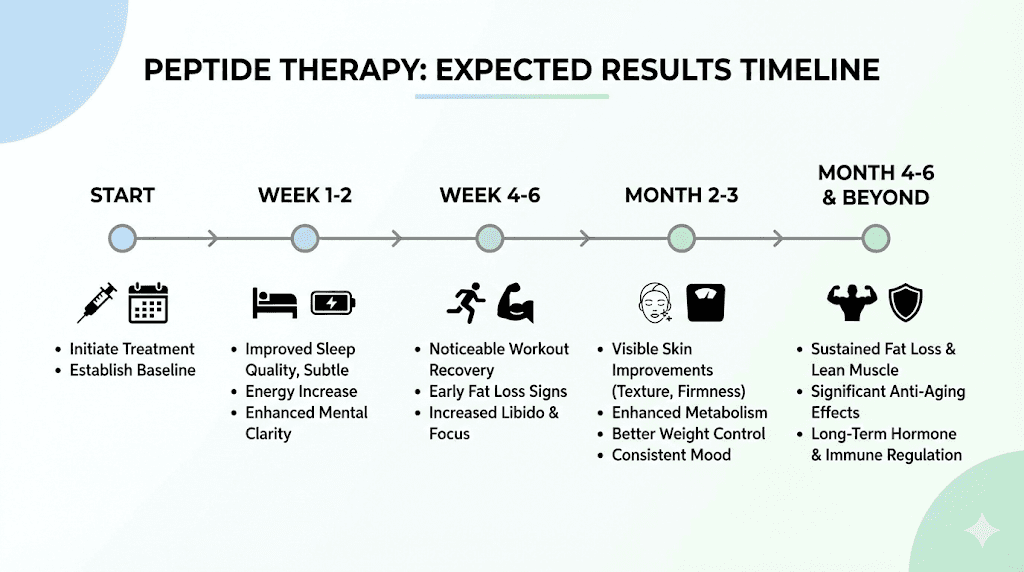
The first one to two weeks typically involve adaptation. Your body is adjusting to the new signals. You may notice subtle changes or nothing at all. Some people experience mild side effects during this period that diminish as adaptation occurs.
Weeks two through four often bring the first noticeable changes. For weight loss peptides, reduced appetite becomes apparent. For sleep-supporting peptides, sleep quality may improve. For energy-focused protocols, increased vitality may emerge. These early changes tend to be subtle rather than dramatic.
Months one through three is when measurable changes typically become significant. Weight loss shows on the scale. Body composition shifts become visible. Energy improvements stabilize. Sleep benefits consolidate. The protocol is working.
Months three through six represent full protocol expression. Growth hormone secretagogues need this long to show their full effects. Before and after comparisons become meaningful. You can assess whether the investment is delivering proportional value.
Weight loss peptide timelines
Semaglutide and tirzepatide typically show appetite reduction within the first couple weeks. Actual weight loss often begins in weeks two through four as the reduced calorie intake accumulates. Most people see significant results by months two through three, with continued progress through month six and beyond.
The dose titration matters. These peptides start at low doses and increase over time. Full doses take several weeks to reach. Expecting major results before reaching therapeutic dosing sets unrealistic expectations.
Typical weight loss ranges from 5% to 15% of body weight over six months of treatment, with individual variation based on starting point, diet, exercise, and other factors. Some people lose more. Some less. The range is wide.
Growth hormone secretagogue timelines
Growth hormone support works more gradually than weight loss peptides.
Sleep improvements often appear first, within two to four weeks for many users. This makes sense since growth hormone primarily releases during sleep, and these peptides influence that process.
Energy and recovery improvements typically follow over weeks four through eight. You may notice faster bounce-back from workouts or generally higher energy levels.
Body composition changes take longer. Expect three to six months for meaningful shifts in fat versus muscle distribution. Growth hormone effects on body composition are real but gradual.
Anti-aging effects are the longest to manifest and hardest to measure. Skin quality, hair changes, and general aging markers may shift over six months to a year of consistent use.
Healing peptide timelines
For injury recovery purposes, timelines depend heavily on the injury type and severity.
Acute injuries may show accelerated healing within two to four weeks of peptide support. Users often report reduced pain and faster return of function compared to previous injuries without peptide support.
Chronic issues take longer. Longstanding tendon problems, joint issues, or recurring injuries may require two to three months of consistent use before meaningful improvement. The longer a problem has existed, the longer the recovery typically takes.
Joint health improvements often develop gradually over weeks to months. Reduced inflammation and improved tissue quality accumulate over time rather than appearing suddenly.
Cognitive peptide timelines
Cognitive-enhancing peptides like Semax often work faster than other categories.
Acute effects on focus and mental clarity may appear within days of starting use. This makes cognitive peptides easier to evaluate quickly.
Sustained improvements in memory, learning, and neuroprotection take longer to assess, requiring weeks to months of use and potentially objective testing to measure.
Safety considerations for online peptide therapy
Virtual medical care introduces specific safety considerations beyond those inherent to peptide therapy itself.
Ensuring quality medical oversight
The fundamental safety question is whether you are receiving adequate medical supervision despite the virtual format.
Quality telehealth providers conduct thorough evaluations before prescribing. They require relevant lab work. They monitor your response through follow-up consultations. They are available for questions and concerns between appointments. They adjust protocols based on how you respond rather than running everyone through identical treatments.
The risk comes from platforms that minimize medical involvement to reduce costs and increase throughput. If your interaction with medical professionals feels perfunctory, the safety net of professional oversight may not be there when you need it.
Choose providers who demonstrate genuine medical engagement with your care. The convenience of telehealth should not come at the cost of appropriate supervision.
Medication quality and sourcing
Telehealth separates you from the pharmacy filling your prescription. You cannot inspect the facility, assess their practices, or verify what goes into your vials. This requires trust in the platform's vetting of their pharmacy partners.
Legitimate telehealth platforms use licensed, preferably PCAB-accredited compounding pharmacies operating under regulatory oversight. They can provide information about their pharmacy partners including licensing and accreditation status.
Warning signs include reluctance to disclose pharmacy information, sourcing from overseas facilities, or unusually low prices suggesting quality compromises. Third-party testing provides additional assurance, though not all platforms offer this.
Recognizing and responding to problems
Peptides generally have favorable safety profiles, but adverse reactions can occur. Knowing what to watch for and how to respond is essential.
Common side effects vary by peptide type. Weight loss peptides frequently cause nausea, especially during dose escalation. Growth hormone secretagogues may cause flushing, headaches, or water retention. Different peptides have different typical reactions.
Injection site reactions (redness, swelling, itching) are common and usually minor. Rotating injection sites and proper technique minimize these issues.
Serious reactions are rare but require immediate attention. Severe allergic reactions, significant cardiovascular symptoms, or concerning neurological changes warrant stopping the peptide and seeking medical care.
Have a plan for emergencies. Know how to reach your telehealth provider urgently. Have a local option (urgent care or emergency room) for situations requiring immediate evaluation. Do not assume problems will resolve on their own.
Interactions with other medications
Peptides can interact with other medications you take. Disclosing all medications during your initial evaluation allows providers to screen for problematic combinations.
Particular attention is needed for diabetes medications (GLP-1 peptides affect blood sugar), blood thinners (some peptides affect clotting), and hormone therapies (growth hormone secretagogues interact with hormone systems). Your provider should evaluate these interactions before prescribing.
If you start new medications while on peptide therapy, inform your peptide provider. Similarly, tell other healthcare providers about your peptide use. Coordination prevents dangerous interactions.
Honest assessment of telehealth limitations
Telehealth is not appropriate for all situations. Recognizing its limitations helps you get appropriate care.
Complex medical histories may require more thorough in-person evaluation than video consultations provide. Multiple serious conditions, unusual symptoms, or unclear diagnoses benefit from hands-on assessment.
Emergencies cannot be managed remotely. Telehealth works for routine management but not acute crises. Know when to seek local in-person care.
Some peptides or situations may require monitoring beyond what telehealth can provide. If your provider recommends transitioning to in-person care, take that recommendation seriously.
Comparing online platforms to traditional clinics
Understanding the trade-offs between telehealth and in-person peptide therapy helps you choose the right approach for your situation.
Advantages of online peptide therapy
Access. Geography no longer limits your options. Whether you live in a major city or rural area, telehealth platforms are available. You can access specialists who would otherwise be hours away.
Convenience. No travel time. No waiting rooms. Consultations happen from your home or office. Medications arrive by mail. The time savings are significant.
Privacy. Some people prefer discussing sensitive health topics from home rather than in a clinic setting. Telehealth offers discretion that matters to some patients.
Cost. Telehealth platforms often have lower overhead than brick-and-mortar clinics, potentially translating to lower prices. Not always, but often.
Flexibility. Scheduling is typically easier with telehealth. Many platforms offer evening and weekend appointments. Rescheduling is usually simpler than with traditional offices.
Advantages of traditional in-person clinics
Physical examination. Some conditions benefit from hands-on assessment that video cannot replicate. In-person clinics can perform examinations, take vital signs, and evaluate things that require physical presence.
On-site services. Blood draws, injections administered by staff, IV therapies, and other services requiring physical presence are available at clinics. Some patients prefer having injections done for them rather than self-administering.
Established relationships. Long-term relationships with local providers have value. They know your history, understand your context, and can coordinate with other local providers when needed.
Immediate access. When problems arise, being able to walk into a clinic for evaluation beats waiting for a telehealth appointment. Geographic proximity matters in urgent situations.
Hybrid approaches
Some clinics offer hybrid models combining periodic in-person visits with telehealth for routine follow-ups. This provides the relationship and hands-on capability of local care with the convenience of virtual check-ins.
You can also create your own hybrid approach by establishing care with a local provider for oversight while using telehealth for specific peptide access. Coordinate between providers to ensure everyone knows what you are taking.
State-by-state availability
Telehealth regulations vary by state, affecting what services are available where you live.
States with full telehealth peptide access
Most states allow comprehensive telehealth medical services including peptide prescribing. Platforms typically serve the majority of states without significant restrictions.
States with telehealth-friendly regulations generally allow initial consultations to be conducted virtually without prior in-person visits, permit prescribing of non-controlled medications through telehealth, and have reciprocity agreements allowing out-of-state providers to practice.
States with restrictions
A handful of states have stricter telehealth regulations that limit peptide therapy access.
As of early in the year, some platforms indicate services are unavailable in Alaska, Mississippi, and New Jersey due to specific state requirements. Other states may have partial restrictions affecting certain peptides or aspects of care.
Restrictions change over time as states update their telehealth laws. Verify current availability for your specific state when evaluating platforms.
Workarounds and considerations
If you live in a restricted state, options may include finding in-state telehealth providers (regulations often restrict out-of-state practice rather than telehealth itself), establishing care with an in-person clinic even if less convenient, or consulting with providers about alternative approaches compliant with your state's rules.
Do not assume platforms are being overly cautious. State medical licensing laws carry serious penalties for non-compliance. Platforms restricting service in certain states are protecting their licenses and your interests.
Frequently asked questions about online peptide therapy
Can any doctor prescribe peptides online?
Any licensed physician or qualified prescriber can potentially prescribe peptides, but most general practitioners are not familiar with peptide protocols. Telehealth platforms specializing in peptide therapy employ providers with specific training and experience in this area. Working with specialists rather than general practitioners typically produces better outcomes.
Is online peptide therapy legal?
Yes, telehealth medical care including peptide prescribing is legal when conducted by properly licensed providers following applicable regulations. The legality applies to the medical practice, not necessarily to every peptide. Some peptides face regulatory restrictions limiting their availability through compounding. Legal telehealth providers stay current on these regulations and adjust their offerings accordingly.
How do I know if an online peptide clinic is legitimate?
Verify prescriber licenses through state medical board websites. Check pharmacy partner accreditation. Look for transparent pricing and clear policies.
Read reviews from multiple sources. Legitimate operations welcome scrutiny because they have nothing to hide. Reluctance to provide credentials or references is a warning sign.
What happens if I have side effects?
Contact your telehealth provider according to their protocol for side effect reporting. Most platforms have systems for non-urgent concerns (secure messaging, scheduled calls) and urgent issues (phone lines, on-call providers). Document what you experienced including timing, severity, and any other relevant details. Your provider will advise whether to continue, adjust, or stop the peptide based on what happened.
Can I get peptides online without a prescription?
Research peptides are sold without prescriptions but are intended for laboratory use, not human administration. Using them carries significant risks including unknown purity, incorrect dosing, and lack of medical oversight. Legitimate peptide therapy for human use requires prescription through a licensed provider. The grey market exists but brings risks that outweigh the cost savings for most people.
How long do I need to continue peptide therapy?
Duration depends on your goals and the specific peptides. Weight loss peptides may be used for months to achieve target weight, potentially with ongoing maintenance. Growth hormone secretagogues are often used long-term for sustained benefits. Healing peptides may be needed only for the duration of recovery. Your provider should discuss expected treatment duration and what happens when you stop.
Will insurance cover online peptide therapy?
Generally no. Most insurance plans do not cover peptide therapy because it is considered elective or optimization-focused rather than medically necessary treatment. Some exceptions exist for FDA-approved peptides (like semaglutide for diabetes or weight management in certain plans), but compounded versions and most other peptides are out-of-pocket expenses. Some patients submit receipts to FSA or HSA accounts for partial tax advantages.
Can I switch telehealth platforms if I am unhappy?
Yes. You are not locked into any platform. However, you may need new consultations and evaluations with a new provider since medical records and prescriptions do not automatically transfer. Some platforms may share records if you sign appropriate releases. Consider the switching costs (time, new consultation fees, potential gaps in medication) before committing to a platform.
Choosing the right online peptide therapy provider for your needs
With many platforms available, selecting the right one requires matching their strengths to your specific situation.
For weight loss focus
If your primary goal is weight loss, look for platforms specializing in GLP-1 agonists with proven track records. Check whether they offer both semaglutide and tirzepatide since having options allows switching if one does not work for you. Ask about their protocols for dose titration and side effect management since these significantly impact outcomes and tolerability.
For growth hormone support
Those seeking growth hormone optimization should look for platforms offering multiple secretagogue options (sermorelin, CJC-1295, Ipamorelin, tesamorelin) with providers experienced in these protocols. Ask about monitoring practices since growth hormone support benefits from periodic IGF-1 testing to assess response.
For comprehensive care
If you want access to multiple peptide categories, look for platforms with broad offerings rather than narrow specialization. The convenience of managing everything through one provider outweighs minor price differences. Ensure the platform has providers experienced across the categories you need.
For budget considerations
Price-sensitive users should compare total costs carefully, including consultations, medications, labs, supplies, and shipping. The cheapest consultation means nothing if medication prices are inflated. Get complete pricing before committing. Consider whether subscription models (predictable monthly costs) or a la carte pricing (pay only for what you use) better fits your situation.
For maximum support
If you value extensive support and guidance, look for platforms with comprehensive educational resources, responsive customer service, accessible providers between appointments, and communities of fellow users. SeekPeptides provides this community and educational foundation that complements telehealth medical care.
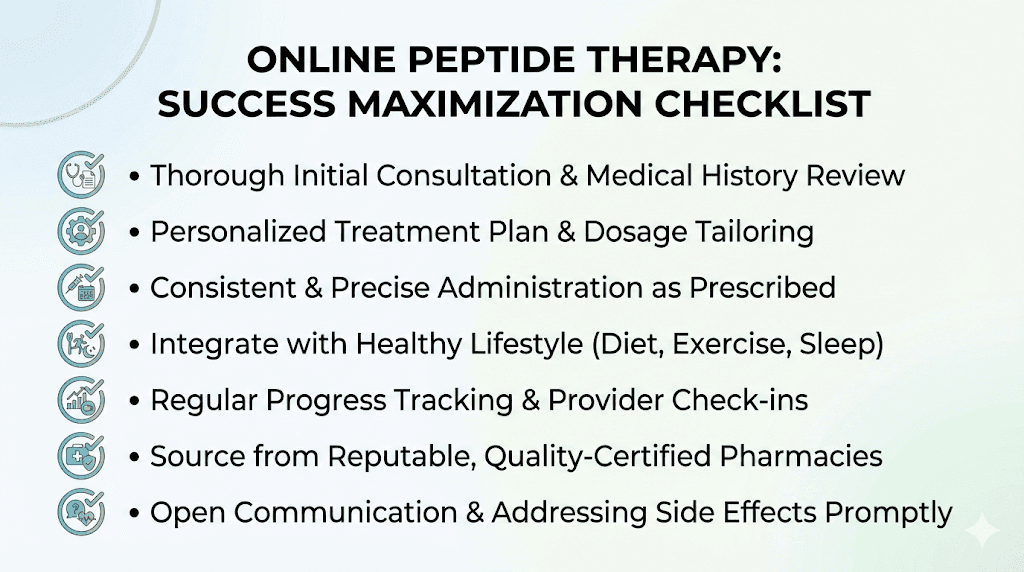
Getting the most from your online peptide therapy
Success with telehealth peptide therapy depends partly on the platform and provider, but equally on how you engage with the process.
Be a proactive patient
Do not passively receive care. Come to consultations prepared with questions. Track your response and share observations with your provider. If something is not working, speak up. If you have concerns, voice them. You are the expert on how you feel. Your provider is the expert on peptides. Collaboration produces the best outcomes.
Follow protocols precisely
Peptide protocols are designed with specific timing, dosing, and administration in mind. Deviating from instructions (skipping doses, changing timing, adjusting amounts without guidance) undermines both effectiveness and your provider's ability to assess your response. If you cannot or do not want to follow a protocol, discuss that with your provider rather than freelancing.
Track everything
Keep records of what you take, when you take it, how you feel, any side effects, and objective measures relevant to your goals. This data makes follow-up consultations more productive and helps identify patterns that inform protocol adjustments.
Give it time
Peptide therapy requires patience. Results build over weeks and months. Abandoning a protocol after two weeks because you do not see dramatic changes wastes your investment and prevents you from experiencing the benefits. Commit to giving protocols adequate time to work before evaluating success or failure.
Address lifestyle factors
Peptides work best when supported by appropriate lifestyle. Sleep, nutrition, exercise, and stress management all influence how well peptides work. A powerful weight loss peptide cannot fully compensate for poor sleep and high stress. Growth hormone secretagogues work better with consistent exercise. Healing peptides benefit from adequate protein intake. Do not expect peptides to override fundamentals.
Stay educated
The peptide landscape evolves. Regulations change. New compounds emerge. Research advances. Staying informed helps you have productive conversations with providers, evaluate new options, and make better decisions about your care. Resources like the SeekPeptides blog and community keep you current on what matters.
The future of online peptide therapy
Telehealth peptide therapy will continue evolving as technology advances, regulations adapt, and understanding deepens.
Technology integration
Wearable devices and health apps increasingly capture data relevant to peptide therapy: sleep quality, heart rate variability, activity levels, and body composition. Future platforms will likely integrate this data directly into patient monitoring, enabling more precise protocol adjustments based on real-world metrics rather than periodic self-reports.
AI assistance will probably grow in peptide protocol development, analyzing patterns across thousands of patients to optimize individual recommendations. The provider remains essential for judgment calls, but data-driven insights will enhance decision-making.
Regulatory evolution
The regulatory environment for both telehealth and peptides will continue changing. Some restrictions may loosen as telemedicine becomes more normalized. Others may tighten as concerns about quality and oversight grow. Legitimate platforms will adapt to whatever regulatory landscape emerges.
Certain peptides currently in research phases will eventually gain FDA approval, expanding what is available through mainstream channels. Others may face new restrictions. The specific peptides available through telehealth will shift over time.
Market maturation
As the market matures, expect consolidation among telehealth peptide platforms. Some will merge. Some will fail. The survivors will likely offer increasingly comprehensive services with better technology, broader peptide options, and more sophisticated monitoring.
Quality differentiation will intensify. Early platforms competed on access. Future platforms will compete on outcomes, demonstrating through data that their protocols produce better results. Patients will benefit from this competition through improved care.
Personalization advances
Genetic testing, microbiome analysis, and other advanced assessments will increasingly inform peptide selection and dosing. Personalization beyond basic factors like weight and age will become standard, potentially improving response rates and reducing side effects.
The combination of more data, better analysis, and growing clinical experience will make peptide therapy more effective and predictable over time.
External resources
National Association of Boards of Pharmacy - Compounding Information
Pharmacy Compounding Accreditation Board
For researchers serious about optimizing their peptide protocols, SeekPeptides offers the most comprehensive resource available, with evidence-based guides, proven protocols, and a community of thousands who have navigated these exact questions about online peptide therapy.