Jan 29, 2026
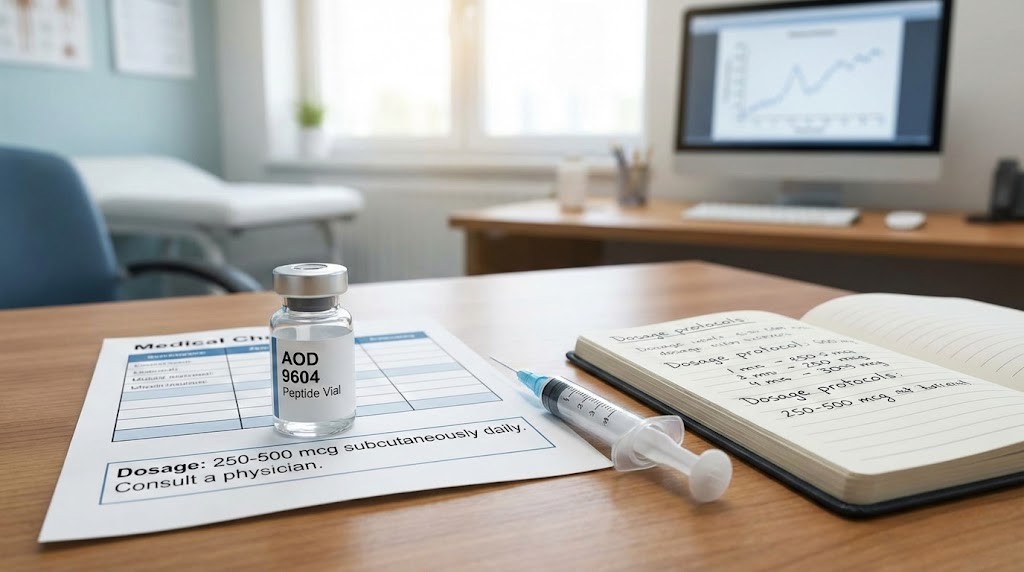
You have been researching AOD-9604 for weeks. The mechanism makes sense. Fat oxidation without blood sugar disruption. No IGF-1 elevation. A clean approach to stubborn adipose tissue. But when you start looking at actual dosing protocols, everything gets murky fast. One source says 250mcg. Another recommends 500mcg. Some suggest splitting doses, others insist on single morning administration. The confusion compounds when you factor in reconstitution calculations, cycle lengths, and body weight considerations.
The frustration is real.
Here is what actually matters. AOD-9604 dosing is not complicated once you understand the underlying principles. Clinical trials tested doses ranging from 250mcg to 1mg daily, with most protocols settling around 300-500mcg for optimal fat metabolism support. The peptide, derived from the C-terminal fragment of human growth hormone (amino acids 176-191), targets adipose tissue specifically without the broader metabolic effects associated with full growth hormone therapy. This selectivity means dosing follows different principles than other peptide protocols.
This guide provides everything you need for precise AOD-9604 administration. Weight-based calculations. Timing optimization. Reconstitution techniques. Cycling strategies. What to expect week by week. And the specific adjustments that separate mediocre results from optimal outcomes. Whether you are approaching AOD-9604 for the first time or refining an existing protocol, the information here comes from clinical research, established protocols, and practical application.
SeekPeptides members have access to detailed protocol builders and personalized guidance that accounts for individual factors most resources completely ignore. But even without that level of customization, understanding the core dosing principles will put you ahead of most researchers fumbling through contradictory information online.
Understanding AOD-9604 mechanism for proper dosing
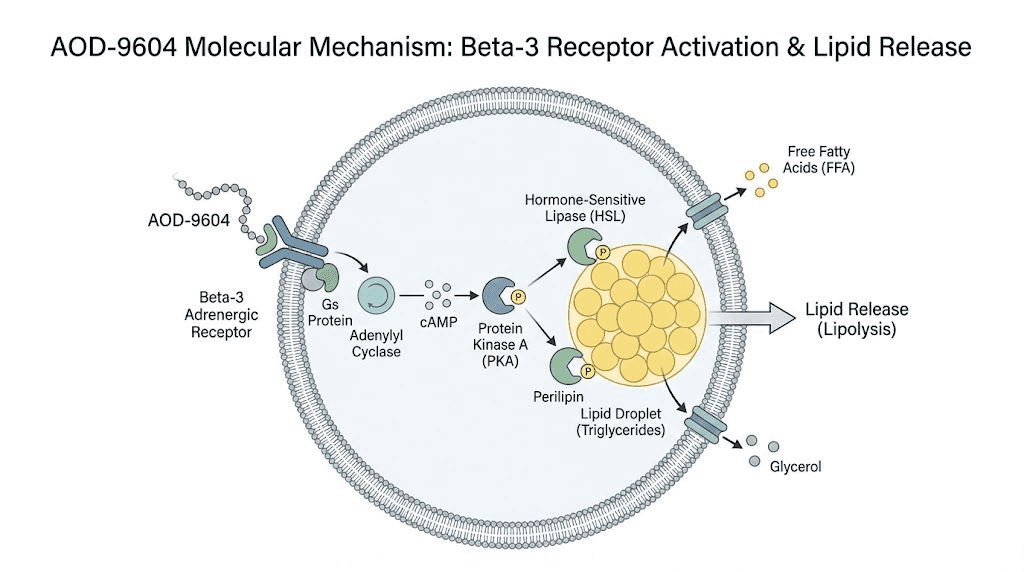
Before calculating your first dose, you need to understand what AOD-9604 actually does at the cellular level. This is not academic information, it directly impacts how you should dose and time your administration. The peptide functions through beta-3 adrenergic receptor activation in adipose tissue. When these receptors activate, fat cells release stored lipids for energy use. Studies in mice confirmed that animals lacking beta-3 receptors showed no response to AOD-9604, proving this pathway is essential to the mechanism.
This matters for dosing because beta-3 receptor sensitivity varies throughout the day and in response to nutritional status. Administering AOD-9604 when these receptors are already occupied or downregulated produces suboptimal results regardless of dose. The peptide mechanism creates a cascade that promotes lipolysis without affecting blood sugar regulation or triggering the growth-promoting pathways associated with full growth hormone.
Clinical research demonstrated that AOD-9604 does not elevate IGF-1 levels, which distinguishes it from other fat loss peptides. This selective action means you can dose more aggressively without concerns about the side effects typically associated with growth hormone elevation. It also means the dosing window is more flexible than peptides that require precise timing around growth hormone release patterns.
Why standard dosing ranges exist
The 300-500mcg daily range did not appear arbitrarily. Six clinical trials involving over 900 participants established this window through systematic dose-finding studies. Initial research tested doses as low as 250mcg and as high as 1mg daily. The lower end showed measurable effects on fat metabolism but slower results. The upper end provided no additional benefit while increasing cost.
One 12-week randomized clinical trial found that subjects receiving 1mg daily lost an average of 2.6kg compared to 0.8kg in the placebo group. However, subsequent analysis showed that 500mcg produced nearly identical results to 1mg in body composition changes. This ceiling effect is important. Doubling your dose does not double your results. It doubles your cost while providing diminishing returns.
The practical sweet spot lands between 300-500mcg daily for most individuals. Beginners typically start at 300mcg to assess tolerance and response. Those with more adipose tissue or slower initial response may benefit from increasing to 400-500mcg. Going beyond 500mcg rarely provides additional benefit and may increase the likelihood of mild side effects like headaches or injection site reactions.
The difference between clinical and practical dosing
Clinical trials operated under controlled conditions that do not reflect real-world use. Participants received pharmaceutical-grade product with verified purity. Administration happened under supervision with precise measurement. Compliance was tracked meticulously. Your situation differs.
Research-grade peptides vary in purity. Home reconstitution introduces potential for error. Self-administration means you control timing and technique. These factors suggest starting slightly higher than the minimum effective clinical dose to account for real-world variability. A 300mcg protocol in the clinical setting might translate to 350-400mcg in practical application to ensure adequate exposure.
This does not mean more is better. It means precision matters more outside controlled environments. Using a peptide calculator for accurate reconstitution, maintaining consistent timing, and tracking response allows you to dial in your optimal dose over time rather than guessing based on internet recommendations.
Body weight-based AOD-9604 dosing protocols
Body composition significantly impacts peptide distribution and effectiveness. A 150lb individual and a 250lb individual should not use identical doses and expect equivalent results. The additional adipose tissue in heavier individuals creates a larger target for the peptide but also means more tissue requires the signal to release stored lipids.
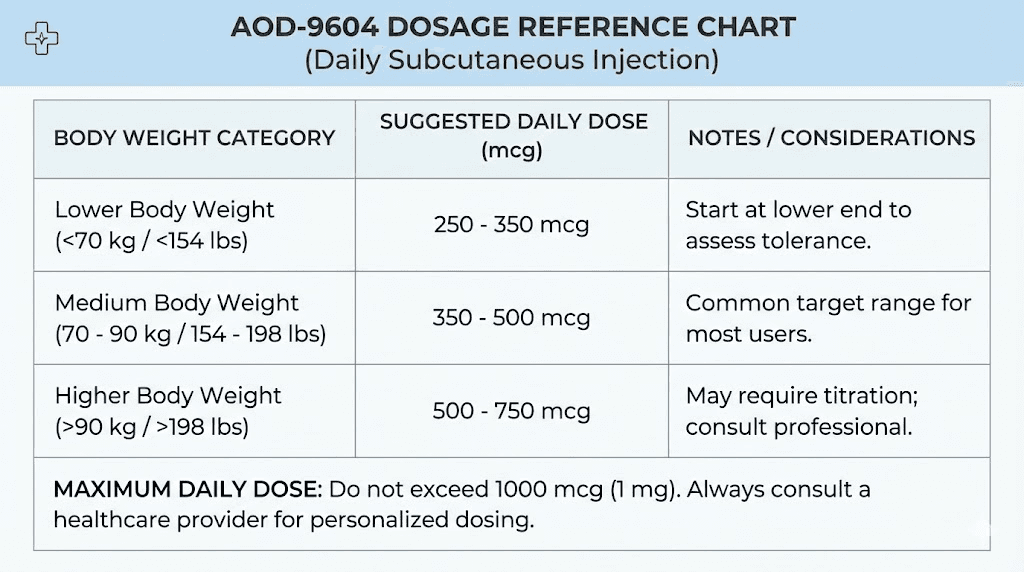
Weight-based dosing provides a more individualized approach than flat-dose recommendations. Clinical research suggested doses in the range of 1-10mcg per kilogram of body weight showed efficacy, though most protocols standardized around 4-6mcg/kg for practical application.
Dosing by body weight category
Under 160 pounds (72kg): Start with 300mcg daily. This provides approximately 4mcg/kg for a 160lb individual, falling within the effective clinical range. Lighter individuals often respond well to lower doses because less adipose tissue exists for the peptide to target. Beginning at 300mcg allows assessment of response without overshooting the necessary dose.
160-200 pounds (72-90kg): The standard 400mcg daily protocol works well for most individuals in this range. This represents the most common starting point in practical protocols and aligns with the midpoint of clinical dosing ranges adjusted for average body composition.
200-250 pounds (90-113kg): Consider 450-500mcg daily. Larger individuals with more adipose tissue benefit from doses at the upper end of standard ranges. The additional peptide ensures adequate signaling across greater tissue volume. Some protocols recommend splitting this dose into morning and evening administration for sustained effect.
Over 250 pounds (113kg+): Maximum standard dosing of 500mcg applies, though some individuals may benefit from extending cycle length rather than increasing dose. Beyond 500mcg, the risk-benefit ratio becomes less favorable. For individuals significantly above 250 pounds, extended protocols of 16-20 weeks rather than higher daily doses often produce better outcomes.
These ranges serve as starting points. Individual response varies based on factors including metabolic rate, insulin sensitivity, activity level, and previous peptide experience. SeekPeptides offers personalized protocol builders that account for these variables, but even without that level of customization, beginning within these ranges and adjusting based on response produces reliable results.
Adjusting dose based on response
Initial dosing represents a starting point, not a final destination. Assess response at two-week intervals during your first cycle. Meaningful fat loss indicators include measurable changes in body composition, increased energy during fasted states, and visible changes in stubborn fat areas.
If response at 300mcg appears minimal after two weeks, increase to 400mcg. If 400mcg produces steady results, maintain that dose. If results plateau at 400mcg after four weeks, consider 500mcg for the remainder of the cycle. Never increase more than 100mcg at a time, and allow at least one week at each dose before further adjustment.
Signs you may need to reduce dose include persistent headaches, unusual fatigue, or injection site reactions that worsen over time. These indicate either excessive dosing or sensitivity to the peptide. Reducing by 50-100mcg often resolves these issues while maintaining effectiveness. The goal is the minimum effective dose, not the maximum tolerable dose.
Timing and administration protocols
When you take AOD-9604 matters almost as much as how much you take. The peptide interacts with fat metabolism pathways that follow circadian rhythms and respond to nutritional status. Optimal timing enhances effectiveness while poor timing can waste a significant portion of each dose.
Morning fasted administration
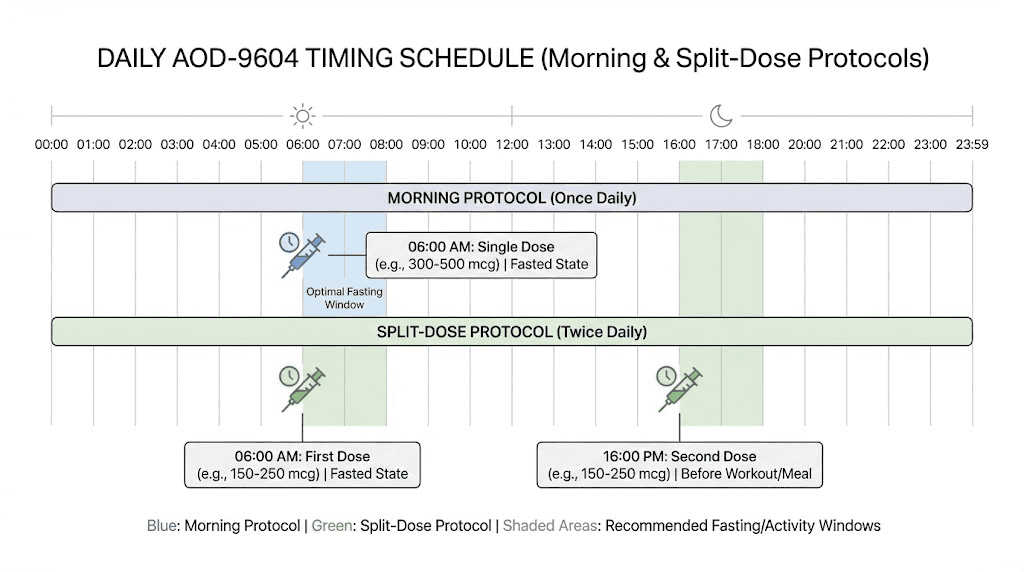
The most effective timing for AOD-9604 is morning administration in a fasted state. This typically means 30-60 minutes before your first meal, upon waking. During the overnight fast, your body has already shifted toward fat oxidation for energy. Introducing AOD-9604 during this natural lipolytic window amplifies the effect.
The absence of dietary carbohydrates when you administer the peptide allows it to preferentially target stored adipose tissue. If you eat before administration, particularly foods containing carbohydrates, insulin levels rise and partially inhibit the fat-releasing pathways AOD-9604 activates. This does not completely negate the peptide, but it reduces efficiency.
For those practicing intermittent fasting, administration at the end of the fasting window, just before breaking the fast, provides a strong lipolytic signal during an already optimized metabolic state. The combination of extended fasting plus AOD-9604 creates a synergistic effect that enhances fat mobilization.
Split dosing protocols
Some protocols divide the daily dose into morning and evening administrations. This approach maintains more consistent peptide levels throughout the day and may provide advantages for individuals using doses at the higher end of the range (450-500mcg daily).
Split dosing typically follows a 60/40 or 50/50 distribution. The 60/40 approach places 60 percent of the dose in the morning (fasted) and 40 percent in the evening (before dinner or before bed). The morning dose captures the primary lipolytic window while the evening dose extends the fat-burning signal.
A 500mcg daily protocol under split dosing would look like: 300mcg upon waking (fasted), then 200mcg approximately 30 minutes before dinner or before bed on an empty stomach. The evening dose works best if administered at least two hours after your last meal, ensuring reduced insulin interference.
Not everyone benefits from split dosing. If single morning administration produces satisfactory results, adding complexity provides no advantage. Split dosing becomes valuable when single dosing produces inconsistent results, when doses above 400mcg are needed, or when evening administration fits better into lifestyle patterns.
What to avoid during administration
Certain conditions reduce AOD-9604 effectiveness regardless of dose or timing. Avoid administration immediately after meals, particularly high-carbohydrate meals. Elevated insulin levels directly counteract the lipolytic signaling AOD-9604 initiates. Wait at least two hours after eating before administering.
Avoid administration during or immediately after intense exercise. Post-exercise metabolic changes, including elevated cortisol and altered blood flow patterns, may affect peptide distribution and receptor availability. If training in the morning, administer AOD-9604 either 30-60 minutes before training or wait until later in the day.
Alcohol consumption significantly impairs fat metabolism and should be minimized during AOD-9604 protocols. Alcohol preferentially becomes the primary fuel source when present, shutting down fat oxidation pathways regardless of peptide signaling. This does not mean complete abstinence is required, but regular alcohol consumption will substantially reduce protocol effectiveness.
Reconstitution and measurement accuracy
Proper reconstitution determines whether your calculated dose matches what you actually administer. Errors in this step cascade through your entire protocol, making accurate dosing impossible regardless of how carefully you plan timing and amount.
Standard reconstitution for AOD-9604
AOD-9604 typically arrives as lyophilized (freeze-dried) powder in sealed vials, most commonly in 2mg or 5mg quantities. The powder requires reconstitution with bacteriostatic water before administration. The amount of water you add determines the concentration and directly affects measurement accuracy.
For a 5mg vial, adding 2ml of bacteriostatic water creates a concentration of 2.5mg/ml (2500mcg/ml). This means every 0.1ml (10 units on a standard insulin syringe) contains 250mcg of AOD-9604. This concentration allows for precise dosing across the typical 300-500mcg range with standard insulin syringes.
Alternative reconstitution for 5mg vial: Adding 2.5ml of bacteriostatic water creates a concentration of 2mg/ml (2000mcg/ml). Each 0.1ml contains 200mcg. This concentration works well for those wanting to dose in 100mcg increments, such as 300mcg (0.15ml) or 400mcg (0.2ml).
For a 2mg vial, adding 1ml of bacteriostatic water creates a concentration of 2mg/ml (2000mcg/ml). Adding 2ml creates 1mg/ml (1000mcg/ml). The latter concentration makes measurement easier: 0.3ml equals 300mcg, 0.4ml equals 400mcg, and so on.
Reconstitution technique
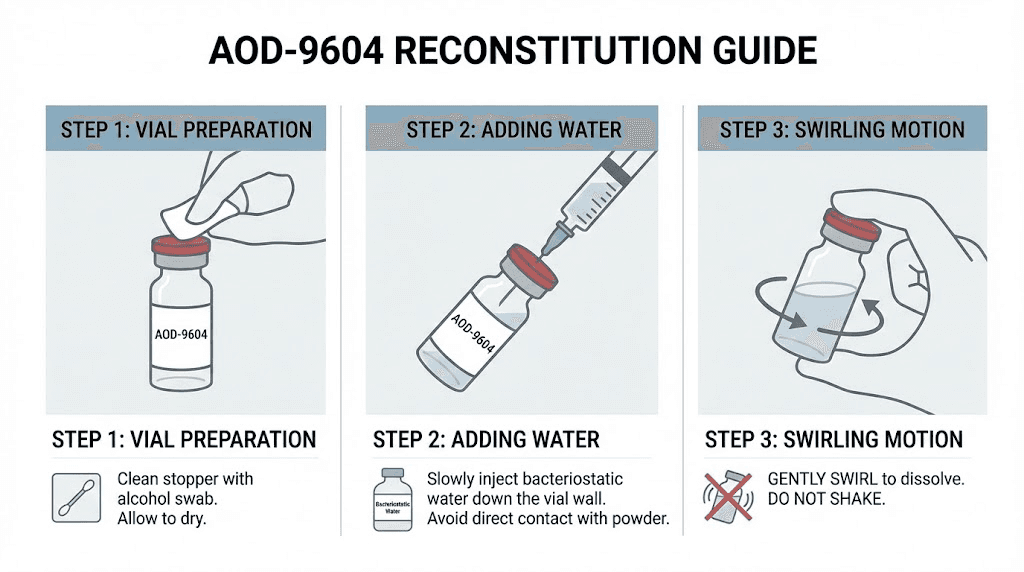
Proper technique protects peptide integrity. Clean the rubber stopper of the vial with an alcohol prep pad before inserting the needle. Draw your chosen volume of bacteriostatic water into the syringe. Insert the needle at a slight angle through the stopper.
Critical step: Direct the water stream against the inside wall of the vial, not directly onto the powder. Direct force can damage peptide structure. Let the water run slowly down the vial wall where it will contact the powder gently.
After adding all water, do not shake the vial. Shaking creates foam and can denature the peptide. Instead, gently swirl the vial until the powder completely dissolves. If cloudiness persists, let the vial rest for 5-10 minutes and swirl again. The solution should be clear and colorless when ready for use.
Once reconstituted, the vial should be stored in the refrigerator at 2-8 degrees Celsius (35-46 degrees Fahrenheit). Reconstituted AOD-9604 typically remains stable for 30-45 days when properly refrigerated. Avoid freezing, as freeze-thaw cycles degrade the peptide. Protect from light.
Using a reconstitution calculator
Mathematics errors compound quickly. A simple mistake in calculating concentration means every subsequent dose is wrong. Use the SeekPeptides reconstitution calculator to eliminate human error from this process.
Input your vial size (2mg, 5mg, etc.) and the amount of bacteriostatic water you plan to add. The calculator outputs the resulting concentration and shows exactly how many units on your syringe correspond to your target dose. This removes guesswork and ensures consistency throughout your protocol.
Document your reconstitution details for each vial. Note the date of reconstitution, amount of water added, resulting concentration, and calculated draw volume for your target dose. This documentation prevents confusion when you return to the vial for subsequent doses and helps track any inconsistencies in response that might indicate degradation or error.
Cycle length and breaks
AOD-9604 protocols require structured cycling to maintain effectiveness and avoid potential receptor downregulation. Unlike some peptides that can be used indefinitely, AOD-9604 benefits from defined use periods followed by breaks.
Standard cycle lengths
Most AOD-9604 protocols run 8-12 weeks. This duration allows sufficient time to produce meaningful fat loss results while avoiding the plateau effect that can occur with extended continuous use. Shorter cycles (4-6 weeks) are sometimes used for cutting phases or competition preparation, while longer cycles (12-16 weeks) suit individuals with significant fat loss goals.
For first-time users, an 8-week cycle provides an excellent introduction. This timeframe allows assessment of individual response, opportunity to adjust dosing, and generation of meaningful results without committing to an extended protocol. Most users see initial changes by week 2-3 and significant results by week 6-8.
A 12-week cycle suits those with moderate to substantial fat loss goals or those who showed strong initial response during shorter cycles. The additional weeks compound results, particularly when combined with appropriate nutrition and training protocols.
Extended 16-week cycles are occasionally used for individuals over 250 pounds or those with extensive fat loss goals. These longer cycles require more careful monitoring and may benefit from slight dose reductions in weeks 13-16 to maintain receptor sensitivity.
Break periods between cycles
Between AOD-9604 cycles, a break period allows receptor sensitivity to restore and prevents potential adaptation that could reduce effectiveness in future cycles. Standard break periods run 4-6 weeks, roughly half the length of the preceding cycle.
An 8-week cycle typically pairs with a 4-week break. A 12-week cycle pairs with a 4-6 week break. During the break, fat loss may slow but should not completely reverse if nutrition and activity levels remain consistent. The break period is not a return to pre-protocol habits but a period of peptide cessation while maintaining supportive behaviors.
Some protocols use an extended break matching the cycle length (8 weeks on, 8 weeks off). This conservative approach provides maximum receptor recovery and works well for long-term users planning multiple cycles over a year or more. The trade-off is more time off the peptide, but often better results during active cycles.
Cycling strategies for sustained results
Cycling different peptides during AOD-9604 breaks can maintain fat loss momentum through different mechanisms. Some researchers incorporate CJC-1295 and Ipamorelin during AOD-9604 breaks, as these growth hormone secretagogues work through entirely different pathways.
Another approach uses 5-amino-1MQ during breaks. This compound targets the NNMT enzyme involved in fat cell metabolism without overlapping with AOD-9604 mechanisms. Alternating between these approaches provides continuous fat loss support while respecting the need for receptor recovery.
SeekPeptides provides detailed cycling protocols for members that coordinate multiple peptides for sustained results. These personalized schedules account for individual response patterns and goals, optimizing the timing of different compounds throughout the year.
Stacking AOD-9604 with other peptides
AOD-9604 can be combined with other peptides to address multiple goals simultaneously or enhance fat loss through complementary mechanisms. Stacking requires understanding how different compounds interact and adjusting protocols accordingly.
AOD-9604 plus growth hormone secretagogues
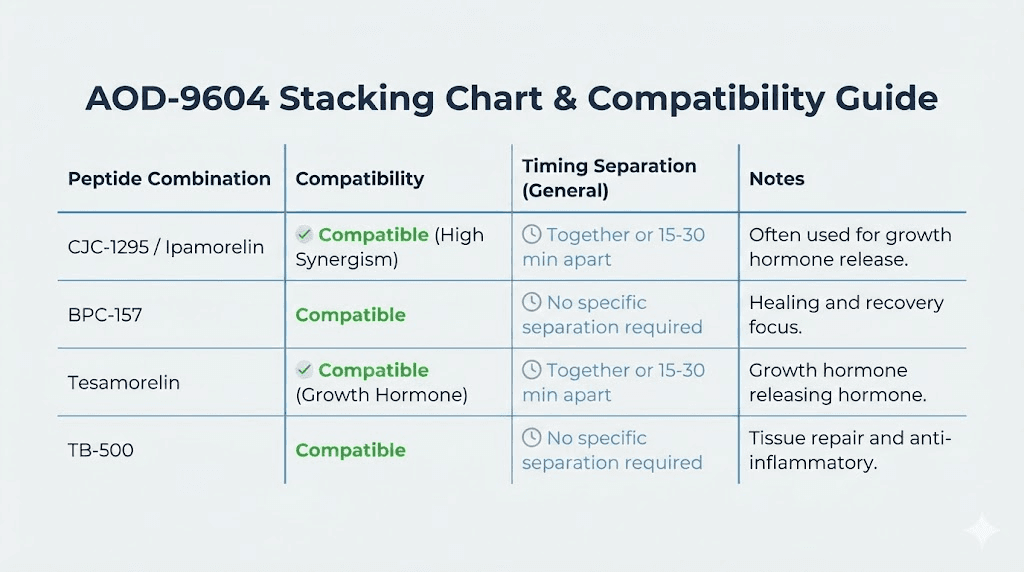
Combining AOD-9604 with growth hormone secretagogues like CJC-1295/Ipamorelin creates a synergistic approach to body composition. AOD-9604 directly targets fat tissue while the secretagogues stimulate endogenous growth hormone release, supporting both fat loss and lean mass preservation.
In this stack, AOD-9604 timing typically shifts. Rather than morning administration competing with the growth hormone peak stimulated by secretagogues (often administered at night), AOD-9604 moves to morning while CJC-1295/Ipamorelin administers before bed. This separation allows each compound to work optimally without interference.
Dosing adjustments may be needed. Some users reduce AOD-9604 by 50-100mcg when stacking, as the combined effect on fat metabolism may produce stronger results than either compound alone. Starting at the lower end of dosing ranges and adjusting upward based on response prevents overshooting.
AOD-9604 plus healing peptides
For those addressing both body composition and recovery goals, AOD-9604 can stack with BPC-157 or TB-500. These healing peptides work through entirely different pathways, making concurrent use straightforward with no mechanism overlap.
Administration can occur simultaneously or separately based on convenience. Some prefer mixing in the same syringe for fewer injections, while others administer separately to allow individual tracking. Both approaches are valid. The BPC-157 and TB-500 stacking guide provides detailed protocols for these healing peptides that integrate smoothly with AOD-9604 protocols.
AOD-9604 plus metabolic peptides
Combining AOD-9604 with other metabolic peptides requires more careful consideration. MOTS-c targets mitochondrial function and metabolic efficiency, working through different pathways than AOD-9604. This combination can enhance overall metabolic support during fat loss phases.
Avoid stacking AOD-9604 with other direct lipolytic compounds without professional guidance. Multiple compounds targeting the same pathways may cause excessive stimulation or unpredictable interactions. When in doubt, use compounds sequentially rather than simultaneously, rotating through different mechanisms during consecutive cycles.
The peptide stacking calculator helps identify compatible combinations and suggests timing protocols for multi-peptide approaches. For complex stacks, SeekPeptides membership provides access to personalized stacking protocols designed around individual goals and response patterns.
Week by week expectations
Understanding typical progression helps set realistic expectations and identify whether your protocol needs adjustment. Individual results vary based on starting body composition, dose, diet, activity level, and genetic factors, but general patterns emerge across most users.
Week 1-2: Adjustment phase
The first two weeks primarily involve physiological adjustment rather than visible results. Your body is responding to the new signaling, but fat mobilization takes time to produce measurable changes. During this phase, some users notice subtle energy improvements, particularly during fasted states.
Watch for any adverse reactions during this period. Mild headaches, slight fatigue, or minor injection site irritation can occur as the body adjusts. These typically resolve within the first week. Persistent or severe symptoms suggest dose reduction or potential sensitivity.
Do not increase dose during weeks 1-2 regardless of lack of visible results. Allow the initial dose to establish baseline response before making adjustments.
Week 3-4: Initial changes
By week 3, most users notice the first tangible signs of response. This often manifests as slight changes in stubborn fat areas, increased definition in certain areas, or measurable changes on body composition assessments. The changes are subtle but detectable.
Energy levels during fasted states often improve noticeably by week 4. This reflects enhanced fat oxidation providing consistent fuel even in the absence of recent food intake. If pursuing intermittent fasting alongside the protocol, this period typically shows improved fasting tolerance.
Assessment at the four-week mark helps determine whether dose adjustment is needed. Minimal response may warrant increasing by 50-100mcg. Strong response suggests maintaining current dosing.
Week 5-8: Primary results phase
The bulk of fat loss results typically manifest during weeks 5-8. By this point, the peptide has established consistent signaling, and cumulative fat mobilization produces visible changes. Clothing fits differently. Measurements change. Others may begin noticing improvements.
This phase requires consistency above all else. Maintain precise timing, accurate dosing, and supportive nutrition. The compounding nature of results means each day of proper protocol adherence builds on previous days. Inconsistency during this phase significantly diminishes outcomes.
Track progress through multiple metrics: scale weight (understanding water fluctuations affect this), body measurements at consistent points, progress photos in consistent lighting and posture, and subjective assessments of how clothing fits. Relying on any single metric can be misleading.
Week 9-12: Extended protocol results
Users continuing beyond 8 weeks typically see continued, though sometimes slower, progress. The initial rapid response may stabilize into steady, incremental improvement. This is normal and does not indicate protocol failure.
Some users experience a plateau around weeks 10-12. If this occurs, slight dose adjustment (increasing by 50mcg if not already at 500mcg) may help. Alternatively, introducing a refeed day or temporary caloric increase can reset metabolic adaptation and restore progress.
By the end of a 12-week cycle, most users have achieved significant body composition changes when combining AOD-9604 with appropriate nutrition and activity. The exact magnitude varies widely, from modest improvements to dramatic transformations depending on starting point and adherence.
Injection technique and site rotation
Proper injection technique affects both comfort and efficacy. AOD-9604 administers subcutaneously, meaning into the fat layer just beneath the skin. This differs from intramuscular injection and requires specific approach.
Subcutaneous injection basics
Use insulin syringes, typically 29-31 gauge with 0.5 inch needles. These thin, short needles are designed for subcutaneous injection and minimize discomfort. Standard U-100 insulin syringes work well and allow accurate measurement of small volumes.
Pinch a fold of skin at the injection site. Insert the needle at a 45-90 degree angle depending on how much subcutaneous fat exists at the site. Those with more body fat can use 90 degrees (straight in), while leaner individuals may prefer 45 degrees to ensure the injection stays in the subcutaneous layer.
Inject slowly and steadily. Rapid injection can cause discomfort and may affect peptide distribution. After injecting, wait 5-10 seconds before withdrawing the needle to ensure complete delivery. Apply light pressure with an alcohol pad after withdrawal if any bleeding occurs.
Site rotation importance
Repeatedly injecting in the same location can cause local tissue changes including lipohypertrophy (abnormal fat accumulation) or lipoatrophy (fat loss creating depressions). Site rotation prevents these issues and ensures consistent absorption.
Primary injection sites for AOD-9604 include the abdominal area (around the navel, varying position each injection), the front of the thighs (alternating legs), and the back of the upper arms (alternating arms). The abdomen is most commonly used due to accessibility and typically good absorption.
Create a rotation system. Some users mentally divide the abdomen into quadrants and rotate clockwise. Others use a week-based system, using the right side on odd days and left side on even days. Whatever system you choose, maintain it consistently.
Administering near target fat areas
Some protocols suggest administering AOD-9604 near areas of stubborn fat with the theory that local administration may enhance local effect. While limited evidence supports this, the practice is common.
If pursuing this approach, rotate injection sites within the target area. For abdominal fat, rotate through positions around the navel. For other areas, ensure adequate subcutaneous tissue exists for safe injection. Never inject into areas without sufficient subcutaneous fat, such as very lean abdominal areas or over bone.
The difference in results between local and non-local administration remains unclear from available research. Those prioritizing convenience may simply rotate through standard sites without concern for proximity to target fat areas.
Common mistakes and how to avoid them
Most AOD-9604 protocols fail not due to the peptide itself but due to avoidable errors in preparation, administration, or supporting behaviors. Understanding these common mistakes allows you to sidestep pitfalls that derail results.
Reconstitution errors
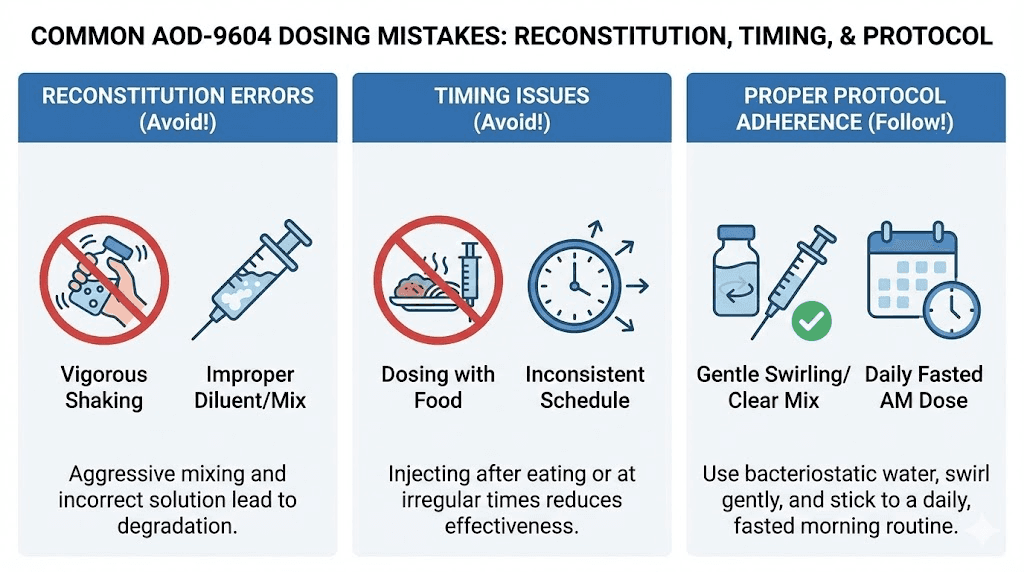
Using sterile water instead of bacteriostatic water reduces reconstituted peptide stability from weeks to days. Bacteriostatic water contains a preservative (typically benzyl alcohol) that prevents bacterial growth. Without this, contamination risk increases dramatically with each use of the vial.
Adding too little water creates overly concentrated solutions where small measurement errors translate to large dose variations. Adding too much water dilutes the solution, potentially requiring larger injection volumes that increase discomfort. Stick to standard reconstitution volumes that balance stability with practical measurement.
Shaking the vial instead of gentle swirling damages peptide structure. The peptide bonds holding the molecule together can break under vigorous agitation. Always swirl gently.
Timing mistakes
Taking AOD-9604 with food, particularly carbohydrate-containing meals, substantially reduces effectiveness. The insulin response from eating antagonizes the fat-releasing pathways the peptide activates. Maintain fasted administration.
Inconsistent timing undermines protocol effectiveness. If you take the peptide at 7am some days and 11am other days, you create variable metabolic conditions that make dose optimization impossible. Choose a time that works daily and stick with it.
Missing doses disrupts the consistent signaling needed for cumulative results. A missed dose is not catastrophic, but repeated misses undermine the protocol. Set reminders if needed. Keep your vial somewhere visible as a prompt.
Expectation misalignment
Expecting dramatic results in the first week sets up disappointment. AOD-9604 works gradually, producing visible changes over weeks and months rather than days. Patience and consistency matter more than dose tweaking or adding more compounds.
Ignoring the role of nutrition undermines peptide protocols regardless of dose. AOD-9604 enhances fat mobilization but cannot overcome consistent caloric surplus. If you are not in a reasonable caloric deficit or at least maintenance, the mobilized fat gets restored rather than used for energy.
Comparing results to others creates unrealistic expectations. Individual response varies substantially based on genetics, body composition, activity level, and dozens of other factors. Track your own progress rather than measuring against others.
Supporting your AOD-9604 protocol
The peptide does not work in isolation. Supporting behaviors significantly impact results, potentially more than minor dose adjustments or timing optimization.
Nutrition considerations
AOD-9604 mobilizes fat for energy. For that fat to actually leave your body, you need to use it. This requires either a caloric deficit or high activity levels that create energy demand. Without either, mobilized fatty acids simply get restored to adipose tissue.
Moderate caloric restriction (15-20% below maintenance) supports AOD-9604 protocols without triggering metabolic adaptation or excessive muscle loss. Extreme restriction is unnecessary and often counterproductive, causing metabolic slowdown that persists beyond the protocol.
Protein intake becomes especially important during fat loss phases. Adequate protein (0.8-1g per pound of body weight) preserves lean mass while the deficit targets fat. This becomes even more relevant when combining AOD-9604 with training.
Carbohydrate timing around AOD-9604 administration matters. Keep the morning fasted and delay carbohydrate intake until after any morning training if possible. This extends the window of enhanced fat oxidation initiated by the peptide.
Activity and training
Physical activity increases energy demand, ensuring mobilized fat gets used rather than restored. Both cardiovascular exercise and resistance training support AOD-9604 protocols, though through different mechanisms.
Low to moderate intensity cardio in a fasted state (after AOD-9604 administration) maximizes fat oxidation. The combination of fasting, peptide signaling, and energy demand creates optimal conditions for fat burning. Even 20-30 minutes of walking can significantly enhance results.
Resistance training preserves and builds lean mass during fat loss, improving body composition beyond just fat reduction. Train at least 2-3 times weekly, focusing on compound movements that recruit large muscle groups. The metabolic impact of increased muscle mass compounds over time.
Avoid excessive training that creates recovery debt or spikes cortisol. Overtraining can actually impair fat loss through hormonal disruption. More is not always better. Train intensely but allow adequate recovery.
Sleep and stress management
Poor sleep disrupts hormones involved in fat metabolism, including growth hormone, cortisol, and insulin sensitivity. Even optimal AOD-9604 protocols underperform when sleep is consistently inadequate. Target 7-9 hours nightly.
Chronic stress elevates cortisol, which promotes fat storage particularly in abdominal areas, exactly where many people want to lose fat. Stress management practices including meditation, breathing exercises, or simply ensuring adequate downtime support fat loss goals.
These factors may seem unrelated to peptide dosing, but they substantially impact outcomes. Two individuals using identical AOD-9604 protocols can see dramatically different results based on sleep quality and stress levels alone.
When to adjust your protocol
Knowing when and how to modify your approach separates successful protocols from those that plateau or fail. Adjustment should be systematic rather than reactive.
Signs your dose needs adjustment
Increase dose consideration: Minimal response after 3-4 weeks at current dose, stable weight and measurements despite consistent protocol adherence, absence of any subjective improvements in energy or fasted tolerance.
Decrease dose consideration: Persistent side effects including headaches, fatigue, or injection site reactions, excessive response (extremely rapid weight loss suggesting dose may be higher than needed), cost concerns when lower doses might achieve similar results.
When adjusting, change only one variable at a time. If you increase dose and change timing simultaneously, you cannot determine which change affected results. Adjust dose, wait 1-2 weeks to assess, then consider other changes if needed.
Signs your timing needs adjustment
If morning fasted administration is producing inconsistent results, consider whether compliance is actually consistent. True inconsistency (some days fasted, some days not) requires behavior change rather than timing change.
Split dosing may help if: single morning dose produces effects that fade by afternoon, you are using higher doses (450-500mcg) where sustained levels may help, or evening administration fits your schedule better than early morning.
Move administration earlier if you currently take it close to your first meal. The further into the fasted period you administer, the longer the window of enhanced fat oxidation before food intake raises insulin.
Signs your cycle length needs adjustment
Extend the cycle if: you are still seeing meaningful progress at week 8, your goals require more fat loss than achieved so far, and you are not experiencing any diminishing returns or side effects.
Shorten the cycle if: results have plateaued for 2+ weeks despite dose optimization, you are experiencing fatigue or other signs of potential receptor desensitization, or your goals have been achieved before the planned cycle end.
Cycle breaks become mandatory if you have been on protocol for 12+ weeks continuously or if response has dropped significantly despite dose adjustment. Receptor sensitivity requires recovery time.
Special considerations and populations
Certain individuals may need protocol modifications based on specific circumstances or characteristics.
Older adults
Adults over 50 may experience different response patterns due to age-related metabolic changes. Starting doses on the lower end (300mcg) and progressing slowly makes sense. Response time may be longer, requiring patience before dose adjustment.
Individuals on other medications should discuss peptide use with healthcare providers. While AOD-9604 has shown minimal interactions in studies, individual situations vary, particularly when multiple medications are involved.
Women specific considerations
Women generally require lower doses relative to body weight compared to men. Starting at 250-300mcg regardless of body weight, then adjusting based on response, often works better than jumping to weight-based higher doses.
Menstrual cycle timing may affect response, with some women reporting better results when beginning protocols at specific cycle phases. This remains anecdotal rather than research-validated but worth considering for those who track cycles.
For women over 40 or those approaching menopause, hormonal changes can affect fat metabolism and peptide response. Working with healthcare providers who understand both peptides and hormonal transitions helps optimize protocols.
Those with significant fat loss goals
Individuals with 50+ pounds to lose may benefit from extended protocols with strategic breaks rather than aggressive dosing. The body has limits to how quickly it can mobilize and process stored fat. Pushing past these limits does not accelerate results and may cause metabolic adaptation.
Multiple cycles with appropriate breaks often outperform single extended cycles for significant fat loss goals. A pattern of 12 weeks on, 4-6 weeks break, repeated several times, produces sustainable results without the receptor desensitization that can occur with extremely long continuous use.
Monitoring and tracking your progress
Objective tracking eliminates guesswork and provides the data needed for informed protocol adjustments.
Body composition tracking
Scale weight alone is insufficient. Water fluctuations, muscle changes, and timing of measurements create noise that obscures actual fat loss. Use multiple metrics:
Weekly weigh-ins at the same time (typically morning, after bathroom, before food) provide trend data despite daily fluctuations. Focus on week-over-week trends rather than day-to-day changes.
Body measurements including waist, hips, thighs, and arms at consistent points provide direct feedback on composition changes. Measure bi-weekly using the same technique each time. Small measuring inconsistencies between sessions are normal.
Progress photos in consistent lighting and posture, taken every 2-4 weeks, reveal changes that gradual daily observation misses. The same clothes or swimwear in each photo allows direct comparison.
Body fat measurement through calipers, bioelectrical impedance, or DEXA scanning provides the most direct fat loss data. DEXA is most accurate but least accessible. Calipers and impedance devices are more available but less precise. Consistency in measurement method matters more than absolute accuracy.
Subjective tracking
Energy levels, particularly during fasted states, often improve with effective AOD-9604 protocols. Note any changes in morning energy, afternoon slumps, or exercise performance.
Sleep quality sometimes improves as body composition improves. Track sleep duration and subjective quality to identify any changes.
Appetite and food relationships may shift. Some users report reduced appetite or changed food preferences. These changes can support fat loss goals but warrant attention to ensure adequate nutrition.
Creating a tracking system
Simple tracking produces better compliance than complex systems. A basic spreadsheet or notebook tracking: daily dose and time, weekly weight, bi-weekly measurements, and subjective notes provides sufficient data without excessive burden.
SeekPeptides members access built-in tracking tools that integrate with protocol recommendations, automatically suggesting adjustments based on logged progress. Even without these tools, consistent manual tracking enables data-driven decisions.
Frequently asked questions
What is the best AOD-9604 dosage for beginners?
Start with 300mcg daily administered in the morning on an empty stomach. This dose falls within the effective clinical range while allowing room to increase if response is minimal. Most beginners see results at this dose when combined with appropriate nutrition and activity levels.
How long does it take to see results from AOD-9604?
Initial signs of response typically appear by week 3-4, with meaningful results developing through weeks 5-8. Complete assessment requires at least 8 weeks of consistent protocol adherence. Expecting visible changes in the first 1-2 weeks sets unrealistic expectations.
Can I take AOD-9604 twice a day?
Yes, split dosing is a valid approach, particularly for doses at the higher end of the range (450-500mcg daily). Divide the dose 60/40 or 50/50 between morning (fasted) and evening (at least 2 hours after eating). Not everyone benefits from split dosing, and single morning administration works well for many users.
What happens if I miss a dose of AOD-9604?
A single missed dose has minimal impact on overall results. Do not double the next dose to compensate. Simply resume normal dosing at your next scheduled administration. Repeated missed doses will impact results, so establish systems to ensure consistency.
How do I store reconstituted AOD-9604?
Refrigerate reconstituted AOD-9604 at 2-8 degrees Celsius (35-46 degrees Fahrenheit). Properly stored, it remains stable for 30-45 days. Do not freeze. Protect from light. If the solution becomes cloudy or discolored, discard and reconstitute a fresh vial.
Can AOD-9604 be stacked with other fat loss peptides?
AOD-9604 stacks well with growth hormone secretagogues like CJC-1295 and Ipamorelin that work through different mechanisms. Avoid stacking with other direct lipolytic compounds without professional guidance. The peptide stacking calculator helps identify compatible combinations.
Is AOD-9604 safe for long-term use?
Clinical trials involving over 900 participants showed AOD-9604 to be well-tolerated with side effects indistinguishable from placebo in most studies. However, structured cycling with breaks is recommended to maintain receptor sensitivity. Long-term continuous use without breaks may lead to reduced effectiveness.
Does body weight affect AOD-9604 dosing?
Yes. Heavier individuals with more adipose tissue often benefit from doses at the higher end of the standard range (450-500mcg). Lighter individuals may achieve good results at lower doses (300-350mcg). Body weight-based dosing around 4-6mcg per kilogram provides individualized starting points.
External resources
For researchers serious about optimizing their AOD-9604 protocols, SeekPeptides offers the most comprehensive resource available, with evidence-based guides, personalized protocol builders, and a community of thousands who have navigated these exact questions.
In case I do not see you, good afternoon, good evening, and good night. May your reconstitutions stay accurate, your timing stay consistent, and your results stay progressive.