Mar 5, 2026

Some people swear by morning injections. Others set their alarms for bedtime doses. And a surprising number of tirzepatide users spend more time debating injection timing than actually researching their protocols. Here is the truth that most guides skip over entirely: when you inject tirzepatide matters far less than you think, but the reasons behind your timing choice matter far more than most people realize.
The confusion makes sense. You have read conflicting advice. One forum post says morning is best. Another says nighttime helps you sleep through the nausea. Your provider probably said "any time is fine" without explaining what that actually means for your daily life, your side effects, or your results.
This guide breaks down everything about nighttime tirzepatide injections. Not just whether you can do it, but whether you should, what happens to your body when you do, how to optimize timing for your specific situation, and what the clinical evidence actually shows about injection timing and outcomes. Whether you are a night owl who prefers evening routines or someone who experienced rough side effects with morning doses, you will find your answer here. SeekPeptides has analyzed the pharmacokinetics, the clinical data, and thousands of user experiences to give you the most comprehensive timing guide available.
The short answer: yes, you can take tirzepatide at night
Let us get this out of the way immediately. Yes. You can absolutely take tirzepatide at night. The FDA prescribing information for both Mounjaro and Zepbound states clearly that tirzepatide can be administered at any time of day, with or without meals. There is no clinical restriction on nighttime dosing.
But "can" and "should" are different questions.
The reason timing flexibility exists comes down to pharmacokinetics. Tirzepatide has an elimination half-life of approximately 5 days, which means the drug maintains relatively stable blood levels throughout the entire week between injections. Whether you inject at 7 AM or 11 PM, your body reaches peak plasma concentrations between 8 and 72 hours later, with most users hitting their peak around 48 hours post-injection. After approximately 4 weeks of consistent weekly dosing, you reach steady-state concentrations where the drug accumulates about 1.6-fold compared to a single dose.
What does this mean practically? Your tirzepatide does not "wear off" by evening if you injected in the morning. It does not "kick in" differently based on when you inject. The long duration of action ensures consistent therapeutic levels regardless of your chosen injection time. Understanding how long tirzepatide remains stable both in your body and in the vial helps put these timing concerns in perspective. This is fundamentally different from medications that peak and trough within hours, where timing genuinely affects efficacy.
That said, timing does affect one thing significantly: your experience of side effects.
Why some people specifically choose nighttime injections
The most common reason people switch to nighttime injections is simple. They want to sleep through the worst of their side effects.
Tirzepatide commonly causes gastrointestinal side effects, particularly during dose escalation phases. Nausea, stomach discomfort, and general queasiness tend to peak within 1 to 3 hours after injection. If you inject at 9 PM and fall asleep by 10 PM, you potentially sleep through that initial wave entirely. Research suggests evening administration reduces perceived nausea and vomiting in up to 20% of patients, specifically because these gastrointestinal effects hit during sleep rather than waking hours.
This is not a small consideration. The gastrointestinal side effects of tirzepatide are the number one reason people discontinue treatment. Anything that makes those effects more tolerable directly impacts your ability to stick with the protocol long enough to see results.
The nausea timing window
Understanding when nausea hits helps you plan around it. Most users notice side effects within 24 to 48 hours after their weekly dose, but the acute peak, that first wave of queasiness, typically arrives within 1 to 3 hours post-injection. A secondary wave can hit around 24 to 48 hours later.
By injecting at night, you potentially bypass the first wave entirely. You wake up past the initial peak. The secondary wave at 24 to 48 hours may still occur, but by then you are in your normal routine and better equipped to manage it through dietary adjustments and hydration.
Some users report that even the secondary wave feels less intense with nighttime dosing. The theory is that sleeping through the initial GI disruption allows the body to begin adjusting before you are consciously aware of the effects. This has not been formally studied, but the anecdotal pattern is consistent enough to be worth noting.
Lifestyle and routine convenience
Not everyone who chooses nighttime injections does it for side effect management. Some people simply have calmer, more predictable evenings than mornings.
Think about it. Mornings are rushed. You are getting ready for work, managing family responsibilities, maybe exercising. Adding an injection to that chaos increases the chance you forget or rush through proper technique. Evenings tend to be more relaxed. You have time to prepare your injection area, check your dosage in units, and inject carefully without feeling hurried.
Consistency matters more than specific timing. If you are more likely to remember and maintain a regular schedule with evening injections, then evening injections are better for you than morning injections you occasionally forget. The same logic applies to choosing your best injection day, it should be the day you are most likely to follow through consistently.
The case against nighttime tirzepatide injections
Nighttime dosing is not perfect for everyone. Several legitimate concerns deserve attention, and ignoring them could mean trading one set of problems for another.
Acid reflux and GERD risk
This is the biggest concern with nighttime tirzepatide injections, and most timing guides barely mention it.
Tirzepatide delays gastric emptying. That is one of its primary mechanisms for reducing appetite and promoting weight loss. Food stays in your stomach longer. Normally, this is beneficial. But when you lie down shortly after injection, that delayed gastric emptying can increase intragastric pressure and promote backward flow of stomach acid into the esophagus.
Gastroesophageal reflux disease is listed among common adverse reactions in the FDA prescribing information for Zepbound. If you already experience tirzepatide-related bloating or digestive discomfort, lying down within 1 to 2 hours of injection could significantly worsen acid reflux symptoms.
The practical solution: if you choose nighttime injections, inject at least 2 to 3 hours before you plan to lie down. An injection at 8 PM with bedtime at 11 PM gives your body time to begin processing without the added complication of gravity working against your esophageal sphincter. Some users also find that elevating the head of their bed slightly helps prevent nighttime reflux regardless of injection timing.
Potential sleep disruption
Here is where things get complicated. While many people sleep through side effects with nighttime dosing, others experience the opposite.
Some users report that tirzepatide affects their sleep quality when injected at night. Insomnia is not listed among common adverse reactions in FDA prescribing information, and clinical trials did not identify it as a statistically significant side effect. However, analysis of social media posts about tirzepatide found that sleep-related issues were among the most commonly discussed concerns.
The mechanism likely involves GLP-1 receptors in the brain. GLP-1 receptor agonists cross the blood-brain barrier and interact with brain regions involved in appetite, reward processing, and potentially arousal. For a subset of users, this brain activity may increase alertness during the hours immediately following injection, making it harder to fall asleep.
Additionally, if your injection triggers mild nausea or stomach discomfort, that physical discomfort can absolutely disrupt sleep. The difference between "sleeping through nausea" and "lying awake with nausea" often depends on individual sensitivity and dose level. Users who experience body aches or muscle pain as side effects may also find these symptoms more noticeable when trying to fall asleep, since there are fewer distractions at night.
Blood sugar considerations
For users managing type 2 diabetes with tirzepatide, nighttime injection timing introduces additional blood sugar considerations. Tirzepatide enhances insulin secretion in a glucose-dependent manner. Injecting at night, particularly after dinner, could theoretically affect overnight blood glucose patterns differently than morning injection after breakfast.
This concern is more relevant for diabetic users than for those using tirzepatide primarily for weight management. If you are using tirzepatide for blood sugar control, discuss nighttime dosing specifically with your healthcare provider. They may want to monitor your overnight glucose levels after any timing changes to ensure you are not experiencing unexpected lows.
Morning versus night: a complete comparison
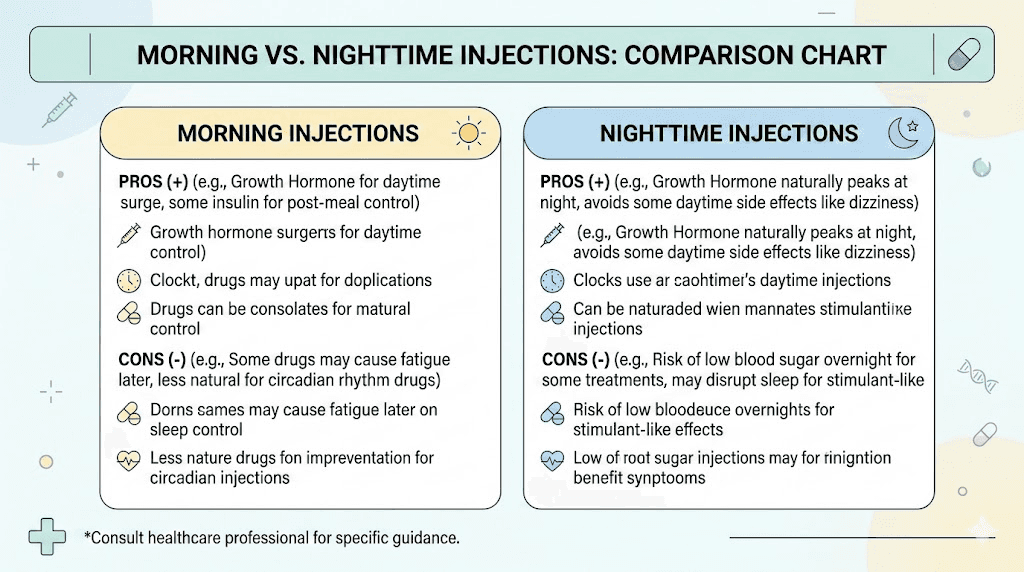
Let us put this head to head so you can make an informed decision based on your specific situation.
Factor | Morning injection | Nighttime injection |
|---|---|---|
Nausea management | Side effects hit during waking hours | May sleep through initial nausea peak |
Sleep quality | No injection-related sleep disruption | Small risk of sleep disruption for some |
Acid reflux risk | Lower risk (upright after injection) | Higher risk if injecting close to bedtime |
Side effect monitoring | Easier to monitor during the day | Cannot monitor while sleeping |
Routine consistency | Mornings may be rushed | Evenings often calmer and more consistent |
Appetite suppression | Peak suppression during daytime eating | Peak suppression may align with overnight fast |
Effectiveness | Identical | Identical |
Neither option is objectively better. The right choice depends entirely on your body, your schedule, and your side effect profile. If you want a more detailed comparison of how tirzepatide stacks up against other GLP-1 medications, the timing principles remain largely the same across the class, but side effect profiles differ enough to warrant individual testing.
What time exactly should you inject at night?
If you have decided that nighttime works best for your situation, the next question is what specific time to aim for. Not all "nighttime" windows are equal.
The optimal nighttime window: 7 PM to 9 PM
Most healthcare providers who recommend evening dosing suggest injecting between 7 PM and 9 PM. This window offers several advantages.
First, it gives you 2 to 4 hours before a typical bedtime of 10 PM to midnight. That buffer allows the initial wave of any GI side effects to peak and begin subsiding before you lie down. Second, it is late enough that you have finished your main evening meal, reducing the chance of food-related nausea compounding injection-related nausea. Third, it is early enough that the injection becomes part of an evening routine rather than a late-night afterthought you might forget.
If you experience fatigue after injection, this timing works in your favor. The drowsiness becomes a natural bridge to sleep rather than a productivity killer during your workday.
Why you should avoid injecting right before bed
Injecting at 11 PM and immediately lying down at 11:15 PM is the worst possible approach to nighttime dosing.
The delayed gastric emptying effect begins within minutes of injection. If you are lying flat, you maximize the chance of acid reflux. You also cannot gauge your body's initial response because you are trying to sleep. If a serious reaction occurred, which is rare but possible especially with new doses, you might not notice symptoms as quickly.
Give yourself a minimum of 90 minutes between injection and lying down. Two to three hours is better. Use that buffer time for light activity like reading, watching television, or doing gentle stretching. Stay upright. Stay hydrated with small sips of water.
After-dinner versus before-dinner timing
Another consideration is whether to inject before or after your evening meal.
Injecting before dinner means the appetite-suppressing effects begin building during your meal. You may eat less naturally. However, if tirzepatide makes you nauseous, combining that with food could intensify the queasiness.
Injecting after dinner, once your meal has had 1 to 2 hours to begin digesting, tends to be better tolerated. Your stomach is not completely empty, which can reduce nausea, but you are not adding more food on top of a fresh injection either.
The FDA says tirzepatide can be taken with or without meals. There is no clinical requirement to time it around food. But if you are optimizing for comfort, after dinner with a 2 to 3 hour bedtime buffer is the sweet spot most users find works best.
How to switch from morning to nighttime injections safely
Already injecting in the morning and want to switch to night? You cannot just skip to a completely different time without considering the gap between doses.
The 72-hour rule
The FDA prescribing information states that if you want to change your injection day, you must ensure at least 3 days (72 hours) between doses. This same principle applies to significant time changes within the same day.
If you normally inject Monday morning at 8 AM and want to switch to Monday night at 9 PM, that is a 13-hour delay within the same day. This is generally fine because it still falls within the weekly dosing window and maintains at least 7 days from your previous dose.
The concern arises if you try to move your injection earlier. If you injected Monday night at 9 PM and wanted to switch to Tuesday morning at 8 AM, that would only be 11 hours between concepts of "weekly" doses if measured poorly. The safest approach is always to delay rather than advance your injection time.
A safe transition protocol
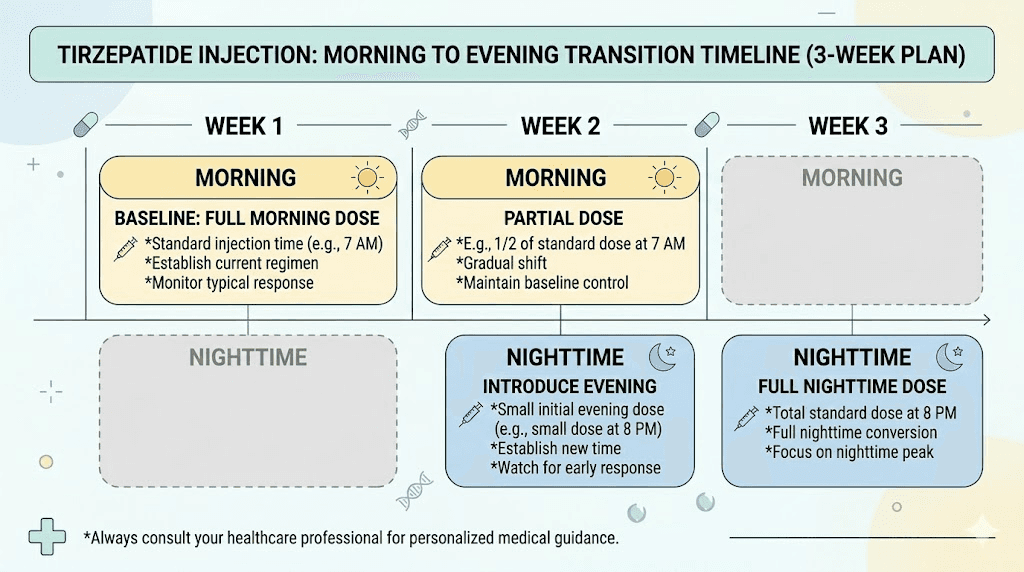
Here is the simplest way to switch from morning to evening:
Week 1: Inject at your normal morning time. Note the exact time.
Week 2: Shift your injection to early afternoon. If you normally inject at 8 AM, inject at 2 PM instead. This is a 6-hour delay, which is safe and barely noticeable in terms of drug levels.
Week 3: Shift to your desired evening time. Move from 2 PM to 8 PM, another 6-hour delay. Again, perfectly safe.
This gradual approach lets you observe how your body responds to shifting timing without making a dramatic change. Most people can skip the gradual transition and just delay their injection by the full amount in one week, but if you are particularly sensitive to dosing changes or are in a dose escalation phase, the gradual approach provides an extra safety margin.
Use a tirzepatide syringe dosage guide to make sure your actual dose stays consistent even as your timing changes. A unit-to-milligram reference eliminates confusion during transitions. Timing changes should never coincide with dose changes.
Side effects unique to nighttime injection timing
While the side effects of tirzepatide are the same regardless of when you inject, the way you experience them changes based on timing. Here is what to expect specifically with nighttime dosing.
Nausea patterns with night injections
Most users who inject between 7 PM and 9 PM report one of three patterns.
Pattern 1: Sleep right through it. This is the best-case scenario and happens for roughly 60% to 70% of nighttime injectors. You feel fine at injection, fall asleep normally, and wake up without any nausea. The first wave passed while you slept.
Pattern 2: Wake up with mild nausea. Some users find that while they slept through the initial peak, they wake up with lingering low-grade nausea that takes a few hours to resolve. This is still generally preferable to experiencing peak nausea during productive daytime hours. Sipping ginger tea or eating a small bland breakfast usually resolves it by mid-morning.
Pattern 3: Cannot fall asleep due to nausea. For a smaller group, the nausea kicks in before sleep does. If you are particularly sensitive, especially during early doses or dose escalations, the 1 to 3 hour nausea window might overlap with your attempts to fall asleep. If this happens, try injecting earlier in the evening, around 6 PM to 7 PM, to push the peak nausea window earlier.
Nighttime digestive symptoms
Beyond nausea, tirzepatide can cause other digestive symptoms that interact with nighttime differently than daytime.
Diarrhea is more disruptive at night because it interrupts sleep. If you experience injection-related loose stools, nighttime dosing might not be ideal for you.
Bloating and gas can feel more uncomfortable when lying down because the trapped gas cannot move as easily through your digestive system in a horizontal position. Elevating your upper body with pillows can help.
Dry mouth may worsen overnight when you are not drinking water. Keep a glass of water on your nightstand and stay hydrated before bed.
Fatigue and drowsiness
Tirzepatide causes fatigue in some users. With nighttime injection, this fatigue can actually work in your favor by helping you fall asleep more easily. Users who report injection-related tiredness often find that nighttime dosing transforms a nuisance side effect into a mild sleep aid.
However, the fatigue may persist into the following morning for some people. If you find yourself excessively groggy the morning after injection, note whether this improves after a few weeks at the same dose. Dose-escalation fatigue is usually temporary and resolves within 2 to 4 weeks as your body adjusts. Understanding what to expect after your first dose and during each escalation helps set realistic expectations.
Optimizing nighttime injection for maximum weight loss
While injection timing does not directly affect how much weight you lose, strategic timing can indirectly optimize your results by improving medication adherence and reducing side effects that lead to treatment discontinuation.
Appetite suppression alignment
Tirzepatide reaches peak plasma concentration approximately 48 hours after injection. If you inject on Sunday evening, your peak appetite suppression aligns with Tuesday, which for many people is a regular workday when consistent eating habits matter most.
The appetite-suppressing effects of tirzepatide are not limited to the peak window. Thanks to the 5-day half-life, appetite suppression remains relatively consistent throughout the week once you reach steady state after about 4 weeks. But if you notice your appetite rebounds slightly toward the end of the weekly cycle, timing your injection so that the peak falls on your hardest eating days can be a strategic advantage.
Consider which days you struggle most with food cravings or overeating. If weekends are your challenge, a Wednesday or Thursday evening injection puts peak suppression right where you need it most. If workweek lunches are your downfall, Sunday evening injection keeps Tuesday and Wednesday well covered. Users who find tirzepatide seems less effective over time sometimes discover that strategic timing adjustments restore the appetite suppression they thought they had lost.
Exercise timing considerations
Many users prefer not to exercise on injection day due to potential nausea and discomfort. If you exercise in the morning, nighttime injection means your workout happens 12 to 14 hours before your next injection, with no acute injection effects to contend with.
If you exercise in the evening, inject on a different day of the week than your primary workout day, or inject after your workout rather than before. Exercising with fresh tirzepatide in your system is safe, but nausea during a workout is unpleasant and can derail your fitness routine.
Maintaining a regular tirzepatide diet plan alongside appropriate supplements is easier when you can predict your side effect windows. Nighttime injection makes your side effect pattern predictable: inject in the evening, sleep through the first wave, manage any residual effects the next day during your normal routine.
Weekly planning around nighttime injection
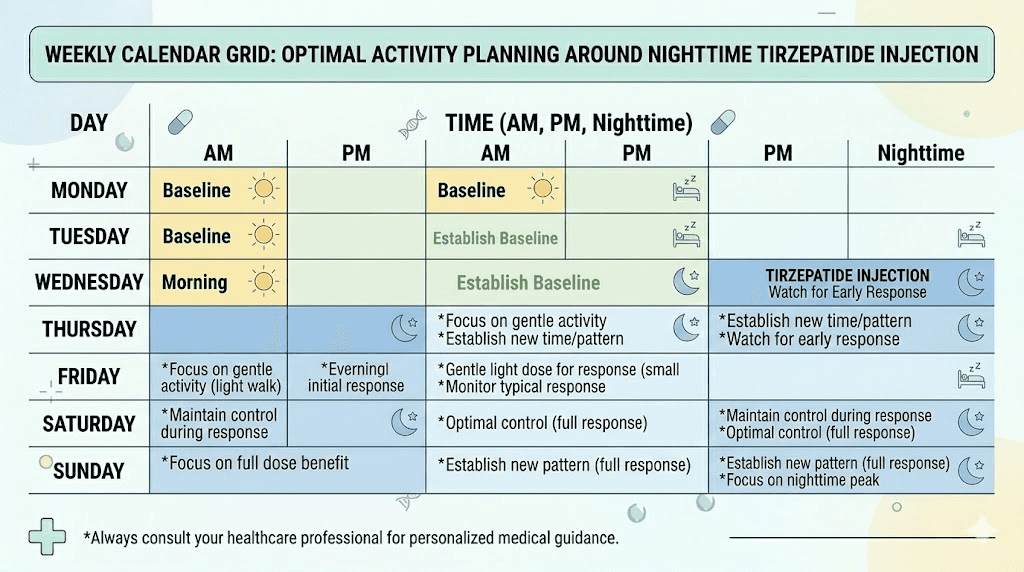
Once you settle on a nighttime injection schedule, plan your week around it. Here is a framework that works well for most users.
Injection night: Light dinner finished 2 hours before injection. Stay upright for 90 minutes post-injection. Hydrate well. Go to bed on time.
Day 1 after injection: Your highest side effect day. Plan easier meals, stay hydrated, avoid heavy social eating commitments if possible. This is a good rest day from intense exercise. Follow eating guidelines for tirzepatide especially closely.
Days 2 to 3: Peak plasma levels. Appetite suppression at its strongest. Lean into this by planning your healthiest meals here. Meal prep becomes easier because you genuinely do not want to overeat.
Days 4 to 6: Stable therapeutic levels. Normal routine. Side effects have largely subsided. Best days for intense workouts and social meals.
Day 7: Prepare for next injection. Some users notice a slight appetite return. Prep your injection supplies and plan another light dinner.
Special considerations for compounded tirzepatide at night
If you are using compounded tirzepatide rather than brand-name Mounjaro or Zepbound, a few additional nighttime considerations apply.
Reconstitution and preparation
Compounded tirzepatide, especially lyophilized powder that requires reconstitution, needs careful measurement. Doing this at night when you are tired increases the chance of measurement errors. If you reconstitute your own tirzepatide, do the reconstitution earlier in the day when you are alert, then store the reconstituted vial properly until your evening injection time.
Make sure your compounded tirzepatide is properly stored throughout the day. If you reconstituted in the morning for an evening injection, the vial needs to stay refrigerated during those hours. Do not leave it on the counter "so it is room temperature for injection." Brief warming by holding the syringe in your hand for 30 to 60 seconds before injection is fine, but extended room temperature storage is not.
Concentration and dosing accuracy
With compounded formulations, you need to be especially precise about your compound dosage. Different concentrations mean different volumes for the same milligram dose, and confusing these at night when you are drowsy could lead to over or under dosing. Use the peptide calculator before your injection rather than trying to do mental math at 9 PM.
Some compounded formulations include additional ingredients like B12, glycine, or niacinamide. These additions can sometimes affect how the injection feels. B12 in particular can cause a slight energy boost in some users, which theoretically could affect sleep if injected too close to bedtime. This effect is typically mild, but if you notice increased alertness after injecting a B12-containing compound, try moving your injection earlier in the evening.
Multi-dose vial management at night
If you draw from a multi-dose vial, make sure you can clearly read the syringe markings in your evening lighting. Bad lighting plus fatigue is a recipe for dosing errors. Use a well-lit area, preferably with direct overhead light, and double-check your drawn volume before injecting. Understanding unit to milligram conversions becomes critical when precision matters.
Nighttime injection and specific health conditions
Certain health conditions make nighttime injection timing more or less suitable. If any of these apply to you, factor them into your decision.
Sleep apnea
Tirzepatide (as Zepbound) actually received FDA approval for moderate-to-severe obstructive sleep apnea. If you have sleep apnea, nighttime injection timing is generally fine. The weight loss effects of tirzepatide can improve sleep apnea over time. However, if your injection causes any breathing-related discomfort, discuss timing with your provider.
GERD and existing acid reflux
If you already have gastroesophageal reflux disease, nighttime tirzepatide injection requires extra care. The delayed gastric emptying effect compounds with your existing reflux tendency. Morning injection is generally safer for GERD patients. If you must inject at night, extend your upright buffer period to 3 to 4 hours post-injection, avoid eating within 3 hours of bedtime, and consider elevating the head of your bed by 6 to 8 inches.
Anxiety and mental health
Some users report that tirzepatide affects their anxiety levels. If you experience injection-related anxiety, nighttime dosing can go either way. Some find that injecting at night prevents anxiety from affecting their workday. Others find that nighttime anxiety disrupts sleep, creating a worse outcome than daytime anxiety that resolves naturally during activity.
If anxiety is a concern, start with daytime injection and only switch to nighttime after you understand your individual response pattern. Switching during a dose escalation phase adds too many variables to assess which factor is causing what.
Diabetes management
For type 2 diabetes patients using tirzepatide alongside medications like metformin, nighttime injection can affect fasting blood glucose readings the next morning. Some patients see lower fasting glucose with nighttime injection because the drug levels begin rising during the overnight fast. Others see no meaningful difference. Work with your endocrinologist to monitor how timing changes affect your glucose control, particularly during the first 2 to 3 weeks after switching.
Common mistakes with nighttime tirzepatide injection
After reviewing thousands of user experiences, certain mistakes come up repeatedly with nighttime dosing. Avoid these and your experience will be significantly smoother.
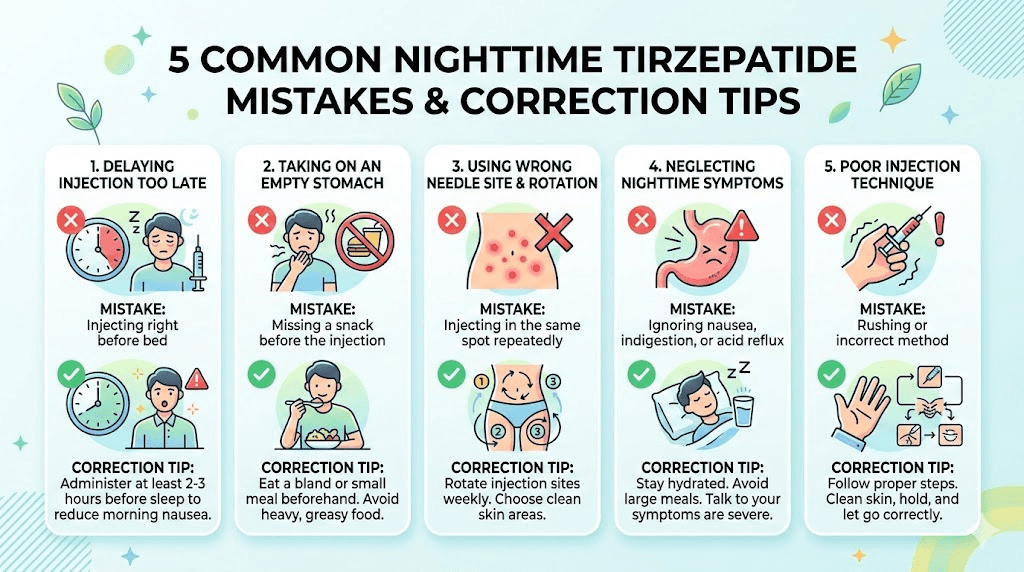
Mistake 1: Eating a large dinner right before injection
A heavy meal followed immediately by tirzepatide injection is a recipe for severe nausea. Your stomach is already working hard to digest a large meal. Now you add a drug that slows gastric emptying even further. The result is a stomach that feels uncomfortably full for hours, potentially triggering nausea that would not have occurred with better timing.
Solution: eat a moderate dinner at least 2 hours before your injection. Choose foods that are easy to digest. Avoid high-fat, greasy, or spicy foods on injection night. This is especially important during the first few weeks at any new dose level. Following a foods to avoid guide on injection nights makes a real difference. If you are unsure what to eat instead, check the best foods for tirzepatide users.
Mistake 2: Skipping hydration
People often stop drinking fluids in the evening to avoid nighttime bathroom trips. But tirzepatide works better when you are well hydrated, and dehydration worsens nearly every side effect. Nausea, constipation, headaches, fatigue, and dizziness all intensify with inadequate fluid intake.
Solution: hydrate steadily throughout the day so you do not need to catch up in the evening. Have 8 to 12 ounces of water with your injection, then sip on water or herbal tea until bedtime. Yes, you might need one extra bathroom trip. That is a small price for significantly reduced side effects.
Mistake 3: Injecting at inconsistent times
Saying "I inject at night" is too vague. If you inject at 7 PM one week, midnight the next, and 9 PM the following week, you are not giving your body a consistent schedule. Consistency helps your body anticipate and adapt to the drug's effects.
Solution: pick a specific 30-minute window and stick to it every week. "I inject between 8 PM and 8:30 PM on Sunday night" is far better than "sometime Sunday evening." Set a weekly alarm on your phone. Make it non-negotiable.
Mistake 4: Changing timing during dose escalation
This is a critical error. You just moved up to a higher dose and simultaneously decided to switch from morning to evening injection. Now you have two variables changing at once. If you feel terrible, you do not know if it is the new dose or the new timing causing the problem.
Solution: never change injection timing and dose level in the same week. Stabilize on your new dose for at least 2 to 3 weeks before experimenting with timing changes. Alternatively, make your timing switch first while staying at your current dose, stabilize for 2 weeks, then escalate the dose.
Mistake 5: Ignoring your body's feedback
Some people commit to nighttime injection because they read it was better, then suffer through disrupted sleep for weeks without reconsidering. Your body is giving you data. Use it.
If nighttime injection consistently disrupts your sleep, switch to morning. If morning injection consistently ruins your workday with nausea, switch to evening. If neither extreme works, try early afternoon. There is no prize for forcing a timing that does not work for your body. The goal is sustainable, long-term adherence. The timeline for tirzepatide to work depends on consistent weekly dosing far more than on what time of day you inject.
What the clinical trials actually show about injection timing
The honest answer is that clinical trials did not specifically study morning versus evening injection as a variable. The SURPASS and SURMOUNT trials, which established tirzepatide's efficacy for diabetes and weight management respectively, allowed participants to inject at any time of day on their chosen injection day.
This means we do not have randomized controlled data comparing morning versus evening outcomes. What we know comes from pharmacokinetic studies, post-marketing surveillance, and observational data.
Pharmacokinetic evidence
The pharmacokinetic profile of tirzepatide supports timing flexibility. With a 5-day half-life and steady-state accumulation of approximately 1.6-fold, the drug maintains consistent plasma levels throughout the dosing interval. Peak concentration occurs 8 to 72 hours post-injection regardless of time of day. The volume of distribution is approximately 10.3 liters, and tirzepatide is 99% bound to plasma albumin, which provides a slow-release effect that further smooths out any timing-related variations.
Translation: the drug does not care what time you inject. It reaches the same peak, maintains the same trough, and provides the same therapeutic effect whether you inject at dawn or dusk.
Post-marketing data
Post-marketing surveillance and real-world evidence provide some additional insights. Healthcare providers report that patients who choose consistent timing, regardless of morning or evening, show better adherence and outcomes than those who inject at random times. The most commonly reported successful timing patterns are:
Morning before breakfast (approximately 35% of users). Evening 2 to 3 hours after dinner (approximately 30% of users). Midday or early afternoon (approximately 20% of users). No consistent pattern (approximately 15% of users).
The evening group reports fewer nausea-related disruptions to daily activities, while the morning group reports better sleep quality. Both groups show equivalent weight loss and metabolic outcomes when adherence is controlled for. This matches the broader understanding of how long tirzepatide takes to suppress appetite, which is a function of dose and duration of use, not injection timing.
Combining nighttime tirzepatide with other medications and supplements
If you take other medications or supplements at night, consider how they interact with your tirzepatide injection timing.
Common nighttime medications
Tirzepatide does not have major drug interactions with most common nighttime medications like melatonin, magnesium, or prescription sleep aids. However, tirzepatide delays gastric emptying, which can affect how quickly oral medications are absorbed. If you take time-sensitive medications by mouth at night, give at least a 1-hour gap between your tirzepatide injection and oral medication to minimize absorption interference.
This is especially relevant for thyroid medications, which some people take at night instead of morning. The delayed gastric emptying from tirzepatide could theoretically affect thyroid medication absorption. Most providers recommend a 4-hour separation between tirzepatide and levothyroxine. Users combining tirzepatide with other compounds like phentermine should also consider interaction timing carefully.
Supplements that may help with nighttime injection side effects
Several supplements can reduce nighttime injection discomfort.
Magnesium glycinate taken 30 minutes before bed supports sleep quality and can help with the constipation that tirzepatide sometimes causes. The glycinate form specifically promotes relaxation.
Ginger capsules or tea before injection can reduce nausea. Taking 250 to 500 mg of ginger extract 30 minutes before your injection provides a natural antiemetic buffer.
Electrolytes before bed help prevent the morning dehydration that compounds tirzepatide side effects. A small glass of water with electrolyte powder before sleep keeps your hydration levels stable overnight.
If your compound includes levocarnitine, be aware that L-carnitine can have a mild stimulatory effect in some users. This might contribute to sleep disruption if present in your nighttime injection. Similarly, glycine-B12 compounds may have calming effects from glycine that actually support nighttime dosing.
When to switch from nighttime to a different time
Nighttime injection is not set in stone. Here are clear signals that you should consider switching.
Switch if: you cannot fall asleep within 2 hours of your normal bedtime on injection nights for 3 or more consecutive weeks. Sleep disruption that persistent suggests your body does not tolerate evening dosing well.
Switch if: you experience severe acid reflux or GERD symptoms specifically on injection nights despite maintaining a 2 to 3 hour buffer before lying down.
Switch if: you consistently wake up with worse nausea than you experienced with morning injections. Sleeping through nausea should reduce your conscious experience of it, not intensify it the next morning.
Switch if: your blood sugar management worsens with nighttime dosing, as indicated by your glucose monitor or lab results.
Do not switch if: you have mild, temporary side effects during the first 2 to 3 weeks at a new dose. Give your body time to adjust before attributing problems to timing. Side effects from dose escalation resolve for most people within 4 weeks.
If you are considering switching from tirzepatide to another medication entirely because of timing-related issues, explore switching from tirzepatide to semaglutide or look into side effect comparisons and dosage equivalency charts before making that decision. Timing adjustments within tirzepatide are almost always a simpler fix than switching medications.
Nighttime injection protocols by dose level
Your dose level affects how cautious you need to be with nighttime timing. Lower doses are more forgiving than higher doses when it comes to side effect management.
Starting dose: 2.5 mg
At 2.5 mg, side effects are typically mild. Nighttime injection at this dose is generally well tolerated by most users. This is actually an excellent time to establish your nighttime routine because you will be adjusting to the medication with minimal side effects. If you are curious about what to expect during your first week on a GLP-1 medication, the experience is similar across the class at starting doses. Use the first 4 weeks at this dose to lock in your preferred evening time.
If you are using the correct number of units for 2.5 mg, side effects should be manageable regardless of timing.
Escalation doses: 5 mg and 7.5 mg
At 5 mg and 7.5 mg, nausea becomes more common. If you have been tolerating nighttime injection at 2.5 mg, continue with the same timing but be prepared for a temporary increase in side effects during the first 1 to 2 weeks at each new dose. Have ginger tea and antacids available on injection nights during escalation.
Some users temporarily switch to morning injection during dose escalation so they can monitor their side effects during waking hours, then switch back to evening once they have stabilized. Understanding how quickly tirzepatide works at each dose helps you anticipate what to expect. This is a perfectly valid approach.
Higher doses: 10 mg, 12.5 mg, and 15 mg
At 10 mg and above, gastrointestinal effects are more pronounced. The delayed gastric emptying is stronger, nausea is more likely, and the GERD risk with lying down increases. If you have successfully used nighttime injection at lower doses, you can continue, but extend your buffer before lying down to a full 3 hours minimum. Some users at these doses benefit from understanding the tapering process in case they decide the higher doses are not sustainable.
At 12.5 mg and 15 mg, some users find that nighttime injection becomes less tolerable due to the intensity of GI effects. If you have been fine at lower doses but struggle at higher doses, do not force it. Switch to morning or afternoon and adjust your side effect management strategy accordingly.
Injection technique tips for nighttime
Good injection technique matters at any time of day, but nighttime brings specific considerations worth addressing.
Choosing your injection site at night
The standard injection sites for tirzepatide are the abdomen, thigh, and upper arm. At night, the thigh is often the easiest site because you can sit comfortably on your bed or a chair, clearly see the injection area, and reach it without contortion. The abdomen works well too, but avoid injecting within 2 inches of your navel.
If you experience injection site reactions or notice the injection site turning red and itchy, rotate your injection site weekly. Use a simple system: right thigh one week, left thigh the next, right abdomen, left abdomen. This rotation allows each site 4 weeks to fully heal between uses.
Lighting and visibility
Do not inject in dim bedroom lighting. Use bright, direct light so you can clearly see your syringe markings, your injection site, and any air bubbles in the syringe. A bedside lamp aimed directly at your injection area works. Overhead bathroom lighting is even better. Accuracy matters more than ambiance.
Post-injection care at night
After injection, apply gentle pressure with a clean cotton pad for 10 to 15 seconds. Do not rub the injection site. If you notice minor redness or itching at the site, a cool compress can help, but avoid ice directly on skin.
Wear loose, comfortable clothing to bed on injection nights. Tight waistbands pressing on an abdominal injection site or tight pants pressing on a thigh injection site can increase local irritation while you sleep. For a full guide on injection sites and proper technique, review all approved tirzepatide injection locations.
Frequently asked questions
Is it better to take tirzepatide in the morning or at night?
Neither is objectively better. Clinical evidence shows identical effectiveness regardless of injection time. Morning is better if you want to monitor side effects during waking hours. Night is better if you want to sleep through initial nausea. Choose based on your lifestyle, side effect pattern, and ability to maintain a consistent weekly schedule.
Will taking tirzepatide at night affect my sleep?
For most users, no. Clinical trials did not identify insomnia as a statistically significant side effect. However, some users report difficulty sleeping on injection nights, potentially due to GLP-1 receptor activity in the brain or gastrointestinal discomfort. If sleep disruption persists for more than 3 weeks, consider switching to morning injection.
How late at night can I inject tirzepatide?
You can inject at any time, but avoid injecting within 90 minutes of lying down to reduce acid reflux risk. A 2 to 3 hour buffer before bedtime is ideal. The recommended nighttime window is 7 PM to 9 PM for most people with a standard 10 PM to midnight bedtime.
Should I eat before a nighttime tirzepatide injection?
Have a light to moderate dinner at least 1 to 2 hours before your injection. Injecting on a completely empty stomach can worsen nausea for some users, while injecting immediately after a heavy meal can also increase GI discomfort. A small, easy-to-digest meal followed by a gap before injection is the sweet spot.
Can I take melatonin with my nighttime tirzepatide injection?
Yes. There are no known interactions between tirzepatide and melatonin. If you use melatonin as a sleep aid, take it 30 to 60 minutes before your desired sleep time as usual. Give at least a 30-minute gap between your tirzepatide injection and oral melatonin to avoid absorption interference from delayed gastric emptying.
Will nighttime injection make tirzepatide less effective for weight loss?
No. Tirzepatide has a 5-day half-life and maintains stable blood levels throughout the week regardless of injection time. Your weight loss timeline will not change based on whether you inject at 8 AM or 8 PM. Consistency and adherence to your weekly schedule are what drive results.
Can I inject tirzepatide at night if I work the night shift?
Absolutely. Night shift workers should inject at a time that corresponds to their "evening" regardless of the actual clock time. If you sleep from 8 AM to 4 PM, your "nighttime" injection would be around 5 AM to 6 AM, which is your pre-sleep window. Align injection timing with your sleep schedule, not the clock.
What if I usually inject in the morning but forgot and it is now nighttime?
Inject as soon as you remember, even if it is nighttime. A delayed injection is far better than a skipped one. Then return to your regular schedule the following week. If the delay pushes you close to your next scheduled dose, ensure at least 72 hours between injections. Use the guidelines for timing flexibility to adjust safely.
Nighttime tirzepatide injection by formulation type
The type of tirzepatide you use affects your nighttime injection experience in ways most guides overlook. Brand-name autoinjectors, compounded subcutaneous formulations, and oral tirzepatide drops all behave differently at night.
Brand-name autoinjectors (Mounjaro, Zepbound)
Autoinjectors make nighttime injection straightforward. No drawing from vials. No measuring. You click and inject. The simplicity reduces the chance of nighttime dosing errors, which is a genuine advantage when you are tired. Remove the pen from the refrigerator 30 minutes before injection to let it warm slightly. Cold injections sting more and may cause more pronounced injection site reactions.
Store the pen upright in the refrigerator door, not on its side. Check the solution through the window before each use. It should be clear and colorless. If it appears cloudy, discolored, or contains particles, do not use it regardless of the time of day.
Compounded subcutaneous formulations
Compounded tirzepatide from 503B compounding pharmacies requires more hands-on preparation. Drawing from a vial with an insulin syringe demands good lighting and steady hands. If you are someone who gets clumsy when tired, prepare your syringe earlier in the day and store it in the refrigerator until injection time. Drawn syringes are generally stable for 24 hours when refrigerated, though check with your specific pharmacy for their guidance.
The concentration of your compounded formulation directly affects how many units you draw. Make sure you have memorized or written down your exact draw volume. Checking a reconstitution guide at 10 PM is smarter than guessing. Different pharmacies use different concentrations, and what was 40 units at one concentration might be 25 units at another.
If your compounded tirzepatide includes additional ingredients like vitamin B6 or methylcobalamin, be aware that B vitamins can have mild energizing effects. Most users do not notice this, but if you are sensitive to supplements, you might feel a slight alertness boost that interferes with falling asleep. This is typically very mild and subsides within 30 to 45 minutes.
Oral and sublingual formulations
If you are using oral tirzepatide or orally disintegrating tablets, nighttime timing considerations differ significantly from injectable forms. Oral formulations interact directly with your digestive system, and taking them right before lying down can affect absorption. The general recommendation for oral GLP-1 formulations is to take them at least 30 minutes before your first meal, which makes morning dosing more practical for oral forms. However, if tablet formulations work better for your evening schedule, maintain at least a 1-hour gap between your last food and the oral dose.
How nighttime injection affects your next-day eating patterns
One of the most interesting aspects of nighttime injection timing is how it shapes your eating patterns the following day. Understanding this can help you plan meals more strategically.
The morning appetite effect
Many nighttime injectors report reduced appetite the morning after injection. This makes sense pharmacologically. The drug levels are rising during the overnight hours, and by morning, you are approaching the initial therapeutic window. Some users find they naturally skip breakfast or eat a very small meal the day after injection without any willpower involved.
This can be a positive or a negative depending on your nutritional goals. If you are following a structured meal plan, you need to eat enough protein and nutrients even when appetite is suppressed. Simply not eating because you do not feel like it can lead to muscle loss, nutrient deficiencies, and metabolic slowdown over time. Have a protein-rich breakfast prepared the night before, something easy like Greek yogurt with nuts or a premade GLP-1 friendly breakfast, so you eat even when you lack appetite.
Lunch and dinner patterns
The peak appetite suppression window at roughly 48 hours post-injection means that if you inject Sunday evening, Tuesday is your strongest suppression day. Plan your most challenging eating situations, like lunch meetings, restaurant dinners, or social events, for the days furthest from injection when your appetite is more normalized.
Conversely, days 5 through 7 of your cycle may bring more normal hunger levels. Having healthy foods prepared and available for these days prevents the rebound eating that some users experience toward the end of their weekly cycle. The principles of eating well on GLP-1 medications apply whether you use tirzepatide or semaglutide, but tirzepatide's dual GIP/GLP-1 mechanism tends to provide more sustained appetite control throughout the week.
Hydration and nighttime injection
Dehydration is the silent saboteur of tirzepatide effectiveness. When you inject at night, you go 7 to 8 hours without drinking anything while the drug begins its work. Dehydration worsens every common side effect: nausea, constipation, headaches, fatigue, and dizziness.
The solution is proactive daytime hydration. Aim for at least 64 ounces of water before your evening injection. Have an additional 8 to 12 ounces with your injection. Keep water on your nightstand for any middle-of-the-night waking. And first thing in the morning after injection night, drink 16 ounces of water before doing anything else. This front-loads your hydration before the peak side effect window.
Nighttime tirzepatide for different user populations
Your individual circumstances affect whether nighttime injection is right for you. Here is specific guidance for common user groups.
Parents of young children
Parents with infants or toddlers face unique timing challenges. Morning routines are chaotic. But evening routines are often equally hectic with bedtime rituals, story time, and settling kids down. The best window for parents is often right after the children are in bed, around 8 PM to 9 PM, when you finally have quiet time and can focus on proper injection technique.
One practical concern: if your injection causes nausea and you have a child who wakes during the night, you will be dealing with nighttime parenting while nauseous. If your kids are good sleepers, this is a non-issue. If you have a newborn or a frequent night waker, consider morning injection until your child sleeps more reliably.
Shift workers and irregular schedules
For people working rotating shifts, the concept of "nighttime" changes from week to week. The key principle for shift workers is to anchor your injection to your sleep schedule rather than the clock. Always inject 2 to 3 hours before you plan to go to sleep, regardless of whether that sleep happens at 10 PM, 6 AM, or 2 PM.
If your shifts rotate on a weekly basis, pick the same relative point in your pre-sleep routine each week. Consistency relative to your circadian rhythm matters more than consistency relative to wall-clock time.
Travelers and people who cross time zones
Frequent travelers face a challenge with any weekly injection. If you inject Sunday evening Eastern Time and then fly to the West Coast, your "Sunday evening" is 3 hours different. For short trips, simply maintain your home-time injection schedule. For longer trips or multiple time zone changes, the 72-hour minimum rule applies. Never inject less than 72 hours after your previous dose, and never go more than 8 days between doses. Traveling with tirzepatide requires planning, especially for keeping the medication properly stored during transit.
Athletes and active individuals
If you train seriously, nighttime injection has a clear advantage: your workouts happen during the day when you are furthest from any acute injection side effects. Early morning runners, lunchtime gym-goers, and after-work CrossFit athletes all benefit from having injection-related nausea and fatigue occur overnight rather than during training.
However, if you do evening training sessions, injecting immediately after a hard workout and meal may compound GI distress. Give yourself at least 2 hours between your post-workout meal and injection. Some athletes who train in the evening shift their injection day to a rest day entirely, which avoids the overlap problem. Understanding how to maintain results long-term means finding sustainable timing that supports your training, not fights against it.
The psychology of nighttime injection
Timing your injection is not purely a physiological decision. Psychology plays a significant role in adherence and satisfaction.
Ending the day with a health action
For many users, a nighttime injection creates a psychological bookend to the day. It represents a commitment to their health goals. This ritualistic aspect improves adherence because the injection becomes embedded in a calming evening routine rather than feeling like an interruption to a busy morning.
Some users pair their injection with a brief reflection on their weekly progress. How did their eating go this week? Did they stay active? Are they noticing changes in their body? This mindful approach transforms injection from a medical chore into a moment of intentional self-care.
Anxiety management
Injection anxiety is real, even for experienced users. If you dread your injection, that dread can color your entire morning when you dose in the AM. Nighttime injection puts the anxiety at the end of the day rather than the beginning. You handle it, go to sleep, and wake up with a clean slate rather than facing the day with a pending injection hanging over you.
If injection anxiety is significant, reviewing proper injection technique can help. Often, anxiety stems from uncertainty about whether you are doing it right. Confidence in technique reduces anxiety substantially. Practicing with a syringe technique guide until the process feels automatic removes much of the stress.
The consistency advantage of routine
Behavioral science shows that actions tied to existing routines have higher adherence rates. If your evening routine is consistent, brushing teeth, skincare, reading, then adding an injection step becomes nearly automatic. You do not have to think about it or remember it because it is embedded in your flow.
Morning routines, by contrast, vary more based on work schedules, weekend differences, and daily demands. A Monday morning looks different from a Saturday morning. But Monday evening and Saturday evening often follow similar patterns. This consistency advantage is subtle but meaningful over months of weekly injections.
Tracking your nighttime injection results
Whether nighttime injection works for you is ultimately determined by your personal data. Track these metrics to make an informed decision.
What to track
Sleep quality: Rate your sleep on a 1 to 10 scale on injection nights versus non-injection nights. After 4 weeks, compare the averages. If injection nights consistently score 2 or more points lower, nighttime timing may not suit you.
Nausea severity: Rate any nausea on a 1 to 10 scale and note the time of onset and duration. Compare your nighttime injection data with any morning injection data you have. Most users find nighttime either eliminates perceived nausea (because they sleep through it) or worsens it (because it disrupts sleep).
Next-day energy: How do you feel the morning after injection? Are you refreshed or groggy? This tells you whether sleeping through side effects truly works for your body or whether subclinical effects during sleep still impact your recovery.
Weekly weight trend: Your weight loss results should not change based on injection timing. If you notice a meaningful difference after switching timing, other variables, like diet, activity, or stress, are more likely responsible. Do not attribute weight changes to timing alone.
Appetite pattern: Note when you feel hungriest and when appetite suppression is strongest. Map this against your injection time. This data helps you plan meals around your natural cycle, whether you are still feeling hungry on tirzepatide at certain points or experiencing strong suppression at others.
How long to test nighttime injection
Give any timing change at least 4 weeks before deciding it does not work. The first week may feel off simply because you are disrupting an established pattern. The second and third weeks provide adjustment data. By week 4, you have a clear picture of how your body responds to the new timing under steady-state conditions.
If you are also in a dose escalation phase, timing data becomes harder to interpret because dose changes introduce their own side effect fluctuations. Ideally, stabilize on a dose for 4 weeks, then test the timing change for 4 additional weeks. This gives clean data on the timing variable alone.
Comparing nighttime tirzepatide with nighttime semaglutide and retatrutide
If you are considering other GLP-1 medications or are curious how nighttime timing compares across the class, here is a brief comparison.
Semaglutide timing follows similar principles to tirzepatide. Both have long half-lives (semaglutide approximately 7 days, tirzepatide approximately 5 days) that make injection time largely irrelevant to efficacy. However, tirzepatide's dual GIP/GLP-1 mechanism may produce slightly different GI side effect patterns. Some users find that tirzepatide causes more nausea but less constipation compared to semaglutide, which can influence whether nighttime dosing is preferable.
Retatrutide timing introduces additional complexity because retatrutide activates three receptors (GLP-1, GIP, and glucagon).
The glucagon component adds thermogenic effects that some users report as increased body heat or warmth. Injecting retatrutide at night could theoretically make you feel warmer while trying to sleep, which some users find uncomfortable. If you are considering switching between these medications, understanding the differences between all three helps you anticipate how timing preferences might change.
For users who found that semaglutide did not work and switched to tirzepatide, any timing preference you developed on semaglutide may or may not transfer. Tirzepatide's GI side effect profile is different enough that you should re-evaluate timing rather than assuming your semaglutide schedule will work identically.
If you are switching from tirzepatide to retatrutide, discuss timing with your provider as part of the transition plan. The different receptor profiles mean your side effect experience may change substantially.
Building your personalized nighttime injection routine
Rather than simply injecting and going to bed, create a structured routine that maximizes comfort and consistency.
The ideal nighttime injection checklist
3 hours before bed: Eat a light, easy-to-digest dinner. Avoid greasy, spicy, or heavy foods. Focus on lean protein, cooked vegetables, and moderate carbohydrates. Stay hydrated.
2 hours before bed: Remove your injection from the refrigerator. If using compounded tirzepatide, confirm your dosage and prepare your syringe. Have ginger tea or ginger capsules ready if you are prone to nausea.
90 minutes before bed: Inject. Apply gentle pressure to the injection site. Take your ginger or antiemetic if applicable. Stay upright.
90 minutes to bedtime: Light activities only. Read, watch television, do gentle stretching. Sip water. Monitor how you feel. If significant nausea develops, try the strategies below rather than lying down immediately.
Bedtime: Head to bed at your normal time. If mild nausea persists, lie on your left side, which encourages gastric emptying. Keep water on the nightstand. Use an extra pillow to slightly elevate your upper body if acid reflux is a concern.
Nausea rescue protocol for nighttime
If nausea hits hard after your nighttime injection and sleep seems impossible, try this sequence.
Step 1: Sip cold water slowly. Small sips, not gulps.
Step 2: Breathe deeply through your nose. Slow, controlled breathing activates the parasympathetic nervous system and can reduce nausea intensity.
Step 3: If available, place a cold compress on the back of your neck. This ancient nausea remedy works by activating vagal pathways that oppose the nausea signal.
Step 4: If oral remedies are tolerable, try a small piece of crystallized ginger or a sip of flat ginger ale.
Step 5: Wait 30 to 45 minutes. For most users, the acute nausea peak passes within this window. If it has not subsided after an hour, an over-the-counter antiemetic is appropriate.
If severe nausea happens consistently on injection nights despite these measures, that is your body telling you nighttime dosing is not ideal. Switch to morning. No amount of optimization overcomes genuine intolerance to nighttime timing.
Long-term nighttime injection success
Users who successfully maintain nighttime tirzepatide injection over months and years share several common practices.
They treat injection night as slightly different from other nights. Lighter dinner, no alcohol, earlier wind-down. This small adjustment prevents the most common nighttime injection problems.
They never change timing and dose simultaneously. When escalating from lower units to higher doses, they keep their injection time fixed and only adjust one variable at a time.
They track their experience for the first 4 weeks and then stop overanalyzing. Once you know nighttime works for you, trust the pattern. Do not obsess over minor day-to-day variations. Weekly consistency is what matters, not nightly perfection. If you are gaining weight despite consistent dosing, the problem is almost certainly related to diet or other factors, not your injection timing.
They stay connected to current information. Resources like SeekPeptides provide updated protocols, dosing charts, and community experiences that evolve as more real-world data becomes available. What we know about optimal tirzepatide timing will continue to grow as longer-term studies are published and millions more users share their experiences.
They use tools to ensure dosing accuracy. Whether it is a peptide calculator, a reconstitution calculator, or a simple conversion chart for units to milligrams, accurate dosing is non-negotiable. Nighttime fatigue makes tools even more valuable because they eliminate the need for mental math when you are tired.
External resources
For researchers serious about optimizing their tirzepatide protocols, SeekPeptides offers the most comprehensive resource available, with evidence-based guides, proven protocols, dosing calculators, and a community of thousands who have navigated these exact questions. Whether you are starting at your first dose or fine-tuning an established protocol, SeekPeptides provides the personalized guidance that generic timing advice simply cannot match.
In case I do not see you, good afternoon, good evening, and good night. May your injection timing stay consistent, your side effects stay manageable, and your results stay on track.