Apr 4, 2026

Before you add another supplement to your stack, read this. Pendulum GLP-1 Probiotic has generated enormous buzz as a natural alternative to GLP-1 receptor agonist medications like semaglutide and tirzepatide.
The promise is appealing. Take a capsule, boost your body natural GLP-1 production, reduce cravings, and lose weight without injections. But here is the part most reviews skip over. Side effects are real. They are common. And for some people, they are significant enough to reconsider whether this supplement belongs in their routine at all.
The issue is not that Pendulum GLP-1 Probiotic is dangerous. For most healthy adults, it is reasonably well tolerated. The issue is that the marketing paints a rosy picture while burying the discomfort that many users experience during the first few weeks. Bloating, gas, nausea, changes in bowel habits, and stomach cramps are all frequently reported. Some of these side effects resolve quickly. Others linger. And a few, particularly those related to Akkermansia muciniphila, raise legitimate safety questions that deserve serious attention, especially for people with autoimmune conditions, compromised immune systems, or inflammatory bowel disease.
This guide covers every known side effect of Pendulum GLP-1 Probiotic, explains why they happen, tells you how long to expect them, and gives you practical strategies to minimize discomfort. It also addresses the safety concerns that rarely make it into promotional content. Whether you are already taking Pendulum and struggling with side effects, or you are researching before buying, this is the resource you need. SeekPeptides built this guide to give you the complete picture, not just the highlights.
What is Pendulum GLP-1 Probiotic and how does it work
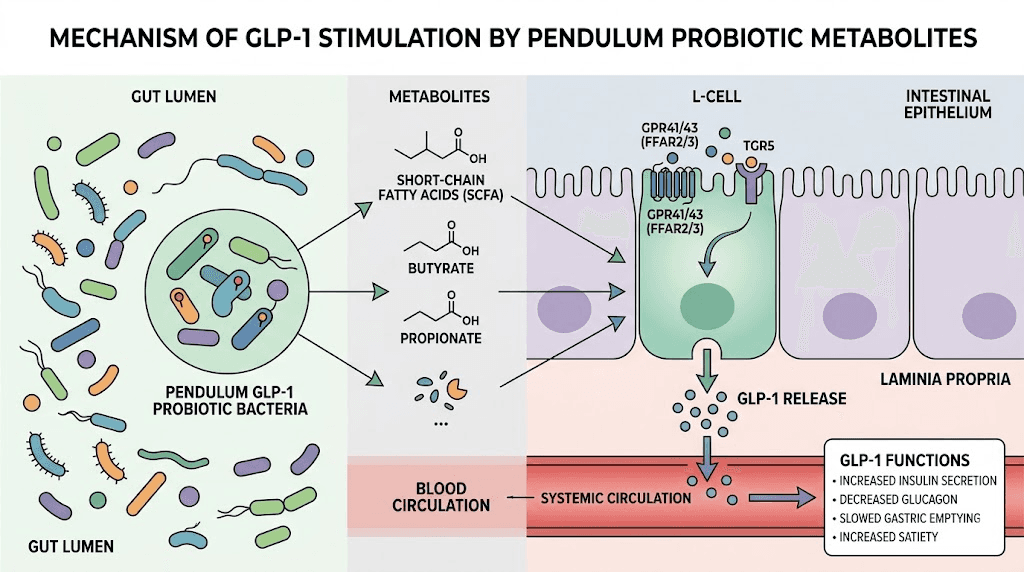
Understanding side effects requires understanding what you are actually putting into your body. Pendulum GLP-1 Probiotic is not a GLP-1 medication. It does not inject synthetic GLP-1 into your system the way semaglutide or tirzepatide do. Instead, it works through a fundamentally different mechanism. It introduces specific bacterial strains into your gut that produce metabolites capable of stimulating your body own GLP-1 production.
The formula contains three bacterial strains. Akkermansia muciniphila is the headline ingredient, a bacterium that lives in the mucus lining of your intestines and produces short-chain fatty acids. Clostridium butyricum generates butyrate, a fatty acid that fuels the cells lining your colon and supports the gut barrier. Bifidobacterium infantis rounds out the blend as a well-studied probiotic with decades of safety data behind it. Together, these three strains are delivered at 500 million AFU per serving alongside chicory inulin, a prebiotic fiber that feeds beneficial gut bacteria.
The mechanism goes like this. These bacteria colonize your gut and begin producing postbiotic metabolites, primarily butyrate, propionate, and a protein called P9. These metabolites interact with L-cells in your intestinal lining, which are the cells responsible for producing GLP-1. When stimulated, these L-cells release more GLP-1 into your system. GLP-1 then slows gastric emptying, signals satiety to your brain, and influences how your body processes glucose. A consumer study of 274 participants found that 91% reported reduced food cravings after six weeks and 88% reported reduced sugar cravings.
But here is the critical distinction. Because this is a probiotic approach rather than a pharmaceutical one, the side effect profile is completely different from injectable GLP-1 medications. The side effects come not from GLP-1 itself but from the process of introducing new bacterial colonies into your digestive system. That process, while natural, is not always comfortable.
Common side effects of Pendulum GLP-1 Probiotic
Let us be direct about what users actually experience. The side effects of Pendulum GLP-1 Probiotic are predominantly gastrointestinal. This makes sense when you consider that you are actively changing the bacterial composition of your gut. Your digestive system has maintained a particular microbial balance for years, possibly decades. Introducing hundreds of millions of new organisms disrupts that balance, and disruption comes with symptoms. Most of these symptoms are temporary. But temporary does not mean trivial, especially when you are living through them.
Bloating and gas
This is the most commonly reported side effect. It is also the one most likely to make you question whether the supplement is working or making things worse. The bloating typically begins within the first few days of starting Pendulum GLP-1 Probiotic and can range from mild abdominal fullness to genuinely uncomfortable distension that affects your daily activities.
Why does it happen? Two reasons working simultaneously. First, the new bacterial strains are fermenting substrates in your gut that your existing bacteria were not fermenting, or were fermenting differently. This fermentation produces gas, primarily hydrogen and carbon dioxide. Second, the chicory inulin prebiotic is itself a potent gas producer. Inulin is a fructan, a type of fermentable fiber that gut bacteria love to eat. When they eat it, they produce gas as a byproduct. If you have ever experienced bloating from eating Jerusalem artichokes, chicory root, or high-inulin foods, you know exactly what this feels like.
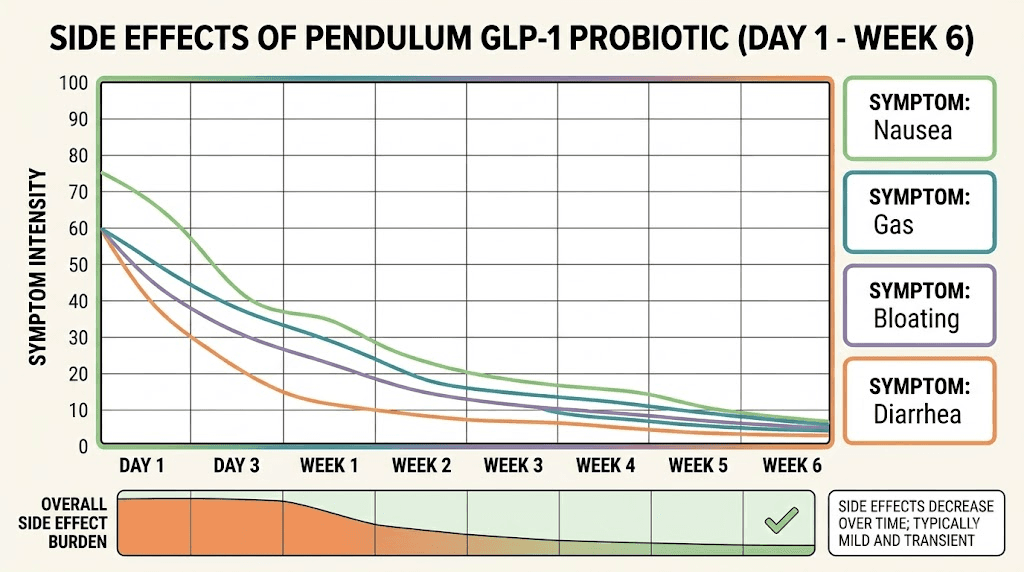
The bloating is often worse in the evening. It tends to peak around days three through seven. Most users report significant improvement by the end of week two, though some experience intermittent bloating for up to a month. If you are also taking fiber supplements alongside GLP-1 support products, the bloating can compound. Managing fiber intake during the adjustment period is essential. People already dealing with bloating from GLP-1 medications should approach this supplement with particular caution, as the effects can stack.
Nausea and stomach cramps
Nausea is the second most common complaint. It usually appears in the first three to five days and tends to be mild to moderate in intensity, nothing like the nausea associated with starting semaglutide or tirzepatide, but uncomfortable enough to notice.
The nausea stems from several factors. The introduction of new bacterial colonies triggers mild inflammatory responses in the gut lining as your immune system assesses these new inhabitants. Akkermansia muciniphila in particular interacts directly with the mucus layer of your intestines, and changes to this layer can temporarily affect how your stomach processes food. Stomach cramps often accompany the nausea, creating a general sense of digestive unease that makes eating less appealing, which some users ironically interpret as the supplement working.
It is important to distinguish between productive discomfort and problematic symptoms. Mild nausea that fades within a week is normal. Nausea severe enough to prevent eating, lasting beyond two weeks, or accompanied by vomiting is not normal and warrants medical attention. People who experience acid reflux with GLP-1 agents may find that the nausea from Pendulum triggers similar symptoms.
Changes in bowel movements
Your bowel habits will almost certainly change during the first two weeks. This is non-negotiable when you are remodeling your gut microbiome.
The most common change is loose stools or outright diarrhea. Clostridium butyricum increases butyrate production in the colon, which draws water into the intestinal lumen through osmotic effects. The inulin prebiotic adds to this by increasing stool water content and accelerating transit time. For some users, this means two to three loose bowel movements per day during the first week. It is not pleasant, but it generally resolves as the gut adapts. If you are someone who has dealt with diarrhea from tirzepatide, the experience will feel familiar, though typically less severe.
Less commonly, some users experience the opposite, constipation. This seems paradoxical given that the supplement contains fiber and butyrate-producing bacteria, but it can happen when the gut microbiome shifts create temporary motility changes. Akkermansia muciniphila increases mucus production, and in some individuals, this thicker mucus layer can slow transit time initially. For guidance on managing this, our resource on GLP-1 constipation relief strategies offers practical solutions that apply to probiotic-induced constipation as well. People dealing with semaglutide constipation or tirzepatide constipation should be especially mindful of stacking these effects.
Less common side effects
Beyond the big three of bloating, nausea, and bowel changes, several less common side effects deserve mention.
Headaches occur in a small percentage of users, likely related to the gut-brain axis response to microbiome changes. When your gut bacteria shift dramatically, the vagus nerve communicates these changes to your brain, and headaches can result. This mirrors what some people experience with GLP-1 related headaches and tirzepatide headaches.
Fatigue is another underreported side effect. Remodeling the gut microbiome is metabolically demanding. Your immune system is working overtime to evaluate new bacterial colonies, and this immune activity can produce the same low-grade tiredness you feel when fighting off a mild cold. Users tracking GLP-1 related fatigue or semaglutide fatigue should be aware that adding a probiotic may temporarily compound energy issues.
Blood sugar fluctuations are possible, particularly for people with diabetes or prediabetes. Because the supplement aims to increase GLP-1 production, and GLP-1 directly affects insulin secretion and glucose metabolism, blood sugar levels can become less predictable during the adjustment period. This is not inherently dangerous for most people, but diabetics on medication should monitor their glucose closely and consult their physician. Tracking tools like those covered in our GLP-1 monitoring tools guide can help.
Allergic reactions are rare but documented. Itching, skin rash, facial swelling, or difficulty breathing after taking the supplement require immediate medical attention. These reactions are not specific to the bacterial strains but can be triggered by any component of the capsule, including the inulin or inactive ingredients.
How long do Pendulum GLP-1 Probiotic side effects last
Timelines matter. When you are bloated, nauseous, and running to the bathroom, you need to know whether this is a three-day problem or a three-month problem. Here is what the data and user reports tell us.
Most side effects follow a predictable pattern. Days one through three bring the initial onset. Your gut is meeting its new inhabitants for the first time, and the response is often the most intense during this window. Nausea tends to peak here. Days four through seven typically represent the worst of the bloating and gas. The new bacteria are actively establishing colonies, and the fermentation byproducts are at their highest. By this point, most users have developed a rough sense of whether their symptoms are manageable or problematic.
Days eight through fourteen are the turning point for most people. The gut begins adapting. Bloating decreases. Bowel movements start normalizing. Nausea, if it has not already resolved, usually fades. By the end of week two, approximately 70-80% of users report that their side effects have either resolved completely or diminished to a level they barely notice.
The remaining 20-30% may experience lingering symptoms into weeks three and four. This is more common in people with pre-existing digestive sensitivities, those taking high doses of other fiber supplements, or individuals whose baseline microbiome was significantly different from the profile Pendulum is trying to create. For these users, full adaptation can take up to six weeks.
Pendulum itself states that meaningful microbiome changes require approximately 90 days. Some benefits appear in months one and two, but the full effect of the supplement unfolds over three months of consistent use. This means you need to push through the initial side effect window to reach the benefit window. It is a legitimate commitment, and one you should make with full awareness of what the adjustment period looks like. Understanding how long GLP-1 approaches take to start working helps set realistic expectations for any method you choose.
Why side effects happen when you start Pendulum GLP-1 Probiotic
Knowing why something happens makes it easier to endure. The side effects of Pendulum GLP-1 Probiotic are not random or mysterious. They have clear biological explanations, and understanding those explanations can help you decide whether to push through, adjust your approach, or stop entirely.
The gut adjustment period
Your gut microbiome is an ecosystem. Think of it like a forest. It has established species, territorial dynamics, nutrient cycles, and a functional balance that has developed over your entire lifetime. When you introduce 500 million new organisms from three different species, you are essentially releasing new animals into that forest. There will be competition. There will be disruption. And there will be byproducts of that disruption that you feel as symptoms.
The technical term for this is microbial succession. As new species establish themselves, they compete with existing bacteria for nutrients and attachment sites along the intestinal wall. This competition produces metabolic byproducts, gases, and shifts in pH that your gut is not accustomed to. Your immune system, which monitors gut bacteria constantly through toll-like receptors and other surveillance mechanisms, also responds to the new arrivals with mild inflammatory signaling. This is normal. This is healthy. But it does not feel great while it is happening.
How Akkermansia muciniphila changes your microbiome
Akkermansia muciniphila deserves special attention because it is the most novel and potentially disruptive component of the formula. Unlike Bifidobacterium infantis, which is a common probiotic most guts already host in some quantity, Akkermansia is less universally present. Many people have low or undetectable levels of this bacterium, which means introducing it represents a more dramatic change to the microbial landscape.
Akkermansia lives in the mucus layer of your intestines. It literally eats mucus, specifically the glycans that make up the mucus structure. As it consumes mucus, it stimulates the goblet cells in your intestinal lining to produce more. This creates a cycle of mucus consumption and regeneration that ultimately thickens and strengthens the gut barrier. That is the benefit. The side effect is that this process of mucus remodeling can temporarily disrupt the barrier function it is ultimately trying to improve.
During the initial colonization phase, the mucus layer becomes more dynamic, turning over faster than usual. This can increase intestinal permeability temporarily, which contributes to bloating, cramping, and the general digestive unease users report. It can also affect how nutrients and water are absorbed, contributing to loose stools. The gut health resources at SeekPeptides gut health section provide broader context on how gut barrier function affects overall wellness.
The role of chicory inulin
Do not underestimate the inulin. Chicory inulin is included as a prebiotic, food for the probiotic strains, but it is also one of the most fermentable fibers in existence. Studies consistently show that inulin supplementation produces significant gas and bloating, even without the addition of new bacterial strains.
Inulin reaches the colon undigested, where bacteria ferment it rapidly. This fermentation produces hydrogen, carbon dioxide, and sometimes methane. The gas production is dose-dependent, and even the relatively modest amount in Pendulum can cause noticeable symptoms in people who are not accustomed to high-fiber diets. If your current diet is low in fiber, the inulin in Pendulum may be responsible for more of your side effects than the bacteria themselves. Adjusting your fiber intake alongside GLP-1 support requires a strategic approach.
This is actually useful information because it suggests a mitigation strategy. If you gradually increase your dietary fiber intake before starting Pendulum, you can pre-adapt your gut to fermentable fibers and potentially reduce the severity of side effects when you begin the supplement. More on this in the management section below.
Akkermansia muciniphila safety concerns you should know
This section is the one most Pendulum reviews either skip entirely or bury in a footnote. Akkermansia muciniphila has genuine benefits, but it also has a more complicated safety profile than the marketing suggests. The European Food Safety Authority approved the pasteurized form as a safe novel food, but several lines of research raise concerns for specific populations. You deserve to know about all of them.
IBD and autoimmune conditions
This is the most significant concern. Research suggests that Akkermansia muciniphila may not be beneficial, and could potentially be harmful, in people with inflammatory bowel disease. The mechanism involves mucus degradation. In a healthy gut, Akkermansia consuming and stimulating mucus production creates a net positive effect on barrier function. But in an IBD gut, where the mucus layer is already compromised and inflammation is already elevated, adding a mucus-consuming bacterium can exacerbate barrier damage.
Studies in Salmonella infection models have shown similar concerns. When the gut barrier is already under assault from a pathogen, Akkermansia activity can worsen the situation rather than improve it. This does not mean Akkermansia causes IBD or infections. It means that in the context of existing intestinal inflammation or barrier damage, the bacterium normal activities become counterproductive.
For people with autoimmune conditions that affect the gut, this is particularly relevant. Conditions like Crohn disease, ulcerative colitis, and celiac disease all involve compromised gut barrier function. People investigating the relationship between GLP-1 and endometriosis should note that endometriosis patients are approximately 80% more likely to develop IBD, making this concern especially pertinent. Similarly, those exploring Hashimoto disease and GLP-1 options or GLP-1 protocols for Hashimoto disease need to consider autoimmune gut involvement. Our guide on microdosing GLP-1 for autoimmune conditions explores gentler approaches for this population.
Post-antibiotic use
Here is a scenario that catches many people off guard. You finish a course of antibiotics and decide to rebuild your gut flora with Pendulum GLP-1 Probiotic. Seems logical. But research indicates this may be the worst time to introduce Akkermansia muciniphila.
Post-antibiotic replenishment with Akkermansia has been shown to exacerbate intestinal barrier damage in some contexts. Antibiotics wipe out large portions of the gut microbiome, and the resulting ecosystem is unstable and vulnerable. Introducing Akkermansia into this depleted environment can lead to overgrowth, excessive mucus degradation, and worsened intestinal permeability. The bacterium thrives in low-competition environments, which is exactly what antibiotics create.
The safer approach is to wait at least two to four weeks after completing antibiotics before starting Pendulum. During that waiting period, focus on rebuilding baseline diversity with well-established probiotics like Lactobacillus and Bifidobacterium species, along with a diverse whole-food diet. Then introduce Pendulum once the gut ecosystem has regained some stability.
Pregnancy and breastfeeding
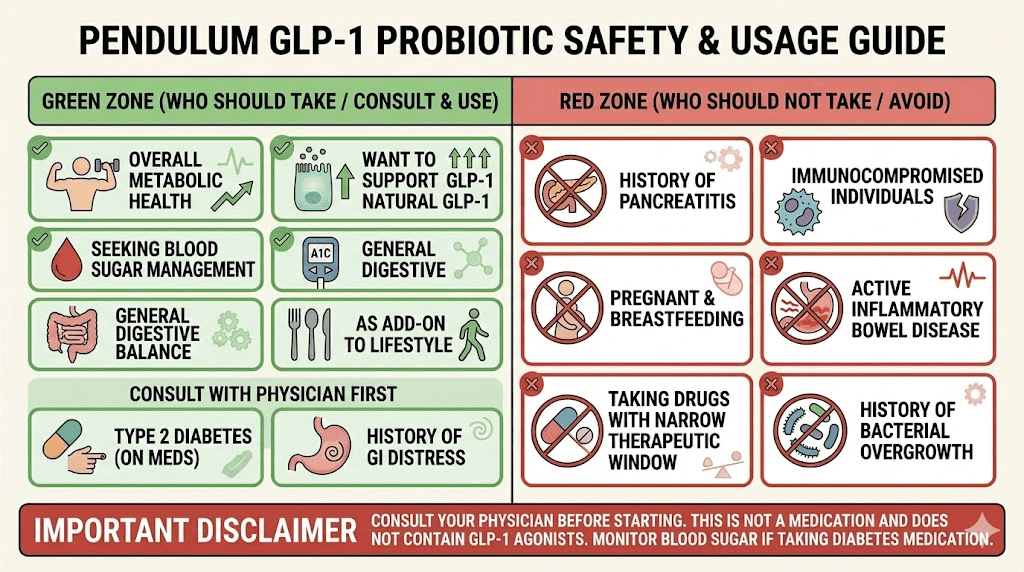
There is simply not enough safety data to recommend Pendulum GLP-1 Probiotic during pregnancy or breastfeeding. While Bifidobacterium infantis and Clostridium butyricum have long safety histories in pregnant populations, Akkermansia muciniphila is a relatively novel probiotic ingredient with limited data in this context. The effects of increased GLP-1 production on fetal development and lactation have not been adequately studied.
This does not mean the supplement is necessarily dangerous during pregnancy. It means we do not know enough to say it is safe. Given the principle of precaution during pregnancy, the prudent choice is to avoid it. People researching GLP-1 approaches during breastfeeding should apply the same caution to probiotic GLP-1 boosters as they would to pharmaceutical ones. Not enough data means not enough data.
Immunocompromised individuals
Any probiotic carries theoretical risk for immunocompromised individuals, and Pendulum is no exception. Clostridium butyricum, despite its strong safety record, has been associated with rare cases of bacteremia. Out of 6,576 case-patients in one surveillance study, five developed Clostridium butyricum bacteremia, and most of these patients were immunocompromised. Five out of 6,576 is extremely rare. But if you are the one it happens to, the rarity is irrelevant.
People undergoing chemotherapy, taking immunosuppressive medications, living with HIV/AIDS, or dealing with other conditions that compromise immune function should consult their physician before starting any probiotic, including Pendulum. The same applies to the elderly with weakened immune systems. The gut barrier surveillance function that normally keeps probiotic bacteria contained within the intestines may not function reliably in immunocompromised individuals.
Elevated Akkermansia levels have also been observed in patients with Parkinson disease and multiple sclerosis, though whether this represents cause, effect, or mere correlation remains unclear. Mouse studies have shown potential tumor increases in intestinal neoplasia models. Some Akkermansia strains exhibit antibiotic resistance, which raises theoretical concerns about gene transfer in clinical settings. None of these findings are conclusive enough to contraindicate Akkermansia for healthy adults, but they underscore the importance of medical guidance for anyone with complex health conditions.
How to minimize Pendulum GLP-1 Probiotic side effects
Side effects are common, but they are not inevitable at their worst intensity. Several practical strategies can significantly reduce the discomfort of starting Pendulum GLP-1 Probiotic. These are not theoretical suggestions. They are approaches that align with the biology of gut adaptation and that users consistently report as helpful.
Start slow and build gradually
The standard dosing recommendation is one capsule daily. But nothing says you must start there. If you are sensitive to probiotics, have a history of digestive issues, or simply want to minimize discomfort, consider starting with half a capsule every other day for the first week. Then increase to half a capsule daily in week two. Then move to a full capsule daily in week three. This graduated approach gives your gut microbiome time to adjust to each new level of bacterial introduction rather than being overwhelmed all at once.
This strategy mirrors the approach used with GLP-1 maintenance dosing, where starting low and titrating up reduces side effects across the board. The same principle applies to the first week on semaglutide, where gradual introduction is standard medical practice. There is no reason not to apply this logic to probiotics as well.
Take it with food
Taking Pendulum GLP-1 Probiotic with a meal rather than on an empty stomach can substantially reduce nausea and stomach cramps. Food buffers the capsule contents, slows their release into the intestines, and provides substrate for the bacteria to interact with, reducing the intensity of the initial fermentation response.
The ideal meal to pair with the supplement is one containing both fat and fiber. Fat slows gastric emptying, which gives the capsule more time to dissolve and distribute its contents gradually. Fiber provides additional substrate for the bacteria, spreading out the fermentation process over a longer period. A breakfast with avocado, whole grain toast, and vegetables works well. Exploring GLP-1 friendly breakfast ideas can help you find meals that complement probiotic supplementation. For dinner options, our GLP-1 dinner ideas and GLP-1 recipes for weight loss provide further meal inspiration.
Stay hydrated
Water is your best friend during the adjustment period. Adequate hydration helps manage nearly every side effect associated with Pendulum. For bloating, water helps move gas through the intestines more efficiently. For loose stools, hydration prevents the dehydration that diarrhea can cause. For constipation, water softens stool and supports motility. For nausea, sipping water throughout the day can ease stomach discomfort.
Aim for at least eight glasses of water daily during the first month, more if you are experiencing diarrhea. Electrolytes also matter. When your bowel habits change, you can lose sodium, potassium, and magnesium through increased stool water content. Our guide to the best electrolytes for GLP-1 support covers specific products and formulations that help maintain mineral balance during digestive adjustment periods. The supplements to take with GLP-1 approaches guide provides additional support options.
Track your symptoms
Keep a simple daily log of your side effects. Rate each symptom from one to ten. Note what you ate, when you took the supplement, how much water you drank, and any other relevant factors. This log serves two purposes.
First, it helps you identify patterns. Maybe your bloating is worse on days you eat dairy. Maybe your nausea improves when you take the supplement with dinner instead of breakfast. Maybe your symptoms are actually improving day over day, but because the bad days stand out more than the good ones in memory, you do not notice the trend without data.
Second, a symptom log gives you objective criteria for deciding whether to continue or stop. Without tracking, the decision often comes down to how you feel in the moment, which is not a reliable guide. With tracking, you can see whether symptoms are trending downward over the first 14 days. If they are, you have reason to continue. If they are not improving or are worsening after two weeks, you have data to discuss with your healthcare provider. The GLP-1 monitoring tools guide covers devices and apps that can help you track digestive symptoms systematically.
Pendulum GLP-1 Probiotic side effects vs GLP-1 medication side effects
How do the side effects of Pendulum compare to those of actual GLP-1 receptor agonist medications? This comparison matters because many people consider Pendulum specifically as an alternative to medications like semaglutide and tirzepatide. Understanding the tradeoffs helps you make an informed choice.
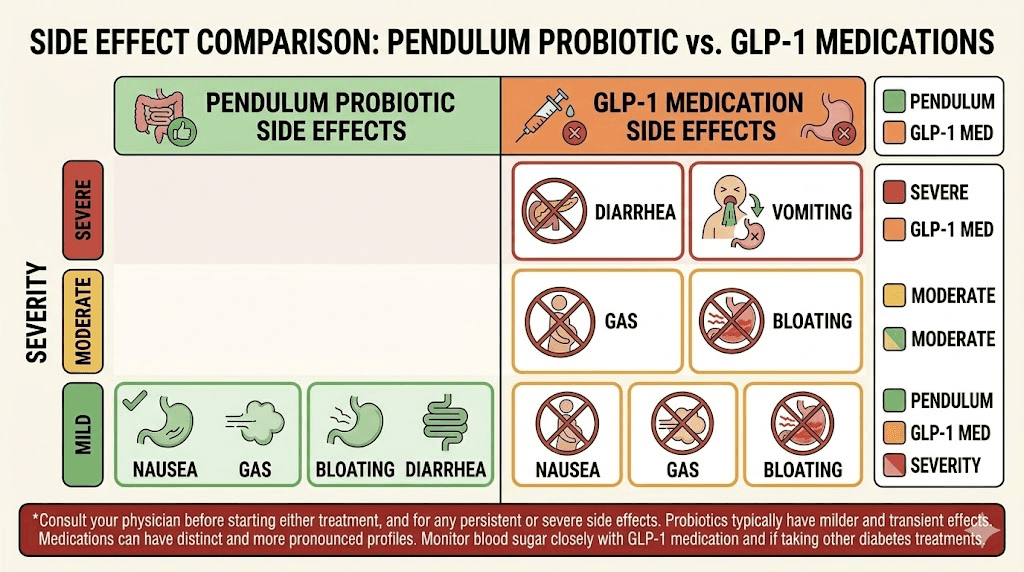
The short answer is that Pendulum side effects are generally milder, shorter in duration, and less diverse than pharmaceutical GLP-1 side effects. But the pharmaceutical options are also far more potent in terms of weight loss outcomes. You get what you pay for, in both benefits and side effects. Here is a detailed comparison covering what matters most when people explore the side effect differences between GLP-1 medications.
Side effect | Pendulum GLP-1 Probiotic | Semaglutide | Tirzepatide |
|---|---|---|---|
Nausea | Mild, 3-7 days | Moderate to severe, weeks to months | Moderate, weeks to months |
Bloating/gas | Common, 1-2 weeks | Common, ongoing for some | Common, ongoing for some |
Diarrhea | Mild, 1-2 weeks | Moderate, can persist | Moderate, can persist |
Constipation | Less common | Very common, often persistent | Very common, often persistent |
Vomiting | Rare | Common, especially dose increases | Moderate frequency |
Injection site reactions | N/A (oral supplement) | Common | Common |
Hair loss | Not reported | Reported by some users | Reported by some users |
Fatigue | Mild, temporary | Moderate, can persist | Moderate, can persist |
Pancreatitis risk | Not associated | Rare but documented | Rare but documented |
Gallbladder issues | Not associated | Increased risk | Increased risk |
Duration of side effects | Typically 1-4 weeks | Weeks to months | Weeks to months |
Several things stand out in this comparison. Pendulum does not cause injection site reactions because it is oral, which eliminates an entire category of side effects that affect users of GLP-1 injection therapies. It has not been associated with the more serious potential complications of pharmaceutical GLP-1 agonists, such as pancreatitis or gallbladder problems. Hair loss, which is a growing concern among GLP-1 medication users, has not been linked to Pendulum.
On the other hand, semaglutide and tirzepatide produce dramatically more weight loss than Pendulum. The pharmaceutical agents can produce 15-20% body weight reduction in clinical trials. Pendulum has not demonstrated anything close to those numbers. Its primary studied outcome is craving reduction, not direct weight loss. So the comparison is not really apples to apples. It is more like comparing a gentle tailwind to a jet engine. Different intensity, different risks, different results.
People who have experienced sulfur burps from GLP-1 medications, dizziness from semaglutide, or brain fog from tirzepatide may find the milder side effect profile of Pendulum appealing. The trade-off is reduced potency. It comes down to what you are willing to tolerate for the outcomes you need. Those who cannot tolerate medication side effects at all might also consider GLP-1 patches or GLP-1 drops as alternative delivery methods.
When to stop taking Pendulum GLP-1 Probiotic
Not every side effect warrants stopping. But some do. Knowing the difference can save you from unnecessary suffering or, on the other end, from quitting too early and missing the benefits.
Continue taking it if: You are experiencing mild to moderate bloating, gas, or loose stools that are uncomfortable but manageable. Your symptoms are showing a downward trend over the first 14 days. You can still eat normally, sleep normally, and function in your daily life without significant disruption.
Consider pausing and consulting a doctor if: Your symptoms have not improved at all after two full weeks. Diarrhea is severe enough to cause dehydration. Nausea prevents you from eating adequately. You notice blood in your stool. You develop a rash, hives, or swelling. You experience chest pain or difficulty breathing.
Stop immediately and seek medical attention if: You develop signs of a severe allergic reaction, which includes facial swelling, throat tightness, or difficulty breathing. You experience severe abdominal pain that does not resolve with rest. You have a high fever along with digestive symptoms, which could indicate an infection rather than a probiotic adjustment. You are immunocompromised and develop symptoms suggesting systemic infection, such as fever, chills, and rapid heart rate.
One common mistake is stopping during the worst of the adjustment period, usually around days five through seven, and then restarting a week later. This essentially resets the clock and puts you back through the initial discomfort again. If you are going to push through, commit to at least two full weeks before making a final decision. If you are going to stop, stop completely and consult your healthcare provider before trying again. People familiar with semaglutide withdrawal symptoms know that stopping and starting GLP-1 approaches carries its own challenges regardless of whether the approach is pharmaceutical or probiotic.
Pendulum GLP-1 Probiotic vs other GLP-1 supplements
Pendulum is not the only supplement claiming to support natural GLP-1 production. The market has exploded with alternatives, and their side effect profiles vary significantly. Understanding how Pendulum compares to other options helps you choose the product most likely to work for your body with the least discomfort. SeekPeptides has reviewed many of these alternatives in depth.
Product | Main mechanism | Common side effects | Severity |
|---|---|---|---|
Pendulum GLP-1 Probiotic | Live bacteria (Akkermansia, C. butyricum, B. infantis) | Bloating, gas, nausea, loose stools | Mild to moderate |
Postbiotic metabolites (no live bacteria) | Mild digestive changes | Mild | |
Herbal and fiber blend | Bloating from fiber content | Mild | |
Botanical extracts | Mild GI discomfort | Mild | |
Polyphenol-based GLP-1 stimulation | Minimal reported side effects | Minimal | |
Multi-ingredient formula | Varies by ingredient sensitivity | Mild to moderate |
The pattern is clear. Products containing live bacteria tend to produce more digestive side effects than those using postbiotics, botanicals, or polyphenols. This makes biological sense. Live bacteria actively colonize the gut and create the disruption necessary for microbiome change. Postbiotics deliver the beneficial metabolites without the colonization process. Botanicals work through entirely different pathways that do not involve microbial colonization at all.
If you tried Pendulum and could not tolerate the side effects, several alternatives exist. The Advanced Bionutritionals GLP-1 Plus review covers a formula that takes a non-probiotic approach. The Ellie GLP-1 review, Thrive GLP-1 review, and Evolv GLP-1 review each examine products with different formulation philosophies. The GLP-1 Companion review looks at a support supplement designed to work alongside other GLP-1 approaches.
For those who prefer non-oral options, the Gentle Patches GLP-1 review covers a transdermal approach that bypasses the digestive system entirely. MLM-distributed options like the LifeVantage GLP-1 MindBody System, Tranont GLP-1, and CrazyLeaf SMGT GLP-1 exist in the market as well, though their evidence base varies considerably. The Willow GLP-1 reviews and MMIT GLP-1 review provide additional options to consider.
The key takeaway is this. If side effects are your primary concern, Pendulum sits in the middle of the spectrum, more disruptive than botanical and postbiotic options but far less disruptive than pharmaceutical GLP-1 medications. Your choice depends on how much disruption you are willing to tolerate for the potential benefits you seek.
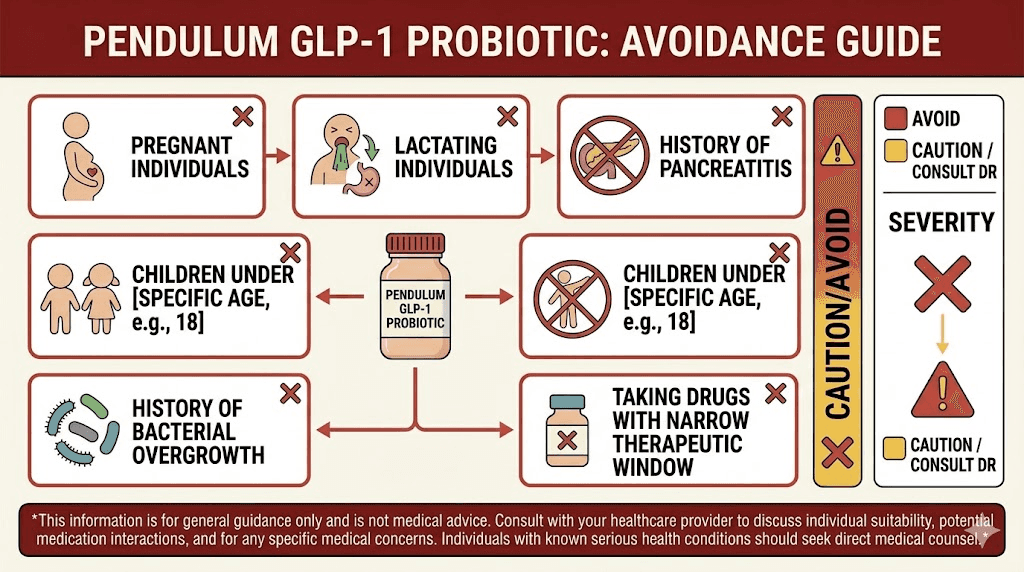
Who should avoid Pendulum GLP-1 Probiotic
Based on the available evidence, several groups should either avoid Pendulum entirely or proceed only under direct medical supervision.
People with inflammatory bowel disease. The Akkermansia muciniphila component poses specific risks for people with Crohn disease or ulcerative colitis. The bacterium mucus-degrading activity could worsen barrier function in an already inflamed gut. Until more targeted research is available, people with active IBD should avoid this product. Those exploring the connection between GLP-1 and lipedema should note that lipedema involves inflammatory pathways that may interact with gut inflammation in unpredictable ways.
People currently taking antibiotics or within two weeks of finishing a course. The post-antibiotic gut is an unstable environment where Akkermansia introduction can backfire. Wait at least two to four weeks after your last antibiotic dose.
Pregnant or breastfeeding women. Insufficient safety data. Not worth the risk when the potential benefits are modest compared to the responsibility of supporting a developing child.
Immunocompromised individuals. The rare but real risk of probiotic bacteremia makes this population unsuitable for any live probiotic supplementation without physician oversight.
People with PCOS. There is emerging research on the relationship between gut bacteria, GLP-1, and polycystic ovary syndrome. The interplay between hormonal conditions and microbiome manipulation is not well enough understood to make blanket recommendations. People investigating HRT and GLP-1 together or semaglutide effects on estrogen levels should be aware that probiotic-driven GLP-1 changes could have hormonal implications as well.
People with severe IBS. While some IBS subtypes may benefit from specific probiotic strains, the combination of Akkermansia, inulin, and butyrate-producing bacteria could trigger significant flares in sensitive individuals. The inulin alone is a known trigger for IBS symptoms in many patients. People who already experience acid reflux or other upper GI symptoms should approach cautiously.
Children and adolescents. No safety data exists for pediatric use. The gut microbiome in children is still developing, and introducing Akkermansia muciniphila during this developmental window could have unpredictable effects on microbial succession and immune system training.
Diabetics on insulin or sulfonylureas without medical supervision. Because Pendulum can increase GLP-1 production, and GLP-1 affects insulin secretion, combining the supplement with insulin or sulfonylureas could theoretically increase hypoglycemia risk. This combination requires medical oversight and possibly medication adjustment.
Managing specific side effects: detailed strategies
Let us get practical. Here are targeted management approaches for each major side effect, going beyond the general advice covered earlier.
For persistent bloating. Try taking the supplement in the evening with dinner rather than in the morning. Evening dosing allows the most intense fermentation to occur during sleep when you are less likely to notice discomfort. Peppermint tea after meals can relax the smooth muscle of the intestines and help gas pass more easily. Gentle movement after eating, even a ten-minute walk, promotes intestinal motility and can reduce gas accumulation. Avoid carbonated beverages entirely during the first two weeks, as they add exogenous gas to an already gas-producing situation.
For nausea. Ginger is your best evidence-based option. Fresh ginger tea, ginger capsules, or even ginger chews can reduce nausea significantly. Take the supplement in the middle of a meal rather than at the beginning or end, sandwiching it between bites of food. If morning nausea is the issue, try switching to an evening dose. Keep meals smaller and more frequent during the first week, as large meals combined with active probiotic fermentation can overwhelm the stomach. Those who have managed semaglutide side effects with ginger and timing strategies will find these approaches familiar.
For diarrhea. Ensure adequate electrolyte intake. Diarrhea depletes sodium, potassium, and magnesium faster than you might expect. Plain white rice, bananas, and toast are traditional binding foods that can help firm up stools. Avoid dairy during the first two weeks, as the disrupted gut may temporarily reduce lactase activity. If diarrhea is severe, reduce the dose by half until symptoms improve. Dietary guidance from our best foods to eat during GLP-1 support article applies well here. Similarly, knowing which foods to avoid during GLP-1 support helps minimize triggers.
For constipation. Increase water intake to at least ten glasses daily. Magnesium citrate at 200-400mg before bed can gently promote motility. Prune juice or dried prunes provide natural sorbitol that helps draw water into the colon. Walking or light exercise daily stimulates the gastrocolic reflex. If constipation persists beyond a week, the strategies in our GLP-1 constipation relief guide offer more advanced solutions.
For headaches. Stay hydrated. Most probiotic-related headaches are actually dehydration headaches caused by fluid shifts in the intestines. Ensure you are consuming adequate sodium, as water alone without electrolytes can dilute blood sodium levels and worsen headaches. If headaches persist beyond the first week, check whether you are eating enough calories, as appetite suppression from increasing GLP-1 can lead to inadvertent calorie restriction that causes headaches. The calorie guidelines during GLP-1 support can help you determine if undereating is contributing.
For fatigue. Prioritize sleep during the first two weeks. Your immune system is actively working to integrate the new bacterial strains, and sleep is when immune function is most efficient. Ensure adequate protein intake, as microbiome shifts can temporarily affect amino acid absorption. B vitamins may help, as gut bacteria are involved in B vitamin synthesis, and changes to the microbiome can affect availability. Our guide on GLP-1 and vitamins covers specific nutritional support strategies in detail.
The role of diet during the adjustment period
What you eat during the first few weeks of Pendulum significantly affects your side effect experience. This is not a minor detail. Diet can be the difference between tolerable adjustment and miserable adjustment.
Foods that help. Cooked vegetables are easier on a gut in transition than raw ones. Bone broth provides glycine and glutamine that support gut lining repair. Fermented foods in small amounts, like a tablespoon of sauerkraut or a few bites of kimchi, help pre-diversify your microbiome. Lean proteins provide amino acids without adding fermentation burden. Easily digestible starches like white rice and potatoes give your body energy without taxing the digestive system. People combining dietary changes with diet strategies for GLP-1 support will find significant overlap in these recommendations.
Foods that worsen side effects. High-FODMAP foods are the biggest culprits. Onions, garlic, beans, lentils, wheat, certain fruits, and dairy all contain fermentable carbohydrates that compound the gas and bloating from the supplement. Artificial sweeteners, especially sugar alcohols like sorbitol and xylitol, add to the osmotic load in the colon and worsen diarrhea. Fried foods slow gastric emptying and can intensify nausea. Alcohol disrupts the gut barrier and antagonizes the very process the probiotic is trying to support.
A strategic approach is to eat a simplified, gut-friendly diet during the first two weeks of Pendulum supplementation, then gradually reintroduce more complex foods as your side effects resolve. This temporary dietary simplification gives your gut the best possible environment for bacterial colonization while minimizing additional sources of digestive distress. The food lists for GLP-1 support provide a solid framework for this kind of temporary dietary shift. Those exploring ketogenic diets with GLP-1 approaches should note that high-fat diets can affect probiotic colonization patterns.
Long-term considerations and what to expect after the adjustment period
Once you survive the initial adjustment, what comes next? Understanding the longer timeline helps you evaluate whether Pendulum is delivering on its promises or whether it is time to move on.
Month one is primarily the adjustment period. Side effects dominate the first two weeks, then taper. By the end of month one, most users report feeling digestively normal or close to it. Some begin noticing subtle changes in appetite and cravings, but these are not universal at this stage. The bacterial strains are still establishing themselves and have not yet reached the population densities needed to meaningfully shift GLP-1 production.
Month two is when some users begin reporting noticeable effects. Reduced snacking between meals. Less interest in sweets. A vague sense of feeling satisfied with smaller portions. These effects are consistent with modest increases in GLP-1 production but are far subtler than what semaglutide produces week by week. Some users experience nothing notable during month two and question whether the supplement is working at all.
Month three, according to Pendulum, is when microbiome changes reach meaningful levels. This is the point where the bacterial strains should be well established, metabolite production should be consistent, and the downstream effects on GLP-1 should be at their peak. The consumer study data on craving reduction was collected at the six-week mark, so meaningful changes may occur earlier for some people. But three months is the timeframe the company sets for full evaluation.
The financial commitment is worth acknowledging. At approximately $50-70 per month for the standard version or $165 or more for the Pro version, three months of evaluation costs between $150 and $500. That is a meaningful investment, especially for a product whose benefits are modest compared to pharmaceutical alternatives. The GLP-1 fat loss treatment landscape includes options at various price points and potency levels.
After the initial three months, long-term side effects are uncommon. The gut adapts. The bacterial colonies stabilize. If anything, ongoing users report improvements in baseline digestive function, including more regular bowel movements, less bloating from meals in general, and better tolerance of diverse foods. These are the expected outcomes of a healthier, more diverse gut microbiome.
Combining Pendulum with other supplements and medications
Many people do not take Pendulum in isolation. They are stacking it with other supplements, combining it with dietary changes, or in some cases, taking it alongside GLP-1 medications. Each combination carries its own side effect considerations.
Pendulum plus GLP-1 medications. Some people take Pendulum alongside semaglutide or tirzepatide, hoping that the probiotic will enhance the medication effect or support gut health during pharmaceutical treatment. The digestive side effects can stack. If you are already dealing with semaglutide bloating or tirzepatide bloating, adding a probiotic that causes bloating may worsen things initially. However, some gastroenterologists suggest that probiotics may actually help manage medication side effects in the longer term by improving gut barrier function. If combining, stagger the introduction. Start the medication first, stabilize on it, then add Pendulum at half dose.
Pendulum plus fiber supplements. This combination frequently causes problems because of the additive fermentation effects. If you are already taking a fiber supplement for GLP-1 support, consider reducing your fiber supplement dose during the first two weeks of Pendulum, then gradually restoring it once the probiotic side effects have resolved.
Pendulum plus other probiotics. Adding Pendulum on top of an existing probiotic regimen can create an overcrowded introduction of bacterial strains. The gut can only handle so much microbial change at once. Consider pausing other probiotics during the first month of Pendulum to reduce the adjustment burden, then reintroduce them one at a time.
Pendulum plus creatine or amino acids. This combination is generally well tolerated. Creatine alongside GLP-1 support is commonly used, and probiotics do not interact meaningfully with amino acid supplements. People working on building muscle while on GLP-1 approaches can typically combine these without additional side effect concerns. Glycine combinations, as discussed in our semaglutide with glycine and tirzepatide glycine guides, may actually support gut health during the adjustment period.
Pendulum plus medications that affect the gut. If you take PPIs (proton pump inhibitors), metformin, NSAIDs, or other medications that affect gut pH, motility, or the microbiome, adding Pendulum may produce unpredictable results. The altered gut environment from these medications can affect how the probiotic strains colonize and how intensely they ferment. Discuss the combination with your physician. People investigating semaglutide effects on liver enzymes or those dealing with medication related leg cramps should be especially mindful of multi-product interactions.
Reading Pendulum reviews critically
A note on information quality. When you research Pendulum GLP-1 Probiotic side effects online, you will encounter a spectrum of reviews ranging from uncritical praise to unfounded alarm. Neither extreme is helpful.
Affiliate reviews, which make up the majority of Pendulum content online, have a financial incentive to downplay side effects. They will mention bloating and gas briefly, then pivot immediately to benefits and a purchase link. This does not mean the product is bad. It means the review is biased.
On the other end, some health forums amplify worst-case scenarios. One person severe reaction becomes the expected experience in the minds of readers, even though that reaction may represent a fraction of a percent of users.
The reality, as is usually the case, sits in the middle. Most people experience some digestive discomfort. Most get through it within two weeks. A meaningful minority has more significant issues. A small number cannot tolerate the product at all. And an even smaller number may face genuine safety risks due to pre-existing conditions. SeekPeptides reviews these products with full disclosure of both benefits and risks because you deserve the complete picture. Our comprehensive Pendulum GLP-1 Probiotic Pro review covers the product from every angle, including efficacy, value, and alternatives.
Drug interaction considerations
While Pendulum GLP-1 Probiotic is a supplement rather than a pharmaceutical, it can still interact with medications in ways that affect either the supplement efficacy or the medication safety profile.
Diabetes medications. Because Pendulum aims to increase GLP-1 production, it could theoretically enhance the blood sugar lowering effects of insulin, sulfonylureas, and other diabetes medications. The effect is likely modest compared to pharmaceutical GLP-1 agonists, but it exists. Diabetics should monitor blood glucose more frequently during the first month and discuss the addition with their endocrinologist. People comparing phentermine versus GLP-1 approaches or phentermine versus semaglutide specifically should factor in how each option interacts with existing diabetes management.
Immunosuppressants. If you take medications that suppress your immune system, the risk of probiotic organisms translocating from the gut into the bloodstream is elevated. This is the bacteremia risk discussed earlier. Medications like cyclosporine, tacrolimus, azathioprine, or high-dose corticosteroids reduce the immune surveillance that keeps probiotic bacteria safely contained within the intestinal tract.
Antibiotics. Taking Pendulum simultaneously with antibiotics is essentially pointless and potentially harmful. The antibiotics will kill the probiotic bacteria before they can colonize. Beyond being a waste of money, the interaction between dying probiotic organisms and antibiotic-disrupted gut flora can worsen digestive symptoms. Wait until your antibiotic course is complete, then wait an additional two to four weeks before starting Pendulum.
Blood thinners. Some gut bacteria synthesize vitamin K, which affects blood clotting. Changes to your microbiome could theoretically affect vitamin K production and, by extension, the efficacy of blood thinners like warfarin. This is a theoretical rather than documented concern with Pendulum specifically, but it is worth monitoring INR more frequently during the first month if you take warfarin.
Frequently asked questions
Does Pendulum GLP-1 Probiotic cause weight gain?
No. Pendulum GLP-1 Probiotic is designed to support weight management through increased GLP-1 production, which promotes satiety and reduced cravings. Weight gain has not been reported as a side effect. However, the supplement does not guarantee weight loss either. Results depend on diet, activity level, and individual metabolic factors. Understanding average weight loss per month with GLP-1 approaches helps set realistic expectations.
Can I take Pendulum GLP-1 Probiotic with semaglutide or tirzepatide?
Some people do combine them, and there is no known dangerous interaction. However, digestive side effects can stack, particularly nausea and bloating. If combining, introduce one at a time and stabilize before adding the other. Our guide on supplements to take with GLP-1 medications and supplements to take with tirzepatide covers safe combination strategies in detail.
How long should I try Pendulum before deciding it does not work?
Pendulum recommends at least 90 days, which is the timeframe needed for meaningful microbiome changes. Side effects should largely resolve within the first two to four weeks. If side effects persist beyond four weeks without improvement, consult your doctor. If side effects resolve but you notice no benefits by month three, the product may not be right for your biology.
Is Pendulum GLP-1 Probiotic safe for people with SIBO?
Small intestinal bacterial overgrowth complicates probiotic use. Adding more bacteria to a system already dealing with bacterial overgrowth in the small intestine can worsen symptoms. If you have diagnosed SIBO, treat it first, then consider introducing Pendulum after your gastroenterologist confirms the SIBO has resolved. The inulin prebiotic in particular can fuel bacterial overgrowth in the small intestine.
Will Pendulum GLP-1 Probiotic affect my period?
Hormonal effects from Pendulum have not been specifically studied, but GLP-1 has documented interactions with reproductive hormones. Some users of pharmaceutical GLP-1 agonists report menstrual changes on semaglutide. Whether the more modest GLP-1 increase from Pendulum produces similar effects is unknown. Track your cycle during the first three months and report any changes to your healthcare provider.
Can Pendulum GLP-1 Probiotic cause anxiety or mood changes?
The gut-brain axis means that significant microbiome changes can affect mood and anxiety levels. While not commonly reported with Pendulum specifically, people sensitive to gut-brain interactions may notice temporary mood fluctuations during the adjustment period. This parallels reports of anxiety with tirzepatide and insomnia with semaglutide, though typically milder with a probiotic supplement.
Should I take Pendulum GLP-1 Probiotic on an empty stomach or with food?
Take it with food. While some probiotics are designed for empty-stomach consumption, the combination of live bacteria and inulin prebiotic in Pendulum is better tolerated when paired with a meal. Food buffers the initial fermentation response and reduces nausea. A meal containing both fat and fiber is ideal, as covered in our GLP-1 breakfast ideas guide.
What happens if I miss a dose of Pendulum GLP-1 Probiotic?
Missing a single dose is not significant. Probiotic effects depend on consistent colonization over weeks and months, not on individual doses. Simply resume your normal schedule the next day. Do not double up on doses to compensate, as this can intensify side effects without accelerating benefits. People wondering about timing flexibility with GLP-1 approaches can find relevant guidance in our article on taking GLP-1 a day early.
External resources
European Food Safety Authority (EFSA) - Novel Food Safety Assessments
National Center for Complementary and Integrative Health - Probiotics
World Gastroenterology Organisation - Probiotics and Prebiotics Guidelines
NIH Office of Dietary Supplements - Probiotics Fact Sheet for Health Professionals
For those serious about navigating the GLP-1 landscape safely, whether through probiotics, supplements, or pharmaceutical options, SeekPeptides offers the most comprehensive resource available. Members access evidence-based guides, detailed product comparisons, safety databases, and a community of people who have navigated these exact decisions. The difference between guessing and knowing often comes down to having the right information at the right time.
In case I do not see you, good afternoon, good evening, and good night. May your gut bacteria stay balanced, your side effects stay brief, and your health decisions stay informed.