Mar 10, 2026

What if the real problem with your GLP-1 medication is not the drug itself, but what is happening inside your gut while you take it? That question drives thousands of people to search for digestive support products every month. And it is a fair question. GLP-1 receptor agonists like semaglutide and tirzepatide work by slowing gastric emptying, which means food sits in your stomach longer. That delayed transit creates conditions for bloating, nausea, constipation, and those infamous sulfur burps that nobody warns you about before your first injection.
Gut Response GLP-1 Support by Windmill Vitamins is one of the newest supplements marketed specifically for people experiencing these digestive disruptions. The product promises to support digestive health, promote nutrient absorption, and help your body adapt to GLP-1 therapy. But does it deliver? The supplement market for GLP-1 users has exploded in recent months, with dozens of products claiming to solve every side effect imaginable. Some contain legitimate ingredients backed by research. Others are glorified multivitamins with clever marketing. Knowing which category Gut Response falls into requires looking beyond the label claims and into the actual formulation, the dosages, and the evidence behind each ingredient. This guide breaks down everything you need to know about Gut Response GLP-1 Support, from its complete ingredient list to honest assessments of whether the science supports the marketing, with comparisons to every major alternative on the market right now. Whether you are currently dealing with semaglutide bloating, tirzepatide constipation, or simply want to protect your gut health during peptide therapy, this review covers it all.
What is Gut Response GLP-1 support
Gut Response GLP-1 Support is a daily capsule supplement manufactured by Windmill Health Products, a company that has been producing vitamins and supplements since 1972. The product sits within Windmill broader Gut Response product line, which includes a daily probiotic and a fiber-based digestive cleanser called CleanSweep. This particular formulation targets people taking GLP-1 receptor agonist medications who experience gastrointestinal side effects.
Each bottle contains 30 capsules. One capsule per day. You take it 30 minutes before a meal.
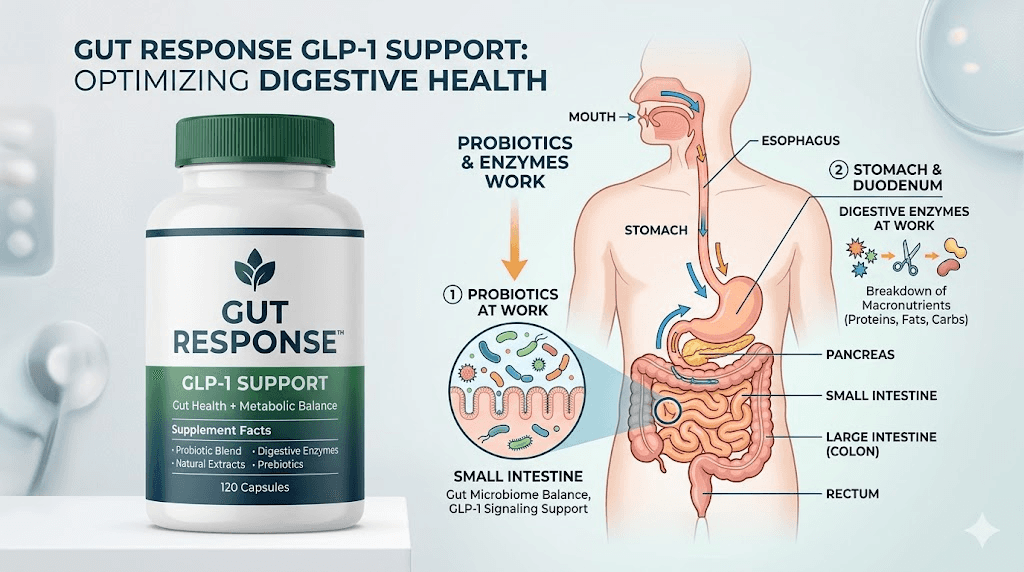
The product combines three distinct functional categories into a single capsule. A 13-strain probiotic blend delivering 10 billion colony-forming units. A digestive enzyme blend containing 11 different enzymes at 75 milligrams total. And a collection of supportive nutrients including vitamins, minerals, prebiotics, anti-inflammatory compounds, and an antioxidant. That is a lot of ingredients packed into one capsule, which immediately raises questions about whether any individual component exists at a therapeutically meaningful dose.
Windmill positions the product as a comprehensive digestive support system rather than a single-purpose supplement. The marketing claims it helps promote digestive health for GLP-1 users, aids nutrient uptake and assimilation, and supports natural GLP-1 hormone levels. That last claim deserves scrutiny, which we will address in the evidence section below. For now, understand that this is fundamentally a GLP-1 companion supplement designed to manage side effects, not replace or enhance your medication.
Complete ingredient breakdown
Understanding what you are putting into your body matters. Especially when you are already taking a powerful medication that affects your entire digestive system. Here is every ingredient in Gut Response GLP-1 Support, with the exact dosage per capsule and what the Daily Value percentage means for your nutrition.
Vitamin D (cholecalciferol) at 20 mcg (100% DV)
The inclusion of Vitamin D makes sense for GLP-1 users. Research consistently shows that people taking semaglutide and similar medications often eat significantly less food, which can lead to nutritional deficiencies over time. Vitamin D plays a critical role in calcium absorption, immune function, and gut barrier integrity. The 20 mcg dose (800 IU) meets 100% of the Daily Value, though many healthcare providers recommend higher supplementation for people with documented deficiencies. If you are already taking a GLP-1 vitamin supplement, check for overlap to avoid excessive intake.
Vitamin B12 (methylcobalamin) at 200 mcg (8,333% DV)
This is the standout dosage in the formula. At 8,333% of the Daily Value, the B12 inclusion reflects growing awareness that GLP-1 medications can impair B12 absorption. The methylcobalamin form is the bioactive version of B12, meaning your body can use it directly without conversion. This is the same form used in compounded formulations like semaglutide with methylcobalamin and tirzepatide methylcobalamin compounds.
B12 is water-soluble, so excess amounts are typically excreted rather than stored. The high dose is not dangerous for most people. But it does raise an important question. If B12 supplementation is the primary benefit you seek, a standalone B12 supplement costs a fraction of what Gut Response charges for the full formula. Keep that in mind as we discuss value later.
Magnesium (oxide) at 25 mg (6% DV)
Here is where the formula starts to show its limitations. Magnesium oxide is the cheapest and least bioavailable form of magnesium. Your body absorbs roughly 4% of magnesium oxide compared to 25-30% for magnesium glycinate or citrate. And 25 milligrams at 6% DV is a negligible amount by any standard.
Many GLP-1 users struggle with constipation, and magnesium citrate or glycinate at meaningful doses (200-400mg) can help with bowel regularity. The amount in Gut Response would do virtually nothing for that purpose. This ingredient feels like a label decoration rather than a functional component.
Probiotic blend at 10 billion CFU (13 strains)
The probiotic blend is the headline ingredient, and the strain count is impressive on paper. Thirteen different bacterial strains at a combined 10 billion CFU. But impressive numbers do not automatically translate to impressive results. The critical question is which strains are included and at what individual concentrations. Windmill does not disclose the breakdown per strain on the label, which is a common practice in the supplement industry and a frustrating one.
For context, the Pendulum GLP-1 Probiotic uses specific, clinically studied strains like Akkermansia muciniphila at defined concentrations. That targeted approach is fundamentally different from throwing 13 strains into a blend without specifying how much of each you are getting. Some strains in the blend might be present at only a few hundred million CFU, which may be below the threshold needed for any meaningful effect.
If you are specifically looking for probiotic support while on GLP-1 therapy, our guide to the best probiotic for semaglutide users covers which strains have the most evidence behind them.
Digestive enzyme blend at 75 mg (11 enzymes)
The enzyme blend includes bromelain, papain, lipase, and eight other enzymes. This component makes theoretical sense. When GLP-1 medications slow your digestion, food sits in your stomach longer. Supplemental enzymes could help break down proteins, fats, and carbohydrates more efficiently, potentially reducing gas, bloating, and those sulfur burps that plague so many users.
The problem, again, is dosage. At 75 milligrams total for 11 enzymes, each individual enzyme is present at roughly 7 milligrams on average. Most standalone digestive enzyme supplements provide 100-200 milligrams of a single enzyme. Whether 7 milligrams of bromelain does anything meaningful is questionable at best. Digestive enzymes work, but they work at adequate doses. This blend may be too diluted to deliver real results.
Chicory extract and inulin at 50 mg
Inulin is a prebiotic fiber that feeds beneficial gut bacteria. It has solid research supporting its role in promoting Bifidobacterium growth and improving bowel regularity. However, effective doses in clinical studies typically range from 5 to 10 grams daily. Fifty milligrams is 100 to 200 times less than what studies show works.
This is a recurring theme with Gut Response. The right ingredients at the wrong doses. If you want prebiotic support for your gut while taking GLP-1 medications, you need significantly more fiber than this capsule provides. Adjusting your diet on semaglutide or tirzepatide diet plan to include fiber-rich foods would accomplish far more than this inclusion.
Turmeric extract at 50 mg
Turmeric contains curcumin, a compound with well-documented anti-inflammatory properties. Inflammation in the gut lining is a legitimate concern for GLP-1 users, particularly during the early weeks of treatment when gastrointestinal distress peaks. But curcumin has notoriously poor bioavailability. Studies typically use 500-2,000 milligrams of curcumin with piperine (black pepper extract) to enhance absorption. Fifty milligrams of turmeric extract, without any bioavailability enhancer, delivers a negligible amount of active curcumin to your system.
CoQ10 at 50 mg
Coenzyme Q10 is an antioxidant that supports cellular energy production. Its inclusion in a digestive health supplement is unusual. CoQ10 has no direct evidence supporting its use for GLP-1 side effect management. It is a perfectly fine supplement on its own, but its presence here feels like padding to make the label look more comprehensive rather than addressing a specific need for GLP-1 users.
How the formula targets GLP-1 side effects
To understand whether Gut Response can help, you first need to understand what GLP-1 medications do to your digestive system and why side effects occur.
The delayed gastric emptying problem
GLP-1 receptor agonists work partly by slowing how fast your stomach empties food into your small intestine. This is called delayed gastric emptying or gastroparesis-like effects. Research shows that liraglutide at 3.0 mg reduces gastric emptying by 23% at the one-hour mark compared to placebo. Semaglutide and tirzepatide produce similar effects.
When food sits longer in your stomach, several things happen. Bacteria have more time to ferment sulfur-containing proteins, producing hydrogen sulfide gas. Larger meals create more distension and discomfort. Nutrient absorption patterns change. And the entire rhythm of your digestive system gets disrupted.
This is why so many people experience bloating on semaglutide and bloating on tirzepatide. The food is just sitting there longer than your body is accustomed to.
Where probiotics fit in
Your gut microbiome, the trillions of bacteria living in your digestive tract, plays a direct role in how you tolerate GLP-1 therapy. Some bacterial strains produce more gas than others. Some help break down food more efficiently. And the balance between beneficial and problematic bacteria can shift when your digestive transit time changes.
Probiotics theoretically help by introducing beneficial bacteria that can crowd out gas-producing strains, support the gut barrier, and aid in digestion. The key word is theoretically. The evidence for specific probiotic strains in GLP-1 users is still emerging. Lactobacillus and Bifidobacterium strains have the most general digestive health evidence, but targeted research in the context of GLP-1 therapy remains limited.
That said, some people do report significant improvements in digestive comfort when adding probiotics to their GLP-1 regimen. Individual results vary dramatically based on your existing microbiome composition, diet, stress levels, and the specific probiotic strains you consume.
Where digestive enzymes fit in
When gastric emptying slows, your natural digestive enzymes may not fully break down food before it moves (eventually) into the small intestine. Partially digested food reaching the colon is a primary driver of gas, bloating, and sulfur burps. Supplemental enzymes can help bridge this gap by providing additional breakdown capacity.
Protease enzymes break down proteins. This matters because sulfur burps specifically result from bacterial fermentation of sulfur-containing amino acids found in proteins like eggs, meat, and dairy. Lipase breaks down fats, which can sit especially heavy in a slowed stomach. Amylase handles carbohydrates. Together, a comprehensive enzyme blend can theoretically reduce the amount of undigested food reaching your colon.
The evidence for digestive enzymes as GLP-1 companions is more practical than clinical. Few randomized trials exist specifically studying enzyme supplementation in GLP-1 users. But the mechanism is sound, and many gastroenterologists recommend enzyme supplements for patients with delayed gastric emptying from any cause.
Pricing and where to buy
Gut Response GLP-1 Support is available through several retailers. Here is what you can expect to pay.
The product retails at approximately $25-30 for a 30-capsule bottle, which provides a one-month supply at the recommended dose of one capsule daily. You can find it at Target, through the Windmill Vitamins website directly, and at select pharmacy and supplement retailers.
At roughly one dollar per day, the pricing sits in the middle range for GLP-1 companion supplements. The Pendulum GLP-1 Probiotic runs significantly higher at around $50-65 per month. The resM GLP-1 Postbiotic falls in a similar range to Gut Response. And basic probiotic supplements from established brands like Culturelle or Garden of Life can be found for $15-20 per month.
Is the price justified? That depends entirely on whether the ingredients at these specific doses deliver results for you. Given the concerns about sub-therapeutic dosing across several ingredients, the value proposition is debatable. You could potentially build a more effective supplement stack for similar or less money by purchasing individual ingredients at proper doses.
Does it actually work: what the evidence says
This is the section that matters most. Marketing claims are easy. Evidence is hard. So let us examine what science actually supports about the ingredients in Gut Response GLP-1 Support.
The probiotic evidence
Research published in the Journal of Biological Chemistry demonstrated that certain probiotic strains can influence GLP-1 secretion through butyrate production. Specifically, Lactobacillus and Bifidobacterium strains that ferment dietary fiber produce short-chain fatty acids (SCFAs), which stimulate intestinal L-cells to release GLP-1. This is the theoretical basis for many GLP-1 probiotic supplements.
However, and this is critical, none of these studies shows that probiotic supplements raise GLP-1 levels in humans in a clinically meaningful way. The effect observed in animal models and cell cultures does not reliably translate to measurable GLP-1 increases in humans taking oral probiotic capsules. The supplements do not contain GLP-1, do not act like prescription drugs, and are not proven to help with weight loss in a meaningful or reliable way.
What probiotics can do is support general digestive health, reduce bloating in some individuals, and potentially improve bowel regularity. These benefits are modest but real for many people. Whether the specific 13-strain blend in Gut Response delivers these benefits depends on the individual strains and their concentrations, information that Windmill does not fully disclose.
The digestive enzyme evidence
Digestive enzyme supplementation has stronger practical evidence for managing GLP-1 side effects, though not from randomized controlled trials in GLP-1 users specifically. The mechanism is straightforward. More enzymes available means more complete food breakdown, which means less substrate for gas-producing bacteria in the colon.
Studies on enzyme supplementation for functional dyspepsia (a condition with similar symptoms to GLP-1-induced digestive issues) show modest improvements in bloating, fullness, and discomfort. The key is adequate dosing. Most positive studies used enzyme preparations at doses significantly higher than what Gut Response provides.
The vitamin and mineral evidence
The B12 and Vitamin D inclusions have the strongest justification. Multiple studies confirm that GLP-1 medications can reduce absorption of fat-soluble vitamins and B12 over time. Supplementation makes sense. But these are also the cheapest supplements to buy separately, often at higher and more effective doses. If you are already following recommendations for supplements to take with tirzepatide or semaglutide, you likely already have B12 and D covered.
The bottom line on evidence
Gut Response GLP-1 Support contains ingredients with legitimate theoretical benefits for GLP-1 users. The problem is not the ingredient selection. It is the dosing. Nearly every component exists at levels below what clinical evidence suggests is effective. The product tries to do everything in one capsule, and the result is that nothing gets an adequate dose to do its job properly.
Will some people feel better taking it? Probably. The probiotic component, even at potentially sub-optimal per-strain doses, may benefit some individuals. The B12 supplementation addresses a real concern. And the placebo effect in digestive health supplements is well-documented. But if you are looking for meaningful, evidence-based digestive support during GLP-1 therapy, you can likely do better.
Gut Response versus other GLP-1 companion supplements
The GLP-1 companion supplement market has grown rapidly. Knowing how Gut Response compares to the alternatives helps you make an informed decision about where to spend your money.
Gut Response versus Pendulum GLP-1 Probiotic
The Pendulum GLP-1 Probiotic takes a fundamentally different approach. Instead of cramming dozens of ingredients into one capsule, Pendulum focuses on specific, clinically studied bacterial strains, most notably Akkermansia muciniphila. This bacterium naturally lives in healthy digestive systems and helps maintain the gut lining while supporting metabolic health. It produces a protein called P9 that signals the body to produce more GLP-1 naturally.
Pendulum costs more, typically $50-65 per month. But you know exactly what strains you are getting and at what concentrations. The targeted approach versus the kitchen-sink approach is the fundamental difference. If your primary goal is supporting your gut microbiome during GLP-1 therapy, Pendulum is the more evidence-based choice. If you want broad nutritional support (vitamins, enzymes, and probiotics) in one capsule, Gut Response offers more variety, albeit at lower individual doses.
Gut Response versus resM GLP-1 Postbiotic
The resM GLP-1 Postbiotic uses a different technology altogether. Postbiotics are the beneficial compounds that bacteria produce, rather than the live bacteria themselves. This approach sidesteps concerns about probiotic viability (whether the bacteria survive stomach acid to reach the intestines) by delivering the end products directly. For people who experience GLP-1 fatigue and digestive disruption, the postbiotic approach offers an alternative mechanism of action.
Gut Response versus Tranont GLP-1
The Tranont GLP-1 supplement positions itself as a natural GLP-1 support product, though it operates through a multi-level marketing distribution model. Ingredient-wise, it focuses more on herbal extracts and metabolic support compounds rather than the probiotic-enzyme combination that Gut Response uses. The MLM model typically results in higher prices for comparable ingredient quality.
Gut Response versus Advanced Bionutritionals GLP-1 Plus
Advanced Bionutritionals GLP-1 Plus takes yet another approach, combining berberine and other botanical extracts that may influence GLP-1 pathways. For people interested in the interaction between berberine and semaglutide, this product addresses a different angle than Gut Response. Where Gut Response focuses on managing digestive side effects, Advanced Bionutritionals aims more at metabolic support.
Comparison table
Product | Primary approach | Price per month | Key ingredients | Best for |
|---|---|---|---|---|
Gut Response GLP-1 Support | Multi-ingredient blend | $25-30 | 13 probiotic strains, 11 enzymes, B12, D, CoQ10 | All-in-one convenience |
Pendulum GLP-1 Probiotic | Targeted probiotic | $50-65 | Akkermansia muciniphila, specific strains | Evidence-based gut support |
resM Postbiotic | Postbiotic compounds | $25-35 | Bacterial metabolites | Those who react poorly to probiotics |
Tranont GLP-1 | Herbal extracts | $40-60 | Botanical compounds | Natural metabolic support |
DIY supplement stack | Individual supplements | $20-40 | Quality probiotic + enzyme + B12 separately | Best value and dosing control |
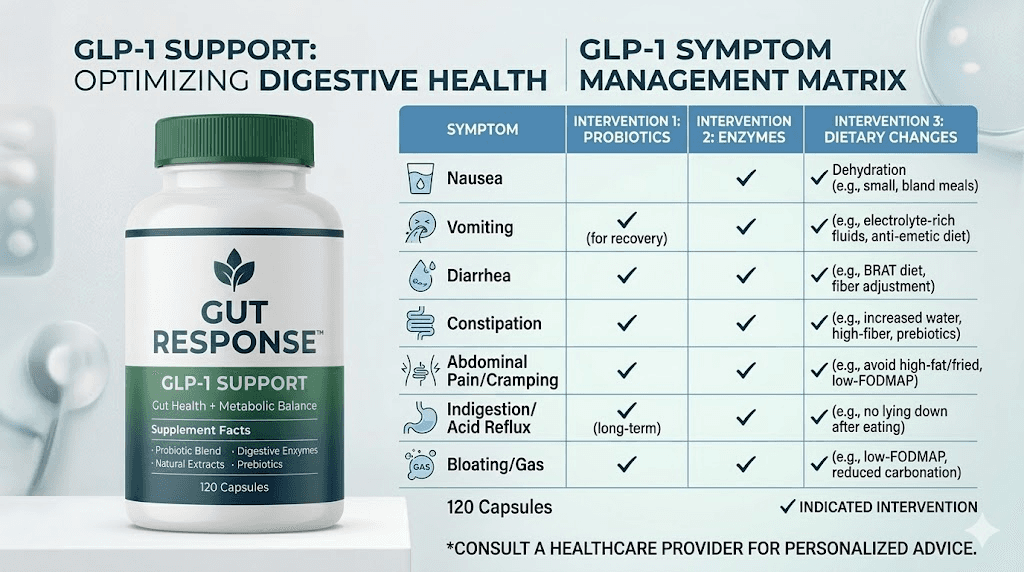
Common GLP-1 side effects and whether Gut Response helps
Let us go through the most common GLP-1 side effects one by one and honestly assess whether Gut Response GLP-1 Support is likely to help with each.
Nausea
Nausea is the single most reported side effect of GLP-1 medications, affecting anywhere from 15-44% of patients depending on the specific drug and dose. The nausea typically peaks during the first few weeks of treatment or after each dose increase.
Can Gut Response help? Marginally, at best. The ginger often recommended for GLP-1 nausea is not included in the formula. The probiotic blend may slightly improve overall digestive function, but probiotics are not established nausea treatments. If nausea is your primary concern, dietary modifications like eating smaller meals, avoiding fatty foods, and staying hydrated are far more effective. Check our guides on foods to avoid on semaglutide and tirzepatide foods to avoid for specific dietary strategies that actually help.
Bloating and fullness
Bloating affects a significant percentage of GLP-1 users and directly results from delayed gastric emptying. The digestive enzyme component of Gut Response could theoretically help here by accelerating food breakdown. The probiotic component might help by modifying gas production in the gut. Of all the side effects, bloating is where Gut Response has the strongest theoretical case, though the low enzyme doses remain a concern.
For more targeted approaches, our guides on semaglutide bloating and tirzepatide bloating provide comprehensive strategies beyond supplementation.
Sulfur burps
Those rotten-egg-smelling burps happen when bacteria ferment sulfur-containing proteins in a slowed digestive system. Clinical data shows eructation occurs in roughly 3% of Ozempic users at the 0.5mg dose, up to 7% of Wegovy users at 2.4mg, and 2-3% of Mounjaro users.
The enzyme and probiotic components of Gut Response could both contribute to reducing sulfur burps. Protease enzymes break down the sulfur-containing proteins before bacteria can ferment them. Beneficial probiotic bacteria can crowd out the hydrogen-sulfide-producing strains responsible for the smell. This is probably the side effect where a multi-component supplement like Gut Response makes the most sense.
For comprehensive coverage of this specific issue, including dietary modifications and other remedies, see our complete guide to sulfur burps on GLP-1 medications.
Constipation
GLP-1-induced constipation is common and often stubborn. The 50mg of chicory inulin in Gut Response is nowhere near enough to impact bowel regularity. The magnesium oxide at 25mg is similarly insufficient. And while some probiotic strains can improve transit time, the effects are modest and strain-dependent.
If constipation is your primary struggle, you need a more targeted approach. Our guides on semaglutide constipation treatment and tirzepatide constipation treatment cover what actually works, from adequate fiber intake to osmotic laxatives to specific dietary adjustments.
Diarrhea
Some GLP-1 users experience diarrhea rather than constipation, particularly during the first week on semaglutide or after dose increases. Probiotics have moderate evidence for reducing diarrhea duration and frequency, making this another area where Gut Response could potentially help. The tirzepatide diarrhea that many users report during dose titration may respond to probiotic supplementation.
Fatigue and low energy
GLP-1 fatigue is increasingly recognized as a common side effect, often linked to reduced caloric intake, nutritional deficiencies, and metabolic adaptation. The B12 and CoQ10 in Gut Response could theoretically support energy levels, though the evidence is more relevant for people with actual B12 deficiency than for general fatigue management. If semaglutide fatigue or tirzepatide tiredness is affecting your daily life, supplementation alone is rarely sufficient. Adjusting your eating patterns and ensuring adequate protein intake matters more.
Who should consider Gut Response GLP-1 support
Not everyone taking a GLP-1 medication needs a companion supplement. Many people tolerate these medications with minimal side effects, especially after the initial adjustment period of 4-8 weeks. But certain profiles may benefit from a product like Gut Response.
You might benefit if
You are in the first 4-8 weeks of GLP-1 therapy and experiencing multiple digestive symptoms simultaneously. The all-in-one approach, even at lower doses, provides some coverage across multiple mechanisms. If you are dealing with a combination of bloating, occasional sulfur burps, and concerns about nutrient absorption, a multi-ingredient formula addresses several issues at once.
You prefer simplicity over optimization. Some people do not want to research individual supplements, compare strains, and build a custom stack. They want one capsule that covers the basics. Gut Response serves that preference, even if it sacrifices potency for convenience.
You have mild to moderate symptoms. If your side effects are manageable but annoying, a broadly supportive supplement might provide enough of an edge to improve comfort. Severe symptoms require more targeted intervention.
You should look elsewhere if
Your primary issue is constipation. The fiber and magnesium doses in Gut Response are too low to meaningfully help. You need dedicated fiber supplementation and possibly osmotic laxatives under medical guidance.
You want the most evidence-based probiotic support available. Products like Pendulum with specific, clinically studied strains at documented concentrations offer stronger scientific backing.
You are already taking a comprehensive multivitamin. The B12, D, and magnesium overlap means you are paying for redundant nutrients.
Your symptoms are severe. Persistent vomiting, severe abdominal pain, inability to eat, or symptoms suggestive of gallbladder problems on tirzepatide require medical evaluation, not supplements.
Building a better GLP-1 supplement stack
If the analysis above has you questioning whether Gut Response is the right choice, here is how to build a more effective supplement approach for less money. This is not about buying dozens of bottles. It is about selecting the right products at effective doses.
Core stack: the essentials
A quality probiotic (pick one): Look for a product with specific, named strains at documented CFU counts. Lactobacillus rhamnosus GG, Bifidobacterium lactis, and Saccharomyces boulardii have the most digestive health evidence. If budget allows, Pendulum Akkermansia is the most GLP-1-specific option available. Cost: $15-65/month depending on product.
A standalone digestive enzyme: Choose a broad-spectrum enzyme supplement with at least 100mg of protease, lipase, and amylase. Take it with meals. Several well-reviewed options exist from brands like NOW Foods, Garden of Life, and Enzymedica. Cost: $10-20/month.
Methylcobalamin B12: A sublingual B12 at 1,000-2,000 mcg provides better absorption and higher dosing than what Gut Response offers. Cost: $5-10/month.
Optional additions based on your symptoms
For constipation: Psyllium husk fiber (5-10g daily) or magnesium citrate (200-400mg daily). These are far more effective than the token amounts in Gut Response. Adjusting your food choices on semaglutide to include more fiber-rich options also helps significantly.
For nausea: Ginger capsules (250mg standardized extract, 2-4 times daily) have clinical evidence for reducing nausea from various causes, including medication-induced nausea.
For sulfur burps: Bismuth subsalicylate (Pepto-Bismol) taken as needed can bind sulfur compounds directly. This is a targeted, effective treatment that no daily supplement replaces.
For overall nutrition: A quality multivitamin designed for people on calorie-restricted diets, plus a Vitamin D supplement at 2,000-4,000 IU if your levels are low. Our GLP-1 vitamin guide covers every nutrient you need during peptide therapy.
Total cost for the core stack plus one optional addition: $30-95/month, depending on choices. But every ingredient is at a clinically relevant dose, which is the critical difference.
The GLP-1 companion supplement market explained
To understand why products like Gut Response exist, you need to understand the explosive growth of the GLP-1 companion market and the forces driving it.
Tens of millions of people worldwide now take GLP-1 receptor agonists. The number continues growing. And a significant percentage of those users experience digestive side effects that range from mildly annoying to genuinely debilitating. That creates an enormous addressable market for any supplement company willing to position their product as a solution.
The supplement industry responded predictably. Dozens of GLP-1 companion products launched in a short period. Some are genuinely innovative, like Pendulum Akkermansia with its patented probiotic strain. Others are reformulated versions of existing digestive health supplements with "GLP-1" added to the label. The challenge for consumers is distinguishing between real innovation and marketing repackaging.
Gut Response falls somewhere in the middle. It is not a cynical cash grab. The ingredient selection shows someone thought about what GLP-1 users need. But the single-capsule format forces compromises on dosing that limit effectiveness. It is a product of business constraints (price point, capsule size, retail margins) as much as nutritional science.
What to look for in any GLP-1 supplement
Regardless of which product you choose, these criteria separate quality from marketing.
Specific strain identification. For probiotics, generic "Lactobacillus blend" tells you nothing. Look for specific strain designations (like Lactobacillus rhamnosus GG) because effects are strain-specific.
Disclosed per-ingredient doses. Proprietary blends that only list total milligrams hide the fact that some ingredients are present at trace amounts. Transparent labels list each ingredient quantity individually.
Clinically relevant dosing. Compare the dose in the product to what clinical studies used. If the study used 10 grams and the product contains 50 milligrams, the product cannot replicate the study results.
Third-party testing. USP, NSF, or ConsumerLab certification confirms that the product actually contains what the label claims. This is especially important for probiotics, where CFU counts at time of manufacture versus time of consumption can differ dramatically.
Realistic claims. Any supplement claiming to replace or enhance your GLP-1 medication is making claims it cannot support. Look for products that honestly position themselves as digestive support or nutritional insurance, not miracle solutions.
Dietary strategies that work better than supplements
Before spending money on any GLP-1 companion supplement, consider that dietary modifications have stronger evidence for managing every common side effect. Supplements should complement good dietary practices, not replace them.
The smaller meals approach
When your stomach empties more slowly, large meals create problems. Eating 4-6 smaller meals throughout the day instead of 2-3 large ones reduces the total volume your stomach handles at any given time. This single change often reduces nausea, bloating, and sulfur burps more effectively than any supplement.
Planning your meals around your best foods for semaglutide or following a structured tirzepatide eating plan gives you a framework that directly addresses digestive comfort.
Protein timing and selection
Protein is essential during GLP-1 therapy to preserve muscle mass. But high-protein meals can worsen sulfur burps because sulfur-containing amino acids (methionine and cysteine) are concentrated in animal proteins. Spreading protein intake across meals and favoring plant-based protein sources for some meals can reduce hydrogen sulfide production while maintaining adequate total protein. Protein shakes designed for GLP-1 users offer another convenient option for getting adequate protein without overloading your slowed digestive system.
Hydration strategy
Dehydration worsens nearly every GLP-1 side effect. Constipation, fatigue, headaches, and nausea all improve with adequate fluid intake. Many GLP-1 users underestimate how much their fluid needs change when they eat less food (which normally provides a significant portion of daily water intake). Aim for at least 64 ounces of non-carbonated fluids daily, sipped throughout the day rather than consumed in large amounts at once.
Fiber from food first
Rather than relying on the 50mg of inulin in Gut Response, focus on getting 25-35 grams of fiber daily from whole food sources. Oats, berries, legumes, sweet potatoes, and leafy greens provide fiber along with the vitamins and minerals your body needs. If you struggle to eat enough fiber-rich foods due to reduced appetite, a psyllium husk supplement at 5-10 grams daily is far more effective than any amount packed into a multi-ingredient capsule.
Foods that naturally support gut health
Fermented foods like yogurt, kefir, sauerkraut, and kimchi deliver probiotics in a food matrix that supports survival through stomach acid. These foods also provide prebiotics, vitamins, and other nutrients that isolated probiotic capsules lack. Adding one serving of fermented food daily may do more for your gut microbiome than any supplement.
For a comprehensive GLP-1 breakfast plan that incorporates gut-friendly foods, our breakfast guide provides 25+ high-protein morning meal options designed specifically for people on peptide therapy.
Timing your supplement with GLP-1 injections
If you do decide to try Gut Response or any GLP-1 companion supplement, timing matters. The instructions say to take one capsule 30 minutes before a meal. Here is why that timing is important and how to coordinate it with your injection schedule.
Digestive enzymes work best when they are already in your stomach before food arrives. Taking them with or after food reduces their effectiveness because the food is already partially processed (or sitting unprocessed) by the time the enzymes dissolve from the capsule. The 30-minute window gives the capsule time to break down and release its contents before food enters.
For your GLP-1 injection timing, most people take their weekly shot on a consistent day. Side effects, including digestive disruption, tend to peak in the first 2-3 days after injection. You may find the supplement more helpful during those peak days. Some users take a digestive enzyme supplement only on the 2-3 days following their injection when symptoms are worst, rather than daily. This is a cost-effective approach if your symptoms are intermittent.
If you take your injection in the morning, planning your GLP-1 shot timing around meals becomes important. For tirzepatide injection timing specifically, evening injections mean peak side effects hit during sleep and the following morning, while morning injections front-load the side effects into your active hours. Coordinate your supplement use with whenever your symptoms are worst.
Understanding the Windmill Vitamins brand
Windmill Health Products has manufactured supplements since 1972. That longevity matters in an industry where fly-by-night brands appear and disappear constantly. The company produces a range of digestive health products under the Gut Response brand, along with their DietWorks and NutraBetic product lines.
The Gut Response line includes three products. The GLP-1 Support capsule we are reviewing. A Daily Probiotic with a broader focus on general digestive health. And CleanSweep, a fiber-based product containing 4,600mg of psyllium husk and beet fiber designed to promote bowel regularity. Interestingly, CleanSweep provides the fiber dose that the GLP-1 Support capsule lacks, suggesting Windmill designed these products to work together rather than as standalone solutions.
This is worth noting. If you use Gut Response GLP-1 Support alongside CleanSweep, you would get the probiotic and enzyme support from one product and the meaningful fiber dose from the other. The combined cost of both products, however, starts to approach the price point where a custom supplement stack becomes more attractive.
Red flags and concerns
No product review is complete without addressing potential concerns. Here are the issues that stand out with Gut Response GLP-1 Support.
Proprietary blend opacity
The 13-strain probiotic blend does not list individual strain quantities. This means you cannot verify whether you are getting an effective dose of any particular strain. It also means you cannot compare apples to apples with other probiotic products that do disclose strain-level dosing. Transparency matters in supplements, and this is a notable gap.
Sub-therapeutic dosing across multiple ingredients
We have covered this extensively, but it bears repeating. The magnesium, inulin, turmeric, and CoQ10 are all present at fractions of their effective doses. Including ineffective amounts of many ingredients is worse than including effective amounts of fewer ingredients, because it creates the illusion of comprehensive support without the substance.
Allergen considerations
The product contains milk and soy from fermentation processes. If you have dairy or soy sensitivities (not uncommon in people with digestive issues), this matters. Always check the allergen statement before purchasing.
Magnesium oxide form
Using the cheapest, least bioavailable form of magnesium in a product marketed for digestive health is a questionable choice. Magnesium citrate would have been more appropriate for this application, both for better absorption and for its known benefits on bowel regularity.
No third-party testing certification visible
The product does not prominently display USP, NSF, or ConsumerLab certification. While Windmill is an established manufacturer, third-party verification provides an additional layer of consumer confidence, particularly for probiotic products where viable CFU counts at time of consumption matter significantly.
What real users report
Because Gut Response GLP-1 Support is relatively new to market, extensive user reviews are limited. However, patterns emerge from the available feedback across retail platforms.
Some users report modest improvements in bloating and digestive comfort within the first 2-3 weeks of use. Others report no noticeable difference. The most positive reviews tend to come from people with mild symptoms who appreciate the convenience of a single daily capsule.
Negative feedback typically centers on two themes. First, the product did not resolve persistent or severe digestive issues. Second, some users experience initial worsening of bloating or gas when starting the probiotic component, which is actually a normal and temporary response as the gut microbiome adjusts to new bacterial strains. This initial worsening typically resolves within 1-2 weeks.
The pattern mirrors what we see across the entire GLP-1 supplement market. People with mild to moderate symptoms who maintain realistic expectations tend to have the most positive experiences. People with severe symptoms or those expecting dramatic results are most often disappointed.
When supplements are not enough
This section is important. No supplement, including Gut Response, replaces proper medical guidance when GLP-1 side effects become serious.
Contact your healthcare provider if you experience persistent vomiting that prevents adequate food or fluid intake. Severe abdominal pain, especially in the right upper quadrant, could indicate gallbladder issues, which GLP-1 medications can trigger. Any symptoms of pancreatitis (severe, persistent abdominal pain radiating to the back) require immediate medical attention.
Signs of dehydration, blood in vomit or stool, fever above 100.4 degrees, or unintentional excessive weight loss all warrant medical evaluation. These are not supplement-solvable problems.
For many people, the most effective intervention for persistent GLP-1 side effects is adjusting the medication itself. Dose reduction, slower titration schedules, or splitting your dose across the week can dramatically reduce digestive symptoms. Microdosing tirzepatide has become an increasingly popular approach for people who respond well to lower doses but struggle with standard titration schedules. These medication-level adjustments typically outperform any supplement intervention.
The bigger picture of gut health during GLP-1 therapy
Products like Gut Response GLP-1 Support exist because GLP-1 medications fundamentally change your digestive environment. Understanding this bigger picture helps you make better decisions about all aspects of your therapy, not just supplement choices.
Your gut microbiome is adapting
When you start a GLP-1 medication, the reduced food intake and changed digestive transit time create a new environment for your gut bacteria. Some species thrive under these conditions. Others decline. This microbiome shift happens whether you take probiotics or not. The question is whether external probiotic supplementation can steer that shift in a beneficial direction.
Early research from studies on the crosstalk between GLP-1 and gut microbiota suggests this is a bidirectional relationship. GLP-1 affects the microbiome, and the microbiome affects GLP-1 production and sensitivity. This creates a theoretical case for probiotic supplementation, but the science of targeted microbiome modification is still in its infancy. We do not yet know which specific bacterial strains to introduce, at what doses, or for how long to optimally support GLP-1 therapy.
Nutritional insurance matters more than digestive support
For most GLP-1 users, the bigger health risk is not digestive discomfort but nutritional deficiency. When you eat 30-50% less food, you get 30-50% fewer vitamins, minerals, and other nutrients. This creates gradual deficiencies that may not produce obvious symptoms for months but affect energy, immune function, bone density, and cognitive performance.
SeekPeptides members consistently report that addressing nutritional gaps produces more noticeable improvements in how they feel on GLP-1 therapy than any digestive support supplement. A comprehensive approach to GLP-1 vitamins and nutrients covers the bases that matter most for long-term health during peptide therapy.
The timeline of adaptation
Most gastrointestinal side effects from GLP-1 medications diminish significantly after 8-12 weeks as physiologic adaptation occurs. Your body learns to function with slower gastric emptying. Your microbiome adjusts. Your eating patterns adapt. This natural adaptation process means that supplements taken during the first few months of therapy become less necessary over time for most users.
Understanding this timeline is important for managing expectations and spending. If you choose to use Gut Response or any companion supplement, plan to reassess after 8-12 weeks. If side effects have resolved through natural adaptation, you may not need continued supplementation. The semaglutide results week by week timeline gives you a realistic picture of how both weight loss and side effects progress over time.
Frequently asked questions
Is Gut Response GLP-1 Support a prescription medication?
No. Gut Response is a dietary supplement that does not require a prescription. It does not contain GLP-1 or any prescription ingredients. It is designed to support digestive health in people already taking GLP-1 medications like semaglutide or tirzepatide. It does not replace your medication or provide the same effects.
Can I take Gut Response with semaglutide or tirzepatide?
There are no known drug interactions between the ingredients in Gut Response and GLP-1 receptor agonists. However, you should always inform your healthcare provider about any supplements you take. The general recommendation is to take supplements at least 30 minutes before or after meals, which aligns with the product instructions. If you are also taking semaglutide with B12 or tirzepatide with B12, be aware of potential B12 overlap from multiple sources.
How long does it take to work?
Probiotic effects typically take 2-6 weeks to establish, as new bacterial strains need time to colonize your gut. Digestive enzyme effects can be more immediate, sometimes noticeable within the first few days. The vitamin and mineral components address gradual deficiencies, so benefits may not be apparent for weeks to months. If you notice no improvement after 4-6 weeks of consistent use, the product is likely not providing meaningful benefit for your situation.
Should I take it on an empty stomach or with food?
The product instructions recommend taking one capsule 30 minutes before a meal. This timing optimizes digestive enzyme activity while allowing the probiotic strains to pass through the stomach before food and acid production increase. Do not take it with hot beverages, as heat can destroy probiotic bacteria.
Does Gut Response help with weight loss?
No. Gut Response is a digestive support supplement, not a weight loss product. While the marketing mentions supporting natural GLP-1 levels, there is no credible evidence that any ingredient in this formula produces clinically meaningful weight loss. Your prescription GLP-1 medication handles that. If you are not losing weight on semaglutide or not losing weight on tirzepatide, the solution lies in dose adjustment and dietary optimization, not supplementation.
Can I take Gut Response if I am not on a GLP-1 medication?
Yes. Nothing in the formula is exclusive to GLP-1 users. The probiotics, enzymes, and vitamins would function the same way regardless of what medication you take. The product is marketed toward GLP-1 users because that is the current high-demand market, but the ingredients are standard digestive health compounds.
Is Gut Response safe during pregnancy or breastfeeding?
This product has not been specifically studied in pregnant or breastfeeding individuals. Most GLP-1 medications themselves are contraindicated during pregnancy and breastfeeding. If you have questions about GLP-1 use while breastfeeding, consult your healthcare provider before taking any supplements.
Where can I buy Gut Response GLP-1 Support?
The product is available through the Windmill Vitamins website, Target, and select pharmacy and supplement retailers. It is sold in 30-capsule bottles (one month supply) at approximately $25-30.
External resources
National Institute of Diabetes and Digestive and Kidney Diseases - Gastroparesis
International Scientific Association for Probiotics and Prebiotics
Crosstalk between GLP-1 and Gut Microbiota in Metabolic Diseases - PMC
For researchers serious about optimizing their peptide protocols, SeekPeptides offers the most comprehensive resource available, with evidence-based guides, proven protocols, and a community of thousands who have navigated these exact questions.
In case I do not see you, good afternoon, good evening, and good night. May your gut stay comfortable, your nutrients stay absorbed, and your GLP-1 journey stay on track.