Feb 25, 2026
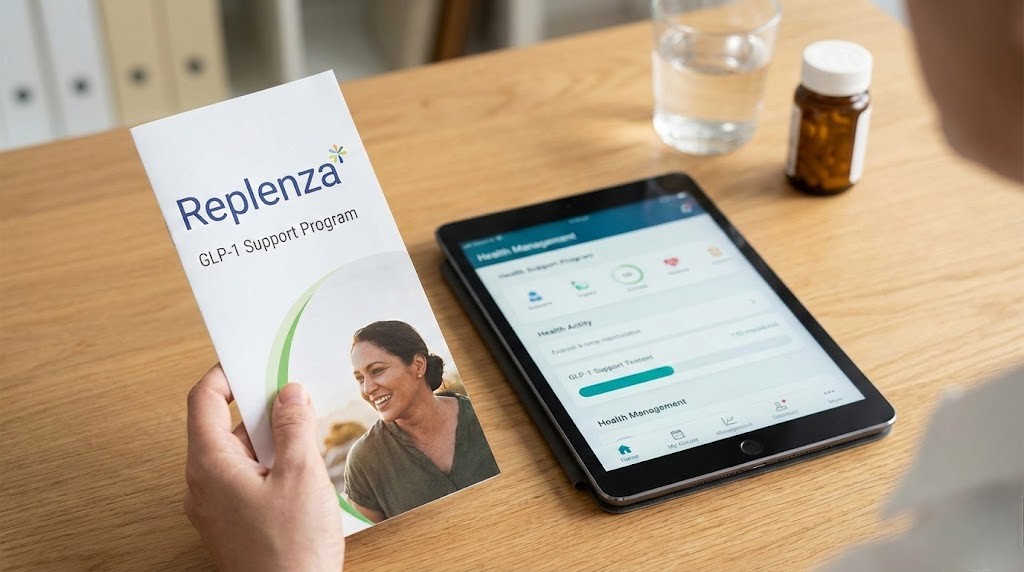
Some GLP-1 users swear by nutritional support supplements. Others dismiss them as overpriced multivitamins wrapped in trendy marketing. When it comes to Replenza, the physician-formulated supplement system designed specifically for people on GLP-1 medications, the truth is more nuanced than either camp suggests.
Here is what most reviews will not tell you. The real question is not whether Replenza contains good ingredients. It does. The question is whether those ingredients, at those dosages, at that price point, deliver enough value to justify the cost when simpler alternatives exist. And that question requires looking beyond the marketing claims and into the actual science of GLP-1 related nutrient depletion.
GLP-1 medications like semaglutide and tirzepatide create real nutritional challenges. Research shows that 22.4% of GLP-1 users develop measurable nutrient deficiencies within 12 months. Reduced appetite means reduced food intake, which means fewer vitamins, fewer minerals, and less protein reaching the body. The need is genuine. But the solution depends on understanding exactly what Replenza offers, what it does not offer, and how it stacks up against the alternatives.
This guide breaks down everything about Replenza. The company behind the products. The full ingredient lists for both formulas. Real customer experiences from verified buyers. Pricing comparisons with competing GLP-1 support supplements. And an honest assessment of whether this system is worth your money, or whether you can build a better protocol for less. SeekPeptides has analyzed the research, the reviews, and the formulas so you do not have to guess.
What is Replenza
Replenza is a two-product nutritional supplement system created by Replenza Labs, LLC. The company launched in November 2024 with a specific mission: provide physician-formulated nutritional support for people using GLP-1 receptor agonist medications for weight management. Unlike generic multivitamins or standalone supplements, Replenza positions itself as a targeted system designed to address the specific nutritional gaps that GLP-1 users face.
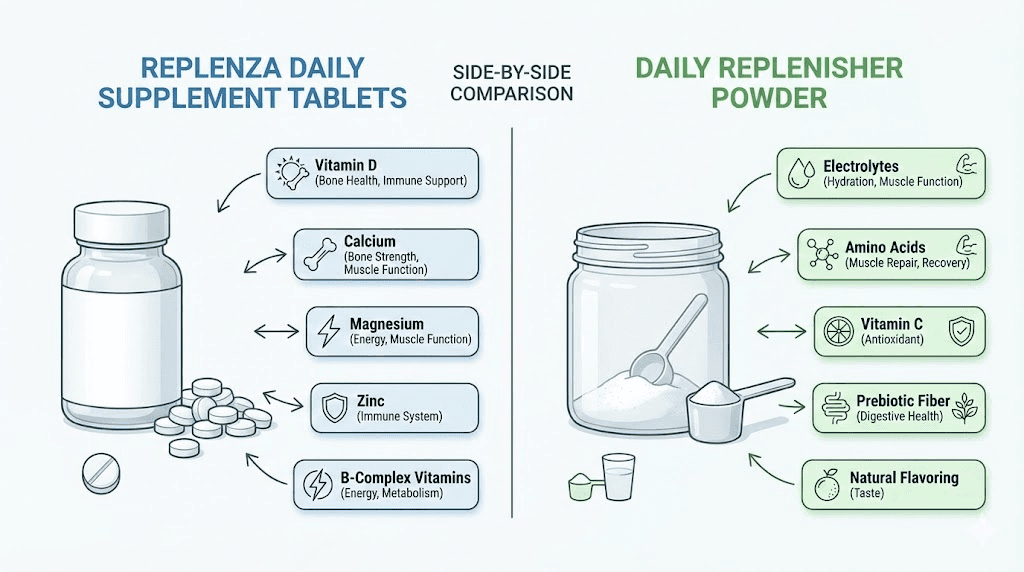
The product line includes two core offerings. The Replenza Daily Nutritional Supplement comes in tablet form and contains 22 essential vitamins and minerals, a probiotic and enzyme blend, BioPerine for enhanced absorption, and ashwagandha for stress support. The Replenza Daily Replenisher is a powdered drink mix featuring BCAAs, multi-collagen complex, electrolytes, and prebiotics. Together, they target the most common deficiency areas: energy production, digestive health, muscle preservation, and skin elasticity.
Both products are NSF certified and GMP compliant. They are manufactured in FDA-registered facilities in the United States using globally sourced ingredients. The Daily Replenisher is free from GMOs, artificial sweeteners, dairy, lactose, gluten, eggs, and peanuts, which makes it accessible for people with common food sensitivities.
The company behind Replenza
Replenza Labs, LLC is a relatively new player in the supplement space. The company emerged during the GLP-1 medication boom, recognizing that millions of people starting semaglutide or tirzepatide programs were experiencing nutritional side effects that existing supplements did not specifically address. The company has received media coverage in Cosmetics Business, WWD, Newbeauty, Chain Drug Review, Drug Store News, and Nutraceuticals World.
What sets Replenza apart from many supplement startups is its distribution strategy. Rather than relying solely on direct-to-consumer online sales, Replenza has secured retail placement in Walmart, CVS, Target, and Publix. This retail presence suggests a level of business legitimacy and supply chain maturity that many newer supplement brands lack. It also means you can physically examine the products before purchasing, read the supplement facts panel, and return them easily if they do not meet expectations.
The advisory board
Replenza emphasizes its physician-formulated approach, and the advisory board includes credentialed professionals across multiple disciplines. Dr. Rajesh Dhirmalani serves as a Board-Certified Gastroenterologist, bringing digestive health expertise. Dr. Richard Bloomer contributes as an Academic Dean, Research Scientist, and dietary supplement expert. The team also includes Erin Palinski-Wade, a Registered Dietitian and Certified Diabetes Educator, Dr. Struan Coleman, a Board-Certified Orthopedic Surgeon and Microbiologist, and Danielle Schupp, a Registered Dietitian and Sports Nutritionist.
This is a stronger advisory board than many GLP-1 supplement companies assemble. Having a gastroenterologist involved is particularly relevant given that digestive side effects are among the most common complaints from GLP-1 users. The inclusion of both a diabetes educator and sports nutritionist also shows awareness that GLP-1 users need support for both metabolic health and muscle preservation during weight loss.
Understanding why GLP-1 users need nutritional support
Before evaluating whether Replenza is worth buying, you need to understand why GLP-1 users develop nutritional deficiencies in the first place. This is not marketing hype. The science is clear and growing more concerning as long-term data accumulates.
GLP-1 receptor agonists work by slowing gastric emptying, reducing appetite, and decreasing overall food intake. These mechanisms are exactly what make the medications effective for weight loss. But they also create a nutritional paradox. When you eat 16-39% fewer calories, as research shows most GLP-1 users do, you simultaneously consume fewer essential nutrients. Your body still needs the same vitamins, minerals, and amino acids it always did. It is just receiving significantly less of them.
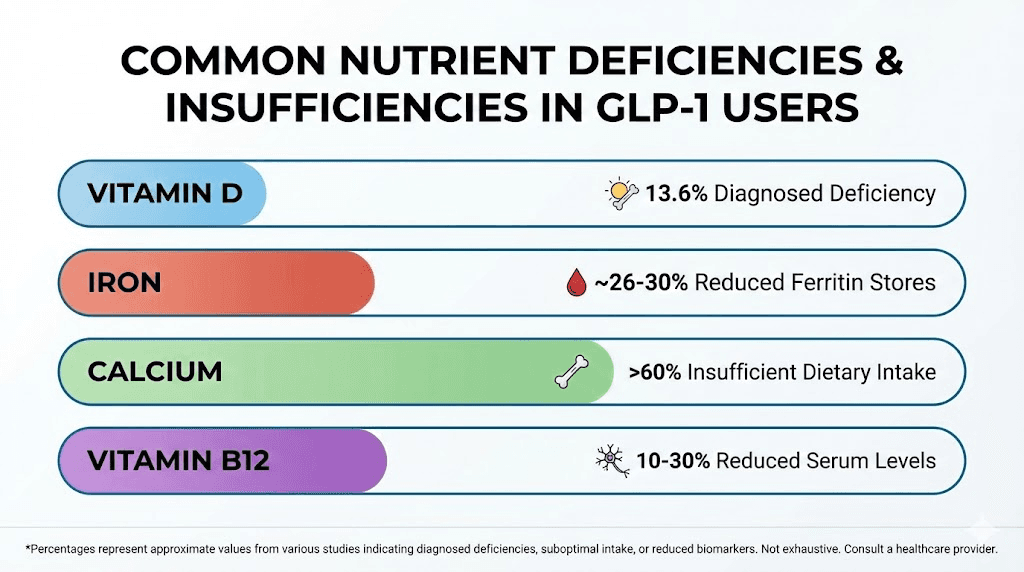
A retrospective observational study published in Clinical Nutrition found that nutritional deficiencies were diagnosed in 12.7% of patients within 6 months of starting GLP-1 receptor agonists, and that number climbed to 22.4% within 12 months. Vitamin D deficiency was the most common at 13.6% within a year, but deficiencies in iron, calcium, magnesium, zinc, and B vitamins were all documented. Some researchers have even reported cases of severe thiamine (vitamin B1) deficiency leading to Wernicke encephalopathy, a potentially dangerous neurological condition.
This is not a minor concern.
The most common GLP-1 nutrient gaps
Understanding which nutrients GLP-1 users lack most helps evaluate whether Replenza addresses the right problems. Based on current research, the nutrients of greatest concern include vitamin D, iron, calcium, magnesium, zinc, and vitamins A, B1, B12, C, E, and K. A dietary analysis of 69 GLP-1 users found that most failed to meet recommended daily intakes for vitamin D, iron, calcium, and protein.
The consequences of these deficiencies show up in ways that many GLP-1 users initially attribute to the medication itself. Persistent fatigue might actually be iron or B12 deficiency. Hair loss could stem from zinc or biotin depletion. Muscle aches and weakness often trace back to magnesium or vitamin D insufficiency. Headaches may reflect electrolyte imbalances or dehydration from reduced food and fluid intake.
The joint advisory from the American College of Lifestyle Medicine, the American Society for Nutrition, the Obesity Medicine Association, and the Obesity Society recommends that GLP-1 users proactively supplement vitamin D, calcium, B12, and consider a multivitamin-mineral tablet tailored to individual needs. This is not a fringe recommendation. It represents mainstream medical consensus.
So yes, the need for nutritional support during GLP-1 therapy is real. The question is whether Replenza is the best way to fill those gaps, or whether alternative approaches, including B12 combination formulas, standalone supplements, or targeted dietary changes, offer better value.
How reduced appetite leads to deficiency
The mechanism is straightforward but often misunderstood. GLP-1 medications do not directly deplete nutrients from the body. Instead, they suppress appetite so effectively that users simply eat less food, and therefore consume fewer nutrients. When energy intake drops below 1,200 calories per day, which is common during active appetite suppression, it becomes nearly impossible to meet all nutritional needs through food alone.
There is a secondary mechanism at play as well. GLP-1 receptor agonists slow gastrointestinal transit time. Food moves through the digestive system more slowly, which contributes to feelings of fullness but may also affect how efficiently certain nutrients are absorbed. This is why some users experience constipation, excessive burping, and other digestive side effects that compound the nutritional challenge.
Additionally, GLP-1 medications can cause nausea, vomiting, and diarrhea, particularly during dose escalation phases. These side effects directly impact nutrient absorption. If you are experiencing persistent diarrhea or nausea, your body is losing electrolytes and failing to absorb nutrients from the food you do manage to eat. This creates a double deficit: less going in and less being absorbed from what does go in.
Replenza product lineup breakdown
Replenza offers two distinct products that are designed to work together as a system. You can purchase them individually or as a bundle. Understanding what each product contains and what role it plays is essential for evaluating whether the system addresses your specific needs.
Replenza Daily Nutritional Supplement (tablets)
The Daily Nutritional Supplement is a tablet-based formula containing 22 essential vitamins and minerals. The serving size is two tablets, taken once daily with a meal. This is the foundational product in the Replenza system, designed to cover the broad nutritional gaps that reduced food intake creates.
Key components include a full B-complex vitamin blend for cellular energy production, vitamin D for bone health and immune function, and vitamin B12 for nerve function and red blood cell formation. The formula also includes a probiotic and enzyme blend designed to support gut health and improve nutrient absorption, which is particularly important when the gastrointestinal system is already under stress from GLP-1 medication effects.
BioPerine, a patented black pepper extract, is included to enhance the bioavailability of the other nutrients. Research suggests that BioPerine can increase the absorption of certain vitamins and minerals by 30% or more. This is a smart addition for a supplement targeting people whose digestive systems may not be operating at full efficiency.
Ashwagandha rounds out the formula as an adaptogenic herb for stress support. While ashwagandha is not directly related to GLP-1 nutrient depletion, weight loss journeys are inherently stressful, and cortisol management can affect everything from sleep quality to insomnia patterns that many GLP-1 users report.
Replenza Daily Replenisher (powder)
The Daily Replenisher is a Mixed Berry flavored powder designed to be mixed with 8-16 ounces of cold water. It targets the areas that a standard multivitamin does not adequately address: muscle preservation, skin health, hydration, and digestive comfort.
The formula includes Branched-Chain Amino Acids (BCAAs) for muscle recovery and protein synthesis support. This is relevant because GLP-1 users often lose both fat and lean muscle mass during treatment, and muscle-related side effects are a common concern. BCAAs can help stimulate muscle protein synthesis, though the dosage matters significantly, and Replenza does not prominently display exact BCAA quantities on its marketing materials.
A multi-collagen complex featuring Types I and III collagen addresses skin elasticity concerns. Rapid weight loss can leave skin looking loose and less resilient, and collagen supplementation may support skin structure during the transition. Electrolytes are included to support hydration, which is critical when food-based fluid intake drops. Prebiotics round out the formula to nourish beneficial gut bacteria and support digestion alongside the probiotic blend in the tablet formula.
The powder contains zero grams of sugar and is free from GMOs, artificial sweeteners, dairy, lactose, gluten, eggs, and peanuts. For GLP-1 users dealing with food sensitivities and restricted eating, this allergen profile is a genuine advantage.
The bundle option
Replenza offers both products together as the Replenza Duo Bundle. The bundle comes with a free mixer for the powder and offers subscription pricing with 15% off plus free shipping on recurring orders. For users who want the full system, the bundle provides cost savings compared to purchasing each product separately.
The subscription model delivers product every 30 days and can be paused or cancelled at any time. A 30-day money-back guarantee is included, which provides some safety net for first-time buyers who want to evaluate the products before committing. This is standard for the supplement industry, though the 30-day window is shorter than the 60- or 90-day guarantees offered by some competitors in the GLP-1 supplement space.
Replenza ingredient analysis
Marketing claims are one thing. What actually matters is whether the ingredients in Replenza are the right ones, at the right dosages, to address GLP-1 nutrient depletion. Let us examine each formula critically.
Daily Nutritional Supplement ingredients
The 22 essential vitamins and minerals in the tablet formula cover the basics well. B-complex vitamins are arguably the most important component for GLP-1 users. Vitamin B12 deficiency is one of the most documented concerns with GLP-1 therapy, and adequate B12 is essential for energy production, neurological function, and red blood cell formation. The inclusion of a full B-complex rather than just B12 alone is a strength, as methylcobalamin and related B vitamins work synergistically.
Vitamin D inclusion is critical. With 13.6% of GLP-1 users developing vitamin D deficiency within 12 months, this is not optional supplementation. Vitamin D supports bone health, immune function, mood regulation, and muscle function. The question is dosage. Many GLP-1 users need 2,000-5,000 IU of vitamin D daily to maintain adequate levels, and standard multivitamin doses of 400-800 IU may not be sufficient. Without seeing the exact amounts on the Replenza label, it is difficult to assess whether the vitamin D content is therapeutic or merely token.
The probiotic and enzyme blend is a practical addition. GLP-1 medications alter gastrointestinal motility and can disrupt the gut microbiome. Probiotics can help maintain digestive balance, reduce constipation and digestive discomfort, and improve nutrient absorption. Digestive enzymes further support the breakdown of food, which is particularly helpful when the stomach is emptying more slowly than normal. For users exploring probiotic options specifically, dedicated GLP-1 probiotic formulas may offer higher probiotic potency.
BioPerine is a well-researched ingredient. Studies show it can enhance the absorption of beta-carotene, curcumin, selenium, vitamin B6, and coenzyme Q10, among other nutrients. For a supplement targeting people with potentially compromised absorption, this is a smart inclusion that many generic multivitamins skip.
Ashwagandha is the most debatable ingredient. While it has legitimate research supporting its effects on cortisol reduction and stress management, it is not directly related to GLP-1 nutrient depletion. Some users may appreciate the stress support, while others might prefer a formula that dedicates that space to higher doses of the nutrients they actually need. If you are already taking ashwagandha separately, this becomes redundant.
Daily Replenisher ingredients
The powdered Replenisher targets areas where a multivitamin falls short. BCAAs are the headline ingredient, and their inclusion makes sense. Research consistently shows that GLP-1 users lose significant lean muscle mass alongside fat, with some studies reporting that 20-40% of total weight lost is lean tissue. BCAAs, particularly leucine, can stimulate muscle protein synthesis and help preserve muscle mass during caloric restriction.
However, the effectiveness of BCAAs depends heavily on dosage. The research supporting muscle preservation typically uses 5-10 grams of BCAAs with at least 2.5 grams of leucine. If Replenza provides less than this threshold, the muscle-preservation claims become questionable. This is a common issue across the GLP-1 protein supplement category, where many products provide subtherapeutic doses.
The multi-collagen complex (Types I and III) addresses skin elasticity, which is a legitimate concern for people losing significant weight on GLP-1 medications. Research suggests that 10-15 grams of collagen daily can support skin hydration and elasticity. Whether Replenza provides this level of collagen in a one- to two-scoop serving is unclear from the available marketing materials.
Electrolytes are a practical addition. GLP-1 users often become mildly dehydrated due to reduced food and fluid intake, nausea, and changes in appetite that cause them to forget to drink. Electrolyte support helps maintain hydration, nerve function, and muscle contractions. Users experiencing headaches on GLP-1 medications may find electrolyte supplementation particularly beneficial.
Prebiotics complement the probiotic blend in the tablet formula. By providing food for beneficial gut bacteria, prebiotics can enhance the effectiveness of the probiotics and support overall digestive health. This is a thoughtful touch that shows the formulators understand the synergy between pre- and probiotics.
What is missing from the formula
No supplement is perfect, and Replenza has notable gaps. Iron is one of the most commonly deficient nutrients in GLP-1 users, yet iron supplementation is deliberately excluded from most multivitamin formulas because excess iron can be harmful and it interacts poorly with other nutrients when taken together. This is a reasonable omission, but users with iron deficiency will need a separate supplement.
Protein content appears limited. While BCAAs support muscle synthesis, they are not a replacement for adequate total protein intake. GLP-1 users typically need 1.0-1.6 grams of protein per kilogram of body weight daily to preserve muscle mass, and most fall far short of this target. Dedicated protein supplements may be necessary in addition to Replenza. A product like a structured meal plan can help users meet their protein goals through food.
Omega-3 fatty acids are absent. EPA and DHA support cardiovascular health, brain function, and have anti-inflammatory properties that could benefit GLP-1 users dealing with inflammation-related side effects. Creatine, which research supports for muscle preservation during caloric restriction, is also missing. Fiber, which can help manage constipation that many GLP-1 users experience, is not included in meaningful amounts.
The absence of detailed dosage information on marketing materials is itself a concern. Reputable supplement companies typically display their full supplement facts panel prominently. While the information is available on the physical product label and meets FDA requirements, the reluctance to highlight specific dosages in marketing materials could indicate that some ingredient quantities are at the lower end of effective ranges.
How to use Replenza
Using Replenza correctly requires understanding the timing, dosing, and integration with your existing GLP-1 protocol. Both products have specific guidelines that maximize their effectiveness.
Daily supplement protocol
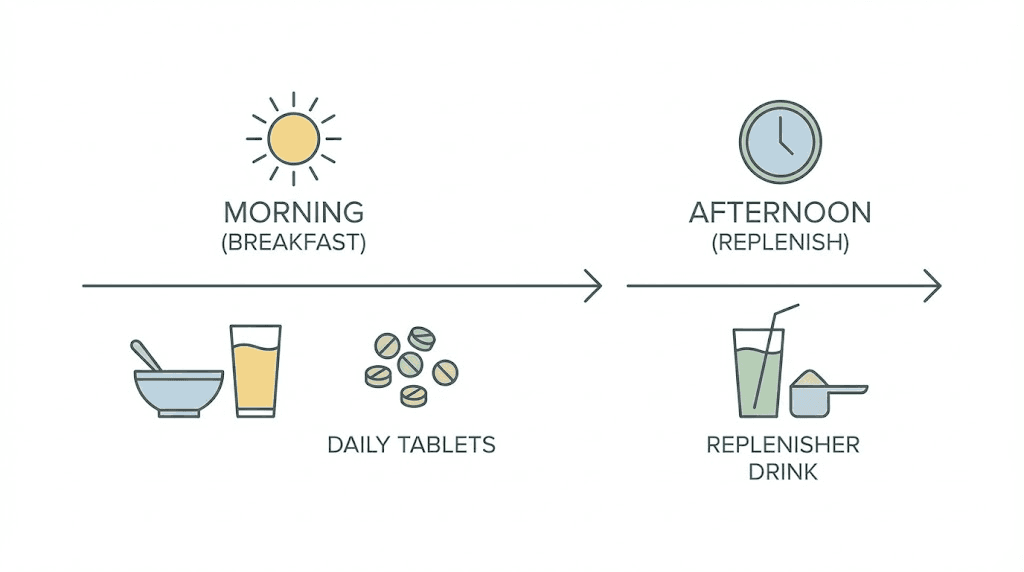
The Daily Nutritional Supplement is straightforward. Take two tablets once daily with a meal. The meal requirement is important because several vitamins in the formula are fat-soluble (A, D, E, K), meaning they require dietary fat for proper absorption. Taking the tablets on an empty stomach reduces their effectiveness and may increase the likelihood of nausea, which GLP-1 users are already prone to.
For best results, take the tablets with your largest meal of the day. If you are struggling with appetite on your GLP-1 medication, even a small meal with some healthy fats will improve absorption. Consistency matters more than perfection. Taking the supplement at the same time each day helps establish a routine and maintains steady nutrient levels.
Daily Replenisher protocol
The Daily Replenisher powder requires more preparation. Mix one to two scoops with 8-16 fluid ounces of cold water. Replenza recommends using a shaker bottle or frother to mix the product thoroughly, which is important because some users report mixability issues with the powder. Warm or room temperature water tends to produce clumps, so cold water is preferable.
The Replenisher can be taken at any time of day, but timing it around physical activity can maximize the BCAA benefits. Taking it within 30 minutes before or after exercise supports muscle protein synthesis when the body is most responsive. On rest days, morning consumption works well because it helps with hydration and provides amino acids throughout the day.
If you are experiencing nausea or digestive discomfort from your GLP-1 medication, start with one scoop and gradually increase to two. The mixed berry flavor has received mixed reviews, so be prepared for a taste that not everyone finds appealing. Some users report a sugar-free aftertaste, which is expected given the zero-sugar formulation.
Timing with GLP-1 injections
A common question is whether Replenza should be taken on the same day as your GLP-1 injection. There is no clinical evidence suggesting that oral supplements interfere with injectable GLP-1 medications, so timing relative to injection day is not a significant concern. However, many users find that injection day brings increased nausea and reduced appetite, which makes it harder to take supplements with food.
A practical approach is to take the tablets and Replenisher at whatever time you tolerate them best. If injection day nausea is an issue, consider taking the tablets with a different meal than you typically would, or splitting the Replenisher into a half-scoop serving that is easier to tolerate. The key is consistency across the week, not perfection on any single day.
For users on semaglutide weekly injection schedules or other GLP-1 timing protocols, the supplement routine should remain constant regardless of injection timing. Some users find it helpful to use the semaglutide dosage calculator to track both their medication and supplement schedules in one system.
Replenza pricing and availability
Price matters. Especially for people already spending significant amounts on GLP-1 medications. Let us break down what Replenza actually costs and whether the pricing is competitive.
Current pricing breakdown
The Daily Nutritional Supplement (60 tablets, 30-day supply) costs $24.98 for a one-time purchase. Subscription pricing for a two-month supply drops the cost to $44.96 (10% off the regular $49.96). The Daily Replenisher (60 scoops, 30-day supply at two scoops per day) costs $49.98 for a one-time purchase. Subscription pricing for a two-month supply is $89.96 (10% off).
Combined, the full Replenza system costs approximately $74.96 per month at regular pricing, or less with subscription discounts. The bundle option includes a free mixer and further savings.
Is this expensive? It depends on perspective. A high-quality standalone multivitamin costs $15-30 per month. A collagen supplement runs $15-25 per month. A BCAA supplement costs $15-20 per month. Electrolyte mixes add another $10-15. Purchased separately, these individual supplements would cost roughly $55-90 per month, making Replenza competitive on a component-by-component basis. However, you would have more control over individual dosages and could choose higher-quality standalone products for each category.
For GLP-1 users who are already tracking supplement costs carefully, the math requires comparing Replenza not just to the sum of its individual components, but to the specific dosages and quality of those components.
Where to buy Replenza
Replenza is available through multiple channels. The company website (replenzalabs.com) offers direct purchasing with subscription options. Retail availability includes Walmart, CVS, Target, and Publix, with plans to expand to Walgreens and Amazon. Pricing may vary slightly between retailers, and promotions or coupons may be available through specific channels.
Purchasing from the company website provides access to subscription pricing and the 30-day money-back guarantee. Retail purchases offer the convenience of immediate availability and easy returns through the store return policy. Both channels sell the same product with the same formulation.
Subscription versus one-time purchase
The subscription model makes sense if you plan to use Replenza consistently for at least two to three months. The 10% discount and free shipping on subscriptions save roughly $8-15 per month depending on which products you purchase. The ability to pause or cancel at any time reduces the risk of getting locked into a commitment that does not work for you.
One-time purchases make sense for first-time buyers who want to evaluate the products before committing. The 30-day money-back guarantee provides a safety net, though returning partially used supplements requires contacting customer service and following their return process. For users already invested in managing GLP-1 treatment costs, the subscription savings are meaningful over time.
Real customer reviews and feedback
Marketing tells you what a company wants you to believe. Customer reviews tell you what actually happens when people use the product. Replenza reviews are genuinely mixed, and understanding why requires looking at the positive and negative feedback separately.
Positive experiences
Users who report positive experiences with Replenza frequently mention improved energy levels as the most noticeable benefit. Given that fatigue is one of the most common GLP-1 side effects, this is a significant endorsement. Multiple reviewers describe Replenza as a "game changer" for energy, with improvements noticeable within the first two weeks of consistent use.
Several users report that the product helped consolidate their supplement routine. Instead of taking five or six different pills and powders, they reduced to just the two Replenza products. The convenience factor should not be underestimated. When GLP-1 medications already require injection management, simplified supplementation reduces decision fatigue and improves compliance.
One reviewer noted that hair growth returned after starting Replenza, which suggests the formula may address the zinc, biotin, and nutrient deficiencies that contribute to GLP-1 related hair loss. Others appreciated the digestive support, reporting less bloating and more regular bowel movements after incorporating the probiotic and enzyme blend into their routines.
On the Replenza website, the Daily Replenisher shows a 4.7 out of 5 star rating based on 13 reviews, with 92% of users saying they would recommend the product. However, it is worth noting that company-hosted reviews tend to skew positive, and 13 reviews is a very small sample size.
Common complaints
The most frequent complaint about Replenza involves taste and mixability of the Daily Replenisher. Multiple users across different retail platforms report that the powder does not dissolve completely, even with vigorous shaking or a frother. The result is a gritty texture that some find unpleasant. Others describe a noticeable sugar-free aftertaste that, while expected in a zero-sugar product, makes the drink less enjoyable.
Container volume is another complaint. At least one reviewer noted that the Replenisher container was only about three-quarters full, which felt misleading given the packaging size. This is common with powdered supplements due to settling during shipping, but it can create a negative first impression.
The vitamin smell and taste of the Daily Supplement tablets has also drawn criticism. Some users find the tablets difficult to swallow or report an unpleasant aftertaste. For people already dealing with nausea and digestive sensitivity from GLP-1 medications, this can be a barrier to consistent use.
The most concerning feedback relates to effectiveness. Several users report minimal noticeable improvements in energy, focus, or overall wellbeing despite consistent use. This echoes a broader challenge in the supplement industry, where individual responses vary dramatically based on baseline nutritional status, diet quality, medication dosage, and other factors.
Third-party review ratings
Independent review sites paint a more mixed picture than the company hosted reviews. Total Health Reports rates Replenza at 3.4 out of 5 stars based on 27 reviews, with customer feedback ratings of 2.7 out of 5. Health Web Magazine gives it 3.5 out of 5, with an effectiveness rating of just 2.5 out of 5. Individual component ratings from these sites show ingredients at 3 out of 5, safety at 3.1 out of 5, and value for money at 2.9 out of 5.
These ratings suggest that Replenza is a competent but not exceptional product. It does what it claims to do for some users, but the results are inconsistent and the value proposition is debatable. The fact that multiple independent review sites rate it in the 3-3.5 range out of 5 places it squarely in the "adequate" category, not the "excellent" one.
For users evaluating whether Replenza justifies its cost, these third-party ratings suggest tempering expectations. The supplement may provide incremental benefits for some users, but it is unlikely to be the transformative solution that the marketing materials imply.
Replenza versus other GLP-1 supplements
Replenza is far from the only supplement system targeting GLP-1 users. The market has exploded with options, and understanding how Replenza compares to its competitors helps determine whether it offers the best value for your needs. SeekPeptides has reviewed many of these alternatives to help you make an informed decision.
Replenza versus Evolv GLP-1
Evolv GLP-1 takes a different approach to GLP-1 support, focusing on natural GLP-1 enhancement rather than nutrient replenishment. While Replenza aims to fill nutritional gaps caused by reduced food intake, Evolv targets the GLP-1 pathway itself. These are fundamentally different products serving different purposes, and some users may benefit from using both approaches simultaneously.
Replenza wins on comprehensiveness for nutrient support. Its 22-vitamin-and-mineral formula plus collagen and BCAAs covers more nutritional bases than Evolv. However, if your primary concern is optimizing your GLP-1 response rather than managing side effects, Evolv may be more aligned with your goals.
Replenza versus Thrive GLP-1
Thrive GLP-1 is another competitor in this space, and comparing the two reveals interesting differences in formulation philosophy and pricing. Thrive emphasizes a whole-food-based approach to supplementation, while Replenza uses more standardized vitamin and mineral forms. For users who prefer supplements derived from food sources, Thrive may have an edge in bioavailability for certain nutrients.
The pricing between these two products is comparable, and both offer subscription discounts. The choice often comes down to personal preference regarding ingredient sourcing, taste, and which specific nutrient profile better matches your individual deficiency pattern. Getting bloodwork done before choosing either product is the smartest approach.
Replenza versus Willow GLP-1
Willow GLP-1 has built a strong reputation in the GLP-1 supplement space, and its reviews tend to be somewhat more consistently positive than Replenza reviews. Willow offers a more streamlined product with fewer ingredients but potentially higher dosages of the most critical nutrients. This less-is-more approach appeals to users who want meaningful doses of key nutrients rather than trace amounts of many.
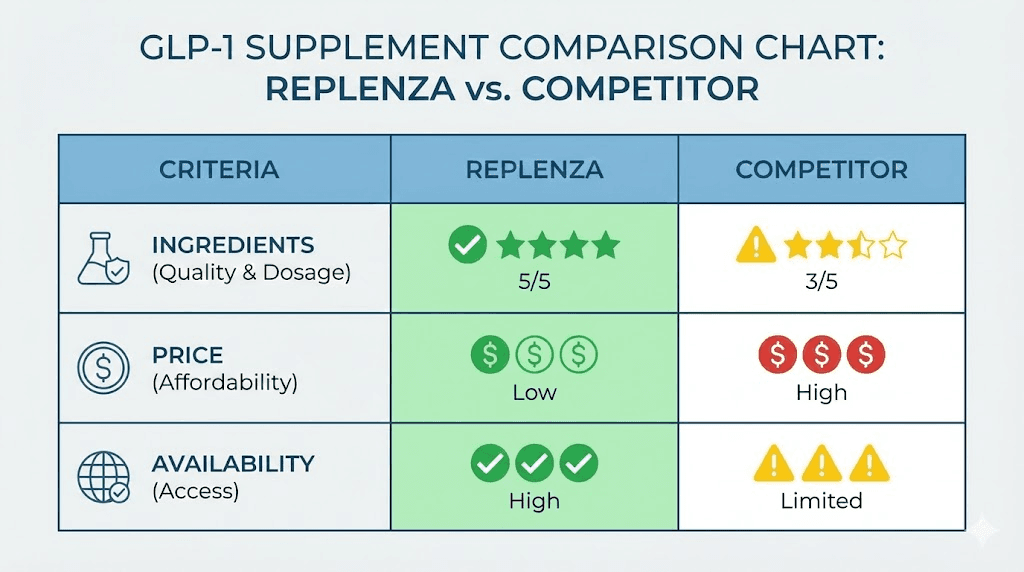
Replenza counters with its broader formulation and retail availability. Being able to walk into Walmart or CVS and purchase Replenza off the shelf is a convenience advantage that Willow and many other GLP-1 supplements do not offer. For users who value accessibility and immediate availability, this is a meaningful differentiator.
Replenza versus standalone supplements
The most important comparison is not Replenza versus another branded GLP-1 supplement system. It is Replenza versus a custom supplement stack that you build yourself. Here is how they compare:
Factor | Replenza System | Custom Stack |
|---|---|---|
Monthly cost | $65-75 | $40-90 |
Convenience | 2 products, simple routine | 4-6 products, more complex |
Dosage control | Fixed, predetermined | Fully customizable |
Quality control | NSF certified, single brand | Varies by product choice |
Targeted formulation | GLP-1 specific | Can be precisely tailored |
Flexibility | Take it or leave it | Add, remove, adjust any component |
The custom stack wins on flexibility and dosage precision. If you know from bloodwork that you need 5,000 IU of vitamin D, 500mg of magnesium, and 2,000mcg of B12, you can purchase individual supplements at exactly those doses. With Replenza, you get whatever doses the formula provides, which may be more or less than you need for any given nutrient.
Replenza wins on convenience and simplicity. Two products, one routine, no decision fatigue. For users who are already overwhelmed by managing their GLP-1 dosing protocol, the simplicity of Replenza has real value. Sometimes good enough with perfect compliance beats optimal with inconsistent use.
How other GLP-1 support brands compare
Beyond the direct competitors mentioned above, the GLP-1 supplement market includes several other notable options. Lifevantage GLP-1 MindBody System takes a more holistic approach, incorporating stress management and cognitive support alongside nutritional supplementation. MMIT GLP-1 focuses on metabolic optimization and offers a different ingredient profile. Advanced Bionutritionals GLP-1 Plus emphasizes natural GLP-1 pathway support with a research-focused formulation.
Each of these options has strengths and weaknesses. The sheer number of GLP-1 support supplements on the market reflects the genuine need that exists, but it also means that quality varies significantly. Before choosing any product, including Replenza, review the supplement facts panel carefully, check for third-party testing certifications, and ideally discuss your nutritional needs with a healthcare provider who can recommend targeted supplementation based on actual bloodwork results.
Who should consider Replenza
Replenza is not for everyone, but it fits certain user profiles well. Understanding who benefits most helps you decide if it belongs in your protocol.
New GLP-1 users who have not established a supplement routine yet are good candidates for Replenza. The all-in-one approach simplifies the transition into GLP-1 therapy and ensures that basic nutritional gaps are covered from the start. If you are just beginning your GLP-1 journey and feel overwhelmed by the prospect of researching and purchasing multiple individual supplements, Replenza removes that friction.
Users experiencing multiple GLP-1 side effects simultaneously may also benefit from the comprehensive approach. If you are dealing with fatigue, digestive issues, muscle discomfort, and hair thinning simultaneously, Replenza addresses all of these areas in a single system rather than requiring you to source separate solutions for each symptom.
People who value convenience above cost optimization are the ideal Replenza customer. If your time and mental energy are better spent on other aspects of your health journey, and the $65-75 monthly cost is within your budget, the simplicity of Replenza is a legitimate advantage. Not everyone wants to become a supplement researcher. Sometimes the best supplement is the one you actually take consistently.
Travelers and busy professionals also benefit from the streamlined product count. Packing two supplements instead of six reduces travel hassle and makes compliance easier during disrupted routines. For users already managing GLP-1 medication logistics while traveling, fewer supplement bottles to track is a genuine benefit.
Who should skip Replenza
Replenza is not the right choice for everyone, and understanding when to look elsewhere saves money and produces better outcomes.
Users who already have a well-optimized supplement stack do not need Replenza. If you have had bloodwork done, identified your specific deficiencies, and are taking targeted supplements at therapeutic doses, switching to Replenza would likely mean accepting lower doses of the nutrients you actually need in exchange for convenience. A custom protocol based on lab results will almost always outperform a one-size-fits-all formula.
Budget-conscious users can build a more cost-effective supplement routine. A basic multivitamin ($10-15 per month), standalone vitamin D ($5-8 per month), magnesium ($8-12 per month), and a protein supplement ($15-25 per month) covers the most critical GLP-1 nutrient gaps for approximately $38-60 per month, potentially less than Replenza while providing higher dosages of the most important nutrients.
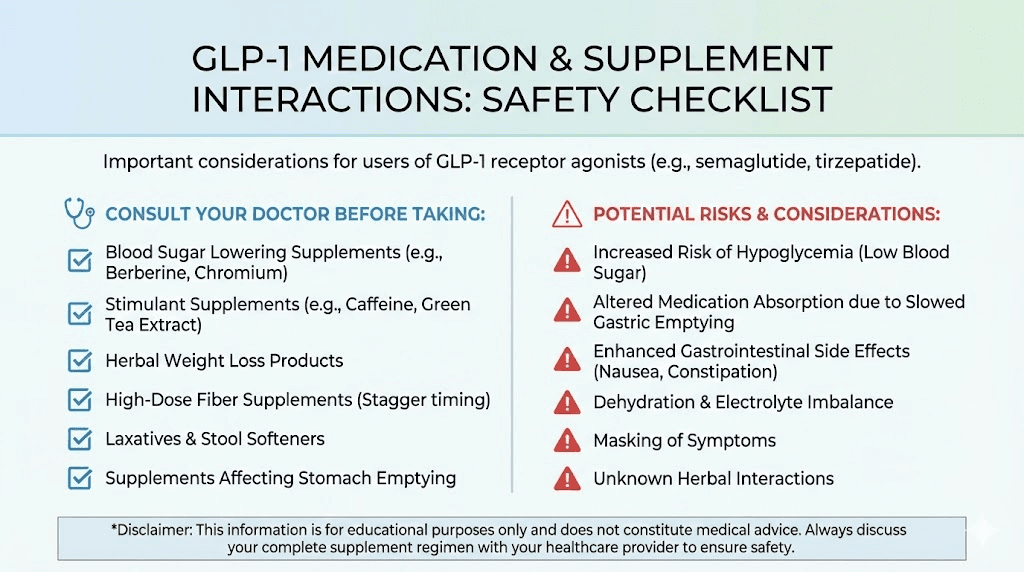
Users with specific dietary restrictions beyond what Replenza accommodates should verify ingredient compatibility carefully. While the Daily Replenisher is free from many common allergens, individual sensitivities to specific ingredients like ashwagandha (which can affect thyroid function) or BioPerine (which can interact with certain medications) should be discussed with a healthcare provider. Users on combination supplement and medication protocols need to check for interactions.
Anyone expecting dramatic results should temper expectations. Replenza is a nutritional support supplement, not a performance enhancer or weight loss accelerator. The most honest assessment is that it helps prevent deficiencies and supports overall health during GLP-1 therapy, but it will not dramatically accelerate weight loss, eliminate all side effects, or replace the need for a nutrient-dense diet.
Building your own GLP-1 supplement protocol
Whether you choose Replenza or not, understanding the key supplements for GLP-1 users helps you make informed decisions. SeekPeptides provides comprehensive resources for optimizing your supplementation strategy based on current research.
Essential supplements for GLP-1 users
Based on the research and clinical guidelines, the following supplements deserve consideration for anyone on GLP-1 therapy. These are listed in order of priority based on deficiency prevalence and health impact.
Vitamin D (2,000-5,000 IU daily) is the most commonly deficient nutrient in GLP-1 users. With 13.6% of users developing deficiency within a year, proactive supplementation is recommended by multiple medical organizations. Vitamin D3 (cholecalciferol) is the preferred form, and taking it with a meal containing fat improves absorption. Have your levels tested before starting, as some users may need higher doses to reach optimal levels.
Vitamin B12 (1,000-2,000 mcg daily) supports energy production, neurological function, and red blood cell formation. Methylcobalamin is the bioactive form that many experts prefer over cyanocobalamin. B12 deficiency can mimic GLP-1 side effects like fatigue and brain fog, making it difficult to distinguish medication effects from nutritional deficiency without testing.
Magnesium (200-400 mg daily) is depleted when food intake drops and is lost through gastrointestinal side effects like diarrhea. Magnesium glycinate is generally the best tolerated form for GLP-1 users because it is less likely to cause digestive upset than magnesium citrate or oxide. Adequate magnesium supports muscle function, sleep quality, and may help reduce muscle cramps and aches.
Protein supplementation (20-40 grams daily) helps preserve lean muscle mass during weight loss. Protein shakes designed for GLP-1 users can help bridge the gap between actual intake and recommended targets. Whey protein isolate is well-absorbed and provides a complete amino acid profile. For users with dairy sensitivities, pea protein or collagen protein are alternatives worth considering.
Electrolytes (daily) maintain hydration and support nerve and muscle function. Sodium, potassium, and magnesium are the most important electrolytes for GLP-1 users. Pre-mixed electrolyte powders or tablets are the most convenient delivery method. Look for options without excessive sugar or artificial ingredients.
Probiotics (daily) support digestive health that GLP-1 medications can disrupt. GLP-1 specific probiotic formulas containing strains like Akkermansia muciniphila may offer particular benefits for GLP-1 users. General-purpose probiotics with 10-50 billion CFUs from multiple strains are also beneficial.
Sample supplement schedule for GLP-1 users
Here is a practical daily schedule that covers the key nutritional bases for most GLP-1 users, regardless of whether they choose Replenza or individual supplements:
Morning (with breakfast): Multivitamin, vitamin D, B12, probiotic. Take these with your first meal when digestive tolerance is typically best. Fat-soluble vitamins (A, D, E, K) need dietary fat for absorption, so include some healthy fats in breakfast.
Midday (between meals): Electrolyte drink. This supports hydration throughout the day and provides minerals without needing to take additional pills. Sipping throughout the afternoon helps maintain consistent hydration.
Afternoon or post-workout: Protein shake with collagen. This supports muscle preservation and skin health. Taking protein after physical activity maximizes muscle protein synthesis. On rest days, an afternoon protein shake helps meet daily targets.
Evening (with dinner): Magnesium. Taking magnesium in the evening can support sleep quality, which many GLP-1 users struggle with due to medication-related insomnia. Magnesium glycinate is particularly calming and well-tolerated.
This protocol costs approximately $50-70 per month using quality individual supplements, and can be adjusted based on bloodwork results and personal response. It provides higher dosages of the most critical nutrients than most pre-made GLP-1 supplement systems, including Replenza, while costing the same or less.
Making the most of your GLP-1 journey
Supplements, whether Replenza or a custom stack, are just one piece of the GLP-1 optimization puzzle. The foundation of success on GLP-1 medications is a combination of smart nutrition planning, consistent physical activity, adequate hydration, and proper medical monitoring.
Many users who struggle with GLP-1 side effects or plateau in their weight loss are not supplementing incorrectly. They are eating incorrectly. When appetite is suppressed and food intake drops, every calorie needs to count nutritionally. Choosing nutrient-dense foods over empty calories becomes critical. A 1,200-calorie day that includes lean protein, colorful vegetables, healthy fats, and whole grains delivers dramatically more nutrition than 1,200 calories of processed convenience foods.
Avoiding foods that worsen GLP-1 side effects is equally important. High-fat meals can exacerbate nausea. Carbonated drinks can worsen bloating. Spicy foods may increase digestive discomfort. Learning what your body tolerates during GLP-1 therapy is a process of experimentation and adjustment that no supplement can replace.
Resistance training is arguably the single most important intervention for preserving muscle mass during GLP-1-mediated weight loss. No amount of BCAAs, protein shakes, or collagen supplements can replace the stimulus that resistance exercise provides. Users concerned about muscle-related changes during GLP-1 therapy should prioritize strength training two to four times per week alongside any supplementation protocol.
Regular bloodwork monitoring is the gold standard for nutritional optimization. Rather than guessing which supplements you need, a comprehensive metabolic panel and vitamin levels test reveals exactly where your deficiencies lie. This data-driven approach eliminates wasted spending on supplements you do not need and ensures adequate dosing of the ones you do. SeekPeptides members access detailed guidance on which lab markers to request and how to interpret results for optimal supplementation.
Understanding GLP-1 supplement market trends
Replenza entered the market at an inflection point. The GLP-1 supplement category barely existed before 2023. Now it is one of the fastest-growing segments in the supplement industry, with dozens of brands competing for the attention of the estimated 15-20 million Americans using or considering GLP-1 medications.
This explosive growth brings both opportunities and risks for consumers. On the positive side, competition drives innovation, and newer GLP-1 supplements tend to offer better formulations than earlier entries. Companies are investing in clinical research, third-party testing, and physician oversight that improves product quality across the category.
On the negative side, the rush to capitalize on the GLP-1 trend has attracted companies with limited supplement expertise, questionable ingredient sourcing, and inflated marketing claims. Some products in the space are essentially repackaged multivitamins with GLP-1 branding slapped on the label, offering nothing that a standard multivitamin would not provide at a fraction of the cost.
Replenza falls somewhere in the middle. It is a legitimate product with real credentials, NSF certification, a credentialed advisory board, and retail distribution that indicates supply chain maturity. But it also carries premium pricing for a formula whose individual component dosages are not prominently disclosed, which makes it difficult to assess value objectively.
The savviest GLP-1 users approach supplementation as a personalized protocol rather than a branded system purchase. They test their levels, identify specific deficiencies, source targeted supplements at therapeutic doses, and adjust based on results. This approach requires more effort but produces better outcomes per dollar spent. For those who prefer simplicity, products like Replenza, Evolv, or Thrive offer a reasonable starting point.
Long-term considerations for GLP-1 supplementation
GLP-1 therapy is increasingly understood as a long-term or even lifelong commitment for many users. Research on semaglutide discontinuation shows that weight regain occurs in the majority of users who stop treatment, which means that the nutritional challenges of GLP-1 therapy may persist for years.
This long-term perspective changes the supplementation calculation. A product that costs $75 per month translates to $900 per year and $4,500 over five years. At those numbers, the cost difference between Replenza and a well-optimized custom stack becomes substantial. Users planning to stay on GLP-1 medications long-term should invest the time to develop a personalized supplement protocol, even if they start with a convenient product like Replenza in the short term.
Long-term GLP-1 use also means that nutritional needs evolve over time. Initial deficiencies may be corrected within the first few months of supplementation, while new deficiencies may emerge as the body adapts to sustained reduced caloric intake. Regular bloodwork, ideally every six months, ensures that your supplement protocol stays aligned with your actual needs rather than relying on a static formula.
For users on extended semaglutide treatment, the conversation with healthcare providers should include nutritional monitoring as a standard component of care. Many providers are now proactively ordering nutrient panels alongside metabolic labs, recognizing that maintaining nutritional adequacy is essential for the safety and sustainability of long-term GLP-1 therapy.
Comparing GLP-1 medications and supplement needs
Not all GLP-1 medications create identical nutritional challenges, and your specific medication may influence which supplements matter most.
Semaglutide users tend to experience more pronounced appetite suppression, which can lead to greater reductions in overall food intake and therefore larger nutritional gaps. The speed of appetite suppression on semaglutide means that users may develop deficiencies more quickly than they expect, particularly during the initial dose escalation period.
Tirzepatide users may experience different side effect profiles due to the dual GIP/GLP-1 receptor activation. The digestive side effects can be more intense in some users, increasing the risk of electrolyte depletion through diarrhea and nausea. Tirzepatide users might benefit from higher electrolyte and digestive enzyme supplementation.
Newer compounds like retatrutide add a third receptor target (GIP, GLP-1, and glucagon) and may create unique nutritional challenges that have not yet been well-studied. Users of triple agonists should be particularly vigilant about nutritional monitoring, as the more potent appetite suppression and metabolic effects may accelerate nutrient depletion.
The comparison between semaglutide and tirzepatide extends to their side effect profiles and therefore their supplementation needs. Users who have switched between GLP-1 medications often report changes in side effect severity that may warrant adjusting their supplement protocol. What works during semaglutide therapy may not be optimal during tirzepatide therapy, and vice versa.
The point is not that Replenza is wrong for any particular GLP-1 medication. Its broad-spectrum formula is designed to address common deficiencies regardless of which specific GLP-1 you use. But the one-size-fits-all approach means it cannot optimize for the specific nutritional challenges that different medications create. Users who want precision supplementation will need to go beyond Replenza.
The role of diet alongside supplementation
No supplement, Replenza or otherwise, can compensate for a poor diet during GLP-1 therapy. When appetite is suppressed and you can only manage small amounts of food, the nutritional quality of every bite matters enormously.
Structured meal planning is the most effective strategy for maximizing nutrition on reduced caloric intake. Prioritize protein at every meal (aiming for 25-30 grams per meal), include colorful vegetables for micronutrients, add healthy fats for fat-soluble vitamin absorption, and choose whole grains over refined carbohydrates for fiber and B vitamins.
Foods that are particularly nutrient-dense for GLP-1 users include eggs (B12, vitamin D, protein), salmon (omega-3, vitamin D, protein), leafy greens (iron, calcium, folate, vitamin K), Greek yogurt (protein, calcium, probiotics), and sweet potatoes (vitamin A, fiber, potassium). Building meals around these foods reduces the amount of supplementation required and provides nutrients in their most bioavailable forms.
Foods to avoid during GLP-1 therapy are equally important to understand. High-sugar foods waste precious caloric budget on empty nutrition. Highly processed foods provide calories without meaningful vitamins or minerals. Carbonated beverages can worsen bloating. Alcohol reduces nutrient absorption and adds empty calories, making it advisable to limit or avoid alcohol during GLP-1 treatment.
Users who want a structured approach can explore downloadable meal plans designed specifically for GLP-1 users. These plans account for reduced appetite, prioritize nutrient density, and structure meals to minimize side effects while maximizing nutritional intake.
Safety considerations
Replenza is generally considered safe for most adults, but there are important safety considerations that users should be aware of before starting the products.
The probiotic and enzyme blend may cause mild digestive discomfort during the first few days of use as the gut microbiome adjusts. This is temporary and typically resolves within a week. However, users with compromised immune systems should consult a healthcare provider before taking probiotics, as there is a theoretical risk of infection in immunocompromised individuals.
Ashwagandha can affect thyroid hormone levels and may interact with thyroid medications. Users with thyroid conditions, particularly hyperthyroidism, should consult their endocrinologist before taking Replenza. Ashwagandha may also interact with sedatives, immunosuppressants, and diabetes medications, potentially enhancing their effects.
BioPerine enhances the absorption of many substances, which is beneficial for nutrients but potentially problematic for medications. If you are taking medications with narrow therapeutic windows (blood thinners, seizure medications, immunosuppressants), the enhanced absorption from BioPerine could alter drug levels. Always inform your healthcare provider about all supplements you are taking alongside GLP-1 medications.
Pregnant or nursing individuals should not use Replenza without medical guidance, and this applies broadly to GLP-1 medications and supplements during breastfeeding. The effects of the specific ingredient combinations in Replenza have not been studied in pregnant or lactating populations.
If you experience persistent nausea, allergic reactions, or any unusual symptoms after starting Replenza, discontinue use and consult a healthcare provider. While adverse reactions are uncommon, individual sensitivities can occur with any supplement, particularly multi-ingredient formulas.
Final verdict on Replenza GLP-1 support
Replenza is a legitimate GLP-1 support supplement system with real credentials, a credentialed advisory board, NSF certification, and wide retail availability. It addresses a genuine need: GLP-1 users do develop nutritional deficiencies, and proactive supplementation is recommended by major medical organizations.
The strengths are clear. Convenience of a two-product system. Physician formulation with a multidisciplinary advisory board. Allergen-friendly formulation. Retail availability at major stores. NSF certification and GMP compliance. A reasonable money-back guarantee.
The weaknesses are equally clear. Premium pricing without transparent dosage disclosure. Mixed customer reviews with effectiveness ratings around 2.5-3.5 out of 5. A formula that may provide subtherapeutic doses of some nutrients. Missing key components like iron, omega-3s, creatine, and meaningful protein content. A 30-day guarantee that is shorter than many competitors offer.
The honest assessment: Replenza is a good starting point for GLP-1 users who want simple, convenient nutritional support and do not want to research individual supplements. It covers the basics adequately. But for users willing to invest a little time in building a personalized supplement protocol based on actual bloodwork results, a custom stack will almost certainly deliver better results at a comparable or lower cost.
If convenience is your priority and $65-75 per month fits your budget, Replenza is a reasonable choice. If optimization and value are your priorities, build your own stack. Either way, the most important thing is that you are addressing nutritional gaps during GLP-1 therapy. Doing something is significantly better than doing nothing, regardless of which approach you choose.
For researchers serious about optimizing every aspect of their GLP-1 journey, SeekPeptides offers the most comprehensive resource available, with evidence-based guides, detailed supplement protocols, and a community of thousands who have navigated these exact decisions.
Frequently asked questions
Is Replenza FDA approved?
No. Like all dietary supplements in the United States, Replenza is not FDA approved. The products are manufactured in FDA-registered facilities and are NSF certified and GMP compliant, which means they meet quality manufacturing standards. However, the FDA does not evaluate dietary supplement claims for effectiveness. The statements about Replenza have not been evaluated by the FDA, and the product is not intended to diagnose, treat, cure, or prevent any disease.
Can I take Replenza with my GLP-1 medication?
There are no known direct interactions between Replenza and injectable GLP-1 medications like semaglutide or tirzepatide. However, the BioPerine in the tablet formula can enhance the absorption of certain medications, so always inform your prescribing physician about any supplements you plan to take alongside GLP-1 therapy. Timing supplements separately from medications, when possible, is a reasonable precaution.
How long does it take for Replenza to work?
Most nutritional supplements require consistent daily use for two to four weeks before noticeable effects emerge. Some users report improved energy within the first week, while others may not notice significant changes for a month or more. Individual response depends on baseline nutritional status, diet quality, GLP-1 medication dosage, and other factors. If you have severe deficiencies, energy improvements may come faster as those deficiencies are corrected.
Can I take just one Replenza product instead of both?
Yes. The Daily Nutritional Supplement and Daily Replenisher are designed to work together as a system but can be purchased and used independently. If you already take a collagen and BCAA supplement, the Daily Nutritional Supplement alone covers the vitamin and mineral bases. If you already take a multivitamin, the Daily Replenisher alone provides the collagen, BCAAs, and electrolytes. Choosing one product reduces the monthly cost to $25-50 depending on which you select.
Is Replenza worth the price?
This depends on what you value most. If you prioritize convenience and simplicity, Replenza at $65-75 per month is competitive with buying equivalent individual supplements separately. If you prioritize dosage control and cost optimization, building a custom GLP-1 supplement stack can achieve better results for $40-60 per month. The value equation changes based on your specific needs, budget, and willingness to research and manage multiple products.
Does Replenza help with GLP-1 hair loss?
Some users report improvements in hair health after starting Replenza, likely due to the zinc, biotin, and B vitamins in the formula that address common deficiencies contributing to GLP-1 related hair loss. However, hair loss during GLP-1 therapy is multifactorial, and a supplement alone may not fully resolve it. Adequate protein intake, iron levels, and hormonal balance all play roles. If hair loss is your primary concern, targeted supplementation with higher doses of biotin, zinc, and iron (if deficient) may be more effective than Replenza alone.
Can Replenza replace my multivitamin?
The Daily Nutritional Supplement functions similarly to a multivitamin with added probiotics, enzymes, ashwagandha, and BioPerine. For most users, it can replace a standard multivitamin without sacrificing coverage. However, if your current multivitamin provides specific nutrients at higher doses than Replenza (such as 5,000 IU vitamin D or 2,000 mcg B12), switching to Replenza might mean accepting lower doses of those specific nutrients. Compare supplement facts panels directly before making the switch.
Where can I find detailed Replenza ingredient amounts?
The complete Supplement Facts panel is printed on the physical product labels and meets all FDA labeling requirements. The company website does not prominently display exact ingredient amounts in marketing materials, which is a transparency concern noted by several reviewers. You can view the label in person at Walmart, CVS, Target, or Publix, or request label images from customer service before purchasing online.
External resources
Nutritional Priorities to Support GLP-1 Therapy for Obesity, Joint Advisory (PMC)
Nutritional Deficiencies and Muscle Loss in Adults Using GLP-1 Receptor Agonists (PMC)
Investigating Nutrient Intake During Use of GLP-1 Receptor Agonists (Frontiers in Nutrition)
In case I do not see you, good afternoon, good evening, and good night. May your nutrients stay replenished, your energy stay consistent, and your GLP-1 journey stay on track.