Feb 12, 2026
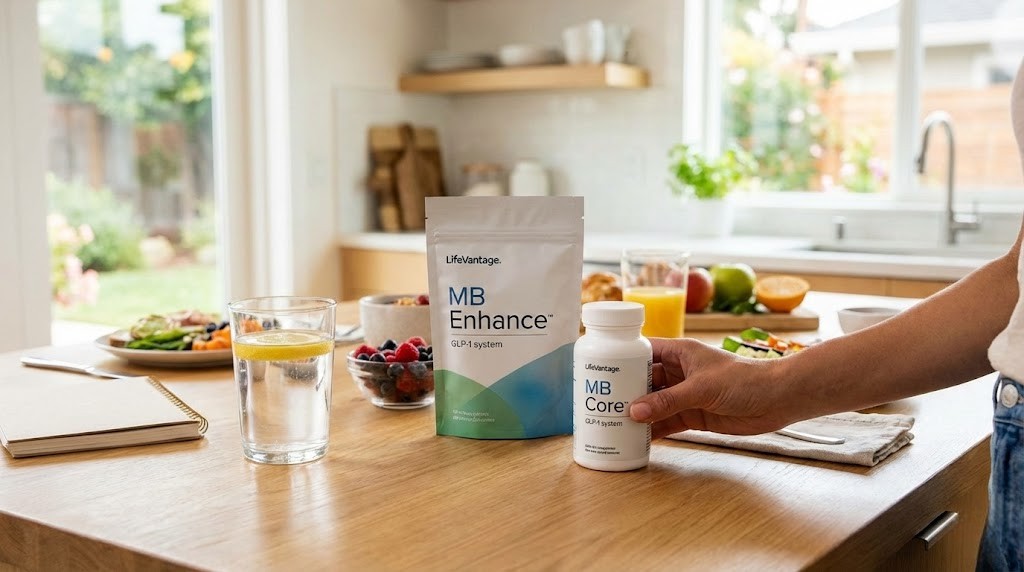
After reviewing every clinical claim LifeVantage makes about their MindBody GLP-1 System, one thing became clear. The marketing is polished. The science behind it? That requires a much closer look.
LifeVantage launched their MindBody GLP-1 System in late 2024, positioning it as a natural alternative to GLP-1 receptor agonist medications like semaglutide and tirzepatide. The product generated $67.5 million in quarterly revenue, exceeding analyst expectations by 30%. Clearly, people are buying it. But should they be?
That is the question this guide answers. Not with hype. Not with dismissal. With a detailed examination of every ingredient, every clinical study, every claim, and every red flag. Whether you are considering this product, comparing it to compounded semaglutide, or simply trying to understand the growing market of natural GLP-1 supplements, you will find everything you need here.
The GLP-1 supplement market has exploded. Dozens of companies now claim their pill, patch, or powder can replicate what injectable medications achieve. SeekPeptides has tracked this trend closely because understanding the difference between marketing claims and clinical reality is exactly what evidence-based peptide education requires. Some supplements contain ingredients with genuine research backing. Others dress up old diet pill formulations in new packaging. LifeVantage falls somewhere in between, and the details matter enormously.
This guide covers the complete MindBody GLP-1 System, from ingredient analysis and clinical trial evaluation to pricing breakdown, MLM business model concerns, and direct comparisons with pharmaceutical GLP-1 medications. By the end, you will have every piece of information needed to make an informed decision.
What is the LifeVantage MindBody GLP-1 system?
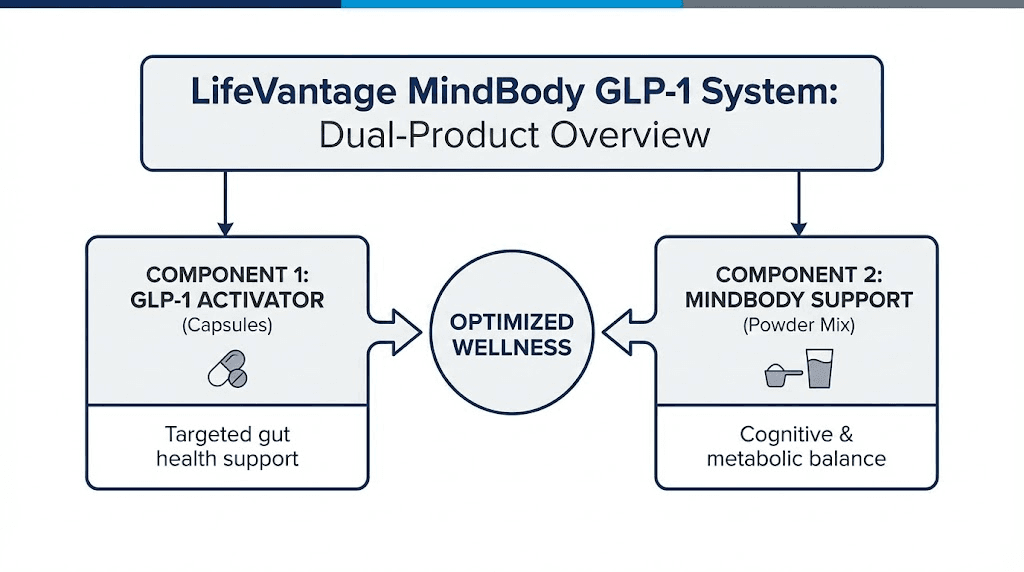
LifeVantage Corporation, a Utah-based supplement company founded in 2003, sells the MindBody GLP-1 System as a two-product set designed to boost your body's natural GLP-1 production. The system consists of MB Core and MB Enhance, each targeting a different mechanism of GLP-1 activation.
The concept sounds compelling on paper. Rather than injecting synthetic GLP-1 receptor agonists, you take capsules and a fiber blend that supposedly stimulate your intestinal L-cells to produce more of the hormone naturally. LifeVantage calls this "dual activation and amplification."
Here is how they break it down.
MB Core directly activates the GLP-1 pathway in intestinal L-cells using a blend of eight plant-based ingredients. The capsules contain a 1,440mg proprietary "GLP-1 Activation Blend" that includes acacia hydrolysate, berberine root extract, matcha leaf powder, lemon bioflavonoids, hesperidin, honeysuckle, yerba mate, and eggplant extract. You take two capsules daily.
MB Enhance works indirectly by optimizing the gut microbiome. It contains resistant potato starch, resistant tapioca fiber, flaxseed oil, MCT oil, baobab fruit powder, guar gum, kombucha, and probiotic strains including Bacillus coagulans and Bacillus clausii. The idea is that these ingredients promote short-chain fatty acid production, particularly butyrate, which then stimulates additional GLP-1 secretion from the colon.
LifeVantage is not a pharmaceutical company. It is a multilevel marketing company. That distinction matters because it affects how products are studied, marketed, and sold. The company is publicly traded on NASDAQ under the ticker LFVN, and their other flagship product, Protandim, has been the subject of scientific scrutiny and regulatory warnings over the years. We will dig deeper into these business model concerns later in this guide.
The MindBody GLP-1 System retails at approximately $199.99 for a 30-day supply. Compare that to the monthly cost of compounded tirzepatide or compounded semaglutide, and the pricing conversation gets interesting. But price means nothing without efficacy, so let us start there.
Complete ingredient breakdown
Understanding what you are actually putting in your body matters more than any marketing claim. Let us examine each ingredient in the LifeVantage MindBody GLP-1 System and what the research actually shows about its effectiveness for weight management and GLP-1 production.
MB Core ingredients
Berberine root extract is the most researched ingredient in the formula. Multiple studies have investigated berberine's effect on GLP-1 secretion. A review published in PubMed found that berberine induces GLP-1 secretion in the intestine by altering the bacterial profile and promoting short-chain fatty acid production from intestinal L-cells. Berberine metabolites, particularly berberrubine and palmatine, have been shown to significantly increase GLP-1 production in cell studies.
That sounds promising. But context matters here.
Most berberine studies involve doses of 500mg to 1,500mg daily as a standalone ingredient. The LifeVantage formula contains berberine as one of eight ingredients within a 1,440mg total blend. The exact amount of berberine is not disclosed because it is a proprietary blend. This is a problem. Without knowing the dose, you cannot compare it to the doses used in actual research.
Berberine has shown effects on metabolic markers including blood sugar regulation, cholesterol reduction, and modest weight loss in some clinical trials. However, a systematic review noted that most clinical trials included fewer than 100 participants and were of short duration. The evidence is promising but not definitive, especially at unknown doses within a blend.
Acacia hydrolysate is a prebiotic fiber derived from the acacia tree. It has documented effects on gut microbiome composition and may support gut health through prebiotic fermentation. Some animal studies suggest acacia fiber increases short-chain fatty acid production, which could theoretically support GLP-1 secretion. The human evidence for GLP-1 activation specifically is limited.
Matcha leaf powder contains catechins, particularly EGCG, which have been studied for metabolic effects. Some research suggests green tea catechins may modestly increase energy expenditure and fat oxidation. The connection to GLP-1 specifically is tenuous. Most matcha weight loss research involves much higher doses than what would be present in this blend.
Hesperidin and lemon bioflavonoids are citrus-derived flavonoids with antioxidant properties. Limited research suggests hesperidin may have modest effects on inflammation and metabolic markers. Direct evidence linking hesperidin to meaningful GLP-1 activation in humans is sparse.
Honeysuckle extract has traditional use in herbal medicine, primarily for its anti-inflammatory properties. Its role in GLP-1 activation lacks substantial clinical evidence in humans.
Yerba mate contains caffeine and polyphenols. It has been studied for modest effects on energy expenditure and appetite suppression. These effects are primarily attributed to its caffeine content rather than any GLP-1-specific mechanism. You could get similar effects from a cup of coffee.
Eggplant extract contains nasunin and other antioxidants. Its specific role in GLP-1 activation has minimal research support in human studies.
MB Enhance ingredients
The second product in the system takes a different approach. Rather than directly activating GLP-1 pathways, MB Enhance focuses on creating conditions in the gut that support GLP-1 production.
Resistant potato starch and resistant tapioca fiber are the primary functional ingredients here. Resistant starches bypass normal digestion and ferment in the colon, producing short-chain fatty acids including butyrate, propionate, and acetate. Research published in Nature found that butyrate does stimulate GLP-1 secretion from colonic L-cells. This mechanism has legitimate scientific support.
The question is whether the dose in MB Enhance is sufficient to produce meaningful effects. Studies showing significant short-chain fatty acid production typically use 15-30 grams of resistant starch daily. The total serving size of MB Enhance is not clearly listed in publicly available materials, making comparison difficult. You could also get resistant starch from cooled potatoes, green bananas, and legumes at a fraction of the cost.
Flaxseed and MCT oils provide fatty acids that may support satiety. MCT oil has some evidence for modest increases in energy expenditure and fat oxidation. These effects are real but modest, typically measured in studies using 15-30ml daily.
Baobab fruit powder is rich in fiber, vitamin C, and polyphenols. It may support immune function and gut health. Direct GLP-1 activation evidence is limited.
Guar gum is a soluble fiber that creates viscosity in the gut, slowing gastric emptying and potentially improving appetite suppression. It has legitimate evidence for modest weight management support, primarily through mechanical satiety rather than hormonal activation.
Bacillus coagulans and Bacillus clausii are spore-forming probiotic bacteria. They survive stomach acid better than many probiotic strains. Some research links certain probiotic strains to improved metabolic markers, though evidence for significant GLP-1 activation specifically is still emerging.
The honest summary? Several ingredients have plausible mechanisms. Berberine and resistant starches have the strongest evidence base. But the proprietary blend format makes it impossible to verify that any ingredient is present at a clinically relevant dose. That is a fundamental limitation.
LifeVantage clinical study analysis
LifeVantage cites two 12-week human clinical studies to support their product claims. Let us examine what these studies actually show, and equally important, what they do not show.
The headline claims
LifeVantage reports the following results from their clinical research:
200%+ average increase in GLP-1 levels
Average weight loss of 11 pounds in 12 weeks, with some participants losing up to 25 pounds
100% of participants who lost weight maintained muscle mass
Up to 6% total body fat percentage lost
Up to 24% visceral fat reduction
86% decreased food, salt, and soda cravings
95% decreased sugar cravings
89% decreased fast food cravings
These numbers look impressive at first glance. Now let us look closer.
Study design concerns
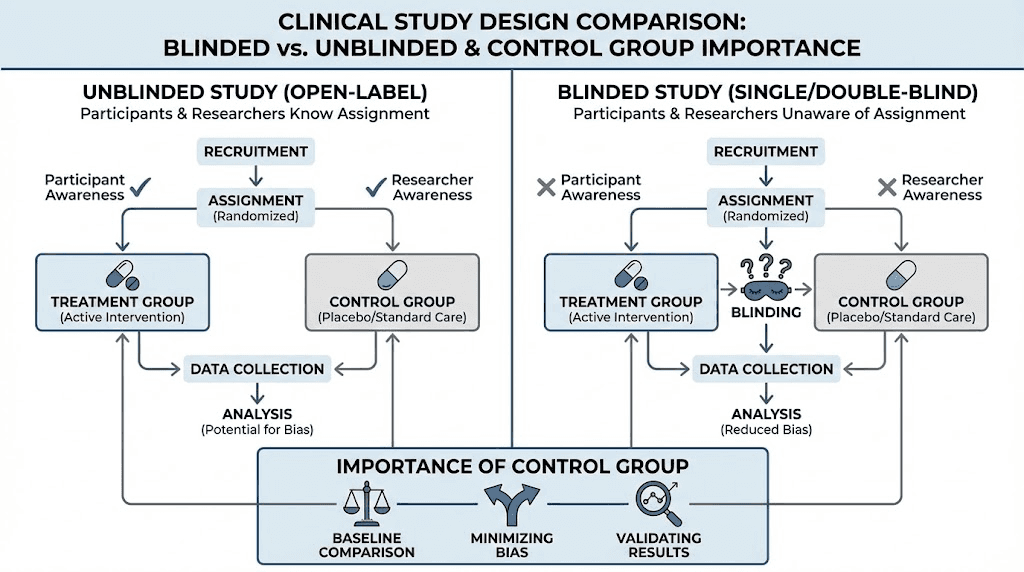
The most critical issue is that neither study was blinded. Participants knew they were taking the supplement. This introduces massive potential for placebo effects, especially for subjective outcomes like cravings, hunger, and emotional eating. When someone pays $200 per month for a weight loss product and knows they are taking it, their behavior changes. They eat differently. They exercise more. They report more positive outcomes. This is not speculation. It is one of the most well-documented phenomena in clinical research.
The second major issue involves the control group. One study included 60 participants divided into three groups, including a control group that received no supplement and no education. LifeVantage did not report on the control group results. Without comparing the treatment group to the control group, the study results are essentially meaningless from a scientific standpoint. The entire purpose of a control group is to isolate the supplement's effect from the natural effects of being in a study, receiving attention, and knowing your weight is being tracked.
This is not a minor oversight. It is a fundamental flaw that makes the results unreliable.
The muscle mass claim
LifeVantage claims that 100% of participants who lost weight maintained muscle mass. This deserves particular scrutiny because it is, from a physiological standpoint, virtually impossible to lose significant body weight without losing any muscle mass. The only known exception is liposuction.
When you create a caloric deficit, your body draws energy from both fat stores and muscle tissue. The ratio varies based on protein intake, exercise, and individual factors, but some muscle loss is inevitable during weight loss. Even participants using tirzepatide and semaglutide, which produce far more dramatic weight loss, experience some degree of lean mass reduction. For a supplement to produce weight loss with zero muscle loss defies basic physiology.
This claim likely relies on measurement methodology. Body composition tools like bioelectrical impedance analysis have significant error margins, particularly for lean mass measurement. A small sample size combined with imprecise measurement can easily produce a "no change" finding when change actually occurred.
The GLP-1 increase claim
A 200% increase in GLP-1 sounds dramatic. But percentage increases from a low baseline can be misleading. Here is why.
Your body produces GLP-1 naturally, primarily after meals. Baseline fasting levels are quite low. A 200% increase from a very low baseline number can still result in GLP-1 levels far below what pharmaceutical GLP-1 receptor agonists achieve. The relevant question is not "did GLP-1 increase by a percentage" but "did GLP-1 increase to a level that produces clinically meaningful effects on appetite and weight?"
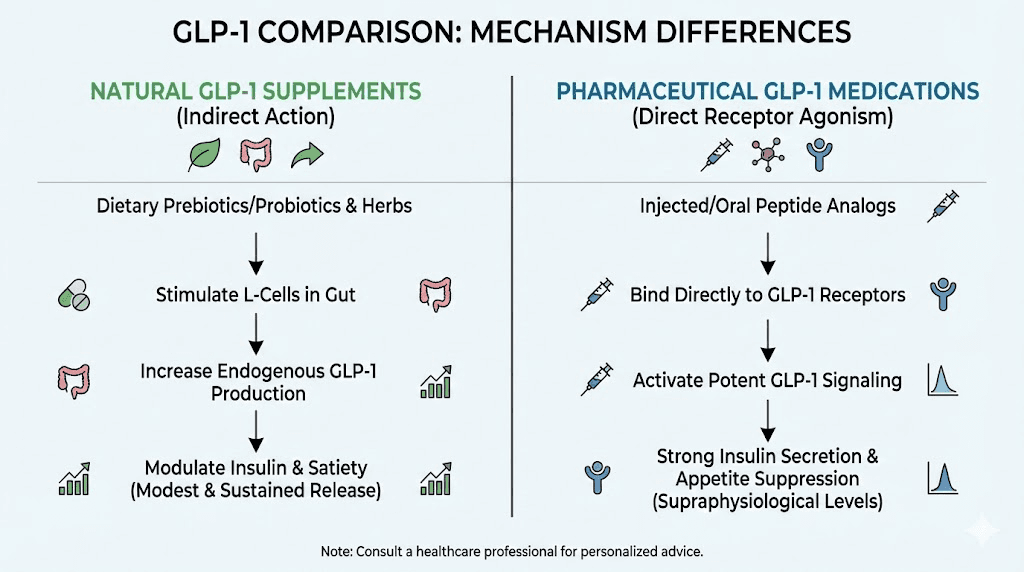
Consider this comparison. Semaglutide does not just increase GLP-1. It is a GLP-1 receptor agonist that directly activates GLP-1 receptors with a half-life of approximately 7 days, providing continuous receptor activation. Natural GLP-1 has a half-life of about 2 minutes before DPP-4 enzymes break it down. Even if you triple or quadruple your body's GLP-1 production, the hormone is degraded within minutes. The sustained receptor activation that makes pharmaceutical GLP-1 medications so effective simply cannot be replicated by briefly boosting natural production.
LifeVantage mentions a 38% reduction in DPP-4 expression in their in-vitro study. If real in humans, this could modestly extend GLP-1's active lifespan. But an in-vitro finding (cells in a lab dish) does not automatically translate to the same effect in a living human body.
In-vitro vs in-vivo evidence
LifeVantage cites impressive in-vitro results, including a 95% activation of the GCG gene and a 1,280% activation of PPY neuropeptides. These numbers are from cell studies, not human studies.
In-vitro studies are valuable for understanding mechanisms. They are preliminary evidence, not proof of efficacy. The gap between what happens in a petri dish and what happens in a human body is enormous. Drug development fails at this stage more often than it succeeds. Most compounds that show dramatic effects in cell studies produce negligible results in humans.
To their credit, LifeVantage did conduct human studies. But as noted above, those studies had significant design limitations that undermine their conclusions.
How LifeVantage GLP-1 compares to actual GLP-1 medications
This comparison is essential because LifeVantage positions their product in the GLP-1 space, and consumers need to understand the fundamental differences.
Factor | LifeVantage MindBody GLP-1 | Semaglutide (Ozempic/Wegovy) | Tirzepatide (Mounjaro/Zepbound) |
|---|---|---|---|
Mechanism | Stimulates natural GLP-1 production | Direct GLP-1 receptor agonist | Dual GLP-1/GIP receptor agonist |
Delivery | Oral capsules + fiber blend | Weekly injection | Weekly injection |
Weight loss (12 weeks) | 11 lbs average (company data) | 5-8% body weight | 7-10% body weight |
Weight loss (1 year) | No long-term data | 15-16% body weight | Up to 22.5% body weight |
GLP-1 half-life | ~2 minutes (natural GLP-1) | ~7 days | ~5 days |
Clinical evidence | 2 unblinded studies, ~60 people | Multiple phase 3 trials, thousands of participants | Multiple phase 3 trials, thousands of participants |
FDA status | Dietary supplement (not evaluated) | FDA approved | FDA approved |
Monthly cost | ~$200 | $300-600 (compounded) | $300-700 (compounded) |
Side effects | Generally mild (GI discomfort) | Nausea, GI issues, potential serious effects | Nausea, GI issues, potential serious effects |
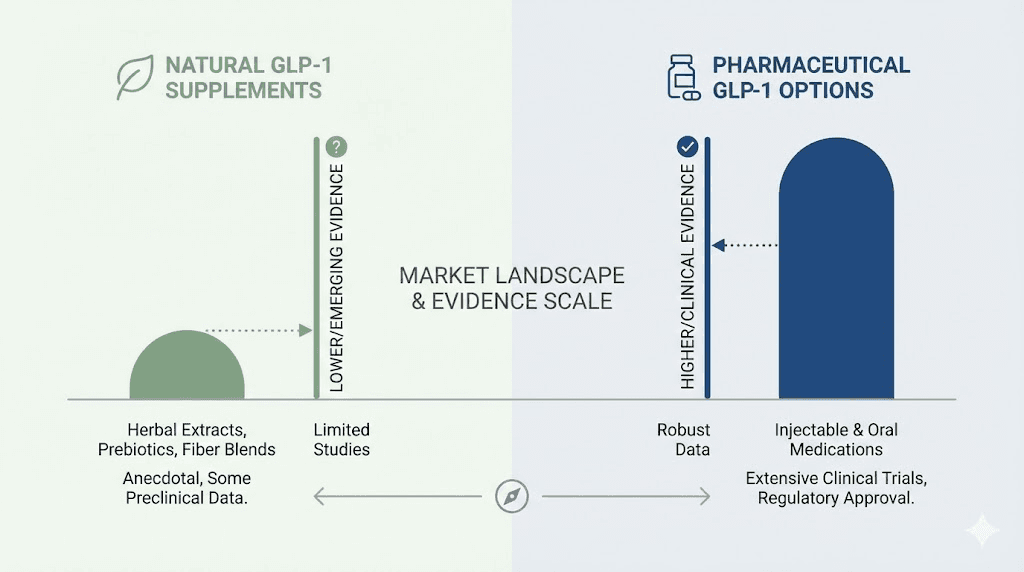
The comparison reveals a fundamental gap. Pharmaceutical GLP-1 medications have been tested in randomized, double-blind, placebo-controlled trials involving thousands of participants. They have FDA approval. Their mechanisms produce sustained receptor activation lasting days. The LifeVantage system has two small, unblinded studies and relies on briefly boosting a hormone that degrades in minutes.
This does not mean LifeVantage is worthless. It means the two products exist in completely different categories of evidence and efficacy. Comparing them directly, as some marketing materials do, is misleading.
If you are currently researching semaglutide versus tirzepatide, those medications have vastly more clinical data supporting their effectiveness. If you are exploring options because you cannot access or afford injectable GLP-1 medications, understanding what a supplement can and cannot do becomes critically important.
The MLM factor and what it means for you
LifeVantage operates as a multilevel marketing company. This matters for several reasons that go beyond personal opinion about the business model.
How the MLM structure affects pricing
In a traditional retail model, you have a manufacturer, a distributor, and a retailer, each taking a margin. In an MLM model, you have multiple layers of distributors, each earning commissions. These commissions come from the product price. When the MindBody GLP-1 System sells for approximately $200 per month, a significant portion of that price funds the compensation plan rather than ingredient quality or research.
This does not automatically mean the product is bad. It means you are paying a premium for the distribution model rather than the formulation itself. Many of the individual ingredients in the MindBody system, including berberine, resistant starch, probiotics, and fiber, are available separately for a fraction of the cost.
For perspective, a 90-day supply of high-quality berberine (the most research-backed ingredient in MB Core) costs approximately $20-40 from reputable supplement brands. A resistant starch supplement comparable to portions of MB Enhance runs $15-25 monthly. Even combining multiple standalone supplements to approximate the MindBody formula would likely cost $50-80 monthly, less than half the LifeVantage price.
Company history and regulatory concerns
LifeVantage has faced significant legal and regulatory issues over the years. Their flagship product, Protandim, drew an FDA warning letter for making disease-treatment claims about the supplement. A class-action lawsuit alleged the company operates as a pyramid scheme, which was settled for $1.8 million with the company denying wrongdoing. Investigations by Truth in Advertising found illegal disease-treatment claims and exaggerated income claims from distributors.
A STAT News investigation documented how LifeVantage became "a haven for health misinformation," with distributors trained to promote Protandim's supposed ability to treat various conditions despite lacking evidence. The vast majority of Protandim studies were conducted on rats and cells in lab dishes rather than humans.
This history matters because it establishes a pattern of marketing that outpaces the science. The MindBody GLP-1 System may be a different product, but it comes from the same company with the same business practices and incentive structures.
Distributor bias in reviews
When searching for LifeVantage GLP-1 reviews online, be aware that many positive reviews come from distributors who earn commissions on sales. This does not mean their experiences are fabricated, but it introduces financial incentive that colors their perspective. Independent reviews from nutrition professionals have been significantly more critical.
Abby Langer, a registered dietitian who reviewed the product independently, concluded that LifeVantage makes claims they cannot support and uses scientific jargon to convince customers the company knows its science. She specifically noted that GLP-1 supplements do not work like actual GLP-1 medications, not even close in both function and efficacy.
Who might actually benefit from this product
Despite the legitimate criticisms, some people may find value in the LifeVantage MindBody GLP-1 System under specific circumstances. Honesty requires acknowledging this alongside the limitations.
Potential benefits
The fiber and prebiotic components in MB Enhance are legitimately beneficial for gut health. Resistant starches, fiber, and probiotics have well-documented benefits for digestive function, microbiome diversity, and satiety. If someone's diet is low in fiber (as most Western diets are), adding a concentrated fiber supplement will likely produce some positive effects on appetite and digestive comfort.
Berberine has documented effects on blood sugar regulation. Several meta-analyses confirm modest improvements in fasting glucose, HbA1c, and lipid profiles. If you are prediabetic or have metabolic syndrome, berberine supplementation (at adequate doses) may provide some benefit, though you could get the same ingredient for much less.
The behavioral component matters too. When people invest $200 monthly in a weight management product, they tend to make better dietary choices and exercise more. The LifeVantage 12-week program includes dietary guidance and meal planning recommendations. These lifestyle changes, independent of the supplement, can drive meaningful results.
Who should NOT use this product
If you expect results comparable to pharmaceutical GLP-1 medications, you will be disappointed. The mechanisms are fundamentally different, and the evidence gap is enormous.
If you have significant weight to lose (50+ pounds) and are managing conditions like type 2 diabetes, the evidence-based path runs through FDA-approved medications with extensive clinical trial data, not supplements with two small unblinded studies.
If budget is a concern, the $200 monthly price point buys you ingredients you could source individually for far less. And that $200 per month is comparable to the cost of affordable compounded tirzepatide, which has vastly stronger evidence behind it.
If you are currently using semaglutide or tirzepatide and considering switching to this product, understand that the two categories are not equivalent. Some users combine supplements with GLP-1 medications, but replacing a pharmaceutical with a supplement that targets the same pathway through a fundamentally weaker mechanism is a significant downgrade.
LifeVantage GLP-1 versus other natural GLP-1 supplements
LifeVantage is far from the only company selling natural GLP-1 supplements. Several other products compete in this space, and comparing them helps put LifeVantage in context. The market has exploded with brands claiming to boost GLP-1 naturally, and the landscape keeps shifting.
Common competitors
Products like Evolv GLP-1, Thrive GLP-1, MMIT GLP-1, and Onmorlo GLP-1 patches all target the same market. Each claims to boost natural GLP-1 production through various mechanisms. The quality varies wildly.
Product | Key ingredients | Delivery method | Price (monthly) | Clinical evidence |
|---|---|---|---|---|
LifeVantage MindBody | Berberine, acacia, matcha, resistant starch | Capsules + fiber blend | ~$200 | 2 unblinded studies |
Evolv GLP-1 | Varies by formulation | Capsules | Varies | Limited |
Thrive GLP-1 | Varies by formulation | Capsules/patches | Varies | Limited |
Onmorlo patches | Transdermal blend | Patches | Varies | Limited |
The common thread across all these products is a gap between marketing claims and clinical evidence. None have been evaluated by the FDA for efficacy. None have been tested in the rigorous, multi-phase clinical trial process that pharmaceutical GLP-1 medications undergo.
What sets LifeVantage apart from most competitors is that they did conduct human studies. The studies have significant limitations, as we discussed, but most competing products have no human data at all. This puts LifeVantage slightly ahead of many competitors in terms of evidence, though "slightly ahead" in a weak evidence landscape is not particularly reassuring.
The broader supplement market problem
Medical experts and the FDA have warned that over-the-counter GLP-1 supplements are not true medications and lack regulated clinical data. NBC News reported that experts say these supplements are "most likely ineffective for weight loss" and often contain "older weight loss supplements that are rebranded." The ingredients frequently include compounds like ashwagandha and green tea extract that have been recycled from previous generations of diet products.
This does not mean every natural supplement is worthless. It means the entire category exists in a regulatory gray area where marketing claims consistently outpace scientific evidence. SeekPeptides emphasizes evidence-based education precisely because this gap between claims and reality can lead people to waste money or, worse, delay proven treatments.
Detailed pricing and cost analysis
Money matters. Especially when you are spending it monthly on a product whose efficacy is uncertain. Let us break down exactly what LifeVantage costs and how it compares to alternatives.
LifeVantage pricing breakdown
The MindBody GLP-1 System retails at approximately $199.99 for a 30-day supply. Preferred customers who subscribe to autoship may receive discounts, typically around 10-15%. Distributors who purchase through the business model may access lower wholesale pricing.
Over time, the costs add up quickly.
3 months: approximately $600
6 months: approximately $1,200
12 months: approximately $2,400
LifeVantage does not publish long-term usage recommendations, but their messaging implies ongoing use for sustained results.
DIY ingredient comparison
Since the MindBody system uses a proprietary blend, you cannot exactly replicate it. But you can approximate the key ingredients with standalone supplements:
Ingredient | Monthly cost (standalone) | Typical effective dose |
|---|---|---|
Berberine (500mg, 2x daily) | $15-25 | 1,000-1,500mg/day |
Resistant starch | $10-20 | 15-30g/day |
Probiotic (Bacillus strains) | $15-25 | 1-5 billion CFU |
Fiber supplement (guar gum) | $10-15 | 5-10g/day |
MCT oil | $15-20 | 15-30ml/day |
Total DIY approach | $65-105 |
The DIY approach costs roughly 50-65% less than the LifeVantage system. And with standalone supplements, you know exactly how much of each ingredient you are getting, which means you can match doses to actual research.
Comparison to pharmaceutical GLP-1 options
Here is where the comparison becomes most relevant for people deciding between a supplement and a medication:
Compounded tirzepatide: $200-500/month depending on source and dose
Compounded semaglutide: $150-400/month depending on source and dose
Oral semaglutide drops: $200-500/month (sublingual formulations)
Tirzepatide drops: $250-600/month (sublingual formulations)
At $200 per month, LifeVantage overlaps with the lower end of compounded GLP-1 medication pricing. For the same budget (or less), you could potentially access a product with vastly more clinical evidence, FDA-approved active ingredients, and proven mechanisms of action.
The cost-effectiveness calculation strongly favors pharmaceutical options for people with access to them. The primary advantage of LifeVantage is that it requires no prescription, no injections, and no medical supervision. For some people, those factors outweigh the efficacy gap. For others, exploring oral versus injectable options for actual GLP-1 medications may be a better path.
Understanding the science of natural GLP-1 production
To evaluate any natural GLP-1 product fairly, you need to understand how your body produces GLP-1 and why boosting that production faces inherent limitations compared to pharmaceutical approaches.
How your body makes GLP-1
GLP-1, or glucagon-like peptide-1, is an incretin hormone produced primarily by L-cells in the small intestine and colon. When you eat, nutrients in the gut trigger L-cells to release GLP-1 into the bloodstream. The hormone then travels to the brain, pancreas, and other tissues where it:
Signals satiety (feeling full) through brain receptors
Stimulates insulin secretion from the pancreas
Slows gastric emptying (food stays in the stomach longer)
Reduces glucagon secretion (lowering blood sugar)
This system is elegant and efficient. But it has a critical limitation that every natural GLP-1 supplement must contend with.
The DPP-4 problem
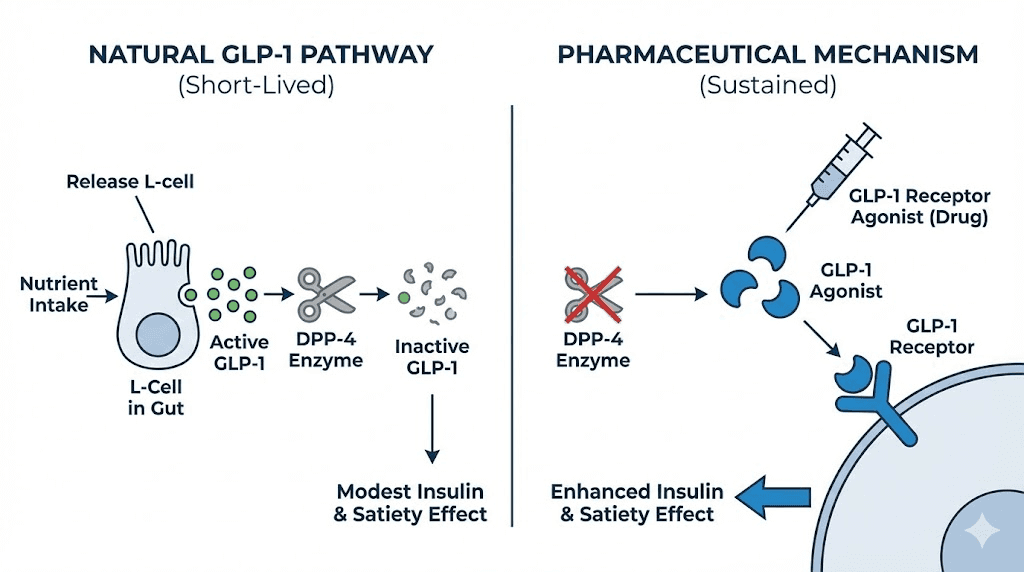
Natural GLP-1 has a half-life of approximately 1.5 to 2 minutes. An enzyme called dipeptidyl peptidase-4 (DPP-4) rapidly breaks down GLP-1 after release. This means that even if a supplement triples your GLP-1 production, the additional hormone is degraded within minutes. You get a brief spike followed by rapid decline.
Pharmaceutical GLP-1 medications solved this problem through molecular engineering. Semaglutide has a half-life of approximately 7 days because it is structurally modified to resist DPP-4 degradation and bind to albumin in the blood, creating a slow-release reservoir. Tirzepatide achieves similar sustained activity through its own molecular modifications.
The result? Pharmaceutical GLP-1 medications provide continuous receptor activation for days between doses. Natural GLP-1 boosters provide brief pulses lasting minutes. The difference in clinical outcomes reflects this fundamental pharmacological gap.
LifeVantage claims their product reduces DPP-4 expression by 38% in cell studies. Even if this translates perfectly to humans (which in-vitro findings rarely do), a 38% reduction in DPP-4 would modestly extend GLP-1's half-life from about 2 minutes to perhaps 3-4 minutes. Still orders of magnitude shorter than pharmaceutical alternatives.
What actually increases natural GLP-1
Research has identified several dietary and lifestyle factors that genuinely increase natural GLP-1 production:
Protein intake: Protein is the strongest dietary stimulator of GLP-1 secretion. High-protein meals consistently produce the largest GLP-1 responses. If you are already following optimal dietary protocols, you are already maximizing this pathway.
Fiber: Soluble fiber and resistant starch increase short-chain fatty acid production, which stimulates colonic L-cells. Eating adequate fiber from whole foods is free and proven effective.
Short-chain fatty acids: Butyrate, propionate, and acetate directly stimulate GLP-1 secretion. These are produced by bacterial fermentation of fiber in the colon.
Exercise: Both aerobic and resistance exercise acutely increase GLP-1 secretion. Regular exercise also improves GLP-1 sensitivity over time.
Adequate sleep: Sleep deprivation reduces GLP-1 secretion and increases ghrelin (the hunger hormone). Optimizing sleep is free and profoundly effective for appetite regulation.
Many of these strategies are more effective, better studied, and completely free compared to any supplement. They also work synergistically with each other and with pharmaceutical GLP-1 medications for those who use them.
Side effects and safety considerations
One genuine advantage of the LifeVantage MindBody GLP-1 System over pharmaceutical GLP-1 medications is a milder side effect profile. This matters, and it should be acknowledged honestly.
Reported side effects of MindBody GLP-1
Based on available reports and the ingredient profiles, the most commonly reported side effects include:
Gastrointestinal discomfort: Bloating, gas, and mild cramping, primarily from the fiber and resistant starch components in MB Enhance. These typically improve as the gut adapts over 1-2 weeks.
Digestive changes: Increased bowel movements or changes in stool consistency, again primarily from fiber and prebiotic ingredients.
Mild nausea: Some users report mild nausea, particularly when starting the product. This is generally less severe than the nausea associated with tirzepatide or semaglutide side effects.
These are relatively mild compared to pharmaceutical GLP-1 medications, which commonly cause significant nausea, vomiting, diarrhea, constipation, and in rare cases more serious effects including pancreatitis and thyroid concerns. For people who cannot tolerate injectable GLP-1 medication side effects, a gentler supplement may have appeal, provided expectations for efficacy are calibrated accordingly.
Berberine-specific considerations
Berberine, the most pharmacologically active ingredient in MB Core, has its own safety profile worth understanding. It can interact with medications including:
Diabetes medications (additive blood sugar lowering effect)
Blood pressure medications
Certain antibiotics (CYP3A4 interaction)
Immunosuppressants (cyclosporine)
Anyone taking prescription medications should consult a healthcare provider before using products containing berberine. This is especially important for people with diabetes who are already on GLP-1 medication therapy, as combining berberine with GLP-1 agonists could potentially cause additive blood sugar reduction.
What LifeVantage does not warn about
The product marketing downplays several important considerations:
Long-term safety data does not exist. Two 12-week studies provide no information about what happens with extended use over months or years. Long-term berberine use, specifically, has limited safety data.
The "natural" label does not equal safe. Many potent compounds come from plants. Natural origin does not eliminate the possibility of adverse effects, interactions, or complications.
The product is not a medication replacement. For people with type 2 diabetes or clinical obesity, replacing evidence-based pharmaceutical treatment with an unproven supplement carries health risks that extend beyond simply not losing weight.
What real users report
Separating genuine user experiences from distributor testimonials is challenging with MLM products. Here is what patterns emerge from various sources.
Common positive reports
Reduced appetite and cravings, particularly for sugar and processed foods
Improved digestive regularity (likely from fiber components)
Modest weight loss (typically 5-15 pounds over several months)
Improved energy levels
Better food choices and eating habits
Common negative reports
Results not comparable to pharmaceutical GLP-1 medications
High price relative to perceived value
Digestive discomfort during initial weeks
Weight loss plateauing after initial improvements
Difficulty distinguishing supplement effects from lifestyle changes made simultaneously
The pattern is consistent with what the evidence predicts. The fiber and prebiotic components produce real improvements in appetite and digestion. These are modest compared to pharmaceutical options. The behavioral changes that come with any structured weight management program amplify results but make it impossible to isolate the supplement's specific contribution.
This is why controlled studies with proper blinding and reported control groups are so important. Without them, you cannot tell whether the supplement caused the results or whether the same results would have occurred from dietary guidance and accountability alone.
Making an informed decision
After examining every aspect of the LifeVantage MindBody GLP-1 System, here is a framework for making an informed choice.
Choose LifeVantage MindBody GLP-1 if:
You want a non-prescription, non-injectable approach to appetite management
You have mild weight management goals (losing 10-20 pounds)
You understand it will not produce pharmaceutical-level results
You value gut health and fiber supplementation alongside weight management
You cannot access or tolerate injectable GLP-1 medications
You accept the price premium of the MLM distribution model
Consider alternatives if:
You need significant weight loss (30+ pounds) for health reasons
You have type 2 diabetes requiring evidence-based treatment
Budget is a concern (standalone ingredients cost 50-65% less)
You want strong clinical evidence behind your investment
You are comparing it to affordable compounded GLP-1 medications at similar price points
The bottom line
LifeVantage has created a product that combines several ingredients with plausible mechanisms for modestly supporting natural GLP-1 production. Berberine and resistant starch, the two strongest ingredients, have legitimate research behind them. The overall product is sold at a significant premium through an MLM model, tested in studies with meaningful design flaws, and marketed in ways that overstate the evidence.
It is not snake oil. Several ingredients genuinely support gut health and metabolic function. But it is also not remotely comparable to pharmaceutical GLP-1 medications in mechanism, evidence, or expected outcomes. The 200% GLP-1 increase claim, while possibly accurate in percentage terms, obscures the fundamental limitation that natural GLP-1 degrades in minutes while pharmaceutical alternatives act for days.
For anyone researching how GLP-1 medications suppress appetite, understanding this distinction between natural production boosting and direct receptor agonism is essential for making an informed choice about your approach to weight management.
How to evaluate any GLP-1 supplement
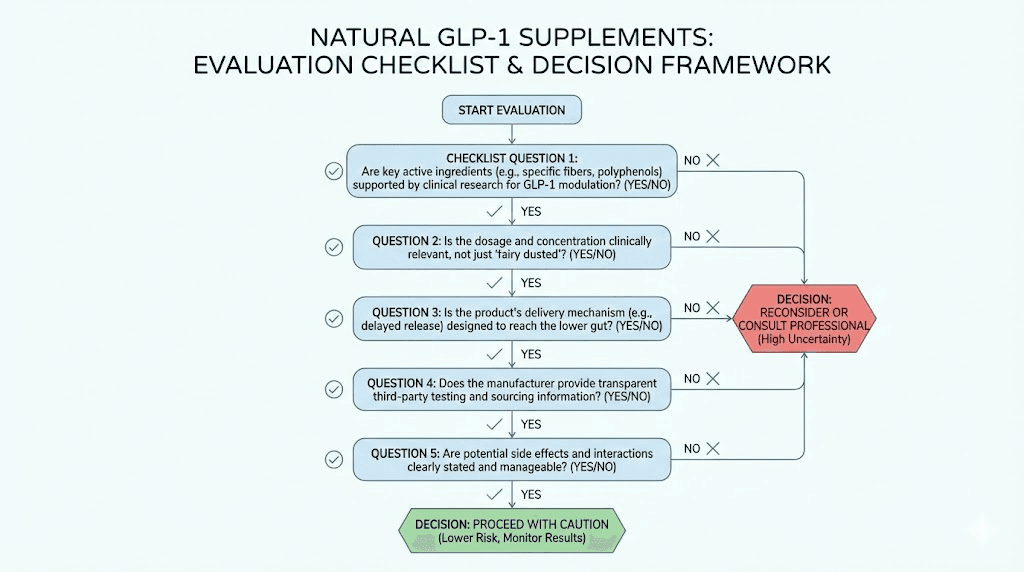
The LifeVantage analysis above provides a template you can apply to any natural GLP-1 supplement you encounter. Here are the critical questions to ask before spending money on any product in this category.
Question 1: what is the specific mechanism?
"Boosts GLP-1" is not specific enough. Ask whether the product claims to increase GLP-1 production from L-cells, reduce DPP-4 degradation, increase GLP-1 receptor sensitivity, or something else entirely. Each mechanism has different evidence requirements and different limitations.
Products that claim to increase natural GLP-1 production all face the half-life limitation we discussed. Products claiming to reduce DPP-4 need to demonstrate human efficacy, not just cell study data. Any product claiming to activate GLP-1 receptors directly is essentially claiming to be a pharmaceutical, not a supplement.
Question 2: are clinical trial results peer-reviewed?
Company-sponsored studies published on the company website are not the same as peer-reviewed research published in medical journals. Peer review involves independent experts evaluating methodology, data analysis, and conclusions before publication. Without this scrutiny, studies can contain biases and errors that would not survive independent evaluation.
LifeVantage's studies appear to be company-conducted and company-published. This does not automatically invalidate them, but it means they have not undergone the rigor that clinical trials for pharmaceutical GLP-1 compounds must pass.
Question 3: what do independent experts say?
Look for reviews from registered dietitians, endocrinologists, and other healthcare professionals who do not have financial ties to the company. Independent expert analysis consistently provides more balanced assessments than company marketing or distributor testimonials.
Question 4: how does the cost compare to alternatives?
Calculate the per-ingredient cost. If a product charges $200 for a blend of ingredients you can buy individually for $70, you are paying a significant premium for branding, marketing, and distribution. Sometimes that premium buys you convenience or formulation expertise. Sometimes it buys you nothing additional.
Question 5: what does the company NOT tell you?
Pay attention to what is absent from marketing materials. Missing control group data, unreported adverse events, lack of long-term follow-up, and proprietary blend formulations that hide individual ingredient doses are all common patterns in the supplement industry.
SeekPeptides members access comprehensive product analysis guides and evidence-based evaluation frameworks that cut through marketing claims across the entire peptide and supplement landscape. Making informed decisions requires exactly this kind of systematic, evidence-first approach.
Frequently asked questions
Does the LifeVantage GLP-1 system actually work?
The system contains ingredients with plausible mechanisms for modestly supporting GLP-1 production, particularly berberine and resistant starch. Company studies show some positive results, but these studies were not blinded and did not properly report control group data. Most users report mild to moderate appetite reduction and modest weight loss, though it is difficult to separate supplement effects from accompanying lifestyle changes. It does not produce results comparable to pharmaceutical GLP-1 medications like semaglutide or tirzepatide.
Is LifeVantage an MLM or pyramid scheme?
LifeVantage operates as a multilevel marketing company, which is legal. A class-action lawsuit alleged pyramid scheme activity, which was settled for $1.8 million with the company denying wrongdoing. The MLM model means the $200 monthly product price includes commissions for multiple distributor layers, contributing to a higher price than the ingredients alone would justify.
How does LifeVantage GLP-1 compare to Ozempic?
They work through fundamentally different mechanisms. LifeVantage attempts to stimulate your body to produce more natural GLP-1 (which degrades in about 2 minutes). Ozempic (semaglutide) is a GLP-1 receptor agonist that directly activates receptors with a half-life of about 7 days. Ozempic has been tested in multiple large-scale randomized controlled trials and is FDA-approved. Understanding the difference between GLP-1 and Ozempic is critical for making an informed choice.
Can I take LifeVantage GLP-1 with semaglutide or tirzepatide?
There is no published research on combining the MindBody GLP-1 System with pharmaceutical GLP-1 medications. Since both target the GLP-1 pathway (though through different mechanisms) and berberine can affect blood sugar levels, combining them could theoretically produce additive effects on glucose regulation. Consult a healthcare provider before combining any supplement with prescription weight loss medications.
What are the side effects of LifeVantage MindBody GLP-1?
The most commonly reported side effects are gastrointestinal in nature, including bloating, gas, and mild cramping, primarily from the fiber and resistant starch components. These are generally milder than the nausea, vomiting, and digestive issues commonly associated with pharmaceutical GLP-1 medications. Berberine can interact with certain medications including diabetes drugs, blood pressure medications, and some antibiotics.
Is LifeVantage GLP-1 worth the money?
At approximately $200 per month, the MindBody GLP-1 System is priced comparably to some compounded GLP-1 medications that have vastly stronger evidence. The individual ingredients can be purchased separately for $65-105 monthly. Whether the convenience and specific formulation justify the premium depends on your priorities and budget.
How long does it take for LifeVantage GLP-1 to work?
According to LifeVantage, users may notice appetite changes within the first 1-2 weeks, with more significant results developing over the 12-week program. Their studies measured outcomes at 12 weeks. No long-term data beyond 12 weeks is available, so the sustainability of results with continued use is unknown.
Can I buy LifeVantage GLP-1 without being a distributor?
Yes. LifeVantage sells directly to retail customers through their website. You do not need to become a distributor or join the MLM structure to purchase the product. Preferred customer subscriptions may offer modest discounts compared to one-time retail pricing.
External resources
NBC News: What to know about GLP-1 supplements for weight loss
UCLA Health: What to know about berberine, the so-called nature's Ozempic
Nature: Restoration of GLP-1 secretion by Berberine in diet-induced obese mice
For researchers serious about understanding the full landscape of GLP-1 science, from natural production to pharmaceutical mechanisms, SeekPeptides provides the most comprehensive evidence-based resource available. Members access detailed protocol analyses, ingredient databases, and a community of experienced researchers who have navigated these exact questions.
In case I do not see you, good afternoon, good evening, and good night. May your research stay evidence-based, your supplements stay transparent, and your health decisions stay informed.