Mar 21, 2026
Forty percent. That is how much of your weight loss on a GLP-1 medication could come from muscle instead of fat. Not because the medication is flawed, but because most people on semaglutide or tirzepatide are not eating the right foods in the right combinations at the right times. And the difference between losing mostly fat and losing dangerous amounts of lean tissue often comes down to something surprisingly simple. What you cook. How you prepare it. The specific recipes you reach for when your appetite has shrunk to a fraction of what it used to be.
This matters more than most guides acknowledge.
When your appetite drops by 50% or more on a GLP-1 receptor agonist, every single calorie needs to carry its weight. You cannot afford empty carbohydrates or protein-poor meals when your eating window has narrowed to a few hundred careful bites per day. The recipes in this guide were designed with exactly that constraint in mind, delivering 25 to 40 grams of protein per serving while keeping portions manageable, digestion comfortable, and flavors genuinely worth eating when nothing sounds appealing. Whether you are on semaglutide, tirzepatide, or retatrutide, these are the meals that protect your muscle, fuel your metabolism, and make the weight loss sustainable instead of destructive.
SeekPeptides members have access to comprehensive protocol guides and nutrition resources that complement every recipe in this collection, helping researchers optimize their results from day one.
Why GLP-1 nutrition demands a completely different approach to cooking
Standard weight loss recipes miss the mark for GLP-1 users. Completely.
The medications work by slowing gastric emptying, which means food sits in your stomach longer than usual. Heavy, greasy meals that might feel fine for someone not on medication can trigger hours of nausea, bloating, and discomfort when your digestive system is running at half speed. At the same time, your dramatically reduced appetite means you might only manage 800 to 1,200 calories on some days, and if those calories come from the wrong sources, the consequences stack up quickly.
Research published in the journal Obesity found that up to 40% of total weight loss on GLP-1 medications can come from lean mass rather than fat. A joint advisory from the American College of Lifestyle Medicine, the American Society for Nutrition, the Obesity Medicine Association, and the Obesity Society now recommends 1.2 to 1.6 grams of protein per kilogram of body weight for people on these medications. That is significantly higher than the standard recommendation of 0.8 grams per kilogram.
What does this mean in practical terms?
For a 180-pound person, the minimum daily protein target lands around 98 grams. The optimal range pushes closer to 130 grams. When you are eating maybe two meals and a snack per day because your appetite is suppressed, hitting those numbers requires strategic, protein-dense recipes that taste good enough to finish even when you do not feel hungry.
That is exactly what this guide delivers.
The three rules of GLP-1 cooking
Before diving into specific recipes, understand these principles. They apply to every meal you prepare while on GLP-1 medications.
Rule one: protein first, always. Every meal and snack should lead with a high-quality protein source. Chicken breast, salmon, eggs, Greek yogurt, cottage cheese, lean ground turkey. Build the meal around the protein, then add vegetables and complex carbohydrates around it. This is not optional when you are trying to preserve muscle mass during rapid weight loss.
Rule two: small volumes, high density. Your stomach is processing food more slowly now. Large portions of bulky, water-heavy foods can cause severe discomfort. The best GLP-1 recipes pack maximum nutrition into compact servings, typically 300 to 450 calories with 25 to 40 grams of protein per portion. Think nutrient-dense, not volume-heavy.
Rule three: gentle on digestion. Baked, grilled, steamed, and slow-cooked preparations work best. Deep-fried foods, heavy cream sauces, and excessive oil can worsen digestive side effects. Herbs, spices, citrus, and vinegar add flavor without adding digestive burden. If something sounds too heavy to eat, it probably is.
High-protein breakfast recipes that fuel your morning
Breakfast is where most GLP-1 users struggle hardest. Morning appetite on semaglutide or tirzepatide can be almost nonexistent. But skipping breakfast means missing a critical opportunity to get 25 to 30 grams of protein into your system, and that missed protein is nearly impossible to make up later when your appetite is even lower at dinner.
These breakfast recipes are designed to be palatable even when you are not hungry, protein-rich, and easy on the stomach.
Turkey sausage and spinach egg muffins
Protein per serving: 28g | Calories: 195 | Prep time: 10 min | Cook time: 22 min | Makes 12 muffins (serving = 3 muffins)
These muffins are the single best batch-cooking breakfast for GLP-1 users. Make them on Sunday, store them in the fridge, and grab three each morning. They reheat in 45 seconds and deliver nearly 30 grams of protein before you have fully woken up.
Ingredients:
12 large eggs
8 oz lean turkey sausage (remove casing if links)
2 cups fresh baby spinach, roughly chopped
1 red bell pepper, diced small
1/4 cup diced white onion
1/2 cup reduced-fat shredded cheddar
1/4 tsp garlic powder
Salt and pepper to taste
Cooking spray
Instructions:
Preheat your oven to 375 degrees. Spray a 12-cup muffin tin generously with cooking spray. Brown the turkey sausage in a skillet over medium heat, breaking it into small crumbles as it cooks, about 5 to 6 minutes. Toss the spinach into the pan during the last minute and let it wilt slightly.
Whisk all 12 eggs in a large bowl with garlic powder, salt, and pepper. Distribute the cooked sausage and spinach mixture evenly across the 12 muffin cups. Add diced bell pepper and onion to each cup. Pour the whisked eggs over the fillings, filling each cup about three-quarters full. Top each with a pinch of shredded cheddar.
Bake for 20 to 22 minutes until the eggs are set and the tops are lightly golden. Let them cool for 3 minutes in the pan before removing. These keep in the refrigerator for up to 5 days and freeze beautifully for up to 3 months.
This is the kind of high-protein, low-effort meal that makes hitting protein targets feel automatic rather than forced.
Greek yogurt power parfait
Protein per serving: 35g | Calories: 340 | Prep time: 5 min | No cooking required
When nothing sounds good, this works. Cold, creamy, slightly sweet, and packing 35 grams of protein in something that goes down easy even on your most suppressed appetite days.
Ingredients:
1 cup plain nonfat Greek yogurt (choose a brand with 17-20g protein per cup)
1 scoop vanilla protein powder (whey or plant-based, 20-25g protein)
1/3 cup mixed berries (fresh or frozen, thawed)
1 tbsp chia seeds
1 tbsp slivered almonds
1/2 tsp cinnamon
Instructions:
Stir the protein powder into the Greek yogurt until smooth. This takes about 30 seconds and transforms the texture into something almost mousse-like. Layer into a glass or bowl. Add berries on top. Sprinkle with chia seeds, almonds, and cinnamon.
The chia seeds absorb liquid and expand slightly, which helps with the sensation of fullness without adding volume to your stomach. The berries provide fiber and antioxidants. The combination of Greek yogurt and protein powder creates a protein density that is nearly impossible to match with whole foods alone, and it is gentle enough for even the most sensitive GLP-1 stomachs.
High-protein overnight oats
Protein per serving: 32g | Calories: 380 | Prep time: 5 min | No cooking required | Refrigerate overnight
Prepare this before bed. Wake up to a ready-made breakfast that requires zero effort and zero cooking, which matters enormously on mornings when GLP-1 fatigue makes standing at a stove feel impossible.
Ingredients:
1/2 cup rolled oats
1 scoop protein powder (vanilla or chocolate)
3/4 cup unsweetened almond milk
1/4 cup plain Greek yogurt
1 tbsp peanut butter (or almond butter)
1 tbsp ground flaxseed
1/2 banana, sliced (optional)
Instructions:
Combine oats, protein powder, almond milk, and Greek yogurt in a jar or container. Stir until well mixed. Drop the peanut butter on top along with the flaxseed. Cover and refrigerate for at least 6 hours or overnight. In the morning, stir everything together, add sliced banana if desired, and eat cold or microwave for 60 seconds if you prefer warm oats.
The combination of slow-digesting oats, protein powder, Greek yogurt, and healthy fats from the peanut butter keeps blood sugar stable for hours, which is particularly important for people using GLP-1 medications for weight management.
Lunch recipes that maximize protein without the heaviness
Lunch on a GLP-1 medication presents a unique challenge. You need substantial protein to stay on track, but heavy meals in the middle of the day can leave you feeling uncomfortable for hours. The solution is recipes that pack 30 to 40 grams of protein into servings that feel light but deliver serious nutritional density.
If you are still figuring out what to eat on your medication, these lunch recipes are an excellent starting point.
Lemon herb grilled chicken and quinoa bowl
Protein per serving: 42g | Calories: 420 | Prep time: 15 min | Cook time: 20 min | Serves 4
This bowl hits every nutritional target a GLP-1 user needs. High protein from the chicken. Complex carbohydrates from the quinoa. Fiber from the vegetables. Healthy fats from the avocado. And a bright, lemony flavor profile that cuts through the dull appetite suppression that makes everything taste flat.
Ingredients:
1.5 lbs boneless skinless chicken breast
1 cup dry quinoa
2 cups chicken broth (for cooking quinoa)
1 large cucumber, diced
1 cup cherry tomatoes, halved
1/4 cup red onion, thinly sliced
1 avocado, sliced
Fresh parsley, chopped
For the lemon herb marinade:
3 tbsp olive oil
Juice of 2 lemons
3 cloves garlic, minced
1 tsp dried oregano
1/2 tsp cumin
Salt and pepper to taste
Instructions:
Whisk all marinade ingredients together. Pour over chicken breasts in a bowl or ziplock bag. Marinate for at least 30 minutes, or up to 8 hours in the fridge for maximum flavor. Cook quinoa in chicken broth according to package directions, about 15 minutes. Grill or pan-sear chicken over medium-high heat for 5 to 7 minutes per side until internal temperature reaches 165 degrees. Let the chicken rest for 5 minutes, then slice.
Assemble bowls with a base of quinoa, topped with sliced chicken, cucumber, tomatoes, red onion, and avocado. Drizzle remaining marinade over the top and finish with fresh parsley.
This recipe scales beautifully for meal prep. Make all four servings on Sunday and refrigerate. The chicken stays tender for up to 4 days, and the quinoa reheats perfectly.
Asian chicken lettuce wraps
Protein per serving: 34g | Calories: 310 | Prep time: 10 min | Cook time: 12 min | Serves 4
Light. Fresh. Crunchy. These lettuce wraps deliver serious protein without any of the heaviness that triggers digestive issues on GLP-1 medications. The lettuce cups replace bread or tortillas, eliminating the dense carbohydrate load that can sit like a brick in a slowed stomach.
Ingredients:
1.5 lbs ground chicken or turkey (at least 93% lean)
1 head butter lettuce (separated into cups)
1 red bell pepper, finely diced
3 green onions, sliced
1/2 cup water chestnuts, diced (optional, for crunch)
3 cloves garlic, minced
1 tbsp fresh ginger, grated
For the sauce:
3 tbsp low-sodium soy sauce
1 tbsp rice vinegar
1 tbsp hoisin sauce
1 tsp sesame oil
1/2 tsp sriracha (optional, skip if nausea-prone)
Instructions:
Mix all sauce ingredients in a small bowl and set aside. Heat a large skillet over medium-high heat with a light spray of cooking oil. Cook ground chicken, breaking it into small pieces, for about 6 to 8 minutes until fully cooked and lightly browned. Add garlic and ginger, cooking for another minute until fragrant. Pour the sauce over the meat and stir to coat. Add bell pepper and water chestnuts, cooking for 2 more minutes.
Spoon the mixture into butter lettuce cups. Top with sliced green onions. These are best eaten immediately but the filling stores well in the refrigerator for up to 3 days. Simply reheat the filling and spoon into fresh lettuce cups when ready to eat.
The ginger in this recipe is not just for flavor. It is a natural anti-nausea ingredient that can help ease the stomach discomfort that many GLP-1 users experience, especially during dose escalation periods.
Tuna and white bean salad
Protein per serving: 36g | Calories: 350 | Prep time: 10 min | No cooking required | Serves 2
No cooking. No heating. No standing over a stove when fatigue hits. This salad comes together in minutes and packs protein from two sources, tuna and white beans, giving you both a complete amino acid profile and substantial fiber in one bowl.
Ingredients:
2 cans (5 oz each) albacore tuna, drained
1 can (15 oz) white cannellini beans, drained and rinsed
1/2 cup celery, diced
1/4 cup red onion, finely diced
2 tbsp fresh lemon juice
1 tbsp olive oil
1 tbsp Dijon mustard
2 tbsp fresh parsley, chopped
Salt and pepper to taste
Mixed greens for serving
Instructions:
Flake the tuna into a large bowl. Add the drained beans, celery, and red onion. In a small bowl, whisk together lemon juice, olive oil, and Dijon mustard. Pour the dressing over the tuna and bean mixture. Toss gently to combine. Season with salt, pepper, and parsley. Serve over a bed of mixed greens.
This is one of the most efficient protein-per-effort recipes in this entire guide. Zero cooking, minimal cleanup, and nearly 40 grams of protein from shelf-stable ingredients you can keep on hand at all times.
Dinner recipes that support overnight recovery and muscle preservation
Dinner is arguably the most important meal for muscle preservation on GLP-1 medications. Your body does its repair work overnight, and the protein you consume at dinner provides the amino acids your muscles need during those crucial recovery hours. Skimp here, and you accelerate lean mass loss. Nail it, and you protect the metabolically active tissue that keeps your resting calorie burn high even as the scale drops.
These dinner recipes deliver 30 to 45 grams of protein per serving while remaining gentle enough to eat in the evening without causing overnight discomfort.
Sheet pan salmon with roasted vegetables
Protein per serving: 38g | Calories: 410 | Prep time: 10 min | Cook time: 20 min | Serves 4
One pan. Twenty minutes. Nearly 40 grams of protein plus omega-3 fatty acids that support heart health, reduce inflammation, and may even help with the hair loss some GLP-1 users experience. This is the dinner recipe you will come back to again and again.
Ingredients:
4 salmon fillets (6 oz each)
1 lb asparagus, trimmed
2 cups broccoli florets
1 large sweet potato, cut into 1/2 inch cubes
2 tbsp olive oil
4 cloves garlic, minced
1 lemon, sliced into rounds
1 tsp paprika
1/2 tsp garlic powder
Fresh dill for garnish
Salt and pepper to taste
Instructions:
Preheat your oven to 400 degrees. Line a large sheet pan with parchment paper. Toss the sweet potato cubes with 1 tablespoon olive oil, salt, and pepper. Spread them on the sheet pan and roast for 10 minutes while you prep everything else.
Season the salmon fillets with paprika, garlic powder, salt, and pepper. After the sweet potatoes have had their 10-minute head start, add the salmon fillets to the center of the pan. Arrange asparagus and broccoli around the salmon. Drizzle the remaining olive oil over the vegetables. Scatter minced garlic over everything and lay lemon slices on top of the salmon.
Roast for 12 to 15 minutes until the salmon flakes easily and the vegetables are tender with lightly caramelized edges. Garnish with fresh dill. The entire meal comes together on one pan, which means one pan to wash. That matters when medication fatigue makes even simple tasks feel overwhelming.
Slow cooker chicken and white bean stew
Protein per serving: 40g | Calories: 380 | Prep time: 15 min | Cook time: 6-8 hours on low | Serves 6
Dump it in the morning. Come home to dinner. The slow cooker is possibly the best kitchen tool for anyone on long-term GLP-1 therapy, because it requires effort only once and produces multiple meals that reheat perfectly throughout the week.
Ingredients:
2 lbs boneless skinless chicken breast
2 cans (15 oz each) white cannellini beans, drained and rinsed
4 cups low-sodium chicken broth
1 can (14 oz) diced tomatoes
2 cups baby spinach
1 large onion, diced
4 cloves garlic, minced
2 carrots, diced
2 stalks celery, diced
1 tsp dried thyme
1 tsp dried rosemary
1/2 tsp cumin
1 bay leaf
Salt and pepper to taste
Juice of 1 lemon (added at the end)
Instructions:
Place chicken breasts at the bottom of a slow cooker. Add beans, broth, diced tomatoes, onion, garlic, carrots, celery, and all dried herbs and spices. Stir gently to combine. Cover and cook on low for 6 to 8 hours or on high for 3 to 4 hours.
When done, remove the chicken breasts and shred them with two forks. Return the shredded chicken to the pot. Stir in baby spinach and lemon juice. The spinach will wilt within 2 minutes from the residual heat. Remove the bay leaf. Serve in bowls. The stew stores in the refrigerator for up to 5 days and freezes for up to 3 months.
Soup and stew formats are particularly well-suited for GLP-1 users because the liquid helps with hydration (a common issue when appetite suppression reduces fluid intake) and the slow-cooked proteins are easier to digest than grilled or seared preparations.
Turkey bolognese over spaghetti squash
Protein per serving: 36g | Calories: 390 | Prep time: 15 min | Cook time: 35 min | Serves 4
Pasta cravings hit everyone. Even on GLP-1 medications. But traditional pasta delivers a carbohydrate bomb that can spike blood sugar and sit heavily in a slowed stomach. Spaghetti squash solves this perfectly, delivering the noodle experience with a fraction of the carbohydrates and enough fiber to keep digestion moving smoothly.
Ingredients:
1 medium spaghetti squash
1.5 lbs lean ground turkey (93% lean or higher)
1 jar (24 oz) marinara sauce (look for low-sugar, no added sugar varieties)
1 small onion, finely diced
4 cloves garlic, minced
1 medium zucchini, diced small
1 cup mushrooms, sliced
1 tsp Italian seasoning
1/2 tsp red pepper flakes (optional)
2 tbsp fresh basil, chopped
Salt and pepper to taste
Instructions:
Cut the spaghetti squash in half lengthwise and scoop out the seeds. Place cut-side down on a parchment-lined baking sheet. Roast at 400 degrees for 35 to 40 minutes until tender when pierced with a fork.
While the squash roasts, cook the bolognese. Heat a large skillet over medium-high heat. Brown the ground turkey, breaking it into small pieces, for 6 to 8 minutes. Add onion, garlic, zucchini, and mushrooms. Cook for another 4 to 5 minutes until vegetables soften. Pour in the marinara sauce, Italian seasoning, and red pepper flakes if using. Reduce heat to low and simmer for 15 minutes, stirring occasionally.
When the squash is done, use a fork to scrape the flesh into strands. They naturally separate into noodle-like threads. Divide the squash strands among four plates and top generously with the turkey bolognese. Finish with fresh basil.
This recipe delivers comfort food satisfaction without the blood sugar crash that comes from traditional pasta, making it ideal for the semaglutide diet plan or tirzepatide diet plan your provider may have recommended.
Protein-packed snack recipes for between meals
Snacking on GLP-1 medications requires a mindset shift. You are not snacking because you are hungry. You are snacking because your body needs protein and nutrients that two meals alone cannot provide. Think of snacks as protein delivery vehicles, not comfort food breaks.
These snack recipes each deliver 15 to 25 grams of protein in portions small enough to eat even when your appetite is heavily suppressed.
Cottage cheese protein bites
Protein per serving (3 bites): 22g | Calories: 180 | Prep time: 10 min | Chill time: 30 min | Makes 18 bites
These taste like cheesecake bites. Nobody would guess they are a high-protein GLP-1 snack designed for muscle preservation. That is the point. When your appetite is gone and protein bars taste like cardboard, something that resembles dessert but delivers 22 grams of protein is exactly what you need.
Ingredients:
1 cup low-fat cottage cheese
1 scoop vanilla protein powder
2 tbsp honey
1/3 cup old-fashioned oats
2 tbsp mini dark chocolate chips
1 tbsp ground flaxseed
1/2 tsp vanilla extract
Instructions:
Blend the cottage cheese in a food processor or blender until completely smooth, about 30 seconds. Transfer to a bowl and stir in protein powder, honey, oats, flaxseed, and vanilla extract. Fold in the chocolate chips. The mixture will be sticky. Refrigerate for 30 minutes to firm up, then roll into 18 small balls (about 1 tablespoon each). Store in an airtight container in the refrigerator for up to 5 days.
Grab three of these between meals and you have quietly added 22 grams of protein to your daily total without having to force down another full meal.
Edamame hummus with vegetable sticks
Protein per serving: 18g | Calories: 210 | Prep time: 10 min | No cooking required | Makes 4 servings
Traditional hummus is decent for protein, but swapping chickpeas for edamame nearly doubles the protein content while adding a bright, fresh flavor that pairs beautifully with raw vegetables. This is the kind of snack that supports your GLP-1 food list goals without tasting clinical.
Ingredients:
2 cups shelled edamame (thawed if frozen)
2 tbsp tahini
2 tbsp fresh lemon juice
1 clove garlic
2 tbsp olive oil
1/4 cup water (add more for thinner consistency)
1/2 tsp cumin
Salt to taste
For dipping:
Carrot sticks, cucumber slices, bell pepper strips, celery
Instructions:
Add all ingredients except water to a food processor. Blend on high for 2 minutes, scraping down the sides as needed. Stream in water gradually until you reach your desired consistency. Taste and adjust salt and lemon. Serve with cut vegetables for dipping. The hummus keeps in the refrigerator for up to 5 days.
Hard-boiled egg protein boxes
Protein per serving: 24g | Calories: 280 | Prep time: 5 min (after eggs are cooked) | No cooking day-of
Batch-boil eggs on Sunday. Assemble these protein boxes in under 5 minutes each morning. Grab one when you need protein but cannot face a full meal. The combination of eggs, cheese, nuts, and fruit covers protein, healthy fats, and micronutrients in a format that works even on the worst appetite days.
Per box:
3 hard-boiled eggs, peeled and halved
1 oz sharp cheddar cheese, cubed
10 almonds
1/2 cup grape tomatoes
Small handful of mixed berries
No instructions needed beyond boiling the eggs. Pack everything into a container. Eat cold throughout the day. Simple, but the protein math works out perfectly, and simplicity matters when you are managing the early weeks on GLP-1 medication.
Smoothie and shake recipes for low-appetite days
Some days on GLP-1 medications, solid food feels impossible. Your stomach says no. Your brain says no. Everything sounds wrong. These are the days when protein shakes and smoothies become your lifeline, delivering critical nutrients in liquid form that bypasses the mental and physical resistance to eating.
Do not view liquid meals as a failure. View them as a strategy. Getting 30 grams of protein from a smoothie is infinitely better than getting zero protein because nothing solid sounded appealing.
Chocolate peanut butter protein smoothie
Protein per serving: 38g | Calories: 380 | Prep time: 5 min | Serves 1
This tastes like a milkshake. It is not a milkshake. It is 38 grams of protein disguised as dessert, and it is the single most important recipe in this guide for days when your appetite has completely vanished.
Ingredients:
1 scoop chocolate protein powder (25g protein)
1 cup unsweetened almond milk
1 tbsp natural peanut butter
1/2 frozen banana
1 tbsp cocoa powder
1/2 cup ice
1 tbsp ground flaxseed (optional, for omega-3s)
Instructions:
Add all ingredients to a blender. Blend on high for 60 seconds until completely smooth. Pour into a glass and drink slowly over 15 to 20 minutes. Drinking too quickly can trigger nausea on GLP-1 medications, so pace yourself.
The frozen banana adds natural sweetness and creaminess without excessive sugar. The peanut butter provides healthy fats that slow absorption and keep you satisfied longer. The flaxseed adds fiber and omega-3 fatty acids that support the fiber intake goals recommended for GLP-1 users.
Green protein power smoothie
Protein per serving: 32g | Calories: 290 | Prep time: 5 min | Serves 1
For the days when even sweet flavors sound overwhelming, this savory-leaning green smoothie delivers protein and micronutrients without the sweetness that can sometimes trigger stomach upset on GLP-1 medications.
Ingredients:
1 scoop vanilla protein powder
1 cup unsweetened almond milk
1 large handful baby spinach (about 1 cup packed)
1/2 avocado
1/2 cup frozen mango chunks
1 tbsp chia seeds
Juice of 1/2 lime
Instructions:
Add spinach and almond milk to the blender first and blend until the spinach is fully broken down, about 30 seconds. Add remaining ingredients and blend on high for another 60 seconds. The avocado makes this incredibly creamy and provides healthy monounsaturated fats. The mango adds just enough sweetness to make it palatable without being cloying.
This smoothie is particularly useful during dose escalation periods when side effects tend to peak and solid food tolerance drops significantly.
Meal prep strategies for GLP-1 success
The best recipe in the world does nothing if you do not make it. And one of the most common patterns among GLP-1 users who lose muscle mass and undereat protein is this: they know what they should eat, but they do not have it prepared and ready when the brief window of appetite opens.
Meal prep is not optional on GLP-1 medications. It is the infrastructure that makes hitting your protein targets possible.
The Sunday prep system
Spend 90 minutes on Sunday preparing the week ahead. Here is exactly what to make:
Batch proteins (choose 2):
12 turkey sausage egg muffins (recipe above)
2 lbs grilled or baked chicken breast, sliced
12 hard-boiled eggs
1 batch slow cooker chicken stew (6 servings)
Batch grains (choose 1):
2 cups dry quinoa, cooked (makes about 6 cups)
2 cups dry brown rice, cooked
Prep vegetables:
Wash and cut raw vegetables for snacking (carrots, celery, peppers, cucumber)
Roast a sheet pan of mixed vegetables (sweet potatoes, broccoli, brussels sprouts)
Prep snacks:
1 batch cottage cheese protein bites
1 batch edamame hummus
Pre-portion almonds into small bags (10-12 per bag)
With these components ready, assembling any meal during the week takes under 5 minutes. Quinoa bowl with chicken and roasted vegetables. Egg muffins grabbed from the fridge. Stew reheated in 2 minutes. This system eliminates the decision fatigue that causes GLP-1 users to skip meals entirely.
Freezer-friendly batch cooking
Several recipes in this guide freeze exceptionally well, which means you can cook once and eat for weeks. This is particularly valuable during the early dose escalation phase when cooking feels like too much effort.
Freezer-friendly recipes from this guide:
Turkey sausage egg muffins (freeze for up to 3 months, reheat from frozen in 90 seconds)
Slow cooker chicken stew (freeze in individual portions for up to 3 months)
Turkey bolognese sauce (freeze the sauce separately, make fresh squash when serving)
Cottage cheese protein bites (freeze for up to 2 months, thaw in refrigerator overnight)
Label everything with the date and protein content per serving. When you open the freezer on a low-appetite day, knowing exactly how many grams of protein each container holds removes one more barrier between you and adequate nutrition.
Nausea-friendly recipes for dose escalation days
Dose escalation is the hardest part. Every time your semaglutide dose or tirzepatide dose increases, your body needs time to adjust, and during that adjustment period, nausea can make normal recipes completely unappealing. These recipes are specifically designed for those difficult days.
Ginger chicken congee (rice porridge)
Protein per serving: 28g | Calories: 320 | Prep time: 10 min | Cook time: 45 min | Serves 4
Congee is the ultimate comfort food for nauseous stomachs. The rice breaks down into a silky porridge that practically slides down your throat, and the ginger actively combats nausea. This version adds shredded chicken for the protein your muscles desperately need even on your worst appetite days.
Ingredients:
1 cup jasmine rice, rinsed
8 cups low-sodium chicken broth
1 lb boneless skinless chicken breast
2 inches fresh ginger, peeled and sliced into coins
3 cloves garlic, smashed
1 tbsp low-sodium soy sauce
2 green onions, thinly sliced
1 tsp sesame oil
White pepper to taste
Instructions:
Add rice, chicken broth, chicken breast, ginger coins, and garlic to a large pot. Bring to a boil, then immediately reduce to a low simmer. Cover and cook for 40 to 45 minutes, stirring every 10 minutes to prevent sticking. The rice will break down and the broth will thicken into a porridge consistency.
Remove the chicken breast and shred it with two forks. Remove and discard the ginger coins. Return the shredded chicken to the pot. Stir in soy sauce and white pepper. Ladle into bowls and top with sliced green onions and a drizzle of sesame oil.
The beauty of congee is its gentle texture. When even well-tolerated foods are not working, this almost always goes down smoothly. The ginger provides real anti-nausea benefits, not just flavor. Studies show that ginger can reduce nausea severity by up to 40% compared to placebo.
Banana egg protein pancakes
Protein per serving (3 pancakes): 26g | Calories: 290 | Prep time: 5 min | Cook time: 8 min | Serves 2
Three ingredients. Five minutes. Twenty-six grams of protein. When nausea makes complex recipes impossible, these banana egg pancakes deliver protein in the blandest, gentlest, most stomach-friendly format possible.
Ingredients:
2 ripe bananas
4 large eggs
1 scoop vanilla protein powder
1/2 tsp cinnamon (optional)
Cooking spray
Instructions:
Mash the bananas thoroughly in a bowl. No chunks. Whisk in the eggs and protein powder until you have a smooth batter. Heat a nonstick skillet over medium-low heat and spray with cooking spray. Pour about 3 tablespoons of batter per pancake. Cook for 2 to 3 minutes per side, flipping carefully. These are more delicate than traditional pancakes, so use a thin spatula and flip gently.
Serve plain or with a small drizzle of honey. Skip the heavy maple syrup and butter, which can worsen nausea. These pancakes are bland enough to settle a troubled stomach while delivering meaningful protein.
Weekly meal plan template for GLP-1 users
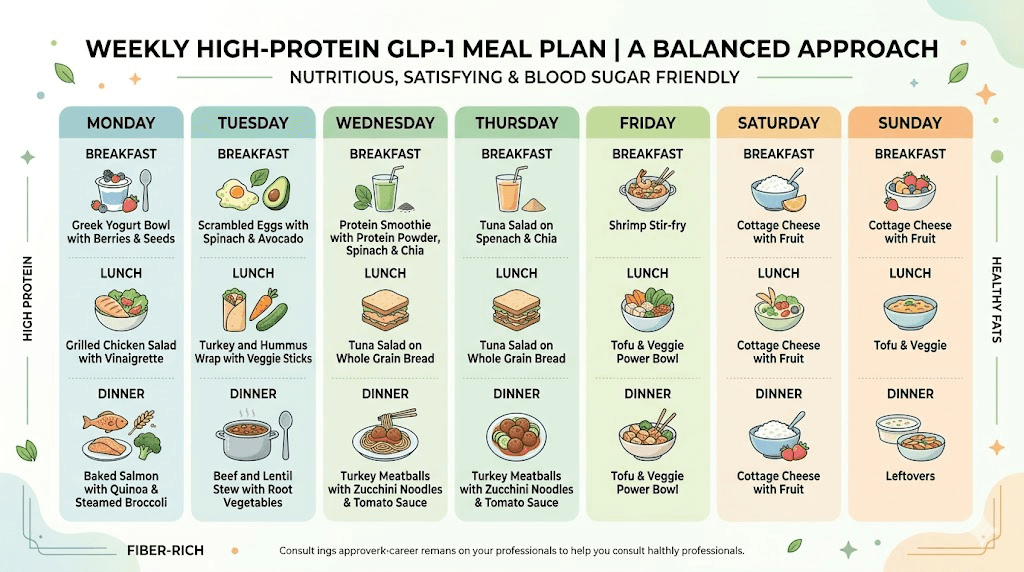
Putting it all together. Here is a complete 7-day meal plan using the recipes from this guide, designed to hit 100 to 120 grams of protein daily while staying within 1,200 to 1,500 calories, the typical range for someone on a GLP-1 weight loss protocol.
Monday
Breakfast: Turkey sausage egg muffins x3 (28g protein, 195 cal)
Snack: Cottage cheese protein bites x3 (22g protein, 180 cal)
Lunch: Lemon herb chicken quinoa bowl (42g protein, 420 cal)
Dinner: Sheet pan salmon with vegetables (38g protein, 410 cal)
Daily total: 130g protein, 1,205 calories
Tuesday
Breakfast: Greek yogurt power parfait (35g protein, 340 cal)
Snack: Hard-boiled egg protein box (24g protein, 280 cal)
Lunch: Tuna and white bean salad (36g protein, 350 cal)
Dinner: Slow cooker chicken stew (40g protein, 380 cal)
Daily total: 135g protein, 1,350 calories
Wednesday
Breakfast: High-protein overnight oats (32g protein, 380 cal)
Snack: Edamame hummus with veggie sticks (18g protein, 210 cal)
Lunch: Asian chicken lettuce wraps (34g protein, 310 cal)
Dinner: Turkey bolognese over spaghetti squash (36g protein, 390 cal)
Daily total: 120g protein, 1,290 calories
Thursday
Breakfast: Banana egg protein pancakes (26g protein, 290 cal)
Snack: Chocolate PB protein smoothie (38g protein, 380 cal)
Lunch: Leftover chicken stew (40g protein, 380 cal)
Dinner: Sheet pan salmon (reheat leftover) (38g protein, 410 cal)
Daily total: 142g protein, 1,460 calories
Friday
Breakfast: Turkey sausage egg muffins x3 (28g protein, 195 cal)
Snack: Cottage cheese protein bites x3 (22g protein, 180 cal)
Lunch: Lemon herb chicken quinoa bowl (leftover) (42g protein, 420 cal)
Dinner: Asian chicken lettuce wraps (leftover filling) (34g protein, 310 cal)
Daily total: 126g protein, 1,105 calories
Saturday
Breakfast: Greek yogurt power parfait (35g protein, 340 cal)
Snack: Green protein smoothie (32g protein, 290 cal)
Lunch: Tuna and white bean salad (36g protein, 350 cal)
Dinner: Ginger chicken congee (28g protein, 320 cal)
Daily total: 131g protein, 1,300 calories
Sunday (prep day)
Breakfast: High-protein overnight oats (32g protein, 380 cal)
Snack: Hard-boiled egg protein box (24g protein, 280 cal)
Lunch: Turkey bolognese (leftover) (36g protein, 390 cal)
Dinner: Slow cooker chicken stew (new batch, make extra for next week) (40g protein, 380 cal)
Daily total: 132g protein, 1,430 calories
Notice the pattern. Every single day exceeds 120 grams of protein while staying under 1,500 calories. That is the sweet spot for sustainable weight loss on GLP-1 medications, the range where fat loss accelerates while muscle preservation remains strong. Use our semaglutide dosage calculator or tirzepatide dosage calculator to dial in your medication dosing alongside this meal plan.
Quick dinner recipes for busy weeknights
Not every evening allows for 35 minutes of cooking. Some nights, you need dinner in 15 minutes or less. These rapid recipes still deliver the protein your body needs without the time commitment that makes skipping dinner tempting.
5-minute tuna melt on whole grain toast
Protein per serving: 32g | Calories: 360 | Prep time: 3 min | Cook time: 2 min | Serves 1
When you have nothing prepared and five minutes before you give up on dinner entirely, this tuna melt saves the day. It is not fancy. It does not need to be. It needs to deliver 32 grams of protein in the time it takes to toast bread, and it does exactly that.
Ingredients:
1 can (5 oz) albacore tuna, drained
1 tbsp Greek yogurt (instead of mayonnaise, adds protein)
1 tsp Dijon mustard
2 slices whole grain bread
1 slice Swiss cheese
Salt, pepper, and a squeeze of lemon
Instructions:
Mix tuna with Greek yogurt, mustard, lemon juice, salt, and pepper. Toast the bread. Pile the tuna mixture onto one slice. Top with Swiss cheese and place under the broiler for 60 to 90 seconds until the cheese melts and bubbles. Top with the second slice of toast or eat open-faced. Done. Thirty-two grams of protein from start to plate in under five minutes.
This works perfectly alongside a balanced GLP-1 eating approach because it uses whole grains, lean protein, and healthy fats without any of the heavy preparation that makes cooking feel impossible on low-energy evenings.
Greek chicken bowl with cucumber tzatziki
Protein per serving: 39g | Calories: 400 | Prep time: 10 min | Cook time: 8 min | Serves 2
Mediterranean flavors work exceptionally well for GLP-1 users. The combination of herbs, lemon, and yogurt creates bright, clean flavors that cut through the flat taste perception that many people experience on GLP-1 medications. And the tzatziki doubles as both sauce and protein source since it is built on Greek yogurt.
Ingredients:
1 lb chicken breast, cut into 1-inch cubes
1 tbsp olive oil
1 tsp dried oregano
1/2 tsp garlic powder
Juice of 1 lemon
Salt and pepper
For the tzatziki:
1/2 cup plain Greek yogurt
1/4 cucumber, grated and squeezed dry
1 small clove garlic, minced
1 tbsp fresh lemon juice
1 tbsp fresh dill, chopped
Salt to taste
For serving:
1 cup cooked quinoa or brown rice
Cherry tomatoes, halved
Cucumber slices
Kalamata olives (optional)
Red onion, thinly sliced
Instructions:
Toss the cubed chicken with olive oil, oregano, garlic powder, lemon juice, salt, and pepper. Heat a skillet over medium-high heat and cook the chicken for 6 to 8 minutes, turning occasionally, until golden brown and cooked through. While the chicken cooks, mix all tzatziki ingredients together in a small bowl.
Assemble bowls with quinoa or rice as a base, topped with the cooked chicken, tomatoes, cucumber, olives, and red onion. Drizzle generously with tzatziki. The yogurt-based sauce adds an extra 5 grams of protein while keeping the bowl moist and flavorful.
This bowl stores well for meal prep, but keep the tzatziki separate until serving to maintain the best texture.
Cooking techniques that work best with GLP-1 medications
How you cook matters almost as much as what you cook. Certain preparation methods produce lighter, easier-to-digest results that align with how GLP-1 medications affect your digestive system. Others create heavy, greasy results that fight against the medication rather than working with it.
Best cooking methods
Baking and roasting. Dry heat cooking that allows fat to drip away rather than being absorbed. Sheet pan meals are ideal because they concentrate flavors through caramelization without adding oil. Most of the dinner recipes in this guide use this method for good reason.
Grilling. High-heat grilling creates flavor through the Maillard reaction (browning) without any added fat. Chicken breast, salmon fillets, and vegetables all benefit from grilling. The char adds complexity that helps food taste appealing even when your appetite is low from appetite suppression.
Slow cooking. The gentlest method. Proteins break down into easily digestible strands. Connective tissue melts. The liquid base helps with hydration. Slow-cooked meals are the most tolerable option during medication adjustment periods.
Steaming. Preserves nutrients better than any other cooking method. Steamed vegetables retain their color, texture, and vitamin content. Steamed fish is exceptionally easy on the stomach.
Methods to avoid or minimize
Deep frying. The worst option for GLP-1 users. The high fat content slows digestion even further in a stomach that is already processing food slowly. Fried foods are the number one trigger for bloating and nausea on GLP-1 medications.
Heavy sauteing in oil or butter. A light spray of cooking oil is fine. But recipes that call for tablespoons of butter or oil to cook in can create excessively rich results that are hard to digest. When a recipe says "saute in 2 tablespoons of butter," use cooking spray instead and add 1 teaspoon of olive oil at the end for flavor if needed.
Essential nutrients beyond protein for GLP-1 users
Protein gets the most attention, and rightfully so. But a study published in ScienceDirect found that over 20% of adults on GLP-1 medications developed nutritional deficiencies within 12 months of starting treatment. When you eat less food overall, every bite needs to deliver maximum micronutrient value.
The recipes in this guide were designed to address these specific deficiency risks.
Fiber
Target: 25 to 35 grams daily. Fiber keeps digestion moving when GLP-1 medications slow everything down. The quinoa, beans, oats, chia seeds, and vegetables in these recipes provide fiber naturally. The best fiber supplements for GLP-1 can help bridge any gaps, but whole food sources are always preferable.
Iron and B vitamins
Reduced food intake can lead to iron and B vitamin deficiencies, which cause fatigue on top of the medication-related tiredness many users already experience. The turkey, chicken, eggs, and leafy greens in these recipes are rich sources of both. Many GLP-1 compounds now include B12 supplementation for exactly this reason.
Omega-3 fatty acids
The salmon recipes in this guide deliver EPA and DHA omega-3s that support heart health and reduce inflammation. These become particularly important during significant weight loss, when inflammatory markers can fluctuate. If you are not eating fish at least twice per week, consider an omega-3 supplement alongside your GLP-1.
Calcium and vitamin D
Rapid weight loss can affect bone density. The Greek yogurt, cheese, and leafy greens in these recipes provide calcium, while getting 15 minutes of sunlight daily or taking a vitamin D supplement covers the other half of the bone health equation. This is especially important for GLP-1 users concerned about bone loss during treatment.
Common recipe mistakes GLP-1 users make
Even with the best recipes, certain mistakes can undermine your nutrition on GLP-1 medications. Avoid these.
Mistake one: prioritizing volume over density
Large salads with minimal protein feel virtuous but deliver terrible results. A massive bowl of lettuce with a few croutons and light dressing might have 200 calories and 5 grams of protein. That is a waste of the limited stomach capacity you have on appetite-suppressing medication. Every meal should deliver at least 25 grams of protein. Period.
Mistake two: relying on protein bars alone
Protein bars are convenient. They are also often loaded with sugar alcohols that can worsen GLP-1 digestive side effects significantly. Use them occasionally, but do not make them your primary protein source. Real food, prepared with the recipes in this guide, delivers better nutrition, better digestion, and better results.
Mistake three: skipping meals entirely
Not feeling hungry does not mean you should not eat. Your muscles do not care about your appetite. They need amino acids to survive the rapid weight loss you are experiencing. On days when eating feels impossible, reach for the smoothie recipes in this guide. Liquid protein is always better than zero protein.
Mistake four: eating too fast
GLP-1 medications slow gastric emptying. Eating quickly overwhelms a system that is processing food at reduced speed. Every recipe in this guide should be eaten over 15 to 20 minutes minimum. Put the fork down between bites. Chew thoroughly. This single habit can reduce nausea and digestive discomfort by 50% or more.
Mistake five: ignoring hydration
When you eat less food, you also take in less water from food sources. Combined with the dry mouth that many GLP-1 users experience, dehydration becomes a real risk. Aim for at least 64 ounces of water daily, more if you are active. The stew and congee recipes in this guide contribute to hydration, which is one reason soup-based meals are so valuable on these medications.
Adapting recipes for different GLP-1 medications
While the core nutrition principles remain the same across all GLP-1 medications, there are subtle differences in how each one affects digestion and appetite that may influence which recipes work best for you.
Semaglutide users
Semaglutide tends to produce strong appetite suppression with moderate gastrointestinal effects. The semaglutide diet approach should focus on calorie density since appetite may be very low. The smoothie and parfait recipes work particularly well because they pack maximum protein into formats that go down easily. If you experience constipation on semaglutide, emphasize the high-fiber recipes like the quinoa bowls and white bean dishes.
Tirzepatide users
Tirzepatide acts on both GIP and GLP-1 receptors, which can produce stronger effects on gastric motility. Foods to avoid on tirzepatide include anything excessively fatty or fried. The baked and grilled recipes in this guide are ideal. The ginger congee recipe is especially valuable during early dose escalation when tirzepatide side effects tend to be strongest.
Retatrutide users
Retatrutide is a triple agonist acting on GLP-1, GIP, and glucagon receptors simultaneously. The glucagon component means your body may be breaking down more protein for energy, making adequate protein intake even more critical. Aim for the higher end of the protein range (130+ grams daily) and prioritize the most protein-dense recipes like the chicken quinoa bowls, salmon sheets, and the 38-gram protein smoothie. Use the retatrutide dosage calculator to ensure your dosing is optimized alongside your nutrition.
Grocery shopping list for two weeks of GLP-1 recipes
Print this list. Take it to the store. Having the right ingredients on hand eliminates the excuses that lead to missed meals and stalled weight loss.
Proteins (fresh, buy weekly):
4 lbs boneless skinless chicken breast
2 lbs lean ground turkey (93% lean)
2 lbs salmon fillets
1 lb turkey sausage links
3 dozen large eggs
4 cans albacore tuna
Dairy and protein supplements:
2 large containers plain nonfat Greek yogurt
1 container low-fat cottage cheese
1 block reduced-fat cheddar cheese
1 container protein powder (whey or plant-based, vanilla and chocolate)
Grains and legumes:
1 bag quinoa
1 canister rolled oats
1 bag jasmine rice
4 cans white cannellini beans
1 bag frozen shelled edamame
Vegetables (buy fresh weekly):
Baby spinach (2 large containers)
Broccoli
Asparagus
Sweet potatoes
Bell peppers (red and green)
Cucumbers
Cherry tomatoes
Carrots
Celery
Zucchini
Mushrooms
Onions (white and red)
Garlic
Fresh ginger
Butter lettuce (1 head)
1 spaghetti squash
Fruits:
Lemons (6)
Limes (2)
Bananas
Mixed berries (fresh or frozen)
Frozen mango chunks
Avocados (4)
Pantry staples:
Olive oil
Cooking spray
Low-sodium soy sauce
Rice vinegar
Hoisin sauce
Sesame oil
Marinara sauce (low-sugar)
Low-sodium chicken broth (8 cups worth)
1 can diced tomatoes
Tahini
Natural peanut butter
Dijon mustard
Chia seeds
Ground flaxseed
Slivered almonds
Mini dark chocolate chips
Honey
Cocoa powder
Unsweetened almond milk
Spices and herbs:
Garlic powder, paprika, cumin, Italian seasoning, dried oregano, dried thyme, dried rosemary, cinnamon, red pepper flakes, white pepper
Fresh herbs: parsley, basil, dill, green onions
This list covers approximately two weeks of the meal plan above with minimal waste. Adjust quantities based on whether you are cooking for one or two people.
Dessert recipes that satisfy cravings without derailing progress
Sweet cravings do not disappear on GLP-1 medications. They just become more complicated to manage. Standard desserts loaded with sugar and refined flour can spike blood sugar, worsen digestive symptoms, and waste precious calories on nutritionally empty foods. These dessert recipes satisfy the craving while adding protein to your daily total.
Chocolate avocado mousse
Protein per serving: 12g | Calories: 220 | Prep time: 5 min | Chill time: 30 min | Serves 2
Rich. Creamy. Deeply chocolatey. And completely devoid of the heavy cream and refined sugar that make traditional mousse a digestive nightmare on GLP-1 medications. The avocado creates an impossibly smooth texture that most people cannot distinguish from real mousse.
Ingredients:
1 ripe avocado
2 tbsp cocoa powder
1/2 scoop chocolate protein powder
2 tbsp honey or maple syrup
3 tbsp unsweetened almond milk
1/2 tsp vanilla extract
Pinch of sea salt
Instructions:
Blend all ingredients in a food processor until completely smooth, scraping down the sides twice. The texture should be thick, glossy, and uniform with no visible avocado chunks. Transfer to two small bowls or ramekins. Refrigerate for at least 30 minutes to firm up. Serve cold with a few fresh raspberries on top if desired.
This mousse delivers healthy monounsaturated fats, fiber from the avocado, and 12 grams of protein from the protein powder. It works as a post-dinner treat that adds nutritional value rather than subtracting it, which is the only kind of dessert that makes sense when you are working toward meaningful weight loss results.
Tracking your protein intake on GLP-1 medications
You cannot manage what you do not measure. During the first 8 to 12 weeks on a GLP-1 medication, track your protein intake daily. Not your calories, not your carbs, just protein. That single metric matters more than everything else combined for preserving lean mass during rapid weight loss.
Here is a simple tracking method that does not require an app or complex calculations.
The palm method: One palm-sized portion of protein (chicken, fish, turkey) contains approximately 25 to 30 grams of protein. Aim for at least 4 palm-sized protein portions across your meals and snacks each day. If you are hitting 4 palms, you are likely in the 100 to 120 gram range.
The recipe method: Use the protein counts listed with every recipe in this guide. Add them up as you eat throughout the day. If you are below 100 grams by dinner, choose one of the higher-protein dinner recipes (the chicken stew at 40g or the chicken quinoa bowl at 42g) to close the gap.
The SeekPeptides peptide calculator can help you determine other aspects of your protocol, while the nutrition tracking focuses specifically on protecting your lean mass throughout the weight loss process.
Frequently asked questions
How many calories should I eat per day on GLP-1 medications?
Most GLP-1 users naturally consume 1,200 to 1,500 calories per day due to appetite suppression. The exact number matters less than the protein content. Prioritize hitting 100 to 120 grams of protein daily, then fill remaining calories with vegetables, complex carbohydrates, and healthy fats. If you are consistently eating under 1,000 calories, talk to your provider about adjusting your dosage.
Can I eat spicy food on semaglutide or tirzepatide?
Moderate spice is generally fine once you are adjusted to your dose. During the first 2 to 3 weeks at each new dose level, stick with milder recipes like the congee or parfait. After your body adjusts, gradually reintroduce spicier options. Ginger and mild herbs are always well tolerated and may actually help with nausea.
What should I eat if I feel nauseous on my GLP-1 medication?
Start with the ginger chicken congee or banana egg pancakes from this guide. Both are extremely gentle on the stomach while still providing meaningful protein. Protein smoothies are another excellent option because liquid meals bypass much of the chewing and swallowing resistance that comes with nausea. Avoid fried foods, heavy cream sauces, and anything with strong odors.
How much protein do I need per meal on GLP-1 medications?
Research suggests 25 to 35 grams of protein per meal creates the optimal stimulus for muscle preservation during weight loss. Every main meal recipe in this guide delivers at least 28 grams, with most providing 34 to 42 grams. If you can only manage 2 meals per day due to appetite suppression, aim for 40+ grams at each meal and supplement with high-protein snacks between meals.
Do I need to count macros on GLP-1 medications?
Full macro tracking is unnecessary for most people. Focus exclusively on protein grams for the first 3 months. If you are hitting 100 to 120 grams of protein daily and eating the types of whole foods in these recipes, your carbohydrate and fat intake will naturally fall into healthy ranges. Use a dosage calculator for your medication math and keep the nutrition simple.
Can I eat the same meals on a GLP-1 medication as my family?
Absolutely. Every recipe in this guide works for the whole family. Non-medicated family members can simply eat larger portions, add sides like bread or pasta, or double the grain component. The protein and vegetable base of each recipe is healthy for everyone, not just GLP-1 users.
What if I cannot eat enough protein through food alone?
Supplement with protein powder. The smoothie recipes in this guide show how to use protein powder effectively. A single scoop of quality whey or plant protein adds 20 to 25 grams to any meal. Mixing it into Greek yogurt, overnight oats, or smoothies makes hitting your targets much easier on low-energy days.
Should I meal prep if I am on a GLP-1 medication?
Meal prep is not just recommended, it is essential. When your appetite window opens, having prepared food available means the difference between eating adequate protein and skipping meals entirely. The Sunday prep system outlined in this guide takes 90 minutes and covers an entire week. People who meal prep on GLP-1 medications consistently hit better protein targets than those who cook on demand.
External resources
American College of Lifestyle Medicine Joint Advisory on Nutritional Priorities for GLP-1 Therapy
UCHealth: Nutrition is Vital When Taking GLP-1 Weight Loss Drugs
Ohio State University: Foods to Limit and Prioritize on GLP-1
UCLA Health: Patients Taking Weight Loss Medications Require Proper Nutrition
For researchers serious about optimizing their GLP-1 protocols alongside proper nutrition, SeekPeptides offers the most comprehensive resource available, with evidence-based guides, dosing calculators, proven protocols, and a community of thousands who have navigated these exact questions about food choices, supplement stacking, and long-term weight maintenance.
In case I do not see you, good afternoon, good evening, and good night. May your protein targets stay consistent, your recipes stay delicious, and your results stay exactly where you want them.