Feb 13, 2026
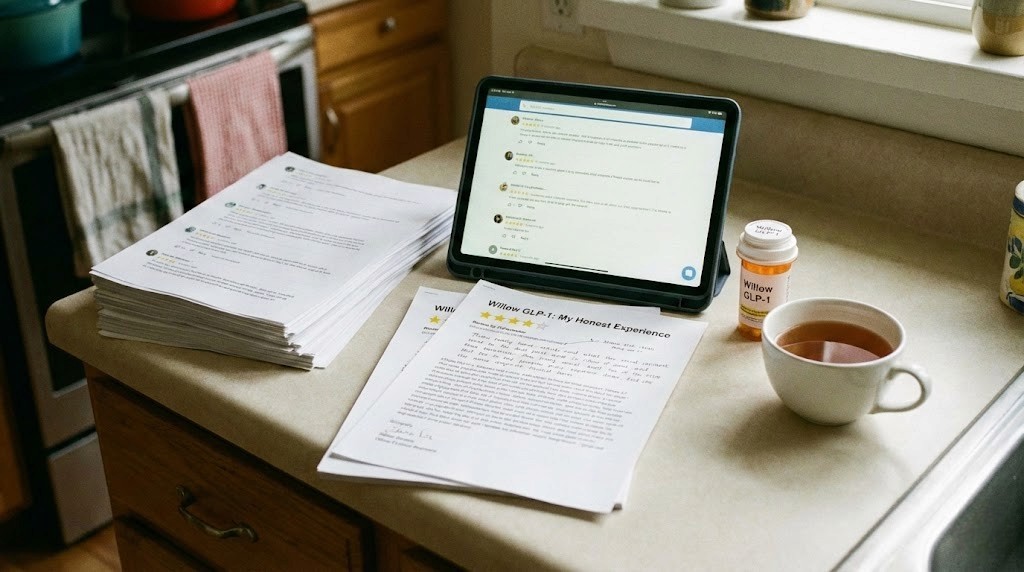
Three hundred dollars a month. That is what Willow charges for compounded semaglutide, shipped to your door with a prescription, free shipping, and unlimited doctor messaging included. Sounds reasonable. Maybe even cheap compared to the $1,069 retail price of brand-name Wegovy. But here is where things get complicated. Some Willow users report losing 33 pounds in four months. Others say they spent nearly $900 and gained five pounds. One reviewer describes the experience as life-changing. Another calls it a scam. And on Trustpilot, 49% of reviewers gave Willow just one star.
So which is it?
The truth, as usual, lives somewhere in between. Willow occupies a specific niche in the GLP-1 telehealth landscape, offering some of the lowest prices you will find for compounded semaglutide and tirzepatide. But low prices come with tradeoffs that most review sites gloss over entirely. The medications are not FDA-approved. The customer service has generated serious complaints. The state availability is limited to 34 states. And the regulatory environment for compounded GLP-1 medications is shifting in ways that could affect every Willow subscriber.
This guide digs into every aspect of Willow that matters. We cover the real pricing structure across all doses, what actual users report about their results, how the onboarding process works, what the medications contain, how Willow compares to competitors on every measurable factor, and the specific complaints you should understand before committing your money. SeekPeptides has analyzed hundreds of user reviews, competitor pricing data, and regulatory updates to build the most comprehensive Willow review available anywhere.
What Willow actually is and how it works
Willow is a telehealth platform that prescribes compounded GLP-1 weight loss medications online. The company operates through the website startwillow.com and positions itself as an affordable alternative to brand-name semaglutide and tirzepatide medications like Wegovy, Ozempic, Mounjaro, and Zepbound.
The key word there is compounded.
Willow does not prescribe FDA-approved brand-name medications. Every medication they offer is prepared by licensed compounding pharmacies. These formulations have not undergone FDA clinical trials to evaluate their safety, efficacy, or therapeutic equivalence to any FDA-approved medications. This is not a technicality or a fine-print detail. It is the foundational reality of the entire Willow program, and understanding what it means determines whether Willow is right for you.
The enrollment process step by step
Getting started with Willow follows a fully digital workflow. No office visits. No phone calls. Everything happens through their website or app.
Step one: initial quiz. You answer six quick questions about your weight loss goals, current weight, target weight, and basic health status. This takes about two minutes and determines whether you are a potential candidate for GLP-1 medication.
Step two: account creation. You provide your personal information, including name, date of birth, and contact details. Government-issued photo ID is required by law for prescription medications. This step also screens for state eligibility, since Willow currently operates in only 34 states.
Step three: medical history. A more detailed health questionnaire covering your medical conditions, current medications, allergies, and prior weight loss attempts. This information goes to a licensed physician for review. Willow excludes people who are pregnant or breastfeeding, and those with certain medical conditions. Notably, Willow does not accept diabetic patients, though pre-diabetes and hypertension cases are eligible.
Step four: treatment selection. You choose between three medication options. The first is compounded semaglutide in injectable form, administered once weekly. The second is compounded semaglutide in sublingual tablet form, taken daily by dissolving under the tongue. The third, and most expensive, is compounded tirzepatide in injectable form.
Step five: physician review. A licensed U.S. physician reviews your health information and determines whether you qualify. Willow claims same-day approval is possible, though the actual timeline varies. Some users report receiving prescriptions within hours. Others describe waiting five business days.
Step six: pharmacy fulfillment. Once approved, your prescription goes to a partner compounding pharmacy. Processing takes 2-4 business days, followed by 2-3 days of shipping via FedEx or UPS. Total delivery time from approval to doorstep ranges from roughly 4-7 business days, though high-volume periods can extend this.
Step seven: ongoing support. After receiving your medication, you have access to 24/7 chat support through the Willow platform. The company also offers unlimited physician messaging and follow-up consultations included in your monthly subscription. Your program automatically renews each month to prevent gaps in treatment.
The entire process is designed for speed and convenience. But several aspects deserve scrutiny, and we will address them throughout this review.
Willow pricing breakdown: what every dose actually costs
Pricing is arguably the most important factor for anyone considering Willow, and it is also where the most confusion exists. Willow has adjusted its pricing structure over time, and the numbers differ depending on which medication and dose level you need.
Compounded semaglutide pricing
Willow charges a flat $299 per month for compounded semaglutide at every dosage level. Whether you are on the starting dose of 0.25mg weekly or the maximum dose of 2.4mg weekly, the price stays the same. This is actually unusual in the compounded GLP-1 space, where most providers increase pricing as doses escalate because higher doses require more active ingredient per vial.
The $299 monthly fee includes your medication, prescription, physician access, ongoing support, and free two-day shipping. No hidden consultation fees. No separate supply charges. What you see is what you pay.
For semaglutide specifically, Willow offers both injectable and sublingual tablet formats at the same $299 price point. The injectable version is administered once weekly via subcutaneous injection, following the same general semaglutide protocol used with brand-name medications. The sublingual tablet dissolves under your tongue daily, which eliminates the need for needles entirely.
Compounded tirzepatide pricing
Tirzepatide through Willow costs more than semaglutide, and unlike semaglutide, the price increases at higher doses.
Tirzepatide dose | Monthly price |
|---|---|
2.5mg weekly | $399 |
5mg weekly | $399 |
7.5mg weekly | $399 |
10mg weekly | $499 |
12.5mg weekly | $499 |
15mg weekly | $524 |
The jump from $399 to $499 at the 10mg dose is significant because many users need higher doses to achieve their weight loss goals. Clinical trials showed that the greatest weight loss with tirzepatide occurred at the 10mg and 15mg doses, with participants losing 21.4% and 22.5% of their body weight respectively. If you end up needing those higher doses, your monthly commitment increases by $100-$125 compared to the starting price.
Over a six-month treatment period, the total cost projection for tirzepatide through Willow averages approximately $2,719, or roughly $453 per month when accounting for dose escalation. That is still dramatically cheaper than brand-name tirzepatide at retail prices of $1,069 per month. But it is not the cheapest compounded option available.
Optional add-ons
Willow offers ondansetron (an anti-nausea medication) for an additional $30 per month. Nausea is the most common side effect of both semaglutide and tirzepatide, particularly during dose escalation phases. Having ondansetron available can make the difference between tolerating your medication and abandoning treatment due to side effects.
How Willow pricing compares to competitors
Provider | Semaglutide price | Tirzepatide price | FDA-approved options | Insurance accepted |
|---|---|---|---|---|
Willow | $299/mo | $399-524/mo | No | No |
Hers | $199/mo (6-month plan) | $299-399/mo | No | No |
OrderlyMeds | $149-199/mo | $166-350/mo | No | No |
LillyDirect (Zepbound) | N/A | $299-449/mo | Yes | No (self-pay) |
PlushCare | $499/mo | $499/mo | Yes | Yes |
The comparison reveals something important. Willow is not actually the cheapest option for compounded GLP-1 medications. Providers like Hers and OrderlyMeds undercut Willow on semaglutide pricing by $100-150 per month. For tirzepatide, the gap is even larger at starting doses.
However, Willow is cheaper than brand-name pathways like LillyDirect at higher tirzepatide doses, and significantly cheaper than premium telehealth services like PlushCare that offer FDA-approved medications with insurance acceptance. The question is what you get for your money, and that is where the reviews tell the real story.
What real Willow users say: analyzing hundreds of reviews
Understanding Willow requires looking beyond marketing claims and into actual user experiences. We analyzed reviews from Trustpilot, ConsumerAffairs, and independent review platforms to identify consistent patterns in what users report.
The positive experiences
Users who have positive experiences with Willow tend to share several common characteristics. They are generally self-directed, comfortable with compounded medications, and do not require extensive hand-holding or lifestyle coaching.
Weight loss results. Multiple users report significant weight loss. One reviewer lost 33 pounds in four months. Another described losing 29 pounds. Several users report the experience as "life-changing" and describe finally feeling free from constant food cravings. One user specifically noted losing 23 pounds and said "the constant battle with food is finally over." These results align with what clinical data shows for semaglutide appetite suppression, suggesting the compounded medications are working for at least some percentage of users.
Ease of enrollment. The digital-first approach appeals to users who want convenience. No driving to clinics. No waiting rooms. No scheduling conflicts. Users consistently praise the speed of onboarding, with some receiving prescriptions on the same day they signed up. The process from quiz to medication delivery can take as little as one week in ideal circumstances.
Pricing consistency. Users appreciate knowing exactly what they will pay each month. The all-inclusive pricing eliminates the surprise fees that plague some telehealth competitors, where you might see a low medication price only to discover separate charges for consultations, shipping, supplies, and follow-ups.
Sublingual tablet option. For users who dread needles, the sublingual semaglutide tablet is a genuine differentiator. You dissolve it under your tongue daily rather than injecting weekly. While the oral versus injectable debate continues, having the option matters for medication adherence. If needle phobia would prevent you from starting or continuing treatment, Willow provides an alternative most competitors do not.
The negative experiences
The complaints about Willow follow patterns that prospective users should understand thoroughly before signing up.
Medication effectiveness concerns. This is the most troubling category of negative reviews. One user reported using semaglutide from Willow for five months at increasing doses with increasing prices, ultimately gaining five pounds and doubting whether the medication contained the actual drug. Another spent nearly $900 over four months without losing a single pound and described feeling scammed. A third user said the medication was "nowhere as effective as the GLP-1" they received from a doctor or wellness center.
These effectiveness complaints are significant because they raise questions about compounded medication quality. With brand-name semaglutide, the dosage and potency are guaranteed by FDA oversight and Novo Nordisk manufacturing standards. With compounded versions, potency can vary between batches and between pharmacies. Willow does not publicly identify its partner compounding pharmacies, and does not specify whether they operate as 503A or 503B facilities. This makes independent verification of compounding standards difficult.
Customer service failures. The second most common complaint category. Users describe waiting weeks for responses to support messages. One reviewer ordered medication and waited 14 days without receiving the product or hearing from the help team. Another described the experience as the "worst customer service" they had ever encountered, noting that email was the only contact method and responses sometimes took several days.
For a medication that requires dose adjustments, side effect management, and ongoing monitoring, slow customer service is not merely inconvenient. It is potentially dangerous. If you are experiencing severe side effects from your GLP-1 medication and cannot reach your provider for days, that is a genuine safety concern.
Shipping delays. Multiple users report medication shipments taking far longer than the advertised 2-3 day delivery window. Some describe waiting up to a month for their medication to arrive. Gaps in GLP-1 treatment can cause withdrawal effects including appetite rebound, weight regain, and metabolic disruption. Consistent medication supply is not a luxury with these medications. It is a medical necessity.
Advertising concerns. Several reviewers accuse Willow of using misleading advertising. Specific complaints include the use of stock images presented as real customer results, and fake profiles claiming dramatic weight loss. These allegations, if true, would represent a significant trust issue for a healthcare provider.
Privacy concerns. At least one reviewer reported that their personal information was leaked and subsequently used by scammers. For a platform that collects sensitive health data, government IDs, and payment information, data security is non-negotiable.
The Trustpilot picture
As of the most recent data, Willow has accumulated approximately 303 reviews on Trustpilot. The distribution is striking. Roughly 49% of reviewers gave Willow just one star, the lowest possible rating. This level of negative sentiment is unusual for telehealth platforms and suggests systemic issues rather than isolated incidents.
However, the positive reviews are genuine and enthusiastic. Users who have good experiences tend to be very satisfied. This creates a bimodal distribution, with lots of very happy users and lots of very unhappy users, but relatively few in the middle. That pattern typically indicates that the quality of experience depends heavily on individual factors like which compounding pharmacy fills your order, whether your medication arrives promptly, and whether you happen to need customer support during a responsive period.
Willow medications: what you are actually getting
Understanding exactly what Willow prescribes, and what it does not prescribe, is critical for making an informed decision.
Compounded semaglutide (injectable)
This is Willow primary medication. Semaglutide is a GLP-1 receptor agonist that works by mimicking the hormone GLP-1 in your body. When it binds to GLP-1 receptors in your brain, it triggers appetite suppression, increased feelings of fullness after meals, and reduced food cravings. It also slows gastric emptying, meaning food stays in your stomach longer, which contributes to the feeling of fullness.
The injectable version follows the same weekly dosing schedule as brand-name Wegovy and Ozempic. You start at a low dose (typically 0.25mg weekly) and gradually increase over several months until you reach a therapeutic dose. The standard semaglutide timeline involves dose escalation roughly every four weeks, with most patients reaching maintenance doses of 1.0-2.4mg weekly.
Willow compounded semaglutide arrives in multi-dose vials rather than the pre-filled autoinjector pens you get with brand-name products. This means you need to draw your dose manually using an insulin syringe. Accurate dosing requires understanding concentration calculations and proper semaglutide reconstitution techniques. Our semaglutide dosage calculator can help verify exact dosing volumes based on your vial concentration.
Compounded semaglutide (sublingual tablet)
This is one of Willow more distinctive offerings. Instead of injecting semaglutide weekly, you place a tablet under your tongue daily and let it dissolve completely without swallowing. The sublingual route bypasses the digestive system, allowing the medication to absorb directly through the mucous membranes under your tongue into your bloodstream.
The appeal is obvious. No needles. No syringes. No injection anxiety. For people who have avoided GLP-1 medications entirely because of needle phobia, sublingual tablets remove that barrier.
However, there are important caveats. Sublingual semaglutide is a compounded formulation, not the same as the FDA-approved oral semaglutide tablet (Rybelsus) that Novo Nordisk manufactures. Rybelsus uses a specific absorption enhancer called SNAC that was extensively studied in clinical trials. Willow compounded sublingual tablets use a different formulation, and the bioavailability (how much drug actually enters your bloodstream) may differ from both the injectable and the FDA-approved oral versions.
The oral semaglutide landscape is evolving, with multiple formulation approaches competing for attention. If you choose Willow sublingual option, understand that you are using a formulation without clinical trial data specific to that delivery method.
Compounded tirzepatide (injectable)
Tirzepatide is the newer, more powerful option. It works as a dual GIP/GLP-1 receptor agonist, activating two hormone pathways simultaneously rather than just one. Clinical trials demonstrated that tirzepatide produces greater weight loss than semaglutide at comparable dose levels. The SURMOUNT-1 trial showed participants losing up to 22.5% of their body weight on the highest dose, compared to approximately 15-17% with semaglutide in the STEP trials.
Through Willow, compounded tirzepatide follows the standard tirzepatide dosing schedule. You start at 2.5mg weekly and escalate through 5mg, 7.5mg, 10mg, 12.5mg, and potentially 15mg over several months. Each dose level requires a minimum of four weeks before escalation to allow your body to adjust and minimize gastrointestinal side effects.
Understanding the unit conversion for tirzepatide is essential when working with compounded multi-dose vials. The concentration of your vial determines exactly how many units on your insulin syringe correspond to your prescribed dose. Calculation errors here directly affect your results and side effect profile. The SeekPeptides peptide calculator provides accurate dose calculations based on your specific vial concentration.
What Willow does not offer
Understanding what Willow excludes is as important as knowing what they include.
No brand-name medications. You cannot get Wegovy, Ozempic, Mounjaro, or Zepbound through Willow. If you specifically want FDA-approved, clinically tested medications manufactured by Novo Nordisk or Eli Lilly, Willow is not the right provider.
No insurance billing. Willow does not accept insurance for any of its services. You pay out of pocket every month. They do accept FSA and HSA payments, which provides some tax advantage, but you cannot use commercial insurance, Medicare, or Medicaid coverage through Willow.
No lifestyle coaching. Beyond basic physician access, Willow does not provide comprehensive nutrition guidance, exercise programming, behavioral therapy, or the kind of holistic support that premium weight loss programs include. The medication arrives. The rest is up to you. For users who need accountability and guidance beyond the medication itself, this gap is significant.
How semaglutide and tirzepatide work: the science behind Willow medications
Whether you get your GLP-1 medication from Willow or any other provider, understanding the mechanism helps you set realistic expectations and optimize your results.
The GLP-1 pathway
GLP-1 (glucagon-like peptide-1) is a hormone your gut naturally produces after eating. It signals your brain that food has arrived, triggers insulin release from the pancreas, suppresses glucagon (which raises blood sugar), and slows the rate at which food leaves your stomach. When semaglutide binds to GLP-1 receptors, it amplifies all of these effects far beyond what your natural GLP-1 production achieves.
The appetite suppression effect is the most noticeable for weight loss. Users consistently describe a dramatic reduction in food noise, that constant background hum of thinking about food, planning meals, and fighting cravings. For many people, this reduction in food obsession is the most valuable aspect of GLP-1 therapy, even more than the weight loss itself.
The timeline for appetite suppression varies by individual but typically begins within the first week of treatment. Most users notice a significant reduction in appetite within two to four weeks, with the effect strengthening as doses increase.
The dual GIP/GLP-1 mechanism (tirzepatide)
Tirzepatide adds a second mechanism that semaglutide does not have. By also activating GIP (glucose-dependent insulinotropic polypeptide) receptors, tirzepatide enhances insulin sensitivity through a pathway that is still being fully characterized by researchers. The GIP pathway appears to provide additional metabolic benefits without adding the gastrointestinal side effects that come with higher GLP-1 doses.
This dual mechanism is why tirzepatide outperforms single-agonist GLP-1 medications in head-to-head comparisons. The semaglutide versus tirzepatide dosage comparison shows that tirzepatide achieves greater weight loss at its maximum dose than semaglutide does at its maximum dose, while potentially being better tolerated because the GIP pathway carries less gastrointestinal burden.
Expected results timeline
Regardless of which medication you choose through Willow, the general timeline follows a predictable pattern.
Weeks 1-4 (starting dose). Minimal weight loss, typically 1-3 pounds. This phase is about acclimation. Your body adjusts to the medication, and you may experience initial side effects like nausea that typically improve within the first two weeks. Appetite suppression begins but is usually subtle at starting doses.
Weeks 5-12 (dose escalation). Weight loss accelerates as doses increase. Most users see their most dramatic appetite suppression during this phase. Monthly weight loss of 4-8 pounds is typical. This is also when you are most likely to experience side effects like headaches, fatigue, and gastrointestinal discomfort as each new dose level requires readjustment.
Months 3-6 (therapeutic doses). Consistent weight loss of 3-6 pounds per month. By this point, side effects have typically stabilized. Most users have found their optimal dose, and the medication is working at full capacity. Total weight loss of 15-30 pounds by month six is common with good adherence.
Months 6-12+ (maintenance and continued loss). Weight loss continues but gradually slows. The rate depends on how much weight you have to lose, your diet, exercise habits, and medication adherence. Clinical trials showed continued weight loss through 72 weeks, with the bulk of results occurring in the first 40 weeks.
Side effects you should expect (and when to worry)
Side effects with GLP-1 medications are not a sign that something is wrong. They are a sign that the medication is working. The same mechanism that suppresses appetite and regulates blood sugar also affects your digestive system. Understanding what is normal versus what requires medical attention helps you navigate treatment confidently.
Common side effects
Nausea. The most frequently reported side effect across all GLP-1 medications. Affects roughly 20-30% of users, with the highest incidence during dose escalation phases. Eating smaller meals, avoiding fatty and greasy foods, and staying well-hydrated significantly reduces nausea severity. Willow offers ondansetron for $30 per month as an add-on specifically for this purpose.
Constipation and diarrhea. GLP-1 medications slow gastric emptying, which disrupts normal bowel patterns. Constipation is more common at higher doses. Adequate fiber intake (25-30 grams daily) and hydration (80-100 ounces of water daily) are essential countermeasures, not optional suggestions. The foods to avoid on tirzepatide guide covers dietary strategies that minimize gastrointestinal disruption.
Decreased appetite. This is technically the desired effect, but its intensity can surprise first-time users. Some people describe a complete absence of interest in food, which sounds great until it leads to inadequate protein intake, muscle loss, and nutritional deficiencies. Deliberate protein targeting of 0.7-1.0 grams per pound of goal body weight helps preserve lean mass during rapid weight loss.
Fatigue. Common during caloric deficit, especially in the first few weeks. Your body is adapting to dramatically reduced food intake. Adequate sleep, proper nutrition, and B12 supplementation may help. If fatigue persists beyond the initial adjustment period, discuss with your provider whether semaglutide fatigue management strategies are appropriate.
Injection site reactions. Redness, swelling, or itching where you inject. More common with compounded formulations than with brand-name pens, possibly due to differences in solution pH, concentration, or inactive ingredients. Rotating injection sites with each weekly dose helps minimize these reactions. Proper injection site selection and technique also reduce discomfort.
Serious side effects (rare but important)
Pancreatitis. Inflammation of the pancreas is a known risk with all incretin-based medications. Symptoms include severe abdominal pain that radiates to the back, accompanied by nausea and vomiting that does not improve. If you experience these symptoms, stop the medication and seek emergency medical care immediately.
Gallbladder disease. Rapid weight loss increases gallstone risk regardless of the method. GLP-1 medications can accelerate this timeline. Upper right abdominal pain, especially after eating fatty meals, warrants medical evaluation.
Acute kidney injury. Usually secondary to severe dehydration from persistent vomiting or diarrhea. Staying hydrated is a medical necessity with GLP-1 medications, not just a wellness recommendation.
With Willow specifically, the challenge is that customer service delays can make it difficult to reach a provider quickly when you are experiencing concerning side effects. This is not a theoretical problem. When users report waiting days for responses to support messages, that delay could matter if you are dealing with a serious adverse reaction.
Willow state availability: where you can and cannot use it
Willow is not available nationwide. The platform currently operates in 34 states. Based on publicly available information, those states are: Arizona, California, Colorado, Connecticut, Florida, Georgia, Hawaii, Idaho, Illinois, Indiana, Iowa, Kentucky, Maine, Maryland, Massachusetts, Michigan, Minnesota, Missouri, Montana, Nebraska, Nevada, New Hampshire, New Jersey, New York, North Carolina, Ohio, Oklahoma, Oregon, Pennsylvania, South Carolina, Tennessee, Texas, Virginia, Washington, and Wisconsin.
If your state is not on this list, Willow cannot legally prescribe medication to you. State licensing requirements for telehealth vary significantly, and expanding to additional states requires providers to obtain medical licenses in each new jurisdiction. Some competing platforms operate in more states, which may be a deciding factor if you live in one of the 16 states Willow does not cover.
The regulatory reality: what you need to know about compounded GLP-1 medications
This section is not optional reading. The regulatory environment for compounded GLP-1 medications has shifted dramatically, and it directly affects Willow and every other compounded GLP-1 provider.
The FDA compounding framework
Compounding pharmacies operate under either Section 503A or Section 503B of the Federal Food, Drug, and Cosmetic Act. Section 503A pharmacies compound medications based on individual prescriptions. Section 503B outsourcing facilities produce larger batches under more rigorous FDA oversight. Both can produce compounded GLP-1 medications, but the quality control standards differ significantly.
Willow does not publicly disclose which type of compounding pharmacy prepares its medications. This lack of transparency is a legitimate concern, as 503B facilities generally provide more consistent quality due to stricter FDA inspection requirements.
The semaglutide shortage situation
Compounded semaglutide currently remains more accessible than compounded tirzepatide because semaglutide continues on the FDA drug shortage list in certain formulations. During an active shortage, the FDA exercises enforcement discretion that allows compounding pharmacies to produce the medication. This is the legal basis for most compounded semaglutide currently being prescribed.
However, shortage status can change. If Novo Nordisk demonstrates adequate supply and the FDA removes semaglutide from the shortage list, the legal framework for compounding it narrows significantly, similar to what has already happened with tirzepatide.
The tirzepatide enforcement shift
The FDA determined that the tirzepatide shortage was resolved, and Eli Lilly demonstrated adequate supply. This triggered enforcement actions limiting compounded tirzepatide production. Section 503A pharmacies faced an earlier deadline to cease compounding, followed by 503B facilities.
For Willow subscribers currently using compounded tirzepatide, this creates uncertainty. The legal basis for your medication depends on evolving FDA enforcement decisions and ongoing litigation between compounding pharmacies and the federal government. Some providers navigate this through various legal interpretations and state-level regulations, but the landscape is genuinely uncertain.
If you are considering Willow specifically for tirzepatide, understand that access may be interrupted depending on how regulatory developments unfold. Having a backup plan, whether that means switching to semaglutide or exploring brand-name options through programs like LillyDirect, is prudent.
Willow versus the competition: detailed head-to-head comparisons
Choosing a GLP-1 provider requires comparing Willow against the realistic alternatives. Here is how Willow stacks up against the most common competitors across every factor that matters.
Willow versus Hers
Hers offers compounded semaglutide starting at $199 per month on a six-month plan, which is $100 less than Willow. Hers also provides compounded tirzepatide at $299-$399 per month, matching or beating Willow at most dose levels. Where Hers differentiates is in the additional support offered, including lifestyle coaching, nutrition guidance, and a more responsive customer support infrastructure. If pricing and support quality are your top priorities, Hers generally offers better value than Willow.
Willow versus LillyDirect
LillyDirect is Eli Lilly direct-to-patient program for brand-name Zepbound (tirzepatide). The starting dose costs $299 per month, identical to Willow semaglutide pricing and actually cheaper than Willow tirzepatide at $399. At maintenance doses, LillyDirect charges $449 per month, which is less than Willow 15mg tirzepatide price of $524 per month.
The critical difference is that LillyDirect provides FDA-approved, clinically tested tirzepatide in convenient pre-filled autoinjector pens. No reconstitution. No dose calculations. No questions about medication potency. For tirzepatide specifically, LillyDirect has become increasingly competitive with compounded options while offering a fundamentally different level of quality assurance.
Willow versus brand-name with savings card
If you have commercial drug insurance, the Zepbound or Mounjaro savings card can reduce your monthly cost to as little as $25. That is $25 for FDA-approved tirzepatide, compared to $399-524 for Willow compounded version. Even without insurance coverage for the specific medication, the savings card can bring costs down to approximately $499 per month. At that price point, the value proposition of compounded tirzepatide from any provider, including Willow, becomes difficult to justify.
The takeaway is clear. Before signing up with Willow or any compounded GLP-1 provider, check your insurance benefits and savings card eligibility first. The cheapest option might not be compounded.
Willow versus premium telehealth (PlushCare, Calibrate)
Premium telehealth platforms like PlushCare ($499/month) and Calibrate ($1,329/month) operate in a completely different category. They prescribe FDA-approved brand-name medications, accept insurance, provide comprehensive lifestyle coaching, and offer medical oversight that goes far beyond what Willow provides.
If budget is your primary constraint, these services are too expensive. But if you want the full package, genuine FDA-approved medications combined with nutrition coaching, behavioral support, exercise guidance, and responsive medical oversight, Willow minimalist approach is likely insufficient.
Who should and should not consider Willow
Based on our comprehensive analysis, here is where Willow fits and where it does not.
Willow is a reasonable choice if you
Prioritize affordability above all else. At $299 per month for semaglutide, Willow is among the more affordable compounded GLP-1 options. If your budget strictly limits what you can spend and you have confirmed that insurance coverage and savings cards do not apply to your situation, Willow pricing is competitive.
Are self-directed and knowledgeable about GLP-1 medications. If you already understand how semaglutide and tirzepatide work, know how to manage side effects, are comfortable with injection techniques, and do not need lifestyle coaching or hand-holding, Willow barebones approach gives you the medication without unnecessary overhead.
Want a needle-free option. The sublingual semaglutide tablet is genuinely valuable for people with needle phobia. Most competitors do not offer this format, making Willow one of the few platforms where you can access GLP-1 medication without injecting.
Live in one of the 34 covered states. This is a basic eligibility requirement, but if your state is covered, Willow can serve you. If not, the discussion is moot.
Willow is probably not right if you
Want FDA-approved medications. Willow exclusively prescribes compounded medications that have not undergone FDA clinical trials. If the FDA approval status matters to you, and for many people it should, Willow cannot meet that requirement.
Need responsive customer support. The pattern of customer service complaints is too consistent to dismiss. If you anticipate needing timely answers about side effects, dose adjustments, shipping issues, or billing questions, Willow track record suggests you may be frustrated.
Have insurance that covers GLP-1 medications. If your commercial insurance covers Wegovy, Ozempic, Zepbound, or Mounjaro, using Willow means voluntarily paying more for a less-tested product. The savings card programs from Novo Nordisk and Eli Lilly can reduce your out-of-pocket cost to $25 per fill, making compounded alternatives financially irrational.
Need comprehensive weight loss support. Willow provides medication and minimal medical oversight. It does not provide nutrition plans, exercise programming, behavioral coaching, community support, or the holistic approach that research shows produces the best long-term weight management outcomes. If you need more than just the medication, look at providers who include those services.
Are using tirzepatide and concerned about regulatory risk. The uncertain legal status of compounded tirzepatide means your medication access could be interrupted. If continuity of treatment is important (and with GLP-1 medications, it always is), the brand-name pathway offers more stability despite the higher cost.
Maximizing results if you choose Willow
If you decide that Willow is the right fit for your situation, several strategies can improve your outcomes and protect your investment.
Protein-first eating strategy
This is the single most important lifestyle factor when using any GLP-1 medication. Appetite suppression reduces your total food intake, which often means protein intake drops proportionally. Inadequate protein leads to muscle loss, metabolic slowdown, and increased likelihood of weight regain after stopping the medication.
Target 0.7-1.0 grams of protein per pound of your goal body weight daily. If your goal weight is 160 pounds, aim for 112-160 grams of protein per day. Prioritize protein at every meal. Consider protein shakes on days when solid food intake is particularly low. Greek yogurt, cottage cheese, chicken breast, and eggs are all protein-dense foods that work well when appetite is suppressed. Our tirzepatide diet plan guide covers comprehensive nutrition strategies for GLP-1 users.
Hydration protocol
Dehydration on GLP-1 medications is not just uncomfortable. It is medically dangerous. The slowed gastric emptying, potential nausea, vomiting, and diarrhea all deplete fluids. Acute kidney injury secondary to dehydration is a documented serious adverse event with these medications.
Aim for 80-100 ounces of water daily, more if you exercise or live in a hot climate. Electrolyte supplementation helps maintain proper hydration status. Consider adding sodium, potassium, and magnesium either through foods or supplements.
Resistance training
Strength training is the primary defense against muscle loss during rapid weight loss. Three to four sessions per week focusing on compound movements, squats, deadlifts, bench press, rows, and overhead press, provides the mechanical stimulus your muscles need to maintain mass during caloric deficit.
You do not need an elaborate program. Consistency and progressive overload matter more than exercise selection. If you are new to strength training, even bodyweight exercises provide benefit. The key is giving your muscles a reason to stay while your body sheds fat.
Track your progress systematically
Weigh yourself weekly under consistent conditions (same time, same clothing, same scale). Track body measurements monthly. Take progress photos every two to four weeks. These data points help you and your provider make informed decisions about dose adjustments and treatment duration.
Without systematic tracking, you may either stop treatment too early (missing additional benefits) or continue too long at a dose that is not working. Data drives better decisions.
Build a contingency plan
Given the concerns about Willow customer service, shipping reliability, and the evolving regulatory environment, having a backup plan is not paranoia. It is pragmatism.
Know what you would do if your Willow medication supply is interrupted. Have a LillyDirect account ready. Know your insurance options. Understand the conversion ratios between semaglutide and tirzepatide in case you need to switch medications. Research alternative providers before you need them, not during a crisis.
Alternatives to Willow worth considering
Before committing to Willow, explore these alternatives that may offer better value, better service, or better medications depending on your priorities.
For the cheapest compounded semaglutide
Providers like OrderlyMeds and Hers offer compounded semaglutide at $149-199 per month, significantly less than Willow $299. Both include medical oversight and shipping. If price is your primary driver, these options deserve investigation before defaulting to Willow.
For FDA-approved tirzepatide
The LillyDirect Zepbound Self-Pay Journey Program starts at $299 per month for the starting dose and $449 for maintenance doses. You get genuine FDA-approved tirzepatide in pre-filled pens with the full backing of clinical trial data. For tirzepatide specifically, this program has narrowed the cost gap with compounded alternatives to the point where the value proposition of compounded tirzepatide is increasingly difficult to justify.
For comprehensive weight loss support
If you want medication plus lifestyle coaching, nutrition guidance, behavioral support, and ongoing medical monitoring, look at platforms like Calibrate, Found, or Sequence. These cost more but provide the holistic approach that research shows produces better long-term outcomes. The medication alone is not a complete solution for most people.
For insurance-covered options
If you have commercial insurance, start by checking whether Wegovy, Ozempic, Zepbound, or Mounjaro are covered under your pharmacy benefit. Then apply for the manufacturer savings card. The combination of insurance coverage plus savings card can reduce your cost to $25-50 per month for FDA-approved medication, making every compounded alternative, including Willow, unnecessarily expensive.
The next generation of GLP-1 medications
The GLP-1 landscape is evolving rapidly. Retatrutide, a triple agonist targeting GLP-1, GIP, and glucagon receptors simultaneously, showed up to 24.2% body weight reduction in Phase 2 trials. CagriSema combines cagrilintide with semaglutide for enhanced efficacy. GLP-1 patches are in development as needle-free alternatives. These emerging options will further increase competition and drive down prices across the entire market.
The GLP-90 program: Willow newer offering
Willow has introduced a program called GLP-90, priced at $399 per month for three months. This program uses daily sublingual tablets combined with habit coaching over a 90-day period. It represents an attempt to address one of the primary criticisms of Willow, the lack of lifestyle support, by bundling coaching with medication.
Details about the coaching component are limited, and the program is relatively new, meaning there are few independent reviews available. If Willow lifestyle support gap has been your primary concern, the GLP-90 program may address it, but verify the specific coaching deliverables before committing $1,197 over three months.
How to cancel Willow and what to expect
Understanding the cancellation process before you sign up is smart planning.
Willow operates on a monthly auto-renewal subscription. To cancel, you must contact the Patient Care Team through the platform messaging system at least two business days before your next processing date. If you cancel before your prescription has been transmitted to the pharmacy, you are eligible for a full refund within 5-10 business days. Once the pharmacy has received your prescription, the current month payment is non-refundable but the cancellation applies to the next billing cycle.
The key concern with Willow cancellation process is that it relies on the same customer support system that users have complained about for slow response times. If you send a cancellation request and do not receive a timely response, you could be charged for another month. Document every cancellation attempt with screenshots and timestamps. Follow up if you do not receive confirmation within 48 hours.
Also note that abruptly stopping GLP-1 medication is not recommended. Work with your provider to develop a tapering plan that minimizes withdrawal effects and weight regain. Stopping cold turkey typically leads to rapid appetite return and significant weight regain within months.
Frequently asked questions
Is Willow legitimate?
Willow is a real telehealth company that uses licensed physicians and licensed compounding pharmacies. It is not a scam in the traditional sense. However, the medications it prescribes are compounded formulations that have not undergone FDA clinical trials. The company is legitimate, but the product carries inherent uncertainties that FDA-approved medications do not. The mixed customer reviews, particularly the high percentage of one-star ratings on Trustpilot, suggest operational issues that prospective users should weigh carefully.
Does Willow semaglutide actually work?
Compounded semaglutide can work if it contains the correct amount of properly formulated active ingredient. Many Willow users report significant weight loss. However, some users report no results at all and question whether their medication contained the actual drug. Without FDA oversight of the compounding process, potency consistency is less guaranteed than with brand-name products. If you choose Willow, monitor your appetite suppression timeline closely. If you experience no appetite changes after four to six weeks of escalating doses, discuss with your provider whether the medication is working as expected.
Can I switch from Willow to a brand-name medication?
Yes. You can transition from compounded semaglutide or tirzepatide to brand-name equivalents at any time, provided you have a prescription. The switching process is straightforward, though you may need dose adjustments depending on the potency difference between your compounded and brand-name medications. Work with your new provider to determine appropriate starting doses for the transition.
Is the Willow sublingual tablet as effective as injections?
There is no clinical trial data comparing Willow sublingual semaglutide tablets to injectable semaglutide. The bioavailability (how much drug reaches your bloodstream) may differ between delivery methods. Injectable semaglutide has the most clinical evidence supporting its effectiveness. If you choose the sublingual route, understand that you are using a less-studied formulation and monitor your results accordingly.
What happens if Willow goes out of business?
Telehealth startups operate in a competitive market. If Willow ceases operations, you would need to find a new provider immediately to avoid treatment interruption. Having relationships with backup providers and understanding your insurance options provides protection against this scenario. Your medical records should be transferable to a new provider.
Does Willow accept insurance?
No. Willow does not accept any form of insurance, including commercial insurance, Medicare, and Medicaid. They do accept FSA and HSA payments. If you have insurance coverage for GLP-1 medications, you will almost certainly save money using a provider that bills insurance rather than paying Willow out-of-pocket rates.
How long does Willow shipping take?
Willow advertises 2-4 business days for pharmacy processing followed by 2-3 days of shipping via FedEx or UPS. In practice, some users report receiving medications within a week while others describe waiting up to a month. High-volume periods, pharmacy coordination issues, and stock availability all affect delivery timelines. If medication arrives warm, Willow policy states they will arrange replacement if temperatures exceeded 86 degrees Fahrenheit for five or more days.
Can I use Willow if I have diabetes?
No. Willow currently excludes diabetic patients from their program. Pre-diabetic patients and those with hypertension may qualify. If you have type 2 diabetes and want tirzepatide, the FDA-approved option (Mounjaro) is specifically indicated for your condition and should be discussed with your endocrinologist.
External resources
For researchers serious about navigating the GLP-1 landscape with confidence, SeekPeptides provides the most comprehensive resource available, with evidence-based medication guides, dosing calculators, detailed protocol libraries, and a community of thousands who have evaluated these exact providers and made informed decisions about their weight management protocols.
In case I do not see you, good afternoon, good evening, and good night. May your provider stay transparent, your medication stay potent, and your results stay permanent.