Feb 10, 2026
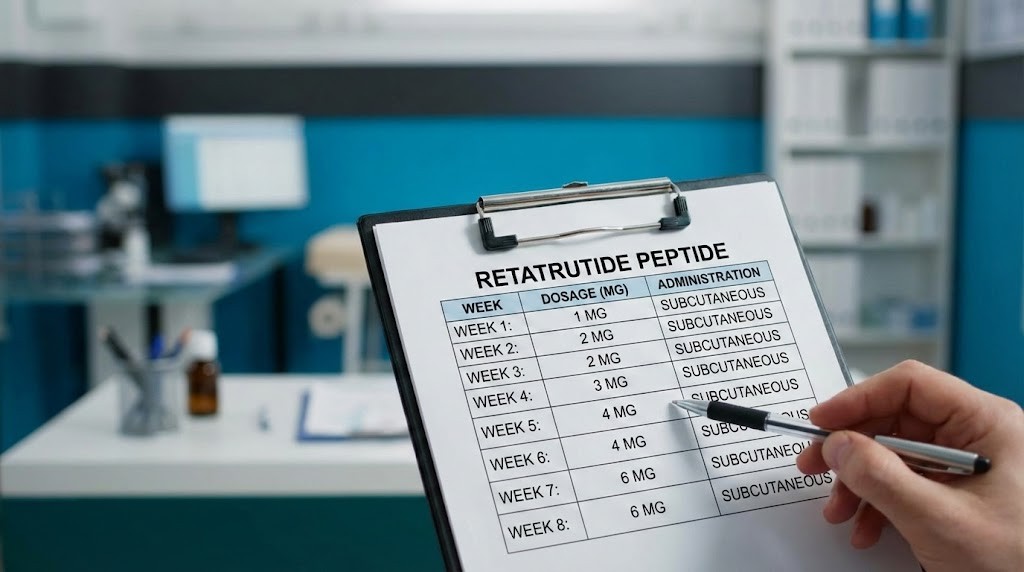
You have the vial. You have the syringe. You have the bacteriostatic water sitting on the counter. And now you are staring at a 10mg lyophilized powder wondering how many units to draw for a 1mg dose. The math is not complicated, but getting it wrong means the difference between an effective protocol and weeks of wasted time. Retatrutide, the triple receptor agonist targeting GLP-1, GIP, and glucagon receptors simultaneously, requires precise dosing that changes every four weeks as you titrate upward. Unlike single-agonist peptides where one chart covers everything, retatrutide demands careful attention to reconstitution volumes, concentration math, and a structured escalation schedule that accounts for three separate receptor pathways. One wrong calculation at the 8mg mark could mean doubling your intended dose or halving it, and your body will notice either mistake immediately.
This guide exists because most retatrutide dosage references give you the milligram targets without showing you how those translate to actual syringe measurements. They tell you to take 2mg this week but never explain that 2mg from a 10mg vial reconstituted with 2mL of bacteriostatic water means drawing to the 20-unit mark on an insulin syringe, while the same 2mg from a 20mg vial reconstituted with the same volume means drawing to just 10 units. That distinction matters. It matters enormously. And it is exactly the kind of practical detail that separates researchers who get consistent results from those who wonder why their protocol feels different every week.
What follows is every chart, every conversion table, and every reconstitution calculation you will need for the entire retatrutide titration journey. From the first cautious 0.5mg test dose through the full 12mg maintenance protocol, mapped across every common vial size and reconstitution volume, with the exact syringe lines marked for each step. SeekPeptides built this reference so you never have to guess, estimate, or hope you drew the right amount.
Understanding retatrutide as a peptide
Retatrutide is not just another weight loss peptide. It is a 39-amino acid synthetic peptide engineered from a GIP backbone to activate three distinct receptor systems in the body. This triple agonist design, developed by Eli Lilly under the research code LY3437943, represents a fundamentally different approach from semaglutide (which targets only GLP-1) or tirzepatide (which targets GLP-1 and GIP). Adding glucagon receptor activation to the mix introduces a thermogenic component that neither of those peptides offers.
The three pathways work together. GLP-1 receptor activation slows gastric emptying and increases satiety. GIP receptor activation improves insulin sensitivity and influences lipid metabolism. Glucagon receptor activation drives hepatic glucose output and, critically, increases energy expenditure through thermogenesis. The result in phase 2 clinical trials was 24.2% mean body weight reduction at 48 weeks with the 12mg dose, and the first phase 3 TRIUMPH-4 trial reported an average of 28.7% weight loss at 68 weeks. Those numbers exceed anything achieved by single or dual agonist peptides in comparable timeframes.
But here is what makes retatrutide dosing particularly important. Because it activates three receptor pathways, the dose-response curve is steeper and the side effect profile is more sensitive to sudden increases. In the phase 2 study published in the New England Journal of Medicine, gastrointestinal symptom rates nearly doubled when participants jumped directly to 8mg instead of titrating gradually from 1mg. The acylation modification gives retatrutide a half-life of approximately six days, allowing once-weekly dosing, but that long half-life also means dosing errors compound over time rather than resolving quickly.
Reconstitution charts by vial size
Every dosing calculation starts with reconstitution. The concentration you create when mixing your bacteriostatic water into the vial determines every syringe measurement for the life of that vial. Get this step right and the rest is simple arithmetic. Get it wrong and every subsequent dose will be off by the same percentage.
Retatrutide research vials commonly come in 5mg, 10mg, 20mg, and 30mg sizes. The amount of bacteriostatic water you add creates your concentration in mg/mL. Here are the most practical reconstitution options for each vial size.
5mg vial reconstitution chart
A 5mg vial is ideal for researchers starting at lower doses who want minimal waste. With a 5mg vial, you have limited total peptide, so choosing the right water volume matters for measurement precision.
Bac water added | Concentration | 0.5mg dose | 1mg dose | 2mg dose | Total doses at 1mg |
|---|---|---|---|---|---|
0.5mL | 10mg/mL | 5 units | 10 units | 20 units | 5 doses |
1.0mL | 5mg/mL | 10 units | 20 units | 40 units | 5 doses |
2.0mL | 2.5mg/mL | 20 units | 40 units | 80 units | 5 doses |
For 5mg vials, adding 1.0mL of bacteriostatic water creates the most practical concentration. At 5mg/mL, a 1mg starting dose equals 20 units on your insulin syringe, which is easy to read and measure accurately. Adding only 0.5mL creates a very concentrated solution where small measurement errors become significant. Adding 2.0mL works but means drawing larger volumes for each dose.
10mg vial reconstitution chart
The 10mg vial is the most common research size for retatrutide. It provides enough peptide for the initial titration phase and offers flexible reconstitution options.
Bac water added | Concentration | 1mg dose | 2mg dose | 4mg dose | 8mg dose | Total doses at 2mg |
|---|---|---|---|---|---|---|
1.0mL | 10mg/mL | 10 units | 20 units | 40 units | 80 units | 5 doses |
2.0mL | 5mg/mL | 20 units | 40 units | 80 units | N/A (160 units) | 5 doses |
2.5mL | 4mg/mL | 25 units | 50 units | 100 units | N/A | 5 doses |
The sweet spot for 10mg vials is 2.0mL of bacteriostatic water, giving you 5mg/mL. This means a starting dose of 1mg is exactly 20 units, easy to measure on any standard insulin syringe. As you titrate upward through 2mg (40 units) and 4mg (80 units), the measurements remain clean and readable. For higher doses like 8mg, you would need to switch to a higher concentration or use a 20mg vial instead.
20mg vial reconstitution chart
A 20mg vial works well for researchers who have completed initial titration and are dosing in the 4-12mg range. The higher peptide content means fewer vials consumed during maintenance phases.
Bac water added | Concentration | 4mg dose | 8mg dose | 12mg dose | Total doses at 8mg |
|---|---|---|---|---|---|
1.0mL | 20mg/mL | 20 units | 40 units | 60 units | 2.5 doses |
2.0mL | 10mg/mL | 40 units | 80 units | N/A (120 units) | 2.5 doses |
4.0mL | 5mg/mL | 80 units | N/A (160 units) | N/A | N/A |
For 20mg vials used during maintenance dosing, 1.0mL of bacteriostatic water is optimal. At 20mg/mL concentration, an 8mg dose requires only 40 units and a 12mg dose requires 60 units, both easily measurable. The 2.0mL option at 10mg/mL still works for the 4-8mg range but becomes impractical for 12mg doses since you would need to draw 120 units, which exceeds the capacity of a standard 100-unit insulin syringe.
30mg vial reconstitution chart
The 30mg vial is the most economical option for researchers maintaining higher dose protocols. It minimizes reconstitution events and provides multiple weeks of dosing from a single vial.
Bac water added | Concentration | 8mg dose | 9mg dose | 12mg dose | Total doses at 12mg |
|---|---|---|---|---|---|
1.0mL | 30mg/mL | 27 units | 30 units | 40 units | 2.5 doses |
1.5mL | 20mg/mL | 40 units | 45 units | 60 units | 2.5 doses |
3.0mL | 10mg/mL | 80 units | 90 units | N/A (120 units) | 2.5 doses |
With 30mg vials, adding 1.5mL of bacteriostatic water creates an elegant 20mg/mL concentration. A 12mg maintenance dose is exactly 60 units. Clean. Precise. No fractional unit calculations. For the 9mg dose tested in the TRIUMPH-4 phase 3 trial, 45 units at this concentration hits the target precisely. Use our retatrutide dosage calculator to verify your specific reconstitution math before drawing any dose.
Complete week-by-week titration dosage chart
The titration schedule for retatrutide follows a methodical 4-week escalation pattern based on phase 2 and phase 3 clinical trial protocols. Every dose increase happens at a 4-week interval, giving your body time to adapt to each new level of triple receptor activation before moving higher. Rushing this process is the single most common mistake researchers make, and the side effects from skipping steps are significantly worse than from gradual titration.
The following chart maps the complete titration protocol from week 1 through maintenance, showing both the milligram dose and the corresponding syringe units for the two most practical reconstitution concentrations.
Standard titration to 12mg (maximum dose)
Weeks | Dose | Units at 5mg/mL | Units at 10mg/mL | Units at 20mg/mL | Phase |
|---|---|---|---|---|---|
1-4 | 1mg | 20 units | 10 units | 5 units | Introduction |
5-8 | 2mg | 40 units | 20 units | 10 units | Early titration |
9-12 | 4mg | 80 units | 40 units | 20 units | Mid titration |
13-16 | 8mg | N/A | 80 units | 40 units | Late titration |
17+ | 12mg | N/A | N/A | 60 units | Maintenance |
Notice how the concentration you choose at reconstitution determines which phases of the titration your vial can practically serve. A 5mg/mL concentration works perfectly for weeks 1-12 but becomes impractical at 8mg (you would need 160 units, exceeding a standard syringe). A 10mg/mL concentration covers weeks 1-16 but cannot practically deliver the 12mg maintenance dose. The 20mg/mL concentration handles every dose level but requires very small draws at the beginning, which makes early-phase measurements less precise.
The practical approach is to use a lower concentration (5mg/mL) for the first 8-12 weeks when precision matters most during introduction, then switch to a higher concentration (10-20mg/mL) as you move into higher doses. This is exactly how experienced researchers handle the transition, and it is why many prefer to keep both a 10mg vial (reconstituted at 5mg/mL) and a 20mg or 30mg vial (reconstituted at 20mg/mL) available during the crossover period.
Conservative titration to 8mg
Not everyone needs or tolerates the full 12mg dose. Phase 2 data showed the 8mg combined group achieved 22.8% mean weight reduction at 48 weeks, which is only 1.4 percentage points less than the 12mg group. For researchers who experience significant gastrointestinal side effects, an 8mg maintenance dose delivers nearly equivalent results with better tolerability.
Weeks | Dose | Units at 5mg/mL | Units at 10mg/mL | Phase |
|---|---|---|---|---|
1-4 | 1mg | 20 units | 10 units | Introduction |
5-8 | 2mg | 40 units | 20 units | Early titration |
9-12 | 4mg | 80 units | 40 units | Mid titration |
13+ | 8mg | N/A | 80 units | Maintenance |
This conservative protocol works well for researchers who have previous experience with GLP-1 agonists and know their tolerance profile. If you have used tirzepatide or semaglutide before and experienced moderate nausea, starting retatrutide at the standard 1mg and capping at 8mg often provides the best balance between efficacy and quality of life.
Extended slow titration (for sensitive individuals)
Some researchers have heightened sensitivity to GLP-1 receptor activation. If you have a history of severe nausea with semaglutide or tirzepatide, or if you have a BMI under 30, a slower titration may be appropriate.
Weeks | Dose | Units at 5mg/mL | Units at 10mg/mL | Notes |
|---|---|---|---|---|
1-2 | 0.5mg | 10 units | 5 units | Assessment dose |
3-6 | 1mg | 20 units | 10 units | Standard introduction |
7-10 | 2mg | 40 units | 20 units | Early titration |
11-14 | 3mg | 60 units | 30 units | Intermediate step |
15-18 | 4mg | 80 units | 40 units | Mid titration |
19-22 | 6mg | N/A | 60 units | Late titration |
23+ | 8mg | N/A | 80 units | Maintenance |
This extended protocol adds intermediate dose steps (0.5mg, 3mg, 6mg) that do not appear in the standard clinical trial schedule. These half-steps give each receptor system more time to adapt. The 0.5mg assessment dose at the beginning is particularly valuable for researchers who have never used any incretin-based peptide before, as it reveals individual sensitivity before committing to the standard 1mg starting dose.
Unit conversion reference charts
The most confusing part of peptide dosing for many researchers is converting between milligrams, milliliters, and insulin syringe units. These are three different measurement systems that all describe the same thing, and mixing them up is how dosing errors happen. Here is the relationship, stated as simply as possible.
An insulin syringe measures in units. One hundred units equals 1.0mL. So 50 units equals 0.5mL. And 10 units equals 0.1mL. The units on your syringe are volume measurements, not dose measurements. To know how many milligrams you are drawing, you need to know the concentration of your solution.
The formula is straightforward. Dose in mg divided by concentration in mg/mL equals volume in mL. Multiply by 100 to get units. Or even simpler, use the peptide dosage calculator and skip the math entirely.
Quick reference: units per milligram at common concentrations
Desired dose | At 2.5mg/mL | At 5mg/mL | At 10mg/mL | At 20mg/mL | At 30mg/mL |
|---|---|---|---|---|---|
0.5mg | 20 units | 10 units | 5 units | 2.5 units | 1.7 units |
1mg | 40 units | 20 units | 10 units | 5 units | 3.3 units |
2mg | 80 units | 40 units | 20 units | 10 units | 6.7 units |
3mg | N/A | 60 units | 30 units | 15 units | 10 units |
4mg | N/A | 80 units | 40 units | 20 units | 13.3 units |
6mg | N/A | N/A | 60 units | 30 units | 20 units |
8mg | N/A | N/A | 80 units | 40 units | 26.7 units |
9mg | N/A | N/A | 90 units | 45 units | 30 units |
12mg | N/A | N/A | N/A | 60 units | 40 units |
Cells marked N/A indicate combinations where the required volume exceeds 100 units (1.0mL), making them impractical for a standard insulin syringe. You could technically use a larger syringe, but insulin syringes provide the best measurement precision for subcutaneous peptide injections, and staying within their range is always preferable.
Notice the highlighted cells in the 5mg/mL and 10mg/mL columns. These are the concentrations that produce the cleanest unit numbers across the widest range of doses. This is not a coincidence. They are the concentrations most researchers choose precisely because the math works out to whole numbers or easy fractions on an insulin syringe.
The concentration sweet spots
If you are early in your titration (1-4mg range), reconstitute at 5mg/mL. Every dose from 0.5mg to 4mg falls between 10 and 80 units, all easily readable on a U-100 syringe.
If you are in mid-to-late titration (4-12mg range), reconstitute at 10mg/mL or 20mg/mL. The 10mg/mL concentration handles 4-8mg cleanly (40-80 units). The 20mg/mL concentration handles 4-12mg cleanly (20-60 units) and is the most practical for long-term maintenance dosing.
If you are at maximum maintenance (12mg), the 20mg/mL concentration is your best option at 60 units per dose. The 30mg/mL concentration works too at 40 units but creates fractional measurements at lower doses that are harder to read.
How to reconstitute retatrutide step by step
The reconstitution process itself is identical to any other lyophilized peptide. But because retatrutide vials contain higher peptide quantities than most research peptides, and because the dosing precision requirements are tight, every step matters more than usual.
What you need
Gather everything before you start. You need the retatrutide vial (check the label for peptide content), bacteriostatic water (not sterile water, not saline, specifically bacteriostatic water with 0.9% benzyl alcohol preservative), an insulin syringe for drawing the water, and alcohol swabs for sterilizing vial tops. You also need a clean, flat surface and good lighting.
The process
Step 1: Determine your target concentration. Before touching anything, decide how much bacteriostatic water you will add based on the charts above. Write it down. A 10mg vial with 2.0mL of bacteriostatic water gives you 5mg/mL. Confirm this math before proceeding.
Step 2: Swab both vials. Clean the rubber stopper on both the retatrutide vial and the bacteriostatic water vial with alcohol swabs. Let them air dry for 10-15 seconds. Do not blow on them.
Step 3: Draw the bacteriostatic water. Using a fresh insulin syringe, draw the exact amount of bacteriostatic water you calculated. If you need 2.0mL and your syringe only holds 1.0mL, you will need to do this in two passes. Draw to the 100-unit mark twice.
Step 4: Add water to the peptide vial slowly. Insert the needle through the rubber stopper of the retatrutide vial. Aim the needle at the inside wall of the vial, not directly at the powder. Depress the plunger slowly, letting the water trickle down the glass wall and gently contact the lyophilized powder. This prevents foaming and structural damage to the peptide chains.
Step 5: Swirl gently. Do not shake the vial. Ever. Shaking creates air bubbles and can denature the peptide. Instead, roll the vial gently between your palms or tilt it in slow circular motions. The powder should dissolve within 30-60 seconds. The resulting solution should be clear and colorless. If it is cloudy or contains visible particles after gentle swirling for 2-3 minutes, do not use it.
Step 6: Label the vial. Write the concentration (mg/mL), the date of reconstitution, and the expiration date (28 days from reconstitution when stored properly) on the vial or on tape attached to it. Store the vial in the refrigerator at 2-8 degrees Celsius (36-46 degrees Fahrenheit) immediately after reconstitution.
Storage and stability after reconstitution
Reconstituted retatrutide is a protein in solution, and like all proteins in solution, it degrades over time. How quickly it degrades depends almost entirely on three factors: temperature, light exposure, and bacterial contamination. Control all three and your peptide remains potent for the full 28-day window. Neglect any one and you could lose 20-50% of effective peptide content before the vial is empty.
Temperature requirements
After reconstitution, retatrutide must be refrigerated at 2-8 degrees Celsius. This is the standard refrigerator temperature range. Do not freeze reconstituted peptide, as the freeze-thaw cycle damages protein structure. Do not leave it at room temperature for extended periods. Brief exposure (under 30 minutes) during dose preparation is fine. Anything beyond that starts the degradation clock.
If your vial sits at room temperature for several hours accidentally, it is not necessarily ruined. Studies on similar GLP-1 peptides show that short-term temperature excursions (4-8 hours at room temperature) reduce potency by approximately 5-10%, which is noticeable but not dangerous. However, repeated room temperature exposure has a cumulative effect. Each time the vial warms up, more peptide degrades. The degradation is not reversible when you put it back in the fridge.
Light protection
Keep the vial in its original box or wrap it in aluminum foil. UV and visible light accelerate peptide degradation. Most researchers store their vials in the refrigerator inside a small opaque container or ziplock bag. This is simple, effective, and free. The inside of a refrigerator is already fairly dark, but every time you open the door, light hits the vial. Over 28 days of daily fridge openings, that light exposure adds up.
How long does reconstituted retatrutide last
The standard recommendation is 28 days when stored properly at 2-8 degrees Celsius in the dark. Some peptide stability data suggests that well-stored reconstituted peptides can maintain acceptable potency for up to 6 weeks, but this depends heavily on the specific peptide, the bacteriostatic water quality, and contamination avoidance. For retatrutide specifically, sticking to the 28-day window is the safer choice.
Plan your reconstitution volumes so that each vial lasts approximately 3-4 weeks at your current dose. If a vial would last 8 weeks at your dose, reconstitute with less water to create a higher concentration and use the vial faster, or use a smaller vial size. Unreconstituted lyophilized powder stored in the freezer lasts significantly longer, often 12-24 months, so there is no rush to reconstitute vials you do not plan to use within a month.
Injection site and technique guide
Retatrutide is administered as a subcutaneous injection once weekly. Subcutaneous means into the fat layer just beneath the skin, not into muscle (intramuscular) and not into the skin itself (intradermal). The injection technique affects absorption rate, consistency of blood levels, and your comfort level throughout the protocol.
Recommended injection sites
Three areas of the body provide reliable subcutaneous access for weekly retatrutide injections.
Abdomen. The most commonly used site. Inject at least two inches away from the navel. The area around the belly button has inconsistent fat distribution and more nerve endings. The best spot is the lower abdominal area, roughly between the hip bones and two inches below the navel. This region typically has consistent fat depth and good absorption characteristics.
Thigh. The front or outer portion of the upper thigh provides the second most popular injection site. Use the area between the top of the thigh and just above the knee, focusing on the outer half. Avoid the inner thigh, as it has thinner skin and more blood vessels. Thigh injections tend to absorb slightly slower than abdominal injections, which some researchers find helpful for managing initial side effects.
Upper arm. The back of the upper arm, in the fatty area between the shoulder and elbow, works well but is harder to self-administer. If you use this site, you will likely need assistance or a very flexible approach to reaching behind your arm with the syringe.
Rotation protocol
Rotate injection sites every week. Never inject in the exact same spot two weeks in a row. Repeated injections in one location can cause lipodystrophy, which is the formation of hard lumps or indentations in the fat layer that affect peptide absorption and create cosmetic concerns.
A simple rotation system works best. Week 1: left abdomen. Week 2: right abdomen. Week 3: left thigh. Week 4: right thigh. Then repeat. Within each area, vary the exact spot by at least one inch from the previous injection in that zone. Some researchers mark their injection site with a small dot from a washable marker to track where they last injected in each area.
Injection technique
Clean the injection site with an alcohol swab and let it dry completely. Pinch a fold of skin and fat between your thumb and forefinger. Insert the needle at a 45-90 degree angle depending on how much subcutaneous fat is present at that site. For most people, 90 degrees (straight in) works at abdominal sites where there is ample fat, while 45 degrees works better at thigh sites or for leaner individuals.
Inject slowly. A 20-40 unit injection should take about 5-10 seconds to depress fully. After the plunger is fully depressed, hold the needle in place for 5-10 seconds before withdrawing. This prevents backflow and ensures the full dose is deposited in the subcutaneous tissue. Withdraw the needle, apply light pressure with a cotton ball or gauze if there is any bleeding, and dispose of the syringe in a sharps container.
Retatrutide dosage chart compared to other weight loss peptides
Understanding how retatrutide dosing compares to semaglutide and tirzepatide helps researchers contextualize their protocol and understand where retatrutide fits in the landscape of incretin-based peptides. The dosing structures are fundamentally different because each peptide has a different receptor profile, different potency per milligram, and different pharmacokinetic properties.
Side-by-side dosing comparison
Parameter | Semaglutide | Tirzepatide | Retatrutide |
|---|---|---|---|
Receptor targets | GLP-1 only | GLP-1 + GIP | GLP-1 + GIP + Glucagon |
Starting dose | 0.25mg weekly | 2.5mg weekly | 1mg weekly |
Titration interval | 4 weeks | 4 weeks | 4 weeks |
Maintenance dose range | 1.7-2.4mg | 5-15mg | 4-12mg |
Maximum studied dose | 2.4mg | 15mg | 12mg |
48-week weight loss (max dose) | ~15% | ~22% | ~24% |
68-week weight loss (max dose) | ~15% | ~22% | ~29% |
Titration steps to max | 4-5 steps | 4-5 steps | 4-5 steps |
Total weeks to max dose | 16-20 weeks | 16-20 weeks | 16-20 weeks |
The most striking difference is not the starting doses or the titration timelines, which are fairly similar across all three peptides. It is the weight loss magnitude. Retatrutide at maximum dose achieves roughly 24-29% body weight reduction versus 15% for semaglutide and 22% for tirzepatide in comparable trial durations. That additional 7-14 percentage points over semaglutide comes from the glucagon receptor activation, which drives increased energy expenditure through a mechanism that the other two peptides simply do not have.
For researchers considering switching between these peptides, the dosing does not translate directly. You cannot simply convert milligrams from one peptide to another because their receptor binding profiles, potency, and mechanisms are different. A researcher on 2.4mg semaglutide is not equivalent to a researcher on 12mg retatrutide, despite both being at their respective maximum doses. The transition requires a fresh titration starting at the low end of the new peptide.
Key differences in dosing approach
Semaglutide uses much smaller absolute doses (measured in fractions of a milligram at the start, maxing at 2.4mg). This reflects its higher receptor binding potency per milligram. The semaglutide dosage chart requires more precise reconstitution calculations at the lower end because small measurement errors represent a larger percentage of the intended dose.
Tirzepatide uses the highest absolute doses (2.5mg starting, up to 15mg maintenance) because its dual-agonist design has moderate potency at each individual receptor. The tirzepatide dosage chart is relatively straightforward because the higher milligram amounts translate to more easily measurable syringe volumes.
Retatrutide falls between them. Its 1mg starting dose is lower than tirzepatide but higher than semaglutide, reflecting its triple-agonist potency profile. The 12mg maximum is lower than tirzepatide but achieves greater efficacy, demonstrating that three receptor targets provide synergistic effects beyond what raw dosing would suggest.
Managing side effects during dose escalation
Side effects with retatrutide are primarily gastrointestinal, and they follow a predictable pattern. They appear most strongly during the first 1-2 weeks after each dose increase, then gradually subside as your body adapts to the new level of receptor activation. Understanding this pattern helps you plan your titration strategically and avoid unnecessary protocol interruptions.
What to expect at each dose level
1mg (weeks 1-4): Mild to moderate nausea in 15-25% of users. Reduced appetite, which is a therapeutic effect, not a side effect. Occasional mild constipation. Most researchers report these symptoms are easily manageable and resolve within the first two weeks. This is the body adjusting to GLP-1 and GIP receptor activation, particularly the slowed gastric emptying that GLP-1 produces.
2mg (weeks 5-8): Nausea may return briefly as the dose doubles. Some researchers experience mild diarrhea rather than constipation at this level. Appetite suppression becomes more noticeable. The GIP component becomes more active at this dose, affecting lipid metabolism. Most symptoms stabilize by week 6-7.
4mg (weeks 9-12): This is often described as the first significant dose by researchers. The glucagon receptor activation becomes measurably active at this level, which can cause a slight increase in heart rate (5-10 bpm) and a warmth sensation as thermogenesis increases. Nausea at this dose level is moderate in about 30-40% of users. Some researchers experience more pronounced changes in bowel habits.
8mg (weeks 13-16): The highest side effect peak for most researchers. Phase 2 data showed up to 60% of participants at higher doses reported at least one gastrointestinal symptom. Nausea, when it occurs, tends to be most intense during weeks 13-14 and resolves significantly by week 15-16. This is the dose where the triple-agonist mechanism is fully engaged, and the body needs the full 4-week adaptation window.
12mg (week 17+): Despite being the highest dose, many researchers report that the transition from 8mg to 12mg produces fewer new side effects than the jump to 8mg. The body has already adapted to substantial receptor activation. Ongoing side effects at maintenance tend to be mild and manageable, primarily consisting of reduced appetite (which is the intended effect) and occasional mild nausea that comes and goes.
Practical management strategies
Eating habits. Eat smaller meals, more frequently. Large meals overwhelm a stomach that is emptying more slowly due to GLP-1 activation. Avoid high-fat and greasy foods during the first two weeks after each dose increase, as fat takes longest to digest and compounds the slowed gastric emptying effect. Room temperature or cold foods tend to be better tolerated than hot foods during nausea episodes.
Hydration. Drink fluids consistently throughout the day. Dehydration worsens nausea and can cause headaches that amplify the perceived side effect burden. Water, herbal teas, and electrolyte drinks are all appropriate. Ginger tea specifically has evidence supporting its anti-nausea effects and can be a useful tool during dose transitions.
Timing. Many researchers find that injecting in the evening, after dinner, minimizes daytime nausea. Others prefer morning injection so that any nausea peaks during the day when they are active and distracted, rather than at night when it can disrupt sleep. There is no evidence that one timing is superior to the other pharmacologically, so choose what works for your schedule and tolerance.
When to delay a dose increase. If you are still experiencing significant nausea, vomiting, or diarrhea at the end of a 4-week dose block, stay at the current dose for another 2-4 weeks before attempting the next increase. The clinical trial protocol explicitly allowed for delayed escalation based on tolerability. Forcing the next dose increase while still symptomatic nearly always makes things worse and can lead to protocol abandonment, which defeats the entire purpose of careful titration.
Weight-based dosing considerations
While the standard clinical trial protocols use fixed-dose titration schedules regardless of body weight, some researchers adjust their approach based on body composition. The rationale is straightforward: a 120kg individual has significantly more tissue volume for the peptide to distribute through than a 70kg individual, which affects both the effective concentration at receptor sites and the perceived intensity of side effects.
Weight-based starting dose reference
Body weight | Suggested starting dose | Reasoning |
|---|---|---|
Under 70kg (154 lbs) | 0.5mg for 2 weeks, then 1mg | Lower volume of distribution increases effective concentration |
70-90kg (154-198 lbs) | 1mg standard start | Standard protocol matches most clinical trial participants |
90-120kg (198-264 lbs) | 1mg standard start | Standard protocol, may tolerate faster titration |
Over 120kg (264 lbs) | 1-2mg start | Higher volume of distribution may necessitate higher starting dose for effect |
These are general guidelines, not rigid rules. The phase 2 and phase 3 clinical trials used the same starting dose for all weight groups. However, real-world experience and the pharmacokinetic principles of volume of distribution suggest that lighter individuals benefit from a more conservative start, while heavier individuals may tolerate a slightly more aggressive approach.
Use the SeekPeptides peptide calculator to determine your exact syringe measurements regardless of which starting dose you choose. The math does not change based on body weight, only the target dose changes.
Vial planning and supply calculations
Running out of reconstituted peptide mid-protocol is frustrating and potentially disruptive to your titration schedule. Planning your vial purchases ahead ensures continuous dosing throughout the entire titration and maintenance period. Here is how to calculate what you need.
Vial consumption during standard titration
Titration phase | Weeks | Weekly dose | Total mg needed | 10mg vials needed | 20mg vials needed |
|---|---|---|---|---|---|
Phase 1: 1mg | 4 | 1mg | 4mg | 1 vial (6mg surplus) | N/A |
Phase 2: 2mg | 4 | 2mg | 8mg | 1 vial (2mg surplus) | N/A |
Phase 3: 4mg | 4 | 4mg | 16mg | 2 vials | 1 vial (4mg surplus) |
Phase 4: 8mg | 4 | 8mg | 32mg | N/A (use 20mg vials) | 2 vials (8mg surplus) |
Phase 5: 12mg | 4 | 12mg | 48mg | N/A | 3 vials (12mg surplus) |
Full titration total | 20 | 108mg |
The total peptide requirement for a complete 20-week titration from 1mg to 12mg is 108mg. For ongoing maintenance at 12mg per week, you need 48mg per month, which is roughly two and a half 20mg vials or approximately four 30mg vials every three months.
Remember that reconstituted peptide should be used within 28 days. If a vial contains more peptide than you will use in 28 days at your current dose, you will waste the remainder. This is why choosing the right vial size for each titration phase matters for both cost efficiency and peptide freshness. The cost implications add up over a multi-month protocol.
Transition planning between vial sizes
Most researchers use 10mg vials for phases 1-2 (1-2mg weekly, consuming about 4-8mg per 4-week block), then switch to 20mg or 30mg vials for phases 3-5 when weekly consumption increases significantly. The transition point is typically at the 4mg dose level, where a 10mg vial only lasts 2.5 weeks at the rate of 4mg per week. At that point, switching to 20mg vials (lasting 5 weeks at 4mg/week) or 30mg vials (lasting 7.5 weeks) makes more practical sense.
Check the peptide cost calculator to compare the per-milligram pricing across different vial sizes from your source. Larger vials almost always offer better per-milligram value, but only if you can use them within the 28-day reconstitution window.
Common dosing mistakes and how to avoid them
After reviewing hundreds of community discussions and researcher reports, certain dosing errors appear repeatedly. Each one is preventable with the right awareness. Here are the most frequent mistakes and the specific fix for each.
Mistake 1: confusing concentration after reconstitution
This is the most common and most dangerous error. A researcher reconstitutes a 10mg vial with 1mL (creating 10mg/mL) but then calculates their dose as if the concentration were 5mg/mL. The result is drawing twice the intended dose. At the 8mg level, this means accidentally taking 16mg, which would cause severe nausea and potentially dangerous gastrointestinal distress.
Fix: Write the concentration on the vial immediately after reconstitution. Double-check your math before every draw. Use the peptide dosage calculation guide or an online calculator rather than mental math. The formula is always the same: desired mg divided by concentration (mg/mL) equals volume in mL, multiplied by 100 for syringe units.
Mistake 2: skipping titration steps
Impatient researchers sometimes jump from 2mg directly to 8mg, or from 4mg straight to 12mg, reasoning that they tolerated the lower dose well and want faster results. The phase 2 trial data explicitly shows this is a bad idea. GI symptom rates nearly doubled when participants skipped titration steps. Three receptor pathways means three separate adaptation processes happening simultaneously, and rushing any one of them creates problems.
Fix: Follow the 4-week titration schedule without deviation. If you feel great at 4mg and want to move faster, you can consider a 3-week block at the next dose instead of 4, but never skip a dose level entirely. The time investment of 4 additional weeks at an intermediate dose is nothing compared to the setback of severe nausea that forces you to restart at a lower dose.
Mistake 3: inconsistent injection timing
Retatrutide has a half-life of approximately six days. Weekly injections maintain relatively stable blood levels. But shifting your injection day by 2-3 days one week creates a peak-trough pattern that amplifies side effects. If you normally inject on Monday and then inject on Thursday one week and Sunday the next, you are creating unnecessary fluctuation in blood levels.
Fix: Pick one day per week and stick to it. Set a recurring alarm. If you must shift your day, move it by only one day at a time (Monday to Tuesday, then back to Monday the following week) rather than making large jumps. Some researchers find that keeping a dosing log helps maintain consistency.
Mistake 4: using sterile water instead of bacteriostatic water
Sterile water lacks the benzyl alcohol preservative that inhibits bacterial growth in bacteriostatic water. If you reconstitute with sterile water, you introduce a multi-dose vial (you will draw from it multiple times) without any antibacterial protection. Each time you insert a needle, you risk introducing bacteria into a solution that has no way to stop them from growing.
Fix: Always use bacteriostatic water for multi-dose vials. Sterile water is appropriate only for single-use reconstitution where the entire vial will be used in one injection. Since retatrutide vials typically last multiple weeks, bacteriostatic water is the only appropriate choice.
Mistake 5: storing reconstituted peptide incorrectly
Leaving reconstituted retatrutide on the bathroom counter, storing it in a warm part of the refrigerator (like the door shelf that gets warm every time the door opens), or exposing it to direct light all accelerate degradation. By week 3 of a poorly stored vial, you could be injecting a solution that has lost 30-40% of its potency, meaning your 8mg dose is effectively delivering 5mg or less.
Fix: Store the vial in the back of the main refrigerator compartment (not the door), inside an opaque container or wrapped in foil. Check the temperature of your refrigerator occasionally, as the proper storage temperature is 2-8 degrees Celsius. Many household refrigerators run warmer than expected, especially older models.
Advanced dosing strategies
Beyond the standard titration protocol, experienced researchers sometimes employ more nuanced dosing approaches based on their individual response patterns. These strategies are not part of the clinical trial protocols, but they emerge from practical experience and pharmacological principles.
Split dosing
Some researchers divide their weekly dose into two smaller injections (for example, 4mg on Monday and 4mg on Thursday instead of 8mg once weekly). The theoretical advantage is smoother blood levels with less peak-to-trough variation, which may reduce the intensity of side effects, particularly nausea and appetite fluctuation.
The evidence for split dosing with retatrutide specifically is limited since clinical trials used once-weekly dosing exclusively. However, split-dosing protocols for similar incretin-based peptides show that dividing the dose does reduce peak blood levels by approximately 15-25%, which correlates with reduced gastrointestinal side effects in some individuals. The tradeoff is doubling the number of injection events per week.
Dose cycling for plateaus
Weight loss plateaus are common with any metabolic intervention. Some researchers address retatrutide plateaus by temporarily increasing the dose for 2-4 weeks before returning to their maintenance dose. For example, a researcher maintaining at 8mg who has plateaued might increase to 10mg for 3 weeks, then return to 8mg.
This approach is speculative and not studied in retatrutide trials. The glucagon receptor component does introduce metabolic adaptation over time, and varying the stimulus could theoretically disrupt adaptation. However, this should be approached cautiously and only after extended plateaus (6+ weeks of stable weight despite consistent protocol adherence). For many researchers, revisiting dietary and exercise factors is more productive than adjusting peptide dose.
Combination considerations
Retatrutide is sometimes considered alongside other research peptides. However, combining retatrutide with other GLP-1 agonists like semaglutide or tirzepatide is redundant and potentially dangerous, as you would be stacking activation of the same receptor pathways. The combined GI side effects could be severe.
Researchers interested in peptide combinations with retatrutide typically look at non-overlapping mechanisms. BPC-157 and TB-500 for tissue repair, MOTS-C for mitochondrial function, or 5-amino-1MQ for NNMT inhibition all target different pathways than retatrutide and have been used in combination by experienced researchers. Always consult the peptide stacking safety guidelines before combining any peptides.
Clinical trial dosage results summary
The dosage charts above are not arbitrary. Every number traces back to clinical trial data. Understanding the trial results at each dose level helps you set realistic expectations and choose the right maintenance dose for your goals.
Phase 2 trial results by dose (48 weeks)
Dose group | Mean weight loss | GI side effects | Dropout rate |
|---|---|---|---|
Placebo | -2.1% | 11% | Baseline |
1mg | -8.7% | 15-25% | Low |
4mg (combined) | -17.1% | 30-40% | Moderate |
8mg (combined) | -22.8% | 40-50% | Moderate |
12mg | -24.2% | 50-60% | Moderate |
Phase 3 TRIUMPH-4 results (68 weeks)
Dose group | Mean weight loss | Notable finding |
|---|---|---|
9mg | -26.4% | Strong efficacy with moderate side effect profile |
12mg | -28.7% | Average 71.2 lbs lost, significant pain reduction in knee OA patients |
The phase 3 TRIUMPH-4 data, released in early 2026, confirmed and exceeded the phase 2 results. At 68 weeks, the 12mg group achieved an average weight loss of 28.7%, which translates to an average of 71.2 pounds lost. The 9mg group achieved 26.4%, suggesting that the 9mg dose offers nearly comparable efficacy with a potentially better side effect profile. This has led some researchers to target 9mg rather than 12mg as their maintenance dose, especially given that the difference (2.3 percentage points) may not justify the additional side effect burden for all individuals.
The TRIUMPH program includes seven additional phase 3 trials evaluating retatrutide for obesity and type 2 diabetes, with results expected throughout the remainder of the year. Pending successful completion, FDA approval could come as early as 2027, which would make retatrutide the first approved triple-agonist medication.
For researchers tracking their progress against these benchmarks, remember that individual results vary significantly. Clinical trial averages include non-responders and partial responders. Many individual participants exceeded these averages substantially, while others fell below them. Consistent protocol adherence, proper nutrition, regular physical activity, and adequate sleep all influence outcomes beyond what the peptide alone delivers.
Syringe selection and measurement precision
Not all insulin syringes are created equal, and choosing the right one for your retatrutide dose level can meaningfully improve measurement accuracy. The difference between a dose that is 10% too high and one that is 10% too low might come down to which syringe you selected.
Syringe types for peptide research
U-100 insulin syringes (100 units = 1.0mL) are the standard for subcutaneous peptide injections. They come in three common sizes.
0.3mL syringes (30 units). Best for doses that require 5-30 units. The graduation marks are spaced farther apart, making each unit easier to read. Ideal for the 1-2mg dose range at 10mg/mL concentration, where you need to measure 10-20 units precisely.
0.5mL syringes (50 units). Best for doses that require 15-50 units. A good middle ground that handles most mid-range dose measurements accurately. Useful during the 2-4mg titration phase at common concentrations.
1.0mL syringes (100 units). Required for doses that require 50-100 units. The graduation marks are closer together, which means measurement precision is lower per unit. However, these are the only option for higher-volume draws. Use these during maintenance phases when drawing 60-80 units at higher concentrations.
Needle gauge recommendations
For subcutaneous injection of retatrutide, 29-31 gauge needles are standard. A 30 gauge needle provides the best balance between injection comfort and adequate flow rate for the volumes involved. Thinner needles (31 gauge) are more comfortable but can be too slow for volumes above 50 units. Thicker needles (29 gauge) draw and inject faster but may cause slightly more discomfort at the injection site.
Needle length for subcutaneous injection should be 12.7mm (1/2 inch) for most individuals. Leaner individuals or those injecting in areas with less subcutaneous fat may prefer 8mm (5/16 inch) needles to avoid intramuscular injection.
Tracking your protocol
Keeping a log of your dosing, side effects, and results is not optional for serious research. It is the difference between a protocol you can evaluate and one where you are guessing whether it is working. SeekPeptides recommends tracking the following data points for every injection.
Essential tracking metrics
For each injection: Date, time, dose in mg, syringe units drawn, injection site, concentration of current vial, days since vial reconstitution.
Daily observations: Appetite level (1-10 scale), nausea level (0-5 scale), energy level, any notable GI symptoms, bowel changes, mood or sleep changes.
Weekly measurements: Body weight (same time, same conditions each week), waist circumference, any other target measurements relevant to your research goals.
Monthly assessments: Progress photos (consistent lighting and positioning), subjective satisfaction, side effect trend analysis, protocol adjustment notes.
A simple spreadsheet or notebook works. The format matters less than the consistency. Researchers who track their protocol identify problems faster, optimize their approach sooner, and have concrete data to reference when making protocol adjustments.
Frequently asked questions
Can I use the same retatrutide vial for different dose levels during titration?
Yes, if the reconstitution concentration supports both dose levels within a measurable syringe range. For example, a 10mg vial reconstituted at 5mg/mL works for both 1mg (20 units) and 2mg (40 units) doses. However, if you reconstituted at a concentration that requires more than 100 units for your next dose level, you will need to use a different vial or reconstitute at a higher concentration. Plan your vial transitions around the dose escalation schedule.
What happens if I miss a weekly retatrutide dose?
With a half-life of approximately six days, missing one dose reduces but does not eliminate blood levels. If you remember within 3-4 days, take the missed dose and resume your regular schedule. If more than 4 days have passed, skip the missed dose and take the next scheduled dose at the normal time. Do not double up to compensate. Missing a single dose during titration is rarely significant, but missing multiple consecutive doses during early titration may require restarting at a lower dose.
Is 9mg a better maintenance dose than 12mg?
Phase 3 TRIUMPH-4 data showed 9mg achieved 26.4% weight loss versus 28.7% at 12mg over 68 weeks. The difference is 2.3 percentage points. For many researchers, the slightly lower efficacy is offset by fewer side effects and better day-to-day quality of life. The 9mg dose represents a strong option for researchers who want near-maximum results with a more tolerable side effect profile. Use the complete dosing guide to evaluate which maintenance dose aligns with your goals.
How do I calculate units if I used a non-standard amount of bacteriostatic water?
The formula is always the same regardless of reconstitution volume. Divide your vial content (mg) by the volume of water added (mL) to get concentration in mg/mL. Then divide your desired dose (mg) by that concentration to get volume in mL. Multiply by 100 for insulin syringe units. For example, a 10mg vial reconstituted with 1.7mL gives you 5.88mg/mL. A 2mg dose equals 2 divided by 5.88 equals 0.34mL equals 34 units. The retatrutide calculator handles non-standard volumes automatically.
Can I switch from tirzepatide to retatrutide directly?
You cannot simply convert your tirzepatide dose to an equivalent retatrutide dose. The receptor profiles are different (dual versus triple agonist), the potency per milligram is different, and the side effect profiles are different. Transition requires starting retatrutide at the beginning of its titration schedule (1mg) and working up, regardless of your previous tirzepatide dose. Some researchers overlap the two briefly during transition, but this should be approached with caution due to stacked GLP-1 and GIP receptor activation.
How many vials do I need for a full 20-week titration?
A complete titration from 1mg to 12mg requires 108mg of total retatrutide over 20 weeks. Using 10mg vials for weeks 1-8 (12mg needed, 2 vials) and 20mg vials for weeks 9-20 (96mg needed, 5 vials) is a practical breakdown. See the vial planning section above for detailed calculations by titration phase. Check current pricing and the cost calculator to budget accordingly.
Does retatrutide need to be injected at the same time every week?
The exact time is less important than the day. Injecting within a 2-3 hour window of your usual time is ideal, but a few hours difference has negligible pharmacological impact given the 6-day half-life. What matters more is maintaining a consistent 7-day interval between doses. Shifting the interval to 5 or 9 days creates blood level fluctuations that can affect both efficacy and side effects.
External resources
PubMed Central: Retatrutide, A Game Changer in Obesity Pharmacotherapy
Nature Medicine: Triple Hormone Receptor Agonist Retatrutide for Metabolic Dysfunction
For researchers serious about optimizing their retatrutide protocols, SeekPeptides offers the most comprehensive resource available, with evidence-based guides, proven protocols, dosing calculators, and a community of thousands who have navigated these exact questions. Members access detailed retatrutide protocol builders, weight-based dosing tools, and expert-reviewed guidance that accounts for individual factors most resources completely ignore.
In case I do not see you, good afternoon, good evening, and good night. May your reconstitutions stay precise, your titration stay patient, and your results stay consistent.