Apr 2, 2026
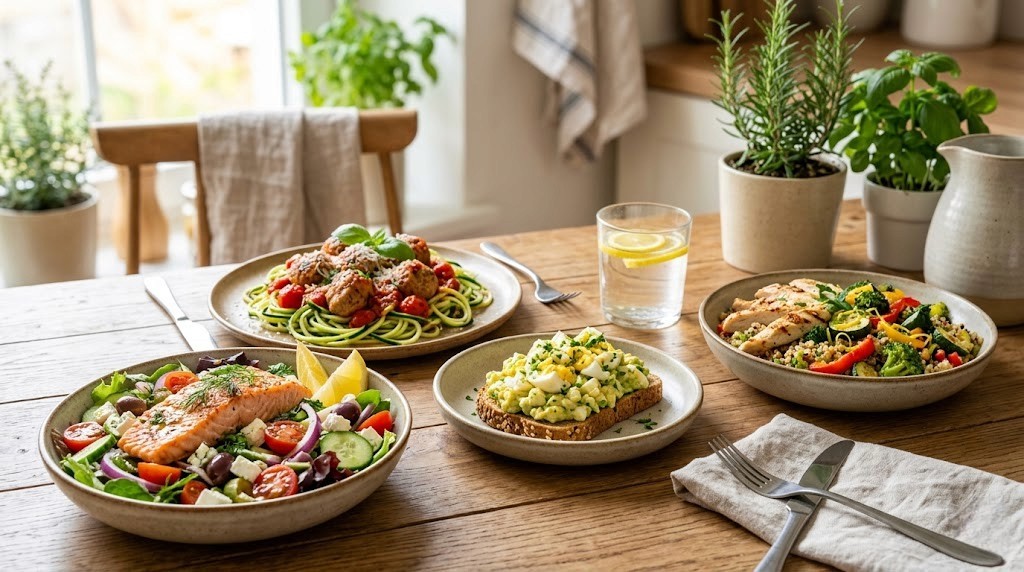
What if the real reason your GLP-1 results have stalled is not your dose, your timing, or your genetics? What if it is what you are putting on your plate?
Here is the thing most people miss. GLP-1 medications like semaglutide and tirzepatide do exactly what they promise. They suppress appetite. They slow gastric emptying. They make you eat less. But eating less and eating right are two entirely different things, and the gap between them determines whether you lose mostly fat, preserve your hard-earned muscle, feel energized through the process, or end up exhausted, nutrient-depleted, and wondering why the scale stopped moving at week six.
The SURMOUNT-1 trial showed participants lost up to 22.5% of their body weight on tirzepatide. Impressive. But buried in the data is a detail that matters more than most people realize: lean mass accounted for 26-40% of total weight lost in GLP-1 trials. That is muscle disappearing alongside the fat. And once muscle goes, your metabolism slows, your energy crashes, and maintaining results becomes exponentially harder. The solution is not more medication. It is better food.
This guide covers exactly what GLP-1 friendly meals look like in practice. Not vague advice about "eating healthy." Specific meals. Exact protein targets. Recipes you can actually make when your appetite is small and your stomach is sensitive. Whether you are on your first week of semaglutide or months into a tirzepatide protocol, the meals you choose will shape your results more than almost any other variable you control. SeekPeptides has compiled everything you need, from breakfast through dinner, with meal prep strategies and a complete 7-day plan.
What makes a meal "GLP-1 friendly"
Not every healthy meal qualifies as GLP-1 friendly. The distinction matters.
A standard healthy dinner might include a large portion of whole grain pasta with vegetables and olive oil. Nutritious? Absolutely. But for someone on a GLP-1 receptor agonist, that meal creates problems. The carbohydrate-heavy composition spikes blood sugar in ways that work against the medication mechanism. The large volume overwhelms a stomach that empties 30-40% slower than normal. And the relatively low protein content accelerates the muscle loss that already concerns researchers studying these medications.
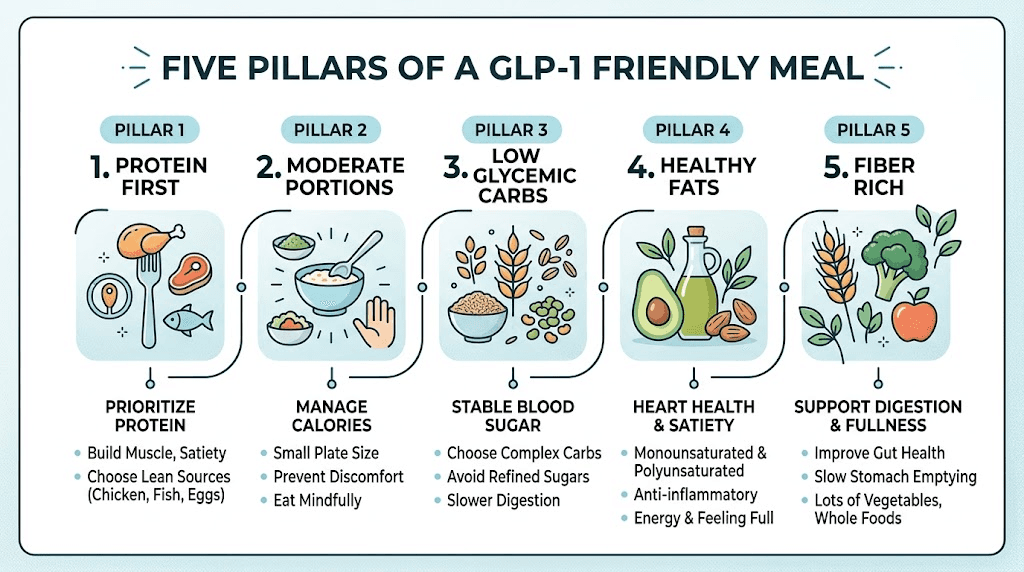
GLP-1 friendly meals share five characteristics that standard "healthy eating" advice often ignores.
Protein comes first, always
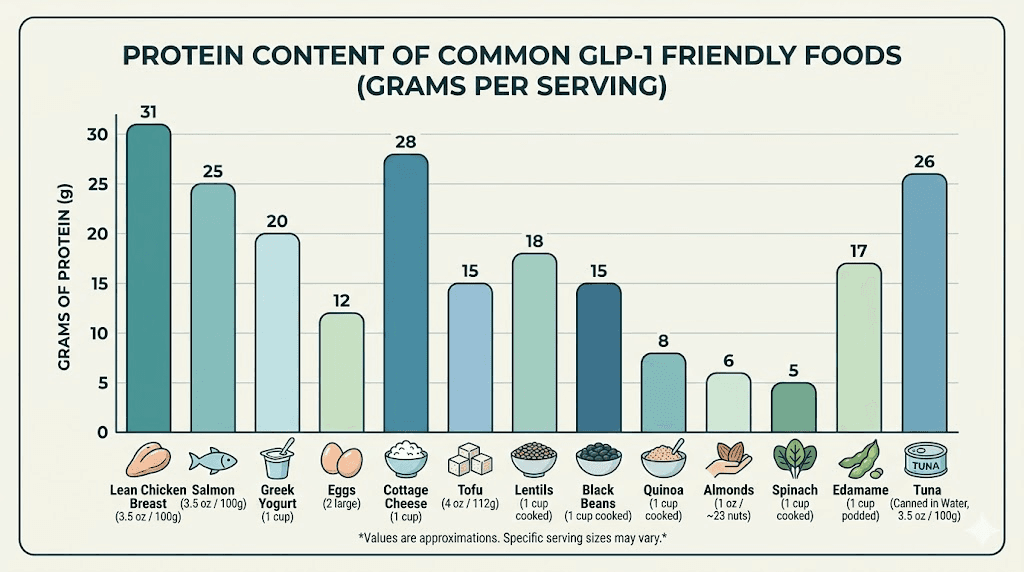
Every GLP-1 friendly meal starts with protein. This is non-negotiable. Research from the Endocrine Society presented in their latest findings showed that higher protein intake directly correlated with better muscle preservation during GLP-1 therapy. The target is 25-35 grams per meal, distributed evenly throughout the day. That means protein on semaglutide is not just important. It is the single most critical dietary factor determining your body composition outcome.
When your appetite is suppressed, every bite counts. If you fill up on bread before touching your chicken, you have wasted your limited stomach capacity on the macronutrient you need least. Eat the protein first. Then vegetables. Then everything else.
Portions stay small but nutrient-dense
GLP-1 medications slow gastric emptying significantly. Food sits in your stomach longer. A meal that felt normal before starting medication now feels like Thanksgiving dinner. The fix is not forcing yourself to eat more. It is making smaller portions work harder.
Most people on semaglutide or tirzepatide do best with four to five smaller eating occasions rather than three large meals. Each should deliver 300-500 calories packed with protein, fiber, and micronutrients. Think of it as precision nutrition, where every calorie earns its place on your plate.
Carbohydrates stay low-glycemic
GLP-1 receptor agonists improve insulin sensitivity and blood sugar regulation. Working with the medication means choosing carbohydrates that support those effects rather than fighting them. Sweet potatoes instead of white potatoes. Quinoa instead of white rice. Steel-cut oats instead of instant oatmeal. The glycemic index matters because low-glycemic foods produce steady energy, reduce nausea risk, and complement the metabolic improvements these medications create.
Healthy fats appear in moderation
Fat is essential for nutrient absorption, hormone production, and satiety. But on GLP-1 medications, high-fat meals dramatically increase nausea risk because fat already slows digestion, and these medications slow it further. The result is food sitting in your stomach far too long, triggering bloating, sulfur burps, and discomfort that can last hours.
Include healthy fats. Avocado, olive oil, nuts, fatty fish. But keep portions reasonable, roughly a tablespoon of oil, a quarter of an avocado, or a small handful of nuts per meal.
Fiber supports digestion without overwhelming it
Fiber is your best friend on GLP-1 therapy, but only in the right amounts. Too little fiber leads to constipation, one of the most common side effects. Too much fiber in a single meal creates gas, bloating, and discomfort that compounds the GI effects of the medication. Aim for 5-8 grams of fiber per meal from vegetables, legumes, and whole grains, building up gradually if you are new to high-fiber eating. A good fiber supplement can help fill gaps without adding volume.
Protein targets that protect your muscle
Let us talk numbers. Because vague advice like "eat more protein" does not help when you are staring at a plate you can barely finish.
The current research consensus for GLP-1 users points to 1.2 to 1.6 grams of protein per kilogram of body weight daily. For a 180-pound person, that translates to roughly 98-131 grams of protein per day. For a 150-pound person, approximately 82-109 grams daily. This is higher than general population recommendations because you are actively losing weight, and without adequate protein, your body will break down muscle alongside fat.
A study published examining lean mass preservation during GLP-1 therapy found that participants who consumed adequate protein and engaged in resistance training three to five days per week achieved significantly better body composition outcomes compared to those who did not prioritize protein. The difference was not subtle. It was the difference between losing mostly fat and losing a concerning amount of muscle.
How to distribute protein throughout the day
Your body can only utilize roughly 25-40 grams of protein per meal for muscle protein synthesis. Eating 80 grams at dinner and 15 grams the rest of the day is not equivalent to spreading 100 grams across four meals. Distribution matters.
Here is what optimal protein distribution looks like on GLP-1 therapy:
Breakfast: 25-30 grams
Lunch: 30-35 grams
Afternoon snack: 15-20 grams
Dinner: 30-35 grams
That gives you 100-120 grams daily, right in the sweet spot for most people. If you struggle to hit these numbers because of appetite suppression, a GLP-1 protein shake between meals can close the gap without requiring you to eat a large meal.
Best protein sources for GLP-1 users
Not all protein sources work equally well when your digestive system runs slower than usual. Heavy, fatty proteins like ribeye steak or fried chicken sit like a brick. Lean, easily digestible proteins are your priority.
Tier 1 (best tolerated): Chicken breast, turkey breast, white fish (cod, tilapia, halibut), egg whites, Greek yogurt, cottage cheese
Tier 2 (well tolerated): Salmon, shrimp, lean ground turkey, tofu, tempeh, edamame
Tier 3 (tolerated in moderation): Lean beef (sirloin, tenderloin), pork tenderloin, whole eggs, legumes
The pattern is clear. Leaner proteins digest faster, cause less nausea, and let you consume more total protein within your reduced appetite window. When you are figuring out how many calories to eat on semaglutide, protein should account for 30-40% of those calories.
GLP-1 friendly breakfast meals
Breakfast on GLP-1 medication is tricky. Many people wake up with zero appetite, especially in the first few weeks. The temptation is to skip it entirely. Do not.
Skipping breakfast means you need to cram more protein into fewer meals later, when your appetite might be even smaller. It also means missing your morning nutrient window and potentially triggering energy crashes by midday. Even a small, protein-focused breakfast sets the metabolic tone for your entire day. Here are GLP-1 friendly breakfast meals that work even when eating feels like a chore.
Greek yogurt protein bowl
Protein: 30g | Calories: 350 | Prep time: 5 minutes
Take one cup of plain Greek yogurt (choose 2% or full-fat for better satiety). Add a scoop of vanilla protein powder and stir until smooth. Top with a quarter cup of mixed berries, a tablespoon of ground flaxseed, and a small handful of walnuts. The combination delivers 30 grams of protein in a volume that even the most suppressed appetite can handle. The berries add natural sweetness without spiking blood sugar, and the flaxseed contributes fiber that helps prevent the constipation so many GLP-1 users experience.
This bowl works particularly well because yogurt is cold, creamy, and easy to eat even when warm foods feel unappealing, something many people on their first dose of tirzepatide report.
Egg white veggie scramble
Protein: 28g | Calories: 280 | Prep time: 10 minutes
Scramble five egg whites with one whole egg in a non-stick pan. Add a handful of spinach, diced bell peppers, and mushrooms. Season with salt, pepper, and a pinch of turmeric. Serve with half an avocado sliced on the side.
The beauty of this meal is its adaptability. On days when your appetite is genuinely absent, eat just the eggs and spinach. On days when you feel more like eating, add a small piece of whole grain toast. The protein-to-volume ratio is excellent, meaning you get substantial nutrition without the heavy, full feeling that triggers bloating on tirzepatide.
Overnight protein oats
Protein: 32g | Calories: 380 | Prep time: 5 minutes (night before)
Combine a third cup of rolled oats with one scoop of protein powder, half a cup of unsweetened almond milk, two tablespoons of Greek yogurt, and a tablespoon of chia seeds. Stir everything together in a jar. Refrigerate overnight. In the morning, top with sliced banana or berries.
This breakfast works on multiple levels. The preparation happens the night before, so there is zero effort when morning nausea makes cooking unappealing. The oats provide slow-releasing carbohydrates. The chia seeds deliver fiber and omega-3 fatty acids. And the cold temperature makes it easier to eat than hot food, which many semaglutide users find more tolerable during the adjustment period.
Cottage cheese toast
Protein: 26g | Calories: 320 | Prep time: 5 minutes
Toast one slice of whole grain bread. Spread half a cup of low-fat cottage cheese on top. Add sliced tomato, cucumber, and a sprinkle of everything bagel seasoning. The cottage cheese alone delivers 14 grams of protein, and combined with the bread, you reach 26 grams in a meal so small it barely registers as eating.
Cottage cheese deserves special mention for GLP-1 users. It is high in casein protein, which digests slowly and provides sustained amino acid delivery to muscles. For people concerned about the muscle preservation challenges on GLP-1, casein-rich foods before bed or in the morning create a protective amino acid environment during the longest gaps between meals.
Smoothie for the no-appetite morning
Protein: 35g | Calories: 350 | Prep time: 3 minutes
Blend one scoop of protein powder, one cup of unsweetened almond milk, half a frozen banana, a handful of spinach, and a tablespoon of peanut butter. Add ice to preference.
This is the emergency breakfast. For mornings when solid food feels impossible, when even looking at eggs triggers a wave of nausea, a smoothie slides past the appetite suppression barrier. The key is drinking it slowly, over 20-30 minutes, rather than gulping it down. Drinking too fast on GLP-1 medications causes the same discomfort as eating too fast. Sip it while you get ready. Bring it in the car. Just get the protein in. For more GLP-1 breakfast ideas, including options for different dietary preferences, check out our dedicated guide.
GLP-1 friendly lunch meals
Lunch sits at the midpoint of your day, and for most GLP-1 users, it falls in the sweet spot where appetite has returned slightly from the morning suppression but has not yet hit the afternoon wall. This makes lunch your best opportunity to get a solid protein serving in without fighting your body.
The key to GLP-1 friendly lunches is portability and simplicity. Complicated meals with heavy sauces and large portions backfire. Clean, lean, easy-to-prepare meals that you can eat at a desk, in a car, or between meetings are what work in real life.
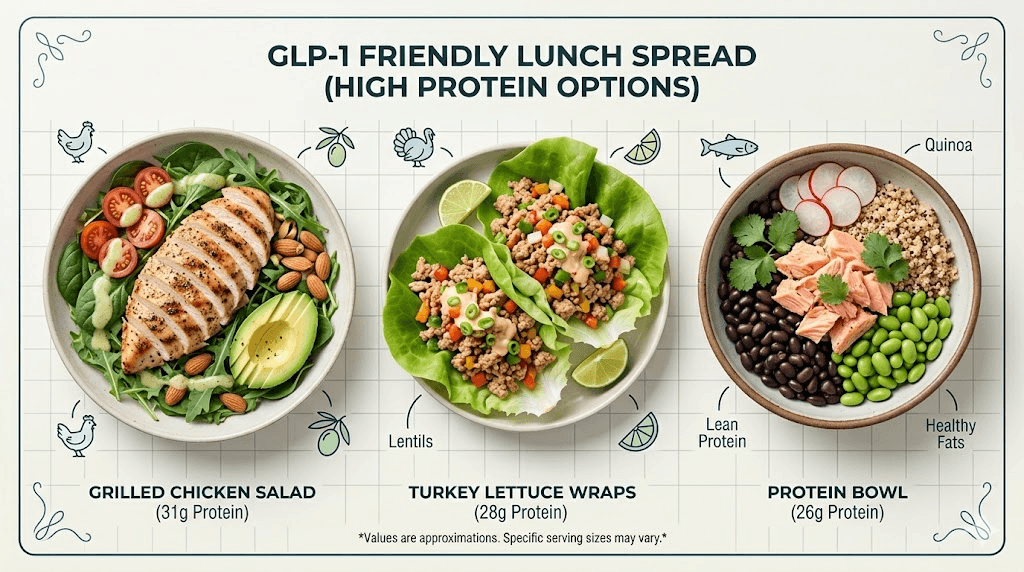
Grilled chicken power salad
Protein: 38g | Calories: 420 | Prep time: 15 minutes (or 5 with meal prep)
Start with a bed of mixed greens, arugula, or spinach. Add four ounces of sliced grilled chicken breast. Include half a cup of chickpeas, a quarter cup of cherry tomatoes, sliced cucumber, and a quarter of an avocado. Dress with a tablespoon of olive oil and lemon juice.
The chickpeas are the secret weapon here. They add protein, fiber, and substance without the heaviness of croutons or cheese. Combined with the chicken, this salad delivers nearly 40 grams of protein, roughly a third of your daily target, in a meal that feels light and clean. For people managing acid reflux on semaglutide, this meal avoids all the common trigger foods.
Turkey lettuce wraps
Protein: 32g | Calories: 340 | Prep time: 10 minutes
Cook five ounces of lean ground turkey with minced garlic, ginger, and a splash of low-sodium soy sauce. Spoon the mixture into large butter lettuce leaves. Top with shredded carrots, sliced green onions, and a drizzle of sriracha if tolerated.
Lettuce wraps solve a common GLP-1 dilemma. You want the satisfaction of a handheld meal, but bread or tortillas take up too much stomach space and deliver too few nutrients per bite. The lettuce provides the vehicle without the caloric cost, leaving room for more protein. These wraps also work cold from the fridge, making them ideal for meal prep situations where you need grab-and-go options.
Tuna protein plate
Protein: 35g | Calories: 380 | Prep time: 5 minutes
Drain one can of tuna packed in water. Mix with two tablespoons of plain Greek yogurt (not mayonnaise, which adds fat without protein), a squeeze of lemon, diced celery, and black pepper. Serve alongside sliced bell peppers, cucumber rounds, and a few whole grain crackers.
This plate works because it requires zero cooking and delivers massive protein for minimal effort. On days when GLP-1 fatigue hits and cooking feels impossible, assembling a protein plate takes three minutes and still meets your nutrition targets. The variety of textures, creamy tuna, crunchy vegetables, crispy crackers, keeps eating interesting even when your appetite could not care less.
Chicken and quinoa bowl
Protein: 40g | Calories: 450 | Prep time: 10 minutes (with meal-prepped components)
Layer half a cup of cooked quinoa with four ounces of shredded chicken breast. Add steamed broccoli, roasted sweet potato cubes, and a tablespoon of tahini dressing. Sprinkle with sesame seeds.
Quinoa is one of the most GLP-1 friendly grains available. It provides complete protein (all nine essential amino acids), cooks in 15 minutes, and has a lower glycemic index than rice. Combined with chicken, this bowl hits 40 grams of protein while providing the complex carbohydrates your body needs for sustained energy. If you are following a structured semaglutide diet plan, bowls like this are the backbone of consistent results.
Shrimp and avocado bowl
Protein: 33g | Calories: 390 | Prep time: 12 minutes
Saute six ounces of shrimp with garlic and a splash of lime juice. Serve over a bed of cauliflower rice. Top with a quarter avocado, diced mango, cilantro, and a pinch of chili flakes.
Shrimp is the ultimate GLP-1 protein. Six ounces delivers 30+ grams of protein with almost zero fat, making it incredibly easy to digest. It cooks in under five minutes. And it pairs with virtually any flavor profile. The cauliflower rice adds volume and fiber without the carbohydrate load of regular rice, which matters when you are tracking calories on tirzepatide.
GLP-1 friendly dinner meals
Dinner is where most people on GLP-1 medications face their biggest challenge. By evening, the appetite suppression effect is often at its strongest. The thought of cooking a full meal, let alone eating one, feels overwhelming. But dinner represents your last major opportunity to meet your protein target for the day. Skip it or phone it in, and you fall short. Night after night of falling short, and muscle loss accelerates.
The solution is not forcing down a heavy meal. It is choosing dinners that maximize nutrition in smaller portions, meals that taste good enough to eat even when you are not hungry, and that digest easily enough to avoid the nighttime GI discomfort that ruins sleep for many GLP-1 users.
Baked salmon with roasted vegetables
Protein: 34g | Calories: 420 | Prep time: 25 minutes
Season a five-ounce salmon fillet with lemon, dill, and a pinch of salt. Bake at 400 degrees for 12-15 minutes. Serve alongside roasted asparagus and zucchini tossed in a teaspoon of olive oil.
Salmon earns its place at the top of GLP-1 friendly dinners for multiple reasons. The omega-3 fatty acids reduce inflammation, which matters because GLP-1 medications can increase inflammatory markers in some users experiencing body aches or joint pain. The protein content is excellent. And salmon has a richness that satisfies even small appetites, so a five-ounce portion feels like a complete meal rather than a snack. For more GLP-1 dinner ideas, including 30+ high-protein recipes, see our full collection.
Turkey meatballs with marinara
Protein: 36g | Calories: 400 | Prep time: 30 minutes
Mix one pound of lean ground turkey with one egg, a quarter cup of almond flour, minced garlic, Italian seasoning, and salt. Form into 12 small meatballs. Bake at 375 degrees for 20 minutes. Serve four meatballs with a half cup of marinara sauce and a side of steamed green beans.
Meatballs are meal prep gold. Make a full batch on Sunday and you have protein ready for four dinners. They reheat well, they freeze well, and they taste good cold if necessary. The almond flour replaces breadcrumbs, reducing carbohydrates while adding healthy fats and keeping the texture tender. You can serve them over zucchini noodles for a lower-carb option or with a small portion of whole wheat pasta if your daily carbohydrate budget allows. People following the recommended food list for semaglutide will find this checks every box.
Chicken stir-fry with vegetables
Protein: 35g | Calories: 380 | Prep time: 15 minutes
Slice five ounces of chicken breast into thin strips. Stir-fry in a teaspoon of sesame oil with broccoli, snap peas, bell peppers, and water chestnuts. Add a sauce of low-sodium soy sauce, ginger, and garlic. Serve over a half cup of brown rice or cauliflower rice.
The thin slicing is the critical technique here. Thin chicken strips cook in three to four minutes, meaning the entire meal comes together in under 15 minutes. The vegetables retain their crunch, providing textural variety that makes eating more appealing when appetite issues make food feel monotonous. And the Asian flavors, ginger in particular, have been shown to reduce nausea, which is a welcome bonus when GI side effects are at their peak.
White fish with lemon and herbs
Protein: 32g | Calories: 300 | Prep time: 20 minutes
Place a six-ounce cod or halibut fillet on a sheet of parchment paper. Top with lemon slices, fresh herbs (thyme, parsley), a drizzle of olive oil, and capers. Fold the parchment into a packet and bake at 400 degrees for 15 minutes.
White fish is the lightest protein option for evenings when even chicken feels too heavy. The parchment packet method keeps the fish incredibly moist while requiring no standing at the stove. Open the packet, and you have a restaurant-quality meal in under 20 minutes. Pair it with a simple arugula salad dressed in lemon vinaigrette. The lightness of this meal makes it particularly suitable for people managing food sensitivities on tirzepatide who need easily digestible dinners.
Slow cooker chicken chili
Protein: 38g | Calories: 430 | Prep time: 10 minutes active, 6 hours slow cook
Place one pound of chicken breast in a slow cooker with a can of diced tomatoes, a can of white beans (drained), diced onion, bell pepper, garlic, cumin, chili powder, and chicken broth. Cook on low for six hours. Shred the chicken with two forks. Serve one and a half cups topped with a tablespoon of plain Greek yogurt and fresh cilantro.
This recipe produces four generous servings from 10 minutes of actual work. The slow cooker does everything while you are busy with life. The combination of chicken and white beans creates a protein powerhouse that delivers both animal and plant protein, giving you a broader amino acid profile. The broth base means it stays light in the stomach, and the warm, comforting nature of chili makes it appealing even when appetite is low. For people tracking their semaglutide results week by week, consistently hitting protein targets through meals like this is what separates dramatic results from mediocre ones.
Egg frittata
Protein: 28g | Calories: 340 | Prep time: 25 minutes
Whisk four eggs with two tablespoons of milk, salt, and pepper. Pour into an oven-safe skillet with sauteed spinach, sun-dried tomatoes, and crumbled feta cheese. Cook on the stovetop for three minutes, then transfer to a 375-degree oven for 12 minutes. Slice into portions.
Breakfast for dinner is perfectly valid on GLP-1 therapy. Frittatas work because they slice into exact portions, making it easy to eat just the right amount. They reheat beautifully for the next day. And eggs are one of the most bioavailable protein sources available, meaning your body absorbs and uses a higher percentage of egg protein than almost any other source. When energy levels on semaglutide are low, a simple frittata slice with a side salad is dinner done right.
GLP-1 friendly snacks that hit protein targets
Snacking on GLP-1 medication requires a complete mindset shift. This is no longer about grabbing a bag of chips or a granola bar when hunger strikes between meals. Snacks become strategic protein delivery vehicles. Every snack should add 15-20 grams of protein toward your daily target without overwhelming your reduced appetite.
The best GLP-1 friendly snacks share two characteristics. They require no preparation, and they deliver maximum protein per bite. Here are the snacks that experienced GLP-1 users keep on hand.
High-protein snack options
Hard-boiled eggs (2): 12g protein, 140 calories. Cook a dozen on Sunday. Keep them in the fridge. Grab two whenever you need protein. Simple. Effective. Zero excuses.
String cheese and turkey roll-ups: 18g protein, 160 calories. Wrap two ounces of deli turkey around a stick of string cheese. This combination delivers protein from two sources and tastes like a meal in miniature.
Cottage cheese with berries: 14g protein, 130 calories. Half a cup of cottage cheese with a handful of blueberries. The casein protein digests slowly, providing sustained amino acid delivery for hours. Ideal for the gap between lunch and dinner.
Edamame: 17g protein, 190 calories per cup. Lightly salted edamame from the freezer section microwaves in two minutes. Plant-based protein that even meat-eaters enjoy. The shelling process forces you to eat slowly, which reduces digestive discomfort.
Greek yogurt: 15g protein, 100 calories per 3/4 cup serving. Plain, unsweetened Greek yogurt is essentially pure protein. Add a drizzle of honey if you need sweetness. A serving takes 30 seconds to prepare and delivers substantial nutrition.
Protein shake: 25-30g protein, 150-200 calories. For days when solid food is genuinely impossible, a quick protein shake keeps you from falling behind on your targets. Choose a whey isolate or plant-based blend, mix with water or almond milk, and sip slowly. Our guide to protein shakes for GLP-1 users covers the best options and timing strategies.
Jerky: 14g protein per ounce, approximately 80 calories. Turkey or beef jerky is portable, shelf-stable, and protein-dense. Look for brands with minimal added sugar. The chewing required slows consumption naturally, which works in your favor on these medications.
Avoid snacks that deliver mostly carbohydrates or fat without meaningful protein. Crackers, fruit alone, granola bars, trail mix heavy on dried fruit, and rice cakes might be traditionally "healthy," but they waste your limited appetite capacity on macronutrients that do not protect muscle. Every eating occasion is a protein opportunity. Use them wisely, especially if you are working to maintain your results long-term.
Meal prep strategies for GLP-1 users
Meal prep is not optional on GLP-1 therapy. It is survival.
Here is why. When appetite is suppressed, decision fatigue becomes your worst enemy. Standing in the kitchen at 6 PM with no plan, staring into the fridge, already feeling full from lunch, you will do one of two things. Grab whatever is convenient (usually carb-heavy and protein-poor) or skip eating entirely. Both options sabotage your results.
Meal prep eliminates the decision. The food is ready. You just eat it. That simplicity is worth its weight in gold when fatigue and low appetite make cooking feel impossible.
The batch cooking method
Spend two hours on Sunday preparing the building blocks. Not complete meals. Components.
Proteins (pick 2-3): Grill or bake two pounds of chicken breast. Cook one pound of lean ground turkey. Hard-boil a dozen eggs. Bake a large salmon fillet.
Grains (pick 1-2): Cook a large batch of quinoa. Prepare brown rice. These keep in the fridge for five days.
Vegetables (pick 3-4): Roast a sheet pan of broccoli, sweet potatoes, and bell peppers. Wash and chop salad greens. Steam a batch of green beans.
Assembly: Throughout the week, combine one protein plus one grain plus one to two vegetables into a meal. Five minutes of assembly instead of 45 minutes of cooking. Your diet on semaglutide becomes effortless when the components are ready and waiting.
The portion control system
Buy a set of glass meal prep containers. After cooking, immediately portion proteins into four-to-five-ounce servings. This removes the temptation to eat more than your stomach can comfortably handle and ensures consistent portions throughout the week.
Label containers with the protein amount. When you know a container holds 32 grams of protein, tracking daily intake becomes simple math rather than constant calorie-counting. Combined with the right supplements, a well-prepped kitchen becomes the foundation of sustainable results.
Freezer-friendly GLP-1 meals
Not every day cooperates with your meal prep schedule. Life happens. For those days, keep a freezer stocked with GLP-1 friendly options.
Turkey meatballs freeze beautifully. Make a double batch and freeze half. Soups and chilis portion into individual containers and thaw overnight. Chicken breast cooks from frozen in an Instant Pot in 15 minutes. Even the protein smoothie can be prepped as freezer bags: measure protein powder, frozen fruit, and spinach into bags, then blend with liquid when needed.
The goal is eliminating every barrier between you and a protein-rich meal. Because on GLP-1 therapy, the barrier to eating is already high. Do not let logistics make it higher.
Foods to avoid on GLP-1 medications
Knowing what to eat matters. Knowing what to avoid might matter more.
Certain foods create disproportionate problems on GLP-1 therapy because of how these medications change your digestive system. Gastric emptying slows by 30-40%. Bile acid cycling changes. Gut motility decreases. Foods that were perfectly fine before medication can now trigger hours of discomfort.
The worst offenders
Fried foods: French fries, fried chicken, doughnuts. The high fat content combined with delayed gastric emptying creates a traffic jam in your stomach. The result is intense nausea, bloating, and potentially vomiting. Most experienced GLP-1 users learn this lesson once and never repeat it.
Sugary drinks and juices: Your blood sugar regulation has changed on GLP-1 medication. Liquid sugar hits your system faster than the medication can respond, creating blood sugar spikes followed by crashes. Stick to water, unsweetened tea, or black coffee. If you need flavor, add lemon or cucumber to water. For guidance on electrolytes on GLP-1, check our recommended options.
Large portions of red meat: An eight-ounce steak that used to be a normal dinner can sit in your stomach for six to eight hours on GLP-1 medication. Red meat requires more digestive effort than lean proteins, and when digestion is already slowed, the result is prolonged fullness, discomfort, and sometimes a complete loss of appetite for the next 24 hours. If you eat red meat, limit portions to three to four ounces and choose lean cuts like sirloin or tenderloin.
Carbonated beverages: The gas from carbonation has nowhere to go when your stomach empties slowly. It creates pressure, bloating, and sulfur burps that many GLP-1 users describe as one of their worst side effects. Switch to still water or flat beverages.
High-fat dairy: Full-fat cheese in large amounts, heavy cream, butter-heavy dishes. Moderate amounts of dairy are fine, but high-fat dairy products slow digestion further. Use dairy strategically, such as a sprinkle of feta on a salad rather than a cheese-heavy casserole.
Alcohol: GLP-1 medications change how your body processes alcohol. Many users report getting intoxicated faster, experiencing worse hangovers, and triggering severe GI symptoms. If you choose to drink, our guides on drinking on semaglutide and drinking on tirzepatide cover harm reduction strategies. The best alcohol choices on tirzepatide are clear spirits mixed with non-carbonated mixers, consumed slowly with food.
For a comprehensive breakdown of foods to avoid on semaglutide and foods to avoid on tirzepatide, including specific trigger foods organized by side effect type, see our dedicated guides.
Managing side effects through food choices
The right food choices do not just fuel your body. They actively reduce the side effects that make GLP-1 therapy miserable for many people. Think of food as medicine within your medicine.
Nausea management through meals
Nausea is the most common GLP-1 side effect, affecting up to 40% of users at some point during treatment. Certain foods reduce nausea intensity while others amplify it.
Foods that help: Ginger (in tea, stir-fries, or raw), plain crackers eaten before getting out of bed, cold foods (yogurt, smoothies, cold chicken), bland proteins (plain chicken breast, white rice in small amounts), peppermint tea. Eating small amounts every two to three hours prevents the empty-stomach nausea that hits when you go too long without food.
Foods that worsen nausea: Greasy or fried foods, strong-smelling foods (reheated fish, certain spices), very sweet foods, large meals consumed quickly. If morning nausea is severe, start with a few plain crackers 15 minutes before attempting a real breakfast. This "priming" technique helps many people on early semaglutide treatment tolerate meals better.
Constipation prevention through diet
Constipation affects roughly 10-15% of GLP-1 users and can become severe enough to require medical attention. Dietary management is the first line of defense.
Daily fiber targets: 25-30 grams from food sources, introduced gradually. Sudden fiber increases cause gas and bloating that compound the GLP-1 GI effects. Add five grams per week until you reach your target.
Best fiber sources for GLP-1 users: Berries (low volume, high fiber), chia seeds (add to smoothies and yogurt), lentils and beans (also add protein), broccoli and Brussels sprouts (steamed for easier digestion), ground flaxseed (add to oatmeal).
Hydration matters enormously. GLP-1 medications reduce thirst signals for some people, meaning you drink less without realizing it. Dehydration plus reduced GI motility equals severe constipation. Aim for 64-80 ounces of water daily. Add electrolytes if plain water causes nausea. For persistent issues, our guides to constipation treatment on semaglutide and constipation treatment on tirzepatide cover additional strategies including safe laxative use.
Energy and fatigue through nutrition
Many GLP-1 users report significant fatigue on semaglutide or tiredness on tirzepatide, especially during the first few weeks. While some fatigue is inevitable as your body adjusts to reduced caloric intake, nutrition choices can minimize its severity.
Energy-supporting foods: Complex carbohydrates (sweet potatoes, oats, quinoa) provide sustained energy instead of blood sugar crashes. Iron-rich foods (spinach, lean red meat, lentils) prevent the anemia that can develop when food intake drops dramatically. B-vitamin foods (eggs, fish, fortified cereals) support energy metabolism at the cellular level.
If fatigue persists despite good nutrition, your caloric intake may be too low. Many people on GLP-1 medications eat so little that they enter an unsustainable caloric deficit. Women should not consistently eat below 1,200 calories; men should not consistently eat below 1,500 calories. Going lower risks metabolic adaptation, where your body downregulates metabolism to match the reduced intake, creating the plateau that frustrates so many GLP-1 users.
Hair loss prevention through nutrition
Rapid weight loss on GLP-1 medications can trigger telogen effluvium, a temporary hair shedding condition. While the primary cause is the caloric deficit rather than the medication itself, nutritional deficiencies accelerate it.
Hair-protective nutrients: Protein (obviously), biotin (found in eggs, nuts, seeds), iron (lean meats, spinach), zinc (pumpkin seeds, chickpeas), vitamin D (fatty fish, fortified foods). Ensuring adequate intake of these nutrients does not guarantee you will avoid hair loss on GLP-1, but deficiencies virtually guarantee you will experience it.
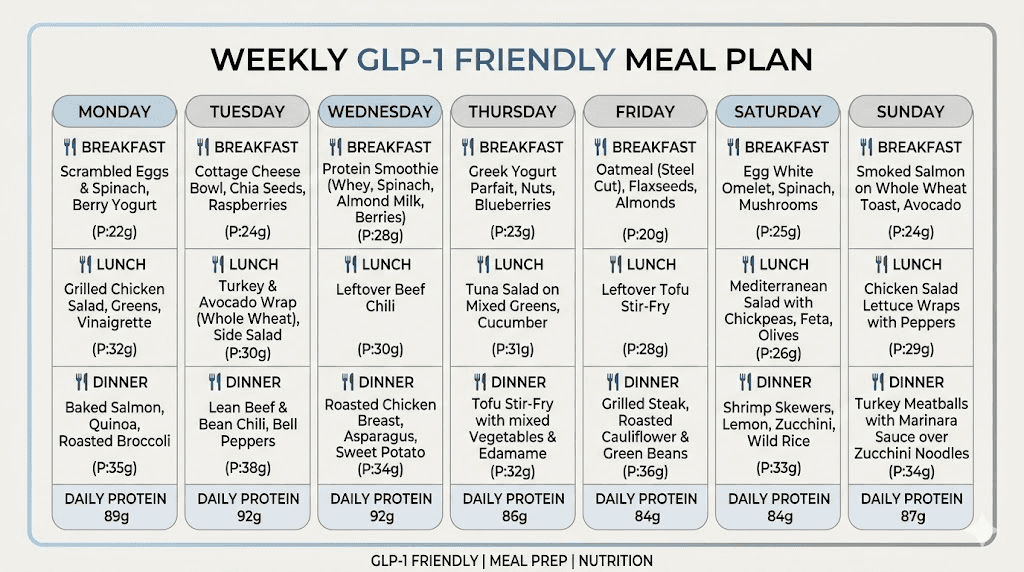
The 7-day GLP-1 friendly meal plan
Theory is helpful. A concrete plan is better. Here is a full week of GLP-1 friendly meals that hits protein targets, manages side effects, and requires minimal cooking through strategic meal prep.
Weekly prep (Sunday, 2 hours): Grill two pounds of chicken breast. Cook one batch of quinoa. Hard-boil 12 eggs. Roast a sheet pan of mixed vegetables. Make one batch of turkey meatballs. Wash and prep salad greens.
Day 1 (Monday)
Breakfast: Greek yogurt protein bowl with berries and flaxseed (30g protein)
Lunch: Grilled chicken power salad with chickpeas (38g protein)
Snack: Two hard-boiled eggs (12g protein)
Dinner: Baked salmon with roasted asparagus (34g protein)
Daily total: 114g protein
Day 2 (Tuesday)
Breakfast: Overnight protein oats (32g protein)
Lunch: Turkey lettuce wraps with carrots (32g protein)
Snack: String cheese and turkey roll-ups (18g protein)
Dinner: Turkey meatballs with marinara and green beans (36g protein)
Daily total: 118g protein
Day 3 (Wednesday)
Breakfast: Smoothie with protein powder, banana, and spinach (35g protein)
Lunch: Chicken and quinoa bowl with roasted vegetables (40g protein)
Snack: Cottage cheese with berries (14g protein)
Dinner: Chicken stir-fry with broccoli over cauliflower rice (35g protein)
Daily total: 124g protein
Day 4 (Thursday)
Breakfast: Cottage cheese toast with tomato and cucumber (26g protein)
Lunch: Tuna protein plate with vegetables and crackers (35g protein)
Snack: Edamame, one cup (17g protein)
Dinner: White fish with lemon and herbs plus arugula salad (32g protein)
Daily total: 110g protein
Day 5 (Friday)
Breakfast: Egg white veggie scramble with half avocado (28g protein)
Lunch: Shrimp and avocado bowl with cauliflower rice (33g protein)
Snack: Greek yogurt (15g protein)
Dinner: Slow cooker chicken chili (38g protein)
Daily total: 114g protein
Day 6 (Saturday)
Breakfast: Greek yogurt protein bowl (30g protein)
Lunch: Leftover chicken chili (38g protein)
Snack: Turkey jerky, one ounce (14g protein)
Dinner: Egg frittata with spinach and feta plus side salad (28g protein)
Daily total: 110g protein
Day 7 (Sunday)
Breakfast: Overnight protein oats (32g protein)
Lunch: Grilled chicken salad with mixed greens (38g protein)
Snack: Two hard-boiled eggs (12g protein)
Dinner: Baked salmon with quinoa and steamed broccoli (36g protein)
Daily total: 118g protein
Every day in this plan hits between 110-124 grams of protein while staying within 1,400-1,600 calories. Adjust portions up or down based on your body weight, activity level, and how your appetite responds to your specific semaglutide dosage or tirzepatide dosage. For a printable version of a structured plan, see our tirzepatide meal plan PDF.
Special dietary considerations on GLP-1
Not every GLP-1 user eats the same way. Vegetarians, people with food allergies, and those following specific dietary patterns need GLP-1 friendly meals adapted to their needs.
Vegetarian and vegan GLP-1 friendly meals
Meeting protein targets without meat requires more intentional planning, but it is absolutely achievable. The key is combining plant proteins to create complete amino acid profiles throughout the day.
Top vegetarian protein sources: Tofu (20g per cup), tempeh (31g per cup), lentils (18g per cup cooked), chickpeas (15g per cup cooked), edamame (17g per cup), Greek yogurt (15g per serving), eggs (6g each), cottage cheese (14g per half cup).
Sample vegetarian GLP-1 dinner: Bake a block of extra-firm tofu pressed and cubed at 400 degrees for 25 minutes until crispy. Toss with a teriyaki glaze. Serve over brown rice with steamed bok choy. This delivers 28 grams of plant-based protein in a meal that tastes far better than "healthy" food has any right to taste.
Vegans face the additional challenge of losing dairy-based protein sources. Supplementing with a plant-based protein powder (pea protein is the most complete) bridges the gap. Consider a pea protein shake mid-morning and mid-afternoon to ensure muscle-protective protein levels throughout the day.
Keto-friendly GLP-1 meals
Some people choose to combine keto with semaglutide, eliminating most carbohydrates while on GLP-1 therapy. This can work but requires careful attention to fat intake, because high-fat keto staples like bacon, cheese, and butter create the exact digestive problems that GLP-1 medications amplify.
A GLP-1 friendly keto meal looks different from standard keto. Think grilled chicken thighs (not fried), avocado (not bacon), olive oil dressing (not ranch), and plenty of non-starchy vegetables. The protein stays high, the carbs stay low, but the fat stays moderate rather than extreme. Standard keto encourages 70% of calories from fat. GLP-1 keto works better at 50-55% fat with higher protein, around 35-40% of calories.
Intermittent fasting and GLP-1
Many people wonder about combining intermittent fasting with GLP-1 medication, especially since their natural appetite pattern already mimics a fasting schedule. The concern is legitimate. If you only eat during a six or eight hour window, can you get enough protein?
The answer depends on your approach. A 16:8 fasting schedule with meals at 12 PM, 4 PM, and 8 PM can work if each meal delivers 35+ grams of protein. But compressed eating windows make hitting 100+ grams of protein harder, not easier. If you find yourself consistently below your protein target, widen your eating window or add a protein shake outside the window. Protecting muscle matters more than adherence to a fasting protocol.
Hydration strategies that complement your meals
Water is the most overlooked component of a GLP-1 friendly eating plan. Dehydration amplifies nearly every side effect these medications produce. Dizziness, headaches, constipation, fatigue, and lightheadedness all worsen with inadequate fluid intake.
The challenge is that GLP-1 medications suppress thirst for many users. You simply do not feel thirsty, so you do not drink. By the time symptoms appear, you are already significantly dehydrated.
Hydration targets: 64-80 ounces of water daily, spread throughout the day. Do not try to drink 40 ounces at once, as your slow-emptying stomach cannot handle it.
Timing with meals: Drink most of your water between meals, not with them. Drinking large amounts with food dilutes digestive enzymes and adds volume to an already slow-emptying stomach, increasing nausea and bloating. Sip small amounts with meals, and focus hydration efforts in the gaps between eating.
Electrolyte considerations: When you eat less food, you consume fewer electrolytes naturally. Sodium, potassium, and magnesium levels can drop, causing cramps, fatigue, and heart palpitations. Adding electrolytes to your water or eating electrolyte-rich foods (bananas, avocados, leafy greens, nuts) helps maintain balance. This is especially important for people experiencing leg cramps on semaglutide or feeling cold on tirzepatide.
Supplements that support GLP-1 friendly eating
Even the most carefully planned GLP-1 friendly meal plan may leave nutritional gaps when you are eating significantly less food than your body was designed for. Strategic supplementation fills those gaps without adding unnecessary calories.
Essential supplements for GLP-1 users:
A quality multivitamin covers the micronutrient shortfall from reduced food intake. When you eat 1,200-1,600 calories instead of 2,000-2,500, you get proportionally fewer vitamins and minerals. A multivitamin is insurance against deficiency.
Vitamin D deserves separate mention because fat loss releases stored vitamin D from adipose tissue, temporarily increasing blood levels, but long-term reduced fat intake can lead to deficiency. Most people benefit from 2,000-4,000 IU daily, especially those who are also experiencing cold sensitivity.
Omega-3 fatty acids reduce the inflammation that can accompany rapid weight loss. If you do not eat fatty fish at least twice per week, a fish oil supplement providing 1,000-2,000mg of combined EPA and DHA fills the gap.
Probiotics support the gut microbiome changes that occur on GLP-1 therapy. The best approach combines probiotic supplements with probiotic-rich foods like yogurt, kefir, and fermented vegetables. Our guide to the best probiotics for semaglutide covers specific strains that research supports for GLP-1 users.
B12 and related B vitamins are worth special attention because many compounded GLP-1 formulations include B12 with semaglutide or B12 with tirzepatide precisely because reduced food intake lowers B vitamin status. If your formulation does not include B12, supplement separately.
For a comprehensive list, see our complete guide to supplements to take with GLP-1 and supplements for tirzepatide users. SeekPeptides members access detailed supplement protocols tailored to their specific GLP-1 regimen and health goals.
Grocery shopping list for GLP-1 friendly meals
Having the right ingredients at home makes GLP-1 friendly eating automatic. Having the wrong ingredients, or no ingredients, makes it impossible. Here is your weekly shopping list organized by category.
Proteins
Chicken breast (2 pounds), lean ground turkey (1 pound), salmon fillets (2), white fish fillets (2), shrimp (1 pound frozen), eggs (1 dozen), plain Greek yogurt (32 oz container), cottage cheese (16 oz), string cheese (1 package), deli turkey breast slices (8 oz), canned tuna in water (3 cans).
Produce
Spinach (2 bags), mixed greens (1 container), broccoli (2 heads), asparagus (1 bunch), zucchini (3), bell peppers (4, mixed colors), cucumber (2), cherry tomatoes (1 pint), avocados (3), lemons (4), sweet potatoes (3), snap peas (1 bag), green beans (1 pound), bananas (4), mixed berries (2 cups fresh or frozen), fresh herbs (parsley, cilantro, dill).
Pantry and grains
Quinoa (1 bag), brown rice (1 bag), rolled oats (1 canister), whole grain bread (1 loaf), almond flour (small bag), canned chickpeas (2 cans), canned white beans (2 cans), canned diced tomatoes (1 can), low-sodium chicken broth (1 carton), olive oil, sesame oil, low-sodium soy sauce, chia seeds, ground flaxseed, protein powder (whey isolate or plant-based).
Snacks
Turkey jerky (2 packages), edamame frozen (1 bag), whole grain crackers (1 box), peanut butter or almond butter (1 jar), mixed nuts (small bag).
This list covers the entire 7-day meal plan above plus snack options. Total cost varies by location and brand choices, but expect roughly $75-$120 per week for one person. Compared to eating out, which becomes less appealing anyway on GLP-1 therapy, this is significantly cheaper and infinitely more aligned with your health goals.
Eating out on GLP-1: restaurant strategies
Social life does not stop because you started GLP-1 therapy. Restaurants can work. They just require strategy.
Order protein first. Scan the menu for grilled chicken, fish, or shrimp dishes. Ask for the protein grilled or baked, not fried. Request sauces on the side. Choose steamed or roasted vegetables over starches as your side.
Portion management. Restaurant portions are designed for people without appetite suppression. Ask for a to-go box when your food arrives and immediately pack half away. What remains is closer to the portion your GLP-1 modified stomach can handle.
Appetizers as entrees. Many appetizer portions are the ideal size for GLP-1 users. A shrimp cocktail or seared ahi tuna appetizer with a side salad makes a perfect GLP-1 friendly restaurant meal.
Skip the bread basket. Your stomach has limited capacity. Do not waste it on bread before the protein arrives. This is one of the most practical tips for semaglutide users that makes an immediate difference.
Communicate simply. You do not need to explain your medication to servers. "Smaller portion, please" or "I would like the lunch size" works at most restaurants. If you need help discussing GLP-1 with others, our guide on what to say when requesting GLP-1 options offers practical conversation templates.
Tracking your nutrition on GLP-1
What gets measured gets managed. Tracking your food intake, at least for the first four to six weeks, provides invaluable data about whether your GLP-1 friendly meals are actually hitting your targets.
What to track:
Total daily protein (aim for 1.2-1.6g per kg body weight). Total daily calories (avoid going below 1,200 for women or 1,500 for men). Water intake (64-80 ounces daily). Fiber intake (25-30 grams daily).
What not to obsess over:
Exact macronutrient ratios down to the gram. Meal timing to the minute. Organic versus conventional. Perfect adherence every single day.
Tracking serves as a reality check, not a source of anxiety. Many people discover they are eating far less protein than they assumed, or consuming far fewer calories than their body needs. That data drives adjustments that prevent weight loss stalls on semaglutide and the frustrating weight gain that can happen on tirzepatide when nutrition falls apart.
SeekPeptides provides members with monitoring tools and tracking guidance specifically designed for GLP-1 users, making it easy to know whether your nutrition supports your weight loss goals or is quietly sabotaging them.
Common nutrition mistakes on GLP-1
After analyzing hundreds of GLP-1 user experiences, certain patterns emerge. These nutrition mistakes derail results far more often than medication issues, dosing problems, or genetic factors.
Mistake 1: Eating too little
It sounds counterintuitive. You are trying to lose weight. Eating less should help. But there is a floor below which your body interprets caloric restriction as starvation and responds by slowing metabolism, increasing cortisol, breaking down muscle, and triggering intense fatigue. When people eat 600-800 calories daily because their GLP-1 medication kills their appetite entirely, they lose weight fast initially but hit a devastating plateau within weeks, followed by worsening side effects and declining body composition.
If you consistently cannot eat enough, talk to your prescriber about adjusting your dose. Sometimes a slightly lower dose allows enough appetite to eat properly while still providing meaningful weight loss.
Mistake 2: Prioritizing carbs over protein
When appetite is small, people gravitate toward what sounds appealing: toast, crackers, fruit, rice. These are all carbohydrate-dominant foods. They provide quick energy and require little chewing. But they contribute almost nothing to muscle preservation, and the people who stall at week four on semaglutide often share this pattern.
The fix is simple. Protein first. Always. Before anything else touches your plate.
Mistake 3: Skipping meals entirely
Skipping meals creates a cascade of problems. You miss protein targets. Your blood sugar drops. Energy crashes. And then when you do eat, you are so hungry that you eat too much, too fast, triggering severe nausea and GI distress. Consistent, smaller meals prevent this rollercoaster and keep your metabolism running smoothly throughout your first month on tirzepatide and beyond.
Mistake 4: Ignoring fiber
Fiber rarely makes the highlight reel of nutrition advice, but on GLP-1 therapy, it is a game-changer. Adequate fiber prevents constipation, feeds beneficial gut bacteria, stabilizes blood sugar, and creates satiety from smaller portions. Ignoring it leads to the GI misery that causes many people to consider stopping medication. Do not let preventable digestive issues undermine your progress when the right fiber supplement or a few dietary adjustments could solve the problem entirely.
Mistake 5: Not adapting as doses change
Your appetite at 2.5mg of tirzepatide is dramatically different from your appetite at 10mg. What works nutritionally at a starting dose may be completely impractical at a higher dose. Revisit your meal plan every time your dose changes. The meals that kept you fueled at a low dose may need to become smaller, more protein-dense, and more liquid-based as you titrate up. Monitor your tirzepatide dosage closely and adjust your eating accordingly.
Building long-term eating habits beyond GLP-1
GLP-1 therapy is not permanent for most people. Whether you plan to stay on medication long-term or eventually taper off, the eating habits you build now determine whether your results last.
The protein-first approach works with or without medication. The emphasis on whole foods, adequate hydration, and strategic meal prep is not a "GLP-1 diet." It is a sustainable eating pattern that supports a healthy body composition at any point in your life. People who treat GLP-1 therapy as a window of opportunity, using the appetite suppression to build better habits rather than just eating less of the same foods, are the ones who maintain their results when the medication dose decreases or stops.
Think about it this way. The medication gives you a unique advantage: reduced appetite makes it easier to eat right because you are not fighting cravings and hunger constantly. Use that advantage to rewire your food preferences, your portion expectations, and your relationship with protein. When the training wheels eventually come off, you want those habits to be automatic.
For those planning to taper their medication eventually, our guides on weaning off tirzepatide and managing semaglutide withdrawal include nutrition strategies for maintaining weight loss as appetite returns. SeekPeptides members access comprehensive transition protocols that bridge the gap between active GLP-1 therapy and long-term weight maintenance.
GLP-1 friendly meals for specific situations
Injection day meals
Many users notice stronger appetite suppression and more GI sensitivity on injection day and the day after. Plan your lightest, most easily digestible meals for these days. Smoothies, broths with shredded chicken, yogurt bowls, and simple protein plates work better than heavy cooked meals. Save the salmon dinner and the chili for days three through six of your weekly cycle when side effects are minimal.
Meals for nausea-heavy periods
During dose escalation phases, nausea can be intense enough to make even GLP-1 friendly meals challenging. The BRAT diet approach (bananas, rice, applesauce, toast) is often recommended, but it is terrible for protein intake. A modified approach works better: plain chicken broth with shredded chicken, protein-fortified applesauce, yogurt smoothies, and scrambled eggs made with just a touch of butter. Getting even 60-70 grams of protein on a bad nausea day is better than the zero grams you get from avoiding food entirely. For comprehensive nausea management, see our GLP-1 recipes guide.
Meals for active people on GLP-1
If you exercise regularly, and you should, especially resistance training, your protein and calorie needs are higher than sedentary GLP-1 users. Add a pre-workout snack (banana with peanut butter, 15g protein) and a post-workout shake (30g protein) on training days. This can push your daily protein to 140-150 grams, which supports both weight loss and the muscle building that is possible on GLP-1 therapy with the right nutrition and training stimulus.
Do not skip meals after workouts because you are not hungry. The post-exercise window is when your muscles are most receptive to protein for repair and growth. Even if you can only manage a protein shake, get something in within 60-90 minutes of finishing your session. Use our guide to creatine on GLP-1 if you are considering additional performance supplements.
Frequently asked questions
How many meals should I eat per day on GLP-1?
Most GLP-1 users do best with four to five smaller eating occasions: three meals and one to two protein-rich snacks. This distributes protein evenly, prevents blood sugar crashes, and avoids overwhelming a stomach that empties 30-40% slower than normal. Our best foods to eat on semaglutide guide includes specific timing strategies.
Can I eat normally on GLP-1 medication?
You can eat many of the same foods, but portions and composition need to change. High-fat, high-sugar, and fried foods cause significantly more discomfort than before. Protein needs to become a higher percentage of your diet. And meal sizes need to decrease to match your slower digestion. "Normal" eating on GLP-1 is eating smarter, not eating the same way with less appetite.
What happens if I do not eat enough protein on GLP-1?
Insufficient protein intake accelerates muscle loss during weight loss. Research shows that lean mass can comprise up to 40% of weight lost on GLP-1 therapy without adequate protein and resistance training. Lost muscle reduces metabolism, increases injury risk, and makes weight regain more likely. Aim for 1.2-1.6 grams of protein per kilogram of body weight daily. See our detailed guide on how much protein you need on semaglutide.
Are smoothies a good meal replacement on GLP-1?
Smoothies are an excellent backup option for days when solid food feels impossible. Include 25-30 grams of protein powder, a handful of spinach, some frozen fruit, and a tablespoon of nut butter. Sip slowly over 20-30 minutes. However, relying exclusively on liquid nutrition long-term is not ideal, as chewing solid food helps with satiety signaling and nutrient absorption. Our protein shake guide for GLP-1 users covers the best formulas.
Should I follow a specific diet on GLP-1 like keto or Mediterranean?
The Mediterranean diet aligns most naturally with GLP-1 friendly eating due to its emphasis on lean proteins, healthy fats, whole grains, and vegetables. Keto can work but requires modification to lower fat content, as described earlier. The most important "diet" on GLP-1 is not a named plan but rather the protein-first, whole-foods approach that consistently delivers results. Find what works for your preferences and stick with it.
How do I handle food aversions on GLP-1?
Food aversions are common, particularly to previously enjoyed foods. Chicken, eggs, and coffee are frequently reported aversions. When this happens, pivot to alternative protein sources. If chicken triggers an aversion, switch to fish, turkey, or plant-based proteins. The key is maintaining protein intake regardless of which specific foods provide it. Aversions typically fade within two to four weeks of stabilizing at a dose.
Is it safe to eat very few calories on GLP-1 medication?
Eating below 1,200 calories (women) or 1,500 calories (men) for extended periods risks metabolic adaptation, nutrient deficiency, and accelerated muscle loss. If medication suppresses your appetite so much that you consistently eat below these thresholds, discuss a dose reduction with your prescriber. Adequate nutrition is not optional for safe, sustainable weight loss.
External resources
PMC: Preservation of Lean Soft Tissue During GLP-1 Weight Loss
American Diabetes Association: GLP-1 Therapies and Muscle Preservation
For researchers serious about optimizing their GLP-1 protocols and nutrition, SeekPeptides offers the most comprehensive resource available, with evidence-based guides, personalized protocols, and a community of thousands who have navigated these exact questions about what to eat, when to eat it, and how to make every calorie count toward their goals.
In case I do not see you, good afternoon, good evening, and good night. May your protein stay high, your meals stay satisfying, and your results stay consistent.