Mar 23, 2026

You could be overpaying by thousands of dollars a year for tirzepatide. Many people do. They sign up for the first provider they find, accept whatever price appears on screen, and never realize that identical medication costs 40% less somewhere else. The difference between a smart purchase and an expensive mistake often comes down to understanding how compounded tirzepatide pricing actually works.
But here is the catch. The compounded tirzepatide landscape has changed dramatically. FDA regulatory shifts have reshaped what is available, who can compound it, and how much you should expect to pay. Old pricing guides are already outdated. What was true six months ago may not apply today.
This guide breaks down every cost factor, from dosage-based pricing to provider comparisons to insurance options. Whether you are exploring compounded tirzepatide for the first time or trying to reduce what you already spend, the numbers here reflect current market reality. Not last year. Not theoretical. Right now.
SeekPeptides tracks these pricing changes closely, and our members get access to updated cost comparisons, provider reviews, and protocol guidance that accounts for the shifting regulatory environment.
Understanding the full cost picture is the first step toward making an informed decision about your tirzepatide weight loss journey.
What compounded tirzepatide actually costs right now
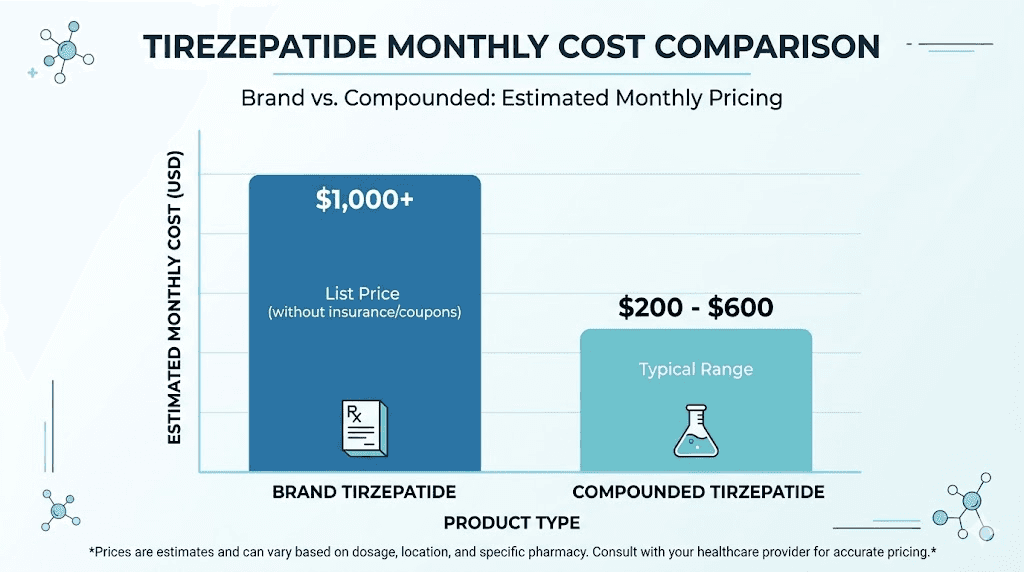
The short answer is $249 to $500 per month. But that range hides enormous variation in what you actually get for your money.
Compounded tirzepatide pricing depends on several factors. The provider you choose matters. The dosage you need matters. Whether the formulation includes additional ingredients like vitamin B12 or niacinamide matters. Even the format, whether injectable or oral dissolving tablets, affects the final price tag.
Most legitimate telehealth providers charge between $299 and $399 per month for compounded tirzepatide programs. This typically includes the medication itself, medical consultation, ongoing monitoring, and prescription management. Some charge separately for each component, making the true cost harder to calculate at first glance.
Here is what the pricing landscape looks like across different provider tiers.
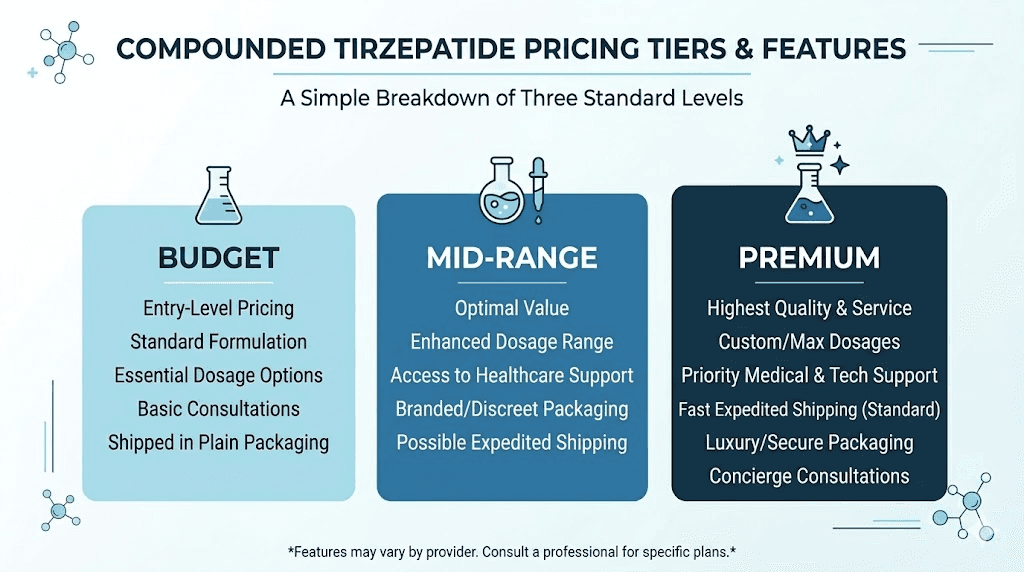
Budget tier: $150 to $250 per month
Providers in this range exist. Be cautious. Extremely low prices, anything under $200, should raise questions about where the medication comes from. Unlicensed pharmacies, questionable sourcing, and unverified potency are real risks at this price point. The savings look attractive until you consider that the medication might not contain what the label claims.
Some legitimate providers do offer introductory pricing in this range. First-month discounts of $149 or $199 are common marketing strategies. Just understand that the price jumps significantly after the introductory period, often to $349 or more. Always check what you will pay in month two and beyond before committing.
If you are exploring the grey market for tirzepatide, understanding pricing red flags becomes even more important. Legitimate compounding requires expensive equipment, quality testing, and licensed pharmacists. Those costs have to show up somewhere in the price.
Mid-range tier: $250 to $400 per month
This is where most reputable providers operate. The sweet spot for quality compounded tirzepatide with proper medical oversight sits around $299 to $349 per month. At this price point, you generally get medication from a 503A or 503B registered compounding pharmacy, a prescribing physician who reviews your health history, and some level of ongoing support.
Providers like Empower Pharmacy supply compounded tirzepatide through various telehealth platforms in this range. Others like Orderly Meds, Strive, and ProRx also fall within this pricing band. Each has different strengths, from customer service quality to formulation options to shipping speed.
The real price most people pay at this tier is 20% to 30% higher than advertised. Membership fees, consultation charges, and shipping costs add up. A $299 per month medication might actually cost $360 to $380 when you factor in everything. Ask specifically about total out-of-pocket cost before signing up.
Premium tier: $400 to $700 per month
Premium pricing usually reflects enhanced formulations, more comprehensive medical oversight, or concierge-level service. Some providers at this level include combination formulations with glycine and B12, regular blood work monitoring, dietitian consultations, and detailed meal planning support.
Whether premium pricing delivers proportionally better results is debatable. The medication itself is the same active ingredient regardless of price tier. What changes is the wraparound service. For some people, particularly those new to self-injection protocols, that extra support has genuine value. For experienced users who know their dosing and have established routines, the premium tier may represent unnecessary expense.
Brand-name tirzepatide versus compounded: the real cost difference
Brand-name tirzepatide comes in two FDA-approved forms. Mounjaro, prescribed for type 2 diabetes, and Zepbound, prescribed for weight management. Both contain the exact same active ingredient. Both cost roughly the same without insurance.
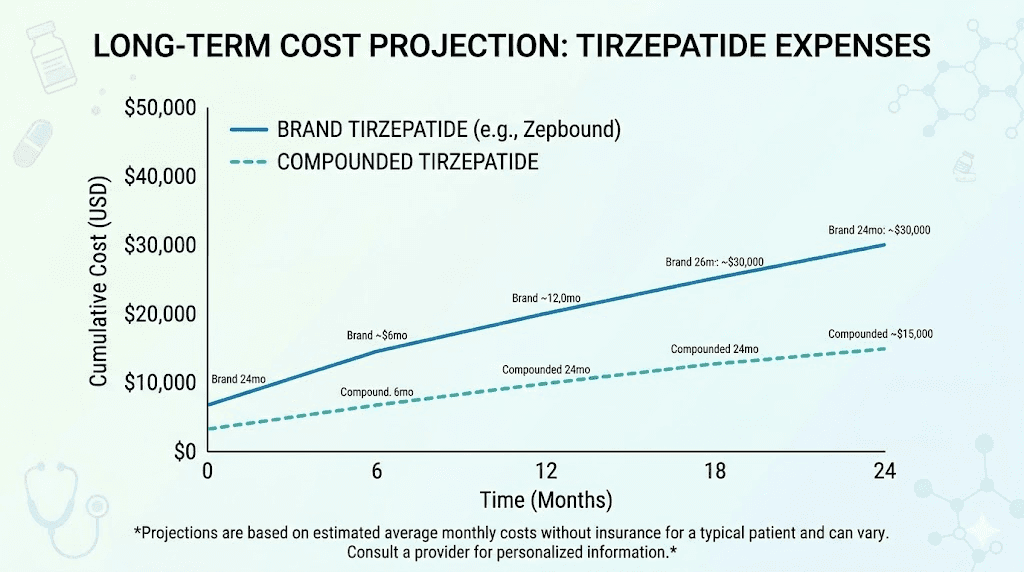
The sticker price is significant. Mounjaro runs approximately $1,079 for a 28-day supply. Zepbound costs about $1,086 for the same period. That translates to roughly $13,000 per year at full retail price. For a medication most people need to take for 12 months or longer to achieve and maintain results, the lifetime cost becomes staggering.
Compounded tirzepatide, at $299 to $399 per month, saves between $680 and $780 per month compared to brand-name pricing. Over a year, that is $8,160 to $9,360 in savings. Over a typical 18-month treatment course, you could save $12,000 to $14,000.
Those numbers explain why compounded tirzepatide became so popular. They also explain why the regulatory landscape became so contentious.
What you get with brand-name tirzepatide
FDA-approved manufacturing with rigorous quality controls. Consistent potency in every dose. Prefilled injection pens that require no reconstitution. Clinical trial data supporting safety and efficacy. Manufacturer support programs. Potential insurance coverage.
The convenience factor alone is substantial. Brand-name pens are ready to use out of the box. No mixing, no calculating, no drawing up doses from vials. For people who are uncomfortable with the syringe and vial process, that simplicity has real value.
What you get with compounded tirzepatide
Significant cost savings. Customizable formulations that can include additional compounds. Potentially more flexible dosing options, including microdosing approaches that brand-name pens do not support. Access to sublingual and oral formats that some people prefer over injections.
The trade-offs are real, though. No FDA approval for the compounded version. Potential potency variations between batches. You need to handle reconstitution yourself in many cases. Less regulatory oversight of the manufacturing process. And, critically, evolving legal status that may affect long-term availability.
Side-by-side cost comparison
Factor | Brand (Mounjaro/Zepbound) | Compounded |
|---|---|---|
Monthly cost (no insurance) | $1,069 to $1,086 | $249 to $500 |
Annual cost | $12,828 to $13,032 | $2,988 to $6,000 |
FDA approved | Yes | No |
Potency consistency | Guaranteed | Varies by pharmacy |
Format | Prefilled pen | Vial, sublingual, ODT |
Insurance eligible | Sometimes | Rarely |
HSA/FSA eligible | Yes | Yes (with valid Rx) |
Reconstitution needed | No | Often yes |
The savings are undeniable. But savings only matter if the product delivers consistent, reliable results. Understanding the side effect profile and what to expect from your specific formulation is essential regardless of which route you choose.
The FDA factor: how regulations changed compounded tirzepatide pricing
This section matters more than any pricing chart. Because the legal landscape for compounded tirzepatide shifted fundamentally, and those changes affect both availability and cost.
Here is the timeline that every potential buyer needs to understand.
The shortage exception era
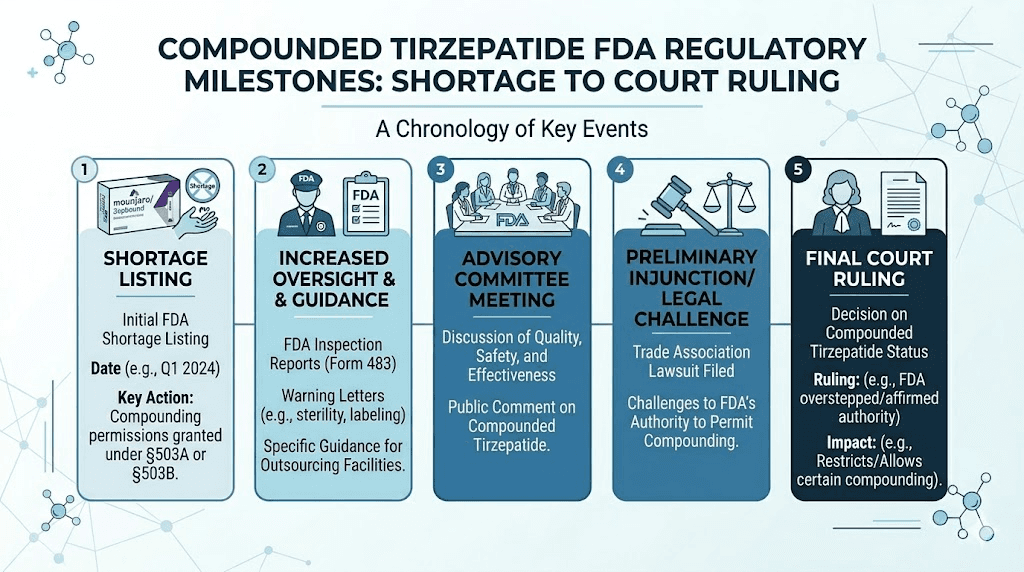
Compounded tirzepatide existed legally because of a provision in the Federal Food, Drug, and Cosmetic Act. When an FDA-approved drug is in shortage, compounding pharmacies can produce versions of that drug to meet patient demand. Tirzepatide was on the FDA drug shortage list for an extended period as demand for Mounjaro and Zepbound far exceeded manufacturing capacity.
During this period, hundreds of compounding pharmacies and telehealth providers entered the market. Prices dropped as competition increased. Patients who could not access or afford brand-name versions had a legal, legitimate alternative. The compounded tirzepatide market grew rapidly.
October 2024: shortage resolved
On October 2, 2024, the FDA removed tirzepatide from the drug shortage list. This was the pivotal moment. Once a drug is no longer in shortage, the legal basis for most compounding disappears. Pharmacies can no longer rely on the shortage exception to produce what the FDA considers essentially copies of commercially available tirzepatide.
The implications were enormous. The entire compounded tirzepatide industry, worth hundreds of millions of dollars, faced an existential threat. Patients who depended on affordable compounded versions suddenly faced uncertainty about continued access.
Enforcement timelines and deadlines
The FDA did not require immediate cessation. Instead, it established transition periods. For 503A pharmacies (state-licensed compounding pharmacies), the deadline to stop compounding tirzepatide injections was February 18, 2025. For 503B outsourcing facilities, the deadline was March 19, 2025.
These deadlines applied specifically to tirzepatide formulations that were essentially copies of the commercial products, meaning injectable formulations administered by the same route. This distinction matters because it left a potential opening for non-injectable formats.
Legal challenges and court decisions
The compounding industry did not accept the FDA decision quietly. Several legal challenges were filed. The most significant was decided on May 7, 2025, when the US District Court for the Northern District of Texas upheld the FDA decision to remove tirzepatide from the shortage list.
This court ruling effectively closed the door on the primary legal pathway for compounding injectable tirzepatide. While some providers have attempted to find alternative legal justifications, the mainstream compounding of tirzepatide injections has been curtailed.
What this means for pricing
Reduced supply with continued demand means prices have increased for whatever compounded tirzepatide remains available. Providers who continue to operate do so through various regulatory interpretations, and the premium for that uncertainty shows up in their pricing. Where $249 per month was common during the shortage era, prices for remaining compounded options have generally risen.
For many patients, the practical question has shifted from how much does compounded tirzepatide cost to what are my affordable alternatives now. We cover those alternatives in detail below.
Cost by dosage: how your dose affects what you pay
Not all providers price tirzepatide the same way. Understanding how dosage affects cost can save you hundreds of dollars over a treatment course.
Flat-rate pricing model
Most telehealth providers use flat-rate pricing. You pay the same monthly fee regardless of whether you are on 2.5 mg starting doses or working up to 15 mg maintenance doses. This model benefits patients who need higher doses, since the cost per milligram decreases as your dose increases.
At $349 per month flat rate, here is what you actually pay per milligram at each dose level.
Weekly dose | Monthly cost | Cost per mg per month | Monthly mg total |
|---|---|---|---|
2.5 mg | $349 | $34.90 | 10 mg |
5 mg | $349 | $17.45 | 20 mg |
7.5 mg | $349 | $11.63 | 30 mg |
10 mg | $349 | $8.73 | 40 mg |
12.5 mg | $349 | $6.98 | 50 mg |
15 mg | $349 | $5.82 | 60 mg |
The economics strongly favor flat-rate plans once you move beyond the starting dose. Someone on 15 mg weekly pays 83% less per milligram than someone on 2.5 mg weekly. This is why flat-rate pricing generally represents the better value for most patients, since the standard tirzepatide dosing protocol involves gradual escalation from 2.5 mg to higher doses over several months.
Tiered pricing model
Some providers charge more as your dose increases. This sounds reasonable on the surface, since higher doses use more active ingredient. But in practice, tiered pricing often costs more than flat-rate for patients who need moderate to high doses.
A typical tiered structure might look like this: $199 for 2.5 mg weekly, $249 for 5 mg weekly, $299 for 7.5 mg weekly, $349 for 10 mg weekly, and $449 for 12.5 to 15 mg weekly. The starting price looks lower, but the total cost over a treatment course can exceed what you would pay with a flat-rate provider.
Calculate your expected total cost based on the standard dose escalation schedule. Most patients spend 4 weeks at each dose level before increasing, meaning a typical progression from 2.5 mg to 10 mg takes about 16 weeks. Multiply each tier price by the time you will spend at that level to see the real cost difference between pricing models.
Vial-based pricing
Some compounding pharmacies sell tirzepatide by the vial rather than through monthly subscription plans. Common vial sizes include 2 ml vials containing approximately 33 mg of tirzepatide (priced around $500 to $600) and 4.5 ml vials containing approximately 75 mg (priced around $550 to $1,200).
Vial pricing can offer savings for experienced users who know exactly what they need. A 75 mg vial at $550 from certain pharmacies works out to roughly $7.33 per milligram, which is competitive with or cheaper than most subscription models. The catch is that you need to handle your own reconstitution, storage, and dosing, and you typically do not get the medical oversight that subscription services include.
If you go the vial route, understanding proper storage requirements is critical. Improper storage degrades the peptide, effectively increasing your cost per effective milligram even if the sticker price looks good. Check the shelf life and refrigeration requirements before buying in bulk.
Provider cost comparisons: who charges what
Comparing tirzepatide providers is not straightforward because each bundles different services into their pricing. Here is what several well-known providers charge, along with what is included.
Telehealth provider pricing overview
Provider | Monthly cost | Includes consult | Includes medication | Format |
|---|---|---|---|---|
$299 to $399 | Yes | Yes | Injectable | |
$249 to $349 | Yes | Yes | Injectable | |
$300 to $450 | Yes | Yes | Injectable, oral | |
$299 to $399 | Yes | Yes | Injectable | |
$275 to $449 | Yes | Yes | Injectable | |
$299 to $399 | Yes | Yes | Injectable | |
$280 to $400 | Varies | Yes | Injectable | |
$249 to $349 | Yes | Yes | Injectable |
These prices reflect general ranges and may not include all fees. Consultation costs, shipping charges, and platform fees can add $30 to $80 per month on top of listed medication prices. Always ask for the total out-of-pocket cost before enrolling.
What to look for beyond price
The cheapest option is not always the best value. Consider these factors when comparing providers.
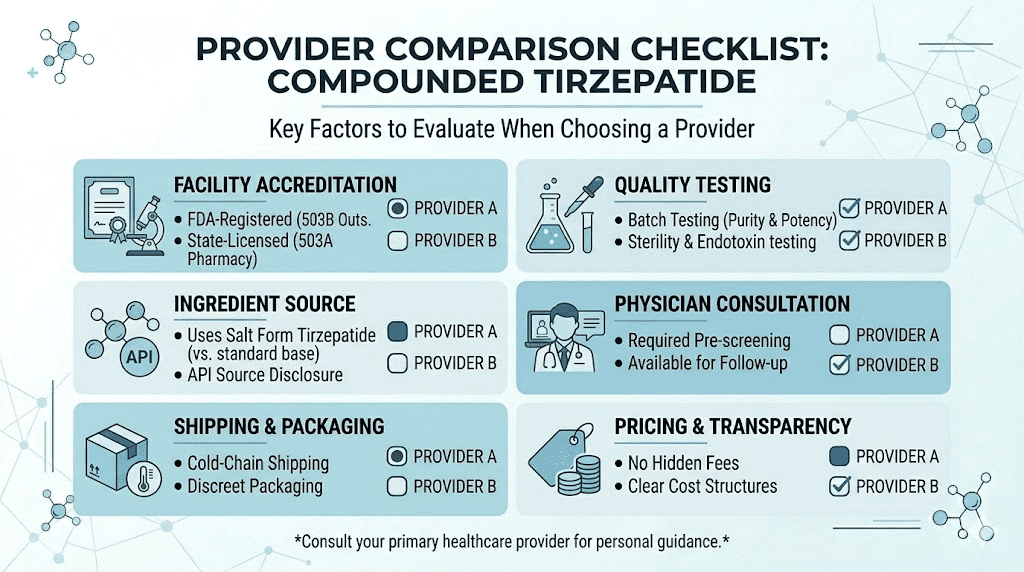
Pharmacy sourcing. Where does the provider get their compounded tirzepatide? 503B outsourcing facilities are subject to more FDA oversight than 503A pharmacies. This distinction matters for quality assurance and potency consistency.
Third-party testing. Does the provider share certificates of analysis showing actual potency, sterility testing results, and endotoxin levels? Reputable providers make this information available. If a provider cannot or will not share testing results, consider that a warning sign.
Prescriber access. How easy is it to reach the prescribing physician if you have questions about side effects or dosage adjustments? Some providers offer direct messaging with prescribers. Others route everything through customer service teams with delayed response times.
Formulation options. Do they offer different formats beyond standard injectable? Some patients prefer orally dissolving tablets or sublingual drops. Others want enhanced formulations with glycine and B12. More options generally mean better ability to customize your protocol.
Cancellation policy. Can you cancel without penalty? Some providers lock you into 3-month or 6-month commitments with early cancellation fees. Others offer month-to-month flexibility. Given the regulatory uncertainty, flexibility to pause or cancel without financial penalty has particular value right now.
Insurance, HSA, and FSA: reducing your out-of-pocket cost
Understanding your payment options can significantly reduce what you actually spend on tirzepatide, whether brand-name or compounded.
Insurance coverage for brand-name tirzepatide
Insurance coverage for tirzepatide depends almost entirely on the specific indication. Mounjaro, prescribed for type 2 diabetes, has broader insurance coverage because it is classified as a diabetes medication. Many commercial insurance plans cover Mounjaro with copays ranging from $25 to $150 per month.
Zepbound, prescribed for weight management, faces much steeper coverage barriers. Most insurance plans consider weight loss medications non-essential and exclude them from formularies. Some plans do cover Zepbound, particularly employer-sponsored plans that have added obesity treatment coverage. But coverage is far from universal.
The manufacturer offers savings programs that can reduce costs. Eli Lilly provides a Mounjaro savings card that reduces copays to as low as $25 per month for commercially insured patients. Zepbound has a similar program. These programs typically do not apply to government insurance (Medicare, Medicaid) or when the medication is not covered by the patient insurance plan.
Insurance coverage for compounded tirzepatide
Short answer: almost never covered. Insurance plans generally exclude compounded medications from coverage. Since compounded tirzepatide is not FDA-approved, insurers have no obligation to cover it and virtually none do.
This means compounded tirzepatide is almost always a cash-pay expense. The entire cost comes from your pocket. However, there are ways to use pre-tax dollars to offset that expense.
Using HSA and FSA funds for tirzepatide
Both Health Savings Accounts (HSA) and Flexible Spending Accounts (FSA) can be used for tirzepatide, including compounded versions, as long as specific conditions are met.
The key requirement is a valid prescription from a licensed physician for a diagnosed medical condition. When tirzepatide is prescribed for type 2 diabetes or obesity (a recognized medical condition), the expense qualifies for HSA and FSA reimbursement. This applies to both brand-name and compounded versions.
For weight loss purposes specifically, your plan administrator may require a letter of medical necessity from your prescriber. This is a straightforward document that your telehealth provider should be willing to furnish. Get it before submitting claims rather than after, to avoid reimbursement delays.
Using HSA funds effectively reduces your tirzepatide cost by your marginal tax rate. If you are in the 24% federal tax bracket, a $349 monthly medication effectively costs $265 after tax savings. Over a year, that HSA advantage saves you roughly $1,000 compared to paying with post-tax dollars.
Some telehealth providers accept HSA and FSA cards directly at checkout. Others require you to pay with a regular card and submit for reimbursement. Direct acceptance is more convenient but should not be the deciding factor in choosing a provider.
Other payment strategies
Annual payment discounts. Several providers offer significant discounts for paying annually instead of monthly. Monthly rates of $349 might drop to $234 per month when you commit to a full year. That is a 33% savings, but it requires a larger upfront commitment and locks you in if the regulatory situation changes.
Multi-month supply purchases. Buying a 3-month supply at once often comes with a per-unit discount. This can save 10% to 20% compared to monthly purchases. The risk is that you are committing to a larger purchase, and if the medication does not work well for you or causes intolerable side effects, you cannot return unused portions.
Afterpay and payment plans. Some providers offer buy-now-pay-later options that spread the cost over several installments. This does not reduce the total cost but can make the monthly cash flow more manageable. Be aware that some of these plans charge interest if payments are not made on time.
The total cost picture: what a full treatment course actually costs
Monthly prices tell only part of the story. Understanding the full treatment cost requires mapping out a realistic timeline.
Typical treatment duration
Most tirzepatide treatment courses run 12 to 18 months for initial weight loss, followed by an indefinite maintenance period. The weight loss timeline typically follows this pattern.
Months 1 through 4 involve dose escalation. You start at 2.5 mg weekly and increase by 2.5 mg every 4 weeks until reaching an effective dose, usually 7.5 to 15 mg weekly. Weight loss during this period is moderate, typically 3% to 5% of body weight.
Months 5 through 12 are the primary weight loss phase. At your maintenance dose, weight loss accelerates. Clinical trials showed average weight loss of 15% to 22% of body weight over this period. This is where the majority of results happen.
Month 13 and beyond is the maintenance phase. Many patients continue tirzepatide at a reduced dose to maintain their weight loss. Stopping the medication entirely leads to weight regain in the majority of cases, which is why long-term cost planning matters.
Total cost projections
Treatment phase | Duration | Brand cost | Compounded cost |
|---|---|---|---|
Dose escalation | 4 months | $4,276 to $4,344 | $996 to $1,600 |
Active weight loss | 8 months | $8,552 to $8,688 | $1,992 to $3,200 |
Year 1 total | 12 months | $12,828 to $13,032 | $2,988 to $4,800 |
Maintenance (year 2) | 12 months | $12,828 to $13,032 | $2,988 to $4,800 |
2-year total | 24 months | $25,656 to $26,064 | $5,976 to $9,600 |
The two-year difference between brand and compounded tirzepatide ranges from $16,000 to $20,000. That is a significant sum. It explains why patients actively seek compounded alternatives and why the FDA regulatory changes have caused such concern.
For researchers tracking their protocols and spending, SeekPeptides offers tools to help calculate and project costs based on your specific dosing plan. Our peptide cost calculator can help you estimate total treatment expenses based on your provider pricing and expected dose escalation schedule.
Hidden costs most people forget
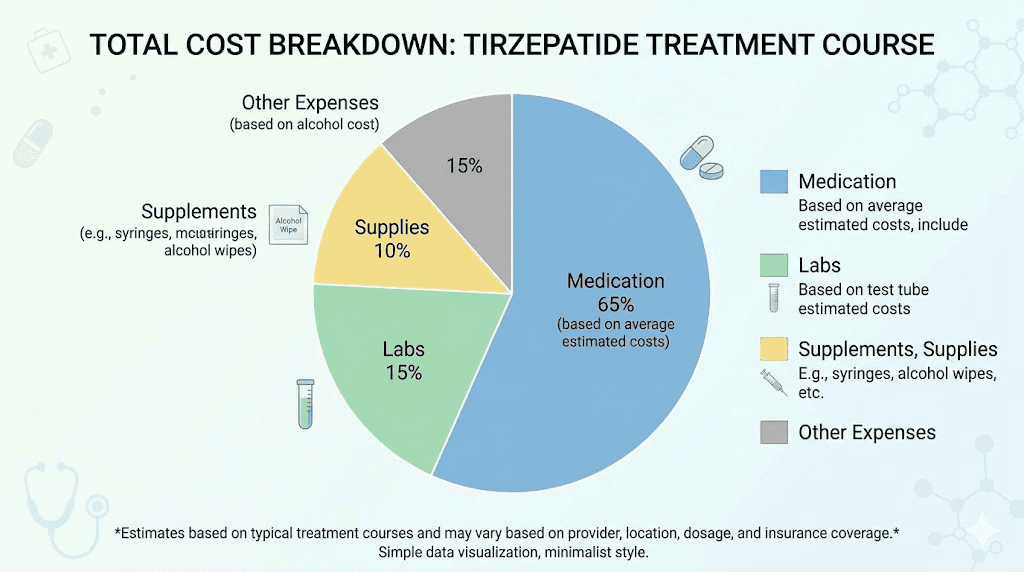
Beyond the medication itself, several additional expenses add up over a treatment course.
Supplies. If using vials rather than prefilled pens, you need insulin syringes, alcohol swabs, and bacteriostatic water for reconstitution. Budget approximately $15 to $30 per month for supplies.
Lab work. Responsible tirzepatide use involves periodic blood work to monitor metabolic markers, kidney function, and other indicators. Depending on your insurance, lab work can cost $50 to $200 per panel, and most providers recommend panels every 3 to 6 months.
Dietary supplements. Many tirzepatide users add supplements to support their protocol. Common additions include fiber supplements for constipation management, protein powder to preserve muscle mass, and electrolytes for hydration. Budget $30 to $60 per month for supplements.
Dietary changes. Eating well on tirzepatide matters. Following a proper tirzepatide diet plan with adequate protein intake might slightly increase your grocery budget, particularly if you increase protein consumption to the recommended 0.7 to 1 gram per pound of body weight. Understanding which foods to avoid and what to eat helps optimize both results and comfort.
Side effect management. Some tirzepatide side effects require over-the-counter remedies. Constipation treatments, headache remedies, and anti-nausea medications add modest but recurring costs. Most people spend $10 to $25 per month on side effect management, particularly during the dose escalation phase.
Affordable alternatives when compounded tirzepatide is not available
Given the regulatory changes, many patients need alternative pathways to affordable tirzepatide. Here are the realistic options.
Manufacturer savings programs
Eli Lilly offers savings programs for both Mounjaro and Zepbound. For commercially insured patients whose plans cover the medication, copay assistance can reduce out-of-pocket costs to $25 per month. For patients without coverage, Eli Lilly has periodically offered cash-pay discount programs, though availability and terms change frequently.
Check eligibility directly through the manufacturer websites. Requirements typically include commercial insurance (not government programs), a valid prescription, and meeting the approved indication criteria.
Compounded semaglutide as an alternative
While compounded tirzepatide faces regulatory restrictions, compounded semaglutide has followed a different regulatory trajectory. As of this writing, compounded semaglutide remains more widely available through compounding pharmacies.
Semaglutide and tirzepatide are not identical medications. Tirzepatide is a dual GIP/GLP-1 receptor agonist, while semaglutide targets only GLP-1 receptors. Clinical trials suggest tirzepatide produces slightly greater weight loss on average. But semaglutide remains highly effective, and its wider availability makes it a practical alternative.
Compounded semaglutide typically costs $150 to $350 per month, making it even more affordable than compounded tirzepatide was. For a detailed comparison of these medications, review our semaglutide versus tirzepatide comparison and the dosage comparison chart.
If you are considering switching, understand the conversion between semaglutide and tirzepatide dosing. The medications are not directly equivalent milligram for milligram, and proper dose conversion prevents both underdosing and overdosing during the transition.
Retatrutide: the next generation option
Retatrutide is a triple receptor agonist targeting GIP, GLP-1, and glucagon receptors. While not yet FDA-approved, it has shown impressive results in clinical trials, with average weight loss exceeding 24% of body weight. It is available through research peptide suppliers at costs ranging from $150 to $400 per month.
The cost of retatrutide varies significantly by source and purity. Understanding proper dosing protocols and injection techniques is essential for anyone considering this option.
Microdosing strategies to reduce cost
Some patients reduce their tirzepatide costs by using microdosing approaches. Rather than following the standard escalation to high doses, microdosing involves using smaller amounts more strategically.
A microdose tirzepatide schedule might use 1 to 2.5 mg weekly instead of the standard 5 to 15 mg range. The medication lasts longer per vial, reducing monthly costs by 50% to 75%. Weight loss is slower but still meaningful for many patients.
Microdosing is particularly interesting for inflammation management and autoimmune applications where the goal is not maximum weight loss but rather the anti-inflammatory benefits of GLP-1 receptor activation at lower doses.
Splitting doses to extend supply
Another cost-reduction strategy involves splitting your tirzepatide dose across two injections per week rather than one. Instead of taking 10 mg once weekly, some patients take 5 mg twice weekly. The total weekly dose remains the same, but this approach may reduce side effects and can sometimes allow patients to use a lower total dose while maintaining appetite suppression.
This strategy does not directly reduce medication costs since the total milligrams consumed remain identical. But patients who find they can achieve results at a lower total dose through split dosing effectively reduce their medication expense. If you are considering this approach, discuss it with your prescriber and review the protocol guidance carefully.
Formulation types and their cost impact
Compounded tirzepatide comes in several formats, each with different pricing, convenience, and absorption characteristics.
Injectable tirzepatide
The most common compounded format. Injectable tirzepatide is administered subcutaneously, typically in the abdomen, thigh, or upper arm. It provides the most reliable absorption and dosing accuracy. Standard concentrations include 10 mg per ml and 20 mg per ml formulations.
Cost for injectable compounded tirzepatide falls in the $249 to $500 per month range described throughout this guide. You will need insulin syringes and knowledge of proper injection technique. Choosing the right injection site and understanding injection site reactions are important for comfort and efficacy.
Injectable is the most cost-effective format per milligram of active ingredient delivered. Subcutaneous bioavailability is high, meaning most of the medication reaches your bloodstream and produces its intended effects.
Sublingual drops and troches
Sublingual tirzepatide dissolves under the tongue. It appeals to patients who dislike needles. However, sublingual absorption is lower than injectable, typically 20% to 40% bioavailability compared to roughly 80% for subcutaneous injection.
This lower bioavailability means you need higher doses to achieve equivalent effects, which increases cost. A 10 mg sublingual dose may deliver only 2 to 4 mg of effective medication. Providers typically price sublingual formulations comparably to or slightly higher than injectable, making the cost per effective milligram significantly higher.
Sublingual formats were more widely available when compounding was broadly permitted. Their current availability has decreased along with injectable compounded options.
Orally dissolving tablets
Orally dissolving tablets (ODTs) represent another needle-free option. Like sublingual formats, ODTs have lower bioavailability than injections, which affects the cost-effectiveness equation.
ODTs typically cost $300 to $450 per month, placing them at the higher end of compounded pricing. The convenience premium is real, but patients should understand they are paying more per effective milligram than those using injectable formats.
Lyophilized powder
Lyophilized (freeze-dried) tirzepatide offers the longest shelf life and potentially the lowest per-milligram cost. It requires reconstitution with bacteriostatic water before use. This format appeals to experienced users who are comfortable with the preparation process.
Lyophilized powder purchased from research peptide suppliers can cost significantly less than pre-made formulations. However, quality varies enormously between suppliers, and the burden of ensuring proper handling falls entirely on the buyer. Temperature excursions during shipping can degrade the peptide before it even reaches you.
How to get the most value from your tirzepatide spending
Regardless of whether you use brand-name or compounded tirzepatide, these strategies help maximize the return on your investment.
Optimize your protocol for efficiency
The most expensive tirzepatide is tirzepatide that does not produce results. Proper protocol execution, from injection technique to meal timing to exercise integration, directly affects how much value you extract from each dose.
Follow the recommended dosing protocol rather than trying to accelerate results by increasing doses faster than recommended. Rushing dose escalation increases side effects without proportionally increasing weight loss, and severe side effects can force dose reductions that effectively waste medication.
Take your injection at the optimal time of day for your schedule and goals. Consistency in timing helps maintain stable blood levels and maximizes appetite suppression throughout the week.
Pair tirzepatide with the right nutrition strategy. High protein intake preserves muscle mass during weight loss, which supports metabolic rate and long-term weight maintenance. A proper meal plan makes every dose of tirzepatide more effective.
Manage side effects to avoid dose disruptions
Unmanaged side effects lead to missed doses, dose reductions, and treatment interruptions. All of these reduce the value you get from your medication spending.
Constipation is manageable with fiber, hydration, and magnesium supplements. Headaches often resolve by maintaining hydration and electrolyte balance. Fatigue typically improves as your body adjusts to each dose level. Gastrointestinal symptoms generally peak during the first 1 to 2 weeks at each new dose and then subside.
Having strategies in place for common side effects means fewer disruptions, fewer wasted doses, and better overall results per dollar spent. If side effects become severe, discuss timing adjustments or microdosing approaches with your prescriber before abandoning treatment entirely.
Store your medication properly
Degraded medication is wasted money. Compounded tirzepatide requires proper refrigeration to maintain potency. Store vials at 2 to 8 degrees Celsius (36 to 46 degrees Fahrenheit). Keep them away from light. Never freeze tirzepatide.
If your medication has been exposed to heat during shipping or left out of the refrigerator for extended periods, potency may be compromised. Understanding the temperature tolerance window helps you make informed decisions about whether a vial is still usable or should be replaced.
Proper storage extends the usable life of your medication, reducing waste and effectively lowering your cost per dose.
Plan for the long term
Weight maintenance after initial loss typically requires continued medication, potentially at a lower dose. Planning for this from the start helps you budget appropriately and avoid the shock of realizing tirzepatide is not a short-term expense.
Discuss maintenance strategies with your prescriber early. Some patients successfully transition to lower doses. Others find they can alternate between tirzepatide and lifestyle management. Understanding your options helps you project long-term costs more accurately.
If you plan to eventually stop tirzepatide, having a proper tapering protocol in place reduces the risk of rapid weight regain and the associated costs of restarting treatment.
Red flags in tirzepatide pricing: what to watch out for
The compounded tirzepatide market includes both legitimate providers and operators who cut corners to offer unsustainably low prices. Knowing the warning signs protects both your health and your wallet.
Prices that seem too good to be true
If a provider offers compounded tirzepatide for under $150 per month, ask serious questions. Legitimate compounding involves significant costs: pharmaceutical-grade ingredients, sterile compounding facilities, quality testing, licensed pharmacist oversight, and regulatory compliance. These costs set a floor below which corners must be cut somewhere.
Some warning signs include no named compounding pharmacy, no certificates of analysis available upon request, no prescriber review before dispensing, and shipping from international addresses. If the provider cannot tell you which pharmacy compounds their tirzepatide, that is a red flag.
Hidden fee structures
Watch for providers who advertise low medication prices but tack on mandatory fees. Common add-ons include consultation fees ($50 to $150 per visit), platform or membership fees ($30 to $50 per month), shipping charges ($15 to $30 per shipment), and program enrollment fees ($100 to $200 one-time). These can add 30% to 50% to the advertised price.
Always ask for the total monthly cost including all fees before enrolling. Reputable providers are transparent about total pricing. Those who dodge the question or bury fees in fine print are signaling something about how they do business.
Locked-in commitments during regulatory uncertainty
Be cautious about providers requiring long-term commitments, especially in the current regulatory environment. A 12-month contract at a lower monthly rate might seem attractive. But if the provider loses access to their compounding pharmacy due to FDA enforcement, you could be paying for a service that can no longer deliver medication.
Month-to-month arrangements cost more per month but preserve your flexibility. Given the uncertainty around compounded tirzepatide availability, that flexibility has significant value that is worth the monthly premium.
Combining tirzepatide with other compounds: cost implications
Many compounded tirzepatide formulations include additional active ingredients. These combination products cost more but may offer additional benefits.
Tirzepatide with B12
Tirzepatide with B12 (cyanocobalamin or methylcobalamin) is one of the most common combination formulations. B12 is added to support energy levels, which can decrease during caloric restriction. The addition typically adds $20 to $50 per month to the base price.
Whether the B12 addition justifies the cost depends on your individual needs. If you already supplement with oral B12 or get adequate B12 from your diet, the injectable combination may be unnecessary. If you have documented B12 deficiency or absorption issues, the combination could provide genuine benefit. Review our guide on tirzepatide with methylcobalamin for detailed information on this combination.
Tirzepatide with glycine
Tirzepatide with glycine targets improved sleep quality and additional metabolic support. Glycine is an amino acid with calming properties that may help offset the insomnia some patients experience on tirzepatide. This combination typically adds $15 to $40 per month.
Tirzepatide with niacinamide
Tirzepatide with niacinamide adds a form of vitamin B3 that supports cellular energy production and may improve insulin sensitivity. The cost premium is modest, typically $10 to $30 per month. Some patients report improved energy and reduced brain fog with this combination.
Tirzepatide with levocarnitine
Tirzepatide with levocarnitine combines the weight loss medication with an amino acid involved in fat metabolism. Levocarnitine helps transport fatty acids into mitochondria for energy production, potentially enhancing the fat-burning effects of tirzepatide. This combination adds approximately $20 to $50 per month.
Triple combination: glycine, B12, and tirzepatide
The triple combination of tirzepatide with glycine and B12 is popular among providers who position their product as a comprehensive formulation. Pricing for triple combinations ranges from $349 to $500 per month, with the premium reflecting both the additional ingredients and the marketing positioning.
When evaluating combination products, consider whether you could achieve the same benefits by supplementing individually at lower cost. Oral B12 supplements cost $5 to $15 per month. Oral glycine costs $10 to $20 per month. If you are already taking these supplements orally, paying a $50 to $100 premium for the injectable combination adds convenience but may not justify the additional cost.
How tirzepatide compound costs compare to other weight loss approaches
Perspective helps. Here is how tirzepatide costs stack up against other weight loss interventions.
Approach | Monthly cost | Annual cost | Avg weight loss | Sustainability |
|---|---|---|---|---|
Compounded tirzepatide | $249 to $500 | $2,988 to $6,000 | 15% to 22% | Requires ongoing use |
Brand tirzepatide | $1,069 to $1,086 | $12,828 to $13,032 | 15% to 22% | Requires ongoing use |
$150 to $350 | $1,800 to $4,200 | 12% to 15% | Requires ongoing use | |
$30 to $100 | $360 to $1,200 | 5% to 7% | Short-term only | |
Personal trainer | $200 to $600 | $2,400 to $7,200 | 3% to 8% | Sustainable if maintained |
Bariatric surgery | N/A (one-time) | $15,000 to $35,000 | 25% to 35% | Generally permanent |
Commercial diet program | $30 to $100 | $360 to $1,200 | 3% to 5% | Low long-term adherence |
On a cost-per-pound-lost basis, compounded tirzepatide offers competitive value compared to most alternatives. A 200-pound person losing 20% of body weight (40 pounds) over 12 months at $349 per month pays approximately $105 per pound lost. Brand-name tirzepatide at the same weight loss costs approximately $326 per pound lost.
Bariatric surgery produces more weight loss but involves surgical risk, recovery time, and a large upfront cost. Lifestyle interventions are cheaper but produce substantially less weight loss on average. Phentermine is inexpensive but limited to short-term use and modest results.
The value proposition of tirzepatide becomes clearer when you consider the health costs of not treating obesity. Diabetes medications, cardiovascular treatments, joint replacements, and other obesity-related medical expenses can far exceed the cost of effective weight management.
Specific scenarios: what will you pay
Abstract pricing ranges only go so far. Here are concrete cost projections for common scenarios.
Scenario 1: commercially insured, brand-name Mounjaro for diabetes
If you have type 2 diabetes and commercial insurance that covers Mounjaro, your out-of-pocket cost with the manufacturer savings card could be as low as $25 per month. This is the most affordable pathway to tirzepatide. Annual cost: approximately $300. If your insurance does not cover Mounjaro, the savings card alone will not bring the price to an affordable level.
Scenario 2: no insurance, compounded tirzepatide for weight loss
Without insurance, using a mid-tier compounded tirzepatide provider at $349 per month and paying with HSA funds (24% tax bracket). Effective monthly cost after tax savings: approximately $265. Annual cost: approximately $3,180. Add supplies and labs: approximately $3,780 total for the first year.
Scenario 3: no insurance, brand-name Zepbound for weight loss
Without insurance and no qualifying savings programs, Zepbound costs approximately $1,086 per month. Annual cost: approximately $13,032. This scenario represents the most expensive pathway and drives most cash-pay patients toward compounded alternatives.
Scenario 4: switching from compounded tirzepatide to semaglutide
If compounded tirzepatide becomes unavailable and you switch to compounded semaglutide at $250 per month. Annual cost: approximately $3,000. Semaglutide produces slightly less weight loss on average but remains a highly effective alternative at a lower price point. Understanding the dose conversion between the two medications ensures a smooth transition.
Scenario 5: microdosing compounded tirzepatide
Using a microdosing approach at 1 to 2.5 mg weekly, extending a standard vial to 2 to 3 months instead of 1 month. Effective monthly cost: approximately $120 to $200. Annual cost: approximately $1,440 to $2,400. Weight loss is slower and more modest, but for patients primarily interested in metabolic and anti-inflammatory benefits, microdosing offers a cost-effective approach.
How to calculate your personal tirzepatide cost
Use this framework to estimate what you will actually spend.
Step 1: determine your likely dose range
Most patients stabilize at 7.5 to 15 mg weekly. If you are new to GLP-1 medications, plan for the full starting dose escalation from 2.5 mg up to your maintenance dose. If you are switching from another GLP-1, your starting dose may be higher.
Step 2: estimate treatment duration
Plan for a minimum of 12 months. Most patients need 12 to 18 months of active treatment plus an indefinite maintenance period. Use 18 months as a conservative planning horizon for budgeting purposes.
Step 3: calculate base medication cost
Multiply your expected monthly medication cost by the planned treatment duration. A flat-rate provider at $349 per month for 18 months equals $6,282 in medication costs alone.
Step 4: add ancillary costs
Add supplies ($15 to $30 per month), lab work ($50 to $200 every 3 to 6 months), supplements ($30 to $60 per month), and side effect remedies ($10 to $25 per month during escalation). For an 18-month course, ancillary costs total approximately $1,400 to $3,000.
Step 5: apply payment method savings
If using HSA funds, multiply total costs by (1 minus your marginal tax rate) to estimate your effective cost. If using a manufacturer savings program, substitute the copay amount for the medication cost during the months you qualify.
Use the SeekPeptides peptide cost calculator to run these numbers based on your specific situation. Input your provider pricing, expected dosing schedule, and treatment timeline to get a personalized cost projection.
For researchers serious about optimizing their protocols and budgets, SeekPeptides offers the most comprehensive resource available, with evidence-based guides, detailed cost-tracking tools, provider comparison databases, and a community of thousands who have navigated these exact questions.
Frequently asked questions
Is compounded tirzepatide still legal?
The legal status is complex and evolving. The FDA removed tirzepatide from the drug shortage list in October 2024, which eliminated the primary legal basis for most compounding. As of March 2025, 503A and 503B pharmacies can no longer compound injectable tirzepatide under the shortage exception. Some providers continue to offer compounded tirzepatide through alternative regulatory interpretations, but availability has decreased significantly. Check our 503B compounding pharmacy guide for current regulatory details.
Why is compounded tirzepatide so much cheaper than Mounjaro?
Brand-name pricing reflects research and development costs, FDA approval expenses, marketing budgets, and profit margins for a publicly traded pharmaceutical company. Compounding pharmacies avoid most of these costs because they use the known active ingredient without conducting their own clinical trials. The active ingredient itself is relatively inexpensive to produce. The brand-name premium primarily covers everything beyond manufacturing.
Can I switch from compounded tirzepatide to brand-name and back?
Yes, the active ingredient is the same. Switching between brand and compounded versions does not require dose adjustments as long as the dosage remains identical. However, potency differences between compounded and brand versions may affect your experience. If you notice differences in appetite suppression or side effects after switching, discuss dosage adjustments with your prescriber.
Does compounded tirzepatide work as well as brand-name?
When properly compounded with accurate potency, the active ingredient is identical. Results should be comparable. The variable is quality control. Reputable compounding pharmacies with proper testing produce consistent results. Lower-quality compounders may have potency variations that affect outcomes. This is why pharmacy sourcing matters more than price when choosing a provider.
What happens if I stop paying for tirzepatide?
Most patients regain weight after stopping tirzepatide. Clinical trial data shows significant weight regain within 12 months of discontinuation. This is not a failure of the medication but rather a reflection of how obesity works as a chronic condition. Plan for long-term treatment or have a comprehensive maintenance strategy in place before stopping.
Can I use GoodRx or other discount cards for compounded tirzepatide?
Discount card programs like GoodRx typically apply to medications dispensed at retail pharmacies. They generally do not work for compounded medications from specialty or compounding pharmacies. They can be used for brand-name Mounjaro or Zepbound at participating pharmacies, sometimes reducing prices by 20% to 40% compared to retail.
Is it worth paying more for combination formulations?
Combination formulations with B12, glycine, or levocarnitine add $15 to $50 per month. Whether this is worth it depends on your specific needs. If you have documented deficiencies or specific symptoms that the added ingredients address, the combination may provide genuine value. If you are already supplementing these nutrients orally, the injectable combination adds convenience but may not justify the additional cost.
How do I verify that my compounded tirzepatide is legitimate?
Ask your provider for the name and license number of the compounding pharmacy. Verify the pharmacy license through your state board of pharmacy. Request a certificate of analysis showing potency testing, sterility testing, and endotoxin levels. Legitimate pharmacies readily provide this information. Reluctance or inability to share these details is a significant warning sign.
External resources
FDA: Clarifies policies for compounders as GLP-1 supply stabilizes
Pharmacy Times: Navigating FDA compounding regulations for tirzepatide
In case I do not see you, good afternoon, good evening, and good night. May your tirzepatide stay potent, your costs stay manageable, and your results stay consistent.