Feb 11, 2026
Retatrutide is not just another weight loss injection. It is the first triple-receptor agonist to hit clinical trials, and the numbers coming out of those studies are staggering. We are talking about 24.2% average body weight reduction at 48 weeks on the highest dose. That is nearly one quarter of total body weight, gone. For context, semaglutide manages roughly 15% and tirzepatide reaches about 22.5% in their respective trials. Retatrutide outperforms both.
But here is where most people get tripped up. They see those headline numbers and want to jump straight to 12mg. They skip the titration. They rush the escalation. And then they spend two weeks hugging the toilet, wondering why this wonder drug feels like poison. The dosage chart exists for a reason, and that reason is your gastrointestinal tract. Participants who started too high or escalated too quickly in clinical trials experienced nearly double the rate of nausea and vomiting compared to those who followed the gradual protocol.
This guide breaks down exactly how retatrutide dosing works for weight loss, week by week, milligram by milligram. You will find the complete titration schedule from the Phase 2 and Phase 3 TRIUMPH trials, the weight loss percentages at each dose level, and practical strategies for managing the side effects that come with each step up. Whether you are comparing retatrutide to your current weight loss peptide protocol or mapping out a switch from semaglutide to retatrutide, you need the right dosage chart. Not a generic one. One built specifically around weight loss outcomes, with real clinical data behind every number. SeekPeptides has compiled the most comprehensive breakdown available, drawn directly from published research and trial protocols.
How retatrutide works differently than other weight loss peptides
Understanding the dosage chart requires understanding what retatrutide actually does inside your body. This is not a single-target drug. It is a triple agonist, which means it activates three different hormone receptors simultaneously. That distinction matters enormously for dosing, because you are not just managing one mechanism. You are managing three.
The three receptors are GLP-1, GIP, and glucagon. Each one contributes something different to the weight loss equation, and each one carries its own side effect profile at different doses.
GLP-1 receptor activation: appetite suppression and glucose control
This is the mechanism you already know if you have used semaglutide or tirzepatide. GLP-1 receptor activation slows gastric emptying, increases satiety signals to the brain, and improves insulin sensitivity. You eat less because you genuinely feel full faster. The effect is dose-dependent, which is one reason the titration schedule starts low and builds gradually.
At lower doses like 1-2mg, the GLP-1 effect is mild. You might notice slightly reduced appetite. By the time you reach 8-12mg, the appetite suppression becomes significant. Many trial participants reported eating 30-40% fewer calories without conscious effort. That is the GLP-1 component doing its job.
The downside of aggressive GLP-1 activation is nausea. Your stomach empties slower. Food sits longer. If you eat a large meal while on a high dose, you will feel it. This is exactly why the retatrutide dosage chart escalates gradually, giving your GI system time to adapt to each new level of GLP-1 stimulation.
GIP receptor activation: metabolic efficiency and fat storage regulation
GIP, or glucose-dependent insulinotropic polypeptide, is the same receptor that tirzepatide targets alongside GLP-1. But retatrutide adds GIP to an already powerful cocktail. GIP receptor activation enhances insulin secretion during meals, improves how your body processes nutrients, and appears to influence fat storage patterns.
Research suggests that GIP activation helps redirect fat metabolism away from visceral storage. That matters for weight loss because visceral fat is the dangerous type, the kind wrapped around your organs that drives metabolic disease. Retatrutide, through its GIP component, may preferentially target this fat depot.
The GIP component also helps smooth out the metabolic response to dose escalation. In tirzepatide trials, the dual GLP-1/GIP action produced better weight loss with somewhat fewer side effects than GLP-1 alone. Retatrutide builds on that foundation.
Glucagon receptor activation: the game changer for energy expenditure
This is what sets retatrutide apart from every other weight loss medication on the market. No other approved or late-stage drug activates the glucagon receptor for weight loss purposes. Glucagon does something neither GLP-1 nor GIP can do: it increases energy expenditure.
When the glucagon receptor is activated, your liver mobilizes stored glycogen and fatty acids. Your basal metabolic rate increases. There is evidence from animal studies that glucagon activation stimulates thermogenesis through brown adipose tissue, essentially turning stored fat into heat. While the human data on thermogenesis is more modest, the fat oxidation effects are real and measurable.
Glucagon also promotes lipolysis, the breakdown of stored triglycerides into free fatty acids that your body can use for fuel. It simultaneously reduces lipogenesis, the process of creating new fat. So you are burning more fat while making less of it. That dual action is why the 12mg retatrutide dose produces weight loss numbers that seemed impossible just a few years ago.
The catch? Glucagon can raise blood glucose levels. This is why retatrutide dosing must be carefully managed, especially in people with insulin resistance or type 2 diabetes. The GLP-1 and GIP components help counterbalance this effect, but the titration schedule accounts for it by allowing the body to find equilibrium at each dose level before escalating.
The complete retatrutide dosage chart for weight loss
The dosage chart below comes directly from clinical trial protocols published in the New England Journal of Medicine and subsequent Eli Lilly trial data. The Phase 2 trial (NCT04881760) tested multiple dose escalation strategies, and the Phase 3 TRIUMPH program refined these into the most effective approach.
Two critical things to understand before looking at the numbers. First, the starting dose matters more than the maintenance dose for determining your side effect experience. Participants who started at 2mg and those who started at 4mg showed dramatically different nausea rates even when they ended up at the same maintenance dose. Second, the escalation interval of 4 weeks is not arbitrary. It represents the minimum time needed for GI adaptation at each dose level.
Phase 2 trial dosage groups and weight loss results
The Phase 2 trial randomized 338 adults with obesity (BMI 30 or higher, or BMI 27-30 with at least one weight-related condition) into seven groups. Here is what each group achieved at 48 weeks.
Dose Group | Starting Dose | 24-Week Loss | 48-Week Loss | Achieved 15%+ Loss |
|---|---|---|---|---|
Placebo | N/A | -2.1% | -2.1% | 2% |
1mg | 1mg | -6.0% | -8.7% | N/A |
4mg (start 2mg) | 2mg | -12.9% | -17.1% | 60% |
4mg (start 4mg) | 4mg | -12.9% | -17.1% | 60% |
8mg (start 2mg) | 2mg | -17.3% | -22.8% | 75% |
8mg (start 4mg) | 4mg | -17.3% | -22.8% | 75% |
12mg (start 2mg) | 2mg | -17.5% | -24.2% | 83% |
Read those numbers carefully. The 12mg group lost 24.2% of their body weight in 48 weeks. For a 250-pound person, that is over 60 pounds. And 83% of participants in that group lost at least 15% of their body weight, a threshold that clinical guidelines consider meaningful for metabolic health improvement.
Notice something else. The 4mg groups achieved the same results regardless of whether they started at 2mg or 4mg. Same thing for the 8mg groups. The starting dose affected side effects but not final outcomes. That is why the refined protocol starts at the lower dose: same weight loss, fewer problems getting there.
Phase 3 TRIUMPH trial results
The Phase 3 TRIUMPH-4 trial, announced in late 2025, confirmed and even improved on the Phase 2 numbers. In adults with obesity and knee osteoarthritis, retatrutide delivered:
9mg dose: 26.4% body weight reduction at 68 weeks
12mg dose: 28.7% body weight reduction at 68 weeks (average of 71.2 pounds lost)
Placebo: 2.1% body weight reduction
The 68-week timeframe is longer than the Phase 2 trial, which partially explains the higher numbers. But even adjusting for duration, the Phase 3 results confirm that retatrutide maintains its weight loss trajectory well beyond the initial treatment period. The fat loss does not plateau at 48 weeks. It keeps going.
The recommended titration schedule for weight loss
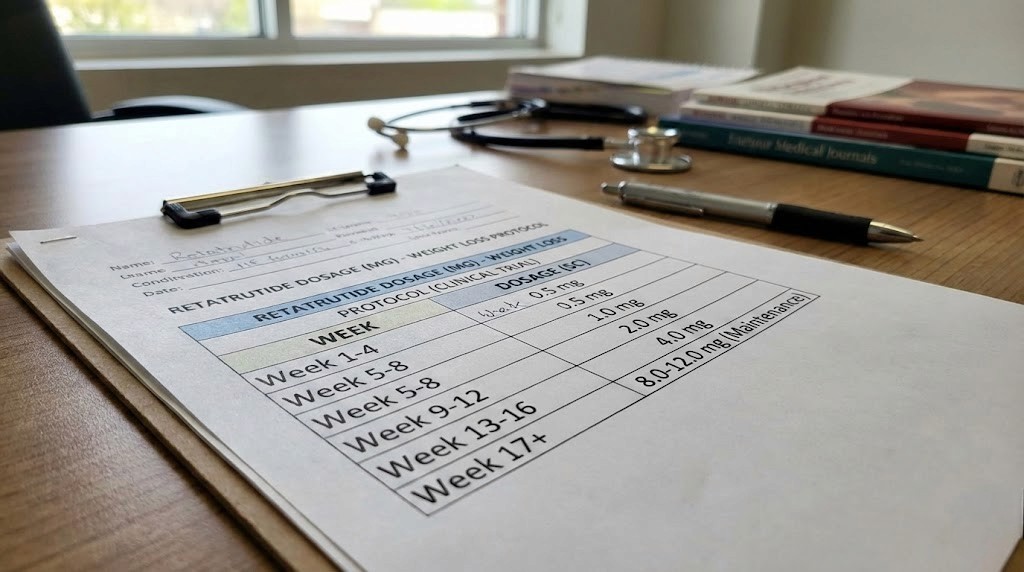
Based on the clinical trial protocols and refined safety data, here is the recommended week-by-week dosage chart for retatrutide targeting weight loss.
Weeks | Weekly Dose | Purpose | Expected Effects |
|---|---|---|---|
1-4 | 1mg | Initial tolerance assessment | Mild appetite changes, minimal side effects |
5-8 | 2mg | GLP-1 activation begins | Noticeable appetite reduction, possible mild nausea |
9-12 | 4mg | Triple agonism becomes significant | Clear appetite suppression, early weight loss visible |
13-16 | 6mg | Escalation toward therapeutic range | Significant caloric reduction, steady weight loss |
17-20 | 8mg | Full therapeutic range (lower end) | Strong appetite suppression, metabolic changes |
21-24 | 10mg | Approaching maximum dose | Peak appetite and metabolic effects building |
25+ | 12mg | Maximum maintenance dose | Full triple agonist activation, maximum weight loss |
Some protocols compress this schedule, jumping from 4mg directly to 8mg and skipping the 6mg step. The clinical trials used 4-week intervals at each level. If you tolerate a dose well with minimal side effects, your provider may choose to advance more quickly. If nausea or other GI symptoms are problematic, they may extend any step by an additional 2-4 weeks. Neither approach affects long-term outcomes significantly.
The 12mg dose represents the ceiling in clinical trials. Going higher has not been studied for safety or efficacy. It is not a matter of more being better. At 12mg, the receptor activation is essentially maximized for all three targets.
Understanding dosage in units: converting milligrams for injection
Clinical trials describe retatrutide doses in milligrams. But when you are holding a syringe and a reconstituted vial, you need to know how many units to draw. The conversion depends entirely on two factors: the total amount of retatrutide in your vial and the volume of bacteriostatic water used to reconstitute it.
This is where most dosing errors happen. People confuse milligrams with units, or they assume all vials are reconstituted the same way. They are not. A 10mg vial reconstituted with 2mL of water produces a very different concentration than the same vial reconstituted with 1mL. Getting this wrong means getting the dose wrong, and with a drug this powerful, accuracy matters.
Reconstitution and concentration math
The formula is straightforward. Divide the total peptide amount in the vial by the volume of water added. That gives you the concentration in mg/mL. Then divide your target dose by the concentration to get the volume you need to inject.
Here are the most common vial sizes and reconstitution scenarios for retatrutide.
Vial Size | BAC Water Added | Concentration | 1mg Dose | 4mg Dose | 8mg Dose | 12mg Dose |
|---|---|---|---|---|---|---|
5mg | 1mL | 5mg/mL | 0.2mL (20 units) | 0.8mL (80 units) | N/A | N/A |
10mg | 2mL | 5mg/mL | 0.2mL (20 units) | 0.8mL (80 units) | 1.6mL (160 units) | N/A |
10mg | 1mL | 10mg/mL | 0.1mL (10 units) | 0.4mL (40 units) | 0.8mL (80 units) | 1.2mL (120 units) |
20mg | 2mL | 10mg/mL | 0.1mL (10 units) | 0.4mL (40 units) | 0.8mL (80 units) | 1.2mL (120 units) |
30mg | 3mL | 10mg/mL | 0.1mL (10 units) | 0.4mL (40 units) | 0.8mL (80 units) | 1.2mL (120 units) |
Use the peptide reconstitution calculator to verify your specific setup. A small error in reconstitution volume cascades into a significant dosing error over weeks of treatment. Always double-check your math before the first injection from a new vial.
If you are using an insulin syringe marked in units (most common for subcutaneous peptide injections), remember that 100 units equals 1mL. So 10 units is 0.1mL, 50 units is 0.5mL, and so on. The peptide calculator on SeekPeptides can handle all these conversions automatically.
Reconstitution process for retatrutide
Proper reconstitution is critical for accurate dosing. Here is the step-by-step process.
Start with a clean workspace. Alcohol-swab the top of both the retatrutide vial and the bacteriostatic water vial. Draw the desired amount of bacteriostatic water into a sterile syringe. Insert the needle into the retatrutide vial and inject the water slowly down the inner wall of the vial. Do not squirt it directly onto the powder. Let gravity do the work. The water should trickle down the glass and dissolve the lyophilized powder gently.
Do not shake the vial. Swirl it gently if needed. Most retatrutide powder dissolves within 30-60 seconds with gentle rotation. If small particles remain, let the vial sit at room temperature for a few minutes and swirl again. The solution should be clear and colorless when fully dissolved. If it is cloudy, discolored, or contains visible particles after 5 minutes of gentle mixing, do not use it.
After reconstitution, store the vial in the refrigerator at 2-8 degrees Celsius (35-46 degrees Fahrenheit). Reconstituted retatrutide typically remains stable for 2-4 weeks when properly refrigerated. Lyophilized (unreconstituted) retatrutide should be stored frozen at -20 degrees Celsius (-4 degrees Fahrenheit) for maximum shelf life. Check how long peptides last in the fridge for detailed storage timelines.
Weight loss timeline on retatrutide: what to expect at each dose
Knowing the dosage chart is one thing. Knowing what actually happens to your body at each stage is another. The clinical trial data gives us a remarkably detailed picture of the weight loss trajectory, and it does not follow a straight line. Understanding the curve helps set realistic expectations and prevents premature dose escalation.
Weeks 1-4 (1mg): the adjustment period
Weight loss at 1mg is minimal. Do not expect dramatic changes. This phase exists purely to introduce the triple agonist to your system and establish baseline tolerance. Most participants in clinical trials lost 1-2% of body weight during this initial month, primarily from the modest GLP-1 activation reducing caloric intake slightly.
What you will notice is subtle. Slightly less interest in snacking between meals. Maybe a bit more fullness after regular-sized portions. Some people notice nothing at all at this dose, and that is completely normal. The 1mg dose is a foundation, not a treatment dose.
Side effects at 1mg are typically mild if present at all. Occasional nausea in the first day or two after injection, mild headache, perhaps some changes in bowel habits. These resolve quickly. If you experience significant nausea even at 1mg, that is important information for managing the escalation ahead.
Weeks 5-8 (2mg): appetite suppression begins
The step from 1mg to 2mg is where most people first feel the drug working. Appetite suppression becomes noticeable. You might forget to eat lunch. Portions that used to feel normal now feel like too much. The GLP-1 activation is reaching meaningful levels.
Weight loss accelerates to roughly 3-5% from baseline by the end of week 8. For a 200-pound person, that is 6-10 pounds. Not earth-shattering, but consistent. The important thing is that the trajectory is established. You are losing, and the rate will increase with each dose escalation.
Nausea becomes more common at 2mg, affecting roughly 15-20% of users. It typically peaks on the day of injection and the following day, then subsides. Eating smaller, more frequent meals helps significantly. Avoid large, fatty meals on injection days. Consider using the peptide safety guidelines for general management strategies.
Weeks 9-12 (4mg): the inflection point
Four milligrams is where retatrutide distinguishes itself from lower-dose GLP-1 agonists. All three receptor pathways are now meaningfully activated. The glucagon component begins contributing to increased energy expenditure and fat oxidation. You are not just eating less. Your body is burning more.
By the end of week 12, clinical trial participants at the 4mg maintenance dose had lost approximately 12-13% of body weight. That is already approaching what semaglutide achieves at maximum dose over 68 weeks. And this is only the midpoint dose.
This is also where some people notice changes beyond the scale. Waist circumference decreasing faster than overall weight might suggest. Energy levels improving despite eating less. Sleep quality changing. These are signs of the metabolic shift that the glucagon component drives, improvements in how your body partitions fuel between storage and utilization.
GI side effects peak during the first week of the 4mg dose for most people, then settle. About 25-30% of users experience nausea at this level. Constipation or diarrhea may also appear. Stay hydrated. Electrolyte supplementation can help with the GI disruption.
Weeks 13-20 (6-8mg): entering the therapeutic range
The 6mg and 8mg doses represent the therapeutic sweet spot for many people. Weight loss is robust, side effects have usually been managed through adaptation, and the metabolic benefits are in full swing.
At 8mg, the Phase 2 trial showed 22.8% body weight reduction at 48 weeks. At 8mg specifically, 100% of participants lost at least 5% of their body weight, 91% lost at least 10%, and 75% lost at least 15%. Those are remarkable response rates. Almost everyone responds meaningfully at this dose.
Many clinicians and researchers consider 8mg the optimal dose for most people seeking weight loss with peptides. The jump from 8mg to 12mg provides additional benefit (about 1-2% more total weight loss), but with a meaningful increase in side effect burden. For some, staying at 8mg represents the best balance of efficacy and tolerability.
If you are transitioning from another weight loss peptide, the 8mg level is roughly equivalent in weight loss to maximum-dose tirzepatide but achieved faster. Check the retatrutide vs tirzepatide dosage chart for direct comparisons.
Weeks 21+ (10-12mg): maximum efficacy
The 12mg dose is the highest tested in clinical trials, and it delivers the most dramatic results. At 48 weeks, average weight loss was 24.2%. At 68 weeks in the TRIUMPH-4 trial, it reached 28.7%, an average of 71.2 pounds lost.
But more is not always better for every individual. Side effect rates at 12mg are meaningfully higher than at 8mg:
Nausea: 43.2% of participants (vs 38.1% at 9mg)
Diarrhea: 33.1% (vs 34.7% at 9mg)
Constipation: 25.0% (vs 21.8% at 9mg)
Vomiting: 20.9% (vs 20.4% at 9mg)
The decision between 8mg, 10mg, and 12mg as a maintenance dose should be made based on individual response. If you are losing weight consistently at 8mg with manageable sides, there may be no need to push to 12mg. If your weight loss has plateaued at 8mg or you have ambitious goals and tolerate the medication well, escalating to 12mg makes sense.
There is no clinical data supporting doses above 12mg. The receptor binding curves suggest that 12mg achieves near-maximal activation across all three receptor types. Higher doses would likely increase side effects without proportional benefits.
Side effect management at each dose level
The side effects of retatrutide are predictable. They follow a pattern that maps directly to the dosage chart, and understanding that pattern lets you prepare for each escalation rather than being surprised by it.
Nearly all significant side effects are gastrointestinal. This makes sense when you understand the mechanism. GLP-1 activation slows gastric emptying. Your stomach holds food longer. The signals telling your brain you are full get amplified. All of these changes affect how your digestive system feels and functions.
Nausea management strategies
Nausea is the most commonly reported side effect across all dose levels. It typically follows a predictable pattern: worst during the first 1-2 days after each dose increase, gradually improving over the following 2-3 weeks, then resolving or becoming very mild before the next escalation.
Practical strategies that trial participants and clinicians report as effective:
Dietary modifications work best. Eat smaller meals, five or six times per day instead of three larger ones. Avoid fatty, greasy, or heavily spiced foods, especially on the day of injection and the day after. Cold or room-temperature foods tend to trigger less nausea than hot meals. Bland carbohydrates (crackers, toast, rice) can help settle the stomach during the worst days.
Timing matters. Many people find that injecting in the evening, right before bed, helps them sleep through the worst of the initial nausea. By morning, the peak has passed. Others prefer morning injections so the nausea window aligns with their least active hours. Experiment to find what works for your schedule.
Natural remedies provide meaningful relief. Ginger tea or ginger supplements are the most consistently reported natural remedy. Peppermint tea is another option. Both have clinical evidence supporting their use for nausea, independent of the retatrutide context. Stay hydrated, sip fluids throughout the day rather than drinking large volumes at once.
If nausea persists beyond 3-4 weeks at any given dose, that is a signal to consider staying at the current dose longer before escalating. The titration schedule is a guideline, not a mandate. Your body sets the pace.
Diarrhea and constipation management
Some people get diarrhea on retatrutide. Others get constipation. A few get both at different points in the dose escalation. This reflects the complex interaction between slowed gastric emptying (which can cause constipation) and changes in gut motility signaling (which can cause diarrhea).
For constipation, increase fiber intake gradually, stay well hydrated, and consider a magnesium supplement (magnesium citrate works well). Avoid relying on stimulant laxatives, as these can create dependency. Walking and physical activity help maintain gut motility.
For diarrhea, focus on the BRAT diet (bananas, rice, applesauce, toast) during acute episodes. Electrolyte replacement is important, diarrhea depletes sodium, potassium, and magnesium. If diarrhea persists beyond the first week of a new dose, it usually resolves without intervention. If it continues beyond two weeks, it may indicate that the dose escalation was too aggressive.
Injection site reactions and other considerations
Retatrutide is administered as a subcutaneous injection, typically in the abdomen, thigh, or upper arm. Injection site reactions are generally mild when they occur, small areas of redness, mild pain, or slight swelling at the injection point. Rotating injection sites (at least one inch apart from the previous site) helps prevent lipohypertrophy, the buildup of fatty tissue that can develop from repeated injections in the same location.
Other side effects reported less commonly include mild headaches (especially during the first two dose levels), fatigue during the initial adjustment period, and occasional dizziness. These tend to resolve without intervention and become less frequent as the body adapts to the medication.
For a comprehensive overview of potential adverse effects, see the retatrutide side effects guide. Hair loss is a concern some people raise, though the clinical data suggests it is rare and usually related to rapid weight loss rather than the drug itself.
Retatrutide vs semaglutide vs tirzepatide: dosage and results comparison
If you are considering retatrutide for weight loss, you are probably also evaluating semaglutide and tirzepatide. The dosage charts for all three differ significantly, and the weight loss outcomes scale accordingly. Here is how they compare head to head.
Feature | Semaglutide | Tirzepatide | Retatrutide |
|---|---|---|---|
Receptors targeted | GLP-1 only | GLP-1 + GIP | GLP-1 + GIP + Glucagon |
Maximum dose | 2.4mg/week | 15mg/week | 12mg/week |
Starting dose | 0.25mg | 2.5mg | 1mg |
Titration interval | 4 weeks | 4 weeks | 4 weeks |
Time to max dose | 16-20 weeks | 16-20 weeks | 20-28 weeks |
Peak weight loss | ~14.9% (68 wk) | ~22.5% (72 wk) | ~28.7% (68 wk) |
Nausea rate (max dose) | ~44% | ~31% | ~43% |
FDA status | Approved (Wegovy) | Approved (Zepbound) | Phase 3 trials |
The weight loss gap between these three medications is substantial. Semaglutide achieves roughly 15%, tirzepatide reaches about 22%, and retatrutide pushes past 28% in the latest Phase 3 data. That difference, roughly 13 percentage points between semaglutide and retatrutide, translates to tens of additional pounds lost for most people.
But there are important caveats. Semaglutide and tirzepatide are FDA-approved and widely available. Retatrutide is still in Phase 3 trials and is not expected to receive approval until 2027 at the earliest. If you are currently on semaglutide or compounded tirzepatide, switching to retatrutide means moving to a research-stage compound with less long-term safety data.
For those evaluating a transition, the switching from semaglutide to tirzepatide dosage chart provides context on how dose transitions between GLP-1 medications typically work. The principles would apply when transitioning to retatrutide as well, starting at the lowest retatrutide dose regardless of your previous medication dose.
The semaglutide to tirzepatide dose conversion chart and tirzepatide conversion chart can help map equivalent dose levels between compounds. However, there is no direct conversion between semaglutide or tirzepatide doses and retatrutide doses because the mechanism of action is fundamentally different with the addition of the glucagon receptor.
Dosing by body weight: does size affect the optimal dose?
One of the most common questions about the retatrutide dosage chart is whether higher body weight requires a higher dose. The short answer from clinical trial data: not necessarily. The trials used fixed doses (1mg, 4mg, 8mg, 12mg) regardless of body weight, and the percentage of weight loss was remarkably consistent across weight categories.
This is counterintuitive. You might expect a 300-pound person to need more medication than a 200-pound person. But the receptor-based mechanism does not work that way. Retatrutide activates the same receptors regardless of body size. A 300-pound person loses a higher absolute amount of weight (24% of 300 pounds = 72 pounds) than a 200-pound person (24% of 200 pounds = 48 pounds) on the same dose, because there is simply more metabolically active tissue responding to the signal.
That said, body weight can influence side effects and the pace of titration. Larger individuals sometimes tolerate dose escalation better because the medication is distributed across a larger body mass. Smaller individuals may be more sensitive to GI side effects at the same milligram dose. These are tendencies, not rules.
The practical recommendation is the same regardless of starting weight: follow the standard titration schedule, adjust based on tolerance, and let your response guide the maintenance dose. Use the retatrutide dosage calculator to determine exact injection volumes based on your specific reconstitution setup and target dose.
Injection protocol and timing for optimal weight loss
Getting the dose right is only half the equation. How and when you inject matters too. Retatrutide is a once-weekly subcutaneous injection, but the specifics of administration can influence both efficacy and side effect management.
Choosing the injection site
The three recommended injection sites for retatrutide are the abdomen (at least 2 inches from the navel), the front of the thigh, and the back of the upper arm. All three sites provide adequate subcutaneous tissue for proper absorption.
Absorption rates vary slightly by site. Abdominal injections tend to provide the most consistent and slightly faster absorption. Thigh injections absorb slightly slower. Upper arm injections fall in between. These differences are minor and unlikely to affect weight loss outcomes, but some people find that certain sites produce fewer injection site reactions or less post-injection discomfort.
Rotate between sites weekly. Within each site area, inject at least one inch from the previous location. This rotation prevents lipohypertrophy and ensures consistent absorption. Keep a simple log if needed, left abdomen, right abdomen, left thigh, right thigh, left arm, right arm, and repeat.
Timing the injection
Retatrutide should be administered on the same day each week. Pick a day and stick with it. The half-life of the drug is designed for once-weekly dosing, and maintaining a consistent schedule keeps blood levels stable.
If you miss a dose by less than 3 days, take it as soon as you remember and resume your regular schedule the following week. If you miss by more than 3 days, skip that week and take the next scheduled dose. Do not double up to compensate for a missed dose.
Many people prefer Sunday or Monday evening injections. This places any initial nausea during sleeping hours and the early part of the week, when motivation and routine tend to be strongest. But there is no clinically superior injection day. Choose what fits your life.
Before and after the injection
Eat a light meal 1-2 hours before your injection. An empty stomach can worsen nausea. A heavy meal can compound the GI effects. Something moderate, some protein with light carbohydrates, works well for most people.
After injecting, stay normally active. There is no need to rest or avoid exercise. In fact, maintaining your regular physical activity supports the metabolic effects of the drug and helps manage GI symptoms. Walking after dinner is particularly effective for reducing nausea and bloating.
Optimizing weight loss results alongside retatrutide
Retatrutide is powerful, but it is not magic. The clinical trial participants who achieved 24-28% body weight reduction were not just taking the drug. They were also following lifestyle interventions that amplified its effects. The drug does the heavy lifting, but your choices determine whether you land at the lower or upper end of the results range.
Nutrition strategies that complement the dosage protocol
The appetite suppression from retatrutide means you will naturally eat less. But what you eat during those reduced-calorie days matters enormously. When total food intake drops by 30-40%, every meal needs to count nutritionally.
Protein becomes critical. Your body is losing both fat and some lean mass during rapid weight loss. Higher protein intake, 0.7-1.0 grams per pound of target body weight per day, helps preserve muscle while fat is shed. This means prioritizing protein at every meal: eggs, lean meats, fish, dairy, legumes. If appetite suppression makes it hard to eat enough protein through food alone, a protein supplement can fill the gap.
Fiber helps manage the GI side effects while supporting overall gut health during the metabolic changes retatrutide triggers. Vegetables, fruits, whole grains, and legumes provide both fiber and micronutrients. Start fiber increases gradually if you are not already eating a high-fiber diet, adding too much fiber too quickly on top of retatrutide can worsen GI symptoms.
Hydration cannot be overstated. The combination of reduced food intake (less dietary water), potential diarrhea, and increased metabolic activity means your baseline water needs may increase. Aim for at least half your body weight in ounces of water per day, more if you are exercising or experiencing GI symptoms.
Exercise synergy with retatrutide dosing
The glucagon component of retatrutide increases fat oxidation and potentially thermogenesis. Exercise amplifies both of these effects. Resistance training is particularly important during rapid weight loss to preserve lean muscle mass, which in turn maintains your basal metabolic rate.
Clinical trials encouraged but did not mandate exercise. The weight loss numbers reflect a mix of active and sedentary participants. Those who exercised regularly likely landed at the higher end of results, though the trials did not publish exercise-stratified data.
A practical approach: aim for 150 minutes of moderate activity per week (walking, cycling, swimming) plus 2-3 resistance training sessions. This aligns with general health guidelines and specifically supports the metabolic goals of retatrutide therapy. If exercise is new to you, start slowly. The caloric deficit from the drug plus exercise can be aggressive, listen to your body and adjust intensity as needed.
Sleep and stress: the overlooked factors
Poor sleep directly impairs GLP-1 signaling and increases hunger hormones. If you are sleeping 5-6 hours while on retatrutide, you are partially undermining the drug mechanism. Aim for 7-9 hours. Interestingly, some trial participants reported improved sleep quality on retatrutide, possibly related to weight loss reducing sleep apnea symptoms.
Chronic stress elevates cortisol, which promotes visceral fat storage, exactly what the glucagon component of retatrutide is working to reduce. High stress can also trigger emotional eating patterns that override the appetite suppression. Basic stress management (walking, deep breathing, adequate sleep) supports the biochemical changes retatrutide is driving.
Special populations and dosing considerations
The standard dosage chart applies to most adults seeking weight loss. But certain populations require modified approaches, adjusted starting doses, slower titration, or additional monitoring.
People with type 2 diabetes
Retatrutide has been studied specifically in people with type 2 diabetes, and the results are positive. At 36 weeks, the 12mg dose produced 16.9% body weight reduction in this population, somewhat less than the 24% seen in the general obesity population but still clinically significant.
The lower weight loss in diabetic populations likely reflects differences in baseline metabolic status rather than reduced drug efficacy. The more important finding is the glycemic improvement: significant reductions in HbA1c and fasting glucose across all dose groups.
Dosing considerations for people with type 2 diabetes include closer monitoring of blood glucose, especially during dose escalation. The glucagon component can temporarily increase blood glucose levels, which the GLP-1 and GIP components counterbalance. But during the transition periods between doses, glucose levels may fluctuate more than usual. If you are on insulin or sulfonylureas, dose adjustments to those medications may be necessary to avoid hypoglycemia.
People transitioning from other GLP-1 medications
If you are switching from semaglutide or tirzepatide to retatrutide, always start at the bottom of the retatrutide dosage chart (1mg). Even if you were at maximum dose on your previous medication, your body has not been exposed to the glucagon component. That third receptor pathway needs the same gradual introduction that the GLP-1 pathway needed when you first started your previous drug.
Some clinicians allow a shorter stay at the 1-2mg levels for patients transitioning from other GLP-1 agonists, since the GI adaptation to GLP-1 activation carries over somewhat. But the glucagon-related adjustment does not, so skipping the titration entirely is not recommended.
Timing the transition matters too. Stop your previous GLP-1 medication at least one week before starting retatrutide to avoid overlapping receptor activation. The long half-lives of semaglutide and tirzepatide mean they take several days to fully clear your system.
Older adults and people with lower BMI
The Phase 2 trial included adults across a range of ages, but the average participant was in their late 40s with a BMI well above 30. People over 65 or those with lower BMI (27-30 range) may want to consider a more conservative titration schedule, staying at each dose for 6 weeks instead of 4, and possibly targeting 8mg as the maintenance dose rather than pushing to 12mg.
The rationale is straightforward. Older adults lose muscle mass more readily during rapid weight loss, and the aggressive caloric deficit from high-dose retatrutide combined with age-related sarcopenia can be problematic. People with lower BMI have less excess fat to lose, making the side effect burden less justified for the marginal additional weight loss at higher doses.
Understanding the clinical trial data behind the dosage chart
Numbers without context are meaningless. The retatrutide dosage chart draws its authority from specific clinical trials, and understanding those trials helps you interpret the results and set appropriate expectations.
The Phase 2 NEJM trial (2023)
Published in the New England Journal of Medicine under the title "Triple-Hormone-Receptor Agonist Retatrutide for Obesity," this trial (NCT04881760) enrolled 338 adults and ran for 48 weeks. It was the first rigorous test of multiple retatrutide dose levels in humans with obesity.
Key design elements that matter for interpreting the results. The trial was double-blind, meaning neither participants nor researchers knew who received the drug versus placebo. It was randomized, meaning allocation to dose groups was random. And it included seven treatment arms (placebo plus six dose groups), allowing detailed dose-response analysis.
The 24.2% weight loss at 12mg was the headline number, but the data at lower doses is equally informative. The dose-response curve was steep between 1mg and 8mg, then flattened between 8mg and 12mg. This tells us that most of the weight loss benefit comes from reaching the 8mg level, with diminishing marginal returns above that. The additional 1.4 percentage points from 8mg to 12mg may or may not be worth the added side effect burden for a given individual.
The TRIUMPH Phase 3 program
The TRIUMPH program consists of multiple Phase 3 trials evaluating retatrutide in different populations. TRIUMPH-4, reported in late 2025, focused on adults with obesity and knee osteoarthritis. Seven additional trials are expected to complete through 2026.
The TRIUMPH-4 results at 68 weeks (28.7% weight loss at 12mg) are the most mature Phase 3 data available. The longer treatment duration, 68 weeks versus 48 weeks in Phase 2, demonstrates that retatrutide continues to produce weight loss well beyond the initial year. The weight loss curve had not plateaued at 68 weeks, suggesting that even greater reductions might be achievable with longer treatment.
The TRIUMPH program also tests a 4mg maintenance dose alongside the 9mg and 12mg doses tested in TRIUMPH-4. This data, expected in 2026, will clarify whether lower maintenance doses are viable for long-term weight management after initial weight loss is achieved. If 4mg maintenance proves effective, it could allow patients to reduce their dose (and side effects) after reaching their weight loss goals.
Liver fat reduction: a bonus benefit
An important secondary finding from the clinical trials: after 48 weeks of treatment with the two highest doses of retatrutide, 90% of participants with elevated liver fat at baseline achieved normalization. This is relevant because metabolic dysfunction-associated steatotic liver disease (MASLD, formerly NAFLD) is extremely common in people with obesity and is difficult to treat with conventional approaches.
A separate Phase 2a trial specifically examining retatrutide for MASLD found significant reductions in liver fat across dose groups. The glucagon receptor component appears particularly important for this benefit, as glucagon promotes hepatic lipid oxidation, literally helping the liver burn off its excess fat stores.
If you have been diagnosed with fatty liver disease, the retatrutide dosage chart for weight loss simultaneously addresses your liver health. This dual benefit is unique among current GLP-3 class peptides.
Common dosing mistakes and how to avoid them
Having compiled data from clinical trials, practitioner reports, and community discussions, certain dosing mistakes appear repeatedly. Avoiding these can make the difference between a smooth weight loss experience and an unnecessarily difficult one.
Mistake 1: skipping the low-dose titration
The most common mistake. People read about 12mg producing 24% weight loss and want to start there, or at least at 4mg. The 1mg starting dose feels like wasting time. It is not. The Phase 2 trial specifically tested starting at 4mg versus 2mg and found that higher starting doses produced significantly more GI side effects without faster weight loss. Starting at 1mg is even gentler.
Your body needs time to upregulate the receptor signaling pathways and adapt the GI tract to the new hormonal environment. Skipping this step does not accelerate weight loss. It accelerates nausea and the likelihood of dose reduction or treatment discontinuation.
Mistake 2: escalating despite persistent side effects
The 4-week interval between dose increases is a minimum, not a mandate. If you are still experiencing significant nausea, diarrhea, or vomiting at the end of a 4-week period, stay at the current dose for another 2-4 weeks. The weight loss benefit of reaching a higher dose is meaningless if the side effects cause you to reduce or stop the medication entirely.
Clinical trial protocols allowed for extended stays at any dose level when tolerability was an issue. Final weight loss outcomes were not significantly affected by a slower titration schedule. Reaching 8mg at week 24 instead of week 16 still produces comparable 48-week results.
Mistake 3: not adjusting diet to match the new reality
Retatrutide dramatically reduces appetite, but it does not change what foods are available to you. Some people continue eating the same types of foods in smaller quantities. This can work, but it misses an opportunity to optimize results.
The reduced caloric intake means every calorie carries more nutritional weight. A 1,200-calorie day built around processed food looks very different from a 1,200-calorie day built around lean protein, vegetables, and healthy fats. The latter supports muscle preservation, provides necessary micronutrients, and tends to produce fewer GI complaints alongside the medication.
Mistake 4: comparing your results to clinical trial averages
The 24.2% number is an average. Some participants lost more. Some lost less. Individual responses to retatrutide vary based on genetics, metabolic health, diet, exercise, stress, sleep, and other factors. If you are losing 18% at 12mg instead of 24%, that does not mean the drug is not working. An 18% loss is still extraordinary by any historical standard and far exceeds what most people achieve through lifestyle changes alone.
Set your expectations based on clinically meaningful thresholds rather than trial averages. A 10% body weight reduction significantly improves metabolic health markers. A 15% reduction is associated with major improvements in blood pressure, lipids, and glucose control. Anything beyond 15% is increasingly transformative for mobility, energy, and disease risk reduction.
Mistake 5: stopping abruptly without a plan
Weight regain after stopping GLP-1 class medications is well documented. The data from semaglutide withdrawal shows that most people regain a significant portion of lost weight within a year of stopping. There is every reason to expect the same with retatrutide.
The implication for dosing: plan for long-term use or a structured step-down protocol. If you need to stop, taper the dose gradually rather than stopping abruptly. Reduce by one dose level every 4 weeks. This gives your appetite regulation and metabolic systems time to partially readjust, potentially limiting the rebound effect.
Retatrutide dosage chart for different vial sizes
Research-grade retatrutide comes in several vial sizes. Each requires different reconstitution volumes and produces different concentrations. Here are the dosage charts for the most commonly available vial sizes.
5mg vial dosage chart
A 5mg vial is best suited for the early titration phase (1-4mg doses). At higher doses, you will use most or all of a 5mg vial in a single week, which is not cost-efficient.
Reconstitute with 1mL of bacteriostatic water for a 5mg/mL concentration.
Weekly Dose | Volume to Inject | Insulin Syringe Units | Weeks per Vial |
|---|---|---|---|
1mg | 0.20mL | 20 units | 5 weeks |
2mg | 0.40mL | 40 units | 2.5 weeks |
4mg | 0.80mL | 80 units | 1.25 weeks |
10mg vial dosage chart
The 10mg vial offers versatility across the full titration range. Reconstitute with 2mL for a 5mg/mL concentration (good for lower doses) or 1mL for a 10mg/mL concentration (better for higher doses to minimize injection volume).
At 5mg/mL concentration (2mL BAC water):
Weekly Dose | Volume to Inject | Insulin Syringe Units | Weeks per Vial |
|---|---|---|---|
1mg | 0.20mL | 20 units | 10 weeks |
2mg | 0.40mL | 40 units | 5 weeks |
4mg | 0.80mL | 80 units | 2.5 weeks |
8mg | 1.60mL | 160 units | 1.25 weeks |
At 10mg/mL concentration (1mL BAC water):
Weekly Dose | Volume to Inject | Insulin Syringe Units | Weeks per Vial |
|---|---|---|---|
1mg | 0.10mL | 10 units | 10 weeks |
4mg | 0.40mL | 40 units | 2.5 weeks |
8mg | 0.80mL | 80 units | 1.25 weeks |
12mg | 1.20mL | 120 units | N/A (exceeds vial) |
20mg and 30mg vial dosage charts
Larger vials become cost-effective once you reach maintenance doses of 8-12mg per week. Reconstitute 20mg vials with 2mL and 30mg vials with 3mL, both producing a 10mg/mL concentration.
Weekly Dose | Volume (10mg/mL) | Units | Weeks per 20mg Vial | Weeks per 30mg Vial |
|---|---|---|---|---|
4mg | 0.40mL | 40 units | 5 weeks | 7.5 weeks |
8mg | 0.80mL | 80 units | 2.5 weeks | 3.75 weeks |
10mg | 1.00mL | 100 units | 2 weeks | 3 weeks |
12mg | 1.20mL | 120 units | 1.67 weeks | 2.5 weeks |
Use the peptide cost calculator to determine which vial size is most economical based on your maintenance dose. Larger vials typically offer a lower cost per milligram but require careful storage management since reconstituted peptides have a limited shelf life.
For detailed cost analysis, the retatrutide cost guide breaks down pricing across different vendors and vial sizes. Cost should factor into your vial size decision, especially for long-term maintenance dosing.
Long-term dosing strategy and weight maintenance
The dosage chart gets you to your weight loss goal. But what happens after? The clinical data suggests that retatrutide, like other GLP-1 agonists, requires ongoing use to maintain weight loss. This raises important questions about long-term dosing strategy.
Maintaining weight loss after the initial phase
Weight loss on retatrutide typically follows a pattern: rapid loss during the first 24-36 weeks of dose escalation, continued but slower loss through weeks 36-68, then gradual stabilization as you approach a new set point. The question becomes: do you need to stay at the maximum dose to maintain results, or can you step down?
The TRIUMPH program is testing exactly this question with a 4mg maintenance arm. Preliminary thinking, based on data from semaglutide maintenance studies, suggests that a lower maintenance dose may sustain a significant portion of the weight loss achieved at higher doses. The logic is sound. You need a high dose to create the caloric deficit required for rapid weight loss, but maintaining a lower body weight requires a smaller ongoing intervention.
If maintenance dose data supports it, a long-term strategy might look like this: titrate to 8-12mg for 48-68 weeks of active weight loss, then step down to 4-6mg for indefinite maintenance. This would reduce both side effects and cost while preserving most of the metabolic benefits.
Cycling versus continuous use
Some researchers discuss cycling retatrutide, using it for a defined period, stopping, and resuming if weight regain occurs. The data does not support this approach well. Weight regain after stopping GLP-1 medications is rapid and substantial, often recovering 50-70% of lost weight within a year.
Continuous use at a maintenance dose is likely the more effective strategy for most people. The side effects at lower maintenance doses are typically mild, and the metabolic benefits (improved glucose control, liver fat reduction, cardiovascular risk reduction) persist only as long as the medication is continued.
If cost or supply issues force discontinuation, implementing the step-down approach (reducing by one dose level every 4 weeks) gives your metabolic regulatory systems the best chance of partial adaptation. Combining the taper with aggressive lifestyle optimization (high protein intake, resistance training, consistent sleep) can help preserve some of the weight loss.
Combining retatrutide with other peptides
The question of stacking retatrutide with other peptide stacks comes up frequently. There is currently no clinical data on combining retatrutide with other weight loss peptides. Given that retatrutide already activates three receptor pathways, the marginal benefit of adding additional GLP-1 or GIP agonists is likely minimal or counterproductive.
However, stacking with peptides that target entirely different mechanisms, such as fat loss peptides like AOD-9604 or FTPP (adipotide), is theoretically possible but completely unstudied. The peptide cycling guide covers general principles of combining peptides, though none of the existing guidance specifically addresses retatrutide combinations.
SeekPeptides members access detailed stacking protocols and expert guidance for optimizing peptide research, including emerging data on next-generation compounds like retatrutide. The peptide stack calculator can help plan multi-peptide protocols for those considering combination approaches.
Storage, shelf life, and practical handling
Your retatrutide dosage chart is useless if the peptide degrades before you can use it. Proper storage is non-negotiable for maintaining potency across the weeks of titration.
Before reconstitution
Lyophilized (powder form) retatrutide should be stored frozen at -20 degrees Celsius (-4 degrees Fahrenheit). At this temperature, it remains stable for months. Some vendors ship on dry ice to maintain this temperature during transit. When you receive your vial, move it to a freezer immediately if you are not planning to reconstitute it within 24 hours.
If your freezer is not available, lyophilized retatrutide can be refrigerated at 2-8 degrees Celsius (35-46 degrees Fahrenheit) for shorter periods, typically 1-2 weeks, without significant degradation. Room temperature storage should be avoided. Heat, light, and moisture all accelerate peptide degradation in powder form.
After reconstitution
Once reconstituted with bacteriostatic water, retatrutide must be refrigerated at 2-8 degrees Celsius. It should not be frozen after reconstitution, as freeze-thaw cycles can denature the peptide. The peptide storage guide covers these principles in detail.
Reconstituted retatrutide is generally stable for 2-4 weeks when properly refrigerated. This timeline aligns well with most vial sizes and dose levels. A 20mg vial at 12mg per week lasts about 1.7 weeks. A 30mg vial at 8mg per week lasts about 3.75 weeks. In both cases, you will use the vial before stability becomes a concern.
Do not use reconstituted retatrutide that appears cloudy, discolored, or contains visible particles. These are signs of degradation or contamination. Better to waste a vial than to inject degraded peptide. For more on spotting degradation, check do peptides expire.
Travel considerations
If you need to travel with reconstituted retatrutide, use an insulated cooler bag with ice packs. The goal is to maintain refrigerator-range temperatures (2-8 degrees Celsius). Avoid leaving the vial in a hot car, a hotel windowsill, or any location where temperatures might spike above 25 degrees Celsius.
For air travel, reconstituted retatrutide in a small cooler bag qualifies as a medical item and can be carried through security. Having documentation of your prescription or research protocol can expedite the process, though it is rarely requested. The room temperature stability guide covers how long peptides survive outside the fridge during travel.
When to adjust the dosage chart
The standard titration schedule works for the majority of people. But there are specific situations where modifying the chart makes sense. Recognizing these situations early prevents unnecessary side effects and optimizes outcomes.
Signs you should slow down the titration
Extend your stay at the current dose by 2-4 additional weeks if you experience any of the following at the end of a standard 4-week period:
Nausea persisting beyond the first 7 days after the last dose increase
Vomiting more than twice per week
Diarrhea lasting more than 10 days at the current dose
Significant fatigue or weakness that does not improve with adequate nutrition and rest
Weight loss exceeding 1.5% per week (too-rapid loss increases gallstone risk and muscle loss)
Slowing the titration is not failure. It is smart dosing. Your weight loss trajectory at 48 weeks will be the same whether you reach your maintenance dose at week 16 or week 28. The only difference is the comfort of the journey.
Signs you might accelerate the titration
In limited cases, your provider may shorten the time at a given dose level to 2-3 weeks instead of 4 if:
You experience zero GI side effects at the current dose
Appetite suppression is minimal (you are eating nearly the same as before)
You have prior experience with GLP-1 agonists and demonstrated good tolerance
Weight loss is below 0.5% per week at the current dose for 3+ weeks
Accelerated titration should only be done under professional guidance. The risk of triggering severe nausea by escalating too quickly outweighs the marginal time savings.
Signs you have reached your optimal maintenance dose
Not everyone needs to reach 12mg. You may have found your optimal maintenance dose when:
Weight loss is consistent at 0.5-1.0% per week
Side effects are manageable and not significantly impacting quality of life
Appetite is well controlled without feeling starved
Energy levels are stable and adequate for daily activities and exercise
Blood glucose and other metabolic markers are improving
If these criteria are met at 8mg, there is no clinical obligation to push to 12mg. The additional weight loss (1-2 percentage points over a year) may not justify the increased side effect burden for your individual situation.
Frequently asked questions
What is the best starting dose of retatrutide for weight loss?
The recommended starting dose is 1mg once weekly for the first 4 weeks. Clinical trial data shows that starting at this low dose and titrating gradually produces the same long-term weight loss as starting higher, with significantly fewer side effects. Even if you have previous experience with tirzepatide or semaglutide, the glucagon receptor component is new to your body and requires gradual introduction.
How long does it take to see weight loss results on retatrutide?
Most people begin noticing appetite reduction at the 2mg dose (weeks 5-8) and visible weight loss by weeks 8-12. By 24 weeks, clinical trial participants on the 12mg dose had lost an average of 17.5% of body weight. The most dramatic results occur between weeks 12 and 48, with continued loss through week 68. Patience through the early titration phase pays off with accelerating results as doses increase.
Can I take retatrutide with semaglutide or tirzepatide?
No. Combining retatrutide with another GLP-1 receptor agonist would create excessive receptor overlap, dramatically increasing side effects without proportional benefits. Retatrutide already includes GLP-1 activation in its triple-agonist mechanism. If you are currently on semaglutide or tirzepatide, you should stop that medication before starting retatrutide, with at least a one-week washout period. See the medication conversion charts for transition guidance.
What happens if I miss a dose of retatrutide?
If you miss a dose by fewer than 3 days, take it as soon as you remember and resume your regular schedule the following week. If more than 3 days have passed, skip the missed dose and take your next one on the regular schedule. Never take a double dose to compensate. If you miss more than 2 consecutive weeks, consult your provider about whether to resume at your current dose or step back to a lower level.
Is 8mg or 12mg better for weight loss?
Both produce excellent weight loss. The 8mg dose achieved 22.8% body weight reduction at 48 weeks, while 12mg achieved 24.2%, a difference of 1.4 percentage points. The 12mg dose also produces higher rates of nausea (43% vs about 38%) and vomiting (21% vs 20%). For many people, the additional benefit of 12mg does not justify the increased side effects. Your optimal dose depends on individual tolerance, weight loss goals, and overall response to the medication.
How should I store reconstituted retatrutide?
Reconstituted retatrutide must be refrigerated at 2-8 degrees Celsius (35-46 degrees Fahrenheit) and used within 2-4 weeks. Do not freeze after reconstitution. Store unreconstituted lyophilized retatrutide frozen at -20 degrees Celsius. Protect from light and heat. If the solution appears cloudy or discolored, discard it. Read the full peptide storage guide for detailed handling instructions.
Does retatrutide cause hair loss?
Hair loss has been reported by some users of GLP-1 class medications, including retatrutide. However, the clinical trial data suggests this is primarily related to rapid weight loss rather than the drug itself. Rapid caloric restriction triggers a condition called telogen effluvium, a temporary shedding phase that resolves as the body adjusts to its new weight. Adequate protein intake and slower titration can minimize this risk. See the full retatrutide hair loss guide for detailed information.
When will retatrutide be FDA approved?
Retatrutide is currently in Phase 3 clinical trials under the TRIUMPH program. Seven Phase 3 trials are expected to complete through 2026, with potential FDA submission and approval in 2027 or later. Until then, retatrutide is available only through research channels and compounding sources. The retatrutide buying guide covers current sourcing options.
External resources
NEJM Phase 2 Trial: Triple-Hormone-Receptor Agonist Retatrutide for Obesity
ClinicalTrials.gov: Phase 2 Study of LY3437943 (Retatrutide)
Eli Lilly TRIUMPH-4 Phase 3 Results Announcement
For researchers serious about optimizing their weight loss protocols, SeekPeptides offers the most comprehensive resource available, with evidence-based dosing guides, proven titration protocols, and a community of thousands who have navigated these exact questions. Members get access to personalized protocol builders, expert-reviewed dosing charts, and real-time support for managing the complexities of triple-agonist dosing.
In case I do not see you, good afternoon, good evening, and good night. May your titration stay gradual, your appetite stay controlled, and your results stay consistent.