Apr 2, 2026
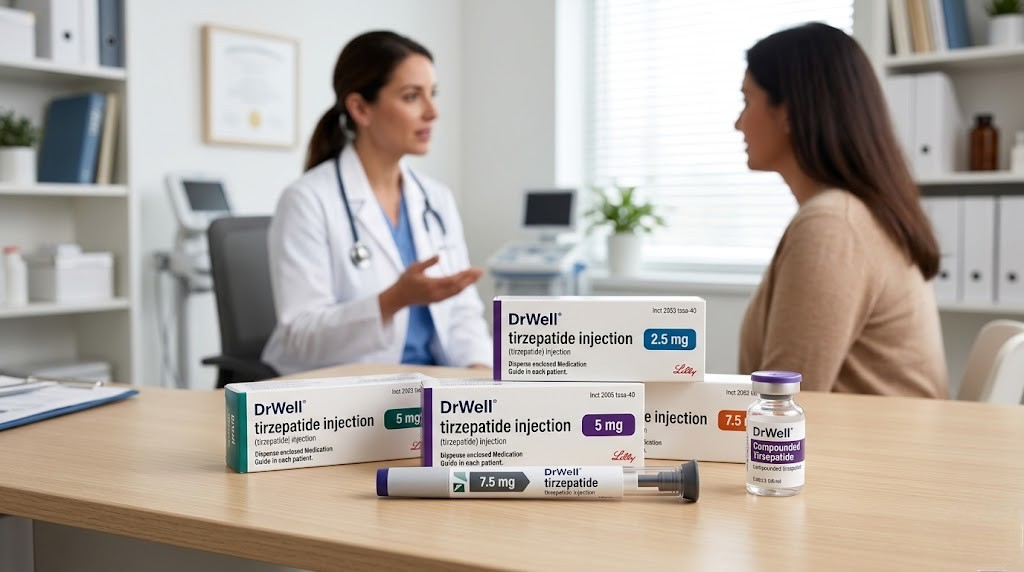
After reviewing dozens of telehealth weight loss platforms, patterns emerge. Some prioritize volume over care. Others lock patients into rigid protocols that ignore individual response. And a handful build their programs around clinical observation, adjusting medications based on what actually works for real patients. DrWell falls into that third category, and their approach to tirzepatide with glycine and B12 formulations deserves a closer look.
The platform connects patients with licensed providers who prescribe compounded tirzepatide through a digital-first model. But what makes DrWell different from the other 50 telehealth weight loss companies competing for your attention? Their unique GLP-1 Squared formulation, which combines semaglutide and tirzepatide together at lower individualized doses, came from real clinical observations rather than marketing brainstorms. Their nurse practitioners noticed distinct patterns in how patients responded to each medication alone, and built a compounded solution around those findings.
This guide covers everything you need to know about DrWell, from their tirzepatide glycine B12 offerings to their pricing structure, qualification requirements, and how the platform compares to alternatives. Whether you are considering DrWell specifically or evaluating your telehealth options broadly, the details here will help you make an informed decision.
What is DrWell and how does their platform work?
DrWell describes itself as a digital prescription for a healthier life. At its core, the platform operates as both a SaaS tool for healthcare providers and a patient-facing telehealth service. Providers use DrWell to launch and manage weight loss programs. Patients use it to connect with those providers for medication access, monitoring, and ongoing care.
The company was co-founded by Jennifer Cooper, a nurse practitioner, and Dr. Jonathan Kaplan. Their clinical backgrounds shaped the platform, and you can see that influence in how they structure patient care. Regular lab work, provider follow-ups, and dosage adjustments based on individual response are built into the program rather than tacked on as optional add-ons.
DrWell is LegitScript certified, which matters more than most people realize. LegitScript certification means an independent regulatory body has verified the platform meets compliance standards for online pharmaceutical services. Not every telehealth weight loss provider bothers with this certification, and the ones that skip it should raise questions.
The patient experience works like this. You sign up through the platform, complete a medical intake, and get matched with a licensed provider in your area. That provider reviews your history, orders lab work if needed, and determines whether tirzepatide for weight loss is appropriate for your situation. If approved, the medication ships directly to you from a licensed compounding pharmacy.
One detail worth noting is that DrWell connects you with local providers rather than relying exclusively on remote-only consultations. This hybrid approach gives patients access to in-person care when needed while maintaining the convenience of telehealth for routine check-ins and medication management.
DrWell tirzepatide with glycine and B12
The flagship weight loss offering from DrWell is their compounded tirzepatide with glycine and B12. This is not just tirzepatide alone. The formulation adds two complementary ingredients that serve specific purposes in the weight loss process.
Glycine is an amino acid that supports mitochondrial function, cellular repair, and inflammation regulation. During significant weight loss, your body undergoes substantial metabolic stress. Glycine helps buffer that stress by supporting the cellular processes that keep your energy production running efficiently. It also plays a role in sleep quality and gut health, two areas that often suffer during aggressive weight loss protocols.
Vitamin B12 addresses the energy production side. Many patients on GLP-1 medications report fatigue, particularly in the early weeks. B12 supports red blood cell formation and nervous system function, helping maintain energy levels while your body adjusts to reduced caloric intake and metabolic changes.
The combination makes clinical sense. Tirzepatide handles appetite suppression and metabolic regulation through its dual GLP-1 and GIP receptor action. Glycine supports the recovery and repair processes that weight loss demands. B12 keeps energy levels stable so patients can maintain activity levels and daily function.
Administration is once weekly by subcutaneous injection. Dosage starts low and gets titrated upward based on individual tolerance and response, a standard approach that mirrors compounded tirzepatide starting dose protocols across the industry. The key difference with DrWell is that dosage adjustments happen through active provider communication rather than a preset schedule that ignores how you are actually responding.
GLP-1 Squared: the dual medication approach
This is where DrWell gets genuinely interesting. Their GLP-1 Squared (sometimes written GLP-12) formulation combines both semaglutide and tirzepatide at individualized lower doses in a single compounded injection.
The idea did not come from a marketing meeting. It came from clinical observation.
Jennifer Cooper and her team noticed a consistent pattern. Patients who switched from semaglutide to tirzepatide experienced better appetite suppression but reported increased food noise, that persistent mental preoccupation with eating. Patients on semaglutide alone had better food noise reduction but less physical appetite suppression. Neither medication alone delivered both benefits optimally.
The solution was straightforward. Combine both at reduced individual doses to leverage the complementary benefits of each while potentially minimizing the drawbacks of using either at full dose.
DrWell compares this approach to established medical practices. Diabetics routinely receive multiple insulin types. Hypertensive patients take ACE inhibitors alongside angiotensin receptor blockers. Combining medications that work through related but distinct pathways is standard medicine, not experimental innovation.
For patients who have tried semaglutide or tirzepatide individually and found each lacking in some dimension, the GLP-1 Squared approach offers a potential middle ground. The prescriber determines medical necessity during a consultation, and the compounded medication is tailored to the individual patient needs.
The regulatory framework matters here. Compounded medications are legal when a prescriber determines medical necessity. They have not been evaluated by the FDA for safety, quality, or efficacy in the way that brand-name medications like Mounjaro or Zepbound have been. This is true for all compounded semaglutide and tirzepatide products, not just DrWell offerings.
DrWell pricing and subscription structure
DrWell does not publicly display pricing on their website, which is common among telehealth platforms that customize programs based on individual needs. The medication and monitoring costs depend on several factors including dosage level, formulation choice, and the specific provider you are matched with.
For context on what compounded tirzepatide typically costs across the telehealth landscape, most providers charge between $300 and $600 per month for the medication itself. Many add membership or consultation fees of $40 to $100, bringing the actual monthly cost to $350 to $700 depending on the platform and dosage.
DrWell offers their programs through a subscription model that includes the medication, provider consultations, and ongoing monitoring. They provide discounted pricing on medications through partnerships with fully vetted 503a and 503b compounding pharmacies, which theoretically translates to better pricing than what individual providers could negotiate on their own.
If you are comparing DrWell to affordable tirzepatide options, the total cost of ownership matters more than the medication price alone. A platform that charges less for the drug but skips lab work and provider follow-ups is not actually cheaper, it is just cutting corners that could affect your safety and results.
For perspective on branded alternatives, Mounjaro and Zepbound carry list prices around $1,000 to $1,100 per month without insurance. Eli Lilly offers self-pay vials at $499 for certain doses through their Zepbound Self Pay Journey Program. Insurance coverage for tirzepatide varies dramatically by plan, so checking with your specific insurer is essential before assuming brand-name options are out of reach.
Some patients can use FSA or HSA funds for weight loss medications including tirzepatide, which effectively reduces the out-of-pocket cost. DrWell providers can provide the documentation needed for these reimbursement claims.
Who qualifies for DrWell tirzepatide programs?
Qualification follows standard medical criteria for weight management medications. You need a BMI of 30 or greater, or a BMI of 27 or greater with at least one weight-related comorbidity such as type 2 diabetes, hypertension, sleep apnea, or high cholesterol.
Age matters too. Patients must be 16 years or older for tirzepatide prescriptions.
DrWell lists specific contraindications on their website. You cannot use their tirzepatide programs if you have a personal or family history of medullary thyroid carcinoma, Multiple Endocrine Neoplasia syndrome type 2, or if you are pregnant or breastfeeding. These are standard contraindications for all GLP-1 receptor agonist medications, not unique to DrWell.
The qualification process involves a medical intake and provider consultation. Your provider will review your health history, current medications, and weight loss goals to determine whether tirzepatide is appropriate. Lab work may be ordered to establish baseline health markers and screen for conditions that could affect medication safety.
If you have tried other weight loss medications like phentermine or semaglutide without adequate results, that history actually strengthens your case for tirzepatide since it demonstrates medical necessity for a different treatment approach.
How DrWell compares to other tirzepatide providers
The telehealth weight loss space is crowded. Dozens of platforms offer compounded tirzepatide, and distinguishing between them requires looking beyond the marketing claims. Here is how DrWell stacks up on the factors that actually matter.
Clinical oversight and provider quality
DrWell connects patients with providers who have ongoing relationships with the platform, and many of those providers work from local practices rather than operating as remote-only telehealth doctors. This means you are more likely to get a provider who can see you in person if something comes up, which is a meaningful advantage over platforms that rely entirely on brief video consultations with rotating providers.
Compare this to platforms like Empower Pharmacy, which operates primarily as a compounding pharmacy with affiliated providers, or Orderly Meds, which focuses on streamlined online prescribing. Each model has strengths, but DrWell emphasis on the provider-patient relationship stands out.
Medication options
Most telehealth platforms offer one or two tirzepatide formulations. DrWell offers three distinct options. Standard tirzepatide, tirzepatide with glycine and B12, and their unique GLP-1 Squared combination. Having multiple formulation choices allows providers to match the medication to the patient rather than forcing everyone into the same product.
The GLP-1 Squared option is genuinely unique to DrWell as of this writing. No other major telehealth platform offers a combined semaglutide-tirzepatide formulation, making this a differentiator for patients who have struggled with either medication alone.
Pharmacy partnerships
DrWell sources medications from fully licensed, certified US-based compounding pharmacies, including both 503a and 503b facilities. The distinction between 503a and 503b pharmacies matters for quality control and consistency. 503b outsourcing facilities operate under stricter FDA oversight and can produce larger batches with more standardized quality testing.
Not every telehealth provider discloses their pharmacy partnerships. DrWell transparency about using vetted facilities from both categories suggests a commitment to medication quality that some competitors lack.
Provider comparison table
Feature | DrWell | Typical telehealth | Brand-name (Mounjaro/Zepbound) |
|---|---|---|---|
Medication type | Compounded tirzepatide + blends | Compounded tirzepatide | FDA-approved tirzepatide |
Provider model | Local + telehealth hybrid | Telehealth only | In-person physician |
Unique formulations | GLP-1 Squared, glycine/B12 blends | Standard compound only | Single formulation per brand |
Lab monitoring | Included in program | Varies by platform | Ordered by physician |
Pharmacy type | 503a and 503b certified | Varies | Retail/specialty pharmacy |
Estimated monthly cost | $300-600+ | $300-700 | $499-1,100+ |
What to expect from the DrWell tirzepatide experience
Understanding the patient journey helps set realistic expectations. Here is what the process looks like from signup to ongoing treatment.
Initial consultation and onboarding
The process starts with creating an account and completing a health questionnaire. DrWell has streamlined this with custom enrollment links that providers use to onboard patients quickly. You will provide your medical history, current medications, weight loss history, and health goals.
A licensed provider reviews your information and schedules a consultation. During this visit, they will discuss your options, explain the differences between standard tirzepatide and the glycine/B12 or GLP-1 Squared formulations, and recommend a starting protocol based on your profile.
Lab work may be ordered at this stage. Common baseline tests include metabolic panel, thyroid function, HbA1c, and lipid panel. These establish your starting health markers and help your provider monitor progress over time.
Starting your medication
Once approved, your medication ships from the compounding pharmacy directly to your door. You will receive injection supplies along with instructions for self-administration.
The starting dose is typically low, usually 2.5 mg weekly for standard tirzepatide protocols. This gives your body time to adjust and helps identify your tolerance level before increasing. Most patients experience some gastrointestinal side effects initially, including nausea, constipation, or mild discomfort that typically resolves within the first few weeks.
If you are new to self-injection, DrWell providers can walk you through the process. The injection itself is straightforward: a small subcutaneous injection in the abdomen, thigh, or upper arm. Rotating injection sites helps prevent injection site reactions.
Dose titration and adjustments
DrWell follows a gradual titration approach. After your body adjusts to the starting dose (usually 4 weeks), your provider may increase the dose in 2.5 mg increments. The maximum dose for standard tirzepatide is 15 mg weekly, though many patients achieve their goals at lower doses.
This is where the provider relationship matters. A good provider adjusts your dose based on how you are responding, not just following a calendar. If you are experiencing significant side effects at a given dose, your provider should hold or reduce rather than pushing forward with scheduled increases.
The titration process typically looks like this for standard tirzepatide through DrWell:
Weeks | Dose | Purpose |
|---|---|---|
1-4 | 2.5 mg | Tolerance assessment |
5-8 | 5 mg | Initial therapeutic dose |
9-12 | 7.5 mg | Increased effect |
13-16 | 10 mg | Optimization |
17+ | 10-15 mg | Maintenance (provider-guided) |
For the GLP-1 Squared formulation, titration follows a different protocol since both medications need to be balanced together. Your provider manages this based on your individual response to the combination.
Ongoing monitoring
DrWell programs include regular follow-ups and lab work. This monitoring serves two purposes: confirming the medication is working safely and identifying when dosage adjustments are needed.
Expect periodic bloodwork to check metabolic markers, thyroid function, and nutrient levels. Blood work on tirzepatide can reveal important information about how your body is processing the medication and whether any supplementary support is needed.
Weight loss progress, side effect management, and lifestyle factors like diet and exercise are all part of the ongoing conversation with your provider.
Side effects and safety considerations
Tirzepatide side effects through DrWell are the same as tirzepatide from any other source. The medication itself determines the side effect profile, not the provider. But how your provider manages those side effects makes a significant difference in your experience.
Common side effects
The most frequently reported side effects during early treatment include nausea, which is the most common and usually peaks during dose increases, constipation that affects roughly 20-25% of patients, diarrhea which is more common at higher doses, decreased appetite which is the intended therapeutic effect, and mild injection site reactions like redness or itching.
Most of these resolve within the first 4-6 weeks or with dose adjustments. The glycine and B12 in DrWell formulation may help mitigate some of these effects, particularly fatigue and gastrointestinal discomfort, though individual responses vary.
Less common side effects
Some patients experience headaches, insomnia, fatigue, body aches, anxiety, brain fog, or dry mouth. These are less common but worth monitoring. Hair thinning has been reported by some patients on GLP-1 medications generally, likely related to rapid weight loss and reduced nutritional intake rather than the medication itself.
DrWell advantage here is their monitoring program. Providers who are actively tracking your lab work and symptoms can catch emerging issues early and adjust your protocol before side effects become problematic.
Serious safety considerations
Tirzepatide carries a boxed warning about potential thyroid C-cell tumors based on animal studies. This is why personal or family history of medullary thyroid carcinoma is an absolute contraindication.
Pancreatitis is a rare but serious potential side effect of all GLP-1 receptor agonists. Severe abdominal pain that does not resolve warrants immediate medical attention.
The effects on menstrual cycles are increasingly documented. Some women experience changes in cycle timing, flow, or symptoms while on tirzepatide. These changes are generally not dangerous but should be discussed with your provider. Similarly, women considering pregnancy should discuss tirzepatide and fertility implications with their healthcare team.
Medication storage and handling
Proper storage directly affects medication potency. This applies whether you get tirzepatide through DrWell or any other provider.
Compounded tirzepatide must be refrigerated at 36-46 degrees Fahrenheit (2-8 degrees Celsius). Do not freeze it. Do not leave it at room temperature for extended periods. If your medication gets warm during shipping or storage, contact your provider before using it.
The shelf life in the refrigerator depends on the specific compounding pharmacy formulation. Most compounded tirzepatide vials are good for 28-90 days when properly stored. Check the expiration date on your vial and never use expired medication.
If you travel, a medical travel case with cold packs keeps your medication at the proper temperature. Plan ahead for trips longer than a day so your tirzepatide stays within the safe temperature range throughout your journey.
For patients on the glycine and B12 blend, the same storage rules apply. The additional ingredients do not change the cold storage requirements.
DrWell tirzepatide results: what the research shows
DrWell does not publish their own clinical outcome data, which is typical for telehealth platforms that use compounded medications. However, the active ingredient in their formulations, tirzepatide, has extensive clinical trial data supporting its efficacy.
The SURMOUNT clinical trial program demonstrated that tirzepatide at maximum doses produced average weight loss of 15-22% of body weight over 72 weeks. At the 5 mg dose, average loss was approximately 15%. At 10 mg, approximately 19.5%. At 15 mg, approximately 20.9%.
These are averages from controlled clinical settings. Real-world results vary based on starting weight, diet, activity level, and adherence to the medication protocol. Some patients see dramatic before and after results within the first few months. Others experience more gradual progress.
The typical weight loss timeline on tirzepatide follows a predictable pattern. Most patients notice appetite changes within the first 1-2 weeks. Measurable weight loss typically begins within weeks 2-4. The most significant loss occurs during months 2-6 as the dose increases and metabolic effects compound. Weight loss may plateau around months 9-12, at which point maintenance strategies become the focus.
For the GLP-1 Squared formulation, there is no published clinical data on the specific combination of semaglutide and tirzepatide together. The rationale is based on the clinical observations of DrWell practitioners and the established efficacy of each medication individually. This is worth understanding clearly: you are choosing a formulation based on clinical reasoning rather than randomized trial data.
The average weight loss per month on GLP-1 medications generally ranges from 4-8 pounds during the active weight loss phase, with higher rates during dose escalation and lower rates as you approach your maintenance weight.
Optimizing results on DrWell tirzepatide
Medication alone does not produce optimal results. What you do alongside tirzepatide significantly impacts both the amount of weight you lose and your ability to maintain that loss long-term.
Nutrition during treatment
Tirzepatide reduces appetite and slows gastric emptying. This means you eat less naturally, but what you eat becomes even more important. Protein intake is critical for preserving muscle mass during weight loss. Aim for 0.7-1.0 grams of protein per pound of your goal body weight daily.
Check out our guides on foods to avoid on tirzepatide and what to eat on tirzepatide for detailed meal planning guidance. A structured diet plan helps ensure you get adequate nutrition despite reduced appetite.
Common nutritional challenges on tirzepatide include meeting protein targets with reduced appetite, maintaining hydration since thirst signals may decrease, getting adequate fiber for digestive regularity, and avoiding nutrient deficiencies from reduced food intake.
Supplements can help fill nutritional gaps. A quality multivitamin, additional B vitamins (beyond what is in the DrWell formulation), vitamin D, magnesium, and a fiber supplement are commonly recommended alongside GLP-1 medications.
Exercise considerations
Resistance training is particularly important during GLP-1 medicated weight loss. Without it, a significant portion of weight lost may come from muscle rather than fat. This affects metabolic rate, functional capacity, and long-term weight maintenance.
Aim for 2-3 resistance training sessions per week alongside regular cardiovascular activity. Building muscle while on GLP-1 medication is possible and highly recommended. The reduced appetite from tirzepatide makes protein timing around workouts even more important.
If you have been sedentary, start gradually. Walking is an excellent foundation. Add resistance training as your fitness improves. Your DrWell provider can help adjust your medication timing around your exercise schedule if needed.
Lifestyle factors that affect results
Sleep quality directly impacts weight loss outcomes. Poor sleep increases cortisol, disrupts hunger hormones, and reduces the metabolic benefits of tirzepatide. Aim for 7-9 hours of quality sleep. If tirzepatide is affecting your sleep, discuss timing adjustments with your provider.
Alcohol consumption should be minimized. The interaction between tirzepatide and alcohol is not fully characterized, but reduced food intake means alcohol hits harder on an empty or near-empty stomach. If you do choose to drink, our guide on the best alcohol choices while on tirzepatide provides practical options.
Stress management affects cortisol levels and eating behaviors. While tirzepatide reduces physical hunger, stress-driven eating patterns may still surface. Addressing stress through exercise, sleep, and psychological support creates better conditions for sustainable weight loss.
Compounded tirzepatide: the regulatory landscape
Understanding the regulatory environment around compounded tirzepatide helps you make informed decisions about providers like DrWell.
Compounded medications are produced by licensed pharmacies that combine, alter, or customize drug formulations for individual patients. They operate under state pharmacy boards and, in the case of 503b facilities, under FDA oversight. They are legal. They are not, however, FDA-approved in the way brand-name medications are.
The FDA enforcement discretion around compounded tirzepatide has shifted multiple times. In March 2025, the FDA ended enforcement discretion for compounded tirzepatide, stating that no drug shortage existed for brand-name products. This means pharmacies face stricter requirements for producing compounded versions, though the practice continues under specific conditions where medical necessity is established.
What this means for DrWell patients is that the availability and formulation of compounded tirzepatide may change over time as regulations evolve. DrWell use of both 503a and 503b pharmacies provides some flexibility in navigating these regulatory changes.
If compounded tirzepatide becomes unavailable or more restricted, patients may need to transition to brand-name options. Understanding the differences between Zepbound and compounded tirzepatide prepares you for that possibility. Your DrWell provider can help navigate any transitions.
For patients concerned about the regulatory status of compounded medications, brand-name alternatives through traditional medical channels remain available with appropriate insurance coverage or through insurance programs that cover tirzepatide.
DrWell reviews and reputation
Evaluating any telehealth provider requires looking at available reviews, certifications, and red flags objectively.
DrWell currently has limited public reviews. On Trustpilot, only two reviews exist: one 5-star review praising the platform ease of use and local provider connections, and one 1-star review without detailed feedback. This 3.1 average from just two reviews is too small a sample to draw meaningful conclusions.
The LegitScript certification is a meaningful positive signal. This independent verification confirms DrWell meets regulatory compliance standards for online healthcare services. Many telehealth platforms, particularly newer ones, operate without this certification.
The founding team clinical background, a nurse practitioner and a physician, suggests healthcare-first thinking rather than a tech company that added medical services as an afterthought. The GLP-1 Squared formulation story reinforces this impression since it originated from clinical observations rather than market research.
Red flags to watch for with any telehealth weight loss provider include no requirement for lab work or medical history review, no provider follow-ups after the initial prescription, pricing that seems dramatically lower than market rates, no clear information about pharmacy partnerships, pressure to start at higher doses immediately, and no discussion of contraindications or potential side effects.
DrWell does not appear to exhibit these red flags based on available information, but as with any healthcare service, your personal experience may vary. Starting with a consultation and asking detailed questions about their protocols before committing to a subscription is always wise.
Alternatives to DrWell for tirzepatide
If DrWell does not feel like the right fit, several other platforms offer compounded tirzepatide through telehealth models.
Empower Pharmacy is one of the largest compounding pharmacies in the US and works with affiliated telehealth providers. Their infrastructure is established and their quality controls are well-documented.
Orderly Meds focuses on streamlined online prescribing with transparent pricing. Good for patients who want straightforward access without extensive program features.
Strive offers tirzepatide through a program-oriented approach with coaching and support services bundled in.
Bello Health provides compounded tirzepatide with a focus on personalized dosing and provider accessibility.
ProRx offers compounded tirzepatide with various formulation options including B12 and glycine blends similar to DrWell offerings.
Citizen Meds and Coby Health are newer entrants with competitive pricing models.
For patients who prefer brand-name FDA-approved medications, Mounjaro and Zepbound are available through traditional prescribers and some telehealth platforms that work with specialty pharmacies. The cost is higher, but you get the assurance of FDA-approved manufacturing and quality standards.
The key comparison points when evaluating any tirzepatide provider include medication quality and pharmacy sourcing, provider qualifications and availability for follow-ups, lab work and monitoring included or additional cost, total monthly cost including all fees, cancellation flexibility and contract terms, and the range of formulation options available.
Injection technique and best practices
Whether you use DrWell or any other provider, proper injection technique affects both comfort and medication absorption.
The injection process is straightforward. Clean the injection site with an alcohol swab. Pinch the skin. Insert the needle at a 45-90 degree angle depending on the needle length and your body composition. Inject the medication slowly. Hold for 5-10 seconds before withdrawing.
Rotate injection sites between your abdomen, thighs, and upper arms. Using the same spot repeatedly increases the risk of injection site reactions including redness, itching, and lipodystrophy.
The best time to take your tirzepatide shot depends on your schedule and how you respond to the medication. Many patients prefer evening injections so any initial nausea occurs during sleep. Others prefer morning injections to avoid thinking about it all day. Consistency matters more than specific timing, so pick a day and time that works for your routine and stick with it.
If you miss a dose, take it as soon as you remember within 4 days. If more than 4 days have passed, skip that dose and take the next one on your regular schedule. Do not double up to make up for a missed injection.
Transitioning to or from DrWell
If you are currently on tirzepatide from another provider and considering switching to DrWell, the transition is usually straightforward. Bring your current dosage information, recent lab work, and treatment history to your DrWell consultation. Your provider can continue your current dose without starting over from the beginning.
If you are switching between medications, say from semaglutide to tirzepatide through DrWell, your provider will guide the transition protocol. This typically involves completing your current medication cycle and then starting tirzepatide at the initial dose, though some providers use conversion protocols based on your previous dosing.
For patients considering the GLP-1 Squared formulation after trying standard tirzepatide or semaglutide alone, DrWell providers can evaluate whether the combination approach makes sense based on your specific response to prior treatment.
If you decide to leave DrWell, ensure you have enough medication to last until your new provider prescribes. Gaps in treatment can cause temporary withdrawal-like symptoms and rebound hunger. Plan transitions with overlap rather than gaps.
For patients who are ready to wean off tirzepatide entirely, your DrWell provider should create a tapering plan rather than stopping abruptly. Gradual dose reduction gives your body time to adjust and reduces the risk of rapid weight regain.
Long-term considerations
Weight loss medications including tirzepatide are most effective as part of a long-term strategy, not a quick fix. Understanding the long-term picture helps set appropriate expectations.
Maintaining weight loss after tirzepatide requires ongoing attention to the habits built during treatment. Clinical data shows that most patients regain weight after stopping GLP-1 medications unless they have made sustainable lifestyle changes. The medication creates a window of opportunity. What you build during that window determines long-term success.
Many patients end up on a maintenance dose rather than stopping entirely. A lower dose can maintain appetite regulation and metabolic benefits while requiring less medication and potentially lower cost. Your DrWell provider can help determine whether a maintenance protocol makes sense for your situation.
The benefits of tirzepatide beyond weight loss are increasingly documented. Improved blood sugar regulation, reduced cardiovascular risk markers, better sleep quality (particularly for patients with sleep apnea), and positive effects on liver health are all observed in clinical data. These benefits may justify continued use even after reaching weight goals.
Long-term safety data for tirzepatide continues to accumulate. The medication has been available in various forms since its FDA approval, and ongoing post-market surveillance monitors for any emerging concerns. Working with a provider who follows current research, as DrWell clinical team does, helps ensure your treatment stays aligned with the latest safety information.
Frequently asked questions
Is DrWell a legitimate tirzepatide provider?
DrWell is LegitScript certified and connects patients with licensed healthcare providers. They source medications from vetted US-based compounding pharmacies including both 503a and 503b facilities. The platform was co-founded by a nurse practitioner and physician with clinical weight management experience.
How much does DrWell tirzepatide cost per month?
DrWell does not publicly list pricing on their website. Compounded tirzepatide across the telehealth industry typically runs $300-600 per month for medication plus provider fees. Your specific cost depends on dosage, formulation choice, and your provider program structure. Contact DrWell directly for current pricing.
What is GLP-1 Squared and is it safe?
GLP-1 Squared is DrWell unique compounded formulation combining semaglutide and tirzepatide at individualized lower doses. It was developed based on clinical observations about how patients respond differently to each medication alone. Like all compounded medications, it has not been FDA-evaluated as a specific combination. Safety is managed through prescriber oversight and patient monitoring.
Does DrWell require lab work?
Yes, DrWell programs include lab work and regular provider follow-ups as part of the treatment protocol. Baseline labs are typically ordered before starting medication, with follow-up bloodwork at regular intervals to monitor health markers and medication effects.
Can I use my HSA or FSA for DrWell?
HSA and FSA funds can typically be used for medically prescribed weight loss medications including compounded tirzepatide. DrWell providers can provide the necessary documentation for reimbursement. Check with your specific plan administrator for confirmation.
What happens if compounded tirzepatide becomes unavailable?
If regulatory changes restrict compounded tirzepatide availability, DrWell patients would need to transition to brand-name alternatives like Mounjaro or Zepbound. Your provider can help navigate this transition including insurance coverage options and manufacturer savings programs.
How is DrWell different from other tirzepatide telehealth providers?
DrWell key differentiators include the GLP-1 Squared dual-medication formulation (unique to DrWell), local provider matching rather than telehealth-only consultations, multiple formulation options including glycine and B12 blends, and LegitScript certification. Most competitors offer standard compounded tirzepatide without these additional options.
Can I switch to DrWell from another tirzepatide provider?
Yes. Bring your current dosage, recent lab work, and treatment history to your DrWell consultation. Your provider can typically continue your current dose without requiring you to restart the titration process from the beginning.
External resources
For researchers serious about optimizing their weight loss protocols, SeekPeptides offers the most comprehensive resource available, with evidence-based guides, detailed tirzepatide protocols, dosage calculators, and a community of thousands who have navigated these exact questions. SeekPeptides members get access to comprehensive comparison tools, protocol databases, and expert recommendations for making informed decisions about their weight management journey.
In case I do not see you, good afternoon, good evening, and good night. May your medications stay potent, your providers stay attentive, and your weight loss journey stay sustainable.