Dec 23, 2025
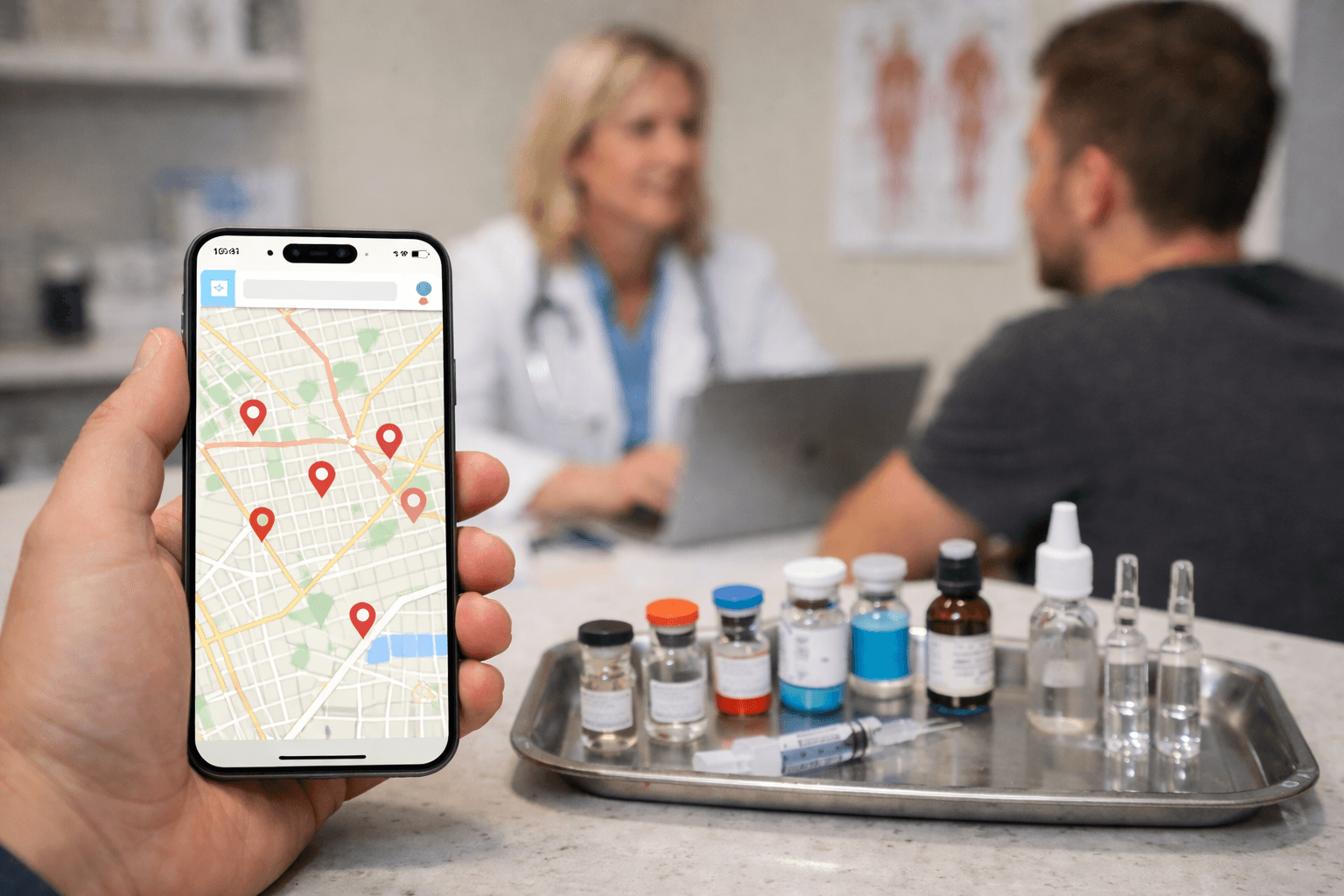
You've done the research. You know peptides work. Now you're typing "peptide therapy near me" into Google at 2am, scrolling through clinic websites that all look the same, wondering which ones are actually legit.
Some clinics charge $500 per session. Others offer "comprehensive programs" for $5,000. One place has a doctor's photo that's clearly a stock image. Another has five-star reviews that read like they were written by the same person.
How do you find a clinic that knows what they're doing?
This guide cuts through the noise. You'll learn how to identify legitimate peptide therapy clinics, what questions to ask, what treatments should cost, and what red flags mean "run away." You'll also learn when you might not need a clinic at all.
Let's start with what you're actually looking for.
What is peptide therapy?
Peptide therapy uses bioactive peptides to trigger specific biological responses in your body. These are short chains of amino acids that act as signaling molecules, telling your cells to perform certain functions.
Think of peptides as text messages to your cells. They deliver instructions: produce more collagen, heal this tissue faster, reduce inflammation here, increase growth hormone there. Your body makes peptides naturally, but production declines with age or gets disrupted by injury, illness, or stress.
Therapeutic peptides supplement what your body can't produce enough of anymore.
Clinics offering peptide therapy typically provide:
Injectable peptides for systemic effects - weight loss, muscle growth, injury recovery, anti-aging, cognitive enhancement, and more.
Prescription peptide programs with medical supervision - dosing protocols, monitoring, adjustments based on your response.
Compounded peptide formulations - custom blends targeting multiple goals simultaneously.
Ongoing support and monitoring - bloodwork, check-ins, protocol adjustments.
The clinic model makes sense for people who want medical supervision, don't want to handle sourcing and administration themselves, or have complex health situations requiring professional oversight.
But not all clinics are created equal. Some are run by experienced functional medicine doctors who genuinely understand peptide therapy. Others are cash-grab operations staffed by undertrained practitioners pushing whatever generates the highest profit margins.
You need to know the difference.

How to find legitimate peptide therapy clinics
Start with these filtering steps before you contact anyone:
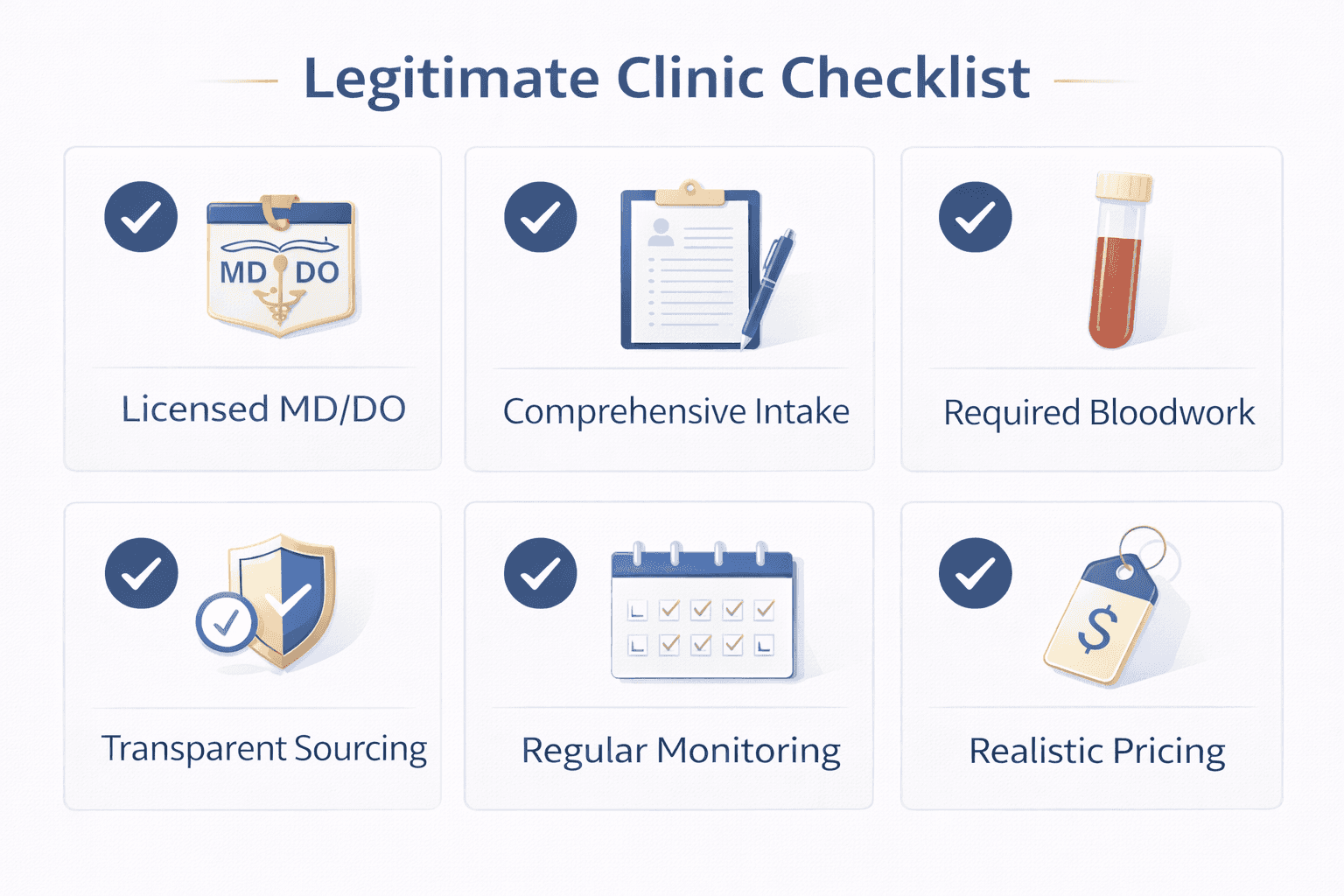
Check medical credentials
Real peptide therapy should be overseen by a licensed physician. Not a "wellness consultant" or "certified peptide specialist" (those certifications don't mean anything). An actual MD, DO, or NP operating under a physician's license.
Look for practitioners with backgrounds in:
Functional medicine
Regenerative medicine
Sports medicine
Anti-aging medicine
Endocrinology
These specialties typically have more peptide experience than general practitioners. That said, plenty of excellent GPs have educated themselves on peptide therapy. What matters is their actual knowledge, not just their specialty.
How to verify: Search the practitioner's name on your state medical board website. Confirm they're licensed, in good standing, and have no disciplinary actions. This takes five minutes and eliminates scam operations immediately.
Look for comprehensive intake processes
Legitimate clinics don't hand out peptides like candy. They require:
Initial consultation (usually 30-60 minutes) to discuss your health history, goals, and whether peptides are appropriate for you.
Bloodwork to establish baseline markers and identify contraindications. At minimum, they should check relevant hormones, metabolic markers, and organ function.
Informed consent explaining risks, benefits, and alternatives. You should leave with written information, not just verbal promises.
Follow-up protocols for monitoring your response and adjusting treatment.
If a clinic offers to prescribe peptides after a 10-minute phone call with no bloodwork, they're not practicing medicine. They're running a peptide dispensary. Avoid.
Evaluate their knowledge
During initial contact (usually a free consultation call), ask specific questions:
"What peptides do you recommend for my goals, and why those specific ones?"
A good answer explains mechanisms of action, expected timelines, and why they chose that peptide over alternatives. A bad answer is vague marketing speak about "optimizing" and "balancing."
"What are the potential side effects and contraindications?"
They should give you specific, realistic information. Not "peptides are totally safe with no side effects." That's bullshit. Everything has side effects.
"How do you monitor progress and adjust protocols?"
Good clinics schedule regular check-ins, repeat bloodwork at specific intervals, and modify your protocol based on results. Bad clinics prescribe a 3-month supply and say "call if you have problems."
"Where do you source your peptides?"
Reputable clinics use licensed compounding pharmacies that follow FDA guidelines. Red flag if they're vague about sourcing or mention overseas suppliers.
Read reviews carefully
Five-star Google reviews can be bought. Look for patterns instead:
Good signs:
Detailed reviews mentioning specific practitioners by name
Mix of ratings (all 5-stars is suspicious)
Reviews that discuss the process, not just results
Responses from the clinic that are professional and specific
Red flags:
Generic reviews that could apply to any clinic
All reviews posted within a short timeframe
Overly enthusiastic language that sounds like marketing copy
Defensive or aggressive responses to negative reviews
Check multiple platforms: Google, Yelp, health-specific review sites, Reddit discussions about peptide therapy in your city.
Understand pricing structures
Peptide therapy costs vary widely, but there are general ranges for legitimate services:
Initial consultation: $150-$500 (often credited toward treatment if you proceed)
Bloodwork: $200-$800 depending on panel comprehensiveness
Monthly peptide costs: $300-$1,500 depending on which peptides and doses
Follow-up visits: $100-$300 per visit
Comprehensive programs: $3,000-$10,000+ for 3-6 month protocols including consultations, peptides, monitoring, and support
If someone's offering "miracle" peptide therapy for $99/month, question what you're actually getting. Quality peptides, proper medical supervision, and legitimate compounding aren't cheap.
That said, you shouldn't be gouged either. If a clinic charges $5,000 for a 3-month supply of BPC-157 and CJC-1295, they're overcharging dramatically. Shop around.
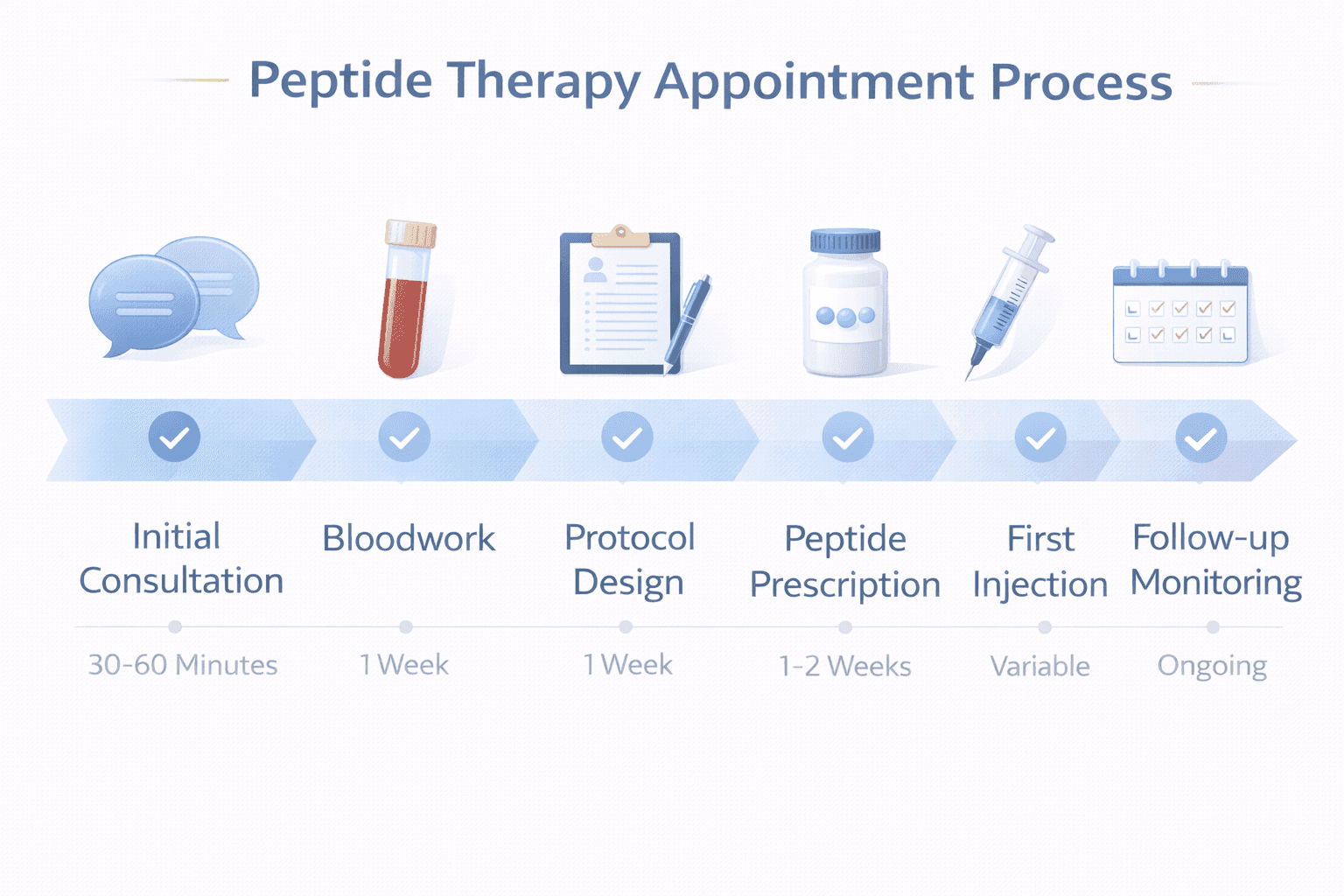
What to expect at your first peptide therapy appointment
Pre-appointment
Legitimate clinics send intake forms before your first visit. These cover:
Complete medical history
Current medications and supplements
Previous hormone or peptide use
Specific health goals and concerns
Lifestyle factors (sleep, stress, exercise, diet)
Fill these out thoroughly. The more information your provider has, the better they can tailor your protocol.
Some clinics require bloodwork before the initial consultation. Others schedule it after determining peptides are appropriate for you. Either approach works.
Initial consultation
This usually runs 45-90 minutes with a qualified practitioner. Here's what should happen:
Detailed health review: They'll go through your intake forms, ask clarifying questions, and dig into your goals. Good practitioners ask about things you might not have considered relevant.
Education about peptides: They should explain how peptides work, which ones might benefit you, and realistic expectations for results. This isn't a sales pitch. It's education.
Discussion of risks and alternatives: Honest conversation about potential side effects, situations where peptides aren't recommended, and alternative approaches to consider.
Protocol proposal: If peptides are appropriate, they'll outline a specific protocol - which peptides, at what doses, for how long, with what monitoring. This should be customized to you, not a cookie-cutter program.
Cost breakdown: Complete transparency about what you'll pay, what's included, and what additional costs might come up.
You should leave with written information and time to think. Pressure to start immediately is a red flag.
Bloodwork and baseline testing
If you haven't done bloodwork yet, this happens next. Common panels for peptide therapy include:
Hormone markers: Testosterone, estrogen, IGF-1, growth hormone, thyroid panel, cortisol
Metabolic markers: Glucose, insulin, HbA1c, lipid panel
Organ function: Liver enzymes, kidney function, complete blood count
Inflammation markers: C-reactive protein, homocysteine
Other relevant markers based on your specific concerns: vitamin D, B12, iron studies, etc.
This bloodwork establishes your baseline and identifies any contraindications. Someone with elevated liver enzymes might need to avoid certain peptides. Someone with uncontrolled diabetes needs their glucose managed before starting growth hormone peptides.
Getting your peptides
Once your protocol is finalized and bloodwork reviewed, the clinic prescribes your peptides.
These typically come from:
Licensed compounding pharmacies - regulated facilities that prepare custom peptide formulations under sterile conditions. This is the gold standard.
Through the clinic directly, some clinics dispense peptides on-site if they have proper licensing and facilities.
Your peptides arrive as lyophilized powder in vials that require reconstitution, or occasionally as pre-mixed solutions. The clinic should provide:
Detailed reconstitution instructions
Bacteriostatic water for mixing
Syringes and needles appropriate for your protocol
Storage instructions
Administration guidance
Some clinics have you come in for your first injection so they can teach proper technique. Others provide video instructions and trust you'll follow them. Either works if the instructions are clear.
Ongoing monitoring
This is where many clinics fail. They prescribe peptides, send you home, and only follow up if you complain.
Good clinics schedule:
2-week check-in: How are you tolerating the peptides? Any side effects? Any questions about administration?
4-6 week follow-up: Early results assessment, protocol adjustments if needed.
12-week comprehensive review: Repeat relevant bloodwork, assess progress toward goals, decide on protocol continuation or changes.
Ongoing availability: You should be able to reach someone with questions or concerns without waiting weeks for a response.
This level of support justifies the higher cost of clinic-based therapy versus DIY approaches.
Common peptide therapy treatments offered at clinics
Different clinics specialize in different applications.
Here's what you'll typically find:
Weight loss and metabolic health
Primary peptides: Semaglutide, tirzepatide, CJC-1295/Ipamorelin, AOD-9604
Typical protocol: GLP-1 agonists (semaglutide/tirzepatide) are the heavy hitters here. Clinics usually start with low doses and titrate up over weeks based on tolerance. Some combine these with growth hormone-releasing peptides for enhanced fat loss and muscle preservation.
Cost range: $400-$1,200/month depending on peptide and dose
Expected results: 1-2 pounds per week fat loss with proper diet and exercise. Some people lose significantly more, especially if they have substantial weight to lose.
See our semaglutide dosage calculator for precise dosing guidance, and read our semaglutide vs tirzepatide comparison to understand which might work better for you.
Injury recovery and healing
Primary peptides: BPC-157, TB-500, GHK-Cu
Typical protocol: BPC-157 at 250-500mcg daily, often combined with TB-500 at 2-5mg twice weekly. Injection near injury site typically produces best results. Protocol length depends on injury severity - anywhere from 4-12 weeks.
Cost range: $300-$800/month
Expected results: Accelerated healing of soft tissue injuries, reduced inflammation, improved mobility. Many users report significant improvement within 2-4 weeks.
These peptides are incredibly popular with athletes and active individuals dealing with chronic injuries. Learn more in our detailed guides on BPC-157 and TB-500.
Anti-aging and longevity
Primary peptides: CJC-1295/Ipamorelin, Epithalon, GHK-Cu, thymosin alpha-1
Typical protocol: Growth hormone peptides for cellular regeneration and metabolic optimization. GHK-Cu for skin and tissue repair. Epithalon for telomere lengthening (though evidence is mixed). Thymosin alpha-1 for immune system support.
Cost range: $400-$1,500/month for comprehensive protocols
Expected results: Improved energy, better sleep, enhanced recovery, skin improvements, cognitive benefits. Results accumulate over months. This isn't a quick fix.
Sexual health and vitality
Primary peptides: PT-141 (Bremelanotide), Kisspeptin, sometimes combined with hormone optimization
Typical protocol: PT-141 is used as needed (similar to Viagra but works via different mechanisms). Kisspeptin is dosed regularly to support overall sexual function. Often combined with testosterone optimization if levels are low.
Cost range: $200-$600/month
Expected results: Improved libido, enhanced sexual function, better arousal. PT-141 works within hours. Kisspeptin effects build over weeks.
Cognitive enhancement
Primary peptides: Semax, Selank, Cerebrolysin, Dihexa (though Dihexa has limited access)
Typical protocol: Varies widely by peptide. Semax and Selank can be intranasal or subcutaneous. Dosing ranges from micrograms to milligrams depending on compound and desired effect.
Cost range: $300-$1,000/month
Expected results: Improved focus, better memory, enhanced mood, reduced anxiety. Effects often subtle but noticeable over weeks.
Check our semax peptide dosage guide for detailed protocol information.
Athletic performance
Primary peptides: CJC-1295/Ipamorelin, BPC-157, TB-500, Follistatin variants (controversial and not widely available)
Typical protocol: Growth hormone peptides for recovery and muscle growth. Healing peptides to manage training injuries. Often cycled around competition schedules.
Cost range: $500-$1,200/month
Expected results: Faster recovery between training sessions, better injury healing, potential improvements in body composition. Effects compound over time.
Most clinics offering athletic performance peptides will emphasize these are for recovery and health optimization, not doping. That said, many peptides are banned by WADA and similar sports organizations. If you compete in tested sports, verify the rules before using any peptides.
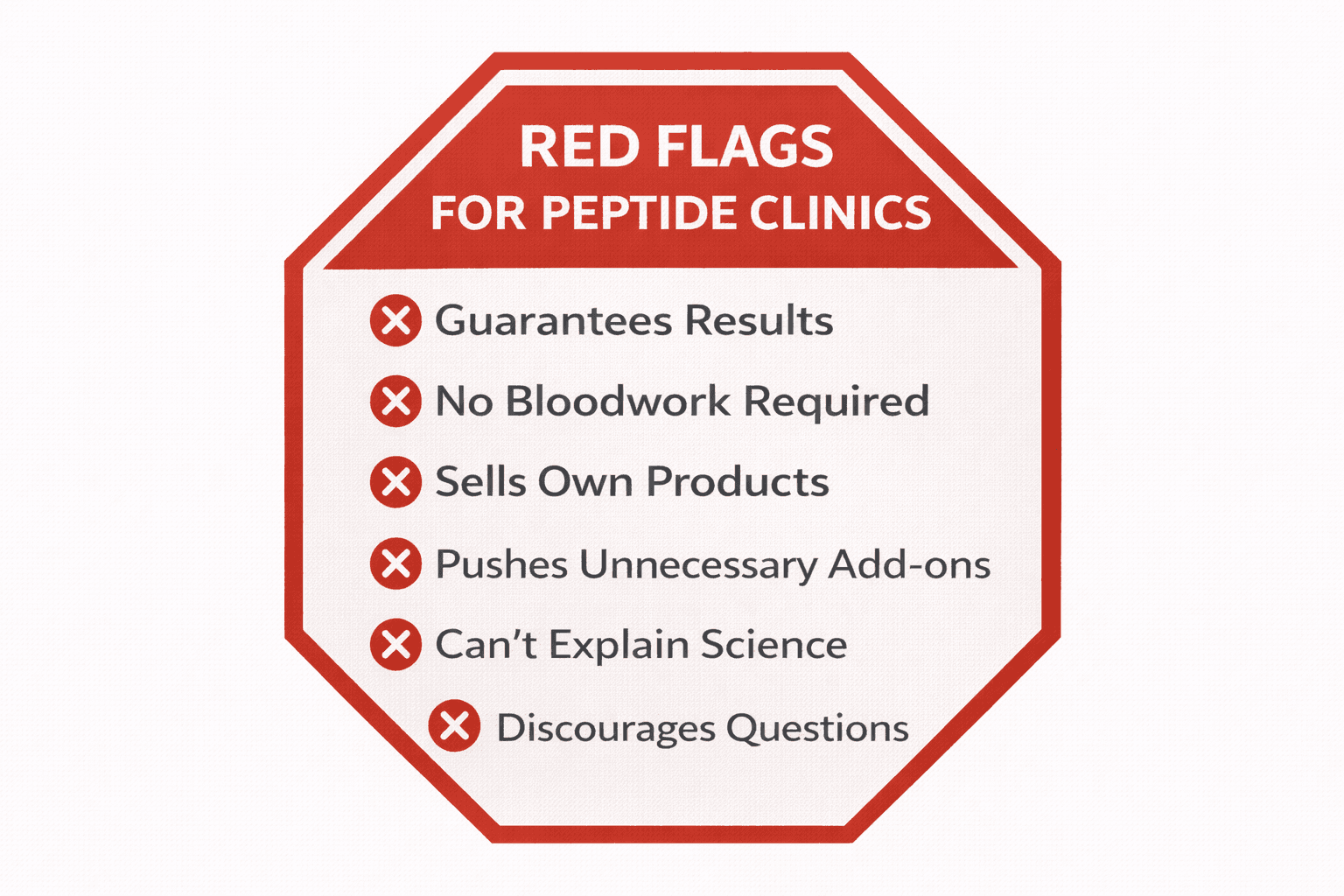
Red flags that indicate a clinic isn't legitimate
Watch for these warning signs:
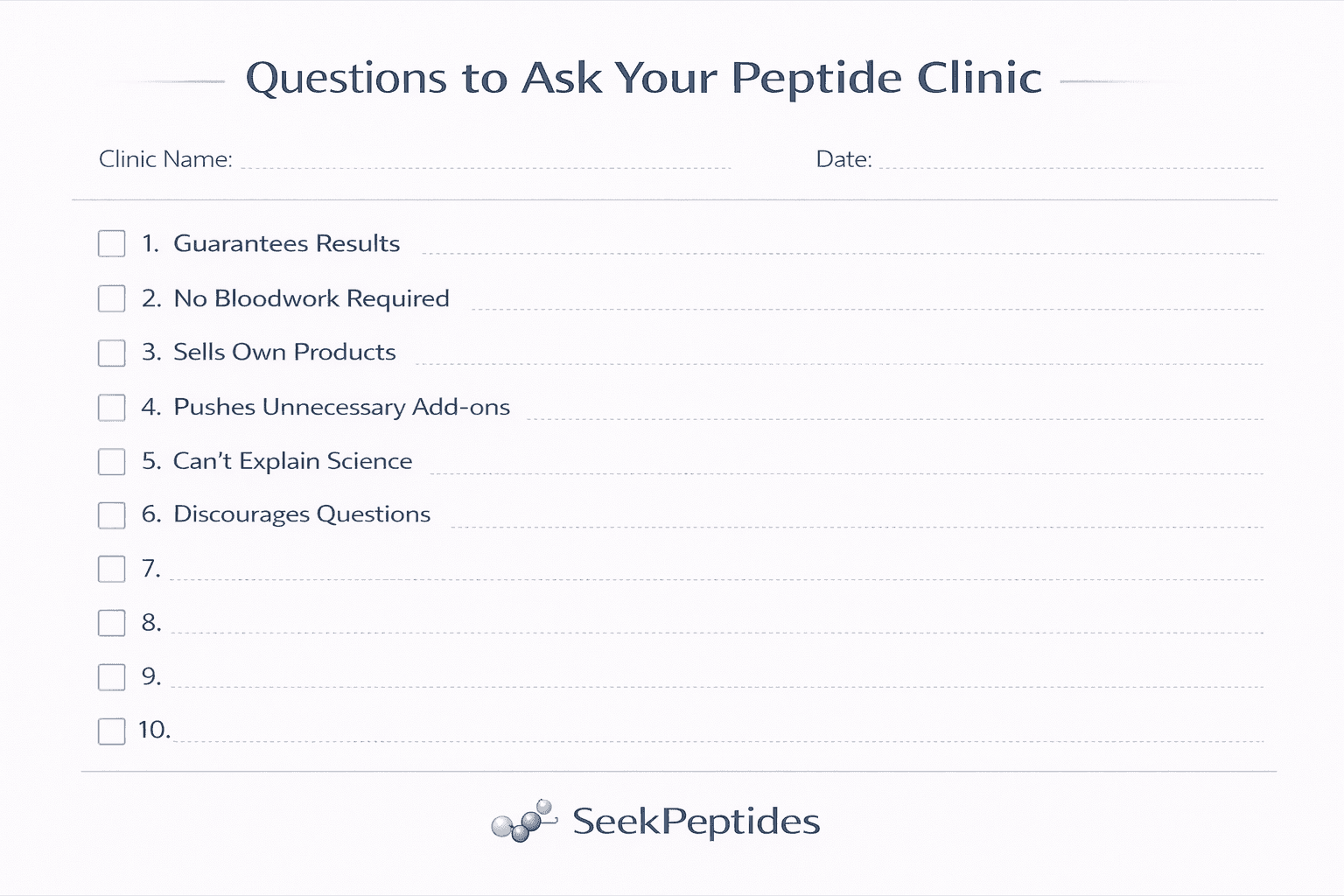
They guarantee results
No ethical practitioner guarantees specific outcomes with peptide therapy. Responses vary dramatically between individuals. Anyone promising "you'll lose 30 pounds in 30 days" or "guaranteed muscle gain" is either lying or dangerously incompetent.
They prescribe without proper evaluation
If you can get peptides prescribed after a brief online questionnaire with no bloodwork and no consultation with an actual physician, that's not medicine. That's a prescription mill.
Some telehealth peptide clinics operate this way - they're technically legal because a doctor rubber-stamps prescriptions, but there's no actual medical oversight. You're on your own if something goes wrong.
They sell their own peptide products
Clinics should prescribe peptides from licensed compounding pharmacies, not sell you their own branded bottles. When clinics sell peptides directly (unless they ARE a licensed compounding pharmacy), there's an incentive to push products regardless of whether you need them.
Conflict of interest matters here.
They push unnecessary add-ons
Some clinics have revenue targets. They'll try to upsell you on "vitamin injections" ($75 per injection of B12 you could buy for $10), "supplement packages" (marked up 300%), "detox protocols" (usually worthless), and other profit-generating services.
Quality clinics recommend what you need. Not what increases their revenue.
They can't explain peptide mechanisms
Ask your practitioner how a specific peptide works. If they can't explain the basic mechanism - which receptors it binds, what cellular processes it affects, why it's suited for your goal - they don't understand what they're prescribing.
You don't need a PhD-level explanation. But they should understand more than "this peptide is good for fat loss."
They discourage questions
Defensive responses to questions about sourcing, dosing rationale, alternative options, or potential risks are huge red flags. Good practitioners welcome informed patients. Bad ones want compliant customers.
They operate in legal gray areas
Some clinics have convoluted structures to avoid regulations - prescriptions written by doctors in other states, peptides shipped from overseas, vague language about "research purposes only." These operations often disappear overnight when regulators catch up.
Stick with clinics operating transparently within legal frameworks.
DIY peptide therapy vs clinic-supervised treatment
Here's the truth many clinics won't tell you: you don't necessarily need a clinic for peptide therapy.
Plenty of people successfully use peptides without medical supervision. They source from reputable research peptide suppliers, calculate their own doses, follow protocols from online communities, and monitor their own results.
This approach saves substantial money and gives you complete control. But it also puts all responsibility on you.
When clinic supervision makes sense:
You have complex health conditions. Diabetes, heart disease, hormonal imbalances, kidney issues, liver problems - these require medical oversight when using peptides that affect these systems.
You want comprehensive protocols. Clinics can combine multiple peptides strategically and adjust based on bloodwork. DIY users typically stick to simpler protocols.
You value peace of mind. Having a doctor available if something goes wrong provides psychological comfort worth paying for.
You're new to self-injection. Clinics teach proper technique and answer rookie questions. Though honestly, YouTube tutorials work fine for most people.
You need prescription-only peptides. Some peptides (semaglutide, tirzepatide, sermorelin) require prescriptions. Research peptide suppliers can't legally sell these. Clinics are your only legal option.
When DIY might be better:
You're using well-researched peptides for straightforward goals. BPC-157 for injury recovery, GHK-Cu for skin health, basic growth hormone peptides - these are relatively safe with clear dosing guidelines.
You're comfortable with research. You need to verify sourcing, understand dosing calculations, know what side effects to watch for, and troubleshoot problems independently.
Cost is a significant factor. Clinic-supervised therapy costs 3-5x more than DIY for the same peptides. If budget matters, DIY extends your options.
You want flexibility. Clinics lock you into their protocols and visit schedules. DIY lets you adjust based on your own experience and goals.
You're already using peptides successfully. Many people start with clinics to learn the ropes, then transition to DIY once they're confident.
If you go the DIY route, use our tools to ensure accuracy. Our peptide reconstitution calculator prevents mixing errors. Our peptide dosage calculator ensures precise dosing. Our cycle planning guide helps you map out protocols properly.
Insurance coverage and payment options
Most insurance doesn't cover peptide therapy. Here's why:
Peptides are typically prescribed off-label or obtained as research compounds. Insurance companies consider them experimental, unproven, or cosmetic (even when they're not). Getting reimbursement is rare.
Exceptions exist for FDA-approved peptides used for approved indications:
Semaglutide (Ozempic, Wegovy) for diabetes or obesity
Tesamorelin for HIV-associated lipodystrophy
Sermorelin in specific cases of growth hormone deficiency
If your doctor codes the treatment correctly and your condition qualifies, you might get coverage. But most peptide therapy users pay out of pocket.
Payment structures you'll encounter:
Fee-for-service: Pay per consultation, pay per peptide prescription, pay per follow-up. This gives you flexibility but costs add up.
Program packages: Bundled pricing for 3-6 months including consultations, peptides, monitoring, and support. Usually offers better value if you commit upfront.
Membership models: Monthly fee for access to practitioners, discounted peptides, and ongoing support. Works well if you plan to use peptides long-term.
Financing options: Some clinics offer payment plans, CareCredit, or other healthcare financing. Read the terms carefully - medical debt carries high interest.
How to reduce costs:
Ask about generic alternatives. Semaglutide from a compounding pharmacy costs $300-500/month versus $1,000+ for brand-name Ozempic.
Start with fewer peptides. Don't let clinics upsell you into complex stacks when one peptide would work fine.
Do your own bloodwork. Quest and LabCorp offer direct-to-consumer testing at lower prices than clinic markups. Bring results to your consultation.
Consider telehealth options. Virtual peptide clinics often charge less than in-person facilities due to lower overhead. Just ensure they're legitimate and require proper evaluation.
Be strategic about follow-ups. You might not need monthly check-ins. Discuss with your provider whether quarterly visits would suffice once you're stable on a protocol.
Questions to ask before choosing a clinic
Don't commit until you have clear answers to these:
"What are your practitioner's credentials and experience with peptide therapy specifically?" - You want names, specialties, and years of peptide experience, not vague claims about "expert staff."
"Where do you source your peptides, and can you provide documentation?" - Legitimate clinics name their compounding pharmacy and can show you licensing information.
"What bloodwork do you require, and how often do you retest?" - Should include relevant markers for the peptides being prescribed, with follow-up testing at appropriate intervals.
"What does your protocol include, and what costs are additional?" - Get complete pricing breakdown. Hidden costs like "administration fees" or mandatory "supplement packages" are red flags.
"How do you monitor progress and adjust treatment?" - Should include scheduled follow-ups, objective measurements, and willingness to modify based on your response.
"What happens if I experience side effects?" - You want clear guidance on who to contact, how quickly they'll respond, and what steps they'll take.
"Can I see patient testimonials or success stories?" - Real clinics have real patients who achieved real results. They should be able to connect you with references (respecting privacy of course).
"What's your cancellation or pause policy?" - Life happens. You might need to stop treatment temporarily. Understand the terms before committing.
"Do you have relationships with labs for discounted bloodwork?" - Many clinics have arrangements with labs that reduce costs for patients.
"Can you provide research or evidence supporting this protocol?" - Quality practitioners can cite studies, explain mechanisms, and provide scientific rationale for their recommendations.
Take notes during your consultation. Compare answers across multiple clinics. The right choice becomes obvious when you see the difference in quality.
Alternative options if you can't find a good clinic locally
Not everyone lives near a quality peptide clinic. Here are alternatives:
Telehealth peptide clinics
Virtual clinics exploded in popularity over the past few years. They operate nationally (or within specific states where they're licensed), conducting consultations via video call and shipping peptides to your door.
Pros: Convenience, often lower costs, access to specialists regardless of location
Cons: No in-person assessment, harder to build practitioner relationship, some states have restrictions
Good telehealth peptide clinics follow the same standards as in-person clinics - comprehensive intake, required bloodwork, licensed practitioners, legitimate sourcing. Bad ones are prescription mills.
Research carefully. The same vetting criteria apply.
Functional medicine doctors
Many functional medicine practitioners incorporate peptide therapy into their practices even if they don't advertise as "peptide clinics." They might not have the volume of peptide experience as specialty clinics, but they often provide more personalized, holistic care.
Search for functional medicine doctors in your area and specifically ask about peptide experience during your consultation.
Sports medicine clinics
Athletes use peptides extensively for recovery and performance. Sports medicine clinics, especially those serving professional or high-level amateur athletes, often have solid peptide protocols.
They might not advertise peptide services prominently (avoiding regulatory attention), but they'll discuss options during consultations.
Anti-aging and hormone optimization clinics
These overlap heavily with peptide therapy. Clinics focused on hormone replacement therapy (HRT) typically offer peptides as complementary treatments.
Quality varies dramatically in this space. Apply the same vetting criteria.
Working with your existing doctor
Some progressive primary care physicians are willing to prescribe peptides if you present research and a specific protocol. This requires you to do significant homework, but it's an option.
Bring studies, explain mechanisms, show you understand risks, and propose a specific protocol with monitoring plan. Many doctors appreciate educated patients and will work with you.
If they refuse, ask if they'd be willing to monitor your health while you source peptides independently. Some doctors will agree to oversee bloodwork and check-ins even if they won't write prescriptions.
The role of SeekPeptides in your treatment journey
Whether you choose clinic-supervised therapy or DIY peptides, SeekPeptides provides the tools and knowledge you need to succeed.
Precise dosing calculators eliminate guesswork. Our peptide calculator and compound-specific calculators (for BPC-157, semaglutide, TB-500, and more) ensure you're using the right amounts.
Reconstitution guidance prevents expensive mistakes when mixing peptides. Our reconstitution calculator tells you exactly how much bacteriostatic water to add.
Protocol planning tools help you map out comprehensive treatment plans. Our cycle planning guide ensures you're using peptides effectively and safely.
Evidence-based information cuts through marketing hype. Our guides on specific peptides provide scientific mechanisms, realistic expectations, and practical protocols based on research and real-world results.
AI-powered assistance answers your specific questions about combining peptides, managing side effects, optimizing protocols, and troubleshooting problems.
You don't need to blindly trust whatever a clinic tells you. Come to appointments informed. Ask better questions. Verify recommendations against established protocols. Make decisions from a position of knowledge rather than dependence.
SeekPeptides gives you that foundation - whether you're evaluating clinics, working with a practitioner, or managing your own peptide therapy.
Final thoughts
Finding a good peptide therapy clinic requires effort. But that effort protects your health and your wallet.
Don't settle for the first clinic you find.
Interview multiple providers.
Ask hard questions.
Trust your instincts when something feels off.
Remember that clinic-supervised therapy is one option, not the only option. Evaluate whether you actually need ongoing medical supervision or if DIY would serve you better.
Either way, educate yourself. Understand what you're putting in your body, why you're using it, and what results to expect. The more you know, the better decisions you'll make and the better outcomes you'll achieve.
Peptides can be genuinely transformative when used correctly. Finding the right approach - whether that's a stellar clinic, a knowledgeable practitioner, or a well-researched DIY protocol - makes all the difference.
Start with knowledge. Make informed decisions. Get the results you're looking for.
Related resources
Take care of yourself. <3