Apr 3, 2026
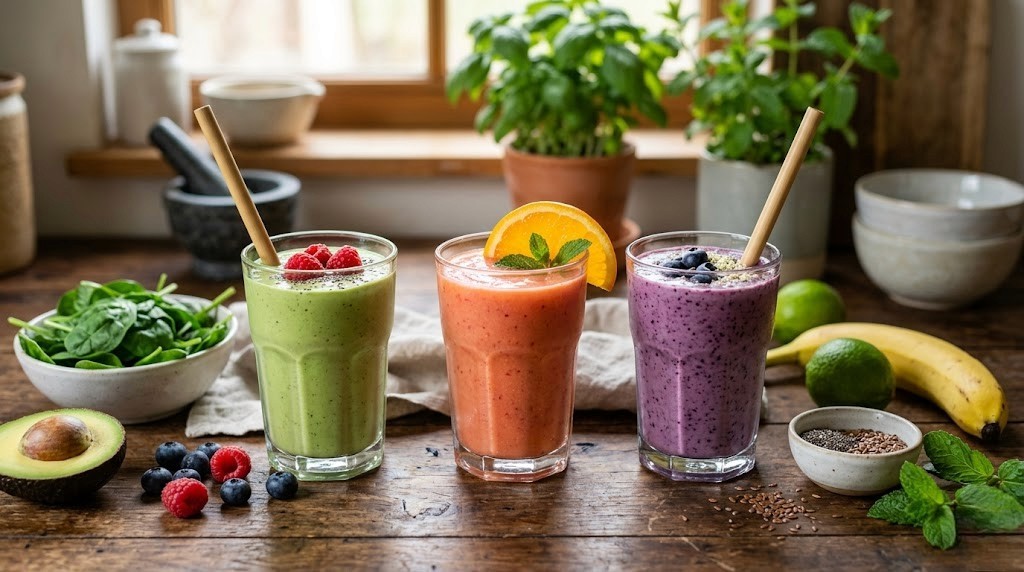
You have read the articles. You have scrolled through Pinterest boards. You have watched the TikTok videos where someone throws random fruit into a blender and calls it a GLP-1 smoothie. And yet you still do not know what to actually blend when your appetite has vanished, your stomach feels like it belongs to someone else, and you are watching muscle disappear alongside the fat you wanted to lose. The confusion is not your fault. Most GLP-1 recipe guides treat smoothies as an afterthought, tossing in generic fruit-and-yogurt combinations that ignore the specific nutritional demands of GLP-1 medications like semaglutide and tirzepatide.
Here is what nobody tells you. A poorly designed smoothie can spike your blood sugar, trigger nausea, waste your limited appetite window, and accelerate the muscle loss that researchers now consider the biggest risk of GLP-1 therapy. A well-designed smoothie does the opposite. It packs 25-35 grams of protein into something your stomach can actually tolerate, delivers fiber to fight GLP-1 constipation, provides micronutrients you are likely missing on reduced calories, and tastes good enough that you actually want to drink it. This guide gives you 15 tested recipes built specifically for people on GLP-1 medications, plus the science behind every ingredient choice, troubleshooting for common problems, and a weekly plan you can follow starting today. No guesswork. No wasted groceries. Just smoothies that work.
Why smoothies are the ultimate GLP-1 nutrition hack
GLP-1 medications change your relationship with food in ways that nobody fully prepares you for. The appetite suppression that makes these drugs so effective at driving weight loss also creates a nutritional paradox. You need fewer calories. But you need MORE nutrients per calorie than you did before.
Think about that for a moment.
When you were eating 2,000 calories a day, spreading your protein, fiber, vitamins, and minerals across three meals and two snacks was easy. Now you are eating 1,200 to 1,500 calories, and every single bite needs to count. Most people on semaglutide or tirzepatide struggle to hit even half their daily protein target. Research shows GLP-1 users need roughly 1.2 grams of protein per kilogram of body weight daily to preserve lean muscle mass. For a 170-pound person, that is approximately 93 grams of protein every single day.
Smoothies solve this problem in four ways.
First, they concentrate nutrition. A single 16-ounce smoothie can deliver 30+ grams of protein, 8-10 grams of fiber, healthy fats, and a full serving of fruits or vegetables in something you can sip over 20 minutes. Try getting that from a meal when even the sight of solid food triggers bloating or nausea.
Second, liquid meals are easier to tolerate. GLP-1 medications slow gastric emptying, which means solid food sits in your stomach longer than it used to. This delayed digestion is exactly what drives appetite suppression, but it also explains why many people feel uncomfortably full after small solid meals. Smoothies bypass much of this problem because blended food requires less mechanical digestion.
Third, smoothies give you control over exactly what goes in. When you follow a semaglutide diet plan or tirzepatide diet plan, precision matters. You can measure your protein powder to the gram, add exactly two tablespoons of chia seeds, and know precisely how many calories and nutrients you are consuming. No estimating. No guessing.
Fourth, they are fast. When your appetite window opens for 30 minutes and you know it could close at any time, the last thing you want to do is cook. A smoothie takes 90 seconds to blend.
The GLP-1 smoothie formula: five components every recipe needs
Before diving into specific recipes, you need to understand the framework. Every effective GLP-1 smoothie contains five components in specific ratios. Get these right and you can improvise endlessly. Get them wrong and you are drinking expensive sugar water.
Component 1: protein base (25-35 grams)
Protein is not negotiable. It is the single most important macronutrient when you are on semaglutide or tirzepatide, and the one most people consistently under-consume. Without adequate protein, your body breaks down muscle tissue for energy alongside fat. Studies on GLP-1 weight loss show that up to 40% of weight lost can come from lean mass if protein intake is insufficient. That number should alarm you.
Your smoothie protein can come from multiple sources. One scoop of quality protein powder delivers 20-30 grams. Half a cup of Greek yogurt adds another 10-15 grams. A tablespoon of nut butter contributes 4-7 grams. Combining two or three protein sources in a single smoothie is the easiest way to hit that 25-35 gram target without the shake tasting chalky or overwhelming.
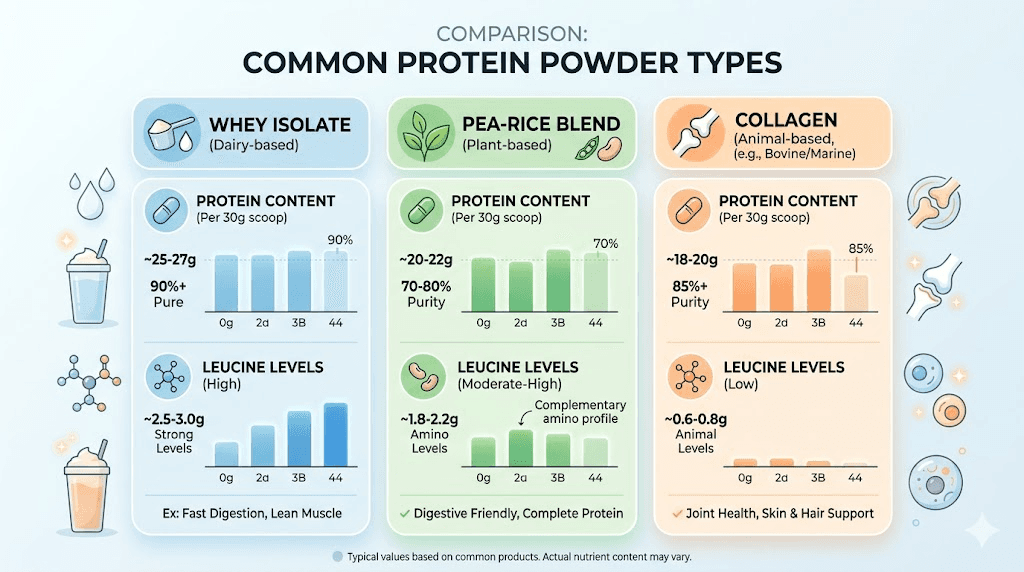
For GLP-1 protein shakes, whey isolate remains the gold standard. It contains the highest concentration of leucine, the amino acid that triggers muscle protein synthesis. If dairy causes problems, pea protein or a rice-pea blend are the best plant alternatives. Collagen protein, despite its popularity, is NOT a complete protein and should never serve as your primary source. It lacks sufficient leucine and several essential amino acids needed for muscle preservation on GLP-1 medications.
Component 2: fiber source (5-10 grams)
Fiber does three critical things for GLP-1 users. It fights constipation, which affects 20-30% of people on these medications. It slows sugar absorption, preventing the blood glucose spikes that can worsen GLP-1 fatigue. And it increases satiety, helping you feel satisfied on fewer calories.
The best smoothie fiber sources are the ones you do not taste. Chia seeds (two tablespoons provide 10 grams of fiber), ground flaxseed (two tablespoons provide 4 grams), hemp hearts, rolled oats, and frozen cauliflower rice all blend invisibly into smoothies. Psyllium husk works too, but add it last and drink immediately because it thickens fast. If you are already taking a fiber supplement for GLP-1, reduce the smoothie fiber slightly to avoid overdoing it.
Component 3: healthy fat (5-15 grams)
Fat slows digestion further, which might sound counterproductive given that GLP-1 drugs already delay gastric emptying. But the right amount of fat, around 5-15 grams per smoothie, actually improves tolerance and absorption. It helps your body absorb fat-soluble vitamins (A, D, E, K), keeps blood sugar stable, and makes the smoothie taste dramatically better.
Best fat sources for GLP-1 smoothies include avocado (one-quarter provides 5 grams of fat plus fiber and potassium), nut butters (one tablespoon of almond or peanut butter provides 8-9 grams), MCT oil (one teaspoon provides 5 grams and is easily digested), and coconut cream (one tablespoon provides 5 grams). Just watch the calories. Fat is calorie-dense at 9 calories per gram, and when you are following a calorie target on semaglutide or tracking calories on tirzepatide, those numbers add up quickly.
Component 4: liquid base (8-12 ounces)
Your liquid choice affects both nutrition and tolerance. Unsweetened almond milk is the most popular option because it is low-calorie (30-40 calories per cup) and neutral in flavor. But it provides almost no protein. If you want a protein boost from your liquid base, use skim milk (8 grams of protein per cup), soy milk (7 grams per cup), or ultra-filtered milk like Fairlife (13 grams per cup). Coconut water works well if you are dealing with electrolyte imbalances on GLP-1 medications, though it adds more sugar than other options.
Water works fine too. Seriously. If the idea of dairy or plant milk on a nauseous stomach makes you cringe, cold water with ice produces a perfectly good smoothie. Do not overthink this component.
Component 5: micronutrient boosters
This is where you fill the gaps. GLP-1 users eating fewer calories are at higher risk for micronutrient deficiencies, particularly B12, iron, zinc, magnesium, and vitamin D. Every smoothie is an opportunity to sneak in nutrients without adding bulk or triggering digestive issues.
Top micronutrient boosters include spinach or kale (iron, folate, vitamin K, virtually undetectable in flavor), frozen cauliflower rice (vitamin C, B vitamins, adds creaminess without taste), berries (antioxidants, vitamin C, lower sugar than tropical fruits), ginger root (anti-nausea properties, anti-inflammatory), and a good GLP-1 multivitamin or greens powder.
Choosing the right protein powder for your GLP-1 smoothies
Not all protein powders are created equal, and the wrong choice can make your GLP-1 experience measurably worse. Here is what matters and what does not.
Whey protein isolate: the top choice
Whey isolate is processed to remove most lactose and fat, leaving a highly concentrated protein source that digests quickly and contains the highest leucine content of any protein powder. For GLP-1 users specifically, the fast digestion is a benefit because it spends less time in your already-slow stomach. Most people who experience bloating from regular whey protein find that isolate causes no issues.
Look for products with 25-30 grams of protein per scoop, less than 5 grams of sugar, and minimal artificial sweeteners. Artificial sweeteners like sucralose can worsen GLP-1 bloating in some people. If sweetness triggers nausea, which is extremely common on these medications, choose unflavored whey isolate and sweeten your smoothie naturally with berries or a small amount of banana.
Plant-based protein: best alternatives
If dairy is off the table, a pea-rice protein blend is your best option. Pea protein alone is lower in methionine. Rice protein alone is lower in lysine. Combined, they create a complete amino acid profile comparable to whey. Soy protein isolate is another solid option with a strong amino acid profile, though some people prefer to limit soy intake.
Plant proteins tend to be grainier in texture. Blending with frozen banana, avocado, or adding a tablespoon of nut butter significantly improves the mouthfeel. Plan on using slightly more, around 30-35 grams per serving, to match the muscle-building effect of 25 grams of whey, since plant proteins have lower bioavailability.
What about collagen?
Collagen peptides are everywhere right now. Do collagen peptides count as protein? Technically, yes. Practically, for muscle preservation on GLP-1 medications? No. Collagen lacks sufficient leucine and is missing tryptophan entirely. It is great for skin, hair, joints, and gut lining, but it cannot serve as your primary protein source when muscle loss prevention is the priority. Add a scoop alongside your whey or plant protein if you want the additional benefits, but never instead of it.
15 GLP-1 smoothie recipes that actually work
Every recipe below has been designed with GLP-1 users in mind. Each one targets 25-35 grams of protein, 5-10 grams of fiber, moderate healthy fats, and controlled sugar. They are organized by purpose so you can match the smoothie to what your body needs on any given day. Because some days are good days. And some days your stomach has its own agenda.
High-protein breakfast smoothies
Breakfast is the most important smoothie opportunity for GLP-1 users. After fasting overnight, your body is in a catabolic state, breaking down muscle for energy. A high-protein breakfast smoothie stops that process and sets the tone for the entire day. People following a GLP-1 breakfast plan consistently report better energy levels, fewer cravings, and improved energy on semaglutide when they prioritize protein in the morning.
Recipe 1: The muscle protector
1 scoop vanilla whey isolate (25g protein)
1/2 cup plain Greek yogurt (10g protein)
1/2 cup frozen mixed berries
1 tablespoon almond butter
2 tablespoons chia seeds
1 cup unsweetened almond milk
3-4 ice cubes
Nutrition: 410 calories, 38g protein, 9g fiber, 16g fat, 24g carbs
This is the workhorse. The combination of whey isolate and Greek yogurt delivers a sustained release of amino acids, while chia seeds provide fiber and omega-3 fatty acids. The berry sweetness masks any protein powder chalkiness without spiking blood sugar. If you are tracking your protein intake on semaglutide, this single smoothie covers roughly 40% of most daily targets.
Recipe 2: Peanut butter powerhouse
1 scoop chocolate protein powder (25g protein)
2 tablespoons natural peanut butter
1/2 frozen banana
1 tablespoon ground flaxseed
1 tablespoon cocoa powder (unsweetened)
1 cup skim milk or soy milk
Handful of ice
Nutrition: 440 calories, 36g protein, 6g fiber, 18g fat, 32g carbs
Tastes like a Reese cup in a glass. The banana provides natural sweetness and potassium, which helps with the dizziness some GLP-1 users experience from electrolyte shifts. Peanut butter adds staying power. This smoothie keeps most people satisfied for 4-5 hours.
Recipe 3: Overnight oat smoothie
1 scoop vanilla protein powder (25g protein)
1/3 cup rolled oats
1/2 cup plain Greek yogurt (10g protein)
1/2 cup frozen blueberries
1 tablespoon hemp hearts
1 teaspoon cinnamon
1 cup unsweetened oat milk
Nutrition: 430 calories, 37g protein, 7g fiber, 12g fat, 40g carbs
The oats give this smoothie body and slow-releasing carbohydrates that prevent energy crashes. Cinnamon is not just for flavor. It has a modest blood-sugar-regulating effect that complements the metabolic effects of tirzepatide and semaglutide. Blend the oats first with the milk for 15 seconds before adding everything else, or they stay gritty.
Green nutrient-dense smoothies
When your calorie intake drops, micronutrient deficiencies become a real threat. The supplements you take with GLP-1 medications help, but food-based nutrients are always absorbed better. Green smoothies solve this without requiring you to chew through a salad that your stomach wants nothing to do with.
Recipe 4: The iron builder
1 scoop unflavored or vanilla protein powder (25g protein)
2 large handfuls fresh spinach
1/2 frozen banana
1/4 avocado
1 tablespoon ground flaxseed
1/2 cup frozen mango chunks
1 cup unsweetened almond milk
1/2 inch fresh ginger root
Nutrition: 370 calories, 28g protein, 8g fiber, 14g fat, 30g carbs
You will not taste the spinach. Promise. The mango and banana completely mask it. Two handfuls of spinach deliver roughly 2mg of non-heme iron, 150mcg of folate, and a significant dose of vitamin K. The ginger root serves double duty as a flavor enhancer and natural anti-nausea agent. If nausea is a persistent problem during your tirzepatide weight loss timeline, add ginger to every smoothie you make.
Recipe 5: The green machine
1 scoop vanilla pea-rice protein blend (25g protein)
1 cup fresh kale (stems removed)
1/2 cup frozen pineapple
1/2 cup frozen cauliflower rice
1 tablespoon chia seeds
1 tablespoon lemon juice
1 cup coconut water
Nutrition: 310 calories, 27g protein, 8g fiber, 6g fat, 32g carbs
The cauliflower rice adds creamy thickness without any detectable flavor. It also provides vitamin C, which enhances iron absorption from the kale. Coconut water replaces electrolytes that GLP-1 medications can deplete, making this an excellent choice if you are dealing with lightheadedness on semaglutide. The pineapple enzyme bromelain may also help with tirzepatide bloating.
Recipe 6: Tropical green protein
1 scoop vanilla whey isolate (25g protein)
1 handful spinach
1/2 cup frozen mango
1/4 cup frozen pineapple
1 tablespoon coconut cream
2 tablespoons hemp hearts (6g protein)
1 cup unsweetened coconut milk
Nutrition: 380 calories, 33g protein, 5g fiber, 14g fat, 28g carbs
Hemp hearts are an underrated smoothie ingredient. They add 6 grams of complete protein per serving, healthy omega-3 and omega-6 fatty acids, and they blend completely smooth. This recipe works particularly well for people who are following a food list for semaglutide and want to increase their nutrient density without increasing volume.
Nausea-friendly smoothies
Some days are rough. The nausea hits and nothing sounds good. Not eggs. Not chicken. Not even the smoothie recipes that worked perfectly yesterday. These recipes are specifically designed for those days, using ingredients that research and community experience show are gentlest on a GLP-1 stomach. If acid reflux on semaglutide or general queasiness is your primary battle, start here.
Recipe 7: The ginger settler
1 scoop unflavored whey isolate (25g protein)
1/2 frozen banana
1 inch fresh ginger root (peeled)
1/3 cup rolled oats
1 teaspoon honey (optional)
1 cup unsweetened almond milk
Pinch of sea salt
Nutrition: 330 calories, 28g protein, 4g fiber, 6g fat, 38g carbs
The key here is simplicity. Bland carbohydrates from oats and banana are naturally gentle on the stomach. Ginger is one of the most evidence-backed natural anti-nausea remedies available, with studies showing it reduces nausea severity by 40-50% in multiple clinical contexts. The pinch of sea salt replaces sodium lost if you have been experiencing any GLP-1 related dizziness. Sip this one slowly over 20-30 minutes.
Recipe 8: Cool mint recovery
1 scoop vanilla protein powder (25g protein)
1/2 cup plain Greek yogurt (10g protein)
1/2 cup frozen cucumber chunks
5-6 fresh mint leaves
1/2 cup frozen honeydew or cantaloupe
1 cup cold water
Squeeze of fresh lime
Nutrition: 290 calories, 35g protein, 2g fiber, 4g fat, 22g carbs
This is the smoothie for when nothing else sounds tolerable. Mint and cucumber are both naturally cooling and associated with reduced nausea. The lime adds brightness without acidity that would worsen semaglutide burping or reflux. Cold temperature matters here because ice-cold liquids are significantly better tolerated than room-temperature ones during GLP-1 nausea episodes.
Recipe 9: Simple banana protein
1 scoop vanilla whey isolate (25g protein)
1 whole frozen banana
1 tablespoon almond butter
1 cup skim milk (8g protein)
Dash of cinnamon
Nutrition: 380 calories, 35g protein, 3g fiber, 10g fat, 36g carbs
Four ingredients plus cinnamon. That is it. When your GLP-1 side effects are at their worst, complexity is the enemy. Banana is one of the most stomach-friendly foods in existence, and its potassium content helps with the electrolyte shifts that contribute to GLP-1 headaches. This smoothie will not win any Instagram awards, but it will get 35 grams of protein into your body when nothing else will.
Post-workout recovery smoothies
Exercise while on GLP-1 medications is non-negotiable for preserving muscle mass. But recovery nutrition becomes even more critical when your body is already in a caloric deficit and your appetite is suppressed. These smoothies are designed to consume within 30 minutes of training, when your muscles are most receptive to protein and your stomach is typically more tolerant because exercise temporarily overrides GLP-1 appetite suppression.
Recipe 10: The rebuilder
1.5 scoops whey isolate (37g protein)
1/2 cup frozen cherries
1/2 frozen banana
1 tablespoon tart cherry concentrate (optional)
2 tablespoons ground flaxseed
1 cup ultra-filtered milk (13g protein)
Nutrition: 460 calories, 52g protein, 5g fiber, 8g fat, 40g carbs
This is the highest-protein recipe in the collection, and for good reason. Post-workout is when you can push protein intake highest because exercise increases gastric tolerance. Tart cherries contain anthocyanins that reduce exercise-induced inflammation and muscle soreness. Combined with the anti-inflammatory omega-3s from flaxseed, this smoothie is specifically designed to support recovery while you are losing weight on tirzepatide or semaglutide.
Recipe 11: Chocolate recovery
1 scoop chocolate whey isolate (25g protein)
1/2 cup plain Greek yogurt (10g protein)
1 tablespoon natural peanut butter
1/2 frozen banana
1 tablespoon cocoa powder
1 cup skim milk (8g protein)
Pinch of sea salt
Nutrition: 470 calories, 45g protein, 4g fiber, 16g fat, 36g carbs
Cocoa powder is rich in magnesium, a mineral that many GLP-1 users become deficient in. Magnesium deficiency contributes to muscle cramps, poor sleep, and the body aches that tirzepatide users report. One tablespoon of cocoa provides roughly 27mg of magnesium while making this smoothie taste like a chocolate milkshake. The salt enhances flavor and replenishes what you lost sweating.
Dessert-style smoothies for when cravings hit
GLP-1 medications reduce cravings dramatically, but they do not eliminate them entirely. When you want something sweet, a dessert-style smoothie is infinitely better than actual dessert. These recipes satisfy the craving while still delivering the protein and nutrients your body needs. People tracking their food choices on semaglutide find that these hit the sweet spot without derailing progress.
Recipe 12: Cookie dough bliss
1 scoop vanilla protein powder (25g protein)
2 tablespoons cashew butter
1/3 cup rolled oats
1 tablespoon mini dark chocolate chips
1/2 teaspoon vanilla extract
1 cup unsweetened vanilla almond milk
3-4 ice cubes
Nutrition: 430 calories, 30g protein, 5g fiber, 20g fat, 34g carbs
Add the chocolate chips AFTER blending and pulse once or twice so they stay in small chunks. The oats provide that cookie dough thickness. This smoothie satisfies a dessert craving in a way that a handful of actual cookies never could, because the protein and fat keep you full instead of triggering more cravings. If you struggle with still feeling hungry on tirzepatide, the fat content in this recipe provides extended satiety.
Recipe 13: Strawberry cheesecake
1 scoop vanilla protein powder (25g protein)
1/4 cup cottage cheese (7g protein)
1 cup frozen strawberries
1 tablespoon cream cheese (softened)
1 graham cracker (crushed, optional topping)
1 cup unsweetened almond milk
Nutrition: 340 calories, 34g protein, 3g fiber, 10g fat, 26g carbs
Cottage cheese is one of the most underutilized smoothie ingredients for GLP-1 users. It blends completely smooth, adds casein protein (which digests slower than whey for sustained amino acid delivery), and creates a thick, creamy texture. If the thought of cottage cheese grosses you out, trust the process. Once blended with strawberries and cream cheese, you genuinely cannot tell it is there.
Recipe 14: Chocolate hazelnut dream
1 scoop chocolate protein powder (25g protein)
1 tablespoon hazelnut butter
1/2 frozen banana
1 tablespoon cocoa powder
1/4 avocado
1 cup oat milk
Handful of ice
Nutrition: 420 calories, 30g protein, 7g fiber, 18g fat, 36g carbs
This tastes like Nutella in smoothie form. The avocado creates an incredibly creamy texture while adding fiber and potassium. Hazelnut butter is less common than almond or peanut butter, but the flavor profile is worth seeking out. Make this on days when your energy levels on tirzepatide are stable and you can enjoy something a little more indulgent.
Recipe 15: Vanilla bean caramel
1 scoop vanilla protein powder (25g protein)
2 Medjool dates (pitted)
1/2 cup plain Greek yogurt (10g protein)
1 tablespoon tahini
1/2 teaspoon vanilla extract
Pinch of sea salt
1 cup unsweetened almond milk
Nutrition: 400 calories, 37g protein, 4g fiber, 10g fat, 38g carbs
Dates create a natural caramel flavor that is far more satisfying than artificial sweeteners, which many GLP-1 users find increasingly intolerable. Tahini adds a subtle nuttiness, calcium, and healthy fats. The sea salt amplifies the caramel effect. This is the smoothie for when you want something special but do not want to compromise your tirzepatide diet plan.
Seven mistakes that sabotage your GLP-1 smoothies
Making a bad smoothie on a GLP-1 medication is worse than making no smoothie at all. A bad smoothie wastes your limited appetite window, can trigger nausea or blood sugar spikes, and leaves you feeling worse than before. These are the mistakes to avoid.
Mistake 1: too much fruit, not enough protein
The classic smoothie mistake, and the most damaging for GLP-1 users. A smoothie with two cups of fruit, a splash of juice, and no protein powder is essentially a sugar bomb. It spikes blood glucose, triggers an insulin response, and provides virtually nothing your body needs to preserve muscle during weight loss. Every smoothie needs a minimum of 25 grams of protein. Period. If your smoothie has more grams of sugar than protein, redesign it.
Mistake 2: drinking too fast
Your stomach is processing food slower than it ever has before. Chugging a 16-ounce smoothie in three minutes is a guaranteed nausea trigger. Sip your smoothie over 20-30 minutes. Use a straw. Take breaks. Treat it like a meal, not a drink. This single behavior change eliminates nausea in roughly half the people who report it. It also gives your brain time to register fullness signals, which prevents the bloating that comes from consuming too much too quickly.
Mistake 3: using juice as a liquid base
Orange juice, apple juice, pineapple juice. They all sound healthy. They are all terrible choices for GLP-1 smoothies. One cup of orange juice contains 21 grams of sugar and zero fiber. Your blood sugar spikes, crashes, and the resulting energy rollercoaster worsens semaglutide fatigue. Use water, unsweetened plant milk, or dairy milk instead. Always.
Mistake 4: ignoring fiber
Up to 30% of GLP-1 users experience constipation. It is one of the most common side effects, and reduced food intake makes it worse. If your smoothies contain zero fiber, you are missing one of the easiest opportunities to address this problem. Two tablespoons of chia seeds or ground flaxseed add 4-10 grams of fiber and are completely undetectable in flavor and texture. People who use a GLP-1 fiber supplement alongside fiber-rich smoothies consistently report better digestive function.
Mistake 5: making smoothies too large
A 32-ounce smoothie that you cannot finish is worse than a 12-ounce one that you drink completely. Start with smaller recipes, around 12-14 ounces, and only increase volume if your stomach tolerates it. Many GLP-1 users find that 16 ounces is their maximum comfortable serving. If you are early in your first week on semaglutide or just starting your first tirzepatide dose, start even smaller at 8-10 ounces.
Mistake 6: relying on collagen as your only protein
This bears repeating because so many GLP-1 smoothie recipes online use collagen as the sole protein source. Collagen will NOT prevent muscle loss. It lacks the essential amino acid leucine that triggers muscle protein synthesis. Use whey, casein, or a complete plant protein as your primary source. Add collagen as a bonus if you want its other benefits, but never as a replacement. Protein shakes for GLP-1 users must be built on complete proteins.
Mistake 7: adding too many supplements at once
Greens powder, collagen, MCT oil, a multivitamin, creatine, fiber powder, ashwagandha. Throwing everything into one smoothie overwhelms your already-sensitive digestive system and makes the smoothie taste terrible. Stick to your protein source, one fat source, one fiber source, and one or two micronutrient boosters per smoothie. Rotate your add-ins throughout the week instead of cramming them all into one glass. If you are already taking supplements with tirzepatide, coordinate your smoothie ingredients with your supplement schedule to avoid doubling up on anything.
Meal prep and storage guide for GLP-1 smoothies
Consistency wins. The biggest predictor of smoothie success is not which recipe you choose. It is whether you actually make one every day. Meal prep removes the friction that causes most people to skip their smoothie and reach for something less nutritious instead.
The freezer bag method
This is the simplest and most effective approach. Spend 30 minutes on Sunday preparing 5-7 freezer bags. Into each bag, add your frozen fruit, any vegetables (spinach, kale, cauliflower), seeds, oats, and any dry ingredients. Label each bag with the recipe name. Store flat in the freezer.
Each morning, dump one bag into your blender, add your liquid base, scoop in your protein powder, and blend. Total prep time per smoothie drops to under two minutes. The protein powder stays out of the freezer bag because it dissolves better when added fresh.
Can you make smoothies ahead of time?
Yes, but with caveats. A fully blended smoothie stored in an airtight container in the refrigerator stays good for 24 hours. After that, the texture degrades, the color changes, and some nutrients begin to oxidize. Chia seed smoothies thicken dramatically overnight, so add extra liquid if you are prepping for the next morning. Protein powder smoothies can develop a slightly gritty texture when stored, so blend briefly again before drinking.
The freezer bag method is always superior to pre-blending. It gives you a fresh smoothie every time with minimal effort.
Smoothie ingredient shopping list
Stock these staples and you can make any recipe in this guide without a special trip to the store.
Freezer: mixed berries, blueberries, strawberries, mango chunks, banana slices (peel and freeze ripe bananas), cherries, cauliflower rice, spinach cubes
Refrigerator: plain Greek yogurt, cottage cheese, unsweetened almond milk, fresh ginger root, fresh spinach, lemons, limes
Pantry: whey isolate protein powder, chia seeds, ground flaxseed, hemp hearts, rolled oats, almond butter, peanut butter, unsweetened cocoa powder, cinnamon, vanilla extract, sea salt, honey
Buy frozen fruit in bulk bags. It is cheaper than fresh, pre-portioned, and actually contains more nutrients because it was flash-frozen at peak ripeness. Fresh berries from the store were often picked underripe and lose nutrients during transport. This is one case where frozen beats fresh every time. Budget around $40-50 per week for all smoothie ingredients, which breaks down to roughly $6-7 per smoothie. Compare that to commercial GLP-1 smoothie options like Smoothie King, which charge $8-12 per serving and typically contain more sugar and less protein than homemade.
Your weekly GLP-1 smoothie plan
Having 15 recipes is great. Knowing which one to make on which day is better. This weekly plan rotates through different recipes to ensure you get varied nutrients while matching smoothie types to common weekly patterns. Adjust based on your own schedule and how your body responds throughout the week.
Monday (high-energy start): Recipe 1, The Muscle Protector. Start the week strong with maximum protein.
Tuesday (green day): Recipe 4, The Iron Builder. Front-load your micronutrients early in the week.
Wednesday (mid-week treat): Recipe 12, Cookie Dough Bliss. A mid-week reward keeps you consistent.
Thursday (workout recovery): Recipe 10, The Rebuilder. Time this one within 30 minutes of your workout.
Friday (keep it simple): Recipe 9, Simple Banana Protein. End-of-week fatigue means easy wins.
Saturday (nutrient boost): Recipe 5, The Green Machine. Rebuild your nutrient stores before the weekend.
Sunday (indulgent rest day): Recipe 14, Chocolate Hazelnut Dream. You earned it.
This rotation provides an average of 34 grams of protein per smoothie, varied micronutrient profiles, and different flavor experiences that prevent smoothie fatigue. If you are following a structured tirzepatide meal plan or semaglutide diet plan, integrate these smoothies as one of your two to three daily meals. Most SeekPeptides members find that a morning smoothie plus one solid meal plus one lighter meal or snack hits their calorie and protein targets consistently.
Smoothie timing: when to drink for maximum benefit
Timing matters more than most people realize, especially on GLP-1 medications where your digestive window is narrower and more unpredictable.
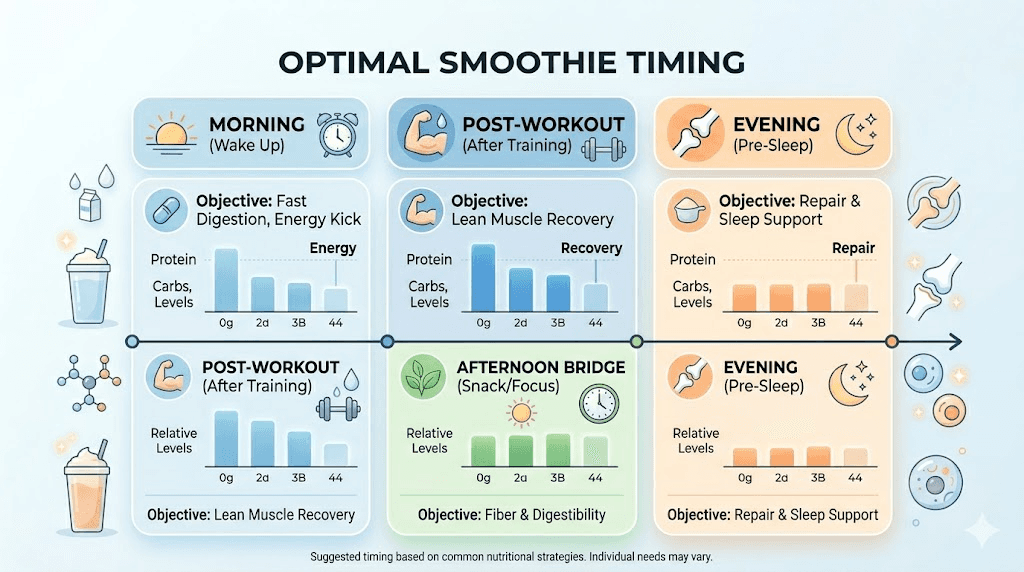
Morning: the protein priority window
After an overnight fast, cortisol levels are elevated and your body is in a mildly catabolic state. A protein-rich smoothie within 60 minutes of waking stops muscle breakdown and provides the amino acids your body needs to start the day. This is especially important if you take your GLP-1 shot in the morning, because appetite suppression will be strongest during the second half of the day.
If you take your shot in the evening, the nausea window typically peaks the morning after injection day. That is when the nausea-friendly recipes (7, 8, and 9) become essential. Do not skip nutrition on those mornings. Even half a smoothie is better than nothing.
Post-workout: the recovery window
Consume your recovery smoothie within 30-45 minutes after training. This window is when muscle protein synthesis peaks and your stomach is generally most tolerant. Exercise temporarily increases gastric motility, which means your post-workout smoothie will digest more comfortably than one consumed during a sedentary afternoon.
Between meals: the bridge strategy
If your appetite disappears after lunch and does not return before bed, a smaller smoothie (8-10 ounces) in the mid-afternoon can bridge the gap and ensure you hit your protein target. This is particularly effective during dose increases when semaglutide appetite suppression intensifies. A bridge smoothie does not need to be a full recipe. Half a scoop of protein, some frozen berries, and water is enough to prevent the muscle catabolism that happens during extended fasting periods.
Before bed: the overnight repair window
A casein-based smoothie before bed provides slow-release protein that feeds your muscles throughout the night. Greek yogurt and cottage cheese are both high in casein. If tirzepatide insomnia or semaglutide insomnia is an issue, avoid stimulating add-ins like cocoa powder or matcha, and keep the smoothie smaller than your morning portion to avoid lying down with a full stomach.
Adapting smoothies for common GLP-1 side effects
Every side effect creates a different set of nutritional challenges. Here is how to modify your smoothies based on what you are experiencing.
For nausea
Use the nausea-friendly recipes (7, 8, 9) as your starting point. Add fresh ginger to any recipe. Keep smoothies cold because temperature matters. Avoid intense sweetness, which many GLP-1 users report triggers or worsens nausea. Reduce volume to 8-10 ounces. Sip slowly. If nausea is severe, blend just protein powder and cold water as a baseline minimum. Something is always better than nothing when you are trying to stay consistent with semaglutide.
For constipation
Double your fiber sources. Use chia seeds AND ground flaxseed in the same smoothie. Add a tablespoon of psyllium husk. Include magnesium-rich ingredients like cocoa powder, spinach, and pumpkin seeds. Consider adding a small amount of prune juice (2-3 tablespoons) as your liquid base or alongside your regular liquid. This pairs well with the semaglutide constipation treatments or tirzepatide constipation solutions you may already be using. Also increase your water intake throughout the day because fiber without adequate water makes constipation worse.
For fatigue and low energy
If GLP-1 fatigue is dragging you down, your smoothie strategy shifts. Include more complex carbohydrates (oats, banana) for sustained energy. Add iron-rich ingredients (spinach, pumpkin seeds) since iron deficiency amplifies fatigue. Consider adding a teaspoon of matcha powder, which provides gentle caffeine plus L-theanine for calm focus without the jitters that coffee can cause on a sensitive stomach. B12-rich ingredients also help, particularly if you are taking a tirzepatide B12 compound or semaglutide with B12.
For hair thinning
Hair loss on GLP-1 medications is often related to rapid weight loss and protein deficiency. Smoothies that prioritize protein (aim for the upper end at 35g per serving) and include biotin-rich ingredients like eggs (yes, a raw pasteurized egg in a smoothie adds 6g protein and biotin), almonds, and spinach can support hair health. Collagen peptides, while not sufficient as a primary protein source, may have specific benefits for hair and skin when added alongside your complete protein.
For bloating and gas
If bloating is your primary complaint, simplify your smoothies. Reduce the number of ingredients. Eliminate dairy if you suspect lactose intolerance (switch to plant milk and plant protein). Reduce or eliminate cruciferous vegetables like kale. Add digestive-friendly ingredients like ginger and pineapple (which contains bromelain). Blend longer than usual to break down fiber more thoroughly. Consider adding a probiotic for semaglutide users to your daily routine alongside your smoothie habit.
Smoothie upgrades: advanced add-ins for GLP-1 users
Once you have mastered the basic formula and found your favorite recipes, these add-ins can take your smoothie nutrition to the next level. Add one or two per smoothie, not all of them at once.
Creatine monohydrate (5 grams): Supports muscle retention and cognitive function during caloric deficit. Flavorless and dissolves easily. Particularly useful if you are training regularly while on GLP-1 therapy. Learn more about creatine and GLP-1 interactions.
Tart cherry concentrate (1 tablespoon): Reduces inflammation, improves sleep quality, and provides antioxidants. Best in post-workout or evening smoothies.
Pumpkin seeds (2 tablespoons): High in magnesium, zinc, and iron. All three minerals are commonly depleted on reduced-calorie GLP-1 diets. Blend thoroughly for smooth texture.
Turmeric and black pepper (1/4 teaspoon each): Anti-inflammatory combination. Black pepper increases turmeric absorption by 2,000%. Best in tropical or mango-based smoothies where the flavor blends naturally.
L-glutamine powder (5 grams): Supports gut lining integrity, which can be compromised by GLP-1 medications. Particularly useful if you are experiencing significant GLP-1 dry mouth or digestive discomfort.
Matcha powder (1 teaspoon): Gentle caffeine, L-theanine for calm focus, and powerful antioxidants. Better tolerated than coffee for most GLP-1 users.
Spirulina (1 teaspoon): One of the most nutrient-dense foods on the planet. High in protein (by weight), iron, B vitamins, and antioxidants. Start with half a teaspoon because the flavor is strong. Pairs best with tropical fruit smoothies.
Members of SeekPeptides who are serious about optimizing their GLP-1 nutrition protocols find that rotating these add-ins throughout the week ensures comprehensive micronutrient coverage without overloading any single smoothie.
Troubleshooting common smoothie problems on GLP-1
Even with great recipes, problems arise. Here are the most common issues GLP-1 smoothie makers face and exactly how to fix them.
Problem: smoothie triggers nausea
Fix: Reduce volume by 30-50%. Eliminate dairy temporarily. Add fresh ginger. Serve ice-cold. Sip over 30 minutes minimum. Switch to the simplest recipe (Recipe 9) until tolerance improves. If nausea consistently worsens after smoothies, try separating your protein powder into two smaller servings throughout the day instead of one large dose.
Problem: smoothie causes bloating
Fix: Blend for 60 seconds minimum to fully break down fiber. Reduce or eliminate raw cruciferous vegetables. Switch from whey concentrate to whey isolate. Check your protein powder for sugar alcohols like erythritol or sorbitol, which are common bloating culprits. Reduce the total liquid volume and drink more slowly.
Problem: smoothie tastes too sweet
Fix: This is common because GLP-1 medications often increase sensitivity to sweetness. Reduce fruit to 1/3 cup maximum. Use frozen cauliflower or zucchini for body instead of banana. Switch to unflavored protein powder. Add a pinch of sea salt, which counterbalances perceived sweetness. Try savory smoothie bases like cucumber or celery.
Problem: smoothie is too thick to drink
Fix: Add liquid in stages. Start with the minimum amount in the recipe, blend, then add more until you reach your preferred consistency. Chia seeds absorb liquid and thicken over time, so if you are not drinking immediately, add 2-3 extra ounces of liquid. Frozen banana creates the thickest texture, so use half the amount listed if you prefer a drinkable consistency.
Problem: protein powder makes it gritty or chalky
Fix: Switch to a higher-quality whey isolate. Add the liquid base first, then protein powder, and blend for 10 seconds before adding other ingredients. This gives the powder time to fully dissolve. Adding a tablespoon of nut butter or avocado also masks chalkiness. Some plant proteins are inherently grainier than whey. A pea-rice blend generally has better texture than pea alone.
Problem: not feeling satisfied after drinking
Fix: Increase protein to 35 grams. Add a fat source (nut butter, avocado). Include fiber (chia seeds, oats). Drink more slowly. Satisfaction from liquid meals takes longer to register than solid food. Give yourself 20 minutes after finishing before deciding whether you need more food. If hunger persists despite adequate smoothie nutrition, discuss it with your provider, as it may indicate a need for dose adjustment. Check our guide on why you might still be hungry on tirzepatide or why semaglutide might not be working for additional strategies.
GLP-1 smoothie nutrition comparison table
Here is every recipe at a glance so you can quickly choose based on your needs today.
Recipe | Calories | Protein | Fiber | Fat | Best for |
|---|---|---|---|---|---|
1. Muscle Protector | 410 | 38g | 9g | 16g | Daily protein target |
2. PB Powerhouse | 440 | 36g | 6g | 18g | Extended satiety |
3. Overnight Oat | 430 | 37g | 7g | 12g | Sustained energy |
4. Iron Builder | 370 | 28g | 8g | 14g | Iron and micronutrients |
5. Green Machine | 310 | 27g | 8g | 6g | Low-calorie nutrition |
6. Tropical Green | 380 | 33g | 5g | 14g | Nutrient density |
7. Ginger Settler | 330 | 28g | 4g | 6g | Nausea days |
8. Cool Mint | 290 | 35g | 2g | 4g | Severe nausea |
9. Simple Banana | 380 | 35g | 3g | 10g | Worst side effect days |
10. The Rebuilder | 460 | 52g | 5g | 8g | Post-workout |
11. Chocolate Recovery | 470 | 45g | 4g | 16g | Workout day nutrition |
12. Cookie Dough | 430 | 30g | 5g | 20g | Craving satisfaction |
13. Strawberry Cheesecake | 340 | 34g | 3g | 10g | Dessert replacement |
14. Chocolate Hazelnut | 420 | 30g | 7g | 18g | Indulgent days |
15. Vanilla Caramel | 400 | 37g | 4g | 10g | Special occasion |
Average across all 15 recipes: 391 calories, 35g protein, 5.3g fiber, 12g fat. That means any recipe you choose from this list delivers at least 27 grams of protein and keeps calories under 470. Compare that to most commercial GLP-1 smoothie products, which average 15-20 grams of protein and 40+ grams of sugar. Homemade wins by every metric that matters.
The protein math: how smoothies fit your daily GLP-1 targets
Understanding how your smoothie fits into your total daily nutrition is critical. Here is the math that makes it concrete.
A 170-pound person on GLP-1 medications needs approximately 93 grams of protein daily to preserve muscle (1.2g per kg body weight). A 200-pound person needs approximately 109 grams. A 140-pound person needs approximately 76 grams.
One smoothie from this guide delivers an average of 35 grams. That is 38-46% of your daily protein target in a single meal. Add a protein-rich lunch (like grilled chicken or fish with vegetables) delivering another 30-40 grams, and a lighter dinner with 15-25 grams, and you have hit your target.
If you struggle to eat enough during the day due to appetite suppression, consider having TWO smoothies: one in the morning and one smaller bridge smoothie in the afternoon. Two smoothies could deliver 60-70 grams of protein, leaving you needing just 20-30 grams from solid food.
For people tracking their overall diet, SeekPeptides provides comprehensive nutritional protocols for GLP-1 users that integrate smoothie strategies with full meal planning, ensuring you meet all macronutrient and micronutrient targets even on the hardest appetite days.
Equipment guide: what you actually need
You do not need a $500 Vitamix. But you do need something better than a $15 personal blender that cannot crush ice.
A mid-range blender in the $60-120 range handles everything in this guide. The Ninja Professional or NutriBullet Pro are both capable of blending frozen fruit, ice, seeds, and greens into a smooth consistency. The key feature to look for is at least 900 watts of power and blades designed for crushing ice.
If you make smoothies daily, a blender with a dishwasher-safe pitcher saves meaningful time. Hand-washing a blender every day gets old fast, and that friction is enough to break the habit for some people.
For on-the-go smoothies, a portable blender bottle (like BlendJet) works for simpler recipes without frozen ingredients. It cannot handle ice or frozen fruit well, but it will blend protein powder, liquid, and soft ingredients like banana and nut butter.
Frequently asked questions
Can I replace all my meals with smoothies on GLP-1 medications?
You should not replace all meals with smoothies long-term. While smoothies are excellent for one to two meals per day, your body still benefits from the mechanical digestion involved in chewing solid food. Chewing stimulates digestive enzymes and saliva production that aid nutrient absorption. Aim for one smoothie and one to two solid GLP-1 friendly meals daily.
Should I drink my smoothie before or after my GLP-1 injection?
Most people tolerate food better BEFORE their injection day or 48+ hours after. The nausea window typically peaks 12-24 hours post-injection. On injection day, have your smoothie at your normal time. The day after injection, switch to a nausea-friendly recipe and sip slowly. Check the best time to take semaglutide or best time for tirzepatide shots for more timing guidance.
Will smoothies cause weight loss to stall?
Not if they are properly designed. A smoothie with 25-35g protein, moderate calories, and controlled sugar will not stall weight loss. Smoothies that stall progress are typically high in sugar (from excessive fruit or juice) and low in protein. If you are experiencing a semaglutide plateau, review your smoothie ingredients for hidden calories before making other changes.
Can I add coffee to my GLP-1 smoothie?
Yes. Cold brew coffee blends well and adds natural caffeine without the acidity of hot coffee that can worsen semaglutide acid reflux. Use 1/2 cup cold brew as part of your liquid base. Avoid adding coffee if you experience sleep disruption from tirzepatide and are drinking your smoothie in the afternoon.
How do I know if my smoothie has enough protein?
Add up the protein from each ingredient. Protein powder (check label, typically 20-30g per scoop), Greek yogurt (15-18g per cup), milk (8-13g per cup depending on type), nut butter (4-7g per tablespoon). Your total should hit 25 grams minimum, ideally 30-35 grams. If you fall short, add another half scoop of protein powder or swap your liquid base for a higher-protein option. Our guide to protein on semaglutide covers daily targets in detail.
Are store-bought GLP-1 smoothies worth it?
Brands like Smoothie King now offer GLP-1 menu items, and several supplement companies sell pre-made GLP-1 shakes. Most contain 15-20g protein (below the minimum for muscle preservation), excessive sugar (20-40g), artificial ingredients, and cost $8-12 per serving. Homemade smoothies deliver more protein, less sugar, better ingredients, and cost $5-7 per serving. The only advantage of store-bought is zero prep time.
Can I use raw eggs in my smoothie for extra protein?
Pasteurized eggs are safe to consume raw and add 6g of complete protein per egg plus biotin and other nutrients. Do NOT use unpasteurized eggs raw. One pasteurized egg added to any recipe in this guide boosts protein by 6g with minimal flavor impact. This is an old bodybuilding trick that works particularly well for GLP-1 users who need maximum protein in minimum volume.
External resources
National Institutes of Health: Protein requirements during weight loss with GLP-1 receptor agonists
UCHealth: Why nutrition is vital when taking GLP-1 weight loss drugs
National Institute of Diabetes and Digestive and Kidney Diseases: Weight management information
For researchers serious about optimizing their GLP-1 nutrition protocols, SeekPeptides offers the most comprehensive resource available, with evidence-based guides, proven protocols, and a community of thousands who have navigated these exact questions.
In case I do not see you, good afternoon, good evening, and good night. May your smoothies stay protein-packed, your muscles stay preserved, and your GLP-1 results stay consistent.