Jan 27, 2026

You have been scrolling through peptide forums for hours. Reading contradictory reviews. Checking vendor after vendor. And still, you do not know which supplier to trust with your research budget. The peptide market has become a minefield of questionable sources, inflated purity claims, and vendors that disappear overnight. Ameano Peptides, commonly referred to as AMO peptides, has emerged as one of the names that keeps appearing in researcher conversations. But does the reputation match reality?
This matters more than most people realize. A contaminated or underdosed peptide does not just waste money. It compromises months of careful research, skews data in ways that cannot be corrected, and potentially introduces safety variables that responsible researchers work hard to avoid. The difference between a reliable vendor and a questionable one often comes down to details that casual buyers overlook entirely.
What follows is everything researchers need to know about Ameano Peptides. We will examine their quality testing protocols, analyze real customer experiences, break down their product lineup, and compare them against the standards that separate legitimate suppliers from the crowd. Whether you are considering your first order or evaluating alternatives to your current source, this guide covers the factors that actually matter for peptide research applications.
Who is Ameano Peptides?
Ameano Peptides, operating under the name AMP or commonly searched as AMO peptides, positions itself as a premium research peptide supplier based in the United States. The company targets scientists, research institutions, and independent researchers working in biochemistry, longevity studies, and cellular research applications. Their core promise centers on providing compounds that meet or exceed 99% purity standards, with each batch undergoing third-party laboratory verification.
The company operates with a clear research-only framework. All products are explicitly marketed for laboratory and in vitro use, not for human consumption or veterinary applications. This distinction matters for understanding how research peptides differ from pharmaceutical compounds and the regulatory frameworks that govern each category.
Their facility operates within the United States, which provides certain quality control advantages over international suppliers. Domestic production typically means shorter shipping times, reduced customs complications, and manufacturing standards that align with US laboratory expectations. For researchers running time-sensitive protocols, these logistical factors can be as important as the compounds themselves.
Company background and positioning
Ameano Peptides entered a market already crowded with established players and new entrants of varying quality. Their strategy focuses on three differentiators: rigorous third-party testing, transparent documentation, and customer service responsiveness. Whether these claims hold up under scrutiny requires examining the evidence, which we will do throughout this guide.
The research peptide industry operates in a unique regulatory space. Unlike pharmaceutical compounds that require FDA approval, research peptides exist in a category that allows sales for laboratory purposes while prohibiting marketing for human use. This creates both opportunities and challenges for vendors. Legitimate suppliers invest heavily in quality control and documentation. Less scrupulous operators exploit the regulatory ambiguity to sell substandard products.
Understanding where a vendor falls on this spectrum requires looking beyond marketing claims. It means examining testing methodologies, verification systems, customer experiences over time, and the consistency of quality across different products and batches. These factors tell the real story about a peptide supplier.
Product lineup and availability
Ameano Peptides offers a focused catalog of research compounds rather than attempting to stock every peptide in existence. This approach has advantages and disadvantages. A curated selection often indicates more careful quality control and deeper expertise with specific compounds. However, researchers needing less common peptides may need to source from multiple vendors.
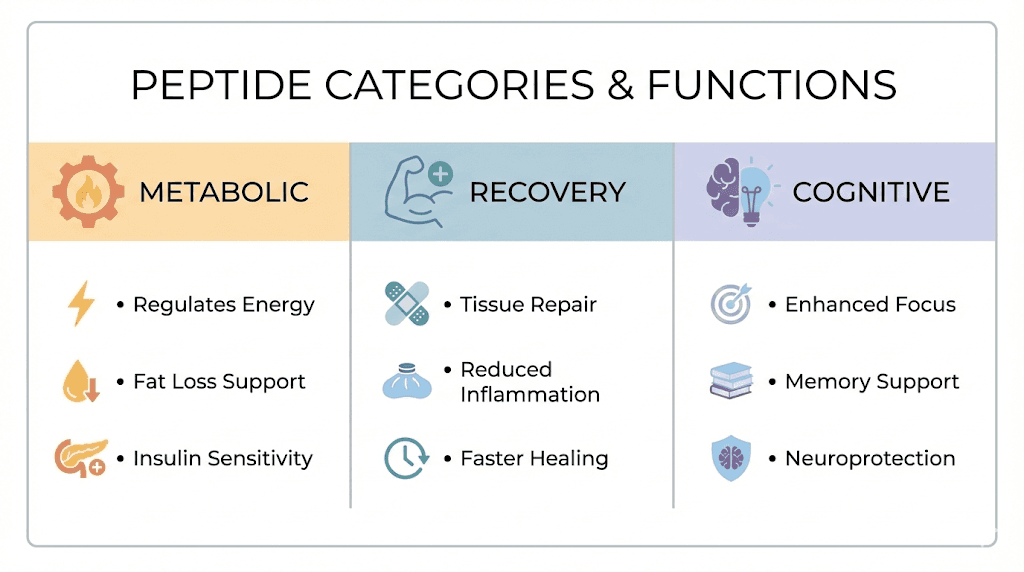
Metabolic research peptides
The metabolic category represents one of their strongest product lines. This includes compounds relevant to weight management research and metabolic function studies. Key offerings include:
Semaglutide: The GLP-1 receptor agonist that has revolutionized metabolic research. Ameano provides this in lyophilized form at research-grade purity. Understanding how semaglutide compares to other compounds helps researchers select appropriate tools for their specific studies.
Tirzepatide: The dual GIP/GLP-1 agonist that has shown remarkable results in metabolic studies. Researchers working with tirzepatide protocols require consistent purity across batches for reproducible results.
Retatrutide: The newer triple agonist targeting GIP, GLP-1, and glucagon receptors. Demand for this compound has surged as research expands. Those interested in retatrutide dosing protocols need reliable sourcing for extended studies.
Cagrilintide: The amylin analog showing promise in combination protocols. Understanding cagrilintide dosing and its combination with semaglutide requires access to verified compounds.
Recovery and tissue repair peptides
This category includes compounds commonly used in healing and tissue regeneration research. The quality requirements here are particularly strict because research protocols often involve extended duration studies where batch-to-batch consistency directly impacts results.
BPC-157: The 15-amino acid sequence derived from body protection compound. Ameano offers this in 10mg vials at stated 99%+ purity. Researchers should understand BPC-157 fundamentals and proper handling protocols before beginning studies.
TB-500: The synthetic thymosin beta-4 fragment used extensively in tissue repair research. Understanding TB-500 mechanisms helps researchers design appropriate protocols.
Many researchers combine these compounds. The BPC-157 and TB-500 stacking guide covers combination approaches, while the comparison between these peptides helps researchers understand when each might be appropriate.
Growth hormone secretagogues
Research into growth hormone pathways requires reliable access to secretagogues and related compounds. Ameano stocks several options in this category:
Ipamorelin: The selective growth hormone secretagogue with minimal side effect profile in research. Understanding ipamorelin benefits and potential side effects helps researchers design appropriate protocols.
CJC-1295: The growth hormone releasing hormone analog. The complete CJC-1295 guide covers research applications and considerations.
Sermorelin: Another GHRH analog with distinct characteristics. Researchers can explore sermorelin benefits and combination approaches for their studies.
Hexarelin: A potent secretagogue with unique receptor binding properties. The hexarelin benefits guide covers research applications.
Copper peptides and skin research compounds
GHK-Cu: The copper-binding tripeptide with extensive research backing. Ameano offers this compound for researchers studying copper peptide mechanisms. Proper reconstitution protocols and dosage guidelines are essential for meaningful research.
Nootropic and cognitive research peptides
Selank: The synthetic peptide derived from tuftsin. Understanding selank dosing protocols helps researchers working in cognitive and immune function studies.
Semax: The synthetic ACTH analog used in cognitive research. The semax dosage guide provides protocol information for researchers.
Dihexa: The compound showing interest in cognitive research. The dihexa benefits overview covers current research directions.
Sexual health research peptides
PT-141: The melanocortin receptor agonist used in sexual function research. Ameano provides this with COA documentation. Understanding PT-141 protocols and delivery methods helps researchers design appropriate studies.
Quality control and testing standards
Quality verification separates legitimate peptide suppliers from questionable sources. Anyone can claim 99% purity on a website. Proving it requires investment in testing infrastructure, third-party laboratory relationships, and transparent documentation systems. This section examines how Ameano Peptides approaches quality control.
Third-party laboratory testing
Ameano states that every batch undergoes independent third-party testing before release. This represents the gold standard approach for peptide quality verification. Third-party testing eliminates the conflict of interest inherent when vendors test their own products.
The testing typically involves two primary methodologies:
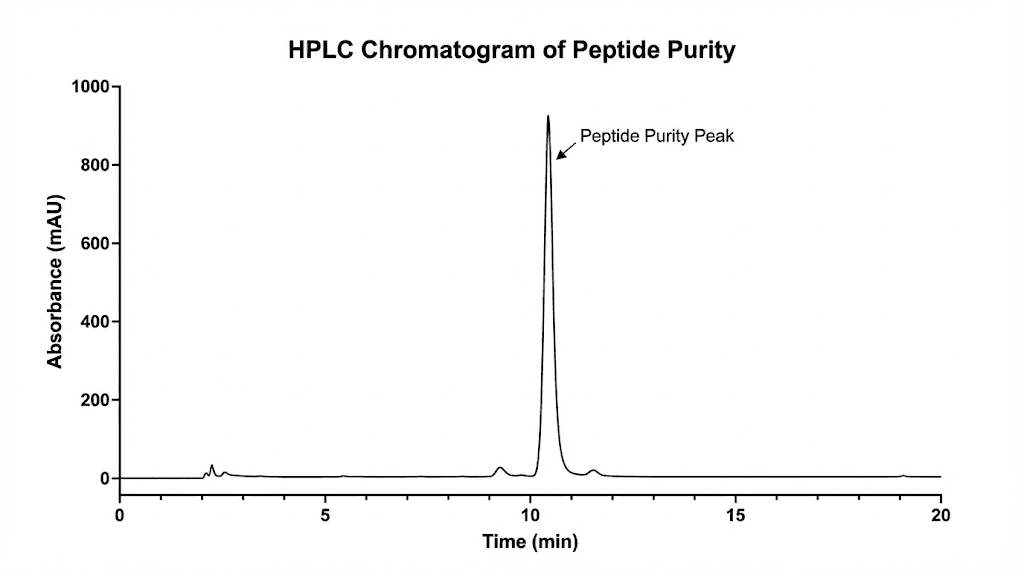
High-Performance Liquid Chromatography (HPLC): This technique separates peptide mixtures and quantifies impurities. HPLC can detect variations below 1% of the sample, making it the standard for purity assessment. A proper HPLC test produces a chromatogram showing peaks for the target peptide and any impurities present.
Mass Spectrometry (MS): While HPLC measures purity, mass spectrometry confirms identity. It verifies that the peptide matches its expected molecular weight and structure. A peptide might show 99% pure on HPLC while actually being the wrong compound entirely. Mass spectrometry catches this.
The combination of both tests provides comprehensive quality verification. HPLC tells you how pure it is. Mass spectrometry tells you what it is. Both are necessary for confident research.
Certificate of Analysis documentation
Ameano provides Certificates of Analysis (COAs) for their products. A legitimate COA should include several specific elements:
Batch/lot number: This should match the number on your actual vial. A COA without a batch number, or one that does not match your product, provides no meaningful verification.
Testing date: Results should be recent. A COA from two years ago does not verify current product quality. Peptide stability varies, and older tests become less meaningful over time.
Purity percentage: The actual measured purity, not just a claim. This should come from HPLC testing with method details provided.
Chromatogram: The visual output of HPLC testing. This shows peaks representing the target peptide and any impurities. Without the chromatogram, the purity percentage is just a number on paper.
Mass spectrometry data: Confirmation that the molecular weight matches the target compound. This should show the expected mass for the peptide being tested.
Laboratory identification: Which laboratory performed the testing. This allows verification that a real, accredited laboratory actually generated the results.
Customer reports indicate that Ameano provides COAs upon request, with some reviewers specifically noting the inclusion of batch numbers and third-party testing verification. The availability of proper documentation distinguishes serious vendors from those making unverifiable claims.
Understanding purity standards
Not all purity levels serve the same research purposes. Understanding what different standards mean helps researchers select appropriate products:
Greater than 95% purity: Suitable for most research applications, enzyme assays, and biological activity studies. This represents a reasonable standard for general peptide research.
Greater than 98% purity: Appropriate for quantitative analysis and more demanding research protocols. The reduced impurity load minimizes variables in sensitive experiments.
Greater than 99% purity: The highest commonly available grade. Ameano claims this standard for their products. At this level, impurities become negligible for most research applications.
However, purity percentage alone does not tell the complete story. The nature of impurities matters as much as their quantity. Common impurities in peptide synthesis include deletion sequences (missing amino acids), truncated sequences, and synthesis byproducts. Some impurities are biologically inert. Others might interfere with research. A detailed COA helps researchers understand not just how much impurity exists, but what type.
Red flags in quality claims
When evaluating any peptide vendor, certain warning signs indicate potential quality issues:
No COA available: A vendor that cannot or will not provide testing documentation should be avoided entirely. There is no legitimate reason to withhold this information.
Generic or reused COAs: Some vendors use the same COA image for every product or batch. Legitimate testing produces unique results for each batch tested.
100% purity claims: Real-world testing virtually never produces perfect 100% results. A vendor consistently claiming exactly 100% purity is likely fabricating results.
No chromatogram: A purity percentage without the supporting chromatogram cannot be verified. The chromatogram is the actual evidence, not the number derived from it.
Missing batch numbers: COAs without batch numbers cannot be linked to specific products. This makes verification impossible.
Based on available information, Ameano Peptides appears to follow legitimate quality control practices. Customer reports consistently mention COA availability and third-party testing. However, researchers should always verify documentation for their specific orders rather than relying on general reputation.
Customer reviews and reputation analysis
Vendor reputation develops over time through accumulated customer experiences. Marketing materials tell you what a company wants you to believe. Reviews tell you what actually happens when money changes hands. Let us examine the available evidence about Ameano Peptides customer satisfaction.
Trustpilot rating breakdown
Ameano Peptides holds a 4.8 out of 5 star rating on Trustpilot based on 415 customer reviews. The distribution breaks down as follows:
5 stars: 381 reviews (91%)
4 stars: 16 reviews (4%)
3 stars: 7 reviews (2%)
2 stars: 0 reviews (0%)
1 star: 11 reviews (3%)
This distribution shows predominantly positive feedback with a small percentage of negative experiences. The absence of 2-star reviews is notable. Usually, a distribution this polarized indicates either genuinely strong performance with occasional failures, or some manipulation of the review platform. The overall pattern more closely matches legitimate business operations rather than fabricated reviews.
Positive feedback themes
Several consistent themes emerge from positive reviews:
Product quality: Reviewers frequently mention that products meet expectations and provide consistent results in research applications. Terms like "top notch" and "high quality" appear repeatedly.
Shipping speed: Fast delivery receives consistent praise. Multiple reviewers mention receiving orders within days of placement, with some noting same-day or next-day shipping.
Documentation transparency: The availability of COAs and batch information receives specific mention. Reviewers appreciate being able to verify what they receive.
Customer service: Responsiveness to questions and proactive communication about orders gets highlighted. One reviewer specifically mentioned the company reaching out to offer a replacement when a package went missing before they could even report the issue.
Website experience: Easy navigation and transparent pricing without hidden fees appears frequently. The checkout process is described as straightforward.
Value: While not the cheapest option, reviewers mention reasonable prices for the quality provided. The value proposition appears to center on reliability rather than lowest cost.
Negative feedback themes
The negative reviews, while fewer, contain important information for potential customers:
Payment disputes: One reviewer reported being accused of non-payment and subsequently blocked from future orders. Without more context, it is difficult to determine whether this represents a legitimate grievance or a misunderstanding. Payment processing issues do occasionally occur with any vendor.
Shipping time variation: Some customers note that delivery takes longer than competing vendors. This appears to be an occasional issue rather than a consistent problem.
Cold pack shipping: A few reviewers mentioned that some competitors ship peptides with cold packs, while Ameano does not always do so. For temperature-sensitive compounds, this could be a concern depending on shipping conditions.
Points system complexity: The loyalty rewards program apparently has a learning curve that some customers find confusing.
Forum and community reputation
Beyond Trustpilot, Ameano Peptides appears in various peptide research community discussions. The general sentiment aligns with the formal review patterns. Researchers describe them as a legitimate source with consistent quality, though some note that they are not the only reliable option in the market.
One interesting observation from community discussions: "Amo is one that people either love or hate. Some people have a mild reaction to their product and we don't really know why, other people have no reaction and love it." This comment from a peptide forum suggests some variability in user experiences, though the cause remains unclear.
The company does not appear on the Finnrick Analytics vendor rating database, which tests peptide samples independently. This absence is neither positive nor negative. It simply means no independent testing data exists from that particular source. Researchers who want additional verification beyond vendor-provided COAs could consider submitting samples to third-party testing services.
Reputation context
When evaluating any vendor reputation, context matters. The research peptide market saw significant disruption when Amino Asylum, previously a popular supplier, was raided by federal authorities in June 2025 and ceased operations. This event highlighted the importance of vendor selection and the risks of choosing suppliers that operate outside legitimate boundaries.
Ameano Peptides operates openly, maintains US-based facilities, provides documentation, and has accumulated a substantial positive review history. These factors suggest operations within legitimate parameters, though researchers should always conduct their own due diligence.
For comparison, understanding how the grey market works helps researchers evaluate vendor legitimacy. The best peptide vendors guide provides broader context for vendor evaluation.
Ordering process and customer experience
The practical experience of ordering from a vendor matters beyond just product quality. Shipping times, payment options, customer support, and return policies all affect the research workflow. This section covers what to expect when ordering from Ameano Peptides.
Website navigation and ordering
Customer feedback consistently describes the Ameano website as easy to navigate. Products are organized by category, with clear pricing displayed without hidden fees. The checkout process follows standard e-commerce conventions.
Product pages include available COA information and batch details. This transparency allows researchers to verify documentation before completing purchases. The ability to access this information pre-purchase distinguishes Ameano from vendors who only provide documentation after payment.
Payment options
Payment processing for research peptides presents unique challenges. Many traditional payment processors have restrictions on these product categories. Ameano appears to accept multiple payment methods, though specific options may vary.
One customer review noted satisfaction with the straightforward payment process and absence of hidden fees. The pricing transparency eliminates surprises at checkout.
Shipping policies and timeframes
Ameano advertises that orders ship within 24 hours. Customer reviews generally confirm quick processing, with many reporting receipt within several days of ordering. US-based shipping avoids customs delays that international orders sometimes encounter.
Packaging receives positive mentions for being professional and discreet. Products arrive in unmarked packaging, which many researchers prefer for delivery to professional settings.
The temperature control question deserves attention. Proper peptide storage requires specific temperature conditions. Lyophilized peptides are generally more stable than reconstituted solutions, but extreme temperature exposure during shipping could still impact quality. Some vendors include cold packs in shipments, while others do not. Ameano appears to fall into the second category based on some customer comments.
For researchers in warm climates or ordering during summer months, this consideration might influence vendor selection or shipping method choices. Understanding peptide temperature stability helps assess whether shipping conditions might impact product quality.
Customer support responsiveness
Customer service quality emerges as a consistent positive theme in reviews. The company advertises hours of Monday through Sunday, 9 AM to 5 PM. Actual response times appear quick based on customer reports.
One notable example involved a customer whose package went missing. The company reportedly reached out to offer a replacement before the customer even contacted them about the issue. This proactive approach suggests monitoring of shipments and customer-focused problem resolution.
For researchers with specific questions about products, handling, or applications, responsive customer support can be valuable. The ability to get answers before placing orders reduces risk and helps ensure appropriate product selection.
Return and refund policies
Ameano advertises a 30-day satisfaction guarantee with full refunds available. The practical application of this policy depends on specific circumstances, but the stated policy provides some protection for researchers trying a new vendor.
Return policies matter particularly when trying unfamiliar products or vendors. The ability to return unsatisfactory products reduces the risk of experimenting with new sources.

How to verify peptide quality from any vendor
Regardless of which vendor you choose, knowing how to verify peptide quality protects your research investment. This section covers practical verification steps that apply to Ameano Peptides and any other supplier.
Request lot-specific COA before purchase
Do not accept generic COAs or documentation that might not apply to your specific product. Request the COA for the exact batch you will receive before completing payment. A vendor unwilling to provide this represents a red flag.
When reviewing the COA, verify these elements:
The batch number should appear clearly and should match what appears on your product when received. HPLC purity should include method details, not just a percentage. The chromatogram should show a clean main peak with minimal secondary peaks. Mass spectrometry results should match the expected molecular weight for your peptide. The testing date should be recent, ideally within the past 12 months.
Verify the testing laboratory
COAs should identify which laboratory performed the testing. Legitimate testing services include Janoshik Analytical, MZ Biolabs, Colmaric, and similar accredited facilities. If a lab name is provided, you can often verify the report directly with that laboratory using any reference numbers on the COA.
Unknown or unnamed laboratories reduce the value of COA documentation. Without knowing who performed the testing, you cannot verify that testing actually occurred.
Consider independent third-party testing
For maximum confidence, researchers can submit samples to independent testing services. This involves additional cost and time but provides verification completely independent of the vendor. Services like Finnrick test peptide samples and publish results, building a database of vendor performance over time.
Independent testing makes particular sense for large orders, new vendors, or critical research where quality uncertainty is unacceptable. The cost of testing typically represents a small percentage of total research investment.
Compare COAs across batches
If you order from the same vendor repeatedly, compare COAs between batches. Legitimate vendors will show slight variations in purity percentages and testing results between batches. Results that are identical across multiple batches suggest copied rather than actual documentation.
Natural variation in peptide synthesis means no two batches are exactly identical. A vendor showing realistic batch-to-batch variation demonstrates actual testing rather than template documentation.
Observe product characteristics
While not definitive, physical product characteristics can indicate quality issues:
Lyophilized peptides should appear as a uniform powder or puck. Discoloration, clumping, or liquid presence suggests degradation or contamination.
Proper sealing and packaging protects peptide integrity. Vials with questionable seals or damaged packaging should be rejected.
Labeling should match documentation. Mismatches between labels, COAs, and product descriptions indicate either poor quality control or potentially wrong products.
These observations do not replace analytical testing but can identify obvious problems before they affect research.
Reconstitution behavior
When reconstituting peptides, proper products dissolve smoothly in appropriate diluents like bacteriostatic water. Difficulty dissolving, unusual precipitation, or cloudy solutions after proper reconstitution can indicate quality issues.
Use proper reconstitution fluids and techniques. Problems during reconstitution might reflect user error rather than product quality, so follow proper protocols before concluding quality issues exist.
Comparing Ameano Peptides to alternatives
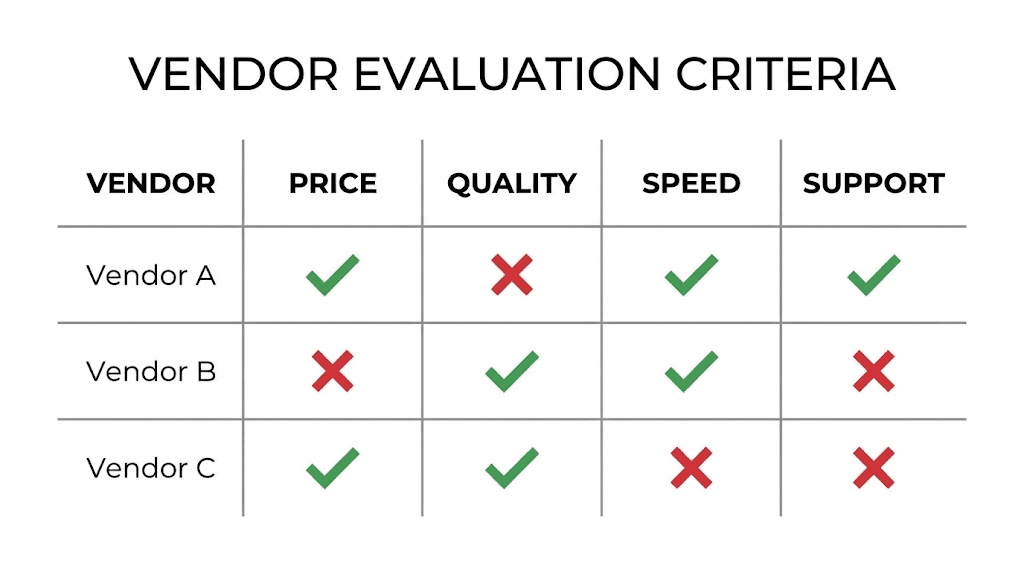
No vendor operates in isolation. Understanding how Ameano Peptides compares to alternatives helps researchers make informed choices. This comparison covers key factors rather than recommending specific vendors.
Quality verification approaches
Legitimate peptide vendors generally follow similar quality verification approaches: third-party testing, COA documentation, and batch tracking. The differences lie in execution consistency and transparency.
Ameano appears to follow industry best practices for quality verification. Their documentation availability and third-party testing claims align with top-tier vendor standards. However, they do not appear in independent testing databases like Finnrick, which means verification relies on vendor-provided documentation.
Some researchers prefer vendors with extensive independent testing histories. Others find vendor-provided documentation sufficient if it meets verification standards. Your choice depends on your specific confidence requirements.
Pricing considerations
Ameano positions itself in the mid-to-premium price range rather than competing on lowest cost. Customer reviews describe the value proposition as reasonable for the quality provided rather than cheapest available.
Understanding peptide cost factors helps evaluate whether premium pricing reflects actual quality differences. The complete cost guide provides broader context for research budgeting.
Rock-bottom pricing often indicates quality compromises. Testing, quality control, proper storage, and US-based operations all cost money. Vendors pricing significantly below market rates may be cutting corners somewhere.
Product selection breadth
Ameano offers a focused catalog rather than attempting to stock every possible peptide. This approach has tradeoffs.
Advantages include potentially deeper expertise with stocked products and more consistent quality control. When a vendor focuses on fewer products, they can devote more attention to each.
Disadvantages include needing multiple vendors for diverse research needs. Researchers working with less common peptides may find them unavailable.
For researchers primarily working with common compounds like BPC-157, semaglutide, or GHK-Cu, the focused selection presents no limitation. Those needing obscure peptides should verify availability before committing to Ameano as a primary source.
Customer service differentiation
Customer service quality varies significantly across peptide vendors. Ameano receives consistently positive feedback for responsiveness and problem resolution. This differentiates them from vendors where getting answers to questions proves difficult.
For researchers new to peptides, accessible customer service helps navigate product selection and handling questions. The getting started guide covers fundamentals, but vendor support provides additional guidance.
Regulatory positioning
The Amino Asylum shutdown demonstrated consequences for vendors operating outside legitimate boundaries. Ameano appears to operate within standard research peptide parameters, maintaining clear research-only designations and US-based operations.
Regulatory risk affects researchers as well as vendors. Working with clearly legitimate suppliers reduces complications if regulatory scrutiny increases. Understanding peptide regulation developments helps researchers stay informed about the evolving landscape.
Specific peptide protocols and resources
Ordering quality peptides represents only the first step. Proper protocols, handling, and application determine research outcomes. This section connects to resources for specific peptide categories.
Metabolic research protocols
For researchers working with metabolic peptides from Ameano or any vendor:
Semaglutide protocols require understanding GLP-1 agonist options and their distinct characteristics. The weight loss peptide guide provides protocol context.
Tirzepatide research benefits from the comprehensive dosing guide covering protocol approaches.
Retatrutide studies can reference the dosage chart and 20mg dosing guide.
The lipotropic peptides guide covers compounds relevant to fat metabolism research.
Recovery and healing protocols
BPC-157 research requires understanding proper dosing and whether current legal status affects your research context. The alternatives guide covers options if needed.
TB-500 protocols should reference the complete guide and understand available alternatives.
The injury recovery peptide guide provides comprehensive protocol options, while specific applications like tendon repair and joint pain receive dedicated coverage.
Growth hormone research
Researchers working with secretagogues should understand the comparison between options and proper stacking approaches.
The muscle growth peptide guide covers research applications, while HGH alternatives provides context for growth hormone research pathways.
Copper peptide research
GHK-Cu research requires proper injection dosing or understanding injection techniques. The dosage chart provides protocol reference.
Understanding product duration and stability factors helps plan research timelines.
Researchers interested in topical applications should explore skincare applications and product formulation.
Cognitive and nootropic research
The nootropic peptide guide covers cognitive research compounds. Specific peptides like selank and semax have dedicated dosing guides linked earlier.
Understanding brain function peptides and memory-focused options helps researchers select appropriate compounds.
Women-focused research
Female physiology requires specific consideration in peptide research. The women's peptide guide, over-40 considerations, and safety guide address these needs.
Hormonal considerations including menopause applications and perimenopause protocols receive dedicated coverage.
Men-focused research
The complete men's guide covers male-specific applications. Testosterone-related research can reference testosterone peptide options and TRT considerations.
Sexual health research involving PT-141 connects to the libido peptide guide and erectile function research.
Proper peptide handling regardless of source
Even the highest quality peptides degrade with improper handling. This section covers essential practices that apply whether you source from Ameano or any other vendor.
Storage requirements
Lyophilized peptides require proper storage conditions to maintain stability. Understanding storage fundamentals protects your investment.
Refrigeration is standard for most lyophilized peptides. Freezing provides even better long-term stability for extended storage. Room temperature storage should be minimized, though understanding room temperature limits helps assess brief exposure risks.
Light exposure degrades many peptides. Store in original vials or opaque containers away from direct light.
Moisture compromises lyophilized products. Keep vials sealed until use, and minimize exposure during reconstitution.
Reconstitution protocols
Proper reconstitution technique maintains peptide integrity. Use appropriate bacteriostatic water or other diluents as specified for each peptide.
Add diluent slowly along the vial wall rather than directly onto the peptide cake. Gentle swirling dissolves the peptide without damaging molecular structure. Aggressive shaking can denature some peptides.
Once reconstituted, storage requirements change. The reconstituted storage guide covers these modified requirements.
Dosage calculation
Accurate dosage calculation requires understanding concentration after reconstitution. The dosing guide covers calculation methods.
Tools like the peptide calculator resources simplify calculations. The free reconstitution calculator provides accessible calculation support.
Understanding whether peptides expire and fridge storage duration helps plan research timelines.
Administration methods
Different peptides use different administration routes. The injection guide covers subcutaneous and intramuscular techniques.
Nasal administration applies to certain peptides. The nasal spray guide covers this route.
Oral peptide options are more limited but exist. Understanding delivery route comparisons helps select appropriate methods.
Cycling and combinations
Many researchers use multiple peptides simultaneously or sequentially. The cycling guide covers rotation approaches.
Understanding combination limits helps design safe protocols. The cycle planning guide provides framework for multi-peptide research.
Safety considerations and risk awareness
Research peptides carry inherent considerations that responsible researchers must understand. This applies to Ameano products and all research peptides regardless of source.
Research-only designation
Ameano Peptides, like other legitimate research suppliers, explicitly markets products for laboratory research only. This designation exists for important reasons.
Research peptides have not undergone the clinical trial process required for human therapeutics. Safety profiles may be incomplete. Long-term effects remain unstudied for many compounds. Researchers must understand these limitations.
The peptide safety guide covers risk factors. Understanding how peptides compare to other compounds provides risk context.
Quality-related risks
Even with reputable vendors, quality-related risks exist:
Contamination: Manufacturing processes can introduce contaminants. Third-party testing helps verify purity but cannot guarantee complete absence of all possible contaminants.
Degradation: Improper storage during shipping or storage degrades peptides. Degraded products may be ineffective or produce unexpected results.
Mislabeling: Errors in labeling can result in receiving wrong products. COA verification with batch matching helps detect this.
These risks decrease with reputable vendors but never reach zero. Researchers should maintain awareness regardless of source selection.
Protocol-related risks
Beyond product quality, protocol design affects research outcomes and safety:
Dosing errors can occur with calculation mistakes. Using dosage charts and verification steps reduces this risk.
Combination interactions may produce unexpected effects. Research interactions before combining peptides.
Individual variation means published protocols may not suit all situations. Starting conservatively allows assessment before escalation.
The common mistakes guide helps researchers avoid frequent errors.
When to seek professional guidance
Some research applications benefit from professional input. The therapy clinic guide covers options for those seeking supervised protocols. Local therapy options may provide accessible professional guidance.
Understanding prescription requirements clarifies the distinction between research applications and medical treatment.
Frequently asked questions
Is Ameano Peptides the same as AMO peptides?
Yes, AMO peptides is a common shorthand for Ameano Peptides, also abbreviated as AMP. The company operates under the name Ameano Peptides LLC with the domain ameanopeptides.com. Searches for AMO peptides typically refer to this same vendor.
Does Ameano Peptides provide COAs for their products?
Yes, Ameano provides Certificates of Analysis upon request. Customer reviews specifically mention COA availability as a positive factor. Researchers should request lot-specific COAs matching their actual product batches rather than accepting generic documentation.
Where is Ameano Peptides located?
Ameano Peptides operates from US-based facilities. Domestic production and shipping provides advantages including shorter delivery times and no customs processing. The comparison with international sourcing highlights these differences.
How long does shipping from Ameano Peptides take?
Customer reviews report typical delivery within several days after ordering. The company advertises 24-hour order processing. Actual delivery depends on location and shipping method selected. Some customers report receiving orders in as few as 3 days.
Does Ameano Peptides offer refunds?
The company advertises a 30-day satisfaction guarantee with full refunds available. Specific refund experiences may vary based on circumstances. The stated policy provides some protection for researchers trying the vendor.
What peptides does Ameano Peptides sell?
Ameano offers a focused selection including metabolic peptides (semaglutide, tirzepatide, retatrutide), recovery peptides (BPC-157), growth hormone secretagogues (ipamorelin, CJC-1295), copper peptides (GHK-Cu), and others. They do not attempt to stock every possible peptide, focusing instead on commonly researched compounds.
Is Ameano Peptides legitimate?
Based on available evidence, Ameano Peptides appears to operate legitimately. They maintain a 4.8 star rating from 415 Trustpilot reviews, provide third-party testing documentation, operate US-based facilities, and receive generally positive community feedback. However, researchers should always verify documentation for their specific orders.
How does Ameano compare to other peptide vendors?
Ameano positions in the mid-to-premium tier with emphasis on quality and customer service rather than lowest pricing. They compete with other established vendors on quality verification and documentation transparency. The vendor comparison guide provides broader context.
For researchers committed to quality peptide research, SeekPeptides provides comprehensive resources including dosing calculators, protocol guides, and educational content to support informed research decisions.
May your peptides stay pure, your COAs stay verified, and your research stay productive.