Jan 26, 2026
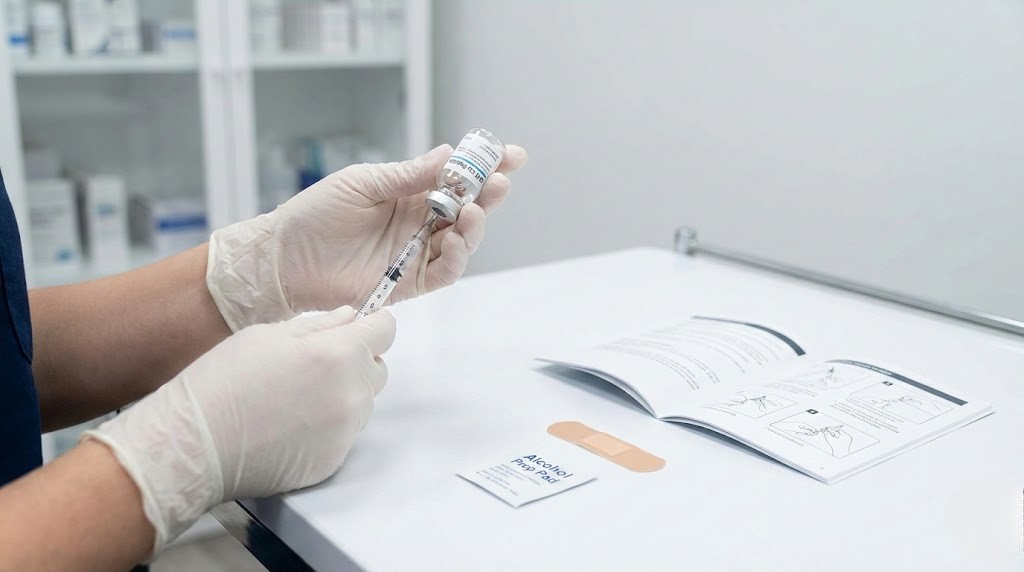
Three months into your GHK-Cu protocol and nothing has changed. The vial sits in your refrigerator. The syringes are still in their packaging. You have read dozens of articles about GHK-Cu dosing but nobody actually showed you what to do when you are standing in your bathroom holding a needle for the first time.
This is the guide that changes everything.
GHK-Cu is one of the most researched copper peptides for skin regeneration, wound healing, and anti-aging applications. The science is compelling. Studies show this tripeptide can increase collagen production by up to 70 percent, accelerate wound healing, and modulate over 4000 genes involved in tissue repair. But science means nothing if you cannot translate it into action. You need to know exactly how to reconstitute the powder, calculate your dose, prepare the injection site, and administer GHK-Cu safely and effectively.
This comprehensive guide walks you through the entire process from opening your first vial to establishing a sustainable long-term protocol. We cover reconstitution with bacteriostatic water, proper injection technique, site rotation strategies, timing considerations, and what to expect week by week. Whether you are using GHK-Cu for skin rejuvenation, hair restoration, wound healing, or general anti-aging benefits, you will finish this guide knowing exactly what to do.
SeekPeptides members have access to detailed protocols, personalized guidance, and a community of experienced researchers who have navigated these exact steps. But first, let us walk through the fundamentals that every GHK-Cu user needs to understand.
Understanding GHK-Cu before your first injection
GHK-Cu is a naturally occurring tripeptide composed of three amino acids: glycine, histidine, and lysine, bound to a copper ion. Your body produces this peptide naturally. At age 20, plasma levels sit around 200 nanograms per milliliter. By age 60, those levels drop to approximately 80 nanograms per milliliter. This decline coincides with reduced healing capacity, slower tissue regeneration, and accelerated aging.
The peptide was first isolated from human plasma albumin in 1973 by Dr. Loren Pickart. What made his discovery remarkable was the observation that this small molecule caused old liver tissue to synthesize proteins like younger tissue. Four decades of research followed, revealing that GHK-Cu stimulates collagen synthesis, attracts immune cells to damaged tissue, promotes blood vessel growth, and activates genes involved in wound repair.
Injectable GHK-Cu offers higher bioavailability than topical formulations. When you apply copper peptide serums to your skin, absorption remains limited to superficial layers. Subcutaneous injection delivers the peptide directly into tissue where it can exert systemic effects. This is why researchers interested in comprehensive regeneration often choose injectable administration over topical application.
How GHK-Cu works in your body
Understanding the mechanism helps you appreciate why proper administration matters. GHK-Cu binds to copper with high affinity. This copper-peptide complex then interacts with cells throughout your body, triggering a cascade of regenerative processes.
The peptide increases production of Type I collagen, the structural protein that gives skin its firmness. It also boosts Type III collagen, which provides flexibility and supports blood vessels and organs. Research shows GHK-Cu upregulates glycosaminoglycan synthesis, the molecules that keep your skin hydrated and plump. It promotes tissue repair through enhanced fibroblast activity and new blood vessel formation.
Gene expression studies reveal the scope of GHK-Cu activity. The peptide modulates over 4000 human genes, turning up genes associated with tissue remodeling and antioxidant protection while turning down genes linked to inflammation and tissue destruction. This broad genetic influence explains why GHK-Cu benefits extend beyond skin health to include anti-inflammatory effects, neuroprotection, and improved immune function.
When you inject GHK-Cu subcutaneously, the peptide enters circulation and distributes throughout your body. Studies in animals show that systemic administration produces healing effects at distant sites. Inject in your thigh and experience benefits in your face. This systemic effect is unique to injectable administration and explains why many researchers prefer this route.
Injectable versus topical delivery
Both methods have their place. Topical copper peptide application works well for localized skin concerns, daily maintenance, and convenience. You can add a serum to your existing skincare routine without any special preparation. Results tend to be subtle, appearing over 8 to 12 weeks of consistent use.
Injectable delivery accelerates everything. Higher bioavailability means more peptide reaches target tissues. Users often notice initial improvements within 2 to 4 weeks. For significant regenerative goals like wound healing, scar reduction, or substantial anti-aging effects, injection provides more dramatic results. The tradeoff is complexity. You need proper technique, sterile supplies, and careful attention to protocol.
Most experienced researchers use both methods. Injectable GHK-Cu addresses systemic regeneration and major concerns. Topical copper peptides maintain results and provide ongoing skin support. Think of injections as intensive treatment phases and topical application as maintenance between cycles.
What you need before starting
Proper preparation prevents problems. Gather all supplies before your first injection so you are not scrambling mid-process. Here is what you need for safe GHK-Cu administration.
Essential supplies list
The lyophilized GHK-Cu comes as a freeze-dried powder in a sealed vial. Typical sizes include 50mg and 100mg vials. The powder is stable at room temperature during shipping but should be stored properly once you receive it. Reconstituted solution requires refrigeration and has a limited shelf life.
Bacteriostatic water is the preferred reconstitution solvent. It contains 0.9 percent benzyl alcohol as a preservative, which inhibits bacterial growth and extends the shelf life of your reconstituted peptide. A typical bacteriostatic water vial contains 30ml, enough for multiple reconstitutions.
Insulin syringes are ideal for peptide injection. These come in various sizes, but 0.5ml or 1ml syringes with 29 to 31 gauge needles work well for subcutaneous administration. The fine needles minimize discomfort and tissue damage. You will need separate syringes for reconstitution and injection, or you can use a larger syringe for mixing and transfer to an insulin syringe for administration.
Alcohol swabs sterilize injection sites and vial tops. Use 70 percent isopropyl alcohol wipes. Some researchers also keep sterile gauze or cotton balls nearby for any minor bleeding after injection.
A sharps container provides safe disposal for used needles. Never throw syringes in regular trash. Many pharmacies accept filled sharps containers for proper disposal.
Optional but helpful: a peptide calculator helps you determine exact dosing based on your reconstitution volume. SeekPeptides offers free calculators that make this process straightforward.
Storage requirements
Proper storage preserves peptide potency. Lyophilized GHK-Cu powder should be stored at minus 20 degrees Celsius or below for long-term storage. If you plan to reconstitute within a few weeks, refrigerator storage at 2 to 8 degrees Celsius is acceptable. Keep vials away from light and moisture. The original packaging with desiccant provides optimal protection.
Once reconstituted, GHK-Cu solution must be refrigerated at 2 to 8 degrees Celsius. Use it within 30 days when reconstituted with bacteriostatic water. If you use sterile water without preservative, the shelf life drops to 7 to 10 days. Mark your vial with the reconstitution date so you can track freshness.
Never freeze reconstituted solution. The freeze-thaw cycle damages the peptide structure and reduces potency. If you will not use the entire vial within 30 days, consider dividing your reconstituted solution into smaller aliquots that you can use individually.
The reconstituted solution should appear clear with a slight blue tint from the copper. Any cloudiness, particles, or discoloration indicates contamination or degradation. Discard compromised solution immediately. Understanding how long GHK-Cu lasts helps you plan reconstitution timing to minimize waste.
How to reconstitute GHK-Cu properly
Reconstitution transforms the freeze-dried powder into an injectable solution. This process requires attention to detail but becomes routine with practice. Follow these steps exactly for optimal results.
Step-by-step reconstitution process
Start with clean hands and a clean workspace. Wash your hands thoroughly with soap and water. Wipe down your work surface with alcohol or disinfectant. Good hygiene prevents contamination that could cause infection or peptide degradation.
Remove the protective cap from your GHK-Cu vial if it has one. Most vials have a rubber stopper secured by an aluminum crimp seal. Do not remove the entire seal. Just flip off the plastic cover to expose the rubber stopper. Swab the top of the rubber stopper with an alcohol wipe and allow it to air dry completely.
Do the same with your bacteriostatic water vial. Clean the stopper with alcohol and let it dry. Maintaining sterility at every step protects your investment and your health.
Draw your desired volume of bacteriostatic water into a syringe. For a 50mg vial, adding 2ml of bacteriostatic water creates a concentration of 25mg per ml, or 2.5mg per 0.1ml. For a 100mg vial, adding 4ml creates the same concentration. These concentrations make dosing calculations simple. You can use the peptide reconstitution calculator to determine your preferred concentration.
Insert the needle through the rubber stopper at a 45 degree angle. Tilt the vial slightly and direct the water stream down the inside wall of the vial. Never spray water directly onto the powder. The gentle approach prevents foaming and ensures complete dissolution. Inject the water slowly over 15 to 30 seconds.
Remove the syringe and gently swirl the vial. Do not shake vigorously. The peptide is fragile and aggressive agitation can damage its structure. Roll the vial between your palms or swirl gently until the powder dissolves completely. This usually takes 1 to 3 minutes. If cloudiness persists, let the vial rest at room temperature for 5 minutes and swirl again.
The final solution should be clear with a faint blue tint. This coloration comes from the copper and indicates a properly reconstituted peptide. Label your vial with the reconstitution date and concentration, then store immediately in the refrigerator.
Common reconstitution mistakes to avoid
Injecting water directly onto the powder causes foaming and can denature the peptide. Always direct the stream down the vial wall. Some researchers refrigerate the vial before adding water, which reduces foaming tendency.
Using normal saline instead of bacteriostatic water creates problems. High salt concentrations interfere with copper chelation and can destabilize the peptide complex. Stick with bacteriostatic water or sterile water for injection.
Mixing GHK-Cu with vitamin C solutions destroys the peptide. The acidic pH from ascorbic acid disrupts the copper-peptide bond. Keep your GHK-Cu away from acidic solutions entirely. Understanding copper peptides and vitamin C interactions helps you avoid this mistake in skincare as well.
Using tap water introduces bacteria, minerals, and chlorine that contaminate your solution. Only pharmaceutical-grade water belongs in your peptide vial. The cost difference is negligible compared to replacing a contaminated batch.
Touching the rubber stopper after cleaning it introduces bacteria. Once you swab with alcohol, do not touch the surface. Let it air dry completely before inserting your needle.
Calculating your GHK-Cu dose
Dosing depends on your goals, body weight, and administration frequency. The research literature and clinical practice provide guidance, but individual response varies. Start conservatively and adjust based on results.
Standard dosing protocols
The typical GHK-Cu dose ranges from 1 to 2 milligrams per day for most applications. You can administer this as a single daily injection or split it into morning and evening doses. Some protocols use 2mg administered 2 to 3 times per week, totaling 4 to 6mg weekly.
For skin rejuvenation and general anti-aging, 1 to 2mg daily for 4 to 8 weeks produces noticeable results. Many users continue at a lower maintenance dose after the initial loading phase. A common maintenance approach is 1mg two to three times weekly.
Wound healing applications may warrant higher doses. Some protocols use up to 2mg twice daily when addressing significant tissue damage. Consult the GHK-Cu peptide injection dosage guide for detailed recommendations based on specific conditions.
Hair restoration protocols typically follow standard dosing but continue for longer duration. Hair follicle response takes time. Expect 3 to 6 months of consistent use before evaluating effectiveness for GHK-Cu hair benefits.
How to calculate injection volume
Once you know your concentration and desired dose, calculating injection volume is straightforward. If your reconstituted solution contains 25mg per ml, and you want 2mg, you need 0.08ml. On an insulin syringe marked in units, 0.08ml equals 8 units.
Here is the formula: Injection Volume = Desired Dose divided by Concentration.
For a 2mg dose with 25mg per ml concentration: 2mg divided by 25mg per ml equals 0.08ml or 8 units.
For a 1mg dose with the same concentration: 1mg divided by 25mg per ml equals 0.04ml or 4 units.
Using the peptide calculator eliminates math errors. Input your vial size, reconstitution volume, and desired dose to get exact injection volumes. This tool becomes especially valuable when using multiple peptides with different concentrations.
Adjusting dose based on response
Your optimal dose depends on factors including body weight, metabolism, baseline copper levels, and treatment goals. Start at the lower end of recommended ranges and assess your response over 2 to 4 weeks.
Signs you may need to increase dose: minimal improvement after 4 weeks of consistent use, rapid healing that could progress further, or previous positive response to higher doses of related peptides.
Signs you may need to decrease dose: persistent injection site reactions, nausea, fatigue, or excessive skin sensitivity. These are uncommon with GHK-Cu but warrant attention if they occur.
Some researchers find that cycling works better than continuous use. A common approach is 8 to 12 weeks on protocol followed by 4 weeks off. This maintains receptor sensitivity and prevents potential copper accumulation. The peptide cycling guide provides detailed strategies for managing multiple compounds.
Preparing for your first GHK-Cu injection
The injection itself takes less than a minute. Proper preparation makes it safe and painless. Here is exactly how to set up for successful administration.
Choosing your injection site
Subcutaneous injection means delivering the peptide into the fatty layer just beneath your skin. The best sites have adequate subcutaneous fat and easy access. The abdomen around the navel but at least 2 inches away from it is the most common site. The front or outer thigh works well. The back of the upper arm is accessible but may require help to reach.
Rotate injection sites to prevent lipohypertrophy, which is the buildup of fatty tissue from repeated injections in the same location. Establish a rotation pattern. Many users divide the abdomen into four quadrants and rotate clockwise, or alternate between left and right thigh. Document your sites to ensure proper rotation.
Avoid areas with scars, bruises, stretch marks, or visible veins. These locations have compromised tissue that may not absorb properly. Also avoid injecting directly into muscle. Subcutaneous administration delivers the peptide more slowly, which is appropriate for GHK-Cu.
Preparing the injection site
Clean your chosen site with an alcohol swab using a circular motion from center outward. This technique moves bacteria away from the injection point rather than toward it. Allow the alcohol to dry completely before injecting. Injecting through wet alcohol causes stinging.
Do not blow on the site to speed drying. Your breath contains bacteria that contaminate the cleaned area. Simply wait 15 to 30 seconds for the alcohol to evaporate naturally.
If you are injecting in a hairy area, you may want to trim the hair short. Shaving is unnecessary and can cause micro-abrasions that increase infection risk. Short hair allows adequate skin cleaning without complications.
Drawing your dose
Remove your reconstituted GHK-Cu vial from the refrigerator. Allow it to warm slightly toward room temperature. Cold injections can be uncomfortable. A few minutes at room temperature is sufficient. Do not use heat to warm the vial as this can degrade the peptide.
Swab the vial stopper with alcohol and let it dry. Draw air into your syringe equal to the volume you plan to withdraw. Insert the needle through the stopper and inject the air into the vial. This equalizes pressure and makes withdrawal easier.
Invert the vial so the rubber stopper faces down. Position the needle tip below the fluid surface. Pull back on the plunger slowly to draw your calculated dose. Watch for air bubbles. If bubbles appear, push the fluid back into the vial and redraw more slowly.
Once you have your dose, remove the needle from the vial. Hold the syringe needle-up and tap gently to move any remaining bubbles toward the needle. Press the plunger slightly to expel air. A tiny drop of liquid at the needle tip indicates you have removed all air.
Step-by-step injection technique
Now you are ready to administer your GHK-Cu. Follow this technique for safe, effective subcutaneous injection.
The pinch and inject method
Pinch a fold of skin at your chosen injection site using your non-dominant hand. This lifts the subcutaneous fat away from the underlying muscle and creates a target for your needle. Maintain the pinch throughout the injection.
Hold the syringe like a pencil in your dominant hand. Position the needle at a 45 to 90 degree angle to the skin fold. For most people with adequate subcutaneous fat, 90 degrees works well. Thinner individuals may need 45 degrees to ensure the needle stays in the subcutaneous layer rather than reaching muscle.
Insert the needle smoothly with one motion. Do not hesitate or push slowly. A quick, confident insertion is less painful than tentative prodding. Push the needle in fully. For a standard 8mm insulin needle, the entire length should be in tissue.
Do not aspirate. The old practice of pulling back on the plunger to check for blood is unnecessary for subcutaneous injection. Modern guidance confirms that aspiration is not needed and only prolongs discomfort.
Push the plunger slowly and steadily. Rapid injection can cause discomfort and may disperse the peptide unevenly. Take 5 to 10 seconds to deliver your full dose. This slow approach minimizes tissue trauma and allows proper absorption.
Wait 5 to 10 seconds with the needle still in place before withdrawing. This pause allows the peptide to disperse into tissue and prevents it from tracking back along the needle path. Then withdraw smoothly at the same angle you entered.
Release the skin pinch. If there is minor bleeding, apply gentle pressure with a clean cotton ball or gauze. Do not rub the injection site as this can disperse the peptide away from the intended location. Most injections produce no bleeding.
After the injection
Dispose of your used syringe immediately in your sharps container. Never recap needles as this risks accidental needle stick injury. One syringe, one use, immediate disposal.
Document your injection. Record the date, time, dose, injection site, and any observations. This log helps you track your protocol, maintain site rotation, and identify patterns if problems arise. Many researchers use a simple spreadsheet or notebook.
Watch for any immediate reactions at the injection site. Mild redness and slight swelling are normal and resolve within minutes to hours. Significant pain, spreading redness, warmth, or swelling that worsens over time may indicate infection and warrants medical attention.
Return your GHK-Cu vial to the refrigerator promptly. Leaving reconstituted peptide at room temperature accelerates degradation. Proper storage between uses maintains potency throughout the 30 day window.
Injection timing and frequency
When you inject matters for results. Establishing a consistent routine maximizes GHK-Cu benefits.
Best time of day to inject GHK-Cu
GHK-Cu does not have strict timing requirements like some other peptides. Unlike growth hormone releasing peptides that must be taken on an empty stomach, GHK-Cu can be administered regardless of food intake. This flexibility makes compliance easier.
Many researchers prefer morning injection. This aligns with natural circadian rhythms of repair and regeneration. Your body does significant healing work during sleep, and morning administration ensures adequate peptide levels throughout the day when cellular activity is high.
Evening injection is an alternative approach. Some argue that overnight repair processes benefit from peak peptide levels during sleep. Both approaches produce results, so choose based on your schedule and preference.
Consistency matters more than specific timing. If you inject at 8am one day and 8pm the next, your tissue levels fluctuate unpredictably. Pick a time that works every day and stick with it. Setting a daily alarm or associating injection with another routine behavior improves adherence.
Daily versus every other day protocols
Daily injection provides the most consistent tissue levels. For intensive treatment phases targeting significant skin improvement, wound healing, or hair restoration, daily administration for 4 to 12 weeks produces the best results.
Every other day or three times weekly protocols work for maintenance or when combining GHK-Cu with other peptides. Reduced frequency still provides benefits while minimizing injection burden. This approach suits long-term use after an initial loading phase.
Some protocols alternate between daily and reduced frequency. For example, 8 weeks daily followed by ongoing maintenance at 3 times weekly. This stepdown approach captures initial intensive benefits then sustains results with less intensive ongoing effort.
Understanding how multiple peptides interact helps you design protocols that achieve your goals efficiently. GHK-Cu combines well with many other compounds, which we discuss in the stacking section below.
What to expect week by week
Realistic expectations prevent disappointment. GHK-Cu works gradually, producing cumulative benefits over time. Here is a typical timeline of what users experience.
Weeks 1 to 2: initial phase
During the first two weeks, most users notice subtle improvements in skin hydration and texture. The peptide begins stimulating fibroblast activity and collagen synthesis, but these processes take time to produce visible results. You may notice your skin feels slightly smoother or more supple.
Some users experience mild injection site reactions that decrease as technique improves. Minor redness or bruising is common in beginners and resolves as you develop better injection skills. Keep a photo log to track changes that may be too gradual to notice day to day.
Wound healing applications may show faster results. If you are using GHK-Cu for an injury, you might notice reduced inflammation and early signs of accelerated repair within the first week. The peptide attracts immune cells and growth factors to damaged tissue immediately.
Weeks 3 to 4: early results
By week three, most users report visible skin improvement. Fine lines appear softer. Skin texture becomes more refined. The initial effects of increased collagen and glycosaminoglycan synthesis become apparent. This is when users typically feel motivated to continue.
Injectable administration often shows results faster than topical. While topical copper peptides may take 8 to 12 weeks for significant improvement, subcutaneous GHK-Cu accelerates the timeline. The higher bioavailability delivers more peptide to target tissues.
If you are using GHK-Cu for hair, you may notice improved scalp health and hair texture. Some users report less shedding. New growth takes longer, typically 8 to 12 weeks to become visible. Hair restoration requires patience and consistent use.
Weeks 5 to 8: significant progress
This phase brings substantial improvement for most users. Skin firmness increases noticeably. Clinical studies show 20 to 30 percent improvement in skin firmness after 12 weeks, with significant gains occurring in this middle period. Wrinkle reduction becomes visible to others, not just yourself.
Wound healing accelerates dramatically. Users report faster closure, reduced scarring, and improved tissue quality compared to wounds that healed without GHK-Cu support. The peptide upregulates genes involved in every aspect of tissue repair.
Hair users may notice the initial shedding phase that indicates follicle stimulation. This temporary shedding occurs as GHK-Cu pushes follicles into new growth cycles, replacing weak hairs with stronger ones. The shedding typically lasts 2 to 4 weeks and signals positive response.
Weeks 9 to 12: comprehensive results
At this stage, you can fully evaluate your response to GHK-Cu. Skin improvements plateau at their maximum level. Collagen density has increased significantly. Skin elasticity and firmness reach new baselines. The anti-aging effects become clearly visible.
Scars and hyperpigmentation show meaningful fading. GHK-Cu modulates genes involved in melanin production and tissue remodeling, gradually improving the appearance of old skin damage. Results vary based on scar age and depth.
Hair users see initial new growth. Fine, wispy hairs indicate follicle activation. These baby hairs gradually thicken over subsequent months. Full evaluation of hair results requires 6 months minimum. Understanding copper peptides for hair helps set realistic expectations.
Combining GHK-Cu with other peptides
GHK-Cu stacks effectively with many other peptides. Strategic combinations target multiple mechanisms for enhanced results.
Popular GHK-Cu stacking combinations
The combination of GHK-Cu with BPC-157 addresses healing from multiple angles. BPC-157 promotes blood vessel growth and protects tissue from damage while GHK-Cu stimulates collagen synthesis and attracts repair cells. Together they accelerate recovery from injuries, surgeries, or general tissue damage. Review the BPC-157 and TB-500 stacking guide for detailed protocols.
Adding TB-500 creates a comprehensive healing stack. TB-500 promotes cell migration and new blood vessel formation. When combined with GHK-Cu and BPC-157, this trio addresses virtually every aspect of tissue repair. Many researchers call this the healing stack or wolverine protocol.
For anti-aging focused protocols, GHK-Cu combines well with epithalon. Epithalon affects telomere length and cellular aging while GHK-Cu handles tissue regeneration. The combination addresses aging at both cellular and structural levels. Learn about epithalon benefits for detailed information.
Collagen support from GHK-Cu pairs naturally with growth hormone secretagogues. Peptides like ipamorelin or sermorelin increase natural growth hormone, which synergizes with GHK-Cu for skin quality, healing, and overall regeneration. This combination appeals to those pursuing comprehensive anti-aging strategies.
How to structure combination protocols
When stacking multiple peptides, organize your injections to minimize inconvenience while maintaining effectiveness. Some peptides can be mixed in the same syringe while others require separate injections.
GHK-Cu can generally share a syringe with other peptides that use similar diluents. Mixing reduces the number of daily injections. However, verify compatibility before combining. Some peptide combinations may interact unfavorably.
Timing matters for certain stacks. Growth hormone secretagogues work best on an empty stomach. GHK-Cu has no such restriction. You might take your GHRP in the morning before eating, then add GHK-Cu with your next meal or at a different time entirely.
Start new peptides one at a time when building a stack. This approach lets you assess individual response before adding complexity. If you start three peptides simultaneously and experience problems, you cannot identify the culprit. Add one peptide, evaluate for 2 to 4 weeks, then consider adding another.
SeekPeptides members access detailed stacking protocols designed by experienced researchers. These protocols account for timing, dosing, and synergistic effects to optimize your results while minimizing complexity.
Managing potential side effects
GHK-Cu has an excellent safety profile. Decades of research and clinical use confirm minimal risk when used appropriately. Still, understanding potential issues helps you respond correctly if they arise.
Common injection site reactions
Mild redness at the injection site occurs frequently, especially for beginners. This reaction results from tissue disruption and typically resolves within hours. It does not indicate a problem with the peptide.
Bruising happens when you nick a small blood vessel during injection. Proper technique reduces frequency, but occasional bruises are normal. Apply gentle pressure after injection to minimize bleeding. Bruises resolve on their own within a few days.
Tenderness or slight swelling may persist for a day or two, particularly when using larger volumes. This is a normal tissue response and not cause for concern. Rotating injection sites prevents cumulative irritation in any single location.
If you experience persistent pain, spreading redness, warmth, or discharge from an injection site, seek medical attention. These signs suggest infection, which requires treatment. Proper sterile technique prevents most infections, but vigilance catches problems early.
Systemic considerations
GHK-Cu is well tolerated systemically. The peptide occurs naturally in your body, so you are not introducing something foreign. Adverse reactions are rare.
Some users report mild fatigue during the first few days of use. This typically resolves as your body adjusts. If fatigue persists beyond a week, consider reducing your dose or consulting a healthcare provider.
Copper accumulation is theoretically possible with very high doses over extended periods. Following standard protocols and cycling your use prevents this concern. Individuals with Wilson disease or other copper metabolism disorders should avoid GHK-Cu entirely.
Skin purging, similar to what occurs with retinoids, happens occasionally. This appears as temporary breakouts as old skin cells turn over faster. The purging phase resolves within a few weeks and leads to clearer skin. Understanding copper peptide purging helps you distinguish this normal process from true adverse reactions.
Research has not established GHK-Cu safety during pregnancy or breastfeeding. If you are pregnant, planning pregnancy, or nursing, avoid use until more data becomes available. The copper peptide side effects guide provides comprehensive safety information.
Cycling and long-term use considerations
Sustainable use requires attention to cycling and protocol adjustment over time. Here is how to structure GHK-Cu for ongoing benefits.
Why cycling matters
Cycling peptides maintains receptor sensitivity. Continuous stimulation can downregulate receptors over time, reducing effectiveness. Periodic breaks allow receptors to reset, ensuring that resumed use delivers full benefits.
Copper metabolism also warrants cycling consideration. While GHK-Cu doses are small, continuous use adds copper to your system. Taking breaks allows normal copper regulation to maintain balance. This precaution may be overly conservative, but erring toward caution with minerals makes sense.
A typical cycle structure is 8 to 12 weeks of daily use followed by 4 weeks off. During the break, you can continue topical copper peptide use for maintenance. Resume injections after the break at the same or slightly reduced dose.
Alternative cycling approaches include using GHK-Cu 5 days on, 2 days off throughout your protocol. This modified continuous approach provides regular breaks without extended time off. Some researchers find this maintains results better than longer on-off cycles.
Maintaining results between cycles
Topical copper peptide products maintain skin benefits during injection breaks. Apply a quality GHK-Cu serum once or twice daily. The localized effects sustain collagen support even without systemic administration.
Lifestyle factors amplify peptide results. Adequate protein intake provides amino acids for collagen synthesis. Vitamin C supports collagen formation as a necessary cofactor. Sleep allows repair processes to work optimally. Exercise promotes circulation that delivers nutrients to skin and tissues. All these factors determine how well you maintain results between peptide cycles.
Sun protection preserves collagen gains. UV radiation degrades collagen and accelerates skin aging. The regeneration you achieve with GHK-Cu disappears faster if you expose your skin to excessive sun without protection. Consistent sunscreen use locks in your improvements.
Understanding what happens when you stop GHK-Cu helps you plan maintenance strategies. Results persist but gradually return toward baseline without ongoing support. The key is supporting your gains through lifestyle and periodic resumed use.
Special applications and advanced techniques
Beyond standard subcutaneous injection, GHK-Cu can be administered through alternative routes for specific applications.
Localized injection for targeted results
Injecting GHK-Cu near areas of concern delivers higher local concentrations. For facial rejuvenation, some practitioners inject small amounts around the eyes, nasolabial folds, or other areas of fine lines. This mesotherapy approach requires medical training but can produce dramatic localized results.
For wound healing, injecting near but not into the wound bed accelerates repair. The peptide diffuses into the damaged area where it stimulates collagen synthesis and attracts healing cells. This technique is particularly useful for chronic wounds that resist standard treatment.
Hair restoration benefits from scalp-proximal injection. While subcutaneous injection anywhere provides systemic benefits, injecting in the abdominal area near the scalp or using microneedling with topical GHK-Cu delivers peptide directly where hair follicles need it. Microneedle peptide patches offer a convenient delivery method for targeted application.
Combining injection with topical application
The most comprehensive protocols use both routes simultaneously. Subcutaneous injection addresses systemic regeneration while topical application provides localized skin support. This combination approach delivers results faster than either method alone.
Apply topical copper peptide serum 20 to 30 minutes after your injection. This timing allows the injection site to settle while maximizing synergy between systemic and topical delivery. Use a quality serum with adequate GHK-Cu concentration from a reputable source.
Morning injection followed by twice daily topical application provides continuous peptide exposure. Your tissue levels remain elevated throughout the day, supporting ongoing collagen synthesis and repair. This intensive approach suits short-term focused treatment phases.
When combining GHK-Cu with retinol in your skincare routine, separate application times. Retinol at night, copper peptides in the morning prevents potential interaction while capturing benefits of both ingredients. The combination addresses skin aging from multiple angles.
Troubleshooting common problems
Even experienced users encounter occasional challenges. Here is how to address common issues that arise during GHK-Cu protocols.
Peptide not dissolving properly
If your powder does not dissolve completely, several factors may be responsible. Cold water dissolves peptides slowly. Let your bacteriostatic water reach room temperature before reconstitution. Swirl more gently for longer rather than aggressive short swirling.
The peptide may have degraded from improper storage. If the vial sat at room temperature for extended periods or was exposed to light, potency decreases and dissolution becomes difficult. Unfortunately, degraded peptide should be discarded.
Inadequate water volume creates overly concentrated solutions that dissolve slowly. Try adding slightly more bacteriostatic water. The slightly lower concentration still provides effective dosing with better dissolution.
Inconsistent results
Inconsistent response usually indicates inconsistent administration. Missing doses, varying timing, or improper storage all reduce effectiveness. Review your protocol adherence before concluding that the peptide does not work for you.
Quality issues from unreliable sources cause inconsistent results. Research-grade peptides vary in purity and potency. Pharmaceutical-grade products from reputable compounding pharmacies deliver more consistent results. Invest in quality to ensure you are actually testing the peptide rather than random powder.
Individual factors affect response. Baseline copper status, collagen synthesis capacity, and overall health influence how dramatically you respond to GHK-Cu. Some people are excellent responders while others see modest benefits. Adjusting dose upward within safe ranges may help lower responders.
Excessive injection site reactions
Persistent or severe injection site reactions warrant investigation. First, verify your technique. Are you injecting into subcutaneous fat rather than muscle? Are you using appropriate needle size? Is your injection speed appropriate?
Check your diluent. Old bacteriostatic water or contaminated solution causes reactions. Use fresh diluent and maintain strict sterility throughout reconstitution and injection.
Consider sensitivity to benzyl alcohol, the preservative in bacteriostatic water. A small percentage of people react to this preservative. Switching to sterile water eliminates the preservative but requires faster use of reconstituted peptide within 7 to 10 days.
If reactions persist despite addressing these factors, you may have sensitivity to GHK-Cu itself. This is rare given the peptide occurs naturally in your body, but it happens. Discontinue use and consider alternative regenerative approaches.
Building your complete GHK-Cu protocol
Putting it all together requires synthesizing all this information into a coherent plan. Here is how to structure a complete GHK-Cu protocol from start to finish.
Phase 1: loading (weeks 1 to 8)
The loading phase establishes tissue levels and initiates regenerative processes. Use 1 to 2mg GHK-Cu daily via subcutaneous injection. Choose a consistent injection time that works with your schedule. Rotate injection sites systematically.
During this phase, pay attention to your response. Take progress photos weekly under consistent lighting. Document any changes in skin texture, firmness, or healing. Note any side effects or injection site reactions.
Combine with appropriate lifestyle support: adequate protein intake, vitamin C supplementation, quality sleep, and sun protection. These factors amplify your results significantly.
Phase 2: maintenance (ongoing)
After the loading phase, transition to maintenance dosing. Reduce frequency to 2 to 3 injections weekly at the same 1 to 2mg dose per injection. Alternatively, continue daily injection at a reduced dose of 0.5 to 1mg.
Continue topical copper peptide application daily. The combination of reduced injection frequency plus consistent topical use maintains results efficiently. Most users find this sustainable indefinitely.
Re-evaluate quarterly. Are you maintaining your improvements? Do you need to return to loading-phase intensity for a few weeks? Adjust your protocol based on ongoing assessment rather than following a rigid plan regardless of results.
Protocol template for skin rejuvenation
Weeks 1 through 8: GHK-Cu 2mg subcutaneous injection daily in the morning. Rotate between four abdominal quadrants. Apply topical copper peptide serum in the evening.
Weeks 9 through 12: GHK-Cu 2mg subcutaneous injection every other day. Continue daily topical application.
Weeks 13 onward: GHK-Cu 2mg subcutaneous injection 3 times weekly. Continue daily topical application. Re-evaluate and adjust every 3 months.
Optional 4 week break after week 12, then resume at maintenance dosing. During the break, continue topical application only.
Protocol template for wound healing
Acute phase (first 2 weeks): GHK-Cu 2mg subcutaneous injection twice daily (morning and evening) near but not in the wound area. Clean wound and apply sterile dressing. Consider topical copper peptide application to wound edges if appropriate.
Healing phase (weeks 3 through 6): GHK-Cu 2mg subcutaneous injection once daily. Continue wound care per medical guidance. Monitor healing progress closely.
Remodeling phase (weeks 7 through 12): GHK-Cu 2mg subcutaneous injection every other day. Focus on scar minimization through gentle massage, silicone products, and topical copper peptide application.
Consult healthcare providers for significant wounds. GHK-Cu supports healing but does not replace proper medical wound care.
Frequently asked questions
Can I mix GHK-Cu with other peptides in the same syringe?
Yes, GHK-Cu can typically be combined with other peptides reconstituted in bacteriostatic water. Common combinations include BPC-157 and TB-500 for healing applications. Verify that all peptides use the same diluent and that no known interactions exist before combining. Drawing multiple peptides into one syringe reduces injection burden without compromising effectiveness.
How do I know if my GHK-Cu has gone bad?
Reconstituted GHK-Cu should appear clear with a faint blue tint. Cloudiness, particles, unusual color, or foul odor indicate contamination or degradation. Discard any solution that looks or smells wrong. Also discard reconstituted solution older than 30 days regardless of appearance. When in doubt, throw it out. The cost of a new vial is far less than the risk of injecting contaminated product.
Should I take GHK-Cu on an empty stomach?
No, GHK-Cu does not require fasting. Unlike growth hormone releasing peptides that must be taken away from food, GHK-Cu can be administered regardless of meal timing. This flexibility makes adherence easier. Choose an injection time based on convenience and consistency rather than food considerations.
How long until I see results from GHK-Cu injection?
Most users notice initial improvements in skin hydration and texture within 2 to 4 weeks. Significant collagen-related improvements become apparent by weeks 6 to 8. Full results develop over 12 weeks of consistent use. Hair restoration takes longer, typically 3 to 6 months for visible new growth. Wound healing applications often show faster response, with enhanced repair evident within the first 1 to 2 weeks.
Can I use GHK-Cu if I have Wilson disease or copper sensitivity?
No, individuals with Wilson disease or other copper metabolism disorders should avoid GHK-Cu entirely. The peptide adds copper to your system, which can accumulate dangerously in those who cannot regulate copper properly. If you have known metal allergies or sensitivities, perform a patch test with topical copper peptide before attempting injection, and consult a healthcare provider.
Is GHK-Cu injection legal?
GHK-Cu is sold as a research chemical in most jurisdictions. It is not FDA-approved for any medical condition. Possession and use for personal research is generally legal, but regulations vary by location. Injectable peptides should ideally be obtained through compounding pharmacies with medical oversight. Review the peptide legality guide for detailed information on regulations in your area.
How does injectable GHK-Cu compare to topical copper peptides?
Injectable administration provides higher bioavailability and systemic effects. More peptide reaches target tissues throughout your body. Results tend to appear faster and more dramatically than topical application. However, injection requires more preparation, equipment, and technique. Topical application suits daily maintenance and localized skin concerns. Many users employ both methods for comprehensive results. Compare options in the GHK-Cu comparison guide.
What happens if I miss a dose?
Missing occasional doses does not significantly impact results. Simply resume your normal schedule with the next planned injection. Do not double up to compensate for missed doses. Consistency over time matters more than perfect daily adherence. If you miss several days, resume at your normal dose and continue your protocol. Frequent missed doses do reduce effectiveness, so work on strategies to improve adherence if this becomes a pattern.
External resources
GHK Peptide as a Natural Modulator of Multiple Cellular Pathways in Skin Regeneration
Skin Regenerative and Anti-Cancer Actions of Copper Peptides
Exploring the beneficial effects of GHK-Cu on experimental colitis
For researchers serious about optimizing their GHK-Cu protocols, SeekPeptides offers the most comprehensive resource available. Members access evidence-based guides, proven protocols, personalized calculators, and a community of thousands who have navigated these exact questions. Join today for customized guidance tailored to your specific goals.
In case I do not see you, good afternoon, good evening, and good night. May your peptides stay potent, your injections stay painless, and your results stay remarkable. Join us.