Dec 19, 2025
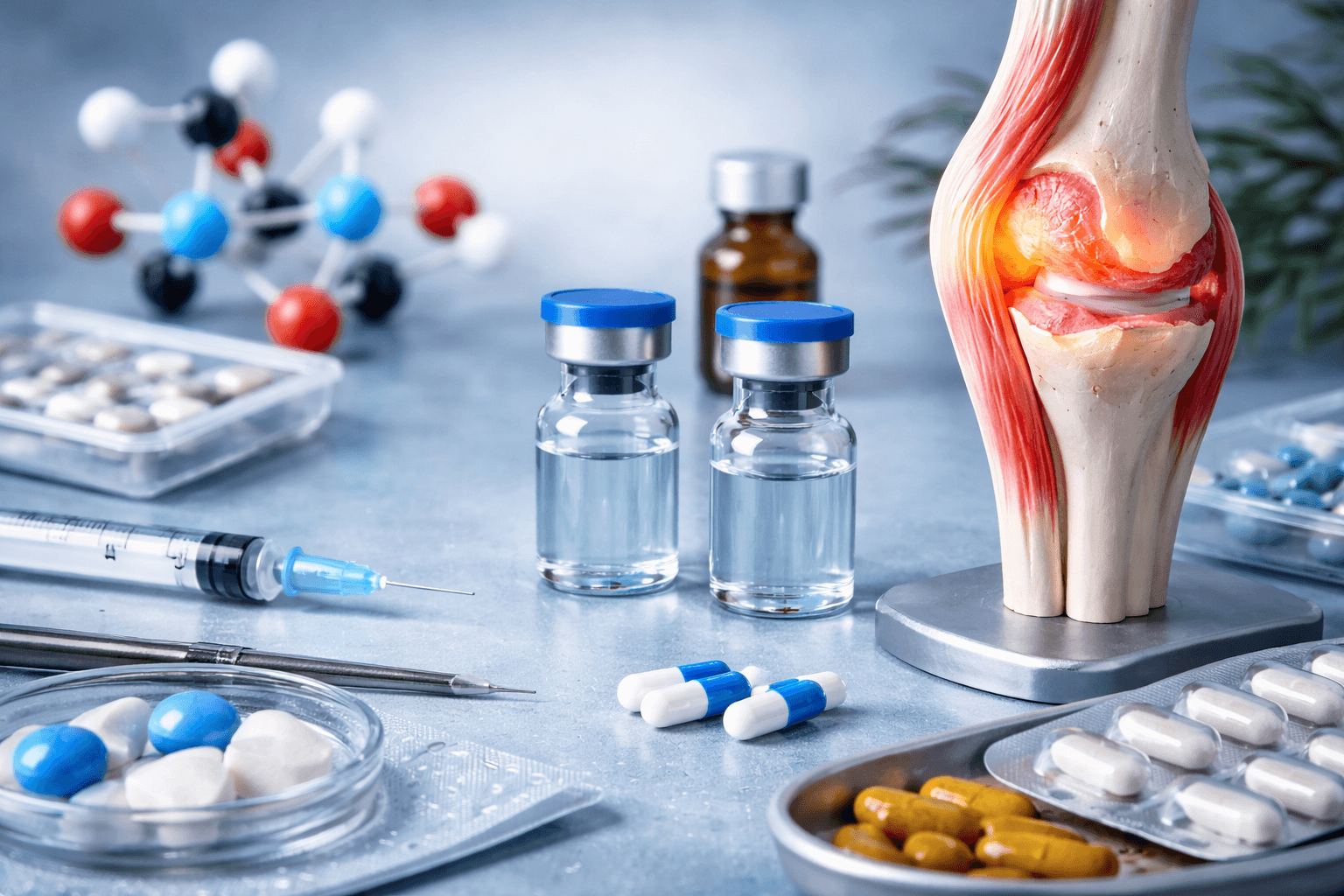
Joint pain affects millions.
Arthritis, cartilage damage, inflammation, and overuse injuries make daily activities miserable.
Peptides offer a different approach than NSAIDs or cortisone shots.
BPC-157, TB-500, and GHK-Cu reduce joint pain through multiple mechanisms - reducing inflammation, promoting tissue repair, and improving joint lubrication.
This guide covers the best peptides for joint pain, effectiveness by condition, protocols, expected results, and how they compare to conventional treatments.
Why peptides work for joint pain
Joint pain = inflammation: Most joint pain involves inflammatory processes.
Peptides reduce inflammatory markers:
BPC-157 modulates inflammatory pathways
GHK-Cu potent anti-inflammatory effects
TB-500 reduces acute and chronic inflammation
Unlike NSAIDs: Peptides don't just mask pain - they address underlying inflammation while promoting healing.
Promoting cartilage repair
Cartilage doesn't heal well naturally: Poor blood supply, slow cell turnover.
Peptides enhance cartilage repair:
Stimulate chondrocyte (cartilage cell) activity
Increase collagen production
Promote extracellular matrix formation
Improve tissue quality
This is critical: Addressing cartilage damage prevents progression to severe arthritis.
Improving synovial fluid
Synovial fluid = joint lubrication: Reduces friction, nourishes cartilage.
Peptides improve synovial environment:
Reduce inflammatory cytokines in joint fluid
Enhance nutrient delivery
Support healthy synovial membrane
Result: Better joint function, less grinding, improved mobility.
Enhancing overall healing
Joints contain multiple tissues: Cartilage, ligaments, tendons, synovium, bone.
Peptides promote comprehensive healing:
BPC-157 promotes angiogenesis
TB-500 enhances cell migration
Growth hormone peptides support tissue regeneration systemically
Learn more about how peptides work.
The best peptides for joint pain
1. BPC-157
Effectiveness: ⭐⭐⭐⭐⭐ (5/5) - Best all-around joint peptide
Why it's #1 for joints:
Reduces inflammation significantly
Promotes tissue healing
Works on multiple joint structures
Can inject locally near joint
Excellent safety profile
Mechanism: BPC-157 enhances angiogenesis, modulates inflammatory pathways, stabilizes cellular structures, promotes growth factor expression.
Clinical evidence: Extensive animal studies showing joint healing. Massive anecdotal evidence for joint pain relief.
Protocol:
Standard: 250-500mcg twice daily
Duration: 6-12 weeks minimum
Can inject near affected joint
Cost: $80-120 per month
Calculate with our BPC-157 dosage calculator.
Results: 40-60% pain reduction in 2-4 weeks. Improved mobility, reduced stiffness.
Best for: All joint pain types - knees, shoulders, elbows, hips, ankles. Osteoarthritis, overuse injuries, post-surgical recovery.
Read our complete BPC-157 guide.
2. GHK-Cu (Copper peptide)
Effectiveness: ⭐⭐⭐⭐⭐ (5/5) - Exceptional for inflammation
Why it's excellent for joint pain:
Potent anti-inflammatory effects
Reduces pain quickly (days to weeks)
Stimulates tissue remodeling
Promotes collagen synthesis
Antioxidant protection
Mechanism: Copper-binding peptide that modulates inflammatory genes, reduces TNF-alpha and IL-6 (inflammatory cytokines), enhances tissue repair.
Clinical evidence: Human studies showing anti-inflammatory effects. Used medically for wound healing.
Protocol:
1-2mg daily
Duration: 4-8 weeks
Often stacked with BPC-157
Cost: $60-100 per month
Results: Pain reduction within 1-2 weeks. Significant improvement in inflammation.
Best for: Inflammatory joint pain, arthritis, chronic joint inflammation, tendinitis affecting joints.
3. TB-500
Effectiveness: ⭐⭐⭐⭐ (4/5) - Excellent for structural issues
Why it helps joints:
Promotes cell migration to injury
Reduces inflammation
Enhances tissue flexibility
Improves range of motion
Reduces scar tissue
Mechanism: TB-500 (thymosin beta-4) binds to actin, promotes cell motility, reduces inflammatory markers, enhances collagen deposition.
Clinical evidence: Phase 3 trials for various applications. Strong preclinical evidence for tissue repair.
Protocol:
Loading: 5mg twice weekly (4 weeks)
Maintenance: 2-3mg twice weekly (8+ weeks)
Systemic effects (not site-specific)
Cost: $120-200 per month
Calculate with our TB-500 dosage calculator.
Results: 30-50% pain reduction over 4-8 weeks. Better with structural damage than pure inflammation.
Best for: Joint pain with surrounding soft tissue involvement, chronic joint stiffness, restricted range of motion.
Compare BPC-157 vs TB-500.
4. Ipamorelin + CJC-1295
Effectiveness: ⭐⭐⭐ (3/5) - Supportive, indirect benefits
Why it helps (indirectly):
Elevates growth hormone
GH promotes collagen synthesis
Improves overall tissue health
Better sleep (critical for recovery)
Systemic anti-inflammatory effects
Mechanism: Stimulates natural GH release, GH then enhances tissue repair, promotes proteoglycan synthesis in cartilage, supports joint health systemically.
Protocol:
Ipamorelin: 200-300mcg 2-3x daily
CJC-1295: 1-2mg twice weekly
Duration: 12+ weeks
Cost: $150-250 per month
Results: Gradual improvement over 2-3 months. Best combined with targeted joint peptides.
Best for: Aging-related joint pain, multiple joint issues, athletes wanting performance + joint benefits.
Read our Ipamorelin vs CJC-1295 guide.
Joint pain by condition
Different conditions respond better to specific peptides.
Osteoarthritis
Condition: Cartilage breakdown, bone-on-bone grinding, chronic inflammation.
Best peptide approach: BPC-157 + GHK-Cu
Protocol:
BPC-157: 500mcg twice daily (12+ weeks)
GHK-Cu: 2mg daily (8-12 weeks)
Long-term commitment needed
Why this works:
BPC-157 addresses cartilage and inflammation
GHK-Cu potent anti-inflammatory
Combined approach targets multiple mechanisms
Expected results: 40-60% pain reduction, improved mobility, less morning stiffness.
Timeline: 3-4 weeks for initial improvement, 8-12 weeks for significant results.
Rheumatoid arthritis
Condition: Autoimmune inflammation of joints.
Best peptide approach: GHK-Cu primary, BPC-157 supportive
Protocol:
GHK-Cu: 2mg daily (ongoing)
BPC-157: 250-500mcg twice daily (as needed)
Important: Continue medical treatment. Peptides are supportive, not replacement.
Why this works: GHK-Cu modulates inflammatory response, may help with autoimmune inflammation.
Expected results: Reduced flare severity, improved baseline pain levels.
Knee pain (general)
Condition: Meniscus issues, patellar tendinitis, arthritis.
Best peptide approach: BPC-157 as primary
Protocol:
BPC-157: 250-500mcg twice daily
8-12 weeks
Can inject near knee
Add TB-500 for severe cases: 5mg twice weekly.
Expected results: 50-70% pain reduction, improved function, better stairs/squatting.
Shoulder pain
Condition: Rotator cuff issues, bursitis, impingement.
Best peptide approach: TB-500 + BPC-157 stack
Protocol:
BPC-157: 500mcg twice daily
TB-500: 5mg twice weekly (loading), then 2-3mg twice weekly
8-12 weeks
Why stack: Shoulder injuries often involve multiple structures. Combined approach most effective.
Expected results: 40-60% pain reduction, improved range of motion, better overhead function.
Read about tendon repair.
Elbow pain (tennis/golfer's elbow)
Condition: Tendinitis affecting joint area.
Best peptide approach: BPC-157 + GHK-Cu
Protocol:
BPC-157: 250-500mcg twice daily
GHK-Cu: 1-2mg daily
6-8 weeks
Expected results: 60-80% pain reduction. These respond very well to peptides.
Hip pain
Condition: Arthritis, labrum tears, bursitis.
Best peptide approach: BPC-157 + TB-500 stack
Protocol:
BPC-157: 500mcg twice daily
TB-500: 5mg twice weekly (loading phase)
12+ weeks (hip takes longer)
Expected results: 40-50% pain reduction over 8-12 weeks. Improved walking, reduced limping.
Ankle pain
Condition: Chronic sprains, arthritis, tendon issues.
Best peptide approach: BPC-157 primary
Protocol:
BPC-157: 250-500mcg twice daily
6-8 weeks
Can inject near ankle
Expected results: 50-70% improvement, better stability, reduced swelling.
Complete joint pain protocols
Conservative protocol (testing tolerance)
Peptide: BPC-157 only
Dose: 250mcg twice daily
Duration: 6 weeks minimum
Cost: $120-180 total
Best for: Mild joint pain, first-time peptide users, budget-conscious.
Expected results: 30-40% pain reduction.
Standard protocol (most common)
Peptides: BPC-157 + GHK-Cu
Doses:
BPC-157: 500mcg twice daily
GHK-Cu: 1-2mg daily
Duration: 8 weeks
Cost: $300-450 total
Best for: Moderate joint pain, arthritis, inflammatory conditions.
Expected results: 50-60% pain reduction, significant functional improvement.
Intensive protocol (severe pain)
Peptides: BPC-157 + TB-500 stack
Doses:
BPC-157: 500mcg twice daily
TB-500: 5mg twice weekly (weeks 1-4), then 2-3mg twice weekly
Duration: 12 weeks
Cost: $600-900 total
Best for: Severe joint pain, structural damage, failed conservative treatment.
Expected results: 60-70% pain reduction, major functional improvements.
Plan with our peptide stack calculator.
Long-term maintenance
After initial protocol: Some people continue low-dose maintenance.
Maintenance approach:
BPC-157: 250mcg once daily, or
Periodic "pulses" (1 month on, 2 months off)
Cost: $40-60 per month
Best for: Chronic conditions, preventing flare-ups, aging athletes.
Expected results timeline
Week 1-2
What you'll notice:
Slight pain reduction (10-20%)
Less acute inflammation
Minor improvement in morning stiffness
Better sleep (reduced pain at night)
What's happening: Initial anti-inflammatory effects, early healing processes beginning.
Week 3-4
What you'll notice:
Significant pain reduction (30-50%)
Improved mobility
Better function in daily activities
Less need for pain medication
What's happening: Active tissue repair, inflammation significantly reduced, healing accelerating.
Week 5-8
What you'll notice:
50-70% pain reduction
Major functional improvements
Return to many activities
Improved quality of life
More energy (less pain = less fatigue)
What's happening: Tissue remodeling, structural improvements, healing maturing.
Week 9-12
What you'll notice:
60-80% improvement in most cases
Near-normal function for many
Minimal daily pain
Confidence in joint stability
What's happening: Final tissue maturation, continued strengthening.
Long-term, more than 4 months
Continued improvement: Tissue continues strengthening for 2-4 months after stopping peptides.
Maintenance: Some people do periodic courses to maintain results.
Supporting your peptide protocol
Peptides work best with proper support. They accelerate healing - they don't replace fundamentals.
Physical therapy
Essential for joint pain:
Strengthening exercises (stabilize joint)
Range of motion work
Proper movement patterns
Progressive loading
Timing: Start gentle PT during peptide protocol.
Synergy: Peptides heal tissue faster, PT ensures proper function and strength.
Anti-inflammatory diet
Reduce inflammatory foods:
Processed foods
Excess sugar
Refined carbohydrates
Trans fats
Increase anti-inflammatory foods:
Omega-3 rich fish
Leafy greens
Berries
Turmeric, ginger
Olive oil
Supplements:
Omega-3s: 2-3g EPA/DHA daily
Vitamin D: 2,000-5,000 IU daily
Curcumin: 500-1,000mg daily
Weight management
Every pound matters: Each pound of body weight = 4 pounds of pressure on knee joints.
Losing 10 pounds = 40 pounds less pressure per step.
Weight loss peptides can help if needed: Semaglutide produces 15-20% body weight reduction.
Activity modification
Don't overdo it: Joint feeling better doesn't mean fully healed.
Progressive return: Gradual increase in activity level over 8-12 weeks post-protocol.
Low-impact options: Swimming, cycling, elliptical while healing.
How peptides compare to other treatments
Peptides vs NSAIDs (ibuprofen, naproxen)
NSAIDs:
Fast pain relief (hours)
Don't heal tissue
GI side effects
Cardiovascular risks long-term
Can impair healing
Peptides:
Gradual improvement (weeks)
Actually heal tissue
Minimal side effects
Safe long-term
Promote healing
Verdict: Peptides superior for actual joint healing. Can use NSAIDs short-term for acute pain while starting peptides.
Peptides vs corticosteroid injections
Cortisone shots:
Fast pain relief (days)
Temporary (3-6 months)
Can weaken tissue long-term
Limited number allowed
Don't heal underlying issue
Peptides:
Slower onset (weeks)
Longer-lasting results
Strengthen tissue
Can use repeatedly
Address root cause
Verdict: Peptides better long-term solution. Cortisone for severe acute flares if needed.
Peptides vs hyaluronic acid injections
HA injections (for knees):
Medical procedure ($500-2,000)
Lubricates joint temporarily
6-12 month duration
Doesn't heal tissue
Moderate evidence
Peptides:
Self-administered ($200-600 for protocol)
Promotes healing
Long-lasting results
Heals underlying damage
Strong preclinical evidence
Verdict: Peptides more cost-effective and address root cause.
Peptides vs PRP
PRP (Platelet-Rich Plasma):
Medical procedure ($500-2,000 per injection)
Good clinical evidence
1-3 injections needed
Professional administration
Peptides:
Self-administered ($200-600 for protocol)
Strong preclinical evidence
Daily administration
Much more affordable
Verdict: PRP has more clinical backing. Peptides more accessible and affordable. Many athletes use both.
Peptides vs surgery
Surgery:
For severe structural damage
High success rates for appropriate cases
Long recovery (6-12 months)
Expensive ($10,000-50,000)
Irreversible
Peptides:
For mild-moderate issues
Can help avoid surgery
Accelerate post-surgical healing
Very affordable
Non-invasive
Verdict: Peptides excellent for avoiding surgery or accelerating post-surgical recovery. Not replacement for necessary surgery.
Sourcing quality peptides for joint pain
What to look for
Third-party testing:
HPLC/mass spectrometry results
Batch-specific COAs
97-99%+ purity
Independent lab verification
Lyophilized powder (not liquid)
Vacuum-sealed vials
Proper labeling
Batch numbers
Supplier reputation:
Good reviews
Responsive support
Transparent practices
Clear information
Check our best peptide vendors guide.
Pricing expectations
BPC-157 (5mg vials):
Quality sources: $25-40 per vial
Avoid: Under $20 (likely fake)
TB-500 (5mg vials):
Quality sources: $40-60 per vial
More expensive than BPC-157 (normal)
GHK-Cu (50-100mg):
Quality sources: $30-50
Calculate total costs with peptide cost calculator.
Compare research vs pharmaceutical options.
Injection technique for joint pain
Site-specific vs systemic
BPC-157: Can inject near affected joint for potential local benefit.
TB-500: Works systemically, inject anywhere.
GHK-Cu: Systemic effects, standard subcutaneous injection.
Subcutaneous injection
Standard method for all peptides:
Abdomen, thigh, or upper arm
Rotate sites daily
Clean technique
Near joint injection (BPC-157 optional):
Within 1-2 inches of affected joint
Don't inject directly into joint
Use for accessible joints (knee, elbow, ankle)
Learn proper injection technique.
Frequency
BPC-157: Twice daily (12 hours apart)
TB-500: Twice weekly
GHK-Cu: Once daily
Consistency critical for best results.
Frequently asked questions
Q: Which peptide is best for arthritis?
A: BPC-157 + GHK-Cu combination most effective. BPC-157 addresses tissue damage, GHK-Cu potent anti-inflammatory. Use our BPC-157 calculator.
Q: How fast do peptides work for joint pain?
A: Initial improvement 1-2 weeks. Significant results 4-6 weeks. Maximum benefits 8-12 weeks. Faster than natural healing (50-70% time reduction).
Q: Can peptides cure arthritis?
A: Not "cure" but significantly improve symptoms and function. Reduce pain 40-70%, improve mobility, slow progression. Long-term use may maintain benefits.
Q: Do I need to inject into the joint?
A: No. Never inject into joint itself (risk of infection). BPC-157 can be injected near joint. TB-500 works systemically from any injection site.
Q: Can I use peptides with NSAIDs?
A: Yes, can use together. Some evidence NSAIDs may reduce peptide effectiveness slightly, but combination generally safe. Try reducing NSAIDs as peptides take effect.
Q: Which peptide for knee pain?
A: BPC-157 first choice. Add TB-500 for severe cases. 8-12 week protocol. See our stack calculator.
Q: Are peptides better than cortisone shots?
A: For long-term healing: yes. Peptides actually repair tissue vs cortisone's temporary relief. Cortisone can weaken tissue long-term. Peptides strengthen it.
Q: How long do results last?
A: Many people maintain improvement 6-12 months after stopping. Tissue actually healed, not just masked. Some do periodic maintenance protocols.
Q: Can peptides help after joint replacement?
A: Yes, excellent for accelerating post-surgical healing. Reduces pain, improves recovery speed. Start 1-2 weeks post-surgery with doctor approval.
Q: Should I use BPC-157 or TB-500 for joints?
A: BPC-157 better for most joint pain (inflammation + healing). TB-500 better when structural soft tissue damage involved. Stack both for severe cases.
Q: Where do I buy quality peptides?
A: Check our best peptide vendors guide. Look for third-party testing, 97-99% purity, proper documentation.
The bottom line
Peptides offer significant relief for joint pain through multiple mechanisms - reducing inflammation, promoting tissue repair, and improving joint function.
Most effective peptides:
BPC-157: #1 for most joint pain (all-around healing)
GHK-Cu: Exceptional anti-inflammatory (arthritis, chronic pain)
TB-500: Excellent for structural issues
Protocol approach:
Mild pain: BPC-157 alone (250mcg 2x daily, 6 weeks)
Moderate pain: BPC-157 + GHK-Cu (8 weeks)
Severe pain: BPC-157 + TB-500 stack (12 weeks)
Expected results:
40-70% pain reduction
Improved mobility and function
Better quality of life
Results in 4-8 weeks
Long-lasting improvements
Success factors:
Quality peptides from reputable suppliers
Complete full protocol (8-12 weeks minimum)
Combine with physical therapy
Support with anti-inflammatory diet
Progressive return to activity
Address weight if needed
Plan your protocol:
As an advice, start with BPC-157 for most joint pain. Add GHK-Cu for inflammatory conditions. Stack with TB-500 for severe cases.
Related resources
In case I don’t see you, good afternoon, good evening, and good night. Take care of yourself.