Jan 15, 2026
Ninety percent of researchers using GHK-CU get their dosing wrong. Not catastrophically wrong, but wrong enough to leave results on the table.
They follow generic protocols copied from forums, mix concentrations incorrectly, or cycle without purpose. The peptide works anyway because GHK-CU is remarkably forgiving. But optimal? Rarely.
Here is what makes GHK-CU dosing different from other peptides. The compound shows activity at extremely low concentrations in laboratory settings, sometimes as little as 0.01 nanomolar. Yet practical protocols use milligram doses, thousands of times higher. This disconnect confuses newcomers who assume more peptide equals better results. The relationship between dose and response follows a curve that plateaus, not a straight line that keeps climbing.
Understanding GHK-CU mechanisms requires examining how this tripeptide interacts with copper and cellular receptors. The peptide forms a stable complex with copper ions, and this GHK-copper combination triggers gene expression changes affecting tissue regeneration, inflammation, and collagen synthesis. Proper dosing ensures adequate copper peptide delivery without overwhelming the body's regulatory systems.
This guide covers everything researchers need to know about GHK-CU injection protocols.
From reconstitution mathematics to cycling strategies, from beginner approaches to advanced stacking with compounds like BPC-157 and TB-500.
What is GHK-CU and why does dosing matter
GHK-CU stands for glycyl-L-histidyl-L-lysine copper. Three amino acids bound to a copper ion. Simple structure. Profound effects.
Dr. Loren Pickart isolated this peptide in 1973 while studying why old liver tissue could be rejuvenated when exposed to young blood plasma. He found a small molecule that made aged cells behave younger. That molecule was GHK. When bound to copper, it became GHK-CU, and research into its healing properties began in earnest.
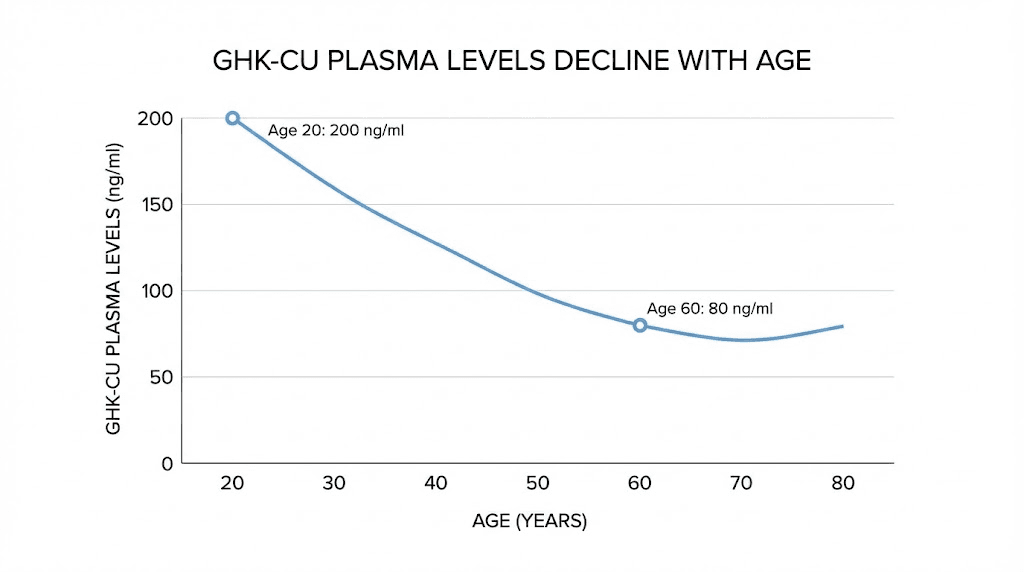
The human body produces GHK naturally. Plasma levels hover around 200 nanograms per milliliter at age twenty. By sixty, that number drops to 80 nanograms per milliliter. This decline correlates with visible aging signs and slower tissue repair.
Dosing matters because GHK-CU operates through gene expression modulation. Research published in the journal Oxidative Medicine and Cellular Longevity identified over 4,000 genes affected by GHK treatment. Some genes get upregulated. Others downregulated. The pattern favors tissue repair and reduces inflammation.
Too little peptide and gene expression changes remain subtle. Too much and you waste money without additional benefit. Copper accumulation also becomes a theoretical concern at extreme doses, though practical protocols stay well below problematic thresholds.
The difference between adequate and optimal dosing often determines whether researchers see dramatic results or wonder if the peptide works at all. Timing matters. Frequency matters. Concentration accuracy matters. Everything in this guide addresses these variables with precision.
Standard GHK-CU dosing protocols
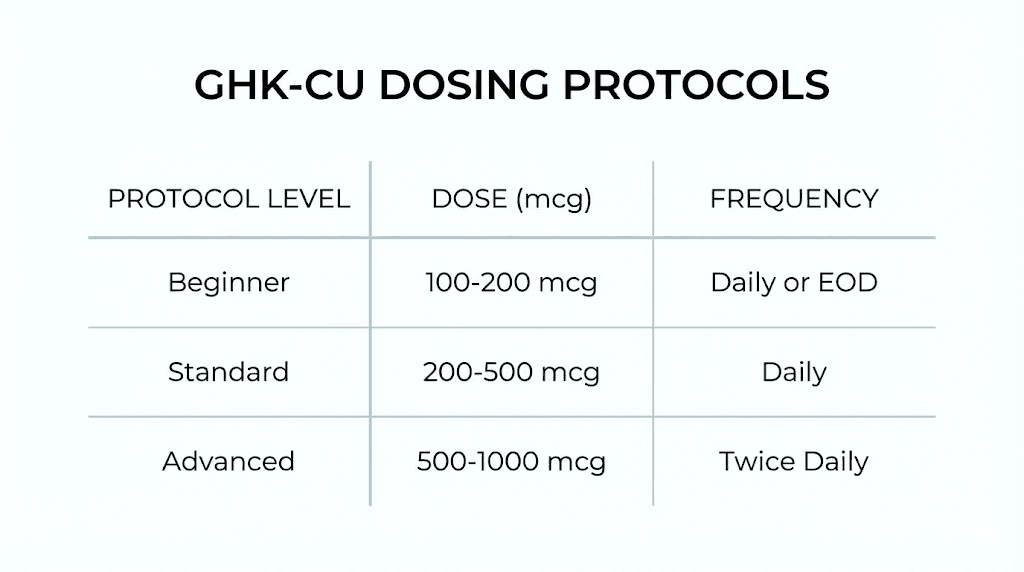
Most protocols recommend 1 to 2 milligrams daily. This range comes from clinical practice observations, not formal FDA trials. GHK-CU remains a research compound without official dosing guidelines, which means protocols rely on accumulated practitioner experience and extrapolation from laboratory studies.
Beginner protocol
New researchers should start conservative. The body needs time to adapt to any new compound, and starting low reveals individual sensitivity before committing to higher doses.
Week 1-2: 0.5mg to 1mg once daily
Week 3-4: 1mg once daily
Week 5 onward: 1mg to 1.5mg once daily
This gradual approach lets researchers assess tolerance. Some people notice skin flushing or warmth at injection sites. Others experience mild fatigue as the body adjusts. These effects typically resolve within days.
SeekPeptides members access detailed beginner protocols with day-by-day guidance, adjustment recommendations based on response, and troubleshooting support when results differ from expectations.
Standard maintenance protocol
After the initial adaptation phase, most researchers settle into a maintenance protocol. This becomes their baseline for ongoing use.
Dose: 1mg to 2mg daily
Frequency: Once daily, typically morning
Administration: Subcutaneous injection
Duration: 30 days on, 14 days off
The cycling pattern prevents potential receptor desensitization and gives the body periodic breaks from exogenous copper peptide input. Some practitioners run continuous protocols, but cycling remains the conservative approach until more long-term data exists.
Calculate your exact dose using the peptide calculator to convert between milligrams, micrograms, and injection volumes based on your specific reconstitution.
Advanced protocol
Experienced researchers sometimes push higher within the established safety range. Advanced protocols suit those who have used GHK-CU previously and want to maximize effects during focused periods.
Dose: 2mg twice daily (4mg total)
Frequency: Morning and evening
Duration: 4-6 weeks maximum
Rest period: Equal to cycle length
Splitting doses maintains more stable plasma levels throughout the day. Research suggests GHK-CU has a relatively short half-life, making twice-daily administration theoretically superior for sustained gene expression effects.
The advanced protocol costs more and requires stricter adherence to cycling. Most researchers find standard protocols sufficient. Reserve advanced approaches for specific goals like accelerated recovery from injury or intensive anti-aging protocols.
How to reconstitute GHK-CU properly
Reconstitution transforms lyophilized powder into injectable solution. Getting this right determines dosing accuracy for every subsequent injection. Mistakes here compound throughout the entire vial.
Equipment needed
Gather everything before starting. Interrupting reconstitution to search for supplies risks contamination.
GHK-CU lyophilized vial (typically 50mg or 100mg)
Bacteriostatic water (not sterile water for single use)
Alcohol swabs
Insulin syringes (U-100, 0.5ml or 1ml)
Larger syringe for drawing bacteriostatic water (3ml works well)
Bacteriostatic water contains 0.9% benzyl alcohol as a preservative. This allows the reconstituted solution to remain stable for approximately 30 days when refrigerated. Sterile water lacks preservatives and must be used immediately after reconstitution.
Reconstitution steps
Follow these steps precisely. Rushing causes problems.
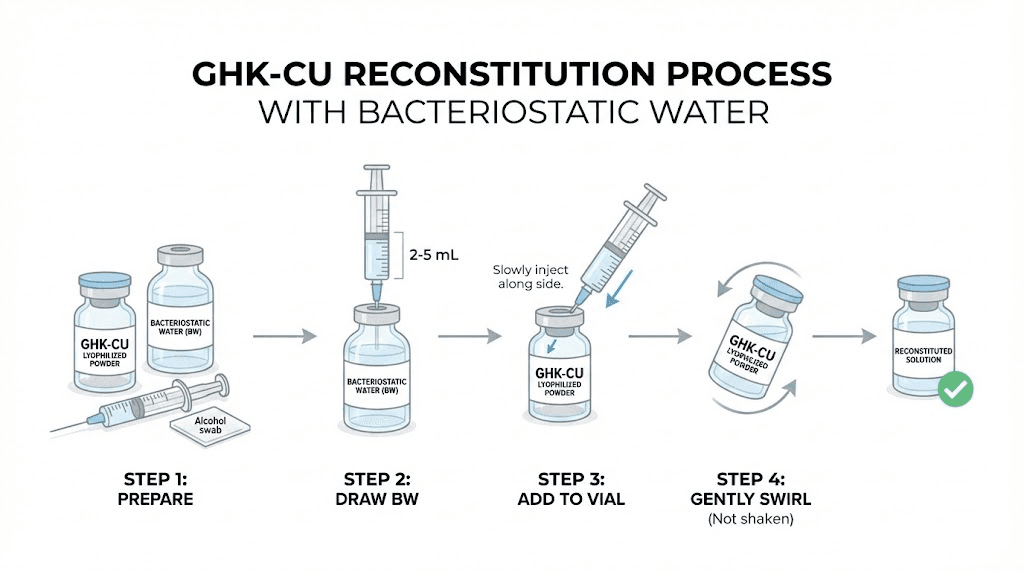
Step 1: Clean the vial stoppers with alcohol swabs. Both the GHK-CU vial and the bacteriostatic water vial need sterilization before needle entry.
Step 2: Draw your chosen volume of bacteriostatic water. For a 50mg vial, 2.5ml creates a 20mg/ml concentration. For a 100mg vial, 5ml creates the same concentration. Consistent concentrations simplify dose calculations across different vials.
Step 3: Insert the needle into the GHK-CU vial at an angle, directing the stream against the glass wall. Never spray directly onto the powder cake. The force can damage peptide bonds.
Step 4: Let the water trickle slowly down the vial wall. Remove the syringe once empty.
Step 5: Swirl gently. Do not shake. Shaking creates bubbles and mechanical stress that may degrade the peptide. The powder should dissolve within minutes. Some cloudiness is normal initially but should clear.
Step 6: Label the vial with the reconstitution date and concentration. Memory fails when you have multiple vials.
Use the peptide reconstitution calculator to determine exact volumes for your desired concentration.
Concentration mathematics
Understanding the math prevents dosing errors. Here are common scenarios.
50mg vial with 2.5ml bacteriostatic water:
50mg ÷ 2.5ml = 20mg/ml
For 1mg dose: 1mg ÷ 20mg/ml = 0.05ml = 5 units on U-100 syringe
50mg vial with 2ml bacteriostatic water:
50mg ÷ 2ml = 25mg/ml
For 1mg dose: 1mg ÷ 25mg/ml = 0.04ml = 4 units on U-100 syringe
100mg vial with 5ml bacteriostatic water:
100mg ÷ 5ml = 20mg/ml
For 2mg dose: 2mg ÷ 20mg/ml = 0.1ml = 10 units on U-100 syringe
Higher concentrations mean smaller injection volumes but require more precise syringe handling. Lower concentrations are more forgiving but use vial contents faster. Most researchers prefer the 20mg/ml standard because it balances precision with practicality.
Injection technique and site rotation
Subcutaneous injection places the peptide just beneath the skin, into the fatty tissue layer. This route provides consistent absorption and suits self-administration.
Injection procedure
Clean technique prevents infections. Take this seriously even for subcutaneous injections.
Step 1: Wash hands thoroughly with soap and water.
Step 2: Clean the injection site with an alcohol swab. Let it dry completely. Injecting through wet alcohol stings and may introduce the alcohol under the skin.
Step 3: Pinch a fold of skin between your thumb and forefinger. This separates the subcutaneous fat from deeper muscle tissue.
Step 4: Insert the needle at a 45 to 90 degree angle, depending on the thickness of the skin fold. Thinner individuals use 45 degrees. Those with more subcutaneous fat can go perpendicular.
Step 5: Inject slowly and steadily. Rushing creates unnecessary pressure and discomfort.
Step 6: Withdraw the needle smoothly. Apply gentle pressure with a clean cotton ball or gauze if needed.
Do not aspirate for subcutaneous injections. This outdated practice offers no benefit for this administration route and only increases tissue trauma.
Site rotation schedule
Rotating injection sites prevents lipohypertrophy, a condition where repeated injections cause fatty tissue changes. These lumps can affect peptide absorption.
Primary sites:
Abdomen (avoiding 2 inches around the navel)
Outer thighs
Back of upper arms
Upper buttocks
Rotation pattern example:
Day 1: Left abdomen
Day 2: Right abdomen
Day 3: Left thigh
Day 4: Right thigh
Day 5: Left arm
Day 6: Right arm
Day 7: Return to left abdomen
Keep at least one inch between injection sites in the same general area. Some researchers keep a simple log noting where each injection goes. Others rely on mental tracking. Either approach works as long as you actually rotate.
Abdominal injections typically absorb fastest.
Thigh injections may absorb slightly slower.
These differences are minor for GHK-CU and should not influence site selection significantly.
GHK-CU cycling strategies
Cycling involves planned periods of use alternating with breaks. The practice comes from observations that continuous peptide use may reduce effectiveness over time and that breaks allow receptor sensitivity to reset.
Standard cycling protocol
The most common approach follows a 30-on, 14-off pattern.
Active phase: 30 days of daily GHK-CU administration
Rest phase: 14 days completely off
Then: Repeat cycle as desired
During rest phases, the body continues processing changes initiated during active phases. Results do not stop when injections stop. Gene expression modifications persist beyond the presence of the peptide. This understanding helps researchers accept rest phases as productive rather than wasteful.
Alternative cycling patterns
Some practitioners prefer different schedules based on goals and logistics.
8-week intensive:
8 weeks on, 4 weeks off. Longer active phases suit focused protocols targeting specific outcomes like post-surgical healing or seasonal anti-aging pushes.
5-on, 2-off weekly:
Five days of injections followed by two days off each week. This pattern suits those who prefer weekends free from peptide administration or who want built-in mini-breaks throughout longer protocols.
Every-other-day:
Injections on Monday, Wednesday, Friday, Sunday, Tuesday, Thursday, Saturday, then repeat. This schedule uses roughly half the peptide while potentially maintaining meaningful effects. Research on optimal frequency remains limited, making this approach experimental.
No single cycling protocol has proven superior. Individual response varies. Some researchers feel best on strict 30/14 cycles. Others prefer continuous low-dose approaches. Track your results and adjust based on personal experience.
GHK-CU stacking with other peptides
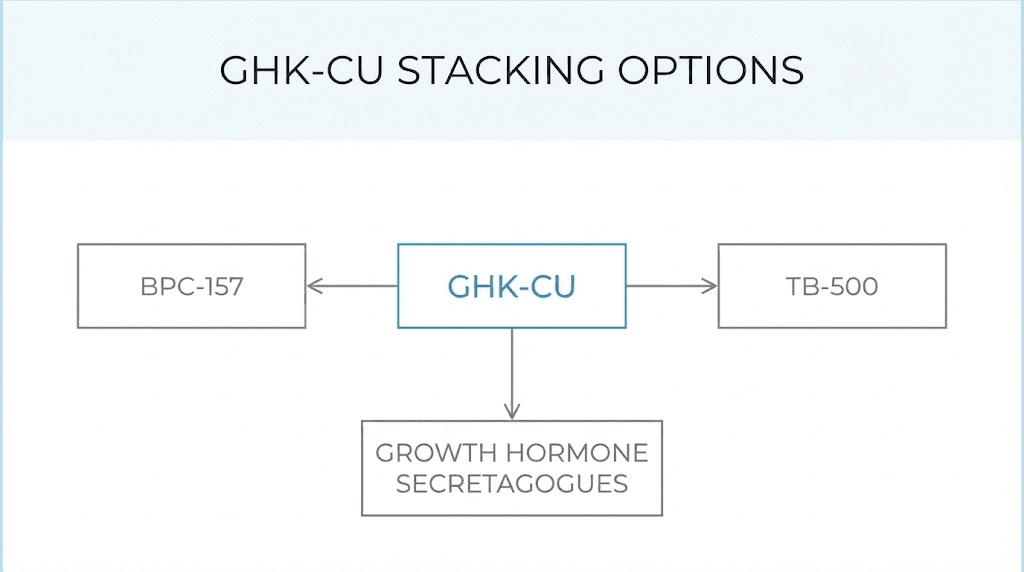
Stacking combines multiple peptides for potentially synergistic effects. GHK-CU pairs well with several compounds commonly used in research settings.
The GLOW stack
This popular combination includes GHK-CU, BPC-157, and TB-500. The name comes from reported improvements in skin appearance and overall tissue quality.
Typical GLOW ratios:
GHK-CU: 1.5-2mg
BPC-157: 250-500mcg
TB-500: 250-500mcg
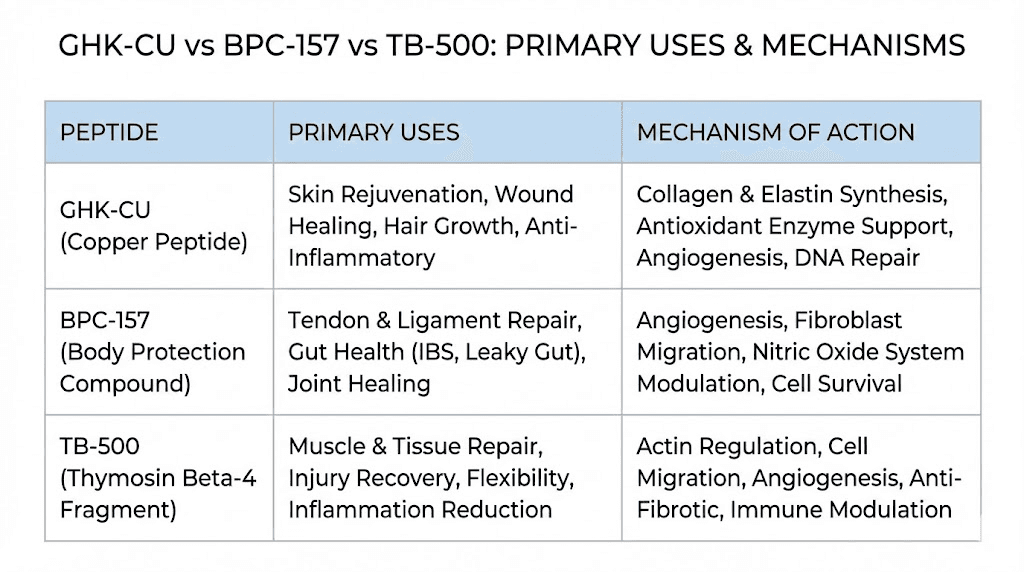
Each peptide works through different mechanisms. GHK-CU modulates gene expression and copper metabolism. BPC-157 influences nitric oxide pathways and growth factors. TB-500 affects actin proteins and cell migration. Together, they address tissue repair from multiple angles.
Calculate your complete stack using the peptide stack calculator to ensure proper ratios and total volumes.
GHK-CU with growth hormone secretagogues
Combining GHK-CU with peptides like CJC-1295 or Ipamorelin targets both direct tissue repair and growth hormone optimization. This approach suits researchers focused on muscle growth or comprehensive anti-aging protocols.
Example combined protocol:
Morning: CJC-1295 (100mcg) + Ipamorelin (100mcg)
Evening: GHK-CU (1-2mg)
Separating administration times prevents potential interactions at the injection site and allows each peptide to work through its distinct pathways without interference. Learn more about CJC-1295 and Ipamorelin combinations in our detailed comparison.
Stacking considerations
More peptides means more variables. This complexity suits experienced researchers who can track multiple compounds and isolate which ones contribute to observed effects.
Beginners should master single-peptide protocols before attempting stacks. Understanding how GHK-CU affects your body individually makes it easier to assess what additional compounds contribute when added later.
SeekPeptides members access comprehensive stacking guides with evidence-based ratios, timing recommendations, and protocol adjustments based on individual goals. The community includes researchers running various stack combinations who share real-world observations.
Storage and stability
Proper storage preserves peptide integrity. GHK-CU degrades when handled incorrectly, reducing effectiveness and wasting money.
Lyophilized storage
Unreconstituted GHK-CU powder remains stable longest. Store sealed vials in the freezer at -20°C (-4°F) or below. Under these conditions, lyophilized peptide maintains potency for years.
Room temperature storage accelerates degradation. Peptides left on countertops or in shipping boxes lose potency over weeks to months.
If you receive a shipment that sat in a hot delivery truck, contact the supplier about potential quality concerns.
Learn more about how long GHK-CU lasts under various storage conditions.
Reconstituted storage
Once mixed with bacteriostatic water, GHK-CU requires refrigeration at 2-8°C (35-46°F). The reconstituted solution remains stable for approximately 30 days under proper refrigeration.
Never freeze reconstituted peptides. Ice crystal formation damages peptide structures. If you accidentally freeze a reconstituted vial, discard it and start fresh.
Keep vials in the main refrigerator compartment, not the door. Door storage experiences temperature fluctuations each time the refrigerator opens. The back of a middle shelf provides the most consistent temperature.
Some researchers question whether copper peptides require refrigeration. For reconstituted solutions, yes. Always.
Signs of degradation
Degraded GHK-CU may show visible changes:
Cloudiness or particles in the solution
Color changes (fresh solution should be clear to slightly yellowish)
Unusual smell
Clumping or precipitation
When in doubt, discard. Injecting degraded peptides provides unpredictable results at best and contamination risks at worst. The cost of a new vial is trivial compared to potential complications.
Expected results and timeline
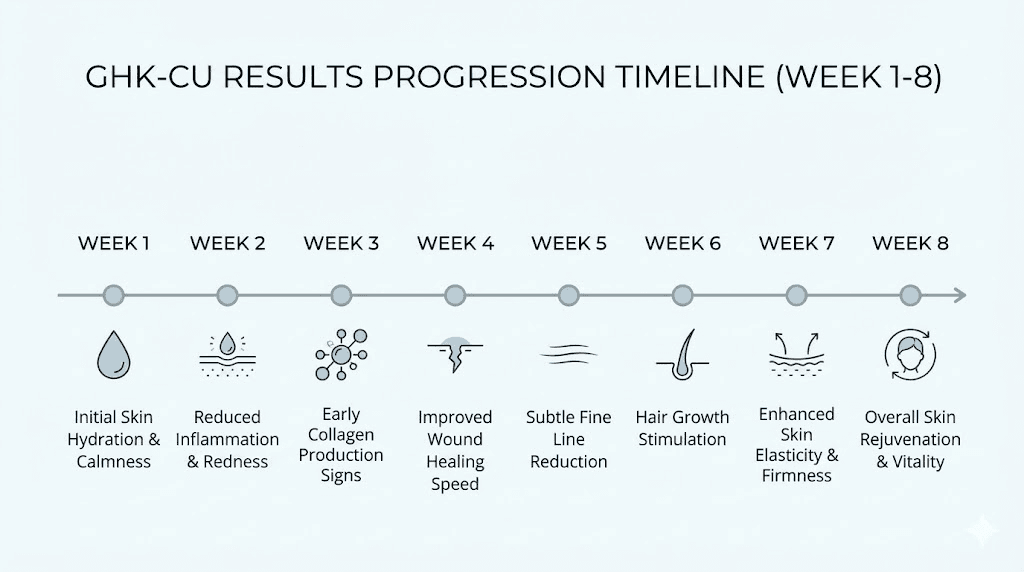
GHK-CU works gradually through gene expression changes. Unlike compounds that produce immediate sensations, copper peptides operate subtly. Researchers often notice effects only when comparing before-and-after states over weeks.
Timeline of typical observations
Week 1-2:
Minimal visible changes. Some researchers report improved sleep quality or a general sense of well-being. Skin may appear slightly more hydrated. These early changes are subtle and easily attributed to placebo effect. Stay patient.
Week 3-4:
Skin texture improvements become more noticeable. Fine lines may soften. Hair quality sometimes improves with increased shine or reduced brittleness. Wound healing appears accelerated for those with active injuries.
Week 5-8:
Cumulative effects become apparent. Skin elasticity improvements, continued texture refinement, and ongoing tissue repair benefits. Researchers focused on anti-aging often photograph themselves at this point for comparison with baseline images.
After 8+ weeks:
Maximum benefits from the current cycle typically plateau. This is why cycling matters. Continued use may maintain results but rarely produces additional dramatic improvements. Rest phases followed by new cycles can restart progress.
Factors affecting results
Individual variation is significant. Two researchers running identical protocols may report different outcomes. Variables include:
Age and baseline GHK levels
Diet and overall nutrition
Sleep quality and quantity
Sun exposure and skin care habits
Genetic factors affecting copper metabolism
Concurrent health conditions
Researchers who optimize supporting factors (sleep, nutrition, sun protection) typically report better outcomes than those relying solely on peptide administration.
Compare peptide before and after results from other researchers to calibrate realistic expectations.
Side effects and safety
GHK-CU has an excellent safety profile in research contexts. The peptide exists naturally in human plasma, and supplemental doses remain well below toxic thresholds.
Common side effects
Most reported side effects are mild and transient:
Injection site reactions: Redness, mild swelling, or itching at injection sites. Usually resolves within hours. More common with poor injection technique.
Skin flushing: Temporary warmth or redness, particularly facial. May relate to vasodilation effects. Typically diminishes with continued use.
Fatigue: Some researchers report tiredness in early days of use. This usually resolves as the body adjusts.
Headache: Occasionally reported, usually mild. May relate to blood pressure effects in sensitive individuals.
These effects occur in a minority of users and rarely require discontinuation. If any side effect persists or worsens, reduce dose or pause administration.
Learn more about troubleshooting copper peptide issues when results differ from expectations.
Theoretical concerns
Copper accumulation: GHK-CU contains copper, raising theoretical concerns about accumulation with long-term use. However, each 2mg dose contains approximately 0.03mg of copper. Daily dietary intake typically ranges from 0.9 to 2.2mg. GHK-CU contributions are minimal in comparison.
Cycling protocols further reduce accumulation concerns by providing regular breaks. Researchers with Wilson's disease or known copper metabolism disorders should avoid GHK-CU entirely.
Blood pressure effects: GHK can lower blood pressure at sufficiently high doses. Therapeutic doses used in research rarely cause clinically significant changes, but those with hypotension or taking blood pressure medications should monitor carefully.
Cancer considerations: Any compound promoting tissue growth raises theoretical questions about cancer. Current evidence suggests GHK-CU actually suppresses certain cancer-related genes. However, researchers with active malignancies should avoid use until more data exists.
Lethal dose perspective
For context, research indicates the lethal dose of GHK-CU in rodent models extrapolates to approximately 21,000mg for a 70kg human, roughly 330mg per kilogram of body weight. Standard protocols use 1-4mg daily, representing a margin of safety exceeding 5,000-fold.
This does not mean higher doses are beneficial, only that accidental overdose within reasonable ranges carries minimal acute risk. Stick to established protocols regardless.
Who should and should not use GHK-CU
GHK-CU suits many research applications but is not appropriate for everyone.
Good candidates
Researchers studying anti-aging interventions
Those investigating wound healing acceleration
Researchers exploring hair and skin improvements
Those combining with other peptides in tissue repair stacks
Researchers with experience handling injectable compounds
Poor candidates
Individuals with Wilson's disease or copper metabolism disorders
Those with active cancer or history of hormone-sensitive cancers (until more research exists)
Pregnant or breastfeeding individuals
Those taking anticoagulant medications (potential interaction concerns)
Individuals with known copper allergies or sensitivities
Anyone uncomfortable with self-injection or unable to maintain sterile technique
When uncertain, consult a healthcare provider familiar with peptide research before beginning any protocol.
Comparing GHK-CU to alternatives
GHK-CU is not the only option for researchers interested in tissue repair and anti-aging. Understanding alternatives helps researchers choose appropriate compounds for their goals.
GHK-CU vs topical copper peptides
Topical copper peptide products (serums, creams) deliver GHK-CU through the skin rather than injection. Convenience is higher, but penetration and systemic effects are limited.
Topical advantages:
No injection required. Targeted application to specific areas. Lower cost entry point.
Topical limitations:
Limited penetration beyond superficial skin layers. Variable absorption based on product formulation. Systemic benefits minimal or absent.
Injectable GHK-CU provides systemic distribution, reaching tissues throughout the body. Topicals work best as adjuncts to injectable protocols or for those unwilling to inject.
GHK-CU vs BPC-157
BPC-157 focuses on gut healing and connective tissue repair through nitric oxide pathways. GHK-CU works through gene expression and copper metabolism.
Choose GHK-CU for:
Anti-aging emphasis. Skin and hair improvements. Systemic tissue support.
Choose BPC-157 for:
Gut issues. Tendon and ligament injuries. Specific injury sites.
Choose both for:
Comprehensive tissue repair. Stacking benefits. Multiple concurrent goals.
Read our detailed BPC-157 vs TB-500 comparison for more on these healing peptides.
GHK-CU vs TB-500
TB-500 promotes cell migration and blood vessel formation. It excels at injury recovery, particularly for muscle and soft tissue.
Choose GHK-CU for:
Anti-aging. Skin quality. Systemic improvements.
Choose TB-500 for:
Athletic injuries. Muscle tears. Faster return to activity.
Choose both for:
The GLOW stack. Comprehensive healing. Combined anti-aging and injury protocols.
Cost comparison
GHK-CU sits in the moderate price range for research peptides. Per milligram costs vary by supplier and vial size, but expect to pay less than growth hormone secretagogues and more than basic amino acid compounds.
Calculate protocol costs using the peptide cost calculator to budget accurately before beginning.
Frequently asked questions
What happens when you stop taking GHK-CU?
Gene expression changes initiated by GHK-CU persist beyond the treatment period. Results do not immediately reverse when injections stop. However, without ongoing administration, the body's natural aging processes continue. Most researchers notice gradual return toward baseline over weeks to months after stopping. Regular cycling with rest periods maintains benefits while minimizing concerns about continuous use. Learn more about what happens when you stop GHK-CU.
Can I use GHK-CU with other peptides at the same time?
Yes. GHK-CU combines well with many peptides. Popular stacks include BPC-157 and TB-500 (the GLOW stack) and growth hormone secretagogues like CJC-1295. Inject different peptides at separate sites or times to prevent potential interactions. Start with single peptides before stacking to understand individual responses. Use the peptide stack calculator for proper dosing.
How long does reconstituted GHK-CU last?
Reconstituted GHK-CU stored properly at 2-8°C (35-46°F) remains stable for approximately 30 days. Use bacteriostatic water rather than sterile water to achieve this shelf life. Never freeze reconstituted solution. Discard any vial showing cloudiness, particles, or unusual color. Get complete storage details in our guide on GHK-CU shelf life.
What is the best time of day to inject GHK-CU?
Most protocols recommend morning injection. This aligns with natural cortisol rhythms and allows any mild side effects to resolve before sleep. Some researchers splitting doses inject morning and evening. Consistency matters more than specific timing. Choose a schedule that fits your routine and stick with it throughout the cycle.
Does body weight affect GHK-CU dosing?
Standard GHK-CU protocols use fixed doses (1-2mg) rather than weight-based calculations. This differs from some peptides where dosing scales with body mass. Research suggests fixed doses provide adequate tissue exposure regardless of body size within normal ranges. Extremely small or large individuals may adjust slightly, but most researchers use standard fixed doses successfully.
Can GHK-CU cause copper toxicity?
At standard doses, copper toxicity from GHK-CU is extremely unlikely. Each 2mg injection contributes approximately 0.03mg copper, compared to 0.9-2.2mg from typical daily diet. The greater concern is chronic accumulation over years of continuous use, which cycling protocols address by providing regular breaks. Individuals with Wilson's disease or copper metabolism disorders should avoid GHK-CU entirely.
How do I know if my GHK-CU is working?
Results develop gradually. Early indicators include improved skin hydration, better sleep quality, and a general sense of well-being. By weeks 3-4, skin texture changes become more apparent. Document your starting condition with photographs and notes. Compare at 4-week intervals rather than daily. Subtle cumulative changes often go unnoticed without baseline reference.
Is GHK-CU legal?
GHK-CU is not FDA-approved for any medical indication. It remains available as a research compound.
Legality varies by jurisdiction and intended use. In most regions, purchasing GHK-CU for research purposes is permitted. Using it for human self-administration occupies a legal gray area. Researchers should understand applicable regulations before beginning any protocol.
Building your GHK-CU protocol
Theory means nothing without implementation. Here is how to build a practical GHK-CU protocol from scratch.
Step 1: See supplies
Order everything before starting. Running out mid-protocol disrupts consistency.
GHK-CU vials (enough for your planned cycle plus backup)
Insulin syringes (0.5ml or 1ml, U-100)
Alcohol swabs
Sharps container for disposal
Storage space in freezer (lyophilized) and refrigerator (reconstituted)
Step 2: Choose your protocol
Select based on experience level and goals.
First time: Beginner protocol with gradual dose increase over 4 weeks.
Experienced: Standard protocol at 1-2mg daily.
Intensive: Advanced protocol with split dosing for focused periods.
Document your choice. Write it down. Include planned cycle length and rest periods.
Step 3: Reconstitute properly
Use the reconstitution calculator to determine bacteriostatic water volume for your desired concentration. Follow sterile technique throughout. Label the vial with date and concentration immediately after mixing.
Step 4: Plan the injection routine
Pick a consistent time each day. Prepare your injection site and supplies. Follow proper technique. Rotate sites according to your schedule. Log each injection if helpful for tracking.
Step 5: Monitor and adjust
Document baseline condition before starting. Take photographs in consistent lighting. Note energy levels, sleep quality, and any other relevant factors. Review weekly during the first cycle. Adjust dose within protocol ranges based on response and tolerance.
Step 6: Complete cycle and rest
Finish your planned active phase. Transition to the rest period without tapering. Continue monitoring during rest to observe how benefits persist. Evaluate results before deciding whether to repeat the cycle.
SeekPeptides members get personalized protocol building support, troubleshooting assistance, and access to a community of researchers sharing real-world experiences with GHK-CU and other peptides.
External resources
In case I don't see you, good afternoon, good evening, and good night. Join us.