Dec 27, 2025
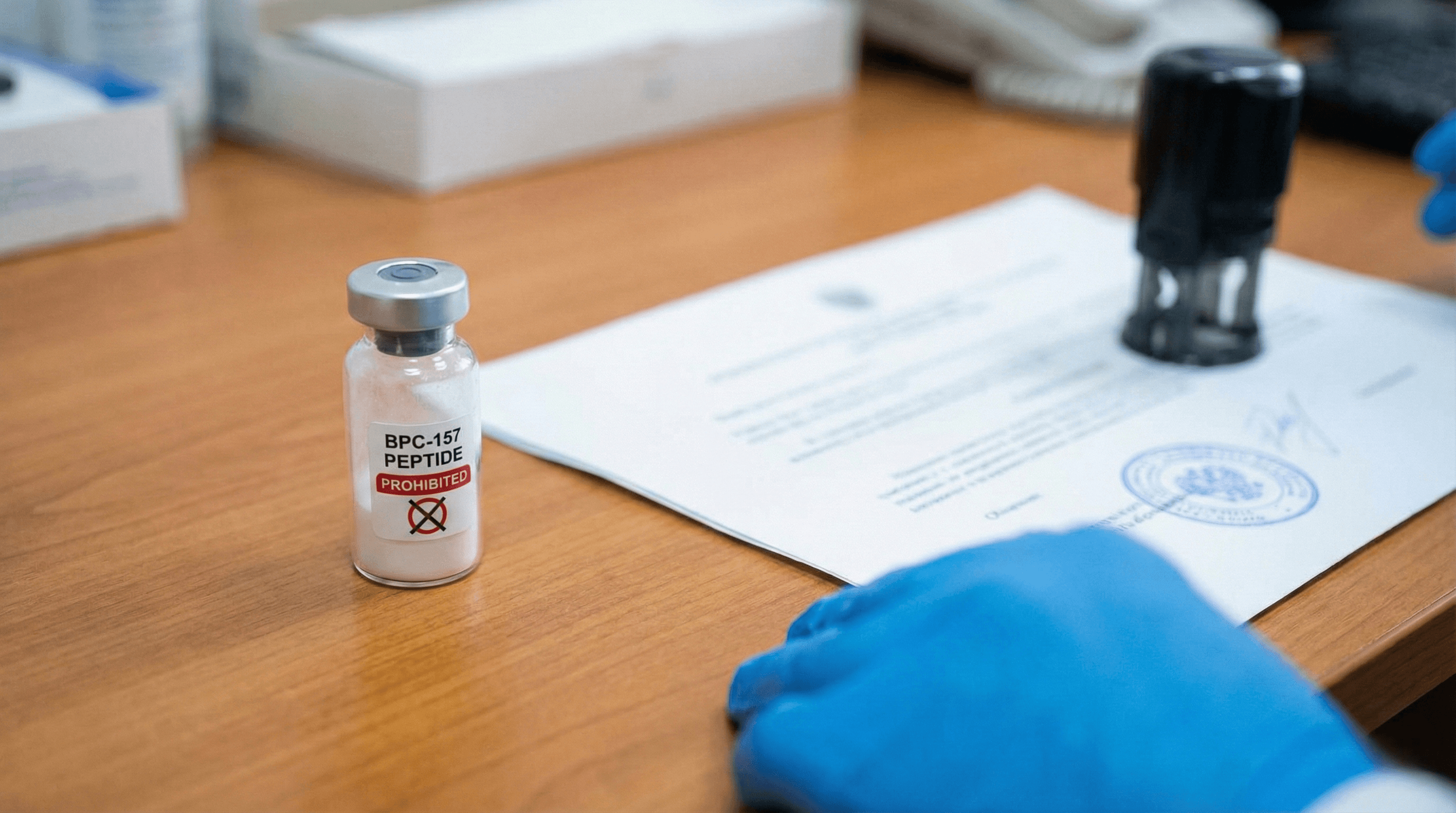
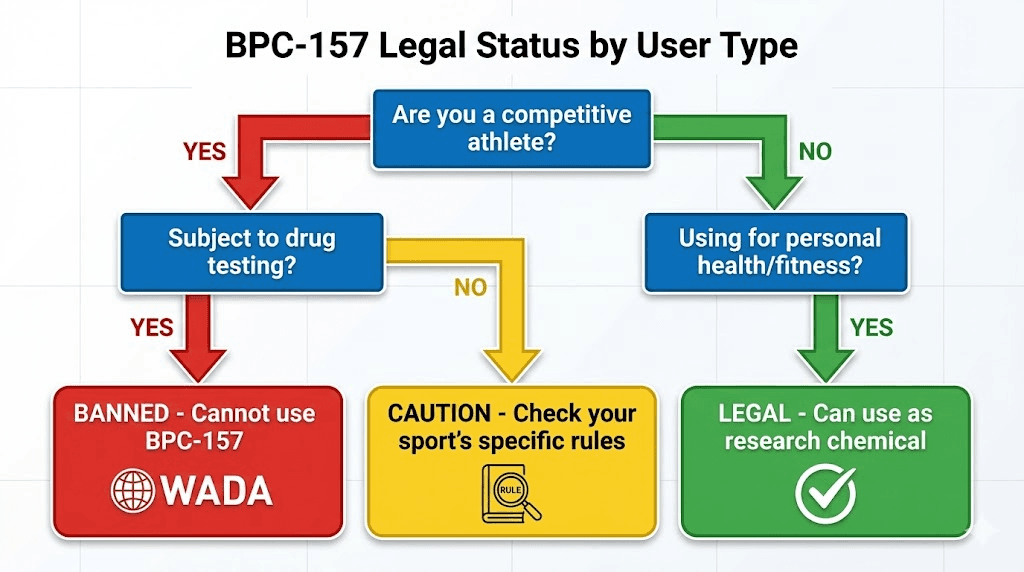
BPC-157 is banned by WADA for competitive athletes but remains legal for non-athletes in most jurisdictions. The FDA has not approved BPC-157 for human use and prohibits its sale as a dietary supplement, but it's still available as a research chemical.
Your legal ability to use BPC-157 depends on whether you're a tested athlete and how the product is marketed and sold.
This guide breaks down exactly what the WADA ban means, the FDA's position on BPC-157, legal status by country and use case, implications for athletes versus non-athletes, how to legally obtain BPC-157, and alternatives if you can't use it due to restrictions.
Let's start by understanding what BPC-157 actually is and why it's controversial.
What is BPC-157 and why is it restricted
BPC-157 is a synthetic peptide derived from a protective protein found in human gastric juice.
BPC-157 basics
What it is:
Pentadecapeptide (15 amino acid sequence)
Derived from Body Protection Compound found in stomach
Synthetic version created for therapeutic research
Not naturally found in this exact form in humans
Primary uses:
Accelerates healing of muscles, tendons, ligaments
Treats gut disorders (IBS, leaky gut, ulcers)
Reduces inflammation systemically
Protects organs and tissues from damage
Improves joint health
Why it's popular:
Extremely effective for injury recovery
Minimal side effects reported
Works on multiple tissue types
Oral and injectable forms available
Learn complete BPC-157 benefits in our BPC-157 complete guide and BPC-157 benefits.
Why regulatory bodies restrict it
Concerns from authorities:
Not FDA-approved for human use
Limited long-term safety data in humans
Potential performance enhancement for athletes
Marketed illegally as dietary supplement
Quality control issues with research products
Athletes specifically:
Could provide unfair recovery advantage
Allows faster return from injury
May mask or heal injuries that should sideline athletes
Performance enhancement potential
General population:
No quality control or standardization
Unknown long-term effects
Risk of contaminated products
Unregulated manufacturing
Key distinction: banned vs illegal
Important to understand:
"Banned" by WADA means athletes can't use it
"Not approved" by FDA means it can't be sold as drug or supplement
"Legal" to possess for research purposes in most places
Different rules apply to different groups
See our are peptides legal guide for complete legal overview and research vs pharmaceutical peptides comparison.
WADA ban: What it means for athletes
The World Anti-Doping Agency (WADA) banned BPC-157 for competitive athletes.
What is WADA
World Anti-Doping Agency:
International organization governing doping in sports
Creates prohibited substances list
Updated annually
Applies to Olympic sports and many professional leagues
National anti-doping agencies enforce WADA rules
Who must follow WADA rules:
Olympic athletes
Professional athletes in WADA-compliant sports
NCAA athletes (follows modified WADA list)
Many amateur competitive athletes
Anyone in tested sports
Who doesn't follow WADA:
Recreational gym-goers
Non-competitive athletes
General public
People using peptides for health, not sport
BPC-157 WADA classification
WADA status:
Added to prohibited list in 2022
Classified as S0: "Other Anabolic Agents"
Banned at all times (in and out of competition)
No Therapeutic Use Exemption (TUE) available
Why WADA banned it:
Potential performance enhancement through accelerated recovery
Tissue healing and regeneration benefits
Lack of approved medical use
Growing athlete use for injury recovery
WADA prohibited list section:
S0 category includes substances not approved for human therapeutic use
BPC-157 specifically named
Also covers related peptides and derivatives
Consequences of WADA violation
If caught using BPC-157 as tested athlete:
First offense: Typically 2-4 year ban from competition
Second offense: Lifetime ban possible
Results nullification (stripped medals, records)
Financial penalties
Reputation damage
Testing for BPC-157:
Detectable in urine and blood tests
Modern testing can identify BPC-157
Detection window: Days to weeks depending on dose and frequency
Random out-of-competition testing possible
Unintentional use defense:
Difficult to prove
Athlete responsible for everything ingested
Contaminated supplements not valid excuse
Must check all products carefully
Sports that follow WADA
Definitely tested:
Olympic sports (track, swimming, gymnastics, etc.)
Professional cycling
Professional soccer/football (international)
Track and field
Triathlon
MMA (UFC, Bellator follow USADA/WADA)
Professional tennis
May be tested:
NCAA sports (modified list)
Some professional leagues (NFL, NBA have own policies)
CrossFit Games
Natural bodybuilding federations
Not tested:
Recreational sports leagues
Most gym sports
Amateur powerlifting (non-tested federations)
Most martial arts (non-professional)
FDA position on BPC-157
The U.S. Food and Drug Administration has not approved BPC-157 for human use.
FDA approval status
Current FDA status:
Not approved as pharmaceutical drug
Not approved as dietary supplement
Cannot be marketed for human consumption
Classified as research chemical only
What this means:
Companies cannot sell BPC-157 as medicine
Cannot make therapeutic claims in marketing
Cannot sell as supplement in stores
Must label "not for human consumption" or "research purposes only"
Why FDA hasn't approved:
No completed clinical trials meeting FDA standards
Limited human safety and efficacy data
No pharmaceutical company has submitted New Drug Application (NDA)
Lacks long-term toxicology studies
FDA enforcement actions
Recent FDA activity:
2023: FDA sent warning letters to companies selling BPC-157 as supplements
Banned from inclusion in compounded medications
Prohibited in dietary supplements
Enforcement against therapeutic claims
FDA warning letters target:
Companies marketing BPC-157 for disease treatment
Products making drug-like claims
Mislabeled dietary supplements containing BPC-157
Compounding pharmacies including BPC-157
What FDA allows:
Sale as research chemical
"Not for human consumption" labeling
Research purposes
Laboratory use
Implications for consumers
You can still:
Purchase BPC-157 as research chemical
Possess BPC-157 for personal use
Use BPC-157 (at your own risk)
Import for personal use (small quantities)
You cannot:
Buy FDA-approved BPC-157 medicine (doesn't exist)
Get BPC-157 prescription from most doctors
Find BPC-157 in regular pharmacies or stores
Rely on FDA safety oversight
Legal grey area:
Technically for research, not human use
Enforcement focuses on sellers, not users
Personal possession not prosecuted
Underground/research market thrives
See our peptide therapy clinics guide and peptide therapy near me for clinical options.
Legal status by country
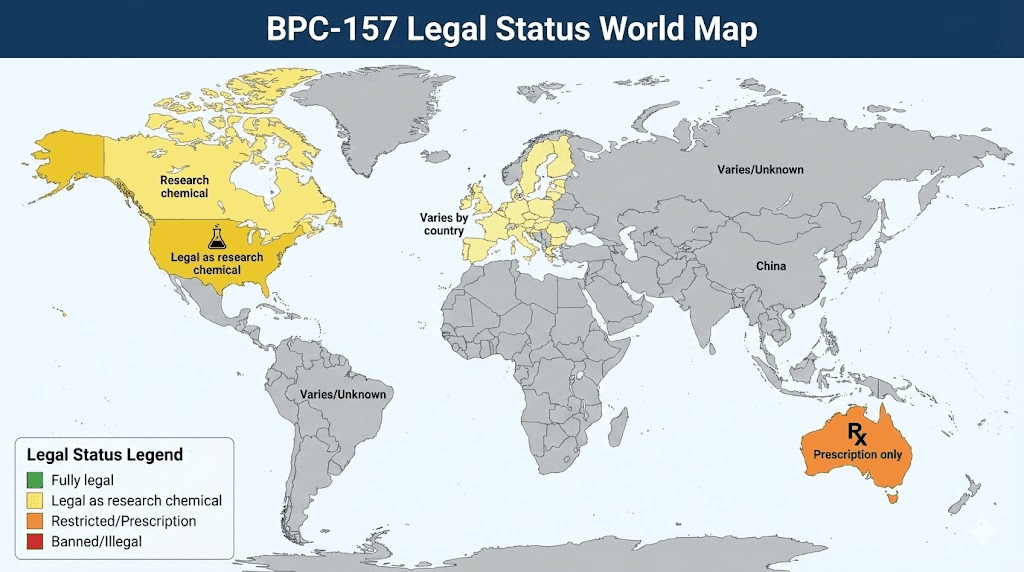
BPC-157 legality varies globally.
United States
Legal status:
Legal to possess for personal use
Not legal to sell as supplement or drug
Available as research chemical
No prescription available (not FDA approved)
Purchasing:
Online research chemical vendors
"Not for human consumption" labeled
Import from international suppliers (small amounts)
Use:
Personal use not criminalized
No legal precedent for prosecution of users
Risk is quality/safety, not legal consequences
European Union
Varies by country:
Generally available as research chemical
Some countries more restrictive
Not approved as medicine in EU
Individual country regulations apply
Specific countries:
UK: Available as research chemical, personal use tolerated
Germany: Stricter controls, grey market
France: Available but regulated
Eastern Europe: Generally more accessible
Australia
Strict regulations:
Prescription-only (Schedule 4)
Difficult to obtain legally
Import restrictions
Compounding pharmacies may provide with script
Penalties:
Importing without prescription can result in seizure
Personal use generally not prosecuted
Selling without license illegal
Canada
Legal status:
Not approved by Health Canada
Available as research chemical
Personal importation for research purposes
Not available by prescription
Other regions
Generally:
Most countries don't specifically ban BPC-157
Available as research chemical globally
Quality varies significantly by region
Enforcement rare for personal use
What "research chemical" actually means
Understanding this designation is crucial for legal compliance.
Research chemical definition
What it means:
Product intended for laboratory research
Not for human or animal consumption
No medical claims allowed
Sold "as is" without FDA oversight
Legal framework:
Allows sale of non-approved substances
Buyers acknowledge research-only use
Liability shifts to buyer
Seller cannot make therapeutic claims
Practical reality
How people actually use it:
Many buyers use for personal health purposes
"Research" is often euphemism
Risk assumed by user
No quality guarantees
Seller limitations:
Cannot provide dosing instructions for humans
Cannot claim therapeutic benefits
Cannot market for consumption
Must include disclaimers
Buyer responsibility:
Verifying product quality
Determining appropriate use
Assuming all risk
Understanding lack of regulation
Learn about quality in our best peptide vendors guide.
Implications for different user groups
How BPC-157 restrictions affect various populations.
Competitive athletes (WADA-tested)
Cannot use BPC-157:
Banned substance violation
Career-ending potential
Not worth the risk
No therapeutic exemptions available
Must use alternatives:
Physical therapy
Approved medications
Natural recovery methods
Legal peptides (if any in jurisdiction)
Detection risk:
Out-of-competition testing possible
Detection window: weeks
Metabolites may persist
Advanced testing methods exist
See our BPC-157 alternatives guide and TB-500 alternatives for legal options.
Recreational athletes and gym-goers
Can use BPC-157:
Not subject to WADA rules
Legal for personal use (as research chemical)
No testing to worry about
Access via research vendors
Considerations:
Quality/purity verification important
No medical oversight typically
Self-dosing requires research
Safety responsibility on user
Best practices:
Source from reputable vendors
Start with conservative doses
Monitor for side effects
Consider consulting knowledgeable physician
Use our BPC-157 dosage calculator and BPC-157 5mg dosing guide.
People with medical conditions
Using for therapeutic purposes:
Gut issues (IBS, leaky gut, ulcers)
Joint pain and inflammation
Tendon/ligament injuries
Chronic pain conditions
Challenges:
No FDA-approved version exists
Most doctors won't prescribe
Must use research chemicals
Quality control critical
Finding medical support:
Anti-aging/longevity clinics
Functional medicine doctors
Peptide therapy specialists
Integrative health practitioners
See our peptide therapy near me guide and peptide therapy clinics guide.
Physicians and clinics
Prescribing limitations:
Cannot prescribe FDA-unapproved drugs
Compounding pharmacies now restricted
Off-label use not possible (no approved use exists)
Medical board scrutiny
What some do:
Direct patients to research vendors
Provide guidance "for informational purposes"
Monitor patient use
Don't officially prescribe
Legal protection:
Avoid direct prescription
Document patient decision-making
Disclaim recommendation
Focus on education
How to legally obtain BPC-157 (if permitted for your situation)
If you've determined BPC-157 is legal for your use case, here's how to get it.
Research chemical vendors
What to look for:
Established reputation (years in business)
Third-party testing (Certificate of Analysis)
Customer reviews and testimonials
Clear product information
Proper storage and handling
Responsive customer service
Red flags:
Extremely low prices
No testing documentation
Brand new company
Therapeutic claims on website
Poor communication
No return policy
Verification:
Request COA (Certificate of Analysis)
Check purity (should be >95%)
Verify batch numbers match
Look for heavy metal testing
Confirm sterility testing
See our best peptide vendors for vetted sources.
Domestic vs international suppliers
Domestic suppliers (U.S.):
Faster shipping
No customs risk
Generally higher prices
Better customer service typically
International suppliers:
Often cheaper
Customs seizure risk
Longer shipping times
Quality more variable
Import considerations:
Small quantities for personal use usually fine
Declare accurately if asked
Risk of seizure (not criminal charges)
Some packages get through, some don't
Forms available
Injectable (lyophilized powder):
Most common form
Requires reconstitution
Subcutaneous or intramuscular injection
Most effective delivery method
Oral capsules:
Less common for BPC-157
Lower bioavailability than injectable
More convenient
Good for gut-specific issues
Oral BPC-157 (stable form):
Some vendors offer "oral stable" BPC-157
BPC-157 Arginate or Acetate
Better oral absorption than regular BPC-157
Easier to use
See our injectable vs oral peptides comparison and lyophilized vs liquid peptides.
Quality verification
Upon receiving product:
Visual inspection (white or off-white powder)
Vacuum seal intact
Proper labeling
No discoloration
Correct weight/volume
After reconstitution:
Clear solution (no cloudiness)
Dissolves completely
No particles floating
No unusual smell
Effectiveness test:
Results align with expected timeline
Typical healing improvements
If no effect, likely underdosed or fake
Learn proper handling in our peptide storage guide, how to reconstitute peptides, and how long reconstituted peptides last in fridge.
BPC-157 alternatives if you can't use it
For athletes or those who prefer approved options.
TB-500 (Thymosin Beta-4)
Legal status:
Also banned by WADA for athletes
Available as research chemical for non-athletes
Similar regulatory situation to BPC-157
Benefits:
Tissue repair and healing
Reduces inflammation
Improves flexibility
Accelerates recovery
Comparison to BPC-157:
Works differently but similar outcomes
Longer half-life (dose less frequently)
Often used together for synergy
If one is banned for you, likely both are
See our TB-500 complete guide, BPC-157 vs TB-500, and TB-500 dosage calculator.
Collagen peptides (oral)
Legal status:
Completely legal
Sold as dietary supplement
FDA approved for supplement use
WADA compliant
Benefits:
Supports connective tissue health
Helps tendon and ligament recovery
Improves joint health
Skin and hair benefits
Limitations:
Much weaker than BPC-157
Requires consistent long-term use
Oral bioavailability lower
Not as targeted for injuries
See our bone broth vs collagen peptides comparison.
Legal pharmaceutical options
NSAIDs (Ibuprofen, Naproxen):
Reduce inflammation
Legal and FDA approved
OTC or prescription
Side effect concerns with long-term use
Corticosteroid injections:
Powerful anti-inflammatory
Prescription only
Effective for joint pain
Can weaken tendons with overuse
Hyaluronic acid injections:
FDA approved for osteoarthritis
Lubricates joints
Prescription required
Less effective than peptides for healing
Physical therapy:
Always legal
Evidence-based
No side effects
Covered by insurance typically
Natural alternatives
Proven supplements:
Omega-3 fatty acids (reduce inflammation)
Curcumin/Turmeric (anti-inflammatory)
Glucosamine/Chondroitin (joint support)
MSM (sulfur for connective tissue)
Lifestyle interventions:
Proper nutrition
Adequate sleep
Stress management
Progressive overload training
Not as powerful as BPC-157 but:
Completely legal
Safe long-term
FDA approved (supplements)
No testing concerns
Future of BPC-157 regulation
Potential changes on the horizon.
Possible FDA approval pathway
What it would take:
Pharmaceutical company sponsorship
Phase I, II, III clinical trials
New Drug Application (NDA) submission
FDA review and approval
10-15+ years and hundreds of millions of dollars
Likelihood:
Low in near term
Peptide difficult to patent (limits profit incentive)
Would need novel formulation or delivery method
Unlikely without major pharmaceutical interest
If approved:
Would be prescription medication
Quality standardized
Approved uses defined
Still banned by WADA likely
WADA reconsideration
Could WADA remove ban:
Unlikely unless FDA approves for specific medical uses
Therapeutic Use Exemption (TUE) possible if approved drug
Would require compelling medical necessity
Similar substances:
Few banned substances get removed
Precedent for keeping effective recovery aids banned
Performance enhancement concern remains
Emerging research
Clinical trials ongoing:
Some studies in various countries
Investigating specific conditions
Publication could influence regulators
Safety data accumulating:
Years of "research use" provide informal data
Lack of serious adverse events noted
Long-term effects still unknown
Common misconceptions about BPC-157 ban
Clearing up confusion.
"BPC-157 is illegal everywhere"
False:
Banned for WADA-tested athletes
Legal for personal use in most countries as research chemical
Not illegal to possess or use (in most places)
Enforcement targets sellers, not users
"I'll go to jail for using BPC-157"
False:
No criminal penalties for personal use in U.S. or most countries
Might face sports ban if you're athlete
Worst case: Customs seizure (if importing)
Legal risk extremely low for non-athletes
"It's completely safe because it's natural"
Misleading:
Synthetic version, not exact natural compound
Limited long-term human safety data
Generally well-tolerated but not risk-free
"Natural" doesn't automatically mean safe
"Compounding pharmacies can prescribe it"
Was true, now false:
FDA banned BPC-157 from compounding in 2023
Pharmacies cannot legally compound it anymore
Previous loophole closed
Must use research vendors now
"If it's banned, it must be dangerous"
Not necessarily:
WADA bans for performance enhancement, not always safety
Many safe substances banned (e.g., caffeine was banned previously)
FDA non-approval due to lack of studies, not proven danger
Actual safety profile appears good based on available data
How you can use SeekPeptides for peptide guidance
SeekPeptides helps you navigate peptide regulations, find legal alternatives, and use peptides safely.
Get clear information about what's legal for your situation - whether you're a competitive athlete, recreational user, or using peptides therapeutically.
Our AI advisor provides instant answers about legal status in your jurisdiction, WADA compliance, alternative options, and how to source quality products legally. Access our research library covering regulatory updates, clinical studies, and proven protocols for both BPC-157 and legal alternatives.
For athletes who can't use BPC-157, get personalized alternative protocols using legal options. For non-athletes, learn proper BPC-157 dosing, sourcing, and safety practices through our BPC-157 dosage calculator, peptide storage guide, and how to inject peptides resources.
Final thoughts
Is BPC-157 banned? Yes for WADA-tested competitive athletes. No for everyone else, though it exists in a legal grey area as a research chemical not approved for human use.
Athletes subject to WADA testing cannot use BPC-157 without risking their careers.
The ban is clear, the consequences severe, and no therapeutic exemptions exist. If you compete in tested sports, BPC-157 is off-limits.
For non-athletes, BPC-157 remains accessible as a research chemical despite FDA non-approval. You can legally purchase, possess, and use it for personal purposes in most countries, though quality and safety are your responsibility since no regulatory oversight exists.
The distinction between "banned," "not approved," and "illegal" matters. BPC-157 is banned for athletes, not FDA-approved for human use, but not illegal to possess or use for personal research purposes. Understanding this nuance helps you make informed decisions.
If you can't use BPC-157 due to restrictions, effective alternatives exist. TB-500 offers similar benefits (also banned for athletes).
Legal options include collagen peptides, physical therapy, approved medications, and natural interventions - less powerful but acceptable substitutes.
Your decision to use BPC-157 should weigh legal implications for your situation, quality and safety concerns from unregulated products, and effectiveness versus available legal alternatives. Most non-athletes can legally use it; athletes cannot.
Helpful resources for BPC-157 and alternatives
BPC-157 dosage calculator - Calculate safe doses
BPC-157 vs TB-500 comparison - Compare options
Peptide calculator - Dose any peptide
Peptide cost calculator - Budget protocols
Peptide reconstitution calculator - Mix correctly
Take care of yourself. Use SeekPeptides