Jan 26, 2026
Of all the growth hormone releasing peptides available to researchers, one stands apart. Hexarelin. The most potent synthetic secretagogue ever developed. And the one most researchers get wrong.
The typical approach involves grabbing a vial, following some generic dosing chart, and expecting transformative results. This rarely works. Hexarelin demands respect. It demands understanding. Get the protocol right, and you unlock benefits that other peptides simply cannot match. Get it wrong, and you experience side effects while watching your receptors desensitize into uselessness.
Here is what makes hexarelin different from everything else in the growth hormone secretagogue category. The compound triggers growth hormone release with an amplitude that dwarfs ipamorelin, GHRP-6, and even GHRP-2. But potency creates complications. The same power that makes hexarelin exceptional also makes it unforgiving when misused.
This guide covers everything researchers need to know. The mechanisms behind its effects. The cardiovascular benefits that separate it from other GHRPs. The precise dosing protocols that maximize results while minimizing receptor desensitization. The stacking strategies that create synergy without amplifying side effects. And the critical mistakes that derail most hexarelin protocols before they begin.
SeekPeptides members frequently ask about hexarelin because they have heard about its power but lack clarity on implementation. The research literature offers tremendous insight, but translating studies into practical protocols requires understanding nuances that most sources overlook. This comprehensive guide bridges that gap.
What is hexarelin and how does it work
Hexarelin belongs to a class of compounds called growth hormone releasing peptides. Scientists developed it as a synthetic analog of ghrelin, the natural hormone that stimulates appetite and growth hormone secretion. The chemical designation is His-D-2-methyl-Trp-Ala-Trp-D-Phe-Lys-NH2. That hexapeptide structure, meaning six amino acids, explains the name.
The mechanism involves binding to growth hormone secretagogue receptors, specifically GHSR-1a, located in the pituitary gland and hypothalamus. When hexarelin attaches to these receptors, it triggers a cascade of signaling events that culminate in growth hormone release. This happens through multiple pathways simultaneously.
First, hexarelin acts directly on pituitary somatotroph cells. These cells store growth hormone and release it when properly stimulated. Second, the compound stimulates hypothalamic neurons to release growth hormone releasing hormone, creating an amplification effect. Third, hexarelin suppresses somatostatin, the hormone that normally inhibits growth hormone secretion. This triple mechanism explains why hexarelin produces such powerful GH pulses.
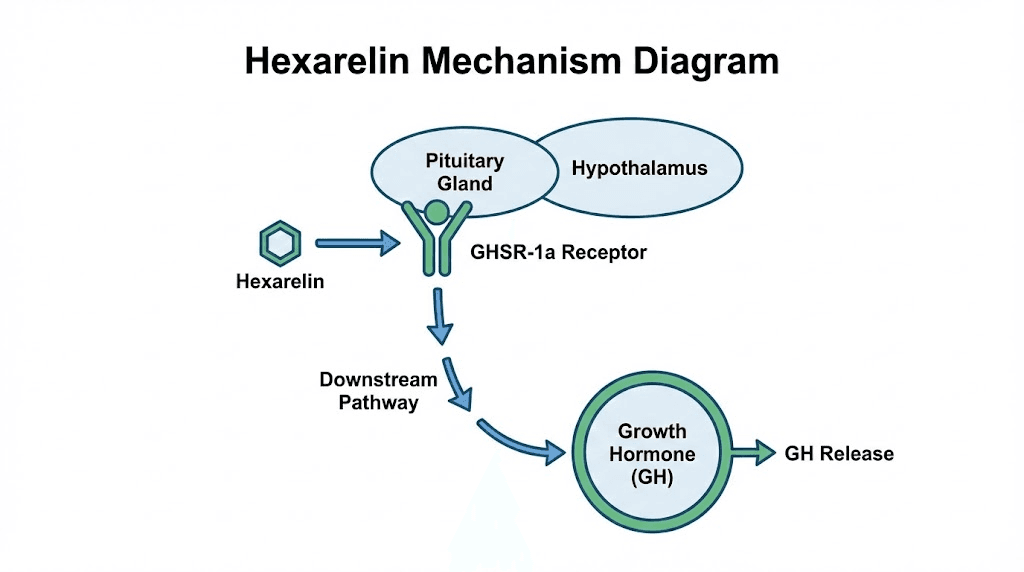
Research published in the European Journal of Clinical Pharmacology demonstrated that intravenous hexarelin administration produces substantial, dose-dependent increases in plasma growth hormone concentrations. The response exceeded what researchers observed with natural GHRH administration. Peak concentrations occurred within 15 minutes of administration, with effects persisting for approximately 60 minutes.
What separates hexarelin from other peptide options is the magnitude of response. Studies comparing various GHRPs consistently show hexarelin at the top for raw GH-releasing potency. The compound stimulates growth hormone release with greater amplitude and frequency than its relatives. This makes it attractive for researchers seeking maximum effect, though it also creates challenges we will address later.
The research-backed benefits of hexarelin
Scientific literature reveals multiple mechanisms through which hexarelin produces benefits beyond simple growth hormone elevation. Understanding these pathways helps researchers appreciate why this compound generates such interest in the research community.
Growth hormone release and IGF-1 elevation
The primary benefit, and the reason most researchers investigate hexarelin, involves its unmatched ability to stimulate growth hormone secretion. Clinical studies demonstrate dose-dependent GH release that exceeds other secretagogues. One study found the GH dose-response curve reached a plateau at 1.0 microgram per kilogram, with an ED50 of 0.48 micrograms per kilogram. These are significant numbers in the peptide world.
Elevated growth hormone triggers downstream effects. The liver responds by producing insulin-like growth factor 1, commonly called IGF-1. This secondary hormone mediates many of growth hormone effects on tissues throughout the body. Increased IGF-1 promotes protein synthesis, supports tissue repair, and influences metabolism in ways that interest researchers studying various conditions.
The pulsatile nature of hexarelin-induced GH release matters significantly. Natural growth hormone secretion occurs in pulses rather than continuous elevation. Hexarelin maintains this pulsatile pattern, which may preserve normal feedback mechanisms better than compounds that cause sustained elevation. Researchers studying peptide timing find this characteristic particularly relevant.
Cardiovascular and cardioprotective effects
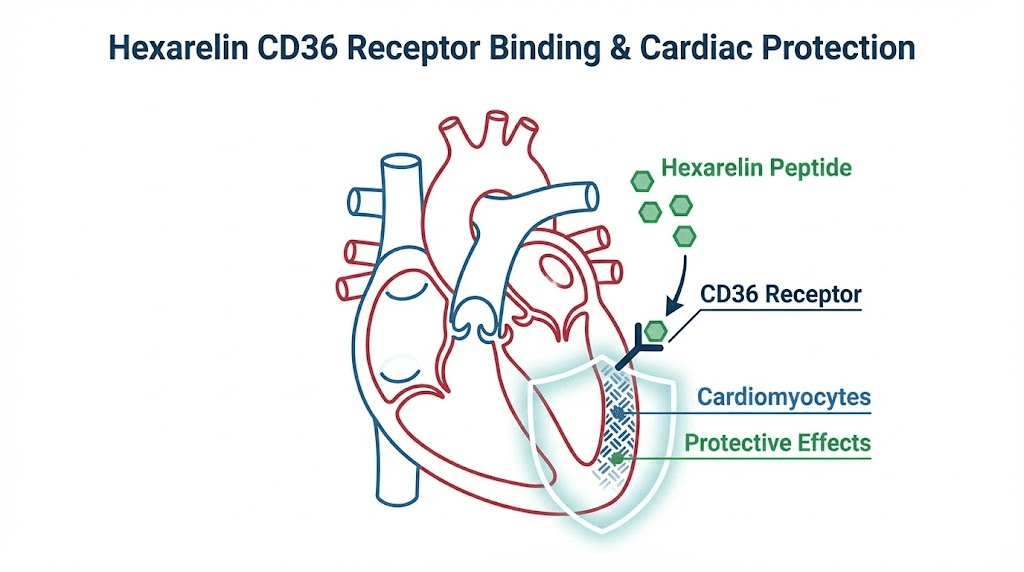
Perhaps the most fascinating hexarelin research involves its effects on the heart. This goes beyond simple growth hormone elevation. The compound binds to CD36 receptors in cardiac tissue, producing direct cardioprotective effects independent of GH release.
A comprehensive review published in the journal Peptides documented hexarelin capacity to protect cardiomyocytes from ischemia-reperfusion injury. This type of damage occurs when blood flow returns to tissue after a period of oxygen deprivation, creating oxidative stress that kills cells. Hexarelin reduced this damage through mechanisms involving the IL-1 signaling pathway and GHSR1a receptor activation in cardiac tissue.
Studies in animal models showed hexarelin treatment preserved cardiac function following experimentally induced heart attacks. Researchers observed higher ejection fraction and fractional shortening in treated subjects compared to controls. The compound also reduced cardiac fibrosis, the scarring process that impairs heart function after injury. It accomplished this by decreasing collagen synthesis while accelerating collagen degradation through regulation of matrix metalloproteinases.
Research on human subjects confirmed these findings translate beyond animal models. Administration of hexarelin increased left ventricular ejection fraction from 64.0% to 70.7% in healthy male volunteers. The effect peaked 30 minutes after administration and persisted for up to 60 minutes. Importantly, this cardiac benefit appeared independent of GH release, suggesting direct receptor-mediated effects on cardiac tissue.
For researchers interested in tissue repair and cardiovascular health, these findings position hexarelin uniquely among peptide options. No other GHRP demonstrates this level of documented cardiac benefit.
Body composition effects
Growth hormone elevation influences body composition through multiple mechanisms. Hexarelin research demonstrates effects on both fat metabolism and lean tissue.
A study published in Endocrinology examined hexarelin effects in insulin-resistant mice. The compound increased pulsatile GH secretion, reduced fat mass, and improved lipid profiles without compromising glucose metabolism. These metabolic effects involved the CD36 receptor, the same receptor mediating cardiac benefits.
The relationship between hexarelin and fat loss involves both direct and indirect mechanisms. Growth hormone directly promotes lipolysis, the breakdown of stored fat for energy. IGF-1 elevation further supports metabolic efficiency. Additionally, hexarelin may influence fat metabolism through CD36-mediated pathways that operate independently of GH.
Regarding muscle tissue, elevated growth hormone and IGF-1 promote protein synthesis and nitrogen retention. These anabolic effects support muscle maintenance and potential growth under appropriate conditions. The compound does not directly build muscle like anabolic steroids, but it creates a hormonal environment favorable for tissue preservation and development.
Researchers exploring fat burning peptides often compare hexarelin to alternatives. Its potency advantage must be weighed against its tendency toward receptor desensitization and greater side effect profile compared to gentler options like ipamorelin.
Neurological and neuroprotective effects
Emerging research suggests hexarelin may influence brain function beyond its pituitary effects. Studies have shown the compound promotes survival of newly formed neurons in the adult hippocampus, the brain region critical for memory and learning. This neurogenic effect opens interesting avenues for research into cognitive function and brain health.
The ghrelin system, which hexarelin mimics, plays roles in neuroprotection throughout the brain. Researchers investigating peptides for brain function find these pathways increasingly relevant. While hexarelin specific neurological benefits require more investigation, the preliminary data suggests effects beyond simple GH release.
Recovery and healing support
Growth hormone plays established roles in tissue repair and recovery. Elevated GH increases collagen synthesis, supports wound healing, and accelerates recovery from various types of tissue damage. Hexarelin powerful GH-releasing effects make it relevant for researchers studying injury healing applications.
The compound is often investigated post-injury or post-surgery due to its regenerative properties. Combined with its cardioprotective effects, hexarelin presents an interesting profile for researchers studying recovery from various physical stressors. Those exploring healing peptide combinations sometimes include hexarelin for its GH-elevating capacity.
Hexarelin dosing protocols and administration
Proper dosing separates successful hexarelin research from failed experiments. The compound demands precision. Too little produces minimal effect. Too much accelerates desensitization and amplifies side effects.
Standard dosing ranges
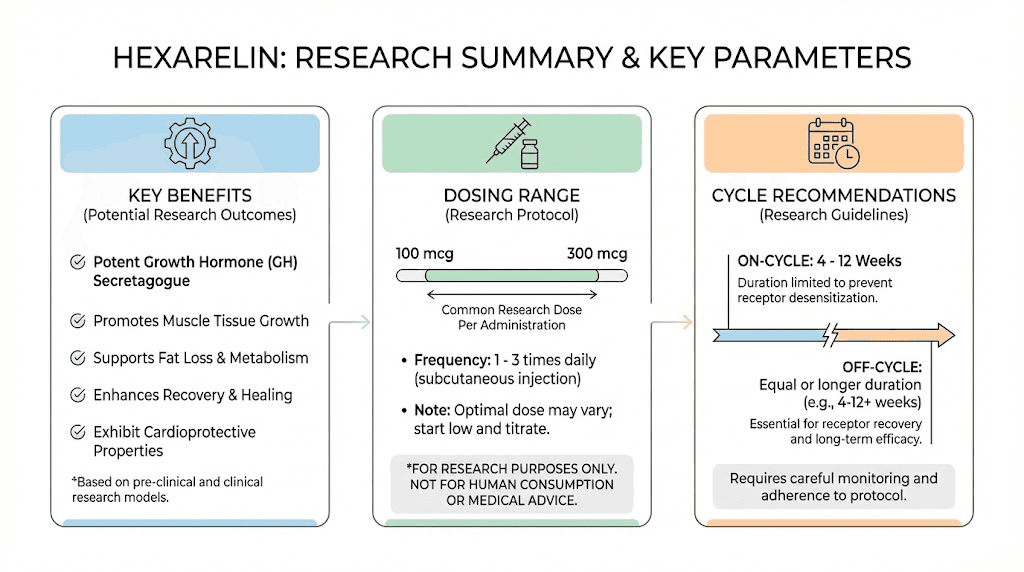
Research protocols typically employ doses ranging from 100 to 300 micrograms per administration. Most studies suggest 200 micrograms as the standard single dose for research purposes. This amount balances meaningful GH release against side effect risk.
Clinical studies used intravenous bolus administration at doses from 0.5 to 2.0 micrograms per kilogram of body weight. The GH response plateaued around 1.0 microgram per kilogram, suggesting diminishing returns at higher doses. For a 75 kilogram individual, this translates to approximately 75 micrograms at the lower end up to 150 micrograms at the plateau dose.
Research protocols commonly employ subcutaneous injection as the preferred administration route. This method provides practical advantages over intravenous delivery while maintaining bioavailability. The peptide injection technique follows standard protocols familiar to experienced researchers.
Frequency and timing
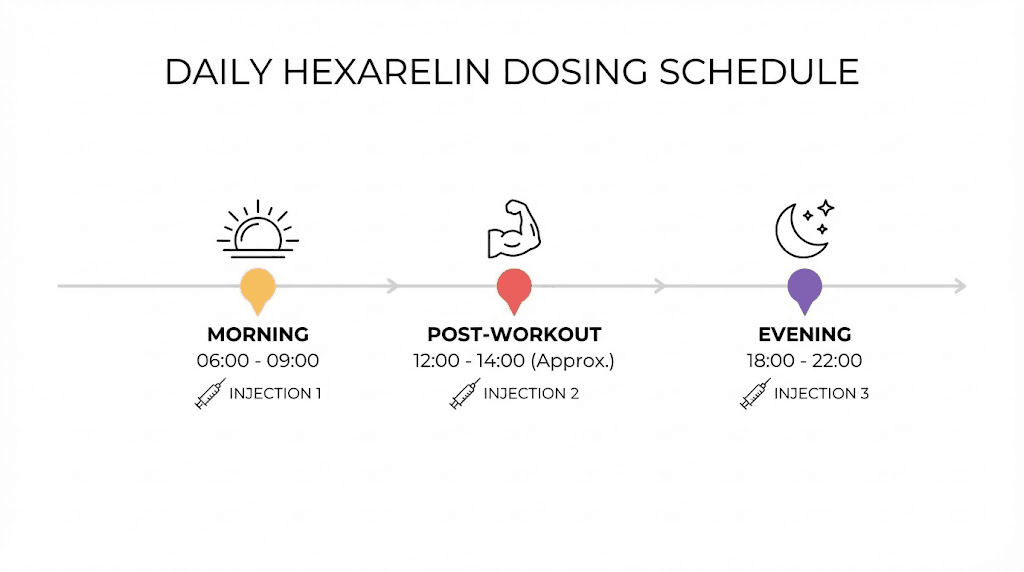
The short half-life of hexarelin, approximately 55 minutes, necessitates multiple daily administrations to maintain elevated GH levels throughout the day. Most protocols employ 2 to 3 injections daily, spaced evenly.
Optimal timing aligns with natural GH secretion patterns. Effective windows include morning administration upon waking, post-exercise to capitalize on natural GH elevation, and before bed to enhance nocturnal GH pulses. Avoiding administration around meals can improve response, as food, particularly carbohydrates and fats, may blunt GH release.
Those using the peptide calculator can determine precise dosing based on individual parameters. The reconstitution calculator helps ensure accurate preparation from lyophilized powder.
Cycle duration and cycling strategies
Hexarelin receptor desensitization represents the primary challenge with extended use. The compound potency that makes it attractive also accelerates receptor downregulation compared to gentler GHRPs. This necessitates strategic cycling.
Standard protocols run 8 to 12 weeks followed by a break period of at least 4 weeks. Some researchers employ shorter cycles of 4 to 8 weeks with correspondingly shorter breaks. The goal involves maintaining receptor sensitivity while achieving research objectives.
Signs of desensitization include diminishing response to standard doses, requiring dose escalation to achieve previous effects, and loss of typical side effects that previously occurred. When these signs appear, discontinuation allows receptor recovery. Attempting to push through desensitization by increasing doses typically worsens the problem.
Understanding peptide cycling principles helps researchers design effective protocols. Some rotate between hexarelin and less potent GHRPs to maintain receptor sensitivity while continuing research.
Reconstitution and storage
Hexarelin typically arrives as a lyophilized powder requiring reconstitution before use. Bacteriostatic water serves as the standard reconstitution fluid, providing antimicrobial preservation for multi-use vials.
Reconstituted hexarelin requires proper storage in the refrigerator between 2 and 8 degrees Celsius. Protected from light and maintained at stable temperature, reconstituted solution remains viable for several weeks. The reconstituted peptide stability depends heavily on handling and storage conditions.
Lyophilized powder demonstrates greater stability than reconstituted solution. Unreconstituted vials stored properly in the freezer maintain potency for extended periods. Understanding peptide stability helps researchers plan their protocols effectively.
Hexarelin compared to other growth hormone releasing peptides
Researchers frequently compare hexarelin against other options in the GHRP family. Understanding these differences helps in selecting the appropriate compound for specific research objectives.
Hexarelin versus ipamorelin
Ipamorelin represents the selectivity end of the GHRP spectrum while hexarelin occupies the potency end. Ipamorelin was developed specifically as a selective GH secretagogue, meaning it releases growth hormone without significantly affecting cortisol, prolactin, or other hormones.
Research demonstrates ipamorelin does not release ACTH or cortisol at levels significantly different from natural GHRH stimulation, even at doses over 200 times higher than the effective dose for GH release. Hexarelin, conversely, produces dose-dependent elevations in both cortisol and prolactin alongside its more powerful GH release.
For researchers prioritizing clean GH elevation without hormonal disruption, ipamorelin offers advantages. For those seeking maximum GH amplitude and willing to manage additional hormonal effects, hexarelin delivers superior potency. The choice depends on research priorities rather than one being categorically better.
Hexarelin versus GHRP-6
GHRP-6 and hexarelin share structural similarities, with hexarelin derived from GHRP-6 through the addition of two methyl groups. This modification increases potency while altering the side effect profile.
GHRP-6 produces notable appetite stimulation through ghrelin pathway activation. Some researchers consider this beneficial for subjects needing increased food intake. Hexarelin generally produces less hunger stimulation despite its greater GH-releasing potency.
Both compounds elevate cortisol and prolactin, though hexarelin typically produces larger GH pulses per dose. GHRP-6 may be preferred when appetite stimulation serves research goals. Hexarelin suits situations requiring maximum GH elevation.
Hexarelin versus GHRP-2
GHRP-2 demonstrates higher potency but lower efficacy than some relatives, meaning it requires smaller doses but may not achieve the same maximum effect. Hexarelin combines both high potency and high efficacy, producing the largest GH pulses in the GHRP family.
GHRP-2 causes appetite stimulation similar to GHRP-6, though typically milder. Hexarelin has more modest effects on hunger. Both elevate cortisol and prolactin in dose-dependent fashion. GHRP-2 sits between ipamorelin and hexarelin in terms of selectivity versus potency tradeoffs.
Comparison summary table
Peptide | GH Potency | Selectivity | Cortisol Effect | Prolactin Effect | Appetite |
|---|---|---|---|---|---|
Hexarelin | Highest | Low | Elevated | Elevated | Mild increase |
GHRP-2 | High | Low | Elevated | Elevated | Moderate increase |
GHRP-6 | Moderate-High | Low | Elevated | Elevated | Strong increase |
Ipamorelin | Moderate | High | Minimal | Minimal | No increase |
This comparison helps researchers understand tradeoffs when selecting compounds. Those interested in peptide options can evaluate based on their specific research requirements.
Stacking hexarelin with other peptides
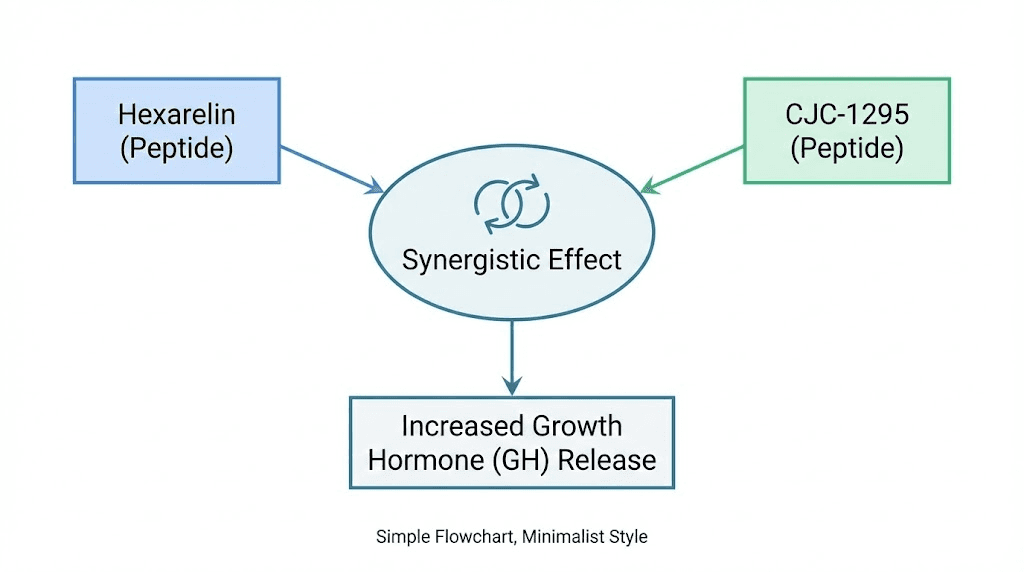
Combining hexarelin with complementary compounds can enhance results through synergistic mechanisms. Research demonstrates specific combinations produce effects greater than either compound alone.
Hexarelin and CJC-1295 combination
The most researched hexarelin stack involves combining it with a growth hormone releasing hormone analog like CJC-1295. These compounds work through different receptor systems, creating true synergy rather than simply additive effects.
Scientific studies confirmed this synergy. Peak GH secretion following combined administration of hexarelin and GHRH exceeded the arithmetic sum of responses to either compound alone. This means 1 plus 1 equals more than 2 when combining these mechanisms.
CJC-1295 without DAC, also called Modified GRF 1-29, provides a shorter-acting GHRH analog that matches well with hexarelin pulsatile action. The CJC-1295 dosage calculator helps determine appropriate amounts for combined protocols.
A typical research protocol might employ 100 micrograms of hexarelin with 100 micrograms of CJC-1295 no DAC, administered together 2 to 3 times daily. This combination aims to maximize GH elevation while maintaining pulsatile secretion patterns.
Hexarelin and ipamorelin combination
Some researchers combine hexarelin with ipamorelin to balance potency against selectivity. The theory suggests ipamorelin cleaner profile may moderate some hexarelin side effects while the combination maintains strong GH release.
This approach uses lower doses of each compound than would be employed individually. The goal involves achieving meaningful GH elevation while reducing cortisol and prolactin impact compared to hexarelin alone. Research supporting this specific combination remains limited, but the theoretical basis follows sound pharmacological principles.
Healing-focused stacks
Researchers studying tissue repair sometimes combine hexarelin with peptides like BPC-157 or TB-500. These compounds work through entirely different mechanisms, with BPC-157 promoting angiogenesis and tissue repair while TB-500 supports actin regulation and cell migration.
The rationale involves using hexarelin for systemic GH elevation while the healing peptides provide localized tissue support. This combination addresses recovery from multiple angles. Those interested can explore the peptide stack calculator for planning combination protocols.
Important stacking considerations
Combining potent compounds requires careful attention to cumulative effects. Stacking hexarelin with other GHRPs that also elevate cortisol and prolactin may amplify these unwanted effects beyond acceptable levels.
Timing matters in stacked protocols. Compounds administered together compete for absorption and may interact in unpredictable ways. Staggering administration times sometimes improves outcomes. Research protocols should clearly define timing relationships between stacked compounds.
SeekPeptides provides detailed stacking protocols for members exploring combination approaches. Understanding interactions between compounds helps researchers avoid problematic combinations while maximizing beneficial synergies.
Side effects and safety considerations
Hexarelin potency comes with a correspondingly robust side effect profile. Understanding and managing these effects is essential for successful research protocols.
Cortisol and prolactin elevation
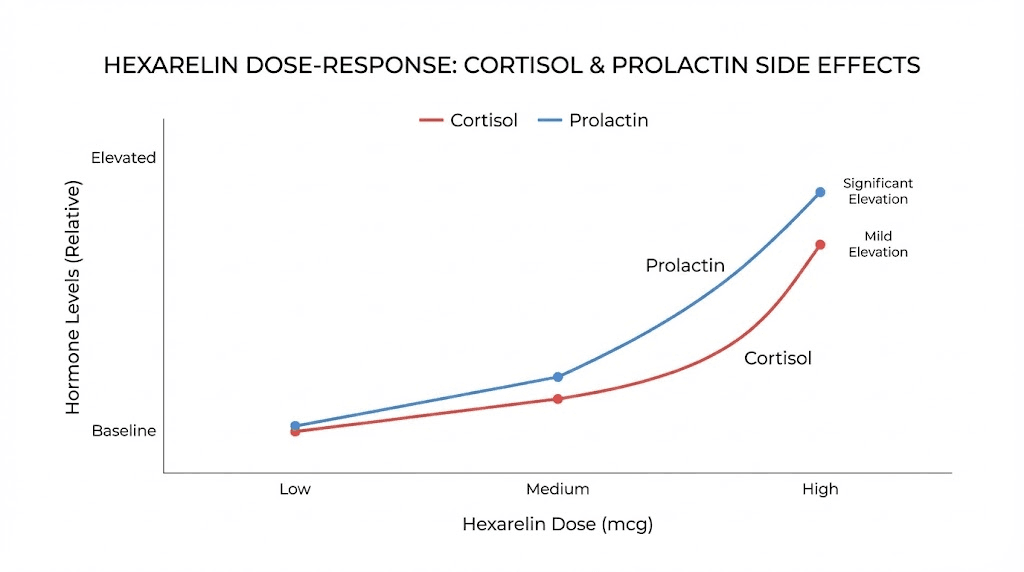
The most documented hexarelin side effects involve elevation of cortisol and prolactin. Research established these increases follow a dose-dependent pattern, with higher doses producing greater elevation.
Studies found approximately 80% increases in prolactin and 40% increases in cortisol at standard research doses. These elevations can produce noticeable effects. Elevated cortisol may influence glucose handling, immune function, and stress responses. Elevated prolactin can affect libido and, in males, potentially contribute to gynecomastia with prolonged elevation.
Importantly, research demonstrates these elevations occur primarily at higher doses and with extended use. Modest doses produce smaller hormonal perturbations. When hexarelin use is discontinued, levels return to normal, indicating the effects are reversible.
One encouraging study showed that after 16 weeks of hexarelin therapy, the area under the cortisol curve had actually decreased, and prolactin showed no significant change over the study period. This suggests appropriate dosing protocols may avoid chronic hormonal disruption.
Water retention
Elevated growth hormone can cause temporary water retention, producing bloating and a softer appearance. This effect typically resolves as the body adapts or when administration stops. Staying well hydrated and monitoring sodium intake may help manage this side effect.
Receptor desensitization
As mentioned earlier, hexarelin tends to cause receptor desensitization more rapidly than less potent GHRPs. This represents a functional side effect that impairs research outcomes rather than causing direct harm.
Signs include progressive decrease in response to standard doses and eventual need for higher doses to achieve previous effects. The solution involves strategic cycling rather than dose escalation. Attempting to overcome desensitization through higher doses typically accelerates the problem.
Other reported effects
Some research subjects report tiredness or lethargy with hexarelin use. This may relate to the compound effects on various neurotransmitter systems or simply reflect the body response to GH elevation.
Tingling or numbness in the hands and feet can indicate excessive dosing. This symptom, related to fluid retention affecting nerve compression, suggests dose reduction is warranted.
Joint discomfort occasionally occurs with elevated GH levels, though this is more commonly associated with exogenous GH administration than secretagogue use. Monitoring for this effect remains prudent.
Contraindications and cautions
Hexarelin, like all GHRPs, is not FDA-approved for human use and remains classified as a research chemical. This limits available safety data compared to approved pharmaceuticals. Research use requires appropriate oversight and adherence to relevant regulations.
The compound is prohibited by the World Anti-Doping Agency for athletic competition. Athletes subject to testing should avoid hexarelin entirely, as detection methods exist and penalties apply.
Individuals with existing conditions affecting cortisol or prolactin should exercise extreme caution. Those with pituitary disorders, cardiac conditions, or diabetes require careful consideration before any GH-elevating protocol.
Practical protocol implementation
Translating research knowledge into effective protocols requires attention to practical details. This section covers implementation considerations for researchers.
Beginner protocol
Researchers new to hexarelin should start conservatively to assess individual response. A reasonable starting protocol might employ 100 micrograms administered subcutaneously twice daily, morning and evening. This allows evaluation of response and tolerance before increasing.
After 1 to 2 weeks at the starting dose, researchers can assess effects and adjust accordingly. If response is modest and tolerance good, increasing to 150 to 200 micrograms per dose may be appropriate. If side effects prove problematic at the starting dose, hexarelin may not be the ideal choice for that individual.
Initial cycles should be shorter, perhaps 4 to 6 weeks, to evaluate response before committing to longer protocols. This approach allows course correction without significant time investment in a protocol that proves inappropriate.
Standard research protocol
Established researchers familiar with GHRPs typically employ 200 micrograms per injection, administered 2 to 3 times daily. This represents the standard research dose based on clinical study data.
A typical day might involve:
Morning: 200mcg subcutaneously upon waking, before food
Post-training: 200mcg approximately 30 minutes after exercise completion
Evening: 200mcg before bed, at least 2 hours after last meal
Standard cycles run 8 to 12 weeks followed by 4 to 6 weeks off to allow receptor recovery. Some researchers alternate between hexarelin and a milder GHRP like ipamorelin during rest periods to maintain some GH support without furthering desensitization.
Advanced combination protocol
Experienced researchers seeking maximum effect sometimes combine hexarelin with CJC-1295 no DAC for synergistic GH release. This protocol uses lower doses of each compound than would be employed alone.
A combination approach might use 100 micrograms hexarelin with 100 micrograms CJC-1295 no DAC, administered together at each injection time. The synergy between these compounds means lower individual doses can achieve effects comparable to higher doses of either alone.
Advanced protocols require close attention to cumulative effects. Adding a GHRH analog to hexarelin amplifies both benefits and potential side effects. Monitoring becomes increasingly important as protocol complexity increases.
Monitoring recommendations
Tracking relevant markers helps optimize hexarelin protocols. Useful assessments include:
IGF-1 levels to confirm GH elevation is producing downstream effects
Cortisol levels if symptoms suggest elevation
Prolactin levels, particularly in males concerned about related effects
Body composition measurements to track progress toward research goals
Subjective assessment of energy, recovery, and well-being
Baseline measurements before starting and periodic reassessment during protocols provide valuable data for protocol optimization. The peptide dosing guide offers additional framework for systematic protocol development.
Sourcing and quality considerations
Peptide quality varies dramatically between sources. Given that hexarelin requires precise dosing and purity directly affects both efficacy and safety, sourcing decisions matter significantly.
Purity verification
Reputable peptide sources provide certificates of analysis showing purity testing results. High-performance liquid chromatography testing should confirm purity above 98% for research-grade material. Mass spectrometry confirms molecular identity.
The peptide testing labs guide covers verification approaches in detail. Independent testing provides additional assurance beyond manufacturer certificates, though this adds cost and complexity.
Storage requirements
Proper storage protects peptide integrity. Unreconstituted hexarelin should be stored in the freezer in sealed vials protected from light and moisture. Once reconstituted, refrigeration between 2 and 8 degrees Celsius maintains stability.
The peptide storage guide provides comprehensive coverage of handling requirements. Improper storage degrades peptides, reducing potency and potentially creating breakdown products with unknown effects.
Legal status
Hexarelin exists in a regulatory grey area in most jurisdictions. It is not approved for human use by major regulatory agencies, which means it cannot be legally sold for that purpose. Research chemical classification allows sale for legitimate research applications.
The peptide legal status varies by jurisdiction and continues to evolve. Researchers should understand applicable regulations in their location before obtaining any research peptides.
Frequently asked questions
How long does it take for hexarelin to work?
Hexarelin produces acute GH release within 15 minutes of administration, with peak effects at 30 minutes and duration of approximately 60 minutes per dose. Downstream effects like IGF-1 elevation and body composition changes develop over weeks of consistent use. Most researchers report noticing effects within the first 2 to 4 weeks of a well-designed protocol. The peptide timeline guide covers expected progression in detail.
Is hexarelin better than ipamorelin?
Neither is categorically better. Hexarelin produces stronger GH release but with greater side effects including cortisol and prolactin elevation. Ipamorelin offers cleaner GH elevation without hormonal disruption but with lower peak amplitude. The best choice depends on research priorities, with hexarelin suited for maximum potency and ipamorelin for selective, side-effect-minimized protocols.
Can hexarelin be taken orally?
While some research has investigated oral hexarelin administration, particularly for cardiac applications, the standard research route remains subcutaneous injection. Oral peptides face degradation in the digestive system that reduces bioavailability. Injectable versus oral peptide comparison covers these differences. Research protocols should assume subcutaneous administration unless specifically studying alternative routes.
What is the best time to take hexarelin?
Optimal timing involves administration when the stomach is empty, as food, especially carbohydrates and fats, can blunt GH response. Morning upon waking, post-exercise, and before bed represent typical research protocol windows. These times align with natural GH secretion patterns and avoid meal-related interference. The dosing guide covers timing strategies comprehensively.
How long should a hexarelin cycle last?
Standard research protocols run 8 to 12 weeks followed by at least 4 weeks off to allow receptor recovery. Shorter cycles of 4 to 8 weeks with proportionally shorter breaks represent an alternative approach. The key involves preventing receptor desensitization while achieving research objectives. Signs of desensitization indicate the need for a break regardless of cycle length.
Does hexarelin need to be refrigerated?
Reconstituted hexarelin requires refrigeration between 2 and 8 degrees Celsius. Unreconstituted lyophilized powder maintains stability longer in the freezer. Room temperature storage degrades peptides over time, reducing potency. The peptide refrigeration guide covers storage requirements in detail.
Can hexarelin cause gynecomastia?
Hexarelin elevates prolactin in a dose-dependent manner, and elevated prolactin can contribute to breast tissue sensitivity or growth in males with prolonged exposure. This risk is managed through appropriate dosing, cycling to prevent chronic elevation, and monitoring for early signs. Discontinuing use typically resolves prolactin-related effects.
What is the difference between hexarelin and sermorelin?
Sermorelin is a GHRH analog that works through different receptors than hexarelin. Sermorelin stimulates GHRH receptors while hexarelin acts on ghrelin receptors. This difference means they can be combined synergistically. Sermorelin generally produces milder, more natural GH elevation compared to hexarelin potent acute release.
External resources
National Center for Biotechnology Information - Cardiovascular Actions of Hexarelin
Journal of Clinical Endocrinology - GH Secretagogue Mechanisms
For researchers committed to understanding peptide protocols at the deepest level, SeekPeptides provides the most comprehensive resource available. Members access detailed protocol guides, dosing calculators, safety databases, and a community of experienced researchers who have navigated these exact questions. The platform transforms research complexity into actionable clarity.
In case I do not see you, good afternoon, good evening, and good night. May your receptors stay sensitive, your protocols stay optimized, and your research stay productive.