Jan 15, 2026
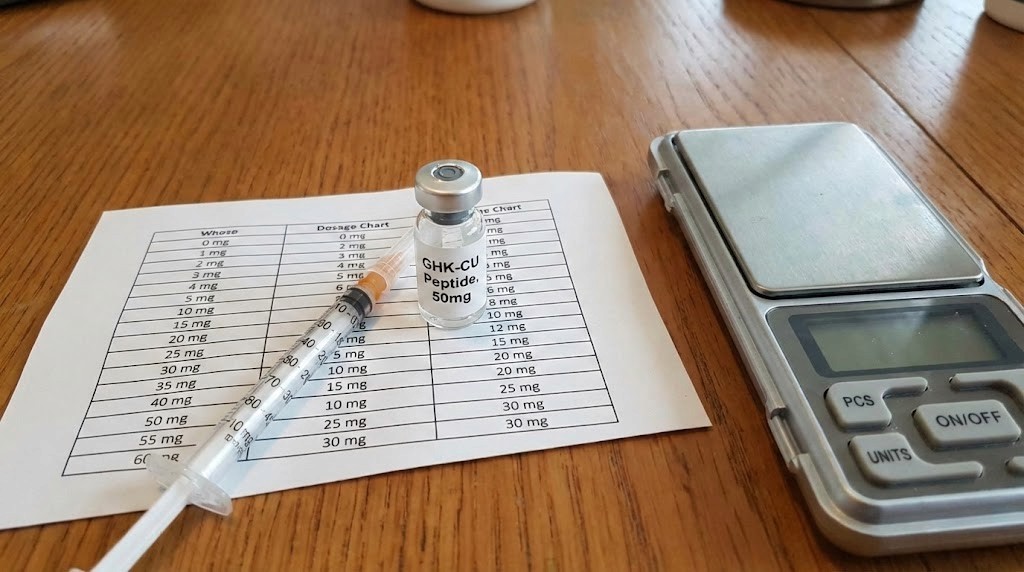
The difference between GHK-CU working and GHK-CU transforming your skin comes down to one thing. Dosage matched to delivery method matched to goal. Most people get at least one of these wrong.
They use injection doses for topical products. They apply anti-aging protocols to wound healing. They expect systemic results from a face serum.
The peptide still helps because GHK-CU is remarkably effective even when suboptimally dosed. But the gap between good results and exceptional results often comes down to precision in these three variables.
This guide covers GHK-CU dosing across every administration method and every major goal. Whether you are using a copper peptide serum for facial rejuvenation, subcutaneous injections for systemic benefits, or exploring oral options for convenience, the right dose exists for your specific situation.
SeekPeptides members access personalized dosing protocols tailored to individual goals, body composition, and experience level.
The information here provides the foundation. Membership provides the customization.
Understanding GHK-CU dosing fundamentals
GHK-CU is a tripeptide, three amino acids bound to copper. Small molecule. Massive effects on gene expression. Research identifies over 4,000 genes influenced by this compound, affecting everything from collagen production to inflammation to wound healing.
Dosing matters because GHK-CU works through cellular signaling rather than direct mechanical action. The peptide tells cells what to do. Too little signal and cells barely respond.
Too much signal and you waste money without additional benefit, the response curve plateaus rather than climbing indefinitely.
The bioavailability factor
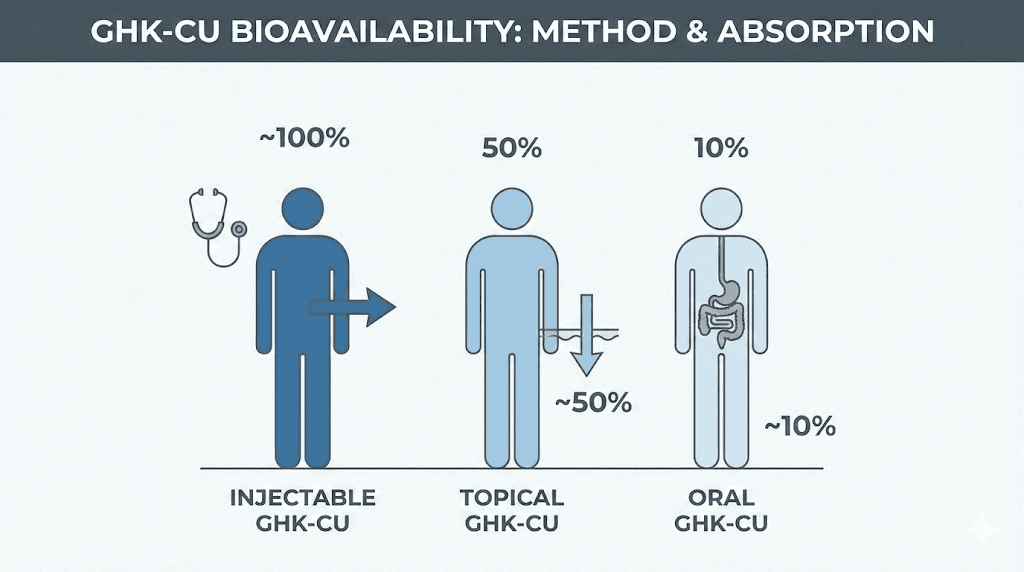
Not all GHK-CU reaches target tissues equally. Delivery method dramatically affects how much peptide actually gets where it needs to go.
Injectable bioavailability: Highest. Subcutaneous injection delivers peptide directly into systemic circulation. Studies suggest 10-20 times higher tissue concentrations compared to topical application of equivalent amounts.
Topical bioavailability: Lower but meaningful. Skin penetration depends on formulation, concentration, and application technique. Effective for superficial skin concerns but limited systemic distribution.
Oral bioavailability: Lowest traditionally. Digestive enzymes break down peptides before absorption. Newer delivery technologies like liposomal encapsulation and sublingual troches improve this significantly.
Understanding bioavailability explains why injectable doses are measured in milligrams while topical concentrations use percentages. Different delivery systems require different dose scales to achieve similar effects at target tissues.
GHK-CU dosing by administration method
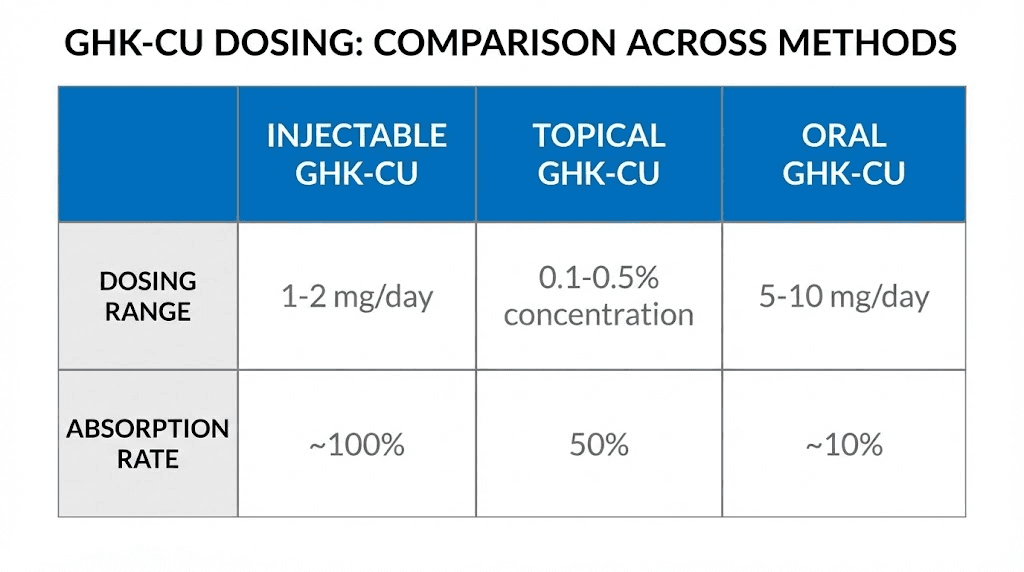
Each delivery method has optimal dose ranges developed through clinical practice and research extrapolation. Match your method to these guidelines for best results.
Injectable GHK-CU dosing
Subcutaneous injection remains the gold standard for systemic GHK-CU effects. The method provides reliable absorption, consistent dosing, and the highest tissue penetration.
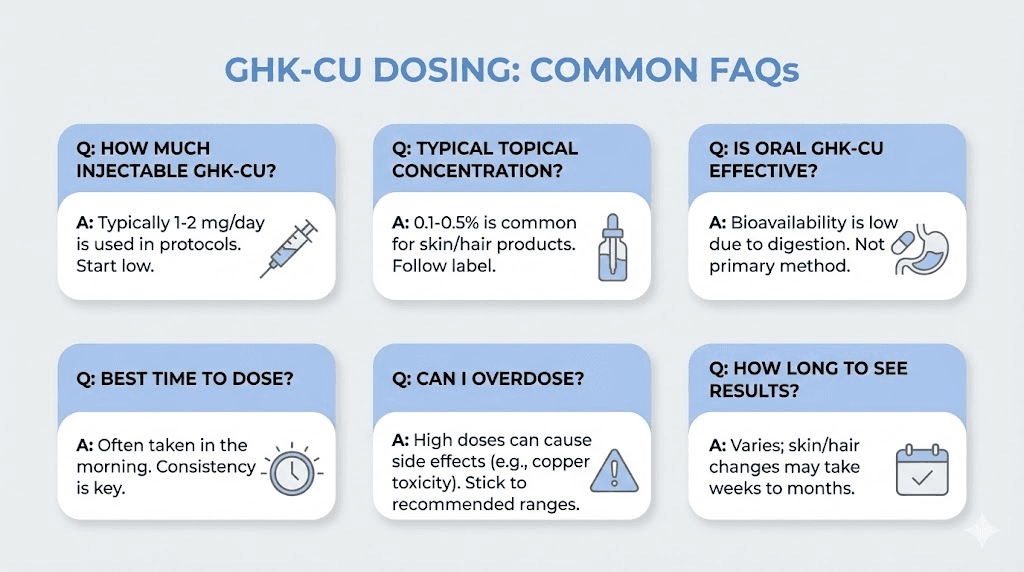
Standard injectable dose: 1-2mg daily
Range: 0.5mg to 4mg depending on goals and experience
Frequency: Once daily or split into morning and evening doses
Cycle: 30 days on, 14 days off (standard) or 8 weeks on, 4 weeks off (intensive)
Calculate your exact injection volume using the peptide calculator based on your reconstitution concentration. Proper math prevents dosing errors that compound throughout the vial.
For detailed injection protocols including reconstitution, site rotation, and cycling strategies, see our complete GHK-CU injection dosage guide.
Topical GHK-CU dosing
Topical application suits facial rejuvenation, localized skin concerns, and maintenance protocols. Results develop more gradually than injectable but with maximum convenience.
Face serums and creams:
Clinical standard: 1-3% concentration
Maximum typically used: 4% concentration
Application: Once or twice daily
Duration: Minimum 8-12 weeks for visible results
Eye area products:
Concentration: 1-2% (lower for sensitive periorbital skin)
Application: Once daily, typically evening
Amount: Pea-sized for both eyes
Scalp solutions for hair:
Concentration: 0.5% solution common
Application: 1-2ml to affected areas once or twice daily
Duration: 3-6 months minimum for meaningful changes
Higher concentrations do not always mean better results with topicals. Skin saturation limits how much peptide penetrates regardless of concentration. A well-formulated 2% serum often outperforms a poorly formulated 4% product.
Oral and sublingual GHK-CU dosing
Oral delivery offers convenience without injections. Traditional swallowed forms have limited effectiveness due to digestive breakdown, but sublingual troches and liposomal formulations improve absorption significantly.
Sublingual troches:
Typical dose: 50-200mcg per troche
Frequency: 1-2 times daily
Administration: Dissolve between cheek and gum for 15-20 minutes
Absorption: Bypasses first-pass liver metabolism through oral mucosa
Liposomal oral:
Typical dose: 100-500mcg
Frequency: Once daily
Note: Lipid encapsulation protects peptide through digestion
Oral forms suit those unwilling to inject who still want systemic rather than purely local effects. Expect results between topical and injectable in terms of magnitude.
GHK-CU dosing by goal
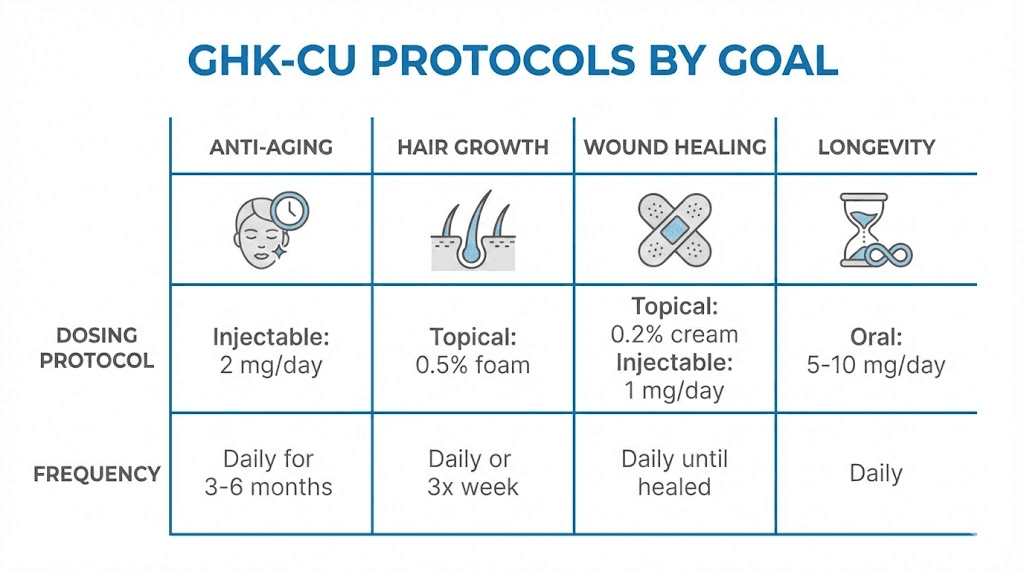
Different objectives require different approaches. The same person might use one protocol for anti-aging and another for injury recovery. Match your dose to your specific goal.
Anti-aging and skin rejuvenation
Anti-aging represents the most common GHK-CU application. The peptide stimulates collagen synthesis, improves skin elasticity, and reduces fine lines through gene expression changes favoring youthful tissue.
Injectable anti-aging protocol:
Dose: 1-2mg daily
Frequency: 5 days on, 2 days off OR daily for 30 days
Cycle: 30 days on, 14 days off
Duration: Minimum 2-3 cycles for substantial results
Topical anti-aging protocol:
Concentration: 2-3% serum or cream
Application: Twice daily (morning and evening)
Duration: 12+ weeks continuous use
Combine with: Sunscreen (always), retinoids (evening, separate application)
Combination approach:
Maximum anti-aging results come from combining injectable and topical. Injections provide systemic collagen support while topicals deliver concentrated peptide directly to facial skin. Many researchers report this combination outperforms either method alone.
Learn more about comprehensive peptides for anti-aging strategies and how GHK-CU fits into broader protocols.
Hair growth and scalp health
GHK-CU shows promise for hair by extending the growth phase, increasing follicle size, and improving scalp circulation. Results require patience, as hair growth cycles span months.
Injectable hair protocol:
Dose: 1-2mg daily
Frequency: Daily or 5 days weekly
Duration: 16-24 weeks minimum (longer than anti-aging protocols)
Cycle: 8 weeks on, 4 weeks off, repeat
Topical scalp protocol:
Concentration: 0.5% solution
Application: 1-2ml to thinning areas twice daily
Duration: 6+ months for meaningful assessment
Technique: Apply to clean, dry scalp; massage gently
Enhanced topical approach:
Microneedling before topical application creates micro-channels that dramatically improve peptide penetration. Studies suggest this approach can achieve tissue concentrations approaching injectable levels. Use a 0.5mm derma roller on the scalp 1-2 times weekly before applying GHK-CU solution.
Explore our complete guide to peptides for hair loss including GHK-CU combinations with other compounds.
Wound healing and tissue repair
GHK-CU accelerates wound healing through multiple mechanisms including angiogenesis promotion, collagen deposition, and anti-inflammatory effects. Higher doses and more intensive protocols suit acute healing needs.
Injectable healing protocol:
Dose: 2-3mg daily (higher end of range)
Frequency: Daily throughout healing period
Duration: Until wound resolves plus 1-2 weeks
Injection site: Systemic (not into wound)
Topical healing protocol:
Concentration: 2-4% in wound-appropriate vehicle
Application: 2-3 times daily to wound margins (not directly into open wounds)
Duration: Throughout healing process
Note: Consult healthcare provider for significant wounds
GHK-CU pairs exceptionally well with BPC-157 and TB-500 for wound healing. The GLOW stack combining all three addresses tissue repair through complementary mechanisms. Use the peptide stack calculator to determine proper ratios.
See our guide on fast injury healing for comprehensive protocols beyond GHK-CU alone.
General wellness and longevity
Some researchers use GHK-CU as a general longevity compound based on its broad gene expression effects favoring tissue maintenance and repair. This application uses moderate doses over extended periods.
Longevity protocol:
Dose: 0.5-1mg daily (lower end)
Frequency: 3-5 times weekly
Cycle: 8 weeks on, 4 weeks off, indefinite repetition
Combine with: Overall health optimization (sleep, nutrition, exercise)
Lower doses for longevity reduce cost and theoretical concerns about long-term copper peptide use while potentially maintaining meaningful benefits. This approach treats GHK-CU as a maintenance supplement rather than an intensive intervention.
GHK-CU dose calculations and conversions
Proper dose calculations prevent errors that waste product or deliver inconsistent results. Master these conversions for accurate dosing.
Injectable concentration math
Reconstituting lyophilized GHK-CU requires calculating the resulting concentration based on powder amount and water volume.
Formula: Concentration (mg/ml) = Powder amount (mg) ÷ Water volume (ml)
Common scenarios:
50mg vial + 2.5ml water = 20mg/ml
For 1mg dose: 1 ÷ 20 = 0.05ml = 5 units on U-100 syringe
For 2mg dose: 2 ÷ 20 = 0.1ml = 10 units
50mg vial + 2ml water = 25mg/ml
For 1mg dose: 1 ÷ 25 = 0.04ml = 4 units
For 2mg dose: 2 ÷ 25 = 0.08ml = 8 units
100mg vial + 5ml water = 20mg/ml
For 2mg dose: 2 ÷ 20 = 0.1ml = 10 units
For 3mg dose: 3 ÷ 20 = 0.15ml = 15 units
Use the peptide reconstitution calculator to verify your math before mixing.
Errors made during reconstitution affect every subsequent injection.
Topical percentage conversions
Understanding what topical percentages mean helps compare products and DIY formulations.
1% concentration = 10mg per 1ml (or gram) of product
2% concentration = 20mg per 1ml
3% concentration = 30mg per 1ml
A 30ml bottle of 2% GHK-CU serum contains 600mg total peptide. Applied twice daily using 0.5ml per application, this provides 20mg per day of topical peptide (though actual absorption is much lower due to skin penetration limits).
Unit conversions
GHK-CU doses appear in different units across sources. Know how to convert.
1mg = 1,000mcg (micrograms)
1g = 1,000mg = 1,000,000mcg
Injectable doses typically use milligrams. Oral and some research doses use micrograms. Topical uses percentages. Convert carefully when comparing protocols from different sources.
Factors affecting optimal GHK-CU dose
Individual variation means the same dose produces different results in different people. Several factors influence your optimal dose.
Age and baseline GHK levels
Natural GHK production declines with age. Plasma levels drop from approximately 200ng/ml at age 20 to 80ng/ml by age 60. Older individuals may benefit more from supplementation and potentially tolerate higher doses well.
Younger researchers often see subtle effects because their baseline GHK levels remain relatively high. The supplemental peptide adds to existing production rather than replacing depleted stores.
Body composition
Unlike some peptides, GHK-CU protocols typically use fixed doses rather than weight-based calculations. However, extremes in body size may warrant adjustment.
Very small individuals (under 50kg) might start at the lower end of dose ranges. Very large individuals (over 100kg) might tolerate the higher end. Most people in normal weight ranges use standard doses successfully.
Goal intensity
Aggressive goals justify more intensive protocols. Someone treating active hair loss needs more than someone maintaining already healthy hair. Wound healing demands higher doses than general anti-aging.
Match protocol intensity to goal urgency. Conservation makes sense for maintenance. Intensity makes sense for transformation.
Combination with other compounds
Stacking GHK-CU with other peptides may allow lower individual doses while achieving greater total effect. Synergistic compounds working through different mechanisms can make each component more effective.
Common stacks include:
GLOW stack: GHK-CU + BPC-157 + TB-500
Anti-aging stack: GHK-CU + CJC-1295/Ipamorelin
Skin stack: GHK-CU + Epithalon
When stacking, some researchers reduce individual compound doses by 25-50% from standalone protocols. Others maintain full doses of each. Track results carefully to find your optimal approach.
SeekPeptides members access detailed stacking guides with proven ratios and adjustment recommendations based on extensive community experience.
Timing and administration optimization
When and how you administer GHK-CU affects results. Optimize these variables for maximum benefit.
Best time of day
Injectable: Morning administration aligns with natural cortisol rhythms and allows any mild side effects to resolve before sleep. Split doses (morning and evening) maintain more stable levels for intensive protocols.
Topical face products: Evening application allows overnight absorption without sun exposure concerns or makeup interference. Morning application works when combined with sunscreen.
Topical scalp products: Evening application on clean scalp before bed maximizes contact time. Morning application works if you don't wash hair daily.
Relationship to meals
Injectable GHK-CU can be administered regardless of meal timing. Food in the stomach does not affect subcutaneous absorption.
Oral forms benefit from empty stomach administration to maximize absorption. Take sublingual troches 30 minutes before or 2 hours after eating for best results.
Consistency matters most
The single most important timing factor is consistency. Choose a schedule that fits your life and stick with it throughout the protocol. Irregular dosing produces irregular results.
Set a daily reminder. Link administration to an existing habit (morning coffee, evening skincare routine). Make it automatic rather than something requiring daily decision-making.
Monitoring and adjusting your dose
Optimal dosing often requires adjustment based on individual response. Know what to track and how to modify.
What to monitor
Visible changes:
Skin texture and tone
Fine line depth
Hair density and quality
Wound healing speed
Subjective factors:
Energy levels
Sleep quality
General sense of wellbeing
Side effects:
Injection site reactions
Skin flushing
Fatigue (especially early in use)
Photograph yourself in consistent lighting at baseline and every 4 weeks. Subtle cumulative changes often go unnoticed without visual reference.
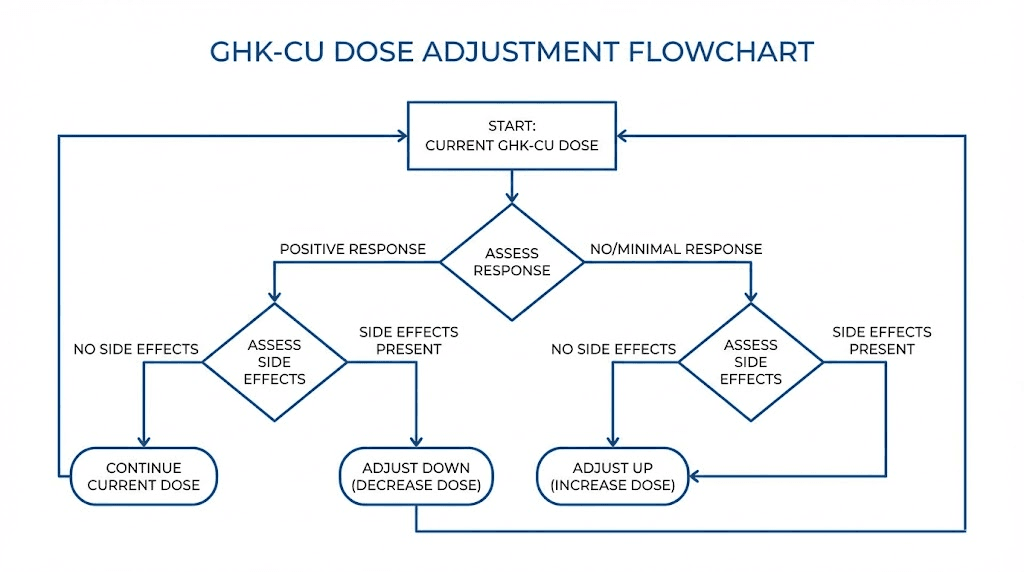
When to increase dose
Consider increasing if:
Minimal response after 4-6 weeks at current dose
No side effects at current dose
Current dose below the higher end of recommended range
Goals not being met with conservative approach
Increase gradually, typically by 25-50% at a time. Allow 2-4 weeks at each new dose to assess response before further adjustment.
When to decrease dose
Consider decreasing if:
Persistent side effects that don't resolve
Excellent results achieved and maintenance desired
Budget constraints require conservation
Stacking and wanting to optimize ratios
Many researchers find they can reduce dose during maintenance phases after achieving initial goals during more intensive loading phases.
Common dosing mistakes to avoid
Learn from others' errors. These mistakes appear repeatedly and undermine results.
Starting too high
Enthusiasm leads many to begin at maximum doses. This prevents learning individual response at lower amounts and wastes product if lower doses would suffice. Start conservative. Increase if needed. You can always add more.
Expecting immediate results
GHK-CU works through gene expression changes that take weeks to manifest visibly. Impatience leads to premature protocol abandonment or unnecessary dose increases. Commit to at least 8-12 weeks before judging effectiveness.
Inconsistent administration
Skipping doses, irregular timing, and forgotten applications all reduce effectiveness. GHK-CU benefits compound with consistent use. Sporadic dosing produces sporadic results.
Ignoring reconstitution accuracy
Imprecise measurement during reconstitution creates concentration errors affecting every subsequent dose. Use proper syringes. Measure carefully. Double-check math. Verify with the reconstitution calculator.
Mixing methods inappropriately
Applying topical doses to injectable protocols or vice versa makes no sense given bioavailability differences. A 2mg injection delivers far more systemic peptide than 2mg in a topical. Understand each method's dose range independently.
Neglecting supporting factors
GHK-CU works best when basics are covered. Poor sleep, inadequate nutrition, excessive sun exposure, and chronic stress all limit results regardless of dosing optimization. Address fundamentals alongside peptide protocols.
Storage considerations by form
Proper storage preserves potency. Different forms require different handling.
Lyophilized powder
Unreconstituted GHK-CU powder remains stable for years when frozen at -20°C or below. Room temperature storage accelerates degradation over weeks to months. Always freeze lyophilized vials immediately upon receipt.
Reconstituted solution
Once mixed with bacteriostatic water, refrigerate at 2-8°C. Use within 30 days. Never freeze reconstituted peptide, as ice crystals damage molecular structure. Learn more about GHK-CU shelf life under various conditions.
Topical products
Commercial serums and creams have varying stability depending on formulation. Most recommend cool, dark storage. Check product labeling for specific requirements. Refrigeration often extends shelf life even when not required.
Oral products
Troches and liposomal products typically store at room temperature in original packaging. Heat and humidity degrade most formulations. Keep away from bathroom storage where moisture levels fluctuate.
Cost optimization strategies
GHK-CU represents an investment. Optimize cost-effectiveness without compromising results.
Choose appropriate delivery method
Injectable provides the most peptide per dollar for systemic effects. Topical works well for localized facial concerns at lower cost than full-body injectable protocols. Match method to goal for best value.
Buy larger vials when appropriate
Cost per milligram typically decreases with larger vial sizes. If you know you will use GHK-CU long-term, 100mg vials often offer better value than 50mg vials. Calculate total protocol cost using the peptide cost calculator.
Optimize cycling
Cycling reduces total peptide consumption compared to continuous use.
The 30-on, 14-off standard means you use peptide only 68% of the time versus continuous dosing.
Results remain strong while cost decreases.
Consider combination approaches
Combining lower-dose injection with topical for facial application may cost less than high-dose injection alone while producing comparable or superior results for skin-focused goals.
Safety and side effects review
GHK-CU has an excellent safety profile, but understanding potential issues helps you respond appropriately.
Common side effects
Injection site reactions: Redness, mild swelling, itching. Usually resolve within hours.
Skin flushing: Temporary warmth, particularly facial. Related to vasodilation.
Initial fatigue: Some report tiredness during first weeks. Typically resolves with continued use.
Headache: Occasional, usually mild. May relate to blood pressure effects.
These effects occur in a minority of users and rarely require stopping. Learn troubleshooting strategies in our guide on copper peptide issues.
Theoretical concerns
Copper accumulation: Each 2mg injection contributes about 0.03mg copper versus 0.9-2.2mg from daily diet. Cycling further minimizes accumulation. Those with Wilson's disease or copper metabolism disorders should avoid GHK-CU entirely.
Blood pressure: GHK can lower blood pressure at high doses.
Standard doses rarely cause clinically significant changes, but monitor if you have hypotension or take blood pressure medications.
Who should avoid GHK-CU
Wilson's disease or copper metabolism disorders
Active malignancies (until more research exists)
Pregnancy and breastfeeding
Known copper sensitivity or allergy
Those unable to maintain sterile injection technique
When uncertain, consult a healthcare provider familiar with peptide research.
Frequently asked questions
What is the best GHK-CU dose for beginners?
Start with 0.5-1mg daily if injecting, or a 1-2% topical product applied once daily. Lower starting doses reveal individual sensitivity before committing to higher amounts. Increase after 2-4 weeks if tolerated well and results warrant more.
Can I use topical and injectable GHK-CU together?
Yes. Many researchers report the best facial results from combining systemic injection with targeted topical application. The approaches work through different mechanisms and tissue concentrations. There is no need to reduce either dose when combining.
How long until I see results from GHK-CU?
Injectable: Subtle improvements may appear at weeks 2-3. Significant visible changes typically require 6-8 weeks. Full benefits develop over 2-3 cycles.
Topical: Allow 8-12 weeks minimum for visible skin texture improvements. Hair applications need 4-6 months for meaningful assessment.
Is higher concentration topical always better?
No. Skin penetration limits how much peptide absorbs regardless of concentration. Well-formulated 2% products often outperform poorly formulated 4% products. Quality matters more than concentration beyond about 2-3%.
What happens if I miss a dose?
Simply continue with your next scheduled dose. Do not double up. Single missed doses have minimal impact on cumulative results. Consistent patterns matter more than perfect adherence.
Can I use GHK-CU with retinoids?
Yes, but separate applications. Apply retinoid in the evening and GHK-CU at a different time or on alternating evenings. Both compounds work on collagen and skin renewal through different mechanisms. Combined use may enhance results.
How does GHK-CU dosing compare to BPC-157 or TB-500?
GHK-CU uses higher doses (1-2mg) compared to BPC-157 (250-500mcg) and TB-500 (250-500mcg). The GLOW stack combining all three uses these typical ratios. See our BPC-157 vs TB-500 comparison for more details.
Does GHK-CU dose need adjustment for older users?
Not necessarily higher doses, but older users often respond particularly well because their baseline GHK levels are lower. Standard doses restore what aging has depleted. Some older researchers report dramatic results at doses that produce subtle effects in younger users.
Building your personalized GHK-CU protocol
Theory becomes useful only through application.
Build your protocol using this framework.
Step 1: Define your goal
What specifically do you want to achieve? Anti-aging? Hair growth? Wound healing? General longevity? Your goal determines protocol intensity and duration.
Step 2: Choose delivery method
Match method to goal and preference. Injectable for systemic effects and fastest results. Topical for convenience and localized facial concerns. Oral for systemic benefits without injection.
Step 3: Select starting dose
Begin at the lower end of the recommended range for your chosen method. Allow 2-4 weeks to assess tolerance before increasing.
Step 4: Establish schedule
Choose specific times for administration. Set reminders. Link to existing habits. Consistency drives results more than dose optimization.
Step 5: Document baseline
Photograph target areas in consistent lighting. Note subjective factors like energy and sleep. Create reference points for comparison.
Step 6: Monitor and adjust
Review progress at 4-week intervals. Adjust dose based on response and tolerance. Complete full cycles before major protocol changes.
SeekPeptides members get personalized protocol building support, ongoing adjustment guidance, and access to a community sharing real-world experiences across thousands of GHK-CU protocols.
The foundation exists in this guide. Membership provides the customization and support that transforms knowledge into results.
External resources
In case I don't see you, good afternoon, good evening, and good night. May your doses stay accurate, your methods stay matched to goals, and your results stay transformative. Join us