Dec 28, 2025

You've heard peptides might help with hormonal balance, metabolism, energy, and the chaotic symptoms of perimenopause but don't know which ones actually work for the unpredictable hormone fluctuations.
But… you're confused about whether peptides are safe during perimenopause, if they'll interfere with remaining hormones, and which specific peptide addresses the worst symptoms you're experiencing.
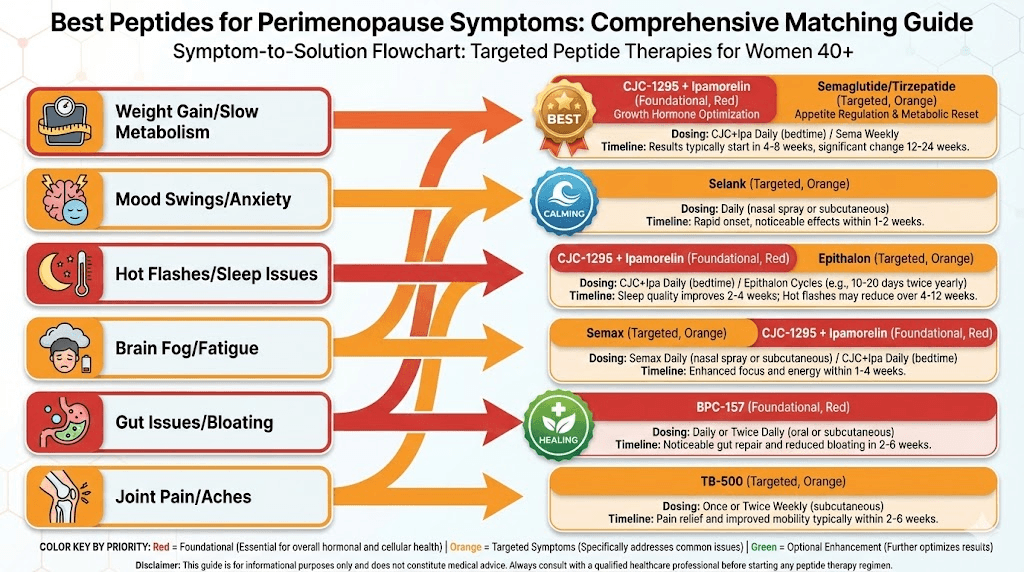
Here's the truth: CJC-1295 + Ipamorelin are the best foundation peptides for perimenopause because they restore declining growth hormone (which drops alongside estrogen), improve metabolism, energy, sleep, and body composition. BPC-157 addresses gut inflammation and stress that worsen during perimenopause. Selank manages mood swings and anxiety. Semaglutide/tirzepatide combat stubborn perimenopausal weight gain. The key is using peptides that work WITH your fluctuating hormones rather than fighting them.
This guide breaks down exactly why perimenopause is so challenging, which peptides address specific perimenopausal symptoms, complete protocols for the transition period, how to manage symptoms naturally with peptides, combining peptides with lifestyle changes, and transitioning from perimenopause protocols to menopause protocols.
Let's start with understanding what perimenopause actually is and why it's so difficult.
What is perimenopause and why it's so challenging
Perimenopause is the hormonal chaos before menopause.
Perimenopause timeline and hormone changes
What perimenopause is:
Transition phase before menopause
Typically begins ages 40-50 (average 45)
Lasts 4-8 years on average (varies widely)
Ends 12 months after final period
Hormones fluctuate wildly (not just decline)
Hormone patterns during perimenopause:
Estrogen: Up and down unpredictably (not just low)
Progesterone: Declines earlier than estrogen
Testosterone: Gradual decline begins
Growth hormone: Significant drop (20-30% by age 40)
Thyroid: Often becomes imbalanced
Cortisol: Increases (stress response changes)
Why this is harder than menopause:
Menopause = low hormones (predictable)
Perimenopause = chaotic fluctuations (unpredictable)
Can't predict how you'll feel day to day
Harder to treat with traditional HRT
Learn about peptides, how peptides work, and what are peptides used for in our foundational guides.
Common perimenopause symptoms
Hot flashes and temperature dysregulation:
Sudden heat waves
Night sweats disrupting sleep
Chills after hot flashes
Unpredictable timing
Can happen dozens of times daily
Mood and mental changes:
Mood swings (rage, sadness, anxiety)
Irritability (low frustration tolerance)
Anxiety (new or worsened)
Depression feelings
Brain fog and memory issues
Physical changes:
Weight gain (especially belly fat)
Difficulty losing weight
Muscle loss
Joint aches and pains
Headaches or migraines
Breast tenderness
Sleep disruption:
Insomnia (can't fall asleep)
Night waking (can't stay asleep)
Night sweats wake you up
Unrefreshing sleep
Daytime fatigue
Sexual and urogenital:
Low libido (loss of interest)
Vaginal dryness
Painful sex
Urinary changes
Energy and metabolism:
Crushing fatigue
Exercise doesn't work like before
Slower metabolism
Blood sugar issues developing
Thyroid-like symptoms
See our peptides for menopause guide for the next phase and peptides for women over 40 for comprehensive women's protocols.
Why peptides work well for perimenopause
Peptides address root causes:
Restore growth hormone (declines with estrogen)
Support metabolism (slowing dramatically)
Reduce inflammation (increases during transition)
Improve sleep (disrupted by hormones)
Balance stress response (overwhelmed during perimenopause)
Advantages over traditional approaches:
Work with fluctuating hormones (not against them)
Address symptoms from multiple angles
Safe to use during transition
Can combine with HRT if needed
No estrogen-related risks
Peptides vs HRT:
HRT: Replaces estrogen/progesterone
Peptides: Support overall hormonal system
Can use both together
Peptides address symptoms HRT doesn't (energy, metabolism, inflammation)
Peptides safe if you can't take HRT
Learn about best peptides for women and best safe peptides for women in our women's health guides.
Best peptides for perimenopause by symptom
Different peptides target different challenges.
For metabolic issues and weight gain
CJC-1295 + Ipamorelin - #1 foundation for perimenopause:
Why this is the best:
Restores growth hormone (drops 30-50% by perimenopause)
Directly addresses metabolic slowdown
Improves body composition (lose fat, maintain muscle)
Enhances energy and vitality
Supports overall hormonal system
Dosing for perimenopause:
CJC-1295 (no DAC): 150-250mcg before bed
Ipamorelin: 150-250mcg before bed (same injection)
Start lower (150mcg each) during perimenopause
5-7 days per week
6-12 months continuous use
Benefits:
Reverses metabolic decline
Reduces stubborn belly fat
Maintains muscle mass
Improves sleep quality (critical during perimenopause)
Enhances overall well-being
Timeline:
Week 1-2: Better sleep quality
Week 3-4: Increased energy
Week 6-8: Body composition improving
Month 3-6: Significant metabolic improvement
Use our CJC-1295 dosage calculator, see Ipamorelin benefits, Ipamorelin vs CJC-1295, and learn about peptides for muscle growth and best peptides for muscle growth.
Semaglutide/Tirzepatide - For significant weight gain:
When to use:
Gained 20+ lbs during perimenopause
Can't lose weight despite diet/exercise
Insulin resistance developing
Want aggressive weight loss
Dosing:
Semaglutide: Start 0.25mg weekly, titrate to 1-2mg
Tirzepatide: Start 2.5mg weekly, titrate to 5-15mg
Slow titration during perimenopause (more GI sensitivity)
6-12 months
Results:
15-25% body weight loss
Improved insulin sensitivity
Reduced inflammation
Better hormonal balance through weight loss
Use our semaglutide dosage calculator, see semaglutide vs tirzepatide, tirzepatide dosing guide, peptides for weight loss, best peptides for weight loss, best peptide stack for weight loss, and peptides for fat loss.
AOD 9604 - For targeted fat loss:
Best for:
Moderate weight gain (10-15 lbs)
Stubborn areas (belly, hips)
Don't need appetite suppression
Want gentle approach
Dosing:
300-600mcg daily subcutaneous
Empty stomach
3-6 months
See our AOD 9604 guide and HGH fragment 176-191 calculator.
For mood swings, anxiety, and brain fog
Selank - Best for emotional symptoms:
Why Selank is perfect for perimenopause:
Reduces anxiety without sedation
Stabilizes mood (reduces mood swings)
Improves stress resilience
Enhances mental clarity (brain fog relief)
No hormonal interference
Dosing:
300-600mcg intranasal, 1-2x daily
Morning and/or afternoon
Daily use during worst symptom periods
Can use as-needed basis
Benefits:
Calmer, more stable mood
Less reactive to stress
Better emotional regulation
Improved cognitive function
Enhanced sense of well-being
Timeline:
30-60 minutes: Initial calming effects
First week: Noticeable mood improvement
2-4 weeks: Significant anxiety reduction
Ongoing: Sustained emotional balance
See our peptides for anxiety guide for detailed anxiety protocols.
Semax - For brain fog and cognitive function:
Why it helps perimenopause:
Sharpens mental clarity
Improves focus and concentration
Reduces brain fog
Enhances memory
Increases motivation
Dosing:
300-600mcg intranasal, 1-2x daily
Morning and early afternoon
Use on work days or when clarity needed
Daily or as-needed
Combination approach:
Semax morning (mental clarity)
Selank afternoon (calm focus)
Synergistic for perimenopause brain
See our Semax peptide dosage guide, best peptide for energy and focus, best peptide for energy, and best peptides for energy.
For gut health and inflammation
BPC-157 - Critical for perimenopause:
Why gut health matters in perimenopause:
Estrogen decline worsens gut function
Inflammation increases systemically
IBS symptoms worsen
Gut-hormone axis disrupted
Stress affects gut dramatically
How BPC-157 helps:
Heals leaky gut and intestinal lining
Reduces systemic inflammation
Improves IBS and digestive issues
Supports gut-brain axis (mood connection)
Enhances overall health
Dosing:
250-500mcg twice daily
Injectable or oral (oral good for gut)
8-12 weeks minimum
Can use long-term safely
Benefits for perimenopause:
Reduced bloating and digestive issues
Lower inflammation (helps all symptoms)
Better nutrient absorption
Improved mood (gut-brain connection)
Enhanced energy
See our BPC-157 guide, BPC-157 benefits, how to take BPC-157, is BPC-157 banned, BPC-157 5mg dosing guide, BPC-157 dosage calculator, BPC-157 vs TB-500, BPC-157 alternatives, and peptides for gut health.
KPV - For inflammatory symptoms:
When to use:
High inflammation
Autoimmune symptoms
Severe digestive inflammation
Joint pain and stiffness
Dosing:
Injectable: 500-1,000mcg daily
Oral: 1-2mg daily
8-12 weeks
See our KPV peptide dosage guide and KPV peptide benefits.
For sleep disruption and night sweats
CJC-1295 + Ipamorelin - Best for sleep:
Why GH peptides improve sleep:
Growth hormone released during deep sleep
Replacing GH improves sleep quality
Deeper sleep cycles
Less night waking
More refreshing sleep
Timing for sleep:
Dose 30-60 minutes before bed
Optimizes natural GH pulse during sleep
Improves both falling asleep and staying asleep
Reduces impact of night sweats on sleep quality
Sleep benefits:
Fall asleep faster
Stay asleep longer
Deeper, more restorative sleep
Wake feeling refreshed
Better energy next day
Epithalon - For circadian rhythm:
Why it helps perimenopause sleep:
Regulates melatonin production
Improves circadian rhythms
Anti-aging benefits
Supports pineal gland function
Dosing:
10-day cycles: 5-10mg total (1mg daily for 10 days)
Repeat every 3-6 months
Injectable subcutaneous
See our NAD peptides guide for additional energy and sleep support.
For joint pain and body aches
TB-500 - For perimenopause aches:
Why joint pain increases:
Estrogen decline affects connective tissue
Inflammation increases
Recovery slower
Stiffness common
How TB-500 helps:
Reduces joint inflammation
Improves flexibility
Enhances tissue healing
Decreases stiffness and pain
Dosing:
Loading: 5-10mg weekly for 4-6 weeks
Maintenance: 2-5mg weekly ongoing
8-16 weeks
See our TB-500 guide, TB-500 benefits, TB-500 alternatives, TB-500 dosage calculator, best peptides for joint pain, best peptides for tendon repair, best peptides for injury recovery, best peptide for pain, and fast injury healing.
For skin, hair, and aging
GHK-Cu (copper peptides) - For aging skin:
Why skin changes in perimenopause:
Estrogen supports collagen production
Declining estrogen = thinner, aging skin
Wrinkles deepen
Skin loses elasticity
Dryness increases
How GHK-Cu helps:
Stimulates collagen synthesis
Thickens skin
Reduces wrinkles
Improves firmness and tone
Works independently of estrogen
Dosing:
Topical serum: 1-2% daily
Injectable: 1-2mg, 3-5x weekly
Long-term use
8-12 weeks for visible results
See our copper peptides GHK-Cu guide, glow peptides guide, glow peptides, can you use peptides and retinol together, copper peptides ruined my skin guide, should copper peptides be refrigerated, and can collagen peptides cause acne.
Collagen peptides - For hair, skin, nails:
Benefits:
Supports collagen depleted by estrogen loss
Improves hair thickness
Strengthens nails
Supports joint health
Easy oral supplementation
Dosing:
10-20g daily
Unflavored in water, coffee, smoothies
Continuous use
See our bone broth vs collagen peptides, does collagen peptides break a fast, hyaluronic acid peptide, peptides for hair growth, and peptides for hair loss.
Complete perimenopause peptide protocols
Comprehensive approaches for different needs.
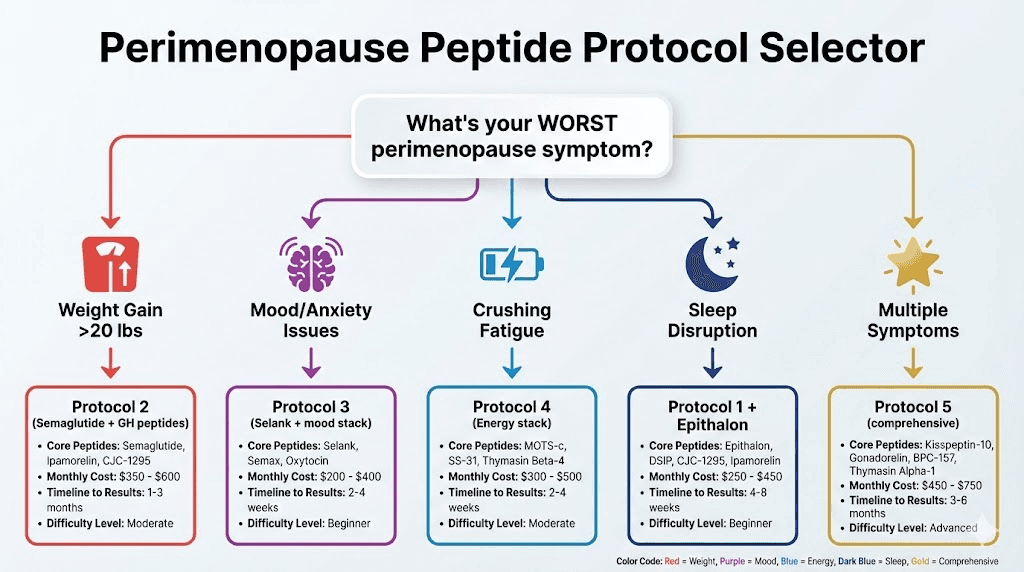
Protocol 1: Core perimenopause support (all women)
Goal: Address fundamental hormonal and metabolic changes
Foundation stack:
CJC-1295: 150-200mcg before bed
Ipamorelin: 150-200mcg before bed
BPC-157: 250mcg twice daily
Selank: 300mcg intranasal, 1-2x daily as needed
Why this stack:
CJC + Ipamorelin: Restore GH, metabolism, sleep, energy
BPC-157: Heal gut, reduce inflammation
Selank: Manage mood swings and anxiety
Schedule:
Morning: BPC-157 250mcg, Selank 300mcg (if using)
Evening: BPC-157 250mcg
Before bed: CJC-1295 + Ipamorelin 150-200mcg each
Duration: 6-12 months minimum (throughout perimenopause transition)
Expected benefits:
Better energy and vitality
Improved sleep quality
Maintained metabolism
Reduced inflammation
Stable mood
Overall improved quality of life
Cost: $300-450/month
See our peptide stacks guide, can you cycle different peptides, and peptide cycle planning guide.
Protocol 2: Perimenopause + significant weight gain
Goal: Lose 20-30+ lbs gained during perimenopause
Aggressive stack:
Semaglutide: 1-2mg weekly (or Tirzepatide 5-10mg)
CJC-1295 + Ipamorelin: 200mcg each before bed
BPC-157: 250mcg twice daily
Selank: As needed for mood
Why this combination:
Semaglutide: Powerful weight loss, appetite control
CJC + Ipamorelin: Preserve muscle during weight loss, maintain metabolism
BPC-157: Support gut health, reduce inflammation
Selank: Manage emotional eating
Expected results:
20-30 lbs lost in 4-6 months
Improved body composition (fat loss, muscle preservation)
Better metabolic health
Sustained results
Timeline:
Month 1: 5-8 lbs lost
Month 2-3: 10-15 lbs lost
Month 4-6: 20-30 lbs lost
Ongoing: Maintenance
Cost: $400-600/month
Use our peptide cost calculator to budget and peptide stack calculator to plan combinations.
Protocol 3: Severe mood and anxiety symptoms
Goal: Stabilize mood, reduce anxiety, improve mental health
Mood-focused stack:
Selank: 300-600mcg intranasal, 2x daily
CJC-1295 + Ipamorelin: 200mcg each before bed (sleep critical for mood)
BPC-157: 250mcg twice daily (gut-brain axis)
Semax: 300mcg morning (brain fog, motivation)
Why this works:
Selank: Direct anxiolytic and mood stabilizing effects
GH peptides: Improve sleep → better mood regulation
BPC-157: Heal gut (gut-brain connection critical)
Semax: Mental clarity and focus
Benefits:
Reduced anxiety and panic
More stable mood
Less irritability and rage
Better stress resilience
Improved cognitive function
Timeline:
Week 1: Initial calming effects (Selank)
Week 2-4: Significant mood improvement
Month 2-3: Sleep and energy improving (GH peptides)
Month 3+: Comprehensive mental health enhancement
Cost: $350-500/month
Protocol 4: Energy and vitality focus
Goal: Combat crushing fatigue and restore energy
Energy stack:
CJC-1295 + Ipamorelin: 250mcg each before bed
Semax: 300-600mcg intranasal morning
BPC-157: 250mcg twice daily
NAD+: Weekly or as needed
Benefits:
Restored physical energy
Enhanced mental clarity
Better exercise recovery
Improved stamina
Sustained vitality throughout day
Timeline:
Week 1-2: Better sleep → slight energy increase
Week 3-4: Noticeable daily energy improvement
Week 6-8: Significant vitality restoration
Month 3+: Sustained high energy
See our best peptide for peptide selection guide.
Protocol 5: Comprehensive anti-aging approach
Goal: Address all perimenopause aging effects
Complete stack:
CJC-1295 + Ipamorelin: 250mcg each nightly
BPC-157: 250mcg twice daily
GHK-Cu: 2mg injectable 5x weekly
Selank: 300mcg daily as needed
Epithalon: 10-day cycles every 3-6 months
Benefits:
Comprehensive hormone support
Skin and appearance optimization
Metabolic maintenance
Inflammation reduction
Longevity enhancement
Mood stability
Timeline:
Month 1-2: Sleep, energy, mood improving
Month 3-4: Skin quality visible improvements
Month 6: Comprehensive transformation
Ongoing: Maintained benefits
Cost: $500-700/month
See our peptides for anti-aging guide and peptides for athletic performance.
Combining peptides with HRT during perimenopause
Many women use both for comprehensive support.
Peptides + bioidentical hormones
Can you combine:
Yes, generally safe and synergistic
Peptides address different issues than HRT
Often reduce HRT doses needed
Consult prescribing physician
Common combinations:
Estrogen + progesterone HRT + CJC-1295 + Ipamorelin
Bioidentical testosterone + BPC-157
Low-dose HRT + Complete peptide protocol
Why combination works:
HRT: Replaces hormones directly
Peptides: Support systems affected by hormone changes
Complementary mechanisms
Better results than either alone
Who benefits most:
Women with severe symptoms needing HRT
Those wanting to reduce HRT doses
Comprehensive hormone optimization
Better control of all symptoms
Peptides as HRT alternative
For women who can't or won't take HRT:
Reasons to avoid HRT:
Breast cancer risk or history
Blood clot history
Stroke risk factors
Personal preference
Side effects from HRT
Peptide-only approach:
CJC + Ipamorelin: Replace some hormonal functions
Selank: Manage mood without hormones
BPC-157: Support overall health
GHK-Cu: Skin benefits without estrogen
Effectiveness:
Won't replace estrogen effects completely
But addresses many symptoms effectively
Often sufficient for mild-moderate symptoms
Good option if HRT not possible
See our testosterone boosters vs peptides, peptides vs steroids comparison, and HGH alternatives.
Timing considerations
If starting both HRT and peptides:
Start HRT first (if using)
Establish HRT dose over 1-2 months
Add peptides once HRT stable
Easier to assess effects
If already on HRT:
Add peptides to existing HRT
Monitor symptoms
May be able to reduce HRT doses eventually
Work with prescribing physician
Transitioning off HRT:
Establish peptide protocol first
Gradually reduce HRT
Monitor symptoms carefully
Not recommended to stop HRT abruptly
Lifestyle optimization for perimenopause with peptides
Peptides work best with solid fundamentals.
Nutrition for perimenopause
Protein critical:
1-1.2g per lb ideal body weight
Prevents muscle loss (accelerates in perimenopause)
Supports peptide effectiveness
Improves satiety
Stabilizes blood sugar
Carb timing matters:
Insulin sensitivity worse in perimenopause
Focus carbs around workouts
Lower carb other times
Quality matters (whole grains, vegetables)
Healthy fats essential:
Support hormone production
Reduce inflammation
Include omega-3s (fish, flax, walnuts)
Moderate amounts (not low-fat diet)
Foods to emphasize:
Cruciferous vegetables (support estrogen metabolism)
Fatty fish (omega-3s, vitamin D)
Berries (antioxidants)
Nuts and seeds
Quality proteins
Foods to limit:
Alcohol (worsens hot flashes, sleep, mood)
Excessive caffeine (anxiety, sleep disruption)
Processed foods (inflammation)
Added sugars (insulin resistance)
Exercise adjustments
Resistance training non-negotiable:
3-4x weekly minimum
Prevents muscle loss
Maintains bone density
Supports metabolism
Optimize peptide effects
HIIT vs steady-state:
HIIT effective for fat loss (works with GH peptides)
But can stress already-stressed system
Balance with recovery
Listen to your body
Recovery importance:
Slower recovery in perimenopause
Peptides help but still need rest
Don't overtrain
Sleep critical for results
Movement matters:
Daily walking (10,000 steps)
Yoga for stress and flexibility
Low-intensity steady state (LISS)
Find sustainable routine
See our peptide strength protocol benefits and safest peptides for muscle growth.
Sleep optimization
Why sleep is critical:
GH released during deep sleep
Peptides optimize sleep
But sleep hygiene still matters
Poor sleep worsens all symptoms
Sleep strategies:
Consistent bed/wake times
Cool, dark room
No screens 1 hour before bed
Magnesium before bed
CJC + Ipamorelin 30-60 min before sleep
Managing night sweats:
Cooling mattress pad or sheets
Layered bedding (easy to adjust)
Fan or AC
Peptides help but may not eliminate completely
Keep water bedside
Stress management
Why stress is worse in perimenopause:
Cortisol increases naturally
Less stress resilience
Hormones make you more reactive
Compounds all other symptoms
Stress reduction strategies:
Meditation (10-20 min daily)
Deep breathing exercises
Yoga or gentle movement
Nature time
Social connection
Selank peptide for anxiety support
See our common peptide mistakes beginners make and getting started with peptides.
Tracking and monitoring perimenopause protocols
Measuring progress during unpredictable transition.
What to track
Symptoms log:
Hot flash frequency and severity
Sleep quality (hours, quality 1-10)
Energy levels daily
Mood and anxiety
Brain fog incidents
Period timing (if still menstruating)
Body composition:
Weight weekly (understanding fluctuations normal)
Body measurements (waist, hips)
Photos every 2-4 weeks
How clothes fit
Muscle vs fat changes
Hormone-related:
Menstrual cycle length and flow
PMS symptoms
Breast tenderness
Libido changes
Vaginal dryness
Quality of life:
Exercise performance
Work productivity
Relationship satisfaction
Social engagement
Overall well-being
Bloodwork for perimenopause peptides
Baseline testing:
Estradiol (estrogen)
Progesterone
Testosterone (total and free)
FSH (follicle-stimulating hormone - elevated in perimenopause)
Thyroid panel (TSH, Free T3, Free T4)
IGF-1 (growth hormone marker)
Fasting glucose and insulin
Lipid panel
Follow-up (every 3-6 months):
IGF-1 (should increase with GH peptides)
Thyroid panel
Fasting glucose
Hormones if on HRT
Adjusting based on results:
Low IGF-1 still? Increase GH peptide dose
High IGF-1? Reduce dose or take breaks
Thyroid abnormal? Address separately
Glucose worsening? Focus on diet and weight loss peptides
See our peptide dosing guide, peptide dosage chart, and how to calculate peptide dosages.
When to adjust protocols
Increase peptide doses if:
No improvement after 6-8 weeks
Benefits plateaued
Symptoms worsening despite use
IGF-1 not elevated enough
Decrease or stop if:
Side effects problematic
Symptoms resolved
Entering menopause (transition to menopause protocols)
Health concerns develop
Transitioning to menopause:
Once 12 months without period = menopause
May need different peptide approach
Hormone levels more stable (predictably low)
Adjust protocols accordingly
See our peptides for menopause for post-perimenopause protocols.
Safety considerations for perimenopause peptides
Special precautions during this transition.
Peptide safety during perimenopause
Generally safe peptides:
CJC-1295 + Ipamorelin (excellent safety record)
BPC-157 (very safe long-term)
Selank (minimal side effects)
Semax (well-tolerated)
GHK-Cu (safe topical and injectable)
Start conservatively:
Lower doses than younger women
Hormones already unstable
More sensitive during transition
Titrate slowly
Monitor carefully:
Track symptoms meticulously
Regular bloodwork
Adjust based on response
Stop if concerning effects
Contraindications and cautions
Avoid peptides if:
Active cancer (theoretical GH concerns)
Uncontrolled hypertension
Severe kidney or liver disease
Use caution with:
Breast cancer history (discuss with oncologist)
Diabetes (monitor glucose with GLP-1s)
Thyroid issues (monitor thyroid function)
Multiple medications (check interactions)
Discuss with physician:
Any chronic health conditions
If on multiple medications
Cancer history
Cardiovascular issues
See our peptide safety and risks, are peptides legal, research vs pharmaceutical peptides, and peptides vs SARMS.
Managing side effects
Common perimenopause-specific reactions:
Water retention (GH peptides):
More common in perimenopause
Usually temporary (2-4 weeks)
Reduce sodium, increase water
Lower dose if persistent
Mood changes:
Some women more emotional initially
Usually balances within 2-3 weeks
Selank can help
Reduce dose if worsens mood
Fatigue (initial):
Body adjusting to GH peptides
Temporary (1-2 weeks)
Improves to increased energy
Lower dose if severe
Hot flash interactions:
GH peptides may reduce hot flashes
Or no effect
Rarely worsen (stop if they do)
Individual variation
How you can use SeekPeptides for perimenopause protocols
SeekPeptides provides personalized peptide protocols specifically for perimenopause challenges - managing unpredictable symptoms, hormonal chaos, stubborn weight gain, mood swings, and the difficult transition to menopause.
Access our research library covering perimenopause-specific peptide protocols, clinical evidence for symptom management, and proven approaches from women who've successfully navigated perimenopause with peptides. Learn how to combine peptides with bioidentical hormones safely, manage the emotional rollercoaster naturally, and transition smoothly from perimenopause to menopause protocols.
Use our calculators - peptide calculator, CJC-1295 dosage calculator, semaglutide dosage calculator, BPC-157 dosage calculator, peptide cost calculator, peptide stack calculator, peptide reconstitution calculator - for precise perimenopause peptide protocols.
Learn proper administration through our peptide injections guide, how to reconstitute peptides, peptide storage guide, bacteriostatic water for peptides, water to mix with peptides, how long reconstituted peptides last in fridge, injectable vs oral peptides, and lyophilized vs liquid peptides guides.
Track your perimenopause symptoms, peptide protocols, and progress to identify what works best for your body. Access our best peptide vendors guide for quality sourcing.
Final thoughts
Start with lower doses (20-30% below standard) and titrate based on response. Women in perimenopause often respond better to conservative approaches.
Track symptoms meticulously since day-to-day variations are normal during this transition.
Peptides work synergistically with HRT if you're using it, or can provide significant relief as a standalone approach if HRT isn't an option. They address symptoms that hormones alone don't fix - metabolism, inflammation, gut health, and sleep quality.
Quality sourcing, proper administration, and supporting peptides with solid nutrition, resistance training, and stress management determine success. Monitor with bloodwork every 3-6 months and adjust based on results and symptoms.
Your path through perimenopause can be manageable with the right peptide protocols addressing your specific challenges during this transformative transition.
Helpful resources for perimenopause
Peptide calculator - Calculate all doses
CJC-1295 dosage calculator - GH peptide dosing
Semaglutide dosage calculator - Weight loss dosing
Take care of yourself. Cheers. Join SeekPeptides.