Jan 15, 2026
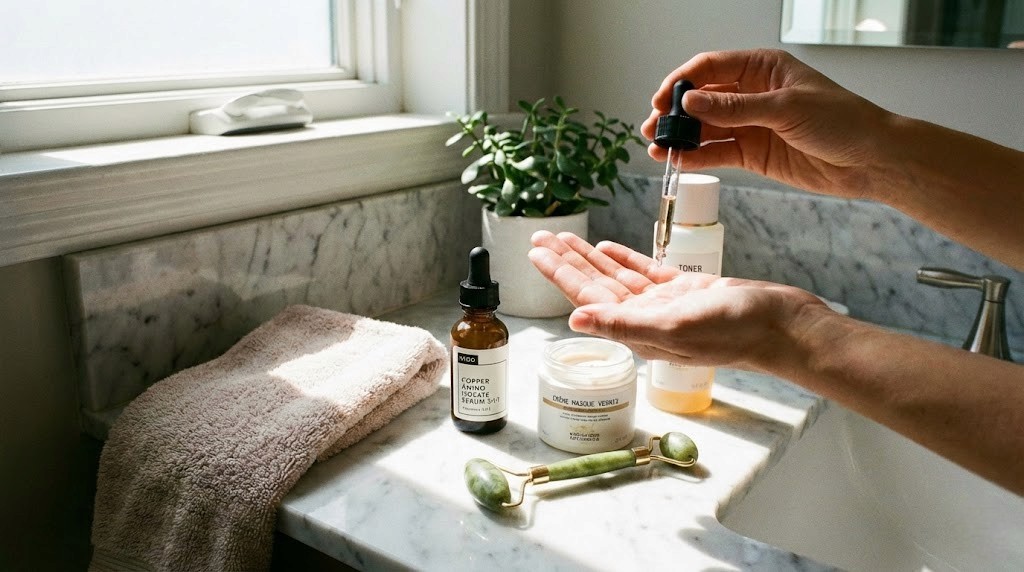
Some people add copper peptides to their routine and see dramatic improvements within weeks. Others use the exact same products and notice nothing, or worse, experience irritation and breakouts. The difference rarely comes down to the product itself. It comes down to how you use it, when you apply it, and what you combine it with.
This guide focuses entirely on building an effective copper peptide routine. Not the science behind why it works, not the mechanisms of action, but the practical, step-by-step process of incorporating these peptides into your daily skincare in a way that actually produces results. You will learn exactly when to apply, what order to layer, which ingredients to avoid, and how to build complete morning and evening routines tailored to your specific skin concerns.
The dosing and concentration details matter, but execution matters more. A perfect product used incorrectly will underperform a good product used correctly every single time.
SeekPeptides created this routine guide to bridge the gap between owning copper peptide products and actually getting results from them.
The Foundation: Understanding When to Apply Copper Peptides
Timing affects everything with peptide skincare. Apply at the wrong time, layer in the wrong order, or combine with the wrong ingredients, and you neutralize much of the benefit before it reaches your skin cells.
Morning vs Night Application
Copper peptides work in both morning and evening routines, but each timing offers distinct advantages.
Morning application benefits:
Antioxidant protection against environmental damage throughout the day
Supports skin barrier function during sun and pollution exposure
Primes skin for makeup application with improved texture
Complements your anti-aging routine from the start of the day
Evening application benefits:
Aligns with natural skin repair cycles that peak during sleep
Longer contact time without environmental interference
Better penetration when skin is not competing with sunscreen and makeup
Supports overnight collagen synthesis
If you can only apply once daily, evening typically produces better results. The skin undergoes most of its repair and regeneration during sleep, and copper peptides support these natural processes. However, twice-daily application maximizes benefits for those committed to comprehensive anti-aging protocols.
The Optimal Application Window
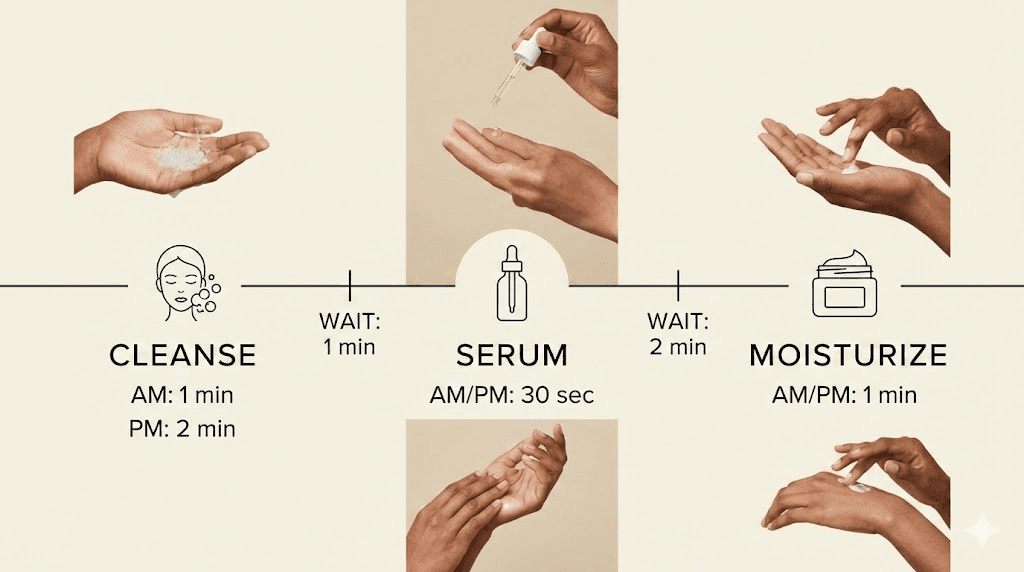
Copper peptides penetrate best when applied to clean, slightly damp skin. This window exists for approximately 60 seconds after cleansing, when the skin is still moist but not wet. Applying to completely dry skin reduces absorption. Applying to soaking wet skin dilutes the product.
The ideal sequence: cleanse, pat face until just damp (not dripping), immediately apply copper peptide serum, wait 30-60 seconds for absorption, continue with remaining products.
The Correct Layering Order
Product layering follows one fundamental rule: thinnest to thickest consistency. Water-based products go first, oil-based products go last.
Serums before creams. Treatments before moisturizers. This ensures each layer can penetrate rather than sitting on top of previous products.
Complete Morning Routine Order
Step | Product Type | Wait Time | Notes |
|---|---|---|---|
1 | Gentle cleanser | Rinse | Avoid harsh sulfates |
2 | Toner (optional) | 30 sec | Hydrating, not astringent |
3 | Copper peptide serum | 60 sec | Apply to damp skin |
4 | Hyaluronic acid (optional) | 30 sec | Boosts hydration |
5 | Niacinamide serum (optional) | 30 sec | Compatible with copper peptides |
6 | Eye cream | 30 sec | Lower concentration for eye area |
7 | Moisturizer | 60 sec | Seals in actives |
8 | Sunscreen | - | SPF 30+ minimum, non-negotiable |
Complete Evening Routine Order
Step | Product Type | Wait Time | Notes |
|---|---|---|---|
1 | Oil cleanser (if wearing makeup) | Rinse | Removes sunscreen, makeup |
2 | Gentle cleanser | Rinse | Second cleanse |
3 | Toner (optional) | 30 sec | pH balancing |
4 | Copper peptide serum | 60 sec | Apply to damp skin |
5 | Treatment serums | 60 sec | See compatibility section |
6 | Eye cream | 30 sec | Peptide-based preferred |
7 | Moisturizer or night cream | - | Richer formula for overnight |
8 | Face oil (optional) | - | Locks everything in |
These sequences represent the framework. Not every routine needs every step. A minimalist approach using cleanser, copper peptide serum, moisturizer, and sunscreen works well for many people. The additional steps optimize results for those with specific concerns or who enjoy comprehensive skincare protocols.
Ingredient Compatibility: What Works and What Conflicts
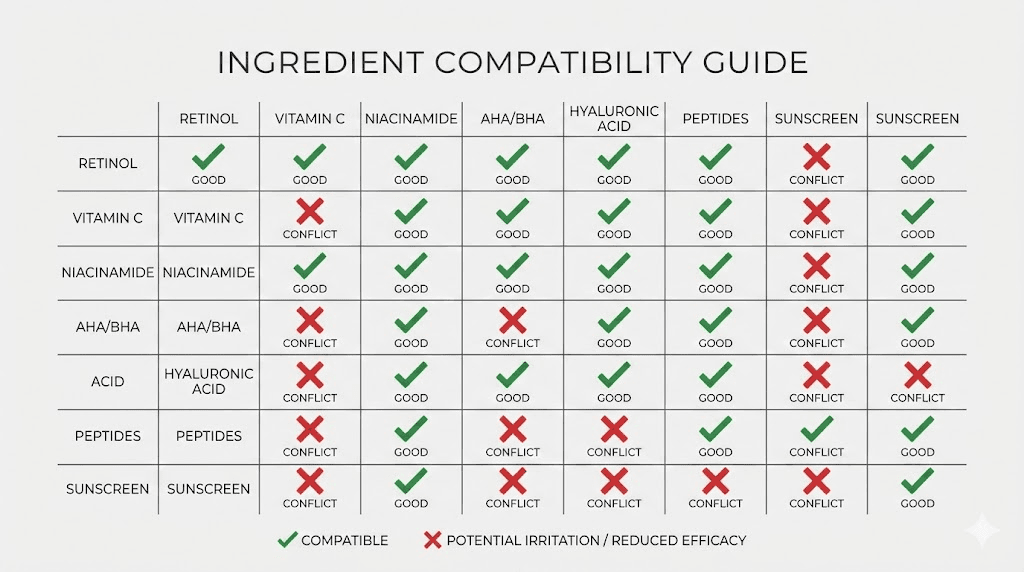
Copper peptides interact with other skincare actives in ways that can either enhance or completely neutralize their effects.
Understanding these interactions prevents wasted product and wasted time.
Excellent Combinations
These ingredients work synergistically with copper peptides and can be layered in the same routine.
Ingredient | Why It Works | Layering Order | Combined Benefit |
|---|---|---|---|
Hyaluronic Acid | Different mechanisms, no interaction | After copper peptides | Hydration + regeneration |
Niacinamide | Complementary actions, calming effect | After copper peptides | Barrier support + repair |
Ceramides | Barrier support without interference | In moisturizer | Enhanced barrier function |
Squalane | Gentle, non-reactive oil | Last step | Moisture seal + repair |
Aloe Vera | Soothing, hydrating base | With or after peptides | Calming + regeneration |
Glycerin | Humectant without interaction | In any product | Hydration support |
Centella Asiatica | Complementary healing properties | Before or after | Enhanced wound healing |
These combinations form the foundation of effective healing-focused routines.
The key is that none of these ingredients oxidize, destabilize, or compete with copper peptides for absorption.
Problematic Combinations to Avoid
These ingredients conflict with copper peptides and should never be applied at the same time.
Ingredient | Why It's Problematic | Solution | Risk Level |
|---|---|---|---|
Vitamin C (L-Ascorbic Acid) | Copper oxidizes Vitamin C rapidly | Use on alternate days | High |
AHAs (Glycolic, Lactic) | Low pH destabilizes peptides | Different times of day | Medium-High |
BHAs (Salicylic Acid) | Acidic environment reduces efficacy | Different times of day | Medium |
Retinoids (at same time) | Combined irritation, reduced stability | Alternate nights | Medium |
Benzoyl Peroxide | Oxidizing agent degrades peptides | Never combine | High |
Strong Exfoliants | Compromises absorption, irritation | Separate by 12+ hours | Medium |
The Vitamin C Problem Explained
Vitamin C deserves special attention because so many people want to use both in their routine. The issue is chemical: copper ions act as a catalyst for Vitamin C oxidation. When you layer these two ingredients, the copper causes Vitamin C to break down rapidly, potentially creating irritating byproducts while simultaneously reducing the effectiveness of both ingredients.
The solution is temporal separation. Using Vitamin C in the morning and copper peptides at night is not enough for some formulations. The safest approach is alternating days: Vitamin C one day, copper peptides the next. This ensures no interaction while still incorporating both powerhouse ingredients into your anti-aging strategy.
The Retinoid Question: Can You Use Both?
Retinoids and copper peptides both rank among the most effective anti-aging ingredients available. Using both seems logical, but the combination requires careful management.
Why the Combination Is Tricky
Both ingredients stimulate cellular turnover.
Both can cause sensitivity in some users.
Layering them together in the same routine increases irritation risk significantly, especially for those new to either ingredient or those with sensitive skin.
However, the ingredients do not chemically conflict the way Vitamin C and copper peptides do. The issue is cumulative irritation potential, not ingredient degradation.
Safe Combination Strategies
Strategy | How It Works | Best For | Difficulty |
|---|---|---|---|
Alternate Nights | Copper peptides Monday/Wednesday/Friday, Retinoid Tuesday/Thursday/Saturday | Most people | Easy |
AM/PM Split | Copper peptides morning, Retinoid evening | Experienced users | Moderate |
Buffer Method | Moisturizer between copper peptides and retinoid | Advanced users | Advanced |
Seasonal Rotation | Copper peptide focus in summer, Retinoid focus in winter | Those with reactive skin | Easy |
For most people starting out, alternate nights provides the safest introduction. Apply copper peptide serum on non-retinoid nights. This gives your skin recovery time between active treatments while still maximizing benefits from both ingredients.
For detailed guidance on combining peptides with retinoids, the key principle is gradual introduction. Start with each ingredient separately, establish tolerance, then slowly introduce the combination.
Sample Routines by Skin Type
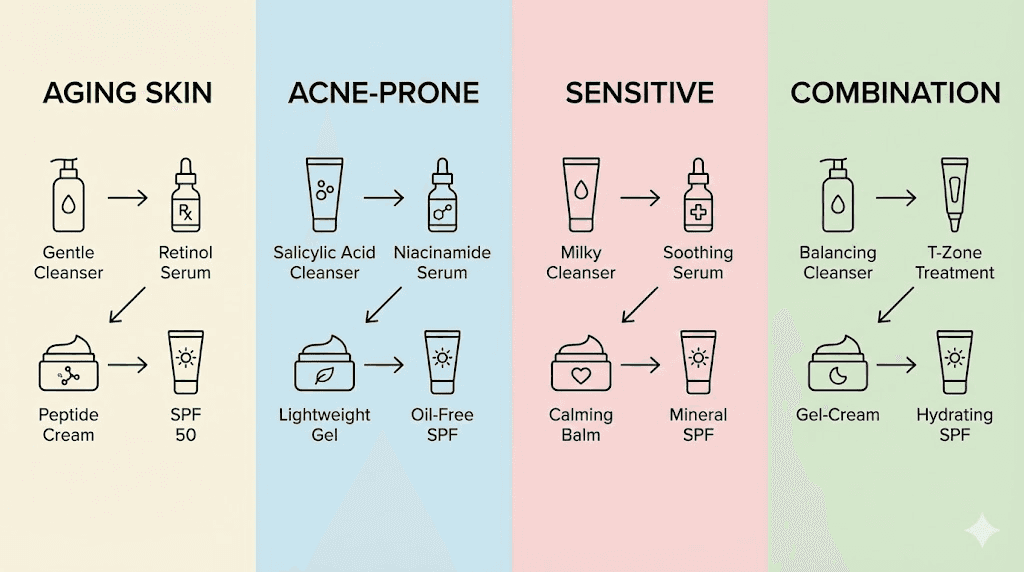
Different skin types require different approaches. These complete routines account for specific concerns while maximizing copper peptide benefits.
Routine for Aging/Mature Skin
Focus: Collagen support, firmness, fine line reduction
Morning:
Cream cleanser (gentle, non-stripping)
Hydrating toner with hyaluronic acid
Copper peptide serum (2-4% concentration)
Niacinamide serum (5%)
Peptide eye cream
Rich moisturizer with ceramides
SPF 50 sunscreen
Evening:
Oil cleanser to remove sunscreen
Cream cleanser
Copper peptide serum
Retinoid (alternate nights) OR additional peptide serum
Eye cream
Night cream with squalane
Face oil (rosehip or marula)
This routine prioritizes hydration and barrier support alongside copper peptide benefits. Mature skin needs extra moisture to maintain plumpness and prevent the tight, dry feeling that can come with active ingredients.
Routine for Acne-Prone Skin
Focus: Scar healing, inflammation reduction, texture improvement
Morning:
Gentle foaming cleanser
Niacinamide serum (helps with oil control)
Copper peptide serum (start at 1-2%)
Lightweight, non-comedogenic moisturizer
Oil-free SPF 30+ sunscreen
Evening:
Micellar water or gentle cleanser
Salicylic acid treatment (alternate nights with copper peptides)
Copper peptide serum (on non-acid nights)
Azelaic acid (optional, compatible)
Gel moisturizer
The key for acne-prone skin is never combining copper peptides with acids in the same routine. Alternate between acid treatment nights and copper peptide nights. This approach heals acne scars while managing active breakouts without overwhelming the skin.
Routine for Sensitive/Reactive Skin
Focus: Barrier repair, calming, gradual improvement
Morning:
Water rinse or micellar water only
Centella asiatica serum
Copper peptide serum (0.5-1%, lower concentration)
Barrier repair moisturizer
Mineral sunscreen SPF 30+
Evening:
Cream cleanser (fragrance-free)
Copper peptide serum
Ceramide moisturizer
Squalane oil (optional)
Sensitive skin requires the simplest routine with the fewest potential irritants. Start with lower concentrations and build tolerance slowly. The risk of copper peptide reactions increases with higher concentrations, so starting conservative prevents setbacks.
Routine for Combination Skin
Focus: Balance, targeted treatment, oil control in T-zone
Morning:
Gel cleanser
Hydrating toner (avoid T-zone or use less)
Copper peptide serum (all over)
Niacinamide (focus on T-zone)
Lightweight moisturizer (heavier on cheeks)
SPF 30+ sunscreen
Evening:
Oil cleanser (if needed)
Gel cleanser
Copper peptide serum
Hyaluronic acid (dry areas)
Moisturizer (adjust by zone)
Combination skin benefits from zone-specific application. Use the same copper peptide serum everywhere, but adjust other products based on what each area needs.
Weekly Schedule Templates
Consistency matters more than perfection.
These weekly schedules provide structure while accounting for ingredient conflicts and skin recovery needs.
Basic Weekly Schedule (Copper Peptides + Retinoid)
Day | Morning | Evening |
|---|---|---|
Monday | Copper peptides | Copper peptides |
Tuesday | Basic routine | Retinoid |
Wednesday | Copper peptides | Copper peptides |
Thursday | Basic routine | Retinoid |
Friday | Copper peptides | Copper peptides |
Saturday | Basic routine | Retinoid |
Sunday | Copper peptides | Recovery (moisturizer only) |
Advanced Weekly Schedule (Multiple Actives)
Day | Morning | Evening |
|---|---|---|
Monday | Vitamin C | Copper peptides |
Tuesday | Copper peptides | Retinoid |
Wednesday | Vitamin C | Copper peptides |
Thursday | Copper peptides | AHA exfoliation |
Friday | Vitamin C | Copper peptides |
Saturday | Copper peptides | Retinoid |
Sunday | Copper peptides | Recovery (hydration focus) |
The advanced schedule requires established tolerance to all ingredients. Do not attempt this if you are new to any of these actives. Build up over months, not weeks.
Minimalist Weekly Schedule
Day | Morning | Evening |
|---|---|---|
Every day | Cleanse, copper peptides, moisturizer, SPF | Cleanse, copper peptides, moisturizer |
Sometimes simple works best. Copper peptides alone, used consistently twice daily, produces significant results for many people. You do not need a complex routine to see benefits. Consistency beats complexity.
Building Your Routine: Step-by-Step Process
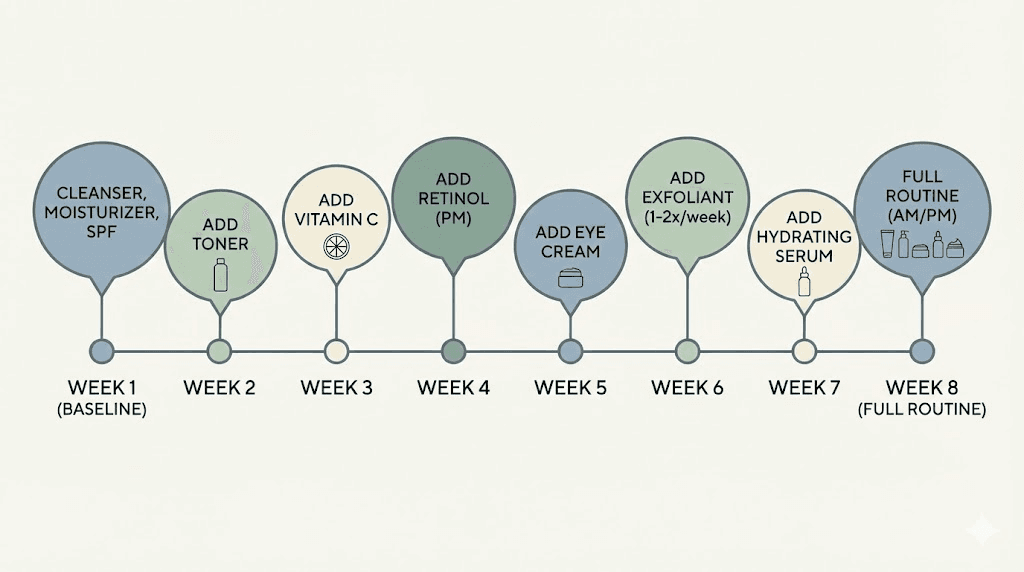
Starting from zero requires a methodical approach. Jumping into a full routine with multiple actives invites problems. Follow this progression for best results.
Week 1-2: Establish Baseline
Use only cleanser, moisturizer, and sunscreen. No actives. This establishes your skin's baseline and ensures you are not already experiencing irritation from current products.
Week 3-4: Introduce Copper Peptides
Add copper peptide serum to your evening routine only. Start with every other night. Use a lower concentration (1-2%) if available. Monitor for any reactions.
Signs to watch for:
Redness that persists more than 30 minutes
Unusual breakouts (some initial purging is normal)
Itching or burning sensation
Excessive dryness or peeling
If any of these occur, reduce frequency to twice weekly and reassess.
Week 5-6: Increase Frequency
Move to nightly copper peptide application. If tolerated well, add morning application. You should now be using copper peptides twice daily.
Week 7-8: Optional Additional Actives
If desired, introduce one additional active ingredient. Only one. Choose based on your primary concern:
Fine lines/wrinkles → Retinoid (alternate nights)
Hyperpigmentation → Vitamin C (alternate days, morning only)
Texture/pores → Niacinamide (can layer with copper peptides)
Acne → Salicylic acid (alternate nights)
Week 9+: Optimize and Maintain
Fine-tune based on results. Adjust concentrations. Add or remove products based on how your skin responds. This is where personalization happens.
Common Mistakes and How to Avoid Them
These errors undermine results more than any other factor. Avoiding them accelerates progress significantly.
Mistake 1: Using Too Many Actives Too Soon
Enthusiasm leads people to combine copper peptides with retinoids, Vitamin C, acids, and more all at once. The result is irritation, a compromised barrier, and often worse skin than before starting.
Solution: One new active at a time. Minimum two weeks between introductions. Patience produces better results than aggression.
Mistake 2: Applying to Dry Skin
Copper peptide serums absorb best on slightly damp skin. Applying to completely dry skin reduces penetration and wastes product.
Solution: Apply within 60 seconds of cleansing while skin is still slightly damp. If skin dries before application, mist with water or hydrating toner first.
Mistake 3: Layering with Vitamin C
This remains the most common compatibility mistake. The oxidation reaction between copper and Vitamin C degrades both ingredients.
Solution: Never in the same routine. Separate by at least 12 hours, preferably use on alternate days.
Mistake 4: Expecting Overnight Results
Copper peptides work through cellular mechanisms that take time. Expecting visible results in days leads to premature abandonment of effective routines.
Solution: Commit to 8-12 weeks minimum before evaluating results. Take photos at the start to compare objectively. Review the realistic timeline for peptide results.
Mistake 5: Inconsistent Application
Using copper peptides three times one week and seven times the next produces inconsistent results. The skin responds best to predictable, regular input.
Solution: Set a schedule and follow it. Same time each day. Same routine. Consistency compounds over time.
Mistake 6: Skipping Sunscreen
Copper peptides are not photosensitizing, but sun damage undermines every anti-aging effort. Building collagen while destroying it with UV exposure produces net zero progress.
Solution: SPF 30 minimum, every single day, regardless of weather or season. This is non-negotiable for anyone serious about anti-aging results.
Mistake 7: Using Too High a Concentration Too Fast
Higher concentration does not always mean better results. Starting with 4% copper peptides when your skin has never used them invites irritation.
Solution: Start at 1-2% concentration. Build to 3-4% over several months if desired and tolerated. More is not always better with copper peptide dosing.
Optimizing Results: Advanced Techniques
Once your basic routine is established and tolerated, these techniques can enhance outcomes.
Technique 1: Pre-Treatment Exfoliation
Gentle exfoliation 12-24 hours before copper peptide application removes dead skin cells that block absorption. This is not about harsh scrubbing but about creating a clear pathway for the peptides.
Use a gentle enzyme exfoliant or mild AHA (5% or less) the night before your copper peptide application if you want to maximize penetration. Do not exfoliate and apply copper peptides in the same session.
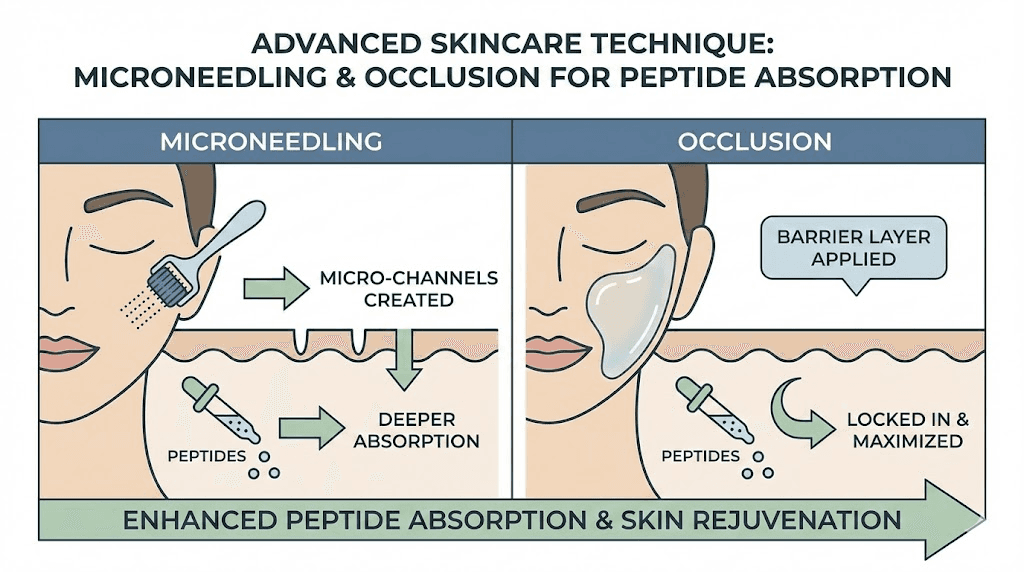
Technique 2: Occlusion Method
Applying a thin layer of occlusive product (like petroleum jelly or a heavy balm) over your copper peptide serum and moisturizer traps the actives against your skin. This increases contact time and may enhance absorption.
Best for: evening use, especially in dry climates or during winter months.
Technique 3: Targeted Application
Rather than applying copper peptides evenly everywhere, concentrate on areas of specific concern. Fine lines around eyes? Apply a second layer there. Acne scars on cheeks? Extra attention to that area.
The skin on different areas of your face has different needs. Customize application based on where you want the most improvement.
Technique 4: Combining with Microneedling
Professional or at-home microneedling creates channels that dramatically increase copper peptide absorption. When done correctly, this combination accelerates results significantly.
Important: Apply copper peptide serum immediately after microneedling while channels are still open. Use a higher concentration (3-4%) for post-microneedling application. This is advanced technique, not for beginners.
Technique 5: Copper Peptide Masking
Once or twice weekly, apply a generous layer of copper peptide serum, wait 10 minutes, then apply moisturizer without rubbing in the serum. This extended contact time allows deeper penetration.
Some people cover the serum with a sheet mask or damp cloth during the waiting period to prevent evaporation and enhance absorption further.
Routine Adjustments by Season
Skin needs change with weather. Adjusting your copper peptide routine seasonally maintains optimal results year-round.
Summer Adjustments
Change | Reason | How to Adjust |
|---|---|---|
Lighter moisturizer | Heat and humidity provide natural moisture | Switch to gel or lightweight lotion |
Higher SPF | Increased sun exposure | SPF 50+, reapply every 2 hours outdoors |
Possible concentration reduction | Heat can increase sensitivity | Drop from 4% to 2-3% if irritation occurs |
Focus on antioxidant benefits | Environmental damage peaks | Emphasize morning application |
Winter Adjustments
Change | Reason | How to Adjust |
|---|---|---|
Richer moisturizer | Cold air and heating dry skin | Switch to cream or balm texture |
Add facial oil | Extra barrier protection | Apply as final step |
Increase concentration | Skin tolerates more in cooler weather | Move from 2% to 3-4% if desired |
Focus on repair benefits | Recovery from summer damage | Emphasize evening application |
Transition Season Tips (Spring/Fall)
Transition periods require the most attention. Skin adapts slowly to changing conditions. Monitor closely and adjust incrementally rather than making dramatic changes.
Spring: gradually lighten products as humidity increases.
Fall: gradually add richness as air dries. The keyword is gradual. Abrupt changes disrupt the skin's adaptation process.
Troubleshooting Common Problems
When routines do not work as expected, systematic troubleshooting identifies the issue faster than random changes.
Problem: Skin Getting Worse, Not Better
Possible causes:
Initial purging (normal, resolves in 2-4 weeks)
Concentration too high
Incompatible ingredient combination
Product contamination or degradation
Allergic reaction
Solution process:
Stop all actives for one week, use only basic cleanser and moisturizer
Reintroduce copper peptides alone at lower concentration
If problems persist, consult a dermatologist
Check product expiration and storage conditions
For detailed guidance on troubleshooting copper peptide reactions, the most important step is eliminating variables to identify the cause.
Problem: No Visible Results After 12 Weeks
Possible causes:
Concentration too low for your needs
Inconsistent application
Product quality issues
Unrealistic expectations for your age/condition
Undermining factors (sun exposure, smoking, poor sleep)
Solution process:
Review application consistency honestly
Consider increasing concentration
Verify product is from reputable source
Compare photos from day 1 to now (changes are often invisible day-to-day)
Address lifestyle factors that counteract skincare
Problem: Good Results Initially, Then Plateau
Possible causes:
Skin has adapted (normal)
Need higher concentration or additional actives
Seasonal changes affecting skin
Product has lost potency
Solution process:
Increase concentration if currently using low percentage
Add complementary active (retinoid or niacinamide)
Try pulsing method: use for 3 weeks, break for 1 week, resume
Check product storage and expiration
Product Selection Guidelines
Not all copper peptide products perform equally. These criteria help identify quality formulations.
What to Look For
Factor | Good Sign | Warning Sign |
|---|---|---|
Concentration | Clearly stated percentage | "Proprietary blend" without specifics |
Packaging | Airless pump, dark bottle | Jar packaging, clear bottle |
Peptide type | GHK-Cu specifically named | Generic "copper peptides" |
Other ingredients | Complementary actives | Known conflicting ingredients |
pH indication | Formulated at proper pH | No pH information |
Brand transparency | Clear sourcing, testing info | Vague claims, no details |
Concentration Guide for Different Needs
Concentration | Best For | Experience Level |
|---|---|---|
0.5-1% | Sensitive skin, beginners, maintenance | Beginner |
1-2% | General anti-aging, most users | Beginner-Intermediate |
2-3% | Visible aging concerns, experienced users | Intermediate |
3-4% | Aggressive treatment, advanced protocols | Advanced |
4%+ | Targeted treatment, professional guidance | Advanced |
Higher is not automatically better. Many people see excellent results at 2% concentration. Only increase if you have specific reasons and your skin tolerates current levels well.
Integrating with Injectable Copper Peptide Protocols
Some people use both topical copper peptides for skin and injectable GHK-CU for systemic benefits. This combination requires coordination.
Topical + Injectable Protocol
Method | Timing | Purpose | Notes |
|---|---|---|---|
Injectable GHK-CU | Evening, before bed | Systemic tissue regeneration | Follow dosing protocols |
Topical copper peptides | Morning and evening | Targeted skin benefits | Continue normal routine |
The injectable and topical forms complement rather than duplicate each other. Injectable provides systemic benefits throughout the body. Topical provides concentrated, targeted skin benefits. Using both maximizes total copper peptide impact.
For those using injectable protocols, SeekPeptides provides comprehensive guidance on combining administration methods for optimal results.
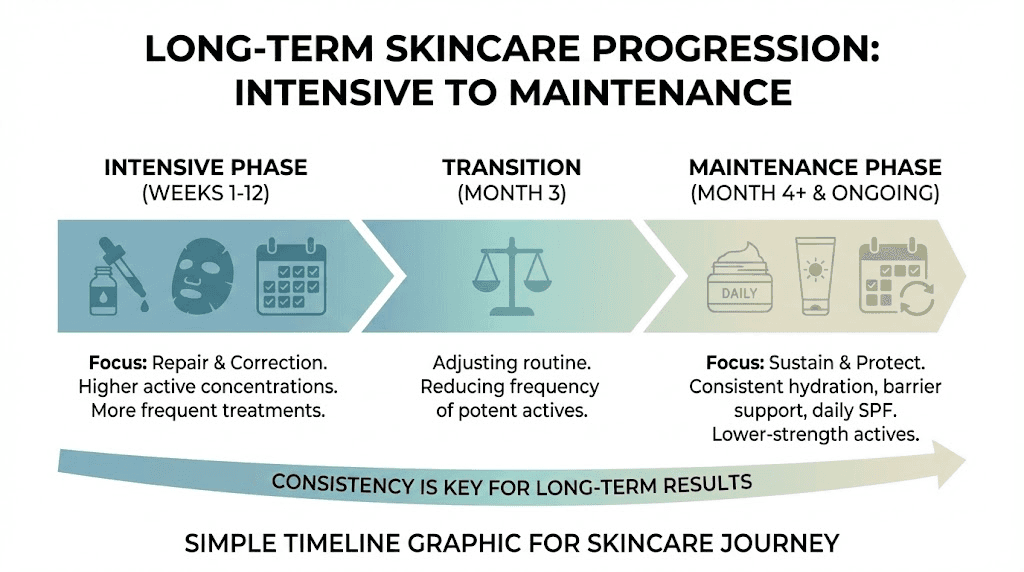
Long-Term Maintenance
Copper peptides are not a short-term fix.
Long-term, consistent use produces the best outcomes.
Planning for ongoing use ensures sustained results.
Maintenance Phase Guidelines
After achieving desired results (typically 6-12 months of consistent use), you can potentially:
Reduce from twice daily to once daily
Reduce concentration by one level
Maintain current routine indefinitely
The choice depends on your results and goals. Some people need to maintain full protocols to keep results. Others can reduce intensity once improvements stabilize.
Signs You Can Reduce Intensity
Skin quality has plateaued at desired level
No new concerns developing
Skin tolerates current routine easily
Consistent for 6+ months
Signs You Should Maintain or Increase
Still seeing incremental improvements
Significant aging concerns remain
Environmental factors (sun exposure, pollution) are high
Results diminish when reducing
Frequently Asked Questions
Can I use copper peptides every day?
Yes, copper peptides are generally safe for daily use, both morning and evening. However, if you are new to them, start with every other day and build up to daily use over 2-4 weeks. Monitor for any signs of irritation and adjust accordingly.
Should I apply copper peptides before or after moisturizer?
Before moisturizer. Copper peptide serums are water-based and penetrate best when applied to clean, damp skin. Moisturizer goes on top to seal in the serum and provide additional hydration. This follows the thin-to-thick layering principle.
How long before I see results from copper peptides?
Initial hydration improvements may appear within 2-4 weeks. More significant changes to fine lines and firmness typically require 8-12 weeks of consistent use. Visible transformation continues to develop over 6-12 months.
Can I use copper peptides with hyaluronic acid?
Yes, these ingredients work excellently together. Apply copper peptides first to clean, damp skin, then layer hyaluronic acid on top. The combination provides both regeneration and hydration benefits.
Why can't I use copper peptides with Vitamin C?
Copper ions catalyze Vitamin C oxidation, causing it to break down rapidly and potentially creating irritating byproducts. This degrades both ingredients. Use on alternate days or at minimum 12 hours apart.
What percentage of copper peptides should I use?
Start with 1-2% if you are new to copper peptides. Most people see good results at 2-3%. Higher concentrations (4%+) are for experienced users with established tolerance. Higher is not always better. Check the copper peptide concentration guide for detailed recommendations.
Do copper peptides work better at night?
Slightly. The skin undergoes repair and regeneration primarily during sleep, and copper peptides support these processes. Evening application aligns with this natural cycle. However, morning application also provides benefits through antioxidant protection.
Can I use copper peptides around my eyes?
Yes, but use a lower concentration (1-2%) for the delicate eye area. The skin around the eyes is thinner and more sensitive. Many people use a specific copper peptide eye product formulated for this area.
In case I don't see you, good afternoon, good evening, and good night. Join SeekPeptides.