Apr 4, 2026
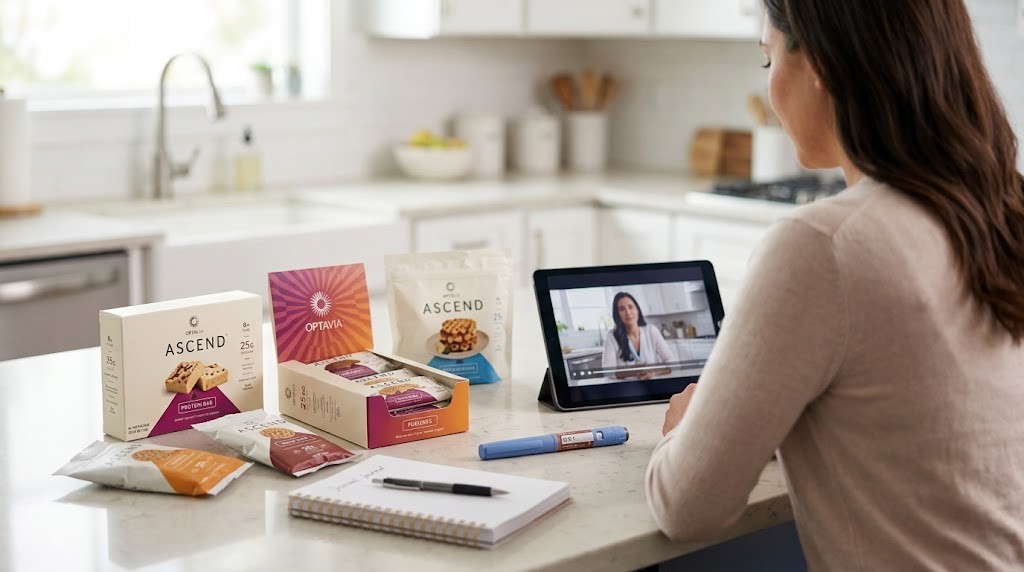
Tired of conflicting advice about what to eat while taking semaglutide or tirzepatide? You are not alone. The explosion of GLP-1 receptor agonist medications has created a parallel explosion of nutrition programs claiming to optimize your results. Optavia is one of the biggest names entering this space, and their ASCEND GLP-1 Nutrition Support Plan promises structured meals, coaching, and muscle-preserving formulas designed specifically for people on GLP-1 injections.
But here is the thing nobody is asking loudly enough. Does a structured meal delivery program actually improve GLP-1 outcomes? Or is it an expensive layer on top of something you could handle yourself with the right information?
This guide breaks down everything about the Optavia GLP-1 program. The products, the pricing, the coaching model, the science behind their claims, and the alternatives that might serve you better. No sales pitch. Just the information you need to decide whether this program fits your weight loss journey or drains your budget without meaningful benefit.
SeekPeptides covers these nutrition programs because understanding what you eat on GLP-1 therapy matters almost as much as the medication itself. Muscle preservation, nutrient timing, protein intake, these factors determine whether you lose fat effectively or sacrifice lean mass in the process. Getting the nutrition piece right is not optional. It is essential.
What is Optavia and how did they enter the GLP-1 space
Optavia is a subsidiary of Medifast, a publicly traded company that has been in the meal replacement and weight management business for decades. The traditional Optavia model revolves around their 5 and 1 Plan, where clients eat five Optavia-branded meal replacements (called Fuelings) plus one self-prepared Lean and Green meal per day. The entire system operates through independent coaches, most of whom were Optavia clients themselves before becoming distributors.
That last detail matters. A lot.
The coaching model means your Optavia coach is not a registered dietitian. They are not a certified nutritionist. They are a person who used the program, liked the results, and signed up to sell it. Some coaches are knowledgeable and genuinely helpful. Others are reading from a script. The variability in coaching quality is something every potential client should understand before committing money to this program.
When GLP-1 medications started reshaping the weight loss industry, Optavia pivoted. In partnership with telehealth platform LifeMD, they launched the ASCEND GLP-1 Nutrition Support Plan and the GLP-1 Optimization Plan. These programs combine Optavia branded mini meals with structured nutrition guidance designed specifically for people taking semaglutide, tirzepatide, retatrutide, or other GLP-1 receptor agonists.
The timing was strategic. Medifast stock had been declining as GLP-1 drugs pulled customers away from traditional meal replacement programs. Rather than compete with the medications, Optavia chose to position themselves as a companion service. A smart business move, regardless of whether the product delivers clinical value.
The ASCEND GLP-1 nutrition support plan explained
The core of Optavia GLP-1 offering is the ASCEND product line. These are reformulated mini meals designed with higher protein content than traditional Optavia Fuelings. Each ASCEND mini meal contains over 20 grams of protein, a significant upgrade from the standard Fuelings that typically provide 10 to 15 grams.
Here is what a typical day looks like on the plan.
Three ASCEND mini meals spread throughout the day. One Lean and Green+ meal that you prepare yourself. One Daily Nutrients Pack containing vitamins and supplements. The total daily intake lands somewhere around 1,000 to 1,200 calories, depending on which specific products you choose and how you prepare your Lean and Green+ meal.
The ASCEND product lineup includes about 10 options. Protein bars. Pancake and waffle mixes. Shake mixes. The products are free from artificial colors, artificial flavors, and artificial sweeteners, which is a genuine positive. However, they are still highly processed meal replacements. The ingredient lists are long, and while the macronutrient profiles look good on paper, whole food nutrition and processed food nutrition are not the same thing.
Protein content and muscle preservation claims
This is where Optavia makes their strongest argument. Research consistently shows that protein intake on GLP-1 medications is critical. Studies indicate that 20 to 50 percent of total weight lost on GLP-1 drugs can come from lean body mass rather than fat. That is a staggering range, and it explains why muscle preservation has become the central talking point for every GLP-1 companion product on the market.
The ASCEND mini meals deliver 20+ grams of protein per serving. Three servings per day gives you 60+ grams from the mini meals alone, plus whatever protein you get from your Lean and Green+ meal. If you prepare that meal with 6 to 8 ounces of lean protein, you could reach 80 to 100 grams of daily protein intake.
Is that enough? For many people on GLP-1 medications, researchers recommend 0.8 to 1.6 grams of protein per kilogram of body weight per day. Some experts push even higher, suggesting 1.2 to 1.5 grams per kilogram as the sweet spot for muscle preservation during active weight loss. For a 200-pound person (approximately 91 kilograms), that translates to roughly 73 to 145 grams of protein daily.
The Optavia plan can get you into the lower end of that range. But it probably will not hit the higher targets that research suggests are optimal for lean mass preservation. That is a meaningful limitation.
Compare this to simply eating whole foods with adequate protein. A breakfast of eggs and Greek yogurt, a lunch with chicken breast and vegetables, and a dinner with fish or lean beef can easily deliver 120 to 150 grams of protein without any meal replacements at all. The question becomes whether the convenience and structure of Optavia justifies the cost when the same nutritional targets are achievable through regular food.
The daily nutrients pack
Each day on the plan includes a Daily Nutrients Pack. This supplement bundle provides vitamins and minerals that might be lacking when caloric intake drops significantly on GLP-1 medications. Reduced appetite means reduced food intake, which means reduced micronutrient intake. Supplementation makes sense in this context.
However, a quality multivitamin from any reputable brand can accomplish the same thing at a fraction of the cost. The Daily Nutrients Pack is not proprietary magic. It is standard vitamin and mineral supplementation packaged within the Optavia ecosystem.
Pricing breakdown and what you actually pay
Money matters. Especially when you are already paying for GLP-1 medication, which can range from $200 to $1,500 per month depending on the drug, the source, and your insurance coverage.
The GLP-1 Nutrition Support Kit costs approximately $309.20 per month when enrolled in the Premier+ autoship program. Individual ASCEND products run about $37.95 per box of 10 servings. You need roughly 90 mini meal servings per month (three per day), which means you are looking at approximately nine boxes, or about $341 if purchased individually outside the kit.
Let us add that up with the medication cost.
If you are paying $300 per month for compounded semaglutide and $309 per month for Optavia, your total monthly weight loss spend hits $609. If you are on brand-name tirzepatide without insurance, you could be looking at $1,500 plus $309, which pushes past $1,800 per month.
For that price, you could hire a registered dietitian who specializes in GLP-1 nutrition, buy high quality whole foods, and still have money left over. The economics only make sense if you genuinely cannot or will not plan meals on your own and need the structure that pre-packaged food provides.
Hidden costs to consider
The $309 monthly fee covers the mini meals, the Daily Nutrients Pack, and access to coaching. But it does not cover the GLP-1 medication itself. Through the LifeMD partnership, Optavia clients may be able to get prescriptions, but the medication cost is separate.
You also need to buy groceries for your daily Lean and Green+ meal. Depending on your protein choices and where you shop, that adds another $150 to $300 per month to your food budget. The Optavia plan does not replace your grocery bill. It supplements it.
There are also reports of billing issues. The Better Business Bureau shows Optavia with a 1.59 star rating, with significant complaints about being charged after cancellation and difficulties with the autoship program. If you sign up, read the cancellation terms carefully and document every interaction with customer service.
The coaching model and its limitations
Optavia coaches are independent contractors, not employees. They earn commissions on product sales and bonuses for recruiting new coaches. This is a multi-level marketing (MLM) structure, and that structure creates inherent conflicts of interest.
Your coach benefits financially when you buy more product. They benefit when you stay on the program longer. They benefit when you recruit friends and family. None of this means your coach is dishonest or unhelpful. Many Optavia coaches genuinely care about their clients and provide meaningful support. But the financial incentives point in one direction, and that direction is always toward more purchases.
About 90 percent of Optavia coaches were clients first. This means they have personal experience with the program, which can be valuable. They understand the challenges, the hunger, the meal prep logistics. But personal experience is not clinical expertise.
If you have questions about how semaglutide affects your liver enzymes, your Optavia coach cannot help you. If you need guidance on managing tirzepatide side effects, your coach is not qualified to advise. If you are wondering about combining medications or adjusting doses, you need a healthcare provider, not a meal replacement distributor.
The coaching works best as accountability and emotional support. Someone checking in on you, encouraging you, helping you stay consistent. For some people, that social connection is the missing piece. For others, it feels like a sales call disguised as a wellness check.
What good GLP-1 nutrition coaching actually looks like
A qualified nutrition professional working with GLP-1 patients would provide several things that Optavia coaching typically does not. Personalized macronutrient targets based on your body composition, activity level, and medication response. Meal plans built around whole foods that you actually enjoy eating. Adjustments based on your specific side effects and how your appetite changes over time. Guidance on nutrient timing around your injection schedule.
The difference is customization versus standardization. Optavia gives everyone the same products with minor variations. A good nutritionist builds a plan around your life, your preferences, your medical history, and your specific GLP-1 protocol.
Does the science support structured meal programs on GLP-1
This is the question that matters most, and the answer is nuanced.
Research on diet during GLP-1 therapy consistently supports three principles. First, adequate protein intake preserves muscle mass. Second, resistance training amplifies the benefits of proper nutrition. Third, structured eating patterns help people maintain results long term, especially after discontinuing GLP-1 medications.
Optavia addresses the first and third points. The ASCEND products deliver meaningful protein. The daily structure removes decision fatigue around meals. These are real benefits for people who struggle with meal planning or tend to undereat protein when their appetite drops on appetite-suppressing medications.
But there is no published research specifically validating the Optavia GLP-1 program. No clinical trials comparing Optavia plus GLP-1 versus whole food nutrition plus GLP-1. No peer-reviewed data showing that ASCEND mini meals preserve more muscle than an equivalent protein intake from regular food. The program is built on sound nutritional principles, but the specific product execution has not been independently tested.
A systematic review published in eClinicalMedicine found that patients who stop GLP-1 medications regain approximately 50 to 60 percent of lost weight within one year. The weight regain begins as early as 8 weeks after discontinuation and plateaus around 20 to 26 weeks. This means that whatever nutrition strategy you adopt during treatment needs to be sustainable after treatment ends.
And sustainability is where meal replacement programs historically struggle. When you stop buying the products, you need to know how to feed yourself. If three years on Optavia taught you to open packets rather than cook balanced meals, the transition off the program becomes its own challenge layered on top of the transition off medication.
Protein requirements on GLP-1 medications and how Optavia stacks up
Let us get specific about protein, because this is the foundation of every GLP-1 nutrition argument.
When you lose weight on semaglutide or tirzepatide, your body does not exclusively burn fat. It also breaks down muscle tissue. The ratio depends on several factors. Protein intake, exercise habits, rate of weight loss, genetics, and age all play roles. Clinical data shows that lean mass loss can account for 20 to 50 percent of total weight lost, a range wide enough to make proper nutrition genuinely consequential.
Research recommends the following protein targets for people on GLP-1 therapy:
Minimum target: 0.8 grams per kilogram of body weight per day. This is the baseline to prevent clinical protein deficiency, but it is not enough to optimize muscle preservation during active weight loss.
Moderate target: 1.2 grams per kilogram per day. This level supports meaningful muscle preservation and is achievable for most people with conscious meal planning.
Optimal target: 1.4 to 1.6 grams per kilogram per day. This range aligns with recommendations for people undergoing significant weight loss who want to minimize lean mass reduction. Some bariatric nutrition experts recommend absolute protein amounts of 80 to 120 grams per day regardless of body weight.
Now let us evaluate Optavia against these targets.
A 180-pound person (82 kilograms) needs roughly 98 to 131 grams of protein per day at the moderate to optimal range. The three ASCEND mini meals provide approximately 60 to 65 grams. The Lean and Green+ meal, properly prepared, adds another 30 to 45 grams. Total daily protein: approximately 90 to 110 grams.
That falls within the moderate range for most people. It falls short of optimal for larger individuals. And it assumes you prepare your Lean and Green+ meal correctly, choosing protein-dense options rather than defaulting to lower-protein choices when your appetite is suppressed.
The honest assessment: Optavia gets you to adequate protein. Not exceptional protein. Not personalized protein. Adequate. And adequate costs $309 per month before groceries.
What optimal protein on GLP-1 actually looks like
For comparison, here is what a whole food approach delivers at similar or higher protein levels.
Breakfast: Three eggs scrambled with spinach and feta cheese, plus a cup of Greek yogurt. Approximately 40 grams of protein. Cost: roughly $3.
Lunch: Six ounces of grilled chicken breast over mixed greens with olive oil dressing. Approximately 42 grams of protein. Cost: roughly $4.
Dinner: Six ounces of salmon with roasted vegetables and quinoa. Approximately 38 grams of protein. Cost: roughly $6.
Snack: Protein shake with whey isolate. Approximately 25 grams of protein. Cost: roughly $2.
Daily total: Approximately 145 grams of protein. Daily cost: roughly $15, or $450 per month for food that also provides fiber, micronutrients, phytochemicals, and the satisfaction of eating actual meals.
The Optavia approach costs $309 for mini meals plus $150 to $300 for groceries, totaling $459 to $609. The whole food approach costs $400 to $500 and delivers more protein, more variety, and better long-term eating skills.
The math is not close.
The GLP-1 optimization plan versus the nutrition support plan
Optavia offers two tiers for GLP-1 users, and the distinction matters.
GLP-1 nutrition support plan
This is the standard tier. Three ASCEND mini meals, one Lean and Green+ meal, one Daily Nutrients Pack. Designed for people already taking GLP-1 medication who want nutritional structure. No medication included. You bring your own prescription.
GLP-1 lifestyle program with LifeMD
This is the premium tier. It includes everything from the Nutrition Support Plan plus access to LifeMD telehealth providers who can prescribe GLP-1 medications. Eligible clients get both the nutrition program and the medication through a single integrated experience.
The LifeMD integration is interesting in theory. Having your nutrition program and medication managed through connected platforms could improve coordination. In practice, LifeMD is a telehealth platform, not your primary care physician. The providers prescribing your GLP-1 medication through LifeMD may not have deep expertise in GLP-1 side effect management or complex cases involving multiple health conditions.
If you already have a prescriber you trust, the Nutrition Support Plan alone is the relevant offering. The LifeMD integration adds convenience at the cost of potentially less personalized medical oversight.
Muscle loss on GLP-1 and why nutrition matters so much
The muscle loss conversation is not scare tactics. It is real, it is measurable, and it affects long-term outcomes in ways that scale weight alone does not capture.
When you lose 50 pounds on tirzepatide, some of that weight comes from fat. Some comes from water. And some comes from muscle. The STEP 1 trial for semaglutide showed that participants lost an average of 14.9 percent of body weight, but lean mass accounted for roughly 40 percent of the total weight lost. That means for every 10 pounds lost, about 4 pounds was muscle.
Why does this matter beyond aesthetics?
Muscle is metabolically active tissue. It burns calories at rest. Lose too much muscle during a weight loss phase and your metabolism slows down more than the weight loss alone would predict. This creates a metabolic disadvantage that makes weight regain more likely after you stop medication. Your body burns fewer calories than it did before treatment, even at a lower weight, because you lost the tissue that was keeping your metabolic rate up.
Research from the University of Alabama at Birmingham has been investigating this exact problem, exploring whether targeting specific metabolic pathways could prevent the rebound weight gain that follows GLP-1 discontinuation. Their work underscores that the problem is biological, not behavioral. Your body actively resists maintaining the new lower weight, and muscle loss makes that resistance stronger.
The nutrition strategy that minimizes muscle loss has three components. High protein intake, which we already covered. Resistance training, which no meal replacement program can provide. And adequate total caloric intake, because eating too few calories accelerates muscle breakdown even when protein is high.
This last point creates tension with the Optavia model. At 1,000 to 1,200 calories per day, the plan is quite restrictive. When combined with the appetite suppression from GLP-1 medication, some users may eat even less because they simply are not hungry. Under-eating while on appetite-suppressing drugs is a real and underappreciated risk, and a structured low-calorie plan could potentially make it worse rather than better.
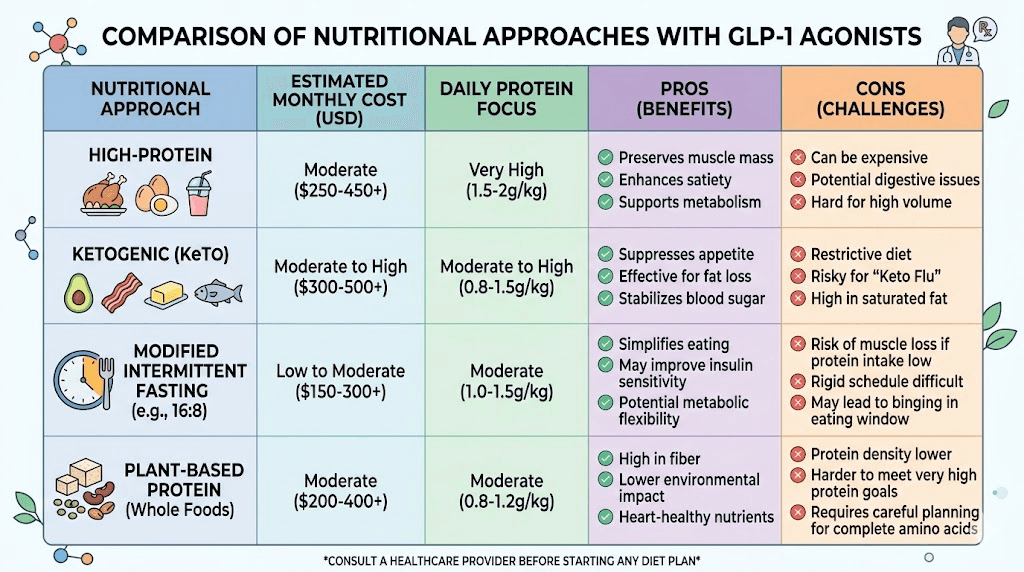
Comparing Optavia GLP-1 to other nutrition approaches
Optavia is far from the only option for structured nutrition on GLP-1 therapy. Understanding the alternatives helps you make a more informed decision.
Whole food meal prep
Cost: $400 to $600 per month depending on food choices and location.
Protein delivery: Highly customizable, easily hitting 120 to 150+ grams per day.
Pros: Maximum nutrition variety, develops sustainable eating skills, no processed meal replacements, no autoship to cancel.
Cons: Requires meal planning knowledge, cooking skills, and time. Some people genuinely struggle with these elements, especially during the early weeks when GLP-1 side effects are strongest.
Registered dietitian specializing in GLP-1
Cost: $100 to $300 per month for ongoing consultations.
Protein delivery: Personalized to your exact needs, adjusted as your weight and medication change.
Pros: Clinical expertise, evidence-based recommendations, customized to your health conditions, adjusted over time as your results progress.
Cons: Requires finding a qualified provider, insurance may not cover it, no pre-made food included.
Meal delivery services
Cost: $300 to $600 per month depending on the service and number of meals.
Protein delivery: Varies by service, many offer high-protein options.
Pros: Convenience of pre-prepared whole food meals, no cooking required, more nutritional variety than meal replacements.
Cons: Less customizable than cooking yourself, may contain preservatives or excess sodium, ongoing subscription cost.
DIY high-protein plan with GLP-1 food lists
Cost: $300 to $500 per month in groceries.
Protein delivery: As high as you want to make it.
Pros: Cheapest option, maximum flexibility, builds lasting food skills, completely sustainable after stopping medication.
Cons: No external accountability, requires nutrition knowledge, takes more effort during a period when you may feel low energy from GLP-1 fatigue.
Who the Optavia GLP-1 plan actually works for
No product is universally good or universally bad. The value of Optavia GLP-1 depends entirely on who you are and what you need.
The ideal Optavia GLP-1 client
You hate cooking and will not start now. You have tried meal planning before and consistently failed to follow through. You need external accountability from a coach checking in on you. You have disposable income and the $309 per month does not create financial stress. You prefer the simplicity of opening a packet over planning and prepping meals. You are early in your GLP-1 journey and feeling overwhelmed by all the nutrition advice.
For this person, Optavia provides genuine value. Not because the products are magic, but because the structure removes friction. And in weight loss, reducing friction often matters more than optimizing nutrition to the last decimal.
Who should skip Optavia GLP-1
You enjoy cooking or are willing to learn. You already understand basic nutrition and macronutrient tracking. You are cost-conscious and every dollar matters when paying for medication. You want to develop sustainable eating habits that do not depend on purchased products. You have specific dietary needs (celiac disease, severe food allergies, religious dietary requirements) that the limited ASCEND product line cannot accommodate. You are an experienced GLP-1 user who already has their nutrition dialed in.
For this person, Optavia is an unnecessary expense. The money is better spent on quality groceries, a few sessions with a registered dietitian, or even a gym membership that addresses the resistance training piece, which Optavia does not touch at all.
The MLM factor and why it matters
We need to talk about the elephant in the room.
Optavia operates as a multi-level marketing company. Independent coaches earn commissions on product sales and bonuses for recruiting new coaches into the network. This business model has drawn criticism from consumer advocates, the Federal Trade Commission, and former coaches who found that the income promises did not match reality for most participants.
How does this affect you as a GLP-1 client? In several ways.
First, the products carry MLM pricing. Multi-level marketing companies must build enough margin into their products to pay commissions at multiple levels. This means you are paying more for ASCEND mini meals than you would for nutritionally equivalent products from direct-to-consumer brands. The MLM markup is baked into every box.
Second, your coach has divided loyalties. Their income depends on your continued purchases and on recruiting you (or your friends) as new coaches. This does not automatically make them bad people or bad coaches. But it does mean the relationship is commercial, not clinical.
Third, the social pressure can be intense. Optavia coaches are trained to check in frequently, to celebrate your wins publicly (often in group settings), and to frame any desire to leave the program as self-sabotage. If you decide the products are not for you, the exit process may involve more emotional friction than canceling a meal delivery service.
None of this means Optavia products are harmful. The ASCEND mini meals are nutritionally adequate products. But the delivery mechanism, the MLM coaching network, adds costs and complications that have nothing to do with nutrition science.
What the research says about meal replacements during weight loss
Setting aside Optavia specifically, what does the broader research say about meal replacement strategies during active weight loss?
A Cochrane review found that meal replacement programs can be effective for weight loss, particularly in the first 3 to 6 months. The structure and portion control help people create a calorie deficit without needing to count every gram of food. For people who struggle with traditional dieting, the simplicity of meal replacements removes barriers to adherence.
However, the same body of research shows diminishing returns over time. As people tire of eating the same products, adherence drops. When they transition back to regular food, many lack the skills to maintain their results. The long-term data on meal replacement diets is mixed at best.
When you add GLP-1 medication to the equation, the calculus changes somewhat. The medication handles appetite suppression, which is traditionally the hardest part of weight loss. The meal replacement handles meal planning, which is the second hardest part. Together, they could theoretically address the two biggest barriers to adherence.
But here is the critical question nobody is funding studies to answer. Does the Optavia plus GLP-1 combination produce better outcomes than GLP-1 plus sensible whole food eating? Until that data exists, we are operating on reasonable assumptions, not proven superiority.
Potential downsides and risks specific to the Optavia GLP-1 plan
Every program has drawbacks. Here are the ones specific to combining Optavia with GLP-1 therapy.
Calorie restriction stacking
GLP-1 medications already reduce your appetite significantly. Adding a calorie-restricted meal plan on top of medication-induced appetite suppression could push total intake dangerously low. Some tirzepatide users report eating 600 to 800 calories per day during the appetite suppression peak. If the Optavia plan targets 1,000 to 1,200 calories but your medication-suppressed appetite only lets you eat 700 to 900, you have a problem.
Under-eating accelerates muscle loss, causes fatigue, impairs cognitive function, and can trigger hair loss. A structured meal plan should have mechanisms for increasing intake when needed, not just decreasing it. It is not clear that the Optavia coaching model addresses this nuance adequately.
GI side effects compounding
GLP-1 medications cause bloating, constipation, nausea, and sulfur burps in many users. Processed meal replacements, even well-formulated ones, can exacerbate gastrointestinal symptoms. The fiber content in ASCEND products might help some people and worsen symptoms in others. The sugar alcohols and protein isolates used in processed bars and shakes are known GI irritants for sensitive individuals.
If you are already dealing with tirzepatide bloating or semaglutide acid reflux, adding processed mini meals into the mix could make those symptoms worse. Whole foods are generally easier on the digestive system during GLP-1 therapy, though individual responses vary.
Dependency on external structure
One of the biggest long-term risks with any meal replacement program is developing dependency on the structure rather than internal food skills. When you eventually stop GLP-1 medication, and research shows that about 50 to 68 percent of users discontinue within the first year due to cost, side effects, or reaching goal weight, you need to be able to feed yourself sustainably.
If your entire nutrition strategy during GLP-1 treatment was built on opening Optavia packets, the transition to independent eating becomes another hurdle at exactly the moment when your appetite returns and weight regain risk peaks. This is not a theoretical concern. It is the central failure mode of every meal replacement diet, and adding GLP-1 medication to the mix does not eliminate it.
How to build your own GLP-1 nutrition plan without Optavia
If you have decided that Optavia is not the right fit, here is a practical framework for building your own GLP-1 nutrition strategy. This approach costs less, delivers more nutrition, and builds sustainable habits.
Step 1: Calculate your protein target
Take your current body weight in kilograms (divide pounds by 2.2). Multiply by 1.2 to 1.4 for your daily protein target in grams. A 200-pound person needs roughly 109 to 127 grams of protein per day. Use the SeekPeptides peptide calculator tools to help dial in your specific numbers if you are also running other peptide protocols alongside your GLP-1 medication.
Step 2: Structure your meals around protein
Plan three meals and one snack. Each meal should contain 30 to 40 grams of protein. Your snack should add another 15 to 25 grams. This distribution matters because research suggests your body can only effectively use about 40 grams of protein per meal for muscle synthesis. Spacing protein intake throughout the day maximizes the muscle-preserving benefit.
High-protein foods that work well on GLP-1 medications:
Chicken breast (31g protein per 4oz)
Greek yogurt (15-20g per cup)
Eggs (6g each, so 3 eggs = 18g)
Salmon (25g per 4oz)
Cottage cheese (14g per half cup)
Lean ground turkey (22g per 4oz)
Whey protein isolate (25g per scoop)
Step 3: Address micronutrients
Take a quality multivitamin. Add vitamin D if your levels are low (many people on weight loss medications become deficient). Consider magnesium for constipation management. An fiber supplement can help with the digestive side effects that are common on GLP-1 therapy. A good probiotic supports gut health during the adjustment period.
Step 4: Add resistance training
This is the piece that Optavia completely ignores, and it might be the most important piece of all. Resistance training is the single most effective intervention for preventing muscle loss during GLP-1 therapy. Two to three sessions per week of compound movements (squats, deadlifts, presses, rows) sends a signal to your body that muscle tissue is needed and should be preserved.
No meal replacement can replicate this signal. No protein powder, no matter how well formulated, can substitute for the mechanical loading that tells your muscles to stick around. If you have $309 per month to spend on optimizing your GLP-1 results, a gym membership and a few sessions with a personal trainer will almost certainly deliver better long-term outcomes than Optavia mini meals.
Step 5: Track and adjust
Use a free app to track your food intake for the first few weeks. You do not need to do this forever, just long enough to develop intuitive understanding of what adequate protein looks like on your plate. Weigh yourself weekly under consistent conditions (same time, same state of undress, after using the bathroom). If you are losing more than 1 to 2 percent of body weight per week on tirzepatide or semaglutide, you may need to eat more, not less.
SeekPeptides provides comprehensive tracking tools and protocol guides for members who want to optimize every aspect of their GLP-1 journey, from dosing precision to nutrition planning to practical daily tips that make the process smoother.
Optavia GLP-1 versus other brand-name GLP-1 companion programs
Optavia is not operating in a vacuum. Several companies have launched GLP-1 companion nutrition products, and understanding the competitive landscape helps contextualize what Optavia offers.
Thrive GLP-1 takes a supplement-focused approach rather than meal replacement. Pendulum GLP-1 Probiotic Pro focuses specifically on gut microbiome support during GLP-1 therapy. LifeVantage GLP-1 MindBody System offers a multi-supplement approach. Evolv GLP-1 provides a different formulation strategy. ReSM GLP-1 Postbiotic focuses on postbiotic support.
Each of these products addresses a different aspect of GLP-1 therapy. Optavia is unique in offering full meal replacement structure rather than supplementation alone. Whether that full meal replacement model is better than targeted supplementation alongside whole food eating depends entirely on your personal needs, budget, and dietary habits.
The trend across all these products is clear. Companies see GLP-1 users as a massive market opportunity. Some of these products deliver genuine value. Others are repackaged supplements with GLP-1 branding slapped on for marketing purposes. Your job as a consumer is to evaluate the specific claims against the evidence and your own needs, not to buy something just because it has GLP-1 in the name.
What happens if you decide to try Optavia GLP-1
If you have read everything above and still want to give the program a try, here is how to approach it intelligently.
Start with the nutrition support plan only
Do not sign up for the LifeMD integration unless you do not already have a prescriber. Keep your GLP-1 prescription with your existing healthcare provider who knows your medical history. Add Optavia as a nutrition tool, not as your entire healthcare ecosystem.
Track your protein independently
Do not assume the plan is giving you enough protein. Use a food tracking app for at least the first two weeks to verify your actual daily intake. If you are consistently below 1.0 gram per kilogram of body weight, you need more protein than the plan provides. Add a protein shake or extra lean protein at your Lean and Green+ meal.
Monitor your total calorie intake
Watch for under-eating. If you are eating fewer than 1,000 calories per day for more than a week, your calories are too low regardless of what the plan says. Fatigue, dizziness, and hair loss are warning signs of inadequate intake.
Add resistance training regardless
The Optavia plan does not include exercise guidance. Add it yourself. Two to three strength training sessions per week is the minimum recommendation for preserving muscle during GLP-1 therapy. This is non-negotiable for optimal results, whether you are on Optavia or any other nutrition plan.
Set a review timeline
Give the program 60 to 90 days. Track your weight, your energy levels, your strength in the gym, and your satisfaction with the food. If after three months you are not seeing meaningfully better results than you would expect from whole food eating alone, the program is not adding enough value to justify the cost. Cancel the autoship and redirect that money toward groceries, a gym membership, or a few sessions with a dietitian.
Plan your exit before you start
This is the most important step. Before signing up, decide what your transition plan will be. How will you shift from ASCEND mini meals to self-prepared meals? What recipes will you learn? What meal prep skills will you develop during your time on the program? Use the structured period as a bridge to independent eating, not as a permanent crutch.
The bigger picture of GLP-1 nutrition support
Optavia is one answer to a legitimate question. What should you eat while taking GLP-1 medications? The question matters because the medication handles appetite, but it does not handle nutrition quality. You can lose weight eating garbage on semaglutide. You just lose more muscle, more bone density, and more metabolic capacity in the process.
The ideal GLP-1 nutrition strategy has four pillars. Adequate protein, which we have discussed extensively. Sufficient total calories to prevent metabolic adaptation and muscle wasting. Micronutrient density from diverse food sources. And sustainability, meaning you can continue eating this way after the medication stops.
Optavia delivers on the first pillar (adequately, not optimally). It partially delivers on the second and third through its product formulations and Daily Nutrients Pack. It fails on the fourth pillar because meal replacement dependency is inherently unsustainable for most people.
A whole food approach with basic nutrition education delivers on all four pillars. It costs less. It builds lasting skills. And it produces food that you actually enjoy eating rather than tolerating because it comes in a convenient packet.
For researchers and individuals serious about maximizing their GLP-1 results while building a sustainable foundation, SeekPeptides offers evidence-based guides, comprehensive food lists, meal planning resources, and a community of experienced users who have navigated exactly these decisions. The goal is not to sell you packets. It is to give you knowledge that lasts longer than any subscription.
Frequently asked questions
Is Optavia GLP-1 the same as the regular Optavia 5 and 1 plan?
No. The GLP-1 Nutrition Support Plan uses ASCEND products that contain more protein per serving (20+ grams versus 10-15 grams in regular Fuelings). The daily structure is also different, with three mini meals instead of five, plus a Lean and Green+ meal. The plan is specifically designed for people taking GLP-1 medications who need higher protein intake to preserve lean muscle mass during weight loss.
Can I use Optavia without the coaching component?
Technically, you need a coach to order products. The MLM structure requires all purchases to go through a coach account. Some coaches are more hands-off than others, but you cannot completely bypass the coaching relationship. If you just want the products without regular check-ins, communicate that preference clearly with your assigned coach.
Does Optavia replace my GLP-1 medication?
Absolutely not. Optavia is a nutrition support program, not a medication substitute. The ASCEND products do not contain GLP-1 receptor agonists or any pharmaceutical ingredients. They are meal replacements designed to complement your medication by providing structured nutrition. Continue taking your semaglutide or tirzepatide as prescribed by your healthcare provider.
How does Optavia GLP-1 compare to just eating more protein?
From a pure nutrition standpoint, eating adequate protein from whole food sources delivers equivalent or superior results at lower cost. The value of Optavia lies in structure and convenience, not nutritional superiority. If you can consistently eat adequate protein from regular food, you do not need Optavia. If meal planning feels impossible and you keep undereating protein, the structured approach may help.
Will I gain weight back if I stop Optavia but stay on my GLP-1?
Stopping Optavia while continuing your GLP-1 medication should not cause weight regain by itself. The medication is doing the heavy lifting for appetite control. The transition risk comes from potentially eating less protein or less consistently without the structured plan. Have a meal plan ready before you cancel your Optavia subscription.
Is the Optavia coach qualified to advise on GLP-1 side effects?
No. Optavia coaches are not healthcare professionals. They cannot advise on medication dosing, side effect management, or medical concerns. For questions about GLP-1 side effects, hormonal changes, or medication interactions, always consult your prescribing physician or pharmacist.
What is the cancellation process for Optavia GLP-1?
Contact Optavia customer service to cancel your autoship subscription. Document the cancellation in writing (email, not just phone). Check your credit card statements for 2 to 3 months after cancellation to verify no additional charges. Given the BBB complaints about post-cancellation billing, written documentation protects you.
External resources
Discontinuation and reinitiation of GLP-1 receptor agonists among US adults (JAMA Network Open)
GLP-1 agonists and exercise: the future of lifestyle prioritization (Frontiers)
Comprehensive review on weight gain following GLP-1 RA discontinuation (PMC)
In case I do not see you, good afternoon, good evening, and good night. May your protein stay high, your muscle stay strong, and your nutrition choices stay informed.