Jan 23, 2026

You have been injecting peptides for months. The needles, the refrigeration, the reconstitution calculations, the sterile technique. It works, but it is not convenient. And now you see peptide capsules everywhere online, promising the same benefits without the syringes.
Can you really swallow a pill and get the same results? The answer is complicated. Some peptide capsules work remarkably well. Others are essentially expensive placebos. The difference comes down to understanding what happens to peptides in your digestive system and which formulations can actually survive that brutal journey.
This guide breaks down everything you need to know about oral peptide supplements. We will examine the science of oral versus injectable peptide delivery, explore which peptides work in capsule form, and give you the knowledge to make informed decisions about your peptide protocols. Because the peptide capsule market is growing fast, and separating legitimate products from marketing hype has never been more important.
Understanding peptide absorption and bioavailability
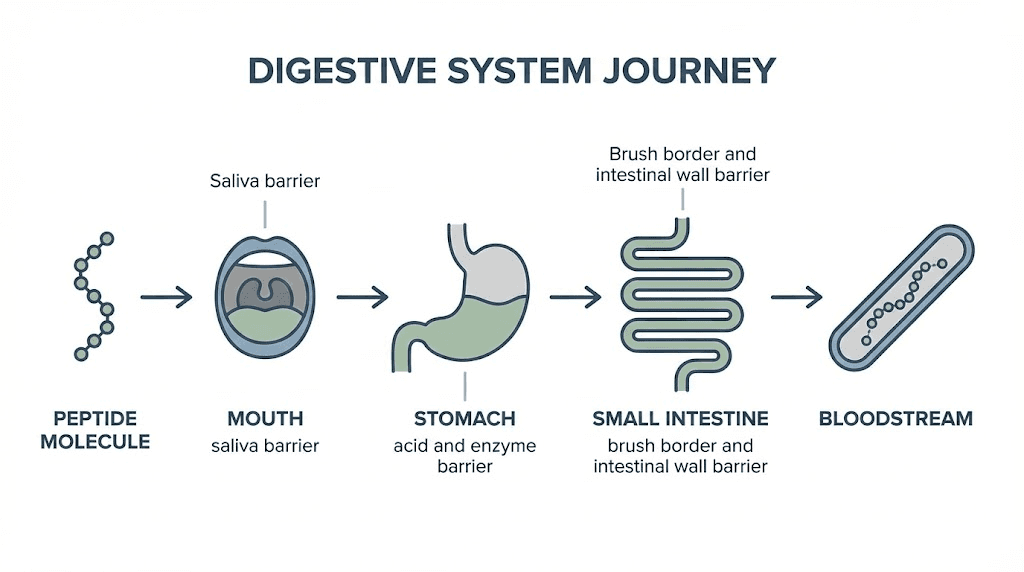
Before evaluating any peptide capsule, you need to understand why oral peptide delivery is so challenging. Your digestive system evolved to break down proteins into individual amino acids. That is exactly what it does to most peptides you swallow.
The stomach presents the first obstacle. With a pH ranging from 1.5 to 1.9 during fasting, it creates an acidic environment that denatures most peptide structures.
Then come the proteolytic enzymes. Pepsin in the stomach, trypsin and chymotrypsin in the small intestine. These enzymes specifically target peptide bonds, slicing larger molecules into smaller fragments your body can absorb as basic nutrients.
The result? Most peptides taken orally have bioavailability below 1-2%. That means for every 100 mcg you swallow, less than 2 mcg actually reaches your bloodstream intact.
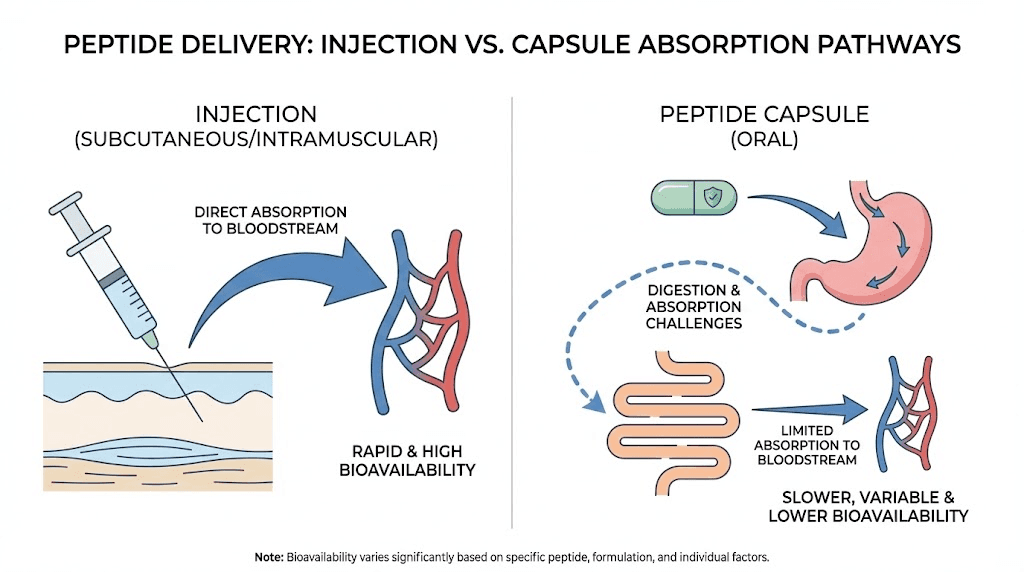
Compare this to subcutaneous peptide injections which deliver nearly 100% of the dose directly into circulation.
The first-pass metabolism problem
Even peptides that survive the stomach and intestinal enzymes face another challenge. First-pass metabolism. After absorption through the intestinal wall, blood flows directly to the liver before entering general circulation.
The liver further metabolizes many compounds, reducing the amount that reaches target tissues.
This is why researchers have spent decades developing strategies to improve oral peptide delivery. The potential payoff is enormous. Imagine managing diabetes with an insulin pill instead of daily injections. Or taking muscle-building peptides as easily as a vitamin supplement.
Some of those strategies are now making their way into consumer peptide products. Understanding which ones actually work separates educated researchers from those wasting money on ineffective supplements.
Why some peptides survive digestion better than others
Peptide structure matters.
Short peptides with 2-4 amino acids often survive digestion better than larger molecules. Their smaller size makes them less susceptible to enzymatic cleavage and allows easier absorption through intestinal membranes.
Cyclic peptides, where the amino acid chain forms a ring structure, show increased stability. The cyclization protects vulnerable peptide bonds from enzymatic attack. This is one reason why bioregulator peptides, many of which are short chains of 2-4 amino acids, can be taken orally with some effectiveness.
Certain peptides also have natural stability in gastric juice. BPC-157, derived from a protein found in human stomach secretions, demonstrates remarkable stability in acidic environments. Studies show it remains intact in gastric juice for over 24 hours, making it one of the few peptides well-suited for oral administration.
Types of peptide capsules available
The peptide capsule market has expanded dramatically. Understanding the different categories helps you identify which products might actually deliver benefits and which are likely ineffective.
Collagen peptides
These are the most established oral peptide supplements.
Unlike most therapeutic peptides, collagen peptides are designed to be broken down into amino acids and small peptide fragments. Your body then uses these building blocks to synthesize new collagen.
Research supports their efficacy. A systematic review examining 26 randomized controlled trials found that hydrolyzed collagen supplementation improved skin hydration and elasticity. Clinical trials showed skin hydration increased significantly after 8 weeks, with improvements in dermal collagen density visible after just 4 weeks.
The mechanism differs from other peptide supplements. You do not need intact collagen peptides reaching your bloodstream. The breakdown products themselves signal your body to increase collagen production. This is why collagen peptide supplements can work effectively despite the digestive challenges facing other oral peptides.
BPC-157 capsules
BPC-157 stands out among therapeutic peptides for its natural gastric stability. Derived from Body Protection Compound found in human gastric juice, this 15-amino-acid peptide maintains its structure in the stomach environment where most peptides would degrade.
Oral BPC-157 works differently than injectable forms. When taken orally, it primarily affects the gastrointestinal tract directly. This makes oral administration potentially superior for conditions like gut inflammation, leaky gut syndrome, or damage from NSAIDs. The peptide interacts locally with digestive tissue before significant systemic absorption.
For systemic effects outside the GI tract, such as healing tendons, ligaments, or muscles, injectable BPC-157 remains more effective. The choice between oral and injectable depends entirely on your therapeutic goals.
Bioregulator peptide capsules
Developed primarily through Russian research led by Vladimir Khavinson, bioregulator peptides are short-chain peptides of 2-4 amino acids designed to regulate specific organ functions. Their small size allows better survival through digestion compared to larger peptides.
Popular bioregulators available in capsule form include:
Epitalon targets the pineal gland and has been studied for its effects on melatonin production and telomere length. Thymalin supports thymus function and immune response. Pinealon focuses on brain function and neuroprotection. Cardiogen targets cardiovascular function.
Research from the Saint Petersburg Institute of Bioregulation and Gerontology suggests these peptides can provide benefits through oral administration, particularly when used in pulsed cycles rather than continuous dosing.
GHK-Cu capsules
GHK-Cu (copper tripeptide-1) is a naturally occurring peptide that declines with age. It plays roles in wound healing, collagen synthesis, and skin regeneration.
Oral GHK-Cu capsules face significant bioavailability challenges. The copper ion can separate from the peptide in the digestive environment, potentially reducing effectiveness. Most GHK-Cu research uses topical or injectable forms rather than oral delivery.
If pursuing oral GHK-Cu, look for formulations with protective technologies like enteric coating. However, topical copper peptide products or injections may provide more reliable results for skin and tissue benefits.
Other therapeutic peptide capsules
Various other peptides are marketed in capsule form. Dihexa for cognitive enhancement, KPV for inflammation, and SS-31 for mitochondrial function have all appeared as oral supplements.
For most of these, the science supporting oral bioavailability is limited. The marketing often outpaces the research. Before investing in these products, examine the specific evidence for oral delivery of each peptide rather than assuming capsule forms work as well as injections.
How enteric coating protects peptides
Enteric coating represents one of the most important technologies for oral peptide delivery. Understanding how it works helps you evaluate product quality.
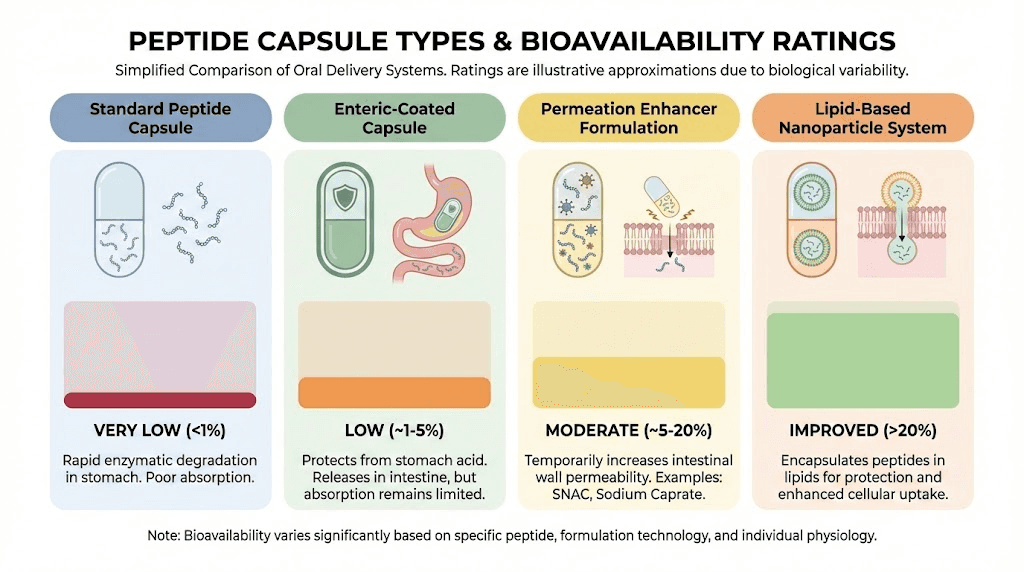
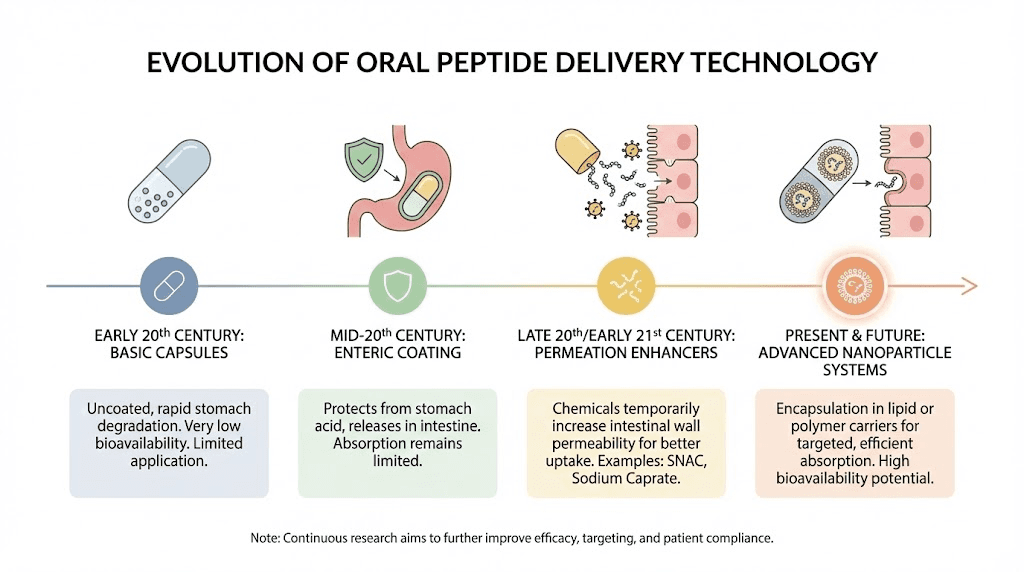
Standard capsules dissolve in the stomach. This exposes their contents to gastric acid and pepsin, degrading most peptides before they reach the intestine where absorption occurs. Enteric coated capsules use polymers that remain intact at acidic pH but dissolve when pH rises above 5.5-6.0.
The journey works like this. You swallow the capsule. It passes through the stomach intact, protected by the enteric coating. Once it reaches the duodenum, where pH rises to 6.0-6.5, the coating dissolves. The peptide releases into the small intestine, bypassing the most destructive phase of digestion.
Types of enteric coating materials
Several polymers provide enteric protection. HPMC (hydroxypropyl methylcellulose) phthalate dissolves at pH above 5.0. Eudragit L100-55 releases contents at pH 5.5. Some formulations use multiple coating layers for enhanced protection.
Commercial enteric capsule technologies include AR Caps, EnTRinsic, Vcaps Enteric, and DRcaps. These provide varying levels of gastric protection and can be paired with specific peptides based on their stability requirements.
Limitations of enteric coating
Enteric coating solves the stomach acid problem but does not address intestinal enzymes. Once the capsule dissolves in the small intestine, the peptide still faces trypsin, chymotrypsin, and other proteases.
Some formulations combine enteric coating with enzyme inhibitors or absorption enhancers to address this limitation. These more sophisticated approaches can significantly improve bioavailability, though they also increase product complexity and cost.
For peptides with natural intestinal stability, like BPC-157, enteric coating alone may provide adequate protection. For less stable peptides, enteric coating is necessary but often not sufficient for meaningful oral bioavailability.
Comparing oral peptides to injectable peptides
The convenience of capsules is obvious. No needles, no refrigeration concerns, no reconstitution with bacteriostatic water. But convenience means nothing if the peptide does not work.
Bioavailability comparison
Injectable peptides delivered subcutaneously achieve near 100% bioavailability. The peptide enters tissue directly, avoiding digestive degradation entirely. This remains the gold standard for therapeutic peptide delivery.
Oral peptides typically show 0.7-2% bioavailability without enhancement technologies. Even the oral semaglutide tablet (Rybelsus), which uses the permeation enhancer SNAC, achieves only about 1% bioavailability. To compensate, the oral dose is over 200 times higher than the injectable dose.
For research peptides sold as capsules, bioavailability data is often unavailable. Manufacturers rarely conduct the pharmacokinetic studies needed to determine what percentage of the oral dose actually reaches circulation.
When oral makes sense
Despite lower systemic bioavailability, oral peptide administration makes sense in specific situations:
Gut-targeted effects: For gastrointestinal conditions, oral delivery places the peptide exactly where you need it. Peptides for gut health like BPC-157 or KPV can exert local effects without requiring systemic absorption.
Collagen supplementation: Since collagen peptides work through their breakdown products rather than intact absorption, oral delivery works effectively.
Bioregulator protocols: Short peptides used in pulsed cycles may provide benefits through oral administration, particularly for general wellness and longevity applications where precise dosing is less critical.
Convenience priority: Some people simply will not use injectable peptides. For them, oral options with even modest bioavailability may be preferable to no peptide use at all.
When injections remain superior
For most therapeutic applications requiring precise dosing and reliable systemic delivery, injectable peptides remain the better choice:
Tissue healing: BPC-157 and TB-500 for tendon, ligament, or muscle repair work best when injected near the injury site.
Growth hormone releasing: CJC-1295, ipamorelin, and other growth hormone peptides require injectable delivery for reliable effects.
Body composition: Fat loss peptides and muscle building peptides typically need systemic delivery to affect metabolism and body composition.
Cognitive enhancement: Semax, Selank, and other nootropic peptides are typically delivered via nasal spray or injection rather than oral capsules.
Evaluating peptide capsule quality
The peptide supplement market lacks the regulation of pharmaceutical products. This creates significant quality variation between products. Knowing what to look for helps you identify legitimate products.
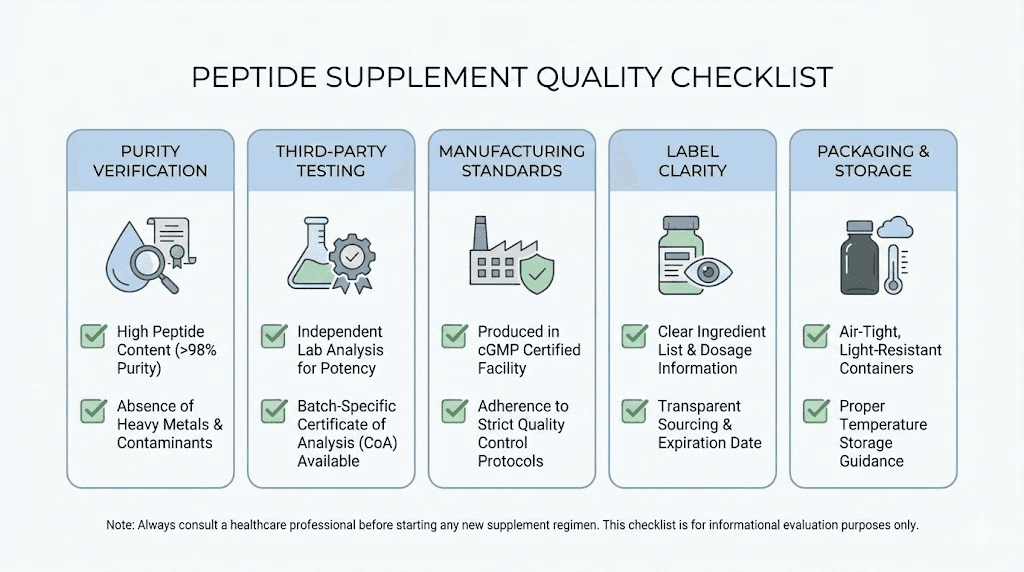
Third-party testing
Reputable manufacturers submit products for independent laboratory analysis. Look for Certificates of Analysis (COAs) confirming peptide identity, purity, and concentration. Third-party peptide testing should verify the product contains what the label claims.
Be skeptical of products without available testing documentation. The peptide supplement space includes both legitimate manufacturers and operations selling underdosed or mislabeled products.
Delivery technology
Examine what protective technologies the product uses.
Simple gelatin capsules offer minimal protection for most peptides. Enteric coated capsules provide basic stomach acid protection. Advanced formulations may include enzyme inhibitors, absorption enhancers, or specialized delivery systems.
Products that do not specify their delivery technology likely use basic capsule formulations. For peptides requiring protection, this suggests lower effectiveness.
Dosing considerations
Given the low bioavailability of most oral peptides, effective products typically require higher doses than injectable equivalents.
A capsule containing the same microgram amount as an injectable dose is unlikely to provide equivalent effects.
Look for products that address this reality in their dosing recommendations. Companies that pretend oral and injectable bioavailability are equivalent either do not understand the science or are intentionally misleading customers.
Manufacturer reputation
Research the company behind the product. How long have they operated? Do they specialize in peptides or sell everything? Can you find reviews from verified purchasers? Do they provide scientific references for their claims?
SeekPeptides provides resources for evaluating peptide products and understanding which manufacturers maintain quality standards. Making informed decisions requires looking beyond marketing claims to actual product specifications.
Popular peptide capsule products reviewed
Let us examine specific categories of peptide capsules and what the evidence suggests about their effectiveness.
Oral BPC-157 products
Among therapeutic peptides, BPC-157 capsules have the strongest case for oral effectiveness. The peptide natural stability in gastric juice allows meaningful survival through the stomach.
Research shows BPC-157 protects against NSAID-induced gastric damage, supports mucosal healing, and may benefit inflammatory bowel conditions. For these GI-focused applications, oral delivery places the peptide directly where it acts.
Quality oral BPC-157 products typically provide 250-500 mcg per capsule in enteric-coated formulations. Some products combine BPC-157 with other gut-supportive compounds like KPV or larazotide.
For systemic healing effects outside the digestive tract, injectable BPC-157 protocols remain more reliable. But for gut health specifically, oral BPC-157 represents a legitimate option.
Collagen peptide supplements
Collagen peptides represent the most evidence-supported category of oral peptide supplements.
Multiple systematic reviews and meta-analyses confirm benefits for skin hydration, elasticity, and joint comfort.
Effective doses typically range from 2.5 to 15 grams daily, depending on the specific application. Hydrolyzed collagen (collagen peptides) absorbs better than gelatin or non-hydrolyzed collagen.
Major brands like Vital Proteins, Great Lakes, and Sports Research offer products with third-party testing and established quality control. The collagen peptide market is more mature than other peptide supplement categories, with better standardization.
Bioregulator peptide products
Khavinson bioregulator peptides are available from several manufacturers. Products like Epitalon capsules, Thymalin, and various cytomaxes have user followings in the longevity community.
The evidence base comes primarily from Russian research rather than Western clinical trials. While the research shows promising results, it has not been extensively replicated in international studies. This does not mean the peptides do not work, but it does mean exercising appropriate caution.
Protocols for bioregulators typically involve pulsed cycles of 10-30 days rather than continuous use. This cycling approach may help maintain sensitivity and mirrors the protocols used in the original research.
GHK-Cu and other copper peptide products
Oral copper peptide products face significant bioavailability challenges. The peptide-copper complex may dissociate during digestion, and evidence for systemic effects from oral GHK-Cu is limited.
For copper peptide benefits like improved skin quality, wound healing, or hair growth support, topical or injectable delivery provides more reliable results.
This does not mean oral GHK-Cu capsules provide zero benefit. Some users report positive effects. But managing expectations around bioavailability is important when choosing this route.
Advanced oral peptide delivery technologies
Research into oral peptide delivery continues to advance. Understanding emerging technologies helps you identify products using more sophisticated approaches.
Permeation enhancers
Permeation enhancers temporarily increase intestinal membrane permeability, allowing larger molecules like peptides to pass through. The most successful example is SNAC (sodium salcaprozate), used in the oral semaglutide tablet Rybelsus.
SNAC increases local pH in the stomach, reducing pepsin activity. It also enhances absorption through the gastric mucosa. While primarily developed for pharmaceutical applications, some peptide supplements are beginning to incorporate similar technologies.
Nanoparticle delivery
Nanoparticle systems encapsulate peptides in protective carriers.
These can include lipid nanoparticles, polymeric nanoparticles, or protein-based carriers. The nanoparticle protects the peptide from enzymatic degradation and can improve cellular uptake.
Nanoparticle delivery is more common in pharmaceutical development than current supplements, but the technology is beginning to appear in advanced formulations.
Enzyme inhibitor combinations
Some formulations combine peptides with protease inhibitors that reduce enzymatic breakdown in the intestine. Soybean trypsin inhibitor, aprotinin, and camostat are examples of compounds that can protect peptides from intestinal proteases.
These combinations require careful formulation to ensure the inhibitors remain active alongside the peptide and do not interfere with normal digestion in problematic ways.
Self-emulsifying systems
Self-emulsifying drug delivery systems (SEDDS) create fine emulsions in the GI tract that improve peptide solubility and absorption. Lipid-based formulations can also protect peptides from enzymatic degradation.
Products using these technologies typically require specialized capsules and may have specific storage requirements. Look for formulation details in product specifications.
Practical protocols for oral peptide supplementation
If you decide to use peptide capsules, following evidence-based protocols maximizes your chances of meaningful results.
Timing considerations
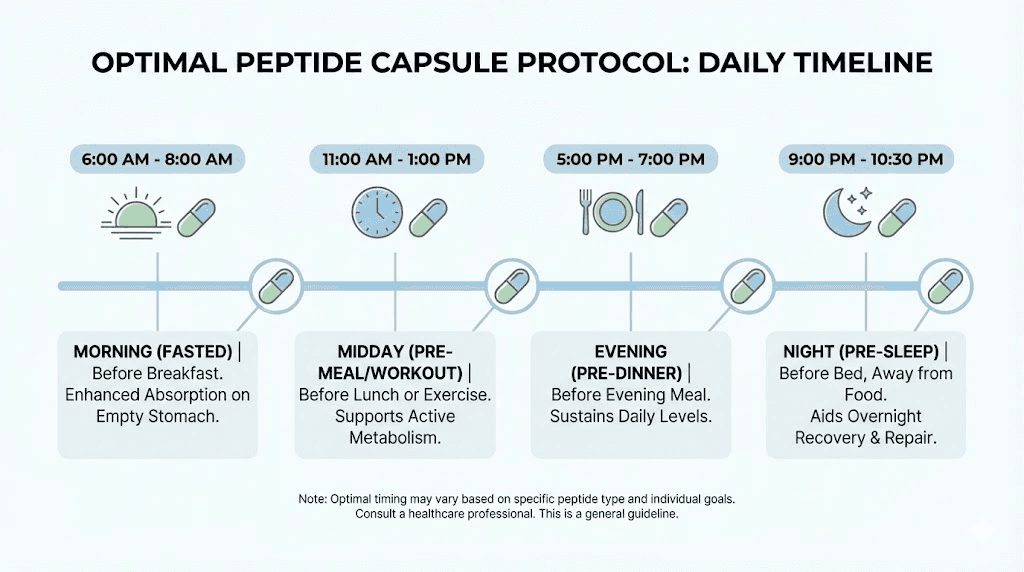
Take most peptide capsules on an empty stomach, at least 30 minutes before eating or 2 hours after meals. This reduces digestive enzyme activity and minimizes competition with food proteins for absorption.
For enteric coated products, taking them with a small amount of water on an empty stomach helps the capsule pass quickly to the small intestine.
Collagen peptides are an exception. They can be taken with or without food since absorption of the breakdown products is not significantly affected by meal timing.
Cycling and duration
Continuous use of peptide supplements may lead to receptor desensitization or reduced effectiveness over time. Many protocols incorporate cycling, with periods of use followed by breaks.
Bioregulator peptides are typically used for 10-30 day cycles, 2-3 times per year. This pulsatile approach mirrors the original research protocols and may help maintain responsiveness.
BPC-157 and similar therapeutic peptides may be used for longer periods when addressing specific conditions, but considering periodic breaks remains reasonable.
Combining with injectable peptides
Some people use oral and injectable peptides together. For example, using oral BPC-157 for ongoing gut support while periodically adding injectable TB-500 for injury recovery.
This hybrid approach can leverage the convenience of oral supplementation for general maintenance while using injections when systemic delivery is important. Peptide stacking strategies often incorporate multiple delivery methods.
Monitoring results
With any peptide protocol, tracking results helps you evaluate effectiveness. For gut-targeted oral peptides, monitor digestive symptoms, bloating, and inflammatory markers if testing is available.
For collagen peptides, skin hydration, elasticity, and joint comfort provide feedback on effectiveness. Photography under consistent lighting can document skin changes over time.
SeekPeptides provides tracking tools for members to monitor their peptide protocols and identify what works for their individual responses.
Safety considerations for peptide capsules
While peptide capsules are generally considered safe, understanding potential risks helps you supplement responsibly.
Regulatory status
Most peptide capsules are sold as dietary supplements, not pharmaceuticals. They are not FDA-approved for therapeutic use and do not undergo the same rigorous testing as prescription medications.
This does not mean they are unsafe, but it does mean quality varies significantly between manufacturers. The burden falls on consumers to evaluate products carefully.
Some peptides, like BPC-157, are prohibited by WADA for athletic competition. Even oral forms could potentially trigger positive tests. Athletes subject to drug testing should avoid these products.
Potential side effects
Oral peptide supplements generally have good safety profiles. Collagen peptides may cause mild digestive upset in some people. BPC-157 is generally well-tolerated, with most reported side effects being mild and transient.
Bioregulator peptides have been used for decades in Russia with reported safety. However, comprehensive safety data from Western clinical trials is limited.
Any supplement can potentially cause allergic reactions or interact with medications.
Starting with lower doses and increasing gradually allows you to identify any adverse responses.
Quality and contamination risks
The unregulated nature of the peptide supplement market creates contamination risks. Products may contain heavy metals, microbial contamination, or undisclosed ingredients.
Purchasing from reputable manufacturers with third-party testing reduces these risks. Avoid suspiciously cheap products or those from unknown sources.
When to consult a healthcare provider
Before starting any peptide supplementation, consider consulting a healthcare provider familiar with peptide therapy. This is particularly important if you have chronic health conditions, take prescription medications, or are pregnant or nursing.
Peptide therapy clinics and integrative medicine practitioners increasingly offer guidance on peptide protocols.
Peptide therapy programs can provide supervised approaches with monitoring.
The future of oral peptide delivery
Oral peptide technology continues to advance rapidly. Understanding current developments suggests where the field is heading.
Pharmaceutical developments
Several oral peptide drugs are in late-stage clinical trials. Enlicitide (MK-0616), an oral PCSK9 inhibitor for cholesterol management, is in Phase III trials. Icotrokinra (JNJ-2113), an oral peptide for psoriasis, is also advancing through clinical development.
These pharmaceutical developments drive innovation in oral delivery technologies that may eventually benefit the supplement market.
The techniques developed for drugs requiring precise dosing will likely improve consumer peptide products.
Emerging delivery systems
Swallowable devices that inject peptides directly into intestinal tissue are under development. These bypass many digestion challenges by delivering peptides through microneedles within the GI tract.
While currently in research phases, such technologies could eventually make oral delivery of larger peptides practical. This would significantly expand the range of peptides available in convenient oral forms.
Improved formulation science
As understanding of peptide stability and absorption improves, supplement formulations become more sophisticated. Combinations of protective technologies, absorption enhancers, and targeted delivery are producing products with improved bioavailability.
The gap between pharmaceutical-grade oral peptide delivery and consumer supplements is narrowing, though significant differences remain.
Making informed decisions about peptide capsules
Peptide capsules offer genuine convenience but require realistic expectations. Some applications are well-suited for oral delivery. Others achieve better results through injection.
Good candidates for oral peptide supplementation
Collagen peptides for skin and joint support represent the most evidence-backed category. The science is solid, products are well-standardized, and oral delivery works effectively for this specific application.
Oral BPC-157 for gut health has legitimate potential. Its natural gastric stability and local action in the digestive tract make it uniquely suited for oral delivery when targeting GI conditions.
Bioregulator peptides for general longevity and wellness protocols may provide benefits through oral administration. The short-chain structure of these peptides improves survival through digestion.
Better served by injection
Tissue healing outside the gut, body composition optimization, growth hormone stimulation, and cognitive enhancement typically require injectable delivery for reliable systemic effects.
If precise dosing and predictable bioavailability matter for your goals, injections remain the superior choice despite the inconvenience.
Questions to ask before buying
Does this specific peptide have evidence supporting oral bioavailability?
What protective technologies does the formulation use?
Is third-party testing available?
Does the dosing account for lower oral bioavailability?
What is the manufacturer's reputation?
Answering these questions helps separate effective products from expensive placebos. The peptide capsule market includes both, and informed evaluation is essential.
Frequently asked questions
Do peptide capsules actually work?
Some peptide capsules work effectively for specific applications. Collagen peptides for skin and joint support have strong clinical evidence. Oral BPC-157 works well for gut health applications. However, many therapeutic peptides have poor oral bioavailability, and capsule forms may not provide equivalent effects to injections.
Why are peptide capsules less effective than injections?
Your digestive system degrades most peptides before they can be absorbed. Stomach acid, proteolytic enzymes, and first-pass liver metabolism reduce oral bioavailability to typically less than 1-2% for most peptides. Injectable peptides bypass digestion entirely, achieving near 100% bioavailability.
What is the best peptide to take in capsule form?
Collagen peptides have the most evidence supporting oral supplementation. For therapeutic peptides, BPC-157 is uniquely suited for oral delivery due to its natural gastric stability. Short-chain bioregulator peptides also show reasonable oral effectiveness.
Should I take peptide capsules on an empty stomach?
Most peptide capsules work best taken on an empty stomach, 30 minutes before or 2 hours after meals. This reduces digestive enzyme activity and allows faster transit to the small intestine. Collagen peptides are an exception and can be taken with or without food.
How long do peptide capsules take to work?
Results vary by peptide type and individual response. Collagen peptide benefits for skin hydration may appear within 4-8 weeks. Therapeutic peptide timelines depend on the specific condition being addressed and the effectiveness of oral absorption for that particular peptide.
Are enteric coated peptide capsules worth the extra cost?
For most therapeutic peptides, yes. Enteric coating protects peptides from stomach acid degradation, significantly improving the amount that reaches the small intestine. For peptides naturally unstable in acidic environments, standard capsules may provide minimal benefit.
Can I open peptide capsules and mix them with food or drink?
This depends on the capsule type. Opening standard gelatin capsules is generally fine for mixing with food. However, opening enteric coated capsules defeats their protective purpose and is not recommended. Collagen peptide capsules can safely be opened and mixed.
Are peptide capsules legal?
Most peptide supplements are legal to purchase and possess as dietary supplements. However, they are not FDA-approved for therapeutic use, and some peptides like BPC-157 are prohibited by sports organizations. Peptide legality varies by jurisdiction and intended use.
External resources
Advances in oral peptide therapeutics - Nature Reviews Drug Discovery
Effects of Oral Collagen for Skin Anti-Aging - PubMed Central
For researchers navigating the complexities of peptide protocols, SeekPeptides provides comprehensive resources to evaluate products, understand delivery methods, and optimize your approach based on your specific goals.
In case I do not see you, good afternoon, good evening, and good night. Join us.