Jan 21, 2026
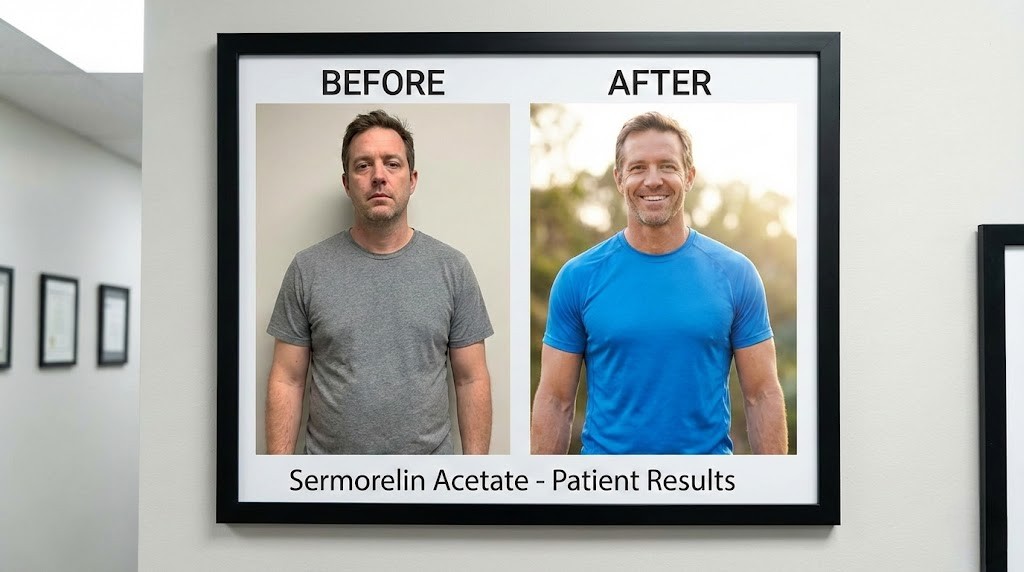
Week one feels like nothing. Maybe slightly better sleep, perhaps a vague sense of optimism, but nothing you could point to and say "this is working." Week three brings deeper rest, the kind where you wake before your alarm actually feeling ready for the day. By month two, you notice your pants fit differently. Your energy sustains through afternoon meetings. And somewhere around month four, you catch your reflection and pause, genuinely surprised by what you see.
This is the reality of sermorelin therapy. Not instant transformation. Not overnight miracles. A gradual rebuilding of what declining growth hormone levels slowly stole, one week at a time.
The challenge with sermorelin before and after expectations is that most resources either oversell the speed of results or undersell what's genuinely possible. Some clinics show dramatic transformations without context. Others dismiss the therapy as placebo. Neither serves you well.
What actually happens during sermorelin therapy follows a predictable pattern, documented across thousands of clinical protocols and research observations. The timeline varies based on age, baseline hormone levels, lifestyle factors, and consistency of administration. But the general progression from initial biochemical changes to visible physical transformation follows a remarkably consistent arc.
This guide breaks down exactly what to expect during peptide therapy with sermorelin, week by week and month by month, based on research findings and documented clinical outcomes. You'll understand when to expect which changes, why some people respond faster than others, and how to optimize your protocol for the best possible results. SeekPeptides members often reference this timeline when tracking their own progress through our protocol planning tools.
Understanding how sermorelin works and why results take time
Sermorelin isn't growth hormone. This distinction matters enormously for understanding the before and after timeline.
When you inject synthetic human growth hormone (HGH), you're adding hormone directly to your system. The effects can be rapid but come with significant risks. Your pituitary gland detects the external hormone and reduces its own production. Stop the injections, and you're often worse off than before.
Sermorelin operates through an entirely different mechanism. It's a growth hormone releasing hormone (GHRH) analog, a synthetic version of the signal your hypothalamus naturally sends to your pituitary gland. When you administer sermorelin, you're essentially telling your pituitary to work harder, to produce more of your body's own growth hormone through its natural pathways.
This approach offers several advantages. Your body maintains its feedback loops. Production scales naturally based on need. You don't experience the same shutdown risk as direct HGH therapy. But it also means results come more gradually because you're stimulating natural production rather than directly adding hormone.
The peptide consists of 29 amino acids, representing the first 29 of the 44 amino acids that make up natural GHRH. Research shows it retains the full biological activity of the complete hormone while being easier to synthesize and administer. When injected subcutaneously, usually before bed to align with natural growth hormone pulses, sermorelin travels to the pituitary and binds to GHRH receptors.
This binding triggers a cascade of intracellular signaling that ultimately leads to growth hormone release. The half-life is short, roughly 10 to 20 minutes, which is why nighttime dosing matters. You want the stimulation to coincide with your body's natural nocturnal growth hormone surge, amplifying rather than disrupting your biological rhythms.
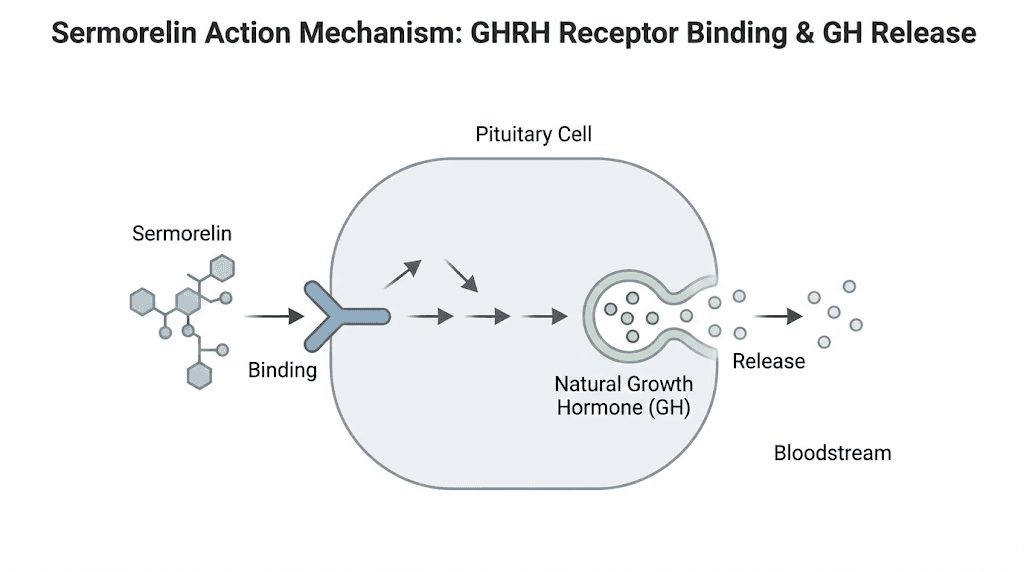
The downstream effects of increased growth hormone are extensive. GH stimulates the liver to produce insulin-like growth factor 1 (IGF-1), which mediates many of growth hormone's beneficial effects. IGF-1 promotes protein synthesis, supports muscle development, enhances fat metabolism, and contributes to tissue repair throughout the body.
Growth hormone itself affects virtually every tissue. It influences bone density, skin thickness, muscle mass, fat distribution, energy levels, sleep architecture, cognitive function, and immune response. The decline in growth hormone that begins around age 30 contributes to many of what we consider normal aging symptoms. Fatigue. Weight gain around the midsection. Loss of muscle tone. Thinning skin. Poor sleep. Reduced mental sharpness.
Reversing this decline through sermorelin takes time precisely because you're addressing the root cause rather than masking symptoms. Your pituitary needs to upregulate production. Your tissues need to respond to the increased hormone availability. Cellular processes need to shift from catabolic to anabolic states. None of this happens overnight.
The first two weeks: subtle beginnings
Let's be direct about weeks one and two. Many people feel almost nothing.
This can be discouraging. You've started a new therapy, you're administering injections, you're investing time and money, and the immediate feedback is underwhelming. Understanding why helps maintain realistic expectations.
During the first two weeks, sermorelin is working at the biochemical level. Your pituitary is receiving the GHRH signal, growth hormone release is increasing, and IGF-1 levels are beginning to rise. But these changes haven't yet translated into perceptible improvements.
Think of it like planting seeds. The germination process is invisible. Things are happening underground, roots are developing, energy is being organized, but nothing breaks the surface yet. The work is real. The results just aren't visible.
What some people notice during weeks one and two relates to sleep quality. Growth hormone plays a crucial role in deep sleep architecture, and sermorelin's timing before bed often produces subtle improvements in sleep depth before any other changes become apparent. You might fall asleep faster. You might experience fewer nighttime awakenings. You might wake feeling slightly more refreshed, even if you can't articulate exactly what changed.
Others report a vague sense of improved mood or reduced afternoon fatigue. These early signals are easy to dismiss as placebo, and frankly, some of them might be. The key is not to expect dramatic changes during this initial period.
What you should monitor during weeks one and two:
Sleep onset time. Track how long it takes you to fall asleep. Many people notice this decreasing first, often by the end of week one.
Sleep continuity. Note whether you're waking less frequently during the night. Improved sleep architecture often manifests as fewer interruptions before it shows up as more restorative rest.
Morning alertness. Pay attention to how you feel in the first hour after waking. Even subtle improvements in morning grogginess can indicate the protocol is working.
Injection site reactions. Some redness, itching, or minor swelling at injection sites is common and typically temporary. Track any reactions so you can discuss them with your provider if they persist.
The research literature confirms this pattern. Studies examining sermorelin response timing consistently show that biochemical markers improve before subjective symptoms. Growth hormone and IGF-1 levels rise within the first week or two of consistent administration. But the downstream effects on tissue and organ function take longer to accumulate to perceivable levels.
This is why consistency matters so much during the early phase. Missing doses during weeks one and two doesn't just delay results, it can prevent the pituitary upregulation that subsequent benefits depend on. SeekPeptides protocols emphasize this point because the foundation you build in the first two weeks determines how quickly visible changes emerge later.
Weeks three and four: the first real changes
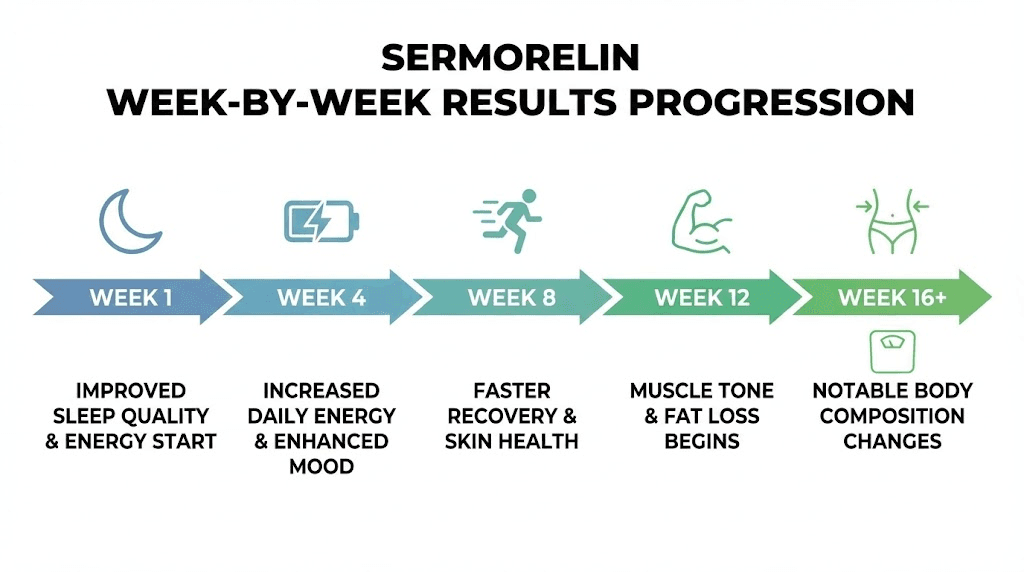
By week three, most people on sermorelin therapy start noticing changes they can actually identify.
Sleep quality improvements become more pronounced. The difference between how you felt waking up before therapy and how you feel now becomes measurable, not just in minutes of sleep but in the quality of rest achieved during those hours. Deep sleep increases. REM cycles normalize. Many people report vivid dreams returning after years of dreamless sleep, a sign that sleep architecture is improving.
Energy follows sleep. This is physiologically predictable. Better sleep enables better recovery, better recovery supports higher energy output, and higher energy permits more activity. The relationship is circular and self-reinforcing.
What you'll likely notice during weeks three and four:
Sustained afternoon energy. That 2 PM slump you've accepted as normal? It often diminishes or disappears. Growth hormone supports stable blood sugar and consistent energy production throughout the day.
Improved workout recovery. If you exercise, you may notice reduced soreness and faster recovery between sessions. This reflects growth hormone's role in tissue repair and protein synthesis.
Mental clarity enhancement. The fog lifts. Concentration improves. Tasks that required coffee and effort start feeling more manageable. Growth hormone receptors exist throughout the brain, and increased levels support cognitive function.
Mood stabilization. Growth hormone influences neurotransmitter function. Many people report feeling more emotionally balanced, less reactive to stress, and generally more optimistic.
The timing here isn't arbitrary. Research on growth hormone restoration shows that neurological and subjective improvements typically precede physical body composition changes. Your brain responds to improved hormone levels before your muscles and fat tissue show measurable differences.
This is also when appetite changes often emerge.
Some people experience increased hunger as their metabolism activates.
Others find cravings for junk food diminishing as blood sugar regulation improves. Neither response is wrong, they reflect individual differences in baseline metabolism and dietary patterns.
At this stage, the peptide dosing you've established becomes increasingly important. Weeks three and four represent a critical window where pituitary responsiveness is building but hasn't yet plateaued. Inconsistent dosing during this period can prevent you from reaching the threshold where visible physical changes begin.
Standard protocols typically run 200 to 300 micrograms administered subcutaneously at bedtime, though individual dosing varies based on body weight, age, and clinical assessment. The dosage calculators available through SeekPeptides help members determine appropriate starting points, but ongoing adjustment with a qualified provider remains essential.
Weeks five through eight: visible changes begin
The transition from internal improvements to external changes typically happens somewhere between weeks five and eight.
This is where before and after photos start showing differences you can actually see. Not dramatic transformations, but genuine changes in body composition, skin quality, and physical appearance that confirm the therapy is working.
Fat loss acceleration becomes measurable during this phase. Growth hormone is profoundly lipolytic, meaning it promotes the breakdown of stored fat for energy. As GH levels normalize, your body becomes more efficient at accessing fat stores, particularly the stubborn visceral fat around your midsection that's both aesthetically frustrating and metabolically dangerous.
The mechanism is straightforward. Growth hormone stimulates hormone-sensitive lipase, the enzyme responsible for releasing fatty acids from adipocytes. It also suppresses the uptake of new triglycerides into fat cells. The net effect is a gradual shift in body composition toward less fat and more lean tissue.
Muscle changes during weeks five through eight are subtler but real. Growth hormone supports protein synthesis and muscle preservation, but it doesn't build muscle the way testosterone or anabolic steroids do. What you'll notice is improved muscle tone, better definition of existing muscle mass, and enhanced response to strength training if you're exercising regularly.
Skin changes often surprise people. Growth hormone stimulates collagen synthesis and improves skin thickness, elasticity, and hydration. By weeks six to eight, many people notice their skin feels different, smoother, more resilient, less prone to dryness. Fine lines may appear softened. Overall complexion often improves.
What to track during this phase:
Body measurements. Scale weight can be misleading because muscle gain may offset fat loss. Waist circumference, hip measurements, and skin fold thickness provide better indicators of actual body composition change.
Clothing fit. Often the most reliable early indicator. Pants that were tight around the waist start fitting better. Shirts that felt snug through the midsection have more room.
Photos in consistent lighting. Take weekly progress photos under the same conditions, same lighting, same time of day, same clothing. This creates a visual record that's more objective than daily mirror assessments.
Skin quality changes. Note improvements in skin texture, hydration, and elasticity. These often provide early confirmation that growth hormone levels have meaningfully increased.
The research on this timeline is consistent. Studies examining body composition changes during growth hormone restoration therapy consistently show that measurable improvements in fat mass and lean mass emerge around the six to eight week mark, with continued improvement through month three and beyond.
Individual variation matters here. People with more pronounced growth hormone deficiency often see more dramatic changes because they have more to recover. Those starting from a higher baseline may see subtler improvements. Age, baseline body composition, exercise habits, diet, and sleep quality all influence the speed and magnitude of visible changes.
Months two and three: the transformation phase
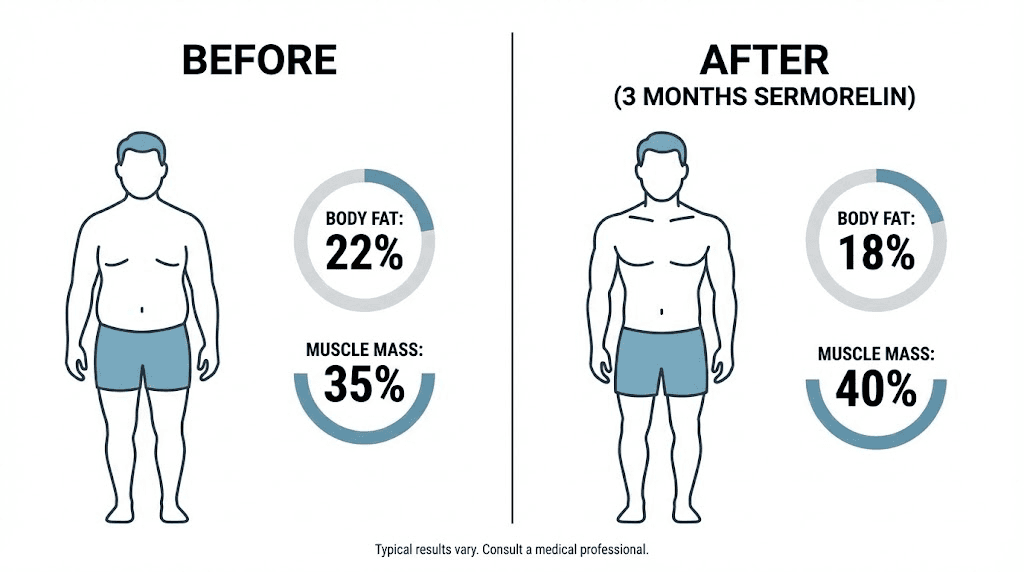
The second and third months of sermorelin therapy typically produce the most noticeable before and after differences.
This is where the cumulative effect of consistent growth hormone elevation becomes visibly apparent. Fat continues to decrease. Muscle tone continues to improve. Skin quality enhancement becomes obvious to others, not just yourself. The overall impression is one of rejuvenation, of looking and feeling genuinely younger than you did three months ago.
Body composition changes accelerate during this phase for several reasons. First, your pituitary has fully adapted to the sermorelin stimulation and is producing optimal growth hormone levels. Second, IGF-1, which mediates many of GH's effects, has reached steady state concentrations. Third, your tissues have upregulated their responsiveness to these anabolic signals.
Many people lose significant abdominal fat during months two and three. Research on growth hormone therapy consistently shows preferential reduction in visceral fat, the metabolically active fat surrounding your organs that's associated with cardiovascular disease, diabetes, and inflammation. This isn't just cosmetic improvement, it's meaningful metabolic health enhancement.
Muscle improvements become more pronounced, especially for those combining sermorelin with resistance training. Growth hormone enhances protein synthesis and recovery, meaning your workouts produce better results. Strength gains that seemed to plateau suddenly start progressing again. Muscle definition improves as the fat layer above them decreases.
Sleep quality typically reaches optimal levels during month two or three. Deep sleep percentage increases, total sleep time often decreases because sleep becomes more efficient, and morning energy reaches its peak. Many people describe this as feeling like they did in their twenties or thirties, genuinely rested after a night's sleep rather than simply less tired than the day before.
Cognitive improvements often peak during this phase as well. Mental clarity, focus, memory, and processing speed all tend to optimize around month two or three. The brain is particularly responsive to growth hormone, and the cumulative effect of improved sleep plus direct neurological benefits produces noticeable cognitive enhancement.
Energy levels typically stabilize at a new, higher baseline. The fluctuations of the first few weeks settle into consistent, sustainable energy throughout the day. Many people find they no longer need afternoon coffee, can maintain focus through long work sessions, and have energy left over for evening activities and family time.
Emotional wellbeing often improves significantly.
Growth hormone influences multiple neurotransmitter systems, and its restoration can reduce anxiety, improve mood stability, and enhance overall psychological resilience. Combined with better sleep and more energy, this produces a genuine improvement in quality of life that extends far beyond physical changes.
This is also when other people start noticing. Colleagues comment that you look rested. Friends ask if you've been working out. Family members observe that you seem happier, more present, more like your old self. The changes that felt subtle and internal during the first month become externally visible during months two and three.
Months four through six: peak results and stabilization
By month four, most of the dramatic changes have occurred. What follows is optimization and stabilization.
This doesn't mean improvement stops. Body composition continues to shift favorably. Muscle development continues, especially with appropriate training stimulus. Skin quality continues to improve. Sleep remains excellent. But the rate of change slows as you approach your new baseline.
Think of it like renovating a house. The first few months involve major structural changes, new electrical, updated plumbing, reconfigured spaces. Months four through six are about finishing work, paint, trim, final touches that refine what's already been built. The transformation is mostly complete, but important optimization remains.
Bone density improvements become measurable during this phase. Growth hormone plays a crucial role in bone metabolism, stimulating both osteoblast activity (bone building) and overall bone mineral density. These changes are slower than soft tissue effects but increasingly important for long-term health, particularly for those over 40 concerned about osteoporosis risk.
Immune function enhancement often becomes apparent. People report getting sick less frequently, recovering faster when they do catch something, and experiencing fewer seasonal allergy symptoms. Growth hormone supports immune cell production and function, and the cumulative effect of several months of elevated levels typically produces measurable immune improvement.
Metabolic markers often show significant improvement by month four to six. Fasting glucose levels frequently decrease. Insulin sensitivity improves. Lipid profiles often shift favorably, with decreased triglycerides and increased HDL cholesterol. These changes reflect the profound effect growth hormone has on metabolic function across multiple systems.
For men, improvements in libido and sexual function often peak during this phase. Growth hormone supports testosterone production and general vitality, and the combination of better sleep, more energy, improved body composition, and enhanced confidence typically produces noticeable improvements in sexual health.
For women, many report improvements in menopause-related symptoms including hot flashes, mood swings, and sleep disturbances. While sermorelin isn't a hormone replacement for estrogen or progesterone, growth hormone restoration can significantly improve quality of life during perimenopause and menopause.
By month six, most people have reached what we might call their "new normal." This is the level of health, energy, body composition, and cognitive function that sermorelin therapy can help you achieve and maintain. It's typically significantly better than your pre-therapy baseline, often resembling how you felt years or even decades earlier.
Long-term maintenance: what happens after month six
The question of what happens after the initial six-month transformation period varies based on individual goals and circumstances.
Some people continue sermorelin therapy indefinitely as part of an ongoing anti-aging protocol. The logic is straightforward: if declining growth hormone caused the problems, maintaining elevated growth hormone prevents their return. Research supports this approach, showing that the benefits of growth hormone restoration persist as long as therapy continues.
Others cycle sermorelin, using it for several months, taking a break, then resuming. This approach can work well for those who've achieved their body composition goals and want to minimize intervention while maintaining most of their gains. The key is understanding that some benefits will diminish during off cycles, particularly the metabolic and energy effects that depend on active growth hormone elevation.
Maintenance dosing often differs from initial therapy. Many people find they can reduce their sermorelin dose after the first six months while maintaining most of the benefits. This makes long-term therapy more sustainable and cost-effective. Working with a qualified provider to optimize maintenance protocols helps ensure you're getting the benefits you need without unnecessary intervention.
Long-term safety data on sermorelin is generally reassuring. Unlike direct growth hormone therapy, which can produce supraphysiological hormone levels and associated risks, sermorelin works through natural feedback mechanisms that help prevent excessive growth hormone production. Research shows that the safety profile remains favorable over extended use periods.
However, ongoing monitoring remains important. Regular blood work to assess IGF-1 levels, metabolic markers, and general health parameters helps ensure that therapy continues to produce benefits without adverse effects. Most providers recommend testing every three to six months during maintenance therapy.
The decision about long-term sermorelin use should balance the benefits you're experiencing against the costs and inconveniences of ongoing therapy. For many people, the improvements in quality of life, body composition, and overall health make continued use a clear choice. For others, periodic cycles may better fit their lifestyle and goals.
Maximizing your sermorelin results: evidence-based strategies
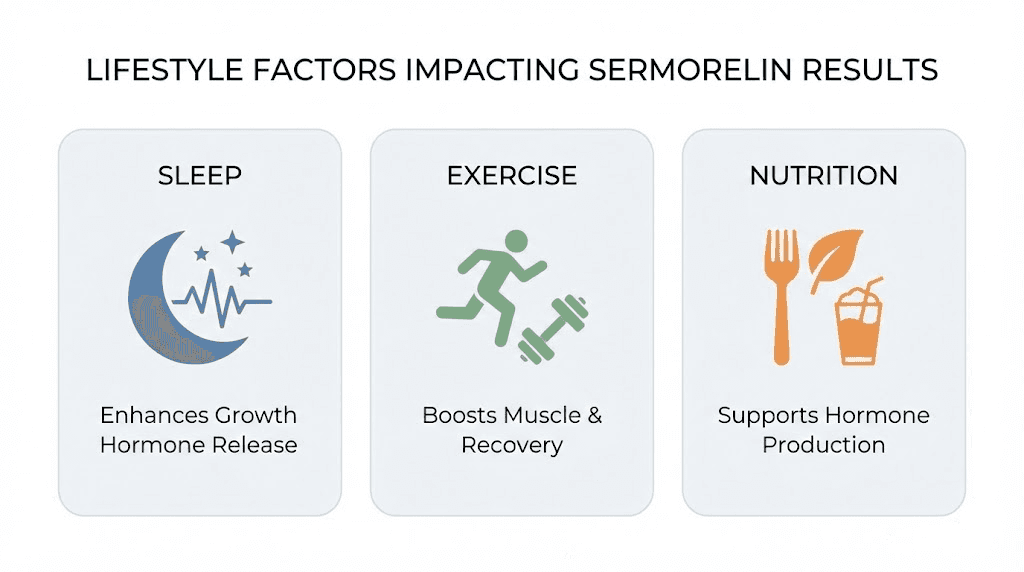
While sermorelin produces benefits on its own, the magnitude and speed of those benefits depends significantly on supporting factors. Think of sermorelin as an amplifier, it enhances the signals your body receives, but the quality of those signals matters.
Sleep optimization
Since sermorelin works by amplifying your natural growth hormone pulses, and since the largest GH pulses occur during deep sleep, optimizing sleep quality directly impacts therapy effectiveness.
Target seven to nine hours per night. This isn't arbitrary, it's the window that research consistently shows supports optimal growth hormone production. Shorter sleep duration reduces the number and magnitude of nighttime GH pulses, limiting how much sermorelin can amplify.
Timing matters as well. Taking sermorelin 30 to 60 minutes before bed allows levels to peak during your first deep sleep cycle, when natural GH release is highest. Taking it too early or at inconsistent times reduces this synergy.
Sleep environment factors influence results too. Cool temperatures, complete darkness, and reduced screen time before bed all support deeper sleep and better growth hormone release. These basics matter more during sermorelin therapy than at any other time.
Exercise and physical activity
Growth hormone and exercise have a synergistic relationship. Exercise itself triggers growth hormone release, and growth hormone enhances the benefits of exercise. Combining sermorelin with appropriate training produces better results than either alone.
Resistance training appears particularly synergistic with growth hormone restoration. The protein synthesis enhancement from elevated GH means strength training produces more muscle development per session. Many people who felt they'd reached genetic limits find they can make new progress once GH levels normalize.
Cardiovascular exercise supports the metabolic benefits of sermorelin. While GH itself promotes fat oxidation, adding regular cardio accelerates body composition changes. The combination of increased metabolic rate from GH plus additional calorie burn from cardio produces faster fat loss than either alone.
Timing exercise appropriately also helps. Intense exercise within a few hours of sermorelin administration can enhance GH response. However, exercising too close to bedtime may interfere with sleep quality, so finding the right balance requires individual experimentation.
Nutrition and dietary factors
What and when you eat influences sermorelin effectiveness. Several key principles apply:
Avoid eating before injection. Taking sermorelin on an empty stomach, at least two hours after your last meal, produces better absorption and pituitary response. Eating close to administration blunts the growth hormone release.
Protein intake supports results. Growth hormone enhances protein synthesis, but this only matters if adequate protein is available. Most people benefit from consuming 0.7 to 1 gram of protein per pound of body weight daily during sermorelin therapy.
Minimize refined carbohydrates and sugar. High blood sugar inhibits growth hormone release. Eating a high-glycemic meal can blunt your GH response for hours. While you don't need to eliminate carbs, focusing on whole food sources and avoiding sugar, especially in the evening, supports better results.
Consider intermittent fasting. Some research suggests that time-restricted eating enhances growth hormone response. While not essential, many people find that limiting their eating window to 8-10 hours daily produces better sermorelin results.
Consistency and protocol adherence
Perhaps the most important factor in sermorelin results is simply sticking with the protocol.
The pituitary response to sermorelin builds over time. Missing doses, particularly during the first two months, can significantly delay or diminish results. Think of it like building momentum, each dose contributes to an accumulating effect that only produces visible results once a threshold is reached.
Many people see disappointing results not because sermorelin doesn't work, but because inconsistent use prevented them from reaching therapeutic threshold.
The difference between "sermorelin doesn't work for me" and "sermorelin transformed my health" often comes down to missing a few doses per week versus consistent daily administration.
Setting reminders, establishing a consistent bedtime routine that includes your injection, and planning for travel or schedule disruptions all help maintain the consistency that produces results. SeekPeptides members have access to tracking tools that help monitor consistency and correlate dosing patterns with results.
Sermorelin dosing for optimal before and after results
Understanding appropriate dosing protocols helps set realistic expectations for your sermorelin journey.
Standard starting doses
Most protocols begin with 200 to 300 micrograms (0.2 to 0.3 mg) administered subcutaneously once daily at bedtime. This dosage range has been shown to effectively stimulate growth hormone release while minimizing side effects.
Women often start at the lower end of this range, around 0.1 to 0.2 mg, due to generally higher sensitivity to growth hormone stimulation. Men typically begin at 0.2 to 0.3 mg and may increase to 0.4 to 0.5 mg based on response.
The reconstitution process matters for accurate dosing. Sermorelin typically comes as a lyophilized powder requiring reconstitution with bacteriostatic water. Proper technique ensures you're getting consistent, accurate doses each administration.
Dose adjustment based on response
After the first four to six weeks, many providers reassess dosing based on response. Blood tests measuring IGF-1 levels provide objective data about growth hormone status. Subjective symptoms including sleep quality, energy, and body composition changes inform the clinical picture.
Some people respond strongly to lower doses and don't need increases. Others require higher doses to achieve optimal response. Individual variation in pituitary sensitivity, body composition, and metabolism means that optimal dosing varies significantly between people.
Starting low and titrating based on response minimizes side effects while finding each individual's optimal therapeutic dose. Jumping directly to high doses rarely produces better results and often causes unnecessary side effects.
Combining sermorelin with other peptides
Many protocols combine sermorelin with other growth hormone secretagogues for enhanced effect. The most common combinations include:
Sermorelin plus ipamorelin. Sermorelin (a GHRH analog) and ipamorelin (a GHRP) work through different receptor systems. Combining them produces synergistic growth hormone release greater than either alone. This is one of the most popular combination protocols.
Sermorelin plus CJC-1295. Both are GHRH analogs, but CJC-1295 has a much longer half-life. Some protocols use sermorelin for daily dosing and add CJC-1295 weekly for sustained baseline elevation.
Multi-peptide stacks. More advanced protocols may combine sermorelin with healing peptides like BPC-157 or TB-500, or with metabolic peptides targeting specific goals. These combinations require more careful management and monitoring.
The peptide stacking guides at SeekPeptides help members understand which combinations are appropriate for their goals and how to structure multi-peptide protocols safely.
Managing expectations: what sermorelin can and cannot do
Setting realistic expectations is crucial for satisfaction with sermorelin therapy. Understanding what's achievable helps avoid disappointment while appreciating the genuine benefits.
What sermorelin can realistically achieve
Meaningful fat loss, especially visceral fat. Most people can expect to lose 5-15% of their body fat over six months with consistent therapy and reasonable lifestyle habits. Those with significant growth hormone deficiency may see larger changes.
Improved muscle tone and preservation. Sermorelin won't make you look like a bodybuilder, but it can improve muscle definition, slow age-related muscle loss, and enhance response to strength training.
Better sleep quality. Perhaps the most consistent benefit. Nearly everyone experiences improved sleep, often dramatically so.
Increased energy and mental clarity. Sustainable energy throughout the day, reduced brain fog, improved focus. These benefits are reliable and often significant.
Enhanced skin quality. Improved thickness, elasticity, and hydration. Reduction in fine lines. Overall more youthful appearance.
Metabolic improvement. Better blood sugar control, improved cholesterol profiles, reduced inflammation markers.
What sermorelin cannot do
Produce instant results. The timeline discussed throughout this article is real. Expecting visible changes in week one leads to disappointment.
Replace proper diet and exercise. Sermorelin enhances results from good lifestyle habits but doesn't substitute for them. Expecting transformation without effort produces mediocre results.
Build massive muscle without training. Growth hormone supports muscle development but isn't anabolic in the bodybuilding sense. Significant muscle gains require training stimulus.
Reverse decades of damage immediately. If you've spent 20 years gaining weight, losing muscle, and declining, six months of sermorelin won't fully reverse that. Meaningful improvement, yes. Complete reversal, no.
Work without consistency. Sporadic use produces sporadic results. The before and after transformations you see online came from people who stuck with their protocols.
Comparing sermorelin results to other growth hormone therapies
Understanding how sermorelin compares to alternatives helps calibrate expectations and choose the right approach.
Sermorelin versus direct HGH therapy
Direct growth hormone injection produces faster, more dramatic results because you're adding hormone directly rather than stimulating natural production. Peak improvements may be greater with HGH, particularly for body composition.
However, HGH carries significantly more risks. Supraphysiological hormone levels can cause side effects including joint pain, fluid retention, carpal tunnel syndrome, and potentially more serious long-term issues. HGH also suppresses natural production, potentially leaving you dependent on continued supplementation.
Sermorelin works with your body's feedback systems, producing more moderate but more sustainable results with fewer risks. For most people prioritizing long-term health over maximal short-term gains, sermorelin is the better choice.
Sermorelin versus ipamorelin
Ipamorelin works through different receptors (GHRP versus GHRH) and produces slightly different effects. Ipamorelin tends to produce more consistent GH pulses and may have fewer effects on cortisol and prolactin. Some people respond better to one than the other.
Many protocols combine both for synergistic effect. If you've tried one without adequate results, the other may work better for your physiology.
Sermorelin versus CJC-1295
CJC-1295 is a modified GHRH analog with a much longer half-life, lasting days rather than minutes. This produces more sustained growth hormone elevation but less pulsatile release.
Some people prefer the more natural rhythm of sermorelin's short pulses. Others do better with CJC-1295's sustained effect. Many protocols combine both, using sermorelin daily with weekly CJC-1295 for sustained baseline elevation.
Sermorelin versus tesamorelin
Tesamorelin is FDA-approved specifically for reducing abdominal fat in HIV patients. It's a GHRH analog like sermorelin but with modifications that extend its half-life and may enhance its fat-reducing effects.
For pure fat loss, tesamorelin may produce slightly better results. For overall anti-aging and general growth hormone benefits, sermorelin offers a better balance of effects and safety profile.
Potential side effects and how to manage them
Sermorelin is generally well-tolerated, but understanding potential side effects helps you respond appropriately if they occur.
Common, typically transient side effects
Injection site reactions. Redness, itching, or minor swelling at injection sites is the most common side effect. It usually diminishes over the first few weeks as your body adapts. Rotating injection sites and ensuring proper technique minimizes this issue.
Headaches. Some people experience mild headaches, particularly during the first week or two. These typically resolve as your body adjusts to changing hormone levels. Staying well-hydrated and ensuring adequate sleep often helps.
Flushing. A warm, flushed feeling sometimes occurs shortly after injection. This is usually brief and not problematic.
Restlessness or difficulty sleeping. Paradoxically, some people initially experience sleep disruption before sleep improvement occurs. This typically resolves within the first one to two weeks.
Less common side effects
Fluid retention. Some people experience mild water retention, particularly in the hands or feet. This is usually manageable and may indicate the need for dose adjustment.
Joint discomfort. Rarely, increased growth hormone can cause joint stiffness or discomfort. This is more common with higher doses and usually responds to dose reduction.
Blood sugar changes. Growth hormone can affect insulin sensitivity. People with diabetes or prediabetes should monitor blood sugar more closely during sermorelin therapy.
When to contact your provider
Most side effects are minor and transient. However, contact your healthcare provider if you experience:
Severe or persistent injection site reactions. Difficulty breathing or swallowing. Significant swelling, particularly in the face or throat. Severe or persistent headaches. Any symptoms that concern you or seem unusual.
The safety profile of sermorelin is well-established, but individual responses vary. Working with a qualified provider who can monitor your response and adjust therapy as needed ensures the safest, most effective experience.
Tracking your sermorelin before and after progress
Objective tracking dramatically improves your ability to assess results and optimize your protocol.
Recommended tracking metrics
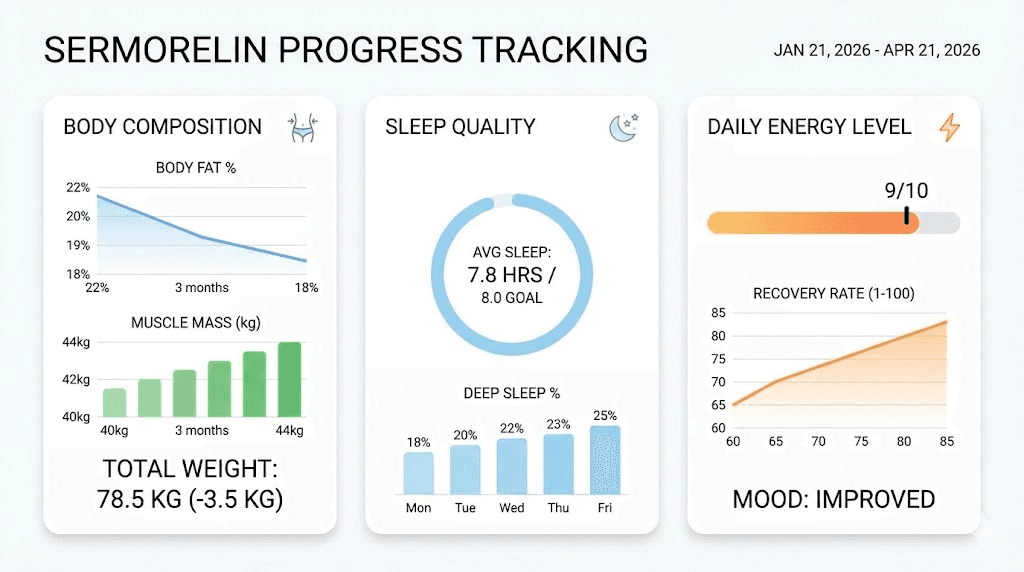
Body measurements. Weekly measurements of waist, hips, chest, arms, and thighs provide objective data on body composition changes. Scale weight alone is insufficient because muscle gain can offset fat loss on the scale.
Progress photos. Weekly photos in consistent lighting, angles, and clothing create a visual record that's more reliable than daily mirror assessments. Review photos monthly rather than daily to perceive real changes.
Sleep quality metrics. Whether using a wearable device or simple journaling, track sleep duration, perceived quality, and morning energy levels. This is often the first area to show improvement and provides early confirmation the protocol is working.
Energy and mood journaling. Brief daily notes on energy levels, focus, mood, and overall wellbeing help identify patterns and improvements that might otherwise go unnoticed.
Workout performance. If you exercise, track weights lifted, reps completed, recovery time, and perceived exertion. Improvements in training performance often precede visible body composition changes.
Laboratory testing
Blood work provides objective biochemical data that confirms whether therapy is working at the physiological level.
IGF-1 levels. The primary marker for assessing growth hormone status. Baseline testing before therapy and follow-up testing at 6-8 weeks provides objective data on response.
Complete metabolic panel. Assesses liver function, kidney function, and basic metabolic markers. Important for safety monitoring during therapy.
Lipid panel. Cholesterol and triglyceride levels often improve with growth hormone restoration. Pre and post testing documents these improvements.
Fasting glucose and HbA1c. Monitors blood sugar control, which can be affected by growth hormone therapy.
Most providers recommend baseline testing before starting sermorelin, follow-up at 6-8 weeks to assess initial response, and ongoing testing every 3-6 months during maintenance therapy.
Real-world sermorelin transformation expectations by demographic
Response to sermorelin varies based on individual factors. Understanding typical outcomes by demographic helps set appropriate expectations.
Men in their 40s and 50s
This demographic often sees the most dramatic results because they typically have significant growth hormone decline to reverse. Common outcomes include:
Notable fat loss, particularly around the midsection. Improved muscle tone and definition. Significant energy and stamina improvement. Enhanced libido and sexual function. Better mental clarity and focus.
Men in this age range with sedentary lifestyles and poor sleep habits often see the most dramatic transformations because they have the most room for improvement. Those who combine sermorelin with resistance training and improved nutrition often achieve results that genuinely surprise them.
Women in their 40s and 50s
Women typically require lower doses but often respond well to therapy. Common outcomes include:
Improved body composition with reduction in stubborn fat. Enhanced skin quality, often more noticeable than in men. Better sleep quality and reduced hot flashes for those in perimenopause or menopause. Improved mood stability and reduced anxiety. More consistent energy throughout the day.
Women navigating perimenopause often find sermorelin helps manage symptoms that estrogen therapy alone doesn't fully address. The combination of growth hormone restoration with appropriate hormone replacement can significantly improve quality of life during this transition.
Older adults (60+)
Older adults can benefit from sermorelin therapy, though expectations should be calibrated appropriately. Common outcomes include:
Improved sleep quality, often dramatically so. Better energy and reduced fatigue. Enhanced cognitive function and mental clarity. Some improvement in body composition, though typically more modest than in younger users. Potential improvements in bone density with longer-term use.
Safety considerations become more important with age. More frequent monitoring, lower starting doses, and careful attention to potential interactions with other medications are essential. Working with a provider experienced in treating older adults helps ensure safe, effective therapy.
Athletes and fitness enthusiasts
Those already exercising regularly and maintaining good health habits may see subtler but still meaningful improvements:
Enhanced recovery between training sessions. Improved ability to build and maintain lean mass. Better fat loss during cutting phases. Enhanced sleep quality supporting better training adaptation. Improved performance metrics that had plateaued.
Athletes should note that sermorelin and similar peptides are banned by most sporting organizations including WADA and USADA. Use outside of sanctioned competition is a personal choice, but use in competitive sports is prohibited.
Common sermorelin before and after questions
How long until I see results from sermorelin?
Most people notice initial changes in sleep quality within 2-4 weeks. Visible body composition changes typically emerge around weeks 6-8, with the most dramatic before and after differences appearing during months 2-3. Full optimization usually occurs by month 4-6.
Will I lose my results if I stop sermorelin?
Some benefits persist after stopping therapy, particularly if you've made lasting lifestyle changes. However, growth hormone levels will gradually return to pre-therapy baseline, and some benefits will diminish. Most people find that periodic cycles or maintenance dosing helps preserve results long-term.
Can I take sermorelin with other medications?
Sermorelin can interact with certain medications, particularly those affecting hormone levels or blood sugar.
Always disclose all medications and supplements to your provider before starting therapy. Most common medications are compatible with sermorelin, but individual assessment is essential.
Is sermorelin safe for long-term use?
Current evidence suggests sermorelin is safe for long-term use when properly monitored. Unlike direct HGH therapy, sermorelin works through natural feedback mechanisms that help prevent excessive hormone levels. Regular monitoring with blood work helps ensure continued safety and effectiveness.
How does sermorelin compare to MK-677?
MK-677 (ibutamoren) is an oral growth hormone secretagogue that's convenient but has different effects and a less favorable safety profile for many users. Sermorelin provides more targeted growth hormone stimulation with generally fewer side effects, though it requires injection. Many people find sermorelin more effective with fewer issues than MK-677.
What's the best time to take sermorelin?
Bedtime dosing, approximately 30-60 minutes before sleep, produces optimal results by aligning with natural growth hormone pulses during deep sleep. Taking sermorelin in the morning or during the day is less effective and may interfere with natural hormone rhythms.
Does sermorelin require a prescription?
Yes, sermorelin requires a prescription from a licensed healthcare provider. It's available through compounding pharmacies, as the original pharmaceutical manufacturer discontinued production in 2008 due to business reasons, not safety concerns. Working with a provider experienced in peptide therapy ensures appropriate dosing and monitoring.
Can I use sermorelin while fasting?
Yes, and fasting may actually enhance sermorelin's effectiveness. Growth hormone naturally increases during fasting states, and combining intermittent fasting with sermorelin therapy can produce synergistic effects on fat loss and metabolic health.
For researchers committed to optimizing their peptide protocols, SeekPeptides provides comprehensive resources including detailed dosing guides, calculation tools, and evidence-based protocols that help you maximize your results while minimizing risks.