Dec 22, 2025
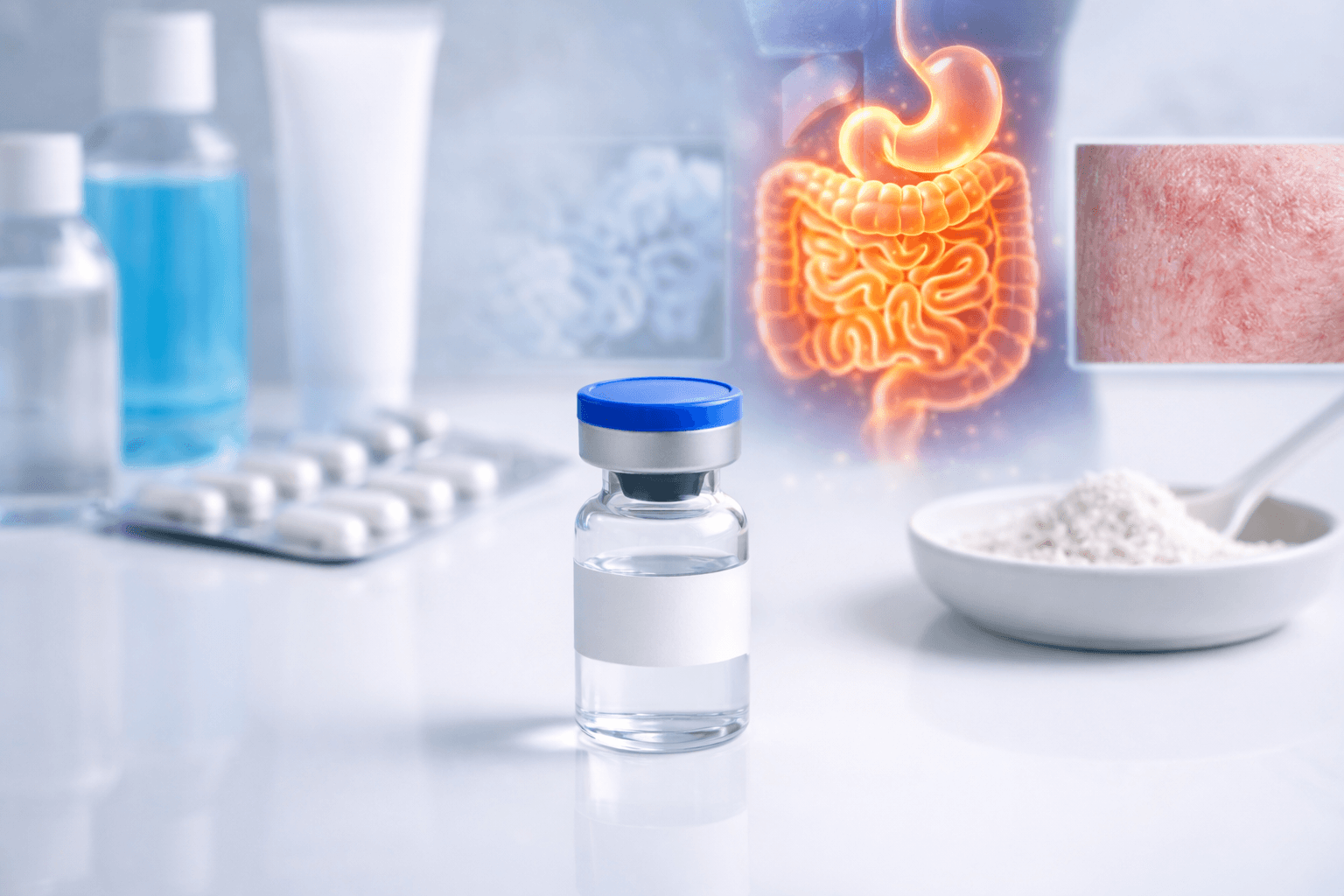
Inflammation is the body's fire alarm, essential when there's real danger, destructive when it won't stop ringing.
For people living with inflammatory bowel disease, chronic skin conditions, or autoimmune flare-ups, that alarm stays on for months or years, causing collateral damage throughout the body.
KPV is a tiny peptide, just three amino acids, that may help silence that alarm without shutting down the immune system entirely. Derived from a natural anti-inflammatory hormone already present in your body, KPV represents a targeted approach to calming inflammation at its source.
This guide covers what KPV is, how it works, the conditions it may help, dosing protocols, side effects, and how it compares to other anti-inflammatory peptides.
What is KPV peptide?
KPV is a tripeptide consisting of three amino acids: Lysine-Proline-Valine (K-P-V). It's derived from the C-terminal end of alpha-melanocyte-stimulating hormone (α-MSH), a neuropeptide produced by the pituitary gland that plays central roles in immune function, inflammation control, and skin pigmentation.
Key characteristics:
Structure: Three amino acids in sequence (Lys-Pro-Val)
Origin: Fragment of the naturally occurring hormone α-MSH
Classification: Melanocortin-derived peptide
Size: One of the smallest therapeutic peptides, which allows better cellular penetration
What makes KPV remarkable is that it retains the powerful anti-inflammatory properties of its parent molecule (α-MSH) while eliminating the unwanted effects. Full α-MSH affects pigmentation, appetite, and has broad hormonal activity. KPV keeps only the anti-inflammatory "business end" of the molecule—making it cleaner, more targeted, and free from hormonal side effects.
Think of it as extracting the active ingredient from a plant without all the other compounds that might cause problems.
KPV vs. α-MSH: what's the difference?
Feature | α-MSH (parent molecule) | KPV (fragment) |
|---|---|---|
Size | 13 amino acids | 3 amino acids |
Melanogenesis (tanning) | Yes | No |
Appetite effects | Yes | No |
Anti-inflammatory | Yes | Yes (potentially stronger) |
Hormonal effects | Yes | Minimal to none |
Cellular penetration | Limited | Excellent due to small size |
Research has shown that KPV may actually exert an even stronger anti-inflammatory effect than the full α-MSH molecule, despite being just a fragment of it.
This is likely because its small size allows it to enter cells more easily and interact directly with inflammatory signaling pathways inside the cell nucleus.
How does KPV work?
KPV's anti-inflammatory effects operate through several interconnected mechanisms.
NF-κB pathway inhibition
NF-κB (nuclear factor kappa B) is often called the "master switch" of inflammation. When activated, it triggers the production of inflammatory cytokines and perpetuates chronic inflammation. KPV inhibits NF-κB activation, essentially turning down the volume on the inflammatory response.
What this means practically: By blocking NF-κB, KPV reduces the production of pro-inflammatory molecules like TNF-α, IL-1β, and IL-6, the same cytokines that drive conditions like IBD, arthritis, and autoimmune disorders.
MAP kinase pathway suppression
Beyond NF-κB, KPV also inhibits the MAP kinase (MAPK) cascade, another major inflammatory signaling pathway. This dual action, targeting both NF-κB and MAPK, makes KPV particularly effective at calming inflammation from multiple angles.
PepT1-mediated transport
One of the most interesting discoveries about KPV is how it enters cells. Research has shown that KPV is transported into intestinal epithelial cells and immune cells via a transporter called PepT1 (peptide transporter 1).
Why this matters: PepT1 is normally expressed in the small intestine but becomes highly expressed in the colon during inflammatory bowel disease. This means that during active gut inflammation, the body actually increases its capacity to absorb KPV exactly where it's needed most.
The transporter has a remarkably high affinity for KPV (Km ~160 μM), allowing even low doses to be efficiently taken up by inflamed tissue. This is one reason why oral KPV can work effectively for gut conditions.
Antimicrobial activity
Beyond inflammation control, KPV has demonstrated antimicrobial properties against:
Staphylococcus aureus (common cause of skin infections)
Candida albicans (fungal pathogen)
This dual anti-inflammatory and antimicrobial action makes KPV particularly useful for wound healing, where both inflammation control and infection prevention are needed.
No melanogenic effects
Unlike its parent molecule α-MSH, KPV does not cause skin darkening or affect pigmentation. Studies confirm that KPV doesn't bind to melanocortin receptors in the same way as α-MSH, so users don't need to worry about tanning or pigmentation changes.
KPV benefits: what the research shows
KPV has been studied for several conditions, with the strongest evidence in gut health and inflammatory skin conditions.
Inflammatory bowel disease (IBD)
The most robust research on KPV focuses on its effects in inflammatory bowel disease, including ulcerative colitis and Crohn's disease.
Key findings:
Nanomolar concentrations of KPV inhibit NF-κB and MAP kinase activation in intestinal epithelial cells
Oral administration of KPV reduces the severity of DSS-induced and TNBS-induced colitis in mice
KPV decreases pro-inflammatory cytokine expression in inflamed gut tissue
When delivered via nanoparticles, KPV accelerates mucosal healing and restores intestinal barrier integrity
TNF-α mRNA expression in KPV-treated mice approached levels seen in healthy controls
One study using hyaluronic acid-functionalized nanoparticles to deliver KPV orally found that treated mice had gut tissue "morphologically very similar to those of the healthy control group, especially with respect to the integration of the colonic epithelial layer."
Clinical relevance: These findings suggest KPV may help with:
Ulcerative colitis
Crohn's disease
Leaky gut syndrome
IBS with inflammatory component
Post-infectious gut inflammation
Skin conditions
KPV's anti-inflammatory and antimicrobial properties translate well to dermatological applications.
Psoriasis:
In an imiquimod-induced psoriasis mouse model, α-MSH (the parent molecule containing KPV) reduced psoriasis-associated inflammation. Research confirms that most of α-MSH's anti-inflammatory activity can be attributed to its KPV fragment. Importantly, because KPV doesn't cause pigmentation changes, it can be used for extended periods without the skin-thinning effects of long-term steroid use.
Eczema and dermatitis:
KPV reduces the inflammatory mediators that drive eczema flares, promotes skin barrier repair, and may help control the Staphylococcus aureus overgrowth common in atopic dermatitis.
Acne:
The combination of anti-inflammatory and antimicrobial effects makes KPV potentially useful for acne, addressing both the inflammatory component and bacterial involvement.
Wound healing:
Studies show α-MSH and KPV accelerate wound healing by:
Reducing inflammatory cell infiltration (leucocytes, mast cells, fibroblasts)
Improving collagen fiber organization
Decreasing scar tissue formation
Enhancing antimicrobial defense during healing
A rabbit study using KPV for corneal epithelial wound healing found significant improvement with topical application.
Systemic inflammation and autoimmune conditions
Beyond gut and skin, KPV's systemic anti-inflammatory effects may benefit:
Histamine intolerance and MCAS: KPV helps stabilize mast cells and reduce histamine-mediated symptoms
Autoimmune flares: Modulates immune response without suppressing immunity
Chronic fatigue: By reducing neuroinflammation and oxidative stress
Post-viral inflammation: Practitioners report benefits for conditions like long COVID
Arthritis: Early evidence suggests potential for inflammatory joint conditions
Brain and cognitive function
Early research suggests KPV may reduce neuroinflammation and oxidative stress, potentially benefiting:
Brain fog
Chronic fatigue
Cognitive symptoms associated with inflammatory conditions
This occurs through KPV's ability to cross into neural tissue and calm inflammation at the cellular level.
KPV dosage: protocols by administration route
KPV's versatility is one of its most appealing features—it can be administered orally, topically, or by injection, depending on the target condition.
Oral administration (for gut conditions)
Oral KPV is typically preferred for gut-related issues like IBD, IBS, and leaky gut. Research shows KPV remains stable in the gastrointestinal tract and retains activity in gut tissues.
Typical oral dosing:
Dose: 500 mcg to 1 mg daily (often as capsules)
Timing: Once daily, typically with or without food
Cycle length: 4-8 weeks, with periodic breaks
Combined formulation: Some practitioners use KPV/BPC-157 combination capsules (500 mcg each) for enhanced gut healing
Research protocols have used 10-20 mg daily in some experimental contexts, though clinical practice typically uses lower doses.
Subcutaneous injection (for systemic effects)
Injectable KPV provides the most rapid delivery for systemic inflammation.
Typical injection dosing:
Dose: 200-500 mcg daily
Administration: Subcutaneous injection (abdomen, thigh, or upper arm)
Timing: Once daily
Cycle length: 2-8 weeks depending on condition
Titration: Start at lower end and increase based on response
For acute flare-ups: 7-14 days of treatment For chronic management: 4-8 weeks, followed by reassessment and potential cycling
Topical application (for skin conditions)
Topical KPV is used for localized skin conditions like eczema, psoriasis, and wound healing.
Typical topical dosing:
Concentration: 0.005-0.1% cream or gel
Application: Twice daily to affected areas
Duration: Until condition improves, with periodic breaks for chronic conditions
Reconstitution (for injectable KPV)
Injectable KPV typically comes as a lyophilized (freeze-dried) powder that requires reconstitution.
Standard reconstitution for 10 mg vial:
Add 2-3 mL bacteriostatic water to the vial
Allow powder to dissolve (don't shake, gently swirl)
This yields approximately 3.33-5 mg/mL concentration
Draw appropriate dose using insulin syringe
Store reconstituted solution in refrigerator (up to 30 days)
For detailed reconstitution instructions, see our peptide reconstitution guide.
Dosing by condition
Condition | Route | Typical Dose | Cycle |
|---|---|---|---|
IBD/Colitis | Oral | 500 mcg - 1 mg daily | 4-8 weeks |
Leaky gut | Oral | 500 mcg daily | 4-8 weeks |
Systemic inflammation | Subcutaneous | 200-500 mcg daily | 2-4 weeks |
Psoriasis/Eczema | Topical | 0.01-0.1% cream 2x daily | As needed |
Wound healing | Topical | Applied to wound 2x daily | Until healed |
Autoimmune support | Subcutaneous | 200-400 mcg daily | 4-8 weeks with breaks |
Important notes:
No standardized clinical protocols exist (KPV is not FDA-approved)
Dosing should be individualized with practitioner guidance
Start low and increase based on response
Cycling (periodic breaks) is recommended for long-term use
KPV side effects and safety
KPV has demonstrated an excellent safety profile in available research, with side effects being rare and typically mild.
Reported side effects
Common (but still uncommon overall):
Injection site reactions (redness, swelling, mild soreness) with subcutaneous administration
Transient skin reactions with topical application
Mild GI upset at higher oral doses (rare)
Rare:
Mild nausea
Changes in bowel habits (usually temporary)
Temporary "orange" stain on skin with topical application (washes off in a few days)
Local skin reaction or itching with topical use
Very rare:
Hypersensitivity or allergic reactions
Rash or itching
Swelling of face, lips, or tongue (seek medical attention immediately)
What KPV doesn't do
Unlike many anti-inflammatory drugs, KPV:
Does not suppress the immune system (modulates rather than suppresses)
Does not cause skin thinning (unlike long-term corticosteroids)
Does not cause skin darkening/tanning (unlike full α-MSH)
Does not affect hormone levels (unlike its parent molecule)
Does not increase infection risk (and may actually reduce it via antimicrobial effects)
Safety profile evidence
Animal studies show no significant adverse effects across multiple administration routes
The synthetic peptide (CKPV)2, designed based on KPV, showed very low toxicity to host cells
Studies in mice with colitis demonstrated therapeutic efficacy without adverse events
More potent α-MSH analogs are safe even at extremely high doses
Contraindications and cautions
Do not use KPV if you:
Are pregnant, may become pregnant, or are nursing
Have a history of cancer (due to theoretical concerns about any immune-modulating therapy)
Have known allergy to any component
Use with caution if you:
Have any serious medical condition (consult healthcare provider first)
Are taking immunosuppressive medications
Have a history of severe allergic reactions
Long-term safety
Long-term human safety data are not yet available. However, based on:
KPV being a fragment of a naturally occurring hormone
Its mechanism of modulating (not suppressing) immunity
The excellent safety profile in available studies
Most practitioners consider KPV safe for extended use with appropriate cycling and monitoring. Periodic breaks (typically after 30-60 days) are commonly recommended.
KPV vs. other anti-inflammatory peptides
Understanding how KPV compares to similar peptides helps determine which is best for specific situations.
KPV vs. BPC-157
Feature | KPV | BPC-157 |
|---|---|---|
Primary action | Anti-inflammatory | Tissue repair/healing |
Mechanism | NF-κB suppression, cytokine reduction | Angiogenesis, nitric oxide balance |
Best for | Active inflammation, flare-ups | Structural repair, injury healing |
Gut effects | Reduces inflammation | Heals ulcers, repairs lining |
Skin effects | Calms inflammation | Accelerates wound closure |
Administration | Oral, topical, injection | Primarily injection, some oral |
Stack logic: KPV puts out the fire; BPC-157 rebuilds what was damaged. Many practitioners combine them—KPV first to calm inflammation, then BPC-157 to repair tissue. For gut protocols, the combination is particularly popular.
For more on BPC-157, see our BPC-157 guide and BPC-157 dosing guide.
KPV vs. TB-500 (Thymosin Beta-4)
Feature | KPV | TB-500 |
|---|---|---|
Primary action | Anti-inflammatory | Tissue regeneration, angiogenesis |
Mechanism | Cytokine suppression | Cell migration, actin regulation |
Best for | Inflammatory conditions | Muscle/tendon injuries, hair growth |
Speed of action | Relatively fast (days-weeks) | Slower (weeks-months) |
KPV vs. α-MSH (parent molecule)
KPV is essentially the "clean" version of α-MSH, same anti-inflammatory benefits without the hormonal effects, appetite changes, or skin pigmentation that come with the full molecule.
KPV is generally preferred for therapeutic use due to its targeted action.
When to choose KPV
KPV is your best choice when:
Active inflammation is the primary issue
You need to calm flare-ups quickly
Gut or skin inflammation is the target
You want immune modulation without suppression
You need something that won't affect hormones or pigmentation
Consider other peptides when:
Tissue repair is the main goal (BPC-157)
You need extensive regeneration (TB-500)
You're dealing with structural injuries rather than inflammation
Stacking KPV with other peptides
KPV works well in combination with other peptides, particularly for gut health protocols.
KPV + BPC-157 (gut health stack)
This is the most common combination for inflammatory gut conditions.
Rationale:
KPV reduces active inflammation
BPC-157 repairs damaged tissue and promotes healing
Together they address both causes and consequences of gut damage
Protocol example:
KPV: 500 mcg daily (oral)
BPC-157: 250-500 mcg daily (oral or injection)
Duration: 4-8 weeks
Combined capsules containing both peptides are available from some compounding pharmacies.
KPV + Thymosin Alpha-1 (immune support stack)
For autoimmune conditions or immune dysregulation:
KPV modulates inflammatory immune responses
Thymosin Alpha-1 supports overall immune function
Together they balance and optimize immune activity
KPV with lifestyle interventions
KPV works best as part of a comprehensive approach:
Diet: Anti-inflammatory diet, elimination of trigger foods
Gut support: Probiotics, prebiotics, digestive enzymes
Stress management: Crucial for gut-immune connection
Sleep optimization: Essential for immune regulation
For more on combining peptides effectively, see our peptide stacking guide.
What to expect: timeline and results
Response to KPV varies based on condition, administration route, and individual factors.
Typical timeline
Days 1-7:
Some users notice reduced bloating and digestive discomfort
Skin inflammation may begin to calm
Energy may start to improve
Weeks 2-4:
More noticeable improvement in gut symptoms
Skin conditions show clearer improvement
Reduced flare frequency for chronic conditions
Weeks 4-8:
Significant improvement in most users
Better overall inflammatory markers
Sustained symptom relief
Long-term (with cycling):
Many users report lasting benefits
Reduced severity and frequency of flares
Improved quality of life
What users commonly report
Based on practitioner observations and anecdotal reports:
Less bloating and digestive discomfort
Reduced skin redness and irritation
Fewer autoimmune flare-ups
Better energy and reduced fatigue
Improved mood and mental clarity
Better tolerance of previously problematic foods
Factors affecting response
Better responses typically seen with:
Consistency in dosing
Addressing root causes alongside peptide use
Proper storage and handling of peptides
Working with experienced practitioners
Combining with appropriate lifestyle modifications
Slower or limited responses may occur with:
Severe or long-standing conditions
Ongoing exposure to triggers
Inconsistent use
Poor-quality peptide sources
Underlying issues not being addressed
Sourcing and quality considerations
Because KPV is not FDA-approved, quality varies significantly between sources.
What to look for
Essential quality markers:
Third-party testing with Certificate of Analysis (COA)
Purity verification (typically >98%)
Proper manufacturing standards
Clear labeling and documentation
Appropriate storage recommendations
Red flags to avoid:
No COA available
Unusually low prices
Vague sourcing information
"Research use only" labels without quality documentation
Vendors without reputation or reviews
Working with practitioners
The safest approach to KPV therapy involves:
Medical evaluation: Confirm KPV is appropriate for your condition
Prescription source: Obtain from compounding pharmacy via practitioner
Proper monitoring: Track symptoms and any side effects
Follow-up care: Adjust protocol based on response
Many integrative, functional, and anti-aging medicine practitioners now offer peptide therapy including KPV.
For general guidance on starting peptide therapy, see our getting started with peptides guide.
Legal and regulatory status
Current status:
KPV is not FDA-approved for any medical condition
It is not a controlled substance
Available as a "research peptide" from various sources
Can be prescribed by physicians through compounding pharmacies
Labeled "for research use only" when sold commercially
What this means:
No insurance coverage
No standardized clinical protocols
Quality varies between sources
Legal gray area for personal use (varies by jurisdiction)
Therapeutic use should be under medical supervision
Questions:
How quickly does KPV work?
Most users begin noticing improvements within the first 1-2 weeks, with gut and skin benefits typically appearing first. Full effects usually develop over 4-8 weeks of consistent use.
Can I take KPV long-term?
Yes, with appropriate cycling. Most practitioners recommend periodic breaks (typically after 30-60 days) to prevent tolerance and ensure continued effectiveness. Long-term safety data are limited but the available evidence suggests good tolerability.
Is KPV better than steroids for inflammation?
KPV and steroids work differently. Steroids suppress immune function broadly and can cause significant side effects with long-term use (skin thinning, bone loss, adrenal suppression). KPV modulates inflammation without these side effects. For chronic conditions where long-term management is needed, KPV may be preferable. For acute, severe inflammation, steroids may still be necessary initially.
Does KPV cause tanning or skin darkening?
No. Unlike its parent molecule α-MSH (and related peptides like Melanotan), KPV does not affect skin pigmentation. It retains only the anti-inflammatory properties without the melanogenic effects.
Can I use KPV with my current medications?
KPV has no known significant drug interactions, but you should always consult with a healthcare provider before combining any peptide with existing medications, particularly immunosuppressants or other anti-inflammatory drugs.
Which form of KPV is best?
It depends on your condition:
Oral capsules for gut issues (IBD, IBS, leaky gut)
Topical cream for skin conditions (eczema, psoriasis, wounds)
Subcutaneous injection for systemic inflammation or faster/stronger effects
Is KPV safe for autoimmune conditions?
KPV appears well-suited for autoimmune conditions because it modulates rather than suppresses immune function. It calms overactive inflammatory responses without compromising immune defense. However, anyone with autoimmune disease should work with a knowledgeable practitioner.
Can I combine KPV with BPC-157?
Yes, this is one of the most common peptide combinations, especially for gut health. They work through complementary mechanisms, KPV calms inflammation while BPC-157 repairs tissue. Combined oral formulations are available.
Where does KPV come from naturally?
KPV is the C-terminal fragment of alpha-melanocyte-stimulating hormone (α-MSH), which is produced naturally by the pituitary gland. Therapeutic KPV is synthesized to match this natural sequence.
The bottom line on KPV
KPV represents a targeted, gentle approach to inflammation management that works with the body's own systems rather than broadly suppressing them. Its three-amino-acid structure belies its powerful effects on inflammatory pathways, gut health, and skin conditions.
Key takeaways:
What KPV does well:
Reduces gut inflammation in conditions like IBD and leaky gut
Calms inflammatory skin conditions without steroid side effects
Modulates immune function without suppression
Offers antimicrobial protection
Minimal side effects compared to conventional anti-inflammatories
What to remember:
Not FDA-approved—quality and sourcing matter
Best used under practitioner guidance
Works through multiple routes (oral, topical, injection)
Combines well with BPC-157 for comprehensive gut healing
Requires consistent use for best results
For anyone dealing with chronic inflammation—whether in the gut, skin, or systemically—KPV offers a promising option worth exploring with a qualified healthcare provider. Its natural origin, targeted mechanism, and excellent safety profile make it an appealing alternative or complement to conventional anti-inflammatory approaches.
Related guides
BPC-157 guide – Complementary healing peptide
BPC-157 dosing guide – Detailed protocols
Peptide stacking guide – Combining peptides effectively
How to reconstitute peptides – Preparation instructions
Peptide storage guide – Keeping peptides stable
Peptide safety guide – Understanding risks
Getting started with peptides – Beginner's introduction
In case I don’t see you, good afternoon, good evening, and good night. Take care of yourself. <3