Dec 26, 2025
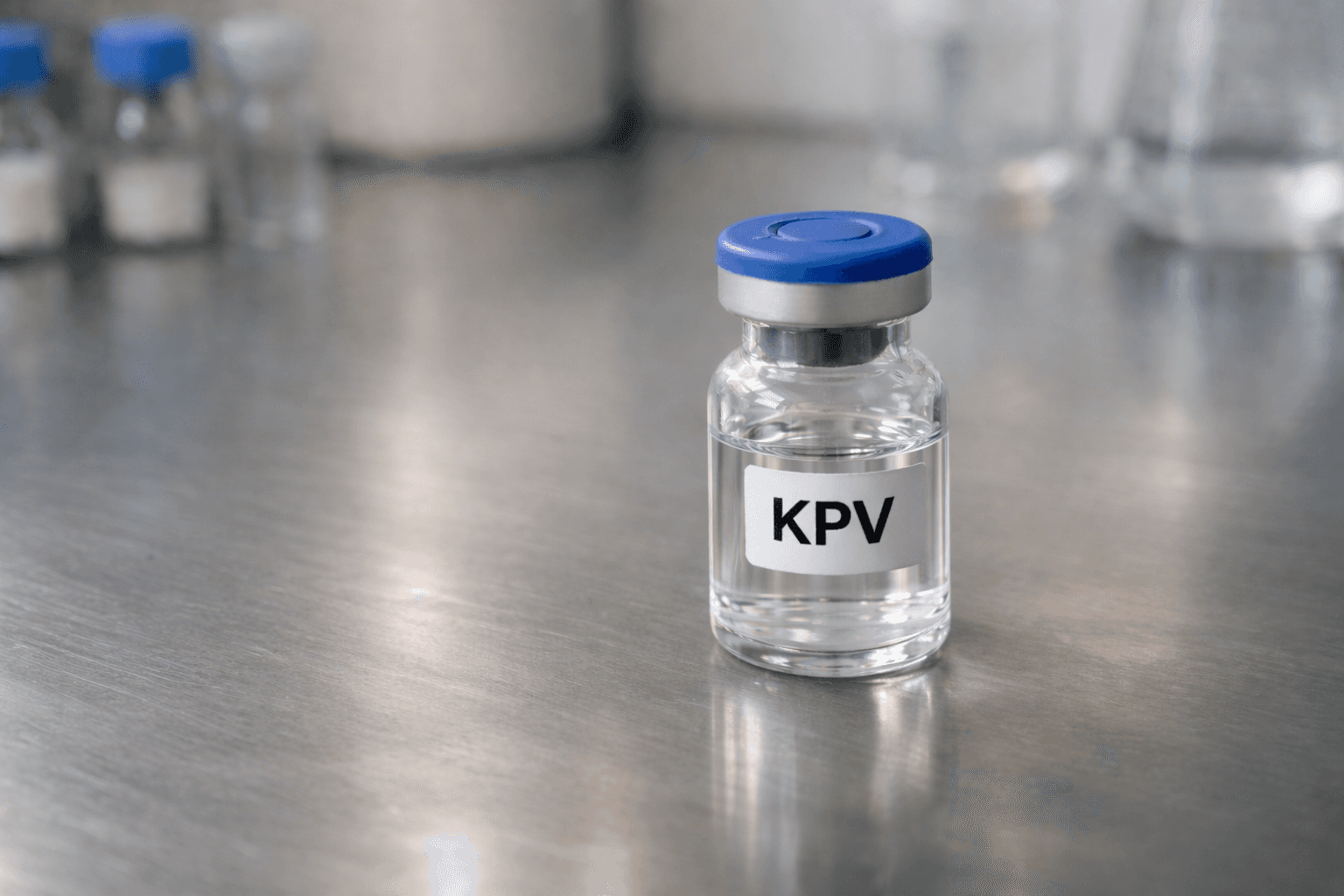
You know KPV peptide can help with inflammation, gut issues, or immune problems, but you're stuck on the most critical question: how much should you actually take?
Some sources say 500mcg daily, others recommend 2,000mcg.
You've seen different protocols for injectable, oral, and nasal spray forms, but don't know if dosing varies based on your specific condition - gut inflammation versus skin issues versus general anti-inflammatory support.
You need to know that KPV dosage depends on the form you're using (injectable, oral, or nasal), your specific condition, severity of inflammation, and your body's response.
Standard protocols exist, but optimal dosing requires understanding the nuances of each administration method and adjusting based on results.
This guide breaks down exact KPV dosage protocols for every form and condition. You'll learn standard dosing ranges, how to adjust based on response, what works for different inflammatory conditions, timing strategies, and how to cycle KPV safely. By the end, you'll know exactly how much KPV to use for your situation.
Let's start with understanding KPV and why dosing differs from other peptides.
Understanding KPV peptide and why dosing matters
KPV (Lysine-Proline-Valine) is a tripeptide - just three amino acids. Despite its simplicity, it's powerfully anti-inflammatory.
How KPV works:
Inhibits inflammatory signaling pathways (particularly NF-κB)
Modulates immune response
Reduces production of inflammatory cytokines
Penetrates cell membranes easily (lipophilic structure)
Works locally and systemically
Why dosing is critical: Too little KPV won't provide therapeutic benefit. Too much wastes money without additional benefit. The therapeutic window is fairly wide (KPV is very safe), but optimal dosing maximizes results while minimizing cost.
KPV vs other peptides: Unlike peptides that stimulate hormone production (like growth hormone peptides), KPV works by inhibiting inflammatory processes. This means dosing focuses on maintaining consistent anti-inflammatory levels rather than pulsing to trigger releases.
KPV dosage by administration method
The form of KPV you use dramatically affects dosing.
Injectable KPV dosage (subcutaneous)
Injectable KPV provides the most reliable absorption and bioavailability.
Standard dosing range:
Low dose: 500mcg daily
Moderate dose: 1,000mcg daily
High dose: 1,500-2,000mcg daily
Most common protocol: 500-1,000mcg once daily, subcutaneous injection.
When to use different doses:
Low dose (500mcg daily) works for:
Mild inflammation
Maintenance after acute phase
General anti-inflammatory support
Preventive use
Moderate dose (1,000mcg daily) works for:
Moderate inflammatory conditions
Active gut inflammation
Skin conditions (eczema, psoriasis)
Most therapeutic applications
High dose (1,500-2,000mcg daily) works for:
Severe inflammation
Acute flares of inflammatory conditions
Resistant cases not responding to lower doses
Short-term intensive treatment
Injection frequency: Once daily is standard. Some users split dose into 500mcg twice daily for more stable levels, but once daily works for most people.
Injection timing: Flexible. Many inject in morning for convenience. Timing doesn't significantly impact effectiveness.
Injection site: Subcutaneous injection in abdomen, thighs, or anywhere you normally inject peptides. KPV works systemically, so injection site doesn't matter for most conditions.
Exception for skin conditions: Some users inject near affected skin areas for potential enhanced local effect, though systemic injection also works.
Use our peptide calculator to determine exact amounts based on your vial concentration.
Oral KPV dosage (capsules)
Oral KPV has lower bioavailability than injectable but still provides benefits, especially for gut conditions.
Why oral bioavailability is lower: Digestive enzymes break down some KPV before absorption. However, for gut-specific issues, this isn't necessarily bad - KPV acts locally on gut lining before systemic absorption.
Standard oral dosing:
Low dose: 500mcg daily
Moderate dose: 1,000-1,500mcg daily
High dose: 2,000-3,000mcg daily
Most common oral protocol: 1,000-1,500mcg daily in capsule form.
For gut-specific conditions: Oral may be preferred despite lower bioavailability because KPV directly contacts inflamed gut lining. Injectable also works systemically for gut issues.
Timing for oral KPV:
Empty stomach (30 minutes before meals) for systemic absorption
With meals for direct gut lining contact (for IBD, IBS, leaky gut)
Divided doses: Some users split oral dose (500mcg morning, 500mcg evening) for sustained levels.
Nasal spray KPV dosage
Nasal administration provides unique benefits for sinus inflammation and potentially better bioavailability than oral.
Standard nasal dosing:
Typical concentration: 2-3mg/ml solution
Dosing: 2-3 sprays per nostril, 1-2 times daily
Total daily dose: 500-1,500mcg
Advantages of nasal:
Direct treatment of sinus inflammation
Bypasses first-pass metabolism (better absorption than oral)
Easy to administer
No injection required
Best for:
Chronic sinusitis
Allergic rhinitis
General anti-inflammatory support (alternative to injection)
People who can't or won't inject
Disadvantages:
Less precise dosing than injectable
Variability in absorption
May irritate nasal passages in some users
Topical KPV dosage (cream/gel)
Some compounding pharmacies offer topical KPV for skin conditions.
Typical concentration: 1-2% cream or gel
Application: Apply thin layer to affected area 1-2 times daily
Best for:
Eczema
Psoriasis
Localized skin inflammation
Rosacea
Note: Less common than injectable/oral/nasal forms. Often combined with other skin-healing ingredients.
KPV dosage protocols by condition
Different conditions may benefit from different dosing strategies.
Inflammatory bowel disease (Crohn's, Ulcerative Colitis)
Recommended protocol:
Option 1: Oral KPV (targets gut directly)
Dose: 1,000-2,000mcg daily
Timing: Split into 2 doses, taken with meals
Duration: 8-12 weeks minimum, can continue long-term
Option 2: Injectable KPV (systemic approach)
Dose: 1,000-1,500mcg daily subcutaneous
Frequency: Once daily
Duration: 8-12 weeks minimum
Combination approach: Some use both oral (1,000mcg) and injectable (500mcg) for maximum effect.
Expected timeline:
Week 1-2: Minor symptom improvement
Week 4-6: Noticeable reduction in inflammation and symptoms
Week 8-12: Significant improvement in most users
Monitoring: Track bowel movements, pain levels, blood in stool. Many users report reduction in flares and better baseline symptoms.
Leaky gut syndrome
Recommended protocol:
Oral preferred for direct gut lining contact:
Dose: 500-1,000mcg daily
Timing: 30 minutes before breakfast (empty stomach)
Duration: 6-12 weeks
Can combine with:
L-glutamine (5g daily)
Zinc carnosine (75mg daily)
Collagen peptides (10-20g daily)
Injectable alternative:
Dose: 500-1,000mcg daily subcutaneous
Also effective for systemic healing
Expected results:
Week 2-4: Reduced food sensitivities
Week 6-8: Improved digestion
Week 12+: Restored gut barrier function (test with markers if possible)
Skin inflammation (eczema, psoriasis, rosacea)
Recommended protocol:
Option 1: Injectable (most effective)
Dose: 500-1,000mcg daily subcutaneous
Optional: Inject near affected areas for enhanced local effect
Duration: 8-16 weeks
Option 2: Topical + Injectable combination
Injectable: 500mcg daily
Topical: 1-2% cream applied 2x daily to affected areas
Duration: 8-12 weeks
Option 3: Topical only (mild cases)
Apply 1-2% KPV cream 2x daily
Duration: 6-12 weeks
Expected results:
Week 2-4: Reduced redness and inflammation
Week 6-8: Fewer flares, improved skin appearance
Week 12+: Significantly clearer skin
Chronic sinusitis and allergic rhinitis
Recommended protocol:
Nasal spray (primary treatment):
Dose: 2-3 sprays per nostril, twice daily
Concentration: 2-3mg/ml
Duration: 4-8 weeks
Can add injectable for enhanced systemic effect:
Dose: 500mcg daily subcutaneous
Combines local (nasal) and systemic (injectable) approach
Expected results:
Week 1-2: Reduced sinus congestion
Week 4-6: Fewer sinus headaches, better breathing
Week 8+: Maintained improvement, fewer infections
General anti-inflammatory and immune modulation
Recommended protocol:
For ongoing health optimization:
Dose: 500mcg daily injectable OR 1,000mcg oral
Duration: Can use long-term (ongoing)
Cycle: Some users cycle 12 weeks on, 4 weeks off
For acute inflammatory episodes:
Dose: 1,000-1,500mcg daily injectable
Duration: 2-4 weeks during flare, then reduce to maintenance
Preventive use:
Dose: 500mcg daily or 500mcg 5 days per week
Duration: Ongoing
KPV dosage comparison table
Here's a quick reference comparing dosing across different forms and conditions:
Administration Method | Condition | Low Dose | Moderate Dose | High Dose | Frequency | Duration |
|---|---|---|---|---|---|---|
Injectable SubQ | Gut inflammation | 500mcg | 1,000mcg | 1,500mcg | Once daily | 8-12 weeks |
Injectable SubQ | Skin conditions | 500mcg | 1,000mcg | 1,500mcg | Once daily | 8-16 weeks |
Injectable SubQ | General anti-inflammatory | 500mcg | 1,000mcg | N/A | Once daily | Ongoing |
Oral capsules | IBD/Crohn's/UC | 1,000mcg | 1,500mcg | 2,000-3,000mcg | 1-2x daily | 8-12 weeks |
Oral capsules | Leaky gut | 500mcg | 1,000mcg | 1,500mcg | Once daily | 6-12 weeks |
Oral capsules | General support | 500mcg | 1,000mcg | 1,500mcg | Once daily | Ongoing |
Nasal spray | Chronic sinusitis | 500-750mcg | 1,000-1,500mcg | 2,000mcg | 2x daily | 4-8 weeks |
Nasal spray | Allergic rhinitis | 500mcg | 1,000mcg | 1,500mcg | 2x daily | 4-8 weeks |
Topical cream | Eczema/psoriasis | 1% cream 2x daily | 2% cream 2x daily | 2% cream 3x daily | As directed | 6-12 weeks |
Notes:
Low dose = mild conditions or maintenance
Moderate dose = active inflammation, most common therapeutic dose
High dose = severe or resistant cases
All injectable doses are subcutaneous
Oral doses account for lower bioavailability
How to adjust KPV dosage based on response
Start conservatively and adjust based on how your body responds.
Week 1-2: Initial assessment
Start with moderate dose for your chosen method:
Injectable: 500-1,000mcg daily
Oral: 1,000mcg daily
Nasal: 2 sprays per nostril twice daily
Monitor baseline symptoms carefully. Track specific metrics (bowel movements for gut issues, skin appearance for eczema, sinus congestion for sinusitis).
Week 3-4: First evaluation
Assess response:
Significant improvement (>50% reduction in symptoms)? Continue current dose.
Moderate improvement (25-50%)? Continue or consider slight increase.
Minimal improvement (<25%)? Increase dose by 50%.
No improvement? Double dose or reassess if KPV is appropriate for your condition.
Week 6-8: Optimization
By now you should see clear results if KPV is working:
Excellent response? Continue current dose through full protocol.
Partial response? Push dose to higher end of range.
Poor response? Either max out dose for final 4 weeks or discontinue.
Week 12+: Maintenance or discontinuation
If successful:
Reduce to minimum effective dose (often 50% of treatment dose)
Or cycle off for 4 weeks, resume if symptoms return
Some conditions benefit from ongoing low-dose maintenance
If unsuccessful after 12 weeks at high dose:
KPV may not be right solution for your specific inflammation
Consider other peptides (BPC-157, TB-500) or medical intervention
Combining KPV with other peptides
KPV stacks well with several other peptides for enhanced results.
KPV + BPC-157 (gut healing stack)
This is one of the most effective combinations for inflammatory gut conditions.
Protocol:
KPV: 500-1,000mcg daily (oral preferred for gut contact, injectable also works)
BPC-157: 250-500mcg twice daily injectable
Duration: 8-12 weeks
Why it works: KPV reduces inflammation while BPC-157 actively heals damaged tissue. Complementary mechanisms.
Best for: Crohn's disease, ulcerative colitis, severe leaky gut, post-infection gut inflammation.
See our BPC-157 complete guide and use our BPC-157 dosage calculator.
KPV + TB-500 (comprehensive healing)
For systemic inflammation with tissue damage.
Protocol:
KPV: 1,000mcg daily injectable
TB-500: 5-10mg weekly (loading), then 2-5mg weekly (maintenance)
Duration: 12-16 weeks
Why it works: KPV controls inflammation, TB-500 promotes deep tissue healing and regeneration.
Best for: Chronic inflammatory conditions with tissue damage, autoimmune flares affecting multiple systems.
Learn more in our TB-500 guide and use our TB-500 dosage calculator.
KPV + GHK-Cu (skin conditions)
Powerful combination for inflammatory skin conditions.
Protocol:
KPV: 500-1,000mcg daily injectable OR topical cream
GHK-Cu: Topical 1-2% serum twice daily + optional 1-2mg injectable 3x weekly
Duration: 8-12 weeks
Why it works: KPV reduces inflammation, GHK-Cu promotes skin regeneration and healing.
Best for: Eczema, psoriasis, severe acne, rosacea, inflammatory skin conditions.
See our copper peptides guide for GHK-Cu protocols.
Peptide stacking dosage table
Stack | KPV Dose | Secondary Peptide | Secondary Dose | Duration | Best For |
|---|---|---|---|---|---|
KPV + BPC-157 | 500-1,000mcg daily | BPC-157 | 250-500mcg 2x daily | 8-12 weeks | Gut inflammation |
KPV + TB-500 | 1,000mcg daily | TB-500 | 5-10mg/week loading | 12-16 weeks | Systemic inflammation |
KPV + GHK-Cu | 500-1,000mcg daily | GHK-Cu topical | 2% serum 2x daily | 8-12 weeks | Skin conditions |
KPV + BPC + TB | 500mcg daily | BPC: 250mcg 2x daily | Combined | 12 weeks | Severe IBD |
Learn complete stacking strategies in our peptide stacks guide.
KPV reconstitution and preparation
Proper preparation ensures accurate dosing.
Reconstituting injectable KPV
What you need:
KPV lyophilized powder (typically 5mg or 10mg vial)
Bacteriostatic water
Insulin syringes
Alcohol swabs
Reconstitution steps:
Determine your target concentration. For 500mcg doses from a 5mg vial, add 1ml bacteriostatic water (5mg/ml = 500mcg per 0.1ml).
Clean vial top with alcohol swab.
Draw bacteriostatic water into syringe.
Inject water slowly down side of vial (not directly onto powder).
Swirl gently until dissolved. Don't shake.
Refrigerate after reconstitution.
Common concentrations:
5mg vial:
Add 1ml water = 5mg/ml (500mcg per 0.1ml, 1,000mcg per 0.2ml)
Add 2ml water = 2.5mg/ml (500mcg per 0.2ml, 1,000mcg per 0.4ml)
10mg vial:
Add 2ml water = 5mg/ml (500mcg per 0.1ml, 1,000mcg per 0.2ml)
Add 4ml water = 2.5mg/ml (500mcg per 0.2ml, 1,000mcg per 0.4ml)
Use our peptide reconstitution calculator for exact measurements.
Storage after reconstitution
Refrigeration required:
Store at 2-8°C (36-46°F)
Protect from light (keep in box or wrap in foil)
Use within 28-30 days
Before injection:
Allow to warm to room temperature (10-15 minutes out of fridge)
Cold injection can cause burning sensation
Traveling with KPV:
Use insulated cooler with ice packs
Can survive few hours without refrigeration
Long-term storage requires refrigeration
See our peptide storage guide for complete information.
Safety, side effects and contraindications
KPV has an excellent safety profile, but awareness matters.
Common side effects (mild and rare)
KPV is one of the safest peptides available. Most users experience zero side effects.
Occasionally reported:
Mild injection site reactions (redness, temporary irritation)
Headache (uncommon, usually subsides after first week)
Fatigue (rare, typically when first starting)
Nasal irritation (with nasal spray form)
Important: These are rare and usually mild when they occur.
Serious side effects (extremely rare)
No serious adverse effects documented in published research or widespread anecdotal use.
Theoretical concerns:
Allergic reaction (possible with any substance but not reported)
Over-suppression of beneficial inflammation (theoretical, not observed)
Contraindications
Avoid KPV if:
Pregnant or breastfeeding (no safety data)
Severe immunocompromised state (consult physician)
Active infection requiring inflammatory response (wait until resolved)
Use caution if:
Taking immunosuppressant medications (potential interaction)
History of allergic reactions to peptides
Undergoing surgery soon (may affect healing response)
When to stop KPV
Discontinue if experiencing:
Severe allergic reaction (hives, difficulty breathing, swelling)
Persistent adverse effects not improving after first week
Worsening of condition after 4-6 weeks (KPV may not be appropriate)
Otherwise: KPV is safe for long-term use. Many users continue for months or years for chronic inflammatory conditions.
Learn more in our peptide safety and risks guide.
How you can use SeekPeptides for KPV dosing success
Getting KPV dosing right requires personalized protocols, accurate calculations, and expert guidance. SeekPeptides provides everything you need to dose KPV effectively and safely.
Personalized KPV protocols tailored to your condition: Answer a few questions about your specific inflammatory condition (gut issues, skin problems, chronic inflammation) and your current situation. SeekPeptides generates a custom KPV protocol with exact dosages, injection schedules, timing, and duration designed specifically for what you want to achieve.
No more guessing whether you should use 500mcg or 1,500mcg - you get a science-backed protocol optimized for your body and goals.
AI peptide advisor for KPV questions: Stuck on whether to increase your KPV dose? Wondering if you should switch from injectable to oral for gut issues? Need to know if KPV stacks safely with your current medications?
Get instant answers from our AI advisor trained on peptide science.
Ask about mixing KPV with BPC-157, adjusting doses based on response, troubleshooting side effects, or optimizing timing - get expert guidance anytime, day or night.
Complete research library for KPV evidence: Access our comprehensive guides on KPV mechanisms, inflammatory pathways, clinical studies, and real-world protocols. Understand exactly how KPV reduces inflammation, why certain doses work better for specific conditions, and what the science says about combining KPV with other healing peptides. Every protocol is built on peer-reviewed research you can review yourself.
Dosage calculators for precision: Our peptide calculator and reconstitution calculator ensure you're mixing and dosing KPV accurately every time. Know exactly how much bacteriostatic water to add, how to measure your doses, and how long your vial will last at your prescribed dose.
Progress tracking to optimize your protocol: Monitor your inflammatory markers, symptom improvements, and side effects. Track your KPV doses, timing, and results. The system helps you identify what's working and suggests adjustments to maximize results - whether that means increasing dose for stubborn inflammation or reducing to maintenance levels after symptoms improve.
Safety guidelines and warnings: Know exactly what to avoid, which medications interact with KPV, when to stop if issues arise, and proper injection technique.
Get step by step guidance on everything from reconstitution to injection site rotation to refrigeration best practices.
SeekPeptides takes the guesswork out of KPV dosing. Instead of piecing together information from forums and hoping you're doing it right, you get a personalized protocol designed for your specific inflammatory condition, with expert AI support whenever you need it.
Stop wasting money on ineffective doses or wrong protocol, know exactly what to take, how much, and when to adjust.
Final thoughts
KPV peptide dosing isn't complicated, but it requires understanding the nuances. Injectable protocols typically use 500-1,000mcg daily.
Oral forms need 1,000-1,500mcg daily for equivalent effect.
Nasal sprays provide 500-1,500mcg daily across multiple administrations. T
opical applications use 1-2% concentration applied directly to affected skin.
Start with moderate doses for your chosen form. Assess response after 3-4 weeks. Adjust up if needed, or reduce to maintenance levels if seeing excellent results. Combine with BPC-157 for gut issues, TB-500 for systemic inflammation, or GHK-Cu for skin conditions when appropriate.
KPV has an exceptional safety profile. Long-term use is well-tolerated. The biggest risk is underdosing and not getting therapeutic benefit, not overdosing and causing harm.
Use the protocols in this guide as starting points. Track your response. Adjust intelligently. KPV works remarkably well for inflammatory conditions when dosed properly.
Your inflammation has a solution. Dose KPV correctly and experience the anti-inflammatory benefits.
Helpful calculators for KPV dosing
Peptide calculator - Calculate exact KPV doses from any vial size
Peptide reconstitution calculator - Mix KPV accurately every time
Peptide cost calculator - Budget your KPV protocol
BPC-157 dosage calculator - For KPV + BPC stacking
In case I don’t see you, good afternoon, good evening, and good night. Use SeekPeptides