Feb 25, 2026
Some researchers store their retatrutide for months without losing a single percentage point of potency. Others watch their entire supply degrade in weeks. The difference is not luck. It is not the vendor. It is not even the peptide itself.
It is storage.
The question of how long retatrutide lasts actually has two completely different answers depending on what you mean. Are you asking about shelf life, how long the physical retatrutide peptide remains stable and usable in its container? Or are you asking about duration, how long the compound stays active in your body after injection? Both questions matter enormously. Both have specific, research-backed answers that differ by orders of magnitude. And getting either one wrong means wasted money, wasted peptide, or both. This guide covers every timeline you need, from how long lyophilized powder survives in your freezer to how long the medication circulates through your bloodstream after your final dose. Whether you are planning your first starting dose of retatrutide or trying to figure out if that vial you forgot about is still good, every answer lives right here. SeekPeptides has compiled the most comprehensive retatrutide duration reference available, drawing from clinical trial data, pharmaceutical storage guidelines, and practical research experience.
How long does retatrutide last in powder form
Lyophilized retatrutide, the freeze-dried powder form that arrives in sealed vials, is remarkably stable when stored correctly. The absence of water in this form dramatically reduces the chemical reactions that cause peptide degradation. Think of it as a biological time capsule. The peptide chains are locked in place, protected from the hydrolysis that would otherwise break them apart molecule by molecule.
The numbers tell a clear story.
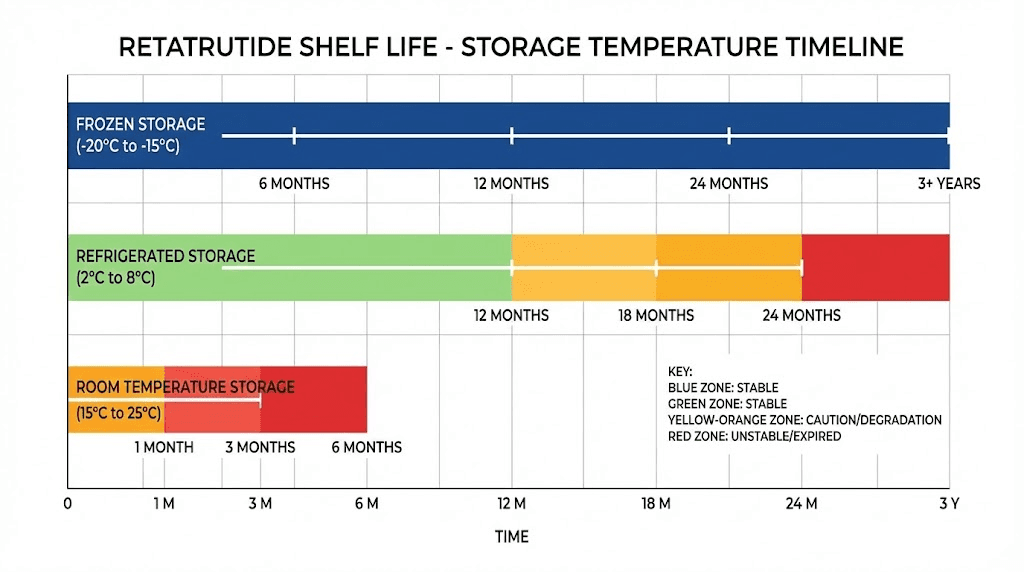
At ultra-cold temperatures of negative 20 degrees Celsius or below, lyophilized retatrutide remains stable for up to 48 months. That is four full years of shelf life. Researchers who store their supply in a dedicated laboratory freezer at negative 80 degrees Celsius can expect even longer stability, though formal studies beyond the 48-month mark are limited. This extended shelf life makes buying retatrutide in bulk a practical strategy for long-term research protocols.
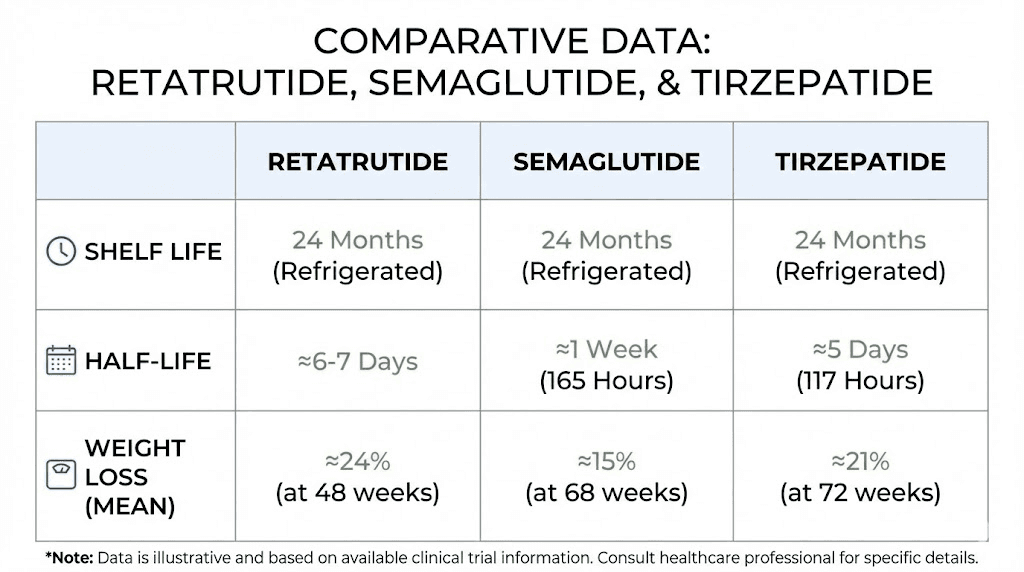
Standard refrigerator temperature of 2 to 8 degrees Celsius provides 12 to 24 months of reliable shelf life for unopened, lyophilized vials. This range covers the typical home refrigerator setting. While not as robust as deep freezing, refrigeration keeps the powder well within acceptable stability parameters for most research timelines. If you are comparing this to other GLP-1 receptor agonists, the storage profile is similar to how long semaglutide stays good in its lyophilized form and closely mirrors the shelf life of tirzepatide.
Temperature and shelf life reference
Storage temperature | Expected shelf life | Best for |
|---|---|---|
-80 degrees C (ultra-cold freezer) | 48+ months | Long-term research storage |
-20 degrees C (standard freezer) | Up to 48 months | Bulk storage, multi-year protocols |
2-8 degrees C (refrigerator) | 12-24 months | Active research use |
Room temperature (20-25 degrees C) | Weeks to a few months | Not recommended for storage |
One critical detail that many guides overlook is the role of the original seal. An unopened vial with its factory crimp cap intact will always outlast a vial that has been punctured, even if both remain as dry powder. The moment a needle pierces the septum, you introduce a microscopic pathway for moisture and contaminants. This does not mean the powder degrades immediately. It does mean the clock starts ticking faster. For researchers working with retatrutide pricing that makes every vial valuable, maintaining that factory seal until the day you reconstitute is worth the minor inconvenience.
Humidity matters more than most people realize. Lyophilized peptides are hygroscopic, meaning they actively absorb moisture from the surrounding air. Even tiny amounts of absorbed water can initiate degradation pathways within the powder. Storing vials with desiccant packets in an airtight secondary container provides an extra layer of protection. This is especially important if you are storing retatrutide in a standard kitchen refrigerator where you open the door multiple times daily, creating temperature and humidity fluctuations with every opening.
How long does reconstituted retatrutide last
Everything changes once you add water.
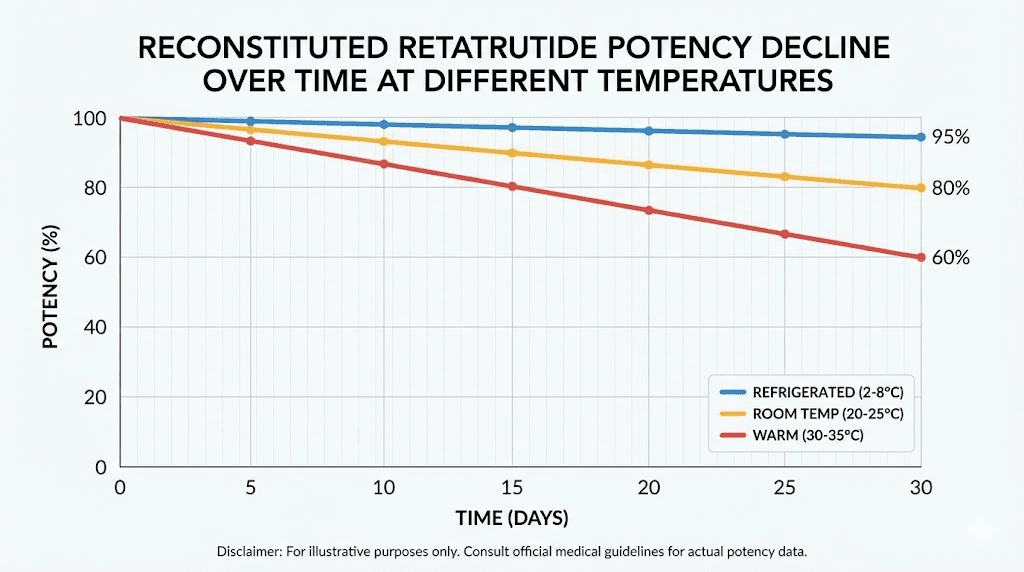
Reconstituted retatrutide, the liquid solution created by mixing the lyophilized powder with bacteriostatic water, has a dramatically shorter shelf life than the dry powder. The standard recommendation is 28 to 30 days when stored at 2 to 8 degrees Celsius in a refrigerator. This timeline assumes proper sterile technique during reconstitution and consistent cold storage afterward.
Some researchers report using reconstituted retatrutide safely for 4 to 6 weeks under strict conditions. This extended window requires meticulous sterile handling, minimal needle punctures of the septum, and unwavering refrigeration at the correct temperature range. But 30 days is the safe benchmark that most pharmaceutical guidelines support. Going beyond that window introduces increasing risk of potency loss and potential contamination.
Why the dramatic drop from years to weeks? Water reactivates all the chemical processes that lyophilization halted. Hydrolysis, the breaking of peptide bonds by water molecules, begins immediately upon reconstitution. Oxidation accelerates. Microbial growth becomes possible, even with the benzyl alcohol preservative present in bacteriostatic water. These processes happen slowly at refrigerator temperatures but they never stop entirely. The result is a steady, measurable decline in potency that becomes significant beyond the 30-day mark.
For researchers following the retatrutide reconstitution chart, here is a practical timeline of what happens after mixing.
Reconstituted retatrutide stability timeline
Time after reconstitution | Estimated potency retention | Recommendation |
|---|---|---|
Day 1-7 | 98-100% | Optimal usage window |
Day 8-14 | 95-98% | Still excellent |
Day 15-21 | 90-95% | Good, standard usage |
Day 22-30 | 85-92% | Acceptable, use promptly |
Day 31-42 | 75-85% | Reduced potency, not ideal |
Day 43+ | Below 75% | Discard, unreliable |
This pattern closely mirrors what researchers observe with compounded semaglutide in the fridge and tirzepatide stored in the refrigerator. The 30-day rule is essentially universal across reconstituted GLP-1 receptor agonist peptides.
A practical tip that experienced researchers share is to only reconstitute what you can use within 30 days. If your retatrutide dosing schedule means a 10mg vial will last longer than a month, consider using smaller vials or adjusting your reconstitution volume. The peptide reconstitution calculator at SeekPeptides can help you determine the exact amount of bacteriostatic water needed for any vial size and desired concentration.
What about freezing reconstituted retatrutide
Do not freeze reconstituted retatrutide. This is a common question, and the answer is unambiguous. Freezing a reconstituted peptide solution causes ice crystals to form within the liquid. These crystals physically damage the three-dimensional structure of the peptide chains, a process called cryodamage. The result is denatured, partially destroyed retatrutide that may look fine once thawed but has lost a significant portion of its biological activity.
The one exception involves ultra-low temperature storage at negative 80 degrees Celsius using specialized aliquoting techniques. Some advanced research facilities will divide reconstituted peptide into single-use aliquots and flash-freeze them. This is not practical for individual researchers and requires equipment most people do not have access to. For standard research purposes, keep reconstituted retatrutide refrigerated and use it within 30 days. Period.
How long does retatrutide last at room temperature
Room temperature is the enemy of peptide stability. Every minute that retatrutide spends outside of proper cold storage accelerates its degradation. But accidents happen. Shipments get delayed. Vials get left on counters. Understanding exactly how long retatrutide survives at room temperature helps you make informed decisions about whether a dose is still usable.
For lyophilized powder at room temperature, the timeline is more forgiving than you might expect. Dry powder can tolerate brief periods at room temperature, up to several weeks, without catastrophic degradation. Studies on similar peptides suggest that lyophilized retatrutide at 20 to 25 degrees Celsius maintains acceptable potency for roughly 3 to 4 weeks. Beyond that, degradation becomes measurable and progressive.
Reconstituted retatrutide at room temperature is a different story entirely. Research on peptide stability shows that the solution remains viable for a maximum of approximately 21 days at temperatures below 30 degrees Celsius. By day 21, potency drops to roughly 85 percent. By day 35, it falls to approximately 60 percent, making the solution effectively unusable for research purposes. This is similar to what researchers observe with semaglutide getting warm and with tirzepatide left out of the fridge.
The overnight rule
Left your reconstituted retatrutide out overnight? Do not panic. A single overnight period at room temperature, roughly 8 to 12 hours, will reduce potency by an estimated 2 to 5 percent depending on the ambient temperature. This is annoying but not catastrophic. Return it to the refrigerator immediately and continue using it, but move up your timeline for finishing that vial. Similar advice applies if you have ever accidentally left semaglutide out overnight.
Repeated excursions are the real problem. One overnight on the counter is recoverable. Three or four temperature cycles between room temperature and refrigerator cause cumulative damage that compounds with each cycle. If your vial has been in and out of cold storage multiple times, consider it compromised and replace it. The cost of retatrutide makes waste painful, but using degraded peptide wastes your time along with your money.
How long does retatrutide last in your body
Now for the other meaning of the question. Once you inject retatrutide, how long does it remain active in your system? This is where pharmacokinetics, the study of how drugs move through the body, provides precise and encouraging answers.
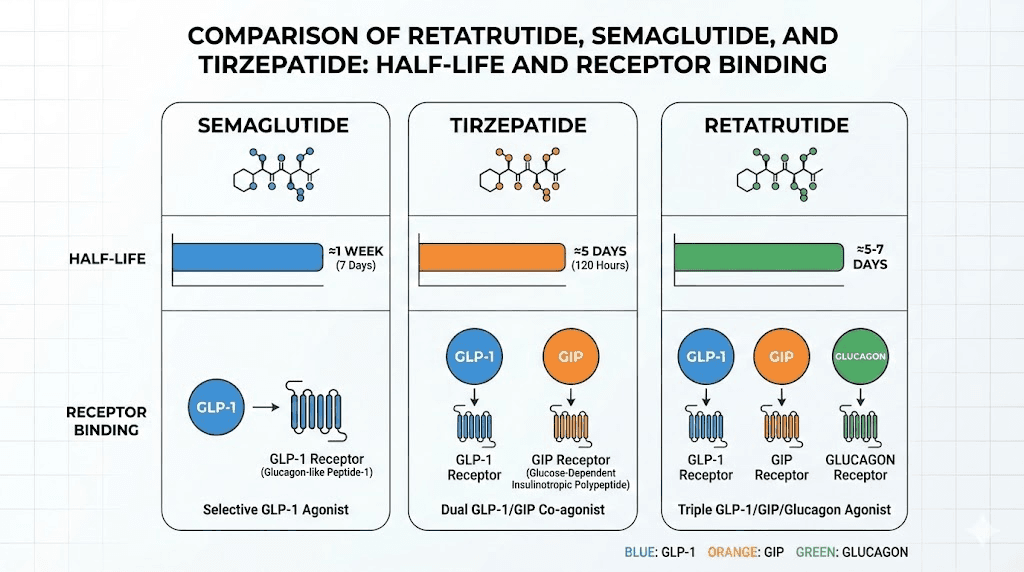
Retatrutide has a half-life of approximately 6 to 8 days. Half-life means the time it takes for the concentration of the drug in your bloodstream to decrease by exactly 50 percent. So if you inject a dose on Monday morning, by the following Sunday or Monday roughly half of that dose is still circulating and active. This is what makes once-weekly dosing possible and effective.
To put this in practical terms, here is what happens after a single injection of retatrutide. Within 12 to 72 hours, the peptide reaches its maximum concentration in your blood. This is when the effects are strongest. Over the following 6 to 8 days, the concentration gradually declines as your body metabolizes the compound, primarily through hepatic pathways that do not interact with cytochrome P450 enzymes. By the time your next weekly dose is due, enough of the previous dose remains to maintain baseline therapeutic levels while the new dose rebuilds to peak concentration.
Understanding steady state
Here is where it gets interesting. After approximately 4 to 5 weeks of consistent weekly dosing, retatrutide reaches what pharmacologists call steady state. At steady state, the amount of drug entering your system with each injection roughly equals the amount being cleared. The result is a consistent, predictable level of the medication in your body with smaller peaks and troughs compared to the early weeks of dosing.
Steady state matters because it is when the full therapeutic benefits of retatrutide become apparent. The first few weeks involve building drug levels in your system. Side effects tend to be more noticeable during this phase because your body is adjusting to rising concentrations. Once steady state is achieved, effects stabilize and side effects often diminish. This progression is similar to what researchers observe with the GLP-1 onset timeline across all medications in this class.
Complete clearance after stopping
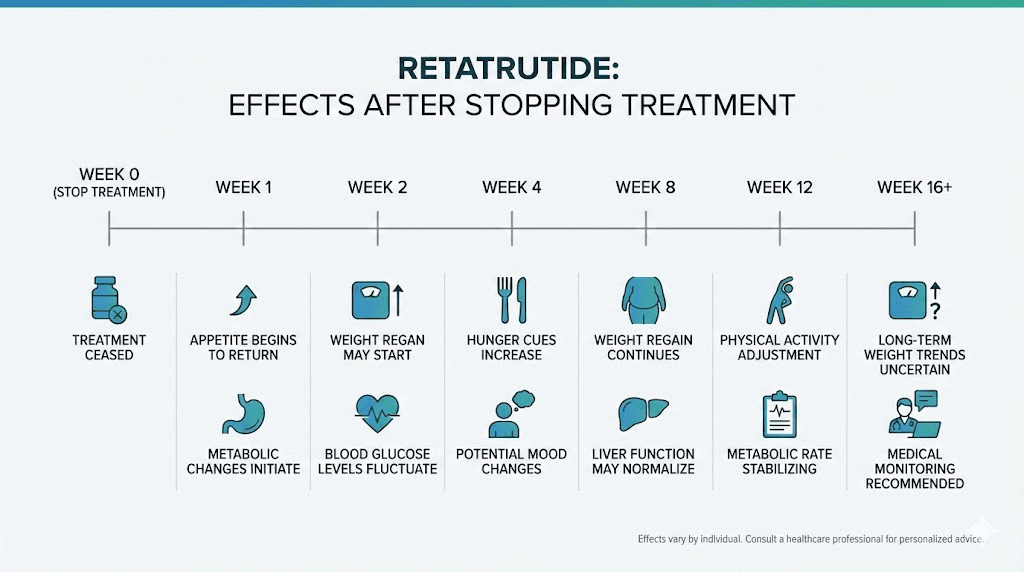
It takes approximately 4 to 5 half-lives for a drug to be effectively eliminated from your body. With a half-life of 6 to 8 days, this means retatrutide takes roughly 24 to 40 days to fully clear from your system after your last injection. During this washout period, the medication continues to exert diminishing effects. Appetite suppression fades gradually rather than disappearing overnight. Metabolic changes reverse slowly. This extended clearance period is one reason why withdrawal symptoms with GLP-1 medications tend to develop over weeks rather than days.
Retatrutide half-life comparison with other GLP-1 agonists
Medication | Half-life | Dosing frequency | Time to steady state | Full clearance |
|---|---|---|---|---|
Retatrutide | 6-8 days | Once weekly | 4-5 weeks | 24-40 days |
Semaglutide | ~7 days | Once weekly | 4-5 weeks | 28-35 days |
Tirzepatide | ~5 days | Once weekly | ~4 weeks | 20-25 days |
The comparison reveals that all three major GLP-1 receptor agonists have remarkably similar pharmacokinetic profiles despite their structural differences. Retatrutide sits comfortably in the middle, with a half-life similar to semaglutide and slightly longer than tirzepatide. What sets retatrutide apart is not how long it lasts in your body but what it does while it is there. As a triple agonist targeting GLP-1, GIP, and glucagon receptors simultaneously, retatrutide activates three metabolic pathways where semaglutide activates one and tirzepatide activates two. For a detailed breakdown, see our complete retatrutide vs tirzepatide dosage comparison.
How long does it take for retatrutide to start working
The effects of retatrutide unfold in stages. Understanding this timeline prevents the frustration that drives many researchers to abandon their protocols prematurely. Too many people expect dramatic results in the first week and interpret gradual onset as failure. It is not failure. It is pharmacology doing exactly what it should.
The first 72 hours
Most researchers notice appetite suppression within 24 to 72 hours of their first injection. This is the earliest and most immediately perceptible effect. Food interest decreases. Portion sizes naturally shrink. The constant background noise of hunger that many people live with every day gets quieter. This early appetite effect does not mean the full therapeutic benefit has kicked in. It means the GLP-1 receptor component of retatrutide has begun engaging with the appetite centers in your brain. The GIP and glucagon receptor effects take longer to manifest at measurable levels.
Weeks 1 through 4
The first month is primarily about titration and adjustment. Following the standard retatrutide dose chart, most protocols begin at lower doses and increase gradually. During this period, typical weight loss ranges from 2 to 5 percent of baseline body weight. Side effects are most common during these early weeks, particularly gastrointestinal symptoms like nausea. These tend to improve as the body adjusts, especially when following proper injection technique and timing.
If you are transitioning from another GLP-1 medication, the timeline may differ slightly. Researchers switching from tirzepatide to retatrutide often notice the additional glucagon receptor activation producing different effects than what they experienced previously. The appetite suppression may feel similar, but the metabolic activation and energy expenditure effects are unique to retatrutide.
Weeks 4 through 12
This is when retatrutide reaches its stride. Steady state has been achieved. The triple agonist mechanism is fully engaged. Weight loss accelerates during this window, and the phase 2 clinical trial data published in the New England Journal of Medicine confirms this dramatically. At the 12-mg dose level, participants achieved a mean weight reduction of 17.5 percent at 24 weeks. That is nearly one-fifth of total body weight gone in six months.
Beyond the scale, researchers in this phase notice improvements across multiple metabolic markers. Blood pressure decreases. Triglycerides drop. Fasting glucose and insulin levels improve. HbA1c falls. These are not minor fluctuations. The meta-analysis data shows mean reductions of 23.51 mg/dL in fasting plasma glucose and 0.91 percent in HbA1c. These metabolic improvements happen in parallel with weight loss but through partially independent pathways, which is why retatrutide shows such broad clinical benefit.
Weeks 12 through 48 and beyond
The longest clinical trial data we have extends to 48 weeks. At this point, the 12-mg retatrutide group achieved a mean weight loss of 24.2 percent, with more than 90 percent of participants losing at least 10 percent of their baseline weight. Nearly half lost 25 percent or more. A quarter lost 30 percent or more. These numbers are unprecedented in the history of obesity pharmacotherapy. For context, the best results with semaglutide top out around 15 to 17 percent, and tirzepatide reaches approximately 20 to 22 percent.
Weight loss at the 48-week mark had not yet plateaued in most dose groups, suggesting that longer treatment periods could produce even greater results. Phase 3 trials currently underway will provide data on efficacy beyond one year.
How long do retatrutide effects last after stopping
This is the question nobody wants to ask but everybody needs to answer. What happens when you stop taking retatrutide? How quickly do the effects fade? And how much of the progress reverses?
The pharmacological effects of retatrutide fade in direct proportion to the drug leaving your system. With a half-life of 6 to 8 days, meaningful blood levels persist for approximately 3 to 4 weeks after the last injection. During this washout period, appetite suppression gradually weakens. Metabolic rate adjustments begin reverting. The hormonal environment that supported fat loss and metabolic improvement slowly returns to its pre-treatment baseline.
The first change most researchers notice is the return of appetite. This typically becomes noticeable 2 to 3 weeks after the final dose, when circulating retatrutide levels have dropped below the therapeutic threshold. Food interest increases. Cravings return. The effortless portion control that retatrutide provided requires conscious effort again. This experience parallels what researchers describe when discussing semaglutide withdrawal symptoms.
Weight regain patterns
Clinical data from GLP-1 receptor agonist discontinuation studies consistently shows weight regain after stopping treatment. The rate varies significantly between individuals, but a general pattern emerges. In the first 3 months after discontinuation, approximately 30 to 50 percent of lost weight returns. By 12 months off medication, most research participants have regained 60 to 70 percent of the weight they lost. Some regain all of it.
These numbers are not unique to retatrutide. They reflect a fundamental biological reality. Obesity involves persistent changes to metabolic set points, hunger hormones, and energy regulation that do not reset after weight loss. The medication suppresses these biological drivers. Remove the medication, and the drivers reassert themselves. This is why the conversation about how long retatrutide lasts extends far beyond pharmacokinetics into questions about long-term treatment strategy.
Strategies for maintaining results
Three approaches can help preserve the benefits achieved during retatrutide treatment. The first and most effective is continued treatment at a maintenance dose. Lower doses than the maximum weight loss dose can sustain results with reduced side effects and cost. Many researchers transition from their peak dose to a lower maintenance level rather than stopping entirely. Understanding how much retatrutide to take during the maintenance phase requires individual adjustment.
The second approach involves transitioning to a different GLP-1 medication. Some researchers move from retatrutide to semaglutide or tirzepatide for maintenance, particularly if cost or availability changes. The dosing transition between these medications requires careful planning to maintain receptor engagement without overtreating or undertreating.
The third approach combines lifestyle modifications established during treatment with strategic supplementation. The dietary habits developed while on retatrutide, such as those in a structured GLP-1 diet plan, protein prioritization with protein shakes designed for GLP-1 users, and regular exercise become even more important when medication support is removed. None of these fully replaces the pharmacological benefit, but they can slow the rate of regain significantly.
Signs your retatrutide has degraded
Knowing the theoretical shelf life is one thing. Knowing how to verify that your specific vial is still good is another. Visual inspection provides the most immediate and practical assessment tool, though it has important limitations that you need to understand.
Clear indicators of degradation
Cloudiness or haziness. Fresh reconstituted retatrutide should be perfectly clear. Any cloudiness, milkiness, or visible turbidity indicates either bacterial contamination or peptide aggregation, both of which render the solution unusable. This is the single most reliable visual indicator that something has gone wrong. If you see cloudiness, discard the vial immediately regardless of how recently you reconstituted it.
Discoloration. Reconstituted retatrutide should be colorless. Any yellowing, browning, or other color change indicates chemical degradation of the peptide. This same principle applies to other peptides. Understanding what color semaglutide should be or recognizing unusual color changes in semaglutide uses the same visual assessment logic.
Visible particles. Any floating material, flakes, fibers, or sediment in the solution means the vial is compromised. Particulate matter can come from degraded peptide falling out of solution, contamination introduced during reconstitution, or microbial growth. None of these scenarios produce a usable product.
The invisible problem
Here is what makes this tricky. A solution can look perfectly clear, colorless, and particle-free while having lost significant potency. Visual inspection catches obvious failures. It does not catch gradual degradation. A vial stored at room temperature for three weeks might look identical to one stored properly in the refrigerator, yet contain only 60 percent of the original active compound. This is why time-based guidelines matter as much as visual checks.
The most reliable indicator of degradation that does not show on visual inspection is reduced effectiveness. If your retatrutide seems less effective than it was, if appetite suppression has weakened or weight loss has stalled despite consistent dosing, potency loss from improper storage should be one of the first things you investigate. Before assuming your body has developed tolerance, check your storage conditions and vial age. Sometimes the answer to why a GLP-1 medication stops working is not biological at all. It is chemical.
When to discard your retatrutide
Discard reconstituted retatrutide after 30 days regardless of appearance. Discard any solution showing cloudiness, color changes, or particles. Discard any vial that has experienced repeated temperature excursions outside the 2 to 8 degrees Celsius range. Discard any vial where you suspect sterile technique was compromised during reconstitution. When in doubt, start fresh. The risk of using degraded peptide, reduced effectiveness, unpredictable dosing, potential contamination, always outweighs the cost of a replacement vial.
Complete retatrutide storage protocol for maximum shelf life
Proper storage is not complicated. It requires consistency more than complexity. Follow these protocols and your retatrutide will maintain maximum potency throughout its usable life.
Before reconstitution
Store lyophilized retatrutide vials at negative 20 degrees Celsius or colder for long-term storage. Use an airtight secondary container with desiccant packets to protect against moisture absorption. Keep vials in their original packaging to shield against light exposure. Label each vial with the date received and the lot number. If your freezer does not maintain consistent temperatures, consider investing in a dedicated pharmaceutical refrigerator or laboratory freezer.
For active research stock that you plan to reconstitute within a few months, standard refrigerator storage at 2 to 8 degrees Celsius is perfectly acceptable. Place vials toward the back of the refrigerator where temperature is most stable, not in the door where it fluctuates with every opening.
During reconstitution
Use bacteriostatic water, not sterile water, for reconstitution. The benzyl alcohol preservative in bacteriostatic water provides antimicrobial protection throughout the 30-day usage window. Follow the retatrutide reconstitution chart for proper water-to-powder ratios based on your vial size and desired concentration. The peptide reconstitution calculator can help determine exact volumes.
Let the lyophilized powder reach refrigerator temperature before adding water. Do not reconstitute a vial straight from the freezer. The temperature shock can affect dissolution. Allow the vial to sit in the refrigerator for 30 to 60 minutes before adding water. When adding bacteriostatic water, direct the stream against the glass wall of the vial, not directly onto the powder cake. Swirl gently. Never shake. Shaking creates foam and can damage the peptide through mechanical stress. The solution should clear within a few minutes. If it remains cloudy after 10 minutes of gentle swirling, something is wrong.
After reconstitution
Return the reconstituted vial to the refrigerator immediately after drawing your dose. Minimize the time the vial spends at room temperature. Use alcohol swabs on the septum before every needle insertion. Use a fresh needle for every draw to reduce contamination risk and septum degradation. Record the reconstitution date on the vial or in a log. Set a reminder for 30 days post-reconstitution to discard any remaining solution.
Travel considerations
Traveling with retatrutide requires a cold chain. Use an insulated travel case with cold packs. The goal is maintaining 2 to 8 degrees Celsius for the entire travel period. Hotel mini-fridges often run slightly warmer than standard refrigerators, so place the vial toward the back and away from any fan or heating element. If traveling by air, carry the vial in your carry-on luggage with the cold pack. Checked luggage can experience extreme temperature variations in the cargo hold. For detailed travel guidance with similar peptides, our traveling with semaglutide guide covers the same principles that apply to retatrutide transport.
Storage protocol summary
Stage | Temperature | Container | Duration | Key rule |
|---|---|---|---|---|
Long-term (powder) | -20 degrees C or colder | Airtight with desiccant | Up to 48 months | Keep sealed, minimize handling |
Short-term (powder) | 2-8 degrees C | Original packaging | 12-24 months | Back of fridge, not the door |
Active use (liquid) | 2-8 degrees C | Original vial | 28-30 days maximum | Record reconstitution date |
Travel | 2-8 degrees C | Insulated case with cold packs | As brief as possible | Never check luggage, carry on |
Factors that shorten how long retatrutide lasts
Understanding what destroys retatrutide helps you avoid the mistakes that waste expensive peptide. Six factors accelerate degradation. Some are obvious. Others surprise even experienced researchers.
Temperature fluctuations
Consistent cold storage beats perfect temperature. A vial kept at a steady 6 degrees Celsius will outlast one that bounces between 2 and 10 degrees, even though both fall within the acceptable range. Every temperature change forces the peptide molecules through conformational shifts that stress their structure. This is why the back of the refrigerator, where temperature swings are minimized, is always the best storage location.
Freeze-thaw cycles
Each freeze-thaw cycle causes measurable peptide damage. Ice crystal formation during freezing physically disrupts peptide bonds. Thawing releases water that can initiate hydrolysis at damage sites. One freeze-thaw cycle may cause minimal loss. Three or four cycles can reduce potency by 20 to 30 percent. This applies to lyophilized powder that has been reconstituted. Dry powder in its original sealed vial tolerates freezing and thawing much better because there is no water present to form damaging crystals.
Light exposure
Ultraviolet light and strong artificial light can degrade retatrutide through photochemical reactions. The aromatic amino acid residues in the peptide chain are particularly susceptible to UV-induced degradation. Store vials in opaque or amber containers when possible. If your vials are clear glass, keep them in their original box or wrap them in aluminum foil. Never store peptide vials on a windowsill or under direct lighting. Understanding the difference between lyophilized and liquid peptides helps contextualize why liquid forms are more vulnerable to light damage.
Contamination
Every time a needle enters the septum, it introduces a microscopic amount of environmental contamination. Proper alcohol swabbing reduces but does not eliminate this risk. Over the life of a vial, repeated punctures accumulate contamination that can accelerate peptide breakdown and introduce microbial growth. Using as few needle entries as possible, drawing multiple doses at once if practical, extends the effective life of each vial.
Moisture exposure
For lyophilized powder, moisture is the primary enemy. Humidity in the storage environment, condensation from temperature changes, or a compromised vial seal can introduce enough water to begin degradation pathways even in the powder form. This is why desiccant packets and airtight secondary containers matter so much for long-term storage. The principles of moisture protection apply equally to retatrutide and to understanding proper semaglutide refrigeration and tirzepatide refrigeration requirements.
Improper reconstitution technique
How you mix the peptide matters. Shaking the vial instead of swirling creates turbulence that can denature peptide chains through mechanical stress. Using sterile water instead of bacteriostatic water eliminates the antimicrobial protection needed for multi-dose vials. Adding water too quickly or directly onto the powder cake can cause uneven dissolution and localized concentration extremes. Each of these errors shortens the effective life of the reconstituted solution. Follow the proper reconstitution protocol every single time.
Retatrutide vs semaglutide vs tirzepatide: how long each one lasts
Researchers often ask how retatrutide compares to other GLP-1 medications in terms of duration. The answer depends on whether you are asking about shelf life, body duration, or how long effects persist after stopping. Here is a comprehensive comparison across all three dimensions.
Shelf life comparison
All three medications share similar storage profiles in their lyophilized forms. Compounded versions of compounded semaglutide and compounded tirzepatide follow the same 30-day reconstituted shelf life as retatrutide. The pharmaceutical pen formulations of semaglutide and tirzepatide have slightly different guidelines because they use different preservative systems, but the underlying peptide stability is comparable. For practical purposes, the storage rules you follow for retatrutide work equally well for semaglutide and tirzepatide.
Half-life and body duration comparison
Semaglutide has the longest half-life at approximately 7 days, making it the slowest to clear from your system. Retatrutide sits in the middle at 6 to 8 days. Tirzepatide has the shortest at approximately 5 days. In practice, these differences are minor. All three support once-weekly dosing. All three reach steady state within 4 to 5 weeks. And all three take roughly a month to fully clear after the last injection.
Where the real differences emerge is not in how long they last but in what they do. Semaglutide activates only GLP-1 receptors. Tirzepatide activates GLP-1 and GIP receptors. Retatrutide activates GLP-1, GIP, and glucagon receptors. This triple mechanism produces the most weight loss in clinical trials while maintaining a similar pharmacokinetic convenience. The detailed side-by-side analysis in our semaglutide vs tirzepatide vs retatrutide comparison breaks down every difference that matters for choosing between these medications.
Weight loss duration and magnitude
Metric | Retatrutide (12mg) | Tirzepatide (15mg) | Semaglutide (2.4mg) |
|---|---|---|---|
Weight loss at 24 weeks | -17.5% | -15 to -17% | -12 to -15% |
Weight loss at 48 weeks | -24.2% | -20 to -22% | -15 to -17% |
Participants losing 10%+ | Over 90% | 85-90% | 70-80% |
Participants losing 20%+ | Nearly 65% | 50-55% | 30-40% |
Time to noticeable effects | 24-72 hours | 24-72 hours | 24-72 hours |
The data speaks clearly. Retatrutide produces the most weight loss, and it does so within the same convenient once-weekly dosing framework. For researchers comparing options, the Ozempic vs retatrutide comparison and the mazdutide vs retatrutide analysis provide additional context on how retatrutide stacks up against every available alternative.
Side effect duration
Side effects with retatrutide follow the same general pattern as other GLP-1 medications. Gastrointestinal symptoms, primarily nausea, vomiting, and diarrhea, are most common during the dose escalation phase and typically improve after 4 to 8 weeks at a stable dose. The side effect profile of retatrutide is broadly similar to semaglutide and tirzepatide side effects, though the glucagon receptor component can cause additional symptoms in some users. Potential concerns like hair loss with retatrutide and GLP-1 related fatigue have been reported and typically resolve with dose adjustment or stabilization at steady state.
Practical dosing considerations that affect duration
How you dose retatrutide influences how long each injection lasts in terms of perceptible effects. Higher doses produce more sustained appetite suppression throughout the week. Lower doses may produce a more noticeable wearing-off effect toward the end of the dosing interval.
Dose escalation and its impact
The standard retatrutide dose schedule begins at lower levels and increases over time. During the early escalation phase, when doses are 1 to 4mg weekly, many researchers notice that effects feel strongest in the first 3 to 4 days after injection and diminish toward the end of the week. This is normal. At lower doses, the total amount of circulating retatrutide between injections drops below the perceptible therapeutic threshold before the next dose replenishes it.
At maintenance doses of 8 to 12mg, the wearing-off effect is much less pronounced. Higher doses produce higher trough levels, the lowest point of drug concentration between injections. When the trough remains above the therapeutic threshold, effects persist more consistently throughout the entire 7-day dosing interval. If you are experiencing significant end-of-week wearing off, the retatrutide dosage chart for weight loss can help determine if a dose adjustment is appropriate.
Injection timing and absorption
The site and timing of injection can influence absorption rate, which in turn affects how quickly peak levels are reached and how the medication distributes throughout the week. Injection site selection matters because subcutaneous fat depth varies across the body. Abdominal injections typically absorb faster than thigh injections. Choosing a consistent injection site and rotating within that region rather than between regions provides more predictable pharmacokinetics.
For the best timing of GLP-1 injections, many researchers find that dosing on the same day each week, at the same time, produces the most consistent effects. This regularity helps maintain stable blood levels and makes it easier to predict how long each dose will last for you personally.
Calculating your personal duration
Individual metabolism, body composition, and injection technique all influence how long retatrutide remains active in any given person. The retatrutide dosage calculator provides a starting framework, but fine-tuning requires attention to your own response patterns. Track when effects begin after injection, when they peak, and when they start fading. This personal data is more valuable than any generalized chart because it reflects your unique pharmacokinetic profile.
SeekPeptides members access tools designed specifically for this kind of protocol optimization. Weight-based calculators, progress tracking systems, and community insights from thousands of experienced researchers help you dial in the exact dosing parameters that produce the longest, most consistent effects for your situation.
Retatrutide in the context of long-term treatment
The question of how long retatrutide lasts extends beyond pharmacokinetics into strategy. How long should treatment continue? When is it safe to stop? And what does a sustainable long-term protocol actually look like?
Current clinical evidence
The longest published retatrutide data extends to 48 weeks. At that timepoint, weight loss had not yet plateaued, suggesting that treatment beyond one year could produce additional benefits. Phase 3 trials are currently ongoing and will provide data on longer treatment durations, maintenance protocols, and discontinuation outcomes specific to retatrutide.
Extrapolating from other GLP-1 medications, long-term treatment appears necessary for maintaining benefits in most people. Research on semaglutide shows that the question of how long to stay on semaglutide does not have a clean endpoint. Most clinical guidelines now frame GLP-1 agonist treatment as indefinite rather than time-limited, similar to treating hypertension or diabetes.
Cost considerations for long-term use
Extended treatment means ongoing expense. Understanding retatrutide pricing in the context of months or years of use changes the economic calculus. Some researchers explore options like sourcing bulk retatrutide or working with specific vendors like Peptide Sciences to manage costs over longer protocols. The peptide cost calculator can help project expenses across different treatment durations and dose levels.
Combining retatrutide with other peptides
Some researchers explore combining retatrutide with complementary peptides during long-term protocols. Combinations involving cagrilintide alongside retatrutide have generated particular interest, as cagrilintide targets amylin receptors through a distinct mechanism. The peptide stacking calculator can help evaluate potential combinations, though the evidence base for retatrutide-containing stacks remains limited compared to better-established peptide protocols for fat loss and muscle growth.
Frequently asked questions
How long does retatrutide last in the fridge after reconstitution?
Reconstituted retatrutide lasts 28 to 30 days in the refrigerator at 2 to 8 degrees Celsius. Some researchers report viability up to 4 to 6 weeks under strict sterile conditions, but 30 days is the recommended maximum. This timeline is consistent with other reconstituted peptides including compounded semaglutide and compounded tirzepatide.
How long does retatrutide stay in your system after the last dose?
Retatrutide takes approximately 24 to 40 days to fully clear from your body after the last injection. This is based on its 6 to 8 day half-life and the pharmacological principle that 4 to 5 half-lives are required for near-complete elimination. Effects gradually diminish during this washout period.
Can you use retatrutide after the expiration date?
Using expired retatrutide is not recommended. Expired peptide may have reduced potency, making dosing unpredictable. The same caution applies to all expired peptides, as explored in our guide on using expired semaglutide. If your vial has passed its expiration date, the safest course of action is to replace it.
Does retatrutide need to be refrigerated?
Yes. Both lyophilized and reconstituted retatrutide require cold storage. Lyophilized powder is best stored at negative 20 degrees Celsius or colder for long-term preservation, or at 2 to 8 degrees Celsius for active research use. Reconstituted solution must be stored at 2 to 8 degrees Celsius at all times. The same principles apply to tirzepatide refrigeration and semaglutide refrigeration.
How long does it take for retatrutide to start suppressing appetite?
Most researchers notice appetite suppression within 24 to 72 hours of the first injection. Full therapeutic effects build over 4 to 5 weeks as the medication reaches steady state. This timeline mirrors the general GLP-1 onset timeline.
Is retatrutide more effective than semaglutide or tirzepatide?
Clinical trial data shows retatrutide produces greater weight loss than either semaglutide or tirzepatide at their respective maximum doses. The 48-week data shows 24.2 percent mean weight loss with retatrutide versus approximately 15 to 17 percent with semaglutide and 20 to 22 percent with tirzepatide. See our detailed retatrutide vs semaglutide comparison for the complete analysis.
How long does lyophilized retatrutide powder last in the freezer?
At negative 20 degrees Celsius or colder, lyophilized retatrutide remains stable for up to 48 months. Ultra-cold storage at negative 80 degrees Celsius may extend stability even further, though data beyond 48 months is limited. Keep vials sealed, dry, and protected from light for maximum longevity.
What happens if retatrutide is left out overnight?
A single overnight at room temperature typically causes 2 to 5 percent potency loss for reconstituted retatrutide. Return it to the refrigerator immediately and plan to finish the vial sooner than originally planned. Repeated temperature excursions cause cumulative damage that compounds with each occurrence.
External resources
Retatrutide: A Game Changer in Obesity Pharmacotherapy (PubMed Central)
Triple Hormone Receptor Agonist Retatrutide for Metabolic Dysfunction (Nature Medicine)
Handling and Storage Guidelines for Peptides and Proteins (Sigma-Aldrich)
For researchers serious about optimizing their retatrutide protocols, SeekPeptides offers the most comprehensive resource available. Members access evidence-based storage guides, dosing calculators, detailed protocol databases, and a community of thousands who have navigated these exact questions about shelf life, potency, and proper handling.
In case I do not see you, good afternoon, good evening, and good night. May your vials stay potent, your storage stay cold, and your protocols stay effective.