Jan 30, 2026

Searching for "eden peptides" lands you in a confusing place. Multiple companies use the name Eden. Some sell supplements. Others run telehealth clinics. One offers in-person peptide injections in Denver. The most prominent result, and the one most people are actually looking for, is Eden at tryeden.com, a direct-to-consumer telehealth platform offering prescription peptide therapies alongside GLP-1 weight loss medications.
But here is the problem. Most reviews you will find about Eden come from the company itself or from affiliate sites trying to earn commissions. Independent information is scattered across Trustpilot complaints, Reddit threads, and consumer protection sites. Getting a clear picture requires digging through all of it, separating marketing claims from actual user experiences, and understanding how telehealth peptide platforms really work behind the scenes.
This guide does exactly that. We break down everything about Eden peptides, from the specific treatments they offer and how their process works, to real customer reviews, safety considerations, pricing structures, and how Eden compares to other options including clinics, compounding pharmacies, and research-focused platforms like SeekPeptides. Whether you are considering Eden for sermorelin therapy, exploring peptides for weight loss, or simply trying to understand what Eden actually is, this is the most comprehensive breakdown available.
What is Eden and how does it work?
Eden, found at tryeden.com, is a digital health company that connects patients with licensed healthcare providers through an online platform. The company does not practice medicine directly, does not manufacture medications, and does not operate a pharmacy. Instead, it functions as a telehealth intermediary, matching patients with physicians who evaluate whether specific treatments might be appropriate.
Think of Eden as the middleman between you and a doctor who can prescribe peptide therapies.
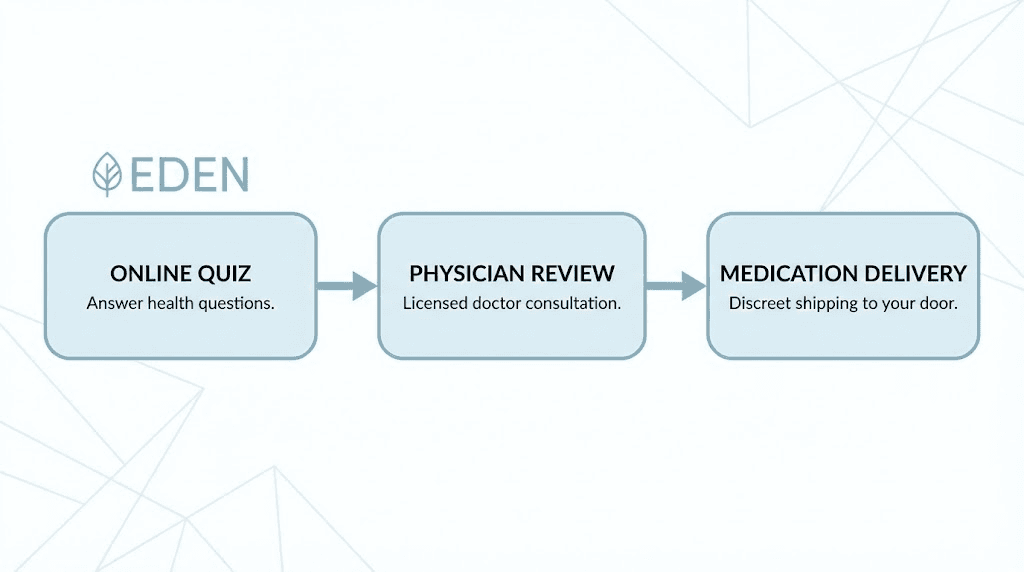
The process works in three steps. First, you complete an online health questionnaire covering your medical history, current medications, health goals, and symptoms. This quiz takes roughly ten minutes and asks about everything from your weight and activity level to specific health concerns you want to address. Second, a licensed physician reviews your questionnaire and determines whether you are eligible for treatment. This consultation happens asynchronously, meaning you do not typically have a live video call, though some providers may request one. Third, if the physician prescribes medication, it ships directly to your door from a state-licensed compounding pharmacy in Eden's network.
The entire experience happens online. No office visits. No waiting rooms. No scheduling hassles. Eden has served over 50,000 members according to their own reporting, and they emphasize that plans include the cost of the doctor's visit, prescription medications, and free shipping with no hidden fees. Their U.S.-based care team provides ongoing support and monthly check-ins to monitor progress.
Eden peptide treatments and services
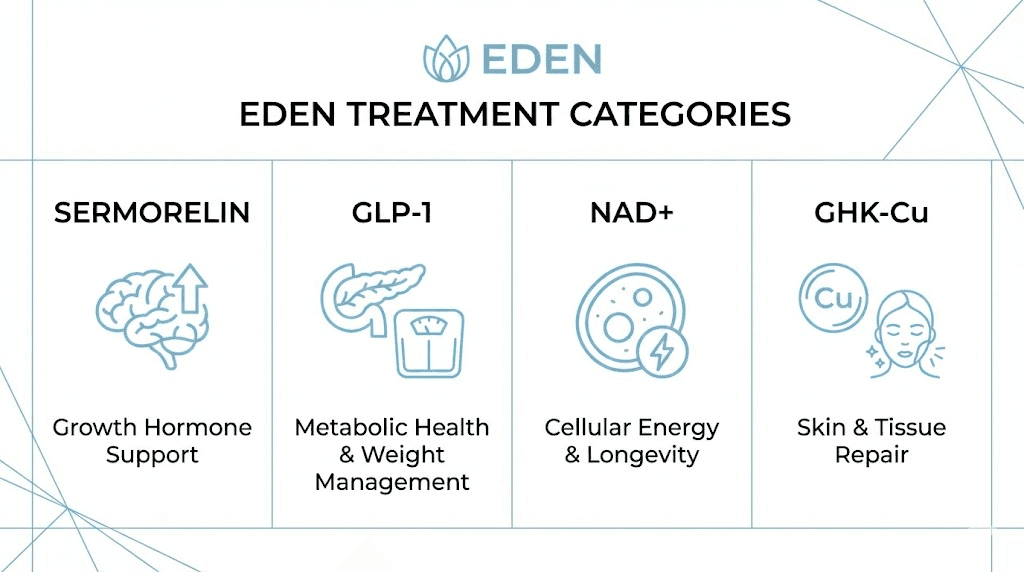
Eden is not exclusively a peptide company. They offer a range of treatments across several health categories, but their peptide therapy options are what most people searching for "eden peptides" want to know about. Here is what they currently offer.
Sermorelin therapy
Sermorelin is Eden's flagship peptide offering. It is a synthetic peptide composed of 29 amino acids that mimics growth hormone-releasing hormone (GHRH). Rather than injecting growth hormone directly, sermorelin stimulates your pituitary gland to produce and release its own human growth hormone (HGH) naturally. This approach is considered safer and more physiological than direct HGH supplementation because it works within the body's existing feedback mechanisms.
Eden offers sermorelin in two forms: injectable and oral tablets. The injectable version is the traditional delivery method used in clinical settings, while the oral tablets provide a needle-free alternative for people who prefer not to self-inject. Eden's physicians customize the strength and dosage for each individual based on their health profile, goals, and response to treatment.
The claimed benefits of sermorelin therapy through Eden include support for lean body composition, improved recovery from exercise, enhanced metabolic wellness, better sleep quality, and increased energy levels. However, it is important to note that these compounded sermorelin formulations are not FDA-approved. They are prepared by compounding pharmacies based on physician prescriptions, and the long-term effects of sermorelin use for anti-aging and performance purposes are not yet fully understood according to medical literature.
For comprehensive information on sermorelin mechanisms, dosing protocols, and research evidence, our complete sermorelin peptide benefits guide covers everything in much greater detail than Eden's marketing materials.
GLP-1 weight loss treatments
Eden's most heavily marketed service is their GLP-1 weight loss program. This includes access to compounded semaglutide (the active ingredient in Ozempic and Wegovy), compounded tirzepatide (the active ingredient in Mounjaro and Zepbound), and brand-name versions of these medications. They also offer an oral weight loss kit containing combinations of metformin, bupropion, naltrexone, topiramate, and B vitamins.
While GLP-1 medications are not technically peptides in the way most peptide researchers think about them, they are peptide-based drugs. Semaglutide is a modified GLP-1 peptide analog, and tirzepatide is a dual GIP/GLP-1 receptor agonist. Eden positions itself primarily as a weight loss platform, with peptide therapy as a secondary offering. If you are searching for "eden peptides" because you want peptides for weight loss, the GLP-1 program is likely what Eden will steer you toward.
NAD+ therapy
Eden offers NAD+ (nicotinamide adenine dinucleotide) in multiple delivery formats including injections, creams, and nasal spray. NAD+ is a coenzyme critical for cellular energy production, DNA repair, and numerous metabolic processes. Levels decline naturally with age, and NAD+ supplementation has become a popular intervention in the longevity and anti-aging space.
Whether NAD+ qualifies as a "peptide" is debatable. Technically, NAD+ is a dinucleotide, not a peptide. But telehealth companies like Eden often group it under their longevity treatment umbrella alongside actual peptides. For a deeper look at the relationship between NAD+ and peptides, our guide on whether NAD is a peptide explains the distinction clearly.
GHK-Cu (copper peptide)
Eden includes GHK-Cu foam in their hair growth product line. GHK-Cu is a genuine copper-binding tripeptide with significant research behind it for skin regeneration, wound healing, and hair growth stimulation. Eden uses it in a foam formulation applied topically for hair regrowth, typically alongside finasteride and minoxidil.
This is a more limited application than what many peptide researchers use GHK-Cu for. The peptide has a broad range of studied applications including anti-wrinkle effects, scar reduction, injectable protocols, and systemic anti-aging benefits. Eden's topical hair foam represents just one narrow use case. For complete GHK-Cu information including dosage protocols and dosage charts, the SeekPeptides resource library covers it comprehensively.
Other treatments
Beyond peptides, Eden offers hair regrowth solutions (finasteride, minoxidil, dutasteride), methylene blue for mood enhancement, and various supplements. They have expanded rapidly from a weight-loss-focused platform into a broader wellness company, though peptide therapy and GLP-1 medications remain their primary revenue drivers.
Eden peptides pricing and subscription model
Money matters. And Eden's pricing structure is one of the first things people ask about when evaluating the platform. Here is what you should know.
Sermorelin pricing
Eden's sermorelin injection program starts from approximately $126 for the first month when signing up for a 3-month plan. This includes the physician consultation, the compounded medication, and shipping. Sermorelin tablet pricing follows a similar structure. Keep in mind these prices can change, and promotional first-month discounts are common in the telehealth space. The ongoing monthly cost after the introductory period is typically higher. For context, quality sermorelin therapy costs from reputable telehealth providers generally run $175 to $225 monthly, which is considerably less than $600 to $1,200 or more for synthetic HGH treatments.
GLP-1 pricing
The weight loss program is Eden's most detailed pricing area. Compounded semaglutide runs approximately $249 per month after a discounted first month starting at $149. Compounded tirzepatide costs around $349 per month. Brand-name options like Ozempic and Mounjaro cost $1,399, and Wegovy runs $1,695. The oral Custom Weight Loss Kit starts at $49 per month.
Eden emphasizes their flat-rate pricing model. Unlike some competitors where costs increase as your dosage goes up, Eden charges the same price regardless of dose adjustments. This is a genuine advantage for patients on higher doses, since some platforms quietly raise prices as physicians increase dosing during the titration phase.
NAD+ pricing
NAD+ injections start from $145 for the first month on a 1000mg 3-month plan. Pricing varies based on the delivery format (injections vs. nasal spray vs. cream) and the subscription length.
Payment and insurance
Eden does not require insurance. Their model is designed as cash-pay, making it accessible to anyone regardless of insurance coverage. HSA and FSA cards are accepted for most visits and prescriptions. There are no membership fees separate from the treatment costs, and shipping is included.
This direct-pay model is standard across most peptide therapy platforms. Insurance rarely covers compounded peptides, so the out-of-pocket cost is what matters. Eden's pricing is competitive but not the cheapest option available. Some dedicated peptide clinics and compounding pharmacy services offer similar treatments at lower price points, though they may require more involvement from the patient in managing their care.
How Eden compares to other peptide platforms
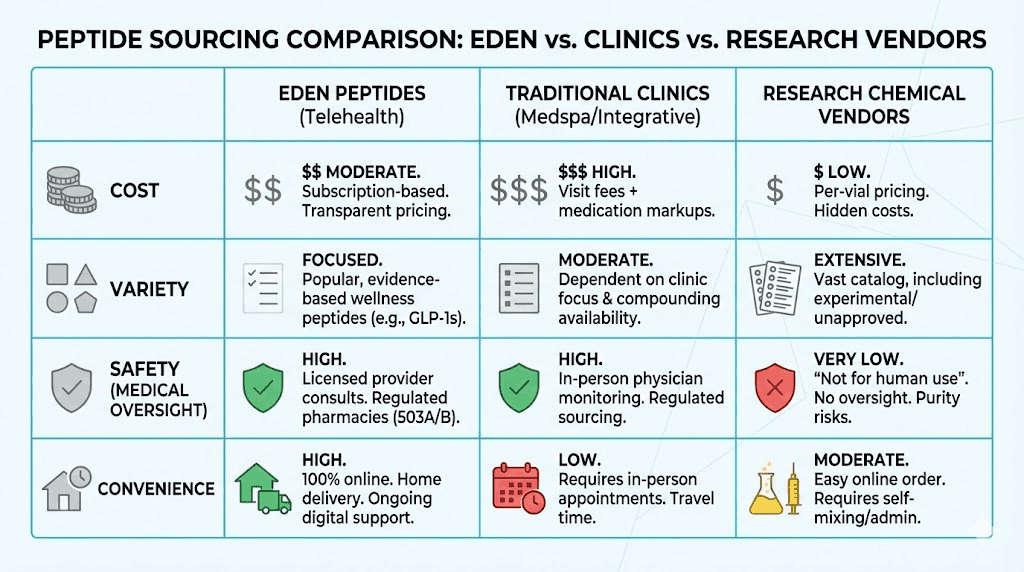
Eden does not operate in a vacuum. The telehealth peptide therapy space has exploded with competitors, and understanding how Eden stacks up against alternatives is essential for making an informed decision. Let us compare Eden against the main categories of peptide access.
Eden vs. Hims
Hims offers a more polished app experience with continuous clinical monitoring, dose titration support, and lifestyle coaching features including nutrition guidance, movement protocols, and sleep optimization tools. Hims also includes prescription anti-nausea medication at no extra cost for GLP-1 patients, which is a practical benefit since nausea is one of the most common side effects.
Eden offers more medication variety, including GLP-1 gummies, oral drops, and access to brand-name medications like Wegovy and Ozempic that Hims does not stock. Eden's flat-rate pricing is also an advantage over Hims, whose costs can vary by plan type. Where Hims emphasizes ongoing clinical relationships, Eden prioritizes speed and convenience with a more streamlined evaluation process.
Eden vs. Henry Meds
Henry Meds wins on the cheapest overall GLP-1 entry point with liraglutide at $149 per month, an option Eden does not offer. Henry also provides testosterone therapy alongside weight loss treatment, making it a better fit for men addressing multiple hormonal concerns simultaneously. However, Henry's delivery times average 8 to 10 days compared to Eden's faster shipping, and Henry's pricing increases as dosages go up, unlike Eden's flat-rate model.
Eden vs. dedicated peptide clinics
Traditional peptide therapy clinics typically offer a wider range of peptides including BPC-157, TB-500, ipamorelin, epitalon, KPV, and many others that Eden does not currently offer. Clinics also provide more personalized care with in-person consultations, comprehensive lab work, and ongoing monitoring by physicians who specialize in peptide protocols.
The trade-off is convenience and cost. Clinics require appointments, may involve travel, and often charge separately for consultations, lab work, and medications. Eden bundles everything into one price and does not require leaving your house. For someone who wants specifically sermorelin and values convenience, Eden works fine. For anyone interested in the broader peptide landscape, a dedicated clinic offers far more options.
Eden vs. research peptide vendors
This comparison comes up frequently and requires an important distinction. Research peptide vendors sell peptides labeled "for research purposes only" and "not for human consumption." These products do not come with medical oversight, prescription, or pharmaceutical-grade quality guarantees. Eden provides physician-prescribed, pharmacy-compounded medications intended for human use.
The research peptide market offers access to dozens of peptides that telehealth platforms like Eden cannot prescribe, including popular options like BPC-157, the wolverine stack, semax, DSIP, and SS-31. However, quality varies enormously between vendors, and independent testing services like Finnrick Analytics have found widespread issues with mislabeling, contamination, incorrect dosages, and zero accountability across the research peptide supply chain.
For understanding how to evaluate peptide vendors and navigate this complex landscape, having access to comprehensive resources is critical. SeekPeptides provides detailed vendor evaluations, quality testing information, and protocol guidance that helps researchers make informed decisions regardless of which access route they choose.
Eden peptides customer reviews: what real users say
Marketing tells one story. Customer reviews tell another. And with Eden, the gap between the two is worth examining carefully.
Positive experiences
On Trustpilot, Eden has accumulated over 2,400 reviews with a mixed but generally positive overall rating. Satisfied customers commonly praise three things: the convenience of the platform, the speed of medication delivery, and the accessibility of customer support.
One reviewer reported using Eden since November with no issues reaching their provider or customer service, with treatment arriving within two days of shipment. Another described consistent timely delivery and good support from both customer service and doctors. Weight loss results are the most frequently mentioned positive outcome, with users reporting losses ranging from 14 to 40 pounds depending on the treatment and duration.
The sermorelin-specific feedback is thinner but follows similar patterns. Users report improved energy, better sleep quality, and gradual improvements in body composition over two to three months of use. These outcomes align with what clinical literature suggests about peptide therapy timelines, though individual results vary significantly.
Negative experiences
The negative reviews paint a starkly different picture. On ConsumerAffairs, multiple reviewers describe Eden as one of the worst medical services they have ever encountered. Complaints center on three recurring issues.
First, customer service problems. Users report nonexistent customer service, chatbox-only support that takes nearly a week to respond, and sloppy medical advising. One user called the experience "nothing short of a nightmare" after their first shipment took over a month to arrive.
Second, shipping and handling failures. Products reportedly arrived damaged in flimsy envelopes, orders were delivered to wrong addresses, and the company refused to replace damaged items, instead telling customers to "take it up with UPS." The FDA has specifically flagged concerns about compounded GLP-1 drugs arriving warm or with inadequate ice packs, which can compromise medication quality. Peptide stability is a serious concern, and improper shipping can render treatments ineffective before they even reach the patient. For understanding proper peptide storage requirements, temperature-controlled shipping is not optional.
Third, billing disputes. Multiple reviewers report being charged incorrectly, receiving medication at half the prescribed strength (effectively providing only half a month's supply), and struggling to resolve billing issues through customer support channels.
Privacy concerns
Perhaps the most alarming complaint involves privacy. At least one reviewer reported that their medication was shipped to the wrong address, meaning a complete stranger received a package containing their full name and prescription medication information. For anyone receiving peptide therapy, this represents a serious breach of medical privacy.
What the review landscape tells us
Eden's reviews follow a pattern common among fast-growing telehealth companies. The platform works well when everything goes smoothly: easy sign-up, quick physician review, fast shipping, effective medication. But when problems arise, the support infrastructure appears unable to handle them efficiently. This is a scalability challenge. Companies that grow faster than their customer service capacity can maintain often produce this exact split between enthusiastic and deeply frustrated customers.
For anyone considering Eden, the reviews suggest setting realistic expectations. The platform works for many people. But having a backup plan and documenting all communications is wise.
Safety and quality considerations
Safety deserves its own section because the stakes are high. You are putting these substances in your body. Understanding what that actually means with a telehealth platform like Eden is critical.
Compounded medications are not FDA-approved
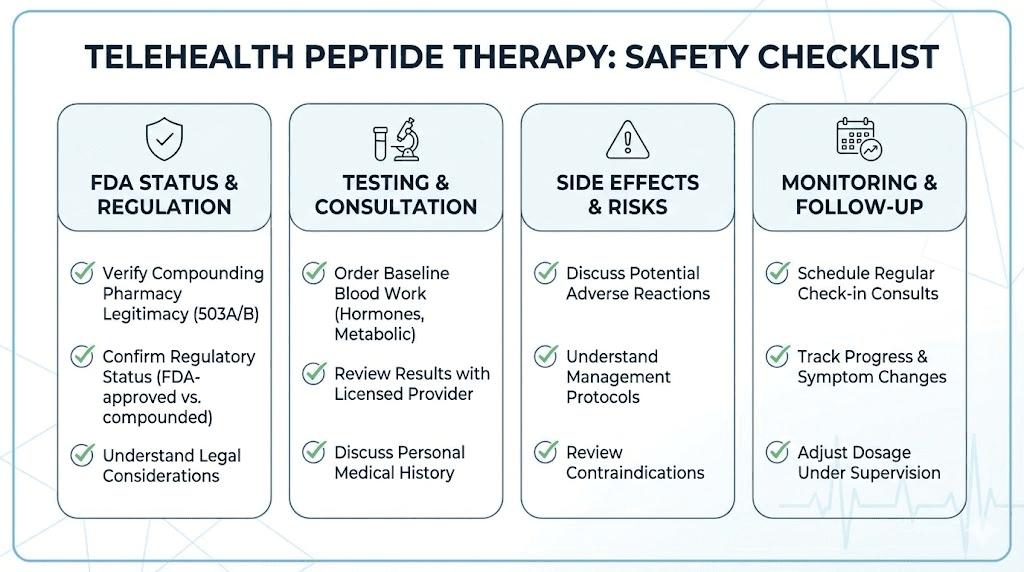
This is the single most important fact about Eden's peptide offerings. Every compounded medication Eden prescribes, including their sermorelin, has not been reviewed or approved by the FDA for safety, effectiveness, or quality. This is not unique to Eden. It applies to all compounded medications from all telehealth platforms and compounding pharmacies. But it bears repeating because many consumers do not understand this distinction.
FDA-approved medications go through rigorous clinical trials involving thousands of patients, with data reviewed by independent experts. Compounded medications skip this process entirely. They are prepared by pharmacists based on physician prescriptions, using bulk ingredients that may themselves be pharmaceutical-grade but have not been tested in the specific formulation the patient receives.
Eden addresses this by requiring that all partner pharmacies perform third-party testing through FDA and DEA registered labs. They test four key quality characteristics for every compounded lot. This is better than no testing, but it is not equivalent to full FDA approval. Understanding peptide safety in the broader context of compounded medications is essential for anyone considering this route.
The FDA's growing concerns
The FDA has escalated its oversight of compounded peptides significantly. The agency is aware that some patients and healthcare professionals look to compounded versions of GLP-1 drugs as cheaper alternatives to brand-name medications. Their specific concerns include:
Quality variability. Compounded medications may contain impurities, incorrect concentrations, or degraded ingredients. Temperature-sensitive compounds like peptides are particularly vulnerable to shipping and storage mishaps. The FDA has received complaints about injectable GLP-1 drugs arriving warm or with insufficient refrigeration, which compromises the medication's quality.
Fraudulent products. The FDA has identified fraudulent compounded semaglutide and tirzepatide products in the U.S. market with false label information. Some products list compounding pharmacies that do not exist, while others bear the names of legitimate pharmacies that did not actually compound those products. This does not mean Eden specifically sells fraudulent products, but it illustrates the broader risks in the compounded medication space.
Regulatory changes. The peptide regulatory landscape is shifting rapidly. FDA enforcement deadlines in early and mid-2025 created new restrictions on which peptides can be legally compounded. Some peptides previously available through compounding pharmacies have been placed on the FDA's "do not compound" list. Staying current on these changes is essential. The legal status of peptides is not static, and what was available last year may not be available today.
Side effects to consider
Sermorelin side effects through Eden or any other provider can include injection site reactions (pain, swelling, redness), headache, flushing, dizziness, and nausea. These are generally mild and transient. Serious side effects are rare but may include allergic reactions, changes in blood pressure, or increased intracranial pressure.
For GLP-1 medications, the side effect profile is more significant. Nausea is extremely common, especially during dose titration. Other frequent side effects include vomiting, diarrhea, constipation, and abdominal pain. More serious risks include pancreatitis, gallbladder disease, and potential thyroid concerns (GLP-1 medications carry a boxed warning about thyroid C-cell tumors based on animal studies).
The key safety concern with telehealth platforms is the depth of medical evaluation. An asynchronous online questionnaire cannot replace a thorough in-person examination, comprehensive lab work, and ongoing monitoring by a physician who specializes in peptide therapy. While Eden's model is convenient, the trade-off is a less personalized medical evaluation than you would receive from a dedicated peptide therapy clinic.
Understanding sermorelin through Eden vs. comprehensive protocols
Since sermorelin is Eden's primary peptide offering, it is worth examining in detail how their approach compares to more comprehensive sermorelin protocols.
How sermorelin works
Sermorelin is a growth hormone-releasing hormone (GHRH) analog consisting of the first 29 amino acids of the 44-amino-acid GHRH sequence. It binds to GHRH receptors on somatotroph cells in the anterior pituitary gland, stimulating the synthesis and secretion of endogenous growth hormone. Unlike exogenous HGH injections, sermorelin works through the body's natural regulatory mechanisms, meaning growth hormone is released in a pulsatile pattern that respects the body's circadian rhythm.
This matters because pulsatile release is how healthy growth hormone secretion naturally occurs. Direct HGH injections create non-physiological, sustained elevations that can suppress your body's own production through negative feedback loops. Sermorelin avoids this problem by working upstream, essentially turning up the volume on a system that already exists rather than bypassing it entirely.
The peptide was originally FDA-approved in 1997 under the brand name Geref Diagnostic for evaluating pituitary function. That approval was withdrawn for commercial reasons (not safety concerns) in 2008. Since then, sermorelin has been available primarily through compounding pharmacies for off-label use in anti-aging and performance contexts.
What Eden offers vs. what comprehensive research covers
Eden provides sermorelin with basic physician oversight and dosage customization. Their marketing focuses on lean body composition, recovery, and metabolic wellness. This is adequate for someone who simply wants to try sermorelin with minimal friction.
But comprehensive peptide dosing guides go much further. They cover optimal injection timing (typically before bed to align with natural GH pulses), the importance of fasting before administration (food and especially carbohydrates blunt GH release), cycling protocols to prevent receptor desensitization, stacking considerations with other growth hormone secretagogues like ipamorelin and CJC-1295, and how to monitor effectiveness through IGF-1 blood tests.
Eden's educational content compares sermorelin to BPC-157, which is useful but represents just one comparison out of many that informed researchers should understand. The differences between sermorelin and sermorelin-ipamorelin blends, the timing and cycling protocols that optimize results, and the lab markers worth tracking during therapy are all areas where deeper resources provide significantly more value.
Sermorelin before and after: setting realistic expectations
Users considering Eden for sermorelin should understand realistic timelines. Most clinical observations suggest:
Weeks 1 to 2: Improved sleep quality is often the first noticeable effect. Some users report more vivid dreams, which indicates increased growth hormone activity during sleep.
Weeks 2 to 4: Energy improvements and faster recovery from exercise become noticeable. Skin quality may begin improving as collagen synthesis increases.
Weeks 4 to 8: Changes in body composition become visible, typically as subtle decreases in body fat and modest increases in muscle tone. These effects are gradual and require consistent exercise and nutrition to manifest.
Months 3 to 6: Full benefits typically emerge over this timeframe, including improved body composition, enhanced recovery, better cognitive function, and potentially improved lipid profiles and bone density markers.
Our sermorelin before and after guide provides more detailed timelines with specific user experiences and measurable outcome data that goes beyond the generic claims in Eden's marketing.
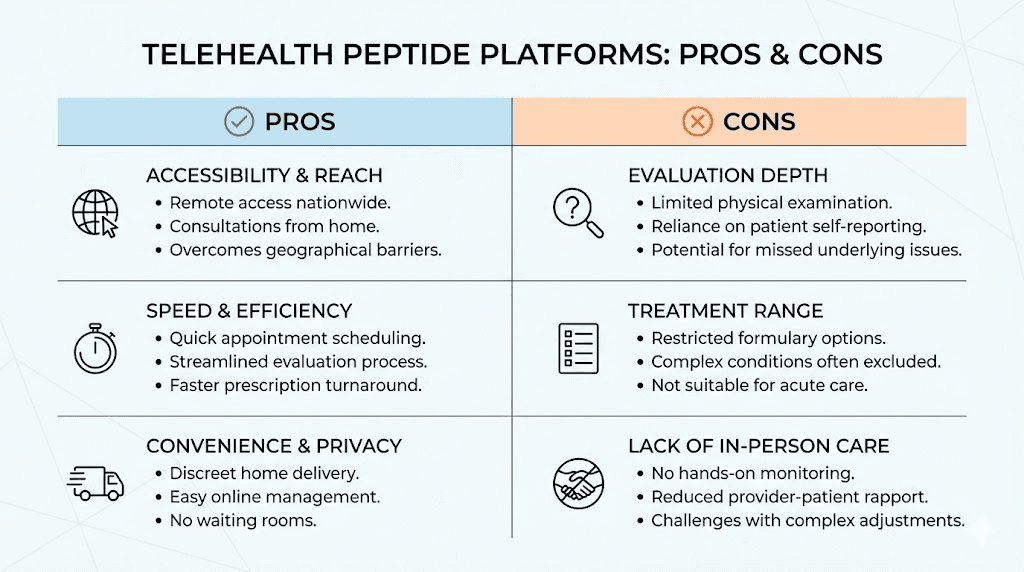
The telehealth peptide therapy model: benefits and limitations
Eden represents a broader trend in healthcare, the move toward direct-to-consumer telehealth platforms for therapies that previously required in-person clinical relationships. Understanding the structural advantages and limitations of this model helps evaluate Eden, and platforms like it, more objectively.
Genuine benefits of telehealth peptide access
Accessibility is the clearest advantage. Not everyone lives near a peptide therapy clinic. In rural areas and smaller cities, finding a physician who understands peptides, let alone prescribes them, can be nearly impossible. Telehealth platforms like Eden eliminate geographic barriers entirely. If you have an internet connection and a mailing address, you can access treatment.
Cost transparency is another real benefit. Eden's all-inclusive pricing model (consultation, medication, shipping, and follow-ups bundled together) is easier to budget for than the fragmented pricing of traditional clinical settings where you might pay separately for the initial consultation, lab work, follow-up visits, and the medication itself.
Speed is a third advantage. From completing the initial questionnaire to receiving medication, the typical Eden timeline is five to seven business days. Compare that to scheduling a clinic appointment (often two to four weeks out), completing required lab work (another few days to a week), the follow-up appointment to discuss results, and then waiting for the pharmacy to fill and ship the prescription. The traditional pathway can easily take four to six weeks.
Real limitations to acknowledge
The limitations are equally significant and should not be dismissed.
Medical evaluation depth is the primary concern. An online questionnaire is not a comprehensive medical examination. Peptide therapy, even relatively well-studied peptides like sermorelin, should ideally include baseline lab work (including IGF-1, comprehensive metabolic panel, complete blood count, and thyroid function), physical examination, detailed medication review, and ongoing monitoring with repeat labs. Eden's model may include some of these elements depending on the prescribing physician, but the asynchronous, questionnaire-based evaluation inherently cannot match the thoroughness of an in-person assessment.
Treatment range is limited. Eden primarily offers sermorelin and GLP-1 medications. The broader peptide landscape includes dozens of compounds with different mechanisms, indications, and protocols. Someone interested in peptides for injury recovery will not find BPC-157 or TB-500 through Eden. Those looking for peptides for anxiety will not find selank or semax. Eden serves a narrow slice of the peptide world.
Personalization has limits in the telehealth model. While Eden claims to customize treatments for each patient, the reality of high-volume telehealth operations is that standardized protocols handle the majority of cases. Physicians reviewing dozens of questionnaires daily cannot provide the same level of individualized attention as a specialist seeing patients in person. For peptide cycle planning and protocol optimization, more personalized resources are typically necessary.
Who should (and should not) use Eden for peptide therapy
Eden is not for everyone, and being honest about that helps you make a better decision. Here is a straightforward assessment of who benefits most and who should look elsewhere.
Eden may be a good fit if you:
Want specifically sermorelin or GLP-1 therapy with minimal hassle. Eden excels at making these specific treatments accessible with low friction. If your goal is simple, getting physician-prescribed sermorelin or semaglutide delivered to your door without office visits, Eden handles that competently for most users.
Live far from peptide clinics. Geographic accessibility is Eden's strongest advantage. If the nearest peptide therapy provider is hours away, telehealth makes practical sense as a starting point.
Prefer all-inclusive pricing. Eden's bundled pricing removes the uncertainty of separate charges for consultations, labs, medications, and follow-ups. If budget predictability matters to you, this model simplifies planning.
Are new to peptide therapy. For someone who has never used peptides before and wants a guided entry point with physician oversight, Eden's structured process provides guardrails that raw research peptide purchasing does not. There is real value in having a licensed physician evaluate your eligibility, even through a questionnaire.
Eden may not be the right choice if you:
Want a wide range of peptides. Eden's peptide menu is limited. If you are interested in peptide stacking, exploring compounds beyond sermorelin, or building comprehensive protocols that address multiple health goals, Eden's offerings will feel restrictive. The platform simply does not carry most of the peptides that experienced researchers use.
Need thorough medical oversight. If you have complex health conditions, take multiple medications, or want comprehensive lab monitoring, a dedicated peptide therapy clinic with in-person care is the safer choice. The depth of medical evaluation in telehealth models is inherently limited.
Prioritize education and self-sufficiency. Eden positions itself as a service provider, not an educational platform. If understanding how peptides work at a molecular level, learning to reconstitute peptides, calculate dosages, and make informed decisions about your own protocols matters to you, platforms focused on education like SeekPeptides provide vastly more depth.
Have had negative experiences with telehealth platforms. If you value responsive customer service and hands-on medical relationships, Eden's mixed customer service reviews should give you pause. The negative experiences reported by some users suggest that when things go wrong, resolution can be frustratingly slow.
How to evaluate any peptide therapy platform
Whether you choose Eden or another provider, having a framework for evaluation protects you. These are the questions every informed consumer should ask before committing to any telehealth peptide platform.
Physician qualifications
Who are the doctors? What are their specialties? Are they board-certified? Do they have specific training or experience with peptide therapy? Or are they general practitioners reviewing questionnaires between other patients? Eden connects you with licensed providers, but the platform does not prominently feature specific physician credentials or peptide specialization. This is worth asking about during the consultation process.
Pharmacy quality and testing
Which compounding pharmacy prepares the medications? Is it 503A (patient-specific) or 503B (outsourcing facility) registered? What specific tests do they perform on each lot? Can they provide certificates of analysis upon request? Eden states that their pharmacies perform third-party testing through FDA and DEA registered labs, testing four key quality characteristics. This is more transparency than some competitors offer but less than the gold standard of providing full certificates of analysis to patients.
Third-party testing services like Finnrick Analytics and PeptideTest have emerged specifically to address quality concerns in the peptide space. Finnrick has tested over 4,500 samples from 169 vendors across 15 popular peptides and publishes results openly, revealing widespread issues with purity, potency, and contamination across the industry.
Monitoring and follow-up
What monitoring is included? Are lab tests required before starting treatment? Are they required periodically during treatment? What happens if you experience side effects? Is there a physician available for urgent concerns, or only asynchronous messaging? Eden offers monthly check-ins, but the depth and quality of monitoring can vary significantly between providers within their network.
Treatment modification
How easy is it to adjust dosing? What is the process if your current protocol is not working? Can you switch between treatments? How quickly can changes be implemented? Eden's flat-rate pricing means dose adjustments do not cost extra, which is good. But the speed and quality of protocol modifications depend entirely on the individual physician managing your care.
Cancellation and refund policies
Can you cancel at any time? Are there cancellation fees? What is the refund policy for unused medication? Customer reviews suggest that some Eden users have experienced difficulty resolving billing issues, so understanding the cancellation terms before signing up is important.
The broader peptide therapy landscape
Eden represents just one access point in a much larger peptide ecosystem. Understanding the full picture helps put their offering in proper context.
Types of peptides available outside Eden
The complete peptide list used in research and clinical settings numbers in the dozens. Here are the major categories that Eden does not cover.
Healing and recovery peptides. BPC-157 and TB-500 are the two most popular healing peptides, often used together in the wolverine stack. These peptides have been studied for their effects on tendon healing, gut repair, and tissue regeneration. They are available through some clinics that prescribe research-grade peptides and through research vendors, but not through Eden.
Cognitive and neurological peptides. Compounds like semax, selank, nootropic peptides, and PE-22-28 target cognitive enhancement, anxiety reduction, and neuroprotection. These represent a growing area of interest that telehealth GLP-1 platforms simply do not address.
Immune and inflammatory peptides. KPV, thymosin alpha-1, and LL-37 are studied for their effects on immune modulation and inflammation. Anti-inflammatory peptides represent one of the most promising areas of peptide research for conditions ranging from autoimmune disorders to chronic gut inflammation.
Sleep peptides. DSIP (delta sleep inducing peptide) offers a completely different approach to sleep support than traditional medications. Its mechanism works through delta wave sleep patterns rather than sedation, making it interesting for people who want deep, restorative sleep without the grogginess of conventional sleep aids.
Anti-aging and longevity peptides. Epitalon, SS-31, MOTS-c, and pinealon target cellular aging through different mechanisms including telomere maintenance, mitochondrial function, and metabolic regulation. These longevity peptides represent the cutting edge of anti-aging research.
Bioregulator peptides. Short-chain peptides like cartalax, vesugen, cardiogen, testagen, and cortagen form the bioregulator peptide family developed from Khavinson's research in Russia. These target specific organ systems and have a unique mechanism involving gene expression modulation.
Eden's sermorelin offering covers exactly one small corner of this vast landscape. For researchers who want to understand the full range of options, educational resources that cover the complete spectrum are invaluable.
How peptide therapy is changing
The peptide therapy space is shifting rapidly due to several converging forces. FDA regulatory actions continue tightening which compounds can be legally compounded. The explosion of GLP-1 medications has brought unprecedented attention (and scrutiny) to the broader peptide world. Telehealth platforms are making some peptides more accessible while simultaneously narrowing the range of available compounds. And ongoing research continues revealing new applications for existing peptides and introducing entirely new sequences.
Staying current with peptide regulation news and peptide research developments is increasingly important for anyone in this space, whether they use telehealth platforms, dedicated clinics, or research vendors.
Practical guide: getting started with peptide therapy
Whether Eden is your starting point or not, the fundamentals of beginning peptide therapy safely remain the same. Here is what the process should look like regardless of your access route.
Step 1: educate yourself first
Before contacting any provider, understand what you are considering. Learn what peptides are and how they work at a fundamental level. Understand the difference between FDA-approved medications, compounded preparations, and research chemicals. Know the specific peptide you are interested in, its mechanisms, expected benefits, potential side effects, and the quality of evidence supporting its use.
This education step is where platforms like SeekPeptides provide their greatest value. Having access to comprehensive, evidence-based guides, detailed protocol information, and a community of experienced researchers gives you the foundation to make informed decisions and ask better questions of any provider you work with.
Step 2: get baseline lab work
Before starting any peptide protocol, establish your baseline. For sermorelin specifically, this should include IGF-1 levels (the primary marker for growth hormone status), a comprehensive metabolic panel, complete blood count, thyroid function (TSH, free T3, free T4), and lipid panel. These baselines let you objectively measure whether the therapy is working and identify any safety concerns early.
Eden may or may not require baseline labs depending on the prescribing physician. Regardless of what the platform requires, getting your own labs beforehand is a smart practice. You cannot evaluate results without knowing where you started.
Step 3: choose your access route
Based on your education and health goals, select the appropriate access pathway. Telehealth platforms like Eden work well for straightforward cases involving well-studied peptides like sermorelin. Dedicated clinics are better for complex protocols, multiple peptides, or situations requiring closer medical monitoring. Research vendors serve those who have done extensive homework and accept the responsibility that comes with self-directed use.
Each route has trade-offs in terms of cost, convenience, safety oversight, and available compounds. There is no universally "best" option, only the one that best matches your specific situation, knowledge level, and health goals.
Step 4: understand proper handling
Once you receive peptides, proper handling is non-negotiable. Peptide storage requirements vary by compound but generally involve refrigeration at 2 to 8 degrees Celsius for reconstituted peptides. Reconstitution requires bacteriostatic water and sterile technique. Using a reconstitution calculator ensures accurate concentrations.
This is where Eden's all-in-one model has an advantage. Pre-prepared medications from a compounding pharmacy arrive ready to use, eliminating the reconstitution step. But if you ever branch beyond Eden into the broader peptide world, these skills become essential.
Step 5: monitor and adjust
Start with conservative dosing and increase gradually. Track your response, including both subjective measures (energy, sleep quality, recovery, mood) and objective measures (lab work at 6 to 8 week intervals). Adjust protocol based on results, not arbitrary timelines. The peptide calculator and dosage charts available through SeekPeptides provide the tools needed for accurate dosing and adjustment throughout the process.
Step 6: know when to stop
Not every peptide protocol works for every person. If you are not seeing expected results after an adequate trial period (typically 8 to 12 weeks for sermorelin), or if you are experiencing intolerable side effects, it may be time to reassess. Common peptide mistakes often explain poor results more than the peptide itself being ineffective. But sometimes a different compound, dose, or approach is needed. Having the knowledge to troubleshoot, or access to people who can help you troubleshoot, makes a significant difference in outcomes.
Eden peptides and the wider peptide community
One aspect of peptide therapy that telehealth platforms fundamentally cannot provide is community. The peptide space thrives on shared experiences, protocol discussions, result tracking, and collective knowledge building. Forums, discussion groups, and educational communities serve a function that no amount of asynchronous physician messaging can replace.
When you encounter an unexpected side effect at 3 AM, when your reconstituted vial looks different than expected, when you want to know if the results you are seeing are normal, community becomes invaluable. Other people who have used the same peptide, at the same dose, for the same purpose, can offer practical insights that even the best physician may not have from their clinical experience alone.
Peptide forums and discussion communities have become essential resources for this reason. SeekPeptides specifically was built around this principle, combining evidence-based education with community support so that researchers never have to navigate peptide therapy in isolation. Members access comprehensive protocols, dosing calculators, and a community of experienced researchers who have encountered virtually every scenario someone new to peptides might face.
Alternatives to Eden for peptide therapy
If Eden does not seem like the right fit after reading this guide, several alternatives are worth considering depending on your specific needs.
For sermorelin specifically
Most major telehealth peptide clinics offer sermorelin, often with more comprehensive medical oversight than Eden provides. Look for clinics that require baseline lab work, provide personalized dosing based on your IGF-1 levels, and offer regular follow-up labs to monitor effectiveness. The peptide therapy clinics guide covers how to evaluate providers in detail.
For GLP-1 weight loss medications
Eden is one of many platforms offering compounded semaglutide and tirzepatide. Hims, Henry Meds, Ro, and numerous other telehealth companies provide similar services with varying levels of support, pricing, and medication options. The best choice depends on your priorities: cheapest price, best app experience, most responsive support, or widest medication selection.
For broader peptide therapy
Dedicated peptide therapy clinics, both local and telehealth-based, offer access to a much wider range of peptides than Eden. Many specialize in peptide therapy specifically, meaning their physicians have deeper expertise in peptide pharmacology, dosing optimization, and protocol design. Some even offer nasal spray peptides, oral peptide formulations, and compounded combinations tailored to individual needs.
For self-directed education and protocols
If your priority is understanding peptides deeply enough to make your own informed decisions, educational platforms provide far more value than service-oriented telehealth companies. SeekPeptides members access evidence-based protocol guides, dosage calculators, vendor quality information, community support, and comprehensive research libraries that enable genuinely informed decision-making about every aspect of peptide therapy.
Frequently asked questions
Is Eden a legitimate peptide therapy provider?
Yes, Eden (tryeden.com) is a legitimate telehealth company that has served over 50,000 members. They connect patients with licensed healthcare providers who prescribe FDA-approved and compounded medications through state-licensed pharmacies. The medications are third-party tested. However, compounded peptides are not FDA-approved, and customer experiences vary significantly based on reviews from multiple platforms.
What peptides does Eden offer?
Eden primarily offers sermorelin (injectable and tablet forms), GHK-Cu foam (for hair growth), and NAD+ (injections, cream, and nasal spray). Their main focus is GLP-1 weight loss medications like compounded semaglutide and tirzepatide. They do not offer popular research peptides like BPC-157, TB-500, or ipamorelin.
How much does Eden peptide therapy cost?
Sermorelin starts from approximately $126 for the first month on a 3-month plan. GLP-1 medications range from $149 to $1,695 depending on whether you choose compounded or brand-name options. NAD+ injections start from $145 per month. All plans include physician consultation, medication, and shipping. For a broader perspective on costs, see our peptide therapy cost guide.
Are Eden peptides FDA-approved?
No. Compounded medications prescribed through Eden are not FDA-approved. They are prepared by state-licensed compounding pharmacies based on individual physician prescriptions and undergo third-party testing, but have not been through the FDA's formal review process for safety, effectiveness, or quality. Understanding the legal status of peptides is important before starting any therapy.
Is Eden better than getting peptides from a clinic?
It depends on your priorities. Eden offers greater convenience, faster access, and simpler pricing. Dedicated clinics offer deeper medical evaluation, wider peptide selection, comprehensive lab monitoring, and more personalized care. For straightforward sermorelin or GLP-1 therapy with minimal friction, Eden works. For complex protocols, multiple peptides, or conditions requiring close monitoring, a specialized clinic is typically better.
What are the side effects of sermorelin from Eden?
Common side effects include injection site reactions (pain, redness, swelling), headache, flushing, dizziness, and nausea. These are typically mild and temporary. Serious side effects are rare but can include allergic reactions or blood pressure changes. Side effects are the same regardless of whether you get sermorelin from Eden or another provider. The key is proper dosing and monitoring.
Can I get BPC-157 through Eden?
No. Eden does not currently offer BPC-157 as a prescribed treatment. BPC-157 is primarily available through specialized peptide therapy clinics and research peptide vendors. For comprehensive BPC-157 information including dosing protocols and research evidence, educational resources like SeekPeptides provide detailed guidance.
How do I cancel my Eden subscription?
Eden advertises that subscriptions can be cancelled at any time. However, some customer reviews report difficulty reaching customer service for cancellation requests and unexpected charges after attempting to cancel. It is advisable to document all cancellation requests in writing and check your billing statements carefully afterward.
External resources
For researchers serious about understanding peptide therapy in its full scope, not just the narrow slice that telehealth platforms like Eden offer, SeekPeptides provides the most comprehensive resource available. Evidence-based guides, proven protocols, dosage calculators, vendor quality data, and a community of thousands who have navigated these exact questions give members everything they need to make informed decisions about their peptide research.
In case I do not see you, good afternoon, good evening, and good night. May your research stay thorough, your providers stay trustworthy, and your protocols stay optimized.