Jan 21, 2026
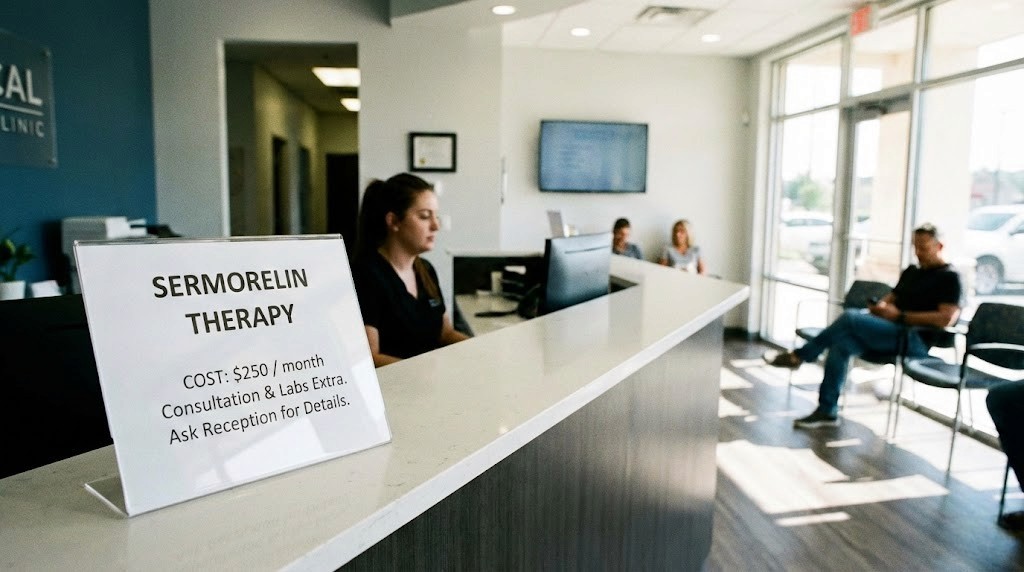
You've researched sermorelin. You understand the benefits. You're ready to start therapy. But when you search for pricing, you find numbers ranging from $99 to $600 per month with no clear explanation of why. One clinic quotes $175. Another wants $450 for seemingly the same thing. A third mentions "consultation fees" and "lab costs" that somehow aren't included in the monthly price they advertised.
The confusion isn't accidental.
Sermorelin pricing varies dramatically based on provider type, dosage, included services, and whether you're comparing apples to oranges without realizing it. Some quotes include everything, medication, supplies, consultations, monitoring. Others list only the medication cost, leaving you to discover additional fees after you've already committed.
This guide breaks down exactly what sermorelin therapy actually costs, what influences those costs, and how to evaluate different providers to ensure you're getting genuine value rather than either overpaying or sacrificing quality for a misleadingly low price. Understanding the complete cost picture before starting therapy helps you budget appropriately and avoid unpleasant surprises.
SeekPeptides members frequently ask about peptide therapy costs, and the pricing landscape has shifted significantly over the past few years. What follows reflects current market conditions and helps you make informed decisions about your peptide therapy investment.
What sermorelin actually costs per month
Let's start with the straightforward answer most people want.
Sermorelin therapy typically costs between $150 and $500 per month. Most people pay somewhere in the $200 to $400 range for standard dosing through reputable providers.
That's a wide range. The variation exists because "sermorelin therapy" can mean different things depending on who's providing it and what's included.
At the low end, around $150 to $200 monthly, you're typically looking at telehealth providers offering competitive pricing with minimal overhead. These services provide legitimate prescriptions, quality compounded medication, and basic medical oversight, just without the fancy clinic atmosphere and in-person appointments.
At the high end, $400 to $600 monthly, you're often paying for in-person clinic visits, more comprehensive monitoring, additional services, or simply a provider with higher overhead costs they pass along to patients.
The medication itself, the actual sermorelin compound, costs roughly the same regardless of provider. What varies dramatically is everything surrounding it.
Cost breakdown by component
Understanding what you're actually paying for helps evaluate whether a given price represents good value.
Medication cost: $100 to $300 per month. A single 15mg vial of compounded sermorelin, enough for approximately one month at standard dosing, typically costs between $100 and $300 from compounding pharmacies. This is the baseline cost that every provider must cover.
Supplies: $20 to $40 per month. Syringes, alcohol swabs, and sharps containers add modest ongoing costs. Some providers include these in their quoted price. Others charge separately.
Provider consultations: $50 to $250 per visit. Initial consultations and follow-up appointments vary widely. Telehealth visits typically cost less than in-person clinic appointments.
Laboratory testing: $100 to $300 per panel. Blood work to assess baseline hormone levels and monitor response during therapy adds significant cost, though this isn't monthly. Most providers recommend testing at baseline, 6-8 weeks into therapy, and every 3-6 months during maintenance.
Shipping: $15 to $35 per order. If your medication comes from a compounding pharmacy, shipping fees apply. Some providers absorb this cost. Others pass it through.
Telehealth versus clinic pricing
The biggest factor affecting sermorelin cost is how you access therapy.
Traditional hormone clinics with physical locations typically charge $300 to $500+ per month. They have office space to maintain, staff to pay, equipment to purchase, and overhead costs that telehealth providers simply don't have. These costs get passed to patients.
Telehealth providers offering sermorelin therapy typically charge $150 to $250 per month. Without physical clinic overhead, they can offer the same medication and medical supervision at significantly lower prices.
The quality of care doesn't necessarily differ. Both types of providers prescribe the same compounded sermorelin from similar pharmacies. Both should provide medical oversight and monitoring. The main differences are convenience, personal preference, and cost.
What telehealth providers offer
Modern telehealth peptide therapy typically includes video consultations with licensed healthcare providers, prescription management, medication shipped directly to your home, ongoing monitoring via telehealth appointments, and access to medical support when questions arise.
The experience is largely similar to traditional clinic care, just conducted through video calls rather than in-person visits. For many people, this is actually more convenient, no driving to appointments, no sitting in waiting rooms, no taking time off work.
Some people prefer in-person care, and that's valid. But from a pure cost perspective, telehealth providers typically save patients $100 to $200 per month compared to traditional clinics offering equivalent services.
Specific provider pricing examples
To give you concrete numbers, here's what several providers currently charge for sermorelin therapy:
Telehealth providers:
Six-month subscription plans: $175 to $195 per month
Quarterly subscription plans: $195 to $225 per month
Month-to-month plans: $225 to $275 per month
Some providers offer entry pricing as low as $99 to $170 for the first month
Traditional clinics:
Monthly programs: $300 to $450 per month
6-week programs: $299 to $400 total
10-12 week programs: $450 to $600 total
Notice that longer commitment periods typically reduce monthly costs. This makes sense for both parties, you get a discount for committing, and the provider gets predictable revenue and reduced administrative overhead.
What's included versus what's extra
This is where pricing comparisons get tricky. Two providers might both quote "$200 per month," but one includes everything while the other charges separately for consultations, labs, and supplies.
When evaluating any sermorelin provider, ask specifically what's included in their quoted price.
Typically included in monthly pricing
Reputable providers usually include the medication itself, typically a 30-day supply at your prescribed dose. Administration supplies like syringes, needles, and alcohol swabs should be included. Basic medical oversight and prescription management should be part of the package. Access to provider support for questions and concerns should be standard.
Often charged separately
Laboratory testing for IGF-1 levels and other markers is often billed separately, though some comprehensive programs include it. Initial consultation fees may apply, especially for providers who don't roll this into the first month's cost. Follow-up consultations beyond basic check-ins might incur additional charges. Shipping fees sometimes apply, particularly if medications come from external compounding pharmacies.
Red flags in pricing
Be cautious of prices that seem too good to be true. If someone quotes sermorelin therapy at $50 per month, they're either cutting corners on quality, hiding fees that will appear later, or selling research-grade peptides illegally without medical oversight.
Legitimate compounded sermorelin from a quality pharmacy costs a certain minimum amount to produce. No provider can sell significantly below this cost while maintaining quality and proper medical supervision.
Also watch for providers who won't clearly itemize what's included in their pricing. Transparency about costs indicates a legitimate operation. Vagueness often precedes surprise charges.
Insurance coverage for sermorelin
Here's the uncomfortable reality. Insurance rarely covers sermorelin therapy.
Most insurance plans classify sermorelin as elective when used for anti-aging, wellness, or performance purposes. Since the original FDA-approved indication was for diagnosing growth hormone deficiency in children, adult use for wellness purposes falls outside typical coverage parameters.
This means most people pay for sermorelin therapy entirely out of pocket.
When insurance might help
There are limited scenarios where insurance might contribute to costs.
Documented growth hormone deficiency. If you have clinical evidence of growth hormone deficiency with symptoms significantly impacting your health, some insurance plans may cover diagnostic testing and potentially treatment. This requires documented medical necessity, not just age-related decline.
Laboratory testing. Some insurance plans cover blood work even when they won't cover the therapy itself. If your provider orders comprehensive metabolic panels, lipid profiles, or other standard tests alongside hormone assessments, insurance might cover the testing portion.
Consultation visits. Depending on your plan, telehealth or in-person consultations might be partially covered, even if the medication isn't. This depends heavily on how the visits are coded and your specific plan.
Using HSA and FSA accounts
While insurance typically won't cover sermorelin, many people successfully use Health Savings Accounts (HSA) or Flexible Spending Accounts (FSA) to pay for therapy with pre-tax dollars.
This effectively reduces your cost by your marginal tax rate. If you're in a 25% tax bracket, using pre-tax HSA or FSA funds effectively gives you a 25% discount on therapy.
Most reputable sermorelin providers accept HSA and FSA payments. Confirm this before starting therapy if you plan to use these accounts.
Sermorelin cost compared to alternatives
Understanding how sermorelin pricing compares to alternative therapies helps evaluate its relative value.
Sermorelin versus synthetic HGH
Direct growth hormone therapy typically costs $1,000 to $3,000 per month, significantly more expensive than sermorelin.
The price difference exists because synthetic HGH is more expensive to manufacture and is more tightly regulated. Additionally, HGH requires more careful medical supervision due to higher risk of side effects.
While HGH may produce faster, more dramatic results, sermorelin offers 70-85% cost savings while still effectively increasing growth hormone levels through your body's natural production pathways. For many people, this cost-benefit tradeoff strongly favors sermorelin.
Sermorelin versus ipamorelin
Ipamorelin typically costs $200 to $400 per month, roughly comparable to sermorelin. The two peptides work through different mechanisms, GHRH analog versus growth hormone releasing peptide, and some people respond better to one than the other.
From a pure cost perspective, they're similar enough that effectiveness and individual response should drive the decision rather than price.
Sermorelin versus CJC-1295
CJC-1295 typically costs $200 to $600 per month, overlapping with sermorelin's price range. CJC-1295 offers the advantage of longer half-life and less frequent dosing, typically weekly rather than daily.
The slightly higher average cost for CJC-1295 reflects its longer action and potentially greater convenience for some users.
Combination therapy costs
Many protocols combine sermorelin with other peptides for enhanced results. Popular combinations include:
Sermorelin plus ipamorelin: $300 to $500 per month. This combination works synergistically through different receptor systems, producing greater growth hormone release than either alone.
Sermorelin plus CJC-1295: $350 to $600 per month. Daily sermorelin plus weekly CJC-1295 provides both pulsatile and sustained growth hormone elevation.
Multi-peptide stacks: $400 to $800+ per month. More complex protocols combining multiple peptides for specific goals increase costs accordingly.
Factors that affect your specific cost
Within the general price ranges, several factors determine what you'll actually pay.
Prescribed dosage
Standard sermorelin dosing ranges from 200 to 500 micrograms per day. Higher doses require more medication, increasing costs.
Men typically use higher doses than women due to differences in body composition and hormone levels. Someone prescribed 500mcg daily will pay more for medication than someone prescribed 200mcg daily.
This is one reason price quotes vary. A provider might quote $175 per month for a standard dose but charge $275 per month for a higher dose. Both prices could be fair, depending on what's being provided.
Treatment duration
Sermorelin therapy isn't a quick fix. Most protocols run three to six months for initial treatment, with many people continuing on maintenance therapy indefinitely.
Longer commitment periods typically reduce monthly costs. Six-month subscriptions often cost 15-25% less per month than month-to-month plans. This reflects lower administrative overhead for providers and greater certainty of revenue.
If you're committed to seeing results from sermorelin, which typically requires at least three months, committing to a longer plan upfront usually makes financial sense.
Geographic location
Local clinic pricing varies by region. Clinics in high-cost-of-living areas like New York, Los Angeles, or Miami typically charge more than those in lower-cost regions.
Telehealth providers largely eliminate this geographic variation. Since they don't have physical locations, their pricing doesn't vary by where you live, at least for the consultation and prescription components.
Shipping costs might vary slightly based on location, but this difference is typically minor.
Additional services
Some providers offer comprehensive wellness programs that include sermorelin alongside other services. These might bundle peptide therapy with nutritional counseling, fitness guidance, other hormone optimization, or comprehensive health monitoring.
These bundled programs cost more but may provide value if you'd use the additional services. Evaluate based on what you actually need rather than getting upsold on services you won't use.
The real cost of sermorelin therapy over time
Monthly costs don't tell the complete story. Understanding total investment over a typical treatment course helps with budgeting.
Initial startup costs
Starting sermorelin therapy involves some upfront expenses beyond the first month's medication.
Initial consultation: $50 to $200 (often included in first month's fee for telehealth providers).
Baseline laboratory testing: $100 to $300 for panels including IGF-1, complete metabolic panel, and potentially additional hormone markers.
First month's medication and supplies: $150 to $300 depending on provider and dosage.
Total startup costs typically range from $300 to $700, depending on provider and what testing is required or recommended.
Three-month treatment cycle
A typical initial treatment cycle runs three months. Here's what to expect:
Months 1-3 medication: $450 to $1,200 total ($150-$400 × 3 months)
Follow-up lab work (typically around week 6-8): $100 to $300
Follow-up consultations: Often included in monthly fee, or $50 to $150 if billed separately
Total three-month investment: approximately $600 to $1,700
Six-month treatment cycle
Full sermorelin results typically emerge over six months. Budgeting for this duration:
Months 1-6 medication: $900 to $2,100 ($150-$350 × 6 months, accounting for subscription discounts)
Laboratory testing (2-3 panels over 6 months): $200 to $600
Consultations: Often included, or $100 to $300 total if billed separately
Total six-month investment: approximately $1,200 to $3,000
Ongoing maintenance
Many people continue sermorelin therapy as part of an ongoing anti-aging protocol. Maintenance dosing is often lower than initial therapy, reducing costs.
Typical maintenance costs: $100 to $300 per month, plus periodic lab work (every 3-6 months) at $100 to $300 per panel.
Annual maintenance cost: approximately $1,500 to $4,500 depending on dosage and monitoring frequency.
Is sermorelin worth the cost?
This question deserves honest consideration. Sermorelin represents a significant ongoing expense. Whether it's "worth it" depends entirely on your circumstances, goals, and how you respond to therapy.
What sermorelin can realistically deliver
Research and clinical experience suggest sermorelin therapy can produce meaningful improvements in sleep quality, sometimes dramatically so. Energy levels and daytime alertness typically improve within the first month. Body composition shifts, reduced fat and improved muscle tone, emerge over months two through six. Skin quality improvements, including thickness, elasticity, and hydration, develop gradually. Cognitive function, mental clarity, focus, and memory often improve. Exercise recovery and performance typically enhance, especially for active individuals.
These aren't guaranteed results. Individual response varies based on age, baseline hormone levels, lifestyle factors, and genetic variation. Some people experience dramatic improvements. Others see more modest benefits.
Factors that increase value
Significant symptoms of growth hormone decline. If you're experiencing multiple symptoms, poor sleep, low energy, stubborn fat accumulation, cognitive fog, you have more potential for improvement. People with pronounced symptoms often see the most dramatic benefits.
Commitment to consistent use. Sermorelin requires daily injection and consistent administration over months. People who stick with the protocol see much better results than those who use it sporadically.
Healthy lifestyle foundation. Sermorelin enhances the results of good diet and exercise habits. If you're already eating well and exercising regularly, sermorelin can amplify your results. If you're looking for a substitute for lifestyle changes, you'll be disappointed.
Long-term perspective. The benefits of growth hormone optimization accumulate over time. If you're committed to ongoing therapy as part of a comprehensive wellness approach, the long-term value often exceeds the cumulative cost.
Factors that decrease value
Expecting instant results. Sermorelin works gradually over months. If you're impatient or looking for quick fixes, you may quit before seeing benefits.
Minimal symptoms to address. If you're already sleeping well, maintaining energy, and happy with your body composition, sermorelin has less to improve. The benefit-to-cost ratio is lower when you're starting from a good baseline.
Unwillingness to address lifestyle factors. Sermorelin won't overcome a terrible diet, sedentary lifestyle, or chronic sleep deprivation. If you're not willing to support the therapy with reasonable lifestyle habits, the results will disappoint.
Financial strain. If $200-400 per month causes significant financial stress, that stress may offset the wellness benefits. Sermorelin is a genuine expense that should fit reasonably within your budget.
How to get the best value on sermorelin
If you've decided sermorelin therapy makes sense for your situation, these strategies help maximize value.
Choose telehealth when possible
Unless you specifically prefer in-person care, telehealth providers typically offer the same quality medication and medical oversight at $100 to $200 less per month.
This isn't cutting corners. It's eliminating overhead costs that don't actually improve your care. The medication comes from the same type of compounding pharmacies. The providers are similarly credentialed. The difference is simply how you interact with them.
Commit to longer subscription periods
If you're going to try sermorelin seriously, commit to at least three months upfront. Most providers offer significant discounts for quarterly or six-month subscriptions.
Month-to-month pricing typically runs 15-25% higher than longer commitments. If you're going to give sermorelin a fair trial, you need at least three months anyway. Committing upfront saves money.
Ask about bundled pricing
Some providers offer all-inclusive pricing that bundles medication, supplies, consultations, and lab work into a single monthly fee. This can be more economical than paying for each component separately, and it eliminates surprise costs.
When comparing providers, ask specifically what's included. A higher monthly fee that includes everything may actually cost less than a lower fee plus separate charges for labs, consultations, and supplies.
Use HSA or FSA funds
Paying with pre-tax HSA or FSA funds effectively reduces your cost by your marginal tax rate. This is free money that many people leave on the table.
If you have access to these accounts and sufficient funds, use them for sermorelin therapy. The tax savings are significant over a year of treatment.
Consider research-grade peptides carefully
Some people attempt to reduce costs by purchasing research-grade peptides and self-administering without medical supervision. This approach has significant drawbacks.
Research-grade peptides aren't manufactured to pharmaceutical standards. Purity, potency, and safety can vary significantly. Without medical oversight, you have no professional guidance on dosing, no monitoring for adverse effects, and no recourse if something goes wrong.
The cost savings, perhaps $50-100 per month, rarely justify the increased risk. Legitimate compounded sermorelin through a licensed provider and pharmacy represents the minimum standard for responsible use.
Understanding compounded sermorelin
Almost all sermorelin available today is compounded, which affects both cost and quality considerations.
Why sermorelin is compounded
The original FDA-approved sermorelin product (Geref) was discontinued by its manufacturer in the late 2000s, not due to safety concerns, but for business reasons. Since then, sermorelin has been available primarily through compounding pharmacies.
Compounding pharmacies create medications from pharmaceutical-grade ingredients based on prescriptions from licensed providers. These are legitimate pharmaceutical operations, though compounded medications don't go through the same FDA approval process as manufactured drugs.
Quality considerations
Not all compounding pharmacies are equal. Quality varies based on manufacturing standards, testing procedures, and regulatory oversight.
Reputable providers source sermorelin from established compounding pharmacies that follow FDA guidelines for sterile compounding, test products for purity and potency, maintain proper storage and handling procedures, and have established track records of quality.
When evaluating providers, ask which pharmacy compounds their sermorelin. Established pharmacies with reputations to maintain are generally preferable to unknown operations.
Cost implications
Compounded medications typically cost less than manufactured pharmaceuticals because they don't carry the research, development, and marketing costs built into drug pricing.
However, there's a floor below which quality can't be maintained. The cheapest sermorelin likely cuts corners somewhere. If a price seems significantly below market rates, question what's being sacrificed.
Laboratory testing and monitoring costs
Appropriate monitoring during sermorelin therapy adds cost but provides important safety and efficacy information.
Recommended testing panels
IGF-1 (Insulin-like Growth Factor 1): The primary marker for assessing growth hormone status. Baseline testing establishes your starting point. Follow-up testing confirms the therapy is working and helps optimize dosing.
Complete metabolic panel: Assesses liver function, kidney function, and basic metabolic markers. Important for safety monitoring.
Lipid panel: Cholesterol and triglyceride levels often improve with growth hormone optimization. Pre and post testing documents these improvements.
Fasting glucose and HbA1c: Growth hormone affects blood sugar regulation. Monitoring ensures no adverse metabolic effects, particularly for those with diabetes risk factors.
Additional hormone markers: Depending on your situation, testing for testosterone, thyroid function, or other hormones may be recommended.
Testing costs
Individual tests typically cost $20 to $75 each. Comprehensive panels combining multiple tests usually cost $100 to $300 total.
Some providers include periodic testing in their monthly fees. Others charge separately. When comparing total costs, account for expected testing over your treatment period.
Testing is typically recommended at baseline, around 6-8 weeks into therapy, and every 3-6 months during ongoing treatment. Annual testing costs might run $300 to $900 depending on frequency and comprehensiveness.
Ways to reduce testing costs
If testing costs concern you, several strategies help.
Ask if insurance covers labs. Even when insurance won't cover sermorelin therapy, some plans cover routine blood work. The same tests your sermorelin provider wants might be covered if ordered through your primary care physician as part of routine health monitoring.
Use direct-to-consumer lab services. Services that let you order blood tests directly often cost less than hospital or clinic labs. You can order tests yourself and share results with your sermorelin provider.
Negotiate bundled pricing. Providers who include testing in monthly fees effectively offer discounted lab work. Ask about all-inclusive pricing options.
Calculating your personal sermorelin ROI
Return on investment for health interventions isn't purely financial, but thinking through the cost-benefit relationship helps make informed decisions.
Quantifiable benefits
Some sermorelin benefits have indirect financial value.
Improved productivity. If better energy and mental clarity help you work more effectively, there's real economic value. An extra hour of productive work per day, valued at even a modest wage, can exceed the monthly cost of therapy.
Reduced healthcare costs. Growth hormone optimization can improve metabolic markers, potentially reducing future costs related to diabetes, cardiovascular disease, or other conditions. This is speculative but worth considering.
Fitness results. If sermorelin helps you build muscle and lose fat more effectively, you might spend less on other weight loss interventions, supplements, or fitness programs that weren't working.
Quality of life benefits
Some benefits resist quantification but matter enormously.
Better sleep improves every aspect of daily life. More energy means more capacity for relationships, hobbies, and experiences. Improved body composition affects confidence and self-image. Cognitive clarity enhances enjoyment of intellectual pursuits.
These benefits don't show up on a spreadsheet, but they're real and valuable.
The comparison that matters
Rather than asking whether sermorelin is "worth" $200-400 per month in absolute terms, compare it to other things you spend money on.
Is sermorelin worth more or less than a daily coffee habit? A gym membership you barely use? Streaming subscriptions you watch passively? Weekend entertainment spending?
Most people can identify $200-400 per month in discretionary spending that provides less value than potentially feeling significantly better physically and mentally.
Red flags and scams to avoid
The peptide therapy space includes legitimate providers and questionable operations. Knowing what to watch for helps avoid problems.
Warning signs
Prices dramatically below market rates. If someone offers sermorelin at $50 per month, question where they're cutting corners. Legitimate compounded medication, proper medical oversight, and sustainable business operations have minimum costs.
No prescription required. Legal sermorelin therapy requires a prescription from a licensed healthcare provider. Anyone selling sermorelin without requiring a prescription is operating illegally and likely selling unregulated products of questionable quality.
No medical oversight. Legitimate providers include consultations with licensed healthcare professionals, not just order fulfillment. If there's no medical professional involved in your care, you're not receiving therapy, you're just buying a product.
Vague about sourcing. Reputable providers can tell you which compounding pharmacy produces their sermorelin. Reluctance to share this information suggests concerns about quality or legitimacy.
Pressure tactics. High-pressure sales, limited-time offers, and urgency manipulation are common in scam operations. Legitimate providers answer questions and let you make informed decisions at your own pace.
Verifying provider legitimacy
Before committing to any sermorelin provider, verify their credentials. Check that prescribing providers are licensed in your state. Confirm the compounding pharmacy has appropriate registrations. Look for reviews from actual patients. Ensure there's a clear process for medical oversight, not just medication delivery.
Taking time to verify legitimacy protects both your health and your money.
Frequently asked questions about sermorelin cost
How much does sermorelin cost per month?
Sermorelin typically costs $150 to $500 per month, with most people paying $200 to $400. Telehealth providers often charge $150 to $250 monthly, while traditional clinics charge $300 to $500+. The exact cost depends on dosage, provider type, and what's included in the quoted price.
Does insurance cover sermorelin therapy?
Insurance rarely covers sermorelin when used for anti-aging, wellness, or performance purposes. Most people pay out of pocket. However, HSA and FSA accounts can typically be used to pay for therapy with pre-tax dollars, effectively reducing costs by your tax rate.
Why does sermorelin pricing vary so much between providers?
Price variation reflects differences in provider overhead costs (telehealth vs. physical clinics), what's included in quoted prices (medication only vs. all-inclusive), dosage prescribed, and commitment period (month-to-month vs. longer subscriptions). Always clarify what's included before comparing prices.
Is cheaper sermorelin lower quality?
Not necessarily. Telehealth providers can legitimately offer lower prices due to reduced overhead. However, prices significantly below market rates ($50-100 per month) should raise concerns about product quality or legitimacy. Legitimate compounded sermorelin has minimum production costs.
How much does a three-month sermorelin cycle cost?
A three-month treatment cycle typically costs $600 to $1,700 total, including medication ($450-$1,200), lab work ($100-$300), and consultations. Longer commitment periods often reduce per-month costs through subscription discounts.
What additional costs should I expect beyond monthly medication?
Budget for laboratory testing ($100-$300 per panel, typically 2-4 times per year), initial consultation fees if not included ($50-$200), supplies if billed separately ($20-$40 per month), and shipping if applicable ($15-$35 per order). Some providers include these in monthly pricing while others charge separately.
Is sermorelin cheaper than HGH therapy?
Yes, significantly. Synthetic HGH therapy typically costs $1,000 to $3,000 per month, compared to $150 to $500 for sermorelin. Sermorelin offers 70-85% cost savings while still effectively increasing growth hormone levels through natural production pathways.
How can I reduce my sermorelin costs?
Choose telehealth providers over traditional clinics, commit to longer subscription periods for discounts, use HSA or FSA funds for tax savings, ask about bundled pricing that includes labs and consultations, and compare multiple providers before committing. These strategies can reduce costs by 20-40%.
Making your decision
Sermorelin therapy represents a meaningful investment in your health and wellbeing. At $150 to $500 per month, it's not a casual expense for most people.
Whether this investment makes sense depends on your specific situation. If you're experiencing significant symptoms of growth hormone decline, committed to consistent use over months, and able to afford the expense without financial strain, sermorelin often provides excellent value through improved sleep, energy, body composition, and quality of life.
If you're uncertain about symptoms, unlikely to use it consistently, or if the cost would cause financial stress, it may not be the right time.
For those ready to proceed, understanding the full cost picture, choosing reputable providers, and optimizing your approach can make therapy more affordable and effective.
SeekPeptides members get access to comprehensive resources for evaluating peptide therapy options, including detailed guides, dosing calculators, and community support from others navigating similar decisions.
In case I don't see you, good afternoon, good evening, and good night.