Dec 23, 2025
Your anxiety it's in your racing heart, your shallow breathing, your inability to turn off the constant mental loop of worry.
You've tried SSRIs.
They dulled everything - the anxiety, sure, but also your emotions, your sex drive, your ability to feel much of anything. Benzos work but they're addictive and leave you foggy. Therapy helps but doesn't touch the physical symptoms.
Now you're looking at peptides. Specifically, peptides that can reduce anxiety through mechanisms completely different from traditional medications.
Here's what you need to know: certain peptides modulate neurotransmitter systems, reduce neuroinflammation, enhance neuroplasticity, and regulate stress response - all without the numbing effects of SSRIs or the dependency risks of benzodiazepines.
They're not FDA-approved for anxiety. They're research peptides, nootropics, cognitive enhancers that happen to have profound anxiolytic effects as a primary or secondary benefit. The research exists. The mechanisms are understood. The results are real.
This guide covers which peptides actually work for anxiety, how they work, proper dosing protocols, what to expect, and how to use them safely. You'll learn the difference between peptides that address anxiety directly versus those that improve resilience to stress over time.
Let's start with understanding how peptides affect anxiety at a biological level.
How peptides reduce anxiety
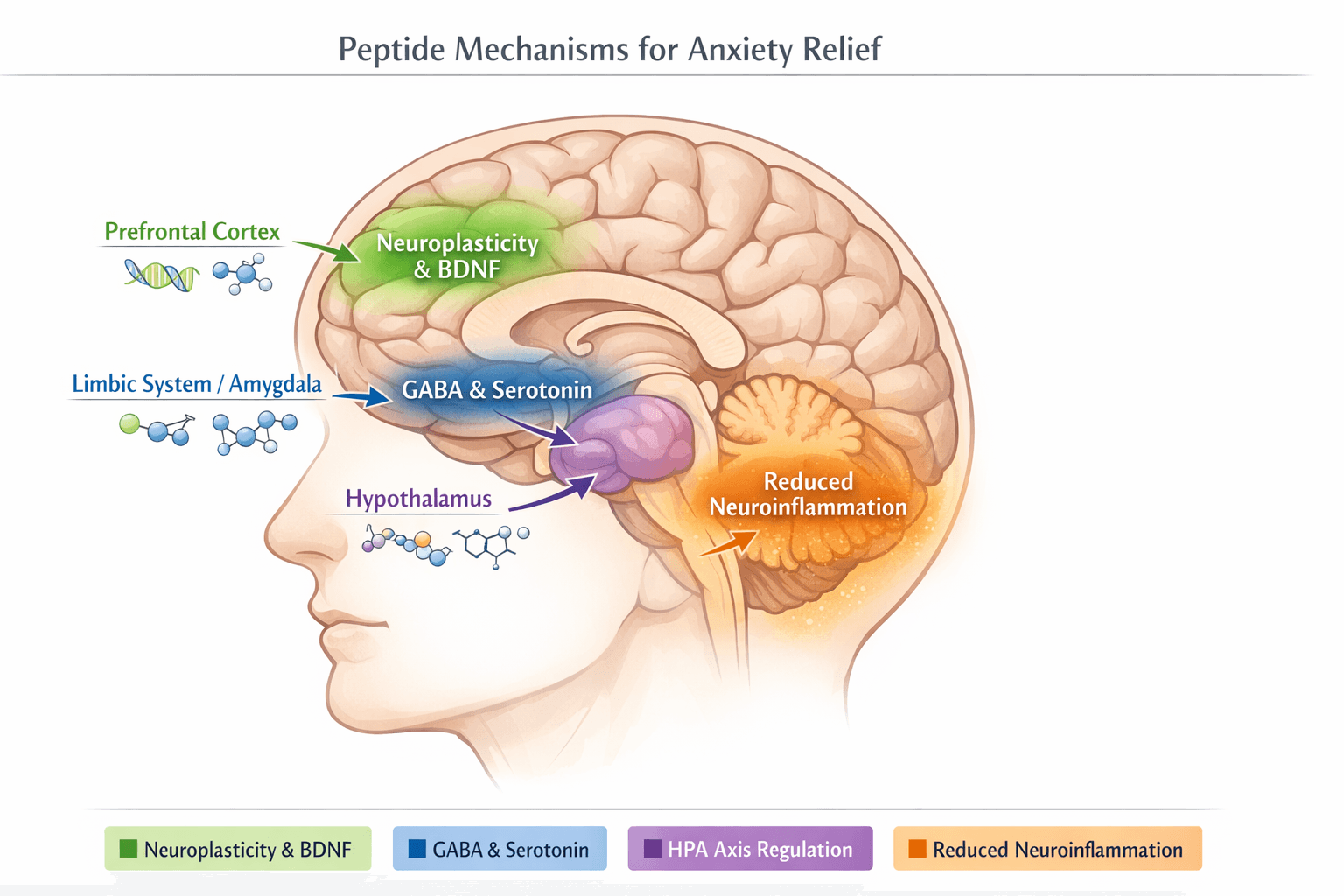
Anxiety isn't one thing. It's a constellation of symptoms arising from multiple disrupted systems. Peptides address these systems through different mechanisms:
Neurotransmitter modulation
Many anxiety peptides influence GABA, serotonin, dopamine, and other neurotransmitters that regulate mood and stress response.
GABA enhancement: GABA is your brain's primary inhibitory neurotransmitter. It calms neural activity, reduces excitation, and creates a sense of calm. Some peptides enhance GABAergic activity without directly binding GABA receptors (avoiding benzodiazepine-like dependency).
Serotonin regulation: Low serotonin correlates with anxiety and depression. Certain peptides modulate serotonin without the blunt mechanism of SSRIs, which block reuptake across the board.
Dopamine balance: Anxiety often involves dopamine dysregulation. Too much can cause agitation. Too little causes anhedonia and worry. Peptides can help optimize dopamine signaling.
Neuroinflammation reduction
Chronic neuroinflammation contributes to anxiety, depression, and cognitive dysfunction. Your brain is inflamed, and it manifests as anxiety symptoms.
Certain peptides have potent anti-inflammatory effects in the central nervous system. By reducing neuroinflammation, they address a root cause rather than just masking symptoms.
HPA axis regulation
The hypothalamic-pituitary-adrenal (HPA) axis controls your stress response. Chronic stress dysregulates this axis, leading to elevated cortisol, poor stress recovery, and constant anxiety.
Some peptides help regulate HPA axis function, normalizing cortisol patterns and improving resilience to stressors.
Neuroplasticity enhancement
Anxiety often involves stuck patterns - your brain has learned maladaptive responses to stress. Enhancing neuroplasticity allows new, healthier patterns to form.
Certain peptides promote brain-derived neurotrophic factor (BDNF) and other factors that support neuroplasticity. This doesn't provide immediate anxiety relief but helps your brain rewire over time.
Direct anxiolytic mechanisms
Some peptides have direct anxiolytic effects through mechanisms not fully understood. They simply reduce anxiety symptoms reliably across multiple studies and user reports.
The beauty of peptides is they often work through multiple pathways simultaneously. This creates more comprehensive relief than single-mechanism drugs.
Best peptides for anxiety
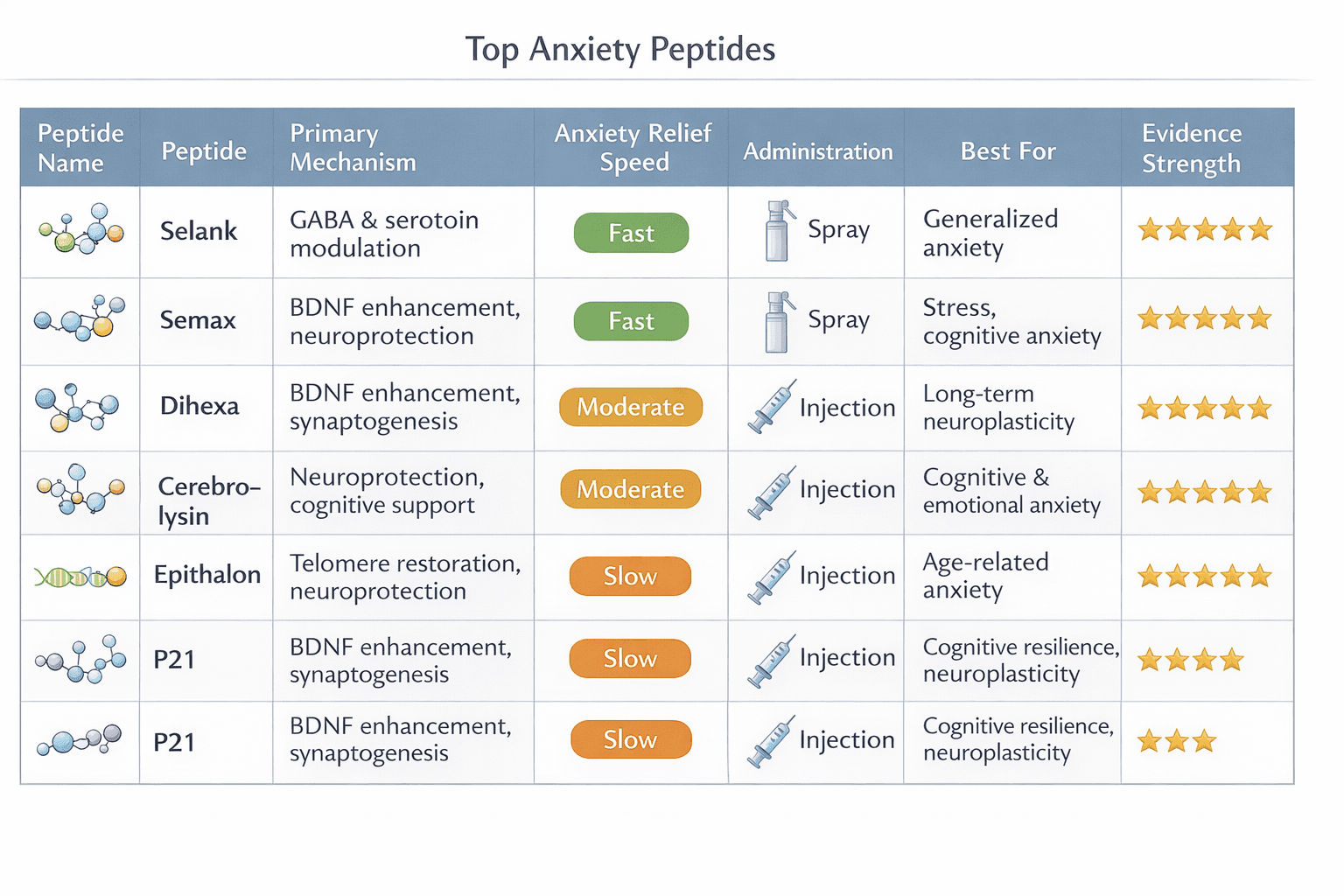
Not all peptides work the same way. Here are the most effective options:
Selank
Selank is a synthetic peptide derived from tuftsin, an immune system peptide. It's the most studied anxiolytic peptide and arguably the most effective.
Mechanism: Selank modulates GABA and serotonin, reduces neuroinflammation, stabilizes enkephalins (natural peptides that reduce anxiety), and influences gene expression related to stress response.
Effects:
Reduces anxiety within 1-3 hours of administration
Improves stress resilience over time
Enhances focus and mental clarity (unlike sedating anxiolytics)
No sedation, no dependency, no withdrawal
Improves sleep quality indirectly through reduced anxiety
Studies show: Selank is as effective as benzodiazepines for reducing anxiety but without cognitive impairment, dependency risk, or withdrawal symptoms.
Administration: Intranasal spray or subcutaneous injection
Dosing:
Intranasal: 2-3 sprays (approximately 1,500-3,000mcg) twice daily
Subcutaneous: 250-500mcg once or twice daily
Timeline: Acute effects within 1-3 hours. Full anxiolytic benefit develops over 2-3 weeks of daily use. Maximum benefit at 4-6 weeks.
Best for: Generalized anxiety, social anxiety, performance anxiety, stress-related anxiety
Selank is the first-line peptide for anxiety. It has the most evidence, the best safety profile, and the most consistent results.
Semax
Semax is a synthetic ACTH (adrenocorticotropic hormone) analog originally developed in Russia. While primarily known as a cognitive enhancer, it has significant anxiolytic properties.
Mechanism: Semax increases BDNF, modulates dopamine and serotonin, improves cerebral circulation, and reduces stress-induced damage to neurons.
Effects:
Reduces anxiety, particularly stress-related anxiety
Enhances cognitive function (focus, memory, mental energy)
Improves mood and motivation
Provides neuroprotection against stress
Some users report mild stimulation (can counter anxiety-related fatigue)
Administration: Intranasal spray or subcutaneous injection
Dosing:
Intranasal: 600-1,200mcg per day (divided into 2-3 doses)
Subcutaneous: 300-600mcg once daily
Timeline: Cognitive effects within hours. Anxiolytic benefits develop over 1-2 weeks. Optimal results at 3-4 weeks.
Best for: Anxiety with cognitive symptoms (brain fog, poor concentration), stress-related anxiety, anxiety combined with depression
Semax works well alone or combined with Selank for comprehensive anxiety and cognitive benefits.
See our Semax peptide dosage guide for detailed protocols.
Dihexa
Dihexa is a powerful nootropic peptide that enhances neuroplasticity dramatically. While not directly anxiolytic, it helps rewire anxious thought patterns over time.
Mechanism: Dihexa is one of the most potent BDNF enhancers known - up to 7 orders of magnitude more powerful than BDNF itself in promoting synaptogenesis (formation of new neural connections).
Effects:
Not immediate anxiety relief
Helps brain form new, healthier response patterns to stress
Improves cognitive flexibility
Enhances learning and memory
May reduce rumination over time
Administration: Oral or subcutaneous injection
Dosing:
Oral: 5-10mg once daily
Subcutaneous: 1-5mg once daily
Timeline: Effects on anxiety are slow - 4-8 weeks minimum. This is a long-term neuroplasticity tool, not acute anxiolytic.
Best for: Long-term anxiety rewiring, particularly for people who've had anxiety for years and need to break entrenched patterns
Dihexa is advanced. It's not for acute anxiety management. It's for fundamental brain rewiring.
Cerebrolysin
Cerebrolysin contains a mixture of neuropeptides and amino acids derived from porcine brain tissue. It has robust neuroprotective and neuroplasticity-enhancing effects.
Mechanism: Contains BDNF, NGF (nerve growth factor), CNTF (ciliary neurotrophic factor), and other neurotrophic factors. Reduces neuroinflammation, promotes neuroplasticity, and protects neurons from stress damage.
Effects:
Gradual reduction in anxiety symptoms
Improved stress resilience
Enhanced cognitive function
Better emotional regulation
Neuroprotection against chronic stress
Administration: Intramuscular injection
Dosing:
5-10ml intramuscular, 2-3 times per week
Typically used in cycles (4-8 weeks on, break, repeat)
Timeline: Benefits emerge after 2-3 weeks. Peak effects around 6-8 weeks.
Best for: Chronic anxiety with cognitive symptoms, anxiety related to neuroinflammation, people seeking comprehensive brain health improvement
Cerebrolysin is expensive but provides broad neuroprotective benefits beyond just anxiety relief.
Epithalon
Epithalon is primarily an anti-aging peptide but has interesting effects on stress response and anxiety.
Mechanism: Epithalon activates telomerase, regulates pineal gland function (affecting melatonin production), and may influence stress hormone regulation.
Effects:
Improved sleep quality (reduces anxiety indirectly)
Better stress resilience over time
Mood stabilization
Anti-aging benefits as bonus
Administration: Subcutaneous injection
Dosing:
10mg per cycle (5-10 days)
1mg injected daily for 10 days, then break for 3-6 months
Timeline: Sleep improvements within days. Anxiety benefits develop over multiple cycles (6+ months).
Best for: Anxiety with sleep issues, stress-related aging, people seeking long-term health optimization
Epithalon isn't primarily anxiolytic but worth mentioning for its stress-resilience benefits.
P21 (RG2)
P21 is a synthetic peptide derived from a CNTF analog. It's another neuroplasticity enhancer with potential anxiety benefits.
Mechanism: Enhances neuroplasticity through BDNF-independent pathways. Promotes formation of new dendrites and synapses.
Effects:
Not acute anxiolytic
Helps rewire anxiety responses over weeks/months
Improves learning and memory
Enhances cognitive flexibility
Administration: Subcutaneous injection
Dosing:
10-20mg per week (often split into daily 2-3mg injections)
Timeline: 6-12 weeks for noticeable effects on entrenched anxiety patterns.
Best for: Similar to Dihexa - long-term anxiety rewiring, not acute relief
Complete anxiety protocols using peptides
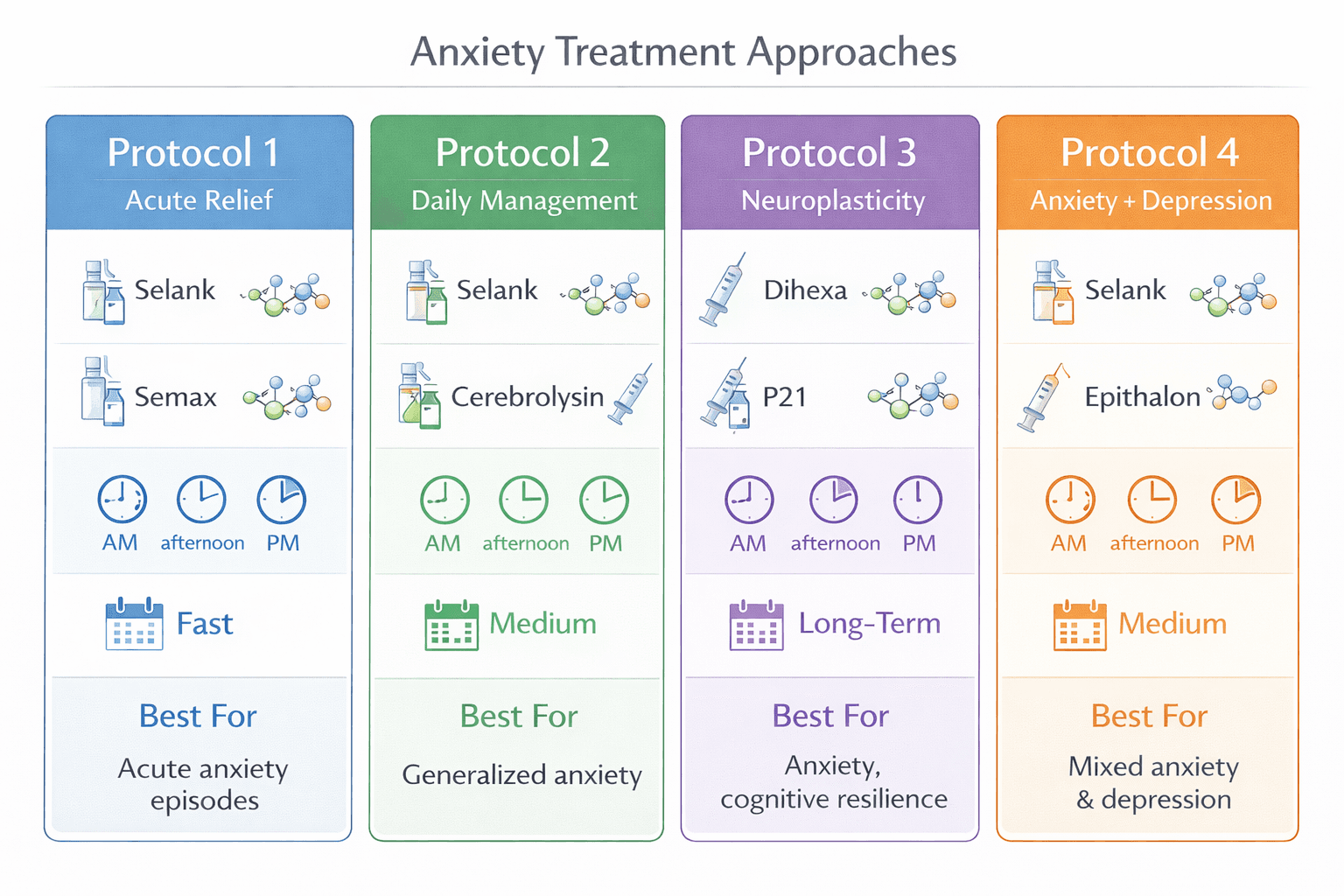
Here's how to actually use these peptides for anxiety relief:
Protocol 1: Acute anxiety relief (fast-acting)
Best for: People needing immediate anxiety reduction, social anxiety, performance anxiety, panic attacks.
Core peptides:
Selank intranasal: 2-3 sprays (1,500-3,000mcg) as needed, up to 3x daily
Can use 15-30 minutes before anxiety-provoking situations
Optional addition:
Semax intranasal: 1-2 sprays (600-900mcg) in morning for cognitive clarity
Timeline:
Relief within 30-90 minutes
Can use daily or as needed
Safe for months of continuous use
Expected results:
Noticeable reduction in physical anxiety symptoms (heart rate, tension)
Quieter mental chatter
Ability to face stressful situations with less dread
No sedation or cognitive impairment
This protocol provides relief similar to benzodiazepines without dependency risks.
Protocol 2: Comprehensive anxiety management (daily)
Best for: Generalized anxiety disorder, chronic stress, anxiety affecting daily life.
Daily routine:
Morning: Semax 600-900mcg intranasal (for focus and mood)
Afternoon: Selank 1,500-2,000mcg intranasal (for anxiety relief)
Evening: Selank 1,500-2,000mcg intranasal (for relaxation and sleep)
Optional additions:
Epithalon cycles every 3-6 months (for sleep and stress resilience)
Magnesium L-threonate 144mg elemental (supports GABA)
Timeline:
Acute effects within days
Full therapeutic benefit at 4-6 weeks
Can use indefinitely
Expected results:
Baseline anxiety significantly reduced
Better stress handling in daily life
Improved sleep
Enhanced cognitive function
Stable mood
Protocol 3: Neuroplasticity approach (long-term rewiring)
Best for: Deep-rooted anxiety, anxiety from trauma, people who want to fundamentally change their stress response.
Phase 1 (Weeks 1-8): Foundation
Selank 500mcg subcutaneous, twice daily (stabilizes anxiety while building neuroplasticity)
Cerebrolysin 5-10ml intramuscular, 3x per week (provides neurotrophic factors)
Phase 2 (Weeks 9-16): Active rewiring
Continue Selank
Add Dihexa 5-10mg oral daily (maximizes neuroplasticity)
Combine with therapy, meditation, or other practices to build new patterns
Phase 3 (Weeks 17+): Maintenance
Selank as needed (may not need daily anymore)
Periodic Cerebrolysin cycles (every 3-4 months)
Continue healthy practices
Timeline:
3-4 months minimum
Major shifts around 6 months
Profound changes by 12 months
Expected results:
Not just symptom relief - fundamental change in how you experience and respond to stress
Reduced need for ongoing intervention
Better emotional regulation
Cognitive improvements
This is advanced. It requires commitment and works best combined with therapy or other psychological work.
Protocol 4: Anxiety with depression (dual action)
Best for: Anxiety and depression occurring together (very common).
Daily routine:
Morning: Semax 900-1,200mcg intranasal (mood and energy)
Midday: Selank 1,500mcg intranasal (anxiety relief)
Evening: Selank 1,500mcg intranasal (relaxation)
Add if needed:
Cerebrolysin 5ml intramuscular 2-3x per week (addresses neuroinflammation often underlying both anxiety and depression)
Timeline:
Mood improvements within 1-2 weeks
Anxiety relief within days
Full benefit at 4-6 weeks
Expected results:
Both anxiety and depression symptoms reduce
Improved motivation and energy
Better emotional stability
Enhanced cognitive function
For comprehensive protocol planning, use our peptide cycle planning guide.
Expected timeline and results
Peptides for anxiety work faster than SSRIs but slower than benzodiazepines. Here's what to expect:
Day 1-3: Initial response (immediate protocols)
What's happening: Peptides are binding to receptors, modulating neurotransmitters, beginning to reduce neuroinflammation.
What you'll notice: If using Selank or Semax, you'll notice effects within hours of first dose. Reduced physical anxiety symptoms - slower heart rate, less muscle tension, calmer breathing. Mental anxiety may still be present but feels more manageable.
What to do: Track your response. Note which symptoms improve first, which remain. This guides dosing adjustments.
Week 1-2: Foundation building
What's happening: Neurotransmitter systems are stabilizing. Anti-inflammatory effects accumulating. HPA axis beginning to normalize.
What you'll notice: Anxiety baseline lowering. Still have anxious moments but they're less intense and shorter. Sleep may improve. Some people notice better focus and mental clarity.
What to do: Stay consistent with dosing. Don't skip doses. If side effects occur (rare with these peptides), adjust dose downward.
Weeks 3-4: Clear improvement
What's happening: Full anxiolytic effects emerging. Brain is adapting to improved neurotransmitter balance. Stress response is recalibrating.
What you'll notice: This is when most people say "it's working." Anxiety is noticeably reduced. Situations that previously triggered anxiety are more manageable. Better emotional regulation. Mood is more stable.
What to do: Continue protocol. Consider whether dose needs adjustment up or down. Document progress.
Weeks 6-8: Established benefit
What's happening: Benefits are fully manifested. If using neuroplasticity peptides, new neural patterns are forming.
What you'll notice: Significant reduction in baseline anxiety. Better stress resilience. Can handle situations that previously overwhelmed you. Sleep is likely improved. Overall quality of life noticeably better.
What to do: Assess whether this is your optimal protocol or if adjustments would help. Consider long-term maintenance strategy.
Months 3-6: Long-term benefits (if using neuroplasticity approach)
What's happening: For protocols including Dihexa, Cerebrolysin, or long-term Semax - your brain has formed new connections and patterns. Stress response is fundamentally different.
What you'll notice: Not just reduced symptoms - you respond to stress differently. Less rumination. Better emotional resilience. May not need peptides daily anymore.
What to do: Transition to maintenance dosing or as-needed use. Continue supporting practices (therapy, meditation, exercise, sleep).
Realistic expectations
What peptides can do:
Significantly reduce anxiety symptoms
Improve stress resilience
Enhance emotional regulation
Do so without sedation or dependency
Improve cognitive function alongside anxiety relief
Address root causes (neuroinflammation, neuroplasticity)
What peptides can't do:
Completely eliminate all anxiety (some anxiety is normal and adaptive)
Work instantly (even fast-acting ones take 30-90 minutes)
Replace all other interventions (therapy, lifestyle changes still matter)
Fix external situations causing stress (you still need to address life circumstances)
Individual responses vary. Genetics, underlying causes, severity of anxiety, concurrent medications, and lifestyle factors all affect outcomes.
Side effects and safety considerations
Anxiety peptides have remarkably clean safety profiles, especially compared to traditional anxiolytics.
Common side effects (usually mild)
Headaches (primarily with Semax):
Mild to moderate headaches in first few days
Usually resolves as body adjusts
Staying well-hydrated helps
Fatigue (occasional with Selank):
Some users feel slightly tired initially
Usually indicates needed rest
Often resolves within a week
Nasal irritation (with intranasal administration):
Mild burning or irritation in nose
Minimize by switching nostrils
Usually adapts within days
Altered sense of smell/taste (rare with intranasal):
Temporary change in smell or taste
Resolves after discontinuation
Switch to subcutaneous injection if problematic
Rare side effects
Emotional blunting (very rare):
Feeling emotionally flat or disconnected
More common with very high doses
Reduces dose or take a break
Increased anxiety initially (paradoxical):
Very small percentage experience temporary increase in anxiety when starting
Usually resolves in 2-3 days as system adjusts
Start with lower dose if concerned
Sleep disturbances (primarily with Semax if dosed too late):
Difficulty falling asleep if Semax used late afternoon/evening
Solution: Use Semax only in morning/early afternoon
What's NOT a side effect
Dependency: These peptides don't create physical or psychological dependence. You can stop without withdrawal.
Tolerance: Most users don't develop tolerance. Effects remain consistent over months of use.
Cognitive impairment: Unlike benzodiazepines, these peptides enhance or maintain cognitive function rather than impairing it.
Sexual dysfunction: No reported sexual side effects (unlike SSRIs which commonly cause this).
Important safety considerations
Pregnancy and breastfeeding: Not recommended. No safety data exists. Better to wait or use established treatments under medical supervision.
Autoimmune conditions: Selank modulates immune function. If you have autoimmune disease, monitor carefully and consider medical supervision.
Psychiatric medications: Can generally be combined with most psychiatric medications, but:
Inform your psychiatrist if using peptides
Start peptides low if on multiple medications
Monitor for interactions or unusual effects
Cardiac conditions: Generally safe, but if you have serious heart problems, consult cardiologist before use.
For comprehensive peptide safety information, see our peptide safety and risks guide.
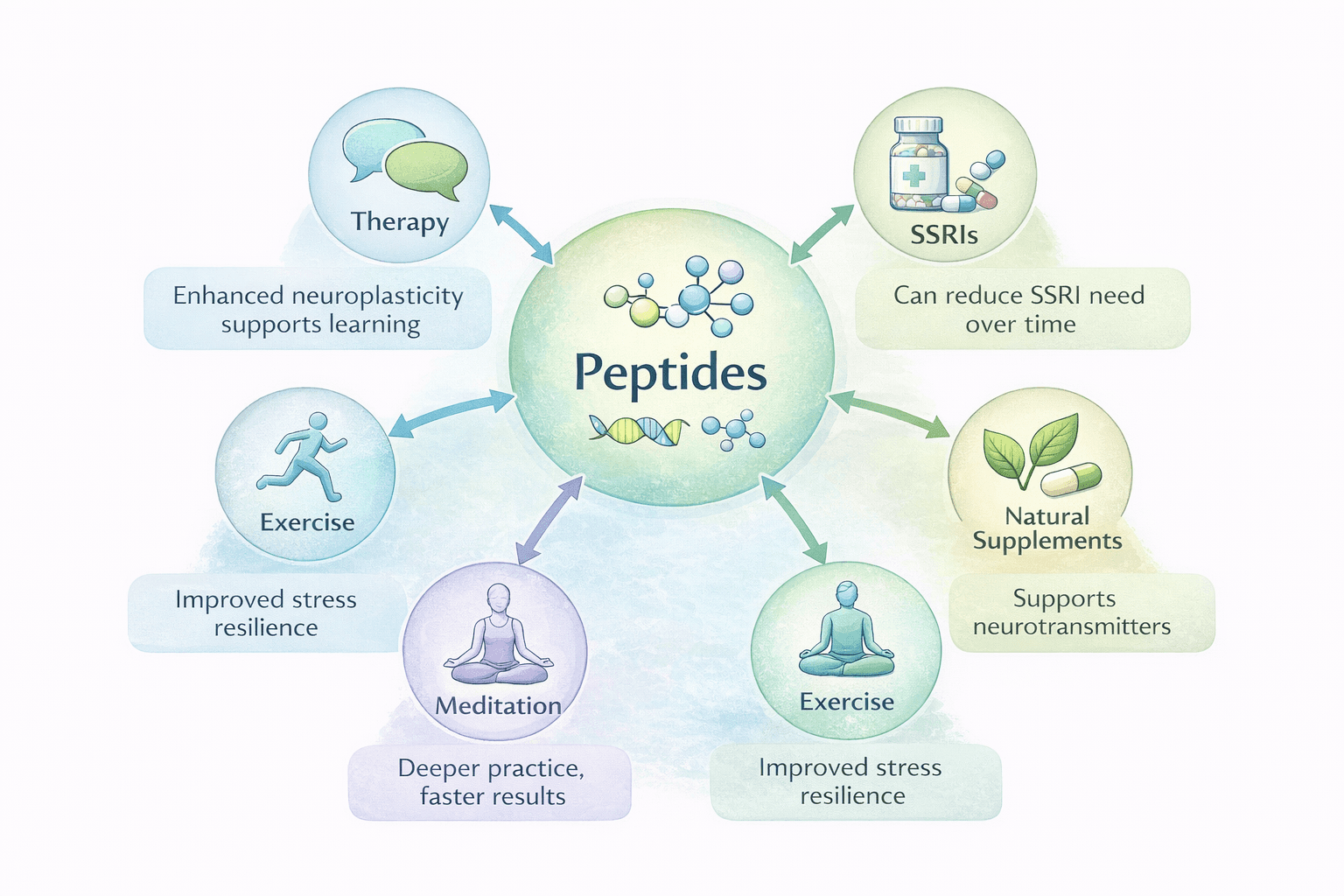
Combining peptides with other anxiety treatments
Peptides work well alongside many traditional and alternative anxiety treatments:
Peptides + therapy
Peptides provide biological support while therapy addresses psychological patterns. This combination is highly effective.
How they synergize:
Reduced baseline anxiety makes therapy more productive
Enhanced neuroplasticity (from peptides like Semax, Dihexa) helps form new patterns taught in therapy
Cognitive improvements from peptides make it easier to engage with therapeutic work
Best approach:
Use anxiety protocols consistently
Continue regular therapy sessions
Tell your therapist you're using peptides (most are supportive of adjunct treatments)
Peptides + SSRIs
Many people want to transition off SSRIs or add peptides while still on them.
Generally safe combinations:
Selank + SSRIs: Well-tolerated
Semax + SSRIs: Usually fine, monitor mood closely
Epithalon + SSRIs: No known interactions
Approach:
Don't stop SSRIs abruptly
Add peptides while still on SSRI
After 4-6 weeks on peptides, work with prescriber to slowly taper SSRI if desired
Some people find they need both, others successfully transition to peptides only
Peptides + benzodiazepines
Using peptides can help reduce or eliminate benzodiazepine use.
Transition strategy:
Start peptides at full dose while still on benzos
After 2-3 weeks, begin very slow benzo taper (work with prescriber)
Use peptides for breakthrough anxiety during taper
This reduces withdrawal severity and maintains anxiety control
Don't:
Stop benzos cold turkey (dangerous)
Rush the taper (causes severe withdrawal)
Try to manage benzo withdrawal without medical supervision if you've been on them long-term
Peptides + natural supplements
Many anxiety supplements complement peptide protocols:
Good combinations:
Magnesium L-threonate: Supports GABA, enhances neuroplasticity
L-theanine: Additional GABA support, synergizes with Selank
Omega-3s: Reduce neuroinflammation, support brain health
Vitamin D: Deficiency linked to anxiety, supports mood
B-complex: Supports neurotransmitter synthesis
What to avoid:
High-dose stimulants (caffeine, yohimbine) may counteract anxiolytic effects
Kava and similar strong sedatives - redundant with peptides
Peptides + meditation/mindfulness
This combination is powerful for long-term anxiety management.
How they synergize:
Peptides reduce baseline anxiety enough to make meditation easier
Enhanced neuroplasticity from peptides makes meditation's benefits deeper and faster
Meditation helps maintain gains after reducing or stopping peptides
Approach:
Start peptides first to reduce acute symptoms
Add meditation practice once anxiety is more manageable
Use both together for 3-6 months minimum
May be able to reduce peptide dose over time as meditation skills develop
Sourcing quality anxiety peptides
Quality matters enormously with peptides affecting brain function. Here's how to source safely:
For Selank and Semax
These are the most commonly used anxiety peptides and easiest to find.
Intranasal sprays:
Pre-made nasal sprays are most convenient
Should come in dark bottles (light degrades peptides)
Typical concentrations: 0.15% (Selank) or 0.1% (Semax)
Cost: $30-60 for 10ml bottle (1-2 month supply)
Injectable forms:
More economical for long-term use
Requires reconstitution
Cost: $25-40 per 5mg vial (1-2 month supply depending on dose)
What to verify:
Third-party testing (CoA) showing identity and purity
Proper storage during shipping (cold packs)
Reputable supplier with established track record
For Dihexa
Dihexa is less commonly available and more expensive.
Forms available:
Powder for oral use (most common)
Injectable solution (less common)
Quality concerns:
Synthesis is complex - cheap Dihexa is likely fake or impure
Must have third-party testing
Cost: $60-120 per 100mg (2-3 month supply)
For Cerebrolysin
Cerebrolysin is pharmaceutical-grade from specific manufacturers (mostly European).
How to source:
Prescription in some countries
Research peptide suppliers in others
Must come in sealed ampules from legitimate pharmaceutical company
Cost: $100-200 for 10 ampules (1-2 month supply)
Verification:
Check batch numbers against manufacturer databases
Only buy sealed ampules, never reconstituted vials
Source from suppliers with strong reputation for pharmaceuticals
Red flags for any anxiety peptide
No testing documentation: Never buy peptides without CoAs. Your brain deserves verified compounds.
Suspiciously cheap: If Selank spray costs $10 for 10ml, it's fake or dramatically underdosed.
Makes medical claims: Legitimate suppliers avoid making specific medical/therapeutic claims.
Poor packaging: Peptides in clear bottles, no cold shipping, amateur labeling - all red flags.
For comprehensive vendor evaluation, see our best peptide vendors guide.
Common mistakes that reduce effectiveness
Even with quality peptides, mistakes in use can sabotage results:
Inconsistent dosing
Peptides work through cumulative effects on neurotransmitter systems and neuroinflammation. Missing doses repeatedly prevents therapeutic blood levels from establishing.
Fix: Set reminders. Keep peptides visible. Make administration part of daily routine.
Giving up too quickly
Expecting instant results like benzodiazepines and quitting after 3 days when anxiety persists.
Fix: Commit to 4-6 weeks minimum. Track progress weekly, not daily.
Dosing too high too fast
Starting with maximum doses causes unnecessary side effects and doesn't provide better results.
Fix: Start low. Increase gradually only if needed. Many people get full benefits from moderate doses.
Poor storage
Leaving peptides at room temperature, exposing nasal sprays to light, not refrigerating reconstituted peptides - all degrade active compounds.
Fix: Refrigerate reconstituted peptides. Store nasal sprays in cool, dark places. Follow specific storage guidelines for each peptide.
Using expired or degraded peptides
Using peptides past their stability date or that have obviously changed (color, smell, clarity).
Fix: Note reconstitution dates. Discard after stability period. If peptide looks or smells wrong, don't use it.
Ignoring lifestyle factors
Using peptides while maintaining terrible sleep, high stress, poor diet, and no exercise.
Fix: Peptides work best as part of comprehensive approach. Sleep 7-9 hours. Manage stress. Eat well. Move your body.
Not addressing underlying causes
If your anxiety is situational (toxic job, abusive relationship, unresolved trauma), peptides help manage symptoms but won't fix the situation.
Fix: Use peptides to reduce symptoms enough to address root causes. Combine with therapy, make necessary life changes.
The role of SeekPeptides in your anxiety management journey
Using peptides for anxiety requires precision and knowledge. Wrong doses reduce effectiveness. Poor sourcing means you might not be getting real compounds. Lack of protocol guidance leads to suboptimal results.
SeekPeptides provides the tools you need.
Accurate reconstitution: Our peptide reconstitution calculator ensures you mix injectable peptides correctly, preventing waste and dosing errors.
Protocol planning: Our cycle planning guide helps you map out comprehensive anxiety protocols, track progress, and adjust based on results.
Evidence-based information: Our guides provide mechanisms, realistic expectations, and practical protocols without hype or exaggeration.
AI-powered assistance: Get answers to your specific questions about combining peptides, managing side effects, optimizing timing, and transitioning from traditional medications.
You don't have to figure out anxiety peptides through trial and error. Use the knowledge and tools that help people successfully manage anxiety with peptides.
Final thoughts
Anxiety peptides offer something traditional medications don't - symptom relief without cognitive impairment, dependency, or emotional blunting. They address root causes like neuroinflammation and poor stress response rather than just masking symptoms.
Selank and Semax are the workhorses - well-studied, effective, safe for long-term use. They provide relief within hours to days and maintain effectiveness for months. For many people, they're enough.
Adding neuroplasticity peptides like Dihexa or Cerebrolysin offers deeper, longer-lasting changes. You're not just managing symptoms - you're rewiring how your brain responds to stress. This takes time but provides profound benefits.
Peptides work best as part of comprehensive anxiety management. They reduce symptoms enough to engage with therapy, practice meditation, improve sleep, and make necessary life changes. They're tools, powerful tools, but not complete solutions by themselves.
Start with Selank if you need acute relief. Add Semax for cognitive benefits. Consider long-term neuroplasticity protocols if you want fundamental change. Give them time. Track your progress. Adjust based on results.
Anxiety doesn't have to rule your life. Peptides provide a legitimate path to better mental health without the downsides of traditional anxiolytics.
Related resources
In case I don’t see you, good afternoon, good evening, and good night.